Article

Study of Weak-Acid-Dissociable and Free Cyanide Oxidation by Ozone Injection into Gold Mine Pulp


by
Coraquetzali Magdaleno López
1,
Saúl Ortiz Landeros
2,
Héctor Herrera Hernández
3,
Eugenia Aldeco Pérez
4,
Carlos Estrada Arteaga
4,
Antonia Sandoval González
4 and
Jorge Morales Hernández
4,*
1
Tecnológico Nacional de México/ITS Abasolo, Blvd. Cuitzeo de los Naranjos #401, Col. Cuitzeo de los Naranjos, Abasolo 36976, Guanajuato, Mexico
2
Fresnillo Plc, calzada Saltillo 400 989, Residencial Campestre la Rosita, Torreón 27250, Coahuila, Mexico
3
Universidad Autónoma del Estado de México, Blvd. Universitario s/n, Atizapán de Zaragoza 54500, Estado de México, Mexico
4
Centro de Investigación y Desarrollo Tecnológico en Electroquímica, Parque Tecnológico Querétaro s/n, Sanfandila, Pedro Escobedo 76703, Querétaro, Mexico
*
Author to whom correspondence should be addressed.
Submission received: 3 December 2025 / Revised: 24 January 2026 / Accepted: 28 January 2026 / Published: 1 February 2026
(This article belongs to the Topic Innovative Strategies to Mitigate the Impact of Mining)

Abstract

The effects of key variables on weak-acid-dissociable (WAD) and free cyanide oxidation by ozone injection in gold mine pulp were studied at laboratory scale to find an alternative cyanide treatment. A fractional factorial analysis of five process variables (O3/O2 flow, reaction time, NH4HSO3 concentration, temperature, and pH) informed a 60-run experimental matrix, in a 1 L cylindrical reactor, with the process variables controlled during the ozone injection. The findings may inform future strategies for safer cyanide management in gold mining processes. Free cyanide is the most toxic form of cyanide. Its oxidation increases with higher O3/O2 concentrations, longer exposure time, and higher pH. Maintaining a pH above 7 is crucial. Lower pH values favor the dissociation of cyanide into its toxic, free form. WAD cyanide oxidation depends mainly on the O3/O2 concentration, exposure time, and NH4HSO3 concentration. Increasing O3/O2 and time enhanced both WAD and free cyanide oxidation, while NH4HSO3 concentration affected oxidation rates differently. The results show that free cyanide was significantly more oxidized (84.1413%) than WAD cyanide (67.2423%). Controlling the WAD cyanide process yields excellent free cyanide oxidation. This represents ongoing improvement at an industrial scale. This approach quantifies the extent to which process variables affect the WAD and free cyanide oxidation under controlled conditions, thereby greatly reducing environmental impact.

1. Introduction

1.1. Generalities of Cyanide

Since the 19th century, the mining industry has used cyanide to extract gold from low-grade ores due to its stability in forming soluble cyanide–gold complexes and its efficiency in selectively dissolving gold [1]. However, the process generates leachates and sludges; that is, highly toxic cyanide complexes are produced, including cadmium, copper, zinc, free cyanide, and weak-acid-dissociable (WAD) cyanide [2,3]. Unfortunately, when these complexes are not properly disposed of, they cause serious harm to humans and aquatic ecosystems [4,5]. The persistence and toxicity of cyanide complexes necessitate the development and evaluation of treatment technologies. Among the most studied conventional methods are air/SO2 oxidation (INCO process), hydrogen peroxide oxidation, alkaline chlorination, ultrasound, electrochemical oxidation, and biological treatments [6]. Although technically viable, these methods generate high solids loads, require expensive reagents, have low efficiency, and produce chemically complex byproducts that must be transformed into non-hazardous waste for disposal in accordance with applicable regulations [3,7]. On the other hand, ozonation, an advanced oxidation process, is a promising alternative for oxidizing free cyanide and WAD complexes due to its high oxidation potential (E° = 2.07 V) [8].
Cyanide complexes can be oxidized to form cyanate ( C N O ) , CO2, and nitrogen, depending on the operating conditions (pH, O3 dosage, retention time, etc.). These oxidation reactions have been extensively studied [9]. Despite evidence of ozone’s effectiveness in oxidizing cyanides in mining slurries at the laboratory level, our understanding of oxidation mechanisms and kinetics under real-world plant conditions remains limited [10]. Therefore, this research proposes to address ozonation by directly injecting ozone into the slurry of an operating mine. Specifically, the objective of this research is to evaluate the efficiency and oxidation mechanisms of free cyanide and weak-acid-dissociable (WAD) species.
The anion C N is a strong binder of metal cations solvated in an aqueous solution, a property used in many commercial processes, such as gold mining [1].
Cyanide compounds are used in large quantities, amounting to 2.6 million tons annually. Sodium cyanide, used in precious metals refining, the chemical industry, and electroplating, among other processes, accounts for 14% of global cyanide compound production [1]. Some cyanide compounds are generated as solid waste, released into the atmosphere, or associated with wastewater, as in aluminum production, the steel industry, and gas production, to name a few; however, as pollutants, they are most commonly found in water and soil. Due to the high toxicity of free cyanide ( H C N and C N ) in freshwater systems, the maximum level is 22 µg/L, as aquatic organisms are significantly more sensitive to cyanide than humans [1].
Cyanide compounds dissociating with a weak acid (at pH 4.5) are known as weak-acid-dissociable cyanide (WAD cyanide) and are simple salts that can produce free cyanide. Cyanide compounds that dissociate under the action of a strong acid (pH less than 2) are more complex salts that are known as strong-acid-dissociable cyanide (SAD cyanide). Under normal conditions, SAD cyanide is more resistant than WAD cyanide, forming a stable complex in solutions of gold, iron, and cobalt.
Total cyanide refers to all cyanide compounds present in solution. Table 1 shows the different cyanide species in the liquid phase [1], where metal–cyanide complexes are divided into weak and strong complexes for industrial applications.
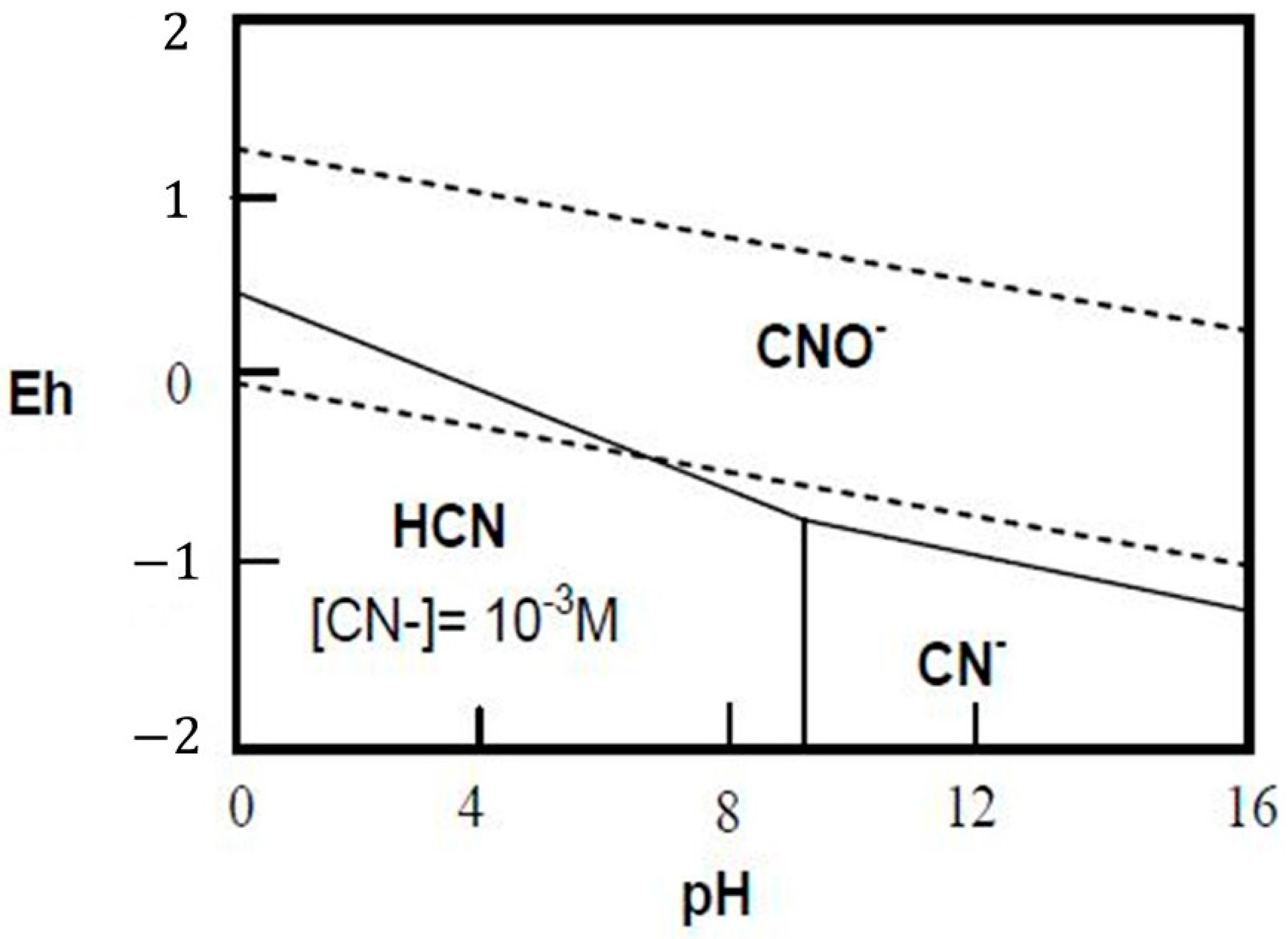
The free cyanide corresponds to the soluble hydrogen cyanide ( H C N a q ), which is a weak acid and can dissociate into the cyanide ion ( C N ), according to Reaction 1. The thermodynamic equilibrium of this reaction, like a function of pH and electrochemical potential, is shown in Figure 1; at pH < 9.3, HCN is the dominant free cyanide species, whereas at higher pH, the cyanide ion ( C N ) is the dominant species. A positive electrochemical potential is required to form cyanate ( C N O ) under both acidic and alkaline conditions.
H C N a q =   H + + C N
Hydrogen cyanide has a high vapor pressure; therefore, it volatilizes rapidly from liquid surfaces under ambient conditions, reducing the cyanide concentration in the solution. This means that cyanide leach systems are operated at pH values above 10 to minimize losses [3]. Another pathway is that hydrogen cyanide and free cyanide can be oxidized with little change in system potential, forming C N ,   C N O ,   and   H C N (Figure 1).
The evolution of the species depends on the electrochemical potential and pH, creating opportunities for electrochemical oxidation, where the hydroxyl radical drives the development of special electrodes, such as doped diamond boron (DDB), which offer a wide potential window. However, this research establishes the basis for developing a new process that maximizes efficiency while minimizing costs.
The stability of metal–cyanide complexes varies, requiring pH conditions ranging from moderate to highly acidic for dissociation. As observed in reaction 2, the dissociation of metal–cyanide complexes releases free cyanide [4].
M ( C N ) x n = M + + x C N
Weak metal–cyanide complexes are those in which cyanide ions are weakly bound to the metal cation, allowing them to dissociate under mildly acidic conditions (pH = 4 to 6) to release free cyanide. Because of their dissociative nature, these complexes are regulated in concert with free cyanide in water [11].
Strong metal–cyanide complexes include those with heavy transition metals, such as iron, cobalt, platinum, and gold. These complexes require highly acidic conditions (pH < 2) to dissociate and release free cyanide. Compared to weak complexes, strong metal–cyanide complexes are more stable in aqueous solution and are relatively less toxic [12].
As shown below (reactions 3 and 4), free cyanide can be oxidized to cyanate ( C N O ) or hydrogen cyanate ( H C N O ), depending on pH [5].
C N + H 2 O = C N O + 2 H + + 2 e
H C N + H 2 O = H C N O + 2 H + + 2 e
Strong oxidants, such as chlorine, hypochlorite, ozone, and hydrogen peroxide, can oxidize free cyanide. However, chlorine generates highly toxic byproducts. Under neutral to alkaline conditions, the final product is cyanate ( C N O ), a non-toxic compound [13].
Gurol M.D. et al. (1985) studied the ozonation of free cyanide and found that ozone (O3) primarily reacts with the cyanide ion, while its reaction with H C N is minimal [5]. It was determined that the presence of free cyanide promotes the formation of free radicals ( H O · , H O O · ), where both radical-driven reactions and the direct reaction of free cyanide with ozone contribute to its oxidative destruction. Some of the responses identified by Gurol and Bremen for the ozonation of free cyanide are as follows [5].
O 3 + C N C N O + O 2
H C N +   H O ·   H C N O +   H O O ·
C N +   H O ·   C N O +   H O O ·
C N +   H O ·     · C N + O H
· C N + · C N ( C N ) 2
( C N ) 2 + 2 O H C N O + C N + H 2 O
The direct reaction of molecular ozone with the cyanide ion corresponds to Reaction 6. Other reactions of ozone with water, specifically with OH, produce the superoxide radical ( O 2 ), which reacts strongly with ozone to form the hydroxyl free radical ( H O ) [14].
The ozonation reaction of free cyanide to cyanate is relatively slow; cyanate accumulates in the solution until all free cyanide is completely oxidized.
Weak metal–cyanide complexes are generally readily oxidized by oxidizing agents, such as ozone. Complexes with WAD-type bonds, such as those of nickel and silver, oxidize more slowly. Complexes with weaker bonds, including cadmium, copper, and zinc, decompose rapidly in ozone [14].

1.2. INCO Process

The INCO process (commercialized by INCO Ltd.) is widely used worldwide in the mining sector and is one of the two patented processes for cyanide destruction using sulfur dioxide. The INCO process is based on the oxidation of free cyanide and weakly complexed metal cyanides (WAD cyanides) into cyanate via a mixture of sulfur dioxide (SO2) and air in the presence of a soluble copper catalyst at a controlled pH. Complex cyanides, such as iron cyanides, are reduced to ferrous and precipitate as insoluble copper–iron–cyanate complexes. Residual metals released from WAD cyanide complexes precipitate as their respective hydroxides [3].
Acid formation is possible during the reactions, so to maintain a pH between 8.0 and 9.0 in Reactions 11 and 12, lime is recommended for pH control.
C N + S O 2 + O 2 + H 2 O C u 2 +   C a t a l y s t C N O + S O 4 2 + 2 H +
M ( C N ) 4 2 + 4 S O 2 + 4 O 2 + 4 H 2 O C u 2 +   C a t a l y s t 4 C N O + 4 S O 4 2 + 8 H + + M 2 +
The theoretical SO2 requirement is 2.46 g of SO2 per gram of oxidized WAD cyanide, although practical reports indicate variations ranging from 3.0 to 5.0 g of SO2 per gram of oxidized WAD cyanide [7].
The SO2 required for the reaction can originate from liquid sulfur dioxide, sodium sulfite (Na2SO3), or sodium metabisulfite (Na2S2O5). Ammonium bisulfite (NH4HSO3) solutions have shown promising results; however, one must be cautious about the potential impact of ammonia addition to wastewater. It can supply oxygen to optimize the reaction, or use high-pressure liquid oxygen; the choice of oxygen source significantly affects reaction time [4].
The soluble copper catalyst is added as a solution of copper sulfate pentahydrate (CuSO4·5H2O) at a proportion of 10–20% relative to the WAD cyanide concentration.
This process is widely used to treat tailings with cyanide concentrations ranging from low to high. It aims to reduce cyanide levels to approximately 5 mg/L, thereby enabling the treated solutions to be safely discharged [8].
A typical INCO process consists of two stages. In the first stage, sulfur dioxide, lime, and copper sulfate are added, with continuous oxygen injection, to ensure complete oxidation of cyanide. In the second stage, metal precipitation occurs, requiring the addition of lime and other chemicals, such as ferric chloride [8].
The key process variables include retention time, air or oxygen feed rate, copper concentration, pH, and sulfur dioxide feed rate. The amount of copper sulfate or alternative reagents is adjusted based on the WAD cyanide concentration, determined through laboratory or pilot-plant evaluations.
Cyanide oxidation as a function of copper concentration and pH, showing greater effectiveness at copper concentrations exceeding 10 mg/L within a pH range of 8 to 10; at pH 11, Reactions 12 and 13 are reversible [8].
Table 2 presents the performance of the INCO process for cyanide destruction in various mining operations. The minimum concentration of CNTOT was obtained with the lowest concentration of C u 2 + for which lime was necessary. The optimal balance between SO2 and Cu2+ in the INCO process must be identified to improve cyanide oxidation efficiency, which requires a complete characterization of the ore, as its composition can vary greatly from one region to another.
Iron plays a complex and multifaceted role in the INCO process, serving as both a reactant and a potential catalyst, and as a source of process complexity that warrants careful consideration. Unlike copper, which functions primarily as a homogeneous catalyst, iron in gold processing streams is predominantly present as strong metal–cyanide complexes, particularly ferrocyanide (Fe(CN)64−) and ferricyanide (Fe(CN)63−) species [9,11]. These complexes are characterized by exceptionally high formation constants (log β values exceeding 30 for ferrocyanide), making them resistant to treatment by many conventional cyanide oxidation methods. The INCO process, however, demonstrates a distinctive capability to destabilize and remove these strong complexes, providing a significant advantage over alternative treatment technologies, such as alkaline chlorination, which is largely ineffective against iron–cyanide species [12,13].
The presence of iron–cyanide complexes in cyanide detoxification circuits presents both opportunities and challenges for INCO process operation. On the opportunity side, the ability to remove stable iron–cyanide complexes provides more complete detoxification than many alternative processes, resulting in lower total cyanide concentrations in discharged solutions [14].
This comprehensive cyanide removal is particularly valuable for operations subject to stringent discharge limits or those seeking to minimize environmental liability associated with residual cyanide species. However, the precipitation of copper–iron–cyanide complexes consumes the copper catalyst, potentially creating or exacerbating copper deficiency issues if not properly managed. Additionally, the stability of iron–cyanide precipitates under storage conditions must be considered, as these solids can decompose under ultraviolet light, releasing free cyanide and undermining the detoxification achieved during treatment [15].

2. Materials and Methods

Due to the high risks associated with SO2 use, the mining industry has been using alternative chemical reductants, such as ammonium bisulfite (NH4HSO3), operating at pH 5–7. However, like the INCO process, this method also requires a high oxygen concentration, which currently results in high process costs (electric power, oxygen, copper bisulfite, and ammonium bisulfite) [16].
The NH4HSO3 concentration of 1 kg/ton was recommended as a best practice in the mining industry; it was added in the corresponding proportion to maintain a constant effluent volume of 1 L in a cylindrical reactor [17].
The experimental development was focused on exploring the use of ozone as an alternative oxidation source to improve the degradation efficiency of WAD and free cyanide, using a process based on the application of the INCO process with industrial gold mine pulp, ammonium bisulfite (NH4HSO3), and copper as a catalyst.
In this first stage, a factorial design (3 levels) was conducted using the Statgraphics 18 program. Laboratory tests demonstrated the feasibility of using ozone to convert C N to cyanate.
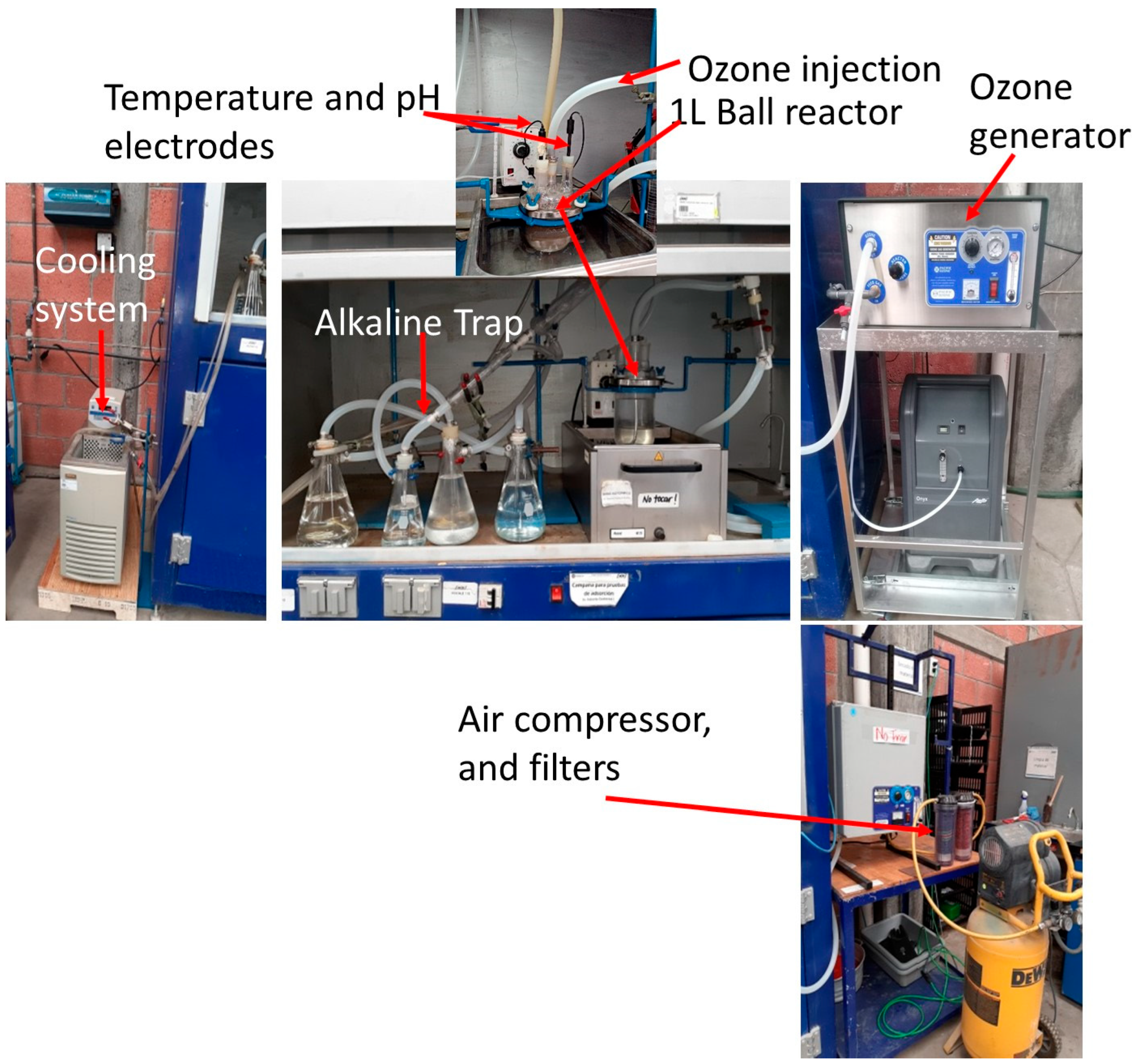
Figure 2 shows the experimental system conducted in a 1 L cylindrical reactor (Reacware, Albany, NY, USA) with a semispherical bottom to determine the transformation of C N upon ozone/oxygen injection. To start, 20 L drums were delivered to the mine and stored in a dark, protected area. Before each experiment, the drums were dynamically shaken for 1h. The system temperature was controlled by immersing the reactor in a thermal bath. A cooling system was implemented to maintain a controlled temperature in the alkaline trap, where the reaction gases were collected.
At the end of the ozone/oxygen injection exposure time, the pulp was filtered, and the filtrate was analyzed to determine the concentrations of free and WAD cyanide.
After obtaining all possible combinations of the six process variables in the factorial design, a fractional factorial design with 60 combinations was selected. The experimental design encompassed all possible combinations of levels and factors, enabling a statistical evaluation of main effects and interactions. The experimental analysis was performed using a Pareto chart and analysis of variance (ANOVA).
The best results from the factorial design, based on the percentage of free cyanide degraded, were used to optimize free cyanide degradation.

3. Results

3.1. Volumetric Plots

Based on the main variables of the INCO process: ozone/oxygen mixture (flow rate), pH effect, temperature effect, ammonium bisulfite [NH4HSO3], and reaction time, an experimental matrix comprising 60 tests was established.
Table 3 shows the range within which each variable was evaluated across the 60 tests conducted in the fractional factorial analysis.
The O3/O2 ratio was expressed in standard cubic feet per minute (SCFM) and monitored in parallel with the ozone generation voltage, measured directly in the ozone generator within a constant volume system.
The pH range of 8–10 prevents the formation of HCN and C N . Preliminary results indicated that the temperature range (25 to 45 °C) and reaction time (8 to 24 min) are inversely related, yielding a more convenient reaction time for the oxidation of WAD cyanide and free cyanide.
Table 4 reports the average oxidation percentage of WAD and free cyanide, based on 60 tests, grouped into sets of 10 samples. It can be observed that free cyanide oxidizes more rapidly, with higher oxidation percentages, than WAD cyanide.
Considering the average values reported in Table 4, free cyanide tended to oxidize 20% more under the optimal WAD cyanide oxidation conditions, reporting an average value of oxidation of 84.1413% for free cyanide and 67.2423% for WAD cyanide.
To identify the process variable that most strongly contributes to oxidation, volumetric plots were used to simulate the tendency of the variable towards cyanide oxidation.
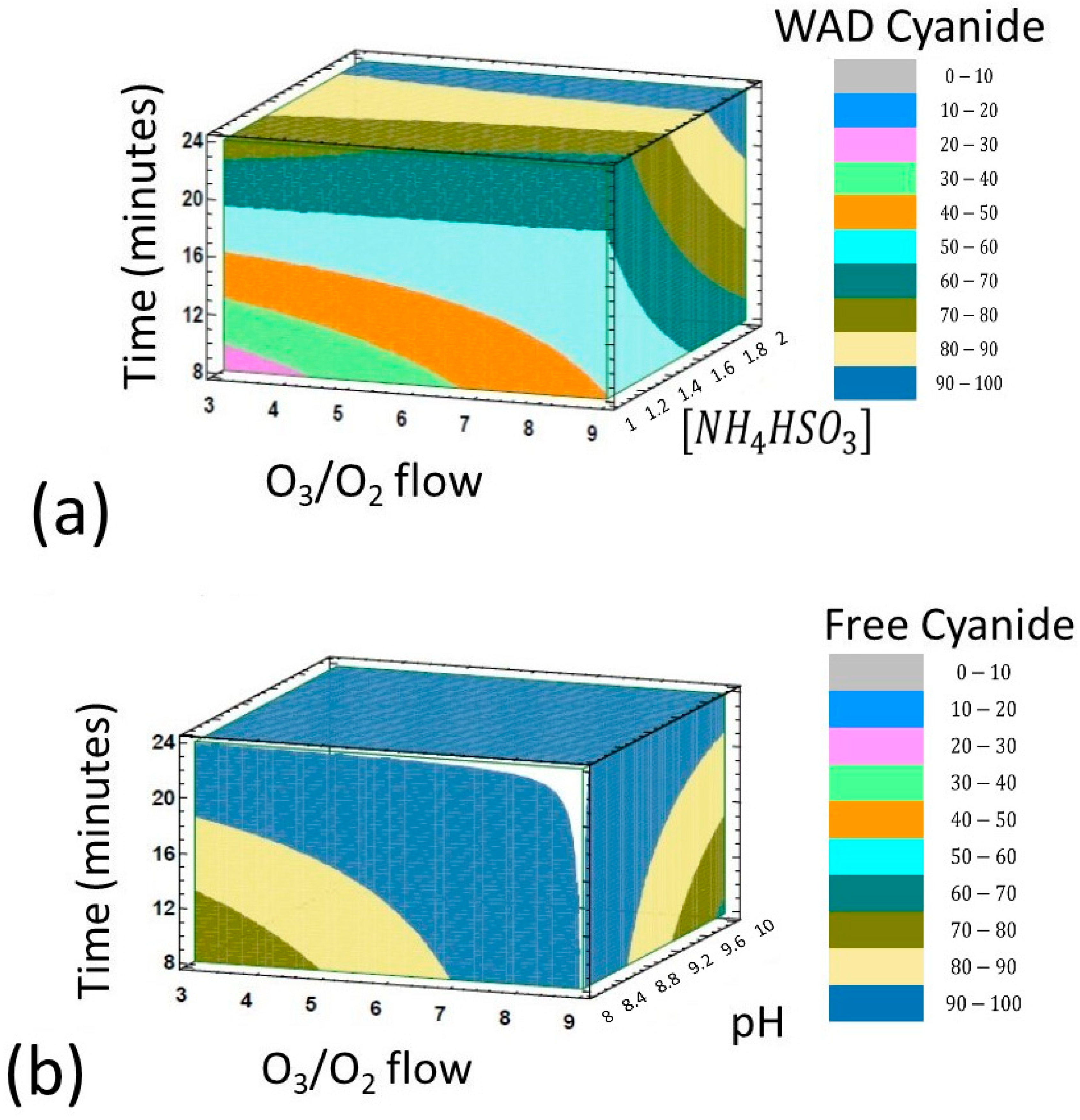
The optimal values obtained for achieving 100% oxidation of WAD and free cyanide fall within a 90% confidence range, as shown in the volumetric plots in Figure 3. These plots display the interaction between O3/O2 flow, reaction time, and NH4HSO3 concentration for WAD cyanide oxidation, as well as the interaction between O3/O2 flow, reaction time, and pH for free cyanide oxidation.
According to the color coding in Figure 3, more than 60% of WAD cyanide can be oxidized with the maximum O3/O2 flow and reaction time. Combined with an NH4HSO3 concentration of over 1.8 kg/ton, it is possible to achieve more than 80% of WAD cyanide oxidation. Free cyanide oxidation between 80% and 100% requires an intermediate O3/O2 flow, an intermediate reaction time, and a pH in the range of 8 to 9.2, indicating that a high ammonium bisulfite concentration is not required for free cyanide oxidation.
These results suggest that it is necessary to maintain the maximum values in O3/O2 flow, reaction time, and NH4HSO3 concentration, with a pH of 8 to 9, to obtain the maximum free cyanide oxidation and a satisfactory WAD cyanide oxidation during the first step. It is possible to increase WAD cyanide oxidation by adding a second oxidation step before sending the residual material to the dam, ensuring the minimum cyanide concentration that could pose an ecological problem.
Pareto diagrams for WAD and free cyanide oxidation show the order in which the variables impact the cyanide oxidation percentage. Being the more significant variables for the oxidation of WAD cyanide, the next order is as follows:
O 3 O 2   f l o w > t i m e > N H 4 H S O 3 > p H > t e m p e r a t u r e
For free cyanide oxidation, and according to prioritization in the Pareto diagram, the main variables follow the next sequence:
  O 3 O 2   f l o w > t i m e > p H > t e m p e r a t u r e > [ N H 4 H S O 3 ]

3.2. Results in Surface Plots

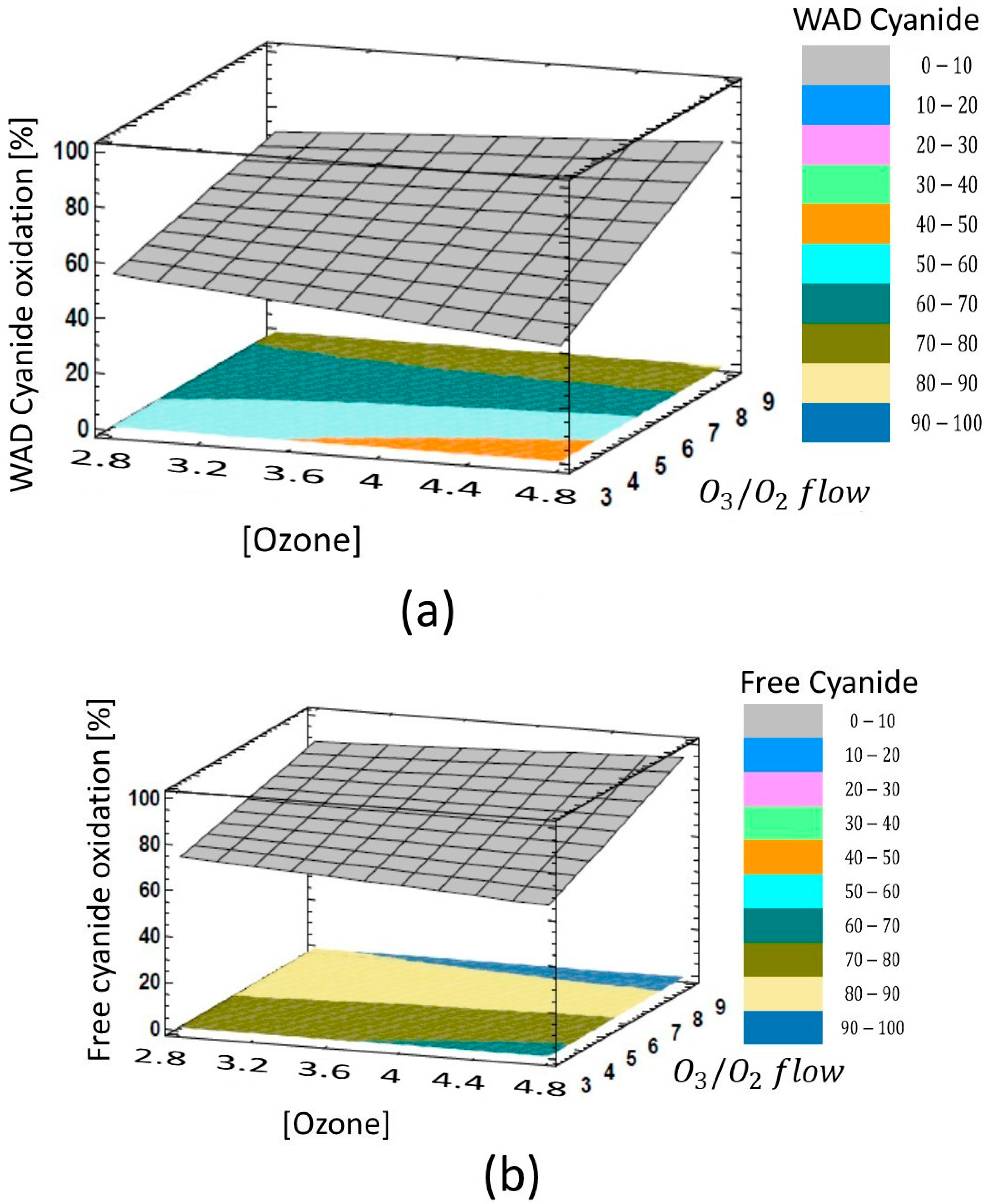
The following series of graphs presents the oxidation response percentages of WAD cyanide and free cyanide with respect to two main variables: ozone concentration against O3/O2 flow rate. The graph in Figure 4a shows that low ozone concentrations and a low O3/O2 flow rate have a slightly adverse effect on WAD cyanide oxidation compared to free cyanide oxidation (Figure 4b). However, at high ozone concentrations and high O3/O2 flow rates, the effect becomes slightly positive, with better oxidation conditions for WAD cyanide approaching 80% and for free cyanide reaching approximately 90%.
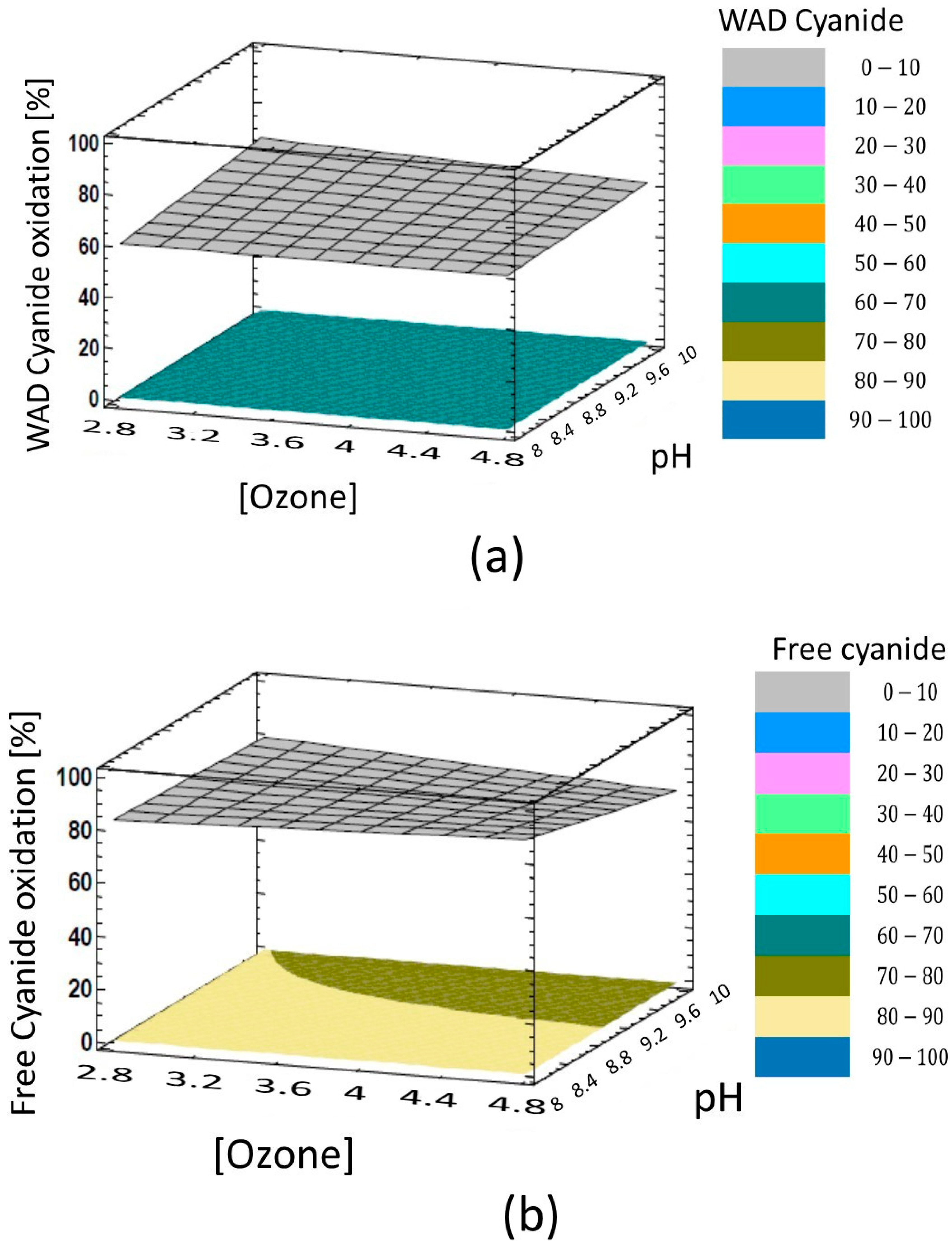
The interaction effect between ozone concentration and pH for WAD cyanide oxidation is minimal, as shown in Figure 5a. There is no significant change in oxidation levels when ozone concentration is increased or decreased at higher or lower pH levels, with an oxidation range of 60–70%. WAD cyanide oxidation does not depend directly on pH variations; however, it is possible to increase the WAD degradation if the ammonium bisulfite and copper concentration increase.
In contrast, at low or high ozone concentrations and pH of 8 to 9.2, free cyanide oxidation ranged from 80 to 90% (Figure 5b), where pH control is essential to maintain thermodynamic equilibrium between HCN and C N .
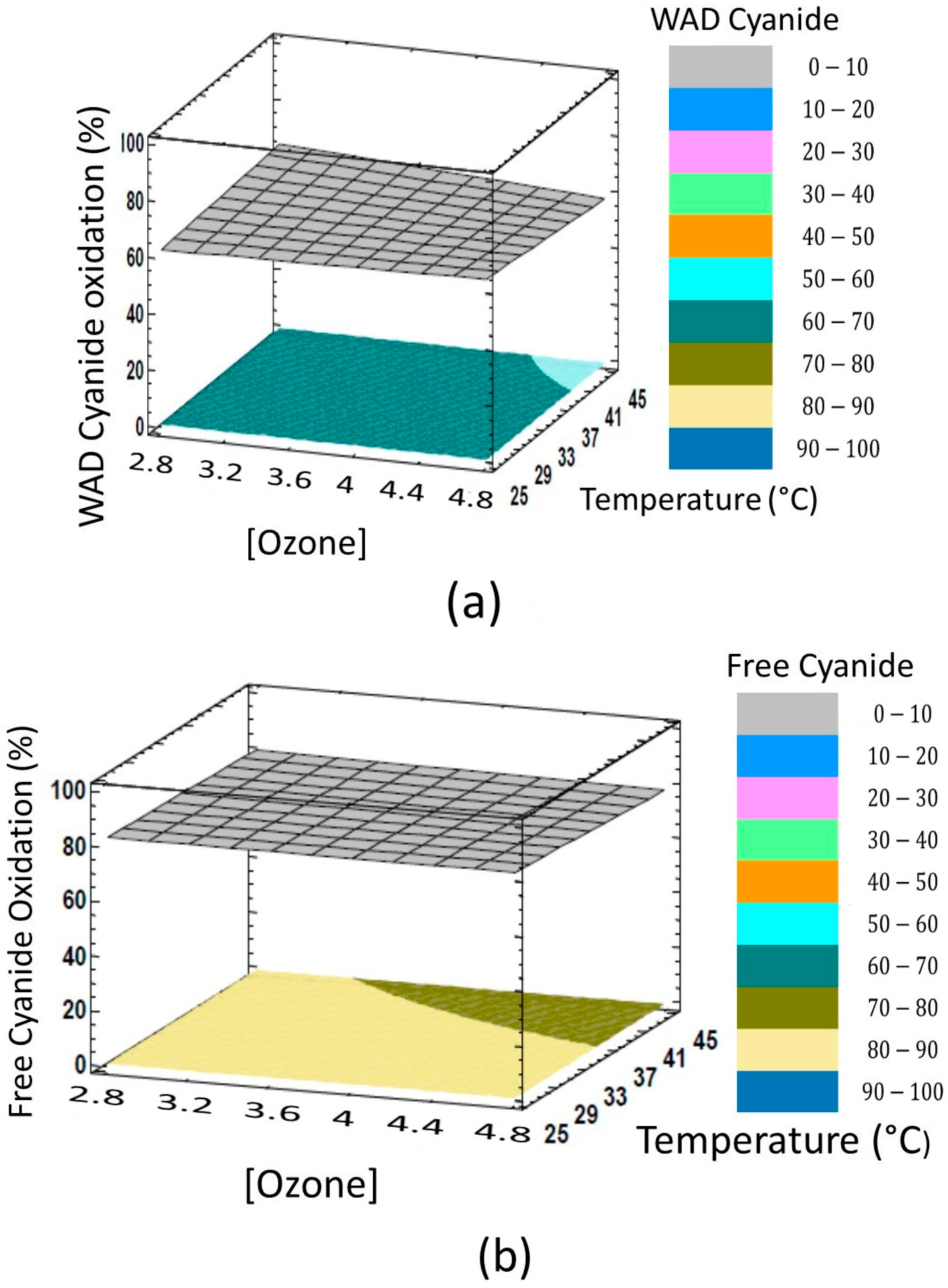
The combined effect relationship between ozone concentration and temperature (Figure 6a,b) exhibited a similar behavior to that observed between ozone concentration and pH. The results showed no significant changes in WAD cyanide oxidation with the increases or decreases in ozone concentration and temperature, maintaining an oxidation level of 60%. A slight rise in temperature between 41 and 45 °C reduces the oxidation percentage to 50%.
Conversely, a higher percentage of free cyanide oxidation (80–90%) was observed with increasing ozone concentrations at temperatures of 25–37 °C.
Increasing the temperature to 45 °C in both cases reduces the oxidation percentage for WAD and free cyanide by approximately 10%.
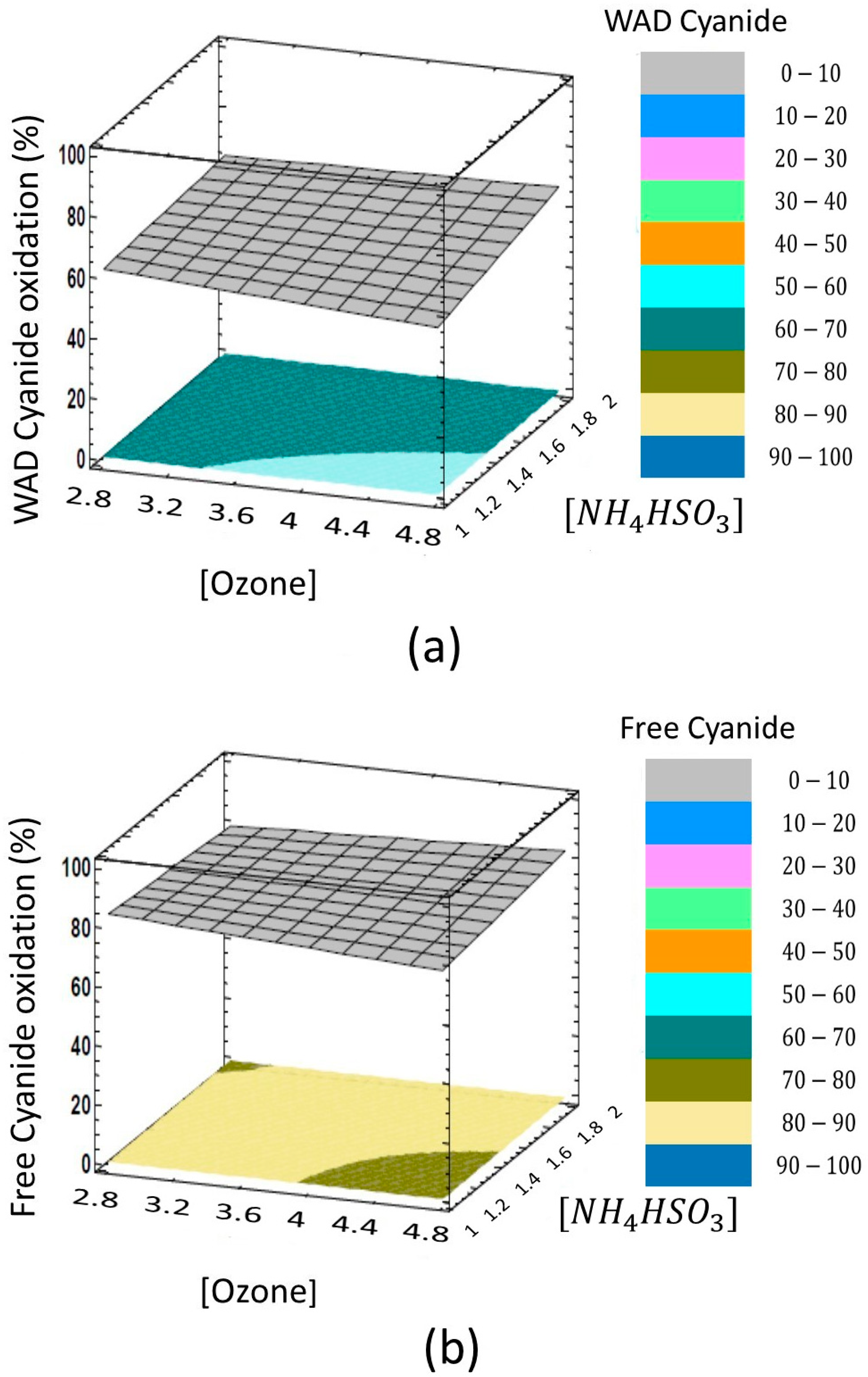
An increase in ammonium bisulfite consumption of around 2 kg/ton slightly increased the oxidation percentage of WAD cyanide to values around 70%, along with the high ozone concentration (Figure 7a). In contrast, the rate of free cyanide oxidation increased with higher ozone and ammonium bisulfite concentrations (Figure 7b), reaching 80% and 90% oxidation, indicating that a maximum concentration of ammonium bisulfite is necessary to ensure WAD cyanide oxidation.
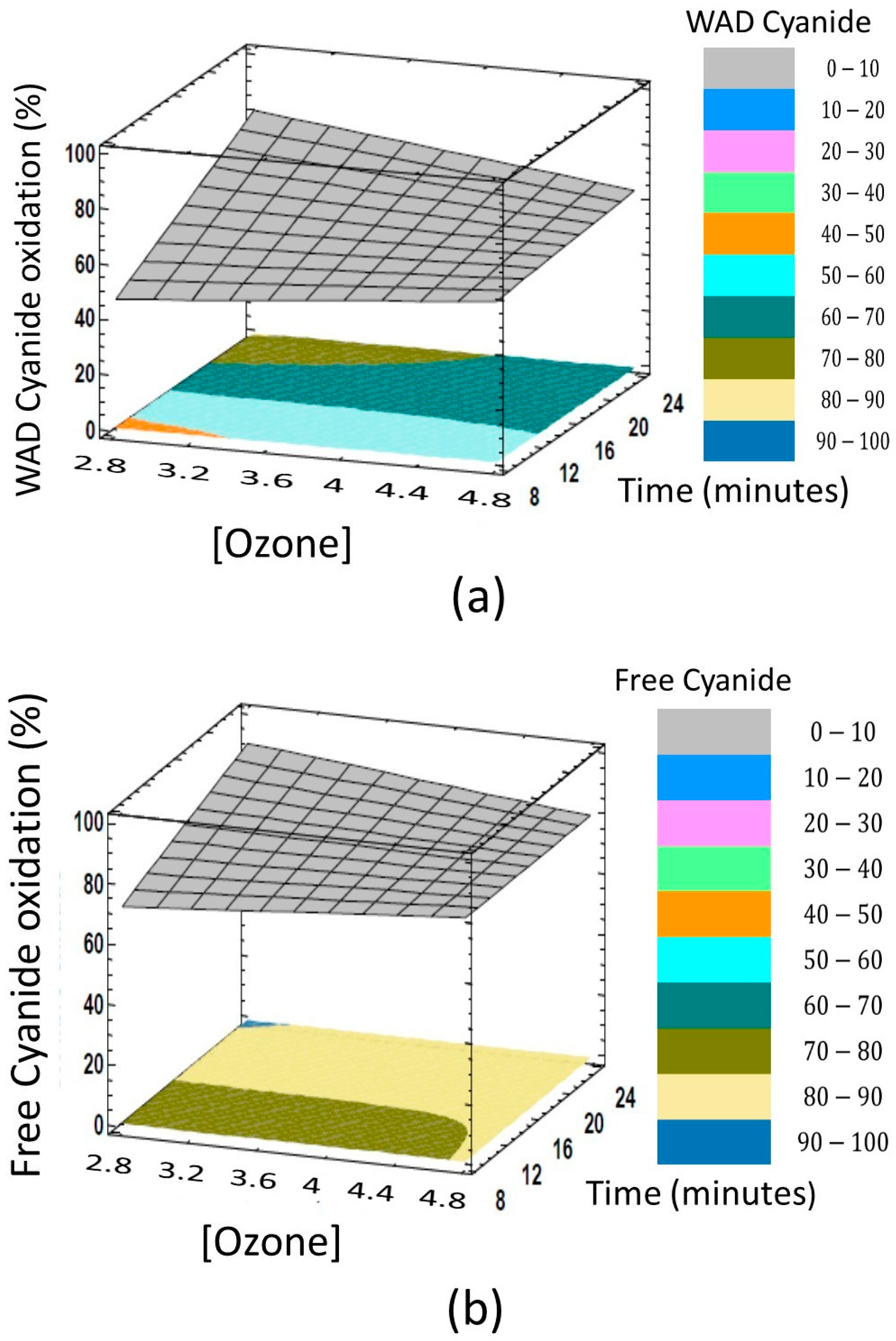
Increasing ozonation time results in a corresponding increase in the oxidation percentage of WAD cyanide, reaching approximately 70% at low ozone concentrations (Figure 8a). Free cyanide oxidation becomes more evident with an increasing reaction time, particularly at high ozone concentrations, with oxidation percentages reaching 90% (Figure 8b). The oxidation time determines the reaction kinetics, independent of ozone concentration. Greater reaction time results in higher oxidation percentages of free cyanide than of WAD cyanide.
In the following sequence of graphs, the O3/O2 flow was constant against ozone concentration, pH, temperature, NH4HSO3 concentration, and reaction time.
Based on the results of all combinations established in the experimental matrix, Table 5 presents the estimated optimal values for the oxidation of WAD and free cyanide. The optimal values for O3/O2 flow, temperature, and ozone injection time are the same for WAD and free cyanide. However, the optimal pH and NH4HSO3 concentration differ for WAD cyanide oxidation (10 and 2, respectively) compared with those for free cyanide oxidation (8 and 1, respectively).
The volume graphs, shown in Figure 3, clearly represent the estimated optimal values for WAD and free cyanide oxidation. The volume corresponding to the maximum oxidation value of free cyanide is greater than that of WAD cyanide oxidation. However, in both cases, oxidation values above 70% are achieved, allowing for optimal WAD cyanide oxidation to achieve maximum oxidation for both cyanide types.

4. Discussion

The mining industry can contaminate water sources with cyanide, forming free cyanide, the most toxic form, at pH 9.3–9.5, where the anion ( C N ) and hydrogen cyanide (HCN) are in thermodynamic equilibrium. The free cyanide concentration that lethally affects the flora and fauna is 20–100 µg/L [18]. The World Health Organization recommends a maximum concentration of 0.5 mg/L to affect humans; however, the severity of effects depends on exposure duration and can include tremors and neurological effects [18].
The dissociation of WAD cyanide includes the free cyanide (HCN/ C N ) and the metal–cyanide complex at high- or low-acid conditions, depending on whether it corresponds to a strong or weak complex; however, the complex dissociation is accomplished by the release of free cyanide [19].
The WAD and free cyanide oxidation are promoted by the presence of free radicals ( H O , HOO), when ozone is present, thereby contributing to the slow formation of cyanate (CNO), a non-toxic compound [20].
The average oxidation percentages of WAD and free cyanide were 67.2423% and 84.1413%, respectively.
The optimal values of the O3/O2 ratio, temperature, and reaction time could be maintained constant, thereby favoring the oxidation of both cyanide species.
A pH of 10 and an ammonium bisulfite concentration of 2 kg/ton corresponded with the optimal values for WAD cyanide oxidation.
As shown in Table 6, temperature and pH have a low impact on the oxidation of WAD cyanide; however, ammonium bisulfite, ozone flow rate, and reaction time significantly affect the reaction kinetics. The high concentration of ammonium bisulfite, maximum O3/O2 flow, and reaction time offer the possibility to improve the WAD cyanide oxidation percentage, and, with the correct proportion of copper-like catalyst, obtain near 90% of degradation.
On the other hand, temperature and ammonium bisulfite concentration are not significant for the oxidation of free cyanide, indicating that ozone flow, pH, and reaction time are essential to prevent hydrogen cyanide formation and to achieve maximum free cyanide degradation (approximately 90%). Specifically, regarding temperature and ozone performance, the literature indicates that ozone solubility in aqueous solutions decreases considerably above 25 °C, which may be one reason for the observed reduced performance. In addition, pH is a significant factor, as hydronium ions can promote ozone decomposition, leading to less efficient oxidation at basic pH values [5,6].
pH is a relevant factor in maintaining thermodynamic equilibrium between the formation of HCN and CN and in improving free cyanide oxidation; however, it is not fundamental for WAD cyanide oxidation.
The statement regarding the two-stage oxidation of WAD cyanide is based on a mechanistic interpretation rather than on experiments conducted exclusively at alkaline pH.
In the present study, all experimental work was intentionally performed under alkaline conditions (pH 8–10), which are industrially relevant and necessary to prevent HCN volatilization. As shown in the volumetric and surface plots (Figure 3, Figure 4, Figure 5, Figure 6, Figure 7 and Figure 8), the highest percentages of free cyanide oxidation were consistently observed at pH values near 8, confirming that free cyanide oxidation is kinetically favored under these conditions. However, WAD cyanide oxidation remained lower because, at alkaline pH, the dissociation of metal–cyanide complexes is limited, reducing the availability of free cyanide for subsequent oxidation.
Table 6 shows the correlations between the main factors and the high- or low-impact effects on WAD and free cyanide oxidation, showing that the temperature and pH have a low impact on WAD cyanide oxidation. On the other hand, temperature and ammonium bisulfite concentration demonstrated a low impact on free cyanide oxidation.
Ozone solubility in aqueous solutions decreases considerably above 25 °C, which could be one of the reasons for the reduced performance observed. In addition, pH is a significant factor, as hydronium ions can promote ozone decomposition, resulting in less efficient oxidation at basic pH values [9,10].
Mechanisms responsible for the observed trends are not studied in this work and could be further investigated in a future publication, given the many variables in this study.

5. Conclusions

Based on 60 experimental tests using a factorial design of the main variables in the ozone oxidation process, it was confirmed that free cyanide is oxidized to a greater extent, achieving an average oxidation of 84.1413% compared with WAD cyanide, which reported an average oxidation of 67.2423%. The oxidation of WAD cyanide requires two stages, considering that the dissociation of metal–cyanide complexes requires acidic pH conditions in the first stage to produce the free cyanide, which reduces the oxidation kinetics of WAD cyanide at pH values of 8, where the highest percentage of free cyanide oxidation was obtained.
To facilitate decision-making, the order in which process variables impact WAD cyanide and free cyanide oxidation is as follows:
For WAD cyanide oxidation,
F l o w   o f   O 3 O 2 > t i m e > N H 4 H S O 3 > p H > t e m p e r a t u r e
For free cyanide oxidation,
F l o w   o f   O 3 O 2 > t i m e > p H > t e m p e r a t u r e > N H 4 H S O 3
It is confirmed that pH ranks fourth in terms of impact on WAD cyanide oxidation at alkaline pH, whereas pH for free cyanide oxidation ranks third.
Ozone concentration, correlated with the O3/O2 flow rate and time, is the primary factor in the oxidation of both WAD cyanide and free cyanide.
The ozone molecule (O3) primarily reacts with free cyanide to form cyanate ( C N O ), and its reaction with HCN is minimal. Therefore, it is recommended to reduce HCN levels by operating at high pH in the final stages of the process. The dissociation of the metal-cyanide complex to produce free cyanide allows for the formation of free radicals ( H O · , HOO∙), where both free cyanide and radicals contribute to the oxidative destruction of cyanide.
Although the ozonation reaction of free cyanide to cyanate is relatively slow, the six variables studied in the following order: ozone concentration, O3/O2 flow rate, pH, temperature, NH4HSO3 concentration, and time, positively affect the oxidation of free cyanide.
Working at the recommended optimal WAD cyanide oxidation values also enables free cyanide to reach 90%.
The reference to acidic pH is therefore conceptual and reflects well-established cyanide chemistry, in which the dissociation of WAD metal–cyanide complexes occurs more readily under mildly acidic conditions, generating free cyanide that can then be efficiently oxidized. Our experimental results indirectly support this interpretation by showing that, although free cyanide oxidation is maximized at pH ≈ 8, WAD cyanide oxidation is kinetically constrained under these conditions, thereby justifying the need for a two-stage approach.

Author Contributions

Conceptualization, S.O.L., C.E.A., and J.M.H.; methodology, E.A.P., C.E.A., and J.M.H.; software, H.H.H.; validation, A.S.G., C.M.L., and J.M.H.; formal analysis, S.O.L. and C.E.A.; investigation, C.E.A. and J.M.H.; resources, S.O.L.; data curation, two years; writing—original draft preparation, J.M.H.; writing—review and editing, J.M.H. and C.M.L.; visualization, A.S.G.; supervision, A.S.G.; project administration, C.E.A. and J.M.H.; funding acquisition, S.O.L. All authors have read and agreed to the published version of the manuscript.

Funding

This research was funded by the Fresnillo Group and Center for Research and Technological Development in Electrochemistry (CIDETEQ), grant number PCO-101. The APC was funded by the authors of this paper.

Data Availability Statement

The original contributions presented in this study are included in the article. Further inquiries can be directed to the corresponding author.

Acknowledgments

We would like to thank the Fresnillo Group for the economic support and the Center for Research and Technological Development in Electrochemistry (CIDETEQ) for their continuous support by providing their facilities, ensuring safety, and taking precautions during the execution of the PCO-101 Project. For any underlying research materials related to this paper (for example, data or models), please write to jmorales@cideteq.mx.

Conflicts of Interest

Author Saúl Ortiz Landeros was employed by the company Fresnillo Plc. The remaining authors declare that the research was conducted in the absence of any commercial or financial relationships that could be construed as a potential conflict of interest.

References

  1. David, A.D.; Rajat, S.G.; George, M.W.C. Cyanide in Water and Soil, Chemistry, Risk, and Management; Taylor & Francis Group: Abingdon, UK, 2006; ISBN 978-1-56670-666-7. [Google Scholar]
  2. Danielle, H.; Paul, B.; Coby, J. Cyanide detoxification of gold cyanidation tails and process streams. Miner. Process. Extr. Metall. 2012, 121, 228–236. [Google Scholar] [CrossRef]
  3. Julio César, P.D.; Óscar Fabián, H.C. Comportamiento electroquímico del Cianuro. Ing. Y Desarro. 2008, 24, 63–76. [Google Scholar]
  4. Edison, G.P.; Paola Andrea, C.M.; Claudia, C.J.; y Tomás Felipe, P.V. Oxidación Fotocatalítica de Cianuro; Universidad EAFIT: Medellín, Colombia, 2005; ISSN 1692-0694. [Google Scholar]
  5. Gurol, M.D.; Bremen, W.M.; Holden, T.E. Oxidation of Cyanide in Industrial Wastewater by Ozone. Environ. Prog. 1985, 4, 46–51. [Google Scholar] [CrossRef]
  6. Joseph, T.B.; Stephen, D.E.; David, A.D. Development of a Plant Uptake Model for Cyanide. Int. J. Phytoremediat. 2006, 8, 25–43. [Google Scholar] [CrossRef] [PubMed]
  7. Ricardo, L.L. Destrucción de Cianuro en Efluentes de la Industria Minera Mediante el Empleo de Reductores Químicos; Catálisis Industrial S.A. de C.V.: Tizayuca, México, 2024; pp. 285–290. Available online: https://www.ocmal.org/wp-content/uploads/2017/03/destruccion_de_cianuro.pdf (accessed on 27 January 2026).
  8. Terry, I.M.; Michael, M.B.; Adrian, S. Chemistry and Treatment of Cyanidation Wastes. In Treatment and Recovery of Cyanide; Chapter 6; Mining Journal Books Ltd.: London, UK, 2001; pp. 326–333. [Google Scholar]
  9. Patricia, G.L. Degradación de Cianuros Mediante Oxidación Química en Efluentes Industriales. Master’s Thesis, Departamento de Química Orgánica e Inorgánica, Universidad de Oviedo, Oviedo, Spain, 2012. [Google Scholar]
  10. Roth, J.A.; Sullivan, D.E. Solubility of ozone in water. Ing. Eng. Chem. Fundam. 1981, 20, 137–140. [Google Scholar] [CrossRef]
  11. Bin, A.K. Ozone Solubility in Liquids. Ozone Sci. Eng. J. Int. Ozone Assoc. 2006, 28, 67–75. [Google Scholar] [CrossRef]
  12. Piervandi, Z. Pretreatment of refractory gold minerals by ozonation before the cyanidation process: A review. J. Environ. Chem. Eng. 2023, 11, 109013. [Google Scholar] [CrossRef]
  13. Freitas, J.; Horta, D. Impacts of cyanide in gold mining and cyanide removal methodologies in liquid waste from gold processing. Rev. De Metal. 2023, 59, e247. [Google Scholar] [CrossRef]
  14. Jiménez-Prieto, Y.J.; Esperanza-Pérez, G.; Ramírez-González, S.; Alomas-Vicente, I. Assessment of Technological alternatives for cyanides waste waters management in gold ores processing plant. Rev. Cuba. De Química Habana Cuba 2020, 32, 218–231. [Google Scholar]
  15. Pandey, N.; Dutta, S.; Biswas, P. Cyanide mitigation at steel metallurgical process’s effluent. Water Air Soil Pollut. 2023, 234, 682. [Google Scholar] [CrossRef]
  16. Mamelkina, M.A.; Herraiz-Carbone, M.; Cotillas, S.; Lacasa, E.; Saez, C.; Tuunila, R.; Sillanpaa, M.; Hakkinen, A.; Rodrigo, M.A. Treatment of mining wastewater polluted with cyanide by coagulation processes: A mechanistic study. Sep. Purif. Technol. 2020, 237, 116345. [Google Scholar] [CrossRef]
  17. Schneider, C.L.; Matiolo, E.; Neumann, R.; Gomes, O.F.M. Beneficiamento de Minérios. Recursos Minerais no Brasil: Problemas e Desafios; Academia Brasileira de Ciên-cias: Rio de Janeiro, Brazil, 2019; pp. 257–262. Available online: https://www.abc.org.br/IMG/pdf/doc-7006.pdf (accessed on 27 January 2026).
  18. Zhang, H.; Zhang, Y.; Qiao, T.; Hu, S.; Liu, J.; Zhu, R.; Yang, K.; Li, S.; Zhang, L. Study on ultrasonic enhanced ozone oxidation of cyanide-containing wastewater. Sep. Purif. Technol. 2022, 303, 122258. [Google Scholar] [CrossRef]
  19. Botz, M.M.; Mudder, T.I.; Akcil, A.U. Chapter 35—Cyanide treatment: Physical, chemical, and biological processes. In Gold Ore Processing, 2nd ed.; Elsevier: Amsterdam, The Netherlands, 2016; pp. 619–645. [Google Scholar]
  20. Krylova, L.N.; Seliverstov, A.F.; Ryabtsev, D.A. Cleaning of industrial waters containing cyanides by using a combination of ozone and hydrogen peroxide. Metallurgist 2021, 64, 1331–1339. [Google Scholar] [CrossRef]
Figure 1. Electrochemical potential vs. pH diagram for the system CN-H2O at 25 °C.
Mining 06 00009 g001
Figure 2. Experimental system for ozone injection in a 1 L cylindrical reactor with an alkaline trap as a safety measure.
Mining 06 00009 g002
Figure 3. (a) Volume graphs with pH = 10 and temperature of 25 °C indicate the oxidation percentage of WAD cyanide, and (b) volume graphs with NH4HSO3 concentration of 1.0 and temperature of 25 °C for the oxidation of free cyanide.
Mining 06 00009 g003
Figure 4. (a) Plot of the effect of ozone concentration and O3/O2 flow on (a) WAD cyanide and (b) free cyanide oxidation during 16 min of ozone injection, under a temperature of 35 °C for both cases.
Mining 06 00009 g004
Figure 5. Effect of ozone concentration and pH on the oxidation of (a) WAD and (b) free cyanide during 16 min of ozone injections, under a temperature of 35 °C for both cases.
Mining 06 00009 g005
Figure 6. Effect of ozone concentration and temperature on the oxidation of (a) WAD and (b) free cyanide, with a pH of 9 and time of ozone injection of 16 min for both cases.
Mining 06 00009 g006
Figure 7. Effect of ozone concentration and NH4HSO3 consumption on the oxidation of (a) WAD and (b) free cyanide with a pH of 9, a temperature of 35 °C, and 16 min of ozone injection for both cases.
Mining 06 00009 g007
Figure 8. Effect of ozone concentration and ozone injection time on the oxidation of (a) WAD and (b) free cyanide with a pH of 9.0 and a temperature of 35 °C, for both cases.
Mining 06 00009 g008
Table 1. Classification of metal–cyanide complexes in aqueous solution [1].
PhaseClassificationCompound
Liquid (water)Free cyanide H C N , C N
Metal–cyanide complexesWeak complexes
A g ( C N ) 2 , C d C N , Z n ( C N ) 4 2 , C d ( C N ) 3 , C d ( C N ) 4 2
Strong complexes
F e ( C N ) 6 4 , F e ( C N ) 6 3 , C o ( C N ) 6 4 , A u ( C N ) 2
Cyanate, thiocyanate C N O , S C N
OrganocyanidesNitriles, cyanohydrins
Table 2. Performance of the INCO process for cyanide oxidation in the world [8].
Mining Unit in the WorldCNTOT (mg/L)Reagent Usage (g/g) CHTOT
BeforeAfterSO2LimeCu2+
Colosseum3740.44.60.120.04
Ketza River1505.06.000.30
Equity1752.33.400.03
Casa Berardi1501.04.5-0.10
Westmin Premier150<0.25.8-0.12
Golden Bear2050.32.8--
Table 3. The evaluation range for each process variable implemented in the experimental matrix for the WAD and free cyanide oxidation with ozone injection.
Variable
(Factors)
UnitsValue to Be Evaluated (Levels)
MinimumMediumMaximum
O3/O2 flowSCFM369
pH-8910
Temperature°C253545
NH4HSO3 concentrationkg/ton11.52
Reaction timeMinutes81624
SCFM—standard cubic feet per minute.
Table 4. Average oxidation percentage of WAD and free cyanide, grouped into sets of 10 samples.
Group of 10 Samples Average   Oxidized   WAD   C N [%] Average   Oxidized   Free   C N [%]
165.0555 ± 5.09289.5088 ± 3.149
270.7480 ± 6.40192.7790 ± 3.535
368.4090 ± 5.55688.4700 ± 5.876
461.2150 ± 8.51064.9540 ± 7.576
565.8910 ± 8.09281.0210 ± 6.734
672.1350 ± 10.10188.1150 ± 4.891
Table 5. Estimated optimal values for WAD cyanide and free cyanide oxidation.
FactorLowHighOptimal Values for WAD
Cyanide Oxidation
Optimal Values for Free Cyanide Oxidation
[Ozone] Volts2.84.82.82.8
O3/O2 flow SCFM3.09.09.09.0
pH8.010.010.08.0
Temperature °C25.045.025.025.0
[NH4HSO3] kg/ton1.02.02.01.0
Time (minutes)8.024.024.024.0
Table 6. The effect of the main variables on the oxidation of WAD and free cyanide.
Variable
(Factors)
WAD CyanideFree Cyanide
O3/O2
(flow rate)
Mining 06 00009 i001Mining 06 00009 i002
pHMining 06 00009 i003Mining 06 00009 i004
TemperatureMining 06 00009 i005Mining 06 00009 i006
NH4HSO3
concentration
Mining 06 00009 i007Mining 06 00009 i008
Reaction timeMining 06 00009 i009Mining 06 00009 i010
Mining 06 00009 i011—high impact; Mining 06 00009 i012—low impact.
Disclaimer/Publisher’s Note: The statements, opinions and data contained in all publications are solely those of the individual author(s) and contributor(s) and not of MDPI and/or the editor(s). MDPI and/or the editor(s) disclaim responsibility for any injury to people or property resulting from any ideas, methods, instructions or products referred to in the content.