1. Introduction
Deep mining in the Canadian Shield is regularly plagued by the occurrence of induced seismicity and its resulting damage on excavations. This damage often manifests in violent and unpredictable rockbursting that has the potential to injure or kill workers. In a 2014 report by the Ontario Ministry of Labour, rockbursting was identified as the leading hazard in Canadian hard-rock mining [
1]. Rockbursting has occurred in Canadian mines for close to 100 years, with the first reported events occurring at mines in Sudbury and Kirkland Lake, during the late 1920s to 40s and Red Lake, Elliot Lake and Val d’Or during the 1960s to 80s. In extreme cases during the early days of seismically active mining, large seismic events (Nuttli magnitude 3 and greater) caused mine-scale instabilities and failures resulting in the fatalities of many workers and large losses of resources. In 1958, a rockburst fatally injured 75 workers at the Springhill Colliery mine in Nova Scotia [
2]. On August 14th, two large seismic events with Nuttli Magnitude (NM) 3.1 and 4.2 occurred in the Wright–Hargreaves mine that resulted in the deaths of two miners working on a shrinkage stope, the collapse of 11 level access, and extensive damage to the shaft, which lead to closure of the mine two weeks after the event [
3,
4]. These types of large events are associated with mechanisms and processes that take place at the mine scale and are thus termed Mine-Scale Events (MSE) [
5]. These events have great potential to cause personnel fatalities and loss of resources, which can be devastating to the communities that support and are supported by the mines. As of 2021, 27 mines in Canada have experienced seismic events larger than a Nuttli Magnitude of 3, with 15 of the mines experiencing more than one of these events [
5]. As Canadian mines are becoming deeper, larger events are increasingly common.
Seismicity in hard-rock underground mines are a consequence of stress-driven failure processes. As such, seismicity provides a measurable analog for rock mass failure. Seismic events represent the release of stored elastic strain in the form of elastic stress waves, heat, and plastic deformation [
6,
7]. Seismic events under confined conditions are triggered when the deviatoric stress in the rock mass is sufficient to reach its peak strength and induce some amount of plastic damage. Once some amount of plastic strain is accumulated, the rock mass rapidly moves to a residual state and releases elastic strain energy in the form of a shear rupture [
8]. The propagation velocity of the fractures within the rock mass rupture controls the wave frequency and magnitude of the radiated elastic strain energy [
7]. A rapid rupture velocity will result in high-magnitude events as the elastic strain energy is dissipated over shorter intervals of time, while quasi-static fractures will release the same amount of energy over longer periods of time. Seismic waves then interact with excavation boundaries to cause the violent ejection of rock blocks resulting in a rockburst [
8,
9].
Within mining contexts, the deviatoric stress needed to cause these events is a result of stress redistribution around excavations. As such, mining-induced seismic events are not random, but are a consequence of the rock mass failure process in response to mining [
10]. These induced events are controlled by several factors within mining environments: excavation geometry, in situ and induced stress fields, geological structures, rock mass stiffness, rock mass strength, extraction rates, and blast design all play key roles in the distribution and intensity of seismicity within a rock mass. Since these parameters are largely understood in most operations, as they are needed for mine-design activities, correlation between damage mechanisms and the event magnitudes can be made. There are a wide variety of categorizations that can be made to fit observed seismic events within mining contexts [
11,
12,
13]. For the purposes of this paper, seismic events can be classified by their locations relative to mine excavations and their maximum potential magnitude. The observable mechanisms for these events can then be classified into five categories (
Table 1).
These mechanisms can then be further reduced based on their levels of confinement. Strain burst- and buckling-type events occur proximally to excavations and are associated with low-confinement conditions. Pillar- or face crush-type events occur proximally to mid-distally from excavations and are associated with low-to-moderate-confinement conditions. Shear rupture- and fault slip-type events can occur proximally or distally from excavations and are often associated with high-confinement conditions [
13]. The potential locations of these events can then be predicted based on the geometry of the lithological structures and excavations [
14].
Seismic risk in underground mines is typically managed in two forms, strategic controls on seismicity, and reactive measures to the response of the rock mass to mining. Strategic controls generally take the form of minimizing stress build-up on high hazard seismic sources [
15]. Strategic controls are implemented in the mine design and planning phase as geotechnical constraints on the mine design. They take the form of mining method selection, excavation sequencing, sizing of mining geometries, constraints on blast size and timing, use of preconditioning or destressing methods, and ground-support design [
16,
17]. These constraints are typically in direct conflict with the optimal cost recovery of ore, equipment and material scheduling, and development requirements. However, these measures are critical to the safe and economic extraction of the ore within the mine. Reactive measures to manage seismicity consist of evaluating the rock mass hazards and conditions as mining progress and implementing appropriate measures to mitigate exposure. Seismic monitoring systems are used to assess the event rate, after blasting to determine re-entry protocols, to minimize rockburst risks and personal exposure [
9,
10]. Additional measures such as hazard mapping can be used to inform ground-support requirements for emerging conditions [
18].
The most widely used strategic controls on seismicity are the sequencing of mining excavations. The sequence of mine excavations directly controls the distribution of induced stresses within the mining blocks. Sequences for deep mining have adopted the same strategies used at shallower depths [
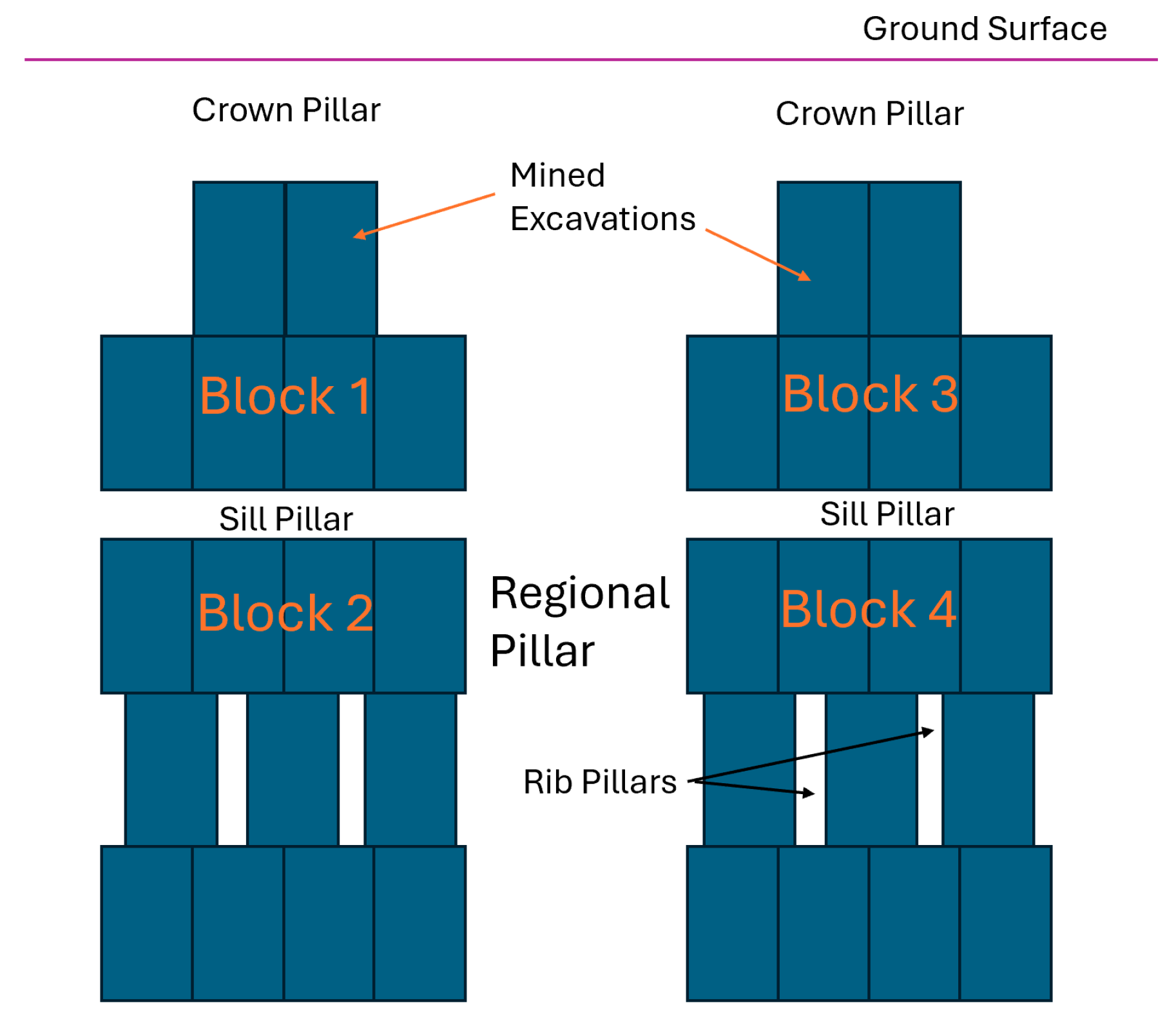
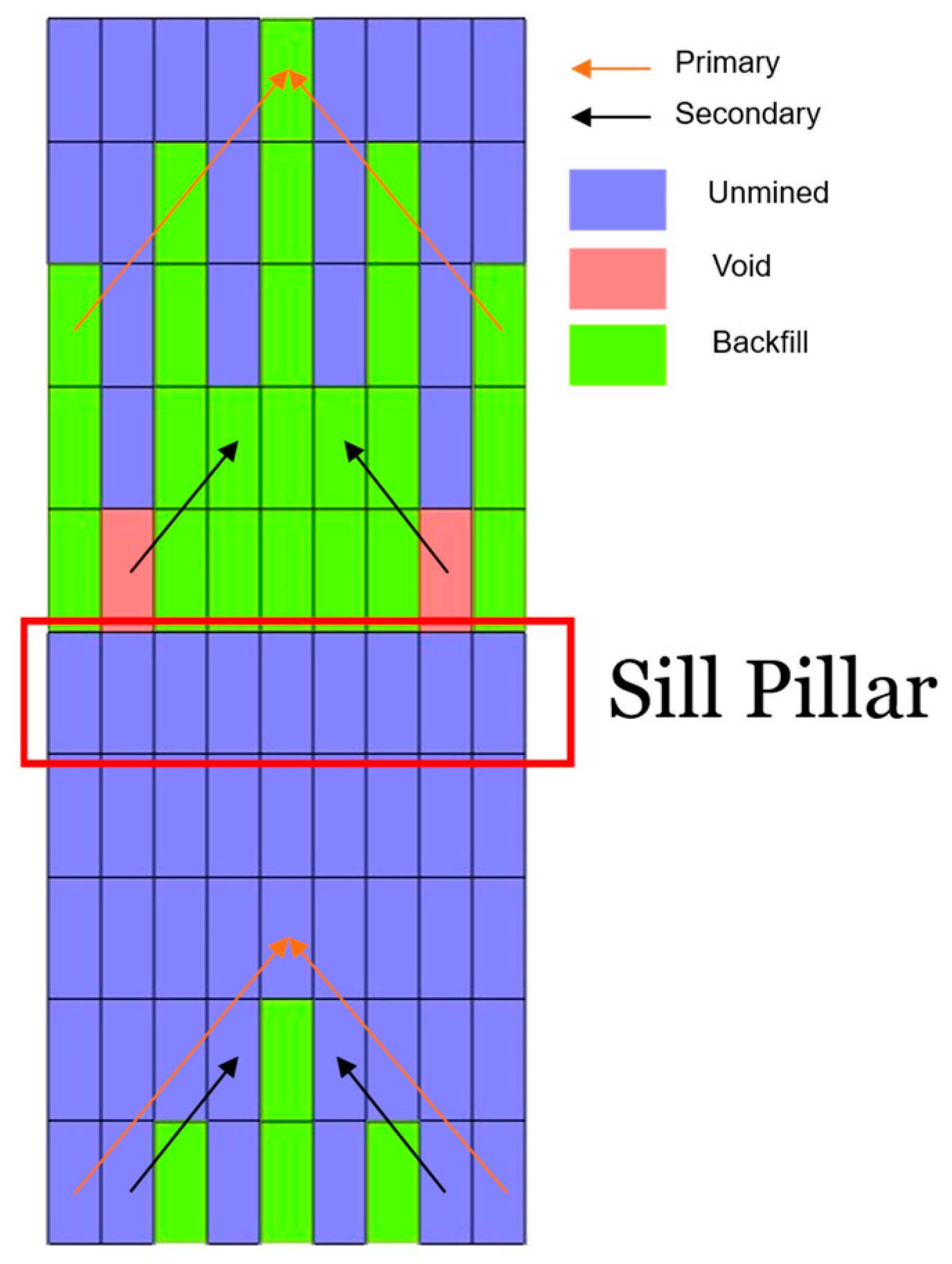
18]. Strategies such as using primary–secondary stopes with moving fronts that have vertical 1-3-7 stope offsets create independent mining fronts that allow for increased extraction rates. These are useful at deeper depths since primary stopes shed stress into secondaries as they advance. Secondary stopes are often sized to yield as the primaries advance, dissipating local elastic strain accumulation prior to development and mining of the secondaries. A consequence of these sequences is the creation of intact regions of rock bound by excavations called pillars. Pillars in underground mines can take many forms and orientations (
Figure 1 below) and accumulate stress as the mining sequence advances. Pillars are also strategic controls to manage the response of the rock mass to mining, as they separate mining blocks, decrease unsupported excavation spans, and allow the concurrent mining of multiple mineralized zones, increasing the production rate of early production.
The difficulty with pillars comes from their extraction. Since these pillars accumulate stress from large regions of excavated voids, they tend to fail in violent ruptures which represent a large seismic hazard mechanism. The seismic events generated from the yielding of pillars are typically one to two orders of magnitude larger than the events experienced in the early stages of the mining sequence (
Table 1). Additional strategic controls are required to safely mine through these high-stress pillars. One emerging strategy to manage the seismicity associated with mining pillars is to precondition the pillars prior to mining. This allows for the dissipation of stored elastic strain in a controlled and manageable manner prior to developing into the pillars. Currently the most popular precondition method is destressing blasting [
15], either by blasting ahead of development tunnels to reduce bursting hazards at the face [
19], used in all types of deep underground mining, or by choke blasting larger regions of the rock mass to create a stress shadow in front of the advancing mining front [
20], popular in deep stoping mines.
Less frequently utilized and understood is the use of hydraulic fracturing (HF) to precondition the rock mass prior to mining. Hydraulic fracture preconditioning has been successfully used in several underground mining environments. Block caving operations have successfully used the method on large scales to increase primary fragmentation, induce cave propagation, and lower the maximum magnitude of induced seismic events [
21,
22,
23,
24,
25,
26]. Newer mining methods such as raise caving, have leveraged hydraulic fracturing to induce caving and improve seismic response in deep high-strength rock masses [
27,
28,
29]. Assessment of induced seismicity before and after hydraulic fracture treatment has found a general reduction in the maximum magnitude of seismic events experienced during mining activities [
22,
30]. Hydraulic fracturing is also a tool regularly used in coal mines to stimulate methane wells and enhance gas drainage [
31,
32,
33,
34]. Despite the large and continued use in other areas of mining, the method is still very much in its infancy in the context of deep mining using traditional stoping methods (e.g., Long Hole Open Stoping, Avoca, Modified Avoca, Almanac, and Shrinkage).
A notable field investigation is the trialing of hydraulic fracture initiation at Vale’s Creighton and Copper Cliff mines. Fracture initiation and propagation at Creighton was successfully completed using injection pressures of up to 60 MPa, with flows of 50 L per minute [
35]. The trials successfully showed that hydraulic fractures can be initiated within the deep high-stress settings of the Sudbury mining camp. These trials, however, experienced several operational challenges with breakout within the treatment borehole, difficulty with flow demand from the existing water supply infrastructure, and packer installation and positioning within the borehole [
35].
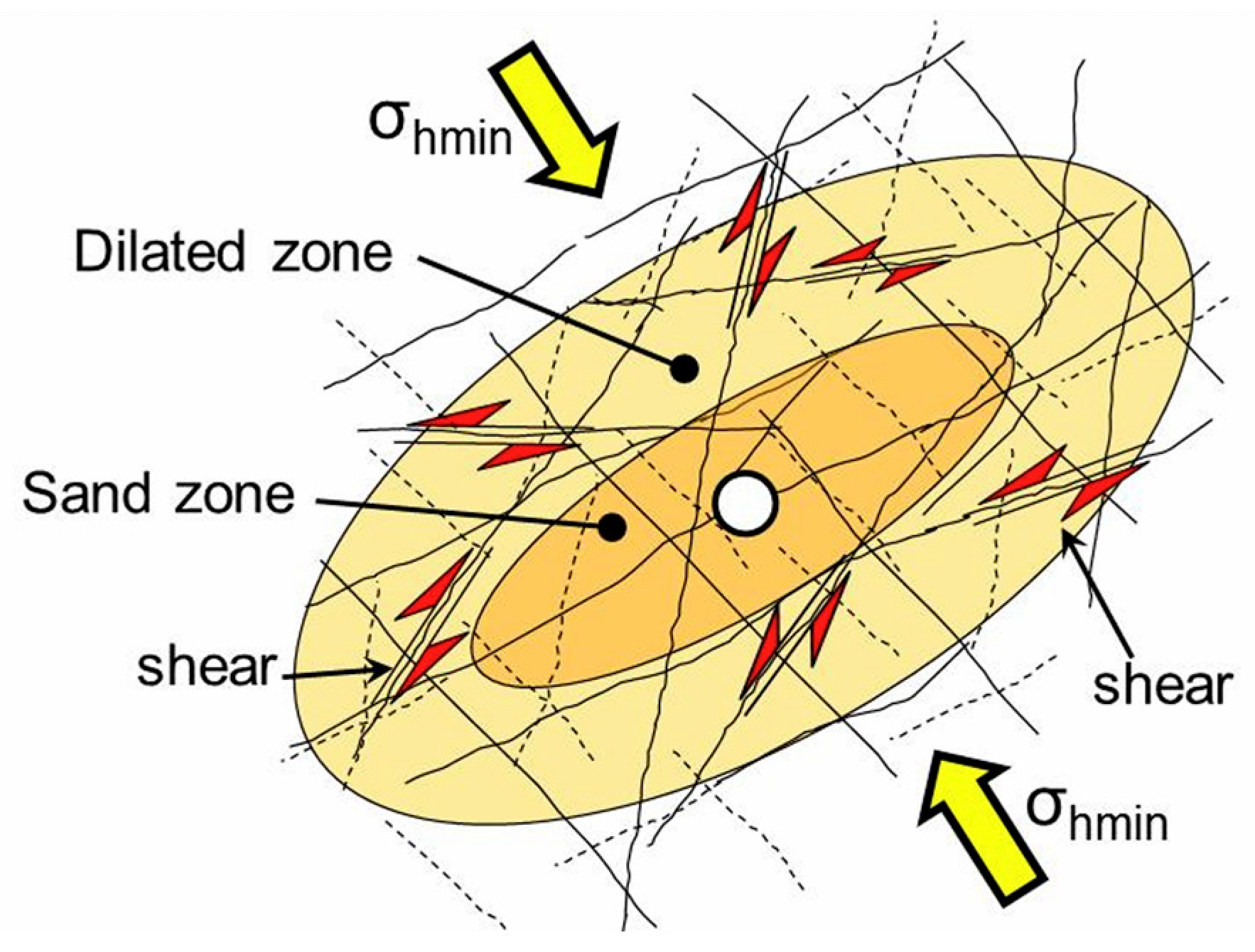
Notwithstanding the operational challenges associated with these high-stress environments, the actual effectiveness of hydraulic fracture treatment is unknown in hard brittle rocks under a complex anisotropic and heterogeneous stress field found in many operations throughout the Canadian Shield. To achieve the goal of stress reduction utilizing hydraulic fracturing; the stimulation, mobilization, and enhancement of natural fracture systems is required [
36]. The effects on the rock mass from hydraulic fracturing can be seen from two dominant mechanisms, the propagation of new tensile fractures and the opening of existing discontinuities. Natural discontinuities with optimal orientation to the stress field tend to prop open prior to fracture initiation due to a lower energy demand for opening an existing fracture versus propagating one through intact rock [
37]. This leads to a region proximal to the hydraulic fracture with fully propped fracture openings, with granular material typically pumped into the fractures to keep the fracture open post treatment [
38]. Distal fluid flow from the main stimulated volume occurs at a lower pressure than that required to open or induce fracturing. The pressures within this outer region, however, may be sufficient to mobilize shearing along critically orientated fractures subjected to the in situ stress field. This results in a region of dilation surrounding the propped fractures from the shear mobilization of the natural fractures and rotation of blocks within the rock mass [
39], as seen in
Figure 2 below.
The goal of treatment in mining pillar contexts is stress and stiffness modification within the rock mass. The stress modification is targeted by achieving a reduction in strain energy density, which naturally reduces the magnitude and frequency of seismic events in the rock mass [
40]. This can be effectively achieved by the promotion of dilation and shearing of the rock mass which dissipates elastic strain through plastic deformation of both intact rock and natural fractures. This type of rock mass behavior, induced by hydraulic fracturing activities, has been identified through the observation of shearing-type seismic events during hydraulic fracturing [
39,
41,
42].
A stiffness modification is achieved in the rock mass through the development of a new joint set via hydraulic fracturing and rock mass dilation around the hydraulic fractures. The stiffness in a rock mass affects its behavior in two manners, its ability to deform and store strain under elastic conditions and its post-peak response due to changes in the mine-system stiffness. A lower-stiffness rock mass will naturally accumulate less stress for a given strain during elastic loading, as can be observed from Hooke’s law. The stiffness of the loading/mining system has previously been observed to affect the post-peak response of brittle materials under multiple scales from uniaxial compression testing of rock samples to the behavior of yielding pillars [
43,
44,
45,
46]. Loading-system stiffness controls the energy release from the unloading of the bounding volume of rock into the rock undergoing yielding [
43]. If the energy supplied by the surrounding rock through reversible deformation (elastic relaxation) is greater than what the yielding rock mass can absorb, unstable rock failure will occur [
43,
47]. Thus, if the stiffness of a mining pillar is lowered in relation to the bounding rock mass, the failure of the pillar can be stabilized into a quasi-static rupture [
48]. This will reduce the velocity of the shear rupture, thus reducing the magnitude of the resulting seismic event.
In summary, hydraulic fracturing presents a previously unexplored solution to the stress management of highly stressed pillars in deep hard-rock stoping mines. Current applications of hydraulic fracturing as a preconditioning method focus on the cave initiation and propagation in block caving mines, improvement of the seismic response of rock masses, and permeability enhancement for gas drainage in coal mines. The potential mechanism in which hydraulic fracturing alters the behavior of mining pillars are through stress and stiffness modification. Stress modification is achieved through the release of elastic strain energy during the fracturing process. Stiffness modification is achieved by reducing the loading-system stiffness through rock mass dilation and the introduction of new fractures. The design and implementation of hydraulic fracture treatment for use in mining pillar destressing is a currently unexplored area of the literature.
This study investigates how hydraulic fracturing can be used as a strategic tool in the mine-planning process to mitigate hazards associated with the mining of highly stressed pillars. Specific design parameters for the implementation of hydraulic treatment were investigated in the context of a theoretical deep open stoping mine consistent with those typically found in the Canadian Shield. Strategies and considerations to integrate treatment into a stoping sequence were established. Additionally, treatment assessment criteria that can be directly used for operational decision-making were addressed in this study.
2. Methodology
To understand how hydraulic fracturing can effectively be integrated into deep open stoping mining operations, a conceptual design was established and a series of simple numerical models were created. A theoretical mine was created to facilitate the analysis and design of the hydraulic fracture treatment within deep open stoping contexts. Relevant high-level design considerations for the integration of hydraulic fracture treatment into a mine plan was established. Parameters such as the timing of treatment within the mining sequence, treatment location, and orientation of treatment holes were investigated.
Two stages of numerical modeling were completed to understand the design constraints and effects of hydraulic fracturing on a mining pillar. FLAC3D was utilized to select the timing of treatment within a planned stoping sequence. RS2 was utilized to assess the effects of different geometries on the magnitude of stress dissipation within a pillar.
2.1. Theoretical Mine Model
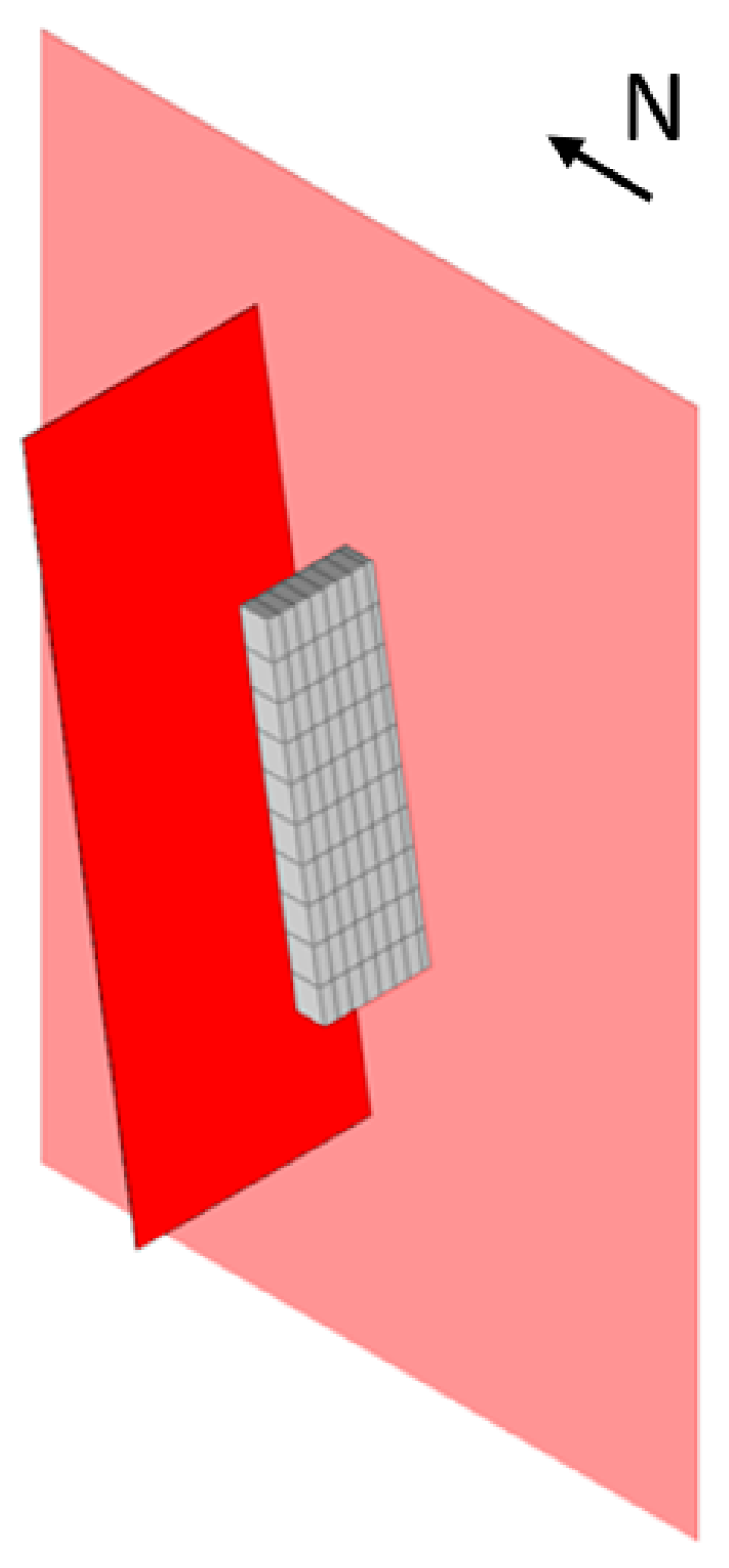
A theoretical deep orogenic gold deposit consistent with those found in the Canadian Shield was created to facilitate this analysis. The orebody is steeply dipping with a dip of 80 degrees, a width of 30 m, and a strike length of over 150 m. Two faults were included in the theoretical model; an orebody parallel fault embedded 65 m into the footwall with a strike length of over 200 m, and a vertical orebody perpendicular fault intersecting the outer mining excavations (
Figure 3).
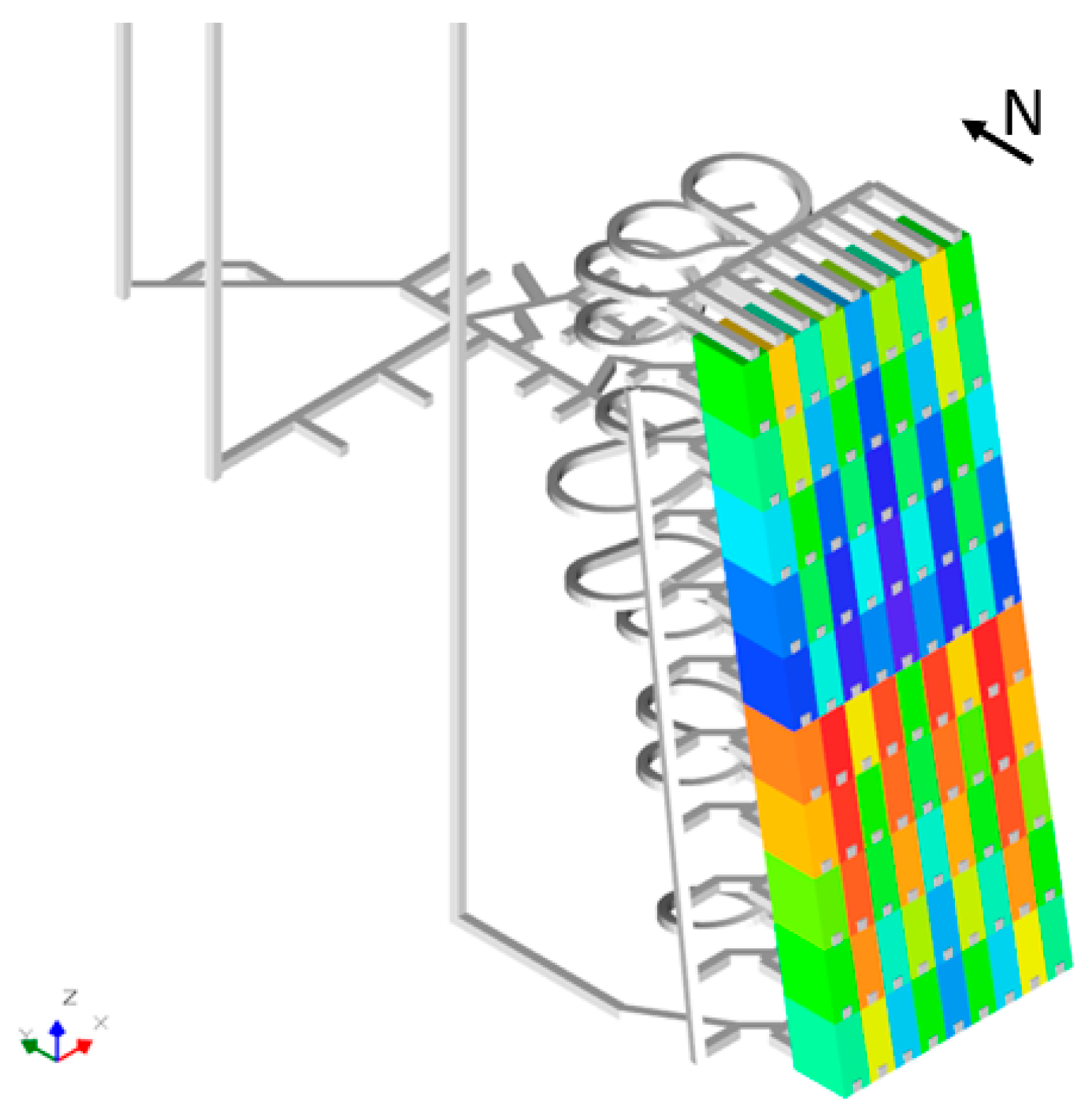
The mining geometries used are consistent with standard sizes and shapes associated with the sub-level Long Hole Open Stoping method. The mining geometry consists of 90 stopes of dimensions 15 m wide by 30 m long by 35 m tall, dipping at 80 degrees towards the hanging wall. Excavations are separated into 10 levels on a 35 m vertical spacing, with 9 stopes being assigned to each mining level. Development infrastructure consists of 5.5 by 5.5 m square tunnels, with development within the orebody being increased to 6 by 6 m square tunnels. An isometric view of the mine excavations is displayed in
Figure 4 below.
In
Figure 4, stopes were sequenced with an overhand chevron primary–secondary sequence separated into two mining blocks. The upper mining block is excavated ahead of the lower sequence with the aim of having near-complete extraction in the upper sequence prior to initial sill-pillar extraction (
Figure 5).
To replicate a typical in situ stress state in the deep mine of the Canadian Shield, modeled stress tensors were chosen to follow the values in
Table 2, with an average depth of 1400 m.
The rock mass was separated into three geotechnical domains, a hanging wall domain (HW), an orebody domain (OB), and a footwall domain (FW). Stopes are backfilled after excavation using a hydraulic fill, which was assumed to be of linear–elastic material. Modeled material parameters are summarized in
Table 3 and
Table 4 below.
Three types of discontinuities were considered for the following analysis: the two faults and the hydraulic fractures. The parameters used to model the respective discontinuities are presented in
Table 5 below.
2.2. Preconditioning and Modeling Strategy
To begin simulating hydraulic fracturing within a mining pillar, first a conditioning strategy was developed, and a conceptual design was established. Within mining contexts there are several factors that might affect the execution of hydraulic preconditioning. Timing of the treatment in relation to the extraction sequence is perhaps one of the most critical considerations. This, however, appears to be a significant gap in the current literature, attributed to the fact that most hydraulic fracturing in mines is used to increase primary fragmentation to induced caving, and is thus executed prior to production activities. Within a stoping context, preconditioning prior to mining can lead to significant difficulties when mining through the rock afterward by reducing the strength of what was previously strong ground. Since pillars are principally used as a strategic stabilization tool, their preconditioning prior to any actual loading may result in negative consequences to mine-scale stability.
As such, preconditioning within the timeframe of the mining sequence is essential to ensure that the stabilizing effects of pillars are maintained during the required timeframe in the sequence. Preconditioning a pillar too early in the sequence will change the response of the pillar to mining, which may adversely affect the pillar’s strength and result in unexpected stress interactions between excavations. Additionally, fracturing the pillar early will provide pathways for fluid movement, allowing the paste that was filled to stopes to drain their water content more rapidly, potentially leaking into other excavations.
Preconditioning a pillar too late into a sequence may result in ineffective conditioning if the pillar has already failed. If the pillar has already failed, there is no stress concentration to manage as all its elastic strain energy will have been dissipated through its natural failure processes. If the pillar is conditioned too close to its peak stress state, the added energy contributions through hydraulic fracturing may result in seismic events larger than if the pillar were to fail naturally.
Another controlling factor that will affect the execution of preconditioning is the location of the drill rig and orientation of the hole used to initiate fractures. The ideal orientation of the treatment hole is perpendicular to the plane of the hydraulic fractures (i.e., parallel to minimum principal stress) as it minimizes kinking of the fracture adject to the borehole walls [
50,
51,
52,
53] and allows for tighter fracture spacing over larger target intervals. This, however, is the worst orientation for borehole stability as it is perpendicular to both the intermediate and maximum principal stresses. This will affect the ability to position and retrieve the packer devices needed for hydraulic fracturing.
If drill rigs are positioned poorly, they may interrupt the production schedule and material movement by blocking significant portions of mining levels, or entire portions of the mine if positioned along ramps, greatly increasing the cost of conducting conditioning activities. Poor positioning of the rigs may also increase exposure to personnel and require significant ground rehabilitation to ensure worker safety. Rigs should also be positioned in close proximity to mine infrastructure to meet the water demands of hydraulic fracturing activities.
Fracture spacing and lengths will affect the effectiveness of the treatment: low spacing and low fracturing length may not allow enough dilation within the stimulate volume of the rock mass. High fracture spacing may significantly damage the rock leading to uncontrollable caving of the rock mass and significant difficulties when attempting to develop the undercut tunnel when attempting to extract the pillar. Large fracture lengths may intersect excavations, leading to excessive leak-off and choking of the fluid flow to the rest of the stimulated volume of the rock mass.
The timing of treatment within the mining sequence can be identified using mine-scale stability models of the excavation sequence. These types of models are completed during the prefeasibility and feasibility level of mining studies to aid in the design and selection of stope sequences with respect to mine-scale stability. Since these types of models are available to geotechnical practitioners and consultants prior to studies investigation destressing, it can be used as a starting point for understanding spatial and temporal stress distributions within the mine. As such the results from these models can be repurposed to identify optimal timing within the mine sequence and optimal location of treatment to begin designing a preconditioning plan.
The timing within the sequence and the region of treatment was identified for the theatrical mine in
Figure 4 using the results from a previous study conducted by the author using the same mine model [
49]. This model was initially created to understand the mine-scale stability of the stoping sequence in
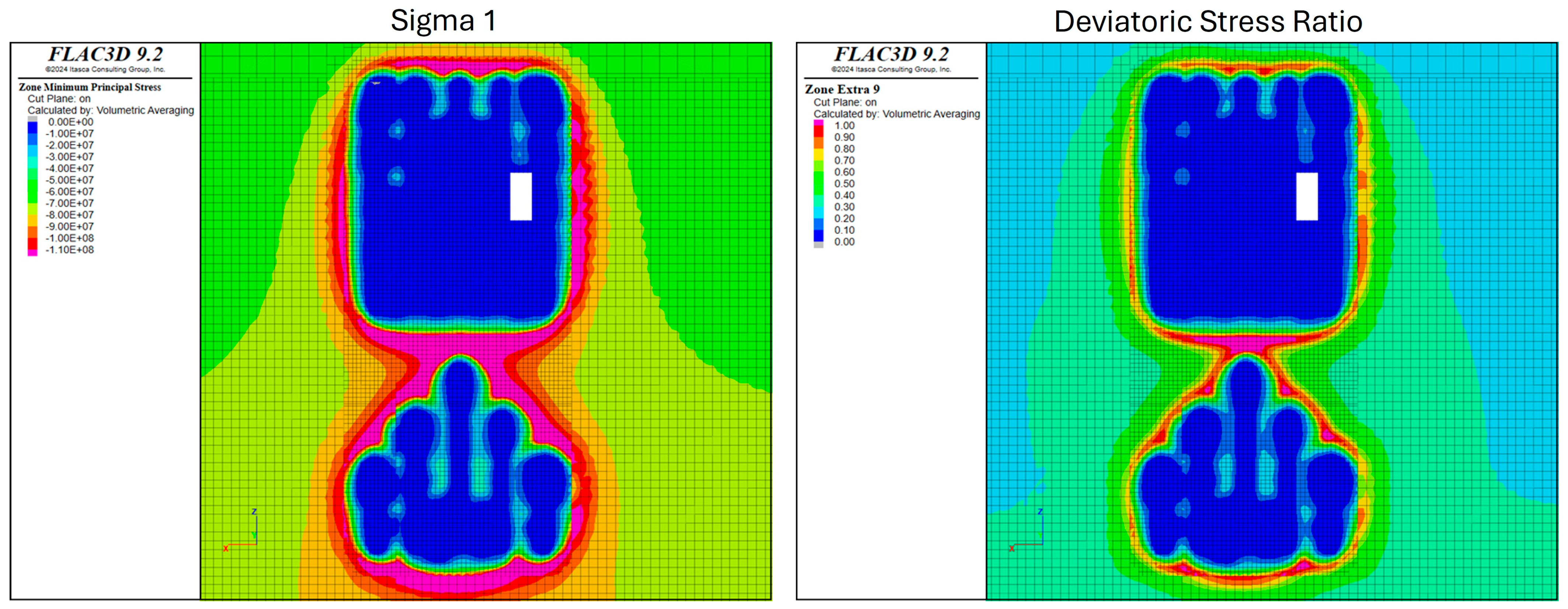
Figure 5, and will be repurposed for identifying the timing and location of the treatment. The full excavation sequence was modeled in Flac3D using the Itasca Constitutive Model for Advanced Strain Softening (IMASS) [
54]. The material parameter used in this model varies slightly from the ones shown in the above section. However, it was judged that the modeled responses to mining will be similar regardless of the slight difference in material parameters used.
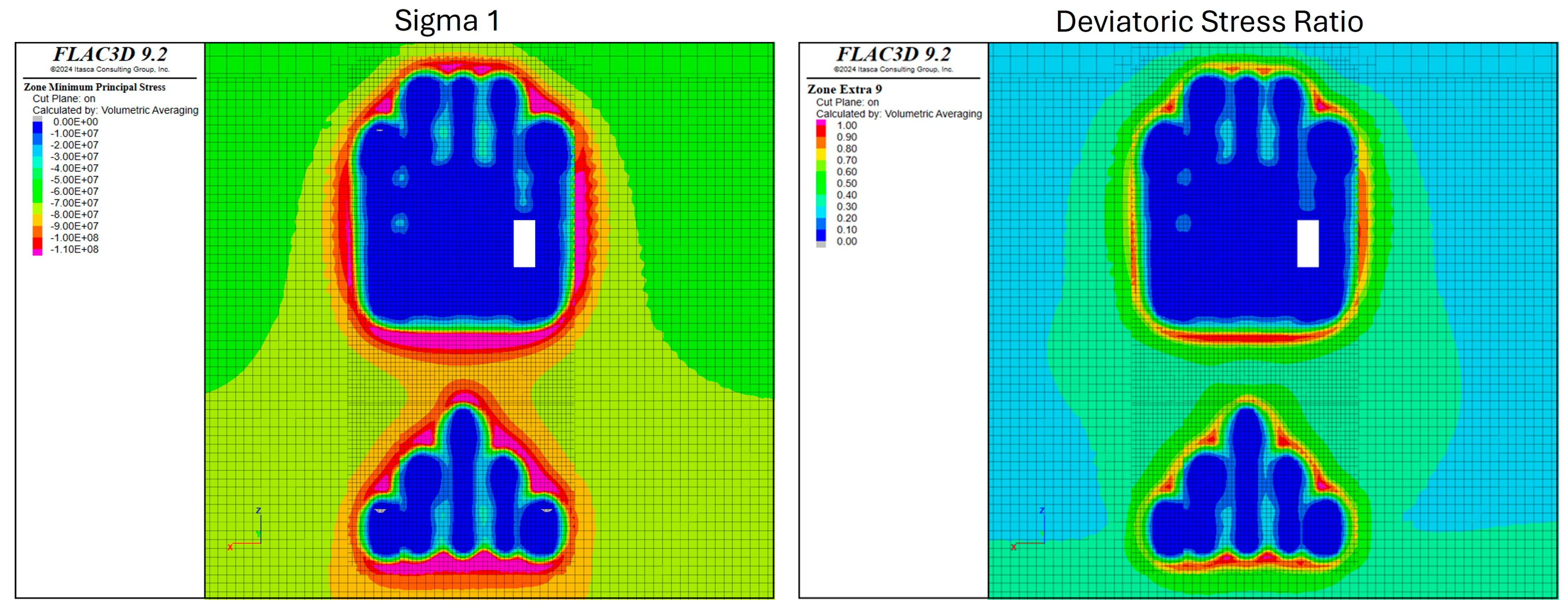
Figure 6 and
Figure 7 show the selected modeling results used in the determination of timing and location of treatment.
Based on
Figure 6 and
Figure 7 it was determined that treatment should be conducted when the lower advancing sequence is two stope lengths away from the top excavations bounding the pillar. As can be seen with
Figure 6, two stope lengths leave a 60 m-tall area to be preconditioned with stresses concentrating near the excavations. Stress is elevated in this region compared to the far-field stresses with a moderate-to-high level of seismic hazard.
Figure 7 shows the stress state prior to the initial sill-pillar extraction; the stresses at this step are significantly higher than the earlier timestep, with a significant portion of the core of the pillar being stressed. The seismic hazard at this timestep within the pillar is significantly higher than earlier steps and is possibly too risky to extract the pillar. It was deemed that conditioning the pillar prior to extraction is too late in the sequence to properly manage the stresses within the pillar and change its response to mining.
The position of the drill rig within the mine was chosen to minimize worker exposure, minimizing the interruption to production activities and material movement pathways and optimizing the orientation of the borehole. The proposed position of the drill rig is within the upper extraction tunnel above the central sill-pillar stope. This allows for the borehole to be vertical through the pillar, which is parallel to the modeled direction of minimum principal stress within the pillar. This requires redevelopment through paste fill, which reduces exposure to personnel because the ground is in a stress shadow and backfill is low-stress [
18]. Additionally, this allows for greater setbacks from development, minimizing disruptions to production activities.
The diameter and spacing of hydraulic fractures within the selection region of treatment will be assessed numerically to determine their effects on stress management and released elastic strain energy. Several different geometries will be used as part of a sensitivity analysis to determine the effects of diameter and spacing on the results of treatment. The diameters were constrained to be at least as wide as the pillar being treated, with a maximum diameter imposed to maintain some distance between the fractures and existing tunnels in the footwall of the mine. A minimum spacing of 1 m was chosen as this is typically the minimum spacing required between packers installed in the borehole [
55]. A maximum spacing of 5 m was chosen to obtain at least 10 fractures in the chosen conditioning interval in the borehole. The fracture diameter and spacing cases used for the sensitivity analysis are summarized in
Table 6 below.
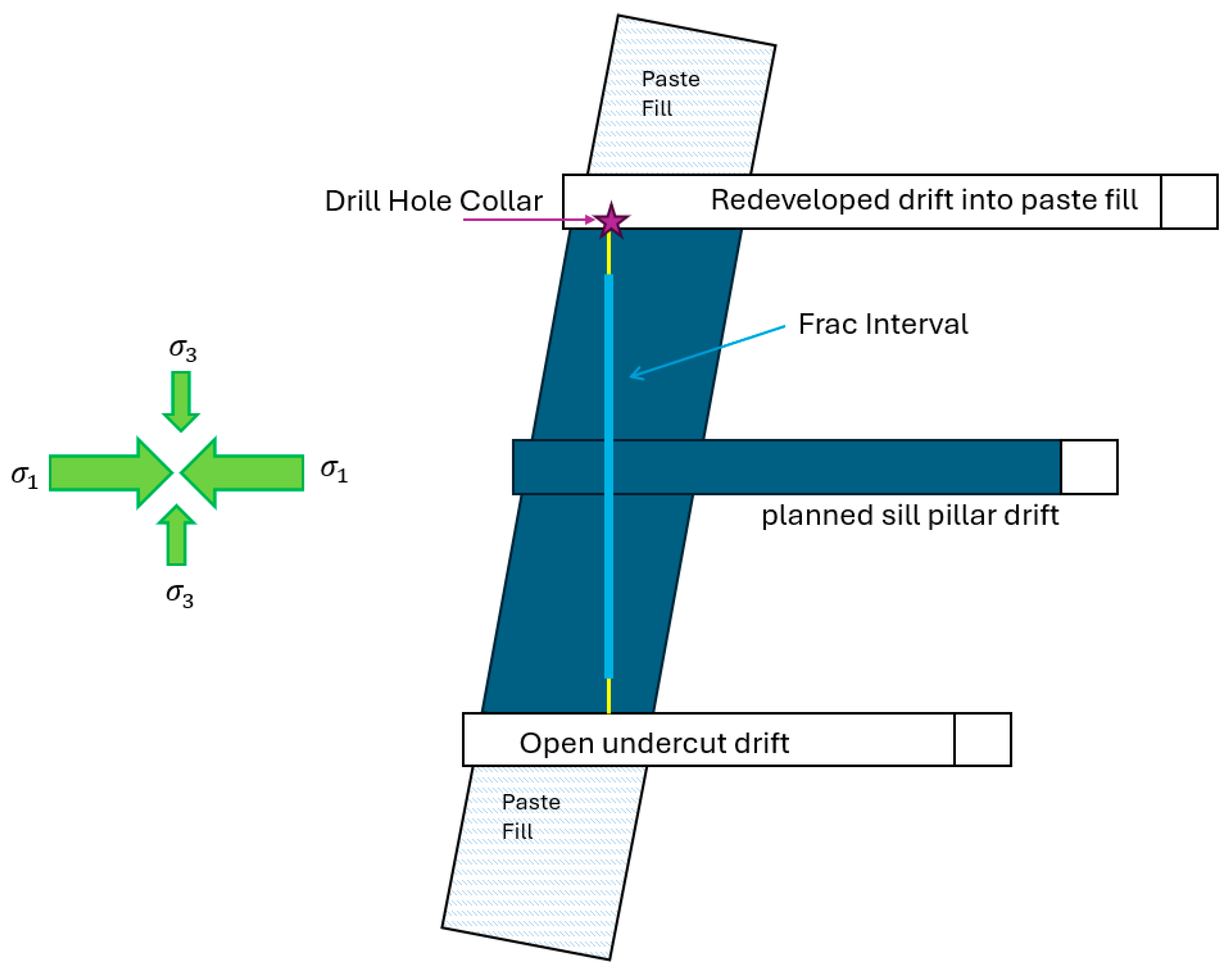
The constrained design and choices discussed above were conceptualized into a diagrammatic representation which was utilized to create a numerical model. The conceptual design is presented in
Figure 8 below.
Figure 8 represents a vertical north–south section within the middle of the orebody at the selected timestep within the mining sequence. The dark blue areas in the above figure represent planned excavations that will be mined after treatment is conducted. This requires just-in-time development of the mid-pillar tunnel to allow fractures to extend further into the FW without intersecting existing excavations. The light-blue line is the planned fracture interval, constrained to the intact core of the pillar and avoiding the upper and lower ends of the likely yielded ground.
Numerical modeling of the effects of hydraulic fracturing on the identified pillar was completed in RS2 [
56], utilizing plane-strain assumptions to simplify the required modeling. A plane-strain assumption was judged to be reasonable as it represents the mid-span of the orebody, which neglects abutment effects and results in a more conversative estimate of the effects of treatment. The three domains outlined in
Table 3 and the footwall fault were included in the numerical model. A one-meter mesh size using 6 node triangular elements was chosen in the area near the pillar to have appropriate resolution to represent the one-meter spacing cases. The mesh was graded away from the pillar towards the model boundaries to reduce computational demand. Both hydraulic fractures and fault features were explicitly discretized using the built in joint elements within RS2. The hydraulic fractures were installed explicitly as joint elements during a conditioning stage in the model. The hydraulic fractures were allowed to deform in response to the induced stress field. This behaves as if a new joint set is being added to the rock mass, representing the hydraulic fractures after they have been propagated and drained.
2.3. Governing Equations
Hydraulic fracturing is a complex multiphysical process that introduces discontinuities into a continuum. There are several models that describe the geometry and propagation of a hydraulic fracture [
57,
58,
59]. However, these equations are typically only concerned with the propagation of the hydraulic fracture, and the associated effects of leak-off and fluid flow, and fluid permeability on the width and length of the fracture. A framework for modeling the plastic damage mechanism and propagation of hydraulic fracturing within a continuum model was developed by Ref [
60] based on the conceptual model of [
38]. Ref. [
61] provides a fully coupled Thermal–Hydro-Mechanical framework to investigate the effects of hydraulic fracturing in naturally fractured porous media. A double porosity model [
62,
63,
64] can be used to account for both matrix and fracture contributions to fluid flow and heat transfer, however the computational and modeling demands of these models are vast, requiring specialized and advanced programs to compute the multiphysical coupled processes.
For the purpose of this analysis the problem will be reduced to an elastoplastic analysis with assumed fracture geometries based on linear–elastic fracture mechanics. This will allow for the response of mining pillars to both mining and preconditioning to be simulated with plane-strain assumptions. This will greatly simplify the modeling demands while providing results that can be readily interpreted to guide further design requirements and provide context for the interpretation of more advanced simulation activities.
The incremental form of Hooke’s law assuming isotropic elasticity is used to calculate the elastic stresses within the rock mass in response to lithostatic and tectonic loading, as well as induced stresses from excavations, as in Equation (1):
where
is the total stress tensor,
is the strain tensor,
is the Kronecker delta symbol,
G is the shear modulus of the material, and
K is the bulk modulus of the material.
The Hoek–Brown yield criterion is popular among geotechnical practitioners due to its easy derivation from triaxial test results. Additionally, there are several equations developed to scale peak strength with the geological strength index (GSI). The generalized Hoek–Brown [
65] criterion is presented in Equation (2) below:
where
is the uniaxial compressive strength of the intact material,
m is the reduced version of the intact fitted parameter
, and
s and
a are fitted parameters derived from triaxial testing. The fitted parameters can be generally derived based on rock mass properties to scale Equation (2) to a rock mass equivalent:
where
d is the disturbance factor due to blast or stress relaxation. It should be noted that
d is only used in material proximal to excavations and should not be applied to a rock mass as a whole. As such it is typically assumed that
d is 0 for most subsurface excavation modeling. The fitted elastic parameters of the rock mass can also be scaled by GSI to obtain the rock mass equivalent [
66]:
To model the possible slip of induced factures, the Mohr–Coulomb criterion can be utilized to represent the general strength of discontinuities within a rock mass, as in Equation (7):
where
c is the cohesive strength of the discontinuity,
is the normal stress acting on the discontinuity,
is the friction angle of the discontinuity, and
is the shear strength of the discontinuity.
2.4. Numerical Implementation
Numerical modeling was completed in the plane-strain finite element program RS2 [
56] using a fully mechanical model. Material strength was characterized using a perfectly plastic generalized Hoek–Brown constitutive model [
65]. The hydraulic fracture process was modeled using idealized geometries based on linear–elastic fracture mechanics. Fractures were installed in the model as explicitly discretized joint elements and were allowed to deform in response to the modeled stress state at the time of hydraulic fracturing. Stopes within the model were excavated sequentially to achieve a realistic stress path prior to fracture propagation within the model.
The Finite Element Method (FEM) solves infinitely dimensional problems by reducing the problems into a solvable set of equations. This takes the form of two techniques: discretization and engineering analogs [
67]. FEM approaches discretization by dividing a continuum into linear finite length elements that are connected to each other at a finite number of nodal points. Linear–elastic stresses are solved using the engineering analog of a mass–spring system, integrating nodal displacements to calculate stress at each nodal point.
RS2 utilizes an initial stiffness method for solving iterative elastoplastic stresses within the model. A global stiffness matrix
is assembled at the start of the analysis (Equation (8)), and kept constant for all subsequent calculation steps [
68]:
where
B is the strain–displacement matrix and
is the elastoplastic stress–strain matrix. The internal force at each nodal point is calculated as in Equation (9) for the current iteration
i:
where
is the stress tensor at the nodal point at iteration
i. Displacements at each note in the model at the
ith iteration are calculated using Equation (10):
where
is the total displacement matrix representing the global displacements within the model. The change in displacement is calculated using Equation (11):
where
is the residual force for the previous iteration, which is the difference between the external and internal force at the current iteration. In a linear–elastic analysis, Equation (11) can be solved in a single step; non-linear analysis, like plastic analysis, required additional iterations within a model stage to solve the non-linear stiffness associated with plastic yield and flow. A return mapping algorithm can be utilized to correct for elastic stress increments and back map it to the correct plastic stress when the material is in its post-peak state [
69]. This algorithm consists of determining a trial stress state based on a linear–elastic increase in stress due to change in total strain from the previous iteration
i, using Equation (12):
A correction can be applied to Equation (12) by subtracting the plastic contribution to the change in total strain:
Change in plastic strain can be computed using Equation (14):
where
is the plastic corrector and is computed using Equation (15):
where
is the yield stress at the current iteration and
is the plastic modulus. This algorithm in its general form allows for the modeling of a linear-stiffness plasticity model such as a hardening, softening, and perfectly plastic model. Non-linear hardening and softening can be modeled using more iterations to converge to an actual stress state.
Since the Hoek–Brown criterion is simply a description of peak strength, it is difficult to implement in its general form (Equations (2) to (5)) since it provides no rules on the evolution of plastic strain and does not explicitly contain criteria for tensile failures. A common numerical implication of HB plasticity involves computing MC equivalent friction and cohesion at a given point along the HB envelope and using the full MC constative behavior to model the plastic response [
70]. The failure surface can be approximated at a given confinement using Equation (16):
where
The current apparent value of cohesion
and friction
are calculated using Equations (18) and (19):
The plastic corrector for the MC model under shear failure is
where
is
where
is the dilation angle. The plastic corrector for the MC model under tensile failure is
where
is the tensile strength of the material.
2.5. Comparison Methodology
The cases in
Table 6 will be compared based on several criteria typically used in the analysis of mine-scale stability. Deviatoric Stress Ratio (DSR) and elastic strain energy will be used to analyze and quantify the effects of preconditioning within the numerical models. Since the mine is entirely theoretical and has no physical reference for model calibration, all results and parameters were compared in reference to a bases case. The effects of treatment were evaluated by comparing the model state prior to and after application of the treatment.
DSR is an empirical metric used to assess seismic hazards within hard-rock mines. This metric was initially developed based on fracture initiation thresholds observed in the Lac Du Bonnet Batholith [
71] and later formalized into Equation (23) [
13,
72]:
where
is the maximum principal stress,
is the minimum principal stress, and UCS is the unconfined compressive strength of the rock mass. It is generally known that crack initiation begins within the elastic stage of loading in rock, observed by acoustic emission measurements in laboratory test samples [
73,
74]. Crack initiation generally begins when the deviatoric stress reaches one third of the UCS [
71,
75,
76]. Since seismicity is generally fractal in nature, there is a self-similarity between the populations of seismic events [
77,
78,
79,
80]. This self-similarity manifests as similar seismic response in all scales from micro-seismic emission in lab-test samples [
73,
74] to mining pillars [
81] to large-scale crustal faults [
82]. As such DSR can generally be considered a scale-invariant measure if an appropriate peak strength value is substituted for UCS that considered the appropriate failure mechanism at the scale of interest. Correlations between DSR and site-specific seismic response can be done using a back analysis, or existing correlations like the one done by [
13]. The risk bins used for this analysis are presented in
Table 7 below.
Since a seismic event is the release of elastic strain energy, it is convenient to compare the strain energy prior to and after hydraulic treatment to gauge its effectiveness. If there is a significant decrease in strain energy after treatment, then it can be concluded that the volume of treatment has low potential for seismogenic activity. Additionally, since stress is an analog for stored energy, a decrease in energy will be invariably correlated to a decrease in stress. Strain energy is also a scalar quantity, making it suitable for comparison between different cases. Elastic strain energy is calculated using Equations (24) and (25) below:
Assuming plane-strain conditions with a unit-length thickness
T,
It should be noted that in the above equations is the elastic strain tensor, which can be calculated by subtracting the plastic components from the total strain tensor.
3. Results
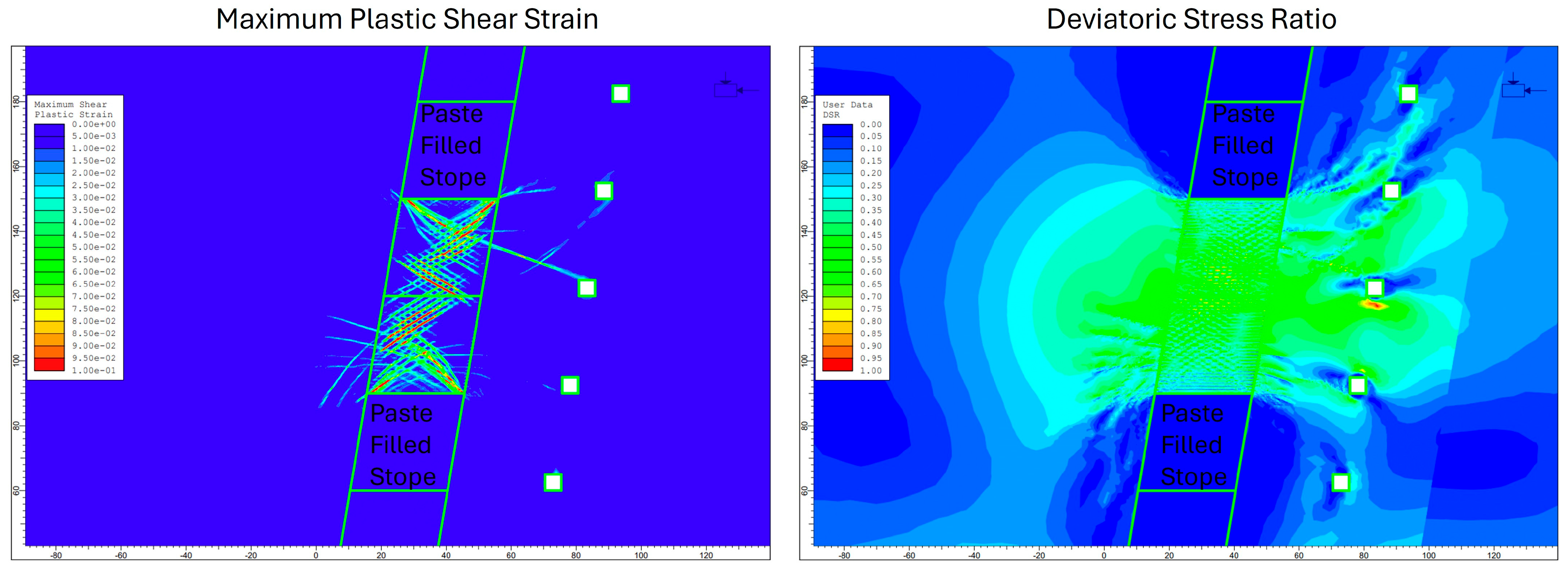
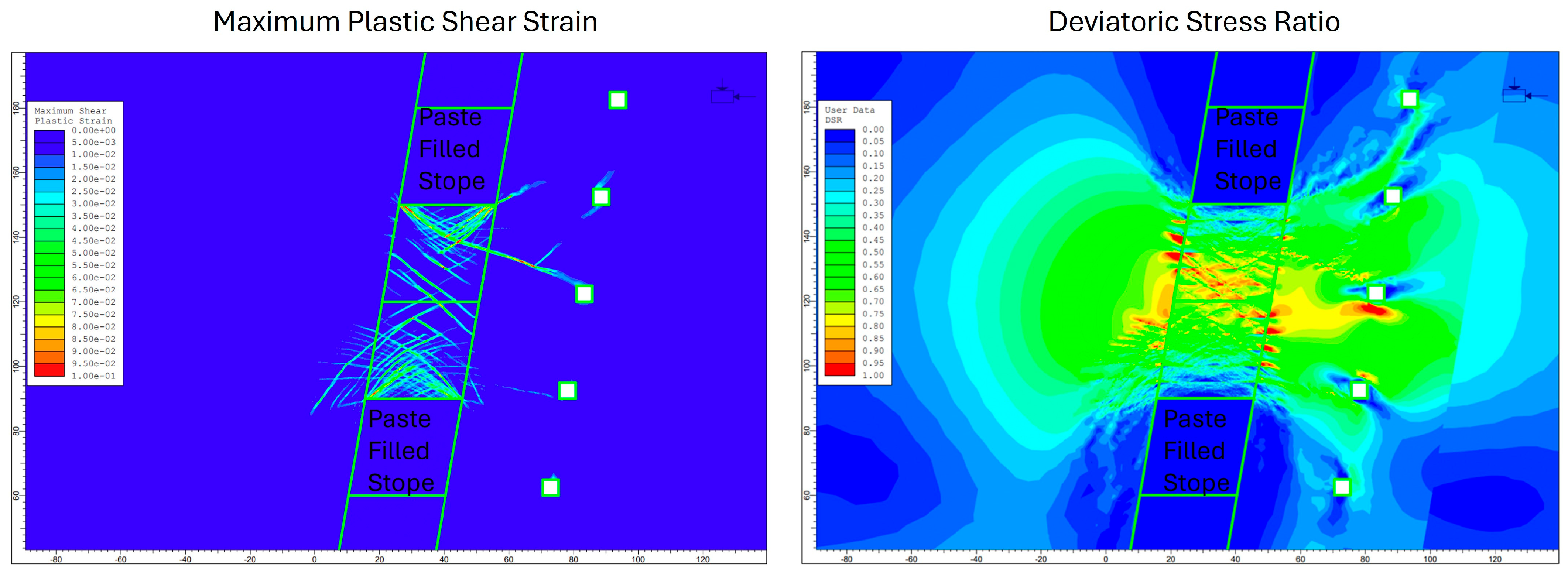
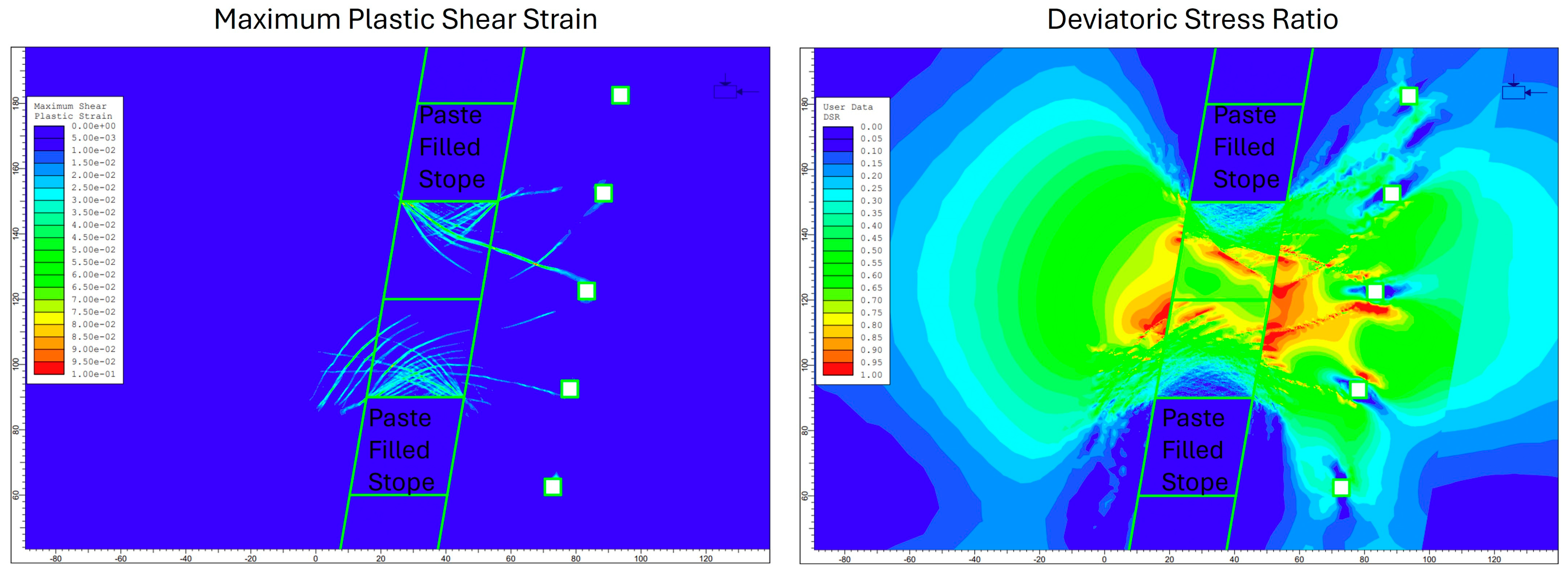
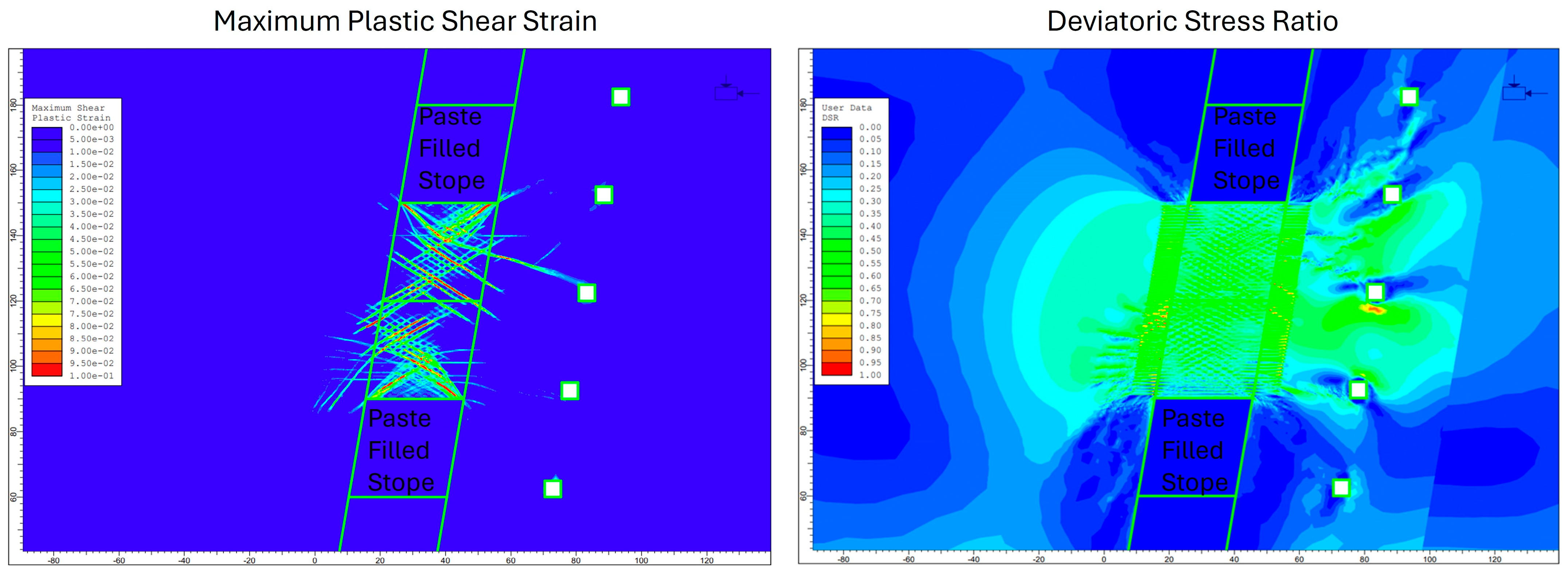
To understand the effects of hydraulic fracturing, a series of modeling results are presented below for comparison to a base case representing the conditions prior to treatment. This base case is presented in
Figure 9 below.
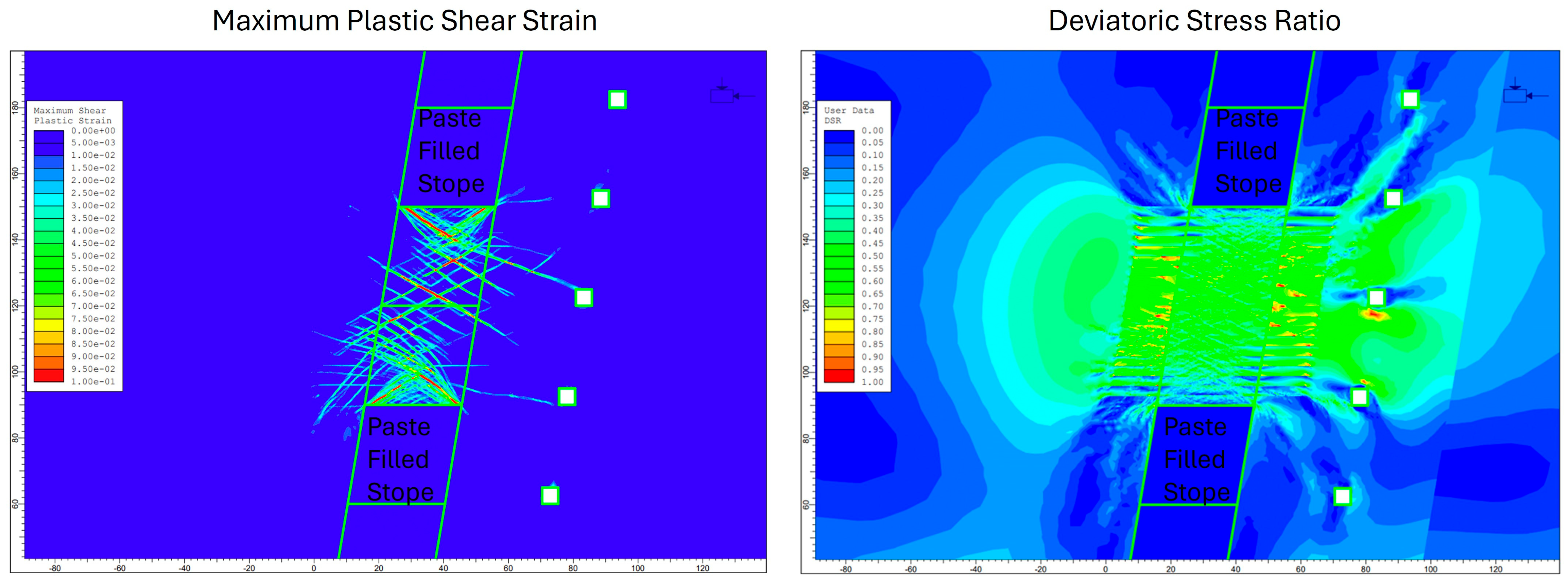
Figure 9 represents the step in the sequence that is selected for treatment of the pillar, where a 60 m-tall region of unmined ore is bounded by excavated and backfilled stopes. The DSR results on the right show that the core of the pillar is in the loading phase, with high confinement which decreases out into the abutments. The highest DSR values are located adjacent to the core, at the top and bottom of the pillar, as thin bands of increased deviatoric stress. The DSR increases drastically in the abutments of the pillar due to the lower UCS in the HW and FW domains. The level of seismic hazard—based on
Table 7—is moderate-to-high. DSR truncation on the right-hand side of the model represents stress reduction due to elastic displacement of the FW fault.
The image on the left-hand side in
Figure 9 shows the maximum plastic shear strain prior to pillar treatment. Thin bands are observed near the top and bottom of the pillar adjacent to the backfilled excavations. Near the bottom of the pillar, these bands fan out into the HW. These bands are interpreted to be discrete shear fractures as a result of excavation relaxation and stress redistribution. These fractures show that the core of the pillar is still intact, while the upper and lower ends of the pillar have yielded 10 to 15 m away from the backfilled stopes. The tips of these fractures inside the pillar are located near higher areas of deviatoric stress, as seen in the DSR result. The fractures are contained within the lateral extents of the pillar due to increasing mesh size above and below the pillar.
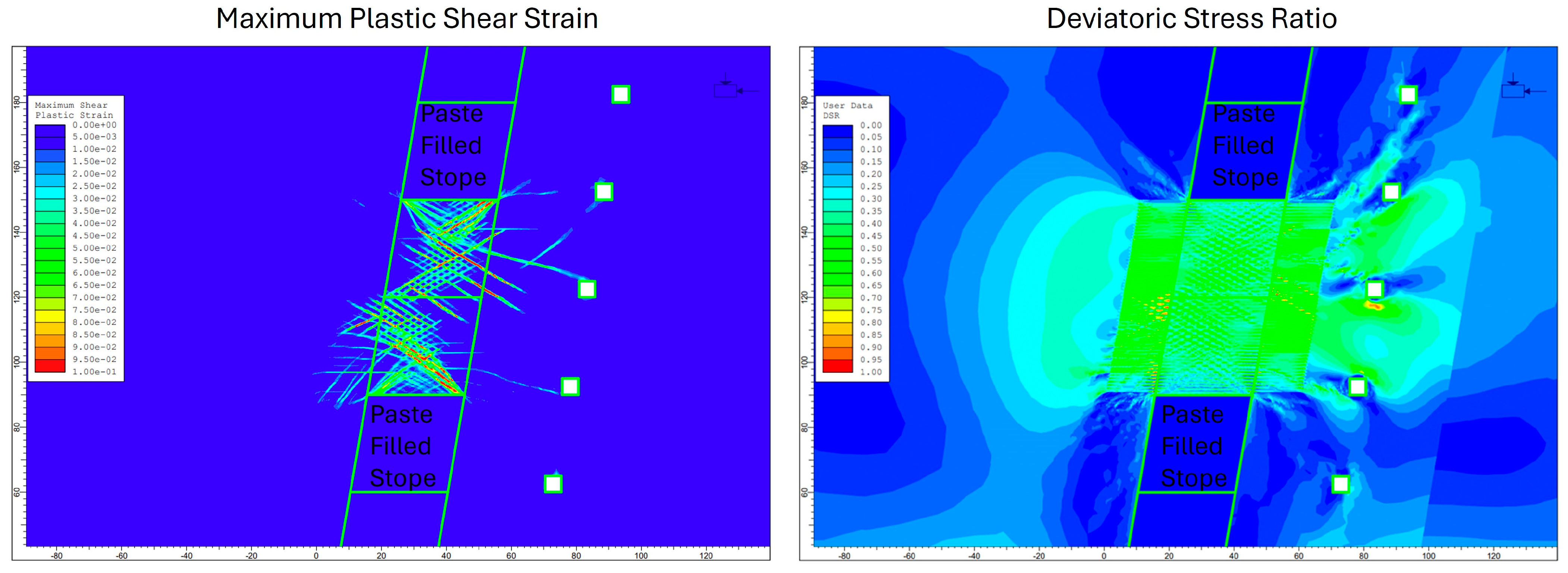
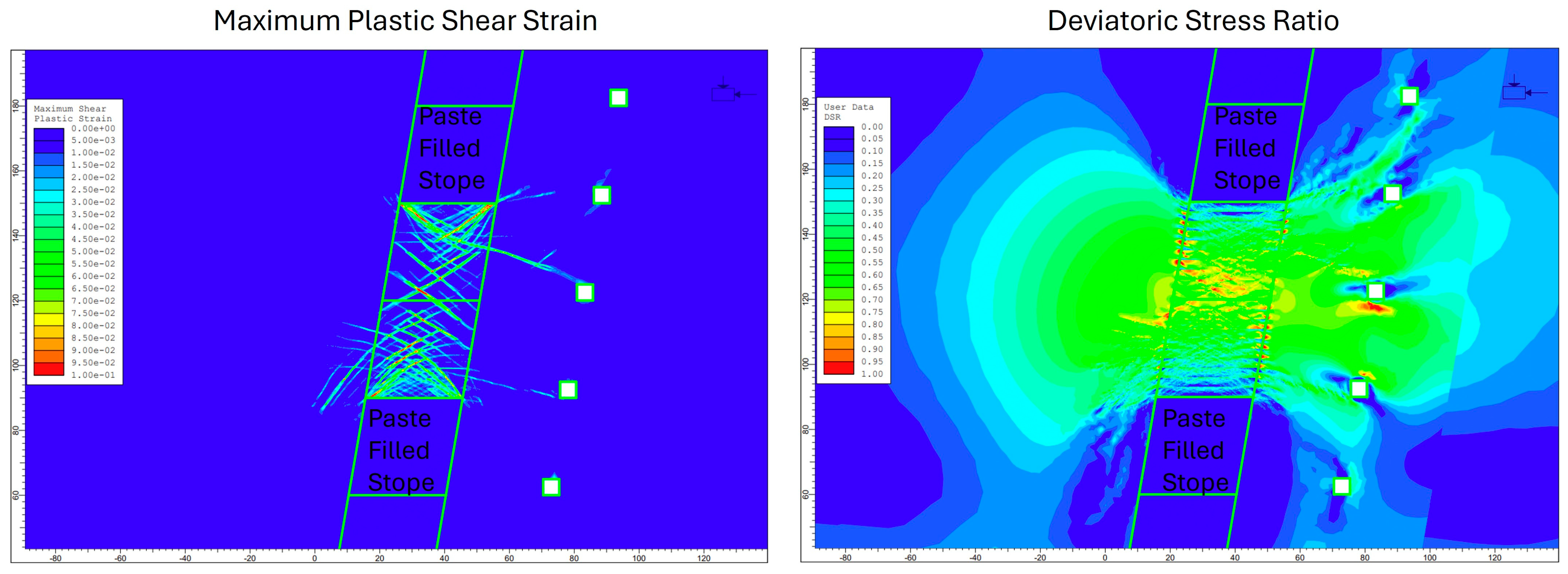
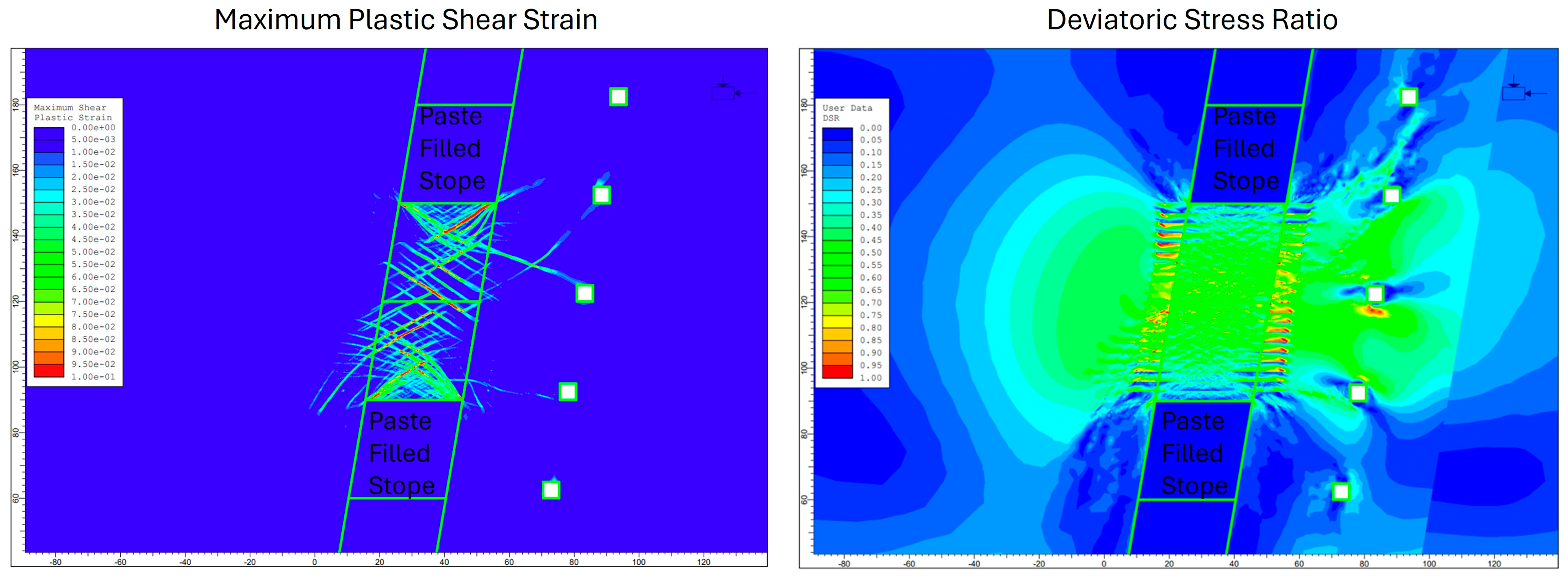
Based on
Figure 10,
Figure 11,
Figure 12,
Figure 13,
Figure 14,
Figure 15,
Figure 16,
Figure 17 and
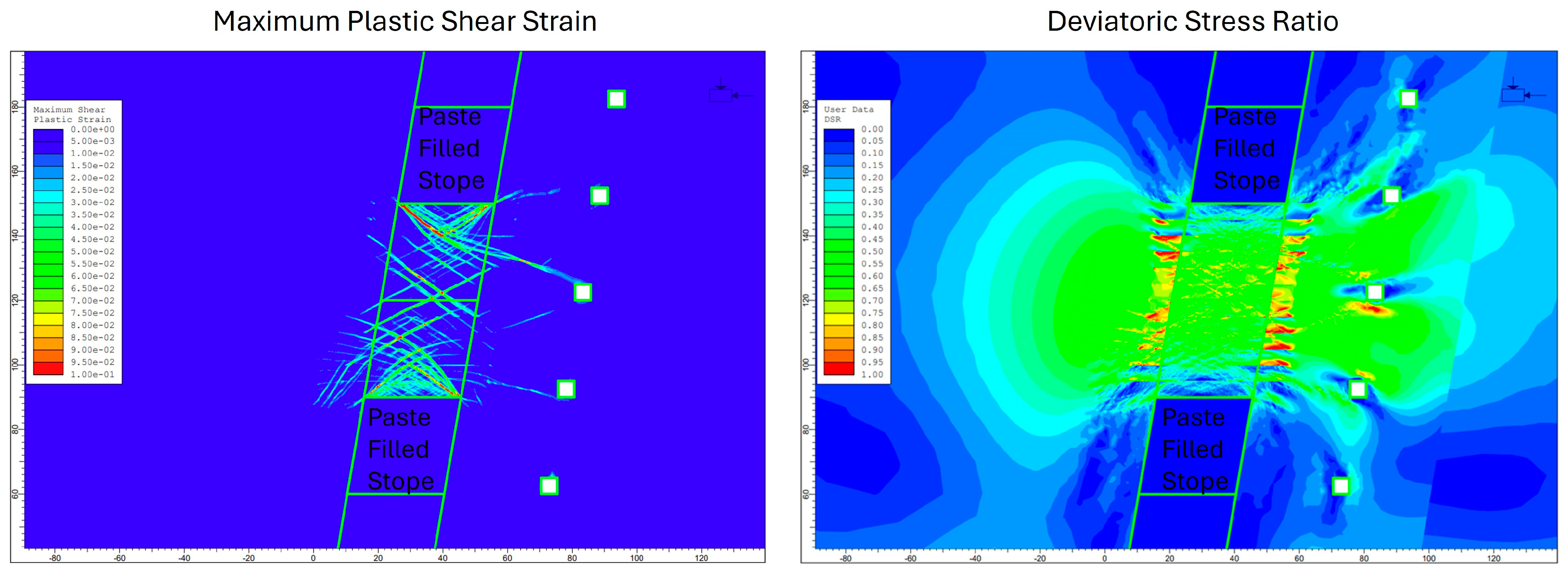
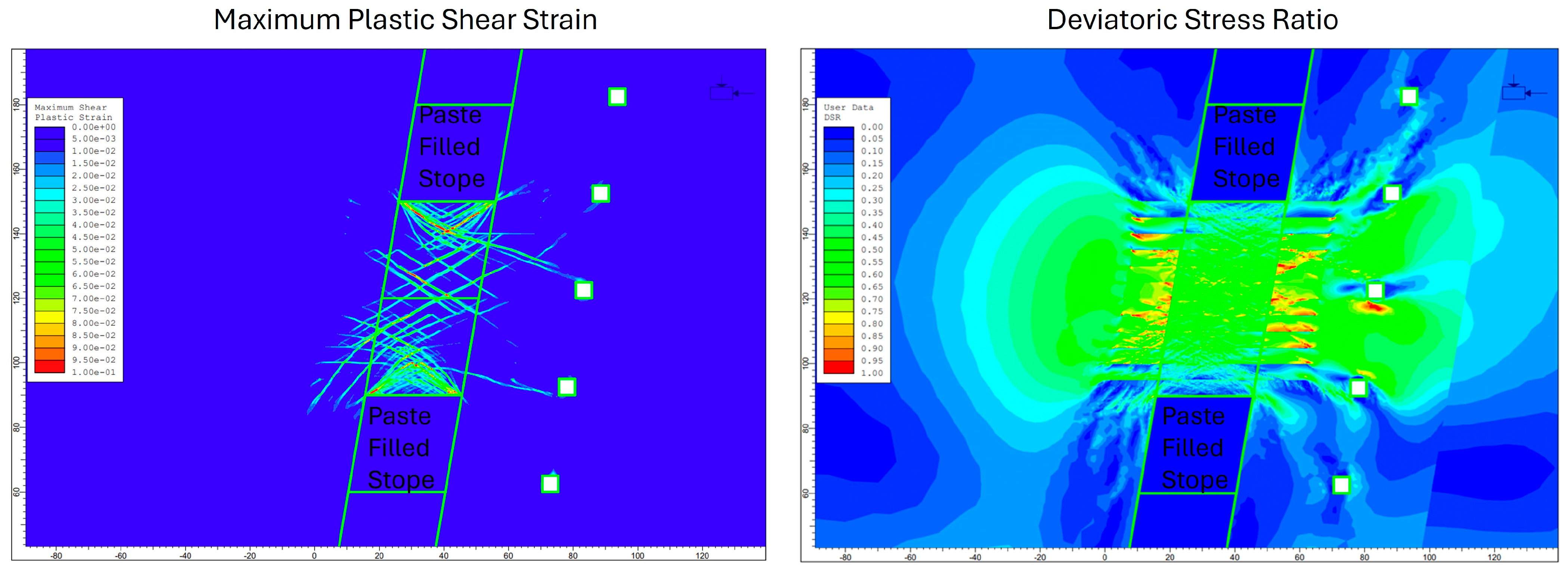
Figure 18, several trends were observed with respect to the diameter and spacing of the hydraulic fractures. In all cases, there is a general decrease in DSR within the pillar post treatment when compared to the base case in
Figure 9. Across all cases with the same spacing, a decrease in DSR magnitude with increasing diameter was observed in the core of the pillar. This same effect was observed for the magnitude in the abutments, with observable decreases in DSR magnitude close to the FW development with increasing diameters. Across all cases with the same diameters, a decrease in DSR magnitude was observed with decreasing spacing. The same decreases in magnitude were observed in the core of the pillar and both abutments as the fracture spacing decreased. The combined effects of the increasing diameters and decreasing spacing result in the core of the pillar becoming increasingly homogenous with respect to the magnitude and spatial distributions of DSR within the pillar.
Figure 16 represents the smallest fracture diameter and largest spacing and shows a significantly higher stress heterogeneity than compared to its opposite case in
Figure 12, which has the largest fracture diameter and smallest spacing. Along with a decrease in magnitude following the above trends, the lateral extent of the DSR hazard zones decreases in the abutments as the diameter increases and spacing decreases.
In all cases, the treatment of the pillar introduces conjunctive shear fractures that are oblique to the hydraulic fracture planes, as observed in the maximum shear strain results above. The general trends observed across the results presented above show an increase in induced fracture density with increasing hydraulic fracture diameter and decreasing spacing. This manifests as both an increased number of observed induced fractures and an increase in the width of groups of parallel fractures within the pillar. The conjunctive fracture sets are generally constrained to the extent of the stiffer pillar rock, but further extend into the abutments as hydraulic fracture diameter increases. In all cases, the lateral extents of these induced fractures follow the lateral extents of the hydraulic fractures. The magnitude of plastic strain is observed to increase with hydraulic fracture diameter, ranging from 4 to 10% plastic strain across the different diameter cases. Plastic strain magnitude was also observed to increase with decreasing hydraulic fracture spacing across all cases with the same diameter.
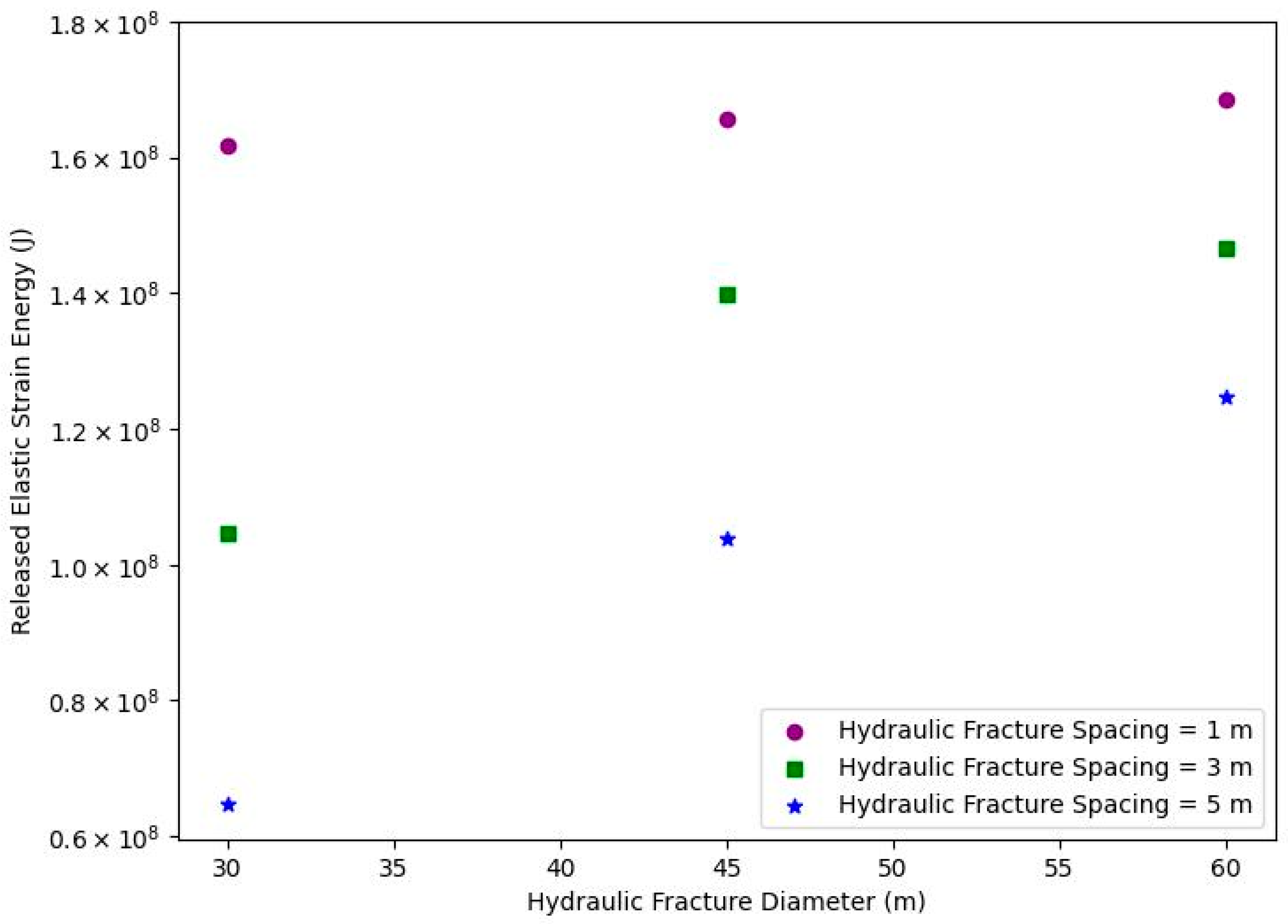
The released elastic strain energy from each model case is presented in
Figure 19 below.
Figure 19 was utilized to provide a scalar value comparison of the nine modeled cases. As seen
Figure 19, there is a general increase in released energy from the pillar with an increase in fracture diameter and decrease in fracture spacing. The released energy across all cases is within one to two orders of magnitude, ranging from 60 MJ to 170 MJ. Energy release increases with larger hydraulic fracture diameters and smaller spacings. The magnitude of the energy release caused by decreasing spacing diminishes as the fracture diameter increases, evidenced by the decreasing gap between points of the same diameter as the diameter increases. A similar effect of the diminishing sensitivity to increasing diameter is observed as the fracture spacing decreases. This is observed as a flatting slope between points of the same spacing as spacing decreases. The five-meter spaced cases have the highest slope if a line is fit to the points, while the one-meter case is nearly horizontal.
4. Discussion
Based on the results presented above, hydraulic fracturing within a mining pillar can successfully reduce the magnitude of deviatoric stress within the treated rock mass. Numerical modeling also showed the development of conjunctive shear fractures within the core of the pillar due to the hydraulic fracturing in the rock mass. Additionally, hydraulic fractures had a stress manipulation effect on the extent and magnitude of stress in the abandonment of the pillars, resulting in lower deviatoric stress near the footwall excavations and stress shedding into both abutments.
Both the diameter and spacing of hydraulic fractures affect the magnitude of deviatoric stress reduction, energy release, and induced fracture density within the pillar. Both larger fracture diameters and smaller spacings were shown to result in a decreased deviatoric stress magnitude, increased induced fracture density, and increased energy release. It was shown in
Figure 19 that fracture diameter and spacing influence each other’s ability to manipulate the in situ stress field and released energy from the pillar. Increasing hydraulic fracture diameter reduces the sensitivity of the rock mass to the effects of fracture spacing, with the same effect being observed for decreasing hydraulic fracture spacing. This may indicate that there is an optimum in the sensitivity of hydraulic fracture geometries and their associated energy release capabilities.
The density of induced fractures tended to be more dependent on the spacing of hydraulic fractures rather than diameters. There is a significant increase in fracture density between the cases with different spacings, while diameter shows much less influence of the induced fracture density. This will be an important consideration for an actual design that needs to consider stope stability analysis. This can be used as a stability criterion to determine if the resulting rock mass has sufficient stability to endure development activities without caving. Additionally, it can be a good input for determining stope overbreak and assessing the resultant dilution of the ore.
The diameter of the hydraulic fractures showed a greater influence on the spatial distribution of stress post treatment when compared to the influence of spacing. Increasing fracture diameters resulted in a more homogeneous distribution of deviatoric stress within the pillar. Increased diameters also resulted in better control of the stress in the abutments through a decrease in magnitude and lateral extent.
The modeled results show a good performance of conditioning activities to manage the stress within the pillar that was analyzed. It is judged that there remains sufficient strength in the pillar across all cases to maintain some stabilizing effect on the mine scale. The conceptual design that was used has been shown to produce optimal results but requires further consideration for actual implementation in an operating environment. The stope stability requirements will need to be determined prior to any design activities to ensure the resulting rock mass can be mined safely and economically.
Elastic strain energy release is a critical parameter in assessing the effectiveness of the hydraulic treatment on a rock mass. The parameter was used simply as a comparison metric to gauge differences in the modeled response to changing fracture geometries in
Figure 19. This parameter warrants further investigation through more complex analysis than that presented in this work. If calibrated to actual pillar failures, it can be effectively used to assess the magnitude of seismic events resulting from pillar treatment. This parameter can further be used in operational decision-making to evaluate if a treatment will result in any material change in safety- and stability-associated risks.
While not discussed in this paper, additional design requirements, such as fluid injection rates, fluid viscosity, and breakdown pressures, will be needed for an actual design. Injection rates will control the performance of hydraulic fracturing during the propagation of the fractures. Low injection rates may result in sub-optimal hydraulic fractures, that do not reach the designed geometries due to leaking-off into the rock mass, and insufficient pressure at the crack tips to propagate tensile fractures. High injection rates may not be feasible due to installed water infrastructure in the mine and will result in large seismic events due to increased rupture velocities in the mining pillar. Injection rates can be effectively used as a design parameter to control rupture velocities, controlling the energy release rate within the rock mass. This will result in safer execution of conditioning activities that are less disruptive due to a lower energy release. Fluid viscosity can be used to minimize leak-off, allowing for higher sustained pressures at the crack tip. Breakdown pressures depend on the magnitude of confinement and the tensile strength of the rock mass, ultimately governing the size of pump required to achieve fracture initiation and propagation pressures.
While the numerical model outlined in this paper is relatively simplistic, it provides readily interpretable results. Further studies should expand this analysis to three dimensions to view the volumetric effects on stress reduction and interactions with backfilled excavations and tunnels. Additional analysis will be needed to understand the leak-off experienced during hydraulic fracturing in mining, as well as the possible thermal effects of introducing a cold fluid into a typically warmer rock at depth. The modeled results provide baseline context for the development of more advanced three-dimensional multiphysical modeling to understand the full mechanism of conditioning.