
Carbon Dot Nanotherapeutics Modulating the Polyol Pathway and Targeting Infection Pathogens Associated with Diabetic Complications

 , ,
, ,  ,
,  , ,
, ,
Abstract
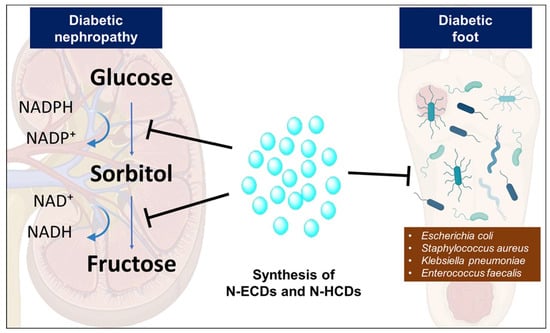
1. Introduction
2. Materials and Methods
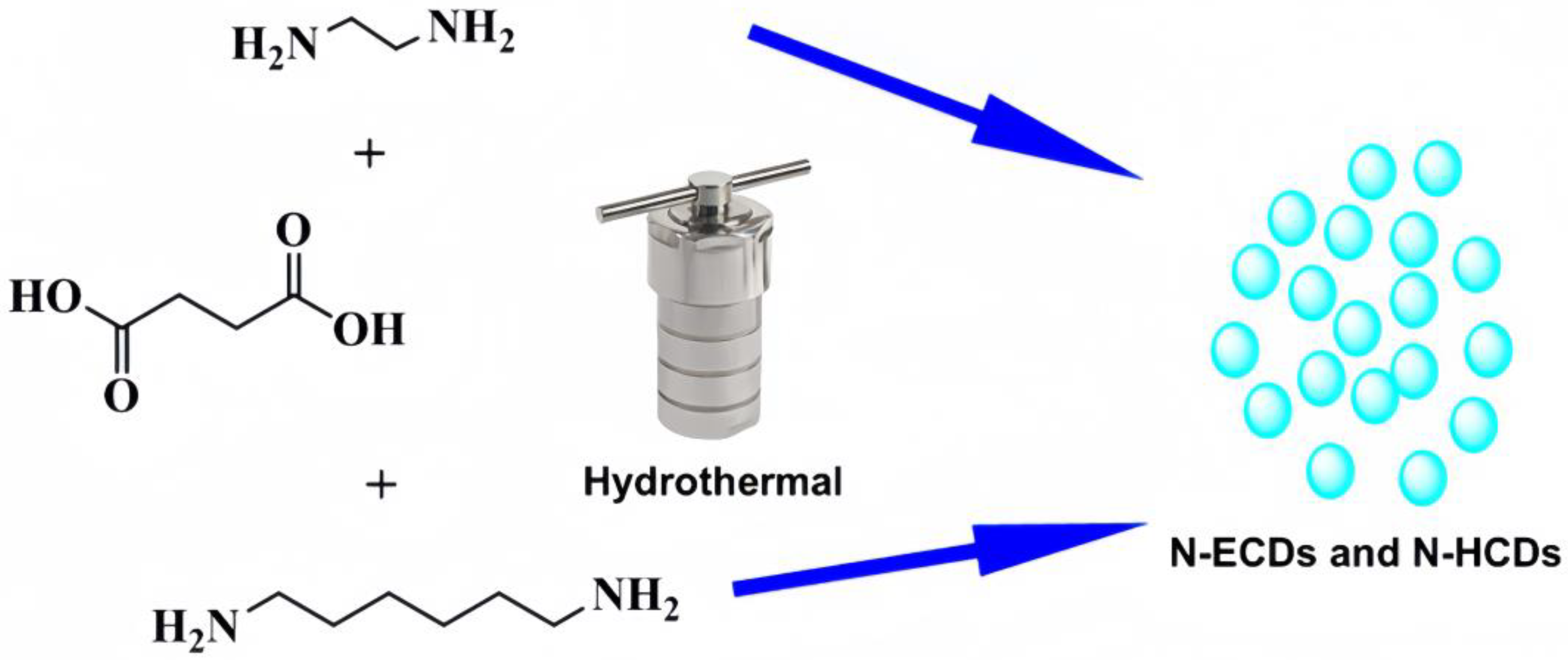
2.1. Hydrothermal Synthesis of N-Doped Carbon Dots
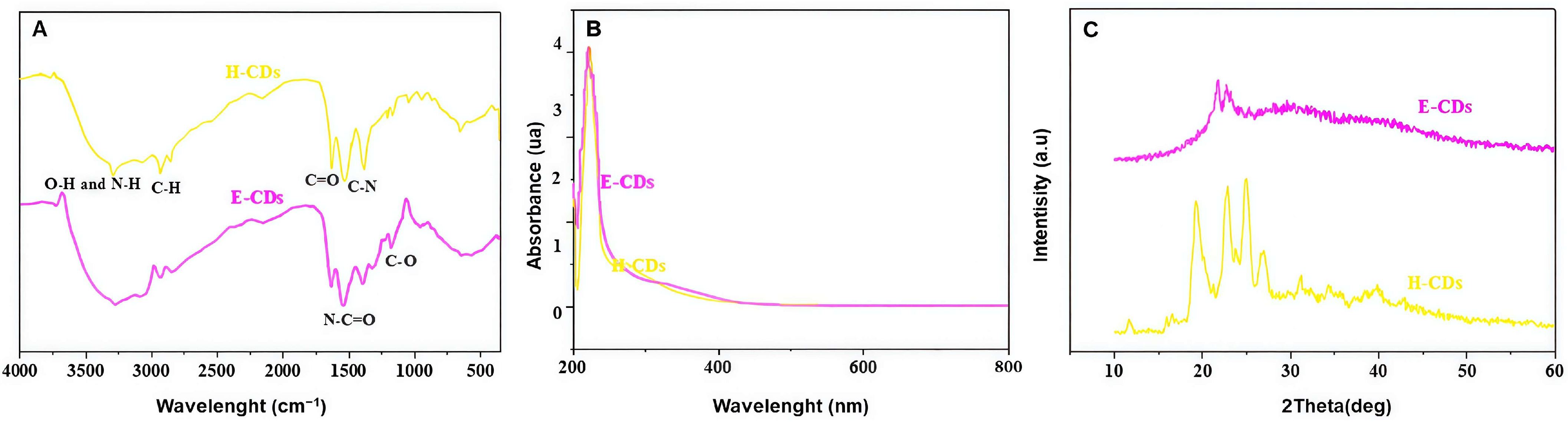
2.2. Structural and Spectroscopic Characterization of N-Doped Carbon Dots
2.3. Determination of Antibacterial Activity via Agar Well Diffusion
2.4. Microdilution Method
2.5. In Silico Methods
2.6. Experimental Validation of Bioinformatic Data
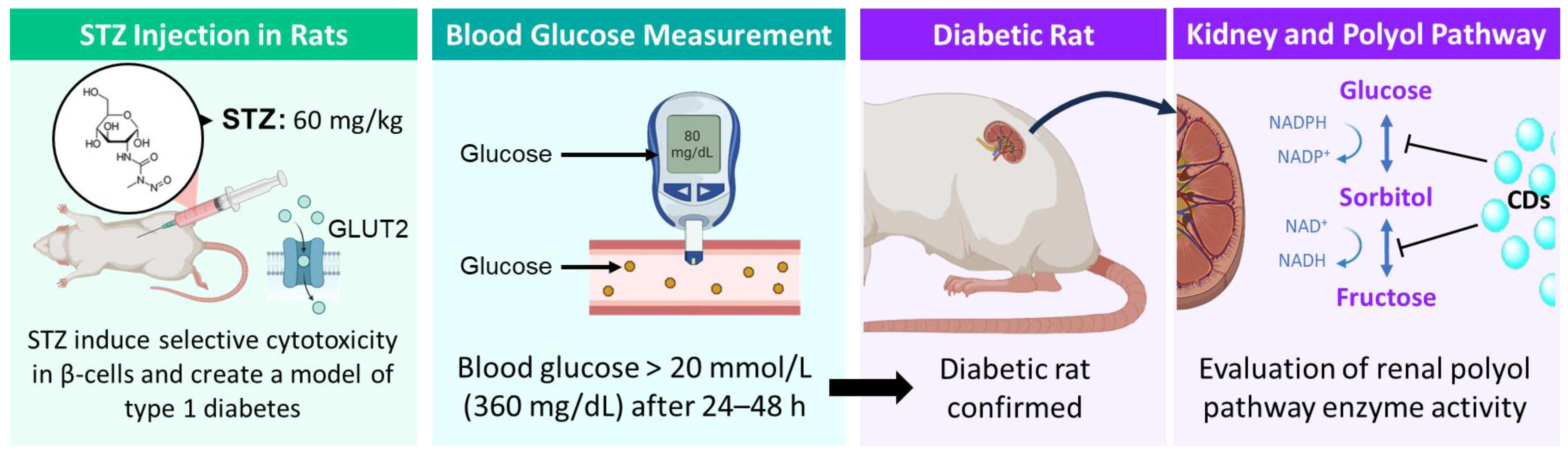
2.6.1. Experimental Induction of Diabetes in Rats
2.6.2. Ex Vivo Evaluation of CD Inhibitory Activity on Polyol Pathway Enzyme Activity
2.7. Statistical Analysis
3. Results and Discussion
3.1. Antibacterial Activity of CDs Against Enterococcus faecalis Associated with Diabetic Foot Infections
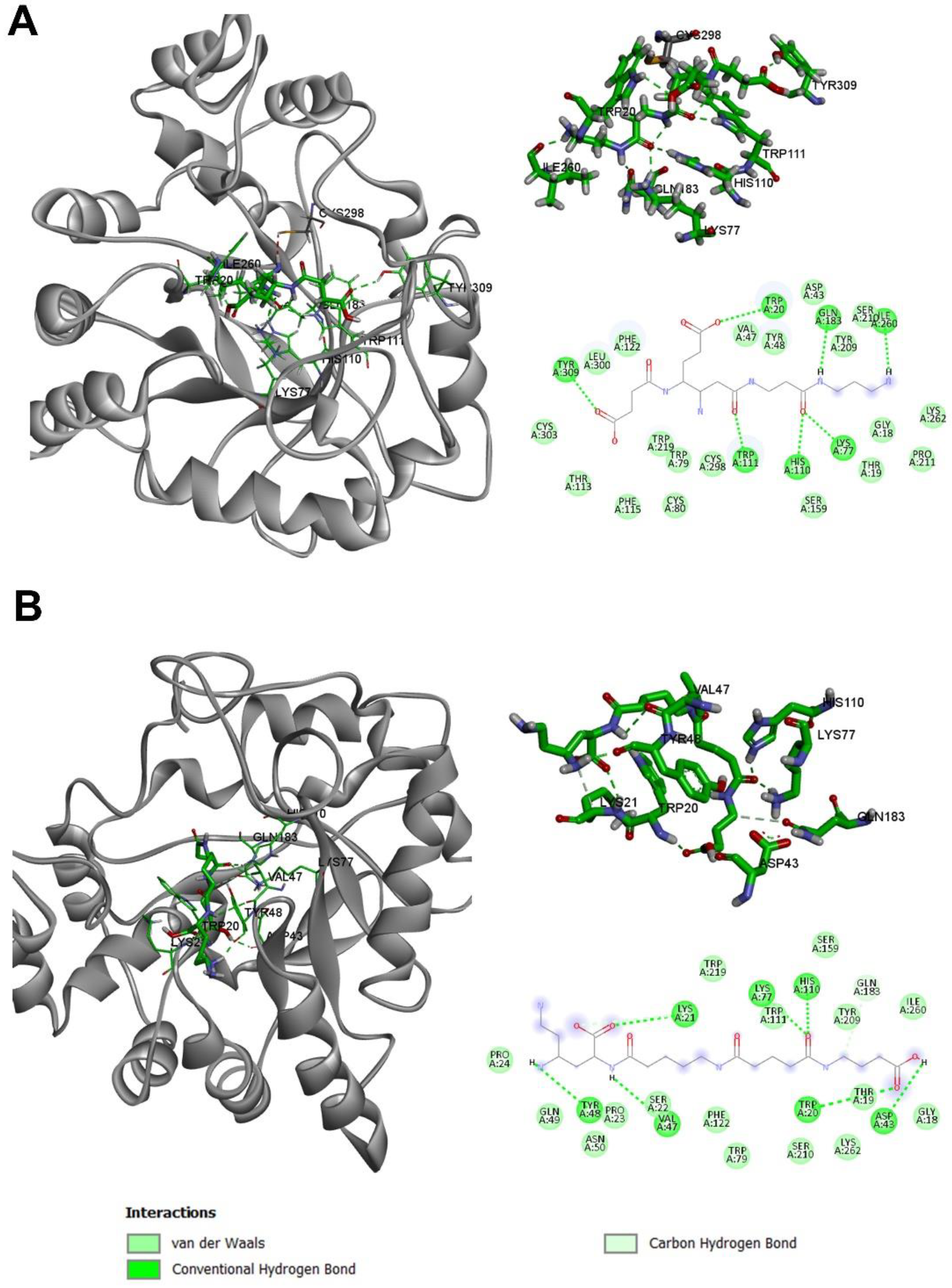
3.2. In Silico Analysis of CD Interaction with Aldose Reductase Active Site
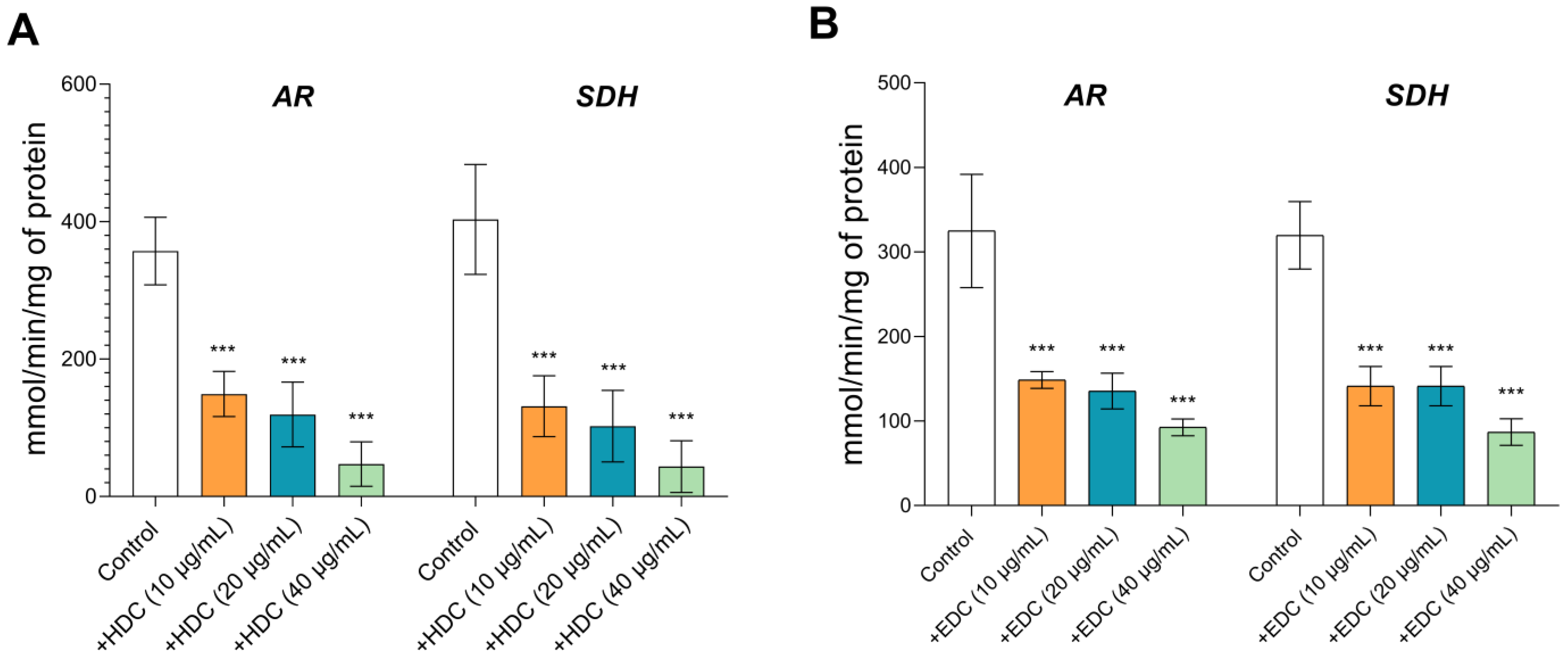
3.3. In Vitro Validation of CDs as Modulators of Polyol Pathway Enzyme Activity
4. Conclusions
Author Contributions
Funding
Institutional Review Board Statement
Data Availability Statement
Acknowledgments
Conflicts of Interest
References
- Giri, B.; Dey, S.; Das, T.; Sarkar, M.; Banerjee, J.; Dash, S.K. Chronic hyperglycemia mediated physiological alteration and metabolic distortion leads to organ dysfunction, infection, cancer progression and other pathophysiological consequences: An update on glucose toxicity. Biomed. Pharmacother. 2018, 107, 306–328. [Google Scholar] [CrossRef]
- Sun, W.; Oates, P.J.; Coutcher, J.B.; Gerhardinger, C.; Lorenzi, M. A selective aldose reductase inhibitor of a new structural class prevents or reverses early retinal abnormalities in experimental diabetic retinopathy. Diabetes 2006, 55, 2757–2762. [Google Scholar] [CrossRef] [PubMed]
- Chbel, A.; Lafnoune, A.; Nait Irahal, I.; Bourhim, N. Macromolecules from mushrooms, venoms, microorganisms, and plants for diabetes treatment—Progress or setback? Biochimie 2024, 227, 119–128. [Google Scholar] [CrossRef]
- Singh, M.; Kapoor, A.; Bhatnagar, A. Physiological and Pathological Roles of Aldose Reductase. Metabolites 2021, 11, 655. [Google Scholar] [CrossRef]
- Yan, L.J. Redox imbalance stress in diabetes mellitus: Role of the polyol pathway. Anim. Models Exp. Med. 2018, 1, 7–13. [Google Scholar] [CrossRef]
- Keogh, R.A.; Huyvaert, S.; Moore, G.D.; Horswill, A.R.; Doran, K.S. Virulence characteristics of Gram-positive bacteria isolated from diabetic foot ulcers. FEMS Microbes 2024, 5, xtae013. [Google Scholar] [CrossRef]
- Li, P.; Sun, L.; Xue, S.; Qu, D.; An, L.; Wang, X.; Sun, Z. Recent advances of carbon dots as new antimicrobial agents. SmartMat 2022, 3, 226–248. [Google Scholar] [CrossRef]
- Thoume, A.; Kellal, R.; Zertoubi, M.; Elmakssoudi, A.; Safi, Z.; Wazzan, N.; Al-Qurashi, O.S.; Left, D.B. Efficient enhancement of corrosion resistance of steel in HCl environment using N-doped succinic acid-based carbon quantum dots: A comprehensive quantum and electrochemical study. J. Ind. Eng. Chem. 2025, 147, 381–396. [Google Scholar] [CrossRef]
- Cui, M.; Ren, S.; Xue, Q.; Zhao, H.; Wang, L. Carbon dots as new eco-friendly and effective corrosion inhibitor. J. Alloys Compd. 2017, 726, 680–692. [Google Scholar] [CrossRef]
- Genc, R.; Alas, M.O.; Harputlu, E.; Repp, S.; Kremer, N.; Castellano, M.; Colak, S.G.; Ocakoglu, K.; Erdem, E. High-Capacitance Hybrid Supercapacitor Based on Multi-Colored Fluorescent Carbon-Dots. Sci. Rep. 2017, 7, 11222. [Google Scholar] [CrossRef]
- He, H.; Shuang, E.; Ai, L.; Wang, X.; Yao, J.; He, C.; Cheng, B. Exploiting machine learning for controlled synthesis of carbon dots-based corrosion inhibitors. J. Clean. Prod. 2023, 419, 138210. [Google Scholar] [CrossRef]
- Cen, H.; Chen, Z.; Guo, X. N, S co-doped carbon dots as effective corrosion inhibitor for carbon steel in CO2-saturated 3.5% NaCl solution. J. Taiwan Inst. Chem. Eng. 2019, 99, 224–238. [Google Scholar] [CrossRef]
- Ye, Y.; Yang, D.; Chen, H. A green and effective corrosion inhibitor of functionalized carbon dots. J. Mater. Sci. Technol. 2019, 35, 2243–2253. [Google Scholar] [CrossRef]
- Long, W.-J.; Li, X.-Q.; Zheng, S.-Y.; He, C. A novel effective carbon dots-based inhibitor for carbon steel against chloride corrosion: From inhibition behavior to mechanism. Carbon 2024, 218, 118708. [Google Scholar] [CrossRef]
- Sattariazar, S.; Nejad Ebrahimi, S.; Arsalani, N. Enhancing the properties of electrospun polyvinyl Alcohol/Oxidized sodium alginate nanofibers with fluorescence carbon Dots: Preparation and characterization. Int. J. Pharm. 2023, 644, 123358. [Google Scholar] [CrossRef]
- Zeng, Y.; Kang, L.; Wu, Y.; Wan, S.; Liao, B.; Li, N.; Guo, X. Melamine modified carbon dots as high effective corrosion inhibitor for Q235 carbon steel in neutral 3.5 wt% NaCl solution. J. Mol. Liq. 2022, 349, 118108. [Google Scholar] [CrossRef]
- Chbel, A.; Abdelhakim, E.; Manuel, R.-M.; Barja, J.L.; Aniq, F.O.; Abdelaziz, S.; Khalfi, B.E. Comparative Study of Essential Oil Composition, Anti-bacterial And Antioxidant Activities of the Aerial Parts of Thymus vulgaris Grown in Morocco and France. J. Essent. Oil Bear. Plants 2022, 25, 380–392. [Google Scholar] [CrossRef]
- Thoume, A.; Nait Irahal, I.; Dahib, Z.; Chbel, A.; Loukhmi, Z.; Abdou-Allah, F.; Achagar, R.; Zertoubi, M.; Benmessaoud Left, D.; Bourhim, N.; et al. Bioactive assessment of hexahydroquinoline derivatives prepared via a biochar/Fe3O4@APTMS magnetic catalyst: Focus on antidiabetic and antibacterial properties. RSC Med. Chem. 2025, 16, 5702–5716. [Google Scholar] [CrossRef]
- Kadiri, F.; Zahid, B.; Thoume, A.; Irahal, I.N.; Bennis, F.; Chegdani, F.; Blaghen, M. Characterization and valorization of a biosurfactant produced by Aeromonas salmonicida isolated from the marchika lagoon of Nador. Biocatal. Agric. Biotechnol. 2022, 45, 102523. [Google Scholar] [CrossRef]
- Thoume, A.; Irahal, I.N.; Benzbiria, N.; Left, D.B.; Achagar, R.; Elmakssoudi, A.; El foulani, A.A.; Dakir, M.; Azzi, M.; Bourhim, N.; et al. In vitro and in silico antibacterial and anti-corrosive properties of Persea americana leaves extract as an environmentally friendly corrosion inhibitor for carbon steel in a hydrochloric acid medium. Colloids Surf. A Physicochem. Eng. Asp. 2023, 674, 131848. [Google Scholar] [CrossRef]
- Ousaid, F.E.-Z.; Guenaou, I.; Nait Irahal, I.; Lahlou, F.A.; Errami, A.; Ait Si, L.; Abdou-Allah, F.; Ridaoui, K.; Zouheir, Y.; Hmimid, F.; et al. The chemical composition, in vitro, and in silico studies of Lavandula mairei essential oil. Sci. Afr. 2024, 23, e02062. [Google Scholar] [CrossRef]
- Irahal, I.N.; Guenaou, I.; Lahlou, F.A.; Hmimid, F.; Bourhim, N. Syzygium aromaticum bud (clove) essential oil is a novel and safe aldose reductase inhibitor: In silico, in vitro, and in vivo evidence. Hormones 2022, 21, 229–240. [Google Scholar] [CrossRef] [PubMed]
- Chbel, A.; Rodriguez-Castro, J.; Quinteiro, J.; Rey-Méndez, M.; Delgado, A.S.; Soukri, A.; Khalfi, B.E. Isolation, Molecular Identification and Antibacterial Potential of Marine Bacteria from Deep Atlantic Ocean of Morocco. Avicenna J. Med. Biotechnol. 2022, 14, 206–215. [Google Scholar] [CrossRef]
- Gauba, A.; Rahman, K.M. Evaluation of Antibiotic Resistance Mechanisms in Gram-Negative Bacteria. Antibiotics 2023, 12, 1590. [Google Scholar] [CrossRef]
- Shettigar, K.; Bhat, D.V.; Satyamoorthy, K.; Murali, T.S. Severity of drug resistance and co-existence of Enterococcus faecalis in diabetic foot ulcer infections. Folia Microbiol. 2018, 63, 115–122. [Google Scholar] [CrossRef]
- Andrade, F.F.; Silva, D.; Rodrigues, A.; Pina-Vaz, C. Colistin Update on Its Mechanism of Action and Resistance, Present and Future Challenges. Microorganisms 2020, 8, 1716. [Google Scholar] [CrossRef]
- Abu Rabe, D.I.; Al Awak, M.M.; Yang, F.; Okonjo, P.A.; Dong, X.; Teisl, L.R.; Wang, P.; Tang, Y.; Pan, N.; Sun, Y.P.; et al. The dominant role of surface functionalization in carbon dots’ photo-activated antibacterial activity. Int. J. Nanomed. 2019, 14, 2655–2665. [Google Scholar] [CrossRef] [PubMed]
- Liang, J.; Li, W.; Chen, J.; Huang, X.; Liu, Y.; Zhang, X.; Shu, W.; Lei, B.; Zhang, H. Antibacterial Activity and Synergetic Mechanism of Carbon Dots against Gram-Positive and -Negative Bacteria. ACS Appl. Bio Mater. 2021, 4, 6937–6945. [Google Scholar] [CrossRef]
- Varghese, M.; Balachandran, M. Antibacterial efficiency of carbon dots against Gram-positive and Gram-negative bacteria: A review. J. Environ. Chem. Eng. 2021, 9, 106821. [Google Scholar] [CrossRef]
- Barros, M.R.; da Silva, L.P.; Menezes, T.M.; Garcia, Y.S.; Neves, J.L. Efficient tyrosinase nano-inhibitor based on carbon dots behaving as a gathering of hydrophobic cores and key chemical group. Colloids Surf. B Biointerfaces 2021, 207, 112006. [Google Scholar] [CrossRef] [PubMed]
- Innocenzi, P.; Stagi, L. Carbon dots as oxidant-antioxidant nanomaterials, understanding the structure-properties relationship. A critical review. Nano Today 2023, 50, 101837. [Google Scholar] [CrossRef]
- Camlik, G.; Bilakaya, B.; Küpeli Akkol, E.; Velaro, A.J.; Wasnik, S.; Muhar, A.M.; Degim, I.T.; Sobarzo-Sánchez, E. Oral Active Carbon Quantum Dots for Diabetes. Pharmaceuticals 2024, 17, 1395. [Google Scholar] [CrossRef]
- Asmat, U.; Abad, K.; Ismail, K. Diabetes mellitus and oxidative stress—A concise review. Saudi Pharm. J. 2016, 24, 547–553. [Google Scholar] [CrossRef] [PubMed]
- Sahu, V.; Sahoo, S.K. Biogenic synthesis of carbon dots with inbuilt biological activity. Next Nanotechnol. 2024, 5, 100034. [Google Scholar] [CrossRef]





| Molecules | Escherichia coli | Staphylococcus aureus | Klebsiella pneumoniae | Enterococcus faecalis | |
|---|---|---|---|---|---|
| N-ECD | - | - | - | 11.5 ± 0.70 a | MIC= 50 µg/mL |
| N-HCD | - | - | - | 13 ± 0.0 b | MIC= 50 µg/mL |
| Penicilline | R | R | R | R | |
| Tetracycline | 14 ± 0.0 a | 10 ± 0.0 a | 10 ± 0.0 a | 10 ± 0.0 c | |
| Colistine | 18 ± 0.0 b | 14 ± 0.0 b | 16 ± 0.0 b | 12 ± 0.0 a | |
| Enzyme | Ligands | Binding Affinity (kcal/mol) |
|---|---|---|
| AR (PDB id: 1IEI) | N-ECD | −7.8 |
| N-HCD | −7.0 |
Disclaimer/Publisher’s Note: The statements, opinions and data contained in all publications are solely those of the individual author(s) and contributor(s) and not of MDPI and/or the editor(s). MDPI and/or the editor(s) disclaim responsibility for any injury to people or property resulting from any ideas, methods, instructions or products referred to in the content. |
© 2026 by the authors. Licensee MDPI, Basel, Switzerland. This article is an open access article distributed under the terms and conditions of the Creative Commons Attribution (CC BY) license.
Share and Cite
Nait Irahal, I.; Thoume, A.; Chbel, A.; Wahnou, H.; Abdou-Allah, F.; Lafnoune, A.; Achagar, R.; Left, D.B.; Zertoubi, M.; Bourhim, N. Carbon Dot Nanotherapeutics Modulating the Polyol Pathway and Targeting Infection Pathogens Associated with Diabetic Complications. BioChem 2026, 6, 7. https://doi.org/10.3390/biochem6010007
Nait Irahal I, Thoume A, Chbel A, Wahnou H, Abdou-Allah F, Lafnoune A, Achagar R, Left DB, Zertoubi M, Bourhim N. Carbon Dot Nanotherapeutics Modulating the Polyol Pathway and Targeting Infection Pathogens Associated with Diabetic Complications. BioChem. 2026; 6(1):7. https://doi.org/10.3390/biochem6010007
Chicago/Turabian StyleNait Irahal, Imane, Abderrahmane Thoume, Asmaa Chbel, Hicham Wahnou, Fatima Abdou-Allah, Ayoub Lafnoune, Redouane Achagar, Driss Benmessaoud Left, Mustapha Zertoubi, and Noureddine Bourhim. 2026. "Carbon Dot Nanotherapeutics Modulating the Polyol Pathway and Targeting Infection Pathogens Associated with Diabetic Complications" BioChem 6, no. 1: 7. https://doi.org/10.3390/biochem6010007
APA StyleNait Irahal, I., Thoume, A., Chbel, A., Wahnou, H., Abdou-Allah, F., Lafnoune, A., Achagar, R., Left, D. B., Zertoubi, M., & Bourhim, N. (2026). Carbon Dot Nanotherapeutics Modulating the Polyol Pathway and Targeting Infection Pathogens Associated with Diabetic Complications. BioChem, 6(1), 7. https://doi.org/10.3390/biochem6010007