
Previous Article in Journal
Stressful Life Events, Dental Visits, and Toothache: JAGES 2019 Cross-Sectional Study
Previous Article in Special Issue
The Role of Digital Innovations in Shaping Contemporary Fixed Prosthodontics: A Narrative Review
error_outline You can access the new MDPI.com website here. Explore and share your feedback with us.
 
 
Article

Palatal Vault Depth Affects the Accuracy of the Intaglio Surface of Complete Maxillary Denture Bases Manufactured Through Additive Manufacturing

1
School of Medicine and Dentistry, Griffith University, Gold Coast, QLD 4215, Australia
2
Dentistry and Oral Health, La Trobe Rural Health School, La Trobe University, Bendigo, VIC 3550, Australia
*
Authors to whom correspondence should be addressed.
Submission received: 30 September 2025 / Revised: 17 December 2025 / Accepted: 31 December 2025 / Published: 6 January 2026
(This article belongs to the Collection Digital Dentistry: State of the Art and Future Perspectives)

Abstract

Background/Objectives: The purpose of this in vitro study is to evaluate the effect varying palatal vault depths have on the accuracy of complete maxillary denture bases fabricated using additive manufacturing technology. Methods: One hundred complete maxillary denture bases were manufactured on two different digital light processing (DLP) dental 3D printers at five different palatal depths. After manufacturing, the denture bases were post-cured, scanned, and then analyzed in metrology software. Statistically significant differences were determined using two-way ANOVA tests for normally distributed data and the Kruskal–Wallis test for non-normally distributed data. Color deviation maps were used to give clinical relevance to the results. Results: Significant differences were found for both printers among some groups for the different palatal depths. In relation to the negative mean deviation, the data revealed that the NextDent printers were the least accurate (0.047 ± 0.004) in the group with the deepest palate. The positive mean deviation revealed the most deviation (0.077 ± 0.009) in the group with the deepest palate, which was also mirrored in the Asiga printer (0.050 ± 0.002). The color deviation maps revealed areas of positive and negative average deviation in all groups. The effect of the printer model (p = 0.007) and palatal depth (p = 0.04) on negative average deviation was significant. The effect of the interaction of printer and palatal depth was also significant (p = 0.001). Conclusion: Deeper palatal vaults are associated with higher deviation in DLP 3D-printed complete maxillary denture bases manufactured through additive manufacturing.

1. Introduction

Complete dentures are commonly used for prosthetic rehabilitation of completely edentulous patients [1]. Recent computerized advancement in complete denture design and manufacturing has resulted in improved overall quality and enhanced patient satisfaction [2]. Precise adaptation of a complete maxillary denture to the underlying soft tissue is one of the major factors affecting denture stability and retention [3]. Accurately fitted and well-retained dentures result in higher comfort and improved masticatory and speech function, along with reduced incidence of mucosal trauma [4]. A specific area of investigation when assessing the suitability of denture manufacturing techniques is the determination of the accuracy, comprising the trueness and precision, of the intaglio surface [5,6]. This is of particular importance, with in vitro investigations of the intaglio surface indicating the adaptation of denture bases to the underlying tissues using ‘trueness’ as a method to measure closeness to the tissues [7,8,9]. Trueness is defined as the closeness of agreement between the reference model and the true result [10].
The fit or accuracy of the denture base can be dependent on dimensional changes resulting from the different manufacturing processes [11]. Regardless of the method used, the goal is to limit distortion during the process and achieve accurate mucosal adaptation [12]. There are different methods of manufacturing complete dentures with digital techniques. They are subtractive manufacturing (SM), known as milling, and additive manufacturing (AM), known as three-dimensional (3D) printing [5,6,8,11,12,13,14,15,16]. SM denture bases are milled from a larger pre-polymerized resin block or puck, achieved through a predetermined computer-generated milling or cutting strategy [17]. The SM process is an established technique in fixed prosthodontic restoration manufacturing, while the materials used to manufacture denture bases are long established for use in conventional manufacturing processes [18,19]. Conversely, the AM techniques rely on a process that is still undergoing improvements for dental applications, having been established in the market in the last decade [20]. There are a variety of AM technologies that can be used to manufacture dental devices. For dental applications, vat polymerization is the primary application for resin- or composite-based materials [21]. Within vat polymerization, three primary technologies exist: digital light processing (DLP), stereolithography apparatus (SLA), and liquid crystal display (LCD) [21]. The fundamental difference with these technological approaches regards the light source; DLP projects an image, LCD blocks the areas of the image that are not required, and SLA uses a single light source that traces the image [14,22]. Of these technologies, DLP printers are the preferred professional option due to their superior speed, reliability, and accuracy [14,21,22].
The successful use of AM to create complete dentures requires the addition of support structures, consideration of printing orientations, and complex post processing procedures that can introduce inaccuracies [5,14,23,24]. Despite this apparent disadvantage, AM allows more complex geometries to be manufactured for complete denture bases, when compared to SM techniques. The AM process allows the introduction of several variables that can be altered to introduce different physical properties of dental materials [14,25]. In vitro investigations that focus on the accuracy of the intaglio surface for AM techniques are only reported to focus on samples of standardized anatomy, single sample types, or simple model shapes [5,7,8,9,11,12,13,14]. Given these findings, the complexity of the AM process, and limitations of anatomical models of in vitro investigation, it could be postulated that different anatomical shapes may influence the trueness of complete denture bases manufactured with AM techniques, representing a clear gap in the literature.
Poly methyl methacrylate is utilized in both traditional and computer-engineered approaches. Varying levels of accuracy have been observed when manufacturing dentures using traditional manufacturing techniques and with PMMA as the material of choice [26,27]. The geometry of the palatal vault shape and depth has been found to influence the accuracy of complete maxillary dentures [28,29]. McLaughlin et al. (2019) found that palatal depth and shape can affect the adaptation of dentures manufactured using traditional and SM approaches [30]. However, there is no literature pertaining to the impact palatal depth has on the trueness of an AM maxillary complete denture. Exploring the influence that palatal depth has on complete maxillary dentures fabricated by an AM technique helps to understand the role of palatal depths when manufacturing different anatomical shapes. The purpose of this in vitro study was to investigate the effect of palatal vault depth on the trueness of the intaglio surface of complete maxillary denture bases fabricated with DLP 3D printers. In this study, two different DLP 3D printers were utilized to investigate if the results are due to effects of the printing technology. The primary null hypothesis is that during additive manufacturing of complete maxillary denture bases, there is no significant difference in trueness of the intaglio surface due to different palatal vault depths. The secondary null hypothesis is that trueness levels of the denture bases will not be altered when using two different DLP three-dimensional printers to produce the complete maxillary denture bases by AM.

2. Methodology

A completely edentulous maxillary cast was selected that met the average criteria for palatal depth and palatal width established by Avci and Iplikçioğlu (1992) [31]. The reference cast comprised a depth of 12.6 mm and a width of 45 mm (measured from the mid-point of the hamular notch), with a Cawood classification III at the residual ridge [32]. The reference cast was scanned on a calibrated optical desktop scanner (E4, 3shape A/S) to generate a standard tessellation language (STL) file enabling the reference cast to be converted to the digital format. The digital reference cast was then imported into the CAD software (3D Sprint, 3D Systems) for the purpose of creating five palatal depth groups (dental casts). Within the software, the reference cast was both intruded, to decrease palatal depth, and extruded, to increase palatal depth, along the z-axis away from the reference cast for one and two standard deviations, according to the outcome of the Avci et al. (1992) investigation [31]. These dental casts were then separately used to design individual denture bases, so that any morphological distortions that may have occurred if the final denture base was modified were minimized. The anterior–posterior relationships and the distance between the maxillary tuberosities of the modified casts remained constant throughout. The final palatal vault depth of the groups was as follows: group 1, 7.4 mm; group 2, 10 mm; group 3, 12.6 mm (average); group 4, 15.2 mm; and group 5, 17.8 mm. group 3, showing average palatal depth, can be seen in Figure 1. These were referred to as most shallow, shallow, average, deep, and most deep for ease of understanding. These parameters were chosen to be representative palatal depths as defined in a large anatomical study [32], with group 3 representing a mean palatal depth, group 1 and 5 representing palatal depth 2 standard deviations from the mean, and groups 2 and 4 representing 1 standard deviation from the mean for shallow and deep palatal vaults, respectively.
The reference casts were imported into CAD software (Dental System V21.1, 3 Shape A/S) to design a complete maxillary denture base to suit each of the selected groups reference cast, this resulted in five different denture bases. A minimum denture base thickness of 2 mm was applied to the palatal surface and beneath the denture teeth. Teeth were positioned directly over the crest of the residual ridge to comply with clinical protocols [29]. This allowed for the tooth socket to be incorporated into the denture base to provide clinical relevance; however, the denture bases were printed without the teeth to comply with previous study designs and current manufacturing methods [8,19,33,34]. To minimize the effect that the material or printing apparatus might have on the results, two 3D printers were used in the study, a NextDent 5100 (NextDent 3D Systems, Soesterberg, The Netherlands) and an Asiga Max UV (Asiga, Sydney, Australia). The NextDent printer utilized the NextDent 3D+ pink opaque material (NextDent, 3D Systems), while the Asiga printer was loaded with Detax Freeprint denture pink material (DETAX GmbH & Co., Ettlingen, Germany). Both materials were certified or optimized for use on their respective 3D printers. For the purposes of readability and clarity the combination of 3D printer and photopolymer used will be referred to as the brand of 3D printer only. Readers should be aware that the combination of printer and resin is a potential variable in this experimental design.
The denture bases were imported into the respective slicing software, the support structures were generated as per manufacturers specifications, and a print layer thickness of 50 microns was set. For the Nextdent groups, cylindrical support bars were added in the palatal cameo surface of all groups, as per manufacturer instructions. The manufacturer’s instructions for the Detax Freeprint denture material did not indicate that support bars should be added so these were not included. To ensure validity, reliability, and repeatability, one denture base was printed per print cycle in the middle of the build plate at a 60-degree orientation angle, as per the manufacturer’s instructions. Ten samples were manufactured per group, as determined by a power analysis by analyzing the average group of the Nextdent printer. An effect size of dz = 1.2 from the power analysis indicated a sample size of 9.2 at a probability of 0.05 and a power of ≥0.95, leading to the sample size of 10. Once the STL files had been loaded onto the relevant printers, the denture bases were printed. Post processing was performed following the manufacturer’s instructions. The NextDent denture bases were placed into an ultrasonic isopropyl bath for five minutes, removed, dried with compressed air, placed back in the bath for a further five minutes, and dried again. Once the ultrasonic bath had been completed, the denture bases were placed into the LC-3D cure box (NextDent) for thirty minutes, covering 300–550 nm of light intensity, to undergo final polymerization as per manufacturer instruction. The Asiga denture bases were submerged in an ultrasonic isopropyl bath for five minutes and dried with compressed air; this was then repeated. Once dried, the denture bases were placed into the Otoflash G171 curing box (Anaxdent) to undergo final polymerization in a nitrogen environment for 2000 flashes on each surface, covering 280–700 nm of light intensity, as per manufacturer’s instructions. The intaglio surfaces of the samples were scanned by a single operator (BS) on a calibrated desktop scanner (E3, 3shape A/S) and exported as an STL file.
The scans were analyzed using metrology software (Geomagic Control V21.1, 3D systems). The scanned STL files were compared against the relevant reference STL file with the following process: initial alignment, best fit alignment, and then 3D compare tool. The measured outcomes included the mean positive deviation and the mean negative deviation of the intaglio surfaces. SPSS (27.0, IBM Corp) was used for statistical analysis. High average positive deviations indicate an inconsistency in the manufacturing process resulting in the denture base fitting closer to the underlying tissues, resulting in potential mucosal tissue irritations and possible denture instability. High negative deviations indicate that the denture base does not contact the mucosal surface. Descriptive statistical tests were performed; Leven’s tests were performed to determine homogeneity of variance, while the data were checked for normality using the Shapiro–Wilk test. As the data were normally distributed, a Two-way ANOVA was performed to evaluate the effect of printer type, palatal depth, and the interaction of these two variables on the trueness levels quantified using positive average and negative average deviations. In addition, Bonferroni post hoc tests were conducted to evaluate the differences in trueness levels of dentures printed using the different printers and palatal vault depths. Color deviation maps were also generated from the metrology software to aid in clinical interpretation with yellow and red hues indicating positive deviation and blue hues indicating negative deviation. Dark blue and red indicate regions of clinically unacceptable variations.

3. Results

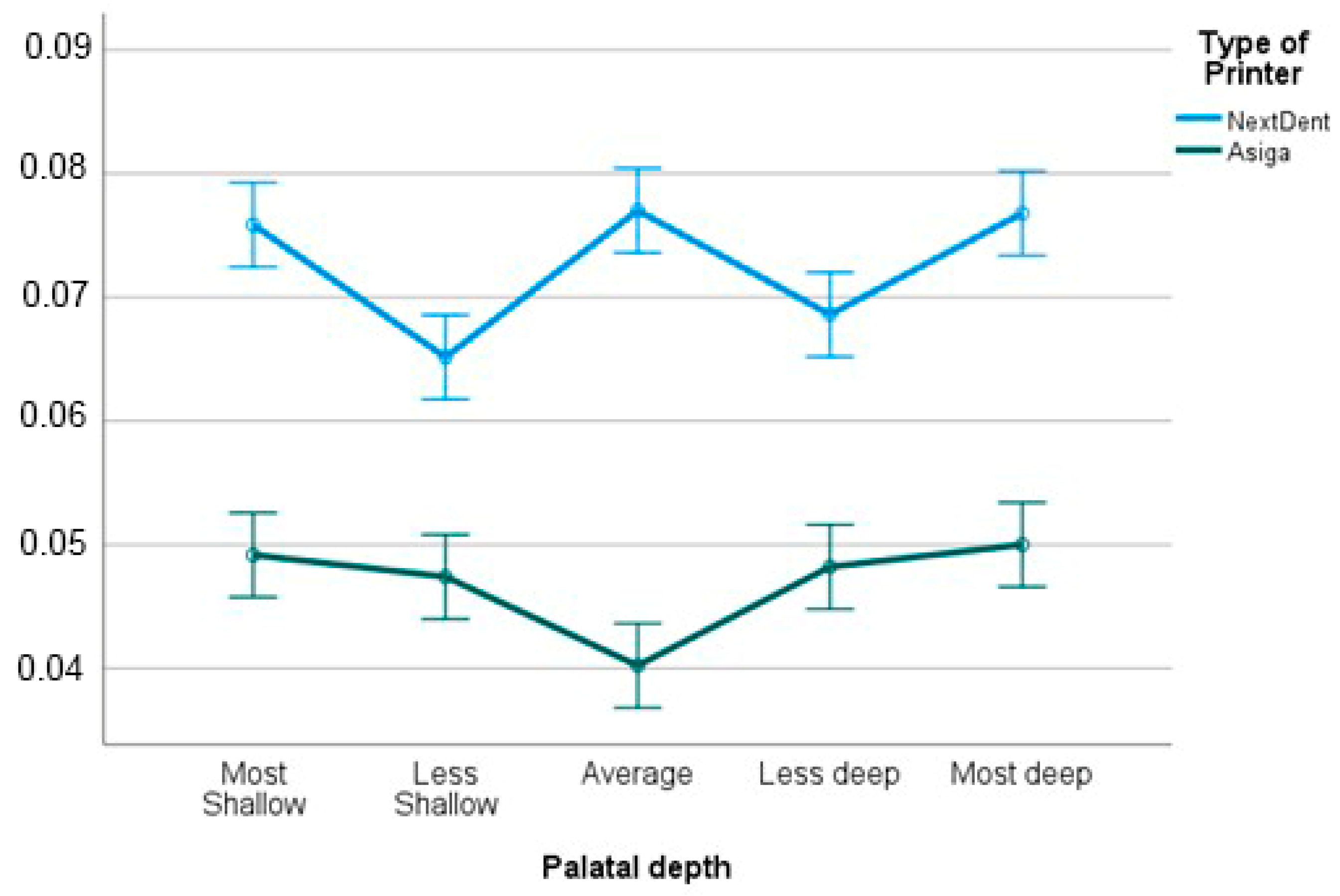
Table 1 presents the positive average deviation, while Table 2 presents the negative deviation results. Table 1 and Figure 2 demonstrate that, among the NextDent groups, those with a ‘less shallow’ palatal depth had the least positive average deviation when compared to ‘most shallow’ or ‘deep’ palatal depths (p < 0.05). There is no clear significance from any specific group; however, significance does seem to change from deeper to shallower groups, overall. Among the denture bases printed with the Asiga, the highest trueness levels were observed in those printed with ‘average’ palatal depth when compared to all other palatal depths (p < 0.05). Significant differences seem to present from the mean group in both the shallow and deep directions, indicating that deviation from mean palatal depths can result in differences in trueness. Results from the two-way ANOVA indicated that the effect of the printer (p < 0.0001) and palatal depth (p = 0.04) on positive average deviation was significant. The effect of the interaction of printer and palatal depth was also significant (p < 0.0001).
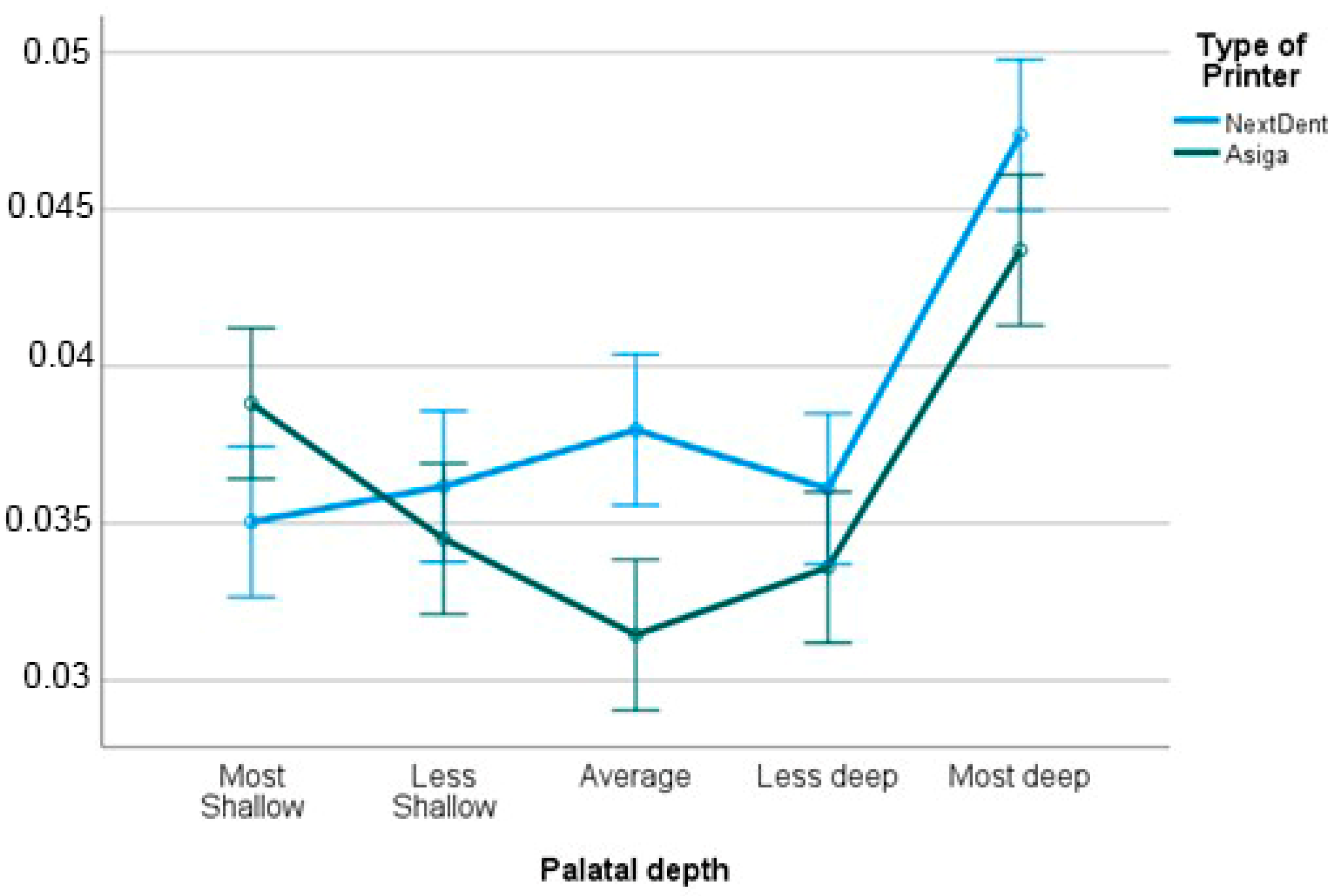
The negative deviation outcome, presented in Table 2, indicates a denture base that has an intaglio surface adapting further away from the underlying tissues, potentially affecting denture accuracy and thus retention. Table 2 and Figure 3 show that the ‘most deep’ palatal depth caused the highest significant negative deviation when compared to all other palatal depths for both the NextDent and Asiga printers. In particular, the ‘average’ 0.031(0.002) palatal depth resulted in the highest trueness levels when using the Asiga 3D printer. Results from Two-way ANOVA demonstrated that the effect of the 3D printer model (p = 0.007) and palatal depth (p = 0.04) on negative average deviation was significant. The effect of the interaction of printer and palatal depth was also significant (p = 0.001).
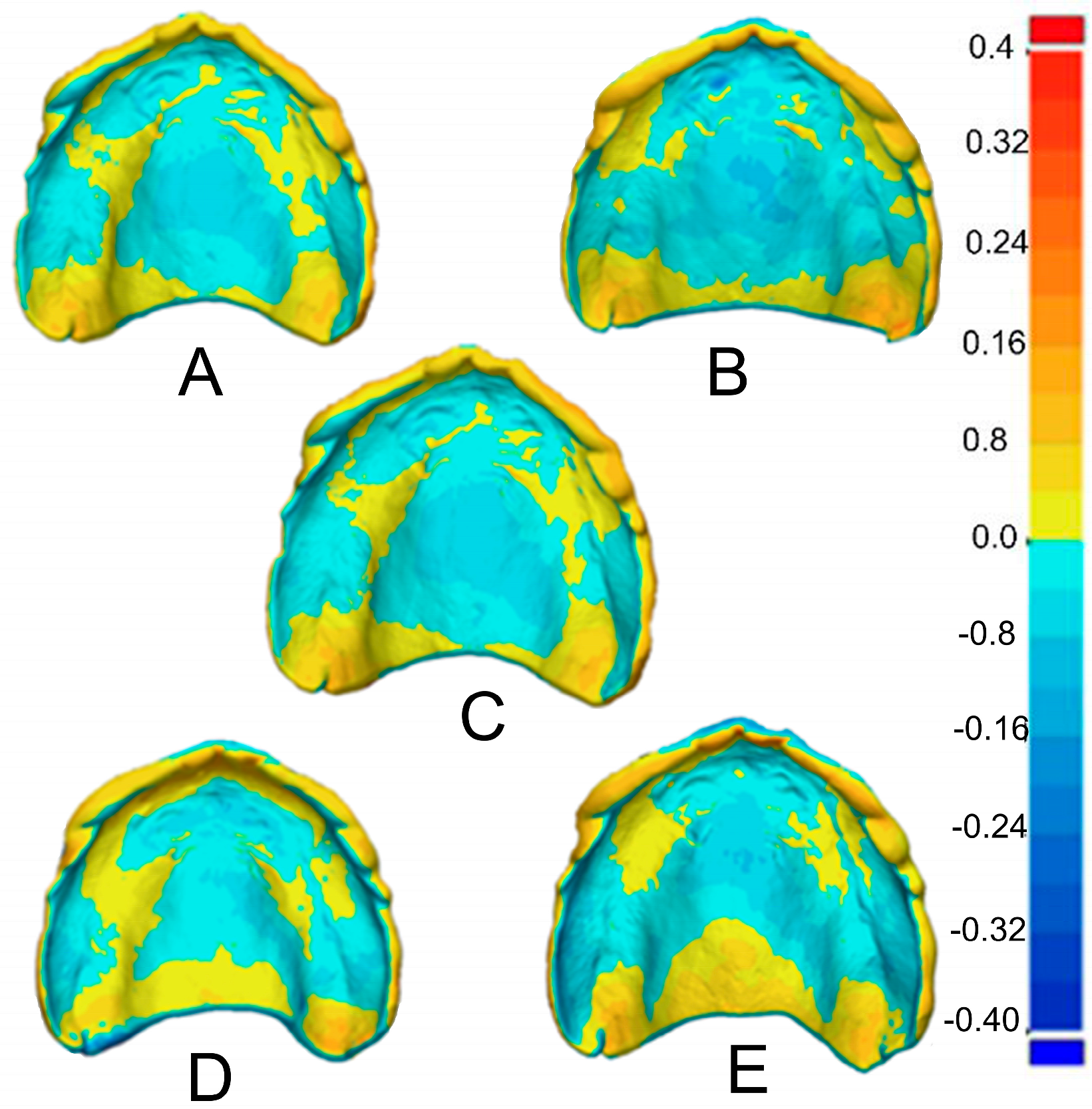
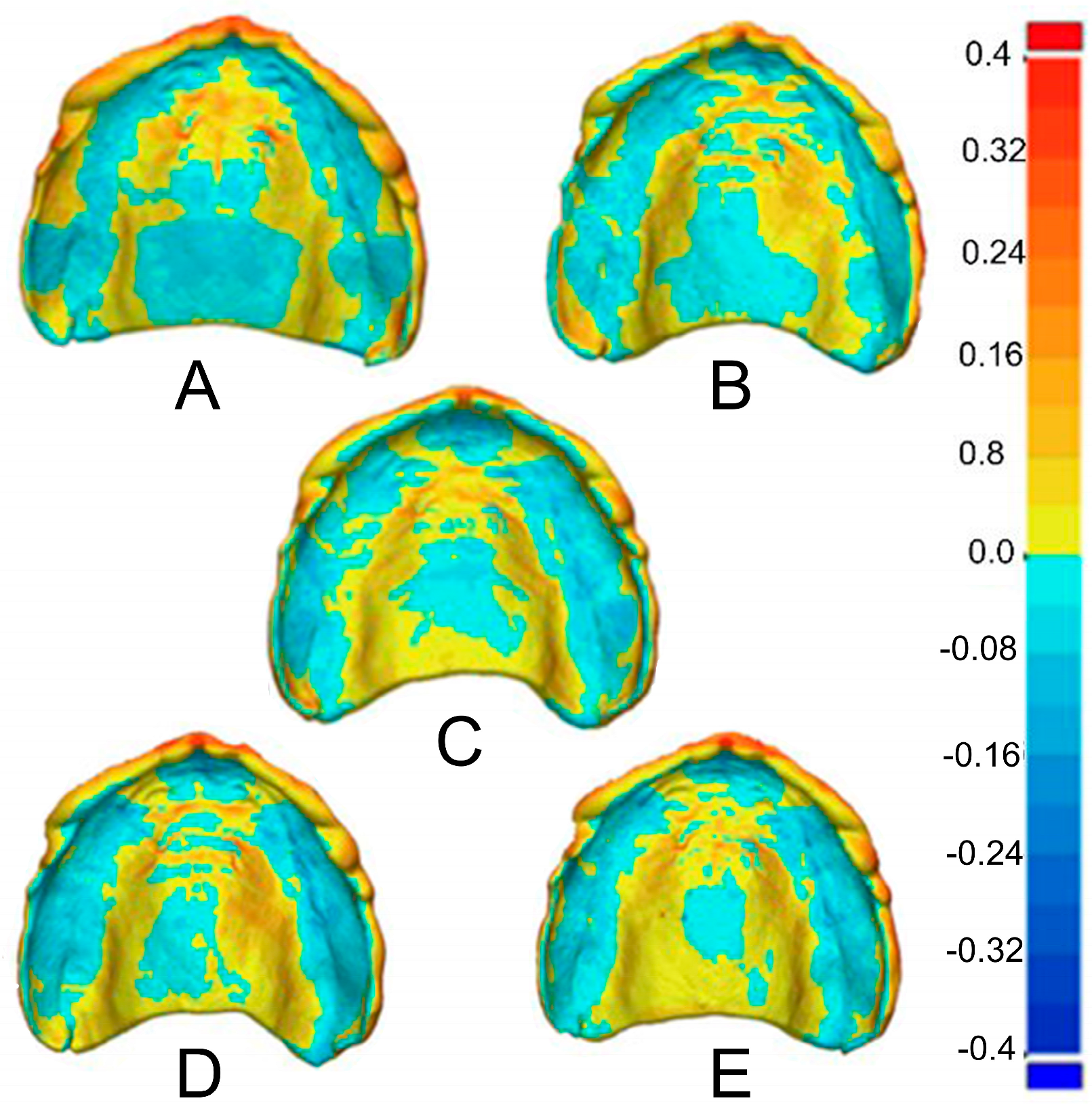
Heat maps were generated to allow for improved clinical interpretation and can be viewed in Figure 4 and Figure 5. It can be observed that, for the Asiga printer, minimal areas fall into the red or dark blue area, indicating regions of clinically significant differences. There is a gradual trend that the deeper the palate vault the greater the area of positive deviation in the central posterior region of the palate, while the peripheral regions all exhibited positive deviations, particularly in the labial regions. The color deviation maps for the NextDent printer indicate greater areas of clinically unacceptable deviation. These are primarily in the peripheral and anterior positions of the palate. The trend observed in the Asiga printer indicates an increased area of positive deviation in the palate, which is also observed for the NextDent printer.

4. Discussion

The purpose of this study was to evaluate the impact of palatal vault depth on the trueness of the intaglio surface of complete maxillary denture bases printed on two different DLP 3D printers. The null hypothesis was rejected, as trueness levels of the intaglio surface were found to be significantly different according to the depth of palatal vault. The secondary null hypothesis was also rejected as significant differences were found between both the 3D printers for positive and negative deviations.
The results of this study do indicate that there are significant differences in the differently shaped palates between and within the different 3D printers, that emulate observations from in vitro studies for conventional processes. The average palatal vault depth denture bases achieved significantly truer values for the negative average deviation compared to the shallowest palatal depth group and the deepest palatal depth group. This can be compared to previous research in conventional manufacturing where the influence of palatal depth changes was noted [29,31]. When comparing 3D printers, the Asiga 3D printer outperformed the NextDent printer in all statistical tests. However, there was a notable difference in printing time between the two 3D printers in the time taken to print each of the denture bases. The NextDent printer fabricated the denture bases in approximately 54 min, while the Asiga printer took, on average, 2 h and 45 min per denture base. The shortened printing time of the NextDent printer may have been a factor in the decreased trueness values [34]. Decreased printing time could indicate that less time was given for the layers to polymerize across the layers, or it could indicate that more force was used in the NextDent printer to separate each layer from the printing window [34]. Further investigation is required to determine if printing time and printing accuracy are correlated variables. These results are congruent with investigations comparing seven different AM and SM methods that demonstrated that the Asiga printer outperformed the NextDent printer [8]. In addition, the results of this experimental study are supported by previous investigations of denture bases that found that the trueness of CAM and traditionally manufactured denture bases are affected by palatal vault depth [28,29]. Given that the evidence supporting this effect is limited for AM, comparing the results of other techniques gives context. Results from historical and recent research found that traditional denture bases with a deep palatal vault recorded less true values [12,27,29,30]. The conclusions of investigations of conventional processing methods such as pressed, poured, or injected methods assert that the palatal vault shape of a complete maxillary denture is a difficult shape to manufacture due to the natural inherent inclination for the material to distort towards a flat plane, which is also evident when using AM techniques, likely due to polymerization shrinkage [12]. This may account for the evidence which indicates that SM processes in complete maxillary denture manufacturing are the most accurate manufacturing method, as these materials are already polymerized and do not undergo any dimensional changes during manufacturing [8,16].
The inclusion of two DLP 3D printers was carried out to determine if any variability in trueness observed for different palatal depths was due to the type of printer used. Both 3D printers used are DLP printing applications but have variations in the printing technology and material used. The material used was optimized for each 3D printer, therefore utilizing the same photopolymer resin was not practical. This variable may have accounted for the differences between the printers. However, the trend in differences should be noted for the two 3D printers, with both the printers observing greater positive deviation in the shallowest and less shallow groups. The color deviation maps seen in Figure 4 and Figure 5 give greater clinical relevance, with the greater changes in positive deviations easily observed in the palatal regions.
Thus, this supports the assertion that palatal shape is the primary cause of variation between the groups. It would be beneficial to observe if this phenomenon was also present for SLA- and LCD-type 3D printing.
The interaction of printing apparatus, photopolymer resin, and printing variables should not be ruled out. Variables such as printing orientation, use of support structures, or the post processing procedures can be mitigating factors in accuracy assessments, as observed in previous studies [2,9,17]. It was observed that in the NextDent groups the significant positive average deviation variations between the groups were not as pronounced. This might be accounted for by the addition of the support bars, as per manufacturer’s recommendations. These support bars remain during the post-washing and post-curing phases of the process with their inclusion in these groups possibly being responsible for less positive distortion variations between the groups [7,35]. Improvements in accuracy with the addition of support bars have been observed in several other studies; thus, the results of this study support this evidence and the inclusion of support bars by the manufacturer [7,23,35,36]. This could indicate that palatal geometry that is more concave, as seen in a deeper palatal vault, tends to contract, during either the printing process or the post processing procedures [13,37]. Further investigation as to the cause is warranted. Greater overall deviations were observed for the NextDent printer, indicating that the printing apparatus or material was responsible. From a clinical perspective, this may indicate to clinicians or technicians that certain 3D printers are optimal for different palatal vault shapes or depths. Larger clinics or dental laboratories should consider that having different 3D printers in their production line may be a necessary requirement to overcome difficulties in manufacturing complete maxillary denture bases that have deep palatal vaults. Deviation over the critical 400 µm threshold should be of note when determining clinical complications [38,39,40]. Deviation over this threshold may result in complications depending on the anatomical region that is being observed. The color deviation maps indicated in Figure 4 and Figure 5 show areas exceeding this threshold that may result in poor retention, negative deviations, and additional post insertion adjustments where positive deviations are observed. Deviations above this range are present in all the palatal depth groups for the NextDent printer, primarily for positive deviations in the labial and buccal peripheries. Negative deviations over this clinically critical threshold cannot be observed for either the Asiga or NextDent groups.
The limitations of this study relate primarily to variables associated with 3D printing and the processes that are inherent in this process. Despite attempts to represent variations in anatomical features, the consideration of only one anatomical feature variation, palatal depth, may not be the only geometry variation that effects the accuracy of a complete denture base. The use of only two 3D printers may not represent a full picture of 3D printing technology and the results may be limited to DLP printing technologies. A control group of either SM or conventional methods may have also added to comparisons; however, it would not have aided in proving or disproving the stated hypothesis. The two different materials used in the investigation may have also represented a causative factor in the differences observed, given that the materials require different curing parameters. It should also be investigated at what point in the process distortions occurred. The denture bases are washed in an iso propanol solution, which may have been a causative factor in a lack of accuracy and thus a limitation. Scanning of the intaglio surface at this stage was not possible as a clear scan could not be obtained due to the uncured photopolymer on the surface. It could have been determined if the post-curing process was a factor in the inaccuracy by scanning and analyzing the denture base prior to post-curing. However, the final denture base must be post-cured to a biocompatible stage for clinical use, therefore assessing an uncured intaglio surface for accuracy would not be clinically relevant.
Directions for future research could investigate if the results are observed in other 3D printers with different technology, such as liquid crystal displays or stereolithography. Different anatomical features could also be used to guide future research; though this study investigated palatal depth, the width of the palate is another variable that could be incorporated into future study designs. Investigations of different anatomical shapes for the mandibular complete denture could also be conducted. Further studies are deemed necessary to further explore the effect of different printers and anatomical features on the trueness of AM dentures.

5. Conclusions

Within the limitations of the current study the following can be concluded:
  • Very deep palatal vaults (17.8 mm) are linked to higher levels of negative deviation and less trueness of DLP 3D-printed complete maxillary denture bases manufactured through additive manufacturing. No clear pattern emerged for less deep, average, or shallow palatal vault depths.
  • Different 3D printers, even within the same technology type, demonstrate a combined difference with varying anatomical shapes, confirming that variations between 3D printing systems observed in other in vitro studies are not because of the specific sample utilized for analysis.

Author Contributions

Conceptualization, S.K.T. and A.B.C.; methodology, B.J.S., L.G., D.D., J.C. and J.O.; software, A.B.C.; investigation, B.J.S., L.G., D.D., J.C., J.O., M.M.B. and A.B.C.; resources, S.K.T. and A.B.C.; data curation, B.J.S., L.G., D.D., J.C., J.O., M.M.B. and A.B.C.; formal analysis, B.J.S., L.G., D.D., J.C., J.O. and A.B.C.; writing—original draft preparation, B.J.S., L.G., D.D., J.C. and J.O.; writing—review and editing, M.M.B., S.K.T. and A.B.C.; validation, M.M.B., S.K.T. and A.B.C.; supervision, M.M.B., S.K.T. and A.B.C.; All authors have read and agreed to the published version of the manuscript.

Funding

This research received no external funding.

Institutional Review Board Statement

Not applicable.

Informed Consent Statement

Not applicable.

Data Availability Statement

The work includes all the original contributions made, and any additional questions can be forwarded to the corresponding author.

Conflicts of Interest

The authors declare no conflicts of interest.

References

  1. Zarb, G.A. Prosthodontic Treatment for Edentulous Patients: Complete Dentures and Implant-Supported Prostheses, 13th ed.; Elsevier Mosby: St. Louis, MO, USA, 2013. [Google Scholar]
  2. Smets, K.; Vandeweghe, S.; Ongenae, L.; D’Haese, R. Complications of 3D printed dentures: A systematic review. J. Prosthet. Dent. 2025; in Press. [Google Scholar] [CrossRef]
  3. Darvell, B.W.; Clark, R.K. The physical mechanisms of complete denture retention. Br. Dent. J. 2000, 189, 248–252. [Google Scholar] [CrossRef] [PubMed]
  4. Steinmassl, O.; Dumfahrt, H.; Grunert, I.; Steinmassl, P.A. Influence of CAD/CAM fabrication on denture surface properties. J. Oral. Rehabil. 2018, 45, 406–413. [Google Scholar] [CrossRef] [PubMed]
  5. Wang, C.; Shi, Y.F.; Xie, P.J.; Wu, J.H. Accuracy of digital complete dentures: A systematic review of in vitro studies. J. Prosthet. Dent. 2021, 125, 249–256. [Google Scholar] [CrossRef] [PubMed]
  6. Wang, X.; Cameron, A.B.; Heng, N.C.K.; Aarts, J.M.; Choi, J.J.E. Occlusal accuracy of digitally manufactured removable dentures: A systematic review of in vitro studies. J. Dent. 2025, 162, 106110. [Google Scholar] [CrossRef]
  7. Cameron, A.B.; Evans, J.L.; Abuzar, M.A.; Tadakamadla, S.K.; Love, R.M. Trueness assessment of additively manufactured maxillary complete denture bases produced at different orientations. J. Prosthet. Dent. 2024, 131, 129–135. [Google Scholar] [CrossRef]
  8. Cameron, A.B.; Kim, H.; Evans, J.L.; Abuzar, M.A.; Tadakamadla, S.K.; Alifui-Segbaya, F. Maxillary intaglio surface of CNC milled versus 3D printed complete denture bases—An in vitro investigation of the accuracy of seven systems. J. Dent. 2024, 151, 105389. [Google Scholar] [CrossRef]
  9. Namano, S.; Kanazawa, M.; Katheng, A.; Trang, B.N.H.; Hada, T.; Komagamine, Y.; Iwaki, M.; Minakuchi, S. Effect of support structures on the trueness and precision of 3D printing dentures: An in vitro study. J. Prosthodont. Res. 2024, 68, 114–121. [Google Scholar] [CrossRef]
  10. ISO 5725-1:2023; Accuracy (Trueness and Precision) of Measurement Methods and Results—Part 1: General Principles and Definitions. International Standards Organisation: Geneva, Switzerland, 2023.
  11. Goodacre, B.J.; Goodacre, C.J.; Baba, N.Z.; Kattadiyil, M.T. Comparison of denture base adaptation between CAD-CAM and conventional fabrication techniques. J. Prosthet. Dent. 2016, 116, 249–256. [Google Scholar] [CrossRef]
  12. Lee, S.; Hong, S.J.; Paek, J.; Pae, A.; Kwon, K.R.; Noh, K. Comparing accuracy of denture bases fabricated by injection molding, CAD/CAM milling, and rapid prototyping method. J. Adv. Prosthodont. 2019, 11, 55–64. [Google Scholar] [CrossRef]
  13. Zeidan, A.A.E.-L.; Helal, M.A. Evaluation of the effect of thermocycling on the trueness and precision of digitally fabricated complete denture bases. BMC Oral Health 2024, 24, 983. [Google Scholar] [CrossRef]
  14. AlGhamdi, M.A.; Gad, M.M. Impact of Printing Orientation on the Accuracy of Additively Fabricated Denture Base Materials: A Systematic Review. Dent. J. 2024, 12, 230. [Google Scholar] [CrossRef]
  15. Lo Russo, L.; Guida, L.; Zhurakivska, K.; Troiano, G.; Chochlidakis, K.; Ercoli, C. Intaglio surface trueness of milled and 3D-printed digital maxillary and mandibular dentures: A clinical study. J. Prosthet. Dent. 2023, 129, 131–139. [Google Scholar] [CrossRef]
  16. Kalberer, N.; Mehl, A.; Schimmel, M.; Muller, F.; Srinivasan, M. CAD-CAM milled versus rapidly prototyped (3D-printed) complete dentures: An in vitro evaluation of trueness. J. Prosthet. Dent. 2019, 121, 637–643. [Google Scholar] [CrossRef] [PubMed]
  17. Bilgin, M.S.; Baytaroğlu, E.N.; Erdem, A.; Dilber, E. A review of computer-aided design/computer-aided manufacture techniques for removable denture fabrication. Eur. J. Dent. 2016, 10, 286–291. [Google Scholar] [CrossRef] [PubMed]
  18. Zafar, M.S. Prosthodontic Applications of Polymethyl Methacrylate (PMMA): An Update. Polymers 2020, 12, 2299. [Google Scholar] [CrossRef] [PubMed]
  19. van Noort, R. The future of dental devices is digital. Dent. Mater. 2012, 28, 3–12. [Google Scholar] [CrossRef]
  20. Pillai, S.; Upadhyay, A.; Khayambashi, P.; Farooq, I.; Sabri, H.; Tarar, M.; Lee, K.T.; Harb, I.; Zhou, S.; Wang, Y.; et al. Dental 3D-Printing: Transferring Art from the Laboratories to the Clinics. Polymers 2021, 13, 157. [Google Scholar] [CrossRef]
  21. Caussin, E.; Moussally, C.; Le Goff, S.; Fasham, T.; Troizier-Cheyne, M.; Tapie, L.; Dursun, E.; Attal, J.P.; François, P. Vat photopolymerization 3D printing in dentistry: A comprehensive review of actual popular technologies. Materials 2024, 17, 950. [Google Scholar] [CrossRef]
  22. Paral, S.K.; Lin, D.Z.; Cheng, Y.L.; Lin, S.C.; Jeng, J.Y. A review of critical issues in high-speed vat photopolymerization. Polymers 2023, 15, 2716. [Google Scholar] [CrossRef]
  23. Cameron, A.B.; Abuzar, M.A.; Figueredo, C.M.; Tadakamadla, S.K.; Evans, J.L. Do bar supports affect the accuracy of mandibular complete denture bases produced with additive manufacturing at different printing orientations: An in vitro evaluation. Digit. Dent. J. 2025, 2, 100032. [Google Scholar] [CrossRef]
  24. Jafarpour, D.; El-Amier, N.; Tahboub, K.; Zimmermann, E.; Pero, A.C.; de Souza, R. Effects of DLP printing orientation and postprocessing regimes on the properties of 3D printed denture bases. J. Prosthet. Dent. 2025, 134, 239.e1–239.e9. [Google Scholar] [CrossRef]
  25. Alqutaibi, A.Y.; Aljohani, R.; Almuzaini, S.; Alghauli, M.A. Physical–mechanical properties and accuracy of additively manufactured resin denture bases: Impact of printing orientation. J. Prosthodont. Res. 2025, 69, 461–471. [Google Scholar] [CrossRef]
  26. Gharechahi, J.; Asadzadeh, N.; Shahabian, F.; Gharechahi, M. Dimensional changes of acrylic resin denture bases: Conventional versus injection-molding technique. J. Dent. 2014, 11, 398–405. [Google Scholar]
  27. Chintalacheruvu, V.K.; Balraj, R.U.; Putchala, L.S.; Pachalla, S. Evaluation of Three Different Processing Techniques in the Fabrication of Complete Dentures. J. Int. Soc. Prev. Community Dent. 2017, 7, S18–S23. [Google Scholar] [CrossRef]
  28. Abuzar, M.A.M.; Jamani, K.; Abuzar, M. Tooth Movement during Processing of Complete Dentures and Its Relation to Palatal Form. J. Prosthet. Dent. 1995, 73, 445–449. [Google Scholar] [CrossRef]
  29. Babu, S.; Manjunath, S.; Vajawat, M. Effect of palatal form on movement of teeth during processing of complete denture prosthesis: An in-vitro study. Contemp. Clin. Dent. 2016, 7, 36–40. [Google Scholar] [CrossRef]
  30. McLaughlin, J.B.; Ramos, V., Jr.; Dickinson, D.P. Comparison of Fit of Dentures Fabricated by Traditional Techniques Versus CAD/CAM Technology. J. Prosthodont. 2019, 28, 428–435. [Google Scholar] [CrossRef]
  31. Avci, M.; Iplikcioglu, H. An analysis of edentulous maxillary arch width and palatal height. Int. J. Prosthodont. 1992, 5, 73–77. [Google Scholar] [PubMed]
  32. Cawood, J.I.; Howell, R.A. A classification of the edentulous jaws. Int. J. Oral Maxillofac. Surg. 1988, 17, 232–236. [Google Scholar] [CrossRef] [PubMed]
  33. Yoon, H.I.; Hwang, H.J.; Ohkubo, C.; Han, J.S.; Park, E.J. Evaluation of the trueness and tissue surface adaptation of CAD-CAM mandibular denture bases manufactured using digital light processing. J. Prosthet. Dent. 2018, 120, 919–926. [Google Scholar] [CrossRef] [PubMed]
  34. Chaiamornsup, P.; Katheng, A.; Ha, R.; Tsuchida, Y.; Kanazawa, M.; Uo, M.; Minakuchi, S.; Suzuki, T.; Takahashi, H. Effects of build orientation and bar addition on accuracy of complete denture base fabricated with digital light projection: An in vitro study. J. Prosthodont. Res. 2023, 67, 641–646. [Google Scholar] [CrossRef] [PubMed]
  35. Grymak, A.; Badarneh, A.; Ma, S.; Choi, J.J.E. Effect of various printing parameters on the accuracy (trueness and precision) of 3D-printed partial denture framework. J. Mech. Behav. Biomed. Mater. 2023, 140, 105688. [Google Scholar] [CrossRef] [PubMed]
  36. Casucci, A.; Verniani, G.; Bonadeo, G.; Fadil, S.; Ferrari, M. Analog and digital complete denture bases accuracy and dimensional stability: An in-vitro evaluation at 24 hours and 6 months. J. Dent. 2025, 157, 105658. [Google Scholar] [CrossRef]
  37. Dong, J.; Zhang, F.Y.; Wu, G.H.; Zhang, W.; Yin, J. Measurement of mucosal thickness in denture-bearing area of edentulous mandible. Chin. Med. J. 2015, 128, 342–347. [Google Scholar] [CrossRef] [PubMed]
  38. Bergmann, A.; Feng, C.; Chochlidakis, K.; Russo, L.L.; Ercoli, C. A comparison of alveolar ridge mucosa thickness in completely edentulous patients. J. Prosthodont. 2024, 33, 132–140. [Google Scholar] [CrossRef]
  39. Cameron, A.B.; Abuzar, M.A.; Tadakamadla, S.K.; Evans, J.L. Assessment of clinical reproducibility for intraoral scanning on different anatomical regions for the complete maxillary edentulous arch with two intraoral scanners. J. Dent. 2024, 153, 105485. [Google Scholar] [CrossRef]
  40. Alghauli, M.A.; Almuzaini, S.A.; Aljohani, R.; Alqutaibi, A.Y. Impact of 3D printing orientation on accuracy, properties, cost, and time efficiency of additively manufactured dental models: A systematic review. BMC Oral Health 2024, 24, 1550. [Google Scholar] [CrossRef]
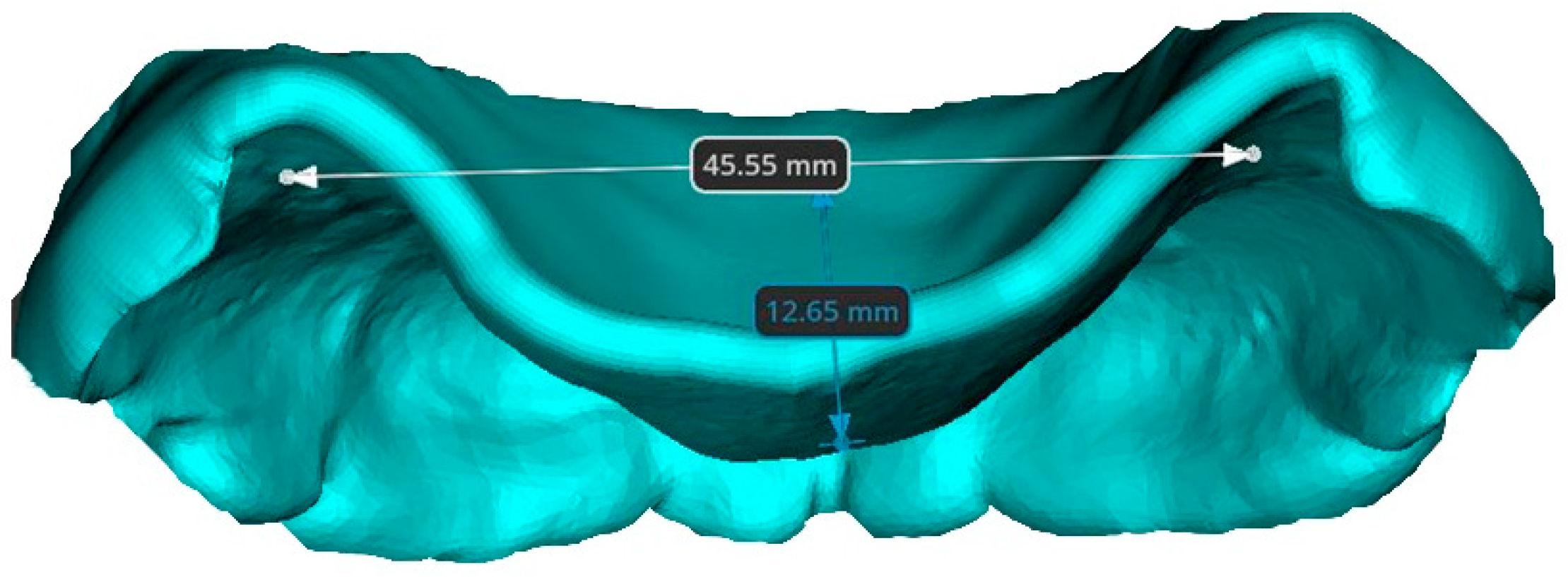
Figure 1. A denture base with an average palatal depth demonstrating width at the hamular notches and depth midline between the hamular notches.
Oral 06 00007 g001
Figure 2. Profile plots demonstrating the positive average deviations (mm) in trueness levels of denture bases with different palatal vault depths printed with two different 3D printers.
Oral 06 00007 g002
Figure 3. Profile plots demonstrating the negative average deviations in trueness levels of different palatal vault depths (mm) for the Asiga and NextDent printers.
Oral 06 00007 g003
Figure 4. A comparison of data visualizations (heat maps) that demonstrate positive and negative average deviations from the reference files (mm) for the Asiga printer. Most shallow (A), shallow (B), average (C), deep (D), and most deep (E).
Oral 06 00007 g004
Figure 5. A comparison of data visualizations (heat maps) displaying positive and negative average deviations from the reference files (mm) for the NextDent printer. Most shallow (A), shallow (B), average (C), deep (D), and most deep (E).
Oral 06 00007 g005
Table 1. Comparison of the positive average deviation of five different palatal vault depths for Asiga and NextDent printers (mm).
Palatal Vault DepthNextDent
Mean (SD) †
Post Hoc
Results ‡
Asiga
Mean (SD) *
Post Hoc
Results ‡
Most Shallow (A)0.076 (0.006) A > B0.049 (0.003)A > C
Less Shallow (B)0.065 (0.010)B < C, E0.047 (0.002)B > C
Average (C)0.077 (0.006)C > B0.040 (0.002)C < D, E
C > A, B
Less Deep (D)0.069 (0.004) 0.048 (0.002)D > C
Most Deep (E)0.077 (0.009)E > B0.050 (0.002) E > C
Overall 0.073 (0.008) 0.047 (0.004)
* Two-way ANOVA (F = 28.20, p < 0.0001); † Two-way ANOVA (F = 15.20, p = 0.004) and ‡ Bonferroni post hoc test.
Table 2. Comparison of the negative average deviation of five different palatal vault depths for Asiga and NextDent printers (mm).
Palatal Vault DepthNextDent
Mean (SD) †
Post Hoc
Results ‡
Asiga
Mean (SD) *
Post Hoc
Results ‡
Most Shallow (A)0.035 (0.004) A < E0.039 (0.003)A > C
Less Shallow (B)0.036 (0.004)B < E0.035 (0.003)B < E
Average (C)0.038 (0.003)C < E0.031 (0.002)C < E
Less deep (D)0.036 (0.003)D < E0.034 (0.002)D < E
Most deep (E)0.047 (0.004)E > A, B, C, D0.044 (0.007) E > C, D
Overall 0.039 (0.006) 0.036 (0.006)
* Two-way ANOVA (F = 14.13, p = 0.00); † Two-way ANOVA (F = 20.61, p = 0.001) and ‡ Bonferroni post hoc test.
Disclaimer/Publisher’s Note: The statements, opinions and data contained in all publications are solely those of the individual author(s) and contributor(s) and not of MDPI and/or the editor(s). MDPI and/or the editor(s) disclaim responsibility for any injury to people or property resulting from any ideas, methods, instructions or products referred to in the content.