Article

Organosolv Fractionation of Sorghum Stubble for Integrated Biopolymer Recovery: Structural Characterization and Preliminary Mass–Energy Assessment


by
Anahí Arreaga-Cancino
1,
Marianelly Esquivel-Alfaro
2,
Aracely López-Grijalva
1,
Rosario Marilu Bernaola-Paucar
3 and
Belkis Sulbarán-Rangel
4,*
1
Instituto de Investigación e Innovación en Energías Renovables, Universidad Autónoma de Ciencias y Artes de Chiapas, Tuxtla 29000, Mexico
2
Polymer Science and Technology Laboratory (POLIUNA), Department of Chemistry, Universidad Nacional, Campus Omar Dengo, Heredia 40101, Costa Rica
3
Facultad de Ingeniería, Escuela Profesional de Ingeniería Agroindustrial, Universidad Nacional Autónoma Altoandina de Tarma, Junín 12731, Peru
4
Department of Water and Energy, University of Guadalajara Campus Tonalá, Tonalá 45425, Mexico
*
Author to whom correspondence should be addressed.
Macromol 2026, 6(3), 60; https://doi.org/10.3390/macromol6030060
Submission received: 18 July 2026 / Revised: 2 August 2026 / Accepted: 6 August 2026 / Published: 10 August 2026

Abstract

Agricultural residues represent an abundant renewable resource for sustainable lignocellulosic biorefineries, offering opportunities to produce value-added biopolymers while mitigating the environmental impacts associated with conventional disposal. This study evaluated the technical feasibility of using sorghum stubble as a feedstock for the recovery of cellulose, hemicellulose, and lignin through an ethanol–water organosolv process. Specifically, the study aimed to separate the main structural polymers of sorghum stubble and evaluate the performance of the proposed fractionation system. The biomass was treated at 180 °C and approximately 30 bar, followed by chlorine-free peroxide bleaching. The hemicellulose fraction was obtained by extracting the holocellulose (Wise method) and precipitating the dissolved hemicellulose using a 3:1 (v/v) ethanol-to-liquor ratio. The lignin fraction was isolated from the black liquor through vacuum distillation and drying. This approach yielded a cellulose fraction (23.66 wt%), a hemicellulose fraction (36.22 wt%), and a lignin fraction (30.35 wt%), corresponding to an overall polymer recovery of approximately 90 wt%. Structural and physicochemical characterization (FTIR, SEM, XRD, and TGA) supported the fractionation of the lignocellulosic matrix and identified characteristic structural and physicochemical features of the recovered cellulose, hemicellulose, and lignin fractions. SEM revealed substantial structural breakdown following the organosolv treatment, while TGA demonstrated distinct degradation behaviors among the components. Notably, the crystallinity index increased from 38% in the raw material to 71% in the cellulose fraction, indicating effective removal of amorphous components. A preliminary mass–energy analysis showed that approximately 96% of the initial energetic content of the biomass was retained in the polymers. Furthermore, approximately 70% of the ethanol used was recycled, highlighting the potential for solvent reintegration under the evaluated laboratory conditions. Overall, these findings demonstrate the potential of sorghum stubble as a renewable feedstock for the recovery of lignocellulosic polymers and provide a technical basis for the future optimization of organosolv-based biorefineries.

Graphical Abstract

1. Introduction

Biorefining is the sustainable processing of biomass into marketable products, chemicals, and energy through integrated conversion technologies that maximize resource utilization within a circular bioeconomy [1]. In this context, the use of agro-industrial waste not only contributes to the generation of bioenergy and bioproducts, but also functions as a technological remediation strategy, transforming waste streams into renewable raw materials within a circular bioeconomy model [2]. Lignocellulosic biorefineries have emerged as a promising approach for converting agricultural residues into renewable fuels, chemicals, and advanced materials through biochemical, thermochemical, and catalytic pathways [1,3]. However, the complex structure of lignocellulosic materials, composed of cellulose, hemicellulose, and lignin, exhibits a marked interconnection among its components, requiring selective pretreatments capable of efficiently fractionating each component without compromising its chemical functionality [4].
To improve the sustainability of these processes, recent research has emphasized the development of pretreatment strategies aligned with green chemistry principles, including the use of environmentally benign solvents, energy recovery systems, and process recirculation to reduce carbon and water footprints [5,6]. In this context, organosolv fractionation has attracted increasing attention as a promising approach for the comprehensive valorization of lignocellulosic biomass into bio-based polymers and other high-value products [7,8]. Studies have been reported applying the organosolv process to agro-industrial waste and other crops, demonstrating that it produces lignins with less structural degradation and, consequently, greater applicability in the synthesis of advanced materials [9], as well as cellulose with fibers of good properties [10,11]. Taken together, these findings solidify the valorization of lignin as a natural aromatic polymer and cellulose as a strategic priority within modern biorefinery schemes.
Sorghum (Sorghum bicolor L. Moench) is a widely cultivated crop in many parts of the world, characterized by its high adaptability to drought and heat stress, which positions it as a strategic resource in climate change [12,13]. It has been highlighted for its relevance to food security and agricultural resilience, as well as its capacity to generate considerable volumes of residual biomass [12]. From an industrial perspective, alternative uses of sorghum beyond human and animal nutrition have been reported, encompassing applications in the paper industry, biodegradable materials, and industrial products derived from its lignocellulosic fraction [13]. Furthermore, cellulose and lignin-derived polymers can be incorporated into eco-friendly composites based on renewable bioplastics and conventional petroleum-based polymers, broadening the range of high-value materials that can be produced from agricultural biomass [14].
The residue generated in crop fields is called sorghum stubble, basal part of the stem that remains in the field after harvest, which is composed of cellulose (40–44%). Hemicellulose (27–35%) and lignin (18–20%) are the main components of biorefinery systems, allowing for the conceptualization of integrated biorefinery systems in which cellulose is used to produce products such as cellulose fibers for generating derivatives (ethers and esters) or nanomaterials [15,16], hemicellulose for the generation of sugars or chemical platforms [17], and lignin for the synthesis of aromatic materials and resins [18], this valorization strategy avoids open-field burning of agricultural residues, minimizes competition with food production, and promotes the production of high-value bio-based products within a circular bioeconomy framework [14].
An example of sorghum valorization was published in a study where an alkaline-organosolv (NaOH-ethanol) pretreatment was applied to different sections of the sorghum stalk. This study found that delignification and the release of total reducing sugars were possible after enzymatic hydrolysis. It also demonstrated that the incorporation of ethanol improves fractionation efficiency, thus validating the potential of the organosolv system in sorghum-based biorefinery schemes [17].
The feasibility of using sorghum stubble as a raw material has been demonstrated by Andrade Alves et al. (2019), who applied delignification and bleaching treatments to produce cellulose acetate, highlighting the potential of this residue for the production of cellulose derivatives [15]. Pennells et al. (2021) produced cellulose and cellulose nanofibers (CNFs) from various sorghum varieties and sections using conventional alkaline pulping, demonstrating the potential of this residue for advanced materials. These findings motivate the exploration of more selective organosolv fractionation strategies consistent with green chemistry principles [16].
Furthermore, other studies have explored the use of sorghum fibers in the development of composite materials, particularly in recycled polyethylene matrices, where improvements in mechanical properties have been observed after surface treatments [19]. Similarly, Gasiorowski et al. (2025) studied biodegradable PLA composites reinforced with lignocellulosic fillers from sorghum leaves and stems (5–15 wt%), reporting increases in elastic modulus, although with variations in impact resistance [20]. In general, these studies use mechanically treated or alkaline-treated fibers, but not highly purified fractions obtained through organosolv processes, highlighting an opportunity to advance toward more controlled systems geared toward higher-performance polymer applications.
Although most studies on sorghum have focused on the production of fermentable sugars and phenolic compounds, including through alkaline-organosolv pretreatments [17], rather than the direct valorization of cellulose, hemicellulose, and lignin into advanced materials or polymeric products [8,21], recent advances have demonstrated the potential of this biomass by producing cellulose derivatives such as cellulose acetate [15], cellulose nanofibers for advanced biomaterials [16,22], and fiber-reinforced thermoplastic and biodegradable composites [19,20].
Recent studies recognize that the challenge is no longer demonstrating the feasibility of organosolv fractionation itself but expanding its application to new agricultural residues through integrated biorefinery schemes that maximize biomass valorization [23]. Nevertheless, studies integrating the organosolv fractionation of sorghum stubble with the simultaneous recovery and characterization of cellulose, hemicellulose and lignin fractions, together with a preliminary mass–energy and solvent recovery assessment remain limited.
To address this gap, this study investigates ethanol–water organosolv fractionation as a strategy for the integrated valorization of sorghum stubble into biopolymeric fractions. The research focuses on three main aspects: the selective fractionation of sorghum waste using an ethanol–water organosolv process to recover its main structural polymers (cellulose, hemicellulose, and lignin fractions); the physicochemical characterization of the recovered polymers through structural, morphological, thermal analyses and the evaluation of process sustainability through a preliminary mass–energy balance and solvent recovery assessment within a biopolymer-oriented valorization framework. This integrated approach contributes to promoting the sustainable use of sorghum waste in lignocellulosic biorefinery systems, in line with the principles of the circular economy.

2. Materials and Methods

2.1. Materials

Sorghum stubble was collected from agricultural fields in Villaflores, Chiapas, Mexico (16.2873° N, 93.2859° W). Prior to processing, the biomass was sun-dried to approximately 10% moisture content (dry basis) and cut into smaller pieces for subsequent fractionation. All experimental procedures were performed in triplicate and quantitative results are expressed as mean ± standard deviation (n = 3).
Ethanol (analytical grade, ≥99.5%), sodium hydroxide (NaOH, ≥98%), potassium hydroxide (KOH, ≥85%), magnesium sulfate (MgSO4, ≥99%), hydrogen peroxide (H2O2, 30 wt% solution), boric acid (H3BO3, ≥99.5%), and pentetic acid (DTPA, ≥99%) were purchased from Sigma-Aldrich (Toluca, Mexico). Deionized water was used throughout all experimental procedures and Whatman membrane filters (0.45 μm pore size) were used for vacuum filtration.
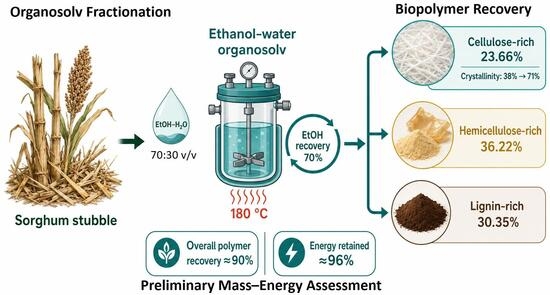
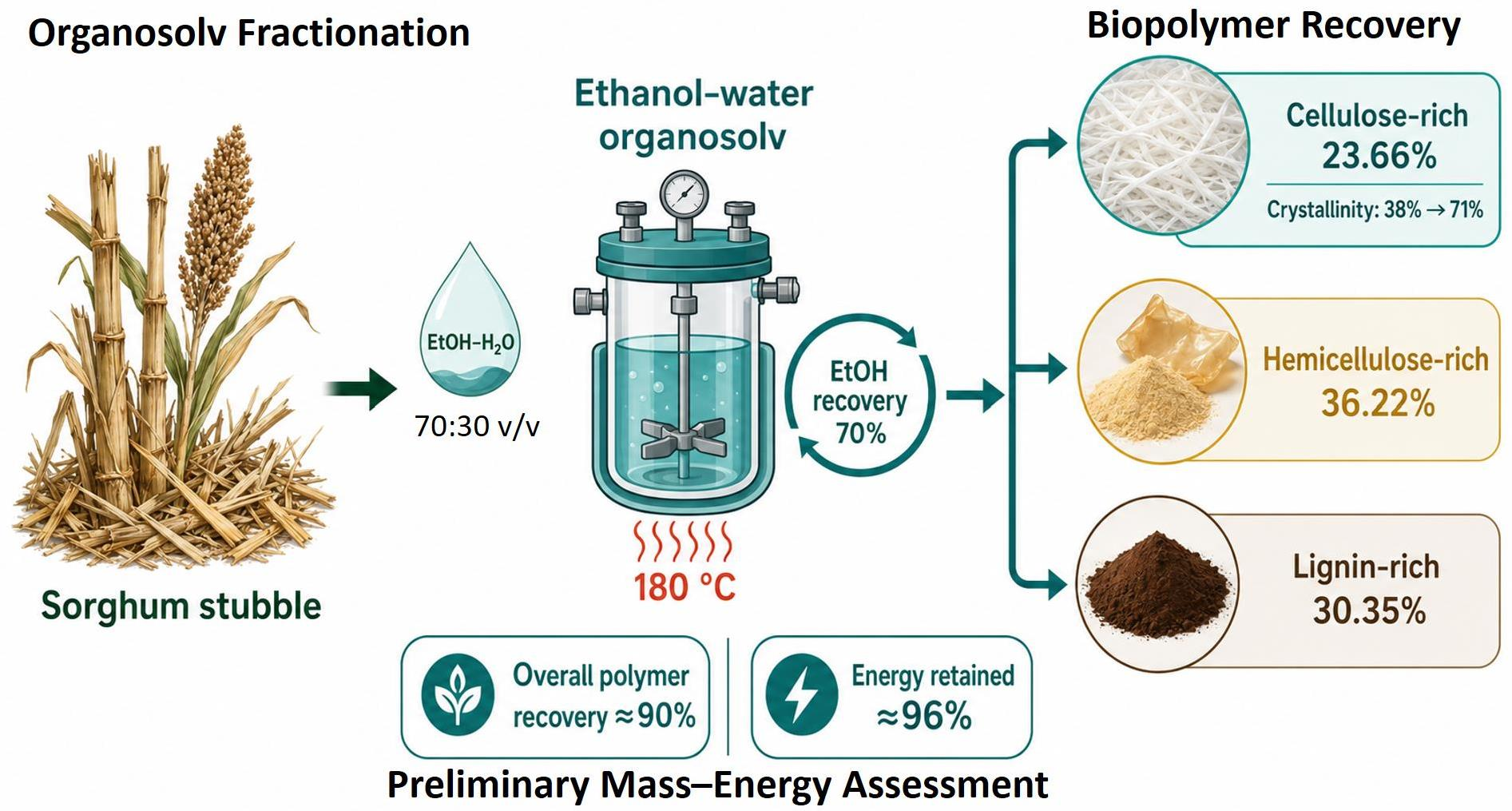
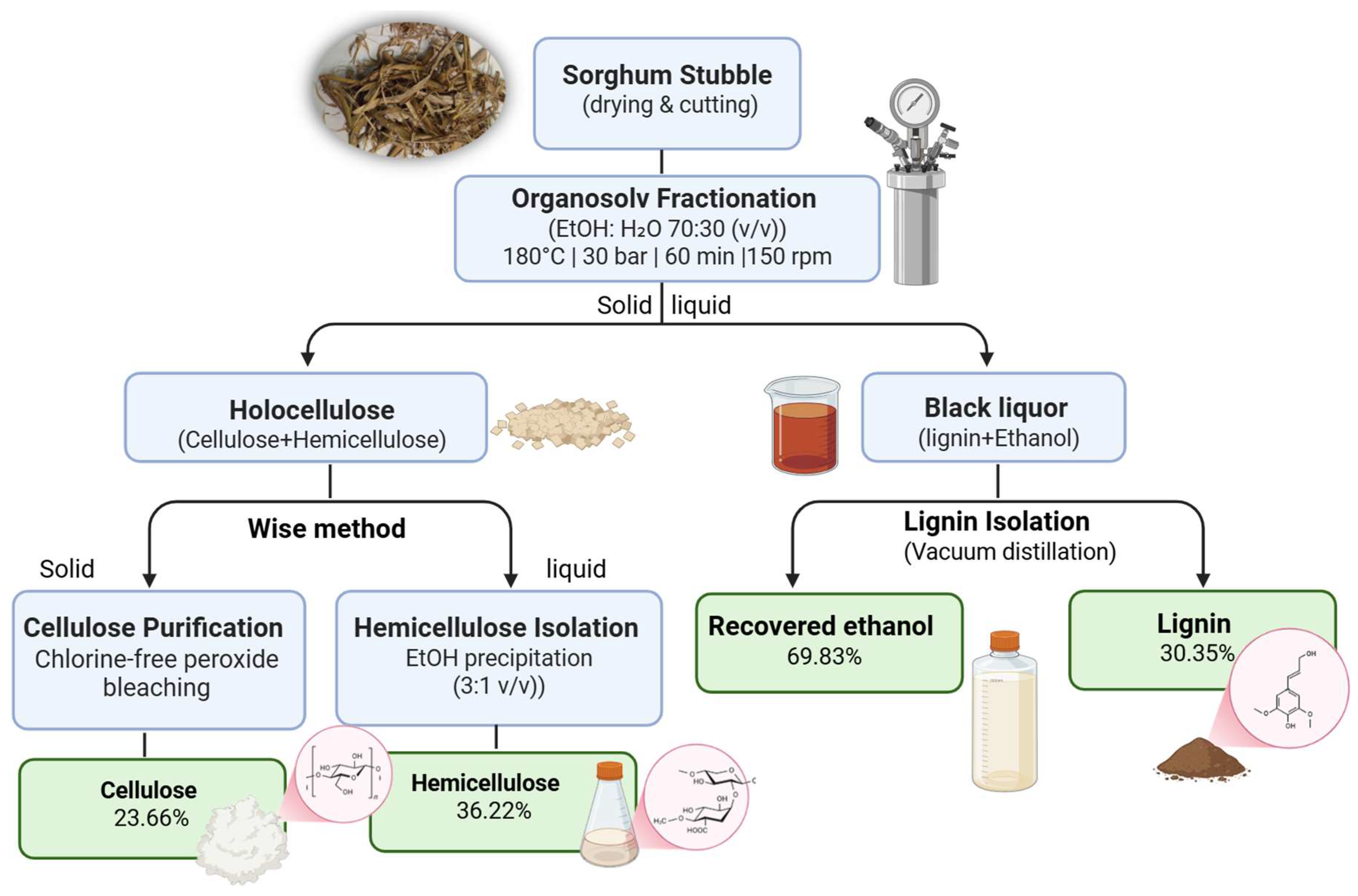
A schematic flow diagram summarizing the organosolv fractionation process and the recovery of the different fractions is presented in Figure 1.
After the organosolv treatment, ethanol was recovered by distillation. The condensed ethanol fraction was collected in a dedicated receiving vessel, while the distilled water was collected separately in another container. The solvent recovery reported in this study (69.83%) corresponds exclusively to the recovered ethanol fraction. The recovery was calculated as the percentage of recovered ethanol relative to the initial volume of ethanol used in the organosolv process.

2.2. Isolation of Structural Polymers by Organosolv Fractionation Procedure

For each experiment, 400 g (dry basis) of dried sorghum stubble was subjected to organosolv treatment using an ethanol–water mixture (70:30 v/v) at a liquid-to-solid ratio of approximately 10 mL/g. The fractionation was carried out at 180 °C under approximately 30 bar of pressure with constant agitation at 150 rpm for 60 min in a 5 L high-pressure batch reactor (Jaime-type reactor). These conditions were selected because they had previously demonstrated effective delignification of lignocellulosic biomass using an ethanol–water system while maintaining the carbohydrate-rich solid fraction [24]. The selected temperature and pressure ensured operation in the liquid phase, whereas the 60 min treatment time provided sufficient contact for fractionation without extending the process unnecessarily. No preliminary optimization experiments were conducted because process optimization was beyond the scope of this work, whose objective was to evaluate the feasibility of integrated biopolymer recovery from sorghum stubble rather than to optimize the organosolv process. Under these conditions, the organosolv process promotes selective delignification while preserving the carbohydrate fractions. The reactor yields a liquid and a solid phase. The solid phase contains cellulose-rich fraction, hemicellulose-rich fraction, and residual lignin. This solid fraction is washed with deionized water to remove the soluble lignin fractions, according to procedures previously described in the literature for other biomasses [24]. All experiments were performed in triplicate (n = 3), and the results are reported as mean ± standard deviation.

2.2.1. Hemicellulose Isolation

Hemicelluloses isolation was carried out using the Wise method (with a few modifications [25]). It is an alkaline method that selectively solubilizes the hemicelluloses fraction from the solid fraction obtained after the organosolv process. The solid fraction was placed in a 24% w/w potassium hydroxide (KOH) solution with stirring for 60 min and allowed to stand for 24 h at room temperature. The remaining solid phase was then thoroughly washed with ethanol and deionized water to remove residual alkali and dissolved components. The washed fibers were dispersed in 1 L of deionized water in an alkaline solution of 17.5 g sodium hydroxide (NaOH) and 4 g boric acid (H3BO3). Then the suspension was stirred for 60 min and allowed to stand for 24 h for improved hemicellulose solubilization. As hemicelluloses are more soluble than cellulose in an alkaline solution, they remained in the liquid phase during this step. The dissolved hemicellulose fraction was recovered in accordance with the procedure described by Amendola et al. (2012) by adding ethanol at an ethanol-to-liquor ratio of 3:1 (v/v), followed by sonication for 3 h at 45 °C and centrifugation at 4000 rpm for 10 min. The suspension was finally filtered with a 0.45 μm Whatman membrane to obtain the hemicellulose fraction, which was dried before characterization [26].

2.2.2. Cellulose Isolation

The recovered cellulose fraction is the result of hemicellulose extraction from the remaining solid fraction. This fraction was subjected to chlorine-free bleaching (CFB) to remove residual lignin and obtain cellulose-rich fraction. The bleaching process consisted of placing the solid fraction in a 0.2 wt% magnesium sulfate (MgSO4) solution with a pH of 11 adjusted with sodium hydroxide (NaOH). The suspension was maintained at 75 °C for 95 min with constant stirring. Subsequently, the pulp was washed with deionized water to remove residual alkalis and soluble compounds. The washed pulp was subsequently treated with a 1:1 (v/v) hydrogen peroxide (H2O2) solution at pH 11 and 95 °C for 75 min with constant stirring. Ten milliliters of pentetic acid (DTPA, C14H23N3O10) were added as a chelating agent. After this time, the bleached cellulose pulp was repeatedly washed with deionized water until a neutral pH (≈7) was reached and then stored. This procedure was adapted from previous methodologies [27].

2.2.3. Lignin Isolation

The liquid fraction obtained after the organosolv process is called black liquor and consists of the lignin dissolved in the ethanol–water system after fractionation. To recover the lignin, the black liquor is vacuum distilled using a rotary evaporator to recover the ethanol from the solution and concentrate the lignin. The recovered solvent corresponds to the ethanol–water distillate obtained during rotary evaporation. The solvent recovery percentage was calculated based on the volume of distillate recovered relative to the initial solvent volume used in the organosolv process. Therefore, the reported recovery does not represent pure ethanol, since no compositional analysis of the recovered distillate was performed. Subsequently, the concentrated lignin fraction is dried to remove moisture and traces of solvent. The dried lignin was mechanically ground and sieved through a No. 100 mesh sieve (100 μm aperture) to obtain a homogeneous particle size distribution suitable for characterization.

2.3. Physicochemical Characterization of Sorghum Stubble and Isolated Polymers

Ash content was determined to the raw sorghum stubble by calcination in a muffle furnace at 575 °C following T 211 om-22 methodology [28] and is reported on a dry weight basis (dry basis, d.b.). The raw sorghum stubble and the isolated structural polymers—cellulose-rich, hemicellulose-rich, and lignin-rich fractions—were characterized to evaluate the morphological, structural, chemical, and thermal properties resulting from the organosolv fractionation process.

2.3.1. Scanning Electron Microscopy (SEM)

The morphological analysis of raw sorghum stubble and isolated cellulose was performed using a JEOL JSM-IT300 (JEOL Ltd., Akishima, Tokyo, Japan) scanning electron microscope operated at an accelerating voltage of 20 kV. Before analysis, the samples were sputter-coated with a thin conductive layer of gold to prevent surface charge buildup during imaging. The resulting micrographs were processed with ImageJ (Version 1.54p, National Institutes of Health, Bethesda, MD, USA) software to determine fiber length and diameter, and measurements were taken on multiple representative fibers (approximately 50) to obtain mean values and their standard deviations.

2.3.2. X-Ray Diffraction (XRD)

Raw sorghum stubble, isolated cellulose, and recovered lignin were subjected to X-ray diffraction analysis in order to evaluate crystallinity changes brought on by the organosolv fractionation process as well as structural organization. An Analytical Empyrean diffractometer with Cu Kα radiation (λ = 0.1542 nm) was used to obtain diffractograms over a 2θ range of 5–50° at a scanning rate of 1°·min−1. Equation (1) represents the crystallinity index (CI) of cellulose fraction as determined by the Segal method [29]:
C I = ( I 002 I a m ) I 002 100
where I002 corresponds to the maximum intensity of the crystalline peak and Iam represents the minimum intensity associated with the amorphous region.

2.3.3. Fourier Transform Infrared Spectroscopy (FTIR)

FTIR was performed to evaluate the structural changes caused by the organosolv process, identifying functional groups characteristic of each polymer obtained. For this purpose, raw sorghum stubble and the separated fractions of cellulose, hemicellulose, and lignin were evaluated. FTIR spectra were recorded using a Bruker Alpha II spectrophotometer (Bruker Optics GmbH & Co. KG, Ettlingen, Germany) in transmission mode. Sixteen cumulative scans were performed per sample, capturing spectra with a resolution of 4 cm−1 in a wavenumber range of 400 to 4000 cm−1.

2.3.4. Thermogravimetric Analysis (TGA)

TGA was performed to identify the thermal transitions and decomposition stages of the polymers obtained after the organosolv process. A Thermo Analysis Instruments Q500 system (TA Instruments, New Castle, DE, USA). was used for this purpose. Sorghum stubble and polymer fractions were evaluated separately at temperatures between 50 and 600 °C at a controlled heating rate of 20 °C/min using a nitrogen atmosphere with a flow rate of 40 mL/min. Thermogravimetric [30] and derived thermogravimetric (DTG) curves were obtained by continuously recording the mass loss as a function of temperature.
It should be noted that the analytical techniques employed in this study (FTIR, XRD, SEM and TGA) confirm the structural characteristics expected for cellulose, hemicellulose and lignin. However, these techniques do not provide a quantitative determination of chemical purity. Therefore, the recovered materials should be interpreted as the polymer fractions obtained after organosolv fractionation rather than as chemically pure compounds.

2.4. Mass and Energy Balance of the Organosolv Fractionation Procedure

Laboratory-scale mass and energy balances were performed to evaluate the technical performance and sustainability of the biorefinery based on the organosolv process applied to sorghum stubble. Under steady-state assumptions, the analysis was performed on a dry basis of the starting material and the resulting products, disregarding minor material losses due to handling and sampling. An energy-economic analysis was then conducted to determine the costs based on energy consumption for obtaining each polymer.

2.4.1. Mass Balance

The overall mass balance was calculated based on the dry mass of sorghum stubble introduced into the organosolv reactor. The system boundary was defined from biomass feeding to recovery of the main solid fractions, according to Equation (2):
m f e e d   =   m c e l l + m h e m + m l i g n i n + m l o s s
where
  • mfeed = dry mass of sorghum stubble fed into the reactor (kg);
  • mcell = recovered cellulose mass (kg);
  • mhem = recovered hemicellulose mass (kg);
  • mlignin = recovered lignin mass (kg);
  • mloss = unquantified material losses (kg).
The mass balance presented in this study considers the main process streams generated during organosolv fractionation. Ash was not included because it was not recovered or quantified as an independent fraction. The mass–energy assessment presented in this study is intended as a preliminary evaluation of the organosolv fractionation process. The analysis was based on the experimentally determined mass yields and literature higher heating values (HHVs) of the recovered fractions. These HHVs were used as representative values to estimate energy distribution during the process. Therefore, the calculated energy retention should be interpreted as an estimated value rather than an exact calorimetric determination. Moreover, the assessment does not include detailed estimations of heat losses, auxiliary energy consumption, equipment efficiencies, or process heat integration. Likewise, solvent evaporation losses were not explicitly modeled beyond the experimentally determined ethanol recovery. Consequently, the results should be interpreted as an initial assessment of energy distribution rather than a comprehensive process energy analysis. Future studies should include direct calorimetric measurements of the recovered fractions to improve the accuracy of the mass–energy assessment.
The recovery yield of each fraction was calculated as Equation (3):
Y i   =   m i m f e e d 100
where
  • mi = represents the mass of each recovered fraction.

2.4.2. Energy Balance

The energy balance was determined using the higher heating value (HHV) of the biomass feedstock and the recovered fractions This analysis does not represent a full experimental energy balance and should be interpreted only as a preliminary estimation. The total energy input associated with the biomass feed was calculated according to Equation (4):
E i n = m f e e d H H V f e e d
where
  • HHVfeed = higher heating value of sorghum stubble (MJ/kg).
The total energy retained in the recovered solid fractions was calculated according to Equation (5):
E o u t = ( m i H H V i )
where
  • mi = mass of each recovered fraction (kg);
  • HHVi = higher heating value of each fraction (MJ/kg).
The overall energy retention efficiency (η) of the organosolv fractionation process was calculated according to Equation (6):
η = ( m i H H V i ) m f e e d H H V f e e d 100
This indicator represents the fraction of the initial energetic potential of the biomass that remains stored in the recovered polymeric fractions. The calculations utilize conventional biomass energy balance techniques based on comparing higher heating value values. A Sankey diagram, created with OriginPro®2026 software, was used to graphically represent the calculated balances and thus facilitate the interpretation of the mass and energy distribution within the organosolv process system. Material recovery, energy retention, and process losses can be visualized thanks to the integration of mass flows and their corresponding higher heating value values into the diagram.

2.4.3. Energy–Economic Assessment

The direct electricity consumption of each stage of the process was recorded for obtaining each polymer. The operational energy cost (Cenergy) was estimated using Equation (7):
C e n e r g y = E e l e c t r i c P u n i t
where
  • Eelectric = Electrical energy consumed (kWh);
  • Punit = unit electricity tariff (MXN $/kWh).
A unit cost of 1.279 $MXN/kWh was considered, corresponding to the medium-voltage tariff (demand < 100 kW) in Tuxtla Gutiérrez, Chiapas, Mexico, according to the regulations established by the Federal Electricity Commission of Mexico [31]. Electricity costs should be adjusted according to the country and region where the study is conducted; therefore, in this case, the reported values reflect the Mexican context. It is also important to mention that the calculation was done at a laboratory scale; therefore, if scaling is desired, adjustments will be necessary.

3. Results and Discussion

3.1. Isolation and Characterization of Sorghum Stubble Polymers via Organosolv Fractionation

The system performance is evaluated according to the organosolv fractionation of sorghum stubble with respect to polymer extraction and solvent recovery. The recovery yields of the main structural polymers that were found in the biomass: cellulose-rich fraction (23.66 wt%), hemicellulose-rich fraction (36.22 wt%), lignin-rich fraction (30.35 wt%), along with the ethanol recovery during processing (69.83%) are shown in Table 1. All reported values correspond to the mean ± standard deviation of three independent experiments (n = 3). Hemicellulose constitutes a major component of the biomass structural polymers, demonstrating a role for sorghum stubble in the production of fermentable sugars and platform molecules that can be used as biochemical substrates. This observation is supported by the literature, which has reported on agricultural residues from sorghum as feedstocks for biorefinery, in which hemicellulosic fractions are capable of being transformed into biofuels, organic acids or other potential added values, and cellulose and lignin for biopolymers and advanced materials [17,32]. The recovery yield of the lignin-rich fraction (30.35 wt%) is consistent with the lignin content generally reported for lignocellulosic agricultural residues and may act as the precursor for the production of renewable aromatic polymers and other high value materials [9]. Previous studies have reported that sorghum biomass contains approximately 39–46% cellulose, 20–41% hemicellulose, and 20–32% lignin, although these values vary depending on the cultivar, plant fraction, and analytical methodology employed [21]. An ash content of 9.67% was also determined, reflecting the presence of inorganic mineral constituents naturally occurring in agricultural residues. Ash, while not a direct constituent of the polymeric fraction, could influence biomass processing efficiency, catalyst performance, or thermal behavior due to its presence at runtime [33]. Therefore, determining the ash content is important for evaluating the suitability of lignocellulosic feedstocks in integrated biorefinery systems. Finally, an ethanol recovery of approximately 70% demonstrates the potential for solvent recycling within the organosolv process, reducing fresh solvent demand and improving the overall sustainability of the process. Such high solvent recovery indicates the compatibility of the system with the circular biorefinery principles and the possibility that overall process economics and environmental performance can be improved [6].
To better contextualize the performance and scope of the proposed organosolv fractionation process, the results obtained in this study were compared with representative studies on sorghum valorization employing different pulping and biomass fractionation strategies (Table 2). Previous investigations have mainly focused on obtaining individual biomass-derived products, including purified cellulose for cellulose derivative production [15], cellulose-rich pulps for bioethanol production through organosolv pretreatment [34,35], cellulose fibers and nanofibers for polymeric materials [22], or the conversion of sorghum fractions into high-value bioproducts [36]. Consequently, quantitative indicators such as the recovery yields of cellulose, hemicellulose, lignin, and solvent recovery are not consistently reported, making direct benchmarking among studies difficult. This variability primarily reflects differences in the objectives and scope of the individual studies rather than inherent differences in organosolv process performance, making direct quantitative benchmarking difficult. In contrast, the present study provides an integrated assessment by simultaneously reporting the recovery of the three major lignocellulosic fractions together with solvent recovery and a preliminary mass–energy evaluation, thereby offering a broader basis for assessing the technical feasibility of ethanol-based organosolv fractionation within an integrated lignocellulosic biorefinery. This integrated approach provides a more comprehensive framework for evaluating organosolv fractionation by combining polymer recovery, solvent recycling, and preliminary mass–energy assessment, thereby facilitating a more complete evaluation of the technical feasibility of sorghum stubble within an integrated lignocellulosic biorefinery.
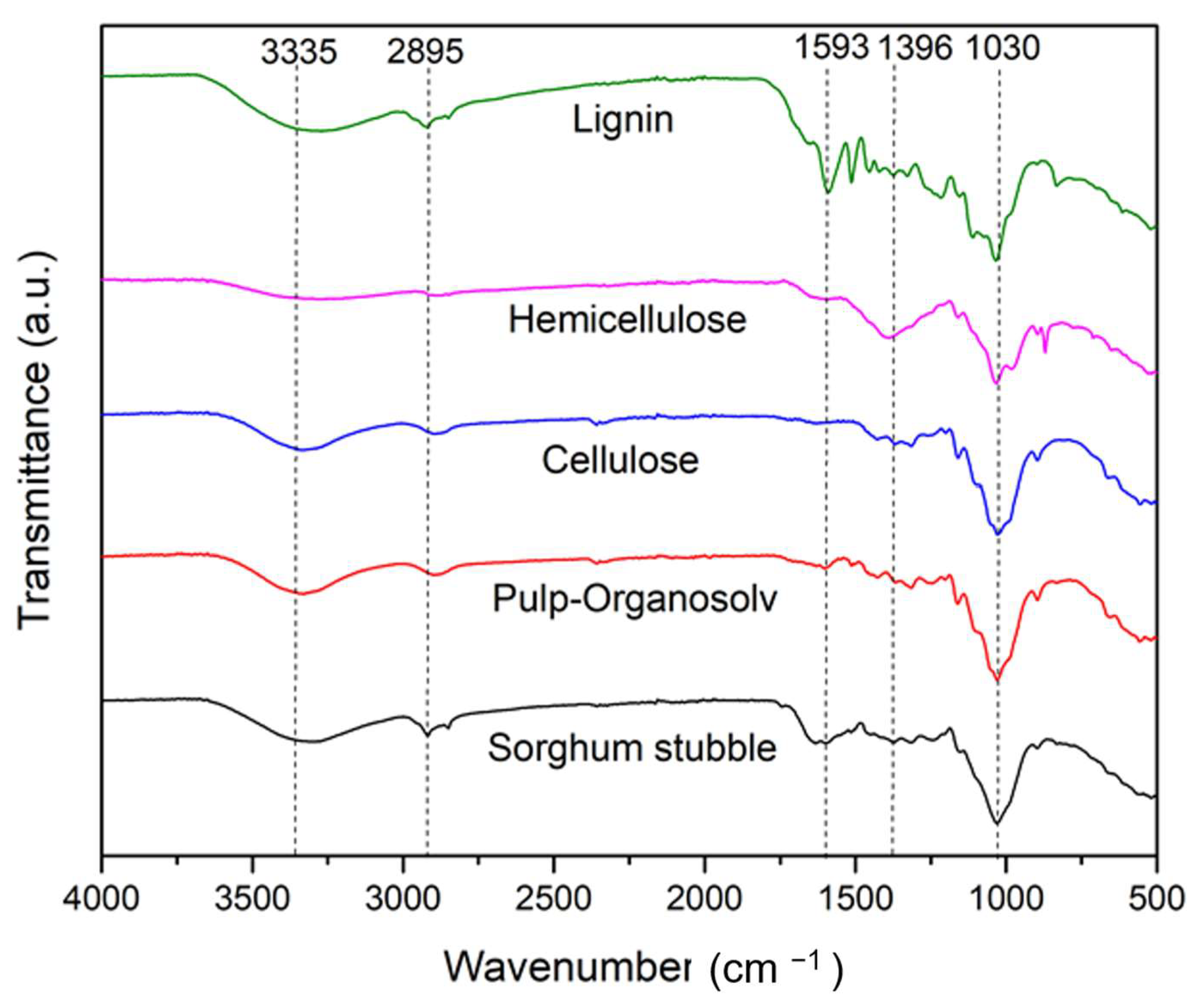
Following the comparison with representative studies (Table 2), the fractionation process was further evaluated through FTIR analysis to verify the structural transformations occurring during organosolv treatment. Beyond quantifying the recovery of cellulose, hemicellulose and lignin, FTIR allowed the progressive changes in the relative abundance of lignin- and carbohydrate-related functional groups to be monitored during organosolv treatment. The spectra are consistent with the enrichment of cellulose-rich, hemicellulose-rich, and lignin-rich fractions, supporting the effectiveness of the fractionation process. The spectra presented in Figure 2 illustrate the evolution of the characteristic functional groups from the raw sorghum stubble to the isolated cellulose, hemicellulose, and lignin fractions, providing direct evidence of the effectiveness of the proposed fractionation strategy.
FTIR of sorghum stubble (Figure 2) can be shown, exhibiting the typical signals characteristic of a lignocellulosic material, verifying that cellulose, hemicellulose, and lignin coexist in the plant matrix. The broad band centered around 3335 cm−1 is related to the O–H stretching of hydroxyl groups and the hydrogen bond network seen in polysaccharides and phenolic structures [37]. The signal at 2895 cm−1 corresponds to aliphatic C–H stretching (–CH2/–CH3), common in both carbohydrates and lignin [38]. In the fingerprint region, the stubble shows a marked band at ~1593 cm−1, attributed to C=C aromatic skeletal vibrations, widely used as a diagnostic band for lignin in lignocellulosic biomass [38,39]. Complementarily, the band around ~1396 cm−1 is linked to C–H strains and structural contributions present in biomass and carbohydrate/lignin-rich fractions, depending on the composition [38,39]. Finally, the intense band at ~1030 cm−1 is associated with C–O and C–O–C vibrations of polysaccharides (glycosidic bonds and ring vibrations), and is therefore characteristic of cellulose/hemicellulose-rich materials [37,39]. The coexistence of aromatic (~1593 cm−1) and carbohydrate (~1030 cm−1) signals confirms the lignocellulosic nature of the crop residue.
After organosolv pulping, the pulp spectrum shows changes consistent with selective fractionation. A decrease in lignin-associated aromatic bands is observed in the aromatic band at ~1593 cm−1. These bands around ~1590–1600 cm−1 have already been reported as characteristic signals reflecting the content of aromatic structures [38,40]. On the other hand, Figure 2 shows the presence of the band at ~1030 cm−1, which corresponds to the presence of carbohydrates, consistent with lignin removal while preserving carbohydrate-related functional groups without significantly degrading the structure of cellulose and hemicelluloses [39,40].
The cellulose spectrum is dominated by polysaccharide signals, with a band of the O–H groups (~3335 cm−1) and a marked peak at ~1030 cm−1 associated with C–O/C–O–C vibrations characteristic of the pyranose structure of cellulose; in addition, the aromatic band (~1593 cm−1) is markedly reduced, suggesting a lower lignin content in the cellulose-rich fraction [37,40]. Hemicellulose exhibits intense bands in the ~1000–1100 cm−1 region, typical of xylans, commonly reported near ~1040 cm−1 in (1 → 4)-β-xylan-rich fractions, with an absence of dominant aromatic signatures after lignin reduction during fractionation [39,41]. While the lignin spectrum shows the characteristic aromatic skeletal vibration around 1590–1600 cm−1, commonly reported for organosolv lignins, this band indicates the presence of the characteristic functional groups of lignin but should not be interpreted as evidence of the chemical purity of the recovered fraction [38,42]. In summary, FTIR analysis of sorghum stubble, organosolv pulp, and the recovered polymer fractions allowed the identification of the characteristic functional groups of cellulose, hemicellulose, and lignin, supporting the successful fractionation achieved by the organosolv process. Carbohydrates were detected, which clearly indicates the cellulose and hemicellulose, as well as the presence of aromatic rings characteristic of lignin, which demonstrates the efficiency of organosolv fractionation for the polymer-based biorefinery.
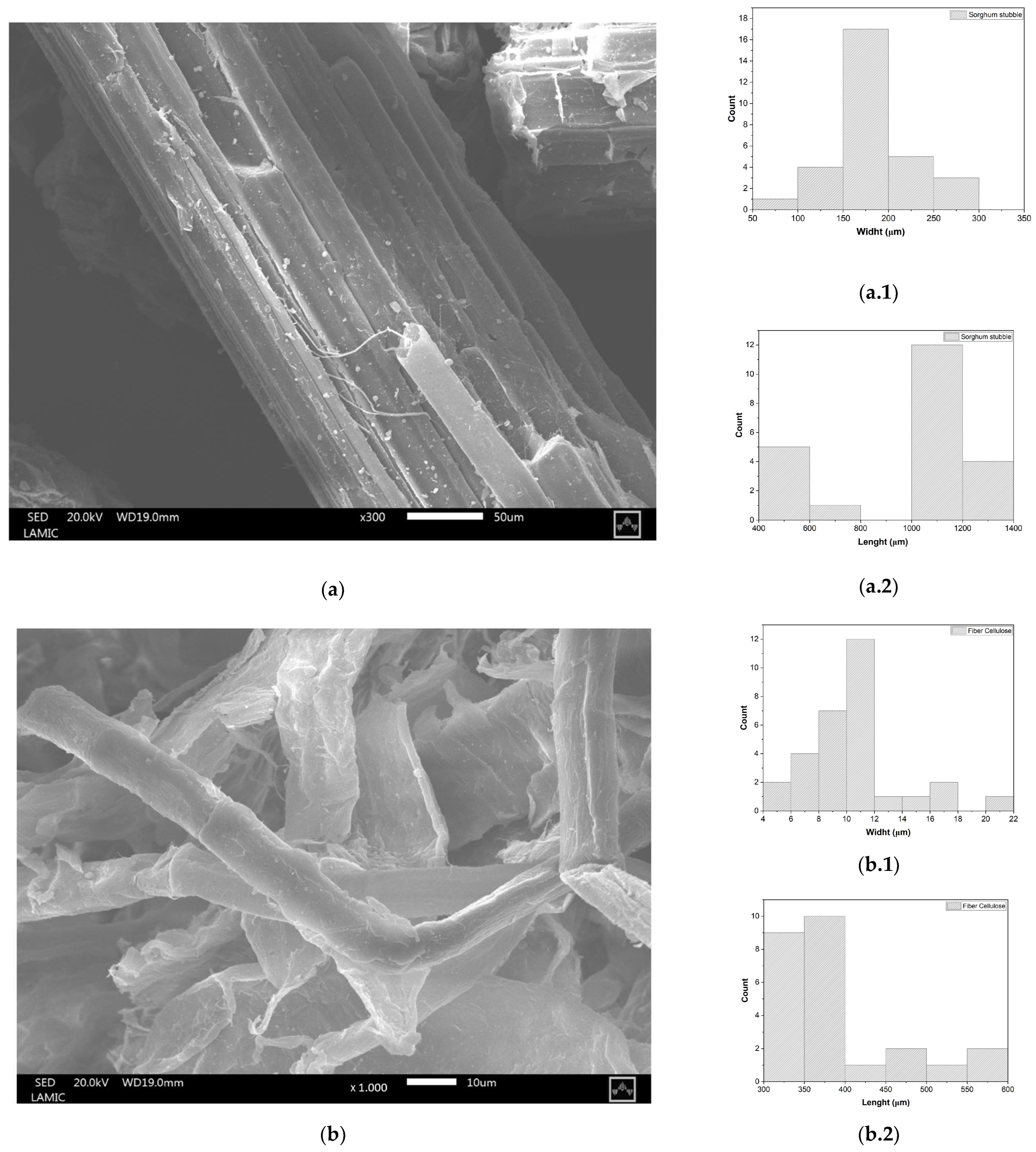
In order to evaluate the structural-type transformation after organosolv fractionation seen by FTIR, the evolution in morphology of sorghum stubble during the time span of cellulose was observed by SEM. Figure 3 compares the surface morphology of raw sorghum stubble (Figure 3a) with that of isolated cellulose fibers (Figure 3b) [32,43]. On the other hand, isolated cellulose fibers show a fibrillated, fragmented and rough morphology, which corresponds to disruption of the lignin–hemicellulose matrix, leading to greater exposure of cellulose microfibrils (As shown in Figure 3b). Like structural deformation after selective delignification, similar degradation of the lignocellulosic system can also be seen in other lignocellulosic pretreatment systems [44], where fiber separation and increased surface irregularity are associated with the removal of amorphous components. To quantitatively support these morphological observations, fiber dimensions were measured from SEM micrographs, and the resulting width and length distributions are presented as histograms in Figure 4. The average fiber length in raw sorghum stubble was measured to be 1.28 ± 0.3 mm and the average diameter was reported to be approximately 300 ± 25 µm, confirming preservation of vascular bundles and aggregated structural units observed in agricultural wastes. Following organosolv fractionation and cellulose isolation, there was a significant decrease in the diameter of the fiber, with the cellulose fraction possessing an average length of 0.30 ± 0.07 mm and diameter of 8.02 ± 3.33 µm, corresponding to an approximately 80% reduction in fiber length and more than a 97% reduction in fiber diameter, consistent with significant disruption of the lignin–hemicellulose matrix and increased individualization of cellulose fibers.
The histograms in Figure 3 further corroborate these measurements by revealing a pronounced shift in fiber size following organosolv treatment. Raw sorghum stubble exhibited width and length distributions predominantly between 150–200 µm and 1000–1200 µm, respectively (Figure 3a.1,a.2). In contrast, the recovered cellulose fibers were concentrated within much smaller dimensions (8–12 µm in width and 300–400 µm in length) (Figure 3b.1,b.2). The observed shift across the entire fiber population, rather than in only a few isolated fibers, provides additional quantitative evidence of effective lignin–hemicellulose matrix disruption and the subsequent liberation of individual cellulose fibers. The sub-10 µm fiber diameters obtained in the present study are consistent with values reported for chemically isolated lignocellulosic fibers from other agricultural residues. For example, Bhunia et al. (2023) have described average cellulose fiber diameter of ~23 µm after the chemical extraction from plant residues [45] and that refined fibers will yield a diameter of below 10 µm, on the basis of the strength of delignification and fibrillation processes [46]. The reduced fiber diameter is consistent with the removal of part of the amorphous lignin–hemicellulose matrix and with increased fiber individualization following organosolv treatment. The natural sorghum stubble demonstrates compact, rigid bundles with smooth surfaces and high structural cohesion, representative of intact lignocellulosic arrangement with embedded cellulose microfibrils in a hemicellulose–lignin matrix.
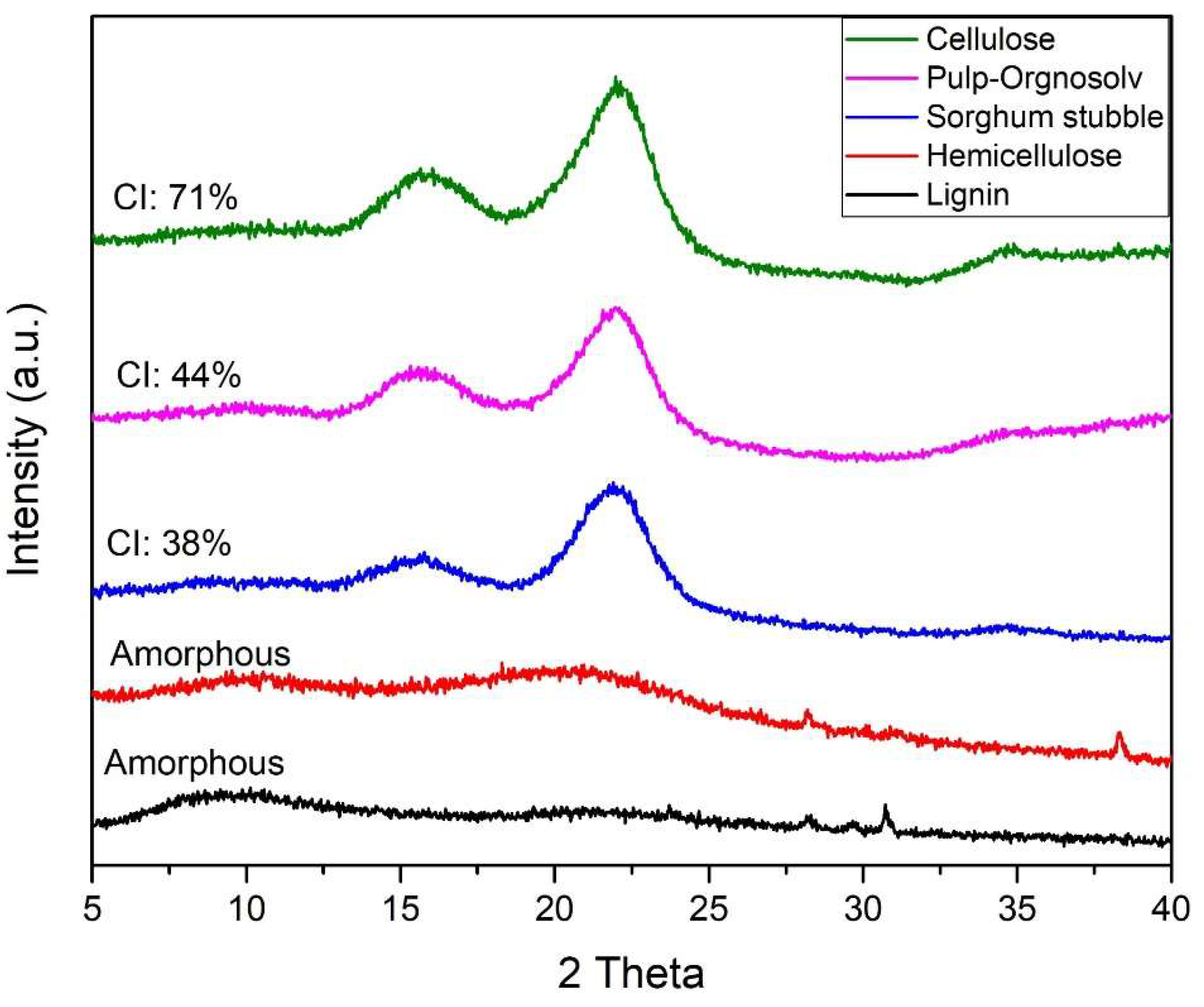
Such structural refinement is in line with FTIR data that has highlighted the delignification and removal of hemicellulose and supports the increased cellulose crystalline domains as verified with XRD. The overall morphological and dimensional changes indicate that the fractionation of the biomass by the organosolv treatment together with its radical reorganization of microarchitecture results in increasingly finer and more homogeneous cellulose fibers that can be utilized for advanced polymeric and material applications. It was confirmed if these morphological transformations resulted in different supramolecular organization of cellulose; the crystalline structure of the samples was assessed by X-ray diffraction (XRD). In Figure 4, diffraction patterns illustrate, clearly, the structural evolution of sorghum stubble throughout organosolv fractionation and subsequent polymer isolation. The raw sorghum stubble shows a classic semi-crystalline lignocellulosic structure with a broad diffraction peak at (2θ ≈ 22–23°), corresponding to the (200) crystallographic plane of native cellulose I, layered on a diffuse halo associated with amorphous hemicellulose and lignin domains.
As reported in previous work, lignocellulosic biomass is crystalline cellulose microfibrils incorporated within an amorphous matrix and there exists moderate crystallinity index (CI ≈ 38%) in the raw residue [43,47]. After pulping with organosolv, the peak intensity and shape at ~22° rise with an increase in CI (≈44%) indicated the selective removal of amorphous lignin and the partial removal of hemicellulose, which is directly correlated with the compositional changes evidenced by FTIR analysis. This observation agrees with the results reported by Kłosowski [44], who demonstrated that successful delignification increases cellulose crystallinity by enriching the ordered cellulose domains. The isolated cellulose fraction exhibits sharp diffraction peaks at 2θ ≈ 22–23° and clearly characterized shoulder at 15–16°, corresponding to cellulose I, resulting in a substantially higher crystallinity index CI (≈71%). This increase reflects the enrichment of crystalline cellulose following the removal of non-crystalline components, consistent with previous reports describing highly crystalline cellulose obtained through integrated fractionation approaches [48].
In contrast, both the hemicellulose and lignin fractions display broad, featureless diffraction patterns lacking distinct crystalline reflections, reflecting their inherently amorphous structures. As discussed by Manyatshe and Sibala (2025), hemicellulose is structurally disordered and lignin is an amorphous aromatic polymer lacking long-range periodicity, which explains the absence of characteristic cellulose diffraction peaks in these fractions [49]. Overall, the progressive increase in crystallinity from raw biomass to purified cellulose, together with the amorphous profiles of hemicellulose and lignin, confirms the efficiency of the organosolv process in selectively removing amorphous components while preserving the cellulose I crystalline lattice, in agreement with contemporary analyses of cellulose crystallinity evolution during biorefinery pretreatments [43,47].
Cellulose and lignin fractions were thermogravimetrically analyzed, as these polymers are the primary structural components of lignocellulosic biomass with clearly differentiated thermal degradation behaviors. Cellulose generally follows a well-defined decomposition process related to glycosidic bond depolymerization in its semi-crystalline structure, while lignin, an amorphous aromatic polymer, exhibits a broader and more complex degradation profile because of its heterogeneous structure and diverse chemical linkages [9,43]. The thermal stability and degradation ranges of hemicellulose, on the other hand, are generally lower and partially overlap with those of cellulose, which indicates that its independent thermal characterization is less representative within the scope of this analysis [49].
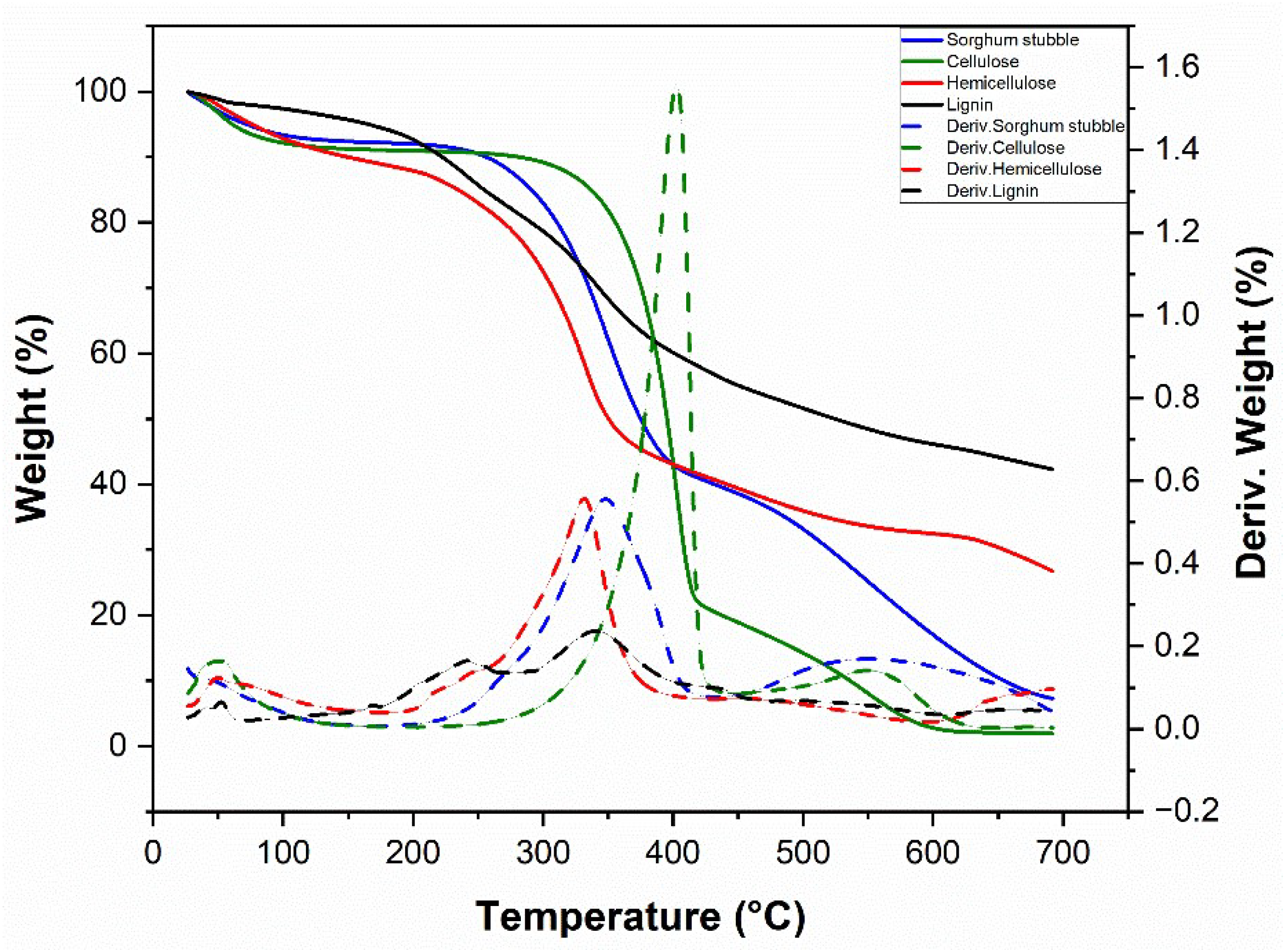
Figure 5 shows the thermogravimetric (TGA) and derivative thermogravimetric (DTG) curves of sorghum stubble and its main fractions (cellulose, hemicellulose and lignin). The main thermal degradation parameters obtained from the TGA/DTG curves, including the onset degradation temperature (Tonset), the temperature of maximum degradation rate (Tmax), and the residual char at 700 °C, are summarized in Table 3. All samples exhibited an initial weight loss below 100 °C, which is attributed to the evaporation of physically adsorbed moisture and low-molecular-weight volatile compounds. The cellulose fraction exhibited a small mass loss of approximately 5–9% up to 100 °C due to moisture removal. The main thermal decomposition of cellulose occurred between approximately 300 and 400 °C, where a rapid mass loss of more than 70% was observed. This stage corresponds to the thermal pyrolysis of the cellulose backbone, mainly associated with depolymerization and cleavage of glycosidic bonds [50]. The DTG curve shows a pronounced peak around 400 °C, indicating the maximum degradation rate of cellulose. Above 400 °C, the degradation rate decreased and the remaining mass gradually declined until reaching a final residue of approximately 2–3% at around 600 °C. This behavior is characteristic of highly purified cellulose and reflects its relatively homogeneous structure.
In contrast, hemicellulose exhibited lower thermal stability, with its main degradation occurring between 219 and 350 °C. The DTG curve showed a maximum degradation rate near 330 °C, associated with the decomposition of branched polysaccharides, acetyl groups, and amorphous carbohydrate structures. The broad decomposition profile and lower degradation temperature compared with cellulose are consistent with previous reports in the literature [51]. Lignin exhibited a much broader thermal degradation profile. The degradation process can be divided into four stages. The first stage (50–150 °C) corresponds to moisture loss from the lignin samples. The second stage (150–270 °C) is associated with the release of volatile compounds such as CO, CO2, CH4, and the cleavage of β-O-4 ether linkages [52]. The third stage (270–400 °C) corresponds to the degradation of lignin side chains and oxidation reactions, including carbonylation or carboxylation of aliphatic hydroxyl groups and dehydrogenation processes [53]. Finally, above 400 °C, the degradation of the aromatic structure occurs, leading to the gradual formation of char [54].
The sorghum stubble exhibited a multi-stage thermal degradation pattern resulting from the overlapping decomposition of hemicellulose, cellulose, and lignin. The main weight-loss stage occurred between approximately 250 and 400 °C, where the highest mass loss was observed. This behavior is attributed primarily to the degradation of hemicellulose and cellulose, while only a small fraction of lignin decomposes within this temperature range [55]. The DTG curve exhibited a maximum peak around 350 °C, corresponding predominantly to cellulose decomposition, whereas the shoulder observed at lower temperatures was associated with hemicellulose degradation. Above 400 °C, the decomposition rate decreased considerably, and a gradual mass loss was observed up to 700 °C due to the slow breakdown of lignin and the progressive decomposition of carbonaceous structures [56].
The residual mass at 700 °C corresponds to the non-volatile residue remaining after thermal decomposition (Table 3). According to Srinivasan et al. (2024), most of the major interunit linkages and stable C–C bonds in lignocellulosic biomass degrade below 600 °C, whereas above this temperature only a small fraction of carbonaceous char remains [57]. Therefore, the residual mass observed at 700 °C may be attributed primarily to carbonaceous char together with inorganic ash and other thermally stable mineral components.

3.2. Preliminary Mass–Energy Balance of Organosolv Fractionation

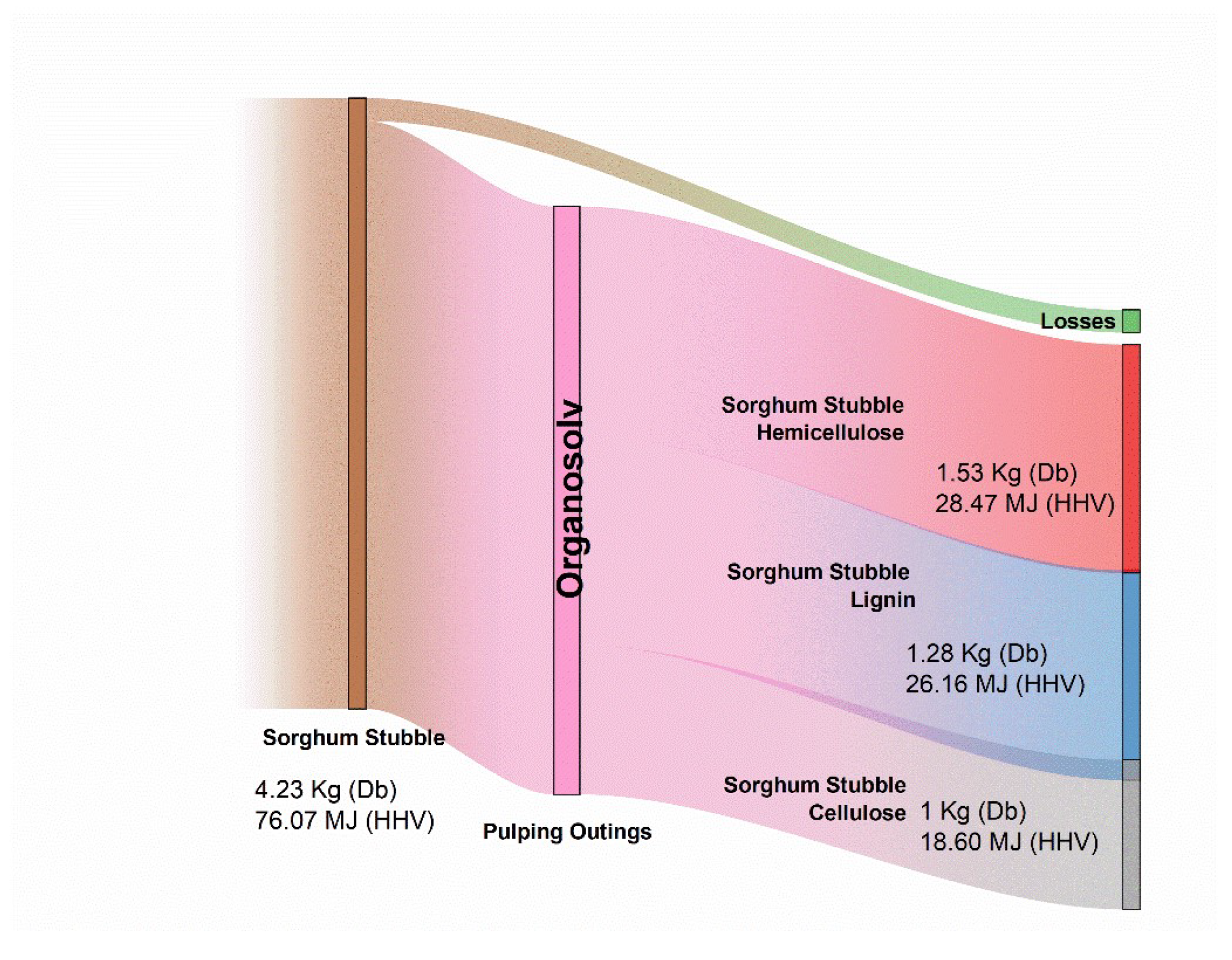
A dry mass–energy assessment, using 4.23 kg, a higher heating value (HHV) of 18 MJ/kg of biomass feed, and an initial energy input of 76.07 MJ was evaluated as a means to estimate the material and energetic performance of the organosolv process using sorghum stubble. The HHV was used exclusively as an indicator of energy retained during biomass fractionation and not as a criterion for assessing the quality or suitability of the recovered polymers for material applications. Mass and energy distribution after organosolv fractionation are shown in Table 4, and these are displayed visually in Figure 4. From an initial feed of 4.23 kg of sorghum stubble (dry basis), a total of 3.81 kg of structural polymers was recovered, corresponding to an overall mass recovery of 90%. The remaining 10% of the biomass was either solubilized into the liquid phase or associated with minor process losses, primarily due to the solubilization of hemicellulosic sugars, lignin fragments, extractives, and low-molecular-weight degradation products. This performance is consistent with the selective yet partial solubilization mechanisms characteristic of ethanol–water organosolv systems operating at elevated temperatures [8,11].
Although sorghum stubble contains approximately 40–44 wt% cellulose, the recovered cellulose fraction represented 23.66 wt% of the initial biomass. This difference is expected because the reported value corresponds to the experimental recovery yield after organosolv fractionation and subsequent purification steps rather than to the original cellulose content of the raw material. During organosolv fractionation and subsequent purification, part of the cellulose may remain associated with the solid residues or liquid fractions, while additional losses may occur during filtration, washing, and bleaching. Consequently, the recovered cellulose-rich fraction represents the purified fraction isolated after processing rather than the total cellulose originally present in the biomass. The obtained fractions, hemicellulose fraction showed the highest mass yield production (36.22 wt%), followed by lignin fraction (30.35 wt%) and cellulose fraction (23.66 wt%). The distribution verifies that in the range of the selected operating conditions, substantial delignification is induced but structural carbohydrates have the advantage of being maintained in the solid form. Similar fractionation trends have been achieved in organosolv methods in the treatment of agricultural residues to enable partial hemicellulose dissolving and lignin depolymerization [49].
As for energy in Figure 6, the recovered fractions were able to keep 73.24 MJ of original 76.07 MJ in the biomass feed, providing an overall energy retention efficiency of 96%. Notably, energy retention slightly exceeds mass recovery. This situation arises from the relatively higher heating value of lignin (20.4 MJ/kg), which disproportionately contributes to the energetic output despite representing only 30% of the recovered mass [60]. The Sankey diagram in Figure 6 clearly illustrates this phenomenon, as its mass stream appears proportionately smaller than energy stream for lignin and therefore plays main role as the dominant enabler in the lignocellulosic matrix.
The 2.83 MJ not retained in the solid fractions accounts for approximately 4% of the initial energetic potential. This deficit suggests a redistribution of chemical energy into the liquid streams, where it is likely associated with dissolved organics, phenolic species, and partially oxidized intermediates. Such streams can be the precursors for the secondary valorisation routes such as bio-oil recovery, chemical platform molecules or internal energy integration in the integrated biorefinery platforms [6,61].
Overall, the combined analysis presented in Table 4 and Figure 6 demonstrates that the organosolv process effectively concentrates a substantial fraction of the intrinsic energetic value of sorghum stubble into purified polymeric solids. The balance between 90% mass recovery and 96% energy retention indicates preferential preservation of higher-energy-density components, reinforcing the suitability of this system for polymer-oriented lignocellulosic biorefinery applications with potential for further integration of liquid-phase valorization strategies.
Although the present mass–energy assessment provides an initial indication of the technical feasibility and energy distribution of the proposed organosolv process, it does not constitute a comprehensive sustainability assessment, life-cycle assessment [15], carbon footprint analysis, and broader environmental impact evaluations were beyond the scope of this work and should be considered in future studies to fully evaluate the environmental performance of the proposed biorefinery.
Table 5 shows the analysis of energy consumption associated with each piece of equipment allowed for the estimation of the total production cost per processed batch of each polymer obtained in the organosolv process from sorghum stubble. Only the variable energy component was considered in this analysis, excluding fixed, distribution, and capacity charges, in order to isolate the direct electricity consumption cost associated with the process. Each batch corresponds to the mass balance 1 kg of cellulose-rich fraction, 1.53 kg of hemicellulose-rich fraction, and 1.28 kg of lignin-rich fraction.
The total consumption of the organosolv process for sorghum stubble polymer extraction (4.23 kg B/S) is 400.69 kWh. However, this overall value masks significant variations in the specific energy demands associated with isolating each fraction. The organosolv pulping process has one of the largest electricity uses (72.60 kWh per batch by the digester) and an initial stage for fractionation of each polymer as the digester. The process of lignin extraction has the highest energy required (208.45 kWh per batch) primarily because of the rotary evaporator, which is the main factor of this process’ energy demand. The rotary evaporator drives the energy consumption of the lignin recovery stage, making it the most energy-demanding step across all fractionation processes.
Furthermore, integrating passive energy supply through solar drying reduces the additional electricity usage that can be taken up and makes the operation more sustainable without increasing the amount of operational energy costs. By contrast, hemicellulose and cellulose rich fractions require lower total energy (57–62 kWh per batch), as these technologies require shorter operating periods and moderate power equipment. The estimated costs are also based on the overall Mexican economic context and closely related to the power consumption of the process. For cross-regional comparisons, these findings must be contextualized by specific local economic conditions and energy pricing structures. It should be noted that these calculations are based on laboratory-scale data; therefore, appropriate adjustments will be required for industrial scale-up. The present energy-economic assessment was intentionally limited to direct electricity consumption at laboratory scale and should not be interpreted as a complete techno-economic analysis, which would require consideration of solvent makeup, equipment depreciation, labor, downstream processing, and capital investment.
Although the present economic assessment provides an initial estimation of the direct electricity consumption associated with the organosolv fractionation process, it should not be interpreted as a comprehensive techno-economic analysis. Capital investment, equipment depreciation, maintenance, labor, solvent recovery costs, waste management, and other operating expenses were beyond the scope of this study. Consequently, the reported production costs represent only the variable electricity component of the process. Future studies should incorporate these additional economic factors to provide a complete techno-economic evaluation of the proposed biorefinery.

4. Conclusions

This study demonstrated the technical feasibility of valorizing sorghum stubble through an organosolv-based biorefinery for the recovery of cellulose-rich, hemicellulose-rich, and lignin-rich fractions. The ethanol–water fractionation process achieved an overall polymer recovery of approximately 90 wt%, with hemicellulose representing the largest recovered fraction (36.22 wt%), followed by lignin (30.35 wt%) and cellulose (23.66 wt%).
The effectiveness of the fractionation process was supported by complementary physicochemical characterization. FTIR analysis revealed characteristic functional groups consistent with the cellulose, hemicellulose, and lignin fractions, while XRD analysis showed an increase in cellulose crystallinity from 38% in the raw biomass to 71% in the recovered cellulose fraction. SEM observations revealed a marked reduction in fiber diameter, indicating disruption of the lignin–hemicellulose matrix and increased fiber individualization. In addition, thermogravimetric analysis showed that the cellulose fraction exhibited greater thermal stability than the untreated biomass, indicating the removal of non-cellulosic components during organosolv fractionation.
The recovered fractions retained approximately 96% of the original energy content of the biomass, largely due to the high heating value of lignin. Furthermore, nearly 70% of the ethanol used during fractionation was recovered, highlighting the potential for solvent recycling and supporting the sustainability of the proposed organosolv system within a circular biorefinery framework. Collectively, these findings establish sorghum stubble as a promising renewable feedstock for the sustainable production of lignocellulosic polymers and other value-added biomaterials, thereby supporting its potential for diverse biorefinery applications.
Based on the physicochemical characteristics observed in this study, the recovered lignocellulosic fractions show considerable potential for a range of value-added applications. The cellulose-rich fraction could be used as a precursor for cellulose nanofibers, biodegradable composites, membranes, and sustainable packaging materials. The hemicellulose-rich fraction may be further processed to produce bio-based films, hydrogels, fermentable sugars, and platform chemicals. Meanwhile, the lignin-rich fraction represents a promising feedstock for phenolic resins, carbon materials, aromatic chemicals, antioxidants, or renewable solid biofuels. These potential applications further highlight the versatility of the proposed organosolv biorefinery and its contribution to the development of circular bioeconomy strategies.
Compared with previous studies, most research has primarily focused on the recovery of individual lignocellulosic fractions or specific end products. In contrast, the approach presented here integrates polymer recovery, solvent recycling, and a preliminary mass–energy assessment within a single organosolv biorefinery framework, representing a more comprehensive strategy for sorghum stubble valorization than previous reports. Despite these encouraging results, this study is limited to a laboratory-scale evaluation. Accordingly, the mass–energy assessment should be regarded as a preliminary analysis based on experimentally determined mass yields and literature-reported higher heating values (HHVs). Furthermore, the lack of techno-economic and life-cycle assessments precludes immediate considerations of industrial implementation; addressing these aspects will be critical for future scale-up.
Future research should focus on process optimization, pilot-scale validation, solvent recovery, energy integration, techno-economic analysis, life-cycle assessment, and scale-up to facilitate industrial implementation.

Author Contributions

Conceptualization, B.S.-R.; methodology, A.A.-C. and M.E.-A.; formal analysis, B.S.-R., A.L.-G. and M.E.-A.; investigation, A.A.-C. and R.M.B.-P.; writing—original draft preparation, A.A.-C. and B.S.-R.; writing—review and editing, M.E.-A., A.L.-G. and R.M.B.-P. All authors have read and agreed to the published version of the manuscript.

Funding

This research received no external funding.

Institutional Review Board Statement

Not applicable.

Informed Consent Statement

Not applicable.

Data Availability Statement

All data generated or analyzed during this study are included in this published article. Additional data supporting the findings of this study are available from the corresponding author upon reasonable request.

Acknowledgments

The author would like to thank the Secretaria Ciencias Humanidades Tecnología e Innovación Mexico (SECHITI) for the support through the student maintenance scholarship CVU No. 371714. During the preparation of this manuscript, the authors used ChatGPT, GPT-5, for the purposes of improving the clarity, grammar, and coherence of the English text. The authors have reviewed and edited the output and take full responsibility for the content of this publication.

Conflicts of Interest

The authors declare no conflicts of interest.

Abbreviations

The following abbreviations are used in this manuscript:
CFBChlorine-Free Bleaching
CICrystallinity Index
CNFCellulose Nanofibers
DTGDerivative Thermogravimetric Curve
DTPADiethylenetriaminepentaacetic Acid
FTIRFourier Transform Infrared Spectroscopy
HHVHigher Heating Value
KOHPotassium Hydroxide
MXNMexican Peso
PLAPolylactic Acid
SEMScanning Electron Microscopy
TGAThermogravimetric Analysis
TGThermogravimetric Curve
XRDX-ray Diffraction

References

  1. Zhu, X.; Pojić, M.; Tiwari, B.K. Chapter 1—Introduction to agri-food biorefinery and agri-food value chains. In Innovative Biorefinery Processes for Agri-Food Value Chains; Tiwari, B.K., Pojic, M., Zhu, X., Eds.; Academic Press: Cambridge, MA, USA, 2025; pp. 3–20. [Google Scholar] [CrossRef]
  2. Jones, R.E.; Speight, R.E.; Blinco, J.L.; O’Hara, I.M. Biorefining within food loss and waste frameworks: A review. Renew. Sustain. Energy Rev. 2022, 154, 111781. [Google Scholar] [CrossRef]
  3. Romero, V.N.; Mendieta, C.M.; Vallejos, M.E.; Area, M.C. Biotechnological advances in lignocellulosic biorefineries for sustainable production of organic acids and higher alcohols. Biomass Bioenergy 2026, 208, 108849. [Google Scholar] [CrossRef]
  4. Debnath, D.; Sahu, P.; Nejad, M.; Pu, Y.; Tessonnier, J.-P.; Ragauskas, A.; Qi, L.; Wang, T. Structure-guided utilization of lignocellulose for catalysis, energy, and biomaterials. Cell Rep. Phys. Sci. 2025, 6, 102911. [Google Scholar] [CrossRef]
  5. Machineni, L.; Rao Anupoju, G. Review on valorization of lignocellulosic biomass for green plastics production: Sustainable and cleaner approaches. Sustain. Energy Technol. Assess. 2022, 53, 102698. [Google Scholar] [CrossRef]
  6. Sharma, A.; Kumar, S.; Chandel, A.K. Strategies to reduce carbon and water footprints in lignocellulosic biorefineries towards net zero carbon emissions. Sustain. Energy Technol. Assess. 2025, 82, 104454. [Google Scholar] [CrossRef]
  7. Esquivel-Alfaro, M.; Rojas-Carrillo, O.; Sulbarán-Rangel, B.; Rodríguez-Barquero, L.; Palacios-Hinestroza, H.; Rojas, O.J. Pineapple-Derived Nanocellulose for Nanocomposites: Extraction, Processing, and Properties. J. Compos. Sci. 2025, 9, 652. [Google Scholar] [CrossRef]
  8. Ferreira, J.A.; Taherzadeh, M.J. Improving the economy of lignocellulose-based biorefineries with organosolv pretreatment. Bioresour. Technol. 2020, 299, 122695. [Google Scholar] [CrossRef] [PubMed]
  9. Mateo, S.; Fabbrizi, G.; Moya, A.J. Lignin from Plant-Based Agro-Industrial Biowastes: From Extraction to Sustainable Applications. Polymers 2025, 17, 952. [Google Scholar] [CrossRef] [PubMed]
  10. Esquivel-Alfaro, M.; Sulbaran-Rangel, B.; Rojas-Carrillo, O.; Chen, J.; Rodriguez-Quesada, L.; Saenz-Arce, G.; Rojas, O.J. Processing of Pineapple Leaf Fibers for the Production of Oxidized Micro-/Nanofibrillated Cellulose. Polymers 2025, 17, 2671. [Google Scholar] [CrossRef] [PubMed]
  11. Sulbarán-Rangel, B.; Jouvenson, J.; Barrera-Rojas, J.; Palacios-Hinestroza, H.; Gurubel Tun, K.J. Valorization of Water Hyacinth After Organosolv Fractionation: Cellulose Fiber and Anaerobic Digestion. Waste Biomass Valorization 2023, 15, 1411–1421. [Google Scholar] [CrossRef]
  12. Hossain, M.S.; Islam, M.N.; Rahman, M.M.; Mostofa, M.G.; Khan, M.A.R. Sorghum: A prospective crop for climatic vulnerability, food and nutritional security. J. Agric. Food Res. 2022, 8, 100300. [Google Scholar] [CrossRef]
  13. Aruna, C.; Visarada, K.B.R.S. Other Industrial Uses of Sorghum. In Breeding Sorghum for Diverse End Uses; Woodhead Publishing: Cambridge, UK, 2019; pp. 271–292. [Google Scholar] [CrossRef]
  14. Kariev, A.; Lebedev, V.; Miroshnichenko, D.; Sokol, Y.; Gasanov, M.; Cherkashina, A.; Lutsenko, Y.; Pyshyev, S. Design and Research of Eco-Friendly Biodegradable Composites Based on Renewable Biopolymer Materials, Reed, and Hemp Waste. J. Renew. Mater. 2025, 13, 1645–1660. [Google Scholar] [CrossRef]
  15. Andrade Alves, J.A.; Lisboa dos Santos, M.D.; Morais, C.C.; Ramirez Ascheri, J.L.; Signini, R.; dos Santos, D.M.; Cavalcante Bastos, S.M.; Ramirez Ascheri, D.P. Sorghum straw: Pulping and bleaching process optimization and synthesis of cellulose acetate. Int. J. Biol. Macromol. 2019, 135, 877–886. [Google Scholar] [CrossRef] [PubMed]
  16. Pennells, J.; Cruickshank, A.; Chaléat, C.; Godwin, I.D.; Martin, D.J. Sorghum as a novel biomass for the sustainable production of cellulose nanofibers. Ind. Crops Prod. 2021, 171, 113917. [Google Scholar] [CrossRef]
  17. Li, D.; Long, L.; Ding, S. Alkaline organosolv pretreatment of different sorghum stem parts for enhancing the total reducing sugar yields and p-coumaric acid release. Biotechnol. Biofuels 2020, 13, 106. [Google Scholar] [CrossRef] [PubMed]
  18. Moretti, C.; Corona, B.; Hoefnagels, R.; Vural-Gursel, I.; Gosselink, R.; Junginger, M. Review of life cycle assessments of lignin and derived products: Lessons learned. Sci. Total Environ. 2021, 770, 144656. [Google Scholar] [CrossRef] [PubMed]
  19. Linda Moumakwa, N.; Sadiq Mohammed, A.; Olatunde Olakanmi, E.; Bader, T.; Gessesse, A. Sustainable surface modification of sorghum residue-based fiber reinforced polymer composites: Properties and adhesion mechanism. Clean. Mater. 2023, 8, 100189. [Google Scholar] [CrossRef]
  20. Gasiorowski, R.; Matykiewicz, D.; Janiszewska-Latterini, D. Polylactide (PLA) Composites Reinforced with Natural Fibrous Filler Recovered from the Biomass of Sorghum Leaves or Stems. Materials 2025, 18, 4634. [Google Scholar] [CrossRef] [PubMed]
  21. Martins, R.P.; Schmatz, A.A.; de Freita, L.A.; Mutton, M.J.R.; Brienzo, M. Solubilization of hemicellulose and fermentable sugars from bagasse, stalks, and leaves of sweet sorghum. Ind. Crops Prod. 2021, 170, 113813. [Google Scholar] [CrossRef]
  22. Arreaga-Cancino, A.; Esquivel Alfaro, M.; López-Grijalva, A.; Hernández-Cristóbal, O.; Rojas, O.J.; Sulbarán-Rangel, B. Valorization of agricultural waste into organosolv fibers and nanofibers for sustainable polymeric materials. Discov. Sustain. 2026. [Google Scholar] [CrossRef]
  23. Dussan, K.; Hoek, M.; de Vrije, T.; van de Vondervoort, R.; Bonouvrie, P.; Caliskan, R.; Parenti, A.; Zegada-Lizarazu, W.; Monti, A.; Smit, A.T.; et al. Performance of mild acetone organosolv fractionation on lignocellulosic feedstocks from new cropping systems for production of advanced bioethanol. Ind. Crops Prod. 2025, 223, 120156. [Google Scholar] [CrossRef]
  24. Hernández, J.; Romero, V.; Escalante, A.; Toríz, G.; Rojas, O.; Sulbarán, B. Agave tequilana Bagasse as Source of Cellulose Nanocrystals via Organosolv Treatment. Bioresources 2018, 13, 3603–3614. [Google Scholar] [CrossRef]
  25. Wise, L.E.; Murphy, M.; d’Addieco, A.A. Chlorite holocellulose, its fractionnation and bearing on summative wood analysis and on studies on the hemicelluloses. Pap. Trade J. 1946, 122, 35–43. [Google Scholar]
  26. Amendola, D.; De Faveri, D.M.; Egües, I.; Serrano, L.; Labidi, J.; Spigno, G. Autohydrolysis and organosolv process for recovery of hemicelluloses, phenolic compounds and lignin from grape stalks. Bioresour. Technol. 2012, 107, 267–274. [Google Scholar] [CrossRef] [PubMed]
  27. Smook, G.A.; Pastor, J.F.C.; Hortal, J.A.G.; Torres, A.L. Manual Para Técnicos de Pulpa Y Papel; (TAPPI) [Technical Association of the Pulp and Paper Industry] Press: Georgia, UK, 1990. [Google Scholar]
  28. Technical Association of the Pulp and Paper Industry (TAPPI). Ash in Wood, Pulp, Paper and Paperboard: Combustion at 525 °C. TAPPI T 211 om-22; TAPPI: Peachtree Corners, GA, USA, 2022.
  29. Segal, L.; Creely, J.J.; Martin, A.E.; Conrad, C.M. An Empirical Method for Estimating the Degree of Crystallinity of Native Cellulose Using the X-Ray Diffractometer. Text. Res. J. 1959, 29, 786–794. [Google Scholar] [CrossRef]
  30. Darmenbayeva, A.; Rajasekharan, R.; Idrisheva, Z.; Aubakirova, R.; Dautova, Z.; Abylkassova, G.; Zhamanbayeva, M.; Afanasenkova, I.; Massalimova, B. Sustainable Cellulose Production from Agro-Industrial Waste: A Comprehensive Review. Polymers 2026, 18, 153. [Google Scholar] [CrossRef] [PubMed]
  31. Isikgor, F.H.; Becer, C.R. Lignocellulosic biomass: A sustainable platform for the production of bio-based chemicals and polymers. Polym. Chem. 2015, 6, 4497–4559. [Google Scholar] [CrossRef]
  32. CFE. Tarifas Comisión Federal de Electricidad México. Available online: https://app.cfe.mx/Aplicaciones/CCFE/Tarifas/TarifasCREIndustria/Tarifas/GranDemandaMTO.aspx (accessed on 16 March 2026).
  33. Puri, L.; Hu, Y.; Naterer, G. Critical review of the role of ash content and composition in biomass pyrolysis. Front. Fuels 2024, 2, 1378361. [Google Scholar] [CrossRef]
  34. Teramura, H.; Sasaki, K.; Oshima, T.; Kawaguchi, H.; Ogino, C.; Sazuka, T.; Kondo, A. Effective usage of sorghum bagasse: Optimization of organosolv pretreatment using 25% 1-butanol and subsequent nanofiltration membrane separation. Bioresour. Technol. 2018, 252, 157–164. [Google Scholar] [CrossRef] [PubMed]
  35. Teramura, H.; Sasaki, K.; Oshima, T.; Matsuda, F.; Okamoto, M.; Shirai, T.; Kawaguchi, H.; Ogino, C.; Hirano, K.; Sazuka, T.; et al. Organosolv pretreatment of sorghum bagasse using a low concentration of hydrophobic solvents such as 1-butanol or 1-pentanol. Biotechnol. Biofuels 2016, 9, 27. [Google Scholar] [CrossRef] [PubMed]
  36. Bahrami, N.; Asadollahi, M.A.; Amiri, H. Closed-loop biorefinery valorization of forage sorghum straw for xanthan gum production using a lignin-derived hydrogel for in-situ detoxification. Ind. Crops Prod. 2026, 242, 122933. [Google Scholar] [CrossRef]
  37. Cichosz, S.; Masek, A. IR Study on Cellulose with the Varied Moisture Contents: Insight into the Supramolecular Structure. Materials 2020, 13, 4573. [Google Scholar] [CrossRef] [PubMed]
  38. Zhou, G.; Taylor, G.; Polle, A. FTIR-ATR-based prediction and modelling of lignin and energy contents reveals independent intra-specific variation of these traits in bioenergy poplars. Plant Methods 2011, 7, 9. [Google Scholar] [CrossRef] [PubMed]
  39. Zhuang, J.; Li, M.; Pu, Y.; Ragauskas, A.J.; Yoo, C.G. Observation of Potential Contaminants in Processed Biomass Using Fourier Transform Infrared Spectroscopy. Appl. Sci. 2020, 10, 4345. [Google Scholar] [CrossRef]
  40. Tapia-Maruri, D.; Evangelista-Lozano, S.; Alamilla-Beltrán, L.; Camacho-Díaz, B.H.; Ávila-Reyes, S.V.; Villalobos-Espinosa, J.D.C.; Jiménez-Aparicio, A.R. Comparative Evaluation of the Thermal, Structural, Chemical and Morphological Properties of Bagasse from the Leaf and Fruit of Bromelia hemisphaerica Lam. Delignified by Organosolv. Appl. Sci. 2022, 12, 3761. [Google Scholar] [CrossRef]
  41. Cabrera, M.N.; Rossi, A.; Guarino, J.I.; Felissia, F.E.; Area, M.C. Alkaline Extraction and Ethanol Precipitation of High-Molecular-Weight Xylan Compounds from Eucalyptus Residues. Polymers 2025, 17, 1589. [Google Scholar] [CrossRef] [PubMed]
  42. Pontes, R.; Michelin, M.; Romaní, A.; Dias, A.M.; Teixeira, J.A.; Nunes, J. Lignin recovery from a mixture of SIX lignocellulosic biomasses within a biorefinery scheme based on a sequential process of autohydrolysis and organosolv. Sep. Purif. Technol. 2023, 325, 124663. [Google Scholar] [CrossRef]
  43. Salem, K.S.; Kasera, N.K.; Rahman, M.A.; Jameel, H.; Habibi, Y.; Eichhorn, S.J.; French, A.D.; Pal, L.; Lucia, L.A. Comparison and assessment of methods for cellulose crystallinity determination. Chem. Soc. Rev. 2023, 52, 6417–6446. [Google Scholar] [CrossRef] [PubMed]
  44. Kłosowski, G.; Mikulski, D. Changes in various lignocellulose biomasses structure after microwave-assisted hydrotropic pretreatment. Renew. Energy 2023, 219, 119387. [Google Scholar] [CrossRef]
  45. Pandey, R.; Dubey, A.; Krishna Prasad, G.; Arputharaj, A.; Raja, A.S.M.; Dubey, R.; Sinha, M.K.; Jose, S. Physico-Chemical Characterization of Lignocellulosic Seed Microfibers. J. Nat. Fibers 2024, 21, 2360493. [Google Scholar] [CrossRef]
  46. Bhunia, A.K.; Mondal, D.; Parui, S.M.; Mondal, A.K. Characterization of a new natural novel lignocellulose fiber resource from the stem of Cyperus platystylis R.Br. Sci. Rep. 2023, 13, 9699. [Google Scholar] [CrossRef] [PubMed]
  47. Stanciu, M.-C.; Tanasă, F.; Teacă, C.-A. Crystallinity Changes in Modified Cellulose Substrates Evidenced by Spectral and X-Ray Diffraction Data. Polysaccharides 2025, 6, 30. [Google Scholar] [CrossRef]
  48. Margellou, A.G.; Psochia, E.A.; Torofias, S.A.; Pappa, C.P.; Triantafyllidis, K.S. Isolation of Highly Crystalline Cellulose via Combined Pretreatment/Fractionation and Extraction Procedures within a Biorefinery Concept. ACS Sustain. Resour. Manag. 2024, 1, 1432–1443. [Google Scholar] [CrossRef] [PubMed]
  49. Manyatshe, A.; Sibali, L.L. A review on the recovery of cellulose, lignin, and hemicellulose biopolymers from the same source of lignocellulosic biomass—Methodology, characterization and applications. J. Water Process Eng. 2025, 70, 107037. [Google Scholar] [CrossRef]
  50. Huang, F.-Y. Thermal Properties and Thermal Degradation of Cellulose Tri-Stearate (CTs). Polymers 2012, 4, 1012–1024. [Google Scholar] [CrossRef]
  51. Abdulkarim, A.M.; Faruq, U.Z.; Muralidharan, K.; Dasari, S.H.K.; Kolakaluri, V.K.; Muhammad, A.B. Comparative multi-analytical characterization of melon shell, maize, sorghum, and millet stalks: Assessing properties for thermochemical conversion. J. Indian Chem. Soc. 2026, 103, 102724. [Google Scholar] [CrossRef]
  52. Guo, Y.; Zhou, J.; Wen, J.; Sun, G.; Sun, Y. Structural transformations of triploid of Populus tomentosa Carr. lignin during auto-catalyzed ethanol organosolv pretreatment. Ind. Crops Prod. 2015, 76, 522–529. [Google Scholar] [CrossRef]
  53. Ke, J.; Singh, D.; Yang, X.; Chen, S. Thermal characterization of softwood lignin modification by termite Coptotermes formosanus (Shiraki). Biomass Bioenergy 2011, 35, 3617–3626. [Google Scholar] [CrossRef]
  54. Chu, S.; Subrahmanyam, A.V.; Huber, G.W. The pyrolysis chemistry of a β-O-4 type oligomeric lignin model compound. Green Chem. 2013, 15, 125–136. [Google Scholar] [CrossRef]
  55. Carrier, M.; Loppinet-Serani, A.; Denux, D.; Lasnier, J.-M.; Ham-Pichavant, F.; Cansell, F.; Aymonier, C. Thermogravimetric analysis as a new method to determine the lignocellulosic composition of biomass. Biomass Bioenergy 2011, 35, 298–307. [Google Scholar] [CrossRef]
  56. Liang, Y.-G.; Cheng, B.; Si, Y.-B.; Cao, D.-J.; Jiang, H.-Y.; Han, G.-M.; Liu, X.-H. Thermal decomposition kinetics and characteristics of Spartina alterniflora via thermogravimetric analysis. Renew. Energy 2014, 68, 111–117. [Google Scholar] [CrossRef]
  57. Srinivasan, S.; Venkatachalam, S. One pot green process for facile fractionation of sorghum biomass to lignin, cellulose and hemicellulose nanoparticles using deep eutectic solvent. Int. J. Biol. Macromol. 2024, 277, 134295. [Google Scholar] [CrossRef] [PubMed]
  58. Kordbacheh, F.; Heidari, G. Water Pollutants and Approaches for their Removal. Mater. Chem. Horiz. 2023, 2, 139–153. [Google Scholar] [CrossRef]
  59. Matin, B.; Krička, T.; Đurović, A.; Grubor, M.; Matin, A.; Antonović, A. Lignocellulosic composition and heating value of forest and agricultural biomass: A review. In Proceedings of the 49th Symposium Actual Tasks on Agricultural Engineering, Opatija, Croatia, 28 February–2 March 2023. [Google Scholar]
  60. Kim, D.; Park, K.Y.; Yoshikawa, K. Conversion of Municipal Solid Wastes into Biochar through Hydrothermal Carbonization. In Engineering Applications of Biochar; Huang, W.-J., Ed.; IntechOpen: London, UK, 2017. [Google Scholar]
  61. Morales, M.M.; Hoshide, A.K.; Carvalho, L.M.; Tardin, F.D. Sorghum Biomass as an Alternative Source for Bioenergy. Biomass 2024, 4, 1017–1030. [Google Scholar] [CrossRef]
  62. Hakamada, R.; Frosini de Barros Ferraz, S.; Sulbarán-Rangel, B.; Lucena, L.; Palacios Hinestroza, H. Trends in Brazil’s Forestry Education—Part 3: Employment Patterns of Forest Engineering Graduates from Two Public Universities in the Last 15 Years. Forests 2023, 14, 1911. [Google Scholar] [CrossRef]
Figure 1. Schematic representation of the organosolv fractionation process used for sorghum stubble. The percentages shown for the cellulose-rich, hemicellulose-rich, and lignin-rich fractions correspond to the experimental recovery yields of each recovered fraction. This figure is intended to illustrate the process flow and major products and does not represent a complete mass balance.
Macromol 06 00060 g001
Figure 2. FTIR spectra of isolation of structural polymers by organosolv fractionation procedure and intermediate stages (sorghum stubble and organosolve pulp).
Macromol 06 00060 g002
Figure 3. SEM micrographs of (a) raw sorghum stubble and (b) cellulose-rich fibers, together with the corresponding width (a.1,b.1) and length (a.2,b.2) histograms.
Macromol 06 00060 g003
Figure 4. XRD spectra of isolation of structural polymers by organosolv fractionation procedure.
Macromol 06 00060 g004
Figure 5. Thermogravimetric and derivative thermogravimetric analysis of isolation of structural polymers by organosolv fractionation procedure.
Macromol 06 00060 g005
Figure 6. Sankey diagram representing mass and energy distribution during organosolv fractionation of sorghum stubble (dry basis).
Macromol 06 00060 g006
Table 1. Recovery yields of sorghum stubble and solvent recovery efficiency in the organosolv biorefinery process.
Raw MaterialsEthanol Recovery (%)Cellulose *
(%)
Hemicellulose *
(%)
Lignin * (%)Ash
(%)
Sorghum stubble69.83 ± 4.0423.66 ± 3.4636.22 ± 0.9130.35 ± 1.819.67 ± 0.28
* Rich fraction.
Table 2. Comparison of representative studies on sorghum biomass valorization through different fractionation strategies.
BiomassProcessReported ResultsReference
Sorghum bagasseOrganosolv pretreatment using low concentrations of 1-butanol or 1-pentanolLignin fractionation; improved enzymatic hydrolysis; ethanol production. Polymer recovery: NR; Solvent recovery: NR.[35]
Sorghum bagasseOptimized organosolv pretreatment (25% butanol) followed by nanofiltrationHigh cellulose recovery and delignification for bioethanol production. Quantitative recovery: NR.[34]
Sorghum strawAlkaline pulping and bleachingPurified cellulose for cellulose acetate production. Integrated polymer recovery: NR.[15]
Sorghum stover, corn stover and sugarcane bagasseOrganosolv pulping, elemental chlorine-free bleaching and TEMPO-mediated oxidationCNFs (81% crystallinity). Cellulose 23.7%; Hemicellulose 45.99%; Lignin 30.35%; Solvent recovery: NR.[22]
Forage sorghum strawOrganosolv biorefineryXanthan gum and lignin hydrogel. Polymer recovery: NR; Solvent recovery: NR.[36]
Sorghum stubbleEthanol organosolv fractionationCellulose 23.66%; Hemicellulose 36.22%; Lignin 30.35%; Solvent recovery 69.83%.This work
NR: Not reported.
Table 3. Thermal degradation parameters obtained from TGA/DTG analyses of sorghum stubble and organosolv-derived fractions.
SampleTonset
(°C)
Tmax
(°C)
Residual Char
at 700 °C
(%)
Sorghum stubble263.98347.987.29
Cellulose335.42395.761.92
Hemicellulose219.04329.0426.47
Lignin187.86333.4642.01
Table 4. Mass balance for the organosolv biorefinery process using 4.23 kg of dry sorghum stubble as the initial feedstock.
FractionMass (kg) *Mass Yield (%)HHV (MJ/kg) **Energy (MJ)
Cellulose1.0023.66 ± 0.6618.6018.60
Hemicellulose1.5336.22 ± 1.5518.6028.47
Lignin1.2830.35 ± 0.7920.4026.16
Recovered Solids3.8190.23 ± 1.3373.24
Losses0.419.77 ± 2.182.83
Feed4.2310018.0076.07
* dry basis [58]. ** HHV data taken from previous publication [59].
Table 5. Energy consumption and production cost of organosolv process of each polymer batch.
PolymerEquipmentEnergy Consumption (kWh)Total Energy (kWh)Cost
($MXN) *
Total Cost
($MXN) *
Organosolv PulpDigester72.6072.6092.8692.86
Cellulose-rich fractionVacuum pump
Stirring and heating
2.32
59.47
61.792.97
76.06
79.03
Hemicellulose-rich fractionSonifier
Vacuum pump
Centrifuge
27.72
15.18
14.96
57.8635.45
19.42
19.13
74.00
Lignin-rich fractionRotary evaporator
Mill
Solar drying
207.90
0.55
0.00
208.45265.90
0.70
0.00
266.61
Total 400.69 512.49
* 1 US dollar is equivalent to 17.75 $MXN Mexican pesos (16 March 2026) [62].
Disclaimer/Publisher’s Note: The statements, opinions and data contained in all publications are solely those of the individual author(s) and contributor(s) and not of MDPI and/or the editor(s). MDPI and/or the editor(s) disclaim responsibility for any injury to people or property resulting from any ideas, methods, instructions or products referred to in the content.