
Article

Chitosan–PLGA Hybrid Nanocarriers Enhance Therapeutic Delivery of Doxorubicin for Hepatocellular Carcinoma

by
Shajahan Azeez
1,*,†,
Anbazhagan Sathiyaseelan
2,†,
Mohana Thiruchenduran
3,
Kaviyarasan Venkatesan
4 and
Latha Ragunathan
5,*
1
Biomaterials and Nano-Biotechnology Lab, Department of Medical Biotechnology, Aarupadai Veedu Medical College and Hospital (AVMC&H), Vinayaka Mission’s Research Foundation (DU), Puducherry Campus, Puducherry 607403, India
2
Department of Bio-Health Convergence, Kangwon National University, Chuncheon 24341, Republic of Korea
3
Department of Biochemistry, Meenakshi Ammal Dental College and Hospital, Meenakshi Academy of Higher Education and Research (Deemed to be University), Chennai 600095, India
4
Centre for Advanced Studies in Botany, University of Madras, Guindy Campus, Chennai 600025, India
5
Department of Microbiology, Aarupadai Veedu Medical College and Hospital (AVMC&H), Vinayaka Mission’s Research Foundation (DU), Puducherry Campus, Puducherry 607403, India
*
Authors to whom correspondence should be addressed.
These authors contributed equally to this work.
Macromol 2026, 6(2), 42; https://doi.org/10.3390/macromol6020042 (registering DOI)

Submission received: 1 April 2026 / Revised: 27 May 2026 / Accepted: 5 June 2026 / Published: 10 June 2026

Abstract

Hepatocellular carcinoma (HCC) is among the most prevalent and lethal malignancies worldwide, with limited therapeutic outcomes due to systemic toxicity and suboptimal efficacy of conventional chemotherapeutics such as doxorubicin (DOX). In this study, we formulated and standardized DOX-loaded chitosan/poly (lactic-co-glycolic acid) nanoparticles (DLCNs) via a nanoprecipitation method and evaluated their therapeutic potential in a diethylnitrosamine (DEN)-induced Wistar rat model of HCC. Physicochemical analyses confirmed nanoscale size, favorable zeta potential, and high encapsulation efficiency, while Fourier-transform infrared spectroscopy (FTIR) verified polymer–drug interactions. Biochemical analysis revealed that DLCNs significantly normalized elevated liver function markers (Aspartate aminotransferase (AST), alanine aminotransferase (ALT) and alkaline phosphatase (ALP), restored serum α-fetoprotein (AFP) to near-control levels, and reduced lipid peroxidation compared with free DOX and DEN controls. Antioxidant profiling demonstrated marked recovery of superoxide dismutase (SOD), catalase (CAT), and glutathione peroxidase (GPx), indicating restoration of hepatic redox balance. Histopathological evaluation further corroborated these findings, showing recovery of hepatic lobular architecture and reduction in necrosis and inflammatory infiltrates in DLCN-treated Wistar Albino rats, while free DOX groups exhibited hepatocellular damage. Overall, the results demonstrate that encapsulating DOX in a chitosan/PLGA nanocarrier improves therapeutic efficacy, mitigates hepatotoxicity, and enhances antioxidant defense, establishing DLCNs as a favorable candidate for HCC.

1. Introduction

Cancer, a leading cause of global mortality with an ever-increasing incidence, remains one of the greatest challenges to human health, and despite decades of research, curative treatments are lacking, with conventional approaches such as surgery, radiotherapy, and chemotherapy complemented by emerging targeted therapies and immunotherapies that address specific molecular and immune mechanisms [1]. Liver cancer is a leading cause of cancer-related deaths worldwide and shows a rising incidence, particularly in developing countries [2]. It is strongly associated with risk factors including hepatitis B and C infections, fatty liver disease, alcohol-related cirrhosis, obesity, diabetes, smoking, iron overload, and certain dietary exposures [2,3]. Liver diseases, encompassing viral hepatitis, alcoholic and nonalcoholic liver diseases (ALDs and NAFLDs), cholestatic and autoimmune disorders, and cholangiopathies, contribute significantly to global morbidity, mortality, and economic burden, often progressing to cirrhosis and hepatic malignancies such as hepatocellular carcinoma (HCC) and cholangiocarcinoma. HCC remains a major clinical challenge, as conventional chemotherapies exhibit limited efficacy and are frequently associated with severe, sometimes life-threatening, side effects, underscoring the urgent need for improved therapeutic strategies [4,5].
Anti-cancer drugs are designed to disrupt uncontrolled cell growth, thereby inhibiting the proliferation and invasion of cancer cells into surrounding tissues [6]. Conventional chemotherapeutic agents such as doxorubicin (DOX) and paclitaxel suffer from aggregation in aqueous media and limited long-term safety, restricting clinical use and driving the search for safer, more effective anti-cancer alternatives [7]. The search for effective alternative anti-cancer drugs has increasingly focused on converting existing molecules into more hydrophilic forms, a simple strategy that preserves bioactivity while enabling functionalization and reducing side effects [8]. Given the complexity and heterogeneity of tumor pathogenesis, single therapies are insufficient, underscoring the urgent need for multimodal systems that improve efficacy while reducing the limitations of monotherapy [9]. Over the years, numerous anti-cancer drugs and natural compounds have been developed that suppress tumor growth through diverse mechanisms, including modulation of cellular enzymes, alteration of metabolism, and interference with critical processes such as apoptosis, DNA replication and repair, drug resistance, and immune responses, exhibiting distinct modes of action and selectivity across multiple cancer types [10,11,12].
Nanotechnology, bridging chemistry, biology, engineering, and medicine, leverages nanoparticles comparable in size to biomolecules to achieve unique cellular interactions that hold transformative potential for cancer diagnosis and treatment [1]. Advancements in nanotechnology have enabled the selective delivery of antitumor agents to cancer tissues via ligand- and receptor-mediated targeting, employing size- and dimension-dependent nanocarriers that alter their physicochemical properties in response to external stimuli such as pH, enzymes, magnetic fields, temperature, or ultrasound [13,14,15,16,17,18]. Nanostructured systems offer promising features due to their low cellular toxicity, high tunability, and facile synthesis, yet their limited efficacy across diverse diseases and conditions constrains their broader applications [19,20,21,22]. Among them, biopolymer-based nanotechnology drug delivery systems have emerged as promising alternatives for controlled and targeted drug administration [23]. Nanoparticle-based carriers further enable the selective transport of therapeutic agents to specific sites while minimizing systemic adverse effects [24]. Within these platforms, liposomes, chitosan nanoparticles, and polymeric micelles stand out due to their low toxicity, minimal immunogenicity, and superior biocompatibility [25]. Furthermore, their high encapsulation efficiency and facile surface functionalization render them highly promising candidates for advanced nanocarrier applications [26].
When delivering chemotherapeutic agents to tumor tissues, PLGA is a prominent fda approved polymeric carrier. However, a significant drawback of PLGA-based systems is their poor targeting ability. This is mainly because PLGA’s chemically inert, ester-rich surface limits functionalization and interaction with targeting moieties. The surface reactivity and targeting efficiency of uncapped PLGA with terminal carboxyl groups have only slightly improved [27,28]. Therefore, altering the PLGA-based drug carrier surface is essential to achieve optimal performance. Hence, the present study specifically focuses on fungal chitosan-based PLGA hybrid nanocarriers for pH-responsive delivery of doxorubicin in a DEN-induced hepatocellular carcinoma model. In a previous study, we reported the derivation of fungal chitosan from Cunninghamella echinulata [29]. Among six different chitosan isolates evaluated, the IM/auto isolate was selected as the optimal candidate due to its low molecular weight and a degree of deacetylation of 70.66%. The current study additionally focuses on physicochemical characterization, release kinetics, antioxidant restoration, hepatoprotective efficacy, and histopathological recovery within a single therapeutic platform. The mechanistic role of the hybrid polymeric system in improving sustained release and reducing systemic toxicity has also been clarified.

2. Materials and Methods

2.1. Chemicals and Reagents

Poly(lactide-co-glycolide) (PLGA) was procured from Sigma-Aldrich, St. Louis, MO, USA. Fungal chitosan was extracted by the author as previously reported [29], Doxorubicin hydrochloride (DOX) was procured from TCI, Tokyo, Japan. Dichloromethane (DCM) was purchased from Merck Millipore, Mumbai, India, and dimethyl sulfoxide (DMSO) was obtained from SRL, Mumbai, India. Phosphate-buffered saline (PBS) and all other analytical-grade reagents were purchased from standard commercial suppliers (Sigma-Aldrich, USA, unless otherwise specified). Assay kits and biochemical reagents were procured from HiMedia (Mumbai, India) and SRL (India).

2.2. Preparation of DOX-Loaded Chitosan/PLGA Nanoparticles (DLCNs)

DOX-loaded chitosan/PLGA nanoparticles (DLCNs) were synthesized using a nanoprecipitation method [30]. Briefly, PLGA (200 mg) was dissolved in 48 mL of DCM, while DOX (12.5 mg) was dissolved in 2 mL of DMSO. The DOX solution was added dropwise to the PLGA solution under constant stirring. The resulting emulsion was evaporated, followed by the dropwise addition of chitosan (2 mg/mL concentration in 0.5% acetic acid) to obtain DOX-PLGA/CS nanoparticles. Residual organic solvents were removed by repeated centrifugation, and the pellet was re-suspended in PBS (pH 7.2). The obtained nanoparticles (DLCNs) were stored at 4 °C until further use in vivo experiments.

2.3. Size Analysis and Zeta Potential

A DLS (NanoBrook 90 plus PALS) with Particle Solutions v3 operating at 532 nm was used to measure the hydrodynamic diameters of the DLCNs and CS-PLGA nanoparticles. Optically homogenous quartz cylinder tubes were used to measure the average hydrodynamic size at 25 °C with a 90° angle detection. Before being used, the samples were dried, sonicated for 15 min in an ultrasonicator, and filtered through a 0.2 nm syringe filter.
To assess colloidal stability and particle behavior, a NanoBrook 90Plus PALS was used to measure the ζ-potential and surface charge characteristics of the suspended DLCNs and CS-PLGA nanoparticles. The mean hydrodynamic diameter values of the nanoformulations were computed using measurements made in triplicate at 25 °C.

2.4. FTIR and FeSEM Analysis

Fourier-transform infrared (FTIR) spectra of the films were recorded using an FTIR spectrometer (JASCO FT/IR-4600, Hachioji, Japan) in the range of 400–4000 cm−1 using the KBr pellet method. Briefly, 2–3 mg of sample was mixed with 100 mg of dried KBr and compressed into pellets under hydraulic pressure prior to analysis.
The surface morphology and structural characteristics of the test samples, including DLCNs and chitosan–PLGA hybrid nanoparticles, were investigated using Field Emission Scanning Electron Microscopy (FESEM) with a Carl Zeiss Sigma 300 (Oberkochen, Germany) running at 8 and 15 kV. To improve surface conductivity and imaging quality, an SPI sputter coater module (PA, USA) was used to sputter-coat the samples with a thin layer of gold before imaging.

2.5. Drug Encapsulation and Loading Efficiency (DEE and DLE%)

Encapsulation and loading efficiency of DOX within chitosan–PLGA hybrid nanoparticles (DLCNs) was determined in accordance with the study [31].

2.6. In Vitro Drug Release Study

The release profile of DOX from DLCNs was evaluated in accordance with the method described in our previous work [31].

2.7. Experimental Animals and Ethical Approval

Healthy male Wistar albino rats (160–180 g, 8–12 weeks old) were obtained from Tamil Nadu Veterinary and Animal Sciences University (Chennai, India). Animals were housed under controlled conditions (12 h light/dark cycle, 22 ± 2 °C, 50–60% humidity) with ad libitum access to food and water. All experiments were conducted following Institutional Animal Ethics Committee (IAEC) guidelines (Approval No. IAEC 01/010/2010), in compliance with CPCSEA regulations, Ministry of Social Justice and Empowerment, Government of India.

2.8. Acute Toxicity Study

Acute oral toxicity of fungal chitosan, DOX, and DLCNs was assessed according to OECD guideline No. 423 (2010). Rats were administered graded oral doses (5–300 mg/kg body weight) and monitored for 14 days. Parameters included changes in skin, fur, mucous membranes, respiration, circulation, neurological activity, and behavioral patterns. Signs of toxicity (tremors, convulsions, salivation, diarrhea, lethargy, sleep, coma, or mortality) were recorded. LD50 values were determined as per OECD classification.

2.9. Experimental Design

Following a two-week acclimatization period, the animals were randomly allocated into six experimental groups (n = 6 per group) to systematically evaluate the effects of carcinogen induction, free drug administration, and nanoparticle-mediated therapy. The normal control group received only the vehicle and served to establish baseline physiological and biochemical parameters. Hepatocellular carcinoma was induced in the disease control group through intraperitoneal administration of diethylnitrosamine (DEN) at a dose of 200 mg/kg body weight, given at 15-day intervals for a duration of six weeks.
To assess the effects of the chemotherapeutic agent alone, one group was treated with doxorubicin (DOX) at a dose of 4 mg/kg body weight. Another group received a combination of DEN and DOX to evaluate the therapeutic response under tumor-bearing conditions as well as the associated systemic toxicity of the free drug. To determine the biocompatibility and intrinsic effects of the nanoformulation, a separate group was administered DOX-loaded chitosan/PLGA nanoparticles (DLCNs) alone. Finally, the therapeutic efficacy of the nanoformulation was assessed in a DEN-induced hepatocellular carcinoma model by treating animals with both DEN (200 mg/kg) and DLCNs (20 mg/kg body weight). This experimental context was designed to enable direct comparison between normal and carcinogen-induced conditions, as well as between free drug and nanoencapsulated drug treatments, thereby allowing evaluation of both therapeutic efficacy and toxicity modulation.
Throughout the study period, animals were monitored weekly for changes in body weight, general behavior, and signs of systemic toxicity. At the end of the experimental duration, animals were fasted overnight to minimize metabolic variability, anesthetized with ketamine (80 mg/kg, intraperitoneally), and sacrificed by cervical dislocation under anesthesia. Blood samples were collected, and vital organs, including the liver and spleen, were excised immediately, rinsed in ice-cold saline, and processed for further analysis. Tissue samples were snap-frozen in liquid nitrogen and stored at −70 °C until biochemical and histological evaluations were performed.

2.10. Preparation of Hepatic Tissue Homogenate

Liver tissues (~1 g) were homogenized in ice-cold Tris–HCl buffer (100 mM, pH 7.4) and centrifuged at 12,000× g for 30 min at 4 °C. Supernatants were collected for biochemical assays, including protein estimation, antioxidant enzyme activity (SOD, catalase, GPx), and lipid peroxidation levels.

2.11. Biochemical Assays

Liver homogenates were analyzed for liver function enzymes, antioxidant markers, and oxidative stress indices using standard spectrophotometric methods. Aspartate aminotransferase (AST), alanine aminotransferase (ALT) and alkaline phosphatase (ALP) were determined [32]. Antioxidant enzymes were quantified as follows: superoxide dismutase (SOD) [33], catalase [34] and glutathione peroxidase (GPx) [35], while lipid peroxidation (LPO) was evaluated as thiobarbituric acid reactive substances (TBARS) [36]. Serum α-fetoprotein (AFP) concentrations were quantified using a commercial ELISA kit (CM-101; UBI-MAGIWELL™) [37].

2.12. Histopathology

Liver sections were fixed in 10% neutral-buffered formalin, dehydrated through graded ethanol, cleared in xylene, and embedded in paraffin [38]. Sections (5 μm) were prepared using a rotary microtome (Chennai, India), stained with hematoxylin–eosin, and examined under a light microscope for histopathological changes.

3. Results

3.1. Characterization of DLCNs

3.1.1. FTIR Spectrum

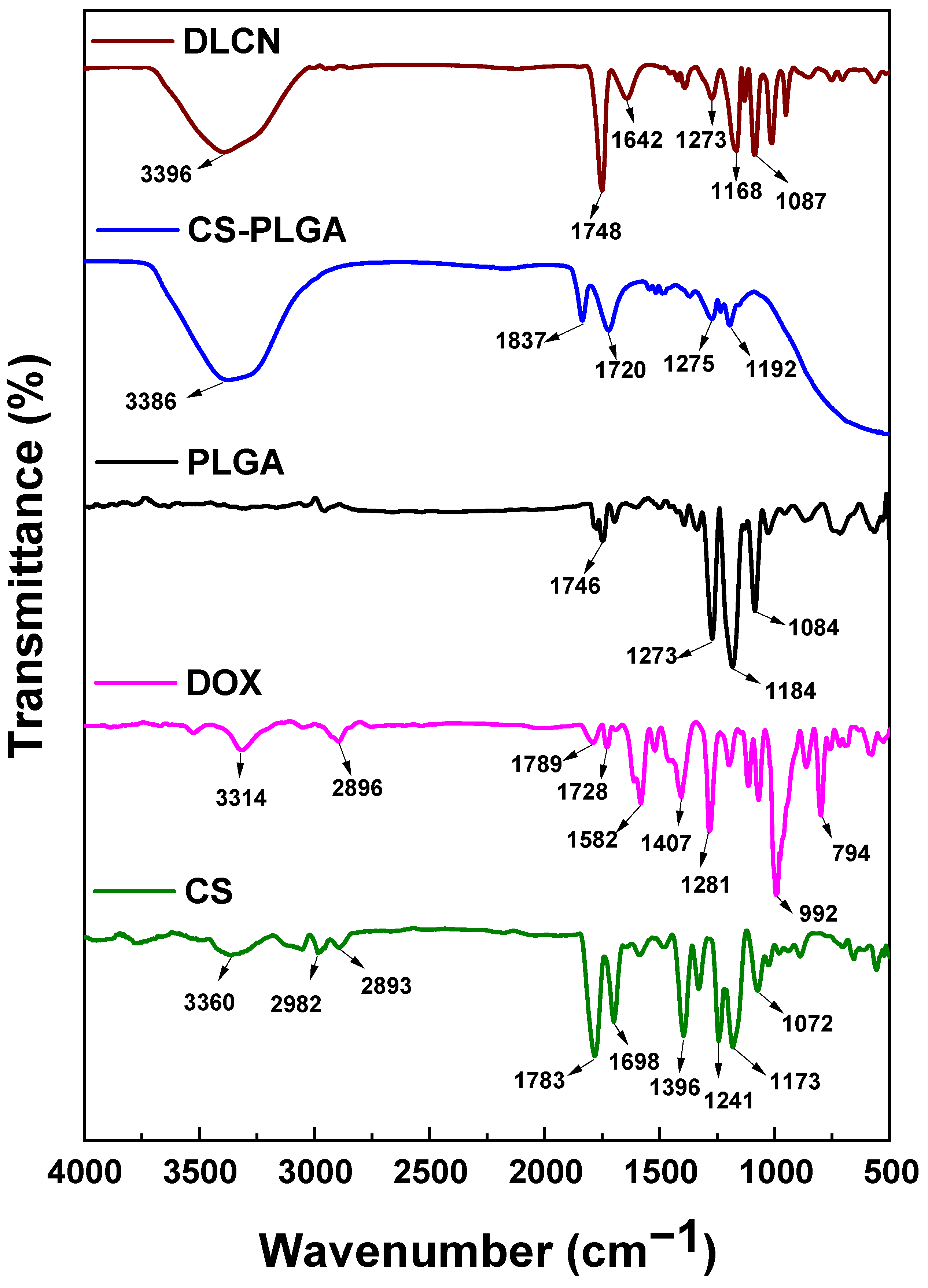
As depicted in Figure 1, there was a correlation between the functional groups found in the FTIR spectra of chitosan, Dox, PLGA, and DLCNs. Characteristic peaks for carbonyl (C=O) stretching at 1746 cm−1 and C–O–C stretching at 1084 cm−1 were seen in the FTIR spectrum of PLGA. The prominent peak at 1698 cm−1 in the chitosan spectrum verified that amide I groups were present in the chitosan structure. For C–H stretching vibrations, additional distinctive peaks were found at 2893 cm−1, and for C–H bending vibrations, at about 1396 cm−1. The overlapping stretching vibrations of N–H and O–H were responsible for the broad peak at 3360 cm−1. Physical adsorption and intermolecular interactions between chitosan and the PLGA surface were indicated by discernible peak shifts in the PLGA–CS nanoparticles around 3386 and 1720 cm−1, indicating successful hybrid nanoparticle formation. Comparing the FTIR spectra of DLCNs to those of chitosan and DOX revealed variations in the absorption intensities and peak shifts. The presence of C=O was indicated by a sharp absorption band at 1698 cm−1, and the interaction between chitosan and PLGA was indicated by the reduction in the peaks in DLCNs. When DOX was loaded into DLCNs, the FTIR spectra (Figure 1) demonstrate peak shifts brought about by hydrogen bonding in the aforementioned modes, which are 3359 cm−1 for –NH2 and –OH stretching, 1698 cm−1 for –CO stretching, and 1588 cm−1 for –NH2 bending vibrations, indicating the effective loading of DOX into the DLCNs [39]. These are connected to the overlapping hydroxyl and amine groups that show the drug molecule’s presence in the nanoparticles and their subsequent lack of interaction [40].

3.1.2. DLS-Hydrodynamic Size Analysis and Zeta Potential

Particle size, polydispersity index (PDI), and ζ-potential analysis verified that the nanoformulations were successfully formed and stabilized (Table 1). With a hydrodynamic size of 278.66 ± 9.08 nm, a PDI of 0.446 ± 0.11, and a ζ-potential of 9.003 ± 0.86 mV, the CPN formulation demonstrated better colloidal stability following drug loading and modification. In contrast, DLCNs displayed an increased hydrodynamic diameter of 360.31 ± 45.32 nm, a lower PDI of 0.386 ± 0.007, and a higher positive ζ-potential of 13.67 ± 3.72 mV. Quasi-spherical particles with somewhat uneven surfaces and a range of particle sizes were identified by FESEM analysis. Since DLS measures the apparent hydrodynamic diameter of dynamically hydrated/solvated particles, which includes solvent layers and particle shape effects, the relatively larger sizes seen in DLS analysis are expected.

3.1.3. Electron Microscopy Analysis

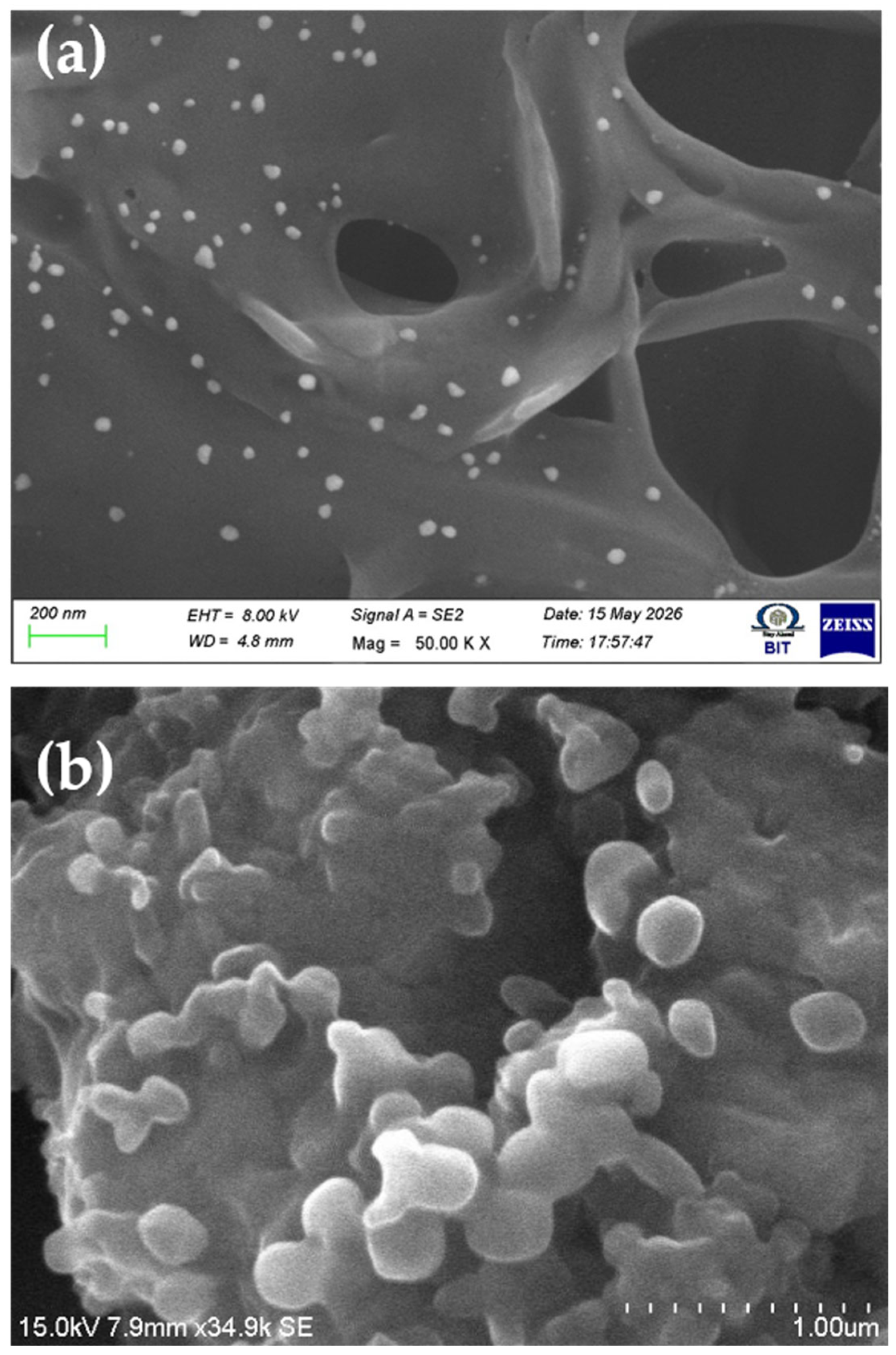
DOX-loaded chitosan nanoparticles (DLCNs) were prepared as described in the materials and methods, and the FESEM image is shown in Figure 2. From a morphological point of view, the DLCN is spherical. Analysis of the SEM (Figure 2) shows that the nanoparticle size ranges from 50 to 200 nm.

3.2. Encapsulation Efficiency (EE) of Dox

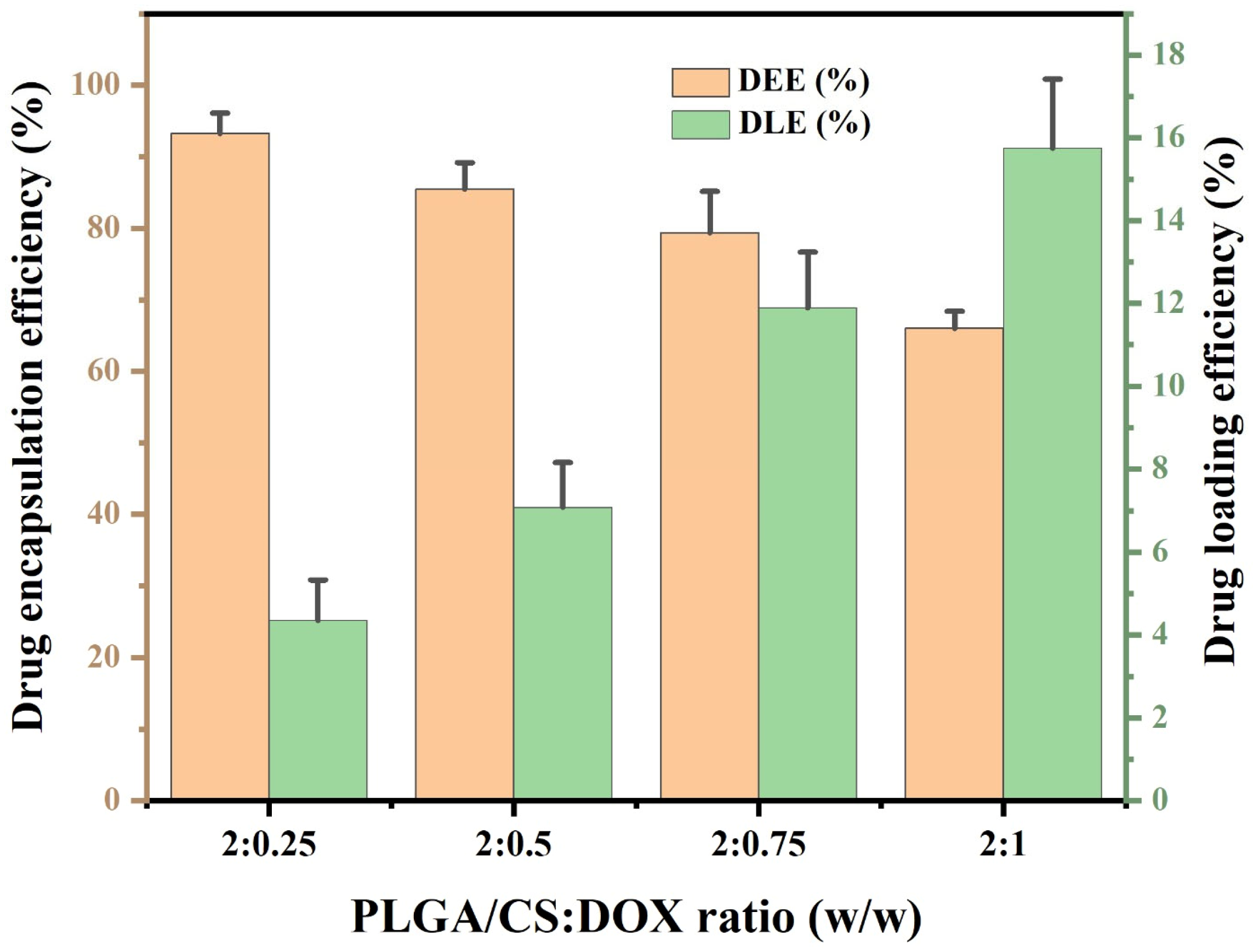
The encapsulation efficiency of the chitosan–PLGA hybrid nanoparticles showed that DOX was successfully incorporated into the polymeric matrix (Figure 3). DOX encapsulation efficiency in CS/PLGA was found to be in the ~93% to 65% while increasing the DOX ratio from 0.25 to 1. Simultaneously, the drug loading efficiency was increased from ~4% to 15%. The dual drug loading mechanism, which involves hydrophobic interactions within the PLGA core and electrostatic interactions between the positively charged chitosan and DOX molecules, is responsible for the encapsulation. The improved encapsulation efficiency attests to the hybrid nanoparticle suitability for reducing early drug leakage and stabilizing hydrophilic–hydrophobic drug molecules.

3.3. In Vitro Drug Release

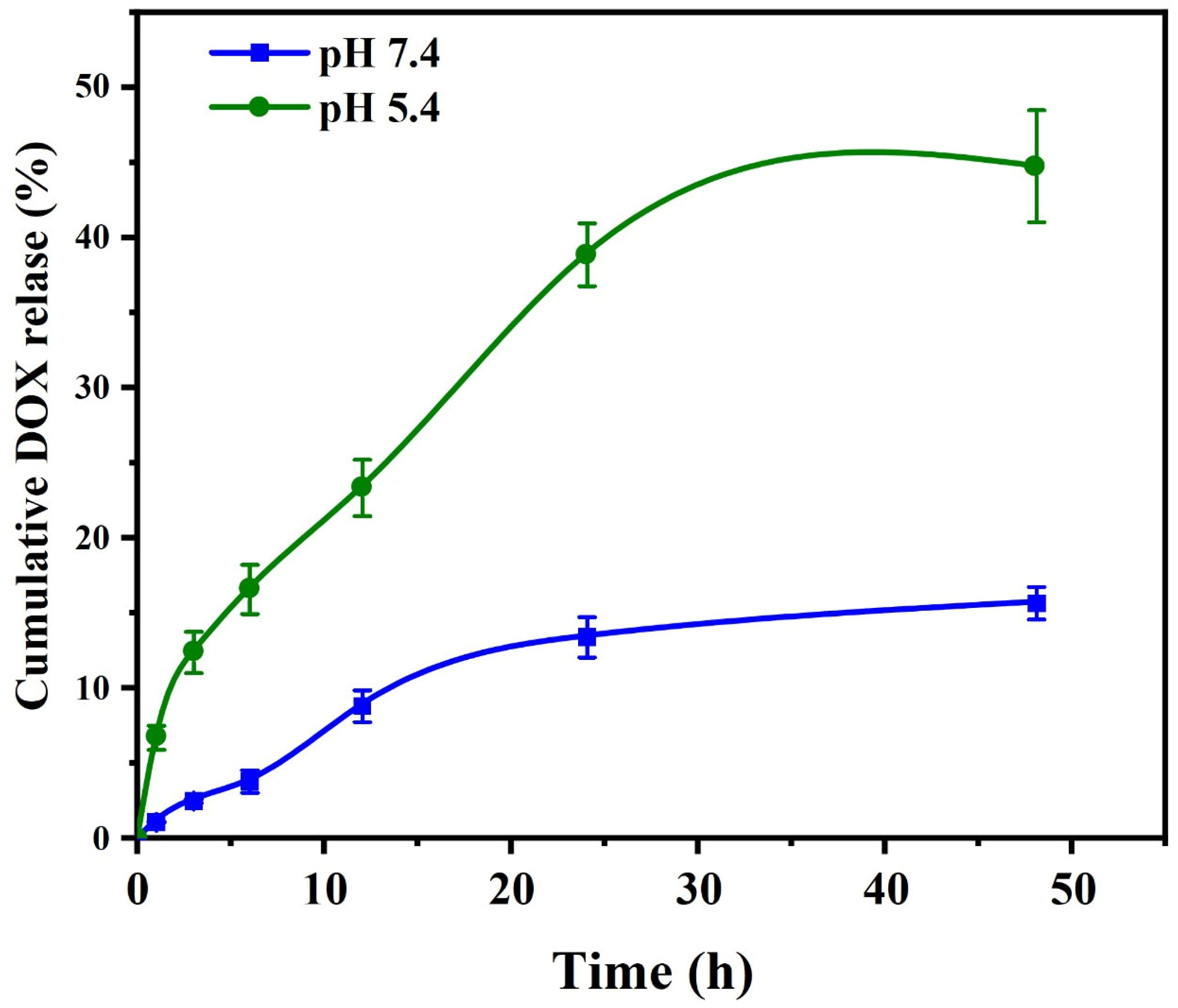
DOX release from DLCNs exhibited a characteristic biphasic release profile consisting of an initial burst release followed by a sustained release phase (Figure 4). The initial rapid release was attributed to the diffusion of surface-adsorbed or weakly bound DOX molecules, resulting in approximately 23% cumulative drug release within the first 12 h at pH 5.4. Subsequently, a controlled and prolonged release phase was observed up to 48 h, reaching a cumulative release of approximately 38–44% under acidic conditions. In contrast, drug release at physiological pH (7.4) was significantly lower, with only ~15% cumulative release observed after 48 h. The enhanced release under acidic conditions demonstrates the pH-responsive behavior of the nanocarrier system, suggesting preferential drug release within the tumor microenvironment. This behavior may be associated with increased DOX solubility and accelerated degradation of the polymeric matrix under acidic conditions. Furthermore, the sustained release pattern indicates the potential of DLCNs to maintain therapeutic drug concentrations over an extended period while minimizing systemic toxicity and reducing dosing frequency.
The release kinetics of DOX from PLGA/CS-DOX nanocarriers (DLCNs) were evaluated using the Higuchi and Korsmeyer–Peppas kinetic models to elucidate the drug release mechanism (Table 2). At pH 7.4, the release profile showed a better fit with the Korsmeyer–Peppas model (R2 = 0.9806) compared to the Higuchi model (R2 = 0.9591), indicating that the release mechanism was governed predominantly by diffusion-controlled transport. The release exponent value (n = 0.055) further suggested Fickian diffusion behavior, corresponding to slow and controlled drug diffusion from the polymeric matrix under physiological conditions. At pH 5.4, the Higuchi model demonstrated a higher correlation coefficient (R2 = 0.9785) than the Korsmeyer–Peppas model (R2 = 0.7655), indicating that drug release under acidic conditions was strongly influenced by diffusion through the polymeric network. The Korsmeyer–Peppas release exponent (n = 0.526) suggested anomalous (non-Fickian) transport behaviour, implying the combined contribution of drug diffusion and polymer relaxation/degradation processes in the acidic tumor-like microenvironment. Overall, the kinetic analysis confirmed that the DLCN system exhibited pH-responsive and sustained drug release characteristics, supporting its potential application for targeted and controlled anti-cancer drug delivery.

3.4. Effect of DEN Induction and DLCN Treatment on the Body Liver and Spleen Weight of the Experimental Animals

The body weight and liver weight of the control and experimental groups of animals were shown in Table 3.
In Group II animals, there was a significant decrease (205.4 g, i.e., 98 g less) in the final body weight when compared to control and significantly less than all other groups. In Group II animals, the spleen weight was significantly increased by 0.92 g (69%) when compared with the Group I animals. Dox-alone-treated animals (Groups IV and VI) showed a significant increase of 277.87 g (26%) in the final body weight when compared with Group II animals. In Group II animals, the relative liver weight was significantly increased by 87% when compared with the Group I animals and there was a significant decrease in the liver weight in DOX-treated Group VI animals. There is a significant decrease in spleen and liver weight of the DLCN-treated Group IV animals, which is very near to control (0.61 g).

3.5. Effect of DEN Induction and DLCN Treatment on the Activities of Liver Marker Enzymes

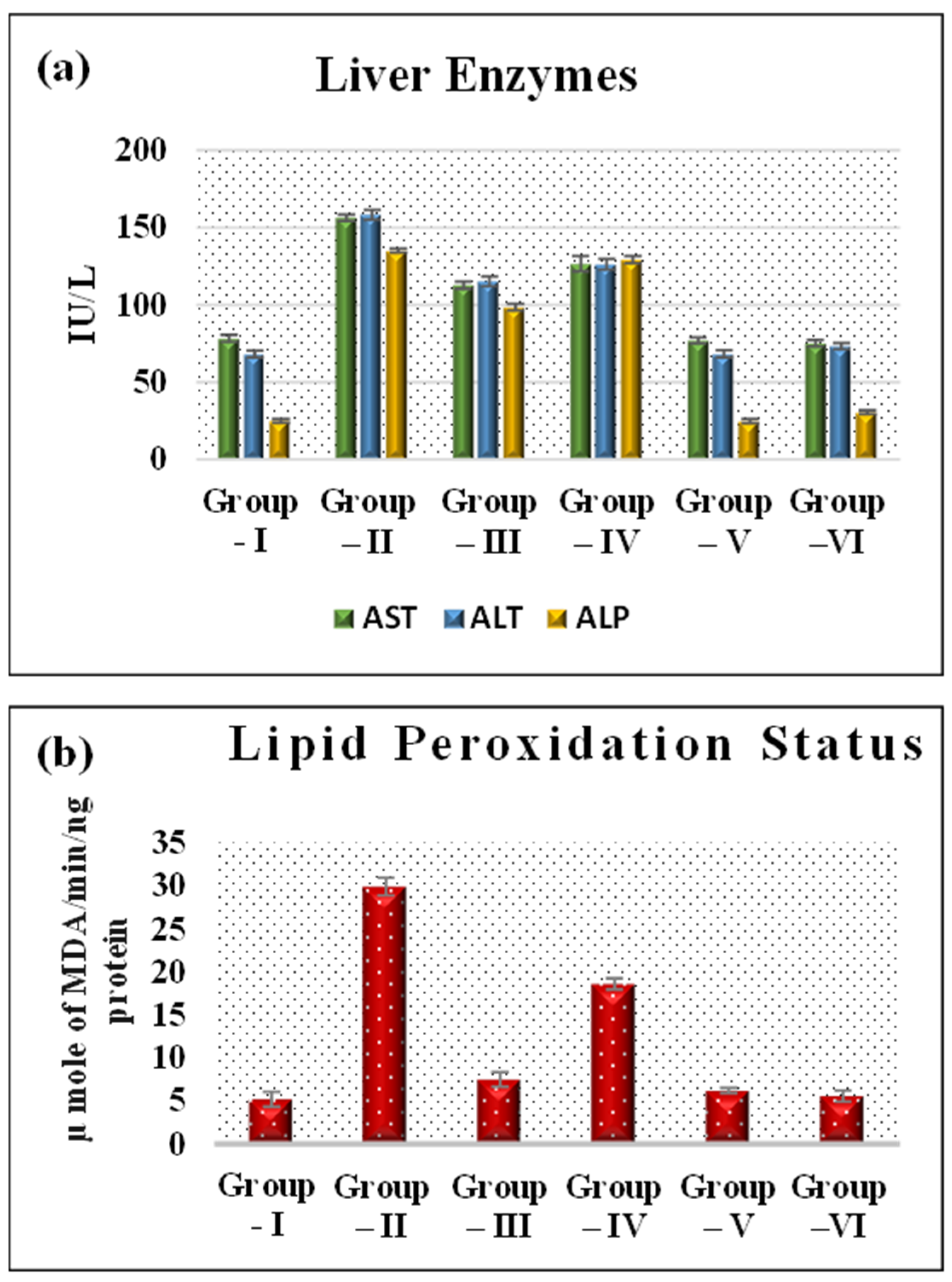
The effect of DLCNs and DOX on the enzyme activities of marker enzymes was presented in Figure 5a, such as Aspartate transaminase (AST), alanine transaminase (ALT) and alkaline phosphatase (ALP) in the serum of control and experimental groups of rats. These marker enzymes are significantly increased (p < 0.05) (AST = 156.28 IU/L, ALT = 158.26 IU/L and ALP = 134.96 IU/L) in DEN-induced Group II animals when compared with Group I normal control animals (AST = 78.26 IU/L, ALT = 68.14 IU/L and ALP = 25.13 IU/L). DLCN-treated Group VI (AST = 75.05 IU/L, ALT = 73.29 IU/L and ALP = 30.54 IU/L) and DOX Groups IV (AST = 126.69 IU/L, ALT = 126.24 IU/L and ALP = 129.25 IU/L) showed a significant decrease in the activities of these enzymes when compared with Group II DEN-induced animals. This reveals that both the DLCNs and Dox have the restoration potential of membrane integrity in the liver tissue. The significant difference in the levels of reinstatement of the said three enzymes in both Groups IV and VI showed more efficacy of the DLCN treatment over the Dox treatment.

3.6. Effect of DEN Induction and DLCN Treatment on the Activity of Lipid Peroxidation (LPO)

The level of LPO in liver tissues of control and experimental animals was depicted in Figure 5b. LPO is found to be increased in Group II (29.9 µmole of MDA/min/ng protein) (p < 0.001) rats when compared to control animals (5.2 µmole of MDA/min/ng protein). These significant effects were reversed in Dox (Group IV) (18.6 µmole of MDA/min/ng protein) and DLCNs (Group VI) (5.6 µmole of MDA/min/ng protein) treated rats. Group VI showed a significant reduction (72%) in the LPO activity when compared to Group IV, clearly showing better efficacy of DLCNs in restoration of the normal LPO activity in the animal system.

3.7. Effect of DEN Induction and DLCN Treatment on the Antioxidant Status of the Liver

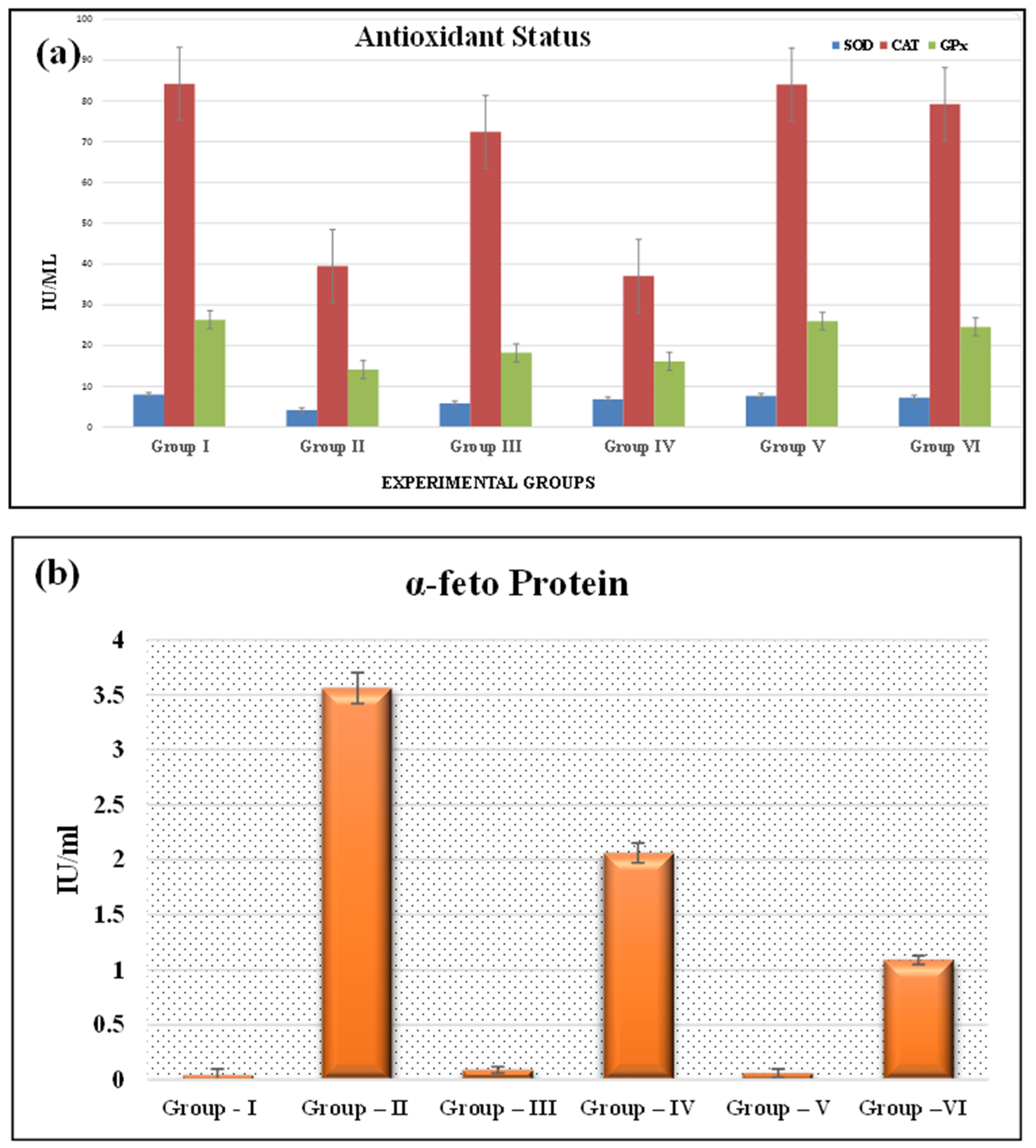
The changes in enzymatic antioxidant enzymes of serum of control and experimental animals were presented in Figure 6a. The enzymatic and non-enzymatic antioxidants, such as superoxide dismutase (SOD), catalase (CAT) and glutathione peroxidase (GPx), were significantly (p < 0.001) reduced in Group II animals (SOD = 4.21 IU/mL, CAT = 39.53 IU/mL and GPx = 14.13 IU/mL) when compared with Group I (SOD = 7.98 IU/mL, CAT = 84.15 IU/mL and GPx = 26.36 IU/mL) animals. In DEN-induced DLCN-treated (Group VI) and DEN induced with Dox alone treated animals (Group V), these changes were brought back to near normal. The treatment consequence was significantly (p < 0.01) effective in Group VI (SOD = 7.24 IU/mL, CAT = 79.23 IU/mL and GPx = 24.59 IU/mL) when compared to Group III (SOD = 5.88 IU/mL, CAT = 72.45 IU/mL and GPx = 18.26 IU/mL).

3.8. Effect of DEN Induction and DLCN Treatment on the Serum of α-Feto Protein

The level of α-feto protein (AFP) in the serum of the control and experimental animals was clearly presented in Figure 6b. Group II (IU/mL) showed the highest level of AFP (3.56 IU/mL). The DOX-treated Group IV (2.06 IU/mL) and DLCN-treated VI (1.09 IU/mL) had significantly lowered AFP levels (p < 0.001) when compared to Group II (3.56 IU/mL) (DEN-induced animals). Among the treated animals, Group VI showed a more significant (p < 0.01) reduction in AFP levels (1.09 IU/mL) than Group IV animals (2.06 IU/mL). This result inferred that the DEN-induced DLCN treatment (Group VI) could revert the level of AFP more significantly than the DEN-induced Dox treatment (Group IV).

3.9. Histopathology Studies

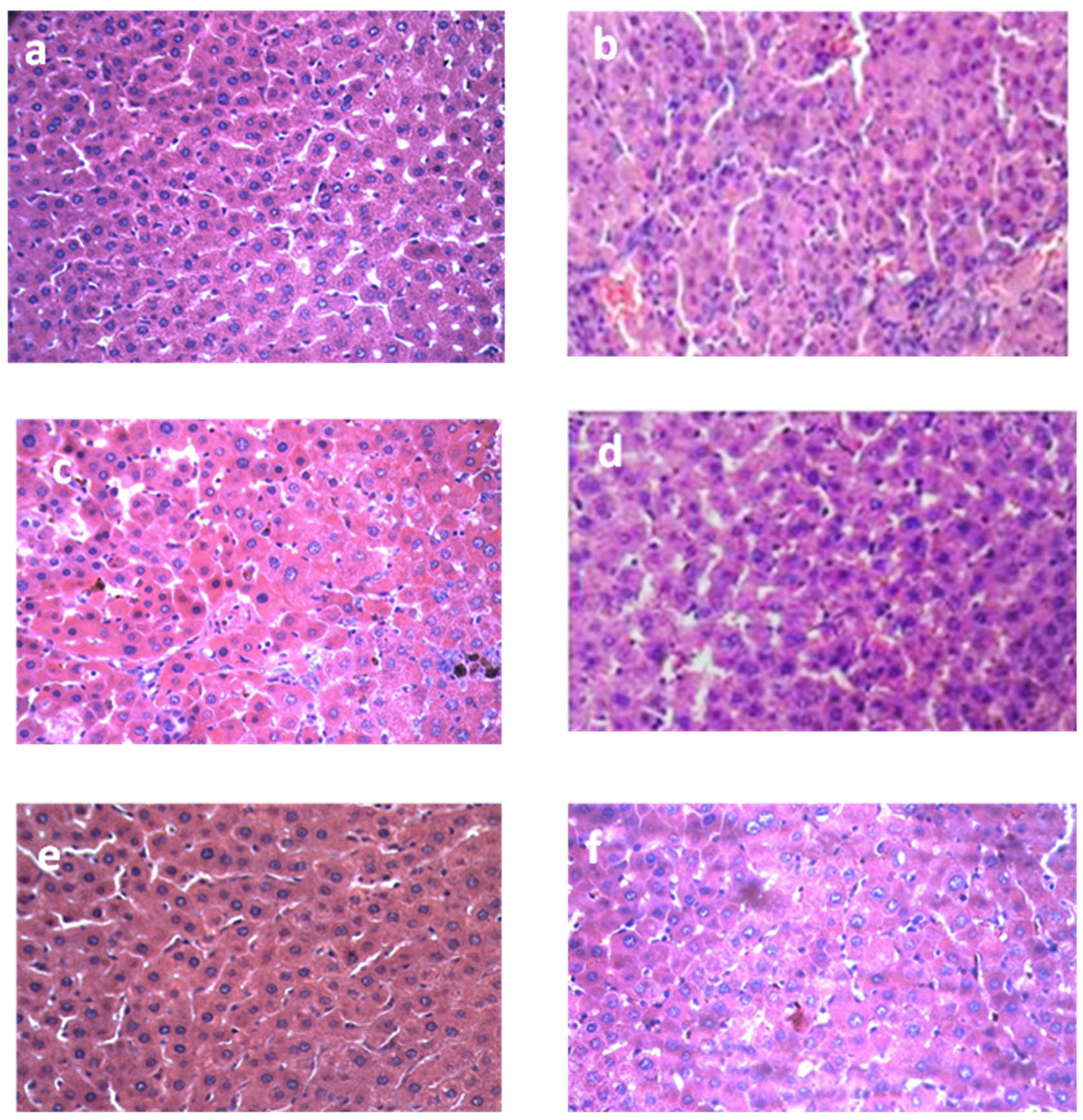
The histopathological examination of control and experimental group rats is shown in Figure 7. Control liver sections stained with H&E showed classical hepatic lobules (Figure 7a).
Each lobule showed anastomating plates of hepatocytes radiating from the central vein towards the periphery of the lobule. Histopathological observations of liver sections from Group II (DEN-induced) (Figure 7b) showed hepatocarcinoma (HCC) crowding of cells, alteration in the hepatocyte architecture with a loss of radiating hepatocytes and sinusoidal infiltration. Liver sections showed evidence of necrosis that varied from spotty necrosis with intralobular lymphocytic infiltration surrounded by intact hepatocytes to areas of confluent necrosis. Enlargement and darkening of nuclei with clumping of chromatin and cholestasis were also observed (Figure 7b). Focal apoptosis with condensed eosinophilic cytoplasm and pyknotic nuclei was also seen in addition to the presence of disruption in the endothelial lining of a dilated vessel. A progressive increase in the number of cells having large nuclei and an open chromatin pattern with eosinophilic staining of their cytoplasm was observed. Few cells with intranuclear vacuoles and periportal lymphocytic infiltration were also seen. However, Group VI treatment was more effective when compared to Group IV (DEN-induced DOX alone) treatment, whereas the hepatic architecture recovered to a near-normal level in Group III animals. There were frequent bizarre cells accompanied by mild inflammatory infiltrates and separated by cords of atrophic hepatocytes in DOX-alone-treated rats, depicting the toxic effect of DOX (Figure 7c).
These effects were not found in Group V (Figure 7e) animals, which indicate toxicity reducing capacity of chitosan-based nanoparticles. H&E histopathological section observations in Groups IV and VI (Figure 7d,f) showed a marked recovery in both hepatocyte architecture and a reduction in sinusoidal infiltration and radiating hepatocytes.

4. Discussion

Despite the advances in the chemical synthesis of new anti-tumor agents, HCC still remains a major therapeutic challenge due to the limited efficacy and dose-dependent toxicity associated with conventional chemotherapeutic agents such as doxorubicin (DOX) [41]. Although DOX is widely used against multiple malignancies, its clinical application is frequently restricted by severe systemic toxicities, particularly oxidative stress-mediated hepatotoxicity and cardiotoxicity. These adverse effects largely arise from excessive reactive oxygen species generation and nonspecific distribution of the drug to normal tissues [42,43]. Consequently, considerable efforts have been directed toward developing targeted and controlled drug delivery systems capable of enhancing therapeutic efficacy while minimizing off-target toxicity [44,45].
Among the various nanocarrier platforms investigated, polymeric nanoparticles have attracted significant attention because of their biocompatibility, controlled drug release behavior, and ability to improve tumor-specific drug accumulation through passive targeting mechanisms [46,47]. In particular, chitosan- and PLGA-based hybrid nanocarriers offer several advantages, including high drug encapsulation efficiency, improved stability, biodegradability, and enhanced cellular uptake [48,49]. In the present study, we investigated whether encapsulation of DOX within chitosan–PLGA hybrid nanoparticles (DLCN) could improve therapeutic efficacy and reduce hepatotoxic effects in a DEN-induced hepatocellular carcinoma model. The findings demonstrated that DLCN treatment effectively restored hepatic biochemical parameters, reduced oxidative stress, normalized AFP levels, and improved histopathological architecture compared with free DOX treatment, suggesting superior therapeutic performance of the nanoformulation.

4.1. Physicochemical Characteristics and Drug Release Behavior of DLCN

The present study demonstrated the successful fabrication of doxorubicin-loaded chitosan/PLGA hybrid nanoparticles using a nanoprecipitation approach. FTIR analysis (Figure 1) confirmed the interaction between chitosan, PLGA, and doxorubicin through characteristic peak shifts associated with hydrogen bonding and functional group interactions, indicating efficient drug incorporation within the polymeric matrix. The FESEM observations (Figure 2) further revealed spherical nanoparticles with a size range of 50–200 nm, which is considered favorable for passive tumor targeting through the enhanced permeability and retention (EPR) effect. Both DLCN formulations and chitosan–PLGA hybrid nanoparticles were primarily quasi-spherical with moderate size variation, according to morphological observations of FESEM images. Hydration effects and polymer aggregation behavior are responsible for the apparent non-uniformity seen in FESEM images. Successful nanoparticle formation is supported by both FESEM observations and DLS-based particle size distribution.
Efficient drug encapsulation is a critical characteristic of nanoparticle-based delivery systems, as it minimizes premature drug leakage, improves formulation stability, and enables sustained therapeutic release. In the present study, the chitosan–PLGA hybrid nanoparticles demonstrated high encapsulation efficiency for DOX (Figure 3), confirming the suitability of the formulation for effective drug incorporation. Although encapsulation efficiency gradually decreased with increasing drug concentration, drug loading efficiency increased, suggesting progressive saturation of available polymeric binding sites at higher DOX ratios. The high encapsulation performance may be attributed to the combined hydrophobic interactions within the PLGA core and electrostatic interactions between positively charged chitosan and doxorubicin molecules. Furthermore, the DLCN formulation exhibited biphasic and pH-responsive drug release behavior, with significantly enhanced release under acidic conditions compared with physiological pH (Figure 4). The initial burst release may be associated with surface-adsorbed drug molecules, followed by sustained release resulting from gradual diffusion through the polymeric matrix. This pH-responsive behavior is particularly advantageous for hepatocellular carcinoma therapy, as the acidic tumor microenvironment may facilitate preferential release of DOX at the tumor site while limiting systemic exposure and associated toxicity. Collectively, these findings suggest that the chitosan–PLGA hybrid nanocarrier system provides controlled and targeted delivery of DOX with improved stability, prolonged therapeutic availability, and enhanced therapeutic potential.

4.2. DLCNs Attenuated DEN-Induced Hepatic Injury, Reduced Oxidative Stress, and Restored Antioxidant Defense

DEN administration produced marked hepatic injury, as evidenced by reduced body weight and increased liver and spleen weights (Table 1), together with elevated serum AST, ALT, and ALP activities (Figure 5a) [50]. These alterations reflect hepatocellular membrane damage, leakage of intracellular enzymes, and impaired liver function associated with DEN-induced hepatocarcinogenesis. In contrast, treatment with DLCNs significantly restored these biochemical parameters toward near-normal levels and demonstrated greater efficacy than free DOX treatment. The reduction in serum transaminases following DLCN administration suggests improved preservation of hepatocyte membrane integrity and reduced cellular leakage of intracellular enzymes. Although free DOX treatment also showed partial restoration of liver function markers, its therapeutic benefit was comparatively limited, likely due to its inherent systemic toxicity. Notably, animals treated with DLCNs alone exhibited biochemical parameters comparable to those of the control group, further supporting the biocompatibility and reduced toxicity of the nanoformulation. Previous studies have similarly reported that chitosan-based nanocarriers improve the therapeutic index of DOX by enhancing targeted delivery while reducing off-target toxicity [51,52,53]. The present findings further extend these observations by demonstrating the hepatoprotective potential of DLCNs in a DEN-induced hepatocellular carcinoma model. Oxidative stress plays a central role in DEN-induced hepatocarcinogenesis and DOX-mediated toxicity. In the present study, DEN induction markedly increased lipid peroxidation levels (Figure 5b), indicating excessive reactive oxygen species generation and oxidative membrane damage during tumor progression. Simultaneously, DEN administration significantly reduced endogenous antioxidant enzyme activities, including SOD, CAT, and GPx (Figure 6a), suggesting impairment of the hepatic antioxidant defense system.
DLCN treatment significantly suppressed lipid peroxidation and restored antioxidant enzyme activities nearly to normal levels. The reduction in malondialdehyde formation indicates effective inhibition of oxidative membrane injury, whereas recovery of SOD, CAT, and GPx activities reflects restoration of cellular antioxidant defenses. Importantly, these protective effects were substantially greater in DLCN-treated animals than in those receiving free DOX. The improved antioxidant status observed following DLCN treatment may be attributed to controlled drug release and reduced nonspecific toxicity associated with nanoencapsulation. In addition, the chitosan coating may contribute to cellular protection through enhanced biocompatibility and stabilization of the formulation. Collectively, these findings indicate that DLCNs effectively mitigate oxidative stress-mediated hepatic injury during DEN-induced hepatocarcinogenesis.

4.3. DLCNs Suppressed Tumor-Associated AFP Expression

AFP is a well-established biomarker of hepatocellular carcinoma and is closely associated with tumor burden and disease progression [54]. In the present study, DEN-induced animals exhibited markedly elevated AFP levels (Figure 6b), confirming successful induction of hepatocarcinogenesis. Treatment with DLCNs significantly reduced AFP concentrations compared with both DEN-induced controls and free DOX-treated animals. The greater reduction in AFP observed following DLCN treatment suggests enhanced antitumor efficacy and improved suppression of malignant hepatocyte activity compared with free DOX treatment. These findings indicate a superior anticarcinogenic potential of the nanoformulation and correlate with the observed normalization of liver function enzymes and antioxidant parameters. Collectively, the results demonstrate that DLCN treatment contributes to overall therapeutic improvement in DEN-induced hepatocellular carcinoma.

4.4. Histopathological Findings Confirmed Hepatoprotective and Antitumor Effects

Histopathological analysis (Figure 7) strongly supported the biochemical observations. DEN-induced liver tissues showed severe pathological alterations, including disruption of hepatic architecture, necrosis, sinusoidal infiltration, inflammatory changes, and abnormal hepatocyte morphology consistent with hepatocellular carcinoma progression. In addition, extensive cytoplasmic vacuolation surrounding the nucleus, accumulation of acidophilic materials, and enlarged hyperchromatic nuclei with prominent centrally located nucleoli were observed. These histopathological alterations are characteristic features of preneoplastic transformation during hepatocarcinogenesis.
In contrast, DOX-induced DLCN-treated animals demonstrated substantial restoration of hepatic architecture with reduced inflammatory infiltration and minimal necrotic changes. The recovery observed in the DLCN-treated group was considerably better than that seen with free DOX treatment, which still exhibited mild structural abnormalities and toxicity-related alterations. Collectively, these findings suggest that nanoencapsulation enhances therapeutic localization of DOX while reducing damage to normal hepatic tissue. The improved histological recovery may also be associated with sustained drug release and enhanced cellular uptake mediated by chitosan-based nanoparticles.

5. Conclusions

This study establishes that DLCNs enhance the efficacy of the nanotherapeutic system for hepatocellular carcinoma. DLCNs significantly improved hepatic function, reduced α-fetoprotein levels, suppressed lipid peroxidation, and restored antioxidant activity compared to free DOX. Histopathological analysis confirmed substantial recovery of liver architecture with reduced necrosis and inflammation. The nanoencapsulation eased DOX-induced toxicity while enhancing therapeutic efficacy, likely through improved stability and controlled drug release. However, the findings remain limited to a preclinical model, and further studies addressing pharmacokinetics, targeting specificity, and clinical translation are essential.

Author Contributions

Conceptualization, S.A. and A.S.; methodology, S.A. and A.S.; software, A.S.; validation, S.A., K.V. and L.R.; formal analysis, M.T. and A.S.; investigation, S.A.; resources, K.V. and L.R.; data curation, S.A. and M.T.; writing—original draft preparation, S.A.; writing—review and editing, S.A.; supervision, S.A.; project administration, S.A. and L.R.; funding acquisition, S.A. All authors have read and agreed to the published version of the manuscript.

Funding

This research was funded by the Vinayaka Mission’s Research Foundation, Aarupadai Veedu Medical College and Hospital, Puducherry, India, grant number (VMRF/Research/SeedMoney/AY2023-24/AVMC/1) and The APC was funded by an Anbazhagan Sathiyaseelan reviewer voucher.

Institutional Review Board Statement

The study was conducted in accordance with the Institutional Animal Ethics Committee (IAEC) guidelines, in compliance with CPCSEA regulations, Ministry of Social Justice and Empowerment, Government of India (Approval No. IAEC 01/010/2010).

Data Availability Statement

The raw data supporting the conclusions of this article will be made available by the authors on request.

Acknowledgments

ChatGPT Plus was utilized for English language check.

Conflicts of Interest

The authors declare no conflicts of interest.

Abbreviations

The following abbreviations are used in this manuscript:
AFPAlpha-fetoprotein
ALPAlkaline phosphatase
ALTAlanine aminotransferase
ASTAspartate aminotransferase
CATCatalase
DCMDichloromethane
DENDiethylnitrosamine
DLCNDoxorubicin-loaded chitosan/PLGA nanoparticles
DMSODimethyl sulfoxide
DOXDoxorubicin
FESEMField emission scanning electron microscopy
FTIRFourier-transform infrared spectroscopy
GPxGlutathione peroxidase
GRGlutathione reductase
HCCHepatocellular carcinoma
IAECInstitutional Animal Ethics Committee
LD50Median lethal dose
LDHLactate dehydrogenase
LPOLipid peroxidation
MDAMalondialdehyde
OECDOrganisation for Economic Co-operation and Development
PBSPhosphate-buffered saline
PLGAPoly(lactic-co-glycolic acid)
ROSReactive oxygen species
SODSuperoxide dismutase
TBARSThiobarbituric acid reactive substances

References

  1. Li, S.; Meng, X.; Peng, B.; Huang, J.; Liu, J.; Xiao, H.; Ma, L.; Liu, Y.; Tang, J. Cell Membrane-Based Biomimetic Technology for Cancer Phototherapy: Mechanisms, Recent Advances and Perspectives. Acta Biomater. 2024, 174, 26–48. [Google Scholar] [CrossRef] [PubMed]
  2. Du, D.; Liu, C.; Qin, M.; Zhang, X.; Xi, T.; Yuan, S.; Hao, H.; Xiong, J. Metabolic Dysregulation and Emerging Therapeutical Targets for Hepatocellular Carcinoma. Acta Pharm. Sin. B 2022, 12, 558–580. [Google Scholar] [CrossRef]
  3. El-Serag, H.B.; Marrero, J.A.; Rudolph, L.; Reddy, K.R. Diagnosis and Treatment of Hepatocellular Carcinoma. Gastroenterology 2008, 134, 1752–1763. [Google Scholar] [CrossRef]
  4. Li, X.; Sun, R.; Liu, R. Natural Products in Licorice for the Therapy of Liver Diseases: Progress and Future Opportunities. Pharmacol. Res. 2019, 144, 210–226. [Google Scholar] [CrossRef]
  5. Anwanwan, D.; Singh, S.K.; Singh, S.; Saikam, V.; Singh, R. Challenges in Liver Cancer and Possible Treatment Approaches. Biochim. Biophys. Acta (BBA) -Rev. Cancer 2020, 1873, 188314. [Google Scholar] [CrossRef]
  6. Anand, U.; Dey, A.; Chandel, A.K.S.; Sanyal, R.; Mishra, A.; Pandey, D.K.; De Falco, V.; Upadhyay, A.; Kandimalla, R.; Chaudhary, A.; et al. Cancer Chemotherapy and beyond: Current Status, Drug Candidates, Associated Risks and Progress in Targeted Therapeutics. Genes Dis. 2023, 10, 1367–1401. [Google Scholar] [CrossRef]
  7. Chiu, P.Y.; Chen, J.K.; Cheng, C.C. Electrostatically Driven Supramolecular Drug-Carrier System for Targeted, Efficient, Safer Cancer Chemotherapy. J. Colloid Interface Sci. 2025, 700, 138360. [Google Scholar] [CrossRef]
  8. Hartlieb, M.; Mansfield, E.D.H.; Perrier, S. A Guide to Supramolecular Polymerizations. Polym. Chem. 2020, 11, 1083–1110. [Google Scholar] [CrossRef]
  9. Han, S.; Huang, K.; Gu, Z.; Wu, J. Tumor Immune Microenvironment Modulation-Based Drug Delivery Strategies for Cancer Immunotherapy. Nanoscale 2020, 12, 413–436. [Google Scholar] [CrossRef]
  10. Bedoui, S.; Herold, M.J.; Strasser, A. Emerging Connectivity of Programmed Cell Death Pathways and Its Physiological Implications. Nat. Rev. Mol. Cell Biol. 2020, 21, 678–695. [Google Scholar] [CrossRef] [PubMed]
  11. Caccuri, F.; Sommariva, M.; Marsico, S.; Giordano, F.; Zani, A.; Giacomini, A.; Fraefel, C.; Balsari, A.; Caruso, A. Inhibition of DNA Repair Mechanisms and Induction of Apoptosis in Triple Negative Breast Cancer Cells Expressing the Human Herpesvirus 6 U94. Cancers 2019, 11, 1006. [Google Scholar] [CrossRef]
  12. Kudo, Y.; Sugimoto, M.; Arias, E.; Kasashima, H.; Cordes, T.; Linares, J.F.; Duran, A.; Nakanishi, Y.; Nakanishi, N.; L’Hermitte, A.; et al. PKCλ/ι Loss Induces Autophagy, Oxidative Phosphorylation, and NRF2 to Promote Liver Cancer Progression. Cancer Cell 2020, 38, 247–262. [Google Scholar] [CrossRef]
  13. Islam, S.; Ahmed, M.M.S.; Islam, M.A.; Hossain, N.; Chowdhury, M.A. Advances in Nanoparticles in Targeted Drug Delivery—A Review. Results Surf. Interfaces 2025, 19, 100529. [Google Scholar] [CrossRef]
  14. Gerami, S.E.; Pourmadadi, M.; Fatoorehchi, H.; Yazdian, F.; Rashedi, H.; Nigjeh, M.N. Preparation of PH-Sensitive Chitosan/Polyvinylpyrrolidone/α-Fe2O3 Nanocomposite for Drug Delivery Application: Emphasis on Ameliorating Restrictions. Int. J. Biol. Macromol. 2021, 173, 409–420. [Google Scholar] [CrossRef] [PubMed]
  15. Lohiya, G.; Katti, D.S. Carboxylated Chitosan-Mediated Improved Efficacy of Mesoporous Silica Nanoparticle-Based Targeted Drug Delivery System for Breast Cancer Therapy. Carbohydr. Polym. 2022, 277, 118822. [Google Scholar] [CrossRef]
  16. Karthika, V.; AlSalhi, M.S.; Devanesan, S.; Gopinath, K.; Arumugam, A.; Govindarajan, M. Chitosan Overlaid Fe3O4/RGO Nanocomposite for Targeted Drug Delivery, Imaging, and Biomedical Applications. Sci. Rep. 2020, 10, 18912. [Google Scholar] [CrossRef] [PubMed]
  17. Pan, Y.; Li, Y.; Zhao, H.; Zheng, J.; Xu, H. Bioadhesi v e Polysaccharide in Protein Deli v Ery System: Chitosan Nanoparticles Improve the Intestinal Absorption of Insulin in vivo. Int. J. Pharm. 2002, 249, 139–147. [Google Scholar] [CrossRef]
  18. Zhang, R.Y.; Cheng, K.; Xuan, Y.; Yang, X.Q.; An, J.; Hu, Y.G.; Liu, B.; Zhao, Y. Di A PH/Ultrasonic Dual-Response Step-Targeting Enterosoluble Granule for Combined Sonodynamic-Chemotherapy Guided via Gastrointestinal Tract Imaging in Orthotopic Colorectal Cancer. Nanoscale 2021, 13, 4278–4294. [Google Scholar] [CrossRef]
  19. Rabiee, N.; Bagherzadeh, M.; Jouyandeh, M.; Zarrintaj, P.; Saeb, M.R.; Mozafari, M.; Shokouhimehr, M.; Varma, R.S. Natural Polymers Decorated MOF-MXene Nanocarriers for Co-Delivery of Doxorubicin/PCRISPR. ACS Appl. Bio Mater. 2021, 4, 5106–5121. [Google Scholar] [CrossRef]
  20. Rabiee, N.; Bagherzadeh, M.; Heidarian Haris, M.; Ghadiri, A.M.; Matloubi Moghaddam, F.; Fatahi, Y.; Dinarvand, R.; Jarahiyan, A.; Ahmadi, S.; Shokouhimehr, M. Polymer-Coated NH2-UiO-66 for the Codelivery of DOX/PCRISPR. ACS Appl. Mater. Interfaces 2021, 13, 10796–10811. [Google Scholar] [CrossRef]
  21. Zhu, X.; Li, L.; Tang, J.; Yang, C.; Yu, H.; Liu, K.; Zheng, Z.; Gu, X.; Yu, Q.; Xu, F.J.; et al. Cascade-Responsive Nano-Assembly for Efficient Photothermal-Chemo Synergistic Inhibition of Tumor Metastasis by Targeting Cancer Stem Cells. Biomaterials 2022, 280, 121305. [Google Scholar] [CrossRef]
  22. Wu, H.; Wei, G.; Luo, L.; Li, L.; Gao, Y.; Tan, X.; Wang, S.; Chang, H.; Liu, Y.; Wei, Y.; et al. Ginsenoside Rg3 Nanoparticles with Permeation Enhancing Based Chitosan Derivatives Were Encapsulated with Doxorubicin by Thermosensitive Hydrogel and Anti-Cancer Evaluation of Peritumoral Hydrogel Injection Combined with PD-L1 Antibody. Biomater. Res. 2022, 26, 77. [Google Scholar] [CrossRef]
  23. Stevanović, S.; Filipović, N. A Review of Recent Developments in Biopolymer Nano-Based Drug Delivery Systems with Antioxidative Properties: Insights into the Last Five Years. Pharmaceutics 2024, 16, 670. [Google Scholar] [CrossRef]
  24. Gao, J.; Karp, J.M.; Langer, R.; Joshi, N. The Future of Drug Delivery. Chem. Mater. 2023, 35, 359–363. [Google Scholar] [CrossRef] [PubMed]
  25. Zheng, G.; Zhao, R.; Xu, A.; Shen, Z.; Chen, X.; Shao, J. Co-Delivery of Sorafenib and SiVEGF Based on Mesoporous Silica Nanoparticles for ASGPR Mediated Targeted HCC Therapy. Eur. J. Pharm. Sci. 2018, 111, 492–502. [Google Scholar] [CrossRef]
  26. Jaiswal, N.; Chaudhari, R.D.; Chaudhari, B.P. Understanding Fundamentals of Hepatocellular Carcinoma to Design Next-Generation Chitosan Nano-Formulations: Beyond Chemotherapy Stride. J. Drug Deliv. Sci. Technol. 2020, 58, 101723. [Google Scholar] [CrossRef]
  27. El-Hammadi, M.M.; Arias, J.L. Recent Advances in the Surface Functionalization of PLGA-Based Nanomedicines. Nanomaterials 2022, 12, 354. [Google Scholar] [CrossRef] [PubMed]
  28. Rezvantalab, S.; Drude, N.I.; Moraveji, M.K.; Güvener, N.; Koons, E.K.; Shi, Y.; Lammers, T.; Kiessling, F. PLGA-Based Nanoparticles in Cancer Treatment. Front. Pharmacol. 2018, 9, 413087. [Google Scholar] [CrossRef]
  29. Azeez, S.; Sathiyaseelan, A.; Jeyaraj, E.R.; Saravanakumar, K.; Wang, M.H.; Kaviyarasan, V. Extraction of Chitosan with Different Physicochemical Properties from Cunninghamella echinulata (Thaxter) Thaxter for Biological Applications. Appl. Biochem. Biotechnol. 2022, 195, 3194–3927. [Google Scholar] [CrossRef] [PubMed]
  30. Xu, L.; Lan, Z.; Zewail, M.B.; Fan, Y.; Zhao, C.-X. Nanoprecipitation-Induced Formation of Nanoparticles for Drug Delivery. Curr. Opin. Colloid Interface Sci. 2026, 83, 102014. [Google Scholar] [CrossRef]
  31. Sathiyaseelan, A.; Saravanakumar, K.; Mariadoss, A.V.A.; Wang, M.H. PH-Controlled Nucleolin Targeted Release of Dual Drug from Chitosan-Gold Based Aptamer Functionalized Nano Drug Delivery System for Improved Glioblastoma Treatment. Carbohydr. Polym. 2021, 262, 117907. [Google Scholar] [CrossRef]
  32. King, J. Practical Clinical Enzymology; D. Van Nostrand Company, Ltd.: Princeton, NJ, USA; Toronto, ON, Canada; London, UK, 1965; Volume 64. [Google Scholar]
  33. Misra, H.P.; Fridovich, I. The Role of Superoxide Anion in the Autoxidation of Epinephrine and a Simple Assay for Superoxide Dismutase. J. Biol. Chem. 1972, 247, 3170–3175. [Google Scholar] [CrossRef] [PubMed]
  34. Takahara, S.; Hamilton, H.B.; Neel, J.V.; Kobara, T.Y.; Ogura, Y.; Nishimura, E.T. Hypocatalasemia: A New Genetic Carrier State. J. Clin. Investig. 1960, 39, 610–619. [Google Scholar] [CrossRef]
  35. Günzler, W.A.; Kremers, H.; Flohé, L. An Improved Coupled Test Procedure for Glutathione Poroxidase (EC 1.11.1.9.) in Blood. Clin. Chem. Lab. Med. 1974, 12, 444–448. [Google Scholar] [CrossRef]
  36. Ohkawa, H.; Ohishi, N.; Yagi, K. Assay for Lipid Peroxides in Animal Tissues by Thiobarbituric Acid Reaction. Anal. Biochem. 1979, 95, 351–358. [Google Scholar] [CrossRef]
  37. Alpert, E. Serum Alpha-Fetoprotein (AFP) in Benign and Malignant Gastrointestinal Diseases: Evaluation of an Immunoenzymatic Assay. Clin. Chim. Acta 1975, 58, 77–83. [Google Scholar] [CrossRef]
  38. Baidoo, N.; Sanger, G.J.; Belai, A. Histochemical and Biochemical Analysis of Collagen Content in Formalin-Fixed, Paraffin Embedded Colonic Samples. MethodsX 2023, 11, 102416. [Google Scholar] [CrossRef] [PubMed]
  39. Katuwavila, N.P.; Perera, A.D.L.C.; Samarakoon, S.R.; Soysa, P.; Karunaratne, V.; Amaratunga, G.A.J.; Karunaratne, D.N. Chitosan-Alginate Nanoparticle System Efficiently Delivers Doxorubicin to MCF-7 Cells. J. Nanomater. 2016, 2016, 3178904. [Google Scholar] [CrossRef]
  40. Amjadi, I.; Rabiee, M.; Hosseini, M.S. Anticancer Activity of Nanoparticles Based on PLGA and Its Co-Polymer: In-Vitro Evaluation. Iran. J. Pharm. Res. 2013, 12, 623. [Google Scholar]
  41. Barenholz, Y. Doxil®—The First FDA-Approved Nano-Drug: Lessons Learned. J. Control. Release 2012, 160, 117–134. [Google Scholar] [CrossRef]
  42. Joos, S.; Musselmann, B.; Szecsenyi, J. Integration of Complementary and Alternative Medicine into Family Practices in Germany: Results of a National Survey. Evid. Based. Complement. Altern. Med. 2011, 2011, 495813. [Google Scholar] [CrossRef] [PubMed]
  43. Kalender, Y.; Yel, M.; Kalender, S. Doxorubicin Hepatotoxicity and Hepatic Free Radical Metabolism in Rats: The Effects of Vitamin E and Catechin. Toxicology 2005, 209, 39–45. [Google Scholar] [CrossRef]
  44. Situmorang, P.C.; Wibowo, S.; Ilyas, S.; Sari, R.M.; Nugraha, A.P.; Ibrahim, A.; Fitrianita, A.; Abiyyu, N.; Syahputra, R.A. Rhodomyrtus Tomentosa Attenuates HER2 Expression and Modulates Apoptotic Pathways in DMBA-Induced Breast Carcinogenesis: In Vivo and in Silico Insights. J. Agric. Food Res. 2025, 24, 102360. [Google Scholar] [CrossRef]
  45. Wang, Y.; Yang, Y.; Ma, J.; Wang, J.; Chu, L.; Wang, Q.; Sun, S.; Wang, X.; Zhang, C. Injectable Biomimetic Nano-Hydrogel Composite Based on Copper Selenide Nanoparticles and Carboxymethyl Chitosan for Synergistic Chemo-Photothermal Cancer Therapy. Colloids Surf. B Biointerfaces 2025, 256, 115092. [Google Scholar] [CrossRef]
  46. Zhou, J.; Zhang, Z.; Zhang, Z.; Wu, T.; Li, H.; Hao, X.; Liu, X.; Gong, T.; Liu, D.; Wei, S. A Facile Dual-Drug Delivery System Using Cellulose-Based Microgel/Hydrogel for Enhanced Gastric Cancer Therapy. Colloids Surf. B Biointerfaces 2025, 254, 114813. [Google Scholar] [CrossRef]
  47. Ramezani Farani, M.; Aminzadeh Jahromi, N.; Ali, V.; Ebrahimpour, A.; Salehian, E.; Shafiee Ardestani, M.; Seyedhamzeh, M.; Ahmadi, S.; Sharifi, E.; Ashrafizadeh, M.; et al. Detection of Dopamine Receptors Using Nanoscale Dendrimer for Potential Application in Targeted Delivery and Whole-Body Imaging: Synthesis and In Vivo Organ Distribution. ACS Appl. Bio Mater. 2022, 5, 1744–1755. [Google Scholar] [CrossRef] [PubMed]
  48. Nonahal, M.; Rastin, H.; Saeb, M.R.; Sari, M.G.; Moghadam, M.H.; Zarrintaj, P.; Ramezanzadeh, B. Epoxy/PAMAM Dendrimer-Modified Graphene Oxide Nanocomposite Coatings: Nonisothermal Cure Kinetics Study. Prog. Org. Coat. 2018, 114, 233–243. [Google Scholar] [CrossRef]
  49. Sarkar, A.; Basak, R.; Bishayee, A.; Basak, J.; Chatterjee, M. Beta-Carotene Inhibits Rat Liver Chromosomal Aberrations and DNA Chain Break after a Single Injection of Diethylnitrosamine. Br. J. Cancer 1997, 76, 855–861. [Google Scholar] [CrossRef]
  50. Al-Nasser, I.A. In Vivo Prevention of Adriamycin Cardiotoxicity by Cyclosporin A or FK506. Toxicology 1998, 131, 175–181. [Google Scholar] [CrossRef]
  51. Saad, S.Y.; Najjar, T.A.; Al-Rikabi, A.C. The Preventive Role of Deferoxamine against Acute Doxorubicin-Induced Cardiac, Renal and Hepatic Toxicity in Rats. Pharmacol. Res. Off. J. Ital. Pharmacol. Soc. 2001, 43, 211–218. [Google Scholar] [CrossRef]
  52. Renu, K.; Pureti, L.P.; Vellingiri, B.; Valsala Gopalakrishnan, A. Toxic Effects and Molecular Mechanism of Doxorubicin on Different Organs—An Update. Toxin Rev. 2022, 41, 650–674. [Google Scholar] [CrossRef]
  53. Park, S.J.; Jang, J.Y.; Jeong, S.W.; Cho, Y.K.; Lee, S.H.; Kim, S.G.; Cha, S.W.; Kim, Y.S.; Cho, Y.D.; Kim, H.S.; et al. Usefulness of AFP, AFP-L3, and PIVKA-II, and Their Combinations in Diagnosing Hepatocellular Carcinoma. Medicine 2017, 96, e5811. [Google Scholar] [CrossRef] [PubMed]
  54. Hanif, H.; Ali, M.J.; Khan, I.W.; Luna-Cuadros, M.A.; Khan, M.M.; Tan-Yeung Lau, D.; Susheela, A.T. Update on the Applications and Limitations of Alpha-Fetoprotein for Hepatocellular Carcinoma. World J. Gastroenterol. 2022, 28, 216–229. [Google Scholar] [CrossRef] [PubMed]
Figure 1. FTIR spectrum of polymers, drug and their nanocomposites.
Macromol 06 00042 g001
Figure 2. Field Emission SEM morphology of (a) chitosan–PLGA hybrid nanoparticles and (b) DLCNs at 15.0 kV.
Macromol 06 00042 g002
Figure 3. Encapsulation efficiency of DOX in chitosan–PLGA nanoparticles was determined by measuring the unencapsulated drug in the supernatant using UV–Vis spectroscopy at 480 nm. The formulation showed high drug loading, indicating effective incorporation of DOX within the polymeric matrix (mean ± SD, n = 3).
Macromol 06 00042 g003
Figure 4. The in vitro release profile of DOX from DLCNs showed an initial burst release followed by sustained drug release over time under physiological and acidic conditions. Enhanced release at acidic pH suggests a pH-responsive behavior suitable for tumor-targeted delivery (mean ± SD, n = 3).
Macromol 06 00042 g004
Figure 5. Effect of DLCNs on liver function and oxidative stress markers in control and experimental groups of rats: (a) liver enzyme levels; (b) lipid peroxidation status in liver tissue. Results are expressed as mean ± S.D for six rats in each group. Statistical significance at p < 0.05 compared with Group I, Group II, Group III, Group IV, Group V and Group VI. Activity is expressed as µ mole of MDA/min/ng protein.
Macromol 06 00042 g005
Figure 6. Effect of DLCNs in control and experimental groups of rats: (a) liver antioxidant status; (b) serum α-fetoprotein levels. Results are expressed as mean ± S.D for six rats in each group. Statistical significance at p < 0.05 compared with Group I, Group II, Group III, Group IV, Group V and Group VI. Units: SOD superoxide dismutase in IU/L protein, CAT (catalase) in IU/L of H2O2 decomposed/min/mg protein and GPx glutathione peroxidase in IU/L. Activity is expressed as IU/L for α-feto Protein.
Macromol 06 00042 g006
Figure 7. Histopathological observation of control and experimental groups of rats (a). Control showing a normal architecture (20×, HE). (b) DEN-alone slides showing loss of architecture. (20×, HE). (c) Drug alone (Dox). (d). DEN-induced+ drug alone (Dox) (e). Treatment of DOX-loaded Chitosan/plga nanoparticles (DLCNs) showing few neoplastic-transformed cells and hepatocytes maintaining near-normal architecture (20×, HE). (f). Treatment of DEN-induced DOX-loaded Chitosan/plga nanoparticles (DLCNs) showing normal liver architecture (20×, HE).
Macromol 06 00042 g007
Table 1. Hydrodynamic particle size, polydispersity index (PDI), and ζ-potential of CPN and DLCN nanoformulations determined by dynamic light scattering (DLS) at 25 °C. Values are presented as mean ± standard deviation (n = 3).
SampleHydrodynamic Size (nm)PDIZeta Potential (mV)
CS-PLGA278.66 ± 9.080.446 ± 0.119.003 ± 0.86
DLCNs360.31 ± 45.320.386 ± 0.00713.67 ± 3.72
Table 2. Drug release kinetic parameters of DLCNs under physiological and acidic conditions based on Higuchi and Korsmeyer–Peppas kinetic models.
FormulationsConditionsHiguchi ModelKorsmeyer–Peppas ModelRelease Exponent (n)
PLGA/CS-DOX (DLCNs)pH 7.4R2 = 0.9591R2 = 0.98060.055
PLGA/CS-DOX (DLCNs)pH 5.4R2 = 0.9785R2 = 0.76550.526
Table 3. Effect of DOX-loaded chitosan/plga nanoparticles on body weight, liver weight, relative liver weight and spleen weight of control and experimental groups of rats.
GroupsBody Weight (g)Liver Weight (g)Relative Liver Weight (g/100 g Body Weight)Spleen Weight (g)
InitialFinal
(1) Control164.82 ± 1.91303.10 ± 6.056.90 ± 0.322.28 ± 0.090.61 ± 0.018
(2) DEN-induced170.65 ± 1.95205.43 ± 5.489.33 ± 0.34 4.54 ± 0.10 0.92 ± 0.049
(3) Drug alone (Dox)170.78 ± 1.21277.87 ± 3.367.05 ± 0.23 2.90 ± 0.46 0.69 ± 0.028
(4) DEN-induced + drug alone (Dox)173.8 ± 3.68287.38 ± 3.997.25 ± 0.32 2.60 ± 0.24 0.72 ± 0.025
(5) DLCNs170.55 ± 1.55295.17 ± 4.676.95 ± 0.47 2.40 ± 0.32 0.65 ± 0.032
(6) DEN-induced + DLCNs 167.65 ± 2.93298.68 ± 7.366.73 ± 0.202.26 ± 0.080.63 ± 0.025
Results are expressed as mean ± S.D for six rats in each group. Statistical significance at p ≥ 0.05 compared with Group I, Group II, Group III, Group IV, Group V and Group VI. Body weight changes are expressed in grams.
Disclaimer/Publisher’s Note: The statements, opinions and data contained in all publications are solely those of the individual author(s) and contributor(s) and not of MDPI and/or the editor(s). MDPI and/or the editor(s) disclaim responsibility for any injury to people or property resulting from any ideas, methods, instructions or products referred to in the content.