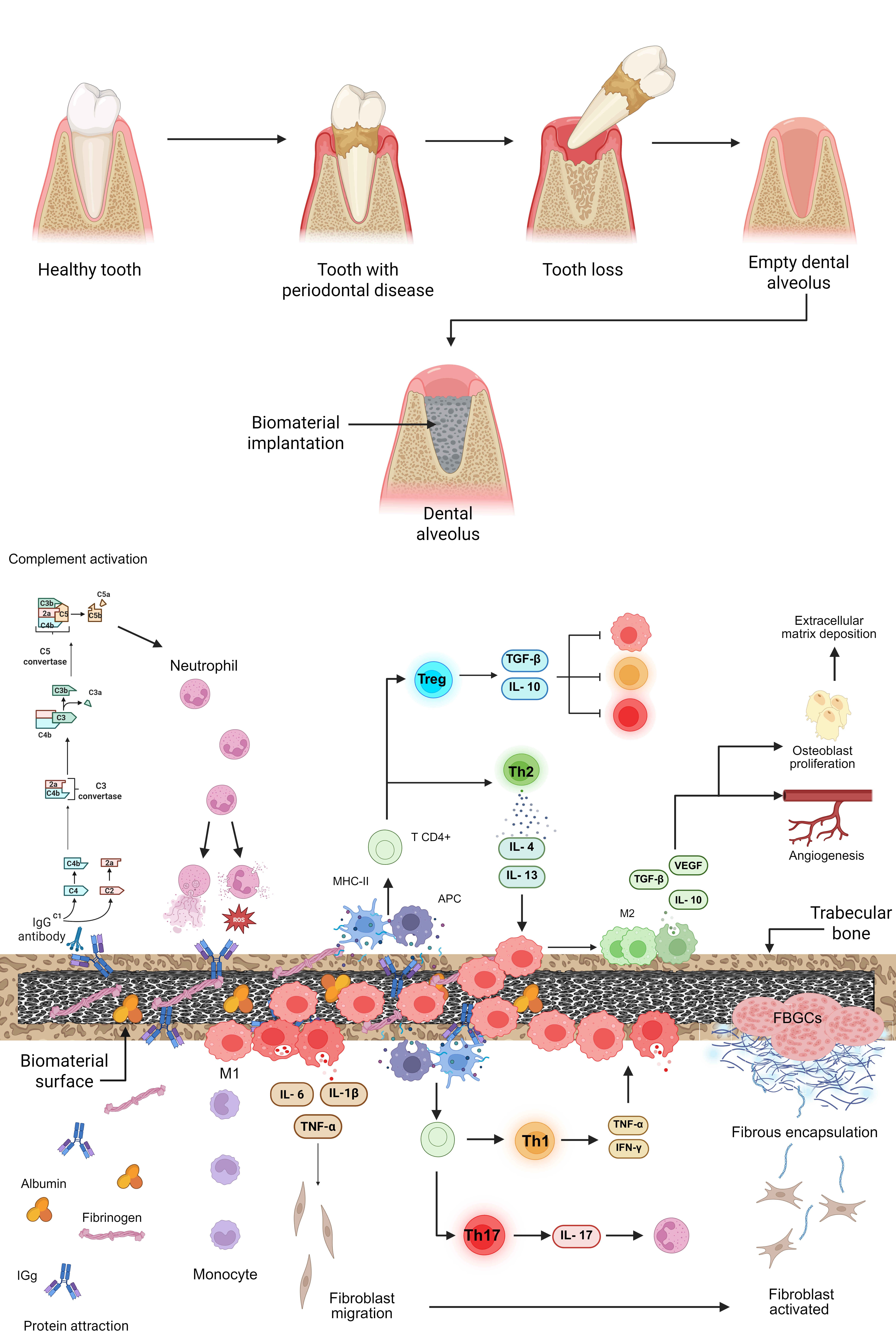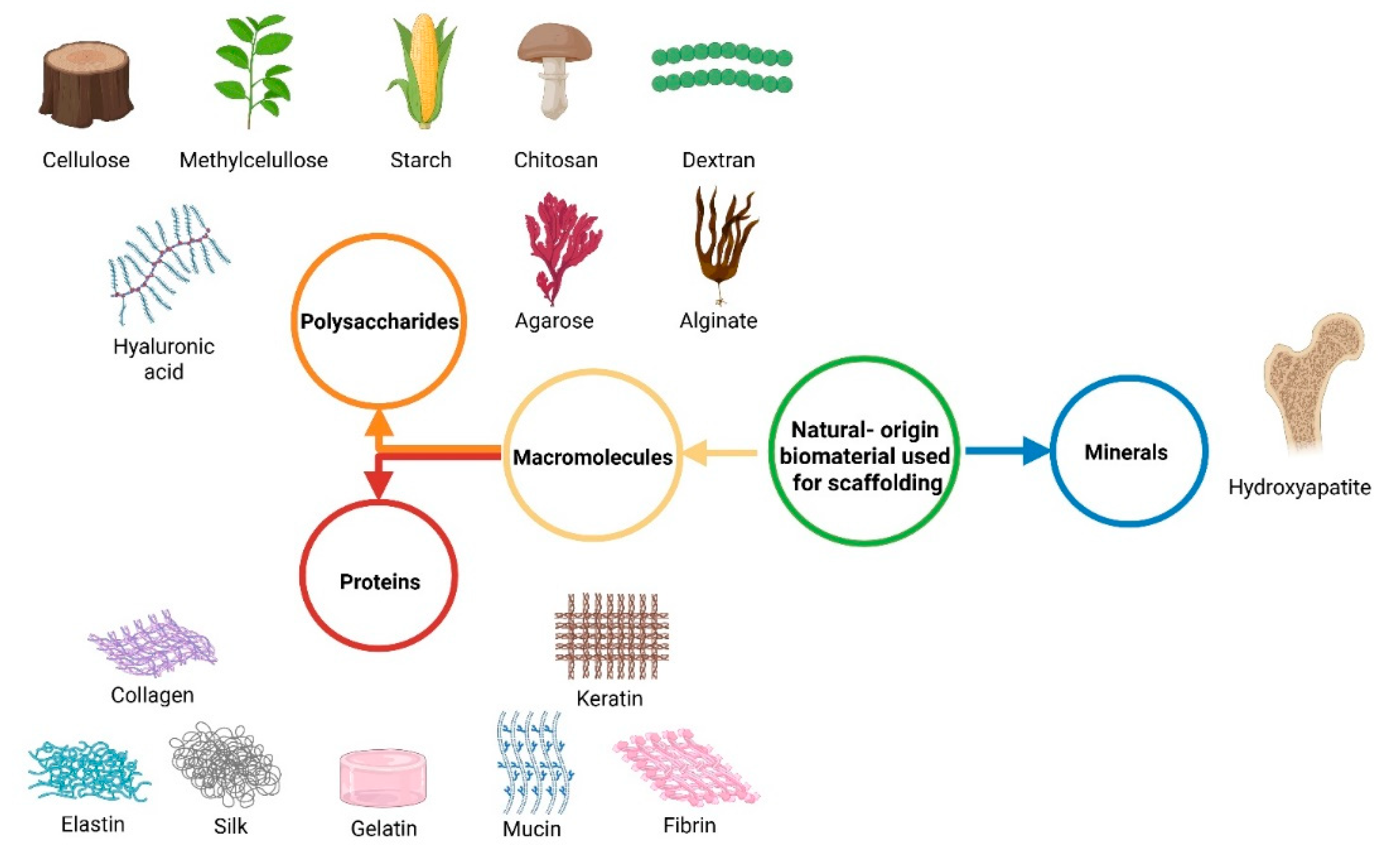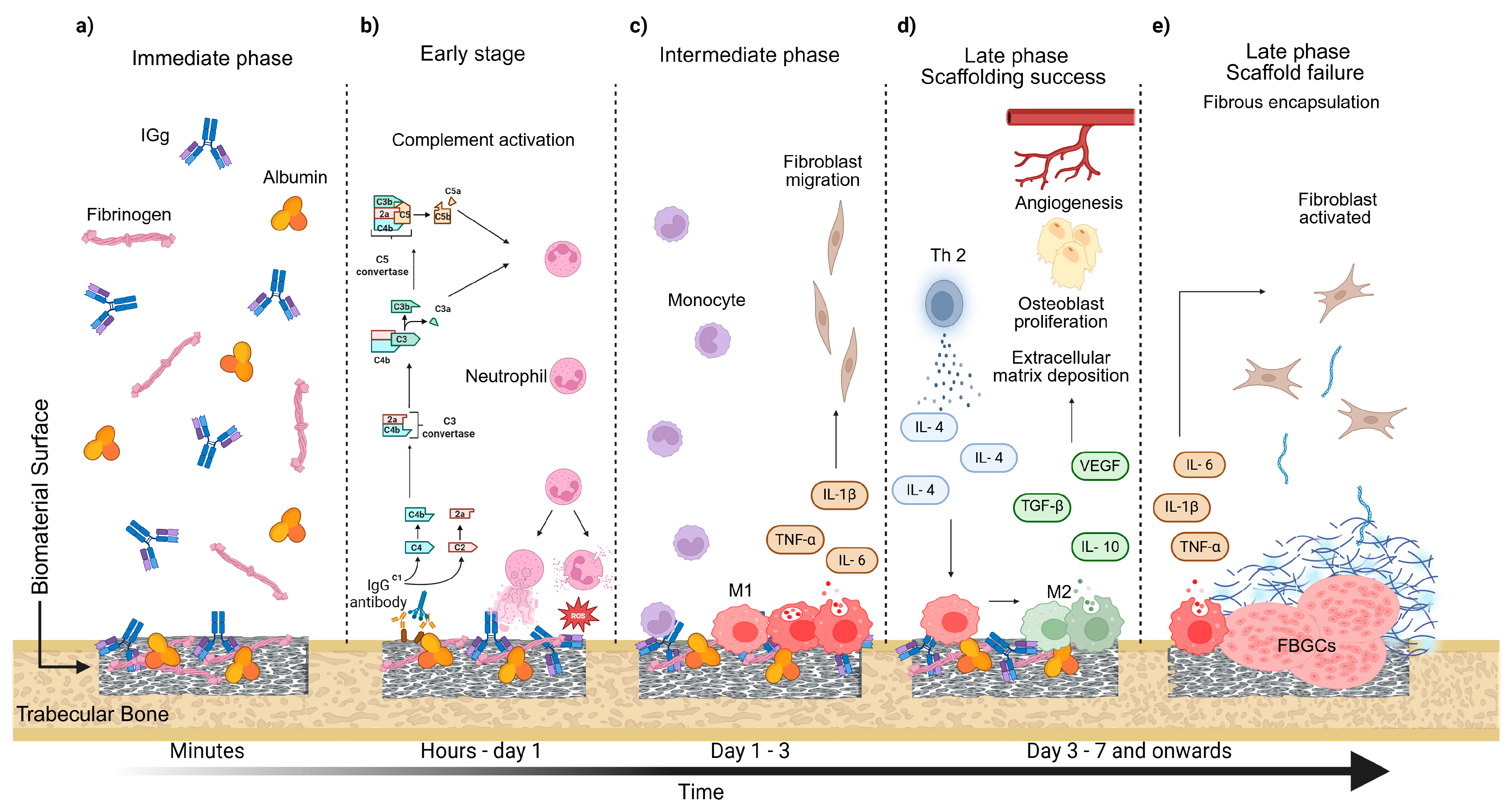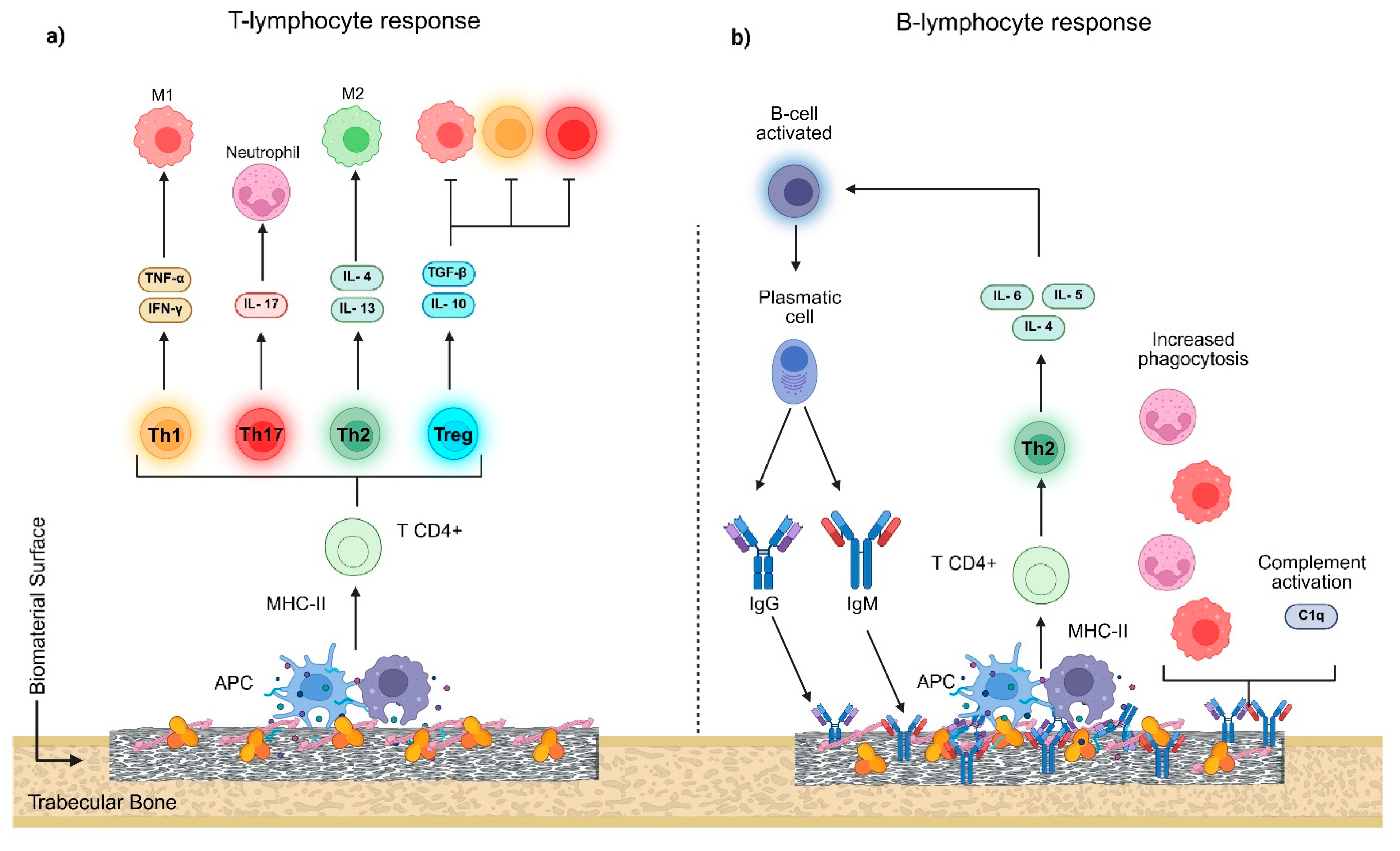
Osteoimmunology of Natural and Synthetic Biomaterials Used in Dentistry for Bone Remodeling

Abstract
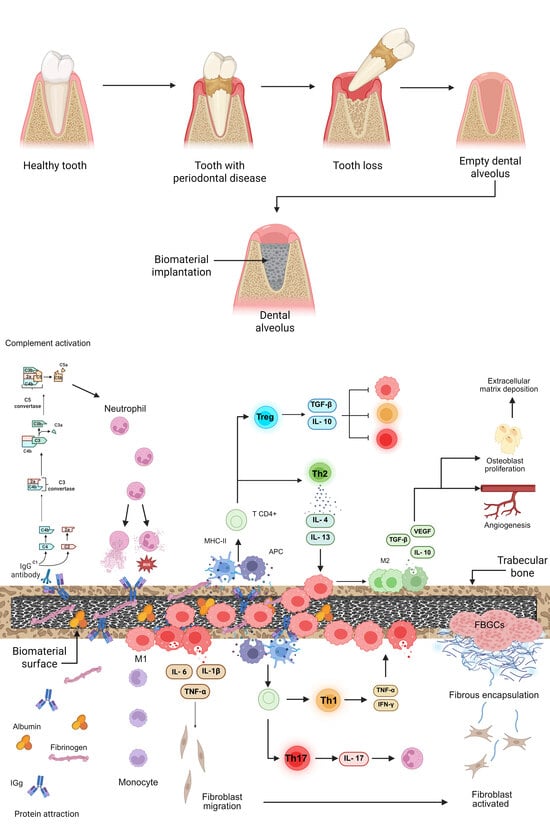
1. Introduction
2. Materials and Methods
3. Natural Biomaterials Used for Scaffolding
4. Synthetic Biomaterials Used for Scaffolding
| Characteristics of Materials Derived from Synthetic Sources | ||||||
|---|---|---|---|---|---|---|
| Classification | Material | Application | Advantages | Limitations | Type of Study and Outcome | Reference |
| Metals and alloys | Titanium | Dental and orthopedic implants, cardiovascular devices, surgical instruments, scaffolds | Biocompatibility, low density, high melting point, low thermal expansion coefficient, poor conductor of electricity, nontoxic, mechanical strength and stiffness | Difficult to machine, easily damaged by wear, expensive to produce. Although scaffolds had good osseointegration ability and osteogenic induction ability, osteolysis was still found from 20% revision surgeries | In vivo Porous titanium alloy scaffold was filled with ingrowth bone tissue at week 12, trabeculae within the range of stress shielding were not as strong as healthy control group | [53] |
| Magnesium | Ligatures, cardiovascular stents, orthopedic implants | Biocompatibility, biodegradability, high strength-to-weight ratio, low density | High corrosion rate, H2 released during degradation accumulates in the surrounding soft tissue | In vitro Noninferiority of both 1.5 mm and 1.75 mm magnesium miniplates compared to 1.0 mm titanium miniplates was demonstrated in a mandible fracture model in sheep | [54] | |
| Zinc | Orthopedic implants, scaffolds, drug delivery, cardiovascular devices, enzymatic reactions | Biocompatibility, biodegradability, moderate corrosion | Low mechanical strength and plasticity, high concentrations of zinc ions can be toxic to cells | In vitro The Zinc scaffolds were biocompatible, as preosteoblasts were able to effectively adhere to the substrates with multiple cytoplasmic extensions, and indirect tests show the porous scaffolds retained >75% cell viability | [55] | |
| Strontium | Bone and tissue regeneration, drug delivery, wound dressings, bioimaging | Biocompatibility, biodegradability, can regulate bone metabolism, can promote angiogenesis, immunomodulation, matrix synthesis, mineralization, and antioxidation | Excessive strontium intake can weaken bones by displacing calcium, lower mechanical strength, limited long-term data | In vitro Strontium-doped nanorods arrays accelerate M1 to M2 transformation of the adhered macrophages, enhancing secretion of pro-osteogenic cytokines and growth factors (TGF-β1 and BMP2) | [56] | |
| Copper | Implant coatings, antibacterial materials, medical devices, drug delivery, bioimaging, enzyme-mimicking | Biocompatibility, biodegradability, variable porosity, good mechanical strength, and crosslinking, can promote angiogenesis, can stimulate osteoblast activity | Excessive copper can lead to oxidative stress, tissue damage, and potentially impact bone metabolism negatively | In vitro Copper in calcium phosphate scaffolds improved osteogenic, angiogenic, and antibacterial properties, facilitating better bone regeneration in vitro | [57] | |
| Stainless steel | Orthopedic implants, dental implants, cardiovascular devices, surgical instruments | Biocompatibility, good mechanical strength, corrosion resistance | Unmodified stainless-steel surfaces can be hydrophobic, attracting protein adsorption and promoting biofilm formation, limited bioactivity | In vitro The high corrosion resistance of the selective laser melting sample (SLM) limited the release of toxic ions into the biological environment, which resulted in better viability and proliferation of the MC3T3-E1 preosteoblast | [58] | |
| Cobalt-Chromium | Orthopedic implants, scaffolds, dental prosthesis, cardiovascular implants | Biocompatibility, high strength, corrosion resistance | Metal ion release, local tissue damage, inflammation | In vitro Chromium-cobalt coated scaffolds favor cell adhesion and growth of precursor cells from periodontal ligament | [59] | |
| Silver | Drug delivery, antibacterial coatings, scaffolds, wound healing process | Biocompatibility, broad spectrum antimicrobial activity, versatility | Long-term toxicity unknown, potential accumulation in tissues | In vitro The silver nanoparticles-loaded gelatin/β-tricalcium phosphate scaffolds demonstrated synergistic antibacterial activity, cytocompatibility, and osteogenic promotion | [60] | |
| Tantalum | Orthopedic implants, dental implants, scaffolds, cardiovascular devices, drug delivery | Biocompatibility, high strength, corrosion resistance, osteoconductive and osteoinductive properties | High elastic modulus can lead to stress shielding, not immune to bacterial infections, inflammatory reactions | In vitro Porous tantalum can promote the adhesion and proliferation of bone marrow mesenchymal stem cells. Osteogenic gene expression and ALP expression levels were significantly increased compared with porous Ti6Al4V | [61] | |
| Zirconium | Drug delivery, orthopedic implants, dental implants, scaffolds | Biocompatibility, mechanical strength, chemical stability, corrosion resistance | Zirconium nanoparticles can exhibit toxicity, potentially disrupting cells and causing oxidative stress | In vivo CAD/CAM porous zirconia scaffolds enriched with nanohydroxyapatite particles revealed significantly higher volume of new bone formation (33% ± 14) compared to the controls (21% ± 11) | [62] | |
| Polymers | PLA | Drug delivery, medical devices, tissue engineering | Biocompatibility, biodegradability, renewable resource, versatility | Low osteoconductivity, acidic degradation products, poor cellular adhesion, low thermal stability, poor solubility in organic solvents | In vitro The porous spiral scaffold with larger surface area and better interconnections between internal porous networks could significantly improve the spatial cell compartment and promote human fetal osteoblasts growth | [63] |
| PGA | Scaffolds, drug delivery, resorbable implants, sutures | Biodegradability, biocompatibility, ease of fabrication | Acidic degradation products, limited solubility, poor mechanical properties, rapid degradation | In vitro The collagen-PGA sponge was superior to the original collagen sponge in terms of the initial attachment, proliferation rate, and osteogenic differentiation of the bone marrow mesenchymal stem cells | [64] | |
| PLGA | Drug delivery, tissue engineering, wound dressing, medical devices, vaccines (nanoparticles) | Biocompatibility, biodegradability, controlled release, versatility | Poor drug loading and burst release, can trigger an immune response, need for surface modification, acidic degradation products | In vivo E7-BMP-2 peptides incorporated into 3D hybrid PLGA nanofiber aerogels can induce ~60–70% closure of critical-sized (8 mm) rat calvarial bone defects | [65] | |
| PCL | Tissue engineering, surgical sutures, drug delivery, orthopedic implants, wound dressings | Biocompatibility, biodegradability, ease of processing, tunable properties | Slow degradation rate, poor mechanical properties, low cell adhesion, low melting point | In vitro The PCL scaffolds with oxidized hyaluronic acid glycine-peptide conjugates demonstrated improved endothelial cell adhesion, proliferation and viability, suggesting the potential for vascularized tissue constructs | [66] | |
| PEEK | Orthopedic implants, maxillofacial implants, dental prostheses, cardiovascular devices | Biocompatibility, mechanical strength, chemical resistance | Poor osseointegration, high cost, complex manufacturing, limited cell adhesion | In vitro An APS-coated plasma-treated sulfonated bioactive PEEK scaffold facilitates M2 macrophage polarization, reduces pro-inflammatory cytokines, and enhances the secretion of anti-inflammatory factors | [67] | |
| ePTFE | Cardiovascular devices, tissue regeneration, dural substitute | Biocompatibility, controlled porosity, thermal stability | Susceptibility to bacterial adhesion, nonbiodegradable, needs to be removed after a certain period | In vivo ePTFE scaffolds with bone morphogenic proteins were implanted subcutaneously into SD rats to determine their in vivo ossification potential, scaffolds showed slight radiopacity 1 week after implantation and strong radiopacity 2 and 3 weeks after implantation | [68] | |
| PMMA | Bone substitutes, fillers, drug delivery, tissue engineering | Biocompatibility, affordability, mechanical strength, ease of processing | Non-degradable, poor bioactivity, can cause allergic reactions due to the presence of nickel in its composition | In vitro MG-63 cells were able to adhere and reside on the PMMA-CaP scaffolds up to 7 days of culture, and the large number of AR-stained cells shows that the cells are viable up to 7 days | [69] | |
| PEG | Drug delivery, tissue engineering, medical devices, coatings | Biocompatibility, biodegradability, versatility, solubility in water | Toxic byproducts and accumulation, PEGylation can lead to the formation of vacuoles in cells, poor mechanical properties | In vitro The hydrophilic PEG inserted into the PLA chains dissolved rapidly in the degradation environment, forming microporous channels that promoted the degradation of the PLA matrix | [70] | |
| Ceramics | Hydroxyapatite | Bone grafts, coatings for implants, drug delivery, tissue engineering | Biocompatibility, bioactivity, tunable properties, osteoconductivity | Brittleness, low fracture toughness, slow osseointegration rates | In vivo The nanocarbonate hydroxyapatite scaffolds increase bone formation after 12 weeks implanted in a critical defect in rabbit radius compared with the control group | [71] |
| β-TCP | Tissue engineering, coatings, drug delivery, guided bone regeneration | Biocompatibility, bioactivity, osteoconductive and osteoinductive properties | Poor mechanical properties, high adsorption rate, the crystallographic structure and properties of β-TCP can be influenced by impurities and the manufacturing process | In vivo β-TCP/PCL composite scaffolds demonstrated superior new bone quality and quantity in complex, mechanically demanding environments such as radial defects | [72] | |
| Bioactive glasses | Tissue engineering, drug delivery, wound healing, dental implants | Biocompatibility, bioactivity, versatility, tunable properties | Poor mechanical properties, brittleness, low fracture toughness, rapid dissolution | In vitro The combined use of bioactive glass and bone-conditioned medium in scaffolds synergistically promoted osteogenic differentiation and viability of MC3T3-E1 cells | [73] | |
5. Immunological Interaction
5.1. Innate Immune Mechanisms Triggered by Biomaterials
5.2. Adaptive Immune Mechanisms Triggered by Biomaterials
| Cytokines and Growth Factors Involved in Bone Remodeling | |||||
|---|---|---|---|---|---|
| Immunity | Cytokine/ Growth Factor | Origin | Subexpression | Overexpression | Reference |
| Innate | IL-1β | Macrophages M1 | Decreased initial cell recruitment and inflammatory signaling. Delay in the early phase of the foreign body reaction | Chronic inflammation, increased RANKL production, osteoclastogenesis, bone resorption and possible fibrous encapsulation | [103] |
| Innate | IL-4 | Th2 | Decreased polarization toward the M2 phenotype, persistent inflammation, reduced support for osteogenesis | Increased polarization toward the M2 phenotype, reduces inflammation; however, excessive levels can inhibit necessary initial responses | [94] |
| Adaptative | IL-5 | Th2 | Limited direct impact on bone; possible alteration in humoral immune regulation | It may indirectly contribute to fibrosis | [95] |
| Innate/Adaptative | IL-6 | Macrophages M1, Th2 | It decreases the early activation of remodeling and initial osteo-immune signaling | Increased osteoclastogenesis, sustained inflammation, bone loss and failure of biomaterial integration | [96,104] |
| Innate/ Adaptative | IL-10 | Macrophages M2, Treg | Lack of inflammatory resolution, prolonging the M1 polarization causing tissue damage | Decreases inflammation and osteoclastogenesis; very high levels can suppress early osteogenic signals | [90] |
| Adaptative | IL-13 | Th2 | It decreases polarization toward the M2 phenotype and angiogenic support | May promote fibrosis over functional bone formation | [105] |
| Adaptative | IL-17 | Th17 | Decreased initial neutrophil recruitment may affect implant site clearance | Chronic inflammation, increased RANKL production, osteoclastogenesis | [106] |
| Innate/ Adaptative | TNF-α | Macrophages M1 | Deficient early inflammatory activation (delayed repair) | Inhibition of osteoblasts, increased osteoclasts, bone loss, chronic inflammation | [107] |
| Innate/ Adaptative | TGF-β | Macrophages M2, Treg | Decreased MSC recruitment and osteoblastic differentiation | Can induce fibrosis and encapsulation if not finely regulated | [108] |
| Innate | VEGF | Macrophages M2 | Decreased angiogenesis, immature bone, poor scaffold integration | Disorganized vasculature, deficient synergy with osteogenesis if not temporarily controlled | [91] |
| Innate | BMP-2 | Macrophages M2 | Decreased osteoblastic differentiation and mineralization | Ectopic bone formation, local inflammation, and adverse clinical effects | [109] |
| Adaptative | IFN-γ | Th1 | Reduced control of osteoclastogenesis in specific phases | Increased inflammation, osteoblast inhibition, Th1 activation (possible scaffold rejection) | [95] |
6. In Vitro Tests to Evaluate Scaffold Immunogenicity
6.1. Monocytes and Macrophages
6.2. Dendritic Cells
6.3. Neutrophils
6.4. T Lymphocytes
6.5. B Lymphocytes
6.6. Cocultures of Mesenchymal Stem Cells and Osteoblasts
6.7. Cocultures of Osteoblasts and Macrophages
7. Discussion
8. Conclusions and Future Perspectives
Author Contributions
Funding
Data Availability Statement
Acknowledgments
Conflicts of Interest
References
- Elsalanty, M.; Genecov, D. Bone grafts in craniofacial surgery. Craniomaxillofac. Trauma Reconstr. 2009, 2, 125–134. [Google Scholar] [CrossRef] [PubMed]
- Zhao, R.; Yang, R.; Cooper, P.R.; Khurshid, Z.; Shavandi, A.; Ratnayake, J. Bone grafts and substitutes in dentistry: A review of current trends and developments. Molecules 2021, 26, 3007. [Google Scholar] [CrossRef]
- Ferraz, M.P. Bone Grafts in Dental Medicine: An Overview of Autografts, Allografts and Synthetic Materials. Materials 2023, 16, 4117. [Google Scholar] [CrossRef]
- Lopes, J.M.; Bank, R.A. The Role of Macrophage Phenotypes M1 and M2 in the Foreign Body Reaction. Bachelor’s Thesis, University of Groningen, Groningen, The Netherlands, 2016. [Google Scholar]
- Brown, B.N.; Sicari, B.M.; Badylak, S.F. Rethinking Regenerative Medicine: A macrophage-centered approach. Front. Immunol. 2014, 5, 510. [Google Scholar] [CrossRef]
- Anderson, J.M.; Rodriguez, A.; Chang, D.T. Foreign body reaction to biomaterials. Semin. Immunol. 2008, 20, 86–100. [Google Scholar] [CrossRef]
- Spiller, K.L.; Nassiri, S.; Witherel, C.E.; Anfang, R.R.; Ng, J.; Nakazawa, K.R.; Yu, T.; Vunjak-Novakovic, G. Sequential delivery of immunomodulatory cytokines to facilitate the M1-to-M2 transition of macrophages and enhance vascularization of bone scaffolds. Biomaterials 2015, 37, 194–207. [Google Scholar] [CrossRef]
- Chu, C.; Zhao, X.; Rung, S.; Xiao, W.; Liu, L.; Qu, Y.; Man, Y. Application of biomaterials in periodontal tissue repair and reconstruction in the presence of inflammation under periodontitis through the foreign body response: Recent progress and perspectives. J. Biomed. Mater. Res. B Appl. Biomater. 2022, 110, 7–17. [Google Scholar] [CrossRef] [PubMed]
- Takayanagi, H. Osteoimmunology: Shared mechanisms and crosstalk between the immune and bone systems. Nat. Rev. Immunol. 2007, 7, 292–304. [Google Scholar] [CrossRef]
- Tsukasaki, M.; Takayanagi, H. Osteoimmunology: Evolving concepts in bone–immune interactions in health and disease. Nat. Rev. Immunol. 2019, 19, 626–642. [Google Scholar] [CrossRef]
- Chen, Z.; Klein, T.; Murray, R.Z.; Crawford, R.; Chang, J.; Wu, C.; Xiao, Y. Osteoimmunomodulation for the development of advanced bone biomaterials. Mater. Today 2016, 19, 304–321. [Google Scholar] [CrossRef]
- Rinkoff, S.; Adlard, R.E. Embryology, Craniofacial Growth, And Development. In StatPearls; StatPearls Publishing: Treasure Island, FL, USA, 2023. [Google Scholar]
- Berendsen, A.D.; Olsen, B.R. Bone development. Bone 2015, 80, 14–18. [Google Scholar] [CrossRef]
- Alghamdi, H.; Jansen, J. (Eds.) Dental Implants and Bone Grafts: Materials and Biological Issues; Woodhead Publishing: Cambridge, UK, 2019. [Google Scholar]
- Song, Y.; Jiao, Y.; Liu, Y.; Guo, L. Role of Masticatory Force in Modulating Jawbone Immunity and Bone Homeostasis: A Review. Int. J. Mol. Sci. 2025, 26, 4478. [Google Scholar] [CrossRef]
- Hart, N.H.; Nimphius, S.; Rantalainen, T.; Ireland, A.; Siafarikas, A.; Newton, R.U. Mechanical basis of bone strength: Influence of bone material, bone structure and muscle action. J. Musculoskelet. Neuronal Interact. 2017, 17, 114–139. [Google Scholar] [PubMed]
- Choi, W.; Hong, J. Modulating the oral microbiome with dental biomaterials: A review of challenges, advances, and future perspectives. Biomaterials 2026, 325, 123610. [Google Scholar] [CrossRef]
- Paczkowska-Walendowska, M.; Kulawik, M.; Kwiatek, J.; Bikiaris, D.; Cielecka-Piontek, J. Novel Applications of Natural Biomaterials in Dentistry—Properties, Uses, and Development Perspectives. Materials 2025, 18, 2124. [Google Scholar] [CrossRef] [PubMed]
- Joyce, K.; Fabra, G.T.; Bozkurt, Y.; Pandit, A. Bioactive potential of natural biomaterials: Identification, retention and assessment of biological properties. Signal Transduct. Target. Ther. 2021, 6, 122. [Google Scholar] [CrossRef]
- Ghosh, S.; Gupta, S.; Kapusetti, G.; Kundu, S.C. Silk-based biomaterial scaffolds for dental tissue regeneration. Commun. Mater. 2026, 7, 63. [Google Scholar] [CrossRef]
- Sun, Y.; Zhang, H.; Zhang, C.; Chang, X.; Zhao, H.; Sun, X.; Cortellini, P.; Liu, K.; Hou, J. A Randomized Controlled Study on the Treatment of Isolated Interdental Intrabony Defects Using the Modified Minimally Invasive Surgical Technique with or without a Collagen-Enriched Bovine-Derived Xenograft: A 2-Year Analysis. J. Clin. Periodontol. 2025, 52, 1147–1157. [Google Scholar] [CrossRef]
- Lu, L.; Liu, X.; Sun, Y.; Wang, S.; Liu, J.; Ge, S.; Wei, T.; Zhang, H.; Su, J.; Zhang, Y.; et al. Silk-Fabric Reinforced Silk for Artificial Bones. Adv. Mater. 2024, 36, 2308748. [Google Scholar] [CrossRef]
- Omar, O.; Dahlin, A.; Gasser, A.; Dahlin, C. Tissue dynamics and regenerative outcome in two resorbable non-cross-linked collagen membranes for guided bone regeneration: A preclinical molecular and histological study in vivo. Clin. Oral Implant. Res. 2018, 29, 7–19. [Google Scholar] [CrossRef]
- Ren, K.; Wang, Y.; Sun, T.; Yue, W.; Zhang, H. Electrospun PCL/gelatin composite nanofiber structures for effective guided bone regeneration membranes. Mater. Sci. Eng. C Mater. Biol. Appl. 2017, 78, 324–332. [Google Scholar] [CrossRef]
- Duncan, W.J.; Greer, P.F.C.; Lee, M.H.; Loch, C.; Gay, J.H.A. Wool-derived keratin hydrogel enhances implant osseointegration in cancellous bone. J. Biomed. Mater. Res. B Appl. Biomater. 2018, 106, 2447–2454. [Google Scholar] [CrossRef]
- Li, S.; Dan, X.; Chen, H.; Li, T.; Liu, B.; Ju, Y.; Li, Y.; Lei, L.; Fan, X. Developing fibrin-based biomaterials/scaffolds in tissue engineering. Bioact. Mater. 2024, 40, 597–623. [Google Scholar] [CrossRef] [PubMed]
- Bai, Z.; Hu, K.; Shou, Z.; Zhou, H.; Yu, J.; Meng, H.; Chen, L.; Yu, T.; Lu, R.; Li, N.; et al. Engineering a mucin coating to promote osteogenic differentiation of BMSCs in vitro and bone formation in vivo through the Wnt/β-catenin pathway. Colloids Surf. B Biointerfaces 2023, 221, 113000. [Google Scholar] [CrossRef] [PubMed]
- Kim, J.W.; Han, Y.S.; Lee, H.M.; Kim, J.K.; Kim, Y.J. Effect of morphological characteristics and biomineralization of 3d-printed gelatin/hyaluronic acid/hydroxyapatite composite scaffolds on bone tissue regeneration. Int. J. Mol. Sci. 2021, 22, 6794. [Google Scholar] [CrossRef] [PubMed]
- Zhang, X.; Wang, C.; Liao, M.; Dai, L.; Tang, Y.; Zhang, H.; Coates, P.; Sefat, F.; Zheng, L.; Song, J.; et al. Aligned electrospun cellulose scaffolds coated with rhBMP-2 for both in vitro and in vivo bone tissue engineering. Carbohydr. Polym. 2019, 213, 27–38. [Google Scholar] [CrossRef]
- Iglesias-Mejuto, A.; Magariños, B.; Ferreira-Gonçalves, T.; Starbird-Pérez, R.; Álvarez-Lorenzo, C.; Reis, C.P.; Ardao, I.; García-González, C.A. Vancomycin-loaded methylcellulose aerogel scaffolds for advanced bone tissue engineering. Carbohydr. Polym. 2024, 324, 121536. [Google Scholar] [CrossRef]
- Asl, M.A.; Karbasi, S.; Beigi-Boroujeni, S.; Zamanlui Benisi, S.; Saeed, M. Evaluation of the effects of starch on polyhydroxybutyrate electrospun scaffolds for bone tissue engineering applications. Int. J. Biol. Macromol. 2021, 191, 500–513. [Google Scholar] [CrossRef]
- Gan, D.; Liu, M.; Xu, T.; Wang, K.; Tan, H.; Lu, X. Chitosan/biphasic calcium phosphate scaffolds functionalized with BMP-2-encapsulated nanoparticles and RGD for bone regeneration. J. Biomed. Mater. Res. A 2018, 106, 2613–2624. [Google Scholar] [CrossRef]
- Shoji, S.; Uchida, K.; Saito, W.; Sekiguchi, H.; Inoue, G.; Miyagi, M.; Kuroda, A.; Takaso, M. Acceleration of Bone Healing by In Situ-Forming Dextran-Tyramine Conjugates Containing Basic Fibroblast Growth Factor in Mice. Cureus 2020, 12, e10085. [Google Scholar] [CrossRef]
- Huang, Y.; Peng, S.; Chen, Y.; Chu, B. Agarose Hydrogels for Bone Tissue Engineering, from Injectables to Bioprinting. Gels 2025, 11, 225. [Google Scholar] [CrossRef]
- Zou, Z.; Wang, L.; Zhou, Z.; Sun, Q.; Liu, D.; Chen, Y.; Hu, H.; Cai, Y.; Lin, S.; Yu, Z.; et al. Simultaneous incorporation of PTH(1–34) and nano-hydroxyapatite into Chitosan/Alginate Hydrogels for efficient bone regeneration. Bioact. Mater. 2021, 6, 1839–1851. [Google Scholar] [CrossRef]
- Yu, Y.; Li, X.; Li, J.; Li, D.; Wang, Q.; Teng, W. Dopamine-assisted co-deposition of hydroxyapatite-functionalised nanoparticles of polydopamine on implant surfaces to promote osteogenesis in environments with high ROS levels. Mater. Sci. Eng. C 2021, 131, 112473. [Google Scholar] [CrossRef]
- Hu, T.; Fang, J.; Shen, Y.; Li, M.; Wang, B.; Xu, Z.; Hu, W. Advances of naturally derived biomedical polymers in tissue engineering. Front. Chem. 2024, 12, 1469183. [Google Scholar] [CrossRef]
- Pereira, L.; Echarte, L.; Romero, M.; Grazioli, G.; Pérez-Campos, H.; Francia, A.; Vicentino, W.; Mombrú, A.W.; Faccio, R.; Álvarez, I.; et al. Synthesis and characterization of a bovine collagen: GAG scaffold with Uruguayan raw material for tissue engineering. Cell Tissue Bank. 2024, 25, 123–142. [Google Scholar] [CrossRef]
- Curiqueo, A.; Salamanca, C.; Borie, E.; Navarro, P.; Fuentes, R. Evaluation of Functional Maximum Bite Force in Chilean Young Adults. Int. J. Odontostomatol. 2015, 9, 443–447. [Google Scholar] [CrossRef]
- Salvatore, L.; Calò, E.; Bonfrate, V.; Pedone, D.; Gallo, N.; Natali, M.L.; Sannino, A.; Madaghiele, M. Exploring the effects of the crosslink density on the physicochemical properties of collagen-based scaffolds. Polym. Test. 2021, 93, 106966. [Google Scholar] [CrossRef]
- Joshi, S.; Pendyala, G.; Shah, P.; Mopagar, V.; Padmawar, N.; Padubidri, M. Scaffolds—The Ground for Regeneration: A Narrative Review. J. Int. Soc. Prev. Community Dent. 2020, 10, 692–699. [Google Scholar] [CrossRef]
- Mellibovsky Saidler, L.; Adolfo, Y.; Pérez, D.; De, S.; Fundación, L.A.; De Reumatología, E. Qué significa la calidad ósea. Semin. Fund. Esp. Reumatol. 2006, 7, 165–176. [Google Scholar] [CrossRef]
- Takaoka, Y.; Fujibayashi, S.; Onoe, H.; Goto, K.; Otsuki, B.; Kawai, T.; Okuzu, Y.; Shimizu, T.; Ikeda, N.; Orita, K.; et al. Bone ingrowth into a porous structure is achieved by preceding fibrogenesis and vascularization. Acta Biomater. 2024, 177, 243–252. [Google Scholar] [CrossRef] [PubMed]
- Todd, E.A.; Mirsky, N.A.; Silva, B.L.G.; Shinde, A.R.; Arakelians, A.R.L.; Nayak, V.V.; Marcantonio, R.A.C.; Gupta, N.; Witek, L.; Coelho, P.G. Functional Scaffolds for Bone Tissue Regeneration: A Comprehensive Review of Materials, Methods, and Future Directions. J. Funct. Biomater. 2024, 15, 280. [Google Scholar] [CrossRef]
- Garimella, A.; Ghosh, S.B.; Bandyopadhyay-Ghosh, S. Biomaterials for bone tissue engineering: Achievements to date and future directions. Biomed. Mater. 2025, 20, 012001. [Google Scholar] [CrossRef]
- Wong, S.K.; Yee, M.M.F.; Chin, K.Y.; Ima-Nirwana, S. A Review of the Application of Natural and Synthetic Scaffolds in Bone Regeneration. J. Funct. Biomater. 2023, 14, 286. [Google Scholar] [CrossRef]
- Wickramasinghe, M.L.; Dias, G.J.; Premadasa, K. A novel classification of bone graft materials. J. Biomed. Mater. Res. B Appl. Biomater. 2022, 110, 1724–1749. [Google Scholar] [CrossRef] [PubMed]
- Duarte, N.D.; Frigério, P.B.; Chica, G.E.A.; Okamoto, R.; Buchaim, R.L.; Buchaim, D.V.; Messora, M.R.; Issa, J.P.M. Biomaterials for Guided Tissue Regeneration and Guided Bone Regeneration: A Review. Dent. J. 2025, 13, 179. [Google Scholar] [CrossRef] [PubMed]
- Ghassemi, T.; Shahroodi, A.; Ebrahimzadeh, M.H.; Mousavian, A.; Movaffagh, J.; Moradi, A. Current Concepts in Scaffolding for Bone Tissue Engineering. Arch. Bone Jt. Surg. 2018, 6, 90–99. [Google Scholar] [PubMed]
- Huang, S.; Wu, Y.; Zhao, H.; Song, K.; Liu, Y.; Mao, J.; Li, Q. Advancements in bone organoids: Perspectives on construction methodologies and application strategies. J. Adv. Res. 2025, 81, 745–767. [Google Scholar] [CrossRef]
- Yoshioka, T.; Kawazoe, N.; Tateishi, T.; Chen, G. In vitro evaluation of biodegradation of poly(lactic-co-glycolic acid) sponges. Biomaterials 2008, 29, 3438–3443. [Google Scholar] [CrossRef]
- Echeverria Molina, M.I.; Malollari, K.G.; Komvopoulos, K. Design Challenges in Polymeric Scaffolds for Tissue Engineering. Front. Bioeng. Biotechnol. 2021, 9, 617141. [Google Scholar] [CrossRef]
- Lyu, L.; Jing, Y.; Wang, J.; Zhang, C. Enhanced Osseointegration of Porous Titanium Scaffold Implanted with Preload: An Experiment Study in Rabbits. Int. J. Morphol. 2020, 38, 909–913. [Google Scholar] [CrossRef]
- Fischer, H.; Schmidt-Bleek, O.; Orassi, V.; Wulsten, D.; Schmidt-Bleek, K.; Heiland, M.; Steffen, C.; Rendenbach, C. Biomechanical Comparison of WE43-Based Magnesium vs. Titanium Miniplates in a Mandible Fracture Model in Sheep. Materials 2023, 16, 102. [Google Scholar] [CrossRef]
- Cockerill, I.; Su, Y.; Sinha, S.; Qin, Y.X.; Zheng, Y.; Young, M.L.; Zhu, D. Porous zinc scaffolds for bone tissue engineering applications: A novel additive manufacturing and casting approach. Mater. Sci. Eng. C 2020, 110, 110738. [Google Scholar] [CrossRef]
- Yu, D.; Guo, S.; Yu, M.; Liu, W.; Li, X.; Chen, D.; Li, B.; Guo, Z.; Han, Y. Immunomodulation and osseointegration activities of Na2TiO3 nanorods-arrayed coatings doped with different Sr content. Bioact. Mater. 2022, 10, 323–334. [Google Scholar] [CrossRef]
- Pillai, A.; Chakka, J.; Heshmathi, N.; Zhang, Y.; Alkadi, F.; Maniruzzaman, M. Multifunctional Three-Dimensional Printed Copper Loaded Calcium Phosphate Scaffolds for Bone Regeneration. Pharmaceuticals 2023, 16, 352. [Google Scholar] [CrossRef]
- Al-Mamun, N.S.; Mairaj Deen, K.; Haider, W.; Asselin, E.; Shabib, I. Corrosion behavior and biocompatibility of additively manufactured 316 L stainless steel in a physiological environment: The effect of citrate ions. Addit. Manuf. 2020, 34, 101237. [Google Scholar] [CrossRef]
- Kiradzhiyska, D.D.; Mantcheva, R.D.; Mileva, D.L.; Draganova, K.I.; Feodorova, Y.N.; Sarafan, V.S.; Draganov, M.M. Investigation Of Chromium-Cobalt Coated Scaffolds On Cell Cultures In Vitro. Folia Medica 2014, 56, 275–281. [Google Scholar] [CrossRef]
- Hu, A.; Zhou, J. Functional Silver-Loaded Porous Composite Scaffold for Bone Tissue Bacterial Infection. Adv. NanoBiomed Res. 2025, 5, 2500004. [Google Scholar] [CrossRef]
- Dou, X.; Wei, X.; Liu, G.; Wang, S.; Lv, Y.; Li, J.; Ma, Z.; Zheng, G.; Wang, Y.; Hu, M.; et al. Effect of porous tantalum on promoting the osteogenic differentiation of bone marrow mesenchymal stem cells in vitro through the MAPK/ERK signal pathway. J. Orthop. Transl. 2019, 19, 81–93. [Google Scholar] [CrossRef]
- Aboushelib, M.N.; Shawky, R. Osteogenesis ability of CAD/CAM porous zirconia scaffolds enriched with nano-hydroxyapatite particles. Int. J. Implant. Dent. 2017, 3, 21. [Google Scholar] [CrossRef]
- Zhou, X.; Zhou, G.; Junka, R.; Chang, N.; Anwar, A.; Wang, H.; Yu, X. Fabrication of polylactic acid (PLA)-based porous scaffold through the combination of traditional bio-fabrication and 3D printing technology for bone regeneration. Colloids Surf. B Biointerfaces 2021, 197, 111420. [Google Scholar] [CrossRef]
- Toosi, S.; Naderi-Meshkin, H.; Kalalinia, F.; Peivandi, M.T.; HosseinKhani, H.; Bahrami, A.R.; Heirani-Tabasi, A.; Mirahmadi, M.; Behravan, J. PGA-incorporated collagen: Toward a biodegradable composite scaffold for bone-tissue engineering. J. Biomed. Mater. Res. A 2016, 104, 2020–2028. [Google Scholar] [CrossRef]
- Weng, L.; Boda, S.K.; Wang, H.; Teusink, M.J.; Shuler, F.D.; Xie, J. Novel 3D Hybrid Nanofiber Aerogels Coupled with BMP-2 Peptides for Cranial Bone Regeneration. Adv. Healthc. Mater. 2018, 7, e1701415. [Google Scholar] [CrossRef]
- Mohan, T.; Gürer, F.; Bračič, D.; Lackner, F.; Nagaraj, C.; Maver, U.; Gradišnik, L.; Finšgar, M.; Kargl, R.; Kleinschek, K.S. Functionalization of Polycaprolactone 3D Scaffolds with Hyaluronic Acid Glycine-Peptide Conjugates and Endothelial Cell Adhesion. Biomacromolecules 2025, 26, 1771–1787. [Google Scholar] [CrossRef]
- Zhao, M.; Yang, H.; Yang, Q.; Zhang, C.; Liu, J.; Wu, Z.; Wang, L.; Zhang, W.; Wang, B.; Liu, W. A Multifunctional PEEK Composite Scaffold with Immunomodulatory, Angiogenic, and Osteogenic Properties for Enhanced Bone Regeneration. Polymers 2025, 17, 1206. [Google Scholar] [CrossRef]
- Hayashi, T.; Kobayashi, S.; Asakura, M.; Kawase, M.; Ueno, A.; Uematsu, Y.; Kawai, T. Immature muscular tissue differentiation into bone-like tissue by bone morphogenetic proteins in vitro, with ossification potential in vivo. J. Biomed. Mater. Res. A 2014, 102, 3112–3121. [Google Scholar] [CrossRef]
- Elakkiya, K.; Bargavi, P.; Balakumar, S. 3D interconnected porous PMMA scaffold integrating with advanced nanostructured CaP-based biomaterials for rapid bone repair and regeneration. J. Mech. Behav. Biomed. Mater. 2023, 147, 106106. [Google Scholar] [CrossRef]
- Guo, W.; Wang, E.; Mao, Y.; Peng, Z.; Li, P.; Li, B.; Huang, Y.; Wang, S.; Liu, B.; You, H.; et al. 3D-printed PLA/PEG bone scaffold: Body-adaptive thermally responsive shape memory and enhanced biological performance. Surf. Interfaces 2025, 56, 105712. [Google Scholar] [CrossRef]
- García-Lamas, L.; Peña, J.; Roman, J.; Cabañas, V.; Bravo-Giménez, B.; Jiménez-Díaz, V.; Sánchez-Salcedo, S.; Jiménez-Holguín, J.; Abella, M.; Desco, M.; et al. In vivo behavior in rabbit radius bone defect of scaffolds based on nanocarbonate hydroxyapatite. J. Biomed. Mater. Res. B Appl. Biomater. 2024, 112, 104–129. [Google Scholar] [CrossRef]
- Shao, X.; Wu, Y.; Ding, M.; Chen, X.; Zhou, T.; Huang, C.; Wang, X.; Zong, C.; Liu, Y.; Tian, L.; et al. Strong and tough β-TCP/PCL composite scaffolds with gradient structure for bone tissue engineering: Development and evaluation. Ceram. Int. 2024, 50, 31905–31917. [Google Scholar] [CrossRef]
- Hameed, S.; Rahman, S.U.; Konain, K.; Samie, M.; Farid, S.; Elango, J.; Habib, S.R.; Woo, K.M.; Arany, P.R. Advanced 3D biomimetic scaffolds with bioactive glass and bone-conditioned medium for enhanced osteogenesis. Biomater. Adv. 2025, 173, 214282. [Google Scholar] [CrossRef]
- Selim, M.; Mousa, H.M.; Abdel-Jaber, G.T.; Barhoum, A.; Abdal-Hay, A. Innovative designs of 3D scaffolds for bone tissue regeneration: Understanding principles and addressing challenges. Eur. Polym. J. 2024, 215, 113251. [Google Scholar] [CrossRef]
- Andorko, J.I.; Jewell, C.M. Designing biomaterials with immunomodulatory properties for tissue engineering and regenerative medicine. Bioeng. Transl. Med. 2017, 2, 139–155. [Google Scholar] [CrossRef]
- Salehi Moghaddam, A.; Bahrami, M.; Sarikhani, E.; Tutar, R.; Ertas, Y.N.; Tamimi, F.; Hedayatnia, A.; Jugie, C.; Savoji, H.; Qureshi, A.T.; et al. Engineering the Immune Response to Biomaterials. Adv. Sci. 2025, 12, e2414724. [Google Scholar] [CrossRef]
- Lock, A.; Cornish, J.; Musson, D.S. The role of in vitro immune response assessment for biomaterials. J. Funct. Biomater. 2019, 10, 31. [Google Scholar] [CrossRef] [PubMed]
- Siddiqui, J.A.; Partridge, N.C. Physiological bone remodeling: Systemic regulation and growth factor involvement. Physiology 2016, 31, 233–245. [Google Scholar] [CrossRef]
- William, R.; Rex, B. The Principles of Humane Experimental Technique; Fund for the Replacement of Animals in Medical Experiments: Nottingham, UK, 2009. [Google Scholar]
- Frisch, E.; Clavier, L.; Belhamdi, A.; Vrana, N.E.; Lavalle, P.; Frisch, B.; Heurtault, B.; Gribova, V. Preclinical in vitro evaluation of implantable materials: Conventional approaches, new models and future directions. Front. Bioeng. Biotechnol. 2023, 11, 1193204. [Google Scholar] [CrossRef]
- Salthouse, D.; Novakovic, K.; Hilkens, C.M.U.; Ferreira, A.M. Interplay between biomaterials and the immune system: Challenges and opportunities in regenerative medicine. Acta Biomater. 2023, 155, 1–18. [Google Scholar] [CrossRef] [PubMed]
- Anderson, J.M. Biological Responses to Materials. Annu. Rev. Mater. Res. 2001, 31, 81–110. [Google Scholar] [CrossRef]
- Hu, W.-J.; Eaton, J.; Tang, L. Molecular basis of biomaterial-mediated foreign body reactions. Blood 2001, 98, 1231–1238. [Google Scholar] [CrossRef]
- Jenney, C.R.; Anderson, J.M. Adsorbed serum proteins responsible for surface dependent human macrophage behavior. J. Biomed. Mater. Res. 2000, 49, 435–447. [Google Scholar] [CrossRef]
- Wilson, C.J.; Clegg, R.; Leavesley, D.; Peracy, M. Mediation of biomaterial-cell interactions by adsorbed proteins: A review. Tissue Eng. 2005, 11, 1–18. [Google Scholar] [CrossRef]
- Nilsson, B.; Ekdahl, K.N.; Mollnes, T.E.; Lambris, J.D. The role of complement in biomaterial-induced inflammation. Mol. Immunol. 2007, 44, 82–94. [Google Scholar] [CrossRef]
- Boraschi, D.; Alijagic, A.; Auguste, M.; Barbero, F.; Ferrari, E.; Hernadi, S.; Mayall, C.; Michelini, S.; Pacheco, N.I.N.; Prinelli, A.; et al. Addressing Nanomaterial Immunosafety by Evaluating Innate Immunity across Living Species. Small 2020, 16, e2000598. [Google Scholar] [CrossRef]
- Martin, K.E.; García, A.J. Macrophage phenotypes in tissue repair and the foreign body response: Implications for biomaterial-based regenerative medicine strategies. Acta Biomater. 2021, 133, 4–16. [Google Scholar] [CrossRef] [PubMed]
- Kou, P.M.; Babensee, J.E. Macrophage and dendritic cell phenotypic diversity in the context of biomaterials. J. Biomed. Mater. Res. A 2011, 96, 239–260. [Google Scholar] [CrossRef] [PubMed]
- Broughton, G.; Janis, J.E.; Attinger, C.E. The basic science of wound healing. Plast. Reconstr. Surg. 2006, 117, 12s–34s. [Google Scholar] [CrossRef]
- Dong, C.; Tan, G.; Zhang, G.; Lin, W.; Wang, G. The function of immunomodulation and biomaterials for scaffold in the process of bone defect repair: A review. Front. Bioeng. Biotechnol. 2023, 11, 1133995. [Google Scholar] [CrossRef] [PubMed]
- Mariani, E.; Lisignoli, G.; Borzì, R.M.; Pulsatelli, L. Biomaterials: Foreign bodies or tuners for the immune response? Int. J. Mol. Sci. 2019, 20, 636. [Google Scholar] [CrossRef]
- Scotland, B.L.; Shaw, J.R.; Dharmaraj, S.; Caprio, N.; Cottingham, A.L.; Joy Martín Lasola, J.; Sung, J.J.; Pearson, R.M. Cell and biomaterial delivery strategies to induce immune tolerance. Adv. Drug Deliv. Rev. 2023, 203, 115141. [Google Scholar] [CrossRef]
- Murayama, M.; Chow, S.K.-H.; Lee, M.L.; Young, B.; Ergul, Y.S.; Shinohara, I.; Susuki, Y.; Toya, M.; Gao, Q.; Goodman, S.B. The interactions of macrophages, lymphocytes, and mesenchymal stem cells during bone regeneration. Bone Jt. Res. 2024, 13, 462–473. [Google Scholar] [CrossRef]
- Murayama, M.; Shinohara, I.; Toya, M.; Susuki, Y.; Lee, M.L.; Young, B.; Gao, Q.; Chow, S.K.; Goodman, S.B. T cells and macrophages jointly modulate osteogenesis of mesenchymal stromal cells. J. Biomed. Mater. Res. A 2024, 112, 2202–2209. [Google Scholar] [CrossRef]
- Zhu, J. T helper 2 (Th2) cell differentiation, type 2 innate lymphoid cell (ILC2) development and regulation of interleukin-4 (IL-4) and IL-13 production. Cytokine 2015, 75, 14–24. [Google Scholar] [CrossRef]
- Schlundt, C.; Reinke, S.; Geissler, S.; Bucher, C.H.; Giannini, C.; Märdian, S.; Dahne, M.; Kleber, C.; Samans, B.; Baron, U.; et al. Individual effector/regulator T cell ratios impact bone regeneration. Front. Immunol. 2019, 10, 1954. [Google Scholar] [CrossRef]
- Su, N.; Hao, Y.; Wang, F.; Hou, W.; Chen, H.; Luo, Y. Mesenchymal stromal exosome-functionalized scaffolds induce innate and adaptive immunomodulatory responses toward tissue repair. Sci. Adv. 2021, 7, eabf7207. [Google Scholar] [CrossRef]
- Bracey, D.N.; Seyler, T.M.; Jinnah, A.H.; Smith, T.L.; Ornelles, D.A.; Deora, R.; Parks, G.D.; Van Dyke, M.E.; Whitlock, P.W. A porcine xenograft-derived bone scaffold is a biocompatible bone graft substitute: An assessment of cytocompatibility and the alpha-Gal epitope. Xenotransplantation 2019, 26, e12534. [Google Scholar] [CrossRef]
- Nurkkala-Karlsson, M.; Lagerquist, M.K.; Gupta, P.; Ohlsson, C.; Mellström, D.; Engdahl, C. Essential role of local antibody distribution in mediating bone-resorbing effects. Sci. Rep. 2024, 14, 5684. [Google Scholar] [CrossRef]
- Gong, X.; Yan, H.; Ma, J.; Zhu, Z.; Zhang, S.; Xu, W.; Huang, J.; Qiu, X. Macrophage-derived Immunoglobulin M Inhibits Inflammatory Responses Via Modulating Endoplasmic Reticulum Stress. Cells 2021, 10, 2812. [Google Scholar] [CrossRef] [PubMed]
- Gammon, J.M.; Jewell, C.M. Engineering Immune Tolerance with Biomaterials. Adv. Healthc. Mater. 2019, 8, e1801419. [Google Scholar] [CrossRef] [PubMed]
- Yang, N.; Liu, Y. The Role of the Immune Microenvironment in Bone Regeneration. Int. J. Med. Sci. 2021, 18, 3697–3707. [Google Scholar] [CrossRef] [PubMed]
- Weivoda, M.M.; Bradley, E.W. Macrophages and Bone Remodeling. J. Bone Miner. Res. 2023, 38, 359–369. [Google Scholar] [CrossRef]
- Abedi, N.; Sadeghian, A.; Kouhi, M.; Haugen, H.J.; Savabi, O.; Nejatidanesh, F. Immunomodulation in Bone Tissue Engineering: Recent Advancements in Scaffold Design and Biological Modifications for Enhanced Regeneration. ACS Biomater. Sci. Eng. 2025, 11, 1269–1290. [Google Scholar] [CrossRef] [PubMed]
- Zhu, L.; Hua, F.; Ding, W.; Ding, K.; Zhang, Y.; Xu, C. The correlation between the Th17/Treg cell balance and bone health. Immun. Ageing 2020, 17, 30. [Google Scholar] [CrossRef] [PubMed]
- Liu, Z.; Zhu, J.; Li, Z.; Liu, H.; Fu, C. Biomaterial scaffolds regulate macrophage activity to accelerate bone regeneration. Front. Bioeng. Biotechnol. 2023, 11, 1140393. [Google Scholar] [CrossRef] [PubMed]
- Wang, J.; Yuan, B.; Yin, R.; Zhang, H. Inflammation Responses to Bone Scaffolds under Mechanical Stimuli in Bone Regeneration. J. Funct. Biomater. 2023, 14, 169. [Google Scholar] [CrossRef]
- Pirraco, R.P.; Reis, R.L.; Marques, A.P. Effect of monocytes/macrophages on the early osteogenic differentiation of hBMSCs. J. Tissue Eng. Regen. Med. 2013, 7, 392–400. [Google Scholar] [CrossRef]
- Sadtler, K.; Singh, A.; Wolf, M.T.; Wang, X.; Pardoll, D.M.; Elisseeff, J.H. Design, clinical translation and immunological response of biomaterials in regenerative medicine. Nat. Rev. Mater. 2016, 1, 16040. [Google Scholar] [CrossRef]
- Pettit, A.R.; Chang, M.K.; Hume, D.A.; Raggatt, L.-J. Osteal macrophages: A new twist on coupling during bone dynamics. Bone 2008, 43, 976–982. [Google Scholar] [CrossRef]
- Xia, Z.; Triffitt, J.T. A review on macrophage responses to biomaterials. Biomed. Mater. 2006, 1, R1–R9. [Google Scholar] [CrossRef]
- Chocholata, P.K.; Dvorakova, J.; Babuska, V.; Cedikova, M. Biomaterial Strategies of Macrophage Behaviour in Bone Regeneration. Regen. Eng. Transl. Med. 2025. [Google Scholar] [CrossRef]
- Brodbeck, W.G.; Nakayama, Y.; Matsuda, T.; Colton, E.; Ziats, N.P.; Anderson, J.M. Biomaterial surface chemistry dictates adherent monocyte/macrophage cytokine expression in vitro. Cytokine 2002, 18, 311–319. [Google Scholar] [CrossRef]
- Refai, A.K.; Textor, M.; Brunette, D.M.; Waterfield, J.D. Effect of titanium surface topography on macrophage activation and secretion of proinflammatory cytokines and chemokines. J. Biomed. Mater. Res. A 2004, 70, 194–205. [Google Scholar] [CrossRef]
- Kazimierczak, P.; Koziol, M.; Przekora, A. The Chitosan/Agarose/NanoHA Bone Scaffold-Induced M2 Macrophage Polarization and Its Effect on Osteogenic Differentiation In Vitro. Int. J. Mol. Sci. 2021, 22, 1109. [Google Scholar] [CrossRef]
- Mellman, I. Dendritic cells: Master regulators of the immune response. Cancer Immunol. Res. 2013, 1, 145–149. [Google Scholar] [CrossRef] [PubMed]
- Wilensky, A.; Segev, H.; Mizraji, G.; Shaul, Y.; Capucha, T.; Shacham, M.; Hovav, A. Dendritic cells and their role in periodontal disease. Oral Dis. 2014, 20, 119–126. [Google Scholar] [CrossRef]
- Ono, T.; Takayanagi, H. Osteoimmunology in Bone Fracture Healing. Curr. Osteoporos. Rep. 2017, 15, 367–375. [Google Scholar] [CrossRef]
- Wang, B.; Dong, Y.; Tian, Z.; Chen, Y.; Dong, S. The role of dendritic cells derived osteoclasts in bone destruction diseases. Genes Dis. 2021, 8, 401–411. [Google Scholar] [CrossRef] [PubMed]
- Leifer, C.A. Dendritic cells in host response to biologic scaffolds. Semin. Immunol. 2017, 29, 41–48. [Google Scholar] [CrossRef]
- Chan, E.P.H.; Mhawi, A.; Clode, P.; Saunders, M.; Filgueira, L. Effects of titanium (IV) ions on human monocyte-derived dendritic cells. Metallomics 2009, 1, 166–174. [Google Scholar] [CrossRef] [PubMed]
- Park, J.; Babensee, J.E. Differential functional effects of biomaterials on dendritic cell maturation. Acta Biomater. 2012, 8, 3606–3617. [Google Scholar] [CrossRef]
- Kolaczkowska, E.; Kubes, P. Neutrophil recruitment and function in health and inflammation. Nat. Rev. Immunol. 2013, 13, 159–175. [Google Scholar] [CrossRef]
- Moonen, C.G.J.; De Vries, T.J.; Rijkschroeff, P.; Poubelle, P.E.; Nicu, E.A.; Loos, B.G. The Possible Role of Neutrophils in the Induction of Osteoclastogenesis. J. Immunol. Res. 2019, 2019, 8672604. [Google Scholar] [CrossRef]
- Summers, C.; Rankin, S.M.; Condliffe, A.M.; Singh, N.; Peters, A.M.; Chilvers, E.R. Neutrophil kinetics in health and disease. Trends Immunol. 2010, 31, 318–324. [Google Scholar] [CrossRef]
- Lu, F.; Verleg, S.M.N.E.; Groven, R.V.M.; Poeze, M.; van Griensven, M.; Blokhuis, T.J. Is there a role for N1–N2 neutrophil phenotypes in bone regeneration? A systematic review. Bone 2024, 181, 117021. [Google Scholar] [CrossRef]
- Li, M.; Zhang, D.; Peng, F.; Xie, J.; Zhang, X.; Qian, S.; Zhang, Y.; Liu, X.; Yu, B. Zinc-doped ferric oxyhydroxide nano-layer enhances the bactericidal activity and osseointegration of a magnesium alloy through augmenting the formation of neutrophil extracellular traps. Acta Biomater. 2022, 152, 575–592. [Google Scholar] [CrossRef]
- Herath, T.D.K.; Larbi, A.; Teoh, S.H.; Kirkpatrick, C.J.; Goh, B.T. Neutrophil-mediated enhancement of angiogenesis and osteogenesis in a novel triple cell co-culture model with endothelial cells and osteoblasts. J. Tissue Eng. Regen. Med. 2018, 12, e1221–e1236. [Google Scholar] [CrossRef]
- Fuller, J.L.; Samuel, R.E.; Abraham, J.J.; Gad, D.; Padilla, D.M.; Cottrell, J.A. The Role of T Lymphocytes in Bone Remodeling. Open J. Orthop. 2023, 13, 131–146. [Google Scholar] [CrossRef]
- Okamoto, K.; Takayanagi, H. Effect of T cells on bone. Bone 2023, 168, 116675. [Google Scholar] [CrossRef]
- Li, J.; Xia, T.; Zhao, Q.; Wang, C.; Fu, L.; Zhao, Z.; Tang, Z.; Yin, C.; Wang, M.; Xia, H. Biphasic calcium phosphate recruits Tregs to promote bone regeneration. Acta Biomater. 2024, 176, 432–444. [Google Scholar] [CrossRef]
- Song, J.-H.; Gu, J.-T.; Dang, G.-P.; Li, Z.-T.; Lei, C.; Li, L.; Mu, Z.; Tay, F.R.; Jiao, K.; Niu, L.-N. The immunomodulatory effects of DNA-conjugated collagen scaffolds on bone healing. Chem. Eng. J. 2023, 474, 145318. [Google Scholar] [CrossRef]
- Horowitz, M.C.; Fretz, J.A.; Lorenzo, J.A. How B cells influence bone biology in health and disease. Bone 2010, 47, 472–479. [Google Scholar] [CrossRef]
- Perlot, T.; Penninger, J.M. Development and Function of Murine B Cells Lacking RANK. J. Immunol. 2012, 188, 1201–1205. [Google Scholar] [CrossRef]
- Kawai, T.; Matsuyama, T.; Hosokawa, Y.; Makihira, S.; Seki, M.; Karimbux, N.Y.; Goncalves, R.B.; Valverde, P.; Dibart, S.; Li, Y.-P.; et al. B and T lymphocytes are the primary sources of RANKL in the bone resorptive lesion of periodontal disease. Am. J. Pathol. 2006, 169, 987–998. [Google Scholar] [CrossRef]
- Sapra, L.; Bhardwaj, A.; Mishra, P.K.; Garg, B.; Verma, B.; Mishra, G.C.; Srivastava, R.K. Regulatory B Cells (Bregs) Inhibit Osteoclastogenesis and Play a Potential Role in Ameliorating Ovariectomy-Induced Bone Loss. Front. Immunol. 2021, 12, 691081. [Google Scholar] [CrossRef]
- Hetta, H.F.; Mwafey, I.M.; Batiha, G.E.S.; Alomar, S.Y.; Mohamed, N.A.; Ibrahim, M.A.; Elkady, A.; Meshaal, A.K.; Alrefai, H.; Khodeer, D.M.; et al. Cd19+ cd24hi cd38hi regulatory b cells and memory b cells in periodontitis: Association with pro-inflammatory and anti-inflammatory cytokines. Vaccines 2020, 8, 340. [Google Scholar] [CrossRef]
- Chang, D.T.; Jones, J.A.; Meyerson, H.; Colton, E.; Il, K.K.; Matsuda, T.; Anderson, J.M. Lymphocyte/macrophage interactions: Biomaterial surface-dependent cytokine, chemokine, and matrix protein production. J. Biomed. Mater. Res. A 2008, 87, 676–687. [Google Scholar] [CrossRef]
- Dalle Carbonare, L.; Cominacini, M.; Trabetti, E.; Bombieri, C.; Pessoa, J.; Romanelli, M.G.; Valenti, M.T. The bone microenvironment: New insights into the role of stem cells and cell communication in bone regeneration. Stem Cell Res. Ther. 2025, 16, 169. [Google Scholar] [CrossRef]
- Hiroshi, E.; Wataru, S.; Machashiro, N.; Ikiru, A.; Kentaro, A. Stem cells in dentistry—Part I: Stem cell sources. J. Prosthodont. Res. 2012, 56, 151–165. [Google Scholar] [CrossRef]
- Stamnitz, S.; Klimczak, A. Mesenchymal stem cells, bioactive factors, and scaffolds in bone repair: From research perspectives to clinical practice. Cells 2021, 10, 1925. [Google Scholar] [CrossRef]
- Long, F. Building strong bones: Molecular regulation of the osteoblast lineage. Nat. Rev. Mol. Cell Biol. 2012, 13, 27–38. [Google Scholar] [CrossRef]
- Blair, H.C.; Larrouture, Q.C.; Li, Y.; Lin, H.; Beer-Stoltz, D.; Liu, L.; Tuan, R.S.; Robinson, L.J.; Schlesinger, P.H.; Nelson, D.J. Osteoblast differentiation and bone matrix formation in vivo and in vitro. Tissue Eng. Part B Rev. 2017, 23, 268–280. [Google Scholar] [CrossRef]
- Jain, K.; Mohanty, S.; Ray, A.; Malhotra, R.; Airan, B. Culture & differentiation of mesenchymal stem cell into osteoblast on degradable biomedical composite scaffold: In vitro study. Indian J. Med. Res. 2015, 142, 747–758. [Google Scholar] [CrossRef]
- Li, C.; Chen, G.; Wang, Y.; Xu, W.; Hu, M. Indirect co-culture of osteoblasts and endothelial cells in vitro based on a biomimetic 3D composite hydrogel scaffold to promote the proliferation and differentiation of osteoblasts. PLoS ONE 2024, 19, e0298689. [Google Scholar] [CrossRef]
- Salem, N.A.; ElShebiney, S.A.; Mabrouk, M.; Kishta, M.S.; Galal, A.F.; Osama, L.; Beherei, H.H. Enhanced bone regeneration using mesenchymal stem cell-loaded 3D-printed alginate-calcium Titanate scaffolds: A Calvarial defect model study. Int. J. Biol. Macromol. 2025, 302, 140516. [Google Scholar] [CrossRef]
- Borciani, G.; Montalbano, G.; Baldini, N.; Cerqueni, G.; Vitale-Brovarone, C.; Ciapetti, G. Co–culture systems of osteoblasts and osteoclasts: Simulating in vitro bone remodeling in regenerative approaches. Acta Biomater. 2020, 108, 22–45. [Google Scholar] [CrossRef]
- Jacho, D.; Babaniamansour, P.; Osorio, R.; Toledano, M.; Rabino, A.; Garcia-Mata, R.; Yildirim-Ayan, E. Deciphering the Cell-Specific Effect of Osteoblast-Macrophage Crosstalk in Periodontitis. Tissue Eng. Part A 2023, 29, 579–593. [Google Scholar] [CrossRef]
- Shi, M.; Wang, C.; Wang, Y.; Tang, C.; Miron, R.J.; Zhang, Y. Deproteinized bovine bone matrix induces osteoblast differentiation via macrophage polarization. J. Biomed. Mater. Res. A 2018, 106, 1236–1246. [Google Scholar] [CrossRef]
- Zhu, L.; Luo, D.; Liu, Y. Effect of the nano/microscale structure of biomaterial scaffolds on bone regeneration. Int. J. Oral Sci. 2020, 12, 6. [Google Scholar] [CrossRef]
- Sadowska, J.M.; Ginebra, M.P. Inflammation and biomaterials: Role of the immune response in bone regeneration by inorganic scaffolds. J. Mater. Chem. B 2020, 8, 9404–9427. [Google Scholar] [CrossRef]
- Regier, M.C.; Montanez-Sauri, S.I.; Schwartz, M.P.; Murphy, W.L.; Beebe, D.J.; Eun Sung, K. The Influence of Biomaterials on Cytokine Production in 3D Cultures HHS Public Access. Biomacromolecules 2017, 18, 709–718. [Google Scholar] [CrossRef]
- Kostadinova, M.; Raykovska, M.; Simeonov, R.; Lolov, S.; Mourdjeva, M. Recent Advances in Bone Tissue Engineering: Enhancing the Potential of Mesenchymal Stem Cells for Regenerative Therapies. Curr. Issues Mol. Biol. 2025, 47, 287. [Google Scholar] [CrossRef]
- Gou, M.; Wang, H.; Xie, H.; Song, H. Macrophages in guided bone regeneration: Potential roles and future directions. Front. Immunol. 2024, 15, 1396759. [Google Scholar] [CrossRef]
- Barfeie, A.; Wilson, J.; Rees, J. Implant surface characteristics and their effect on osseointegration. Br. Dent. J. 2015, 218, E9. [Google Scholar] [CrossRef]
- Abdelaziz, A.; Nageh, H.; Abdo, S.; Abdalla, M.; Amer, A.; Abdal-hay, A.; Barhoum, A. A Review of 3D Polymeric Scaffolds for Bone Tissue Engineering: Principles, Fabrication Techniques, Immunomodulatory Roles, and Challenges. Bioengineering 2023, 10, 204. [Google Scholar] [CrossRef]


| Characteristics of Materials Derived from Natural Sources | ||||||||
|---|---|---|---|---|---|---|---|---|
| Classification | Material | Origin | Application | Advantages | Limitations | Type of Study and Outcome | Reference | |
| Macromolecules | Proteins | Collagen | Duck, fish, porcine, bovine | Tissue scaffolds, joint disease treatments, skin regeneration, hemostatic agents | Excellent biocompatibility, degradability | High potential for adverse immune reactions, poor mechanical properties and structural integrity | Clinical trial The addition of a collagen-enriched bovine-derived xenograft significantly improved radiographic bone volume gain and probing depth reduction, and clinical attachment level gain in the treatment of isolated interdental intrabony defects | [21] |
| Silk | Silkworms (Bombyx mori) and spiders | Drug delivery, films, hydrogels, scaffolds, sutures | Excellent biocompatibility, degradability, tissue integration, oxygen, and water permeability. Young’s modulus of 8.9 to 17.4 gpa | The Degradation rate of artificial bone prepared from pure silk fibroin Is regulated by sacrificing its mechanical properties. No inherent antibacterial activity | In vitro/in vivo The expression of ALP, OCN, and RUNX2 was significantly higher in silk scaffolds reinforced with silk fabric than in regenerated silk and TC4 titanium alloy scaffolds | [22] | ||
| Elastin | Mammalian; fibroblasts and smooth muscle cells | Elastin-based materials are used to create scaffolds that promote faster wound closure, improve tissue strength and flexibility, and enhance dermal regeneration | Biocompatibility, the mechanical and biological properties of elastin-like polypeptides can be customized at the genetic level | The elastin extracted from living organisms is insoluble | In vivo A higher percentage of de novo bone formation was seen for the comprising collagen and elastin membrane (34.9%) compared to collagen (15.5%) at 21 days (p = 0.01) | [23] | ||
| Gelatin | Partial acid or alkaline hydrolysis of collagen | Post surgical bleeding, Dressing material And drug delivery system | Biocompatibility, non-immunogenic, biodegradable, and nontoxic | Poor mechanical properties and low thermal stability. Full degradation after 42 days. | In vitro The PCL/gelatin hybrid membranes demonstrated greater calcium deposition, indicating the composite nanofibrous structure was beneficial for efficient GBR membranes | [24] | ||
| Keratin | Mammalian; hair, nails, wool, feathers, and skin | Wound dressings, drug delivery, tissue engineering | Mechanically strong and flexible, biocompatible, low antigenicity and toxicity | Slow degradation rate | In vivo The use of the keratin hydrogel increased the % bone-to-implant contact of titanium implants by 169% in comparison to control implants | [25] | ||
| Fibrin | Mammalian fibrinogen | Drug delivery, scaffolds, biologically active matrix, bioinks | High biocompatibility, nontoxicity, and low immunogenicity; effects in hemostasis, anti-inflammation, and promotion of wound healing. Promotes Leukocyte adhesion by binding to its surface integrin Receptor | Does not fully mimic the dynamics of the tissue environment and cannot independently change its shape and structure to conform to tissue growth | In vivo The fibrin-based bioink supported hMSCs chondrogenesis and remodeled in vivo enabling vascularization and conversion of the cartilaginous templates into bone | [26] | ||
| Mucin | Mammalian; epithelial cells | Lubricants, cell signaling, drug delivery, wound healing | Biocompatibility, bioactivity | Poor mechanical properties | In vitro/in vivo Procyanidin/mucin coating promoted osteogenesis-related genes (col1, ON, OCN and RUNX2) in BMSCs in vitro and bone generation in vivo by activating the wnt/β-catenin pathway | [27] | ||
| Polysaccharides | Hyaluronic acid | Mammalian | Hydration, lubrication, scaffolds, bioinks, hydrogels | Biocompatibility, biodegradability, ability to interact with cells, promote tissue regeneration | Poor mechanical properties (0.8 mpa) and rapid degradation in vivo | In vitro Biomineralized gelatin/hyaluronic acid/hydroxyapatite composite scaffolds showed increased OPG, and decreased RANKL expression compared with the unmineralized scaffolds | [28] | |
| Cellulose | Plants (wood, cotton); bacteria, fungi, and animals (tunicates) | Dressing material, scaffolds | Biocompatibility, biodegradability, and renewability | Integration issues, degradation variability | In vitro/in vivo Electrospun cellulose scaffolds coated with rhbmp-2 increased osteogenic differentiation of BMSCs, enhanced ALP activity and calcium content, induced in vivo collagen assembly direction, cortical bone | [29] | ||
| Methylcellulose | Cellulose | Bioinks, scaffolds, hydrogels, drug delivery | Biocompatibility, biodegradability, thermoresponsive | Poor mechanical properties (7.8 ± 1.6 mpa) | In vitro Significantly higher levels of calcium deposition (p < 0.05) were found for methylcellulose with nanohydroxyapatite 24 formulations thus suggesting the triggering of the mineralization process | [30] | ||
| Starch | Maize, potato, wheat, rice, sorghum | Drug delivery, tissue engineering, pharmaceutical excipient | Biocompatibility, biodegradability, low cost | Poor mechanical properties | In vitro Electrospun poly (3-hydroxybutyrate) and starch scaffolds demonstrate that the addition of starch enhances cell viability and calcium mineralization | [31] | ||
| Chitosan | Chitin (cell walls fungi; exoskeletons of crustaceans) | Scaffolds, hydrogels, membranes, drug delivery | Biocompatibility and biodegradability | Poor mechanical properties | In vitro Chitosan/biphasic calcium phosphate scaffolds functionalized with Arg–Gly–Asp and BMP-2-loaded nanoparticles provided a favorable microenvironment for bone formation | [32] | ||
| Dextran | Lactic acid-producing bacteria (L. mesenteroides and Streptococcus mutans) | Drug delivery, hydrogels, scaffolds, medical devices | Biocompatibility, biodegradability | Can cause allergic reactions, poor cell adhesion (need for modification) | In vivo Dextran gel containing basic fibroblast growth factor showed significantly greater bone volume and bone mineral content than sites receiving no treatment or treated with dextran gel alone | [33] | ||
| Agarose | Red algae (Gelidium and Gracilaria) | Tissue engineering, drug delivery, wound healing, bioprinting, disease diagnosis | Biocompatibility, gelling properties, mechanical tunability, agarose Hydrogels reduce inflammatory responses by creating a hydrated microenvironment that Limits excessive immune cell infiltration | Low cell adhesion, brittleness | In vitro Cells cultured on the agarose/HA composite disks significantly increased the alkaline phosphatase activity and calcium deposition | [34] | ||
| Alginate | Plant (brown algae), bacterial (Pseudomonas and Azotobacter) | Wound dressings, drug delivery, tissue engineering, dental impressions | Biocompatibility, biodegradability, good printability | Poor mechanical properties (storage modulus over 4 kPa), low cell adhesion | In vitro The chitosan/alginate hydrogels with nHap-PTH significantly promoted osteogenic activity via the notch signaling pathway and increased the expression levels of osteogenic proteins such as BMP-2, OCN and RunX2 | [35] | ||
| Minerals | Hydroxyapatite | Animal-derived waste (eggshells, bones); red marine algae | Bone substitute, drug delivery, scaffolds | Biocompatibility, biodegradability, osteo-conductivity | Poor mechanical properties (low fracture toughness and tensile strength); critical load up to 6.90 n | In vitro Three-dimensional coating of hydroxyapatite-functionalized nanoparticles of polydopamine on implant surfaces promotes cell proliferation and upregulates the activity of alkaline phosphatase and the expression of osteogenesis-related genes in environments with high or normal ROS levels | [36] | |
Disclaimer/Publisher’s Note: The statements, opinions and data contained in all publications are solely those of the individual author(s) and contributor(s) and not of MDPI and/or the editor(s). MDPI and/or the editor(s) disclaim responsibility for any injury to people or property resulting from any ideas, methods, instructions or products referred to in the content. |
© 2026 by the authors. Licensee MDPI, Basel, Switzerland. This article is an open access article distributed under the terms and conditions of the Creative Commons Attribution (CC BY) license.
Share and Cite
Santana-Arenas, K.L.; Camacho-Villegas, T.A.; Lugo-Fabres, P.H. Osteoimmunology of Natural and Synthetic Biomaterials Used in Dentistry for Bone Remodeling. Macromol 2026, 6, 41. https://doi.org/10.3390/macromol6020041
Santana-Arenas KL, Camacho-Villegas TA, Lugo-Fabres PH. Osteoimmunology of Natural and Synthetic Biomaterials Used in Dentistry for Bone Remodeling. Macromol. 2026; 6(2):41. https://doi.org/10.3390/macromol6020041
Chicago/Turabian StyleSantana-Arenas, Karla Lizeth, Tanya A. Camacho-Villegas, and Pavel H. Lugo-Fabres. 2026. "Osteoimmunology of Natural and Synthetic Biomaterials Used in Dentistry for Bone Remodeling" Macromol 6, no. 2: 41. https://doi.org/10.3390/macromol6020041
APA StyleSantana-Arenas, K. L., Camacho-Villegas, T. A., & Lugo-Fabres, P. H. (2026). Osteoimmunology of Natural and Synthetic Biomaterials Used in Dentistry for Bone Remodeling. Macromol, 6(2), 41. https://doi.org/10.3390/macromol6020041