Previous Article in Journal
Next-Generation Polysaccharide-Based Nanocarriers for Precision Medicine: Structure–Property Principles, Responsiveness, and Therapeutic Translation
 
 
Due to scheduled maintenance work on our servers, there may be short service disruptions on this website between 11:00 and 12:00 CEST on March 28th.
Article

Preparation and Characterization of Eugenol and 1,8-Cineole Nanoemulsions for Enhancing Anesthetic Activity in Guppy Fish (Poecilia reticulata)


by
Surachai Pikulkaew
1,2,
Saransiri Nuanmanee
3,
Banthita Saengsitthisak
4,
Kantaporn Kheawfu
5,
Charatda Punvittayagul
1 and
Wasana Chaisri
1,2,*
1
Faculty of Veterinary Medicine, Chiang Mai University, Chiang Mai 50100, Thailand
2
Research Center of Producing and Development of Products and Innovations for Animal Health and Production, Chiang Mai University, Chiang Mai 50100, Thailand
3
Songkhla Aquatic Animal Health Research and Development Center, Department of Fisheries, Songkhla 90000, Thailand
4
Faculty of Pharmacy, Payap University, Chiang Mai 50000, Thailand
5
Department of Pharmaceutical Sciences, Faculty of Pharmacy, Chiang Mai University, Chiang Mai 50200, Thailand
*
Author to whom correspondence should be addressed.
Macromol 2026, 6(2), 20; https://doi.org/10.3390/macromol6020020
Submission received: 24 December 2025 / Revised: 9 February 2026 / Accepted: 24 March 2026 / Published: 27 March 2026

Simple Summary

This study aimed to prepare and characterize nanoemulsions containing eugenol and 1,8-cineole. Physicochemical properties, including particle size, zeta potential, viscosity, pH, and stability, were studied. The optimal formulation was selected to assess its anesthetic efficacy in guppy fish in comparison to eugenol and 1,8-cineole in ethanol solution. The results indicate that the nanoemulsion consisting of eugenol and 1,8-cineole is more effective at reducing the duration of anesthesia induction and recovery time. The findings indicate that nanoemulsions can enhance the anesthetic activity of eugenol and 1,8-cineole, providing a possible alternative way for their use in aquaculture.

Abstract

This study aimed to prepare and characterize nanoemulsions containing eugenol and 1,8-cineole using the emulsification method and to investigate their anesthetic effects on guppy fish. The optimized formulation comprised a 5–10% mixture of eugenol and 1,8-cineole in a 1:2 ratio, stabilized with 15–20% Tween 80. The selected formulations displayed mean particle sizes below 15 nm, a low polydispersity index (PDI) (<0.5), and a zeta potential that was more negative than −40 millivolts (mV), indicating stable emulsions. Their pH ranged from 6.50 to 6.63, indicating slight acidity. The formulations exhibited non-Newtonian rheology, as well as thinning under shear stress. Three formulations (F2, F6, and F12) remained stable after both accelerated and long-term stability testing. All nanoemulsions were able to induce guppy fish to the third stage of anesthesia. The nanoemulsions with concentrations of 50 mg/L and 100 mg/L eugenol effectively induced sedation and anesthesia in both sexes and reduced the induction and recovery times compared with the ethanol solution. In conclusion, this study highlights nanoemulsions as a promising drug delivery system for alternative anesthetics in aquaculture.

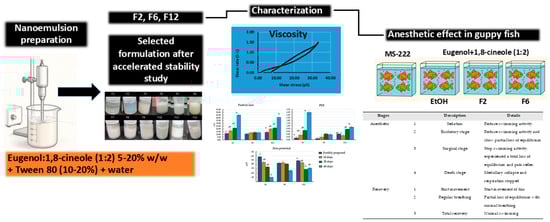
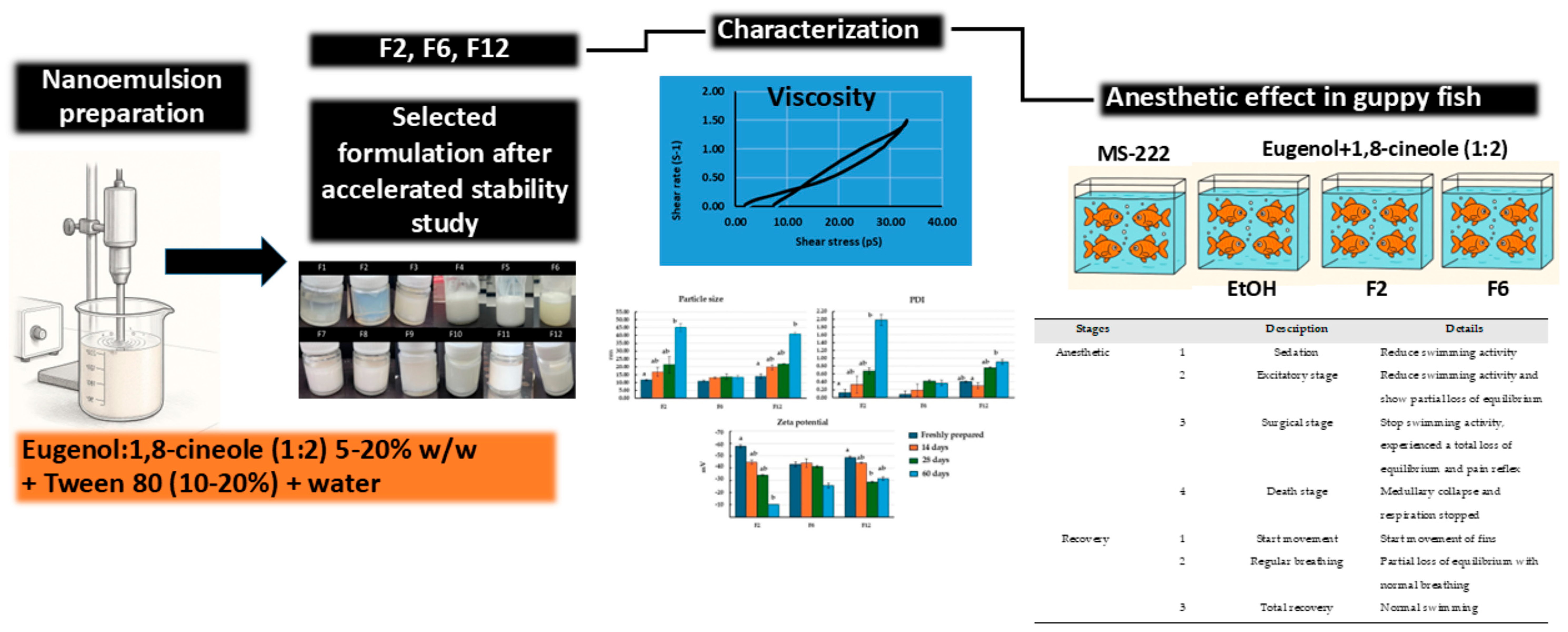
Graphical Abstract

1. Introduction

Fish are increasingly popular for scientific research in fisheries, aquaculture, and veterinary medicine worldwide because they can experience nociception and exhibit pain like mammals, as well as a growing awareness of animal welfare concerns about using mammals as experimental animals. Procedures such as transportation, grading, physical examination, surgery, and diagnostic sampling require holding the fish immobile while handling to reduce stress, prevent injury, and facilitate manipulation [1]. As a result, several compounds have been used to tranquilize or induce analgesia and anesthesia in fish across all handling methods. A range of anesthetic drugs, including tricaine mesylate (MS-222), benzocaine, metomidate, 2-phenoxyethanol, and quinaldine, have been used on fish [2]. However, some drugs, such as MS-222 (a commonly used anesthetic for fish), may induce irritation upon contact with the eyes and mucous membranes [3]. Benzocaine powder is a respiratory irritant [4]. Metomidate induces muscle twitching, making blood collection and surgical procedures difficult. It is ineffective when used on larval fish, resulting in high fatality rates [5]. Quinaldine sulfate has been demonstrated to be harmful to fish, causing mortality with extended exposure, as well as ocular damage and gill irritation [6].
Aside from the aforementioned chemical substances, there has recently been an increased interest in using herbal compounds to induce anesthesia in fish, including plant oils/extracts such as clove oil, eugenol, eucalyptol, menthol, dehydrofukinone, linalool, myrcene, guaiol, caryophyllene oxide, terpinen-4-ol, and spathulenol [7,8,9,10,11]. Among these, eugenol—an aromatic oil extracted from clove (Syzygium aromaticum)—is widely used as an anesthetic in fish. In addition, eucalyptol or 1,8-cineole, a monoterpene cyclic ether abundantly found in eucalyptus, has been reported to have anesthetic effects in many fish species, such as common carp [12], koi carp [13], and Nile tilapia [14]. It activates the transient receptor potential cation channel, causing desensitization, which could be the chemical foundation for its esthetic and analgesic properties [2,3]. Ornamental fish aquaculture is one of the most valuable businesses within the sector of aquaculture. The guppy fish, scientifically known as Poecilia reticulata, is common and popular in freshwater aquariums across the world. It is particularly adaptable to less-than-ideal water conditions and is simple to breed and maintain [15]. Our previous research demonstrated that combining eugenol at 50 mg/L with 1,8-cineole at 100 mg/L as a conventional formulation resulted in significantly faster induction of anesthesia in guppy fish than using either oil separately [16]. Nonetheless, prior research has not addressed a critical translational barrier for practical use: essential oils exhibit low water solubility and can be unstable and inconsistently dispersed in water, possibly resulting in variable exposure, inaccurate dosing, and difficulty in maintaining the intended ratio of combined agents during application. To overcome these formulation constraints, nanoemulsions offer an approach to encapsulate hydrophobic oils into nanometric droplets, thereby enhancing water dispersibility and potentially enhancing stability and delivery consistency [9,10,11]. Moreover, unlike earlier studies by Kheawfu et al. [9,10], where the anesthetic effect of nanoemulsions containing only clove oil was investigated, this study hypothesizes that nanoemulsions containing a mixture of 1,8-cineole and eugenol are an appropriate delivery system for enhancing the anesthetic effect while improving each oil’s stability for the practical application of fish handling. The novelty of the present study lies in the development and evaluation of a co-loaded nanoemulsion containing both eugenol and 1,8-cineole as a unified anesthetic system, rather than employing each oil separately or merely mixing them in non-nano preparations. This signifies a distinct progression beyond Nuammanee et al.’s study [16] by translating the previously identified synergistic combination into a nano-enabled delivery platform aimed at enhancing dispersion and formulation consistency in water.
Therefore, this study aimed to formulate a nanoemulsion comprising eugenol and 1,8-cineole, investigate its physicochemical characteristics and stability performance, and assess its anesthetic efficacy in guppy fish. The study focused on anesthesia induction and recovery characteristics to ascertain whether the nanoemulsion improves the effectiveness and applicability of this combined herbal anesthetic system.

2. Materials and Methods

2.1. Anesthetic Agents

Four anesthetic agents were used in the study. First, a solution of tricaine methanesulfonate (MS-222, 98–100%) (Western Chemical; Syndel, Ferndale, WA, USA) was prepared by dissolving 1 g of MS-222 and 2 g of sodium bicarbonate in 800 mL of distilled water, followed by adjusting the total volume to 1 L. The pH of the MS-222 solution was adjusted to 7.0–7.5 using sodium bicarbonate (≥99%, Sigma-Aldrich, St. Louis, MO, USA). Eugenol (≥98%, Sigma-Aldrich, St. Louis, MO, USA) and 1,8-cineole (≥98%, Merck Millipore, Billerica, MA, USA) were combined at a target bath exposure ratio of 50 mg/L eugenol to 100 mg/L 1,8-cineole (50:100 ppm), as this ratio was previously reported by Nuanmanee et al. [16] to provide ideal anesthetic characteristics in guppy fish. The oil mixture was diluted ninefold in ethanol (v/v). The third and fourth agents were nanoemulsions selected from previous experiments. All anesthetic drugs were stored in glass amber reagent bottles at 4 °C. The MS-222 solution and ethanolic oil mixture were used within 2 h of preparation. Both nanoemulsions were used within 7 days after preparation.

2.2. Nanoemulsion Preparation

The nanoemulsions were prepared by mixing the oil phase with the aqueous phase. The aqueous phase comprised varying concentrations of Tween 80 (Polyethylene glycol sorbitan monooleate, Merck, Darmstadt, Germany) (10%, 15%, and 20% w/w) in water. The oil phase comprised varying concentrations of an oil mixture (eugenol and 1,8-cineole at a ratio of 1:2 (w/w) at 5%, 10%, 15%, and 20% (w/w). The oil phase was subsequently incorporated into the aqueous phase and mixed using a magnetic stirrer at 100 rpm for 2 min. Thereafter, the emulsion droplets were reduced using an ultrasonic processor (Vibra cell, VCX500, Sonics & Material, Inc., Newtown, CT, USA), which was set to an amplitude of 40% for a duration of 10 min. The oil-to-surfactant ratios of the nanoemulsions are shown in Table 1.

2.3. Physicochemical Characteristics of Nanoemulsions

The particle size and zeta potential of the nanoemulsions were analyzed using photon correlation spectroscopy (Zetasizer Nano-ZS, Malvern, Panalytical Ltd., Malvern, Worcestershire, UK). All samples were 1:1000 diluted using deionized water before analysis. The pH was determined using a pH meter (Mettler Toledo, Zurich, Switzerland). Viscosity was determined using a viscometer (AMETEK Brookfield, Middleboro, MA, USA). Conductivity was analyzed using a conductivity meter (Cyberscan 2000, Eutech Instruments, Singapore). Each measurement was performed in triplicate.

2.4. Stability Assessment

Accelerated stability was determined using the heating–cooling method following Liu et al. [17] by keeping the formulations at 4 °C for 24 h and 45 °C for 24 h in 6–8 cycles. The flocculation, phase separation, or creaming was recorded. The selected formulations were further tested for their long-term stability by storing them at room temperature for 14, 28, and 60 days. After storage, the visual instability, particle size, zeta potential, pH, and conductivity were measured and recorded.

2.5. Anesthetic Properties of Nanoemulsions

2.5.1. Animal

One hundred forty healthy adult guppies—with an average weight of 1.08 ± 0.15 g and a standard length of 3.36 ± 0.08 cm for female guppies, and an average weight of 0.29 ± 0.04 g and a standard length of 2.53 ± 0.09 cm for male guppies—were obtained from an ornamental fish store located in Chiang Mai, Thailand. The individual morphometric data (body weight and standard length) by sex and treatment group are provided in the Supplementary Materials (Tables S1 and S2). The fish were divided into 2 groups by sex, with 70 guppies in each 100 L fiberglass tank. They were quarantined for two weeks before the experiment to monitor contagious infections. During the quarantine period, the fish were fed commercial pellet feed (White Crane, Bangkok, Thailand) at a rate of 3% of their body weight. The frequency of water changes was once per day for dechlorinated tap water. During the quarantine period, the water parameters, including dissolved oxygen, temperature, pH, alkalinity, hardness, total ammonia, and nitrite, remained within acceptable ranges for the fish culture, and the corresponding data are provided in the Supplementary Materials (Table S3). Water quality was also monitored for each experimental group throughout the experimental period, and the corresponding data are provided in the Supplementary Materials (Table S4).

2.5.2. Exposure Experiment and Anesthetic Response

All experimental fish underwent a 12 h fast test before anesthetic response testing. Experiments were conducted in glass aquaria (10 × 10 × 15 cm) containing 1 L of dechlorinated water prepared for induction of anesthesia. Seventy female guppies were randomly allocated in equal numbers to seven glass tanks, each containing one liter of water. Four types of anesthetic agents were added to separate tanks designated for inducing anesthesia. MS-222 was diluted to 150 mg/L and used in the first anesthetic tank, while the remaining anesthetic agents, including eugenol and 1,8-cineole in ethanol and the prepared nanoemulsion, were diluted to 50 mg/L (eugenol) and 100 mg/L (1,8-cineole) and used in the second and fourth tanks, respectively. The three vehicle controls were conducted using 0.14% ethanol (v/v), solvent F2, and solvent F6. Anesthetic response tests to differentiate between the anesthetic and recovery stages were conducted according to the methodology outlined by Nuanmanee et al. [16], with certain modifications. The duration of each stage was recorded in seconds. The anesthetic and recovery stages of the fish are shown in Table 2. Upon reaching Stage 3 of anesthesia, the fish were transferred to a recovery tank containing dechlorinated water with aeration. Subsequently, the recovery stage was assessed. Fish that did not achieve Stage 3 of anesthesia within 600 s were considered unresponsive to anesthetic effects. After the female guppies completed the procedure, the male guppies followed the same protocol. Formulation composition is reported as % w/w, whereas the bath exposure concentrations are reported as mg/L (numerically equivalent to ppm in water).

2.6. Statistical Analysis

The inferential statistical data were analyzed using RStudio (R version 4.5.1; 13 June 2025). The induction and recovery times were reported as the median and interquartile range values. Before analysis, the induction and recovery time data were assessed for normality using the Shapiro–Wilk test. Kruskal–Wallis tests were used to compare the induction and recovery times, and pairwise comparisons were assessed using the Wilcoxon rank-sum test with Bonferroni correction. Statistical significance was determined at p < 0.05.

3. Results

3.1. Physicochemical Characteristics and Stability of Nanoemulsions

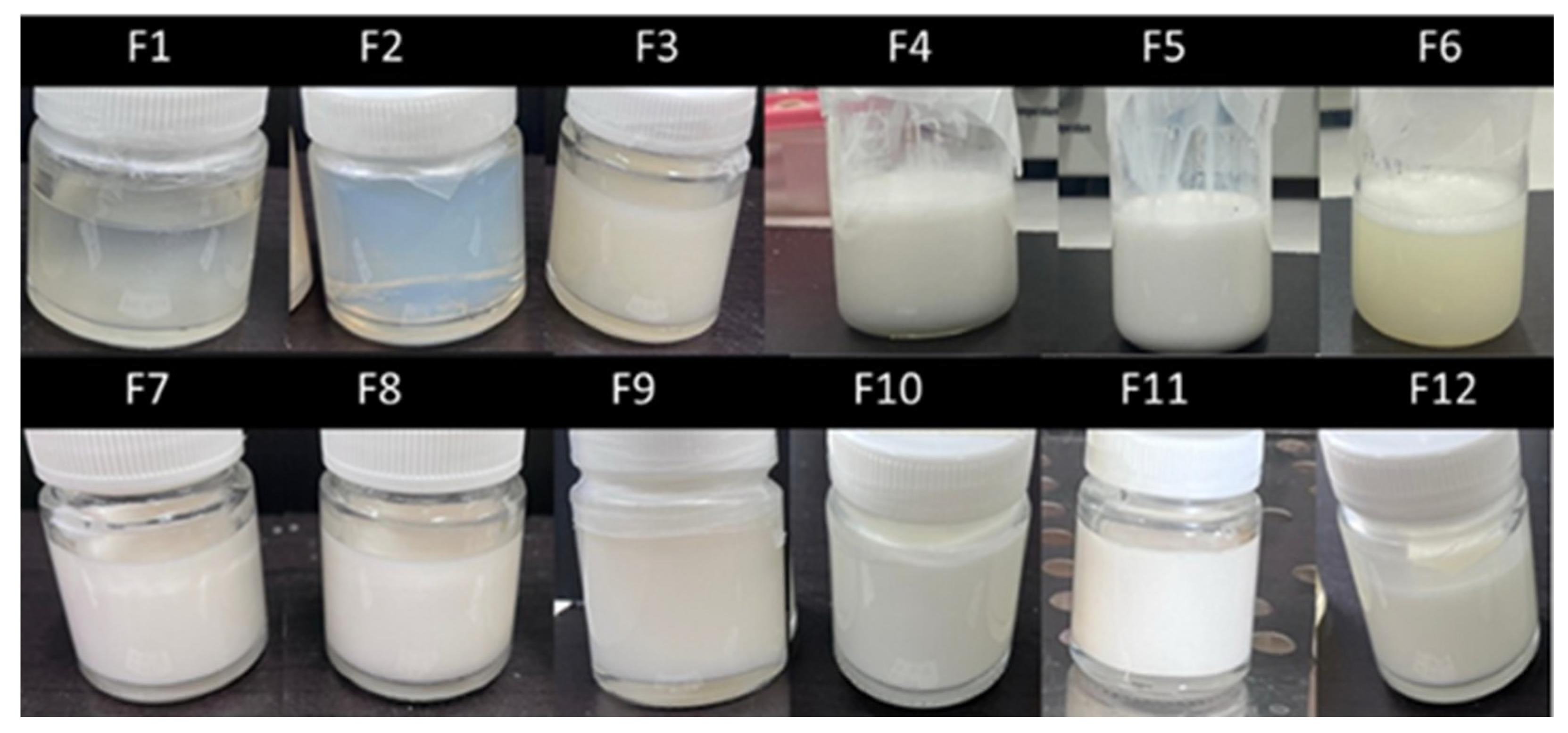
All formulations exhibited a primarily yellowish-white color, ranging from translucent to opaque white, dependent upon the oil-to-surfactant ratio. A formulation including 5% oil and 15% surfactant generated a transparent emulsion. On the contrary, formulations containing 10% or more of the oil combined with 10% or more of the surfactant yielded more opaque emulsions (Figure 1).
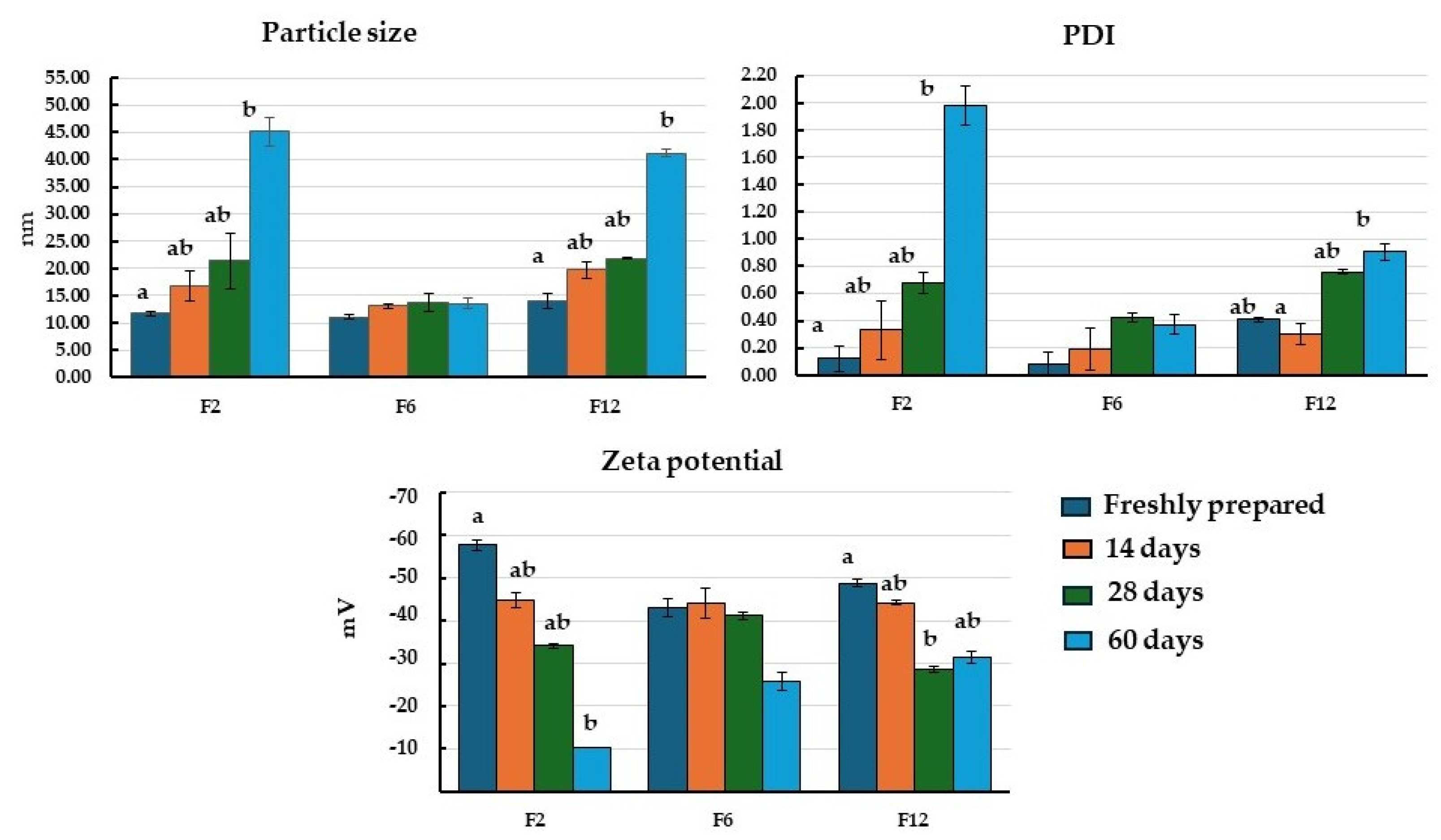
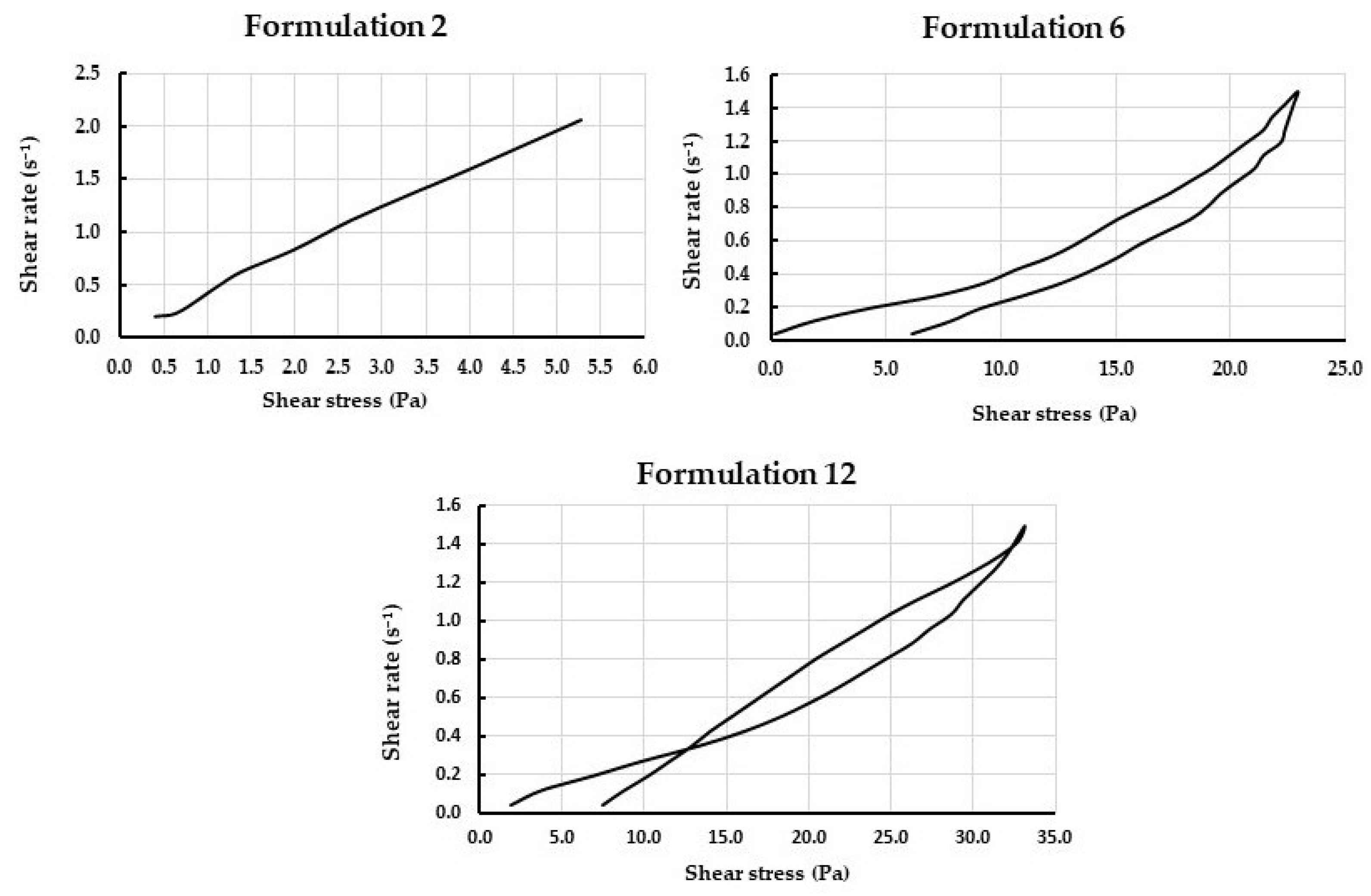
After the accelerated stability tests, formulations 2 (F2), 6 (F6), and 12 (F12) were determined to be stable. No phase flocculation, separation, or creaming were observed (Supplementary Materials; Figures S1 and S2, Tables S5 and S6). Therefore, these three formulations were subjected to physicochemical study and long-term stability testing. The mean particle sizes of fresh formulations of F2, F6, and F12 were 11.73 ± 0.38 nm, 11.07 ± 0.32 nm, and 13.90 ± 1.37 nm, respectively; the PDI values were 0.12 ± 0.09, 0.08 ± 0.09, and 0.41 ± 0.02, respectively; and the zeta potential values, indicating stability, were −57.73 ± 1.21, −43.10 ± 2.07, and −48.80 ± 0.95, respectively (Figure 2). All fresh formulations exhibited electrical conductivity ranging from 7.7 to 114.7 µS/cm and were slightly acidic, with pH values between 6.50 and 6.63 (Table 3). Figure 3 shows the rheological flow curves for formulations F2, F6, and F12. All three formulations exhibited non-Newtonian, shear-thinning behavior. Among them, F2 had the lowest viscosity, characterized by a nearly straight flow curve and the absence of hysteresis with a small yield stress (Figure 3). Both F6 and F12 exhibited thixotropy and time-dependent recovery, as demonstrated by distinct hysteresis loops. Formulation F12 had the highest flow resistance, characterized by the greatest apparent viscosity and the maximum yield stress, followed by F6. Only F2 and F6 were selected for further studies due to their low and intermediate viscosities, which would facilitate easier application in fish anesthesia. After long-term storage, the particle size and PDI of F2 and F12 significantly increased (particle size: p = 0.022, 0.015; PDI: p = 0.022, 0.016), while the zeta potential significantly decreased (p = 0.014, 0.016). The pH of F6 and F12 significantly decreased (p = 0.015, 0.015), while the pH of F2 tended to decrease. The conductivity of F2 significantly decreased (p = 0.016), whereas that of F6 and F12 significantly increased (p = 0.016, 0.015).

3.2. Induction of Anesthetic Formulations

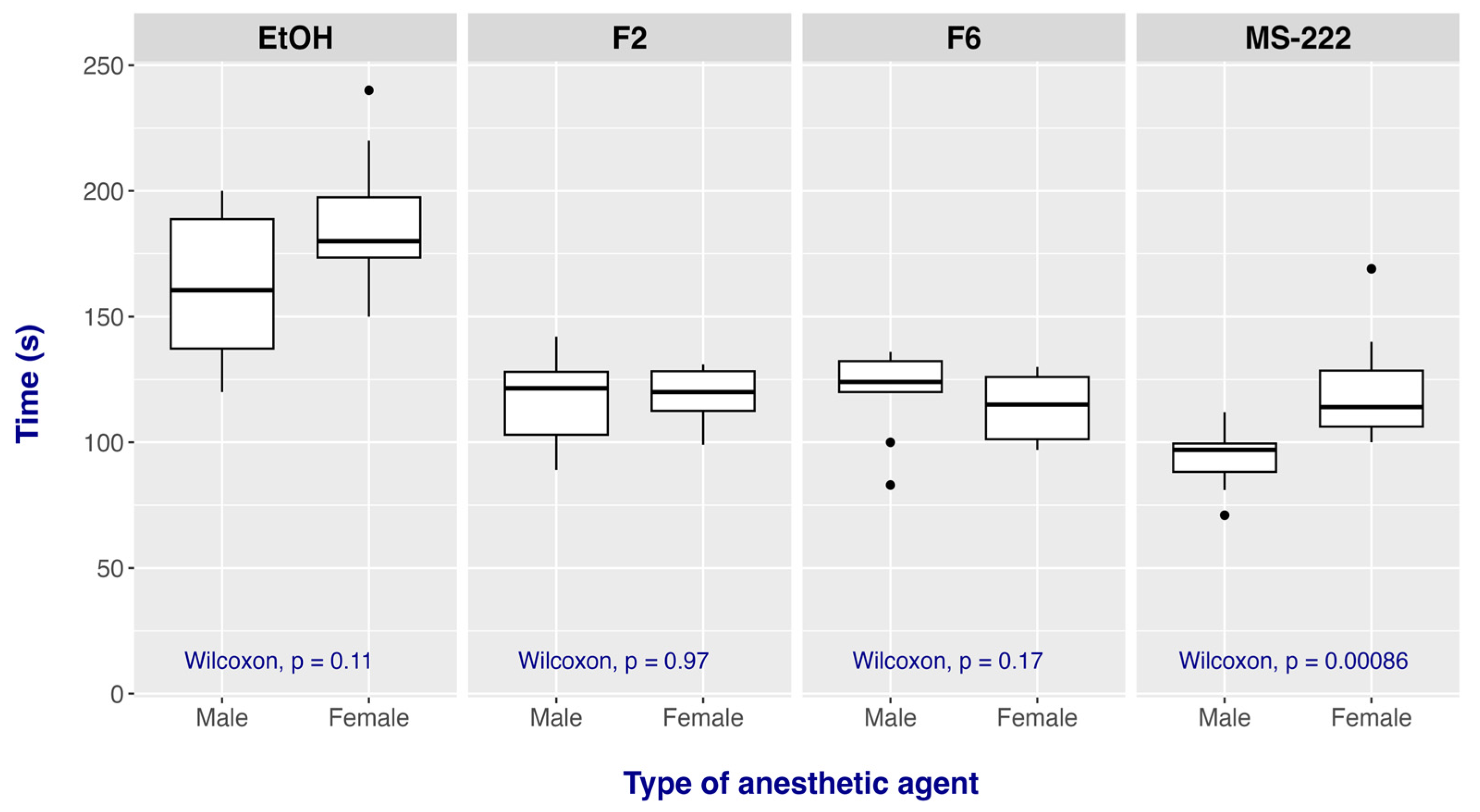
All anesthetic formulations had the potential to induce fish to the third stage of anesthetic. In Stages 1 and 2, there were no differences among different types of anesthetic formulations. However, significant differences were observed in Stage 3 (p < 0.0001); the ethanol base required the longest time (175.5 s) to induce anesthesia in guppies, whereas F2, F6, and MS-222 required 120, 120, and 102 s, respectively (Table 4). The response of females to the anesthetics was not different between Stages 1 and 2, but the induction time of the ethanol-based solution was significantly higher than that of the others to reach Stage 3 (p < 0.0001). The times to reach Stage 3 of the ethanol base, F2, F6, and MS-222 were 180, 120, 115, and 114 s, respectively (Table 5). In the male group, differences were observed from Stage 2 onward. The induction time of the ethanol base was significantly higher than that of MS-222 (p = 0.0059), while the induction times of F2 and F6 tended to be longer than that of the ethanol base (Table 6). In Stage 3, the induction times of F2 and F6 were significantly lower than that of the ethanol base but higher than that of MS-222 (p = 0.00086). The times to reach Stage 3 of the ethanol base, F2, F6, and MS-222 were 160.5, 121.5, 124, and 97 s, respectively (Table 6). MS-222 showed a significant difference between sexes when inducing Stage 3, with females exhibiting a significantly longer induction time than males (Figure 4), while a similar response between the sexes were found for other anesthetics (p = 0.00086). The three vehicle controls, including 0.14% ethanol (v/v), solvent F2, and solvent F6, did not induce sedation in the fish and did not result in any adverse effects.

3.3. Recovery Time of Anesthetic Formulations

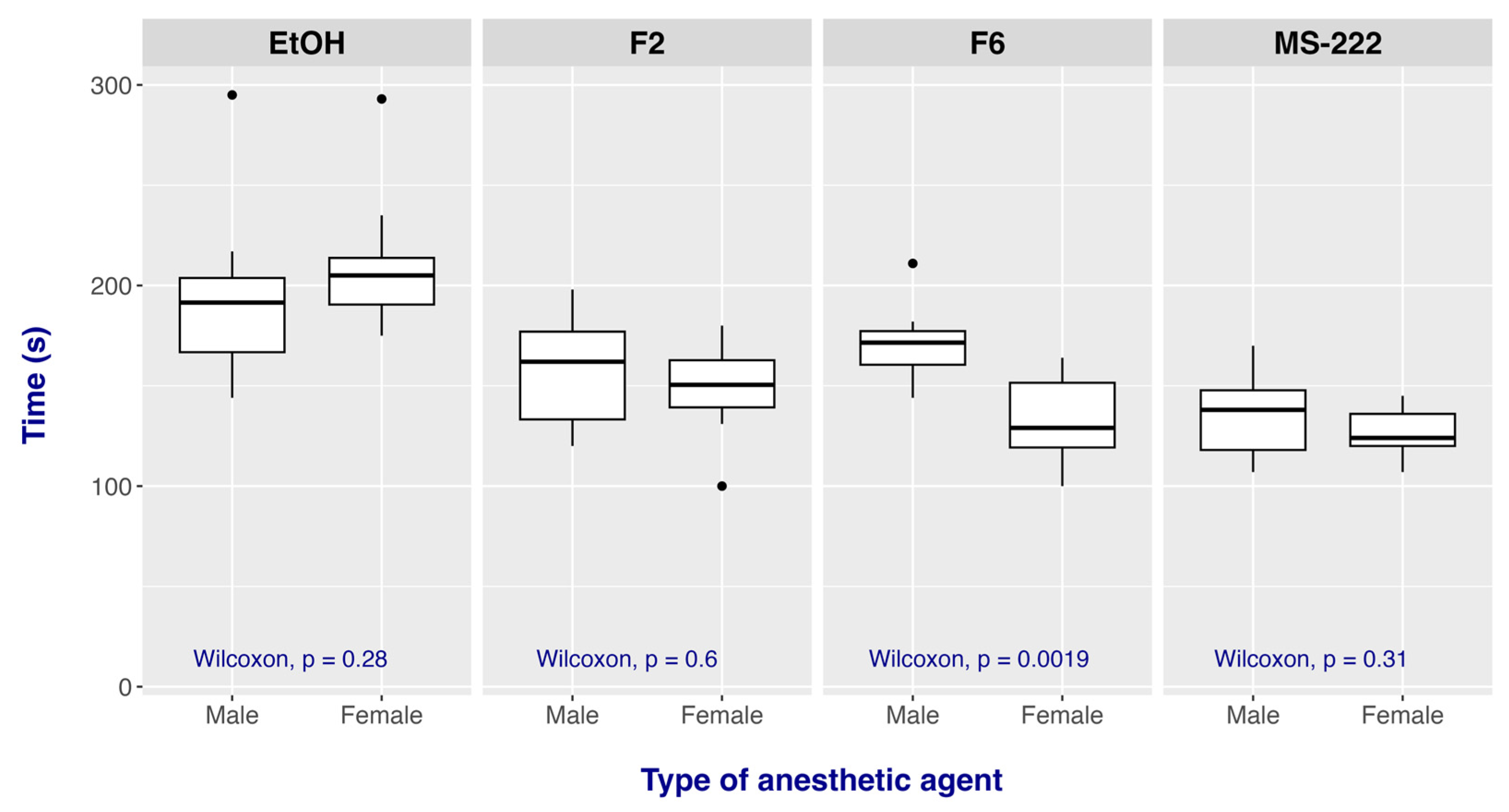
MS-222 exhibited the fastest recovery time among all anesthetics (131.5 s), followed by F2 and F6 (both at 154.5 s) (Table 4). The ethanol-based solution significantly delayed recovery time up to 199 s (p < 0.0001). An analysis of the difference in recovery time between the sexes revealed that, in the F6 group, males had significantly longer recovery times than females (p = 0.0019), although male and female recovery times were not significantly different in the other groups (Figure 5). All of the groups demonstrated a statistically significant increased recovery time compared to the MS-222 group. No mortality or abnormal clinical signs were observed in any treatment group during the recovery observation period after the experiment.

4. Discussion

Surfactants and emulsifiers are often employed to stabilize nanoemulsions by lowering the surface tension, decreasing particle aggregation, and boosting particle stability. To prepare oil-in-water emulsions, the desired hydrophilic–lipophilic balance (HLB) value should range from 8 to 18, or exceed 10 [18,19]. This study employed Tween 80 (polyoxyethylene sorbitan monooleate), a non-ionic surfactant with an HLB value of 15.0, due to its safety and common application in nanoemulsions. Compared with other surfactants, such as Tween 20 and Tween 60, Tween 80 produced the most suitable nanoemulsions, likely due to its unsaturated oleate chain, which promotes a more flexible interfacial film and improves droplet packing. This aligns with Subaidah et al. [20], who reported that Tween 80 is the preferred emulsifier for Brucea javanica (L.). Merr. extract nanoemulsions. Nanoemulsions formulated with the oil:surfactant ratios of 5:15, 10:20, and 20:20% (w/w)—namely, formulations F2, F6, and F12—were identified as most suitable, and they were stable after heating–cooling testing, whereas the remaining formulations (F1, F3–F5, and F7–F11) exhibited phase separation, indicating insufficient thermal stress tolerance. Instability under heating–cooling cycling is primarily governed by the surfactant-to-oil balance, as insufficient surfactant (F1, F4, F7, and F10) or high oil loading (F8 and F11) leads to incomplete interfacial coverage and coalescence, whereas excessive non-adsorbed surfactant (F3 and F9) may promote flocculation and accelerated creaming due to altered droplet–droplet interactions [21].
The appropriate pH value in water is important for the survival, growth, and reproduction of fish in aquaculture. Freshwater fish generally survive within a pH range of 6.5 to 9.0 [22]. All three formulations exhibited pH values ranging from 6.5 to 6.63, which fall within the acceptable range and have no negative impact on fish. Viscosity increases with higher concentrations of oil and surfactant. Increasing the volume percentage of the internal phase or micelles creates physical networks and can significantly increase viscosity [23]. The low and intermediate viscosities of F2 and F6 suggest that they are quite convenient to use as anesthetics and can be packaged in many forms. In contrast, it is necessary to find suitable and easy-to-use packaging for F12 because the liquid has relatively high viscosity. The particle sizes of the three formulations were less than 15 nm, with a PDI of less than 0.5. The nanoemulsion droplet size obtained in this study was smaller than that reported by Kaeawfu et al. [9,10], who produced a clove oil nanoemulsion with an average droplet size of approximately 63.2 nm, a polydispersity index (PDI) of 0.31, and a zeta potential of −30.3 mV. It was also smaller than that reported by Gholipourkanani et al. [11], who formulated a nanoemulsion with droplet sizes below 100 nm. The differences in particle size may be attributed to variations in the type and concentration of Tween, as well as to differences in processing time and methods used to reduce droplet size [9,10,11].
Furthermore, emulsifier molecules rapidly adsorb onto the droplets, creating a protective coating that prevents agglomeration [24]. The low PDI values of all formulations indicate a uniform droplet size distribution and good physical stability. The zeta potential indicates the charge density on particle surfaces and is used as an indicator of emulsion stability [25]. To prevent particle agglomeration, it is necessary to implement a barrier utilizing steric or electrostatic forces or interfacial charges. A charge exceeding +30 or −30 will generate adequate force to repel particles, thereby preventing aggregation and enhancing the stability of the emulsion [26]. All prepared nanoemulsions exhibited negative zeta potentials exceeding −40 millivolts (mV), indicating overall stability. Tween 80 is uncharged; however, the particle surface exhibits a negative charge, probably due to the free fatty acids in the surfactant or due to the adsorbed hydroxyl ions from water on the particle surface by the oil droplets [27].
The increased particle size and PDI of F2 and F12, together with the significant decrease in zeta potential after storage, indicate a loss of colloidal stability consistent with aggregation/coalescence and a broadening of the size distribution [28,29,30]. Nanoemulsions are homogeneous dispersed systems consisting of mixtures of incompatible liquids, where one liquid is uniformly dispersed in the form of nanoscale droplets (20–200 nm) into another liquid [31]. Although the particle size remains acceptable (45 nm) at the end of storage (60 days), significant shifts in zeta potential to less than −10 mV and a PDI exceeding 1 indicate a significant loss of colloidal stability, e.g., increased aggregation risk and reduced homogeneity; this loss in colloidal stability corresponds with visible instability (phase separation/creaming) or decreased anesthetic performance. Therefore, in practice, F2 should not be employed two months after preparation. The concurrent increase in droplet size/PDI and the reduced magnitude of zeta potential in F2 and F12 indicate progressive loss of colloidal stability consistent with aggregation/coalescence during storage [28,29,30]. As Tween 80 is non-ionic, these stability shifts likely reflect storage-induced changes in interfacial charge regulation (e.g., adsorption of ions/ionizable impurities) and droplet–droplet interactions [27].
The concurrent decline in pH in F6 and F12, as well as the downward trend in F2, likely contributed to this destabilization by altering the surface charge (protonation of ionizable groups), thereby reducing electrostatic repulsion [28,32]. A significant decrease in conductivity in F2 suggests ion consumption, precipitation, or adsorption onto particle surfaces, whereas the significant increases in F6 and F12 imply the release of ionic degradation products or leaching of counterions, which can lead to the screening of surface charges and exacerbate aggregation (particularly evident in F12), where a decreased zeta potential coincides with increased size and PDI. Overall, F12 seems most susceptible to physicochemical destabilization (increased particle size, higher PDI, lower zeta potential, and a drop in pH), while F6 only shows chemical shifts (lower pH and higher conductivity) but no significant change in particle size, PDI, or zeta potential, suggesting stronger steric stabilization [27,29]. However, the transient maximum, conductivity, and pH of formulation F6 observed on Day 28 after storage may indicate a transient physicochemical re-equilibration of the nanoemulsion during storage due to time-dependent Tween 80 interfacial rearrangement and ionic species redistribution in the aqueous phase. Limited hydrolytic breakdown of polysorbate or redistribution of weakly ionizable components may also cause pH alterations [33]. The particle size, PDI, and zeta potential did not alter significantly, indicating that these chemical fluctuations did not affect the nanoemulsion’s physical stability.
Eugenol and 1,8-cineole were found to be effective anesthetics in aquatic animals. Eugenol reduces neuronal excitability by blocking Na+ channels, reducing Ca2+ influx, increasing inhibitory transmission via GABAA receptors, and resulting in analgesia or anesthesia. Moreover, 1,8-cineole acts as a positive allosteric modulator of GABAA receptors, increasing Cl conductance and inhibitory tone, while partially blocking excitatory pathways and lowering Ca2+ influx. It has weaker Na+ channel blockage than eugenol [34,35,36]. Previous studies have found a synergistic effect when these two substances are combined in fish anesthesia [16]. In this study, eugenol and 1,8-cineole mixtures diluted in ethanol and nanoemulsions were investigated. The final bath exposure concentrations of eugenol and 1,8-cineole in each fish tank were 50 and 100 mg/L, respectively (i.e., 50 and 100 ppm, respectively). Both concentrations have already been shown to have an anesthetic effect on guppy fish in previous studies [16,37]. We found that combining eugenol with 1,8-cineole in nanoemulsions resulted in faster anesthetic induction and recovery. Nanoemulsions can enhance the effectiveness of essential oil [10,11]. Despite being ethanol-based, the nanoemulsion formulations F2 and F6 were able to induce fish to Stage 3 faster than the ethanol base, by around 1.46 times, and shortened the recovery time by 1.28 times. This is consistent with research findings that nanoscale dispersions provide a higher interfacial area and more uniform aqueous distribution of hydrophobic actives, thereby improving gill/skin contact and reducing exposure variability, compared to ethanol delivery systems [10,11].
This outcome is also consistent with Kheawfu et al. [9,10] and Gholipourkanani et al. [11], who reported that clove oil nanoemulsions have shorter induction times in fish than clove oil in ethanolic solutions. A self-microemulsifying drug delivery system of clove oil (CO-SMEDDS) has an enhancing effect, allowing increased eugenol skin permeation 1.8–5.4 fold compared to the clove oil ethanolic solution [10]. The use of nanoemulsions significantly enhanced the permeation and enhanced the receptor-binding activity of the oil, resulting in enhanced anesthetic activity. Importantly, because MS-222 is widely used as a reference synthetic anesthetic in aquaculture [3,5], the present findings can be interpreted in the context of a practical alternative: the nanoemulsion approach developed in this study improved performance relative to an ethanol-based delivery system, while providing a plant-derived anesthetic option that can be evaluated alongside standard agents in terms of induction/recovery profiles and handling feasibility. Although the current study was not designed as a head-to-head efficacy comparison with MS-222 across all endpoints, the observed induction and recovery trends support the potential utility of the developed nanoemulsions as alternative anesthetic formulations worthy of direct comparison with standard synthetic agents in future studies.
In addition, the small particle size and large interfacial area of the internal oil droplets, surrounded by a suitable surfactant, increase the aqueous miscibility of nanoemulsions [38]. As a surfactant, Tween 80 can act as a penetration enhancer to effectively promote drug penetration through the skin, either by altering the skin barrier or by modifying the thermodynamic activity of penetrants, allowing fish gills and skin to rapidly absorb the active substances, while enhancing their receptor-binding activity and suppressing respiration [9,10]. Overall, the heating–cooling screening confirmed that only specific oil:surfactant ratios (F2, F6, and F12) provided sufficient interfacial coverage to resist thermal stress [21]. Analysis of storage trends further established formulation-specific stability limits (F2/F12 destabilized by particle size, PDI, and zeta deterioration, while F6 remained physically stable), supporting rational formulation selection and a defined usability window for consistent anesthetic exposure [27,28,29]. Females required a longer time than males to reach Stage 3 of anesthesia with MS-222 by 42.5 s, although no difference was found with other anesthetics. MS-222 is hydrophilic and relies on ventilation-driven branchial absorption. The larger body size of females leads to mass-specific ventilation, resulting in delayed increases in anesthetic concentration within the central nervous system. Similar results have been reported by Park [39], who demonstrated that small Far Eastern catfish are easier to anesthetize and recover faster than larger fish. In contrast, the recovery time was only significantly longer for males exposed to the nanoemulsion formulation F6, while all other groups showed comparable recovery between the sexes. This selective effect is consistent with formulation-dependent pharmacokinetics, whereby nanocarrier–mucus interactions and tissue retention can prolong elimination and induce greater pre-induction activity and ventilation in males. Future work should examine the interactions of body mass, reproductive status, ventilation rate, exposure AUC, and post-anesthetic biomarkers to differentiate uptake from clearance-driven mechanisms.

5. Conclusions

This study successfully developed nanoemulsions containing eugenol and 1,8-cineole that were stabilized with Tween 80. The nanoemulsions exhibited suitable physicochemical properties for aquatic anesthesia, including nanosized droplets, low PDI, strongly negative zeta potentials, and pH values compatible with freshwater fish. Among the tested formulations, F2 and F6 showed favorable rheological behavior, low-to-intermediate viscosity that facilitated handling and application, and acceptable stability profiles under the conditions studied. Due to the synergistic anesthetic effect, the combination of eugenol and 1,8-cineole in nanoemulsions can enhance anesthetic activity in guppy fish by shortening the induction and recovery times compared to a typical ethanol mixture.

Supplementary Materials

The following supporting information can be downloaded at https://www.mdpi.com/article/10.3390/macromol6020020/s1. Figure S1: The physical characteristics of the newly prepared nanoemulsions. Figure S2: The physical characteristics of formulation 2, 6, and 12 following accelerated stability testing using heating–cooling cycles, assessed at each cycle (one cycle consisted of storage at 4 °C for 24 h and 45 °C for 24 h. Table S1: presents the mean (±SD) body weight and standard length of male guppies for each treatment group (n = 10 per group). Table S2: presents the mean (±SD) body weight and standard length of female guppies for each treatment group (n = 10 per group). Table S3: Mean (±SD) water quality parameters during the 2-week quarantine period (n = 10 measurements per parameter). Table S4: Mean (±SD) water quality parameters during the experimental period across four experimental groups and control group (Filtered water) (n = 5 measurements per parameter). Table S5: presents the physical characteristics immediately after preparation, as well as the pH and electrical conductivity of the formulations. Table S6: Physical appearance of formulation after stored at accelerated conditions. References [40,41,42] are cited in the Supplementary Materials.

Author Contributions

Conceptualization, S.P.; methodology, S.P., S.N., B.S., K.K., C.P. and W.C.; investigation, S.P., S.N. and W.C.; writing—original draft preparation, S.N. and W.C.; writing—review and editing, S.P. and W.C.; visualization, S.N., B.S., C.P. and K.K.; validation, S.P. and S.N.; supervision, S.P. and W.C. All authors have read and agreed to the published version of the manuscripts.

Funding

This project is funded by the National Research Council of Thailand (NRCT).

Institutional Review Board Statement

The Animal Care and Use Committee of the Faculty of Veterinary Medicine, Chiang Mai University (FVM-ACUC) (Process No. R6/2566; Date 27 March 2023), granted permission for the experiment to take place in the Aquatic Animal Medicine Laboratory.

Informed Consent Statement

Not applicable.

Data Availability Statement

The original contributions presented in this study are included in the article. Further inquiries can be directed to the corresponding author.

Acknowledgments

During the preparation of this manuscript/study, the authors utilized QuillBot to refine language and grammar.

Conflicts of Interest

The authors declare no conflicts of interest.

References

  1. Brønstad, A. Good anesthesia practice for fish and other aquatics. Biology 2022, 11, 1355. [Google Scholar] [CrossRef]
  2. Martins, T.; Valentim, A.; Pereira, N.; Antunes, L.M. Anaesthetics and Analgesics Used in Adult Fish for Research: A review. Lab. Anim. 2019, 53, 325–341. [Google Scholar] [CrossRef]
  3. Carter, K.M.; Woodley, C.M.; Brown, R.S. A review of tricaine methanesulfonate for anesthesia of fish. Rev. Fish Biol. Fish. 2011, 21, 51–59. [Google Scholar] [CrossRef]
  4. Keller, A. Benzocaine: Side Effects, FDA Warnings & Lawsuit Information. Drugwatch. 2024. Available online: https://www.drugwatch.com/authors/nurse-amy-keller/ (accessed on 17 November 2025).
  5. Cartner, S.C.; Eisen, J.S.; Farmer, S.C.; Guillemin, K.J.; Kent, M.L.; Sanders, G.E. Anesthesia, analgesia, and euthanasia of the laboratory zebrafish. In The Zebrafish in Biomedical Research; American College of Laboratory Animal Medicine Series; Academic Press: Cambridge, MA, USA, 2020; pp. 403–413. [Google Scholar]
  6. Yanar, M.; Kumlu, M. The anaesthetics effects of quinaldine sulphate and/or diazepam on sea bass (Dicentrarchus labrax) juveniles. Turk. J. Vet. Anim. Sci. 2000, 25, 185–189. Available online: https://journals.tubitak.gov.tr/veterinary/vol25/iss2/9/ (accessed on 2 November 2025).
  7. Hoseini, S.M.; Mirghaed, A.T.; Yousefi, M. Application of herbal anaesthetics in aquaculture. Rev. Aquac. 2019, 11, 550–564. [Google Scholar] [CrossRef]
  8. Junmahasathien, T.; Kheawfu, K.; Chittasupho, C.; Nuanmanee, S.; Chaisri, W.; Pikulkaew, S. An evaluation of the anesthetic properties and serum biochemical response of Ocimum essential oil as a new anesthetic agent for goldfish (Carassius auratus). Vet. Sci. 2025, 12, 1069. [Google Scholar] [CrossRef] [PubMed]
  9. Kheawfu, K.; Pikulkaew, S.; Rades, T.; Müllertz, A.; Okonogi, S. Development and characterization of clove oil nanoemulsions and self-microemulsifying drug delivery systems. J. Drug Deliv. Sci. Technol. 2018, 46, 330–338. [Google Scholar] [CrossRef]
  10. Kheawfu, K.; Pikulkaew, S.; Wellendorph, P.; Jørgensen, L.v.G.; Rades, T.; Müllertz, A.; Okonogi, S. Elucidating Pathway and Anesthetic Mechanism of Action of Clove Oil Nanoformulations in Fish. Pharmaceutics 2022, 14, 919. [Google Scholar] [CrossRef] [PubMed]
  11. Gholipourkanani, H.; Gholinasab-Omran, I.; Ebrahimi, P.; Jafaryan, H. Anesthetic effect of clove oil loaded on lecithin-based nanoemulsions in gold fish, Carassius auratus. J. Fish. Aquat. Sci. 2015, 10, 553–561. [Google Scholar] [CrossRef]
  12. Mazandarani, M.; Hoseini, S.M. Menthol and 1,8-cineole as new anaesthetics in common carp, Cyprinus carpio (Linnaeus, 1758). Aquac. Res. 2018, 48, 3041–3051. [Google Scholar] [CrossRef]
  13. Khumpirapang, N.; Pikulkaew, S.; Anuchapreeda, S.; Okonogi, S. Alpinia galanga oil—A new natural source of fish anaesthetic. Aquac. Res. 2018, 49, 1546–1556. [Google Scholar] [CrossRef]
  14. Pikulkaew, S.; Khumpirapang, N.; Chaisri, W.; Okonogi, S. Effects of Alpinia galanga oil on anesthesia and stress reduction in Oreochromis niloticus. Drug Discov. Ther. 2017, 11, 186–192. [Google Scholar] [CrossRef]
  15. Shahjahan, R.M.; Ahmed, M.J.; Begum, R.A.; Rashid, M.A. Breeding biology of guppy fish, Poecilia reticulata (Peters, 1859) in the laboratory. J. Asiat. Soc. Bangladesh Sci. 2014, 39, 259–267. [Google Scholar] [CrossRef]
  16. Nuanmanee, S.; Sriwanayos, P.; Boonyo, K.; Chaisri, W.; Saengsitthisak, B.; Tajai, P.; Pikulkaew, S. Synergistic effect between eugenol and 1,8-cineole on anesthesia in guppy fish (Poecilia reticulata). Vet. Sci. 2024, 11, 165. [Google Scholar] [CrossRef]
  17. Liu, L.; Abiol, K.A.E.; Friest, M.A.; Fisher, K.D. Synergistic stabilization of nanoemulsion using nonionic surfactants and salt-sensitive cellulose nanocrystals. Polymers 2023, 15, 4682. [Google Scholar] [CrossRef]
  18. Ng, N.; Rogers, M.A. Surfactants. In Encyclopedia of Food Chemistry; Academic Press: Oxford, UK, 2019; pp. 276–282. [Google Scholar]
  19. Kommuru, T.R.; Gurley, B.; Khan, M.A.; Reddy, I.K. Self-emulsifying drug delivery systems (SEDDS) of coenzyme Q10: Formulation development and bioavailability assessment. Int. J. Pharm. 2001, 212, 233–246. [Google Scholar] [CrossRef]
  20. Subaidah, W.A.; Hajrin, W.; Pratiwi, E.T.; Ridwan, S. Nanoemulsion extract ethanol Brucea javanica (L.) Merr. formulation using Tween 20 & Tween 80 as emulgator. J. Katalisator 2023, 8, 147–155. Available online: https://publikasi.lldikti10.id/index.php/katalisator/article/view/1923 (accessed on 17 October 2025).
  21. Izquierdo, P.; Feng, J.; Esquena, J.; Tadros, T.F.; Dederen, J.C.; García, M.J.; Azemar, N.; Solans, C. The influence of surfactant mixing ratio on nano-emulsion formation by the PIT method. J. Colloid Interface Sci. 2005, 285, 388–394. [Google Scholar] [CrossRef] [PubMed]
  22. Al-Mamoori, L.M.M.; Lagutkina, L.; Martyanov, A.; Al-Hilali, H.H.A. The influence of water temperature and pH on controlled spawning and the hatchability of Cyprinus carpio (Linnaeus, 1758) in the conditions of the Republic of Iraq. BIO Web Conf. 2025, 160, 02015. [Google Scholar] [CrossRef]
  23. Dong, B.; Qin, Z.; Wang, Y.; Zhang, J.; Xu, Z.; Liu, A.; Guo, X. Investigating the rheology and stability of heavy crude oil-in-water emulsions using APG08 emulsifiers. ACS Omega 2022, 7, 37736–37747. [Google Scholar] [CrossRef]
  24. Rao, J.; McClements, D.J. Lemon oil solubilization in mixed surfactant solutions: Rationalizing microemulsion and nanoemulsion formation. Food Hydrocoll. 2012, 26, 268–276. [Google Scholar] [CrossRef]
  25. Collini, H.; Jackson, M.D. Zeta potential of crude oil in aqueous solution. Adv. Colloid Interface Sci. 2023, 320, 102962. [Google Scholar] [CrossRef]
  26. Bhattacharjee, S. DLS and zeta potential: What they are and what they are not? J. Control. Release 2016, 235, 337–351. [Google Scholar] [CrossRef]
  27. Chang, Y.G.; McClements, D.J. Influence of emulsifier type on the in vitro digestion of fish oil-in-water emulsions in the presence of an anionic marine polysaccharide (fucoidan): Caseinate, whey protein, lecithin, or Tween 80. Food Hydrocoll. 2016, 61, 92–101. [Google Scholar] [CrossRef]
  28. McClements, D.J. Food Emulsions: Principles, Practices, and Techniques, 3rd ed.; CRC Press: Boca Raton, FL, USA, 2015. [Google Scholar]
  29. Tadros, T.F. (Ed.) Emulsion Formation and Stability; Wiley-VCH: Weinheim, Germany, 2013. [Google Scholar]
  30. Nazarzadeh, E.; Anthonypillai, T.; Sajjadi, S. On the growth mechanisms of nanoemulsions. J. Colloid Interface Sci. 2013, 397, 154–162. [Google Scholar] [CrossRef]
  31. Rui, L.; Li, Y.; Wu, Z.; Wang, Y.; Xia, X. Effect of clove essential oil nanoemulsion on physicochemical and antioxidant properties of chitosan film. Int. J. Biol. Macromol. 2024, 263, 130286. [Google Scholar] [CrossRef]
  32. Israelachvili, J.N. Intermolecular and Surface Forces, 3rd ed.; Academic Press: Amsterdam, The Netherlands, 2011. [Google Scholar]
  33. Kishore, R.S.K.; Kiese, S.; Fischer, S.; Pappenberger, A.; Grauschopf, U.; Mahler, H.-C. Degradation of polysorbates: Mechanisms and impact on formulation stability. Pharm. Res. 2011, 28, 1194–1210. [Google Scholar] [CrossRef]
  34. Delgado, L.; Schmachtenberg, O. Immunohistochemical localization of GABA, GAD65, and the receptor subunits GABAAα1 and GABAB1 in the zebrafish cerebellum. Cerebellum 2008, 7, 444–450. [Google Scholar] [CrossRef]
  35. Khumpirapang, N.; Suknuntha, K.; Wongrattanakamon, P.; Jiranusornkul, S.; Anuchapreeda, S.; Wellendorph, P.; Müllertz, A.; Rades, T.; Okonogi, S. The binding of Alpinia galanga oil and its nanoemulsion to mammal GABAA receptors using rat cortical membranes and an in silico modeling platform. Pharmaceutics 2022, 14, 650. [Google Scholar] [CrossRef] [PubMed]
  36. Ferreira-Da-Silva, F.W.; da Silva-Alves, K.S.; Alves-Fernandes, T.A.; Coelho-De-Souza, A.N.; Leal-Cardoso, J.H. Effects of 1,8-cineole on Na+ currents of dissociated superior cervical ganglia neurons. Neurosci. Lett. 2015, 595, 45–49. [Google Scholar] [CrossRef]
  37. Santos, E.S.; Silva, T.G.; Vasconcelos-Filho, J.I.F.; Freitas, M.S.A.; Freitas, R.M.; Araújo, I.M. Clove oil in different concentrations as an anesthetic for guppy Poecilia reticulata. Acta Fish. 2017, 5, 140–146. Available online: https://periodicos.ufs.br/ActaFish/article/view/6469 (accessed on 1 October 2025).
  38. Solans, C.; Izquierdo, P.; Nolla, J.; Azemar, N.; García Celma, M.J. Nano emulsions: Formation, properties and applications. Curr. Opin. Colloid Interface Sci. 2005, 10, 102–110. [Google Scholar] [CrossRef]
  39. Park, I.S. The anesthetic effects of clove oil and MS-222 on Far Eastern Catfish, Silurus asotus. Dev. Reprod. 2019, 23, 183–191. [Google Scholar] [CrossRef]
  40. Grasshoff, K.; Kremling, K.; Ehrhardt, M. Methods of Seawater Analysis; Verlag Chemie GmbH: Weinheim, Germany, 1983. [Google Scholar]
  41. Boyd, C.E. General Relationship Between Water Quality and Aquaculture Performance in Ponds; Academic Press: Cambridge, MA, USA, 2017. [Google Scholar]
  42. Loh, R. Water quality guide for fish veterinarians. Companion Anim. 2014, 19, 484–485. [Google Scholar] [CrossRef]
Figure 1. The physical characteristics of the newly prepared nanoemulsions.
Macromol 06 00020 g001
Figure 2. Changes in the particle size (nanometer, nM), polydispersity index (PDI), and zeta potential (millivolt, mV) of formulations F2, F6, and F12 during storage (at Days 0 (freshly prepared), 14, 28, and 60). Error bars indicate the standard deviation (SD) of the replicate measurements (n = 3). Different lowercase letters above the error bars within the same formulation indicate statistically significant differences among storage times. (Multiple comparisons were conducted using the Wilcoxon rank-sum test with Bonferroni correction, p < 0.05).
Macromol 06 00020 g002
Figure 3. Comparative rheology flow behavior of formulations F2, F6, and F12 under shear stress. The plots show the relationship between shear stress (Pa or pascal; x-axis) and shear rate (per second/s−1; y-axis), as obtained from the rheological measurements.
Macromol 06 00020 g003
Figure 4. Comparison of the time to reach anesthetic stage 3 between sexes exposed to each anesthetic agent (n = 10). EtOH = ethanol; F2 = formulation 2; F6 = formulation 6; MS-222 = tricaine methanesulfonate.
Macromol 06 00020 g004
Figure 5. Comparison of time to fully recover between sexes exposed to each anesthetic agent (n = 10). EtOH = ethanol; F2 = formulation 2; F6 = formulation 6; MS-222 = tricaine methanesulfonate.
Macromol 06 00020 g005
Table 1. The oil-to-surfactant ratio.
FormulationOil Mixture (Eugenol:1–8 Cineole 1:2) (% w/w)Surfactant (% w/w)
1510
2515
3520
41010
51015
61020
71510
81515
91520
102010
112015
122020
Table 2. Stages of anesthesia and behavior of fish.
StagesDescriptionDetails
Anesthetic1SedationReduce swimming activity
2Excitatory stageReduce swimming activity and show partial loss of equilibrium
3Surgical stageStop swimming activity, experienced a total loss of equilibrium and pain reflex
4Death stageMedullary collapse and respiration stopped
Recovery1Start movementStart movement of fins
2Regular breathingPartial loss of equilibrium with normal breathing
3Total recoveryNormal swimming
Table 3. The median (M) and interquartile range (IQR; Q1–Q3) of pH and conductivity of each selected formulation at day 0 and after 14, 28, and 60 days of storage.
FormulationDay 0
M (IQR)
Day 14
M (IQR)
Day 28
M (IQR)
Day 60
M (IQR)
p-Value
(Kruskal–Wallis Tests)
pH
F26.50 a (6.49–6.50)5.76 a (5.76–5.76)5.71 a (5.71–6.70)6.00 a (6.00–6.00)0.179
F66.63 ab (6.63–6.64)5.88 a (5.88–5.88)7.74 b (7.74–7.74)5.97 ab (5.97–5.97)0.015
F126.55 a (6.55–6.55)5.52 ab (5.52–5.52)5.5 b (5.50–5.50)5.68 ab (5.68–5.68)0.015
Conductivity (µS/cm)
F2113.7 a (113.05–14.35)70.35 ab (69.79–71.25)62.8 ab (62.05–63.40)60.4 b (60.00–60.75)0.016
F6114.7 a (113.90–15.40)126.5 ab (126.35–26.65)132.5 b (132.30–132.80)124.5 ab (124.20–124.90)0.016
F127.9 a (7.80–7.95)27.5 ab (27.35–27.65)28.5 ab (28.50–28.55)34.2 b (34.15–34.25)0.015
Note: Different superscript letters in the same row (a, b, ab) indicate statistical differences of each formulation within each time point. (Multiple comparisons were conducted using the Wilcoxon rank-sum test with Bonferroni correction, p < 0.05).
Table 4. The median (M) and interquartile range (IQR; Q1–Q3) of induction time of each stage and full recovery time of anesthetic formulations in both sexes of guppy fish (n = 20).
DrugInduction Time (s)Recovery Time (s)
Stage 1Stage 2Stage3
MIQRMIQRMIQRMIQR
EtOH40.00 a34.75–50.5064.00 a54.50–70.00175.50 a150.75–194.25199.00 b183.00–213.25
MS-22242.50 a37.75–47.2555.00 a46.75–65.25102.00 b97.50–113.00131.50 a119.00–143.50
F240.00 a35.00–50.7559.50 a53.50–66.25120.00 b108.25–129.25154.50 c135.50–166.75
F640.00 a37.75–46.2555.00 a49.75–61.00120.00 b103.75–129.25154.50 c130.50–170.75
Note: The values with different superscript letters (a, b, c) in a column are significantly different. (Multiple comparisons were conducted using the Wilcoxon rank-sum test with Bonferroni correction, p < 0.05).
Table 5. The median (M) and interquartile range (IQR; Q1–Q3) of induction time of each stage and full recovery time of anesthetic formulations in females (n = 10).
DrugInduction Time Female (s)Recovery Time (s)
Stage 1Stage 2Stage3
MIQRMIQRMIQRMIQR
EtOH34.50 a27.75–39.2559.00 a49.25–69.25180.00 a173.50–197.50205.00 a190.50–213.75
MS-22246.00 a43.25–51.7565.50 a58.50–72.00114.00 b106.25–128.50124.00 b120.00–136.00
F248.50 a37.50–53.0065.00 a60.25–70.75120.00 b112.50–128.25150.50 b139.25–162.75
F645.00 a40.25–48.7556.50 a53.50–67.00115.00 b101.25–126.00129.00 b119.25–151.50
Note: The values with different superscript letters (a, b) in a column are significantly different. (Multiple comparisons were conducted using the Wilcoxon rank-sum test with Bonferroni correction, p < 0.05.).
Table 6. The median (M) and interquartile range (IQR; Q1–Q3) of induction time of each stage and full recovery time of anesthetic formulations in males (n = 10).
DrugInduction Time Male (s)Recovery Time (s)
Stage 1Stage 2Stage3
MIQRMIQRMIQRMIQR
EtOH48.50 a41.50–51.5066.00 a59.25–69.75160.50 a137.25–188.75191.50 a166.75–203.75
MS-22240.50 a35.25–42.0048.00 b45.25–51.7597.00 c88.25–99.50138.00 b118.00–147.75
F239.50 a34.25–40.0055.50 ab52.00–58.50121.50 bc103.00–128.00162.00 ab133.25–177.00
F638.00 a36.25–39.7551.50 ab47.50–55.00124.00 b120.00–132.25171.50 a160.50–177.25
Note: The values with different superscript letters (a, b, c, ab, bc) in a column are significantly different. (Multiple comparisons were conducted using the Wilcoxon rank-sum test with Bonferroni correction, p < 0.05).
Disclaimer/Publisher’s Note: The statements, opinions and data contained in all publications are solely those of the individual author(s) and contributor(s) and not of MDPI and/or the editor(s). MDPI and/or the editor(s) disclaim responsibility for any injury to people or property resulting from any ideas, methods, instructions or products referred to in the content.