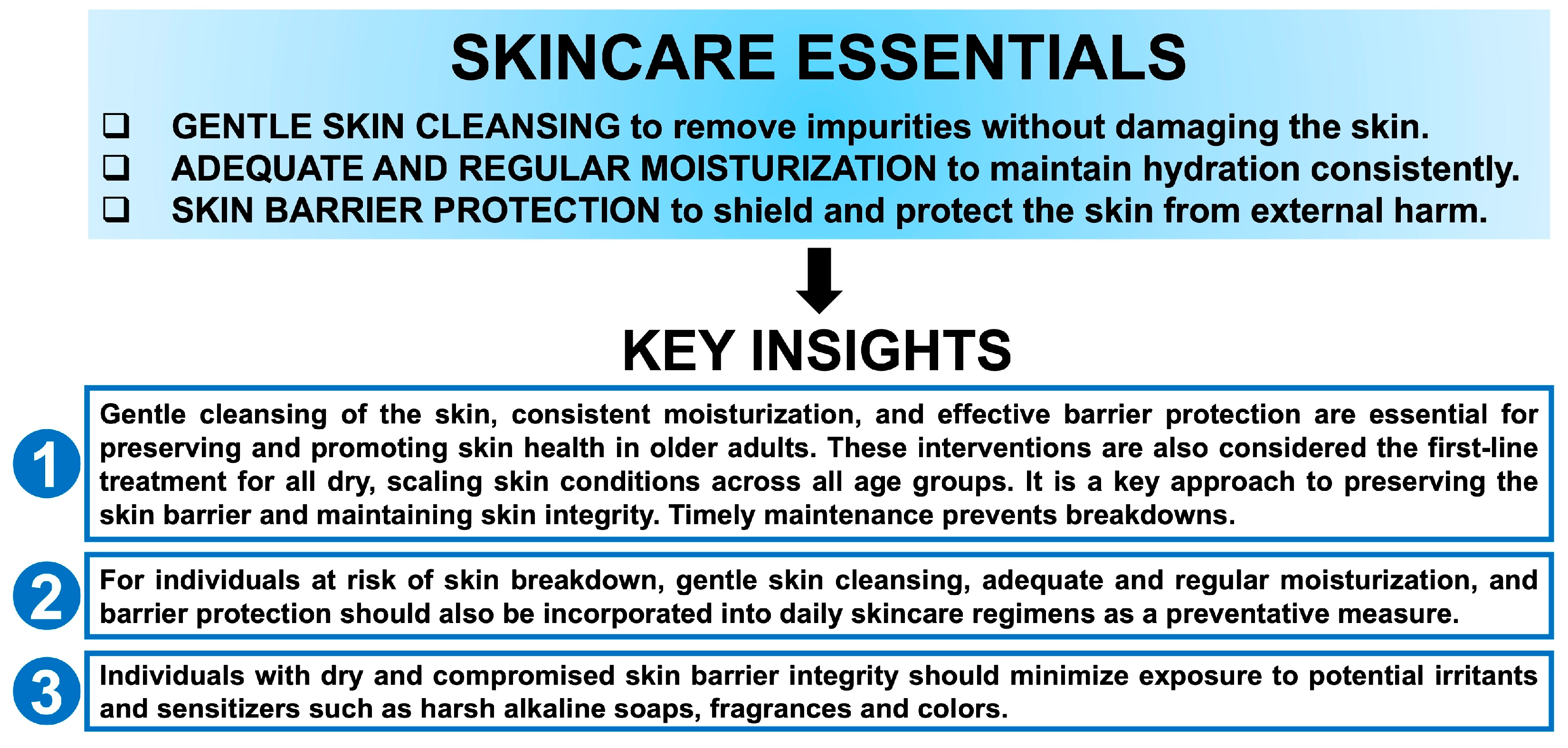

Recognizing and Managing Skin Integrity Issues in Compromised Aging Skin: The Importance of Gentle Skin Cleansing, Adequate Moisturization, and Skin Barrier Protection
Abstract
1. Introduction
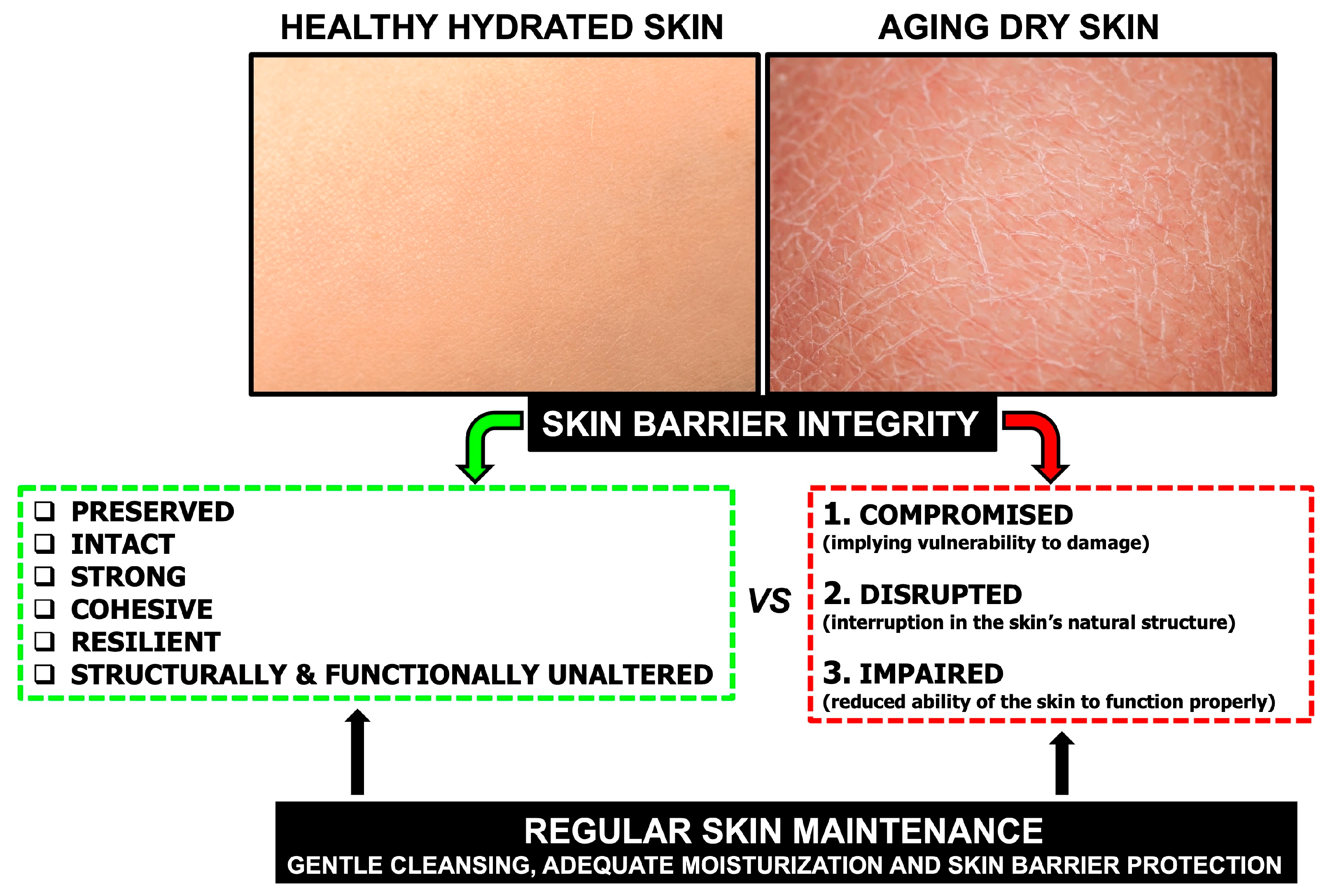
2. Skin Barrier Integrity—Definition and Importance
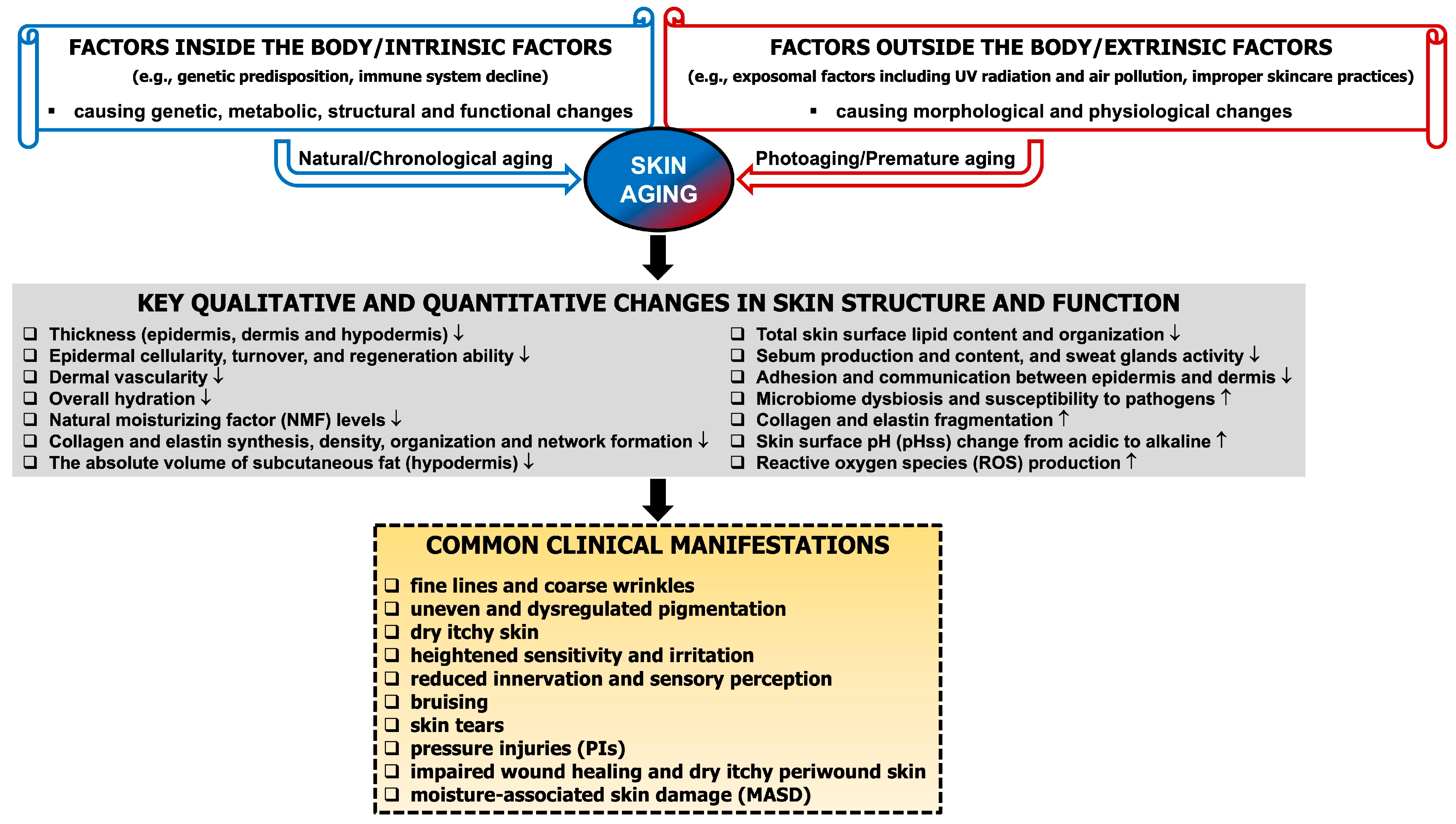
3. Key Alterations in Skin Structure with Age
3.1. The Relationship Between Natural Aging and Extrinsic Aging
3.2. Core Structural Components of the Epidermis and Their Age-Related Alterations
3.3. Core Structural Components of the Dermis and Their Age-Related Alterations
3.4. Core Structural Components of the Hypodermis and Their Age-Related Alterations
3.5. Skin Thickness Alterations Across the Epidermis and Dermis
3.6. Skin Surface Lipid Composition and Content Alterations
3.7. Skin Surface pH (pHss) Alterations
3.8. Epidermal Microbiome Diversity Alterations
4. Key Alterations in Skin Function with Age—Clinical Manifestations and Assessment
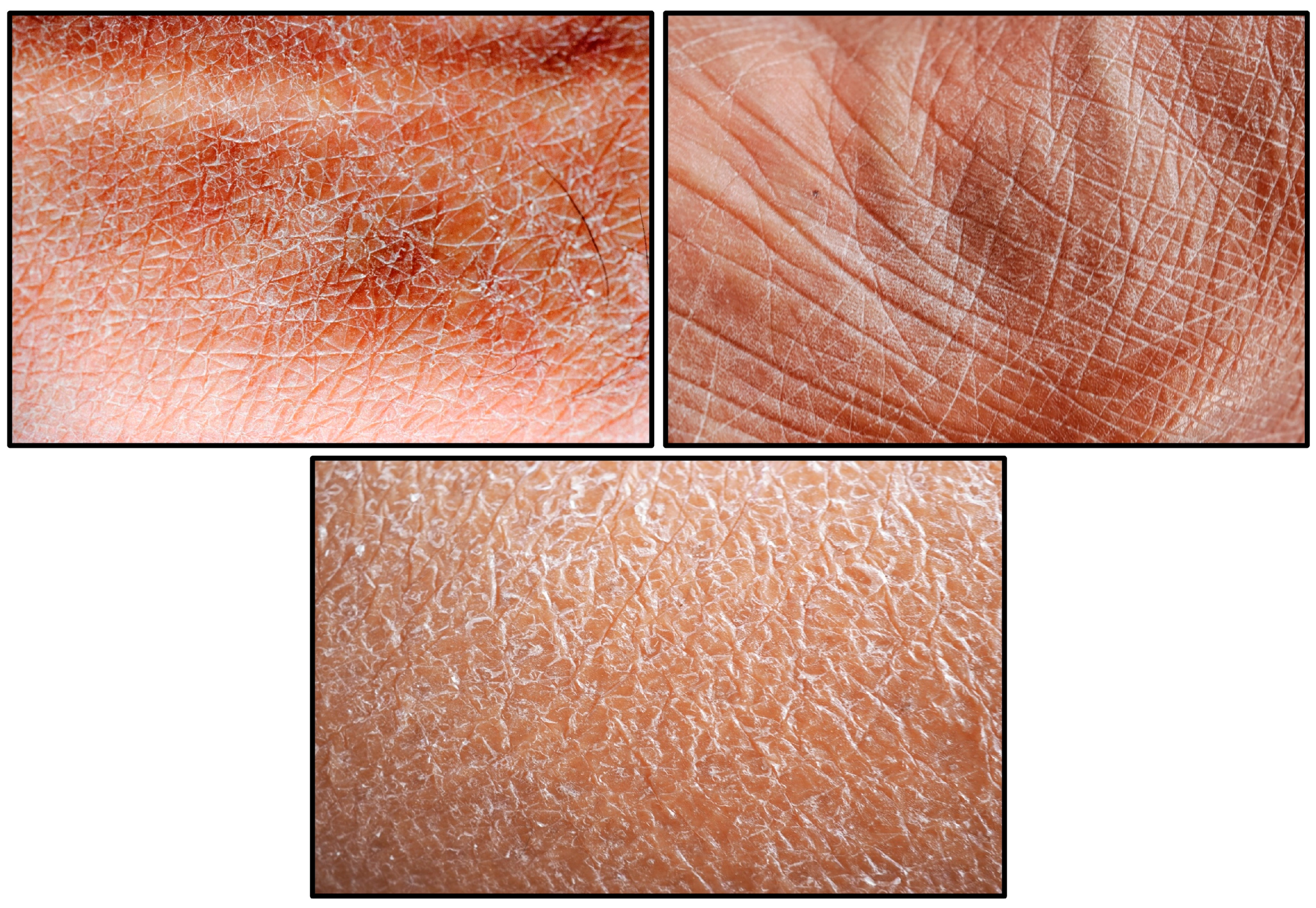
4.1. Dry and Itchy Skin
Common Approaches for the Assessment of Dry Aging Skin
4.2. Sensitive Skin
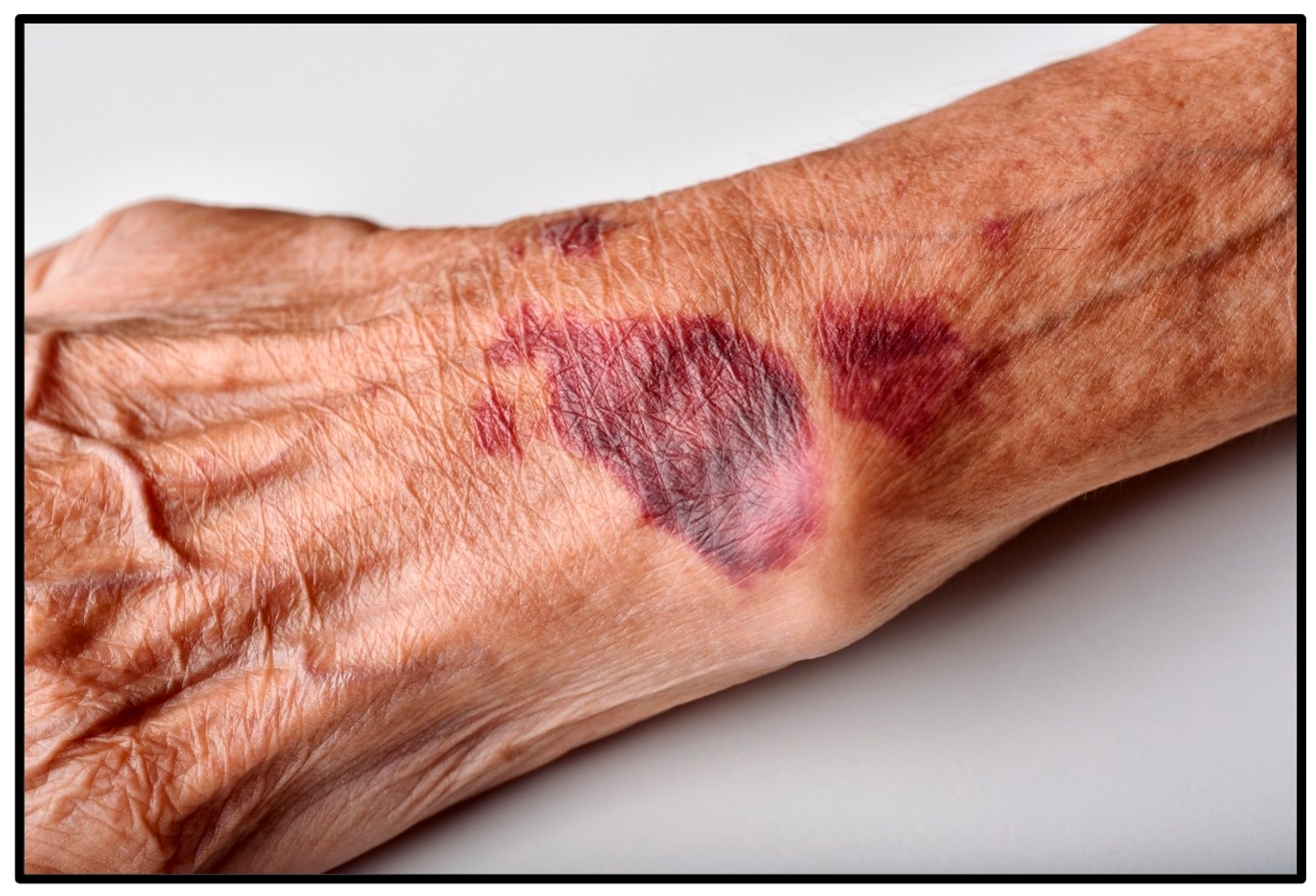
4.3. Bruising
4.4. Skin Tears
4.5. Pressure Injuries (PIs)
4.6. Chronic Wound Healing and Periwound Skin
4.7. Moisture-Associated Skin Damage (MASD)
5. Maintaining Healthy Skin and Restoring Compromised Aging Skin—The Benefits of Regular Skin Cleansing, Adequate Moisturization and Protective Care
5.1. The Role and Complexity of Gentle Cleansing
5.2. The Role of Skin Moisturization and Replenishing—Key Ingredients and Their Benefits
5.3. The Role of Skin Barrier Protection: How to Select an Appropriate Protective Formulation
6. Final Thoughts and Vision for the Future
Author Contributions
Funding
Institutional Review Board Statement
Informed Consent Statement
Data Availability Statement
Conflicts of Interest
Abbreviations
| AD | Atopic dermatitis |
| CERs | Ceramides |
| CHOL | Cholesterol |
| FFAs | Free fatty acids |
| HCPs | Healthcare professionals |
| HA | Hyaluronic acid |
| IAD | Incontinence-associated dermatitis |
| ISTAP | International Skin Tear Advisory Panel |
| MASD | Moisture-associated skin damage |
| NMF | Natural moisturizing factor |
| pHss | Skin surface pH |
| PIs | Pressure injuries |
| ROS | Reactive oxygen species |
| SC | Stratum corneum |
| SPF | Sun protection factor |
| TEWL | Transepidermal water loss |
| UV | Ultraviolet radiation |
References
- McGrath, J.A.; Uitto, J. Chapter 2: Structure and function of the skin. In Rook’s Textbook of Dermatology, 10th ed.; Griffiths, C., Barker, J., Bleiker, T., Hussain, W., Simpson, R., Eds.; Wiley Blackwell: Hoboken, NJ, USA, 2024; Volume 1, pp. 1–50. [Google Scholar] [CrossRef]
- Elias, P.M. Stratum corneum defensive functions: An integrated view. J. Investig. Dermatol. 2005, 125, 183–200. Available online: https://pubmed.ncbi.nlm.nih.gov/16098026/ (accessed on 8 August 2025). [CrossRef]
- Kolarsick, P.A.J.; Kolarsick, M.A.; Goodwin, C. Anatomy and physiology of the skin. J. Dermatol. Nurses Assoc. 2011, 3, 203–213. [Google Scholar] [CrossRef]
- Lawton, S. Skin 1: The structure and functions of the skin. Nurs. Times 2019, 115, 30–33. Available online: https://www.nursingtimes.net/clinical-archive/dermatology/skin-1-the-structure-and-functions-of-the-skin-25-11-2019/ (accessed on 8 August 2025).
- Rosso, J.D.; Zeichner, J.; Alexis, A.; Cohen, D.; Berson, D. Understanding the epidermal barrier in healthy and compromised skin: Clinically relevant information for the dermatology practitioner: Proceedings of an Expert Panel Roundtable Meeting. J. Clin. Aesthet. Dermatol. 2016, 9, S2–S8. Available online: https://pmc.ncbi.nlm.nih.gov/articles/PMC5608132/ (accessed on 15 August 2025).
- Lukić, M.; Pantelić, I.; Savić, S.D. Towards optimal pH of the skin and topical formulations: From the current state of the art to tailored products. Cosmetics 2021, 8, 69. [Google Scholar] [CrossRef]
- Évora, A.S.; Adams, M.J.; Johnson, S.A.; Zhang, Z. Corneocytes: Relationship between structural and biomechanical properties. Skin Pharmacol. Physiol. 2021, 34, 146–161. Available online: https://pubmed.ncbi.nlm.nih.gov/33780956/ (accessed on 15 August 2025). [CrossRef]
- Fowler, J. Understanding the role of natural moisturizing factor in skin hydration. Pract. Dermatol. 2012, 9, 36–40. Available online: https://assets.bmctoday.net/practicaldermatology/pdfs/pd0712_ftr_nmfreview.pdf (accessed on 13 August 2025).
- Knox, S.; O’Boyle, N.M. Skin lipids in health and disease: A review. Chem. Phys. Lipids 2021, 236, 105055. Available online: https://pubmed.ncbi.nlm.nih.gov/33561467/ (accessed on 8 August 2025). [CrossRef]
- Sahle, F.F.; Gebre-Mariam, T.; Dobner, B.; Wohlrab, J.; Neubert, R.H. Skin diseases associated with the depletion of stratum corneum lipids and stratum corneum lipid substitution therapy. Skin Pharmacol. Physiol. 2015, 28, 42–55. Available online: https://pubmed.ncbi.nlm.nih.gov/25196193/ (accessed on 29 August 2025). [CrossRef]
- Bouwstra, J.A.; Nădăban, A.; Bras, W.; McCabe, C.; Bunge, A.; Gooris, G.S. The skin barrier: An extraordinary interface with an exceptional lipid organization. Prog. Lipid Res. 2023, 92, 101252. Available online: https://pubmed.ncbi.nlm.nih.gov/37666282/ (accessed on 5 September 2025). [CrossRef] [PubMed]
- Berdyshev, E. Skin lipid barrier: Structure, function and metabolism. Allergy Asthma Immunol. Res. 2024, 16, 445–461. Available online: https://pubmed.ncbi.nlm.nih.gov/39363765/ (accessed on 8 August 2025). [CrossRef]
- Wu, Y.; Wangari-Olivero, J.; Zhen, Y. ARTICLE: Compromised skin barrier and sensitive skin in diverse populations. J. Drugs Dermatol. 2021, 20, s17–s22. Available online: https://pubmed.ncbi.nlm.nih.gov/33852256/ (accessed on 12 September 2025). [CrossRef] [PubMed]
- Das, C.; Olmsted, D. The physics of stratum corneum lipid membranes. Philos. Trans. A Math. Phys. Eng. Sci. 2016, 374, 20150126. Available online: https://pmc.ncbi.nlm.nih.gov/articles/PMC4920276/ (accessed on 19 September 2025). [CrossRef] [PubMed]
- Rajkumar, J.; Chandan, N.; Lio, P.; Shi, V. The skin barrier and moisturization: Function, disruption, and mechanisms of repair. Skin Pharmacol. Physiol. 2023, 36, 174–185. Available online: https://pubmed.ncbi.nlm.nih.gov/37717558/ (accessed on 29 August 2025). [CrossRef]
- Dajnoki, Z.; Kapitány, A.; Eyerich, K.; Eyerich, S.; Törőcsik, D.; Szegedi, A. Topographical variations in the skin barrier and their role in disease pathogenesis. J. Eur. Acad. Dermatol. Venereol. 2025, 39, 1228–1238. Available online: https://pmc.ncbi.nlm.nih.gov/articles/PMC12188501/ (accessed on 8 August 2025). [CrossRef]
- Del Rosso, J.Q.; Levin, J. The clinical relevance of maintaining the functional integrity of the stratum corneum in both healthy and disease-affected skin. J. Clin. Aesthet. Dermatol. 2011, 4, 22–42. Available online: https://pmc.ncbi.nlm.nih.gov/articles/PMC3175800/ (accessed on 15 August 2025). [PubMed]
- Krutmann, J.; Schikowski, T.; Morita, A.; Berneburg, M. Environmentally-induced (extrinsic) skin aging: Exposomal factors and underlying mechanisms. J. Investig. Dermatol. 2021, 141, 1096–1103. Available online: https://pubmed.ncbi.nlm.nih.gov/33541724/ (accessed on 15 August 2025). [CrossRef]
- Cowdell, F.; Jadotte, Y.T.; Ersser, S.J.; Danby, S.; Lawton, S.; Roberts, A.; Dyson, J. Hygiene and emollient interventions for maintaining skin integrity in older people in hospital and residential care settings. Cochrane Database Syst. Rev. 2020, 1, CD011377. Available online: https://pubmed.ncbi.nlm.nih.gov/32006460/ (accessed on 5 September 2025). [CrossRef]
- Augustin, M.; Wilsmann-Theis, D.; Körber, A.; Kerscher, M.; Itschert, G.; Dippel, M.; Staubach, P. Diagnosis and treatment of xerosis cutis—A position paper. J. Dtsch. Dermatol. Ges. 2019, 17, 3–33. Available online: https://pubmed.ncbi.nlm.nih.gov/31738016/ (accessed on 5 September 2025). [CrossRef]
- Kim, B.E.; Leung, D.Y.M. Significance of skin barrier dysfunction in atopic dermatitis. Allergy Asthma Immunol. Res. 2018, 10, 207–215. [Google Scholar] [CrossRef]
- Yoshida, T.; Beck, L.A.; De Benedetto, A. Skin barrier defects in atopic dermatitis: From old idea to new opportunity. Allergol. Int. 2022, 71, 3–13. [Google Scholar] [CrossRef] [PubMed]
- Orsmond, A.; Bereza-Malcolm, L.; Lynch, T.; March, L.; Xue, M. Skin barrier dysregulation in psoriasis. Int. J. Mol. Sci. 2021, 22, 10841. [Google Scholar] [CrossRef]
- Jaffar, H.; Shakir, Z.; Kumar, G.; Ali, I.F. Ichthyosis vulgaris: An updated review. Skin Health Dis. 2022, 3, e187. Available online: https://pubmed.ncbi.nlm.nih.gov/36751330/ (accessed on 13 August 2025). [CrossRef]
- Brar, G.; Dhaliwal, A.; Brar, A.S.; Sreedevi, M.; Ahmadi, Y.; Irfan, M.; Golbari, R.; Zumárraga, D.; Yateem, D.; Lysak, Y.; et al. A comprehensive review of the role of UV radiation in photoaging processes between different types of skin. Cureus 2025, 17, e81109. [Google Scholar] [CrossRef]
- Moncrieff, G.; Cork, M.; Lawton, S.; Kokiet, S.; Daly, C.; Clark, C. Use of emollients in dry-skin conditions: Consensus statement. Clin. Exp. Dermatol. 2013, 38, 231–238. [Google Scholar] [CrossRef] [PubMed]
- Eberting, C.L.; Coman, G.; Blickenstaff, N. Repairing a compromised skin barrier in dermatitis: Leveraging the skin’s ability to heal itself. J. Allergy Ther. 2014, 5, 187. Available online: https://www.researchgate.net/publication/287392880 (accessed on 29 August 2025). [CrossRef]
- Lee, H.; Hong, Y.; Kim, M. Structural and functional changes and possible molecular mechanisms in aged skin. Int. J. Mol. Sci. 2021, 22, 12489. [Google Scholar] [CrossRef]
- Wang, Z.; Man, M.Q.; Li, T.; Elias, P.M.; Mauro, T.M. Aging-associated alterations in epidermal function and their clinical significance. Aging 2020, 12, 5551–5565. [Google Scholar] [CrossRef]
- Woo, Y.R.; Kim, H.S. Interaction between the microbiota and the skin barrier in aging skin: A comprehensive review. Front. Physiol. 2024, 15, 1322205. [Google Scholar] [CrossRef]
- Brooks, J.; Cowdell, F.; Ersser, S.J.; Gardiner, E.D. Skin cleansing and emolliating for older people: A quasi-experimental pilot study. Int. J. Older People Nurs. 2017, 12, e12145. Available online: https://pubmed.ncbi.nlm.nih.gov/28078772/ (accessed on 8 August 2025). [CrossRef]
- Blaak, J.; Grabmann, S.; Simon, I.; Callaghan, T.; Staib, P. Five dimensions of cleansing: A holistic view on the facets and importance of skin cleansing. Int. J. Cosmet. Sci. 2023, 45, 557–571. [Google Scholar] [CrossRef]
- Fluhr, J.W.; Alexis, A.F.; Andriessen, A.; Ferero Barrios, O.L.; Bjerring, P.; Foley, P.; Gold, M.H.; Kaderbhai, H.; Zhang, C. A global perspective on the treatment and maintenance of mature skin using gentle cleansers and moisturizers. Int. J. Dermatol. 2024, 63, 1676–1684. [Google Scholar] [CrossRef]
- Kottner, J.; Lichterfeld, A.; Blume-Peytavi, U. Maintaining skin integrity in the aged: A systematic review. Br. J. Dermatol. 2013, 169, 528–542. [Google Scholar] [CrossRef]
- Lichterfeld, A.; Hauss, A.; Surber, C.; Peters, T.; Blume-Peytavi, U.; Kottner, J. Evidence-based skin care: A systematic literature review and the development of a basic skin care algorithm. J. Wound Ostomy Cont. Nurs. 2015, 42, 501–524. [Google Scholar] [CrossRef]
- Blackburn, J.; Kopecki, Z.; Ousey, K.J. Skin integrity, antimicrobial stewardship and infection control: A critical review of current best practice. Wound Pract. Res. 2024, 32, 34–43. [Google Scholar] [CrossRef]
- Fore, J. A review of skin and the effects of aging on skin structure and function. Ostomy Wound Manag. 2006, 52, 24–35. Available online: https://pubmed.ncbi.nlm.nih.gov/16980727/ (accessed on 22 August 2025).
- Farage, M.A.; Miller, K.W.; Elsner, P.; Maibach, H.I. Structural characteristics of the aging skin: A review. Cutan. Ocul. Toxicol. 2007, 26, 343–357. [Google Scholar] [CrossRef]
- Agrawal, R.; Hu, A.; Bollag, W.B. The skin and inflamm-aging. Biology 2023, 12, 1396. [Google Scholar] [CrossRef] [PubMed]
- LeBlanc, K.; Campbell, K.; Beeckman, D.; Dunk, A.M.; Harley, C.; Hevia, H.; Holloway, S.; Idensohn, P.; Langemo, D.; Ousey, K.; et al. Best practice recommendations for the prevention and management of skin tears in aged skin. Wounds Int. 2018, 45, 540–542. [Google Scholar] [CrossRef]
- Waird, A.; Monaro, S. Reducing the incidence and severity of pressure injuries in a high level care residential aged facility: A quality improvement project. Wound Pract. Res. 2021, 29, 77–85. [Google Scholar] [CrossRef]
- Sugathapala, R.D.U.P.; Latimer, S.; Balasuriya, A.; Chaboyer, W.; Thalib, L.; Gillespie, B.M. Prevalence and incidence of pressure injuries among older people living in nursing homes: A systematic review and meta-analysis. Int. J. Nurs. Stud. 2023, 148, 104605. [Google Scholar] [CrossRef]
- Sibbald, R.G.; Campbell, K.; Coutts, P.; Queen, D. Intact skin–an integrity not to be lost. Ostomy Wound Manag. 2003, 49, 27–41. Available online: https://pubmed.ncbi.nlm.nih.gov/12874482/ (accessed on 5 September 2025).
- Woo, K.Y.; Beeckman, D.; Chakravarthy, D. Management of moisture-associated skin damage: A scoping review. Adv. Skin Wound Care 2017, 30, 494–501. [Google Scholar] [CrossRef]
- Harrison, I.P.; Spada, F. Breaking the itch-scratch cycle: Topical options for the management of chronic cutaneous itch in atopic dermatitis. Medicines 2019, 6, 76. [Google Scholar] [CrossRef] [PubMed]
- Haftek, M.; Roy, D.C.; Liao, I.C. ARTICLE: Evolution of skin barrier science for healthy and compromised skin. J. Drugs Dermatol. 2021, 20, s3–s9. [Google Scholar] [CrossRef] [PubMed]
- Farage, M.A.; Miller, K.W.; Elsner, P.; Maibach, H.I. Intrinsic and extrinsic factors in skin ageing: A review. Int. J. Cosmet. Sci. 2008, 30, 87–95. [Google Scholar] [CrossRef] [PubMed]
- Bonifant, H.; Holloway, S. A review of the effects of ageing on skin integrity and wound healing. Br. J. Community Nurs. 2019, 24, S28–S33. [Google Scholar] [CrossRef]
- Khalid, K.A.; Nawi, A.F.M.; Zulkifli, N.; Barkat, M.A.; Hadi, H. Aging and wound healing of the skin: A review of clinical and pathophysiological hallmarks. Life 2022, 12, 2142. [Google Scholar] [CrossRef]
- Lintzeri, D.A.; Karimian, N.; Blume-Peytavi, U.; Kottner, J. Epidermal thickness in healthy humans: A systematic review and meta-analysis. J. Eur. Acad. Dermatol. Venereol. 2022, 36, 1191–1200. [Google Scholar] [CrossRef]
- Manimegalai, S.; Sundaram, J.M.; Venkatachalam, N. Age changes in human skin from 3 years to 75 years of age. Int. J. Anat. Res. 2015, 3, 1578–1584. [Google Scholar] [CrossRef]
- Haydont, V.; Bernard, B.A.; Fortunel, N.O. Age-related evolutions of the dermis: Clinical signs, fibroblast and extracellular matrix dynamics. Mech. Ageing Dev. 2019, 177, 150–156. [Google Scholar] [CrossRef]
- Waller, J.M.; Maibach, H.I. Age and skin structure and function, a quantitative approach (II): Protein, glycosaminoglycan, water, and lipid content and structure. Skin Res. Technol. 2006, 12, 145–154. [Google Scholar] [CrossRef]
- Schreml, S.; Kemper, M.; Abels, C. Skin pH in the elderly and appropriate skin care. EMJ Dermatol. 2014, 2, 86–94. [Google Scholar] [CrossRef]
- Naharro-Rodriguez, J.; Bacci, S.; Hernandez-Bule, M.L.; Perez-Gonzalez, A.; Fernandez-Guarino, M. Decoding skin aging: A review of mechanisms, markers, and modern therapies. Cosmetics 2025, 12, 144. [Google Scholar] [CrossRef]
- Madiha, F.; Mehran, R.; Alia, N.; Awan, S.J. A systematic review of aging and its causes. Int. J. Dev. Res. (IJDR) 2018, 8, 23904–23908. Available online: https://www.journalijdr.com/systematic-review-aging-and-its-causes (accessed on 6 October 2025).
- Parrado, C.; Mercado-Saenz, S.; Perez-Davo, A.; Gilaberte, Y.; Gonzalez, S.; Juarranz, A. Environmental stressors on skin aging. Mechanistic insights. Front. Pharmacol. 2019, 10, 759. [Google Scholar] [CrossRef]
- Chaudhary, M.; Khan, A.; Gupta, M. Skin ageing: Pathophysiology and current market treatment approaches. Curr. Aging Sci. 2020, 13, 22–30. [Google Scholar] [CrossRef] [PubMed]
- Sachs, D.; Helfrich, Y.; Voorhees, J. Molecular mechanisms in skin aging. Cosmet. Dermatol. 2009, 22, 291–295. Available online: https://cdn.mdedge.com/files/s3fs-public/Document/September-2017/022060291.pdf (accessed on 13 August 2025).
- Baumann, L.; Bernstein, E.F.; Weiss, A.S.; Bates, D.; Humphrey, S.; Silberberg, M.; Daniels, R. Clinical relevance of elastin in the structure and function of skin. Aesthet. Surg. J. Open Forum 2021, 3, ojab019. Available online: https://pmc.ncbi.nlm.nih.gov/articles/PMC8239663/ (accessed on 19 September 2025).
- Passeron, T.; Krutmann, J.; Andersen, M.L.; Katta, R.; Zouboulis, C.C. Clinical and biological impact of the exposome on the skin. J. Eur. Acad. Dermatol. Venereol. 2020, 34, 4–25. [Google Scholar] [CrossRef] [PubMed]
- Wickett, R.R.; Visscher, M.O. Structure and function of the epidermal barrier. Am. J. Infect. Control (AJIC) 2006, 34, S98–S110. [Google Scholar] [CrossRef]
- Stefanovic, N.; Irvine, A.D. Filaggrin and beyond: New insights into the skin barrier in atopic dermatitis and allergic diseases, from genetics to therapeutic perspectives. Ann. Allergy Asthma Immunol. 2024, 132, 187–195. [Google Scholar] [CrossRef]
- McLean, W.H. Filaggrin failure—From ichthyosis vulgaris to atopic eczema and beyond. Br. J. Dermatol. 2016, 175, 4–7. [Google Scholar] [CrossRef]
- Thyssen, J.P.; Godoy-Gijon, E.; Elias, P.M. Ichthyosis vulgaris: The filaggrin mutation disease. Br. J. Dermatol. 2013, 168, 1155–1166. [Google Scholar] [CrossRef] [PubMed]
- Mijaljica, D.; Townley, J.P.; Spada, F.; Harrison, I.P. The heterogeneity and complexity of skin surface lipids in human skin health and disease. Prog. Lipid Res. 2024, 93, 101264. [Google Scholar] [CrossRef] [PubMed]
- Lefèvre-Utile, A.; Braun, C.; Haftek, M.; Aubin, F. Five functional aspects of the epidermal barrier. Int. J. Mol. Sci. 2021, 22, 11676. [Google Scholar] [CrossRef]
- Bay, Y.; Topal, I.O. Aging skin and anti-aging strategies. Explor. Res. Hypothesis Med. 2023, 8, 269–279. [Google Scholar] [CrossRef]
- Theocharidis, G.; Connelly, J.T. Minor collagens of the skin with not so minor functions. J. Anat. 2019, 235, 418–429. [Google Scholar] [CrossRef]
- Guida, S.; Pellacani, G.; Ciardo, S.; Longo, C. Reflectance confocal microscopy of aging skin and skin cancer. Dermatol. Pract. Concept. 2021, 11, e2021068. [Google Scholar] [CrossRef]
- Park, S. Biochemical, structural and physical changes in aging human skin, and their relationship. Biogerontology 2022, 23, 275–288. [Google Scholar] [CrossRef]
- Russell-Goldman, E.; Murphy, G.F. The pathobiology of skin aging: New insights into an old dilemma. Am. J. Pathol. 2020, 190, 1356–1369. [Google Scholar] [CrossRef]
- Man, M.Q.M.; Feingold, K.R.; Thornfeldt, C.R.; Elias, P.M. Optimization of physiological lipid mixtures for barrier repair. J. Investig. Dermatol. 1996, 106, 1096–1101. [Google Scholar] [CrossRef]
- Ghadially, R.; Brown, B.E.; Sequeira-Martin, S.M.; Feingold, K.R.; Elias, P.M. The aged epidermal permeability barrier. Structural, functional, and lipid biochemical abnormalities in humans and a senescent murine model. J. Clin. Investig. 1995, 95, 2281–2290. [Google Scholar] [CrossRef]
- Zettersten, E.M.; Ghadially, R.; Feingold, K.R.; Crumrine, D.; Elias, P.M. Optimal ratios of topical stratum corneum lipids improve barrier recovery in chronologically aged skin. J. Am. Acad. Dermatol. 1997, 37, 403–408. [Google Scholar] [CrossRef]
- Rogers, J.; Harding, C.; Mayo, A.; Banks, J.; Rawlings, A. Stratum corneum lipids: The effect of ageing and the seasons. Arch. Dermatol. Res. 1996, 288, 765–770. [Google Scholar] [CrossRef] [PubMed]
- Lambers, H.; Piessens, S.; Bloem, A.; Pronk, H.; Finkel, P. Natural skin surface pH is on average below 5, which is beneficial for its resident flora. Int. J. Cosmet. Sci. 2006, 28, 359–370. [Google Scholar] [CrossRef]
- Ali, S.M.; Yosipovitch, G. Skin pH: From basic science to basic skin care. Acta Derm. Venereol. 2013, 93, 261–267. [Google Scholar] [CrossRef] [PubMed]
- Mijaljica, D.; Townley, J.P.; Klionsky, D.J.; Spada, F.; Lai, M. The Origin, intricate nature, and role of the skin surface pH (pHss) in barrier integrity, eczema, and psoriasis. Cosmetics 2025, 12, 24. [Google Scholar] [CrossRef]
- Marrakchi, S.; Maibach, H.I. Biophysical parameters of skin: Map of human face, regional, and age-related differences. Contact Dermat. 2007, 57, 28–34. [Google Scholar] [CrossRef] [PubMed]
- Schmid-Wendtner, M.H.; Korting, H.C. The pH of the skin surface and its impact on the barrier function. Skin Pharmacol. Physiol. 2006, 19, 296–302. [Google Scholar] [CrossRef]
- Choi, E.H. Gender, age, and ethnicity as factors that can influence skin pH. Curr. Probl. Dermatol. 2018, 54, 48–53. Available online: https://pubmed.ncbi.nlm.nih.gov/30130774/ (accessed on 29 August 2025). [PubMed]
- Kumar, P.; Das, A. Acid mantle: What we need to know. Indian J. Dermatol. Venereol. Leprol. 2023, 89, 729–732. [Google Scholar] [CrossRef]
- Choi, E.H.; Kang, H. Importance of stratum corneum acidification to restore skin barrier function in eczematous diseases. Ann. Dermatol. 2024, 36, 1–8. [Google Scholar] [CrossRef]
- Blaak, J.; Wohlfart, R.; Schürer, N. Treatment of aged skin with a pH 4 skin care product normalizes increased skin surface pH and improves barrier function: Results of a pilot study. J. Cosmet. Dermatol. Sci. Appl. 2011, 1, 50–58. [Google Scholar] [CrossRef][Green Version]
- Man, M.Q.; Xin, S.J.; Song, S.P.; Cho, S.Y.; Zhang, X.J.; Tu, C.X.; Feingold, K.R.; Elias, P.M. Variation of skin surface pH, sebum content and stratum corneum hydration with age and gender in a large Chinese population. Skin Pharmacol. Physiol. 2009, 22, 190–199. [Google Scholar] [CrossRef]
- Luebberding, S.; Krueger, N.; Kerscher, M. Skin physiology in men and women: In vivo evaluation of 300 people including TEWL, SC hydration, sebum content and skin surface pH. Int. J. Cosmet. Sci. 2013, 35, 477–483. [Google Scholar] [CrossRef]
- Proksch, E. pH in nature, humans and skin. J. Dermatol. 2018, 45, 1044–1052. [Google Scholar] [CrossRef]
- Farage, M.A.; Hood, W.; Berardesca, E.; Maibach, H. Intrinsic and extrinsic factors affecting skin surface pH. Curr. Probl. Dermatol. 2018, 54, 33–47. Available online: https://pubmed.ncbi.nlm.nih.gov/30130773/ (accessed on 21 July 2025). [PubMed]
- Choi, E.H.; Man, M.Q.; Xu, P.; Xin, S.; Liu, Z.; Crumrine, D.A.; Jiang, Y.J.; Fluhr, J.W.; Feingold, K.R.; Elias, P.M.; et al. Stratum corneum acidification is impaired in moderately aged human and murine skin. J. Investig. Dermatol. 2007, 127, 2847–2856. [Google Scholar] [CrossRef]
- Luebberding, S.; Krueger, N.; Kerscher, M. Age-related changes in skin barrier function—Quantitative evaluation of 150 female subjects. Int. J. Cosmet. Sci. 2013, 35, 183–190. [Google Scholar] [CrossRef]
- Kilic, A.; Masur, C.; Reich, H.; Knie, U.; Dähnhardt, D.; Dähnhardt-Pfeiffer, S.; Abels, C. Skin acidification with a water-in-oil emulsion (pH 4) restores disrupted epidermal barrier and improves structure of lipid lamellae in the elderly. J. Dermatol. 2019, 46, 457–465. [Google Scholar] [CrossRef] [PubMed]
- Ratanapokasatit, Y.; Laisuan, W.; Rattananukrom, T.; Petchlorlian, A.; Thaipisuttikul, I.; Sompornrattanaphan, M. How microbiomes affect skin aging: The updated evidence and current perspectives. Life 2022, 12, 936. [Google Scholar] [CrossRef]
- Li, Z.; Bai, X.; Peng, T.; Yi, X.; Luo, L.; Yang, J.; Liu, J.; Wang, Y.; He, T.; Wang, X.; et al. New insights into the skin microbial communities and skin aging. Front. Microbiol. 2020, 11, 565549. [Google Scholar] [CrossRef]
- Smythe, P.; Wilkinson, H.N. The skin microbiome: Current landscape and future opportunities. Int. J. Mol. Sci. 2023, 24, 3950. [Google Scholar] [CrossRef]
- Rittié, L.; Fisher, G.J. Natural and sun-induced aging of human skin. Cold Spring Harb. Perspect. Med. 2015, 5, a015370. [Google Scholar]
- Barco, D.; Giménez-Arnau, A. Xerosis: Una disfunción de la barrera epidérmica [Xerosis: A dysfunction of the epidermal barrier]. Actas Dermosifiliogr. 2008, 99, 671–682. [Google Scholar] [CrossRef]
- Cohen, K.R.; Frank, J.; Salbu, R.L.; Israel, I. Pruritus in the elderly: Clinical approaches to the improvement of quality of life. Pharm. Ther. 2012, 37, 227–239. Available online: https://pmc.ncbi.nlm.nih.gov/articles/PMC3351862/ (accessed on 13 August 2025).
- Proksch, E.; Berardesca, E.; Misery, L.; Engblom, J.; Bouwstra, J. Dry skin management: Practical approach in light of latest research on skin structure and function. J. Dermatol. Treat. 2020, 31, 716–722. [Google Scholar] [CrossRef]
- Augustin, M.; Berardesca, E.; Blume-Peytavi, U.; Elsner, P.; Scafa, D.; Schmeel, L.C.; Proksch, E. Managing dry skin in patients with comorbidities or with advanced age: Unmet needs and roles for products containing potential emollient-plus ingredients. J. Dermatol. Treat. 2024, 35, 2326171. [Google Scholar] [CrossRef] [PubMed]
- Fluhr, J.W.; Moore, D.J.; Lane, M.E.; Lachmann, N.; Rawlings, A.V. Epidermal barrier function in dry, flaky and sensitive skin: A narrative review. J. Eur. Acad. Dermatol. Venereol. 2024, 38, 812–820. [Google Scholar] [CrossRef] [PubMed]
- Tivoli, Y.A.; Rubenstein, R.M. Pruritus: An updated look at an old problem. J. Clin. Aesthet. Dermatol. 2009, 2, 30–36. Available online: https://pmc.ncbi.nlm.nih.gov/articles/PMC2924137/ (accessed on 8 August 2025). [PubMed]
- Hahnel, E.; Blume-Peytavi, U.; Trojahn, C.; Dobos, G.; Jahnke, I.; Kanti, V.; Richter, C.; Lichterfeld-Kottner, A.; Garcia Bartels, N.; Kottner, J. Prevalence and associated factors of skin diseases in aged nursing home residents: A multicentre prevalence study. BMJ Open 2017, 7, e018283. [Google Scholar] [CrossRef]
- Lichterfeld-Kottner, A.; Lahmann, N.; Blume-Peytavi, U.; Mueller-Werdan, U.; Kottner, J. Dry skin in home care: A representative prevalence study. J. Tissue Viability 2018, 27, 226–231. [Google Scholar] [CrossRef] [PubMed]
- Callaghan, T.M.; Wilhelm, K.P. A review of ageing and an examination of clinical methods in the assessment of ageing skin. Part 2: Clinical perspectives and clinical methods in the evaluation of ageing skin. Int. J. Cosmet. Sci. 2008, 30, 323–332. [Google Scholar] [CrossRef]
- Bielfeldt, S.; Springmann, G.; Seise, M.; Wilhelm, K.P.; Callaghan, T. An updated review of clinical methods in the assessment of ageing skin—New perspectives and evaluation for claims support. Int. J. Cosmet. Sci. 2018, 40, 348–355. [Google Scholar] [CrossRef]
- Behm, P.; Hashemi, M.; Hoppe, S.; Wessel, S.; Hagens, R.; Jaspers, S.; Wenck, H.; Rübhausen, M. Confocal spectroscopic imaging measurements of depth dependent hydration dynamics in human skin in-vivo. AIP Adv. 2017, 7, 115004. [Google Scholar] [CrossRef]
- Misery, L.; Loser, K.; Stander, S. Sensitive skin. J. Eur. Acad. Dermatol. Venereol. 2016, 30, 2–8. [Google Scholar] [CrossRef]
- Misery, L.; Ständer, S.; Szepietowski, J.C.; Reich, A.; Wallengren, J.; Evers, A.W.; Takamori, K.; Brenaut, E.; Gall-Ianotto, C.L.; Fluhr, J.; et al. Definition of sensitive skin: An expert position paper from the special interest group on sensitive skin of the International Forum for the Study of Itch. Acta Derm. Venereol. 2017, 97, 4–6. [Google Scholar] [CrossRef]
- Inamadar, A.C.; Palit, A. Sensitive skin: An overview. Indian J. Dermatol. Venereol. Leprol. 2013, 79, 9–16. [Google Scholar] [CrossRef]
- Duarte, I.; Silveira, J.E.P.S.; Hafner, M.F.S.; Toyota, R.; Pedroso, D.M.M. Sensitive skin: Review of an ascending concept. An. Bras. Dermatol. 2017, 92, 521–525. [Google Scholar] [CrossRef]
- Yan, S.; Zhao, J.; Han, Y.; Wang, R.; Bai, K.; Ge, J.; Pan, Y.; Zhao, H. The challenges in investigating the pathogenesis of sensitive skin by noninvasive measurements: A systematic review. Clin. Cosmet. Investig. Dermatol. 2023, 16, 237–251. Available online: https://pmc.ncbi.nlm.nih.gov/articles/PMC9885880/ (accessed on 29 August 2025). [CrossRef]
- Berardesca, E.; Farage, M.; Maibach, H. Sensitive skin: An overview. Int. J. Cosmet. Sci. 2013, 35, 2–8. [Google Scholar] [CrossRef]
- Guerra-Tapia, A.; Serra-Baldrich, E.; Prieto Cabezas, L.; González-Guerra, E.; López-Estebaranz, J.L. Diagnosis and treatment of sensitive skin syndrome: An algorithm for clinical practice. Actas Dermosifiliogr. 2019, 110, 800–808. [Google Scholar] [CrossRef] [PubMed]
- Corazza, M.; Guarneri, F.; Montesi, L.; Toni, G.; Donelli, I.; Borghi, A. Proposal of a self-assessment questionnaire for the diagnosis of sensitive skin. J. Cosmet. Dermatol. 2022, 21, 2488–2496. [Google Scholar] [CrossRef] [PubMed]
- Dyer, J.M.; Miller, R.A. Chronic skin fragility of aging: Current concepts in the pathogenesis, recognition, and management of dermatoporosis. J. Clin. Aesthet. Dermatol. 2018, 11, 13–18. [Google Scholar] [PubMed]
- Saxena, D.; Nigam, M.; Kimar Mishra, P.; Tomar, J. Assessment of the age of bruise by their healing. Indian J. Forensic Community Med. 2018, 5, 119–122. Available online: https://www.researchgate.net/publication/327111293 (accessed on 8 August 2025).
- Langlois, N.E. The science behind the quest to determine the age of bruises-a review of the English language literature. Forensic Sci. Med. Pathol. 2007, 3, 241–251. [Google Scholar] [CrossRef]
- Kostadinova-Petrova, I.; Mitevska, E.; Janeska, B. Histological characteristics of bruises with different age. Open Access Maced. J. Med. Sci. 2017, 5, 813–817. [Google Scholar] [CrossRef]
- Van Tiggelen, H.; Beeckman, D. Skin tears anno 2022: An update on definition, epidemiology, classification, aetiology, prevention and treatment. J. Wound Manag 2022, 23, 38–51. Available online: https://journals.cambridgemedia.com.au/jwm/volume-23-number-2/skin-tears-anno-2022-update-definition-epidemiology-classification-aetiology-prevention-and-treatment (accessed on 19 September 2025).
- Nokaneng, E.; Heerschap, C.; Thayer, D.; Ousey, K.; Holloway, S.; LeBlanc, K.; Netsch, D.; Vance, H.; Emmons, K.R.; Woo, K. International Skin Tear Advisory Panel (ISTAP) best practice recommendations 2025. In Best Practice Recommendations for the Prevention and Management of Skin Tears in Aged Skin, 2nd ed.; Wounds International: London, UK, 2025; Available online: https://www.skintears.org/post/bpr-for-the-prevention-and-management-of-skin-tears-in-aged-skin (accessed on 29 August 2025).
- Van Tiggelen, H.; LeBlanc, K.; Campbell, K.; Woo, K.; Baranoski, S.; Dunk, A.M.; Gloeckner, M.; Hevia, H.; Holloway, S.; Idensohn, P. Standardizing the classification of skin tears: Validity and reliability testing of the International Skin Tear Advisory Panel Classification System in 44 countries. Br. J. Dermatol. 2020, 183, 146–154. [Google Scholar] [CrossRef]
- National Pressure Injury Advisory Panel (NPIAP); European Pressure Ulcer Advisory Panel (EPUA); Pan Pacific Pressure Injury Alliance (PPI). Prevention and Treatment of Pressure Ulcers/Injuries: Clinical Practice Guideline; The International Guideline; EPUAP: Dublin, Ireland; NPIAP: Schaumburg, IL, USA; PPPIA: Singapore, 2025; Available online: https://internationalguideline.com/etiology (accessed on 29 August 2025).
- Kottner, J.; Cuddigan, J.; Carville, K.; Balzer, K.; Berlowitz, D.; Law, S.; Litchford, M.; Mitchell, P.; Moore, Z.; Pittman, J.; et al. Pressure ulcer/injury classification today: An international perspective. J. Tissue Viability 2020, 29, 197–203. [Google Scholar] [CrossRef]
- Jiang, Q.; Chen, K.; Liu, Y.; Zhou, J.; Bai, Y.; Zhao, J.; Weng, Y.; Zhu, Y.; Feng, H.; Wang, J.; et al. Relationship between dry skin and pressure injury in older patients: A multicentre cross-sectional survey in China. Int. Wound J. 2023, 20, 1402–1417. [Google Scholar] [CrossRef] [PubMed]
- Jaul, E. Assessment and management of pressure ulcers in the elderly: Current strategies. Drugs Aging 2010, 27, 311–325. [Google Scholar] [CrossRef]
- Fernandez-Guarino, M.; Naharro-Rodriguez, J.; Bacci, S. Aberrances of the wound healing process: A review. Cosmetics 2024, 11, 209. [Google Scholar] [CrossRef]
- Okur, M.E.; Karantas, I.D.; Şenyiğit, Z.; Üstündağ Okur, N.; Siafaka, P.I. Recent trends on wound management: New therapeutic choices based on polymeric carriers. Asian J. Pharm. Sci. 2020, 15, 661–684. [Google Scholar] [CrossRef] [PubMed]
- Bowers, S.; Franco, E. Chronic wounds: Evaluation and management. Am. Fam. Physician 2020, 10, 159–166. Available online: https://www.aafp.org/pubs/afp/issues/2020/0201/p159.html (accessed on 29 August 2025).
- Frykberg, R.G.; Banks, J. Challenges in the treatment of chronic wounds. Adv. Wound Care 2015, 4, 560–582. [Google Scholar] [CrossRef]
- Klotz, T.; Moran, H.; Vu, P.; Maddern, G.; Wagstaff, M. Commonly recommended moisturising products: Effect on transepidermal water loss and hydration in a scar model. Burns 2025, 51, 107629. [Google Scholar] [CrossRef]
- Koh, J.H.; Miller, C.; McKenzie, G.; McGuiness, W. The relationship between periwound skin condition and venous leg ulcer chronicity. Wound Pract. Res. 2015, 23, 82–89. Available online: https://journals.cambridgemedia.com.au/wpr/volume-23-number-2/relationship-between-periwound-skin-condition-and-venous-leg-ulcer-chronicity (accessed on 23 July 2025).
- Holloway, S.; Mahoney, K. Periwound skin care considerations for older adults. Br. J. Community Nurs. 2021, 26, S26–S33. Available online: https://www.magonlinelibrary.com/doi/abs/10.12968/bjcn.2021.26.Sup6.S26?rfr_dat=cr_pub++0pubmed&url_ver=Z39.88-2003&rfr_id=ori%3Arid%3Acrossref.org (accessed on 23 July 2025).
- Leaper, D.J.; Schultz, G.; Carville, K.; Fletcher, J.; Swanson, T.; Drake, R. Extending the TIME concept: What have we learned in the past 10 years? Int. Wound J. 2012, 9, 1–19. Available online: https://pmc.ncbi.nlm.nih.gov/articles/PMC7950760/#:~:text=The%20TIME%20acronym%20(tissue%2C%20infection,management%20of%20open%20chronic%20wounds (accessed on 23 July 2025).
- Sussman, G. An update on wound management. Aust. Prescr. 2023, 46, 29–35. [Google Scholar] [CrossRef]
- Young, T. Back to basics: Understanding moisture-associated skin damage. Wounds UK 2017, 13, 56–65. Available online: https://wounds-uk.com/journal-articles/back-basics-understanding-moisture-associated-skin-damage/ (accessed on 15 August 2025).
- Beeckman, D.; Van den Bussche, K.; Alves, P.; Beele, H.; Ciprandi, G.; Coyer, F.; de Groot, T.; De Meyer, D.; Dunk, A.M.; Fourie, A.; et al. The Ghent Global IAD Categorisation Tool (GLOBIAD); Skin Integrity Research Group-Ghent University: Ghent, Belgium, 2017; Available online: https://images.skintghent.be/20184916028778_globiadenglish.pdf (accessed on 29 August 2025).
- Pondeljak, N.; Lugović-Mihić, L.; Tomić, L.; Parać, E.; Pedić, L.; Lazić-Mosler, E. Key factors in the complex and coordinated network of skin keratinization: Their significance and involvement in common skin conditions. Int. J. Mol. Sci. 2023, 25, 236. [Google Scholar] [CrossRef]
- Surber, C.; Humbert, P.; Abels, C.; Maibach, H. The acid mantle: A myth or an essential part of skin health? Curr. Probl. Dermatol. 2018, 54, 1–10. Available online: https://pubmed.ncbi.nlm.nih.gov/30125885/ (accessed on 21 July 2025).
- Boxberger, M.; Cenizo, V.; Cassir, N.; La Scola, B. Challenges in exploring and manipulating the human skin microbiome. Microbiome 2021, 9, 125. [Google Scholar] [CrossRef]
- Hong, J.Y.; Kwon, D.; Park, K.Y. Microbiome-based interventions for skin aging and barrier function: A comprehensive review. Ann. Dermatol. 2025, 37, e26. [Google Scholar] [CrossRef] [PubMed]
- Stamatas, G.N. Protein degradation in the stratum corneum. Int. J. Cosmet. Sci. 2024, 46, 590–597. [Google Scholar] [CrossRef]
- Voegeli, D. Understanding the main principles of skin care in older adults. Nurs. Stand. 2012, 27, 59. [Google Scholar] [CrossRef]
- Mijaljica, D.; Townley, J.P.; Spada, F.; Nguyen, M.; Cheung, Y.; Chow, W.; Brown, S.; Meere, S.; Lai, M. A daily cleansing–moisturizing routine for maintaining skin integrity in aged-care residents: A case report. Dermato 2025, 5, 5. [Google Scholar] [CrossRef]
- Finch, K.; Osseiran-Moisson, R.; Carville, K.; Leslie, G.; Dwyer, M. Skin tear prevention in elderly patients using twice-daily moisturiser. Wound Pract. Res. 2018, 26, 99–109. Available online: https://journals.cambridgemedia.com.au/wpr/volume-26-number-2/skin-tear-prevention-elderly-patients-using-twice-daily-moisturiser (accessed on 12 September 2025).
- O’Brien, J.; Parker, C.N.; Bui, U.; MacAndrew, M.; Mitchell, J.; Finlayson, K.J. What is the evidence on skin care for maintaining skin integrity and prevention of wounds? An integrative review. Wound Pract. Res. 2024, 32, 25–33. [Google Scholar] [CrossRef]
- Mijaljica, D.; Spada, F.; Harrison, I.P. Skin cleansing without or with compromise: Soaps and syndets. Molecules 2022, 27, 2010. Available online: https://pmc.ncbi.nlm.nih.gov/articles/PMC8954092/ (accessed on 21 July 2025).
- Mukhopadhyay, P. Cleansers and their role in various dermatological disorders. Indian J. Dermatol. 2011, 56, 2–6. [Google Scholar] [CrossRef]
- Ananthapadmanabhan, K.P.; Moore, D.J.; Subramanyan, K.; Misra, M.; Meyer, F. Cleansing without compromise: The impact of cleansers on the skin barrier and the technology of mild cleansing. Dermatol. Ther. 2004, 17, 16–25. [Google Scholar] [CrossRef]
- Ananthapadmanabhan, K.P.; Mukherjee, S.; Chandar, P. Stratum corneum fatty acids: Their critical role in preserving barrier integrity during cleansing. Int. J. Cosmet. Sci. 2013, 35, 337–345. [Google Scholar] [CrossRef]
- Draelos, Z.D.; Baalbak, N.H.; Raab, S.; Colón, G. The effect of a ceramide-containing product on stratum corneum lipid levels in dry legs. J. Drugs Dermatol. 2020, 19, 372–376. [Google Scholar] [CrossRef]
- Humbert, P.; Dréno, B.; Krutmann, J.; Luger, T.A.; Triller, R.; Meaume, S.; Seité, S. Recommendations for managing cutaneous disorders associated with advancing age. Clin. Interv. Aging 2016, 11, 141–148. [Google Scholar] [CrossRef] [PubMed]
- Cooper, P. Skin care: Managing the skin of the incontinent patient. Wound Essent. 2011, 6, 69–74. Available online: https://wounds-uk.com/wp-content/uploads/2023/02/content_10008.pdf (accessed on 29 August 2025).
- Purnamawati, S.; Indrastuti, N.; Danarti, R.; Saefudin, T. The role of moisturizers in addressing various kinds of dermatitis: A review. Clin. Med. Res. 2017, 15, 75–87. [Google Scholar] [CrossRef]
- Madnani, N.; Deo, J.; Dalal, K.; Benjamin, B.; Murthy, V.V.; Hegde, R.; Shetty, T. Revitalizing the skin: Exploring the role of barrier repair moisturizers. J. Cosmet. Dermatol. 2024, 23, 1533–1540. [Google Scholar] [CrossRef] [PubMed]
- Petry, T.; Bury, D.; Fautz, R.; Hauser, M.; Huber, B.; Markowetz, A.; Mishra, S.; Rettinger, K.; Schuh, W.; Teichert, T. Review of data on the dermal penetration of mineral oils and waxes used in cosmetic applications. Toxicol. Lett. 2017, 280, 70–78. [Google Scholar] [CrossRef]
- Sethi, A.; Kaur, T.; Malhotra, S.K.; Gambhir, M.L. Moisturizers: The slippery road. Indian J. Dermatol. 2016, 61, 279–287. [Google Scholar] [CrossRef]
- Lodén, M.; Andersson, A.C.; Andersson, C.; Frödin, T.; Oman, H.; Lindberg, M. Instrumental and dermatologist evaluation of the effect of glycerine and urea on dry skin in atopic dermatitis. Skin Res. Technol. 2001, 7, 209–213. [Google Scholar] [CrossRef]
- Björklund, S.; Engblom, J.; Thuresson, K.; Sparr, E. Glycerol and urea can be used to increase skin permeability in reduced hydration conditions. Eur. J. Pharm. Sci. 2013, 50, 638–645. [Google Scholar] [CrossRef]
- Fluhr, J.W.; Bornkessel, A.; Berardesca, E. Glycerol-just a moisturizer? Biological and biophysical effects. In Dry Skin and Moisturizers: Chemistry and Function, 2nd ed.; Loden, M., Maibach, H.I., Eds.; Taylor and Francis: Boca Raton, FL, USA, 2006; Volume 1, pp. 227–243. Available online: https://www.taylorfrancis.com/chapters/edit/10.1201/b14251-24/glycerol-moisturizer-biological-biophysical-effects-joachim-fluhr-anja-bornkessel-enzo-berardesca (accessed on 21 July 2025).
- Fluhr, J.W.; Darlenski, R.; Surber, C. Glycerol and the skin: Holistic approach to its origin and functions. Br. J. Dermatol. 2008, 159, 23–34. [Google Scholar] [CrossRef]
- Greive, K. Glycerine: The naturally effective humectant. Dermatol. Nurs. 2012, 11, 30–34. [Google Scholar]
- Lodén, M.; Andersson, A.C.; Anderson, C.; Bergbrant, I.M.; Frödin, T.; Öhman, H.; Falk, M.H.S.; Särnhult, T.; Voog, E.; Stenberg, B.; et al. A double-blind study comparing the effect of glycerin and urea on dry, eczematous skin in atopic patients. Acta Derm. Venereol. 2002, 82, 45–47. [Google Scholar] [CrossRef] [PubMed]
- Atrux-Tallau, N.; Romagny, C.; Padois, K.; Denis, A.; Haftek, M.; Falson, F.; Pirot, F.; Maibach, H.I. Effects of glycerol on human skin damaged by acute sodium lauryl sulphate treatment. Arch. Dermatol. Res. 2010, 302, 435–441. [Google Scholar] [CrossRef]
- Björklund, S.; Andersson, J.M.; Pham, Q.D.; Nowacka, A.; Topgaard, D.; Sparr, E. Stratum corneum molecular mobility in the presence of natural moisturizers. Soft Matter 2014, 10, 4535–4546. [Google Scholar] [CrossRef]
- Legiawati, L.; Yusharyahya, S.N.; Astriningrum, R.; Puteri, F.R.; Ilyas, N.B. Effectiveness and safety of moisturizing wash and cream in the treatment of elderly xerosis cutis. J. Gen. Proced. Dermatol. Venereol. Indones. 2025, 9, 4. Available online: https://scholarhub.ui.ac.id/jdvi/vol9/iss2/4/ (accessed on 23 July 2025).
- Hara-Chikuma, M.; Verkman, A.S. Roles of aquaporin-3 in the epidermis. J. Investig. Dermatol. 2008, 128, 2145–2151. [Google Scholar] [CrossRef]
- Lu, N.; Chandar, P.; Nole, G.; Dobkowski, B.; Johnson, A.W. Development and clinical analysis of a novel humectant system of glycerol, hydroxyethylurea, and glycerol quat. Cosmet. Dermatol. 2010, 23, 86–94. Available online: https://cdn.mdedge.com/files/s3fs-public/Document/September-2017/023020086.pdf (accessed on 29 August 2025).
- Bissett, D.L. Glucosamine: An ingredient with skin and other benefits. J. Cosmet. Dermatol. 2006, 5, 309–315. [Google Scholar] [CrossRef] [PubMed]
- Kimball, A.B.; Kaczvinsky, J.R.; Li, J.; Robinson, L.R.; Matts, P.J.; Berge, C.A.; Miyamoto, K.; Bissett, D.L. Reduction in the appearance of facial hyperpigmentation after use of moisturizers with a combination of topical niacinamide and N-acetyl glucosamine: Results of a randomized, double-blind, vehicle-controlled trial. Br. J. Dermatol. 2010, 162, 435–441. [Google Scholar] [CrossRef]
- Bravo, B.; Correia, P.; Gonçalves Junior, J.E.; Sant’Anna, B.; Kerob, D. Benefits of topical hyaluronic acid for skin quality and signs of skin aging: From literature review to clinical evidence. Dermatol. Ther. 2022, 35, e15903. [Google Scholar] [CrossRef]
- Malave, G.S.; James, W.D. Petrolatum is effective as a moisturizer, but there are more uses for it. Cutis 2022, 110, 175–176. [Google Scholar] [CrossRef]
- Feingold, K.R. Thematic review series: Skin lipids. The role of epidermal lipids in cutaneous permeability barrier homeostasis. J. Lipid Res. 2007, 48, 2531–2546. [Google Scholar] [CrossRef] [PubMed]
- Elias, P.M.; Man, M.Q.; Darmstadt, G.L. Optimised emollient mixture for skin barrier repair: Applications to global child health. J. Glob. Health 2022, 12, 03019. [Google Scholar] [CrossRef] [PubMed]
- Camargo, F.B., Jr.; Gaspar, L.R.; Maia Campos, P.M.B.G. Skin moisturizing effects of panthenol-based formulations. J. Cosmet. Sci. 2011, 62, 361–370. Available online: https://pubmed.ncbi.nlm.nih.gov/21982351/ (accessed on 23 July 2025).
- Proksch, E.; de Bony, R.; Trapp, S.; Boudon, S. Topical use of dexpanthenol: A 70th anniversary article. J. Dermatol. Treat. 2017, 28, 766–773. [Google Scholar] [CrossRef]
- Stettler, H.; Kurka, P.; Kandzora, J.; Pavel, V.; Breuer, M.; Macura-Biegun, A. A new topical panthenol-containing emollient for maintenance treatment of childhood atopic dermatitis: Results from a multicenter prospective study. J. Dermatol. Treat. 2017, 28, 774–779. [Google Scholar] [CrossRef]
- Tanno, O.; Ota, Y.; Kitamura, N.; Katsube, T.; Inoue, S. Nicotinamide increases biosynthesis of ceramides as well as other stratum corneum lipids to improve the epidermal permeability barrier. Br. J. Dermatol. 2000, 143, 524–531. [Google Scholar] [CrossRef]
- Soma, Y.; Kashima, M.; Imaizumi, A.; Takahama, H.; Kawakami, T.; Mizoguchi, M. Moisturizing effects of topical nicotinamide on atopic dry skin. Int. J. Dermatol. 2005, 44, 197–202. [Google Scholar] [CrossRef]
- Berson, D.S.; Osborne, R.; Oblong, J.E.; Hakozaki, T.; Johnson, M.B.; Bissett, D.L. Niacinamide: A topical vitamin with wide-ranging skin appearance benefits. In Cosmeceuticals and Cosmetic Practice; John Wiley & Sons: Hoboken, NJ, USA, 2013; pp. 103–112. Available online: https://www.semanticscholar.org/paper/CHAPTER-10-Niacinamide-%3A-A-Topical-Vitamin-with-Berson-Osborne/f72175d6a644a69123d1158249115e558e2c5888 (accessed on 19 September 2025).
- Christman, J.C.; Fix, D.K.; Lucus, S.C.; Watson, D.; Desmier, E.; Wilkerson, R.J.; Fixler, C. Two randomized, controlled, comparative studies of the stratum corneum integrity benefits of two cosmetic niacinamide/glycerin body moisturizers vs. conventional body moisturizers. J. Drugs Dermatol. 2012, 11, 22–29. Available online: https://pubmed.ncbi.nlm.nih.gov/22206073/ (accessed on 19 September 2025).
- Shanbhag, S.; Nayak, A.; Narayan, R.; Nayak, U.Y. Anti-aging and sunscreens: Paradigm shift in cosmetics. Adv. Pharm. Bull. 2019, 9, 348–359. [Google Scholar] [CrossRef]
- Hussen, N.H.A.; Abdulla, S.K.; Ali, N.M.; Ahmed, V.A.; Hasan, A.H.; Qadir, E.E. Role of antioxidants in skin aging and the molecular mechanism of ROS: A comprehensive review. Asp. Mol. Med. 2025, 5, 100063. [Google Scholar] [CrossRef]
- Li, H.; Colantonio, S.; Dawson, A.; Lin, X.; Beecker, J. Sunscreen application, safety, and sun protection: The evidence. J. Cutan. Med. Surg. 2019, 23, 357–369. Available online: https://pubmed.ncbi.nlm.nih.gov/31219707/ (accessed on 15 August 2025).
- Fletcher, J. Appropriate selection and use of barrier creams and films. Wound Essent. 2015, 10, 64–68. Available online: https://wounds-uk.com/wp-content/uploads/2023/02/content_11705.pdf (accessed on 6 October 2025).
- Ngoc, L.T.N.; Tran, V.V.; Moon, J.-Y.; Chae, M.; Park, D.; Lee, Y.-C. Recent trends of sunscreen cosmetic: An update review. Cosmetics 2019, 6, 64. [Google Scholar] [CrossRef]
- Zhai, H.; Maibach, H.I. Barrier creams--skin protectants: Can you protect skin? J. Cosmet. Dermatol. 2002, 1, 20–23. Available online: https://pubmed.ncbi.nlm.nih.gov/17134447/ (accessed on 22 October 2025).
- Zbrzezny, A.M.; Krzywicki, T. Artificial intelligence in dermatology: A review of methods, clinical applications, and perspectives. Appl. Sci. 2025, 15, 7856. [Google Scholar] [CrossRef]
- Chen, X.; Zhou, Z.; Ding, H.; Zheng, H.; Ge, Y. Transforming aesthetic dermatology: The role of artificial intelligence in skin health. Dermatol. Ther. 2025, 15, 1999–2013. [Google Scholar] [CrossRef]
- Griffiths, T.W. Insights into AI and facial ageing. J. Eur. Acad. Dermatol. Venereol. 2024, 38, 2215–2216. [Google Scholar] [CrossRef] [PubMed]
- Haykal, D. Emerging and pioneering AI technologies in aesthetic dermatology: Sketching a path toward personalized, predictive, and proactive care. Cosmetics 2024, 11, 206. [Google Scholar] [CrossRef]


Disclaimer/Publisher’s Note: The statements, opinions and data contained in all publications are solely those of the individual author(s) and contributor(s) and not of MDPI and/or the editor(s). MDPI and/or the editor(s) disclaim responsibility for any injury to people or property resulting from any ideas, methods, instructions or products referred to in the content. |
© 2026 by the authors. Licensee MDPI, Basel, Switzerland. This article is an open access article distributed under the terms and conditions of the Creative Commons Attribution (CC BY) license.
Share and Cite
Mijaljica, D.; Townley, J.P.; Torpy, K.; Meere, S.; Spada, F.; Lai, M. Recognizing and Managing Skin Integrity Issues in Compromised Aging Skin: The Importance of Gentle Skin Cleansing, Adequate Moisturization, and Skin Barrier Protection. Dermato 2026, 6, 16. https://doi.org/10.3390/dermato6020016
Mijaljica D, Townley JP, Torpy K, Meere S, Spada F, Lai M. Recognizing and Managing Skin Integrity Issues in Compromised Aging Skin: The Importance of Gentle Skin Cleansing, Adequate Moisturization, and Skin Barrier Protection. Dermato. 2026; 6(2):16. https://doi.org/10.3390/dermato6020016
Chicago/Turabian StyleMijaljica, Dalibor, Joshua P. Townley, Kira Torpy, Sharon Meere, Fabrizio Spada, and Mikayla Lai. 2026. "Recognizing and Managing Skin Integrity Issues in Compromised Aging Skin: The Importance of Gentle Skin Cleansing, Adequate Moisturization, and Skin Barrier Protection" Dermato 6, no. 2: 16. https://doi.org/10.3390/dermato6020016
APA StyleMijaljica, D., Townley, J. P., Torpy, K., Meere, S., Spada, F., & Lai, M. (2026). Recognizing and Managing Skin Integrity Issues in Compromised Aging Skin: The Importance of Gentle Skin Cleansing, Adequate Moisturization, and Skin Barrier Protection. Dermato, 6(2), 16. https://doi.org/10.3390/dermato6020016