
Review

Recognizing and Managing Skin Integrity Issues in Compromised Aging Skin: The Importance of Gentle Skin Cleansing, Adequate Moisturization, and Skin Barrier Protection

Department of Scientific Affairs, Ego Pharmaceuticals Pty Ltd., 21–31 Malcolm Road, Braeside, VIC 3195, Australia
*
Author to whom correspondence should be addressed.
Dermato 2026, 6(2), 16; https://doi.org/10.3390/dermato6020016

Submission received: 28 January 2026 / Revised: 20 March 2026 / Accepted: 27 April 2026 / Published: 1 May 2026
(This article belongs to the Special Issue Reviews in Dermatology: Current Advances and Future Directions)

Abstract

The skin serves as a primary defensive barrier to protect the body from environmental contaminants, infections and trauma. Unfortunately, skin barrier’s structural and functional integrity can be compromised, disrupted or impaired due to a combination of internal and external factors, making it vulnerable and often leading to a wide range of skin conditions characterized by dryness, heightened sensitivity, and increased susceptibility to damage and infections. In addition, the integrity of the skin barrier tends to deteriorate progressively with age. As people age, their skin naturally changes and can also be compromised by a plethora of factors that reduce its strength and resilience. The aging skin becomes thinner and more sensitive, coinciding with a variety of structural–functional alterations, decreased levels of natural moisturizing factor (NMF), lipid content and hydration, increased transepidermal water loss (TEWL), altered skin surface pH (pHss) and microbiome diversity. All these age-related skin integrity alterations make the skin drier, flakier, itchy, and fragile, and more susceptible to damage and breakdown, thus diminishing its ability to effectively protect, repair and heal efficiently. Identifying skin integrity issues before they progress will foster positive outcomes through effective preventive measures. Hence, it is important to understand the impact of skincare formulations on skin integrity in compromised aging skin. A well-considered, evidence-based approach to skincare can provide cleansing, moisturizing and protective benefits, while aiding the reduction in skin integrity issues like dry and itchy skin, sensitive skin, bruising, skin tears, pressure injuries (PIs), lower leg ulcers and moisture-associated skin damage (MASD). Managing skin integrity in compromised aging skin begins with gentle skin cleansing, adequate moisturization and protective barrier care to ensure the skin’s function is maximized.

1. Introduction

Healthy intact human skin is malleable, yet strong and resilient. It has a great capacity and built-in surveillance mechanism to sustain its internal balance and stability through structural and functional complexity, integrity and homeostasis despite sophisticated and dynamic interactions among the skin’s heterogeneous components [1]. Maintaining internal balance and stability depends on feedback mechanisms and exceptional adaptability, enabling the system to withstand internal changes, external stimuli and challenges without being overwhelmed. In other words, our skin is built to endure and adjust [1,2,3,4].
The human skin consists of three main structural layers. The first layer is the epidermis, the most superficial layer that protects the underlying layers from the environment. The epidermis is a multilayered squamous epithelium predominantly composed of keratinocytes undergoing progressive differentiation. The middle layer is the dermis. It is the thickest layer of the skin, composed of a dense network of collagen and elastin organized into fibers of differing sizes and properties surrounded by a complex viscous gel of proteins, together giving skin its strength, support and flexibility. The third, the innermost layer of the skin, is the hypodermis, which consists mainly of fat cells (adipocytes) that insulate the body and help it to conserve heat [1,2,3,4]. Together, these three dynamic layers bring their unique structural and functional attributes to form the skin as we recognize it, identified by its ability to fulfill a variety of functions that go far beyond the roles of its individual layers. These functions include body temperature regulation, sensation, production of vitamin D and melanin, and natural defensive barrier function to prevent damage to the body by protecting against injury (ranging from minor surface wounds to serious and complex damage), harmful substances and pathogens [2,3,4].
It is important to understand that the skin’s natural defensive barrier function resides predominantly within the epidermis [2,5,6], particularly in its outermost layer, the stratum corneum (SC), and its structural elements. The main SC structural elements include terminally differentiated keratinocytes (flattened dead cells known as corneocytes) packed with proteins (e.g., keratin filaments) [7] and natural moisturizing factor (NMF) [8], embedded in a lipid-rich matrix. The lipid-rich matrix itself is composed of ceramides (CERs), cholesterol (CHOL) and free fatty acids (FFAs) [2,6,9], which are highly organized and tightly packed into stacked lipid bilayers [10,11,12]. The lipid-rich matrix, together with corneocytes, enriches the SC by enhancing its water-holding capacity, cohesiveness, flexibility, softness [13], structural and functional stability and integrity [2,14].
Despite variations in the literature concerning the classification of its functional layers [2,5,6,15,16], the skin barrier is commonly divided into at least four functional units: (1) physical–chemical function involved in the formation, organization, and composition of SC lipids, regulation of NMF production and balance, skin hydration and water homeostasis, and preservation of the skin’s natural acidic skin surface pH (pHss)/acid mantle; (2) immune response and antimicrobial function that play a crucial role in preventing and responding to invasions by microbes and foreign antigens; (3) photoprotection function that minimizes the harmful effects of prolonged exposure to ultraviolet (UV) radiation from sunlight; and (4) antioxidant barrier function that counteracts oxidative stress-induced damage [2,5,6,15,16]. These barrier functions operate synergistically to preserve skin homeostasis, characterized by a precisely maintained structural and functional integrity, optimal hydration levels, uniform texture, biomechanical comfort, adequate elasticity, and an adaptive capacity for repair without inducing mechanical stiffness, cellular stress, or progressive barrier disruption [5,17].
Influenced by a spectrum of intrinsic (e.g., reduced natural moisturization, accelerated natural aging) and extrinsic factors (e.g., UV radiation, environmental pollutants, improper skin hygiene) [18,19], the skin barrier usually becomes compromised with age. Also, a compromised skin barrier is a significant factor in dry and/or inflammatory skin conditions, including xerosis cutis [20], eczema/atopic dermatitis (AD) [21,22], psoriasis [23] and ichthyosis [24]. Although extrinsic factors can be adjusted or minimized to some extent (e.g., impact of UV exposure) [18,25], intrinsic factors such as the natural aging process are unavoidable [26,27]. As individuals age, their skin undergoes natural changes that can initially compromise its barrier function—referring to a temporary disruption—or, in more severe or prolonged cases, impair its integrity more significantly. Usually, aging skin becomes thinner and more sensitive, coinciding with a variety of structural–functional alterations [26,27]. A compromised barrier in aging skin has many points of vulnerability, including excessive transepidermal water loss (TEWL), slow or even deficient lipid production, an imbalance in content and ratio of skin lipids, altered microbiome diversity, a dry skin barrier, an elevation of pHss, and susceptibility to infection, inflammation and contact sensitization [27,28,29,30]. Without maintaining a regular and consistent skin cleansing [19,31,32,33] and moisturizing routine [19,31,33] to support or restore the skin barrier—particularly in aging skin—clinical signs of barrier impairment become increasingly noticeable and worsen over time. This often manifests as heightened dryness, reduced elasticity, diminished cohesiveness, and weakened structural integrity, ultimately leading to skin damage and breakdown [19,31,32,33]. Therefore, maintaining a consistent skincare routine is considered a key approach to preserving skin barrier function, integrity, and overall skin health, particularly among high-risk groups such as older adults [34,35].
The vast amount of information in the scientific literature, along with online sources that may lack sound scientific grounding, can make it initially challenging to establish a consistent and physiologically supportive skincare routine for healthy or compromised aging skin. However, this process becomes more intuitive and straightforward when the structural and functional importance of skin barrier integrity, along with the biological effects of aging that can lead to several interconnected physiological, and in some cases pathological changes in the skin, including compromised, disrupted or impaired barrier integrity, are well understood. Recognizing and understanding these changes enables the development of more rational and targeted skincare strategies. Such approaches primarily emphasize reinforcing the skin barrier integrity by maintaining adequate hydration and protecting the skin from environmental stressors. By focusing on these key principles, skincare routines for the older population can be simplified while still effectively supporting skin barrier integrity and overall skin health, ultimately contributing to improved patient outcomes. Thus, the primary objective of this review is to highlight the importance of maintaining a healthy, intact and strong skin barrier as a key component of overall skin health, especially in older individuals. To begin, we highlight the definition and importance of skin integrity and why it plays a vital role in overall skin health. Next, we briefly explore how natural aging (also known as chronological or intrinsic aging) and extrinsic aging contribute to the structural and functional decline of the skin barrier and how those skin barrier alterations lead to diverse skin integrity issues seen with aging. This review also briefly examines common assessment approaches used to evaluate the decline in skin integrity associated with aging. Finally, the review highlights the importance and advantages of a consistent, gentle cleansing and moisturizing routine in protecting, supporting, and restoring compromised skin integrity in older individuals.

2. Skin Barrier Integrity—Definition and Importance

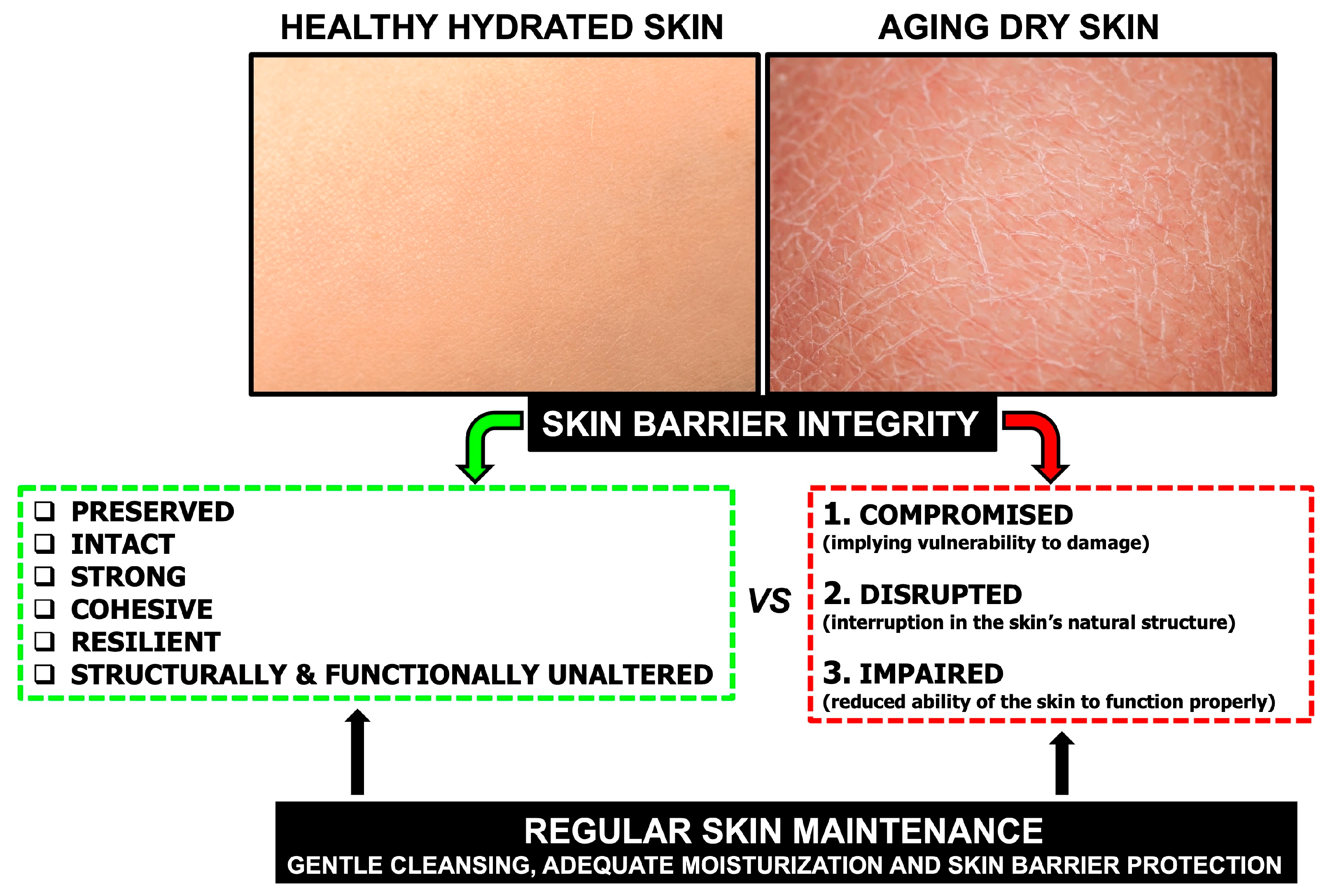
The term ‘skin barrier integrity’ refers to the skin’s essential health characteristic, describing it as a sound, complete and undamaged functional barrier capable of maintaining internal balance and protecting the body from external threats [19,36] (Figure 1). Conversely, when the skin barrier integrity is either compromised (implying a vulnerability to damage), disrupted (suggesting an interruption in the skin’s natural structure) or impaired (indicating a reduced ability of the skin to function properly), as is the case for aging skin [37,38,39] (Figure 1), the skin is susceptible to excessive water loss, dryness, itch/pruritus and infection, which can lead to further complications such as skin tears [40] or pressure injuries (PIs) [41,42]. Furthermore, a breach of skin integrity in older individuals can also result from too much moisture (hyperhydration), specifically, due to overexposure to wound exudates and potential irritants (e.g., urine, feces) on the skin [43]. Overexposure of the skin to moisture can compromise its barrier function, making it more permeable and susceptible to damage. For example, individuals with moisture-associated skin damage (MASD) experience persistent symptoms of pain, burning and itch [44].
As for common dry skin conditions including AD [22] and psoriasis [23], the skin is susceptible to excessive water loss, dryness and infection due to a range of structural–functional alterations, as well as being characterized by an inflammatory response that usually manifests as irritation, redness/erythema, perpetual itch–scratch cycle and pain [22,23,45,46]. In essence, skin integrity is a critical indicator of the skin’s barrier function and overall health; thus, regular skincare involving gentle skin cleansing, sufficient hydration, and skin barrier protection is essential to preserve healthy, hydrated skin and/or restore compromised aging skin’s structural integrity and physiological performance (Figure 1).

3. Key Alterations in Skin Structure with Age

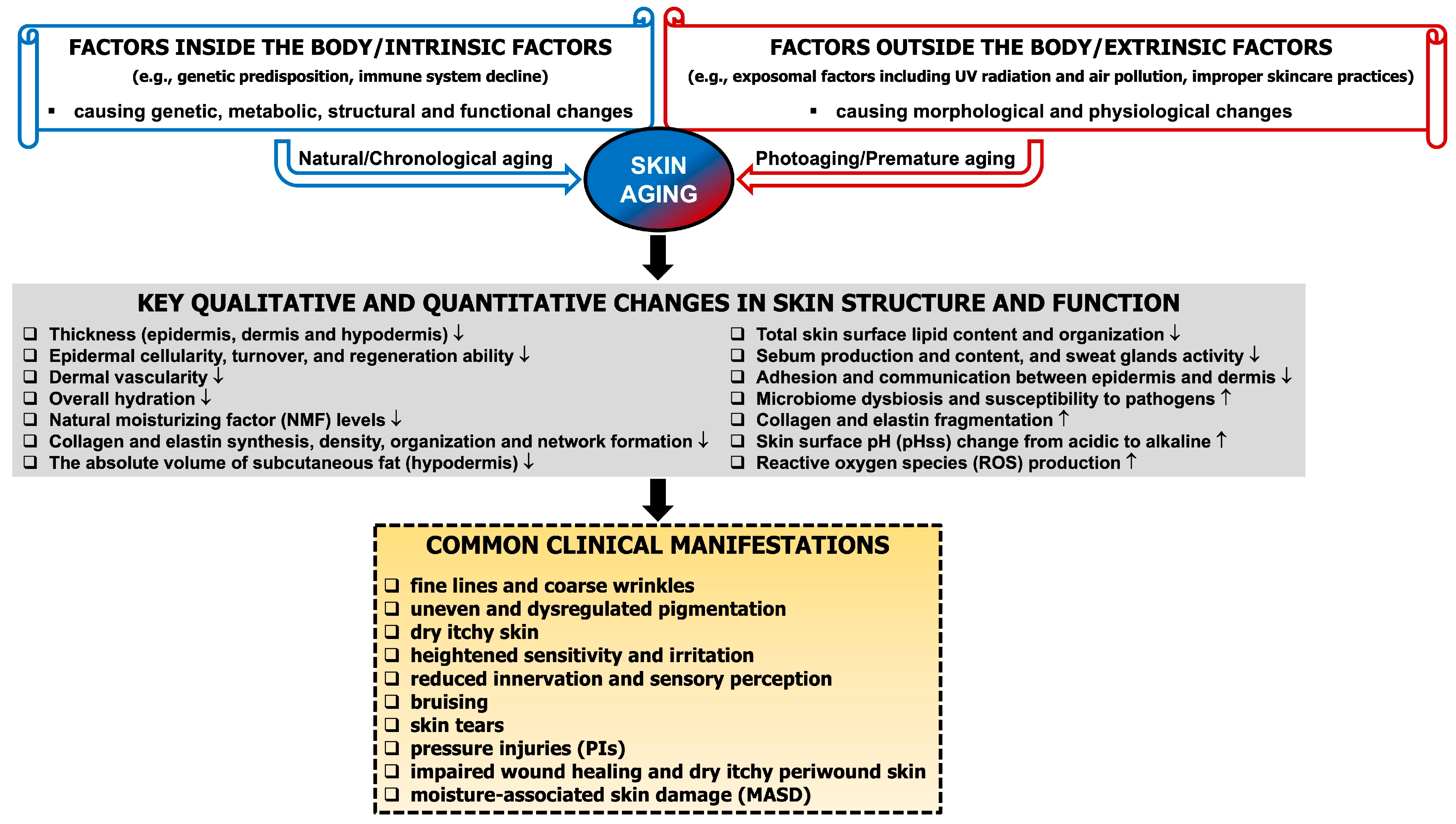
Aging is a complex biological process concurrently influenced by both internal genetic mechanisms and external environmental factors, involving a diverse range of contributors including genetic traits, environmental influences, and components of the immune system (Figure 2). Natural aging of the skin represents an inevitable, genetically programmed process characterized by progressive physiological alterations occurring at variable but predetermined rates. In contrast, extrinsic aging arises from modifiable environmental exposures, most notably UV radiation and environmental pollutants (e.g., particulate matter, cigarette smoke). The cumulative and often synergistic interaction between natural and extrinsic aging mechanisms over time results in the gradual deterioration of the structural integrity and impairment of the skin’s barrier function and homeostasis, manifesting clinically as visible signs of aging (e.g., sagging skin and wrinkles, uneven pigmentation) and unfavorable skin conditions (e.g., dry itchy skin, sensitive skin) as well as leaving aged skin susceptible to injury and disease [38,47] and affecting the normal course of wound healing [48,49]. As skin ages, it undergoes a variety of structural and functional changes (Figure 2), resulting in both qualitative and quantitative alterations predominantly across the epidermis, but also across the dermis and hypodermis [38,47]. These age-related changes are characterized by factors such as variations in skin thickness [38,47], including both the epidermis [50,51] and dermis [52], skin surface lipid content and composition [29,53], pHss [29,54] and diversity of the epidermal microbiome [30,55] (Figure 2).

3.1. The Relationship Between Natural Aging and Extrinsic Aging

Our skin is simultaneously influenced by natural aging and exposed to a combination of different extrinsic factors, also known as environmental factors [18]. Natural aging caused by both the genes we inherit and the passage of time represents the structural, functional, genetic and metabolic changes in the skin (Figure 2) that parallel the aging and degenerative changes in other body organs. On the other hand, extrinsic aging is predominantly mediated by oxidative damage induced by continuous exposure to environmental factors such as UV radiation and pollution [18,28,55,56,57,58]. Despite their differences, the pathways of natural aging and extrinsic aging converge with similar molecular events following the induction of reactive oxygen species (ROS), which are by-products of normal cellular metabolism that can be damaging in large quantities to cells [18,55,56,57,58].
Natural aging (Figure 2) is commonly characterized by less elastic skin (compared to normal younger skin) with fine wrinkles [58]. It is most clearly observed on sun-protected areas of the body, such as the inner upper arm. With aging skin, the epidermis is atrophic, and skin tension is very lax. In naturally aged skin, mitochondrial (mitochondria are energy-generating organelles within the cell) production of ROS leads to an increase in phosphorylated protein kinases that, in turn, stimulate the activation of matrix metalloproteinase degradation enzymes, including collagenase. Increased collagenase activity stimulates collagen fragmentation and contributes to a decrease in the mechanical tension of the skin. This decrease in the skin’s mechanical tension leads to an increase in ROS (creating a positive feedback loop—ROS damage further increasing ROS levels), resulting in diminished pro-collagen (the precursor form of collagen) synthesis. In natural aging, the reduced activity of skin’s collagen-producing cells (fibroblasts) and the loss of mechanical tension result in a 70% decrease in new collagen synthesis [59].
Extrinsic skin aging refers to morphological and physiological changes (Figure 2) in the skin as part of photoaging and/or premature aging. Clinically, it is characterized by coarse wrinkles, uneven pigmentation, and solar elastosis (a disorder in which the skin appears yellow and thickened), which involves stiff, twisted, and deformed elastic fibers composed of fragmented elastin (shorter and fragmented elastin fibers are unable to interact with other extracellular matrix proteins) [60] and collagen [56]. The extent of extrinsic aging is influenced by an individual’s exposure to two key environmental factors: (1) UV radiation being the primary cause—commonly referred to as photoaging; and (2) chronic exposure to a combination of other exposomal factors (e.g., air pollution and extreme temperatures among many others)—where exposome is defined as the totality of mostly non-genetic factors contributing to intrinsic–extrinsic skin aging [18,61]. For example, the severity of skin degeneration depends on the duration, frequency, and intensity of sun exposure, with UV rays accounting for approximately 80% of visible skin aging [56]. Photoaged skin typically shows reduced elasticity, visible superficial blood vessels, dryness, rough texture, pigmentation changes and wrinkling. At the tissue level, common alterations include abnormal keratinocyte formation, decreased collagen in the dermis, and the presence of fragmented and disorganized elastin fibers [56].

3.2. Core Structural Components of the Epidermis and Their Age-Related Alterations

The epidermis mainly consists of keratinocytes undergoing successive stages of differentiation. Those keratinocytes make up around 95% of the epidermal cell population. The epidermis also contains a smaller population of other cell types including: (1) melanocytes, melanin-producing cells that determine one’s skin color and absorb UV radiation to protect us from its harmful effects; (2) Langerhans cells, specialized immune cells that act as guardians of the immune system, constantly monitoring the environment for potential threats like pathogens; and (3) Merkel cells that play a crucial role in fine touch and pressure sensation. The epidermis is composed of several distinct sublayers, each sublayer with specialized cellular composition and function. Most body parts have four epidermal sublayers, but those with the thickest skin have five sublayers. The sublayers are arranged from the outermost to the innermost as follows: (1) SC (horny or cornified sublayer); (2) Stratum lucidum (clear sublayer), only found in thick skin—that is, the palms of the hands, the soles of the feet and the digits); (3) Stratum granulosum (granular sublayer); (4) Stratum spinosum (prickle cell sublayer); and (5) Stratum basale (germinative sublayer). As the epidermis is a dynamic tissue in which cells are constantly in unsynchronized motion, keratinocytes move up from the Stratum basale through the Stratum spinosum and Stratum granulosum, and they differentiate to form a rigid internal structure composed of keratin, microfilaments and microtubules. This process is referred to as keratinization [3,4].
The outermost layer of the epidermis, the SC, is composed of layers of connected corneocytes that no longer contain a nucleus. Corneocytes arriving in the SC are eventually lost through desquamation (skin shedding), with the entire cycle—from basal layer formation to surface shedding taking approximately 28–30 days [3,4,38]. Corneocytes are composed primarily of keratin macrofibrils, but also contain water-soluble NMF components (e.g., free amino acids, pyrrolidone carboxylic acid, sugars, urea, lactate, chloride, sodium, potassium) [7,8,17,62]. Corneocytes are protected externally by a cornified cell envelope and are cohesively held together by corneodesmosomes. The cornified cell envelope is composed predominantly of proteins (e.g., filaggrin, loricrin, involucrin) and a covalently bound outer lipid monolayer that is primarily made up of long-chain CERs [7,17,62]. Filaggrin is a crucial skin protein that maintains the skin’s barrier function by aggregating keratin filaments to form a strong and compact SC. It also generates moisturizing factors through its breakdown, which helps keep the skin hydrated [63]. Mutations in the filaggrin gene disrupt these functions, leading to a weakened skin barrier and a higher risk of skin conditions like AD [63,64] and ichthyosis [64,65]. The corneodesmosomes serve to anchor the corneocytes within the SC and are composed of three major specialized proteins, including desmoglein-1, desmocollin-1 and corneodesmosin [7,17,62]. The intercellular space between corneocytes contains a complex lipid matrix mainly consisting of CERs (~40–50%), CHOL (~25%), and FFAs (~10–15%), expressed as percentages of total lipid dry weight [9,66]. These lipids are arranged in a highly organized fashion, fusing with each other and the corneocytes to form the skin’s lipid barrier against water loss and penetration by allergens and irritants. As corneocytes contain NMF components, they readily attract and hold water. The high water content of the corneocytes causes them to swell, keeping the SC pliable and elastic, and preventing the formation of fissures and cracks [3,4,9]. Together, corneocytes and corneodesmosomes mainly contribute to the mechanical reinforcement, protect underlying viable cells from UV damage, regulate cytokine-mediated initiation of inflammation, and maintain hydration. The mechanical resistance of the skin to environmental insults is a critical function of the structural cohesion of the SC and the mechanical resilience of the corneocytes [7,14,67]. The lipid-matrix lipids regulate permeability, initiate corneocyte desquamation, control TEWL, have antimicrobial peptide activity, exclude toxins, irritants, allergens and microbes, and allow for selective chemical absorption [9].
With aging, both qualitative and quantitative changes (Figure 2) occur across all sublayers of the epidermis. Notably, the lipid composition of the SC alters, with a significant reduction in CER levels [68]. Epidermal turnover slows down, and keratinocytes become shorter in shape. Additionally, there is a decline in the number of melanocytes and Langerhans cells. The skin’s NMF also decreases, leading to reduced hydration in aged skin. Moreover, the flattening of the dermo-epidermal junction—which serves as a critical interface for communication and nutrient exchange between the epidermis and dermis—impairs this functional connection [38,68].

3.3. Core Structural Components of the Dermis and Their Age-Related Alterations

The dermis forms the middle layer of the skin that is made up of two sublayers (from top to bottom): (1) the superficial papillary dermis lies immediately below the epidermal germinative sublayer. It is the thinner layer, consisting of loose connective tissue containing scattered specialized fibroblasts and mast cells, a large amount of capillaries and nerve endings and fibers, elastic fibers and a finer network of collagen fibers; and (2) the deeper reticular dermis. It is the thicker layer of dense connective tissue containing fibroblasts, mast cells, a smaller amount of larger blood vessels and nerve endings, sweat glands, closely interlaced elastic fibers and thicker bundles of collagen mostly aligned parallel to the surface of skin [4]. Scattered specialized cells, fibroblasts, are responsible for producing and maintaining the extracellular matrix (e.g., collagen, elastin, glycoproteins, proteoglycans) that provides structural support and elasticity to the skin, whereas mast cells represent immune cells that quickly respond to injury or infection by releasing a variety of mediators to help wound healing and tissue repair. The network of interlacing connective tissue constitutes the majority of the skin’s mass, provides structural support to the overlying epidermis, and anchors it to the underlying hypodermis. The dermal extracellular matrix is rich in collagen and elastin fibers—collagen being the predominant structural protein that imparts tensile strength, while elastin confers elasticity and mechanical resilience. Overall, the collagen has the ability to bind water and can help to maintain proper water content, keeping the skin moisturized. Aside from being a natural moisturizer, collagen’s film-forming properties reduce water loss from the skin. There are 20 different types of collagen found within the dermis. The most common types are the fibrillary collagens Type I and Type III, which account for the strength and stiffness of the skin. Collagen Type I constitutes 70–80% of the collagen in the skin, with Type III being 10–20%, and a trace amount of collagen Types IV–VII, XII–XVIII, XIX, XX, XXII–XXIV, XXVII, XXVIII, associated with both dermal sublayers as well as the basement membrane that separates the epidermis from the dermis. The only collagens found in the skin’s epidermis are Types XIII and XVII, playing a role in epidermal homeostasis and anchoring the epidermis to the dermis [69]. Additionally, the dermis houses specialized sensory receptors and an abundance of glycosaminoglycans, including hyaluronic acid, which plays a critical role in maintaining dermal turgor due to its high water-retention capacity [4,38,68]. Essentially, the primary function of the dermis is to sustain and support the epidermis as well as provide protection, cushioning the deeper structures from mechanical injury, providing nourishment to the epidermis, and playing a role in wound healing [4].
With aging, the skin undergoes several structural changes (Figure 2) within the dermis, including a general reduction in the number and size of dermal papillae, an increase in coarse collagen characterized by large fibers, and a more pronounced decline in Type I collagen relative to Type III collagen [68,70]. Additionally, the concentration of uronic acid—key polysaccharide components of proteoglycans—diminishes over time. Aging also leads to fragmentation and disorganization of elastic fibers within the extracellular matrix, thus affecting skin elasticity and mechanical resilience [68].

3.4. Core Structural Components of the Hypodermis and Their Age-Related Alterations

The hypodermis, composed primarily of subcutaneous adipose tissue and areolar (loose connective) tissue, is also vascularized and innervated. It functions to provide mechanical cushioning, thermoregulation, and structural stability by anchoring the dermis to underlying organs and tissues [4,38,68]. With advancing age, the absolute volume of subcutaneous fat typically declines (Figure 2), despite an overall increase in body fat percentage until approximately the seventh decade of life. This redistribution of adipose tissue is characterized by a reduction in fat in the face, hands, and feet, alongside a relative accumulation in the thighs, waist, and abdominal regions. While this redistribution of fat may enhance thermoregulatory efficiency by insulating vital organs, it concurrently diminishes protective padding in peripheral areas (e.g., the hands, feet), thereby elevating the risk of mechanical trauma such as skin tears [40] and PIs [38,41,42].

3.5. Skin Thickness Alterations Across the Epidermis and Dermis

In normal healthy skin, the epidermis typically ranges from 50 to 100 μm in thickness, whereas the dermis generally measures between 2 and 3 mm, though both layers can exhibit considerable variability due to differences in total skin thickness (ranging from <0.5 mm on the eyelids to more than 6 mm on the soles of the feet) [47], age group, gender, skin type, ethnicity or assessment approaches and methods used [50]. Although the skin thickens during the first 20 years of life, it gradually thins throughout adulthood at an accelerating rate with age, despite maintaining a constant number of epidermal cell layers [38,51,71]. Epidermal thickness decreases (Figure 2) approximately 6.4% per decade, particularly in chronically sun-exposed areas such as the face, neck, upper chest, and the backs of the hands and forearms. This reduction in epidermal thickness (defined as the mean distance between the top of the SC and the dermo-epidermal junction) is usually more pronounced in females [38]. For example, in women, the epidermis was thinner at the forehead, cheek, anterior thorax, and abdomen. At the back, volar forearm, gluteal area, and thigh, epidermal thickness was similar for both sexes, whereas in the dorsal forearm and the lower leg, values were reported to be lower in men compared to women [50]. However, the overall thickness of the SC does not significantly differ between young and aged skin despite clear functional differences in the SC of young versus aged skin, including a significantly slower recovery of aged skin from insults to the SC than that seen in young skin, slower water movement through aged skin, stiffening of the SC with aging, and altered lipid structure and decreased concentration of intercellular lipids in aged skin [72]. The dermis also becomes thinner with age, though this occurs at a similar rate in both sexes [38]. In particular, the reticular dermis is affected. For example, the reticular dermis thickness is around 3.2 mm in the abdominal skin of individuals in their 50s, and is decreased to around 1.3 mm in centenarians [52]. Furthermore, there is flattening of the dermo-epidermal junction by 35%, leading to wrinkle formation, reduced resistance to shearing forces and greater susceptibility to damage [38]. Overall, thinning of the skin is clinically significant, as it is associated with compromised epidermal barrier function, skin sensitivity and altered viscoelastic properties, which may underlie the increased susceptibility and epidermal fragility to age-related dermatological conditions, heightening the risk of injuries such as skin tears and PIs [50].

3.6. Skin Surface Lipid Composition and Content Alterations

In addition to fully functional and structurally stable corneocytes, the formation and presence of lipid matrix at an optimal ratio [73] of CERs, CHOL and FFAs is essential for a competent epidermal barrier [29,74] in chronologically aged human skin [75]. Thus, any deficiencies of the lipid-matrix components can result in a defective epidermal permeability barrier [29,74]. Although the lipid composition of aged skin is not significantly altered [38,74], it has been shown that older people’s SC displays a >30% reduction in total lipid content (Figure 2) in comparison to young SC [29,74], due to reduced epidermal lipid synthesis, particularly in CHOL synthesis, both under basal conditions and after barrier disruption [29]. This was particularly prominent for the levels of all the CER species in the hand and face, and CHOL levels in the face. Overall, the hand SC had greater quantities of barrier lipids (CERs, CHOL, FFAs) than the leg SC, but both had elevated levels of SC barrier lipids compared to the face due to dramatic seasonal variation. All the lipid species analyzed were depleted in winter compared with summer, mirroring the aging influence on SC lipid levels [76].
Additionally, sebum content [9,29] was found to decline in aged skin (Figure 2), resulting in reduced triacylglyceride levels in the SC, thus yielding less FFAs and poorer acidification of the SC as well as decreased SC hydration [29].

3.7. Skin Surface pH (pHss) Alterations

In healthy human skin, the mildly acidic environment of the SC, typically within pH 4.0–6.0 [77,78,79], is essential for maintaining barrier integrity and is modulated by factors such as anatomical site [6,80], hydration status [81,82], sebum production by sebaceous glands [83,84], sweat production [54] and demographic variables including age [82,85,86,87], and gender [82,86,87]. Exogenous influences, including frequent cleansing, particularly with alkaline or pH-disruptive skincare formulations, can perturb the naturally acidic pHss, leading to potential barrier dysfunction [88,89]. Functionally, the pHss appears to regulate the keratinocyte differentiation process, contribute to the formation and function of epidermal lipids and the corneocyte lipid envelope and play a role in maintaining the skin microbiome symbiosis [6].
With advancing age, the pHss tends to increase (Figure 2), which negatively impacts the SC barrier function. This shift in pHss contributes to impaired lipid processing, disorganized lipid bilayer structure, elevated serine protease activity, but decreased activity of cathepsin-like protease, all leading to abnormal desquamation [29,79]. Together, these changes compromise barrier homeostasis, weaken SC cohesion, and reduce the skin’s antimicrobial defense, often resulting in dry skin. Such dryness is further exacerbated by diminished sebum production and significantly reduced levels of surface lipids, especially in individuals over the age of 55 [86,90], with the greatest prevalence observed in those aged 70 years and older [86,91], as well as in those with skin infections [92]. Furthermore, the antimicrobial properties of the skin are pH-dependent. Some pathogens, such as Staphylococcus aureus and fungi, favor a neutral pHss, while an acidic pHss decreases the survival ability of Staphylococcus aureus [29]. An age-related rise in pHss is likely to encourage colonization by a different microbial flora, which contributes to the development of a distinct body odor [54].

3.8. Epidermal Microbiome Diversity Alterations

The surface of the skin hosts a diverse array of microorganisms (e.g., bacteria, fungi, and viruses), collectively referred to as the skin microbiome, which engage in complex interactions with epidermal cells and play a critical role in maintaining skin defense. Understanding the dynamic relationship between the skin microbiome and the skin barrier is essential for developing targeted skincare approaches and interventions for aging skin [30]. Commensal microorganisms engage in beneficial symbiotic interactions that support the skin’s defense barrier, playing a critical role in preventing pathogen colonization. An imbalance (dysbiosis) between commensal and pathogenic microbes can contribute to the development of skin conditions or systemic illnesses. These microbial communities occupy distinct depths and (sub)layers of the skin, with some species predominantly residing on the surface while others inhabit deeper regions. As a result, the characterization of skin microbiome is strongly influenced by the sampling technique used and the specific anatomical site (e.g., the face, the hand, the abdomen) examined [93].
As humans age, the epidermal microbiome diversifies, with older individuals displaying higher diversity and increased susceptibility to pathogens (Figure 2). Lipophilic bacterial populations (bacteria that have a preference for and are able to grow in lipid-rich environments, such as sebum-enriched follicles on the skin) rise with sebaceous activity in puberty, but decline in aging skin as sebum production decreases [29]. Comparative microbiome analyses show marked differences between the young and older individuals in both intrinsic and extrinsic (photoaged) skin [28,55]. Furthermore, the dynamic changes in species richness and core dominant phyla during photoaging were similar to the changes during intrinsic aging [94]. For example, enrichment of nine microbial communities, including Cyanobacteria, Staphylococcus, Cutibacterium, Lactobacillus, Corynebactrium, Streptococcus, Neisseria, Candida and Malassezia, and numerous molecular mechanisms (e.g., oxidative stress, activation of inflammatory signaling pathways) have been linked to age-associated changes in skin microbiome, underscoring their contribution to skin aging [28,55]. It is therefore unsurprising that naturally aged or compromised aging skin (for example, wounds show a higher contribution of opportunistic pathogens), which undergo numerous physiological and structural changes, also show significant shifts in the composition of the skin microbiome [95].

4. Key Alterations in Skin Function with Age—Clinical Manifestations and Assessment

As the skin ages, nearly all of its functions deteriorate, as no cell type or structural component of the skin is spared from the effects of aging. These progressive and cumulative alterations lead to increased skin vulnerability, evidenced by a higher incidence of bruising, skin tears, delayed wound repair, and a greater prevalence of skin conditions marked by dryness, itch, irritation, and heightened sensitivity [39] (Figure 2). As noted above, aging skin is characterized by impaired barrier integrity, decreased epidermal hydration and regenerative capacity, diminished lipid, hormonal and sebum synthesis, increased pHss [29], and dysregulated pigmentation patterns [96]. Along with the thinner epidermis, the dermis also becomes thinner and produces less extracellular matrix, which becomes fragmented and disorganized, especially with photoaging. Additionally, the number of nerve endings in both the dermis and epidermis declines, leading to reduced sensory perception [39,96] (Figure 2). Furthermore, when the skin is consistently exposed to moisture, it can become overhydrated, leading to MASD. Prolonged moisture exposure can contribute to dermatitis, fungal infections, and chronic irritation, highlighting the importance of both protective measures and timely skin care interventions. [44].

4.1. Dry and Itchy Skin

Dry skin is characterized by impaired synthesis and altered composition of SC lipids, along with a loss of collagen, altered immune system responses, abnormal epidermal differentiation and elevated pHss, which collectively compromise the skin barrier and lead to decreased levels of NMF and sebum, and subsequently to decreased skin hydration [97,98,99,100,101]. This, in turn, facilitates the penetration of irritants, allergens, and pathogens, thereby exacerbating barrier dysfunction, encouraging infection and perpetuating skin homeostasis imbalance. Furthermore, filaggrin deficiency is observed in dry skin, suggesting that the absence of filaggrin is a key factor in the pathogenesis of this skin condition [100,101].
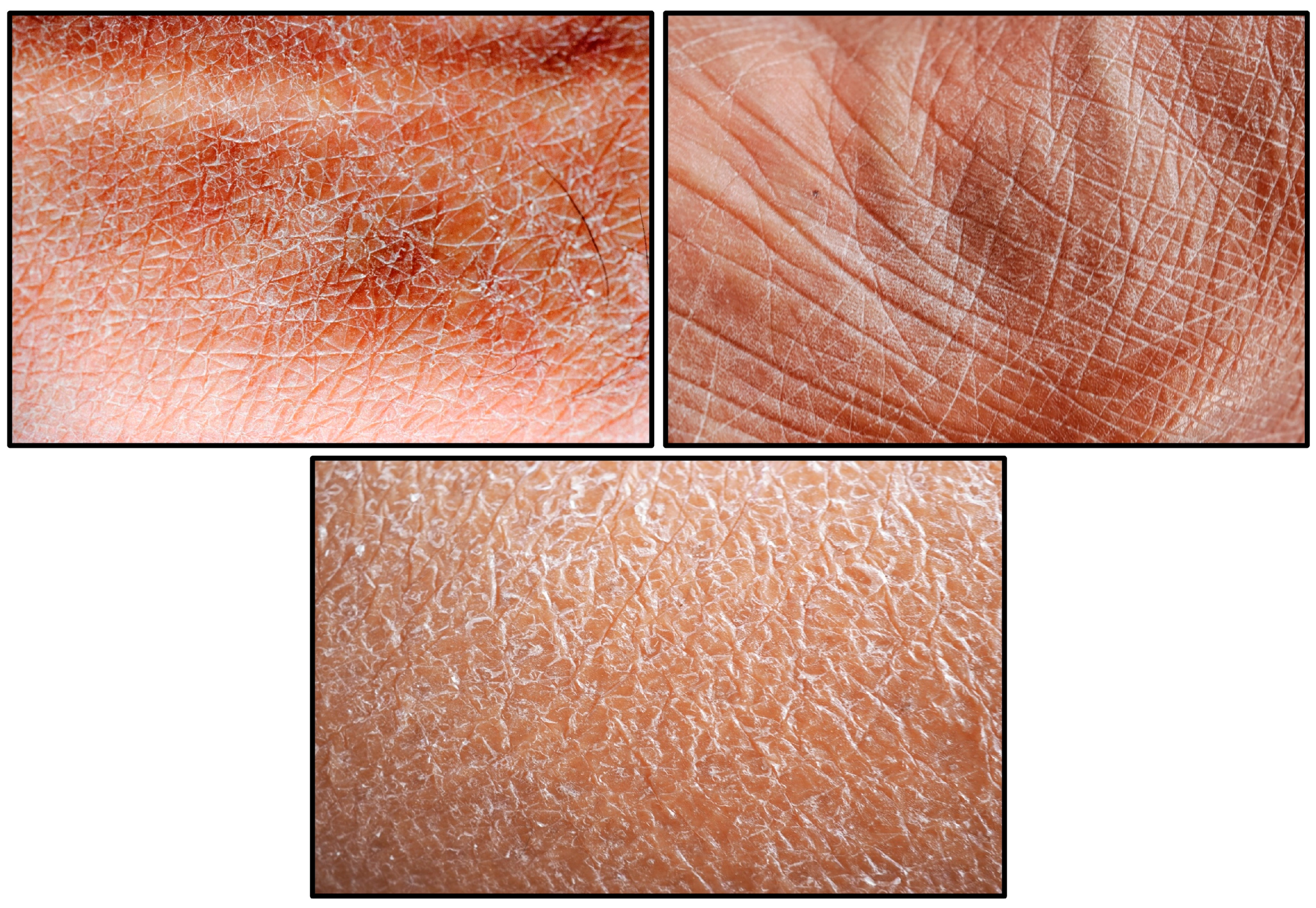
Dry skin is clinically recognized by scaliness, rough texture, and a dull or grayish appearance. Additional features include reduced skin elasticity, increased surface coarseness, and the presence of fine lines or wrinkles (Figure 3). Furthermore, patients may report subjective symptoms such as a sensation of tightness and pruritus, which in some cases may be experienced as pain or a burning sensation [20]. Severe pruritus can result in erythema and secondary skin lesions, including excoriations, fissures, secondary infections, and lichenification—characterized by thickening and hardening of the skin—due to chronic scratching [98,102], which perpetuates the itch–scratch cycle [45]. Although dry skin can affect the entire body, it is more commonly observed in areas with a lower density of sebaceous glands, such as the lower legs, forearms, and the dorsal surfaces of the hands and feet [101]. Environmental factors such as cold temperatures, low humidity, air pollution, smoking, sun exposure, frequent skin cleansing, and the use of harsh alkaline soaps can contribute to or exacerbate dry skin. Similarly, endogenous factors like natural aging are also recognized as significant contributors to impaired skin barrier function and reduced hydration [100]. Dry skin (Figure 3) is highly prevalent (between 26% and 60%) among adults, including older individuals [101], and represents the most frequently diagnosed skin condition in nursing home settings [34,103], and is commonly observed in individuals receiving home care [100,104].

Common Approaches for the Assessment of Dry Aging Skin

A variety of biophysical, non-invasive in vivo methods [105,106] are available to objectively assess the subjective perception of skin dryness and the clinical manifestations of xerosis cutis associated with aging, particularly in the context of clinical trials. Common instrumental methods used to measure structural or physiological changes in the skin include: (1) tewametry—a measure of skin barrier function reflecting water movement through the skin. It is defined as the measurement of the quantity of water that passes through the epidermis to the surrounding atmosphere via diffusion and evaporation [105]; (2) corneometry, which measures electrical capacitance of the skin, gives an indication of skin hydration. This measurement is also strongly influenced by the activity of the sweat glands [105]; (3) d-Squames and corneosurfometry—for providing information on the dryness, SC cohesion and skin surface roughness [105]; (4) confocal Raman spectroscopy which provides quantitative measurements of the amount of water in different depths of the SC and in the epidermis, total NMF or single components of NMF (e.g., amino acids, lactate), total content of CERs, the amount of CHOL [105]; (5) videomicroscopy, which can show age-related changes in the surface of the skin [105]; (6) ultrasound, which evaluates the echo-density of the dermis. Echo-poor regions are indicative of a damaged dermis due to degradation of the tissue matrix [106]; and (7) colorimetry, skin buffering capacity and potentiometry to assess pHss changes [106]. Furthermore, the amount of sebum can be quantitatively assessed using the Sebumeter® [20]. In addition, a novel method for measuring hydration in different skin layers, known as KOSIM IR® has been described. This is an analytical system that combines infrared spectroscopy and confocal microscopy, allowing for assessment of the water content of the skin as a function of depth [107]. Finally, a novel diagnostic method known as the ‘xerosimeter’ has been developed in the context of the management of xerosis cutis. This method enables physicians to assess for the severity of skin scaling, fissures and erythema and percentage of body surface area affected in order to make individual symptom-based treatment decisions [20].

4.2. Sensitive Skin

Although dry skin [97,98,99,100,101] and sensitive skin [108,109] are both associated with SC dysfunction and can both occur in the same individual, these conditions are distinctly defined. As discussed above, dry skin is used to describe a spectrum from visually dry skin to rough and potentially flaky skin that may also have scales or small cracks. Sensitive skin is defined “as a syndrome characterized by the occurrence of unpleasant sensations (stinging, burning, pain, pruritus, and tingling sensations) in response to stimuli that normally should not provoke such sensations. These unpleasant sensations cannot be explained by lesions attributable to any skin disease. The skin can appear normal or be accompanied by erythema. Sensitive skin can affect all body locations, especially the face” [109]. While sensitive skin can be classified into distinct clinical subtypes—such as highly sensitive, environmentally reactive, and cosmetically intolerant [110]—it typically lacks apparent clinical signs [111]. Individuals experiencing sensitive skin report exaggerated reactions when their skin is in contact with cosmetics, soaps and other substances, and they often report a worsening of the condition after exposure to dry and cold climates. However, host factors such as female sex, age, ethnicity, anatomical site, hormonal differences in women producing increased inflammatory sensitivity and environmental factors including cold weather and pollution are thought to promote sensitive skin [110]. Furthermore, skin structural differences such as thickness, hydration level, the amount and composition of lipids, TEWL and innervations in the SC and/or epidermis play a role in propensity toward sensitive skin. For example, individuals over the age of 50, who typically exhibit thinner and drier skin, are more susceptible to heightened skin sensitivity [110].
Due to the heterogeneity of the symptoms, the subjectivity of the discomfort reactions and the absence of visible clinical manifestations, sensitive skin remains challenging to assess and characterize objectively. However, it has been reported that individuals with subjective skin irritation often present with decreased skin hydration and suppleness—as assessed by epidermal function tests (e.g., tewametry, corneometry, videomicroscopy, potentiometry, a range of imaging methods) used to measure structural or physiological changes in the skin after application of irritants [111,112], along with increased erythema and a higher incidence of telangiectasia compared to asymptomatic individuals. Notably, statistically significant differences have been observed, particularly in levels of erythema and skin hydration/dryness [113]. Tests for sensitive skin are generally based on a range of self-assessment questionnaires [114,115] that usually contain a combination of questions divided into three sections: (1) the patient’s own perception of the sensitivity, irritation, and reactivity of their skin [114]; (2) the skin’s reaction to cosmetic formulations (e.g., cosmetic containing 10% lactic acid, sodium lauryl sulfate) [113,114]; and (3) the skin’s reaction to environmental factors (e.g., cold, heat, exposure to the sun, air pollution) [114,115].

4.3. Bruising

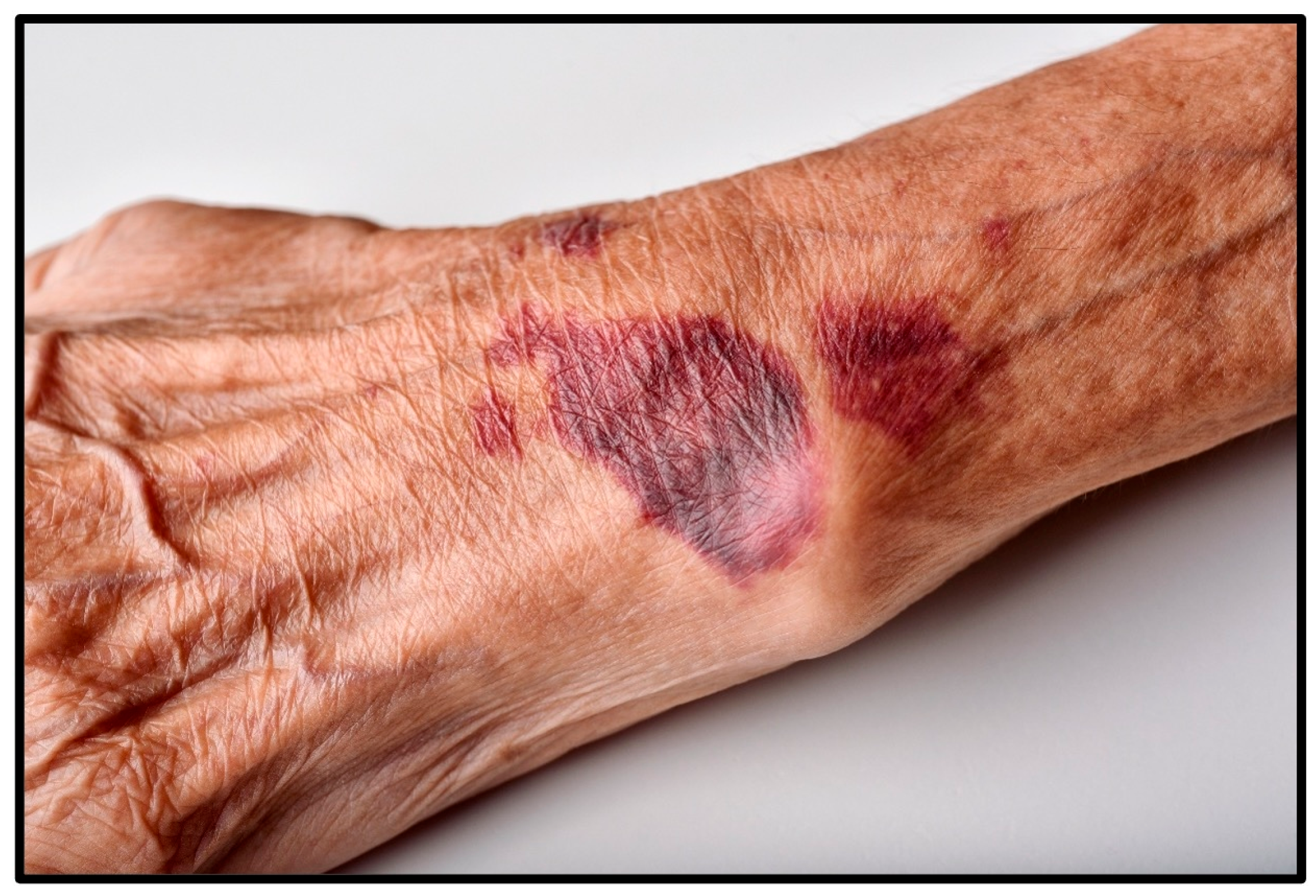
Older patients frequently exhibit translucent and fragile skin characterized by a paper-like appearance, increased wrinkling, prominent visibility of underlying vasculature and tendons, and a heightened susceptibility to spontaneous accidental bruising (Figure 4), often due to an impact or pressure, or sometimes without a clear history of trauma. Nevertheless, skin bruising commonly arises from primary risk factors such as age-related epidermal–dermal thinning, loss of supporting subcutaneous fat, and increased capillary fragility, along with secondary factors including chronic UV exposure, genetic predisposition, misuse of topical or systemic corticosteroids and underlying medical conditions [116]. These factors collectively impair the skin’s capacity to provide effective protection against minor trauma [116]—leading to subdermal bleeding, often presenting as red, dark blue or greenish-yellow discoloration [117], particularly on the sun-exposed area of the extremities, most commonly on the extensor forearms, dorsal hands (Figure 4), and the lower legs, rather than the rest of the body. Skin bruising, while frequently considered a minor issue, can serve as an indicator of increased vulnerability to skin tears and compromised wound healing capacity [116].
The assessment of accidental skin bruising in older individuals primarily depends on visual examination, rather than standardized microscopic and molecular analyses that are commonly used in modern forensic medicine to determine the age of bruises. Nevertheless, examining the location, shape, size, pattern and color of a bruise is essential in determining its potential cause, as bruising can result from harmless factors or indicate an underlying issue such as physical abuse [118,119].

4.4. Skin Tears

A revised and updated definition of skin tears has been developed through collaboration between the International Skin Tear Advisory Panel (ISTAP), Nurses Specialized in Wound, Ostomy and Continence Canada, and the Wound, Ostomy and Continence Nurses Society. This updated definition builds upon the ISTAP 2018 recommendations [40] and incorporates insights from recent critical analyses [120]. The key update to the definition is to acknowledge the fact that, in addition to systemic factors, wound depth contributes to severity: “A skin tear is a traumatic wound caused by mechanical forces, including removal of adhesives and patient handling, the depth of which may vary (not extending through the subcutaneous layer)” [121]. Skin tears, which can occur anywhere on the body, are most frequently observed on the extremities—particularly the upper and lower limbs and the dorsal surfaces of the hands as these areas are often uncovered. Skin tears result from mechanical forces such as shear, friction, or blunt trauma, including falls, improper handling during patient transfers, contact with medical devices, or the removal of adhesive dressings. These injuries lead to the separation of a portion of the skin (known as a skin flap) that is unintentionally separated, partially or fully, from its original place (e.g., epidermis, dermis, or both the epidermis and dermis) [40,121]. Individuals with compromised skin integrity, such as neonates who have immature skin, older adults, or those with chronic conditions, are particularly susceptible, as less force is required to cause damage. Studies conducted across Asia, Australia, Canada and the United States showed that the prevalence of skin tears is estimated between approximately 1% and 41%, with the highest prevalence in aged-care facilities and hospitals. Furthermore, the incidence (the number of new cases over a specified period of time) of skin tears varies from approximately 2% to 62%, with the highest incidence in rehabilitation and critical care settings [120].
Skin tear classification systems serve as essential tools to support and standardize the diagnostic process by offering consistent descriptions of skin tear severity, primarily based on the degree of skin flap loss. Accurate assessment of tissue loss is critical for guiding appropriate treatment decisions. To date, three classification systems for skin tears have been developed. The first classification system is the Payne–Martin classification system for skin tears that distinguishes three categories based on the extent of tissue loss, measured as a percentage: (1) Category I with two subcategories (linear type and flap type)—skin tears without tissue loss, and flap can be repositioned to cover the wound bed; (2) Category II with two subcategories (scant tissue loss type and moderate to large tissue loss type)—skin tears with partial tissue loss, and partial flap loss which cannot be repositioned to cover the wound bed; and (3) Category III—skin tears with complete tissue loss, total flap loss exposing entire wound bed. The second classification system is the Skin Tear Audit Research (STAR) classification system, which was developed as a modified version of the Payne–Martin classification and additionally includes the distinction of skin flap color [120]. The third classification system is the ISTAP classification system that uses a simple method to classify skin tears, categorizing them as either Type 1—no skin loss, Type 2—partial flap loss, or Type 3—total flap loss [120,121]. Tested with 1601 healthcare professionals (HCPs) across 44 countries, this classification system has demonstrated validity and reliability in the assessment of skin tears [122].

4.5. Pressure Injuries (PIs)

According to the fourth and latest 2025 edition of the International Guideline for ‘Prevention and Treatment of Pressure Ulcers/Injuries’, a PI (also known as pressure ulcer or bedsore) is defined as localized damage to the skin and/or underlying tissue, typically occurring over prominent bony anatomical locations [123] such as the heels, sacrum and feet [42]. The heel (34.1%), sacrum (27.2%) and foot (18.4%) were the three most reported locations of PIs. These lesions result primarily from sustained pressure, shear forces, and/or friction. PIs may manifest as either intact skin with underlying damage or as open wounds [42]. PIs are classified according to the stage of pressure injury, with the extent of tissue loss present and anatomical features that may or may not be present in the stage of injury. Stage I pressure injuries are characterized by persistent erythema that does not subside within 30 min of relieving pressure, with the skin remaining intact. Stage II involves partial-thickness loss of the skin, affecting the epidermis and possibly the dermis. Stages III and IV represent more severe damage, with full-thickness tissue loss and destruction extending into deeper layers, including subcutaneous tissue, muscle, or bone [124]. PIs are associated with considerable pain, prolonged hospital stays, diminished quality of life, increased morbidity, and elevated mortality risk. It was reported that the PI rates in nursing home residents are similar to those of adult hospitalized patients and patients receiving palliative care. For example, in 30 studies with 355,784 older individuals, the pooled PI prevalence for any stage was 11.6% [42].
Dry skin may compromise the skin barrier function, increasing susceptibility to PIs due to reduced elasticity and impaired resilience against mechanical stress. For example, a study conducted in German nursing homes and hospitals reported that approximately 72% of heel/ankle PIs were affected by dry skin on the legs or feet. Also, a multicenter, cross-sectional study involving 33,769 participants across 44 hospitals and eight long-term care institutions in 20 provinces of China found that patients with dry skin had a higher incidence of pressure injuries compared to those without dry skin (50.0% vs. 33.9%). However, the precise link between dry skin and the development of PIs remains unclear [125].
Regular visual skin assessment is the gold standard to identify PIs, with prevention, early detection, and prompt treatment being the key components in PI management [42]. PI assessment comprises evaluation of a number of parameters, including site, degree of damage (depth) and the amount of visible tissue loss according to a classification system [124], surface appearance (color), infection, odor, exudate, pain, undermining (of the soft tissue) and the condition of the area surrounding the wound [126].

4.6. Chronic Wound Healing and Periwound Skin

Wound healing is a dynamic and complex process that begins with tissue injury and progresses through four stages: (1) hemostasis; (2) inflammation; (3) proliferation; and (4) remodeling, maturation and resolution. These stages overlap as cytokines and growth factors guide the healing process towards a successful closure [127]. Unbalancing one or more of these stages could lead to two distinct damaging outcomes, either chronic wound development or scarring [128]. A chronic wound (e.g., venous leg ulcer, diabetic ulcer) is defined as a wound that does not follow the typical stages of healing in a timely and organized manner, or one that fails to achieve structural and functional restoration within a period of three months [127,129]. Despite differences in etiology, all chronic wounds, including those that are common for the lower extremities (lower leg ulcers, diabetic ulcers), share certain features, including excessive levels of pro-inflammatory cytokines, persistent infections, formation of drug-resistant microbial biofilms, and the inability of dermal and/or epidermal cells to respond to reparative stimuli [129,130]. Scars have a thinner and therefore malfunctioning SC, which results in increased TEWL. When scars become dry, they may feel tight or uncomfortable, crack more easily, and appear more prominent over time. Therefore, keeping scars well-moisturized with effective and balanced moisturizing products helps in a few crucial ways, including hydration [131].
If not appropriately managed, venous leg ulcers often become chronic due to impaired or delayed healing processes. The periwound skin—defined as the area within 4 cm of the wound edge—is particularly susceptible to damage, despite often appearing intact. Multiple wound-related factors, such as prolonged exposure to exudate, irritants, infection, inappropriate moisture balance, adhesive trauma, or allergic responses, can compromise the integrity of the periwound area [132]. This may lead to complications such as maceration, erythema, or excessive dryness with associated pruritus [132,133]. Periwound skin damage can significantly hinder healing, exacerbate wound deterioration, increase wound dimensions and infection risk, worsen pain and discomfort, diminish patient quality of life, and extend both treatment duration and healthcare costs [132].
The evaluation of patients with chronic and complex wounds should follow a structured approach, as these wounds are rarely attributable to a single cause. Careful consideration of both local and systemic factors is crucial at every stage of assessment [134,135]. For example, the TIME framework (tissue, infection/inflammation, moisture balance and edge of wound) [134] and the MEASURE framework (Measure—size; Exudate—amount/quality; Appearance—tissue/bed; Suffering—pain; Undermining; Re-evaluate—regular checks; and Edge—edges/surrounding skin) have been developed with input from an international group of experts, to provide support to HCPs making clinical decisions, while reducing variation in practice and helping to improve wound outcomes [134,135].

4.7. Moisture-Associated Skin Damage (MASD)

The term MASD refers to inflammation and skin erosion resulting from sustained exposure to moisture sources such as urine, feces, perspiration, or wound exudate. Moisture-induced damage alters the lipid matrix of the SC, leading to a breakdown of the skin’s physical barrier [44,136]. The pH of the skin also increases, creating an alkaline environment conducive to bacterial proliferation and infection. This prolonged moisture exposure compromises the skin barrier function, increasing skin permeability and reducing its elasticity and mechanical resilience, thus heightening susceptibility to friction-related and shear-related injury [136]. Although MASD can affect individuals across all age groups, older individuals are particularly vulnerable due to the increased fragility of aging skin [44]. MASD is the collective term for four clinical manifestations: (1) incontinence-associated dermatitis (IAD), caused by degradation enzymes in urine and feces; (2) intertriginous dermatitis, where perspiration/sweat is the primary cause; (3) periwound skin damage, where wound exudate containing a higher concentration of proteolytic enzymes damages the SC and causes maceration and breakdown of periwound skin; and (4) peristomal MASD, where the surrounding skin encounters effluent from the stoma (a surgically created opening for urine or feces) [44]. IAD is the most commonly recognized form of MASD. IAD presents as erythema and inflammation of the skin, sometimes with erosion or loss of the epidermis. The acid mantle is a very fine, slightly acidic film on the surface of human skin, acting as a barrier to microorganisms and other potential contaminants [136].
A thorough evaluation of a patient’s skin and hygiene is a critical component of clinical care, as it enables early identification of compromised and/or impaired skin integrity and facilitates timely intervention. Impaired skin integrity can lead to serious consequences, including increased susceptibility to infection, pain and discomfort, and elevated levels of psychological distress such as anxiety [44]. For example, a Global IAD Categorization Tool was developed by an international expert panel and psychometrically tested by 823 HCPs from 30 countries. Firstly, the damaged skin is assessed to determine whether persistent redness or skin loss is present. Next, clinical infection is evaluated based on a cluster of signs and symptoms (e.g., burning, itching, pain, discoloration). Accordingly, the IAD is classified into four categories: (1) persistent redness without clinical signs of infection; (2) persistent redness with clinical signs of infection; (3) skin loss without clinical signs of infection; (4) skin loss with clinical signs of infection [137].

5. Maintaining Healthy Skin and Restoring Compromised Aging Skin—The Benefits of Regular Skin Cleansing, Adequate Moisturization and Protective Care

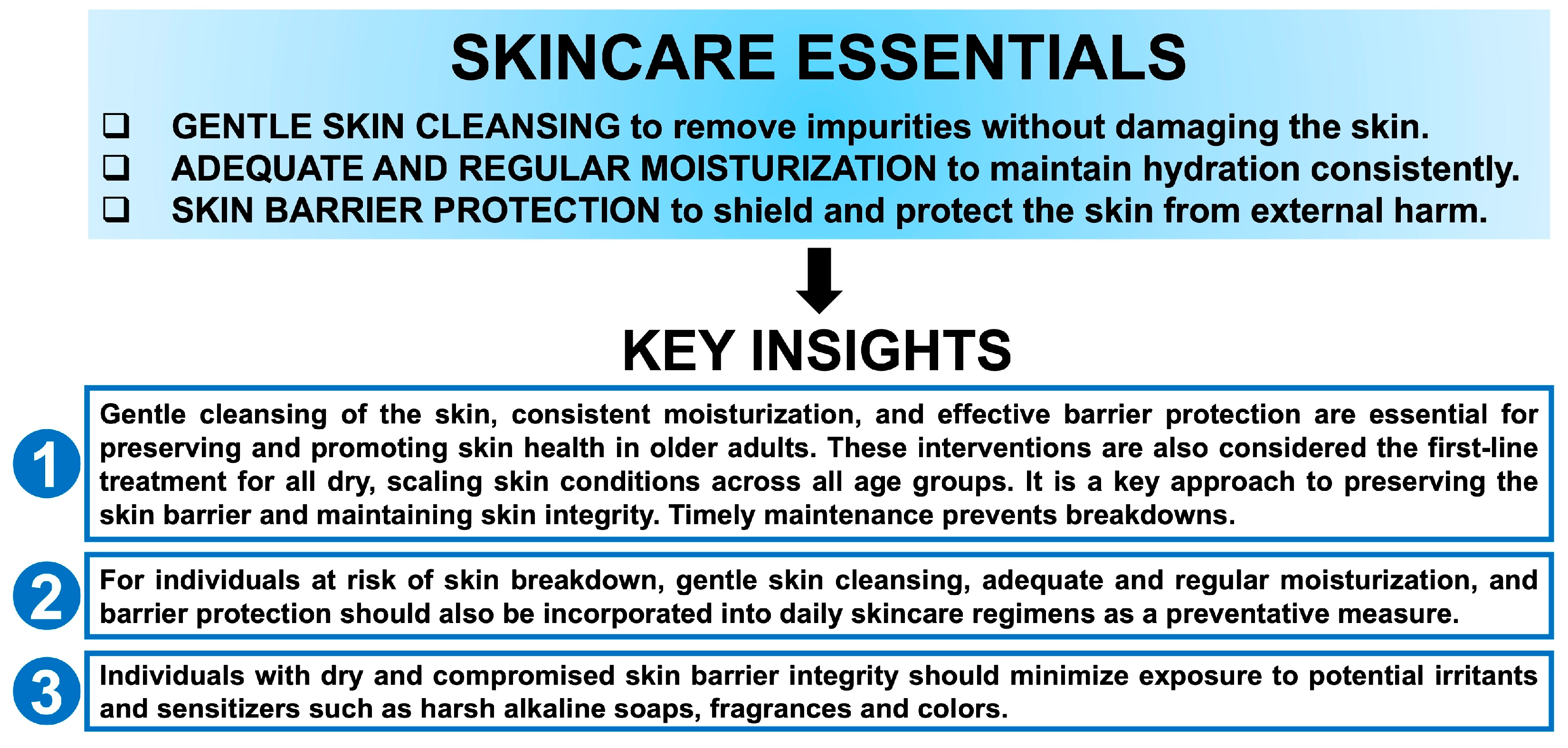
Healthy skin reflects a dynamic equilibrium [99,101] among multiple interrelated processes critical to the formation and function of the SC, including NMF synthesis [8], lipid metabolism, structure and function [9,12,66], keratinocyte differentiation [7,138], pH regulation [79,81,139], stable and balanced microbial diversity [95,140,141], and desquamation [142]. As skin ages, these processes become impaired, leading to increased susceptibility to dryness and barrier dysfunction, thereby necessitating prompt and effective interventions by using pH-balanced gentle cleansers and application of moisturizers and protective formulations (e.g., barrier creams, sunscreens) [143,144] in order to restore epidermal homeostasis and prevent both acute and long-term complications [99], including the prevention of skin tears [145]. Skincare does not have to be complicated, but it should always include the essentials: gentle cleansing to remove impurities, proper moisturization to maintain hydration, and protective care to shield the skin from environmental damage, harmful substances and common irritants (Figure 5).

5.1. The Role and Complexity of Gentle Cleansing

The primary objective of skin cleansing is to gently but effectively cleanse the skin by removing unwanted substances, including dirt, pollutants, microbial debris, and dead skin cells from the skin’s surface without compromising the structural and functional integrity of the SC barrier. This includes preserving its essential lipids, proteins, and NMF components, maintaining the acidic pHss, and supporting a balanced and diverse skin microbiome. Achieving this delicate equilibrium, especially in aging skin, is inherently challenging due to the skin barrier’s complex, heterogeneous, and dynamic architecture, which varies not only between individuals but also across anatomical sites and age groups. Therefore, the selection and formulation of a suitable skin cleanser must be guided by a reasonable understanding of these physiological variables. As discussed above, compromised and dry aging skin typically exhibits a thinner epidermis and reduced lipid content, leading to an elevated risk of TEWL, dehydration and increased permeability. The use of alkaline soaps in such cases can further exacerbate barrier dysfunction by stripping essential lipids, increasing pHss, and disrupting protein conformation, culminating in inflammation, dryness, itch and irritation [19,32,146,147,148,149,150]. Soaps with a higher pH (>7.0) are likely to cause more dryness than those with a pH < 7.0, which are closer to the skin’s natural pH (4.0–6.0) [31,78]. In contrast, soap-free synthetic detergents (syndets), particularly those being pH-balanced, free from unnecessary ingredients such as fragrance, colors and common irritants [147,148], and formulated with mild surfactants, have demonstrated superior skin compatibility. These formulations are less likely to perturb the SC lipid matrix, but still preserve the microbiome and support epidermal hydration by mitigating TEWL and reducing the risk of barrier damage. While some mild syndets may still potentially elicit adverse effects such as stinging, itching, or sensitization in sensitive individuals, their overall safety and tolerability profile generally surpass that of harsh traditional soaps. Thus, the rational design of skin cleansers—taking into account surfactant type and concentration, pH, and the inclusion of moisturizing or barrier-repair ingredients (e.g., CERs) [151]—is essential to optimize skin health outcomes and minimize detrimental effects on the SC barrier [19,32,146,147,148,149,150].
For example, in older patients with IAD, daily skin cleansing using a pH-balanced cleanser containing moisturizing ingredients, followed by application of a skin moisturizer and/or a barrier product (skin barrier protectant), has been shown to reduce the incidence of pressure ulcers and accelerate wound healing [152]. Urine and feces are alkaline, and when they mix with alkaline soaps, the skin’s pH can rise, creating an environment that promotes bacterial growth and infection [153]. Therefore, the use of pH-balanced cleansers, particularly when combined with moisturizers and protective formulations (e.g., barrier creams, sunscreens), offers therapeutic, practical, and economic benefits in the management of IAD-related wounds [152].
While often underestimated, skin cleansing represents an essential and multifaceted process that plays a critical role across personal hygiene, public health, clinical care, and dermatological practice, ranging from the removal of surface contaminants and microbial load to the prevention of infections and the maintenance of skin homeostasis as part of comprehensive therapeutic strategies for various dermatologic conditions [32].

5.2. The Role of Skin Moisturization and Replenishing—Key Ingredients and Their Benefits

The primary goal of skin moisturization is to enhance epidermal hydration and reinforce the skin’s barrier function, thereby minimizing TEWL and shielding the skin from external aggressors and dehydration. Skin moisturization supports overall skin integrity, promotes homeostasis, and contributes to a smooth, resilient, and youthful complexion. Topical moisturizers are generally designed to indirectly increase skin hydration by minimizing the TEWL from the SC [154]. Topical moisturizers generally include a combination of: (1) primary moisturizing ingredients also referred to as non-physiological lipids, including emollients (e.g., paraffinum liquidum), humectants (e.g., glycerin, hyaluronic acid—HA), and occlusive (e.g., petrolatum); (2) physiological lipids (e.g., skin-identical CERs) and their precursors; and (3) multifunctional ingredients (e.g., panthenol, niacinamide) [99,155].
Paraffinum liquidum, also known as liquid paraffin and light mineral oil, is a highly refined petroleum mineral oil consisting of a complex combination of hydrocarbons. It is an emollient that provides a protective layer (film) over the skin’s surface that reduces TEWL from the SC to the environment. Paraffinum liquidum is non-toxic, non-irritating and generally regarded as safe [156,157].
Glycerin provides a wide variety of direct and indirect effects on skin integrity. Glycerin is used in a range of cleansers and moisturizers, and its primary role is to sustain skin hydration and support the proper functioning of the barrier [158,159,160,161,162,163,164,165,166]. Aquaporin 3 (AQP3) helps move water and glycerin within and between skin cells. This transport not only keeps the skin hydrated and elastic, owing to glycerin’s moisturizing effects, but also supports cell growth and energy production by helping generate ATP [167]. For example, glycerin has been shown to be an effective treatment modality with a dose–response effect regarding the improvement of SC hydration and protection against irritation [161]. Topical formulations must be formulated correctly to take advantage of the physicochemical properties of glycerin in order to achieve optimal benefits for either healthy, compromised, dry, or sensitive skin [162]. Beyond its hygroscopic (ability to absorb moisture from the air) and moisturizing properties, glycerin has additional benefits to skin homeostasis: (1) reducing TEWL and positively influencing skin barrier repair by interacting with SC lipids [160,161,162]; (2) loosening adhesions between corneocytes and encouraging shedding of skin [160,161,162]; (3) protecting against (chemical) irritation and dehydration effects of washing the skin [160,161,168]; (4) improving the skin’s elasticity and flexibility [160,161,162]; and even (5) facilitating wound healing [161]. Altogether, these protective and repair properties of glycerin are valuable in overall maintenance of a healthy skin barrier as well as in the management of dry skin conditions, including xerosis, ichthyosis, eczema and psoriasis [158,159,160,161,162,163,164,165,166].
Hyaluronic acid (HA) is a linear hygroscopic polymer composed of alternating glucuronic acid–NAG (N-acetylglucosamine) disaccharide units with a high ability to attract water and to retain moisture. HA is one of the main components of the skin’s extracellular matrix that plays a significant role in maintaining the skin’s hydration, elasticity, firmness and structural integrity. In the SC, HA not only functions as a humectant but also interacts with the intercellular lipids and regulates the mechanical properties of the SC depending on the HA’s ability to penetrate the skin [169,170,171]. High molecular weight HA (>300 kDa) has very limited permeability through the skin and primarily stays on the skin’s surface, forming a thin protective hydration layer, while low molecular weight HA (20–300 kDa) can permeate the SC [171]. High molecular weight HA is usually added in cosmetic formulations to increase formulation viscosity and improve the stability of the composition film when applied to the skin. In this way, high molecular weight HA has a positive effect on the hydration of upper epidermis layers, which translates into lower TEWL [171].
Petrolatum contains a complex blend of hydrocarbons and functions as an occlusive, oil-based barrier that helps retain skin moisture by reducing TEWL. Among available oil-based moisturizing ingredients, petrolatum in a minimum concentration of 5% is the most effective in reducing TEWL by 98%, while others (e.g., mineral oils) only provide reductions of 20–30%, which makes it ideal for soothing itch and irritation in several skin conditions, including dry skin. Petrolatum is particularly helpful in sensitive areas where the skin is thinner, such as the eyelids or lips, as it is less irritating than non-petrolatum-containing moisturizers [157,172].
The use of physiological lipids and their precursors is a more beneficial alternative for supporting healthy skin and helping to repair damaged skin integrity and disease-affected skin than the use of non-physiological lipids on their own [173]. In contrast to non-physiological lipids, CERs, CHOL, FFAs and their precursors are transported across the SC and readily mix with the endogenous pool of lipids [73,173]. Since the SC lipid matrix is predominantly composed of the three major lipid classes: (1) CERs (45–50%), (2) CHOL (25%); and (3) FFAs (10–15%) [9], it is important that the appropriate mixture or blend of lipids (especially CERs:CHOL:FFAs in a ceramide-dominant 3:1:1 molar ratio) is used in order to support barrier recovery [174].
Panthenol (Pro-Vitamin B5) is a biologically active component of the B vitamin-complex, which is a basic component of the skin, hair and nails. When applied topically, panthenol is well absorbed into the skin’s epidermis and quickly converted into Vitamin B5 (Pantothenic acid), which is then converted to Acetyl CoA. Acetyl CoA is an essential mediator to many biochemical reactions in the skin cells necessary for their optimal energy levels, barrier function, moisturization, elasticity and strength [175]. Panthenol can act as both an emollient and humectant, thus can help to support a healthy skin barrier as well as prevent skin dryness, damage and irritation by maintaining its moisture, softness, smoothness and elasticity, and reducing TEWL [175,176,177].
Niacinamide (Vitamin B3) plays a crucial role as a precursor in the production of nicotinamide adenine dinucleotide (NAD) and its phosphate form (NADP), both of which serve as essential coenzymes in numerous metabolic processes [178,179]. When applied topically, niacinamide has been shown to enhance various aspects of skin health, including reducing fine lines, minimizing pore size, and improving overall texture. It also supports the skin’s barrier function by maintaining moisture in the SC and may help mitigate damage caused by UV exposure [180]. Specifically, niacinamide boosts the synthesis of key skin lipids—CERs (up to 4–5 times), FFAs (by 2.3 times), and CHOL (by 1.5 times)—through upregulation of serine palmitoyltransferase, the rate-limiting enzyme in sphingolipid production [178]. Additionally, in individuals with atopic dry skin, niacinamide significantly reduces TEWL and improves hydration more effectively than white petrolatum [179]. Controlled clinical studies have further shown that moisturizers combining niacinamide and glycerin provide faster and longer-lasting improvements in SC barrier function and dryness compared to conventional lipid-based formulations (e.g., those with petrolatum or mineral oil). Thus, skincare formulations containing niacinamide not only deliver moisturizing benefits but also promote long-term improvements in skin barrier integrity and overall skin health [181].

5.3. The Role of Skin Barrier Protection: How to Select an Appropriate Protective Formulation

In addition to regular skin cleansing and moisturization, effective protective care for aging skin also involves taking proactive measures to shield it from solar UV radiation [182,183,184] and prolonged exposure to harmful body fluids, including wound exudate, urine, or feces [35,185]. Along with wearing protective clothing and limiting sun exposure, it is important to apply a broad-spectrum sunscreen daily that shields against both UVA and UVB rays [182]. While sunlight is a vital source of energy for the synthesis of vitamin D in the skin, excessive exposure to UV radiation can lead to harmful effects, including premature skin aging, DNA damage, and increased risk of skin cancers. These adverse outcomes are primarily driven by oxidative stress caused by UV-induced ROS, which disrupts cellular structures such as collagen and elastin [182]. Researchers recommend mitigating these effects by combining broad-spectrum sunscreens [182] with topical antioxidants such as vitamins B3, C, and E [183]. Antioxidants play a crucial role in neutralizing ROS, reducing oxidative stress, and enhancing DNA repair mechanisms. They support the skin’s endogenous defense systems by scavenging free radicals and minimizing inflammation. Sunscreens protect by using physical blockers/inorganic filters (e.g., zinc oxide, titanium dioxide), which reflect UV rays, or chemical absorbers/organic filters, which absorb and dissipate UV energy [183]. Many formulations combine both types for comprehensive protection. For adequate defense against UV damage, sunscreens with a minimum sun protection factor (SPF) of 15 are advised, though SPF 30 or higher (SPF 50+) is typically preferred for more effective protection [182,184,186].
Furthermore, the use of barrier creams or formulations [43] is highly beneficial, especially for individuals who may be incontinent or bedridden. These products form a protective layer over the skin, minimizing direct contact with irritants such as urine and feces, which can lead to inflammation, skin barrier breakdown, or infection. This approach to skincare promotes skin integrity, minimizes the likelihood of complications, and supports overall dermatological health in older adults. As discussed above, moisturizers can contribute to skin protection by enhancing the integrity of the SC, effectively filling intercellular spaces and reducing TEWL, which in turn limits the penetration of external irritants. However, moisturizers do not create a physical barrier capable of withstanding prolonged exposure to irritant substances, including frequent exposure to potentially harmful fluids such as wound exudate, urine, or feces. In this case, additional protection is necessary, and the application of barrier creams is highly recommended [43]. These formulations often include ingredients such as zinc oxide, petrolatum, or dimethicone, which act as skin protectants [35,185,187]. Dimethicone [187] is favored for being hypoallergenic and unlikely to worsen existing conditions [35,185,187]. The primary role of barrier creams is to provide a protective layer that shields the skin from chemical and enzymatic irritation, and water-soluble irritants, especially in cases of IAD [35,185].

6. Final Thoughts and Vision for the Future

As compromised aging skin experiences a range of structural–functional alterations, it is particularly vulnerable to skin integrity issues such as dryness and itch, heightened sensitivity, barrier dysfunction, and increased susceptibility to damage, wounds and infections. Evidence supports that regular cleansing, sufficient moisturizing and skin barrier protection (Figure 5) can significantly improve skin hydration, enhance barrier function, and reduce the risk of skin breakdown in older individuals. Incorporating gentle, pH-balanced cleansers, effective moisturizers and skin protective formulations containing skin beneficial ingredients into daily care [143,144] can play a pivotal role in maintaining skin health and quality of life in older adults.
Future research should focus on clinical studies that evaluate both the short-term and long-term efficacy of specific cleansing, moisturizing and protective care formulations tailored to compromised aging skin. Additionally, research into the molecular, biochemical, structural and microbiome skin changes associated with cleansing and moisturizing routines could offer insights into personalized skincare strategies. Therefore, it is essential to keep exploring how to best integrate regular skincare routines into aged-care settings, including both institutional and home-based care. Finally, advances in emerging technologies, particularly artificial intelligence and machine learning, are transforming dermatological care by enabling more personalized, efficient, and accessible approaches [188,189]. These technologies are increasingly incorporated into the development and customization of cosmetic and therapeutic interventions, including those designed for individuals with aging or compromised skin [190]. By integrating large, multidimensional and diverse datasets such as individual skin phenotypes, lifestyle factors, and environmental exposures, artificial intelligence-driven systems can generate highly individualized skincare strategies aimed at improving skin hydration, elasticity, and barrier integrity. Machine learning models further support predictive analysis of skin responses, allowing recommendations to be continuously refined as conditions change or as age-related alterations occur. However, the effective implementation of these technologies depends on addressing several challenges, including variability in data sources, limitations in data quality, and the need to comply with regulatory, ethical, and legal frameworks. Despite these constraints, artificial intelligence and machine learning have significant potential to advance preventative, data-driven skincare tailored to individual needs [188,189,191].

Author Contributions

Idea generation, literature search, writing—original draft preparation, figure preparation, writing—review and editing, D.M.; writing—figure preparation, review and editing, J.P.T.; writing—review and editing, K.T., S.M. and F.S.; writing—review and editing, and supervision of the manuscript preparation, M.L. All authors have read and agreed to the published version of the manuscript.

Funding

This research received no external funding.

Institutional Review Board Statement

Not applicable.

Informed Consent Statement

Images of human skin were obtained from the Shutterstock Image Library under a Standard License.

Data Availability Statement

Data sharing is not applicable to this article as no new data were created or analyzed in this review.

Conflicts of Interest

Authors D.M., J.P.T., K.T., S.M., F.S. and M.L. are employed at Ego Pharmaceuticals company, the manufacturer of skincare products including a range of skin cleansers, moisturizers and protective barrier creams. The authors have no other conflicts of interest to declare.

Abbreviations

The following abbreviations are used in this review:
ADAtopic dermatitis
CERsCeramides
CHOLCholesterol
FFAsFree fatty acids
HCPsHealthcare professionals
HAHyaluronic acid
IADIncontinence-associated dermatitis
ISTAPInternational Skin Tear Advisory Panel
MASDMoisture-associated skin damage
NMFNatural moisturizing factor
pHssSkin surface pH
PIsPressure injuries
ROSReactive oxygen species
SCStratum corneum
SPFSun protection factor
TEWLTransepidermal water loss
UVUltraviolet radiation

References

  1. McGrath, J.A.; Uitto, J. Chapter 2: Structure and function of the skin. In Rook’s Textbook of Dermatology, 10th ed.; Griffiths, C., Barker, J., Bleiker, T., Hussain, W., Simpson, R., Eds.; Wiley Blackwell: Hoboken, NJ, USA, 2024; Volume 1, pp. 1–50. [Google Scholar] [CrossRef]
  2. Elias, P.M. Stratum corneum defensive functions: An integrated view. J. Investig. Dermatol. 2005, 125, 183–200. Available online: https://pubmed.ncbi.nlm.nih.gov/16098026/ (accessed on 8 August 2025). [CrossRef]
  3. Kolarsick, P.A.J.; Kolarsick, M.A.; Goodwin, C. Anatomy and physiology of the skin. J. Dermatol. Nurses Assoc. 2011, 3, 203–213. [Google Scholar] [CrossRef]
  4. Lawton, S. Skin 1: The structure and functions of the skin. Nurs. Times 2019, 115, 30–33. Available online: https://www.nursingtimes.net/clinical-archive/dermatology/skin-1-the-structure-and-functions-of-the-skin-25-11-2019/ (accessed on 8 August 2025).
  5. Rosso, J.D.; Zeichner, J.; Alexis, A.; Cohen, D.; Berson, D. Understanding the epidermal barrier in healthy and compromised skin: Clinically relevant information for the dermatology practitioner: Proceedings of an Expert Panel Roundtable Meeting. J. Clin. Aesthet. Dermatol. 2016, 9, S2–S8. Available online: https://pmc.ncbi.nlm.nih.gov/articles/PMC5608132/ (accessed on 15 August 2025).
  6. Lukić, M.; Pantelić, I.; Savić, S.D. Towards optimal pH of the skin and topical formulations: From the current state of the art to tailored products. Cosmetics 2021, 8, 69. [Google Scholar] [CrossRef]
  7. Évora, A.S.; Adams, M.J.; Johnson, S.A.; Zhang, Z. Corneocytes: Relationship between structural and biomechanical properties. Skin Pharmacol. Physiol. 2021, 34, 146–161. Available online: https://pubmed.ncbi.nlm.nih.gov/33780956/ (accessed on 15 August 2025). [CrossRef]
  8. Fowler, J. Understanding the role of natural moisturizing factor in skin hydration. Pract. Dermatol. 2012, 9, 36–40. Available online: https://assets.bmctoday.net/practicaldermatology/pdfs/pd0712_ftr_nmfreview.pdf (accessed on 13 August 2025).
  9. Knox, S.; O’Boyle, N.M. Skin lipids in health and disease: A review. Chem. Phys. Lipids 2021, 236, 105055. Available online: https://pubmed.ncbi.nlm.nih.gov/33561467/ (accessed on 8 August 2025). [CrossRef]
  10. Sahle, F.F.; Gebre-Mariam, T.; Dobner, B.; Wohlrab, J.; Neubert, R.H. Skin diseases associated with the depletion of stratum corneum lipids and stratum corneum lipid substitution therapy. Skin Pharmacol. Physiol. 2015, 28, 42–55. Available online: https://pubmed.ncbi.nlm.nih.gov/25196193/ (accessed on 29 August 2025). [CrossRef]
  11. Bouwstra, J.A.; Nădăban, A.; Bras, W.; McCabe, C.; Bunge, A.; Gooris, G.S. The skin barrier: An extraordinary interface with an exceptional lipid organization. Prog. Lipid Res. 2023, 92, 101252. Available online: https://pubmed.ncbi.nlm.nih.gov/37666282/ (accessed on 5 September 2025). [CrossRef] [PubMed]
  12. Berdyshev, E. Skin lipid barrier: Structure, function and metabolism. Allergy Asthma Immunol. Res. 2024, 16, 445–461. Available online: https://pubmed.ncbi.nlm.nih.gov/39363765/ (accessed on 8 August 2025). [CrossRef]
  13. Wu, Y.; Wangari-Olivero, J.; Zhen, Y. ARTICLE: Compromised skin barrier and sensitive skin in diverse populations. J. Drugs Dermatol. 2021, 20, s17–s22. Available online: https://pubmed.ncbi.nlm.nih.gov/33852256/ (accessed on 12 September 2025). [CrossRef] [PubMed]
  14. Das, C.; Olmsted, D. The physics of stratum corneum lipid membranes. Philos. Trans. A Math. Phys. Eng. Sci. 2016, 374, 20150126. Available online: https://pmc.ncbi.nlm.nih.gov/articles/PMC4920276/ (accessed on 19 September 2025). [CrossRef] [PubMed]
  15. Rajkumar, J.; Chandan, N.; Lio, P.; Shi, V. The skin barrier and moisturization: Function, disruption, and mechanisms of repair. Skin Pharmacol. Physiol. 2023, 36, 174–185. Available online: https://pubmed.ncbi.nlm.nih.gov/37717558/ (accessed on 29 August 2025). [CrossRef]
  16. Dajnoki, Z.; Kapitány, A.; Eyerich, K.; Eyerich, S.; Törőcsik, D.; Szegedi, A. Topographical variations in the skin barrier and their role in disease pathogenesis. J. Eur. Acad. Dermatol. Venereol. 2025, 39, 1228–1238. Available online: https://pmc.ncbi.nlm.nih.gov/articles/PMC12188501/ (accessed on 8 August 2025). [CrossRef]
  17. Del Rosso, J.Q.; Levin, J. The clinical relevance of maintaining the functional integrity of the stratum corneum in both healthy and disease-affected skin. J. Clin. Aesthet. Dermatol. 2011, 4, 22–42. Available online: https://pmc.ncbi.nlm.nih.gov/articles/PMC3175800/ (accessed on 15 August 2025). [PubMed]
  18. Krutmann, J.; Schikowski, T.; Morita, A.; Berneburg, M. Environmentally-induced (extrinsic) skin aging: Exposomal factors and underlying mechanisms. J. Investig. Dermatol. 2021, 141, 1096–1103. Available online: https://pubmed.ncbi.nlm.nih.gov/33541724/ (accessed on 15 August 2025). [CrossRef]
  19. Cowdell, F.; Jadotte, Y.T.; Ersser, S.J.; Danby, S.; Lawton, S.; Roberts, A.; Dyson, J. Hygiene and emollient interventions for maintaining skin integrity in older people in hospital and residential care settings. Cochrane Database Syst. Rev. 2020, 1, CD011377. Available online: https://pubmed.ncbi.nlm.nih.gov/32006460/ (accessed on 5 September 2025). [CrossRef]
  20. Augustin, M.; Wilsmann-Theis, D.; Körber, A.; Kerscher, M.; Itschert, G.; Dippel, M.; Staubach, P. Diagnosis and treatment of xerosis cutis—A position paper. J. Dtsch. Dermatol. Ges. 2019, 17, 3–33. Available online: https://pubmed.ncbi.nlm.nih.gov/31738016/ (accessed on 5 September 2025). [CrossRef]
  21. Kim, B.E.; Leung, D.Y.M. Significance of skin barrier dysfunction in atopic dermatitis. Allergy Asthma Immunol. Res. 2018, 10, 207–215. [Google Scholar] [CrossRef]
  22. Yoshida, T.; Beck, L.A.; De Benedetto, A. Skin barrier defects in atopic dermatitis: From old idea to new opportunity. Allergol. Int. 2022, 71, 3–13. [Google Scholar] [CrossRef] [PubMed]
  23. Orsmond, A.; Bereza-Malcolm, L.; Lynch, T.; March, L.; Xue, M. Skin barrier dysregulation in psoriasis. Int. J. Mol. Sci. 2021, 22, 10841. [Google Scholar] [CrossRef]
  24. Jaffar, H.; Shakir, Z.; Kumar, G.; Ali, I.F. Ichthyosis vulgaris: An updated review. Skin Health Dis. 2022, 3, e187. Available online: https://pubmed.ncbi.nlm.nih.gov/36751330/ (accessed on 13 August 2025). [CrossRef]
  25. Brar, G.; Dhaliwal, A.; Brar, A.S.; Sreedevi, M.; Ahmadi, Y.; Irfan, M.; Golbari, R.; Zumárraga, D.; Yateem, D.; Lysak, Y.; et al. A comprehensive review of the role of UV radiation in photoaging processes between different types of skin. Cureus 2025, 17, e81109. [Google Scholar] [CrossRef]
  26. Moncrieff, G.; Cork, M.; Lawton, S.; Kokiet, S.; Daly, C.; Clark, C. Use of emollients in dry-skin conditions: Consensus statement. Clin. Exp. Dermatol. 2013, 38, 231–238. [Google Scholar] [CrossRef] [PubMed]
  27. Eberting, C.L.; Coman, G.; Blickenstaff, N. Repairing a compromised skin barrier in dermatitis: Leveraging the skin’s ability to heal itself. J. Allergy Ther. 2014, 5, 187. Available online: https://www.researchgate.net/publication/287392880 (accessed on 29 August 2025). [CrossRef]
  28. Lee, H.; Hong, Y.; Kim, M. Structural and functional changes and possible molecular mechanisms in aged skin. Int. J. Mol. Sci. 2021, 22, 12489. [Google Scholar] [CrossRef]
  29. Wang, Z.; Man, M.Q.; Li, T.; Elias, P.M.; Mauro, T.M. Aging-associated alterations in epidermal function and their clinical significance. Aging 2020, 12, 5551–5565. [Google Scholar] [CrossRef]
  30. Woo, Y.R.; Kim, H.S. Interaction between the microbiota and the skin barrier in aging skin: A comprehensive review. Front. Physiol. 2024, 15, 1322205. [Google Scholar] [CrossRef]
  31. Brooks, J.; Cowdell, F.; Ersser, S.J.; Gardiner, E.D. Skin cleansing and emolliating for older people: A quasi-experimental pilot study. Int. J. Older People Nurs. 2017, 12, e12145. Available online: https://pubmed.ncbi.nlm.nih.gov/28078772/ (accessed on 8 August 2025). [CrossRef]
  32. Blaak, J.; Grabmann, S.; Simon, I.; Callaghan, T.; Staib, P. Five dimensions of cleansing: A holistic view on the facets and importance of skin cleansing. Int. J. Cosmet. Sci. 2023, 45, 557–571. [Google Scholar] [CrossRef]
  33. Fluhr, J.W.; Alexis, A.F.; Andriessen, A.; Ferero Barrios, O.L.; Bjerring, P.; Foley, P.; Gold, M.H.; Kaderbhai, H.; Zhang, C. A global perspective on the treatment and maintenance of mature skin using gentle cleansers and moisturizers. Int. J. Dermatol. 2024, 63, 1676–1684. [Google Scholar] [CrossRef]
  34. Kottner, J.; Lichterfeld, A.; Blume-Peytavi, U. Maintaining skin integrity in the aged: A systematic review. Br. J. Dermatol. 2013, 169, 528–542. [Google Scholar] [CrossRef]
  35. Lichterfeld, A.; Hauss, A.; Surber, C.; Peters, T.; Blume-Peytavi, U.; Kottner, J. Evidence-based skin care: A systematic literature review and the development of a basic skin care algorithm. J. Wound Ostomy Cont. Nurs. 2015, 42, 501–524. [Google Scholar] [CrossRef]
  36. Blackburn, J.; Kopecki, Z.; Ousey, K.J. Skin integrity, antimicrobial stewardship and infection control: A critical review of current best practice. Wound Pract. Res. 2024, 32, 34–43. [Google Scholar] [CrossRef]
  37. Fore, J. A review of skin and the effects of aging on skin structure and function. Ostomy Wound Manag. 2006, 52, 24–35. Available online: https://pubmed.ncbi.nlm.nih.gov/16980727/ (accessed on 22 August 2025).
  38. Farage, M.A.; Miller, K.W.; Elsner, P.; Maibach, H.I. Structural characteristics of the aging skin: A review. Cutan. Ocul. Toxicol. 2007, 26, 343–357. [Google Scholar] [CrossRef]
  39. Agrawal, R.; Hu, A.; Bollag, W.B. The skin and inflamm-aging. Biology 2023, 12, 1396. [Google Scholar] [CrossRef] [PubMed]
  40. LeBlanc, K.; Campbell, K.; Beeckman, D.; Dunk, A.M.; Harley, C.; Hevia, H.; Holloway, S.; Idensohn, P.; Langemo, D.; Ousey, K.; et al. Best practice recommendations for the prevention and management of skin tears in aged skin. Wounds Int. 2018, 45, 540–542. [Google Scholar] [CrossRef]
  41. Waird, A.; Monaro, S. Reducing the incidence and severity of pressure injuries in a high level care residential aged facility: A quality improvement project. Wound Pract. Res. 2021, 29, 77–85. [Google Scholar] [CrossRef]
  42. Sugathapala, R.D.U.P.; Latimer, S.; Balasuriya, A.; Chaboyer, W.; Thalib, L.; Gillespie, B.M. Prevalence and incidence of pressure injuries among older people living in nursing homes: A systematic review and meta-analysis. Int. J. Nurs. Stud. 2023, 148, 104605. [Google Scholar] [CrossRef]
  43. Sibbald, R.G.; Campbell, K.; Coutts, P.; Queen, D. Intact skin–an integrity not to be lost. Ostomy Wound Manag. 2003, 49, 27–41. Available online: https://pubmed.ncbi.nlm.nih.gov/12874482/ (accessed on 5 September 2025).
  44. Woo, K.Y.; Beeckman, D.; Chakravarthy, D. Management of moisture-associated skin damage: A scoping review. Adv. Skin Wound Care 2017, 30, 494–501. [Google Scholar] [CrossRef]
  45. Harrison, I.P.; Spada, F. Breaking the itch-scratch cycle: Topical options for the management of chronic cutaneous itch in atopic dermatitis. Medicines 2019, 6, 76. [Google Scholar] [CrossRef] [PubMed]
  46. Haftek, M.; Roy, D.C.; Liao, I.C. ARTICLE: Evolution of skin barrier science for healthy and compromised skin. J. Drugs Dermatol. 2021, 20, s3–s9. [Google Scholar] [CrossRef] [PubMed]
  47. Farage, M.A.; Miller, K.W.; Elsner, P.; Maibach, H.I. Intrinsic and extrinsic factors in skin ageing: A review. Int. J. Cosmet. Sci. 2008, 30, 87–95. [Google Scholar] [CrossRef] [PubMed]
  48. Bonifant, H.; Holloway, S. A review of the effects of ageing on skin integrity and wound healing. Br. J. Community Nurs. 2019, 24, S28–S33. [Google Scholar] [CrossRef]
  49. Khalid, K.A.; Nawi, A.F.M.; Zulkifli, N.; Barkat, M.A.; Hadi, H. Aging and wound healing of the skin: A review of clinical and pathophysiological hallmarks. Life 2022, 12, 2142. [Google Scholar] [CrossRef]
  50. Lintzeri, D.A.; Karimian, N.; Blume-Peytavi, U.; Kottner, J. Epidermal thickness in healthy humans: A systematic review and meta-analysis. J. Eur. Acad. Dermatol. Venereol. 2022, 36, 1191–1200. [Google Scholar] [CrossRef]
  51. Manimegalai, S.; Sundaram, J.M.; Venkatachalam, N. Age changes in human skin from 3 years to 75 years of age. Int. J. Anat. Res. 2015, 3, 1578–1584. [Google Scholar] [CrossRef]
  52. Haydont, V.; Bernard, B.A.; Fortunel, N.O. Age-related evolutions of the dermis: Clinical signs, fibroblast and extracellular matrix dynamics. Mech. Ageing Dev. 2019, 177, 150–156. [Google Scholar] [CrossRef]
  53. Waller, J.M.; Maibach, H.I. Age and skin structure and function, a quantitative approach (II): Protein, glycosaminoglycan, water, and lipid content and structure. Skin Res. Technol. 2006, 12, 145–154. [Google Scholar] [CrossRef]
  54. Schreml, S.; Kemper, M.; Abels, C. Skin pH in the elderly and appropriate skin care. EMJ Dermatol. 2014, 2, 86–94. [Google Scholar] [CrossRef]
  55. Naharro-Rodriguez, J.; Bacci, S.; Hernandez-Bule, M.L.; Perez-Gonzalez, A.; Fernandez-Guarino, M. Decoding skin aging: A review of mechanisms, markers, and modern therapies. Cosmetics 2025, 12, 144. [Google Scholar] [CrossRef]
  56. Madiha, F.; Mehran, R.; Alia, N.; Awan, S.J. A systematic review of aging and its causes. Int. J. Dev. Res. (IJDR) 2018, 8, 23904–23908. Available online: https://www.journalijdr.com/systematic-review-aging-and-its-causes (accessed on 6 October 2025).
  57. Parrado, C.; Mercado-Saenz, S.; Perez-Davo, A.; Gilaberte, Y.; Gonzalez, S.; Juarranz, A. Environmental stressors on skin aging. Mechanistic insights. Front. Pharmacol. 2019, 10, 759. [Google Scholar] [CrossRef]
  58. Chaudhary, M.; Khan, A.; Gupta, M. Skin ageing: Pathophysiology and current market treatment approaches. Curr. Aging Sci. 2020, 13, 22–30. [Google Scholar] [CrossRef] [PubMed]
  59. Sachs, D.; Helfrich, Y.; Voorhees, J. Molecular mechanisms in skin aging. Cosmet. Dermatol. 2009, 22, 291–295. Available online: https://cdn.mdedge.com/files/s3fs-public/Document/September-2017/022060291.pdf (accessed on 13 August 2025).
  60. Baumann, L.; Bernstein, E.F.; Weiss, A.S.; Bates, D.; Humphrey, S.; Silberberg, M.; Daniels, R. Clinical relevance of elastin in the structure and function of skin. Aesthet. Surg. J. Open Forum 2021, 3, ojab019. Available online: https://pmc.ncbi.nlm.nih.gov/articles/PMC8239663/ (accessed on 19 September 2025).
  61. Passeron, T.; Krutmann, J.; Andersen, M.L.; Katta, R.; Zouboulis, C.C. Clinical and biological impact of the exposome on the skin. J. Eur. Acad. Dermatol. Venereol. 2020, 34, 4–25. [Google Scholar] [CrossRef] [PubMed]
  62. Wickett, R.R.; Visscher, M.O. Structure and function of the epidermal barrier. Am. J. Infect. Control (AJIC) 2006, 34, S98–S110. [Google Scholar] [CrossRef]
  63. Stefanovic, N.; Irvine, A.D. Filaggrin and beyond: New insights into the skin barrier in atopic dermatitis and allergic diseases, from genetics to therapeutic perspectives. Ann. Allergy Asthma Immunol. 2024, 132, 187–195. [Google Scholar] [CrossRef]
  64. McLean, W.H. Filaggrin failure—From ichthyosis vulgaris to atopic eczema and beyond. Br. J. Dermatol. 2016, 175, 4–7. [Google Scholar] [CrossRef]
  65. Thyssen, J.P.; Godoy-Gijon, E.; Elias, P.M. Ichthyosis vulgaris: The filaggrin mutation disease. Br. J. Dermatol. 2013, 168, 1155–1166. [Google Scholar] [CrossRef] [PubMed]
  66. Mijaljica, D.; Townley, J.P.; Spada, F.; Harrison, I.P. The heterogeneity and complexity of skin surface lipids in human skin health and disease. Prog. Lipid Res. 2024, 93, 101264. [Google Scholar] [CrossRef] [PubMed]
  67. Lefèvre-Utile, A.; Braun, C.; Haftek, M.; Aubin, F. Five functional aspects of the epidermal barrier. Int. J. Mol. Sci. 2021, 22, 11676. [Google Scholar] [CrossRef]
  68. Bay, Y.; Topal, I.O. Aging skin and anti-aging strategies. Explor. Res. Hypothesis Med. 2023, 8, 269–279. [Google Scholar] [CrossRef]
  69. Theocharidis, G.; Connelly, J.T. Minor collagens of the skin with not so minor functions. J. Anat. 2019, 235, 418–429. [Google Scholar] [CrossRef]
  70. Guida, S.; Pellacani, G.; Ciardo, S.; Longo, C. Reflectance confocal microscopy of aging skin and skin cancer. Dermatol. Pract. Concept. 2021, 11, e2021068. [Google Scholar] [CrossRef]
  71. Park, S. Biochemical, structural and physical changes in aging human skin, and their relationship. Biogerontology 2022, 23, 275–288. [Google Scholar] [CrossRef]
  72. Russell-Goldman, E.; Murphy, G.F. The pathobiology of skin aging: New insights into an old dilemma. Am. J. Pathol. 2020, 190, 1356–1369. [Google Scholar] [CrossRef]
  73. Man, M.Q.M.; Feingold, K.R.; Thornfeldt, C.R.; Elias, P.M. Optimization of physiological lipid mixtures for barrier repair. J. Investig. Dermatol. 1996, 106, 1096–1101. [Google Scholar] [CrossRef]
  74. Ghadially, R.; Brown, B.E.; Sequeira-Martin, S.M.; Feingold, K.R.; Elias, P.M. The aged epidermal permeability barrier. Structural, functional, and lipid biochemical abnormalities in humans and a senescent murine model. J. Clin. Investig. 1995, 95, 2281–2290. [Google Scholar] [CrossRef]
  75. Zettersten, E.M.; Ghadially, R.; Feingold, K.R.; Crumrine, D.; Elias, P.M. Optimal ratios of topical stratum corneum lipids improve barrier recovery in chronologically aged skin. J. Am. Acad. Dermatol. 1997, 37, 403–408. [Google Scholar] [CrossRef]
  76. Rogers, J.; Harding, C.; Mayo, A.; Banks, J.; Rawlings, A. Stratum corneum lipids: The effect of ageing and the seasons. Arch. Dermatol. Res. 1996, 288, 765–770. [Google Scholar] [CrossRef] [PubMed]
  77. Lambers, H.; Piessens, S.; Bloem, A.; Pronk, H.; Finkel, P. Natural skin surface pH is on average below 5, which is beneficial for its resident flora. Int. J. Cosmet. Sci. 2006, 28, 359–370. [Google Scholar] [CrossRef]
  78. Ali, S.M.; Yosipovitch, G. Skin pH: From basic science to basic skin care. Acta Derm. Venereol. 2013, 93, 261–267. [Google Scholar] [CrossRef] [PubMed]
  79. Mijaljica, D.; Townley, J.P.; Klionsky, D.J.; Spada, F.; Lai, M. The Origin, intricate nature, and role of the skin surface pH (pHss) in barrier integrity, eczema, and psoriasis. Cosmetics 2025, 12, 24. [Google Scholar] [CrossRef]
  80. Marrakchi, S.; Maibach, H.I. Biophysical parameters of skin: Map of human face, regional, and age-related differences. Contact Dermat. 2007, 57, 28–34. [Google Scholar] [CrossRef] [PubMed]
  81. Schmid-Wendtner, M.H.; Korting, H.C. The pH of the skin surface and its impact on the barrier function. Skin Pharmacol. Physiol. 2006, 19, 296–302. [Google Scholar] [CrossRef]
  82. Choi, E.H. Gender, age, and ethnicity as factors that can influence skin pH. Curr. Probl. Dermatol. 2018, 54, 48–53. Available online: https://pubmed.ncbi.nlm.nih.gov/30130774/ (accessed on 29 August 2025). [PubMed]
  83. Kumar, P.; Das, A. Acid mantle: What we need to know. Indian J. Dermatol. Venereol. Leprol. 2023, 89, 729–732. [Google Scholar] [CrossRef]
  84. Choi, E.H.; Kang, H. Importance of stratum corneum acidification to restore skin barrier function in eczematous diseases. Ann. Dermatol. 2024, 36, 1–8. [Google Scholar] [CrossRef]
  85. Blaak, J.; Wohlfart, R.; Schürer, N. Treatment of aged skin with a pH 4 skin care product normalizes increased skin surface pH and improves barrier function: Results of a pilot study. J. Cosmet. Dermatol. Sci. Appl. 2011, 1, 50–58. [Google Scholar] [CrossRef][Green Version]
  86. Man, M.Q.; Xin, S.J.; Song, S.P.; Cho, S.Y.; Zhang, X.J.; Tu, C.X.; Feingold, K.R.; Elias, P.M. Variation of skin surface pH, sebum content and stratum corneum hydration with age and gender in a large Chinese population. Skin Pharmacol. Physiol. 2009, 22, 190–199. [Google Scholar] [CrossRef]
  87. Luebberding, S.; Krueger, N.; Kerscher, M. Skin physiology in men and women: In vivo evaluation of 300 people including TEWL, SC hydration, sebum content and skin surface pH. Int. J. Cosmet. Sci. 2013, 35, 477–483. [Google Scholar] [CrossRef]
  88. Proksch, E. pH in nature, humans and skin. J. Dermatol. 2018, 45, 1044–1052. [Google Scholar] [CrossRef]
  89. Farage, M.A.; Hood, W.; Berardesca, E.; Maibach, H. Intrinsic and extrinsic factors affecting skin surface pH. Curr. Probl. Dermatol. 2018, 54, 33–47. Available online: https://pubmed.ncbi.nlm.nih.gov/30130773/ (accessed on 21 July 2025). [PubMed]
  90. Choi, E.H.; Man, M.Q.; Xu, P.; Xin, S.; Liu, Z.; Crumrine, D.A.; Jiang, Y.J.; Fluhr, J.W.; Feingold, K.R.; Elias, P.M.; et al. Stratum corneum acidification is impaired in moderately aged human and murine skin. J. Investig. Dermatol. 2007, 127, 2847–2856. [Google Scholar] [CrossRef]
  91. Luebberding, S.; Krueger, N.; Kerscher, M. Age-related changes in skin barrier function—Quantitative evaluation of 150 female subjects. Int. J. Cosmet. Sci. 2013, 35, 183–190. [Google Scholar] [CrossRef]
  92. Kilic, A.; Masur, C.; Reich, H.; Knie, U.; Dähnhardt, D.; Dähnhardt-Pfeiffer, S.; Abels, C. Skin acidification with a water-in-oil emulsion (pH 4) restores disrupted epidermal barrier and improves structure of lipid lamellae in the elderly. J. Dermatol. 2019, 46, 457–465. [Google Scholar] [CrossRef] [PubMed]
  93. Ratanapokasatit, Y.; Laisuan, W.; Rattananukrom, T.; Petchlorlian, A.; Thaipisuttikul, I.; Sompornrattanaphan, M. How microbiomes affect skin aging: The updated evidence and current perspectives. Life 2022, 12, 936. [Google Scholar] [CrossRef]
  94. Li, Z.; Bai, X.; Peng, T.; Yi, X.; Luo, L.; Yang, J.; Liu, J.; Wang, Y.; He, T.; Wang, X.; et al. New insights into the skin microbial communities and skin aging. Front. Microbiol. 2020, 11, 565549. [Google Scholar] [CrossRef]
  95. Smythe, P.; Wilkinson, H.N. The skin microbiome: Current landscape and future opportunities. Int. J. Mol. Sci. 2023, 24, 3950. [Google Scholar] [CrossRef]
  96. Rittié, L.; Fisher, G.J. Natural and sun-induced aging of human skin. Cold Spring Harb. Perspect. Med. 2015, 5, a015370. [Google Scholar]
  97. Barco, D.; Giménez-Arnau, A. Xerosis: Una disfunción de la barrera epidérmica [Xerosis: A dysfunction of the epidermal barrier]. Actas Dermosifiliogr. 2008, 99, 671–682. [Google Scholar] [CrossRef]
  98. Cohen, K.R.; Frank, J.; Salbu, R.L.; Israel, I. Pruritus in the elderly: Clinical approaches to the improvement of quality of life. Pharm. Ther. 2012, 37, 227–239. Available online: https://pmc.ncbi.nlm.nih.gov/articles/PMC3351862/ (accessed on 13 August 2025).
  99. Proksch, E.; Berardesca, E.; Misery, L.; Engblom, J.; Bouwstra, J. Dry skin management: Practical approach in light of latest research on skin structure and function. J. Dermatol. Treat. 2020, 31, 716–722. [Google Scholar] [CrossRef]
  100. Augustin, M.; Berardesca, E.; Blume-Peytavi, U.; Elsner, P.; Scafa, D.; Schmeel, L.C.; Proksch, E. Managing dry skin in patients with comorbidities or with advanced age: Unmet needs and roles for products containing potential emollient-plus ingredients. J. Dermatol. Treat. 2024, 35, 2326171. [Google Scholar] [CrossRef] [PubMed]
  101. Fluhr, J.W.; Moore, D.J.; Lane, M.E.; Lachmann, N.; Rawlings, A.V. Epidermal barrier function in dry, flaky and sensitive skin: A narrative review. J. Eur. Acad. Dermatol. Venereol. 2024, 38, 812–820. [Google Scholar] [CrossRef] [PubMed]
  102. Tivoli, Y.A.; Rubenstein, R.M. Pruritus: An updated look at an old problem. J. Clin. Aesthet. Dermatol. 2009, 2, 30–36. Available online: https://pmc.ncbi.nlm.nih.gov/articles/PMC2924137/ (accessed on 8 August 2025). [PubMed]
  103. Hahnel, E.; Blume-Peytavi, U.; Trojahn, C.; Dobos, G.; Jahnke, I.; Kanti, V.; Richter, C.; Lichterfeld-Kottner, A.; Garcia Bartels, N.; Kottner, J. Prevalence and associated factors of skin diseases in aged nursing home residents: A multicentre prevalence study. BMJ Open 2017, 7, e018283. [Google Scholar] [CrossRef]
  104. Lichterfeld-Kottner, A.; Lahmann, N.; Blume-Peytavi, U.; Mueller-Werdan, U.; Kottner, J. Dry skin in home care: A representative prevalence study. J. Tissue Viability 2018, 27, 226–231. [Google Scholar] [CrossRef] [PubMed]
  105. Callaghan, T.M.; Wilhelm, K.P. A review of ageing and an examination of clinical methods in the assessment of ageing skin. Part 2: Clinical perspectives and clinical methods in the evaluation of ageing skin. Int. J. Cosmet. Sci. 2008, 30, 323–332. [Google Scholar] [CrossRef]
  106. Bielfeldt, S.; Springmann, G.; Seise, M.; Wilhelm, K.P.; Callaghan, T. An updated review of clinical methods in the assessment of ageing skin—New perspectives and evaluation for claims support. Int. J. Cosmet. Sci. 2018, 40, 348–355. [Google Scholar] [CrossRef]
  107. Behm, P.; Hashemi, M.; Hoppe, S.; Wessel, S.; Hagens, R.; Jaspers, S.; Wenck, H.; Rübhausen, M. Confocal spectroscopic imaging measurements of depth dependent hydration dynamics in human skin in-vivo. AIP Adv. 2017, 7, 115004. [Google Scholar] [CrossRef]
  108. Misery, L.; Loser, K.; Stander, S. Sensitive skin. J. Eur. Acad. Dermatol. Venereol. 2016, 30, 2–8. [Google Scholar] [CrossRef]
  109. Misery, L.; Ständer, S.; Szepietowski, J.C.; Reich, A.; Wallengren, J.; Evers, A.W.; Takamori, K.; Brenaut, E.; Gall-Ianotto, C.L.; Fluhr, J.; et al. Definition of sensitive skin: An expert position paper from the special interest group on sensitive skin of the International Forum for the Study of Itch. Acta Derm. Venereol. 2017, 97, 4–6. [Google Scholar] [CrossRef]
  110. Inamadar, A.C.; Palit, A. Sensitive skin: An overview. Indian J. Dermatol. Venereol. Leprol. 2013, 79, 9–16. [Google Scholar] [CrossRef]
  111. Duarte, I.; Silveira, J.E.P.S.; Hafner, M.F.S.; Toyota, R.; Pedroso, D.M.M. Sensitive skin: Review of an ascending concept. An. Bras. Dermatol. 2017, 92, 521–525. [Google Scholar] [CrossRef]
  112. Yan, S.; Zhao, J.; Han, Y.; Wang, R.; Bai, K.; Ge, J.; Pan, Y.; Zhao, H. The challenges in investigating the pathogenesis of sensitive skin by noninvasive measurements: A systematic review. Clin. Cosmet. Investig. Dermatol. 2023, 16, 237–251. Available online: https://pmc.ncbi.nlm.nih.gov/articles/PMC9885880/ (accessed on 29 August 2025). [CrossRef]
  113. Berardesca, E.; Farage, M.; Maibach, H. Sensitive skin: An overview. Int. J. Cosmet. Sci. 2013, 35, 2–8. [Google Scholar] [CrossRef]
  114. Guerra-Tapia, A.; Serra-Baldrich, E.; Prieto Cabezas, L.; González-Guerra, E.; López-Estebaranz, J.L. Diagnosis and treatment of sensitive skin syndrome: An algorithm for clinical practice. Actas Dermosifiliogr. 2019, 110, 800–808. [Google Scholar] [CrossRef] [PubMed]
  115. Corazza, M.; Guarneri, F.; Montesi, L.; Toni, G.; Donelli, I.; Borghi, A. Proposal of a self-assessment questionnaire for the diagnosis of sensitive skin. J. Cosmet. Dermatol. 2022, 21, 2488–2496. [Google Scholar] [CrossRef] [PubMed]
  116. Dyer, J.M.; Miller, R.A. Chronic skin fragility of aging: Current concepts in the pathogenesis, recognition, and management of dermatoporosis. J. Clin. Aesthet. Dermatol. 2018, 11, 13–18. [Google Scholar] [PubMed]
  117. Saxena, D.; Nigam, M.; Kimar Mishra, P.; Tomar, J. Assessment of the age of bruise by their healing. Indian J. Forensic Community Med. 2018, 5, 119–122. Available online: https://www.researchgate.net/publication/327111293 (accessed on 8 August 2025).
  118. Langlois, N.E. The science behind the quest to determine the age of bruises-a review of the English language literature. Forensic Sci. Med. Pathol. 2007, 3, 241–251. [Google Scholar] [CrossRef]
  119. Kostadinova-Petrova, I.; Mitevska, E.; Janeska, B. Histological characteristics of bruises with different age. Open Access Maced. J. Med. Sci. 2017, 5, 813–817. [Google Scholar] [CrossRef]
  120. Van Tiggelen, H.; Beeckman, D. Skin tears anno 2022: An update on definition, epidemiology, classification, aetiology, prevention and treatment. J. Wound Manag 2022, 23, 38–51. Available online: https://journals.cambridgemedia.com.au/jwm/volume-23-number-2/skin-tears-anno-2022-update-definition-epidemiology-classification-aetiology-prevention-and-treatment (accessed on 19 September 2025).
  121. Nokaneng, E.; Heerschap, C.; Thayer, D.; Ousey, K.; Holloway, S.; LeBlanc, K.; Netsch, D.; Vance, H.; Emmons, K.R.; Woo, K. International Skin Tear Advisory Panel (ISTAP) best practice recommendations 2025. In Best Practice Recommendations for the Prevention and Management of Skin Tears in Aged Skin, 2nd ed.; Wounds International: London, UK, 2025; Available online: https://www.skintears.org/post/bpr-for-the-prevention-and-management-of-skin-tears-in-aged-skin (accessed on 29 August 2025).
  122. Van Tiggelen, H.; LeBlanc, K.; Campbell, K.; Woo, K.; Baranoski, S.; Dunk, A.M.; Gloeckner, M.; Hevia, H.; Holloway, S.; Idensohn, P. Standardizing the classification of skin tears: Validity and reliability testing of the International Skin Tear Advisory Panel Classification System in 44 countries. Br. J. Dermatol. 2020, 183, 146–154. [Google Scholar] [CrossRef]
  123. National Pressure Injury Advisory Panel (NPIAP); European Pressure Ulcer Advisory Panel (EPUA); Pan Pacific Pressure Injury Alliance (PPI). Prevention and Treatment of Pressure Ulcers/Injuries: Clinical Practice Guideline; The International Guideline; EPUAP: Dublin, Ireland; NPIAP: Schaumburg, IL, USA; PPPIA: Singapore, 2025; Available online: https://internationalguideline.com/etiology (accessed on 29 August 2025).
  124. Kottner, J.; Cuddigan, J.; Carville, K.; Balzer, K.; Berlowitz, D.; Law, S.; Litchford, M.; Mitchell, P.; Moore, Z.; Pittman, J.; et al. Pressure ulcer/injury classification today: An international perspective. J. Tissue Viability 2020, 29, 197–203. [Google Scholar] [CrossRef]
  125. Jiang, Q.; Chen, K.; Liu, Y.; Zhou, J.; Bai, Y.; Zhao, J.; Weng, Y.; Zhu, Y.; Feng, H.; Wang, J.; et al. Relationship between dry skin and pressure injury in older patients: A multicentre cross-sectional survey in China. Int. Wound J. 2023, 20, 1402–1417. [Google Scholar] [CrossRef] [PubMed]
  126. Jaul, E. Assessment and management of pressure ulcers in the elderly: Current strategies. Drugs Aging 2010, 27, 311–325. [Google Scholar] [CrossRef]
  127. Fernandez-Guarino, M.; Naharro-Rodriguez, J.; Bacci, S. Aberrances of the wound healing process: A review. Cosmetics 2024, 11, 209. [Google Scholar] [CrossRef]
  128. Okur, M.E.; Karantas, I.D.; Şenyiğit, Z.; Üstündağ Okur, N.; Siafaka, P.I. Recent trends on wound management: New therapeutic choices based on polymeric carriers. Asian J. Pharm. Sci. 2020, 15, 661–684. [Google Scholar] [CrossRef] [PubMed]
  129. Bowers, S.; Franco, E. Chronic wounds: Evaluation and management. Am. Fam. Physician 2020, 10, 159–166. Available online: https://www.aafp.org/pubs/afp/issues/2020/0201/p159.html (accessed on 29 August 2025).
  130. Frykberg, R.G.; Banks, J. Challenges in the treatment of chronic wounds. Adv. Wound Care 2015, 4, 560–582. [Google Scholar] [CrossRef]
  131. Klotz, T.; Moran, H.; Vu, P.; Maddern, G.; Wagstaff, M. Commonly recommended moisturising products: Effect on transepidermal water loss and hydration in a scar model. Burns 2025, 51, 107629. [Google Scholar] [CrossRef]
  132. Koh, J.H.; Miller, C.; McKenzie, G.; McGuiness, W. The relationship between periwound skin condition and venous leg ulcer chronicity. Wound Pract. Res. 2015, 23, 82–89. Available online: https://journals.cambridgemedia.com.au/wpr/volume-23-number-2/relationship-between-periwound-skin-condition-and-venous-leg-ulcer-chronicity (accessed on 23 July 2025).
  133. Holloway, S.; Mahoney, K. Periwound skin care considerations for older adults. Br. J. Community Nurs. 2021, 26, S26–S33. Available online: https://www.magonlinelibrary.com/doi/abs/10.12968/bjcn.2021.26.Sup6.S26?rfr_dat=cr_pub++0pubmed&url_ver=Z39.88-2003&rfr_id=ori%3Arid%3Acrossref.org (accessed on 23 July 2025).
  134. Leaper, D.J.; Schultz, G.; Carville, K.; Fletcher, J.; Swanson, T.; Drake, R. Extending the TIME concept: What have we learned in the past 10 years? Int. Wound J. 2012, 9, 1–19. Available online: https://pmc.ncbi.nlm.nih.gov/articles/PMC7950760/#:~:text=The%20TIME%20acronym%20(tissue%2C%20infection,management%20of%20open%20chronic%20wounds (accessed on 23 July 2025).
  135. Sussman, G. An update on wound management. Aust. Prescr. 2023, 46, 29–35. [Google Scholar] [CrossRef]
  136. Young, T. Back to basics: Understanding moisture-associated skin damage. Wounds UK 2017, 13, 56–65. Available online: https://wounds-uk.com/journal-articles/back-basics-understanding-moisture-associated-skin-damage/ (accessed on 15 August 2025).
  137. Beeckman, D.; Van den Bussche, K.; Alves, P.; Beele, H.; Ciprandi, G.; Coyer, F.; de Groot, T.; De Meyer, D.; Dunk, A.M.; Fourie, A.; et al. The Ghent Global IAD Categorisation Tool (GLOBIAD); Skin Integrity Research Group-Ghent University: Ghent, Belgium, 2017; Available online: https://images.skintghent.be/20184916028778_globiadenglish.pdf (accessed on 29 August 2025).
  138. Pondeljak, N.; Lugović-Mihić, L.; Tomić, L.; Parać, E.; Pedić, L.; Lazić-Mosler, E. Key factors in the complex and coordinated network of skin keratinization: Their significance and involvement in common skin conditions. Int. J. Mol. Sci. 2023, 25, 236. [Google Scholar] [CrossRef]
  139. Surber, C.; Humbert, P.; Abels, C.; Maibach, H. The acid mantle: A myth or an essential part of skin health? Curr. Probl. Dermatol. 2018, 54, 1–10. Available online: https://pubmed.ncbi.nlm.nih.gov/30125885/ (accessed on 21 July 2025).
  140. Boxberger, M.; Cenizo, V.; Cassir, N.; La Scola, B. Challenges in exploring and manipulating the human skin microbiome. Microbiome 2021, 9, 125. [Google Scholar] [CrossRef]
  141. Hong, J.Y.; Kwon, D.; Park, K.Y. Microbiome-based interventions for skin aging and barrier function: A comprehensive review. Ann. Dermatol. 2025, 37, e26. [Google Scholar] [CrossRef] [PubMed]
  142. Stamatas, G.N. Protein degradation in the stratum corneum. Int. J. Cosmet. Sci. 2024, 46, 590–597. [Google Scholar] [CrossRef]
  143. Voegeli, D. Understanding the main principles of skin care in older adults. Nurs. Stand. 2012, 27, 59. [Google Scholar] [CrossRef]
  144. Mijaljica, D.; Townley, J.P.; Spada, F.; Nguyen, M.; Cheung, Y.; Chow, W.; Brown, S.; Meere, S.; Lai, M. A daily cleansing–moisturizing routine for maintaining skin integrity in aged-care residents: A case report. Dermato 2025, 5, 5. [Google Scholar] [CrossRef]
  145. Finch, K.; Osseiran-Moisson, R.; Carville, K.; Leslie, G.; Dwyer, M. Skin tear prevention in elderly patients using twice-daily moisturiser. Wound Pract. Res. 2018, 26, 99–109. Available online: https://journals.cambridgemedia.com.au/wpr/volume-26-number-2/skin-tear-prevention-elderly-patients-using-twice-daily-moisturiser (accessed on 12 September 2025).
  146. O’Brien, J.; Parker, C.N.; Bui, U.; MacAndrew, M.; Mitchell, J.; Finlayson, K.J. What is the evidence on skin care for maintaining skin integrity and prevention of wounds? An integrative review. Wound Pract. Res. 2024, 32, 25–33. [Google Scholar] [CrossRef]
  147. Mijaljica, D.; Spada, F.; Harrison, I.P. Skin cleansing without or with compromise: Soaps and syndets. Molecules 2022, 27, 2010. Available online: https://pmc.ncbi.nlm.nih.gov/articles/PMC8954092/ (accessed on 21 July 2025).
  148. Mukhopadhyay, P. Cleansers and their role in various dermatological disorders. Indian J. Dermatol. 2011, 56, 2–6. [Google Scholar] [CrossRef]
  149. Ananthapadmanabhan, K.P.; Moore, D.J.; Subramanyan, K.; Misra, M.; Meyer, F. Cleansing without compromise: The impact of cleansers on the skin barrier and the technology of mild cleansing. Dermatol. Ther. 2004, 17, 16–25. [Google Scholar] [CrossRef]
  150. Ananthapadmanabhan, K.P.; Mukherjee, S.; Chandar, P. Stratum corneum fatty acids: Their critical role in preserving barrier integrity during cleansing. Int. J. Cosmet. Sci. 2013, 35, 337–345. [Google Scholar] [CrossRef]
  151. Draelos, Z.D.; Baalbak, N.H.; Raab, S.; Colón, G. The effect of a ceramide-containing product on stratum corneum lipid levels in dry legs. J. Drugs Dermatol. 2020, 19, 372–376. [Google Scholar] [CrossRef]
  152. Humbert, P.; Dréno, B.; Krutmann, J.; Luger, T.A.; Triller, R.; Meaume, S.; Seité, S. Recommendations for managing cutaneous disorders associated with advancing age. Clin. Interv. Aging 2016, 11, 141–148. [Google Scholar] [CrossRef] [PubMed]
  153. Cooper, P. Skin care: Managing the skin of the incontinent patient. Wound Essent. 2011, 6, 69–74. Available online: https://wounds-uk.com/wp-content/uploads/2023/02/content_10008.pdf (accessed on 29 August 2025).
  154. Purnamawati, S.; Indrastuti, N.; Danarti, R.; Saefudin, T. The role of moisturizers in addressing various kinds of dermatitis: A review. Clin. Med. Res. 2017, 15, 75–87. [Google Scholar] [CrossRef]
  155. Madnani, N.; Deo, J.; Dalal, K.; Benjamin, B.; Murthy, V.V.; Hegde, R.; Shetty, T. Revitalizing the skin: Exploring the role of barrier repair moisturizers. J. Cosmet. Dermatol. 2024, 23, 1533–1540. [Google Scholar] [CrossRef] [PubMed]
  156. Petry, T.; Bury, D.; Fautz, R.; Hauser, M.; Huber, B.; Markowetz, A.; Mishra, S.; Rettinger, K.; Schuh, W.; Teichert, T. Review of data on the dermal penetration of mineral oils and waxes used in cosmetic applications. Toxicol. Lett. 2017, 280, 70–78. [Google Scholar] [CrossRef]
  157. Sethi, A.; Kaur, T.; Malhotra, S.K.; Gambhir, M.L. Moisturizers: The slippery road. Indian J. Dermatol. 2016, 61, 279–287. [Google Scholar] [CrossRef]
  158. Lodén, M.; Andersson, A.C.; Andersson, C.; Frödin, T.; Oman, H.; Lindberg, M. Instrumental and dermatologist evaluation of the effect of glycerine and urea on dry skin in atopic dermatitis. Skin Res. Technol. 2001, 7, 209–213. [Google Scholar] [CrossRef]
  159. Björklund, S.; Engblom, J.; Thuresson, K.; Sparr, E. Glycerol and urea can be used to increase skin permeability in reduced hydration conditions. Eur. J. Pharm. Sci. 2013, 50, 638–645. [Google Scholar] [CrossRef]
  160. Fluhr, J.W.; Bornkessel, A.; Berardesca, E. Glycerol-just a moisturizer? Biological and biophysical effects. In Dry Skin and Moisturizers: Chemistry and Function, 2nd ed.; Loden, M., Maibach, H.I., Eds.; Taylor and Francis: Boca Raton, FL, USA, 2006; Volume 1, pp. 227–243. Available online: https://www.taylorfrancis.com/chapters/edit/10.1201/b14251-24/glycerol-moisturizer-biological-biophysical-effects-joachim-fluhr-anja-bornkessel-enzo-berardesca (accessed on 21 July 2025).
  161. Fluhr, J.W.; Darlenski, R.; Surber, C. Glycerol and the skin: Holistic approach to its origin and functions. Br. J. Dermatol. 2008, 159, 23–34. [Google Scholar] [CrossRef]
  162. Greive, K. Glycerine: The naturally effective humectant. Dermatol. Nurs. 2012, 11, 30–34. [Google Scholar]
  163. Lodén, M.; Andersson, A.C.; Anderson, C.; Bergbrant, I.M.; Frödin, T.; Öhman, H.; Falk, M.H.S.; Särnhult, T.; Voog, E.; Stenberg, B.; et al. A double-blind study comparing the effect of glycerin and urea on dry, eczematous skin in atopic patients. Acta Derm. Venereol. 2002, 82, 45–47. [Google Scholar] [CrossRef] [PubMed]
  164. Atrux-Tallau, N.; Romagny, C.; Padois, K.; Denis, A.; Haftek, M.; Falson, F.; Pirot, F.; Maibach, H.I. Effects of glycerol on human skin damaged by acute sodium lauryl sulphate treatment. Arch. Dermatol. Res. 2010, 302, 435–441. [Google Scholar] [CrossRef]
  165. Björklund, S.; Andersson, J.M.; Pham, Q.D.; Nowacka, A.; Topgaard, D.; Sparr, E. Stratum corneum molecular mobility in the presence of natural moisturizers. Soft Matter 2014, 10, 4535–4546. [Google Scholar] [CrossRef]
  166. Legiawati, L.; Yusharyahya, S.N.; Astriningrum, R.; Puteri, F.R.; Ilyas, N.B. Effectiveness and safety of moisturizing wash and cream in the treatment of elderly xerosis cutis. J. Gen. Proced. Dermatol. Venereol. Indones. 2025, 9, 4. Available online: https://scholarhub.ui.ac.id/jdvi/vol9/iss2/4/ (accessed on 23 July 2025).
  167. Hara-Chikuma, M.; Verkman, A.S. Roles of aquaporin-3 in the epidermis. J. Investig. Dermatol. 2008, 128, 2145–2151. [Google Scholar] [CrossRef]
  168. Lu, N.; Chandar, P.; Nole, G.; Dobkowski, B.; Johnson, A.W. Development and clinical analysis of a novel humectant system of glycerol, hydroxyethylurea, and glycerol quat. Cosmet. Dermatol. 2010, 23, 86–94. Available online: https://cdn.mdedge.com/files/s3fs-public/Document/September-2017/023020086.pdf (accessed on 29 August 2025).
  169. Bissett, D.L. Glucosamine: An ingredient with skin and other benefits. J. Cosmet. Dermatol. 2006, 5, 309–315. [Google Scholar] [CrossRef] [PubMed]
  170. Kimball, A.B.; Kaczvinsky, J.R.; Li, J.; Robinson, L.R.; Matts, P.J.; Berge, C.A.; Miyamoto, K.; Bissett, D.L. Reduction in the appearance of facial hyperpigmentation after use of moisturizers with a combination of topical niacinamide and N-acetyl glucosamine: Results of a randomized, double-blind, vehicle-controlled trial. Br. J. Dermatol. 2010, 162, 435–441. [Google Scholar] [CrossRef]
  171. Bravo, B.; Correia, P.; Gonçalves Junior, J.E.; Sant’Anna, B.; Kerob, D. Benefits of topical hyaluronic acid for skin quality and signs of skin aging: From literature review to clinical evidence. Dermatol. Ther. 2022, 35, e15903. [Google Scholar] [CrossRef]
  172. Malave, G.S.; James, W.D. Petrolatum is effective as a moisturizer, but there are more uses for it. Cutis 2022, 110, 175–176. [Google Scholar] [CrossRef]
  173. Feingold, K.R. Thematic review series: Skin lipids. The role of epidermal lipids in cutaneous permeability barrier homeostasis. J. Lipid Res. 2007, 48, 2531–2546. [Google Scholar] [CrossRef] [PubMed]
  174. Elias, P.M.; Man, M.Q.; Darmstadt, G.L. Optimised emollient mixture for skin barrier repair: Applications to global child health. J. Glob. Health 2022, 12, 03019. [Google Scholar] [CrossRef] [PubMed]
  175. Camargo, F.B., Jr.; Gaspar, L.R.; Maia Campos, P.M.B.G. Skin moisturizing effects of panthenol-based formulations. J. Cosmet. Sci. 2011, 62, 361–370. Available online: https://pubmed.ncbi.nlm.nih.gov/21982351/ (accessed on 23 July 2025).
  176. Proksch, E.; de Bony, R.; Trapp, S.; Boudon, S. Topical use of dexpanthenol: A 70th anniversary article. J. Dermatol. Treat. 2017, 28, 766–773. [Google Scholar] [CrossRef]
  177. Stettler, H.; Kurka, P.; Kandzora, J.; Pavel, V.; Breuer, M.; Macura-Biegun, A. A new topical panthenol-containing emollient for maintenance treatment of childhood atopic dermatitis: Results from a multicenter prospective study. J. Dermatol. Treat. 2017, 28, 774–779. [Google Scholar] [CrossRef]
  178. Tanno, O.; Ota, Y.; Kitamura, N.; Katsube, T.; Inoue, S. Nicotinamide increases biosynthesis of ceramides as well as other stratum corneum lipids to improve the epidermal permeability barrier. Br. J. Dermatol. 2000, 143, 524–531. [Google Scholar] [CrossRef]
  179. Soma, Y.; Kashima, M.; Imaizumi, A.; Takahama, H.; Kawakami, T.; Mizoguchi, M. Moisturizing effects of topical nicotinamide on atopic dry skin. Int. J. Dermatol. 2005, 44, 197–202. [Google Scholar] [CrossRef]
  180. Berson, D.S.; Osborne, R.; Oblong, J.E.; Hakozaki, T.; Johnson, M.B.; Bissett, D.L. Niacinamide: A topical vitamin with wide-ranging skin appearance benefits. In Cosmeceuticals and Cosmetic Practice; John Wiley & Sons: Hoboken, NJ, USA, 2013; pp. 103–112. Available online: https://www.semanticscholar.org/paper/CHAPTER-10-Niacinamide-%3A-A-Topical-Vitamin-with-Berson-Osborne/f72175d6a644a69123d1158249115e558e2c5888 (accessed on 19 September 2025).
  181. Christman, J.C.; Fix, D.K.; Lucus, S.C.; Watson, D.; Desmier, E.; Wilkerson, R.J.; Fixler, C. Two randomized, controlled, comparative studies of the stratum corneum integrity benefits of two cosmetic niacinamide/glycerin body moisturizers vs. conventional body moisturizers. J. Drugs Dermatol. 2012, 11, 22–29. Available online: https://pubmed.ncbi.nlm.nih.gov/22206073/ (accessed on 19 September 2025).
  182. Shanbhag, S.; Nayak, A.; Narayan, R.; Nayak, U.Y. Anti-aging and sunscreens: Paradigm shift in cosmetics. Adv. Pharm. Bull. 2019, 9, 348–359. [Google Scholar] [CrossRef]
  183. Hussen, N.H.A.; Abdulla, S.K.; Ali, N.M.; Ahmed, V.A.; Hasan, A.H.; Qadir, E.E. Role of antioxidants in skin aging and the molecular mechanism of ROS: A comprehensive review. Asp. Mol. Med. 2025, 5, 100063. [Google Scholar] [CrossRef]
  184. Li, H.; Colantonio, S.; Dawson, A.; Lin, X.; Beecker, J. Sunscreen application, safety, and sun protection: The evidence. J. Cutan. Med. Surg. 2019, 23, 357–369. Available online: https://pubmed.ncbi.nlm.nih.gov/31219707/ (accessed on 15 August 2025).
  185. Fletcher, J. Appropriate selection and use of barrier creams and films. Wound Essent. 2015, 10, 64–68. Available online: https://wounds-uk.com/wp-content/uploads/2023/02/content_11705.pdf (accessed on 6 October 2025).
  186. Ngoc, L.T.N.; Tran, V.V.; Moon, J.-Y.; Chae, M.; Park, D.; Lee, Y.-C. Recent trends of sunscreen cosmetic: An update review. Cosmetics 2019, 6, 64. [Google Scholar] [CrossRef]
  187. Zhai, H.; Maibach, H.I. Barrier creams--skin protectants: Can you protect skin? J. Cosmet. Dermatol. 2002, 1, 20–23. Available online: https://pubmed.ncbi.nlm.nih.gov/17134447/ (accessed on 22 October 2025).
  188. Zbrzezny, A.M.; Krzywicki, T. Artificial intelligence in dermatology: A review of methods, clinical applications, and perspectives. Appl. Sci. 2025, 15, 7856. [Google Scholar] [CrossRef]
  189. Chen, X.; Zhou, Z.; Ding, H.; Zheng, H.; Ge, Y. Transforming aesthetic dermatology: The role of artificial intelligence in skin health. Dermatol. Ther. 2025, 15, 1999–2013. [Google Scholar] [CrossRef]
  190. Griffiths, T.W. Insights into AI and facial ageing. J. Eur. Acad. Dermatol. Venereol. 2024, 38, 2215–2216. [Google Scholar] [CrossRef] [PubMed]
  191. Haykal, D. Emerging and pioneering AI technologies in aesthetic dermatology: Sketching a path toward personalized, predictive, and proactive care. Cosmetics 2024, 11, 206. [Google Scholar] [CrossRef]
Figure 1. Skin barrier integrity serves as a fundamental indicator of the skin’s barrier function, structural coherence, and overall physiological health. Regular skin maintenance encompassing gentle cleansing, adequate moisturization, and skin barrier protection is essential not only for maintaining the homeostasis of healthy skin (green) but also for restoring and enhancing the function and resilience of compromised aging skin (red). Images of human skin—healthy, hydrated human skin (left), and aging dry human skin (right)—were obtained from the Shutterstock Image Library under a Standard License.
Dermato 06 00016 g001
Figure 2. Aging is a multifactorial biological process influenced by both genetic and environmental factors. Skin aging occurs via intrinsic mechanisms (blue) driven by genetic programming and extrinsic factors (red) such as UV radiation and pollutants. These processes interact over time, leading to structural and functional decline of the skin, visible aging signs (e.g., sagging skin and wrinkles, uneven pigmentation), and increased vulnerability to damage, disease, and impaired wound healing.
Dermato 06 00016 g002
Figure 3. A close-up view of aging human skin characterized by dryness, rough texture, a grayish appearance, and cracking. Images of human skin were obtained from the Shutterstock Image Library under a Standard License.
Dermato 06 00016 g003
Figure 4. Aging skin bruising—the dorsal side of the hand. An image of human skin was obtained from the Shutterstock Image Library under a Standard License.
Dermato 06 00016 g004
Figure 5. Consistent skincare is essential for maintaining a healthy skin barrier and promoting overall skin health and resilience.
Dermato 06 00016 g005
Disclaimer/Publisher’s Note: The statements, opinions and data contained in all publications are solely those of the individual author(s) and contributor(s) and not of MDPI and/or the editor(s). MDPI and/or the editor(s) disclaim responsibility for any injury to people or property resulting from any ideas, methods, instructions or products referred to in the content.