1. Introduction
During the course of the previous several decades, there has been a dramatic revolution in the surgical approach to treating melanoma. Historically, the therapy consisted of vigorous, extensive resections that were accompanied by elective lymph node dissection. These were procedures that were intended to prevent the cancer from spreading to other regions, but they were associated with a significant amount of morbidity [
1,
2]. Over time, the accumulation of information from large-scale randomised research, the improvement of pathologic staging, and the expansion of understanding regarding the biology of tumors have all contributed to the development of treatments that are more conservative but nonetheless as effective.
Since the introduction of sentinel lymph node biopsy (SLNB), staging and risk stratification have been completely transformed. This has made it possible for surgeons to identify patients who might benefit from adjuvant therapy with a much higher degree of accuracy [
1,
3,
4,
5]. During the same time period, the introduction of immune checkpoint inhibitors and molecular-targeted therapy has brought about a significant shift in the expectations for survival in advanced illness. This shift has resulted in modifications to the timing and scope of surgery, as well as the promotion of multidisciplinary decision-making.
Contemporary melanoma surgery has an emphasis on precision rather than radicality, integrating anatomical, molecular, and immunologic aspects into the treatment process. Within the scope of this study, core ideas are expanded upon, changing practices are critically examined, and the ways in which forthcoming technology and research orientations may transform the area are investigated.
2. Methods
A structured literature review was performed using PubMed/MEDLINE, Embase, and Scopus from January 2015 to January 2025. Search terms included: “melanoma”, “surgical management”, “excision margins”, “sentinel lymph node biopsy (SLNB)”, “completion lymph node dissection (CLND)”, “neoadjuvant immunotherapy”, and “locoregional metastases”. Priority was given to randomized clinical trials, prospective studies, major international guidelines (NCCN, ESMO), consensus statements, and systematic reviews. English-language human studies were included. Exclusion criteria: case reports without surgical relevance, non-cutaneous melanoma, or articles without outcome data. Limitations of this review include heterogeneity in immunotherapy regimens and a lack of long-term follow-up data in some neoadjuvant trials.
3. Framework
3.1. Excision Margins and Local Management
Contemporary surgical management of primary cutaneous melanoma is primarily guided by the NCCN and ESMO Clinical Practice Guidelines, which provide the foundational framework for excision margins, nodal staging, and treatment sequencing [
3,
4].
For patients with localized melanoma, the primary curative therapy that is still used is wide local excision. Margin selection, which was historically defined by Breslow depth, has been modified over several decades of clinical studies, which have shown that larger margins do not offer a significant survival advantage but do increase morbidity, such as the requirement for grafts or flaps, wound problems, and functional limits [
1,
2].
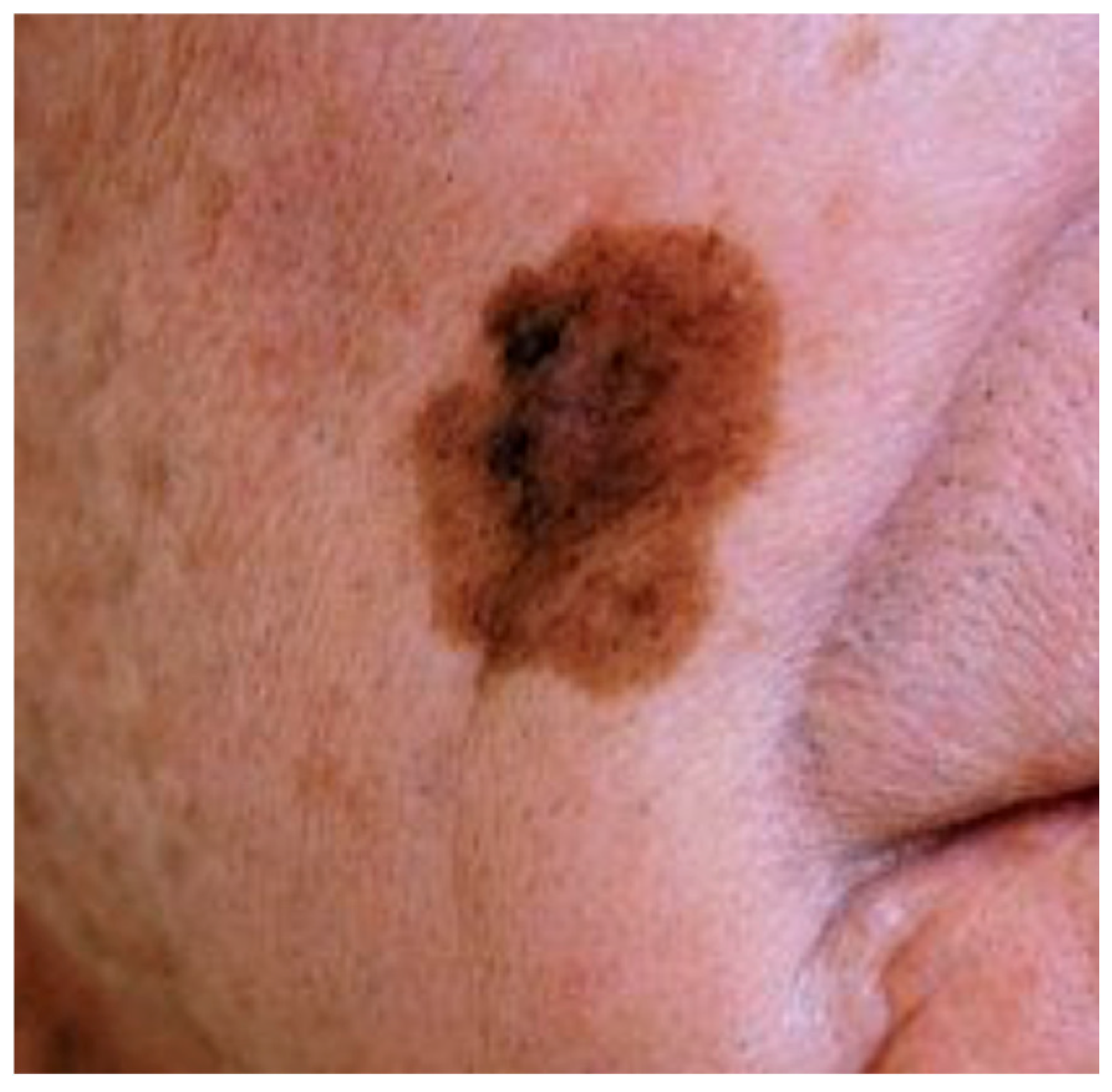
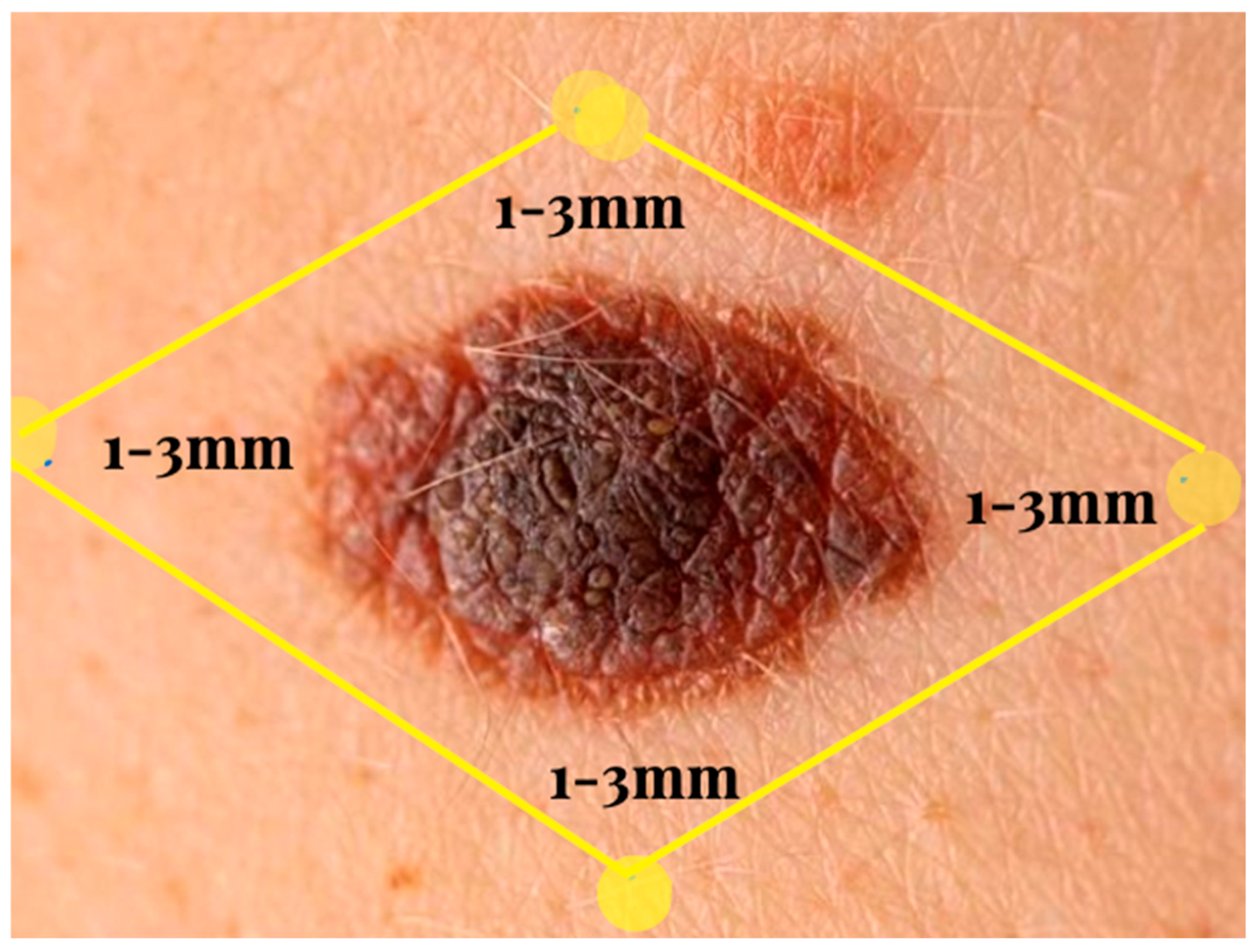
Standard excision margins are defined by Breslow thickness, with 1 cm for tumors ≤ 2 mm and 2 cm for tumors > 2 mm, according to NCCN 2024 and ESMO 2022 guidelines (
Figure 1 and
Figure 2). Evidence shows that wider margins do not improve melanoma-specific survival but increase morbidity, particularly in the head and neck region. SLNB is recommended for tumors ≥ T1b (Breslow ≥ 0.8 mm or ulcerated) and for T2–T4 lesions regardless of ulceration. Additional risk factors include high mitotic rate, lymphovascular invasion, regression in thin melanoma, and positive gene-expression profiling [
3,
4].
In the ongoing MelMarT-II experiment, researchers are investigating whether or not thinner margins of one centimeter might be similarly safe for bigger melanomas. If this is the case, it could possibly provide less morbidity, shorter operational durations, and superior esthetic results. MelMarT-II is a prospective randomized phase III trial evaluating 1 cm vs. 2 cm margins for T2–T3 melanomas. Early data suggest reduced wound morbidity and shorter operative time without compromising early recurrence outcomes. MSLT-II and DeCOG-SLT confirm that omission of routine CLND after a positive SLNB does not improve melanoma-specific survival but reduces lymphedema by up to 25–30% and minimizes sensory morbidity [
2,
5].
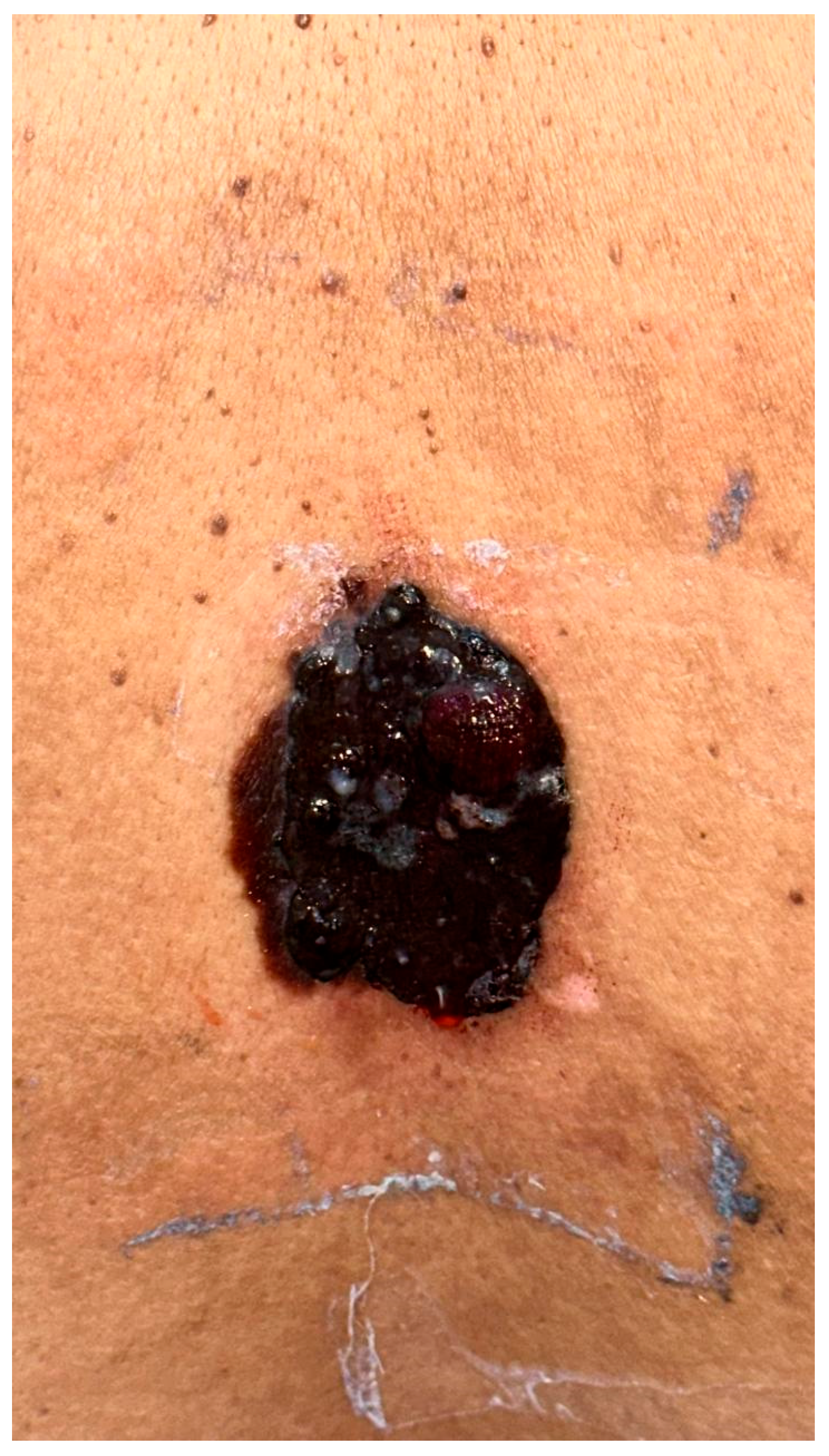
Narrower surgical margins (five to ten millimeters) are often sufficient for melanoma in situ, particularly lentigo maligna on cosmetically delicate areas (
Figure 3) (facial, scalp, ears, and fingers), but the risk of local recurrence varies. Techniques such as Mohs micrographic surgery, phased excision, or margin-controlled procedures continue to be preferred in areas that are either high-risk or anatomically complicated [
2,
6].
Although Mohs surgery has shown great cure rates in melanoma in situ and lentigo maligna, its value in invasive melanoma is still confined to chosen locations that have specialist immunostaining skills. Mohs surgery enables real-time histologic control, maximizes tissue preservation, and has shown excellent cure rates.
3.2. Sentinel Lymph Node Biopsy and Regional Management:
According to the NCCN and ESMO Clinical Practice Guidelines, sentinel lymph node biopsy (SLNB) represents the standard staging procedure for patients with intermediate- and high-risk cutaneous melanoma and plays a central role in prognostic stratification and selection for adjuvant systemic therapy [
3,
4].
When it comes to staging intermediate- and high-risk melanomas, the standard of treatment has shifted away from elective lymph node dissection and toward SLNB alone. Not only does it provide essential prognostic information, but it also assists in the identification of candidates for adjuvant immunotherapy or targeted treatment, which has a significant impact on survival outcomes in contemporary clinical practice [
1,
7]. Based on the findings of MSLT-II and DeCOG-SLT, it was determined that doing regular complete lymph node dissection following a positive SLNB does not improve melanoma-specific survival, but it did increase the frequency of lymphedema and sensory impairments [
1,
2,
3,
4,
5,
6,
7,
8]. The use of regular nodal ultrasonography for observation is now considered conventional.
Ongoing research is aimed at refining SLNB indications by the utilization of predictive methods such as nomograms, molecular classifiers, and gene expression profiling. This might ultimately lead to a reduction in the number of needless operations performed on patients with little risk while still preserving accuracy [
8]. When it comes to patients who require therapeutic lymphadenectomy, advances such as rapid lymphatic reconstruction, which includes lymphovenous anastomosis, are demonstrating encouraging outcomes in terms of minimizing postoperative lymphedema and enhancing quality of life [
5].
3.3. Integration of Systemic Therapies and Neoadjuvant Approaches
Recent updates to the NCCN and ESMO Clinical Practice Guidelines have incorporated neoadjuvant immunotherapy as a recommended option for selected patients with resectable stage III melanoma, reflecting a paradigm shift in which surgical timing and extent are increasingly guided by systemic treatment response [
3,
4].
This guideline evolution is supported by emerging phase II and III trial data demonstrating improved event-free survival and the feasibility of response-adapted surgical strategies.
Increasing data suggests that systemic therapy should be administered prior to surgical treatment in cases of locoregionally advanced melanoma. A reduction in the burden of the tumor, the generation of powerful systemic immune responses, and an improvement in long-term outcomes are the goals of neoadjuvant immunotherapy. In SWOG1801, neoadjuvant anti–PD-1 improved event-free survival to 72% vs. 49% with adjuvant therapy alone. PRADO (phase II) validated a response-adapted approach where major pathologic responders avoided CLND. In contrast, NADINA (phase III) evaluates neoadjuvant combination immunotherapy but does not modify surgical extent based on response [
9,
10].
A reduction in surgical morbidity, the avoidance of needless node dissections, and the personalization of treatment intensity are all potential outcomes of this paradigm change. However, optimizing neoadjuvant regimens, determining the appropriate scheduling of surgery, and identifying biomarkers that predict response are still active areas of research.
3.4. Reconstructive and Functional Considerations
In the case of large excisions, particularly those performed on the extremities or the head and neck, sophisticated reconstruction may be required. As reconstructive techniques become more prevalent, function, cosmesis, and lymphatic preservation are becoming increasingly important. There are a variety of trunk and limb abnormalities that may be treated using keystone, V-Y, and perforator-based flaps. These flaps provide long-lasting coverage with little morbidity [
6]. Digit-sparing surgery has gained favor in the treatment of sub-ungual melanoma in certain individuals who are in the early stages of the illness and have minimal bone involvement. This presents a challenge to the conventional procedures of regular amputation [
2,
3,
4,
5,
6]. Obtaining simultaneous oncologic clearance and achieving optimal cosmetic results is made possible by collaboration with reconstructive specialists. The move toward functional rehabilitation and long-term survivability is reflected in the development of new procedures such as lymphatic mapping and preservation, supermicrosurgery, and physiologic reconstruction schemes.
3.5. Management of In-Transit and Locoregional Metastases
Locoregional metastases may be managed using isolated limb infusion, intralesional therapies (e.g., T-VEC), cryoablation, or electrochemotherapy—not as surgical de-escalation but as disease-control modalities to avoid major operations in selected cases [
6,
8].
These methods are in accordance with contemporary ideas of de-escalation, which suggest that substantial resections should be reserved exclusively for instances that are either symptomatic or treatment-resistant.
4. Discussion
4.1. Evolving Role of Surgery in the Immunotherapy Era
This review is intentionally structured around the NCCN and ESMO Clinical Practice Guidelines, using these international recommendations as the primary framework for discussing contemporary surgical management of melanoma while integrating landmark clinical trials and emerging evidence that inform and refine current guideline-based practice [
3,
4].
Surgery remains valuable for oligoprogressive disease, palliation, and local control after systemic therapy, particularly when radiologic response is heterogeneous. Immune checkpoint blockade frequently induces heterogeneous response patterns, including mixed responses in which some metastatic sites regress while others progress. This phenomenon reflects spatial tumor heterogeneity and acquired immune resistance mechanisms, such as impaired antigen presentation, alterations in interferon signaling pathways, and the development of immune-excluded tumor microenvironments [
1,
6,
11]. In this context, surgery may retain a complementary role within an integrated treatment strategy, particularly for the management of oligoprogressive disease, local control, or symptom palliation, while allowing continuation of otherwise effective systemic therapy [
12]. Emerging neoadjuvant immunotherapy trials further support response-adapted surgical decision-making, demonstrating that systemic immune response can inform the extent and timing of surgical intervention [
13,
14]. The natural history of metastatic melanoma has been significantly altered as a result of the introduction of immune checkpoint inhibitors (ICIs), which include anti-PD-1 and anti-CTLA-4 treatments, as well as BRAF/MEK inhibitors for molecularly targeted therapy [
7,
13]. They have brought forth novel intersections between surgical and systemic treatment as a result of their debut. In recent years, surgical procedures have increasingly been seen not as a standalone curative modality but rather as a component of an integrated therapeutic continuum. Individuals who experience substantial systemic responses with immunotherapy may be able to avoid the necessity for major surgery. On the other hand, surgery may be deliberately utilized for the purpose of oligoprogression, local control, or consolidation in certain individuals.
For the purpose of maximizing future surgical decision-making, it will be essential to have a solid understanding of immune response patterns, resistance mechanisms, and the behavior of residual illness.
4.2. Precision Surgery and Technological Advances
The accuracy of intraoperative procedures has been significantly improved by technological advancements. Near-infrared fluorescence imaging using indocyanine green has emerged as a valuable adjunct for sentinel lymph node biopsy in cutaneous melanoma, particularly in anatomically complex regions. Comparative studies have demonstrated higher sentinel node detection rates and improved visualization when indocyanine green is used alongside or instead of conventional blue dye techniques [
15,
16]. These technologies facilitate more precise lymphatic mapping and may reduce false-negative rates in selected settings. However, their widespread adoption remains limited by cost, availability of specialized imaging equipment, and the learning curve associated with fluorescence-guided surgery. Similarly, robotic-assisted lymphadenectomy offers enhanced dexterity and visualization in confined anatomical basins, such as the pelvis or iliac regions, but current evidence is largely restricted to feasibility studies and small institutional series, precluding routine use outside specialized centers [
17]. The delineation of lymphatic drainage patterns, the improvement of sentinel node identification, and the enhancement of margin visualization are all made possible with the use of tools such as near-infrared fluorescence imaging, targeted radiotracers, and molecular probes. Robotic lymphadenectomy may improve dexterity and visualization in anatomically challenging basins (pelvis, iliac nodes). While early feasibility results are promising, adoption remains limited to high-volume centers and select indications [
10,
11].
Furthermore, the integration of digital pathology, artificial intelligence-driven margin evaluation, and high-resolution imaging gives the possibility of real-time intraoperative decision assistance, which has the potential to reduce the number of re-excisions being performed and improve long-term results.
4.3. Reconstruction and Quality of Life
Outcomes that are centered on the patient are receiving a larger amount of attention as surgical procedures grow more conservative. Patient-reported outcome measures (PROMs) are increasingly incorporated into melanoma surgical research to better capture functional, aesthetic, and psychosocial outcomes. Studies using validated instruments such as the Skindex-16 and the Skin Cancer Index have demonstrated that surgical extent, reconstruction strategy, and nodal management significantly influence health-related quality of life, particularly in patients with head and neck melanoma [
18]. In addition, randomized and prospective data have shown that omission of routine completion lymph node dissection after a positive sentinel lymph node biopsy is associated with substantially lower rates of lymphedema and sensory morbidity, translating into improved long-term quality-of-life outcomes without compromising melanoma-specific survival [
19]. These findings support a survivorship-oriented surgical paradigm in which oncologic safety is balanced with functional preservation and patient-centered outcomes. There has been a movement toward survivor-ship-oriented treatment, which is seen in the inclusion of oncoplastic concepts, scar optimization, psychological support, and patient education.
Increasingly, quality-of-life indicators are being integrated into clinical studies, and it is anticipated that they will play a role in the development of future guidelines.
4.4. Global Disparities and Access to Care
Despite progress, discrepancies continue to exist on a worldwide scale. Global disparities in melanoma outcomes remain substantial. According to recent global cancer statistics, melanoma incidence and mortality vary widely across regions, with disproportionately worse outcomes reported in low- and middle-income countries due to delayed diagnosis and limited access to specialized care [
20]. In these settings, restricted availability of sentinel lymph node biopsy, immunotherapy, and multidisciplinary oncologic services significantly impacts staging accuracy and survival outcomes. Additional barriers include geographic inequities, shortages of trained specialists, and financial constraints. Emerging strategies such as teledermatology, telepathology, regional training initiatives, and international collaborative networks have shown potential to improve early detection and access to guideline-concordant melanoma care in resource-limited environments [
21]. Countries with low and intermediate incomes have several obstacles, some of which include delayed diagnosis, restricted access to SLNB or immunotherapy, and an inadequate infrastructure for multidisciplinary care.
Efforts such as teledermatology, telepathology, regional training programs, and international partnerships continue to be essential in order to reduce disparities and improve the outcomes of melanoma on a worldwide scale.
4.5. Future Directions
It is anticipated that molecular profiling, radiogenomics, and immunological markers would be included in future cases of melanoma surgery in order to facilitate real-time therapy adaptation. The development of new technologies, such as circulating tumor DNA (ctDNA), has the potential to enhance monitoring, reduce the importance of surgical interventions, and ultimately move melanoma toward a surgical modality that is guided by biological factors [
10,
11].
As the field of molecular diagnostics continues to advance, it is possible that surgical staging procedures will become less involved or possibly eliminated entirely.
Future directions in melanoma surgery will increasingly emphasize integration with systemic therapy, biomarker-guided patient selection, and digital decision-support tools. Advances in molecular profiling, circulating tumor DNA monitoring, and artificial intelligence–assisted imaging may further refine surgical timing and extent. Parallel efforts in surgical education and global collaboration will be essential to ensure equitable implementation of these innovations across diverse healthcare settings.
5. Conclusions
Within the realm of melanoma care, surgery continues to be an indispensable component. On the other hand, rapidly advancing technology in immunotherapy, molecular diagnostics, and high-precision technologies has completely altered the paradigm of surgical procedures. Currently, the technique has an emphasis on individualized, less intrusive procedures that incorporate systemic treatment, improve both functional and cosmetic results, and prioritize long-term survivability.
Precision surgery remains a fundamental component of melanoma care, increasingly guided by systemic therapy response, molecular profiling, and precision technologies to optimize survival and quality of life.
Author Contributions
Conceptualization, J.M.Z.T., V.C.O.; methodology, J.M.Z.T.; software, not applicable; validation, J.M.Z.T., V.C.O.; formal analysis, J.M.Z.T.; investigation, J.M.Z.T.; resources, V.C.O.; data curation, J.M.Z.T.; writing—original draft preparation, J.M.Z.T.; writing—review and editing, J.M.Z.T. and V.C.O.; visualization, J.M.Z.T.; supervision, V.C.O.; project administration, J.M.Z.T. All authors have read and agreed to the published version of the manuscript.
Funding
This research received no external funding.
Institutional Review Board Statement
Not applicable.
Informed Consent Statement
Not applicable.
Data Availability Statement
No new data were created or analyzed in this study. Data sharing is not applicable to this article.
Conflicts of Interest
The authors declare no conflicts of interest.
References
- Curti, B.D.; Faries, M.B. Recent advances in the treatment of melanoma. N. Engl. J. Med. 2021, 384, 2229–2240. [Google Scholar] [CrossRef] [PubMed]
- Dixon, A.J.; Sladden, M.; Zouboulis, C.C.; Popescu, C.M.; Nirenberg, A.; Steinman, H.K.; Longo, C.; Dixon, Z.L.; Thomas, J.M. Primary cutaneous melanoma—Management in 2024. J. Clin. Med. 2024, 13, 1607. [Google Scholar] [CrossRef] [PubMed]
- Amaral, T.; Ottaviano, M.; Arance, A.; Blank, C.; Chiarion-Sileni, V.; Donia, M.; Dummer, R.; Garbe, C.; Gershenwald, J.; Gogas, H.; et al. Cutaneous melanoma: ESMO Clinical Practice Guideline for diagnosis, treatment and follow-up. Ann. Oncol. 2025, 36, 10–30. [Google Scholar] [CrossRef]
- Vettoretto, N.; Arezzo, A.; Famiglietti, F.; Cirocchi, R.; Moja, L.; Morino, M. Laparoscopic-Endoscopic Rendezvous Versus Preoperative Endoscopic Sphincterotomy in People Undergoing Laparoscopic Cholecystectomy for Stones in the Gallbladder and Bile Duct. Cochrane Database Syst. Rev. 2018, 4, CD010507. [Google Scholar] [CrossRef]
- Vaccari, S.; Minghetti, M.; Lauro, A.; Bellini, M.I.; Ussia, A.; Khouzam, S.; Marino, I.R.; Cervellera, M.; D’andrea, V.; Tonini, V. Destiny for Rendezvous: Is Cholecysto/Choledocholithiasis Better Treated With Dual- Or Single-Step Procedures? Dig. Dis. Sci. 2022, 67, 1116–1127. [Google Scholar] [CrossRef] [PubMed]
- La Greca, G.; Barbagallo, F.; Sofia, M.; Latteri, S.; Russello, D. Simultaneous Laparoendoscopic Rendezvous for the Treatment of Cholecystocholedocholithiasis. Surg. Endosc. 2009, 24, 769–780. [Google Scholar] [CrossRef]
- Borzellino, G.; Rodella, L.; Saladino, E.; Catalano, F.; Politi, L.; Minicozzi, A.; Cordiano, C. Treatment for Retrieved Common Bile Duct Stones During Laparoscopic Cholecystectomy: The Rendezvous Technique. Arch. Surg. 2010, 145, 1145–1149. [Google Scholar] [CrossRef]
- Matsushima, K.; Ciesielski, K.M.; Mandelbaum, R.S.; Matsuo, K. Clinical Demographics of Laparoscopic Cholecystectomy: A Gender-Specific Analysis. Am. Surg. 2024, 90, 528–532. [Google Scholar] [CrossRef]
- Owens, P.L.; Barrett, M.L.; Raetzman, S.; Maggard-Gibbons, M.; Steiner, C.A. Surgical Site Infections Following Ambulatory Surgery Procedures. JAMA 2014, 311, 709–716. [Google Scholar] [CrossRef]
- Long, G.V.; Swetter, S.M.; Menzies, A.M.; Gershenwald, J.E.; Scolyer, R.A. Cutaneous melanoma. Lancet 2023, 402, 485–502. [Google Scholar] [CrossRef]
- Faries, M.B.; Thompson, J.F.; Cochran, A.J.; Andtbacka, R.H.; Mozzillo, N.; Zager, J.S.; Jahkola, T.; Bowles, T.L.; Testori, A.; Beitsch, P.D.; et al. Completion dissection or observation for sentinel-node metastasis in melanoma. N. Engl. J. Med. 2017, 376, 2211–2222. [Google Scholar] [CrossRef]
- Binks, M.; van Akkooi, A.C.J.; Menzies, A.M.; Spillane, A. Cutaneous melanoma management—An update and narrative review for the general surgeon. ANZ J. Surg. 2025, 95, 2016–2023. [Google Scholar] [CrossRef]
- Santamaria-Barria, J.A.; Mammen, J.M.V. Surgical management of melanoma: Advances and updates. Curr. Oncol. Rep. 2022, 24, 1425–1432. [Google Scholar] [CrossRef]
- Siller, A.; DaCunha, M.; Coldiron, B.M. The surgical management of cutaneous melanoma. Dermatol. Clin. 2025, 43, 461–471. [Google Scholar] [CrossRef] [PubMed]
- Temple-Oberle, C.; Nicholas, C.; Rojas-Garcia, P. Current controversies in melanoma treatment. Plast. Reconstr. Surg. 2023, 151, 495e–505e. [Google Scholar] [CrossRef] [PubMed]
- Sondak, V.K.; Neves, R.I.; Wuthrick, E.J.; Messina, J.L.; Khushalani, N.I. Current and future approaches in the surgical management of T3b/T4 primary and locoregionally advanced melanoma. Cancer 2022, 128, 3764–3771. [Google Scholar] [CrossRef] [PubMed]
- Novis, E.; van Akkooi, A.C.J. Management of localized melanoma in the anti–PD-1 era. Curr. Oncol. Rep. 2024, 26, 924–933. [Google Scholar] [CrossRef]
- Patel, S.P.; Othus, M.; Chen, Y.; Wright, G.P.; Yost, K.J.; Hyngstrom, J.R.; Hu-Lieskovan, S.; Lao, C.D.; Fecher, L.A.; Truong, T.-G.; et al. Neoadjuvant–adjuvant or adjuvant-only pembrolizumab in advanced melanoma (SWOG S1801). N. Engl. J. Med. 2023, 388, 813–823. [Google Scholar] [CrossRef]
- Reijers, I.L.M.; Menzies, A.M.; van Akkooi, A.C.J.; Versluis, J.M.; Heuvel, N.M.J.v.D.; Saw, R.P.M.; Pennington, T.E.; Kapiteijn, E.; van der Veldt, A.A.M.; Suijkerbuijk, K.P.M.; et al. Personalized response-directed surgery and adjuvant therapy after neoadjuvant ipilimumab and nivolumab in stage III melanoma (PRADO). Nat. Med. 2022, 28, 1178–1188. [Google Scholar] [CrossRef]
- Fadel, M.G.; Rauf, S.; Mohamed, H.S.; Yusuf, S.; Hayes, A.J.; Power, K.; Smith, M.J. The use of indocyanine green and near-infrared fluorescence imaging versus blue dye in sentinel lymph node biopsy in cutaneous melanoma: A retrospective cohort study. Ann. Surg. Oncol. 2023, 30, 4333–4340. [Google Scholar] [CrossRef]
- Hotchkies, A.; Saiyed, S.; Palaniappan, S.; Koroma, P.; Sarsam, T.; Falls, D.; Hanif, S.; Rahman, S.; ElBatawy, A. Efficacy of indocyanine green fluoroscopy for sentinel node biopsy in head and neck melanoma: A systematic review and meta-analysis. Br. J. Oral Maxillofac. Surg. 2024, 62, 595–603. [Google Scholar] [CrossRef] [PubMed]
| Disclaimer/Publisher’s Note: The statements, opinions and data contained in all publications are solely those of the individual author(s) and contributor(s) and not of MDPI and/or the editor(s). MDPI and/or the editor(s) disclaim responsibility for any injury to people or property resulting from any ideas, methods, instructions or products referred to in the content. |