Article

Insights Behind Sensitive Skin Individuals’ Voices: A Scientific Exploration of Their Behaviors, Medical Journeys and Healthcare Experiences


1
The Procter and Gamble Company, Corporate Function R&D, Mason, OH 45040, USA
2
THREAD and InVibe, a Division of THREAD, 167 E Chatham Street, Suite 300, Cary, NC 27511, USA
*
Author to whom correspondence should be addressed.
Dermato 2026, 6(2), 12; https://doi.org/10.3390/dermato6020012
Submission received: 10 November 2025 / Revised: 10 December 2025 / Accepted: 5 February 2026 / Published: 3 April 2026

Abstract

Sensitive Skin Syndrome (SSS) is a worldwide condition characterized by sensory symptoms such as stinging, burning, and itching, often without visible signs. This pilot study investigated individuals with self-reported SSS, focusing on the specific skin conditions, motivations and barriers for seeking medical attention. SSS individuals were divided into two groups: those who consulted a doctor (n = 16) and those who did not (n = 10). While SSS symptom severity was similar in both groups, those with greater severity were five times more likely to seek medical help. Key symptoms prompting consultations included morphological symptoms (papules, macules), sensory symptoms (itch, discomfort), and inflammatory symptoms (redness, rash). Notably, altered sensation and macules/papules showed the strongest trends towards influencing care-seeking behavior. Differences in anatomical sites affected were significant, with the head and face having the highest odds of doctor visits. Barriers to care included high specialist costs, travel distances, and a lack of remote consultation options, particularly for rural residents. Although treatments recommended by healthcare providers often fell short of expectations, partially effective options were more acceptable when endorsed by doctors. Subjects reported improvements within weeks of starting new treatments, though many remained only partially satisfied. This study highlights important aspects of SSS and its entanglement with other skin conditions, as well as how individuals navigate their symptoms and make treatment decisions amidst their sufferings.

1. Introduction

Sensitive Skin Syndrome (SSS) represents a multifaceted global clinical phenomenon characterized by self-reported sensory experiences, including tightness, stinging, burning, tingling, pain, and pruritus, often occurring in the absence of observable objective signs [1]. The specific sensations reported can vary significantly among individuals, as these unpleasant responses may be elicited by a wide array of external and internal stimuli [2]. Although observable indicators of skin irritation, such as erythema and edema, may accompany these subjective sensations, many individuals who identify as having sensitive skin do not consistently exhibit visible symptoms [3].
The objective of this study was to conduct a first exploration study of individuals’ experiences with sensitive skin, focusing on their motivations for seeking medical assistance and identifying barriers that hinder their consultations with healthcare professionals. Additionally, we examined the range of treatments utilized by individuals, both with and without the guidance of healthcare providers (HCPs) and evaluated their satisfaction with each category of treatment options. This research approach aimed to reveal the underlying factors contributing to the patterns observed among individuals with sensitive skin, facilitating a patient-centered perspective devoid of external biases. This first exploratory study will provide comprehensive view of the sensitive skin individual journey, enabling researchers to gain holistic insights into their behaviors and preferences. The findings from this study will ultimately address more effectively the unique needs of sensitive skin sufferers.
The findings are critical for refining consumer and patient engagement strategies, effectively addressing the unique needs associated with sensitive skin, and informing the development of tailored solutions and commercial strategies. By enhancing our understanding of the needs, behaviors, and pain points of individuals with sensitive skin, we can better tailor our approaches to effectively meet their unique challenges and improve their overall experience.
In this study, the terms “seeking healthcare providers,” “medical advice,” and “consulting a doctor” are used interchangeably.

2. Materials and Methods

The study utilized a mixed-methods approach to investigate the motivations and experiences of sensitive skin consumers. Initially, data analytics were employed to assess individuals’ understanding of sensitive skin issues. Subsequently, Voice-Response Technology by THREAD and inVibe (Cary, NC, 27511, USA) was utilized, leveraging automated voice-response technology to capture the authentic voices of real individuals. This method is aimed at providing insights into the factors that drive consumers to seek medical help, as well as the barriers faced by those who suffer from sensitive skin but do not pursue medical assistance. By allowing respondents to share their experiences and reflections in an unfiltered manner, this technology facilitated a deeper understanding of their concerns.

2.1. Recruitment and Data Collection

Individuals suffering from SSS in the US were recruited for the study through a screener designed to determine eligibility. The respondent pool consisted of individuals who self-reported sensitive skin, suffered from skin symptoms, and divided into those who had consulted a doctor (n = 16; 15 females and 1 male) and those who had not sought medical advice (n = 10; all females). Informed consent was obtained from all subjects involved in the study before the start of the study. Subjects ranged in age from 18 to 55 years old.
For the voice interview component, qualified subjects participated in a voice response study by calling in to answer voice prompts using their own devices. Subjects heard each of the pre-recorded questions read to them by a voice over artist. Each subject heard the same questions in the same order for consistency. This method allowed subjects to complete interviews at their convenience and without the presence of a moderator, ensuring that their responses were authentic and spontaneous. The goal of this approach was to assist in generating meaningful evidence and gaining actionable insights by unlocking the signals present in the human voice.

2.2. Voice Analysis

Linguistic experts from InVibe employed discourse analysis techniques, enhanced by machine learning, to identify key themes and summarize significant moments in respondent responses. This approach demonstrated how linguistic analysis can decode metaphors, providing generalizable insights into the experiences of sensitive skin consumers. By utilizing unorthodox lines of questioning, the study was able to elicit more authentic responses compared to traditional methods commonly employed by the market research community.
The analysis combined innovative technology that facilitates the rapid and efficient capture of rich voice data with rigorous linguistic and computational analysis. The Large Language Models (LLM) used were OpenAI’s GPT-4 family of models (as available in spring and summer 2023), 1455 3rd Street, San Francisco, CA 94158, USA. This synergy allowed for a deeper understanding of respondent sentiments and experiences, ultimately leading to more meaningful insights that can inform us of best engagement strategies.

2.3. Statistical Analysis

We conducted descriptive analyses to examine the respondents’ demographic characteristics, biometric measurements, health behaviors, and doctor visitation status (seen vs. not seen), according to proportions derived from summary tables. A binomial probability test was used to determine if the proportion reporting having seen a doctor was significantly different from randomness. Briefly, this test determined whether the observed proportion of doctor visits differed from an assumed null hypothesis of 50%, where a p-value less than or equal to 0.05 indicated a statistically significant result.
For these tests, we focus only on comparing the column totals for have seen vs. not have seen a health care provider. Summary tables of symptom prevalence, body area affected, severity, anatomical sites, causes, and treatments were originally reported in proportions. To enable statistical testing, these proportions were converted into integer counts by multiplying the reported percentage by the number of respondents in each subgroup (i.e., those who had seen a doctor, n = 16, and those who had not, n = 10). For example, if 50% of respondents who had seen a doctor reported redness, this was converted to 8 individuals (0.50 × 16). Percentages that yielded non-integer values were rounded to the nearest whole number. All reconstructed counts were checked to ensure that the totals across categories did not exceed the total study population of 26 respondents. Where multiple overlapping symptoms or sites were present, grouping (e.g., inflammatory, sensory, morphological; or anatomical regions) were derived by combining categories, and continuity corrections were applied where necessary to maintain consistency with the total sample size.
To assess the strength of association between health-related factors, such as the severity of skin sensitivity, presence of skin symptoms, and related concerns, and doctor visitation status, we calculated unadjusted odds ratios (uOR) using Fisher’s exact test. The Fisher’s exact test was applied to account for the small sample sizes within specific response categories, which limited the applicability of conventional statistical approaches. To ensure sufficient cell counts for valid comparisons, categories collapsed based on clinical relevance. For example, skin symptoms were grouped into three domains: inflammatory (redness, rash, irritation, swelling), sensory (itch, altered sensation, discomfort, pain), and morphological (macules, raised skin). Affected body areas were similarly regrouped, with original locations (e.g., face, arms, legs, neck, torso, hands, head, and feet) reclassified into broader regions: upper extremities, lower extremities, head and face, and upper body. Reclassification was conducted following a clinically guided framework developed in consultation with domain experts. Statistical significance was defined as p ≤ 0.05.
For clarity of interpretation, an odds ratio (OR) equal to 1.0 (OR = 1) indicates no difference in the likelihood of doctor visitation between groups. Values strictly above 1.0 (OR > 1) suggest higher odds of visiting a doctor among respondents with the characteristic of interest, whereas values below 1.0 indicate lower odds (OR < 1). For example, an OR of 2.0 implies that respondents with the given characteristic had approximately twice the odds of seeing a doctor while an OR of 0.5 would indicate that the odds were reduced by half. All estimates are presented with 95% confidence intervals, and wide intervals should be interpreted cautiously given the modest sample size. These unadjusted odd ratios provide effect-size estimates to complement p-values to highlight statistical significance.
All statistical analyses were conducted using R version 4.4.3 (R Foundation for Statistical Computing, 2025, Vienna, Austria). Unadjusted odds ratios with 95% confidence intervals were estimated using Fisher’s exact test with Haldane-Anscombe correction where necessary. Key packages included stats and epitools.

3. Results

3.1. Overall Sensitive Skin Experience and Severity

Overall, respondents described living with sensitive skin as deeply uncomfortable and often painful. Common symptoms include itchiness, burning, stinging, redness, inflammation, rash, dryness, and breakouts. These symptoms are not only disruptive but also unpredictable, affecting daily life and well-being. The emotional impact of these symptoms, especially when visible, often results in a feeling of embarrassment, driven by concerns about judgment and misunderstanding by others and in societal gatherings.
Doctor Visitation by Severity categories of Skin Sensitivity: When stratified by severity of skin sensitivity (Table 1), further analysis using Fisher’s exact test and unadjusted odds ratios showed that respondents with very sensitive skin had 440% higher odds of having seen a doctor compared to those who did not see the doctor (uOR = 5.40; p = 0.18). Although this suggests a potential trend, the association was not statistically significant. Moreover, respondents who had moderately sensitive skin had 58% lower odds of having seen a doctor (uOR = 0.42; p = 0.23), though the result was also not statistically significant. Overall, while the direction of associations varied across sensitivity levels, none of the comparisons reached statistical significance highlighting the potential influence of limited subgroup sizes on the power to detect differences.

3.2. Sensitive Skin Symptoms

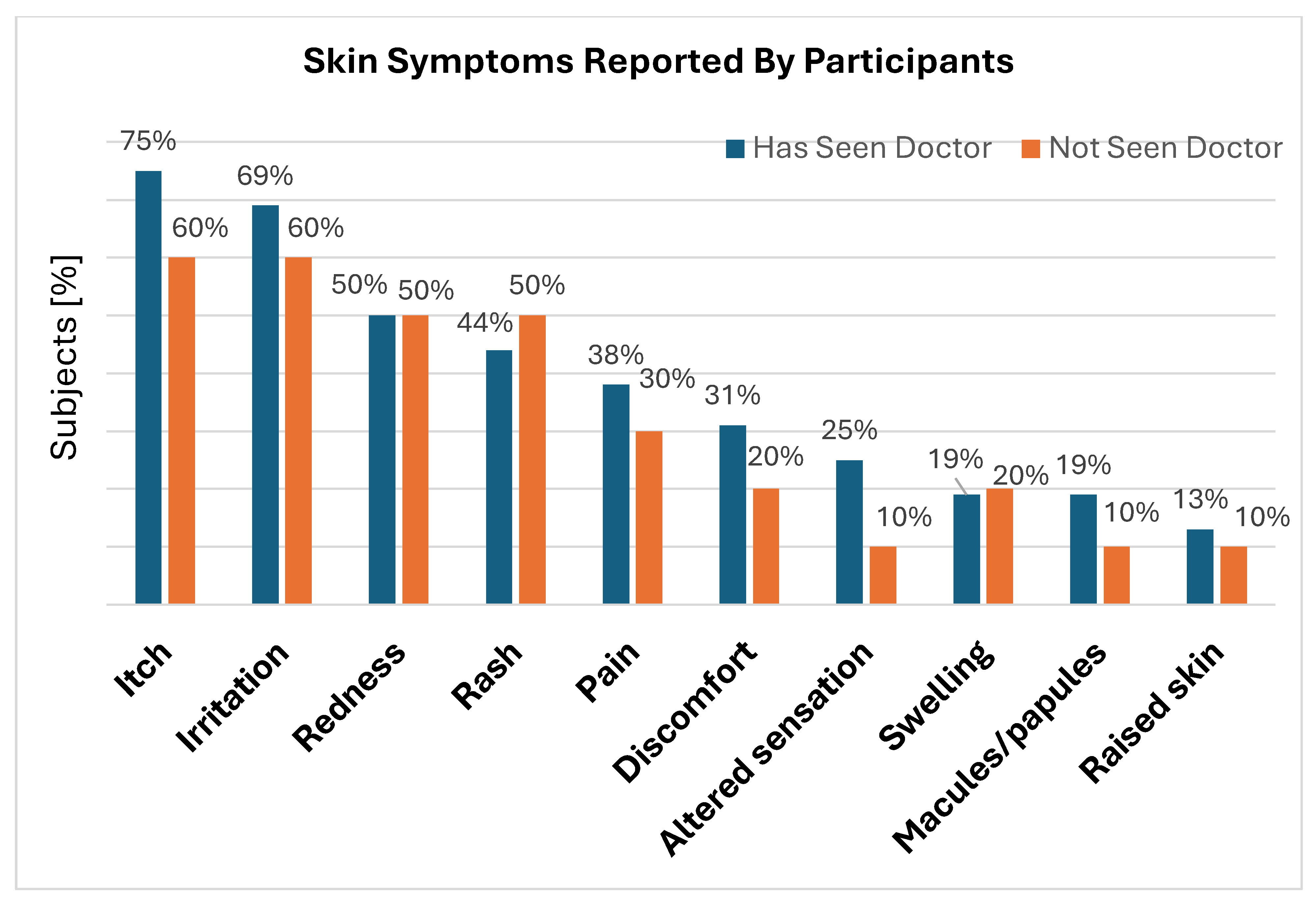
The study revealed a range of symptoms experienced by respondents, highlighting the prevalence and severity of sensitive skin issues among those who have and have not consulted a doctor (Figure 1).
These results indicate that certain symptoms, such as itch, irritation and altered skin sensation, are prevalent regardless of whether respondents sought medical advice, highlighting the widespread impact of sensitive skin.
We examined the relationship between the presence of skin symptoms and doctor visitation status among respondents (Table 2). No single symptom showed a statistical association with doctor visitation status. However, the strongest relationship between the presence of skin symptoms and doctor visitation status among respondents (though non-statistically significant) were for altered sensation (200% higher odds) (uOR = 3.0) and macules/papules (108% higher odds) (uOR = 2.08), suggesting these symptoms may be more influential in prompting care-seeking among respondents.
The skin symptoms were then grouped into three clinically relevant categories to further investigate the relationship. Those categories were (1) inflammatory (redness, rash, irritation, swelling), (2) sensory (itch, altered sensation, discomfort, pain), and (3) morphological (macules, raised skin)—Table 3. Fisher’s exact test was used to compare doctor visitation rates within each symptom group due to limited sample sizes.
Analyses in Table 3, showed that respondents who had inflammatory symptoms had 25% lower odds of visiting a doctor compared to those who did not see a doctor (uOR = 0.75, p = 0.343), although the association was not statistically significant. Respondents with sensory symptoms had 86% higher odds of doctor visitation compared to those who did not seek a doctor, but the difference was not statistically significant (uOR = 1.86, p = 0.4438). Furthermore, among those with morphological symptoms, respondents had 82% higher odds of doctor visitation compared to not visiting a doctor (uOR = 1.82, p = 0.198). While not statistically significant, odds ratios suggest that morphological and sensory symptoms may drive health seeking more than inflammatory symptoms in respondents with sensitive skin. This trend should be interpreted cautiously given the small sample size and wide confidence intervals.

3.3. Sensitive Skin Body Sites and Surface Area Impacted

We evaluated the relationship between affected body area sites affected by sensitive skin and likelihood of having seen a doctor. Amongst the anatomical sites, respondents who noted legs, neck, torso, hands, head, and feet, all had higher odds of having seen a doctor (Table 4). Although the associations were not statistically significant, affected feet had the highest odds (567% higher odds) of all anatomical/body area sites (uOR = 6.67, p = 0.25).
To improve interpretability, body area sites were grouped into categories as follows: Head & Face (head and face), Lower Extremities (legs and feet),, Upper Extremities (arms and hands), and Upper Body (neck and torso). Unadjusted odds ratios were estimated for each region versus all other regions combined using Fisher’s exact test to account for the small cell counts as shown in Table 5.
The analysis showed that subjects in anatomical group Head and Face had 457% higher odds of seeing a doctor (uOR = 5.57; p = 0.49). Those in the lower extremities group had 350% higher odds of seeing a doctor (uOR = 4.50, p = 0.77). Moreover, subjects in the upper extremities and upper body groups had 300% and 256% higher odds of seeing a doctor compared to their peers, respectively. However, these associations were not statistically significant. Most probably attributed to the small number of subjects in this study.
When we looked at the Total Body area claimed to be affected by SSS the subjects, Table 6 shows the results from the Fisher’s exact test and unadjusted odds ratios showed that subjects having 0–3% body area affected had 108% higher odds of seeing a doctor (uOR = 2.08; p = 1.00). However, this difference was not statistically significant. Subjects having 4–10% body area affected had 8% lower odds of seeing a doctor (uOR = 0.92; p = 1.00). Moreover, subjects with more than 10% body area affected had 29% lower odds of having seen a doctor (uOR = 0.71; p = 1.00).
In this study, we could not link the different body areas with either severity or symptoms. Future studies with a larger subjects’ population would be an interesting follow-up investigation.

3.4. Self-Perceived Causes of Having Sensitive Skin

We investigated whether the self-reported causes of sensitive skin were associated with likelihood of having seen a doctor (Table 7). Amongst the causes of skin sensitivity, subjects who had been diagnosed with a skin condition had 140% higher odds (uOR = 2.40) of having seen a doctor although the association was not statistically significant (p = 0.42). Similarly, subjects who listed medications as causes of sensitive skin had 33% higher odds (uOR = 1.33) of having seen a doctor, though the effect was not statistically significant (p = 1.0).

3.5. Sensitive Skin Behavior and Treatment Experiences: Unsatisfactory Trial-and-Error Approaches

3.5.1. Sensitive Skin Sufferers Are Consistently Trying to Reduce Discomfort and Increase Confidence

The behavior of sensitive skin sufferers is in constant state of trying to reduce their suffering. They are always seeking treatments to alleviate the severity and visibility of their symptoms. All subjects claimed to have engaged in trial-and-error methods, experimenting with various combinations of products, medications, and lifestyle changes to manage their sensitive skin symptoms independently of HCPs. This approach often results in partial and temporary relief, highlighting the need for more effective solutions.
Most subjects have transitioned to sensitive skin products and over-the-counter medications. These provide some relief but are generally insufficient for long-term symptom control. Some subjects have adjusted their dietary and lifestyle changes, which have yielded the highest satisfaction in managing sensitive skin symptoms.
For those individuals who visited the health care providers, 69% went to dermatologists, 19% primary care physicians, and 12% had other primary specialties.
Doctors typically recommend a multifaceted, trial-and-error approach to treating sensitive skin. While this can lead to improvements within weeks, subjects often find these changes only partially satisfying (Table 8).
Table 8 highlights the unadjusted odds ratio of doctors recommended and tried on their own within the sixteen subjects who had seen an HCP. Among subjects who had seen a doctor (n = 16), over-the-counter treatments showed no meaningful differences between doctor recommendation and self-trial, with odds ratios close to 1.
For the group who has not seen the doctor, 100% tried products for sensitive skin, Over the counter topical non-steroids, over the counter topical steroids and diet or lifestyle changes.
These associations, however, were not statistically significant nor were they statistically significant in comparison to the subjects that saw a doctor.

3.5.2. Motives and Barriers to Seeking Health Providers

Seeking Medical Advice—Motivations
Subjects seek medical attention for their sensitive skin primarily due to the significant discomfort and emotional distress associated with their symptoms. The experience of living with sensitive skin is often characterized by pain, itchiness, burning, stinging, redness, inflammation, and dryness, which can disrupt daily life and negatively impact overall well-being. The unpredictability of these symptoms can lead to feelings of embarrassment and concern about judgment from others, particularly in social situations.
The analysis indicates that individuals with very sensitive skin are notably more likely to consult HCPs, exhibiting a 440% higher likelihood of seeking medical help compared to those who do not visit a doctor. However, while this trend suggests a connection between skin sensitivity severity and healthcare-seeking behavior, it lacks statistical significance, indicating the need for further investigation into the influence of symptom severity on health-seeking patterns.
Certain symptoms, particularly altered sensations and the presence of macules or papules, appear to be more influential in prompting subjects to seek care, although these associations also did not reach statistical significance. The findings indicate that sensory and morphological symptoms may drive healthcare-seeking behavior more than inflammatory symptoms, suggesting a nuanced understanding of how specific experiences of sensitive skin influence the decision to visit an HCP.
Additionally, individuals who have been diagnosed with other skin conditions demonstrated a higher likelihood of consulting a doctor, highlighting the importance of prior medical history in influencing care-seeking behavior. Despite the lack of statistically significant correlations across various symptoms and severity levels, the data suggest that the emotional toll and visible nature of sensitive skin conditions are compelling factors driving individuals to seek medical advice.
Moreover, barriers to accessing healthcare, such as cost, travel distance, and limited options for remote consultations, exacerbate the challenges faced by these individuals. Addressing these barriers, along with enhancing communication and support strategies within healthcare systems, is crucial to ensure that individuals with sensitive skin receive the care they need.
From this study, the decision to visit an HCP is influenced by the severity and nature of symptoms, emotional distress caused by visible discomfort, and previous medical diagnoses. While the data indicate trends rather than definitive correlations, they underscore the need for increased awareness and targeted healthcare approaches for individuals living with sensitive skin.
Barriers to Seeking Medical Advice
Subjects face several obstacles that hinder their ability to seek HCP support for sensitive skin issues. Three main obstacles and barriers for seeking medical help were obvious. Those were (1) The cost of specialist appointments and issues related to insurance coverage are the most cited barriers preventing individuals from seeking HCP support. Financial constraints can significantly deter people from pursuing necessary medical care. (2) The burden of travel distance and especially for subjects in rural areas, the need to travel long distances to see a specialist poses a significant challenge for the Sensitive Skin Sufferers. Many individuals find it difficult to allocate the time required for travel, which can discourage them from seeking care. (3) Lack of Remote Consultation Options Nowadays. Prior to the pandemic, the absence of remote consultation options, particularly among dermatologists (DERMs), created an additional barrier for individuals with fewer flexible schedules. The inability to access healthcare services conveniently can prevent individuals from obtaining the support they need.
These main barriers highlight the importance of addressing financial, logistical, and accessibility issues to improve healthcare access and encourage individuals to seek the necessary support from HCPs.

3.5.3. Experience with the Doctor: Generally Positive First Medical Encounters

Subjects who consulted HCP about their sensitive skin symptoms generally reported positive initial experiences. In our study, most subjects scheduled their appointments specifically to address their sensitive skin symptoms. Conversations typically began with individuals describing the severity and impact of their symptoms, along with prior attempts to manage the condition. These findings reflect a diverse range of treatment strategies, highlighting the need to tailor the approach that doctors must address sensitive skin symptoms, balancing over the counter and prescription options with lifestyle modifications.
The overall key insights into health care providers’ recommendations were as follows:
  • The need for a Multifaceted Approach: HCPs suggest combining various treatments and lifestyle changes, but this method often relies on trial and error.
  • General improvement Timeline: Subjects generally notice symptom improvements within a few weeks of starting new treatments.
  • Subjects’ satisfaction levels for those who visited the doctor’s office: While some subjects accept the partial and temporary improvements from HCP-recommended treatments, many are not fully satisfied.
  • Some of the key challenges noted: Subjects cite the impracticality of diet and lifestyle changes, the frequency of topical application, and side effects of prescriptions as significant barriers to satisfaction.
These insights from this study highlight the need for more effective, convenient, and long-lasting solutions for managing sensitive skin, addressing both the physiological and practical challenges faced by consumers.
This first qualitative pilot study on individuals with sensitive skin has yielded valuable insights based on the experiences of self-declared SSS individuals. The rapid turnaround of results is significantly beneficial, enabling healthcare providers and researchers to respond swiftly to the needs and concerns of this sub-population.
However, the study is limited by a small sample size, which may affect the generalizability of the findings. Despite these limitations, the insights gained are invaluable, reflecting the authentic opinions of sensitive skin individuals and underscoring the importance of raising awareness about their experiences.
Such awareness is crucial for enhancing patient and consumer health and well-being. It highlights the need for further research to address the identified limitations and expand understanding in this area, enabling consumer companies to better tailor their offerings to the needs of sensitive skin consumers.

4. Discussion and Conclusions

This study demonstrates the significant emotional and physical challenges faced by individuals with sensitive skin, marked by distressing symptoms such as itchiness, burning, and redness that profoundly disrupt their daily lives [4,5,6,7]. Those with very sensitive skin demonstrated a heightened propensity to seek medical advice, suggesting an emerging trend that warrants further exploration. While many subjects reported pursuing medical attention, the data revealed no statistically significant correlation between the severity of skin sensitivity and healthcare-seeking behavior. However, specific symptoms and affected body area, especially the face, neck, feet, legs, and arms, may influence care-seeking patterns, albeit without statistical significance.
Moreover, the self-reported causes of sensitive skin indicated a potential connection to healthcare visits, particularly among individuals with prior diagnoses of other skin conditions. This highlights an urgent need for enhanced awareness and targeted healthcare strategies tailored to the unique needs of individuals with sensitive skin.
Sensitive skin is often defined by heightened sensory perceptions rather than just by objective clinical signs, such as redness, raised lesions, or papules. In this study, we found that morphological characteristics significantly influenced individuals’ self-reports of sensitive skin. These findings indicate either a notable behavioral shift in how individuals describe their experiences with sensitive skin, or this prevalence may be compounded by the under the surface radiation of other overlapping skin conditions (i.e., Rosacea, inflammation, etc.) and Sensitive Skin Syndrome (SSS) [8].
Subjects exhibited a remarkable willingness to explore various treatment options, demonstrating openness to diverse brands and approaches, including medication, specialized products for sensitive skin, and lifestyle modifications. The decision to seek medical advice often stemmed from the severity of symptoms, emotional distress associated with visible and functional discomfort, and dissatisfaction with previous treatments. However, significant barriers such as healthcare costs, travel distances, and limited access to remote consultation options hinder individuals from obtaining the care they need. These obstacles emphasize the critical need for improved communication and support strategies within healthcare systems.
The positive interactions reported by patients and HCPs further illustrate the importance of effective communication and mutual understanding in managing sensitive skin symptoms conditions. Establishing a strong rapport between individuals and their HCPs can lay the groundwork for comprehensive treatment plans, even when the journey requires navigating multiple trials and errors to get to the point of impacting their quality of life.
These findings call for a collaborative effort to enhance educational initiatives and improve accessibility to care for individuals with sensitive skin symptoms. By planning better communication, addressing logistical barriers, and tailoring treatments to specific needs, healthcare systems can significantly improve the quality of life for those affected by sensitive skin, ultimately leading to better health outcomes and greater satisfaction with care.
In overall conclusion, the initial insights gained from this pilot study are vital for advancing our knowledge of SSS and improving clinical practices, as they highlight the complexities of symptom perception, healthcare access, and treatment satisfaction. We hope to initiate a dialogue that encourages further research and the development of more effective management strategies for those affected by this condition.

Author Contributions

Conceptualization, M.A.F.; methodology, C.F.; software, C.F., B.B. and C.G.; validation, M.A.F., C.F., C.G. and B.B.; formal analysis, C.G. and C.F.; investigation, M.A.F., C.F. and B.B.; resources, M.A.F., C.G., C.F. and B.B.; data curation, C.F. and B.B.; writing—original draft preparation, M.A.F.; writing—review and editing, M.A.F., C.G., C.F. and B.B.; visualization, M.A.F. and C.G.; supervision, all; project administration, M.A.F., C.G., C.F. and B.B.; funding acquisition, M.A.F. All authors have read and agreed to the published version of the manuscript.

Funding

This research was funded by the Procter and Gamble Company (PG-PO 8004352080).

Institutional Review Board Statement

This study did not require any ethical approval.

Informed Consent Statement

Informed consent was obtained from all subjects involved in the study before the start of the study.

Data Availability Statement

The data presented in this manuscript are available in both the Procter and Gamble Company and InVibe site. The data is not publicly and broadly available due to privacy/confidentiality.

Acknowledgments

Authors would like to thank Lisa Holcomb for her administrative support.

Conflicts of Interest

The authors declare no conflicts of interest. M.A.F. and C.G. were at the time, employees of P&G and C.F. and B.B. are employees of InVibe.

References

  1. Misery, L.; Ständer, S.; Szepietowski, J.C.; Reich, A.; Wallengren, J.; Evers, A.W.; Takamori, K.; Brenaut, E.; Le Gall-Ianotto, C.; Fluhr, J.; et al. Definition of Sensitive Skin: An Expert Position Paper from the Special Interest Group on Sensitive Skin of the International Forum for the Study of Itch. Acta Derm. Venereol. 2017, 97, 4–6. [Google Scholar] [CrossRef] [PubMed]
  2. Berardesca, E.; Farage, M.A.; Maibach, H. Sensitive skin: An overview. Int. J. Cosmet. Sci. 2013, 35, 2–8. [Google Scholar] [CrossRef] [PubMed]
  3. Farage, M.A.; Maibach, H.I. Sensitive skin: New findings yield new insights. In Textbook of Cosmetic Dermatology; Baran, R., Maibach, H.I., Eds.; Informa Healthcare: New York, NY, USA, 2024; pp. 56–68. [Google Scholar]
  4. McCormick, E.T.; Desai, S.; Friedman, A. Insight into Dermatology Providers’ Perspectives on Approaches to Sensitive Skin: A Pilot Survey. J. Drugs Dermatol. 2023, 22, 950–952. [Google Scholar] [CrossRef] [PubMed]
  5. Misery, L.; Sibaud, V.; Merial-Kieny, C.; Taieb, C. Sensitive skin in the American population: Prevalence, clinical data, and role of the dermatologist. Int. J. Dermatol. 2011, 50, 961–967. [Google Scholar] [CrossRef] [PubMed]
  6. Farage, M.A. The Vicious Cycle of Biopsychosocial Desperation for Sensitive Skin Sufferers. J. Cosmet. Sci. 2024, 75, 362–377. [Google Scholar]
  7. Yew, Y.W.; Kuan, A.H.Y.; Ge, L.; Yap, C.W.; Heng, B.H. Psychosocial impact of skin diseases: A population-based study. PLoS ONE 2020, 15, e0244765. [Google Scholar] [CrossRef] [PubMed]
  8. Farage, M.A.; Erberger, I. Beyond the skin surface: Sensitive skin syndrome and peripheral Neuropathy-a Tangled misdiagnosis. J. Am. Acad. Dermatol. 2026; in print.
Figure 1. Prevalence of Skin Symptoms Experienced by Sensitive Skin Respondents.
Dermato 06 00012 g001
Table 1. Distribution of Self-declared Sensitive Skin Severity.
SeveritySeen Doctor
% (n)
Not Seen
Doctor
% (n)
uOR95% CIp-Value
Very sensitive38% (6)10% (1)5.400.56–52.10.18
Moderately
sensitive
63% (10)80% (8)0.420.07–2.540.23
Slightly
sensitive
010.350.01–9.140.36
Percent % of subjects; n = number of subjects. Unadjusted Odds Ratios (uOR); Total number of subjects n = 26.
Table 2. Distribution of Individual Symptoms of Sensitive Skin by Doctor Visitation (Seen doctor vs. Not seen doctor) and Corresponding Unadjusted Odds Ratios (uOR) (n = 26).
Symptom Seen Doctor
% (n)
Not Seen
Doctor
% (n)
uOR 95% CI p-Value
Itch75% (12)60% (6)2.000.33–12.10.65
Irritation69% (11)60% (6)1.470.27–8.111.00
Redness50% (8)50% (5)1.000.23–4.361.00
Rash44% (7)50% (5)0.780.17–3.531.00
Pain38% (6)30% (3)1.400.27–7.310.70
Discomfort31% (5)20% (2)1.820.28–11.80.66
Altered sensation25% (4)10% (1)3.000.28–31.90.30
Swelling19% (3)20% (2)0.920.14–6.201.00
Macules/papules19% (3)10% (1)2.080.19–22.71.00
Raised skin13% (2)10% (1)1.290.11–15.21.00
Percent % of subjects; n = number of subjects. Unadjusted Odds Ratios (uOR).
Table 3. Distribution of Symptom Categories (Inflammatory, Sensory, and Morphological) by Doctor Visitation (Seen doctor vs. Not seen doctor) and Corresponding Unadjusted Odds Ratios (uOR).
CategoriesSeen
Doctor
n
Not Seen Doctor
n
uOR95% CIp-Value
1-Inflammatory
redness, rash, irritation, swelling
1280.750.10–5.550.343
2-Sensory
itch, altered
sensation,
discomfort, pain
1371.860.28–12.380.444
3-Morphological
macules, raised skin
521.820.28–11.820.198
n = number of subjects; (Total number of subjects n = 26). Unadjusted Odds Ratios (uOR); CI: Confidence Interval.
Table 4. Distribution of Individual Affected Body Area Sites by Doctor Visitation (Seen doctor vs. Not seen doctor) and Corresponding Unadjusted Odds Ratio.
SiteSeen Doctor
% (n)
Not Seen Doctor
% (n)
uOR95% CIp-Value
Face75% (12)80% (8)0.750.10–5.551.00
Arms56% (9)60% (6)0.860.18–4.131.00
Legs50% (8)40% (4)1.500.30–7.500.70
Neck56% (9)30% (3)3.000.53–16.90.25
Torso56% (9)30% (3)3.000.53–16.90.25
Hands44% (7)20% (2)3.110.49–19.60.25
Head35% (6)20% (2)2.400.38–15.00.42
Feet25% (4)0% (0)6.670.30–1470.25
% percent of the subjects; n = number of subjects; (Total number of subjects n = 26). Unadjusted Odds Ratios (uOR); CI: Confidence Interval.
Table 5. Distribution of Categories of Affected Body Area Sites by Doctor Visitation (Seen doctor vs. Not seen doctor) and Corresponding Unadjusted Odds Ratio.
CategoriesHas Seen Doctor
n
Not Seen Doctor
n
uOR95% CIp-Value
Head and Face
head, face
18105.570.14–420.49
Lower Extremities
legs, feet
1244.500.83–24.30.77
Upper Extremities
arms, hands
1684.000.18–89.10.80
Upper Body
neck, torso
1863.560.15–82.70.51
n = number of subjects; (Total number of subjects n = 26). Unadjusted Odds Ratios (uOR); CI: Confidence Interval.
Table 6. Distribution of Body Area (%) by Doctor Visitation (Seen doctor vs. Not seen doctor) and Corresponding Unadjusted Odds Ratio.
Body AreaSeen Doctor (n = 16)Not Seen Doctor (n = 10)uOR95% CIp-Value
0–3%312.080.19–22.71
4–10%320.920.14–6.201
More than 10%1070.710.13–3.921
n = number of subjects; (Total number of subjects n = 26). Unadjusted Odds Ratios (uOR); CI: Confidence Interval.
Table 7. Distribution of Causes of their self-perception of having Sensitive Skin per doctor visitation (Seen doctor vs. Not seen doctor) and corresponding unadjusted Odds Ratio.
CausesSeen Doctor
% (n)
Total n = 16
Not Seen Doctor
% (n)
Total n = 10
uOR95% CI
Environmental(63%) 1070% (7)0.710.13–3.92
Seasonal56% (9)70% (7)0.550.11–2.79
Always been part of my life38% (6)50% (5)0.600.12–3.02
Diagnosed with skin condition38% (6)20% (2)2.400.38–15
Product I use25% (4)40% (4)0.500.09–2.83
Diagnosed other condition44% (7)0% (0)-----
Items that rub19% (3)30% (3)0.540.09–3.13
Medication25% (4)20% (2)1.330.19–9.19
Runs in family19% (3)0% (0)--0.09–51.3
% = percent of subjects; n = number of subjects; Total number of subjects n = 26.
Table 8. Among the Sixteen Subjects that did see a doctor, we show the distribution of treatments that were recommended by doctor (Doctor Recommendation) vs. treatments that they Tried on Their Own. Table Includes the Corresponding Unadjusted Odds Ratio (uOR).
TreatmentDoctor Recommendation
% (n)
Tried Own
% (n)
uOR95% CIp-Value
Products for sensitive skin57% (9)42% (7)1.290.29–5.681
Over-the-counter topical non-steroids71% (11)29% (5)2.200.46–10.50.29
Over-the-counter topical steroids62% (10)38% (6)1.670.37–7.570.49
Diet or lifestyle changes50% (8)50% (8)1.00.23–4.361
Prescription topical steroids88% (14)12% (2)49.02.6–920.0007
Prescription oral steroids100% (16)0----1
Prescription of topical non-steroids10% (2)0----1
Prescription systemic
treatments
10% (2)0----1
Other01% (1)-- 1
%: Percent of subjects; n = Number of subjects-Total n = 16.
Disclaimer/Publisher’s Note: The statements, opinions and data contained in all publications are solely those of the individual author(s) and contributor(s) and not of MDPI and/or the editor(s). MDPI and/or the editor(s) disclaim responsibility for any injury to people or property resulting from any ideas, methods, instructions or products referred to in the content.