You are currently viewing a new version of our website. To view the old version click .
Dermato
  • Case Report
  • Open Access

3 December 2025

Cutaneous Marginal Zone Lymphoproliferation Arising from Circumorificial Plasmacytosis During Nivolumab Therapy for Urothelial Carcinoma


,
,
,
,
and
1
Dortmund Hospital gGmbH and Faculty of Health, Witten/Herdecke University, 44122 Dortmund, Germany
2
Department of Dermatology, Christian Hospital Unna, 59423 Unna, Germany
3
Department of Dermatology, Ruhr-University Bochum, 44791 Bochum, Germany
4
Hämatopathologie Lübeck, Consultation and Reference Center for Lymphoma and Bone Marrow Diagnostics, 23562 Lübeck, Germany
This article belongs to the Special Issue What Is Your Diagnosis?—Case Report Collection

Abstract

Immune checkpoint inhibitors (ICIs), particularly PD-1/PD-L1 antibodies, have significantly improved outcomes in a variety of solid tumors, including urothelial carcinoma. However, their use is frequently associated with immune-related adverse events (irAEs) which frequently affect the skin and mucous membranes. Among these, plasma-cell-rich infiltrates are exceptionally rare. Circumorificial plasmacytosis (COP) is a rare, predominantly reactive condition typically involving mucosal transition zones, with histologic features characterized by dense, polyclonal plasma cell infiltrates and a benign clinical course. Only two case reports have described COP in association with ICI therapy and, to date, transformation or overlap with lymphoproliferative disorders such as marginal zone lymphoma has not been documented. We report the case of an 86-year-old male with urothelial carcinoma who developed a progressive, ulcerated, bleeding lesion of the lower lip during adjuvant nivolumab therapy. Histologic examination revealed a dense subepithelial infiltrate of mature plasma cells and lymphocytes. Direct and indirect immunofluorescence studies were negative, excluding autoimmune blistering disorders. Immunohistochemistry showed a predominance of CD138-positive plasma cells with a moderate kappa light-chain shift, CD19 expression, and absence of CD56, Cyclin-D1, and CD117, arguing against a plasma cell neoplasm. Molecular analysis via multiplex PCR revealed a clonal B-cell population with distinct IgH rearrangements, and some EBV-positive cells were also identified by EBER in situ hybridization. The histopathologic and molecular findings suggested a marginal zone lymphoma-like, plasmacytic proliferation arising in the setting of COP. This case illustrates a rare and diagnostically challenging constellation at the intersection of reactive and clonal B-cell proliferations in the context of ICI therapy. Although the lesion demonstrated features of clonality, the overall low B-cell content, indolent clinical course, and lack of systemic involvement support a reactive, immunodeficiency-associated lymphoproliferation rather than overt lymphoma. This case expands the known spectrum of mucocutaneous irAEs and highlights the need for careful clinicopathologic correlation, including immunophenotyping and molecular diagnostics. Awareness of such rare presentations is essential to avoid overdiagnosis and unnecessary systemic treatment in patients with otherwise indolent lesions.

1. Introduction

Immune checkpoint inhibitors (ICIs) have transformed the management of many solid tumors, including urothelial carcinoma. Antibodies targeting the PD-1/PD-L1 axis (e.g., nivolumab, pembrolizumab) can induce durable remissions by reversing peripheral T-cell tolerance. These benefits come at the cost of immune-related adverse events (irAEs), which frequently involve the skin and mucosa. Plasma-cell-rich infiltrates, however, are distinctly uncommon within the irAE spectrum [1,2,3,4,5,6,7,8].
Circumorificial plasmacytosis (COP; also termed plasma-cell orificial mucositis) is a rare, predominantly reactive condition that favors mucosal transition zones and periorificial sites (oral, nasal, genital, and anogenital; head and neck). Zoon first described plasma-cell-rich inflammation of mucous membranes in 1952. Subsequent reports used site-based terms in stomatology and dermatology until “plasmacytosis circumorificialis” (1960) and “plasma-cell orificial mucositis” (1986) were proposed to standardize nomenclature [9,10,11,12,13,14,15,16]. Clinically, COP presents as erythematous, sometimes erosive or ulcerated plaques. Histologically, it shows dense, mature plasma cell infiltrates with minimal atypia and typically polyclonal light-chain expression.
Oral irAEs such as stomatitis, xerostomia, and dysgeusia are not rare during PD-1/PD-L1 blockade [3,4,5,6], but COP is seldom reported in this setting. To date, only two cases of COP occurring during or after PD-1 inhibitor therapy have been described [7,8]. A cutaneous marginal zone lymphoproliferation arising on the substrate of COP in the context of PD-1 blockade has, to our knowledge, not been detailed [1,2,3,4,5,6,7,8,9,10,11,12,13,14,15,16,17,18]. We report such a case following adjuvant nivolumab for urothelial carcinoma, and highlight the diagnostic interface between reactive plasma-cell proliferations and marginal zone-associated B-cell lymphoproliferation.

2. Case Presentation

2.1. Clinical Presentation

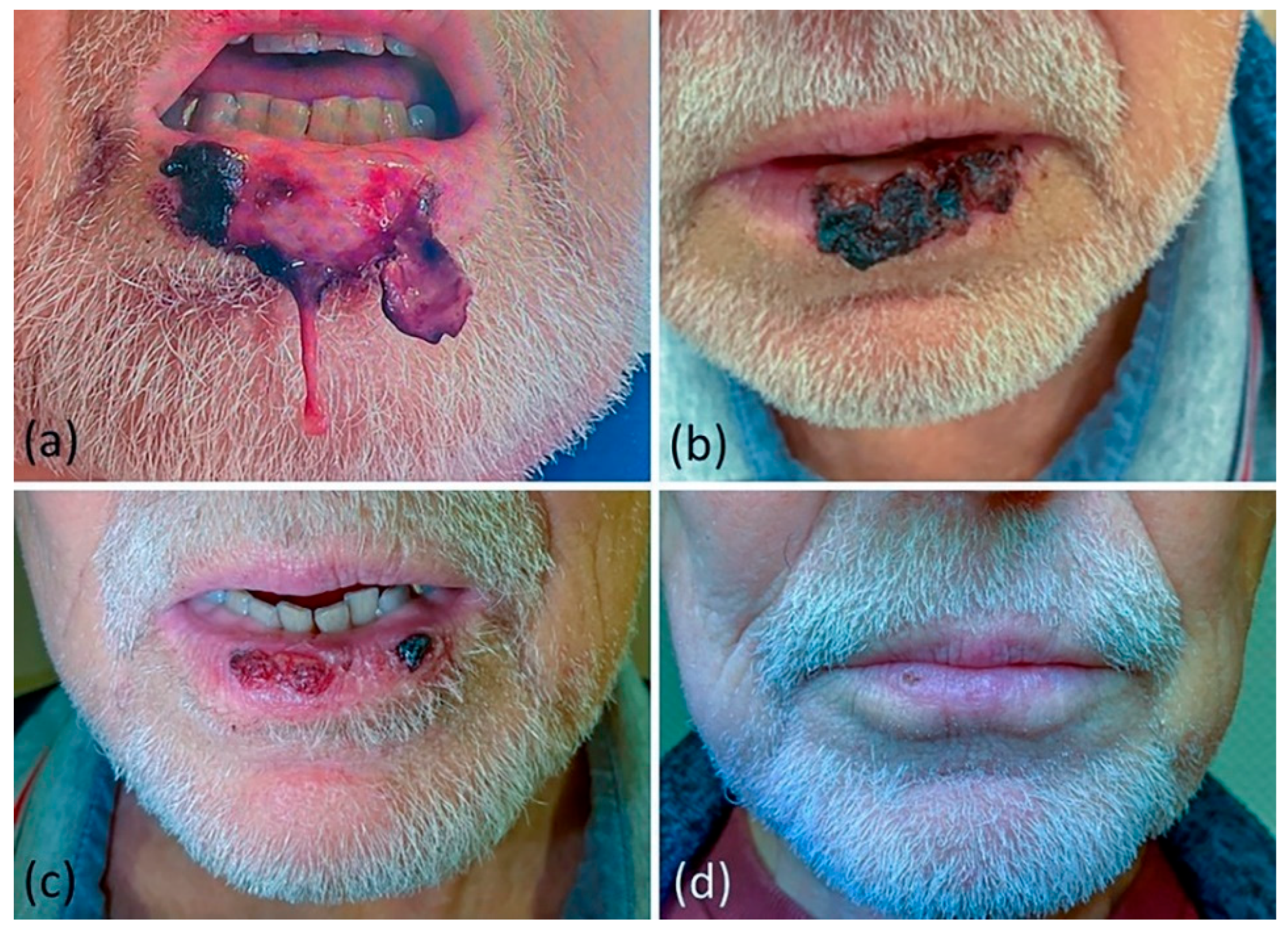
A 86-year-old male presented with an erosive, bleeding lesion on the lower lip (Figure 1). The lesion had developed about 3 months prior to his first presentation in our outpatient clinic.
Figure 1. Circumorificial plasmacytosis (COP) of the lower lip at presentation (a). Slow but continuous resolution of COP over a 3-month period (bd).
He had a known urothelial carcinoma of the urinary bladder, first diagnosed in May 2021, initially staged as pT2a(is), pN0 (0/11), M0, L0, V0, Pn0, R0, G3 (UICC stage II). In August 2024, a recurrence at the left ureter was detected and classified as UICC stage III, rpT3, N0, M0, L0, V0, Pn0, G3, R0. Following a multidisciplinary tumor board decision, adjuvant therapy with nivolumab was recommended in October 2024 and subsequently initiated—240 mg every 2 weeks initially, then 480 mg every 4 weeks, administered on an outpatient basis.
In April 2025, a mild inflammatory reaction of the lower lip was first observed. Over the subsequent course, this progressed markedly, with ulceration and extensive crusting, accompanied by recurrent bleeding episodes. However, the lesion was not thought to be associated with ICI therapy. After an unremarkable staging evaluation in July 2025, which showed no evidence of local recurrence or distant metastasis, adjuvant nivolumab therapy was discontinued after 11 cycles due to a drug-induced generalized maculopapulous rash. The patient’s past medical history was also notable for prostate carcinoma diagnosed in 2008 (pT2c, pN0 [0/6], L0, V0, R0, M0, Gleason 3 + 4 = 7a), tricuspid regurgitation, atrial fibrillation, arterial hypertension, two-vessel coronary artery disease, and polymyalgia rheumatica in remission. Long-term medications included apixaban, bisoprolol, candesartan, hydrochlorothiazide, rosuvastatin, and naproxen. Two diagnostic biopsies were obtained from the lower lip.

2.2. Routine Histology

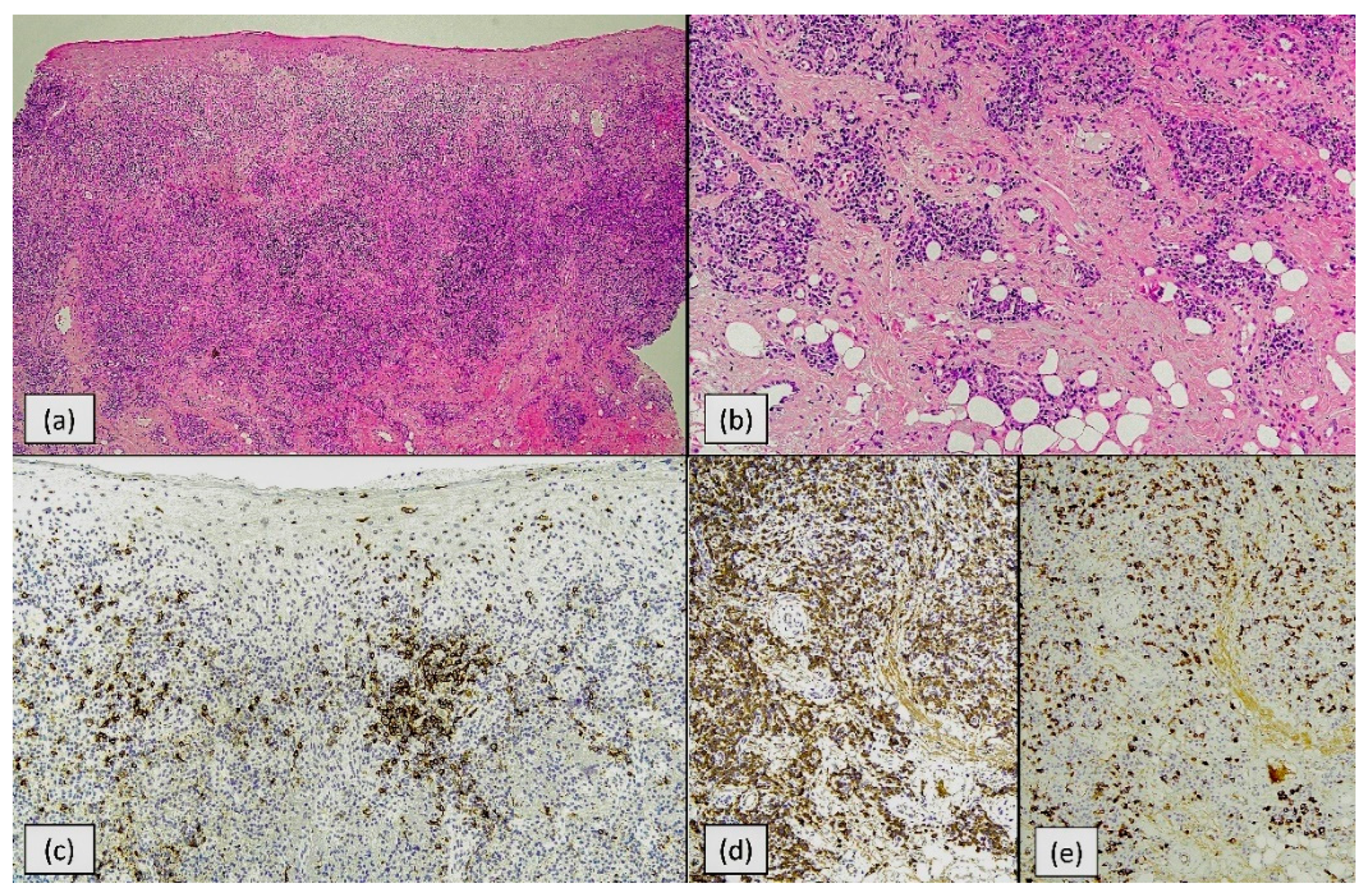
Hematoxylin–eosin stains showed skin covered by a moderately wide, slightly irregular stratified squamous epithelium. Discrete spongiosis was visible here. Additionally, apoptotic keratinocytes were present. In the subepithelial area, there were dense accumulations of mature plasma cells and lymphocytes (Figure 2). There were also some eosinophilic and neutrophilic granulocytes. Sporadically, Russell bodies were detectable in the PAS reaction. Atypical inclusions in lymphocytes or plasma cells were not seen. No fungi or other PAS-positive pathogens were found.
Figure 2. Hematoxylin–eosin stains showing a cellular dermal infiltrate ((a), ×50) with abundance of plasma cells ((b), ×200). CD20 staining revealed a relatively low number of variably sized B lymphocytes in the dermis ((c); ×200). Light-chain staining for kappa and lambda shows a pronounced kappa dominance among the plasma cells ((d,e); ×200).

2.3. Indirect and Direct Immunofluorescence

Direct immunofluorescence revealed no deposition of immunoglobulins or complement. Serological testing (indirect immunofluorescence and ELISA for desmogleins, desmocollin, envo- and periplakin, BP180/230), likewise showed no evidence of a blistering autoimmune skin disease.

2.4. Immunohistochemistry

Immunohistochemically, there was a high, albeit variable amount of CD138-positive plasma cells with some larger aggregates (Figure 2). A rather limited number of B-cells in irregular aggregates were visible. These B lymphocytes showed conspicuous variation in size and appeared partially blast-like. The plasma cells were negative for CD20, CD56, Cyclin-D1, and CD117, and light-chain analysis revealed a moderate to marked kappa-dominance, although some lambda-positive plasma cells still were present. Only a few scattered IgG4-positive plasma cells were seen. CD5-positive T cells where slightly more frequent than B-cells and also appeared somewhat pleomorphic. The prominent kappa-dominance within the plasma cell population prompted further molecular clonality testing.

2.5. Multiplex-PCR and EBER In Situ Hybridization

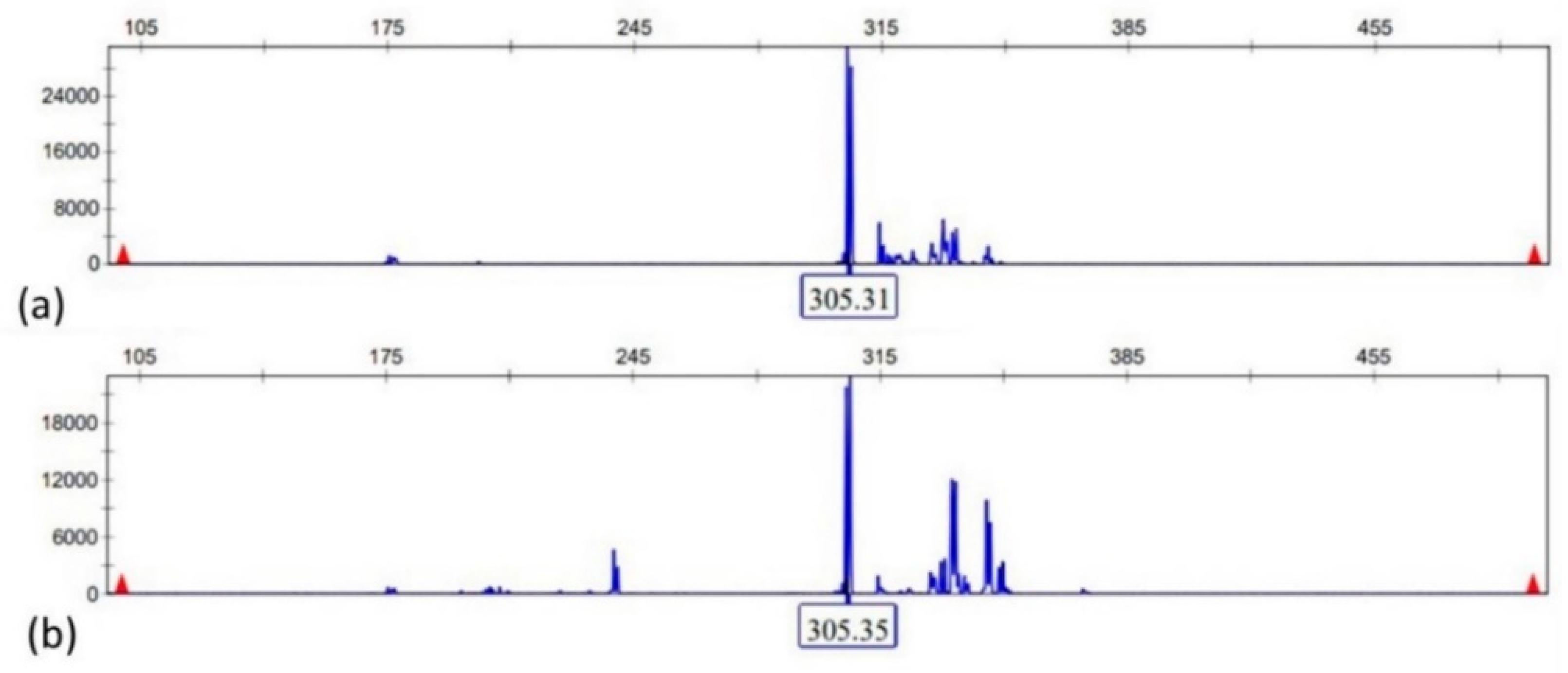
Multiplex PCR for B-cell clonality was performed using the BIOMED-2 protocol targeting IgH framework regions FR1–FR3. A distinct clonal peak at 305 bp was detected in the IgH FR1 reaction, confirming the presence of a monoclonal B-cell (sub)population (Figure 3). In the IgH FR2 and FR3 reactions, similar clone-like peaks were noted at 155 bp and 115 bp, respectively, albeit with more prominent polyclonal background than in IgH FR1. In the EBER in situ hybridization, some EBV-positive, mostly small cells were found unevenly scattered in the infiltrate.
Figure 3. Detection of B-cell clonality by multiplex PCR targeting the immunoglobulin heavy-chain (IgH) FR1 region using the BIOMED-2 protocol. Electropherograms show a dominant clonal peak at 305 bp in two independent PCR replicates (a,b), indicating a monoclonal B-cell population within the infiltrate. The presence of minor background peaks reflects a polyclonal background. Overall, the findings are consistent with clonal B-cell population within the infiltrate.

2.6. Additional Laboratory Tests

Repeated serological tests for Treponema pallidum and Borrelia burgdorferi were consistently negative. Electrophoresis showed only a slight increase in the gamma fraction to 19.6% (reference range: 11.1–18.8), indicative of a polyclonal stimulation. Serum electrophoresis and urine protein electrophoresis revealed no detectable monoclonal protein or Bence Jones proteins. Complete blood count, β2-microglobulin, and lactate dehydrogenase levels were within normal limits.

2.7. Computer Tomography (CT) and Lymph Node Ultrasound

CT scans were performed primarily to rule out a recurrence of the urothelial carcinoma and a monoclonal lymphoproliferative disorder. However, they ultimately revealed no significant findings, apart from nonspecifically accentuated mediastinal lymph nodes without evidence of pathological enlargement.

2.8. Treatment

The lesion on the lower lip fully regressed after an initial three-week course of tapered systemic prednisolone (starting dose 50 mg) followed by topical triamcinolone acetonide 0.1% ointment.

3. Discussion

COP is a rare, predominantly reactive mucosal process centered on transition zones and periorificial skin. Clinically, lesions present as erythematous, sometimes erosive or ulcerated plaques; histologically, they show dense, mature plasma cell infiltrates with minimal atypia and usually polyclonal light-chain expression [10,11,17,18]. Our patient developed a COP lesion at a mucosal transition zone during PD-1 blockade (nivolumab). The biopsy showed plasma cell predominance with kappa skew but persistence of lambda-positive cells, limited and irregular B-cell aggregates, and scattered EBER-positive small cells. BIOMED-2 clonality testing revealed a reproducible IgH clonal peak against a polyclonal background. Systemic evaluation was unrevealing, and the lesion completely regressed with a short course of systemic corticosteroids followed by topical therapy. In aggregate, these findings support an ICI-modulated B-cell/plasma cell lymphoproliferation on a COP substrate rather than a de novo B-cell lymphoma.
Mechanistically, although ICIs are classically framed as T-cell modulators, PD-1/PD-L1 signaling also shapes B-cell responses. In the germinal center, PD-1 constrains T-follicular helper (Tfh) cell help to B-cells and promotes T-follicular regulatory (Tfr) control. PD-1 blockade can therefore amplify GC activity, enhancing Tfh–B-cell interactions, class-switch recombination, and plasmablast differentiation, within cytokine/chemokine milieus rich in IL-21 and CXCL13 [1,2,3,19,20,21]. Mucosal transition zones, constantly exposed to commensals, self-antigens, microtrauma, and potential viral reactivation, are particularly susceptible to antigen-driven plasmacytosis once these restraints are lifted. The scattered EBER-positive bystander cells in our case are compatible with immunomodulation-related reactivity rather than EBV-driven lymphoma. Although oral irAEs are well recognized during PD-1/PD-L1 blockade (stomatitis, xerostomia, taste disturbance) [3,4,5,6], plasma-cell-rich mucosal infiltrates remain distinctly uncommon; only isolated cases of COP associated with PD-1 inhibitors have been reported [7,8]. Against that background (Table 1), our case adds a COP-like lesion with marginal zone-type features that nonetheless behaved rather reactively and resolved with brief anti-inflammatory therapy.
Table 1. Comparison of ICI-associated circumorificial plasmacytosis cases reported so far.
Similar to reactive plasmacytosis, such as COP, marginal zone-associated B-cell proliferations of the skin—most notably primary cutaneous marginal zone lymphoma (PCMZL)—may also display plasma-cell-rich infiltrates. Clinically, PCMZL often manifests as reddish-brown papules, plaques, or nodules; histology shows dense dermal infiltrates of small B-cells with marginal-zone/monocytoid morphology and variable plasmacytic differentiation. Neoplastic entities frequently demonstrate IgH rearrangements; however, a grey zone of marginal-zone-like proliferations without unequivocal clonality exists. Distinguishing these from plasma-cell-rich reactive dermatoses require tight clinicopathologic correlation, immunophenotyping, and—when indicated—molecular clonality testing, alongside systemic staging (e.g., CT). In Lyme-endemic regions, borrelial lymphocytoma can also mimic PCMZL clinically and histologically; serology and, where feasible, PCR from lesional tissue should be considered [21,22,23]. One can reasonably assume that there are smooth transitions from reactive to neoplastic infiltrations, with blurred borderlines.
A broader differential was considered and addressed systematically. Repeated serologies were negative for Treponema pallidum and Borrelia burgdorferi; direct/indirect immunofluorescence and targeted ELISAs did not support autoimmune blistering disease; IgG4-positive plasma cells were scarce and histologic hallmarks of IgG4-related disease were absent; there was no serum or urine monoclonal protein; and cross-sectional imaging showed no pathologic lymphadenopathy. In endemic regions, borrelial lymphocytoma and Lyme-associated marginal zone-like lesions can mimic PCMZL and warrant testing [21,22,23]; in our patient, negative serology and the anatomic/histologic pattern argued strongly against these mimics (Table 2).
Table 2. Differential diagnosis considered “in extenso,” in the present case, with reasons for inclusion and exclusion.
A comparative perspective underscores why a reactive interpretation remains most plausible. In diabetes mellitus, Fărcaş-Berechet et al. documented chronic gingival inflammation with plasma-cell-rich infiltrates and microvascular changes, emphasizing that systemic immune dysregulation can imprint a plasmacytosis-dominant mucosal histology [24]. Although the upstream drivers differ—metabolic dysregulation in diabetes vs. checkpoint pathway modulation here—both settings converge on a shared end pattern: persistent antigenic stimulation at a mucosal surface coupled with enhanced B-cell help and plasma cell accumulation. Our patient’s non-healing lip ulcer under PD-1 blockade likely reflects such sustained stimulation (from self-antigens, commensal flora, or viral reactivation) in a permissive, ICI-altered microenvironment, paralleling the diabetic gingival paradigm but with a different initiating signal [24]. Recognizing that mucosal plasmacytosis is a pattern, not a diagnosis, and that it can arise from varied systemic perturbations, infection, autoimmunity, metabolic disease, or iatrogenic immune modulation, supports the conclusion that this lesion is reactive rather than neoplastic.
In practical terms, a structured, stepwise evaluation, clinicopathologic correlation, immunophenotyping with light-chain assessment, judicious clonality testing interpreted in context, targeted infectious/autoimmune work-up, and focused imaging help separate COP-spectrum lesions from PCMZL under PD-1/PD-L1 blockade. When site, phenotype, staging, EBV status, and steroid responsiveness align, as in our case, conservative anti-inflammatory therapy with surveillance is appropriate, and avoids overtreatment. This case therefore broadens the recognized spectrum of mucocutaneous irAEs and highlights the importance of resisting an automatic equation of clonality with malignancy in mucosal sites subjected to strong antigenic and immunoregulatory pressures.

4. Conclusions

This case illustrates a PD-1 inhibitor-associated mucosal lesion with plasma-cell predominance (COP) and a detectable B-cell clone that fully regressed with short-course corticosteroids. The integrated clinical, histologic, immunophenotypic, molecular, EBV, imaging, and therapeutic response profile supports an immunodeficiency-associated B-cell/plasma cell infiltrate of uncertain biological potential. These findings broaden the recognized spectrum of mucocutaneous irAEs and emphasize the value of structured clinicopathologic correlation, including judicious clonality testing, in detecting neoplastic plasma-cell-rich infiltrates during PD-1/PD-L1 blockade.

Author Contributions

Conceptualization, T.G.; data interpretation, T.G., H.-W.B. and S.W.-F.; investigation, H.-W.B., S.W.-F., L.S., A.L., J.L. and T.G.; writing—original draft preparation, T.G.; visualization, T.G. and H.-W.B. All authors have read and agreed to the published version of the manuscript.

Funding

This research received no external funding.

Institutional Review Board Statement

This case study was conducted in accordance with the Declaration of Helsinki, and the protocol was approved by the Ethics Committee of Ruhr-University Bochum (#4222-12, date of the approval: 30 November 2015).

Data Availability Statement

The original contributions presented in this study are included in the article. Further inquiries can be directed to the corresponding author.

Conflicts of Interest

The authors declare no conflicts of interest.

References

  1. Eshaq, A.M.; Flanagan, T.W.; Abbad, A.A.B.; Makarem, Z.A.A.; Bokir, M.S.; Alasheq, A.K.; Al Asheikh, S.A.; Almashhor, A.M.; Binyamani, F.; Al-Amoudi, W.A.; et al. Immune Checkpoint Inhibitor-Associated Cutaneous Adverse Events: Mechanisms of Occurrence. Int. J. Mol. Sci. 2024, 26, 88. [Google Scholar] [CrossRef]
  2. Pacha, O.; Patel, A.B.; Curry, J.L.; Haymaker, C.L.; Ozirmak Lermi, N.; Duose, D.Y.; Chen, K.; Hajjar, J.; Naing, A. Histologic and immune characterization of cutaneous immune-related adverse events induced by immune checkpoint inhibitors. J. Immunother. Cancer. 2025, 13, e011401. [Google Scholar] [CrossRef]
  3. Oke, I.; Lenert, A.; Swick, B.L.; Lenert, P. Eosinophilic Fasciitis in a 78-Year-Old Man Following Pembrolizumab Treatment for Bladder Cancer. Am. J. Case Rep. 2025, 26, e948323. [Google Scholar] [CrossRef]
  4. Kachlan, M.O.; Brooks, J.K.; Fantozzi, P.J.; Tenore, G.; Romeo, U.; Pergolini, D.; Sultan, A.S. Oral mucosal adverse events following administration of an immune checkpoint inhibitor: A case report. Gen. Dent. 2025, 73, 10–14. [Google Scholar]
  5. Venturi, F.; Melotti, B.; Lambertini, M.; Alessandrini, A.; Ardizzoni, A.; Dika, E. Pembrolizumab-Induced Erosive Lichenoid Reaction in a Patient with Metastatic Lung Adenocarcinoma: A Case Report. Int. J. Dermatol. Venereol. 2025, 8, 175–177. [Google Scholar] [CrossRef]
  6. Korman, A.M.; Zyniewicz, K.; Tinoco, G.; Allen, C.M.; Briody, A. Association of Programmed Cell Death 1 Inhibitor with Circumorificial Plasmacytosis. JAMA Dermatol. 2021, 157, 237–238. [Google Scholar] [CrossRef]
  7. Tanimu, Y.; Coombs, R.; Tanimu, S.; Onitilo, A. Association of Programmed Cell Death 1 Inhibitor with Circumorificial Plasmacytosis. Case Rep. Oncol. 2024, 17, 33–38. [Google Scholar] [CrossRef]
  8. Zoon, J.J. Chronic benign circumscripta plasmacytic balanoposthitis. Dermatologica 1952, 105, 1–7. [Google Scholar] [CrossRef]
  9. Solomon, L.W.; Wein, R.O.; Rosenwald, I.; Laver, N. Plasma cell mucositis of the oral cavity: Report of a case and review of the literature. Oral. Surg. Oral. Med. Oral. Pathol. Oral. Radiol. Endod. 2008, 106, 853–860. [Google Scholar] [CrossRef]
  10. Bharti, R.; Smith, D.R. Mucous membrane plasmacytosis: A case report and review of the literature. Dermatol. Online J. 2003, 9, 15. [Google Scholar] [CrossRef]
  11. Gerardi, D.; Torge, D.; Bernardi, S.; Burdo, P.; Piattelli, M.; Varvara, G. Plasma Cell Gingivitis: Clinical Presentation, Histopathologic Correlation, and Therapeutic Challenges. Clin. Pract. 2025, 15, 158. [Google Scholar] [CrossRef]
  12. Nakamura, M.; Anzai, T.; Arakawa, A.; Takata, Y.; Sonoda, K.; Ishimizu, E.; Matsumoto, F. Upper and Lower Respiratory Mucous Membrane Plasmacytosis with a Cobblestone Appearance: A Case Report. Ear Nose Throat J. 2025, 104 (Suppl. S1), 271S–274S. [Google Scholar] [CrossRef]
  13. Farraj, K.L.; Kaliounji, A.; Kagolanu, D.; Khan, N. A Rare Case of Extramedullary Plasmacytosis. J. Investig. Med. High. Impact Case Rep. 2021, 9, 23247096211040657. [Google Scholar] [CrossRef]
  14. Schuermann, H. Plasmacytosis circumorificialis. Dtsch. Zahnarztl. 1960, 15, 601–610. [Google Scholar]
  15. White, J.W.; Olsen, K.D.; Banks, P.M. Plasma cell orificial mucositis: Report of a case and review of the literature. Arch. Dermatol. 1986, 122, 1321–1324. [Google Scholar] [CrossRef]
  16. Galvin, S.; Bowe, C.; ORegan, E.M.; Conlon, N.; Flint, S.R.; Healy, C.M. Circumorificial plasmacytosis/plasma cell orificial mucositis: A case series and a review of the literature. Oral. Surg. Oral. Med. Oral. Pathol. Oral. Radiol. 2016, 122, e77–e81. [Google Scholar] [CrossRef]
  17. Kuriyama, Y.; Shimizu, A.; Toki, S.; Endo, Y.; Yasuda, M.; Motegi, S.I.; Ishikawa, O. Two cases of chronic oral ulcers effectively treated with systemic corticosteroid therapy: Circumorificial plasmacytosis and traumatic ulcerative granuloma with stromal eosinophilia. J. Dermatol. 2019, 46, 48–51. [Google Scholar] [CrossRef]
  18. Bilgihan, M.T.; Eryigit, A.N.; Ciftciler, R. Efficacy and Safety of Immune Checkpoint Inhibitors in Hematologic Malignancies. Clin. Lymphoma Myeloma Leuk. 2024, 24, 23–31. [Google Scholar] [CrossRef]
  19. Karki, N.R.; McElhone, P.; Savage, N.; Abdel Karim, N. Diagnosis and management of cold agglutinin disease associated with low-grade B-cell lymphoma in a patient receiving pembrolizumab for lung cancer. BMJ Case Rep. 2021, 14, e243751. [Google Scholar] [CrossRef]
  20. Kumar, V.; Montgomery, N.D.; van Deventer, H.W.; Whang, Y.E. Waldenström macroglobulinemia with secondary pure red cell aplasia in a patient with metastatic castrate resistant prostate cancer receiving an immune checkpoint inhibitor: A case report. J. Med. Case Rep. 2023, 17, 220. [Google Scholar] [CrossRef]
  21. Hafian, H.; Schvartz, H.; Patey, M.; Quinquenel, A. Primary oral mucosa-associated lymphoid tissue (MALT) lymphoma in patient with monoclonale gammopathy: A rare case report. BMC Oral Health 2021, 21, 597. [Google Scholar] [CrossRef] [PubMed]
  22. Al-Aroomi, M.A.; Baihua, L.; Chen, J.; Li, N.; Jiang, C.; Wang, J. Primary giant mucosa-associated lymphoid tissue lymphoma of the lower lip: A case report and literature review. BMC Oral Health 2025, 25, 530. [Google Scholar] [CrossRef] [PubMed]
  23. Gambichler, T.; Jridi, R.; Bernd, H.-W.; von Stemm, A.; Boms, S. Unusual Presentation of Acrodermatitis Chronica Atrophicans Resulting in Delay of Diagnosis and Inappropriate Treatment in Three Cases. Dermato 2024, 4, 37–45. [Google Scholar] [CrossRef]
  24. Fărcaş-Berechet, C.M.; Berechet, E.M.; Crăiţoiu, Ş.; Mehedinţi, M.C.; Osman, A.; Eremia, I.A.; Popescu, C.; Iacov-Crăiţoiu, M.M. Clinical, statistical, histological and immunohistochemical aspects of periodontal changes in patients with diabetes mellitus. Rom. J. Morphol. Embryol. 2019, 60, 1191–1198. [Google Scholar] [PubMed]
Disclaimer/Publisher’s Note: The statements, opinions and data contained in all publications are solely those of the individual author(s) and contributor(s) and not of MDPI and/or the editor(s). MDPI and/or the editor(s) disclaim responsibility for any injury to people or property resulting from any ideas, methods, instructions or products referred to in the content.

Article Metrics

Citations

Article Access Statistics

Multiple requests from the same IP address are counted as one view.