


Simple Summary
Long-term dynamics of wintering bird species are inadequately known. Tit species are an important part of urban settlements during winter. To understand the factors affecting the population trends of tits in more detail, long-term studies are urgently needed. We counted wintering tit species from 31 urban settlements along a 920 km latitudinal gradient over the course of four decades (1991–2020) in Finland. In the study sites, we detected five out of six regionally common wintering tit species: the Great Tit, the Eurasian Blue Tit, the Coal Tit, the Willow Tit, and the Crested Tit. No Siberian Tits were observed. Both the populations of the Great Tit and the Eurasian Blue Tit increased during the study period. The population growth of the Great Tit was high, especially in the north. Both the Great Tit and the Eurasian Blue Tit suffered from the increase in built-up area cover in the study plots. Changes in the number of feeding stations were not associated with the growth rates of any tit species. The abundance of the Great Tit decreased with building cover and increased with winter temperature. The abundance of the Eurasian Blue Tit decreased with building cover and towards the north. When controlling for the latitude, the growth rate of the Great Tit increased with the temperature in winter months, indicating that the Great Tit populations have increased in colder study sites. All correlations between the abundances of tit species, as well as between the Great Spotted Woodpecker, were positive, indicating no significant interspecific competition between species.
Abstract
Tit species (Paridae) are an important part of urban settlements during winter. We counted wintering tit species from 31 urban settlements along a 920 km latitudinal gradient in Finland during four winters between 1991 and 2020. We observed a total of five tit species, the Great Tit (Parus major), Eurasian Blue Tit (Cyanistes caeruleus), Coal Tit (Periparus ater), Willow Tit (Poecile montanus), and Crested Tit (Lophophanes cristatus) during the surveys. The most common and abundant species were the deciduous forest preferring Great Tit and Eurasian Blue Tit, whereas the coniferous forest preferring species exhibiting a hoarding behavior, the Coal Tit, Willow Tit, and the Crested Tit, were seldom observed, and no Siberian Tits were detected. These results indicated that food-hording coniferous preferring tit species avoided urban areas. The numbers of Great Tit and Eurasian Blue Tit were greater at the end of the study period than in the first two winters studied. The average growth rate (λ) of the Great Tit and Eurasian Blue Tit increased during the winters studied. Our data indicated a greater increase rate of the Great Tit and Eurasian Blue Tit than the Finnish winter bird monitoring work, probably because we only surveyed tits within human settlements. There was a positive correlation between the average growth rate of the Great Tit and the latitude. There was a negative correlation between the changes in average growth rate (λ) of the Eurasian Blue Tit and the changes in built-up area cover within the study areas between winters 1991/1992 and 2019/2020, and vice versa, indicating that the Eurasian Blue Tit population suffered from the increase in built-up area cover. Despite the fact that the total number of winter-feeding sites decreased during the study period, changes in their numbers were not associated with the growth rates of any tit species. The abundance of the Great Tit was negatively associated with building cover and positively associated with winter temperature. The abundance of the Eurasian Blue Tit was negatively associated with building cover and negatively associated with latitude. When controlling for the latitude, the growth rate of the Great Tit increased with the temperature in winter months, indicating that the Great Tit populations have increased in colder study sites. Our results indicated that population trends of tit species may differ regionally, and that changes in urban settlements may modify the abundance of tit species during winter. We did not detect any correlation in population growth rates between species. We recommend conducting more long-term tit research both during the winter and breeding seasons to understand the population dynamics and population trends of tit species across diverse types of habitats in more detail.
Keywords:
birds; climate change; Finland; landscape change; population change; urban; winter; winter feeding 1. Introduction
Urbanization and climate change are two crucial factors that cause biodiversity loss both locally, regionally, and globally. Urbanization causes diverse types of environmental changes and disturbances that correspondingly influence species occupancy and abundance patterns [1,2,3,4,5]. Blair (1996; [6]) grouped species as urban exploiters, suburban adaptable species, and urban avoiders. Urban exploiters can use many kinds of urban-related resources and do well in cities, whereas urban avoiders are seldom found in urbanized areas. Suburban adaptable species are between these two extremes and can live in areas with a moderate urbanization level. Typically, human-intolerant species are specialists, have restricted distribution ranges, and are non-residents, whereas human-tolerant species are generalists (e.g., omnivores), widely distributed residents, and behaviorally flexible [1,7,8,9,10]. Some taxonomic groups can be remarkably successful in adapting to urban environments [2]. Many studies have indicated that sparrows, Passer spp. [11]; Wood Pigeon, Columba palumbus; refs. [12,13], and corvids [14,15,16,17,18,19] benefit from urbanization all over the world.
As highly adaptable and widespread birds, tit species (Paridae) are suitable for studying the impacts of urbanization and climate change on long-term bird population changes. Many tit species, like the Great Tit (Parus major) and the Eurasian Blue Tit (Cyanistes caeruleus), are successfully adapted to live in urban environments, partly due to their ability to use winter-feeding sites [20,21]. With their wide distribution range, ability to use artificial food resources, and adaptability to live in many kinds of habitats, both the Great Tit and the Eurasian Blue Tit can be considered as suburban adaptable species [6]. With their opportunistic way of life and placid behavior, tits are an excellent model species group to study the impacts of urbanization on animals. Some tit species thrive in many types of urban environments, from the peripheral urban areas to highly urbanized urban core areas [22,23,24]. However, fewer urban ecological winter studies have considered habitat specialists, like coniferous forest tit species.
There are several reasons, which are not necessarily mutually exclusive, affecting the population trends of tit species in urban areas. For example, low levels of predation [25] and persecution [16,18], good availability of (artificial) food resources [26,27,28,29,30,31], as well as availability of artificial nest sites (nest boxes; refs. [16,32,33,34] may benefit Great and Eurasian Blue Tits. The ability to use novel anthropogenic resources, like food, safe nest and roost sites [35], as well as having a high tolerance towards conspecifics, may allow some species, like the tit species, to thrive in urban environments [36]. Moreover, feeding birds in winter can influence survival, body mass, and the speed of birds to take food (i.e., how quickly a bird is able to take food from the feeding site) in urban areas [37]. The presence of food competitors and predation risk can also deter the birds from feeding at the feeder [38]. People commonly feed birds in Finland. Birds are only encouraged to feed during the winter (i.e., during the snow cover season) in Finland, and for tits, the types of food that are suggested for people to provide are sunflower (Helianthus annuus) seeds, peanuts (Arachis hypogaea), and lard, as well as suet [21,39]. Providing sunflower seeds without shells and birdseed mixtures has increased since 2017 in Finland, benefiting small-sized species, like tits [21]. Freezing weather, short daylight hours, snow, and ice reduce birds’ chances of finding food, and winter feeding provided by humans helps many wintering birds survive until spring, and the energy-rich food helps birds endure even severe frosts [39]. During the last 40 years, the annual amount of food provided has increased significantly, especially in rural areas, while the number of bird-feeding sites has decreased, especially in urban areas in Finland [40]. The decline of feeding activities is likely due to the changing regulations of local governments and housing organizations, with increased concerns of attracting pests, leading to restrictions on providing food for birds [40]. Also, the recent climate warming may also have an influence, especially on the long-term dynamics of wintering birds [24,41,42,43,44,45]. Some studies have suggested that predation may modify tit community structure [46], and there is a trade-off between predation risk (e.g., by the Pygmy Owl, Glaucidium passerinum) and interspecific competition for food by tits [47,48].
Seasonality has an impact on species responses to urbanization [4,5], and, for example, different traits shape winners and losers in urban bird assemblages across seasons [1]. Most of the earlier species-specific studies have focused on the breeding seasons. However, winter is the most critical season for many birds living at northern latitudes [49,50]. Leveau et al. (2021; [51]) have indicated that urbanization buffers the seasonality of climate conditions and food availability and, therefore, causes a seasonal change in bird assemblages. There are multiple factors that can influence the long-term dynamics of urban bird assemblages and populations [52]. For example, anthropogenic food may increase both food availability and predictability in urban habitats as compared to rural ones [53], thereby benefiting opportunistic bird species [54,55,56]. Also, a milder microclimate (“urban heat island phenomena”) and less snow in cities than in their surrounding rural areas might be beneficial for the wintering birds [45,49,57]. For example, there has been a long-term (1961–2014) decrease in snow-cover length and depth in Finland, especially in the southern parts of the country [58]. Pakanen et al. (2018, [59]) have indicated that northward-expanding resident tit species benefit from warming winters through increased foraging rates and predator vigilance. Therefore, it is also important to understand the combined factors of the climate, habitats, and food availability on long-term winter season distribution and abundance of birds in urban environments.
Most of the earlier urban bird studies have covered only a few years [2,60], and there is an urgent need for long-term studies to evaluate more thoroughly the effects of urbanization on bird assemblages and populations, as well as species interactions [11,60,61]. Jokimäki et al. (2021; [11]) compared the long-term population trends (1991–2020) of two closely related urban sparrow species, the House Sparrow (Passer domesticus) and the Eurasian Tree Sparrow (Passer montanus), and found that these species have different long-term population trends both at the national (Finland) and international (Europe) scales. Jokimäki et al. (2022; [19]) compared the trends (1991–2020) of five wintering corvid species in Finland and also found different long-term population trends and growth rates between species; only the growth rate of the Eurasian Jackdaw (Corvus monedula) from five corvid species changed (increased) during the study period. It might be possible that the population trends of different tit species might differ from each other, partly due to the differences in their food-type use, habitat needs, responses to climate changes, or the interspecific interactions.
Long-term population changes of about one hundred bird species wintering in Finland have been monitored by voluntary bird watchers since winter 1956/1957 [20,62,63,64,65]. The results have indicated general changes in winter bird populations in different regions [65] or habitats (since 1987; [20,22]) in Finland, whereas habitat and climate effects on bird abundances are seldom studied. However, Fraixedas et al. (2015, [43]) have indicated that wintering forest species numbers have declined, whereas urban species have increased during 1959–2012 in Finland. They also highlighted that human-induced land-use changes were more important for landbird species, whereas climatic factors were more important for waterbirds. Moreover, Fraixedas et al. (2015; [43]) have suggested that urban species have benefited from the increase in supplementary feeding of birds (see also [53,66,67,68]. The results of the Finnish winter bird monitoring work have suggested that the regional changes in winter bird numbers are not only influenced by climate warming, but also habitat changes and diversified food supplies, e.g., the enlargement of the distribution ranges of some southernly distributed species, like the Eurasian Blue Tit [65]. Volunteer-based winter-feeding site monitoring started in Finland during the winters of 1988/89, and the results have indicated both differences in species occurrence and abundance of wintering birds across regions [30] and between habitats [31]. Despite the important role of volunteer-based bird monitoring work in general, biases due to the differences in observers’ skills to detect and identify birds, variable search efforts between winters, as well as changes in sites sampled during the years, will decrease the value of the volunteer-based data sets [69].
The main study aims of this study were (1) to study the long-term (1991–2021) winter season composition, occurrence, and abundance of tit species in Finland by similar study methods across study years; (2) to evaluate the population growth rate levels of different tit species; and (3) to analyze the effects of multiple factors (latitude, urbanization, climate, food, interspecific interactions) on the abundances and population growth rates of wintering tit species. We predicted that forest specialist tit species, like the Siberian Tit (Poecile cinctus cinctus), would be rare in urban settings, whereas opportunistic tit species commonly using winter-feeding sites, like the Eurasian Blue and the Great Tit, would be more common and abundant in urban areas. As some studies have indicated that climate warming with less snow cover will increase the abundance of overwintering birds [41,45], we predicted that southern bird species, like the Eurasian Blue Tit, will especially benefit from the climate warming. However, for the forest-associated tit species with food-hoarding behavior, like the Willow Tit (Poecile montanus), changes in the local habitat structure might be more important than climatic factors. There can be competition between these tit species as well as, for example, the Great Spotted Woodpecker (Dendrocopos major), due to increased nest competition and predation by the beneficiaries of the food subsidy [70,71] and habitat loss [72]. Therefore, we also analyzed whether there are any associations between the Great Spotted Woodpecker and the different tit species. If the interspecific interactions have any impacts on wintering tit species, we predicted that there would be negative correlations among tit species as well as between tit species and the Great Spotted Woodpecker.
2. Materials and Methods
2.1. Study Area
We conducted our study in Finland, which belongs mostly to the continental, no-dry-season, cold-summer (coded as Dfc) climatological area, except the most southern parts, which belong to the continental, no-dry-season, warm-summer (Dfb), Köppen–Geiger climate zone [73]. Continental (D) refers to the areas where the average temperature of the coldest month is below −3 °C, indicating the occurrence of true winter with snow cover; no dry season (f) refers to the areas where there is adequate precipitation throughout all months of the year; and cold summer (c) refers to the areas where summers are short and cool, typically one to three months have an average temperature of at least 10 °C, and no individual summer month averages over 22 °C. Our winter field study data originates from 31 towns and villages located in the boreal forest vegetation zone, except for the most SW sites, which are in the hemiboreal vegetation zone [74]. The study sites were situated evenly along a 950 km north–south latitude (60° N–68° N; Figure 1). The study sites included urban settlements, ranging from large towns to small villages. The number of inhabitants varied between 300 and 159,000 people. Most of the study plots were about 30 ha (mean ± SD: 31.2 ± 7.7 ha). We placed our study plots in the most urbanized area of each settlement to decrease the variation in local habitat structure and to minimize edge effects. All study plots contained buildings, roads, and scattered green areas between buildings.
2.2. Study Species
We studied the long-term abundance of six native tit species: the Great Tit, the Eurasian Blue Tit, the Coal Tit (Periparus ater), the Willow Tit, the Crested Tit (Lophophanes cristatus), and the Siberian Tit. Most of them, except the Great Tit and the Eurasian Blue Tit, are food-hoarding specialists that store large amounts of food for the winter during autumn [75]. The Great Tit and the Eurasian Blue Tit are common and abundant wintering species within human settlements with deciduous trees, whereas the rest of the species mostly prefer coniferous-dominated forests [24,76,77]. All these species can use food provided at feeding sites during winter in Finland [21,29,30,31]. According to Keller et al. (2020; [78]), the breeding distribution ranges of the Great Tit and the Eurasian Blue Tit cover the whole of Europe, whereas the Crested Tit and the Coal Tit are more southernly distributed, and the Willow Tit and especially the Siberian Tit are more northernly distributed. The current breeding distribution area of the Great Tit and the Willow Tit covers the whole study area, the Eurasian Blue Tit inhabits almost the whole study area except the most northernmost areas, the Crested Tit inhabits about half of Finland, and the most southernly distributed species is the Coal Tit [79,80]. The Siberian Tit does not occupy southern and central Finland [79,80].
The flock formation of bird species is a crucial behavioral process that enables them to colonize urban areas [81]. Many tit species form interspecific flocks outside the breeding season, and there are interspecific dominance hierarchies among tit species so that larger species dominate smaller species [48,82,83,84]. The body mass (mean 18.8 g) and wing length (maximum chord length; 76.7 mm) of the Great Tit are greater than other species (the Coal Tit [9.4 g; 61.2 mm], the Willow Tit [11.4 g; 64.4 mm], the Crested Tit [11.6 g; 64.6 g], the Eurasian Blue Tit [11.6 g; 67.0 mm], and the Siberian Tit [12.7 g; 67.4 mm]) based on the Finnish ringing database [85]. More details about the species are given in Table 1.
Table 1.
Basic description of the studied tit species in Finland. (1) The longest dispersal distance in Finland is based on Valkama et al. (2014; [86]). (2) The forest type preferences, hoarding behavior information, winter population size, and trend (from 1981 to 1985 to 2020–2024) in Finland based on Koskimies (2025; [76]). (3) The threat status (LC = Least Concern; NT = Near Threatened; VU = Vulnerable; and EN = Endangered) in Finland based on the work of Lehikoinen et al. (2019; [87]).
2.3. Bird Surveys
We conducted repeated (1991–1992, 1999–2000, 2009–2010, and 2019–2020) winter surveys of tit species in the centers of 31 towns and villages along a large south–north area (60° N–68° N; 950 km) in Finland (Figure 1). Because only two study sites (Ruokolahti and Muhos) had data from three winters, the total number of surveys conducted was 122. We surveyed tits by using a single-visit mapping method [88] (Bibby et al., 2000) from about 30 ha of study plot (mean size 31.2 ha ± 7.7 SD) within each study site. Each study plot was located at the most urbanized area of each study site. All study plots, except two, were surveyed every winter. We conducted all surveys during the mid-winter season (late December–early February), i.e., during a period when the autumn movements of the tit species are over [89]. To increase the detectability of the birds, we only surveyed birds during pleasant weather conditions (temperature no colder than −25 °C, no heavy wind, and no water, snow, or rain) and during midday when enough light was available to conduct the survey (i.e., between 10.00 and 15.00). In addition to the tit species, we also surveyed potential predator species of tits, i.e., the Eurasian Sparrowhawk (Accipiter nisus), the Eurasian Goshawk (Astur gentilis), the Eurasian Pygmy Owl (Glaucidium passerinum), and the Great Spotted Woodpecker (Dendrocopos major), as well as cats (Felis catus).
Instead of using the point count method, we examined the whole study plot by walking in a zig-zag through the study plot. By doing so, we were also able to see and hear birds behind the buildings and backyards of private houses. This kind of survey reduced many problems associated with counting birds in urban areas, e.g., noise and poor visibility [66]. In addition, the zig-zag survey method gave us an opportunity to cover the whole study plot in detail. To avoid double-counting the same individuals, we used a high survey speed (30 ha/h). During each survey, we recorded all tits seen or heard within the study plot borders. We excluded overflying individuals, who did not land and stayed on the study plot. JJ and JS conducted most of the surveys (78% out of a total of 122 surveys); therefore, we assumed that the possible inter-observer bias was minimal. More details about the survey methods are available elsewhere [66,90,91].
We used the single-visit survey method to obtain enough spatial replicates for statistical analysis. It has been estimated that a single-visit survey will detect about 90% of the wintering species and 80% of the individuals in urban environments [66,92]. Therefore, we suppose that the efficiency and accuracy of our study are high. However, we further estimated the efficiency of the single-visit census by repeating the surveys five times during the winter of 2019/2020 in the three subplots used in this study (Rovaniemi [64,194 inhabitants; between 17 December 2019 and 30 January 2020]; survey temperature range: −8–+4 °C], Kemijärvi [7107 inhabitants; between 5 January 2020 and 13 February 2020; survey temperature range: −3–−9 °C] and Muurola [(891 inhabitants; between 19 December 2019 and 29 January 2020; survey temperature range: ±0–−14 °C]).
2.4. Habitat, Climate, Artificial Food, and Predator Data
Jokimäki et al. (2021; [11]) have described a detailed habitat, climate, and artificial food availability data collection procedure. Therefore, we only summarize here briefly the methods used and the main findings. We evaluated and extracted the mean area cover of buildings, number of buildings, and average number of inhabitants from each study plot by using a 250 m × 250 m square database (© SYKE and TK, 1990, 2000, 2009, and 2019) to estimate the urbanization level of the study plots during different winters. Based on Jokimäki et al. (2021; [11]), the built-up cover and the total number of buildings have increased, whereas the number of inhabitants has been stable in the study plots during the study period.
We used weather data from the nearest meteorological station of each study site by using the Finnish Meteorological Institute database (open data extraction; Finnish Meteorological Institute, 2020; [93]). Data about the following variables were extracted: arrival date of the permanent snow cover (a continuous snow cover with at least 5 cm snow that stayed on the ground for at least 7 days), amount of snow (cm) on 15 December and during the average day during the winter months (December–February), and the temperature (°C). According to Jokimäki et al. (2021; [11]), winter temperatures differed between the winters studied: the warmest winter was 2019/2020, followed by 1991/1992, 1999/2000, and 2009/2010. The snow arrived later during the winters of 1990/1991 than in the other winters studied, whereas the amount of snow depth did not differ between the study years.
To estimate the amount of artificial food availability, we counted the number of active feeding sites (i.e., sites that contained food during the surveys) within the study plots of the first (1991/1992) and the last (2009/2010) bird surveys. According to Jokimäki et al. (2021: [11]), the number of feeding sites has decreased during the study period.
We surveyed predators during each bird survey. Only a few predators were detected during the surveys: the Eurasian Sparrowhawk (two observations during 1999–2000 and one observation during 2009–2010); the Eurasian Goshawk (five observations during 2009–2010); and the Eurasian Pygmy Owl (one observation during 1999–2000; Jokimäki et al., 2021; [11]). Great Spotted Woodpeckers were observed in 18 study sites with a total of 53 individuals. No cats were observed in the study plots.
We counted the number of active feeding sites (i.e., sites that contained food during the surveys) during the first and last winter studied from all study plots. According to Jokimäki et al. (2021; [11]), the total number of winter-feeding sites was greater at the beginning of the study (1991–1992) than at the end (2019–2020) of the study.
2.5. Statistical Methods
We used the coefficient of variation (CV% = 100 × (SD/mean)) to estimate the variability during winter of the abundance of the two tit species (the Great Tit and the Eurasian Blue Tit; both species were detected in all 15 surveys) in three northern Finnish sub-sample sites of this study (Rovaniemi, Kemijärvi and Muurola) based on five visits conducted during the winter of 2019/2020. We used the CV% as a conservative estimate of the efficiency of the single-visit survey; the greater the CV-value, the more variable the results of different surveys are. In addition, we developed a detectability index. We calculated the detectability index (DETECT) by using the maximum number of individuals (MAXInd) detected in a single survey of all five surveys and the mean number of individuals observed (MEANInd) during the rest of the four surveys in the study site. The index was calculated by the following formula: DETECT = MEANInd/MAXInd. We used MAXInd as a conservative estimate of the true number of individuals overwintering in the study plot. The DETECT will correspondingly indicate the proportion of individuals that an average survey will detect from the maximum number of individuals in the study plot during winter. The higher the DETECT is, the better the detectability and the census efficiency. Correspondingly, we evaluated the reliability and efficiency of the single-winter tit surveys. We surveyed tits in six sub-sample sites of this study in and around the city of Rovaniemi during five winters (2019/2020; 2020/2021; 2021/2022; 2022/2023; and 2023/2024; n = 30 surveys). CV% and DETECT indices were calculated for the Great Tit (detected in all surveys), the Eurasian Blue Tit (detected in 28 surveys), and the Willow Tit (detected in 7 surveys).
We estimated population growth rates (λ) of the different tit species with time interval corrected methods: λ = log10 (Ni + 1/Ni)/(study interval), where study interval = √(ti + 1 − ti), ti = year of the winter studied, Ni = number of individuals during the winter studied I, and Ni + 1 = number of individuals during study winter ti + 1. If we did not find any tit species either during a previous winter studied or a later winter studied within the same study area (i.e., in cases when Ni + 1 = 0 or Ni = 0), we added one “unseen individual” for the data set; otherwise, it is impossible to calculate the λ-value. We added one undetected individual to be able to calculate the λ-values, to run statistical analyses, to prevent division-by-zero errors, and to stabilize the geometric mean calculations over time. We acknowledge that it introduces some bias into the population growth metrics. However, we chose this addition to prioritize retaining temporal data (rather than losing entire site histories). Therefore, the method of calculating λ-values is conservative. In total, x + 1 addition was conducted on 20 cases of the Willow Tit, 17 cases of the Eurasian Blue Tit, and one case of the Great Tit (total number of surveys was 122). We used the average λ-value of each study area as an independent observation for statistical tests. The Willow Tit was lacking in five study areas, and therefore, we were unable to calculate population growth rate values for those study areas. Before any statistical analyses, we checked multicollinearity between explanatory variables by using the Variance Inflation Factor (VIF), and all variables had VIF-values < 3, indicating no multicollinearity problems. A one-sample t-test was used to test if population growth rates (λ) differed from the zero growth rate (λ = 0) and national growth rate values given by Fraixedas et al. (2015; [43]). We used Friedman’s Two-Way ANOVA to test differences in the three most common and abundant tit species, Great Tit, Eurasian Blue Tit, and Willow Tit, between the four winters studied. We used the study site as a “block” variable in the Related-Samples Friedman’s Two-Way Test. In this analysis, we excluded two study sites (Ruokolahti and Muhos), which only had data in three winters. We also used the Related-Samples Friedman’s Two-Way Test to study differences in site-specific urban factors as well as climatic factors between the winters studied. After we first checked that the assumptions of the parametric test were fulfilled, the Pearson correlation analyses were used; otherwise, the Spearman correlation analyses were applied to examine the relationship between the population growth rate (λ) of tits, the latitude, the factors related to the urbanization level, the climate, and the interspecific competition. Differences in the environmental variables between the last and first study year were used as a delta value. We measured the latitudinal extent in kilometers from the most southern study area (=0 km) to the most northern one (=914 km). We extracted Finnish national growth rate values of bird species from Fraixedas et al. (2015; [43]). Finally, we studied the association between tit species and weather variables by using a Partial Correlation analysis and by controlling latitude because all weather variables were correlated significantly with latitude (average daily winter months [December–-February] temperature: rS = −0.967, p < 0.001; arrival date of the permanent snow cover: −0.965, rS = −0.965, p < 0.001; amount of snow (cm) during the 15 December: rS = 0.947, p < 0.001; n = 31 in all tests). Sequential Bonferroni correction was applied when conducting multiple table-wide analyses.
Finally, we used the GLMM to analyze the relationship between tit species abundance, latitude, changes in building cover, and abundance as well as climatic factors. For the target variable (abundance of species), we used a negative binomial probability distribution with a log link function. We used a top-down step-by-step model-building strategy. In these analyses, the target variable was bird abundance, and the site was set as a random factor. Firstly, we run a model with all main fixed factors (latitude, climatic, and building variables) and the main two-way interactions of latitude and other fixed factors. In the second phase, we removed non-significant interaction terms from the model. Thirdly, we removed all non-significant fixed factor variables from the model. Lastly, we compared multiple candidate models by using the Akaike corrected information criteria (AICc) to select the best model separately for models where winter was used and not used as a fixed factor. Models with delta AICc ≤ 2 were considered to have substantial support, while models with AICc > 2 were not considered as significant as the best model. We run these models separately by including and not including the winter studied among fixed factors. All the data analyses were performed using the IBM SPSS statistical package, version 31.0.2.2.
3. Results
3.1. Within and Between Winter Variability and Detectability of Parid Populations
Based on five repeated surveys during a single winter conducted in three subsamples of this study, the mean coefficients of variation (CV%) of the abundance of the Great Tit was 48.77% and of the Eurasian Blue Tit was 71.04% (Table S1A). The mean detectability index of the Great Tit was 0.78 and of the Eurasian Blue Tit was 0.56 (Table S1A).
Based on six winters of repeated single-visit surveys conducted in six subsamples in this study, the mean coefficients of variation (CV%) of the abundance of the Great Tit was 62.18%, of the Eurasian Blue Tit was 74.58%, and of the Willow Tit was 204.92% (Table S1B). The mean detectability index of the Great Tit was 0.61, of the Eurasian Blue Tit was 0.54, and of the Willow Tit was 0.35 (Table S1B).
3.2. Occupancy and Abundance
We observed a total of five tit species during surveys (Table 2). The Great Tit (observed during 121 surveys out of a total of 122 surveys; 99.18%) and the Eurasian Blue Tit (106/122; 86.89%) were observed in almost every study plot during every winter studied (Table 2). The corresponding occupancy frequency of the other species was much lower: for the Willow Tit, 13.93% (a total of 96 zero observations during 122 surveys); for the Coal Tit, 4.92% (113 zero observations); and for the Crested Tit, 3.28% (118 zero observations). No Siberian Tits were observed during the survey.
Table 2.
Mean abundances, standard deviations, minimum and maximum numbers of detected individuals by species, and the occupancy frequency of tit species during different winters studied within the study plots surveyed. Number of occupied study plots (O) and number of survey plots (N).
The Great Tit was the most abundant tit species (mean 94.6 individuals per study plot across four winters studied), followed by the Eurasian Blue Tit (6.88) and the Willow Tit (1.95) (Table 2). The rest of the analyses were only conducted for the three most common and abundant tit species.
The abundance of Great Tit differed between the winters studied (Related-Samples Friedman’s Two-Way Test, χ2 = 17.59, df = 3, p < 0.001). In pairwise comparisons, numbers were greater during the winter 2019/2020 than in others (p < 0.023 in each comparison; Table 2). Also, the Eurasian Blue Tit abundance differed between the winters studied (Related-Samples Friedman’s Two-Way Test; χ2 = 23.73, df = 3, p < 0.001). The number of Eurasian Blue Tits was greater during the winters of 1999/2000 and 2019/2020 than the winter of 1991/1992 (p < 0.023: Table 2). The number of Willow Tits did not differ between the winters studied (Related-Samples Friedman’s Two-Way Test; χ2 = 6.27, df = 3, p = 0.099), although the trend of the abundance was negative (Table 2).
The yearly mean abundance of the Eurasian Blue Tit correlated negatively with the latitude (rS = −0.449, p = 0.012, n = 31), whereas the other correlations between species and latitude were non-significant.
There was a positive correlation between the mean yearly abundance of the Great Tit and the Eurasian Blue Tit (rS = 0.588, p < 0.001, n = 31). Other between-tit species correlations were also positive, but non-significant (at p < 0.05 level) after a sequential Bonferroni correction.
The mean yearly abundance of the Great Spotted Woodpecker correlated positively with the mean early abundance of the Eurasian Blue Tit (rS = 0.628, p < 0.001), the Great Tit (rS = 0.484, p = 0.006), and the Willow Tit (rS = 0.464, p = 0.009; in all cases n = 31).
3.3. Growth Rates Values
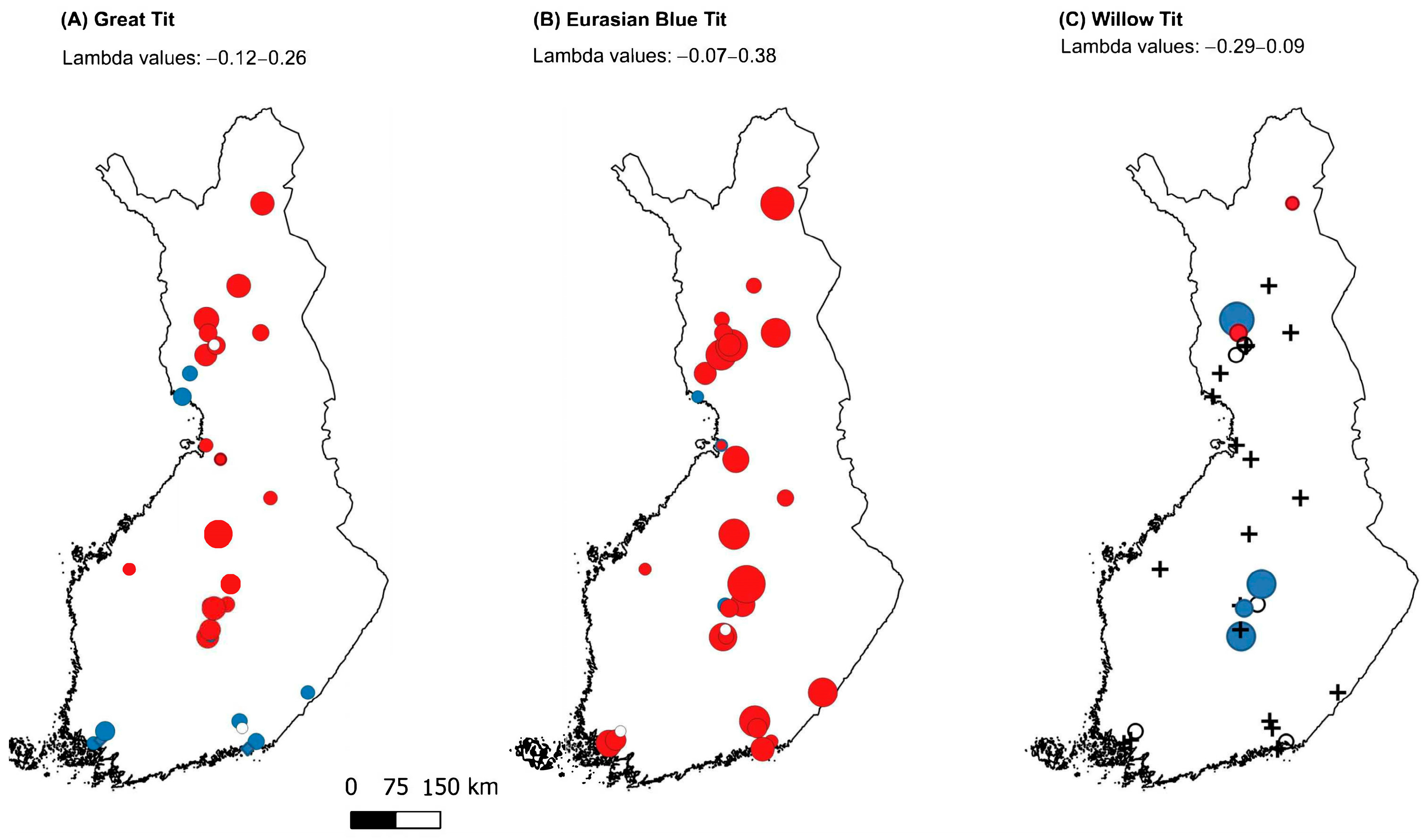
The population growth rate (λ) values of the Great Tit (Figure 1A) and the Eurasian Blue Tit (Figure 1B) were positive, whereas the population growth rate (λ) values of the Willow Tit were negative in most study sites. However, the population growth rate (λ) values of the Great Tit were negative in southern Finnish study areas (Figure 1A). In general, both the growth rate (λ) values of the Great Tit and the Eurasian Blue Tit were positive and greater than zero, indicating their population growth during the study period (Table 3). Moreover, both species’ growth rate value (λ) was greater in our data than in the Finnish wintering bird monitoring data work (Table 4). The growth rate value (λ) of the Willow Tit also did not differ from zero (Table 3), nor did the general growth rates in the Finnish wintering bird census data (Table 4). The growth rate value (λ) of the Great Spotted Woodpecker did not differ from zero (Table 3), nor did the general growth rate in the Finnish wintering bird census data (Table 4).
Table 3.
Test of population growth rate (λ) against zero growth rate (λ = 0) (one-sample t-test and test value = 0) in three wintering tit species in Finland. Standardized Cohen’s d is a statistical measure of effect size. Significant results (p) are bolded.
Table 4.
Differences in population growth rates (λ) of tit species between the current data and Finnish bird monitoring data (one-sample t-test and test values about Finnish bird monitoring were obtained from Fraixedas et al., 2015; [43]). The growth rate reported by Fraixedas et al. (2015; [43]) is given in parentheses after the species names. Standardized Cohen’s d is a statistical measure of effect size. Significant results (p) are bolded.
Figure 1.
Population growth rates (λ) of the Great Tit (A), the Eurasian Blue Tit (B), and the Willow Tit (C) populations in 31 study sites during the winters of 1991–1992 and 2019–2020 in Finland. The size of the dot indicates the population growth rate (the larger the dot, the greater the change), and the color of the dot indicates direction (red, positive; blue, negative; and open, zero) of growth rates. + indicates that the growth rate value was impossible to calculate due to the absence of species in the specific area. Maps include material from the administrative borders database by the National Land Survey of Finland (2025).
3.4. Factors Impacting Abundances
Based on the best GLMM models, the Great Tit abundance was positively associated with winter temperature and negatively associated with building cover when the winter studied was included in the fixed factors (Table 5A1, AICc = 301.28; Marginal Pseudo R2 = 0.10).The Great Tit was negatively associated with building cover and positively with winter temperature when the winter studied was not included in the fixed factors (Table 5B1; AICc = 309.53; Marginal Pseudo R2 = 0.10). The Eurasian Blue Tit was negatively associated with latitude and building cover and positively associated with winter (indicating increases during the study period) when winter was included in fixed factors (Table 5A2; AICc = 382.68; Marginal Pseudo R2 = 0.31). The Eurasian Blue Tit was negatively associated with building cover and latitude when winter was not included in the fixed factors (Table 5B2; AICc = 468.05; Marginal Pseudo R2 = 0.20). No models were constructed for the Willow Tit.
Table 5.
Best GLMM models between the abundance of tits species and latitude, climate, as well as building area cover and numbers, with (A) winter among the fixed factors and (B) winter not among the fixed factors. Probability distribution: Negative binominal; Link function: Log. n = 122 in all cases.
3.5. Factors Impacting Growth Rates
There was a positive correlation between the average growth rate (λ) of the Great Tit and the latitude (Table 6; Figure 2A). No other significant correlations were found between any other background variables and study species growth rate values (Table 6).
Table 6.
Correlation coefficients (Pearson’s r) between the average growth rate (λ) of species and the latitude, building area, number of buildings, and number of inhabitants in the study plots (for the Willow Tit, n = 11, for other species, n = 31). Bolding indicates significant results.
Figure 2.
The average growth rate (λ) of the Great Tit in relation to latitude (A) and the change in average growth rate (λ) of the Eurasian Blue Tit in relation to the change in the built-up area cover (B). Positive growth rate values indicate population growth, and negative values indicate a population decrease.
There was a negative correlation between the changes in average growth rate (λ) of the Eurasian Blue Tit and changes (λ) in the built-up area cover within the study area between winters 1991/1992 and 2019/2020, and vice versa (Table 7; Figure 2B), indicating that the Eurasian Blue Tit population decreased with the increasing number of buildings. No other significant correlations were found between any other changes in background variables (delta) or the changes in average growth rate (λ) values of the study species (Table 7).
Table 7.
Correlation coefficients between the changes in average growth rate (λ) of the tit species and changes in building area, number of buildings, number of inhabitants, and number of feeding sites in the study plots. Differences in the environmental variables between the last and the first study year were used as a delta value. Correlation coefficients are Pearson r in all cases, instead of the changes in the number of inhabitants and the changes in the number of feeding stations (Spearman rho). n = 31, except in the case of the Willow Tit, where n = 11. Bolding indicates significant results.
Lambda values did not correlate significantly between the Great Tit, the Eurasian Blue Tit, and the Willow Tit (Pearson’s r, all p-values > 0.05). There was an indicative positive correlation between lambda values of the Great Tit and the Eurasian Blue Tit (r = 0.318, p = 0.081, n = 31) and between the Eurasian Blue Tit and the Great Spotted Woodpecker (r = 0410, p = 0.091, n = 18).
According to the Partial Correlation analyses, the only significant association was found between the average lambda value of the Great Tit and the average daily winter months [December–February] temperature (rp = −0.422, df = 28, p = 0.020, n = 31), indicating that the Great Tit populations have increased in colder study sites even after controlling for the latitude.
4. Discussion
We detected five out of six regionally common wintering tit species; only the Great Tit, the Eurasian Blue Tit, and the Willow were common species. Both the populations of the Great Tit and the Eurasian Blue Tit increased during the study period. The population growth of the Great Tit was high, especially in the north. The Eurasian Blue Tit suffered from the increase in built area cover in the study plots. Changes in the number of feeding stations and climatic factors seem not to impact the growth rates of any tit species. All correlations between the abundances of tit species, as well as between the Great Spotted Woodpecker, were positive, indicating no significant interspecific competition between species within human settlements.
4.1. Within and Between Winter Variability and Detectability of Parid Populations
Detectability of wintering species (e.g., based on CV %) varies between species, and the species detectability also varies between habitats [66]. During winter, the CV% of the two most common and abundant tit species, the Great Tit (49%) and the Eurasian Blue Tit (71%), was relatively small. These results are similar to the results obtained from 24 visits conducted during winter in the city of Jyväskylä, located in central Finland [94]; Great Tit CV = 61% and the Eurasian Bluet Tit CV = 53%. In addition, a single survey detected about 78% of the maximum number of Great Tit individuals during the five winter visits, and 56% of the maximum number of Eurasian Blue Tit individuals.
Correspondingly, the CV% of the Great Tit (62%) and the Eurasian Blue Tit (75%) taken during multiple winters were also quite small. These values were a little bit higher than those detected earlier in the Finnish winter bird monitoring work during 1960/1961–1972/1973 (Great Tit, 18% and Eurasian Blue Tit, 39%; [95]). The smaller CV% values in the Finnish bird monitoring work compared to our study are probably because of the much larger data set in the Finnish bird monitoring work than in our study. We assume that the detectability of tits is high during winter at northern latitudes, partly because deciduous trees have no leaves and many birds, e.g., tits, concentrate on feeding sites from where they are easy to detect.
4.2. Wintering Tit Species Composition in Urban Settlements
According to our results, the Great Tit and Eurasian Blue Tit were abundant wintering tit species in human settlements in Finland. These results agree well with the results of the Finnish winter bird monitoring work [20], which also observed much greater winter abundances of the Great Tit and the Eurasian Blue Tit in cities and villages than in forests. The Willow Tit was the third most abundant wintering tit species in our data, and it is also the third most abundant according to the Finnish winter bird monitoring work [20]. However, both our study and the study of Lehikoinen and Väisänen (2014; [20]) indicate that the abundance of the Willow Tit is much lower than the abundance of the Eurasian Blue Tit and, especially, the Great Tit. One reason for this is that the Willow Tit is a coniferous forest species, whose winter abundance is much lower in urban settlements compared to rural settings and forest habitats [20].
We did not detect any Siberian Tits in our surveys, and the other two coniferous forest specialist tit species, the Crested Tit and the Coal Tit, were also rare in our surveys. The absence of the Siberian Tit was not a surprise because this species prefers continuous virgin forests with large old trees [96,97], which are lacking in urban environments. The Siberian Tit does not use feeding sites located in cities, even if the species uses feeding sites established in forest areas in northern Finland [31]. According to Väisänen (2024; [31]), both the commonness and abundance of the Siberian Tit have decreased in feeding sites from 1991 to 2023, as well as in feeding sites located in forest habitats.
According to the Finnish winter bird monitoring work, the Crested Tit also prefers forest habitats over other habitats [20,31]. During recent years, the Crested Tit has also been attracted by feeding sites in rural settlements [20,31]. The species is also currently more common in feeding sites established in forest habitats [31].
According to Finnish winter bird census monitoring work, the Coal Tit is also almost equally abundant in urban, rural, and forest habitats [20]. In general, the species has increased in all main habitat types during the years 1987–2014 [20]. The Coal Tit is more abundant in feeding sites established in forested rural areas than in urban or open rural areas [31]. Both the commonness and abundance of the Coal Tit have increased in feeding sites located in southern and central Finland, but not in northern Finland, during 1991–2023 [31]. Our results differ partly from the results of Finnish bird monitoring work. We rarely detected Coal Tits in our surveys because our censuses were only conducted in the most urbanized area of each study area, which lacks continuous coniferous forest cover. The same factor may explain why we rarely detected the Crested Tit and never detected any northernly distributed Siberian Tits in our northern study sites.
The Crested Tit and the Coal Tit are still very rare breeding bird species in Finnish cities, although they can sometimes breed in periurban areas with spruce forests (personal knowledge; [98]); despite that, these species are breeding in parks and gardens in central and southern Europe [78,99]. However, we assume that these species will also be more common in urban Finnish settlements soon because both species are able to use feeding sites [31], and multiple studies have indicated that the feeding of birds helps their urbanization process [23,100,101].
We detected that the number of the Eurasian Blue Tit and the Great Tit has increased over the last few decades. The Eurasian Blue Tit and the Great Tit are, nowadays, also more common and abundant in the Finnish winter-feeding sites, and the distribution area of the Eurasian Blue Tit has expanded heavily northwards [65]. The species colonized feeding sites, especially in northern Finland, during 2010 [21]. It might be possible that winter feeding can also maintain the Great Tit and Eurasian Blue Tit wintering population in northern study sites.
Our results give at least partial support for the Finnish bird monitoring work, which have indicated that the breeding distribution area of the Eurasian Blue Tit (+120%), the Coal Tit (+50%), and the Crested Tit (10%) has increased, whereas the distribution range of the Siberian Tit has decreased (−10%) and the distribution range of the Great Tit and the Willow Tit has been stable in Finland between the early 1980s and the early 2020s [76]. Correspondingly, the mid-winter population trends of the study species have also changed in Finland; the Eurasian Blue Tit (+700%), the Great Tit (+70%) and the Coal Tit (+20%) have increased, whereas the Crested Tit (−50%), the Siberian Tit (−50%) and the Willow Tit (−80%) have decreased from 1981 to 1985 to 2020–2024 in Finland [76].
4.3. Changes in Abundances and Growth Rates of Tits
Our data indicated that the abundance and population growth rate of the Great Tit and the Eurasian Blue Tit have increased in Finland from 1991 to 2020. These results agree well with results of the long-term bird monitoring work conducted in Sweden [102], Poland [103], and the UK (in the case of the Great Tit; [104]), as well as the trends observed in Europe [105]. Our results agree with the results of the volunteer-based Finnish winter bird monitoring work [20,30,43,62,65], highlighting the usefulness of citizen science data in bird monitoring. The average growth rate (λ) of both species has also increased during the winters studied. Moreover, our data indicated a greater rate of increase of the Great Tit and Eurasian Blue Tit than the Finnish bird monitoring work [43]. One reason for this difference is that the data of the Finnish winter bird census work covers all kinds of habitats, whereas our data are restricted to only the central parts of cities and villages. Interestingly, the growth rate of the Great Tit population has slightly decreased in the southern study sites and increased in the northern study sites. We assume that this is due to a lack of snow cover in southern study sites during the last survey winters; there was no need for forest-living Great Tits to come into cities to search for food. Also, according to the Finnish winter-feeding site monitoring work, the abundance of the Great Tit has increased, especially in northern Finland [21], and according to the Finnish breeding land bird monitoring, the Great Tit population has increased more in northern than in southern Finland [106].
However, a negative population trend and growth rate, although not significant, was observed in the case of the Willow Tit. These results agree with the results of the Finnish winter bird monitoring [21,65] and the Finnish breeding land bird monitoring work [106,107], as well as reports from elsewhere, for example, in the UK [104] and Sweden [102]. However, according to breeding season data, there have been regional differences in the population changes of the Willow Tit in Finland from 1975 to 2017; the northern Willow Tit population was stable from 1975 to 2017 [106].
We did not find any significant range changes in the other tit species during the winters of 1991/1992–2019/2020 in Finland. These results are consistent with the results of Finnish and European breeding bird atlas monitoring work. According to the Finnish breeding bird atlas monitoring work (1974–1979 vs. 2006–2010), the distribution range of the Eurasian Blue Tit has moved towards the north during the study period, whereas the distribution range of the Great Tit has not changed [79]. According to the Finnish winter-feeding site monitoring work 1991–2020, the Eurasian Blue Tit has become more common and abundant; the Great Tit abundance has increased in northern Finland, but not in southern Finland [21].
4.4. Causes of Population Changes in Tits
4.4.1. Urbanization
In accordance with the results of the winter season study in the city of Lahti (southern Finland; [108]), our results indicated that the abundance of the Eurasian Blue Tit decreased with increasing cover of buildings within the study site, which indicates that highly urbanized sites are not favorable wintering areas for the Eurasian Blue Tit [23]. In Lahti, the cutoff building cover was about 60% [108].
The two common and abundant tit species, the Great Tit and the Eurasian Blue Tit, prefer deciduous forests and trees [76]. However, for the coniferous preferring tit species, the Crested Tit, the Willow Tit, and the Siberian Tit, changes in forest structure due to forestry are more crucial factors than climate change or changes in the urbanization level [65]. We assume that deciduous-preferring tit species will do better than coniferous forest tit species in urban areas, probably because deciduous trees are favored over conifers in urban landscaping [109,110]. Deciduous trees are preferred in urban management because they withstand urban-associated air pollution better than conifers [111]. Urban parks obviously lack the habitat structure (i.e., coniferous tree cover; [24]) required by conifer bird specialists, making their urban avoidance unsurprising. However, the importance of deciduous and evergreen plants for birds may differ between seasons. For example, Zhao et al. (2024; [112]) have indicated that deciduous plants were used more often for roosting in the summer, whereas evergreen plants were preferred in winter in China.
4.4.2. Climate Warming
We observed that the number of Eurasian Blue Tits was greater at the end of the study period (2019/2020) than during the earliest two winters studied (1991/1992 and 1999/2000), supporting, at least partly, the climate warming hypothesis. During our study period (1991–2020), the winter temperature has increased by 1–2 °C in Finland [21]. The warmer climate means less snow cover, and this will be advantageous for the small species, like the Eurasian Blue Tit [21].
The GLMM indicated that the Great Tit abundance was positively associated with winter temperature, while the Partial Correlation (controlling for latitude) shows that the Great Tit growth rate (λ) was negatively associated with temperature (i.e., increased more in colder sites). These results are not necessarily contradictory (abundance vs. growth rate; different metrics). The GLMM includes “winter” as a factor, while the Partial Correlation analysis is controlled for latitude—these are two different analytical approaches that could yield different insights. The result obtained in the Partial Correlation might be partly related to climate warming. The new 1991–2020 normal winter season climatic period has been approximately 1.3 °C warmer compared to the 1961–1990 period [113]. The warmer climate means thinner snow cover and a shorter snow cover season. Especially in southern and western Finland, the number of snow cover days and snow depth have decreased, and the decrease will increase in the future [58,93]. There has already been a winter without snow or where the snow cover period has been noticeably short in southern and western Finland [58]. We assume that there is no need for tits to move into human settlements during warmer and snowless conditions because they can easily find food in forests and rural habitats. However, during harsh winter conditions, birds will move to human settlements from their natural surroundings [31,89], and the abundance of tits can be higher therein. Both the Great Tit and Eurasian Blue Tit benefit from a warmer microclimate in urban environments because their winter temperature index is higher (−5.02 and −3.10) than coniferous forest species, such as the Coal tit (−5.30), Crested Tit (−5.87), Willow Tit (−7.45), and Siberian Tit (−13.67) [114]. Hietakangas (1976; [89]) has observed that Eurasian Blue Tits and Great Tits move from forests to human settlements, especially during the severe winters. He did not detect a corresponding response for the Crested Tit, Coal Tit, and Willow Tit. Also, it is possible that climate warming might increase the breeding success of the Great Tit and the Eurasian Blue Tit, which can thereafter be seen in increased numbers in wintering individuals.
4.4.3. Food Availability
One probable reason influencing the abundance and trends of tits is the changes in food availability due to winter feeding. Väisänen (2008; 2021; [21,29]) indicated that the most important reason for winter population growth of the many Finnish bird species has been the increase in winter feeding and diversified food offered for the birds. For example, Väisänen (2008; [29]) demonstrated how the number of Great Tits and Eurasian Blue Tits has increased with the import of sunflower seeds to Finland. However, the recent narrow decline of the Great Tit populations in southern and/or large city centers in our study may potentially be related to the decrease in winter-feeding activities, as our data indicates will happen between winter 1991/92 and 2019/2020. It is possible that people living in southern Finland do not feed birds so abundantly when the winters become milder and there is no snow cover. The possible interactions of climate warming and food availability might complicate the usefulness of wintering bird species as indicators of climate change (see, e.g., [29]).
Four of the observed tit species regularly hoarded food items during the autumn to be used during winter (Willow Tit, Crested Tit, Coal Tit, and Siberian Tit) [115,116,117]. Therefore, these species are not so dependent on human-offered food during winter as the non-hoarding Great Tit and the Eurasian Blue Tit [82,115,116,117]. All those food-hoarding tit species prefer foraging in coniferous trees such as pine (Pinus sylvetris) and spruce (Picea abies) [77,82], whereas both the Great Tit and the Eurasian Blue Tit prefer deciduous forests [77]. This may partly explain why both the Great Tit and the Eurasian Blue Tit commonly occur in urban environments, which have a higher number of winter-feeding tables [23].
It has been suggested that, in addition to the winter-feeding, there is also an increase in the reed beds, partly due to climate warming, especially in southern Finland, which has benefited the Eurasian Blue Tit, which commonly uses these areas as winter-feeding sites [20].
Despite the fact that the number of feeding sites has decreased in our study sites, as well as in Finland in general [40], we did not find any significant associations between changes in Tit populations and changes in the number of feeding sites within the study sites. We assume that due to an oversupply of food resources provided for the birds, either deliberately (via feeding sites) or incidentally in settlements, we did not find any correlation between the number of feeding sites and tits.
4.4.4. Interspecific Competition and Predation
Our results indicated that coniferous forest tit species were rare or even absent (the Siberian Tit) in our data. Interspecific competition may explain why coniferous forest specialist tit species seldom occur in the urban environment [82]. Competition theory predicts that there will be interspecific competition between species if there is some limiting factor, e.g., food availability. The high social dominance of the Great Tit can reduce the smaller tit species’ use of the winter-feeding tables. However, in our study, all between-species associations were positive, suggesting that either interspecific competition does not occur or that the positive associations observed can reflect shared habitat preferences or resource availability rather than the absence of competition. However, positive abundance of correlations does not necessarily exclude competitive interactions, as species may simultaneously respond to shared habitat characteristics or food availability. Despite the fact that there is surely interspecific competition between tit species in forest areas due to food depletion during winter [118,119], we assume that due to good and predictable food availability in human settlements due to intensive winter feeding in Finland [49], tits do not need to compete for food, and therefore we did not detect negative associations between tits, although some interference competition may still exist. While we found no negative correlations at the plot scale, this does not preclude fine-scale competition or interference at individual feeding sites. Dominance hierarchies at feeders may still influence individual foraging success, particularly during harsh winters, but such effects were not detectable at the spatial and temporal resolution of our study. Experimental works are needed to study possible interspecific competition among tit species within urban settlements.
Earlier studies conducted in boreal forest landscapes have indicated that predators, especially the Eurasian Pygmy Owl, are a significant factor influencing the winter mortality of tits, especially during low-vole abundance years [120]. However, we observed very few predators in our surveys, partly because only very few predator species of tits are present over winter in Finland. Based on the Finnish winter bird monitoring work, predator numbers are extremely low (e.g., Eurasian Sparrowhawk, 0.09; individuals/km of transect route in 50 km × 50 km grids during 2010–2020 in Finland; Eurasian Pygmy Owl, 0.03 individuals/km of transect route [65]). There are also between-habitat differences in predator abundance. According to Finnish winter bird monitoring, their work has indicated that the abundance of Eurasian Sparrowhawks (0.29 individuals/10 km route in urban settlements, 0.22 in rural settlements, and 0.05 in forests) and the Eurasian Pygmy Owls (0.02 individuals/10 km in urban settlements, 0.08 in rural settlements, and 0.04 in forest areas) [20] is low. Because the number of avian predators is low in Finland, we suggest that the role of predators for wintering tit species and their populations is not very influential.
According to the Finnish winter-feeding site monitoring work, the number of Eurasian Sparrow Hawks visiting feeding sites has decreased in southern Finland but increased in northern Finland during 1991–2020 [21]. It might be possible that the increased numbers of Great Tits and Eurasian Blue Tits have attracted more Sparrow Hawks to visit winter-feeding sites. In addition, our results indicate that there was a positive association (i.e., no interspecific competition occurred) between the Great Spotted Woodpecker and the Great Tit, Eurasian Blue Tit, and Willow Tit. We assume that this observation indicates that all these species gather in the same kinds of habitat or feeding sites during the winter season.
4.4.5. Other Possible Factors
The breeding success of a species can also influence the abundance of wintering tit species. The mean clutch size of the urban tit species, the Eurasian Blue Tit (10.3) and the Great Tit (9.4), is larger than the mean clutch sizes of the more forest-preferring tit species, Crested Tit (5.3), Siberian Tit (7.4), Willow Tit (7.8), and Coal Tit (8.7) in Finland [121]. In addition, the Coal Tit, and especially the Eurasian Blue Tit and the Great Tit, often have to lay two nests per season [76]. We found that populations of the Great Tit and the Eurasian Blue Tit have increased, whereas the population of the Willow Tit has decreased (although the result was non-significant) during our study period. We assume that the low breeding effort of the Willow Tit may also influence the population trend observed during the winter. The habitat loss caused by clear-cutting and the decrease in habitat quality caused by forest thinning have been suggested to be one of the major reasons for the decline of the Willow Tit population in Finland; the forest management actions were estimated to explain about 65% of the Willow Tit breeding density decrease [122].
It might be possible that increased numbers of nestboxes have benefited secondary hole nesters (Great Tit and the Eurasian Blue Tit) over primary hole nesters (Crested Tit, Coal Tit, Willow Tit, and Siberian Tit). Some studies have suggested that feeding the birds has increased the abundance of the Great Spotted Woodpecker, which might consequently lead to the decreased breeding success of some tit species [70].
4.4.6. Study Limitations
Our study was based on a single-visit survey method because we were more interested in large-scale population changes than local differences in populations during winter. Therefore, we decided to collect data across large latitudinal gradients. It should be noted that the short daylight period (about 4 h) prevented us from conducting multiple visits to a single study site per winter without losing spatial replicates. However, earlier winter bird studies conducted at northern latitudes have indicated that the efficiency and accuracy of a single-visit survey are high [19,66,92]. However, the lack of explicit modeling of the detection probability should be acknowledged as a limitation, as it may influence abundance estimates. Also, differences in detectability could contribute to some of the observed variation in abundance estimates and population growth rates. The MAXInd index used in this study does not correspond to the “true” number of individuals, and the MAXInd is obviously an underestimate of the true abundance. The analysis during winter was based on only three sub-sample sites, and the between-winter analysis used six sites; therefore, one should be cautious about generalizing detectability estimates to all 31 study sites from such a small subsample.
There are other urban-related factors, which we did not analyze, that can influence wintering tit species. For example, we did not study the possible impacts of urban noise and artificial light on the overwintering tits. Ciach and Fröhlich (2017; [68]) have indicated that noise (e.g., [123]) and light pollution, apart from purely habitat factors, provide a good explanation for the species richness, density, and stability of bird assemblages in urban areas. Our feeding site data only comes from the first and last winters surveyed; therefore, the conclusion that feeding sites were not associated with population trends should be considered cautiously. Also, feeding-site abundance may not equate to food quantity, and especially quality, even if we counted only active feeding sites with food available. Our predator observation data were limited; therefore, the result about the minor role of predators on tit populations should be considered cautiously.
The study design (four discrete survey winters over ~30 years) does not fully support the interpretation of “long-term population trends”. Therefore, our study design represents repeated cross-sectional sampling rather than continuous long-term monitoring. As such, temporal variability between years is not fully captured, and inferred population trends may be sensitive to interannual variation.
Adding one “unseen individual” when species are absent in a time step may introduce some bias in growth rate analyses (λ). Because such an addition was done only once in the case of the Great Tit, we suppose that this addition has no effect on the growth rate estimates of the Great Tit. We acknowledged that the addition of one unseen individual for the rare Willow Tit data might have influenced the results. However, our results are in accordance with the decreasing growth rate of the wintering Willow Tits detected in Finnish long-term winter bird monitoring work [43]. The possible impact of adding one unseen individual is more difficult to evaluate in the case of the Eurasian Blue Tit. During the start of our study period (early 1990s), the breeding distribution area of Eurasian Blue Tit only covered about half of our study area (i.e., southern and central Finland), whereas the species expanded its breeding range heavily northwards during 2006–2010, reaching even our northernmost study sites [79]. However, our results agree very well with the observed increase in the abundance and growth rate of the Eurasian Blue Tit detected in Finnish long-term winter bird monitoring work [20,21,43,65]. Therefore, we assume that despite the methodological correction, our growth rate estimate of the Eurasian Blue Tit gives a reliable picture of the increase in the Eurasian Blue Tit in Finland.
Finally, because our study is a descriptive (correlative) one, as are most long-term monitoring surveys, our results should be considered as indicative rather than causative. Lastly, our study was a descriptive one, and more experimental studies about factors affecting both winter mortality and breeding reproductivity are urgently needed from urban environments.
5. Conclusions
Wintering tit species composition in human settlements in Finland is less diverse than in coniferous forests in Finland, partly due to the fact that not all tit species, like the Siberian Tit, have urbanized in Finland. Coniferous tit species seldom occurred in human settlements, due to a lack of conifers in urban areas. Saving and planting coniferous trees in cities will increase the wintering possibilities of coniferous forest specialist tit species. The two common and abundant overwintering tit species, Great Tit and Eurasian Blue Tit, regularly spend winter in an urban environment due to the high number of winter-feeding tables with high-quality food resources. However, according to our results, food-related factors did not correlate with the changes in numbers and growth rates of the tits. Obviously, good-quality and predictable food availability in cities will mask the factors operating in the more natural areas. Based on our results, milder climates especially benefit the Great Tits. We suggest that climate warming especially benefits Great Tits living in the north, where wintering conditions are harsh. Population trends observed in our study correspond quite well with the results obtained in citizen science-based Finnish winter bird monitoring work, highlighting the usefulness and reliability of the data collected by citizens. We warmly recommend conducting more long-term tit research both during the winter and breeding seasons to understand the factors influencing population trends of tit species in more detail, and, thereafter, be able to manage urban tit populations if needed.
Supplementary Materials
The following supporting information can be downloaded at https://www.mdpi.com/article/10.3390/birds7030039/s1, Table S1: Within (A) and between (B) variability of wintering tit populations.
Author Contributions
Conceptualization, J.J. and J.S.; methodology, J.S. and J.J.; formal analysis, J.S.; investigation, all; writing—original draft preparation, J.J.; writing—review and editing, J.J. and M.-L.K.-J.; visualization, J.S. All authors have read and agreed to the published version of the manuscript.
Funding
This research received no external funding.
Institutional Review Board Statement
Not applicable.
Informed Consent Statement
Not applicable.
Data Availability Statement
Data used in this paper can be received by a reasonable request from corresponding author.
Acknowledgments
We thank the people who took part in the field work: Teppo Helo, Juhani Honkola, Matti Hovi, Esa Huhta, Kimmo Inki, Simo Jokinen, Esa Korkeamäki, Teppo Mutanen, Olli Osmonen, Ossi Pihajoki, Pekka Rahko, Pentti Rauhala, Pirkko Siikamäki, Esko Sirjola, and Petri Suorsa. We thank Arto Vitikka for drawing Figure 1.
Conflicts of Interest
The authors declare no conflicts of interest.
References
- Alba, R.; Marcolin, F.; Assandri, G.; Ilahiane, L.; Cochis, F.; Brambilla, M.; Rubolini, D.; Chamberlain, D. Different traits shape winners and losers in urban bird assemblages across seasons. Sci. Rep. 2025, 15, 16181. [Google Scholar] [CrossRef] [Scilit] [PubMed]
- Marzluff, J.M. A decadal review of urban ornithology and a prospectus for the future. Ibis 2017, 159, 1–13. [Google Scholar]
- Huang, P.; Zheng, D.; Yan, Y.; Xu, W.; Zhao, Y.; Huang, Z.; Ding, Y.; Lin, Y.; Zhu, Z.; Chen, Z.; et al. Effects of Landscape Features on Bird Community in Winter Urban Parks. Animals 2022, 12, 3442. [Google Scholar] [CrossRef] [Scilit] [PubMed]
- Ibáñez-Álamo, J.D.; Izquierdo, L.; Mourocq, E.; Benedetti, Y.; Kaisanlahti-Jokimäki, M.L.; Jokimäki, J.; Morelli, F.; Rubio, E.; Pérez-Contreras, T.; Sprau, P.; et al. Urban landscape organization is associated with species-specific traits in European birds. Sci. Total Environ. 2024, 908, 167937. [Google Scholar] [PubMed]
- Wang, Y.; Ding, P.; Chen, S.; Zheng, G. Nestedness of bird assemblages on urban woodlots: Implications for conservation. Landsc. Urban Plan. 2013, 111, 59–67. [Google Scholar] [CrossRef] [Scilit]
- Blair, R.B. Land use and avian species diversity along an urban gradient. Ecol. Appl. 1996, 6, 506–519. [Google Scholar] [CrossRef] [Scilit]
- Croci, S.; Butet, A.; Clergeau, P. Does urbanization filter birds on the basis of their biological traits. Condor 2008, 110, 223–240. [Google Scholar] [CrossRef] [Scilit]
- Callaghan, C.T.; Major, R.E.; Wilshire, J.H.; Martin, J.M.; Kingsford, R.T.; Cornwell, W.K. Generalists are the most urban-tolerant of birds: A phylogenetically controlled analysis of ecological and life history traits using a novel continuous measure of bird responses to urbanization. Oikos 2019, 128, 845–858. [Google Scholar]
- Callaghan, C.T.; Benedetti, Y.; Wilshire, J.H.; Morelli, F. Avian trait specialization is negatively associated with urban tolerance. Oikos 2020, 129, 1541–1551. [Google Scholar] [CrossRef] [Scilit]
- McKinney, M.L. Urbanization as a major cause of biotic homogenization. Biol. Conserv. 2006, 127, 247–260. [Google Scholar] [CrossRef] [Scilit]
- Jokimäki, J.; Suhonen, J.; Kaisanlahti-Jokimäki, M.L. Differential long-term population responses of two closely related human-associated sparrow species with respect to urbanization. Birds 2021, 2, 230–249. [Google Scholar]
- Fey, K.; Vuorisalo, T.; Lehikoinen, A.; Selonen, V. Urbanisation of the wood pigeon (Columba palumbus) in Finland. Landsc. Urban Plan. 2015, 134, 188–194. [Google Scholar] [CrossRef] [Scilit]
- Sakhvon, V.; Kövér, L. Distribution and habitat preferences of the urban Woodpigeon (Columba palumbus) in the north-eastern breeding range in Belarus. Landsc. Urban Plan. 2020, 201, 103846. [Google Scholar] [CrossRef] [Scilit]
- Konstantinov, V.M.; Nowicki, W.; Pichurin, A.G. Recent changes in the avifauna of cities in European Russia and Eastern Poland-results of a questionnaire. Acta Ornithol. 1996, 1, 59–66. [Google Scholar]
- Jerzak, L.; Kavanagh, B.P.; Tryjanowski, P. (Eds.) Ptaki Krukowate Polski/Corvids of Poland; Bogucki Wydawnictwo Naukowe: Poznań, Poland, 2005. [Google Scholar]
- Vuorisalo, T.; Andersson, H.; Hugg, T.; Lahtinen, R.; Laaksonen, H.; Lehikoinen, E. Urban development from an avian perspective: Causes of hooded crow (Corvus corone cornix) urbanisation in two Finnish cities. Landsc. Urban Plan. 2003, 62, 69–87. [Google Scholar] [CrossRef] [Scilit]
- Benmazouz, I.; Jokimäki, J.; Lengyel, S.; Juhász, L.; Kaisanlahti-Jokimäki, M.-L.; Kardos, G.; Paládi, P.; Kövér, L. Corvids in Urban Environments: A Systematic Global Literature Review. Animals 2021, 11, 3226. [Google Scholar] [CrossRef] [Scilit] [PubMed]
- Jokimäki, J.; Suhonen, J.; Vuorisalo, T.; Kövér, L.; Kaisanlahti-Jokimäki, M.-L. Urbanization and nest-site selection of the Black-billed Magpie (Pica pica) populations in two Finnish cites: From a persecuted species to an urban exploiter. Landsc. Urban Plan. 2017, 157, 577–585. [Google Scholar] [CrossRef] [Scilit]
- Jokimäki, J.; Kaisanlahti-Jokimäki, M.-L.; Suhonen, J. Long-term winter population trends of corvids in relation to urbanization and climate at northern latitudes. Animals 2022, 12, 1820. [Google Scholar] [CrossRef] [Scilit] [PubMed]
- Lehikoinen, A.; Väisänen, R.A. Habitat-specific changes in Finnish winter bird populations in 1987–2014. In Linnut-vuosikirja 2013; BirdLife Suomi ry: Helsinki, Finland, 2014; pp. 80–95. [Google Scholar]
- Väisänen, R.A. Frequency and abundance of 61 bird species at feeding sites in Finland in 1990/1991–2019/2020. In Linnut-vuosikirja 2020; BirdLife Suomi ry: Helsinki, Finland, 2021; pp. 30–45, (In Finnish with an English summary). [Google Scholar]
- Väisänen, R.A.; Koskimies, P. Winter birds in Finland in 1988/89, their long-term trends and densities in different habitats. Lintumies 1989, 24, 190–203, (In Finnish with an English summary). [Google Scholar]
- Jokimäki, J.; Kaisanlahti-Jokimäki, M.-L. Residential areas support overwintering possibilities of most bird species. Ann. Zool. Fenn. 2012, 49, 240–256. [Google Scholar] [CrossRef] [Scilit]
- Askeyev, A.; Askeyev, O.; Askeyev, I.; Sparks, T. Factors Affecting the Winter Distribution of Birds in Forests at the Eastern Edge of Europe. Birds 2024, 5, 308–327. [Google Scholar] [CrossRef] [Scilit]
- Eötvös, C.B.; Magura, T.; Lövei, G.L. A meta-analysis indicates reduced predation pressure with increasing urbanization. Landsc. Urban Plan. 2018, 180, 54–59. [Google Scholar] [CrossRef] [Scilit]
- Shochat, E.; Warren, P.S.; Faeth, S.H.; McIntyre, N.E.; Hope, D. From patterns to emerging processes in mechanistic urban ecology. Trends Ecol. Evol. 2006, 21, 186–191. [Google Scholar] [CrossRef] [Scilit] [PubMed]
- Chamberlain, D.E.; Cannon, A.R.; Toms, M.P.; Leech, D.I.; Hatchwell, B.J.; Gaston, K.J. Avian productivity in urban landscapes: A review and meta-analysis. Ibis 2009, 151, 1–18. [Google Scholar] [CrossRef] [Scilit]
- Preininger, D.; Schoas, B.; Kramer, D.; Boeckle, M. Waste Disposal Sites as All-You-Can Eat Buffets for Carrion Crows (Pica pica). Animals 2019, 9, 215. [Google Scholar] [CrossRef] [Scilit] [PubMed]
- Väisänen, R. Changes in frequency and abundance of 63 bird species at winter feeding sites in Finland during 19 winters 1988/1989–2006/2007. In Linnut-vuosikirja 2007; BirdLife Suomi ry: Helsinki, Finland, 2008; pp. 60–79. [Google Scholar]
- Väisänen, R.A. Long-term changes in frequency and abundance of bird species at winter feeding sites in Finland during 29 winters 1988/1989–2016/2017. In Linnut-vuosikirja 2017; BirdLife Suomi ry: Helsinki, Finland, 2018; pp. 32–47, (In Finnish with an English summary). [Google Scholar]
- Väisänen, R.A. Habitat-specific variation of abundance in bird species visiting the feeding sites of Finland in 1991–2023. In Linnut-vuosikirja 2023; BirdLife Suomi ry: Helsinki, Finland, 2024; pp. 6–21, (In Finnish with an English summary). [Google Scholar]
- Withey, J.C.; Marzluff, J.M. Multi-scale use of lands providing anthropogenic resources by American Crows in an urbanizing landscape. Landsc. Ecol. 2009, 24, 281–293. [Google Scholar]
- Dutta, S.K.; Raut, S.K. Nesting Site of House Crow: Tree Versus Light-Post—An Impact Assessment. Proc. Zool. Soc. 2013, 66, 141–148. [Google Scholar]
- Szala, K.; Kubicka, A.M.; Sparks, T.H.; Tryjanowski, P. Birds using tram tracks in Poznan (Poland): Species, infrastructure use and behaviour. Transp. Res. D Transp. Environ. 2020, 81, 102282. [Google Scholar]
- Evans, K.L.; Chamberlain, D.E.; Hatchwell, B.J.; Gregory, R.D.; Gaston, K.J. What makes an urban bird? Glob. Change Biol. 2011, 17, 32–44. [Google Scholar]
- Sol, D.; Lapiedra, O.; González-Lagos, C. Behavioural adjustments for a life in the city. Anim. Behav. 2013, 85, 1101–1112. [Google Scholar] [CrossRef] [Scilit]
- Krama, T.; Krams, R.; Popovs, S.; Trakimas, G.; Rantala, M.J.; Freeberg, T.M.; Krams, I.A. Permanent Ad-lib Feeders Decrease the Survival of Wintering Great Tits (Parus major). Birds 2023, 4, 225–235. [Google Scholar] [CrossRef] [Scilit]
- Manikowska-Ślepowrońska, B.; Ślepowroński, K. Is Winter Feeder Visitation by Songbirds Risk-Dependent? An Experimental Study. Birds 2025, 6, 45. [Google Scholar] [CrossRef] [Scilit]
- BirdLife Finland. Lintujen Talviruokinta. Available online: https://www.birdlife.fi/lintuharrastus/talviruokinta/ (accessed on 5 June 2026).
- Deshpande, P.; Haukka, A.; Rönkä, K.; Aivelo, T.; Santangeli, A.; Thorogood, R.; Lehikoinen, A. How, why, where and when people feed birds?—Spatio-temporal changes in bird-feeding in Finland. People Nat. 2025, 7, 360–372. [Google Scholar]
- Golawski, A.; Kasprzykowski, Z. The influence of weather on birds wintering in the farmlands of eastern Poland. Ornis Fenn. 2010, 87, 153–159. [Google Scholar] [CrossRef] [Scilit]
- Askeyev, O.; Askeyev, A.; Askeyev, I. Recent climate change has increased forest winter bird densities in East Europe. Ecol. Res. 2018, 33, 445–456. [Google Scholar] [CrossRef] [Scilit]
- Fraixedas, S.; Lehikoinen, A.; Lindén, A. Impacts of climate and land-use change on wintering bird populations in Finland. J. Avian Biol. 2015, 46, 63–72. [Google Scholar]
- Lehikoinen, A.; Foppen, R.P.B.; Heldbjerg, H.; Lindström, Å.; van Manen, W.; Piirainen, S.; van Turnhout, C.A.M.; Butchart, S.H.M. Large-scale climatic drivers of regional winter bird population trends. Divers. Distrib. 2016, 22, 1163–1173. [Google Scholar] [CrossRef] [Scilit]
- Deshpande, P.; Lehikoinen, P.; Thorogood, R.; Lehikoinen, A. Snow depth drives habitat selection by overwintering birds in built-up areas, farmlands and forests. J. Biogeogr. 2022, 49, 630–639. [Google Scholar] [PubMed]
- Kullberg, C.; Ekman, J. Does predation maintain tit community diversity? Oikos 2000, 89, 41–45. [Google Scholar] [CrossRef] [Scilit]
- Suhonen, J. Predation risk influences the use of foraging sites by tits. Ecology 1993, 74, 1197–1203. [Google Scholar] [CrossRef] [Scilit]
- Suhonen, J.; Halonen, M.; Mappes, T. Predation risk and the organization of the Parus guild. Oikos 1993, 66, 94–100. [Google Scholar] [CrossRef] [Scilit]
- Pasquier, R.F. Birds in Winter: Surviving the Most Challenging Season; Princeton University Press: Princeton, NJ, USA; Oxford, UK, 2019. [Google Scholar]
- Järvinen, O.; Väisänen, R.A. Quantitative biogeography of Finnish birds as compared with regionality in other taxa. Ann. Zool. Fenn. 1980, 17, 67–85. [Google Scholar]
- Leveau, L.M.; Jokimäki, J.; Kaisanlahti-Jokimäki, M.L. Urbanization buffers seasonal change in composition of bird communities: A multi-continental meta-analysis. J. Biogeogr. 2021, 48, 2391–2401. [Google Scholar] [CrossRef] [Scilit]
- Galiano, L.; Leveau, C.M.; Leveau, L.M. Long-Term Changes in Bird Communities in the Urban Parks of Mar del Plata City, Argentina. Birds 2024, 5, 814–831. [Google Scholar] [CrossRef] [Scilit]
- Tryjanowski, P.; Skórka, P.; Sparks, T.H.; Biaduń, W.; Brauze, T.; Hetmański, T.; Martyka, R.; Indykiewicz, P.; Myczko, Ł.; Kunysz, P.; et al. Urban and rural habitats differ in number and type of bird feeders and in bird species consuming supplementary food. Environ. Sci. Pollut. Res. 2015, 22, 15097–15103. [Google Scholar] [CrossRef] [Scilit]
- Galbraith, J.A.; Beggs, J.R.; Jones, D.N.; Stanley, M.C. Supplementary feeding restructures urban bird communities. Proc. Natl. Acad. Sci. USA 2015, 112, E2648–E2657. [Google Scholar] [CrossRef] [Scilit] [PubMed]
- Plummer, K.E.; Risely, K.; Toms, M.P.; Siriwardena, G.M. The composition of British bird communities is associated with long-term garden bird feeding. Nat. Commun. 2019, 10, 2088. [Google Scholar] [CrossRef] [Scilit] [PubMed]
- Šálek, M.; Bažant, M.; Vrána, J.; Grill, S.; Václav, R. Urban refuges in winter: The role of habitat characteristics and supplementary feeding in shaping bird occupancy and abundance. Urban Ecosyst. 2025, 28, 67. [Google Scholar]
- Atchison, K.A.; Rodewald, A.D. The value of urban forests to wintering birds. Nat. Areas J. 2006, 26, 280–288. [Google Scholar] [CrossRef] [Scilit]
- Luomaranta, A.; Aalto, J.; Jylhä, K. Snow cover trends in Finland over 1961–2014 based on gridded snow depth observations. Int. J. Climatol. 2019, 39, 3147–3159. [Google Scholar] [CrossRef] [Scilit]
- Pakanen, V.M.; Ahonen, E.; Hohtola, E.; Rytkönen, S. Northward expanding resident species benefit from warming winters through increased foraging rates and predator vigilance. Oecologia 2018, 188, 991–999. [Google Scholar] [CrossRef] [Scilit] [PubMed]
- Fidino, M.; Magle, S.B. Trends in Long-Term Urban Bird Research. In Ecology and Conservation of Birds in Urban Environments; Murgui, E., Hedblom, M., Eds.; Springer: Boston, MA, USA, 2017; pp. 161–184. [Google Scholar]
- Ramos-Elvira, E.; Banda, E.; Arizaga, J.; Martín, D.; Aguirre, J.I. Long-Term Population Trends of House Sparrow and Eurasian Tree Sparrow in Spain. Birds 2023, 4, 159–170. [Google Scholar] [CrossRef] [Scilit]
- Hildén, O.; Väisänen, R.A. Winter birds in Finland in 1990/91 and long-term trends of tit species, the Goldcrest and the Treecreeper. Lintumies 1991, 26, 207–220, (In Finnish with an English summary). [Google Scholar]
- Koskimies, P.; Väisänen, R. Monitoring Bird Populations; Zoological Museum, Finnish Museum of Natural History, University of Helsinki: Helsinki, Finland, 1991. [Google Scholar]
- Väisänen, R.A.; Solonen, T. Population trends of 100 winter bird species in Finland in 1957–1996. In Linnut-vuosikirja 1996; BirdLife Suomi ry: Helsinki, Finland, 1997; pp. 70–97, (In Finnish with an English summary). [Google Scholar]
- Lehikoinen, A.; Tirri, I. Changes in regional wintering abundances of birds in Finland. In Linnut-vuosikirja 2020; BirdLife Suomi ry: Helsinki, Finland, 2021; pp. 18–29, (In Finnish with an English summary). [Google Scholar]
- Jokimäki, J.; Suhonen, J. Distribution and habitat selection of wintering birds in urban environments. Landsc. Urban Plan. 1998, 39, 253–263. [Google Scholar] [CrossRef] [Scilit]
- Tryjanowski, P.; Sparks, T.H.; Biaduń, W.; Brauze, T.; Hetmański, T.; Martyka, R.; Skórka, P.; Indykiewicz, P.; Myczko, Ł.; Kunysz, P.; et al. Winter bird assemblages in rural and urban environments: A national survey. PLoS ONE 2015, 10, e0130299. [Google Scholar] [CrossRef] [Scilit] [PubMed]
- Ciach, M.; Fröhlich, A. Habitat type, food resources, noise and light pollution explain the species composition, abundance and stability of a winter bird assemblage in an urban environment. Urban Ecosyst. 2017, 20, 547–559. [Google Scholar]
- Snäll, T.; Kindvall, O.; Nilsson, J.; Pärt, T. Evaluating citizen-based presence data for bird monitoring. Biol. Conserv. 2011, 144, 804–810. [Google Scholar] [CrossRef] [Scilit]
- Broughton, R.; Shutt, J.; Lees, A. Rethinking bird feeding: Are we putting extra pressure on some struggling woodland birds? Br. Birds 2021, 115, 2–6. [Google Scholar]
- Parry, W.; Broughton, R.K. Nesting behaviour and breeding success of Willow Tits Poecile montanus in north-west England. Ringing Migr. 2018, 33, 75–85. [Google Scholar] [CrossRef] [Scilit]
- Siriwardena, G.M. Possible roles of habitat, competition and avian nest predation in the decline of the Willow Tit Parus montanus in Britain. Bird Study 2004, 51, 193–202. [Google Scholar]
- Beck, H.E.; Zimmermann, N.E.; McVicar, T.R.; Vergopolan, N.; Berg, A.; Wood, E.F. Present and future Köppen-Geiger climate classification maps at 1-km resolution. Sci. Data 2018, 5, 180214. [Google Scholar] [CrossRef] [Scilit]
- Ahti, T.; Hämet-Ahti, L.; Jalas, J. Vegetation zones and their sections in northwestern Europe. Ann. Bot. Fenn. 1968, 5, 169–211. [Google Scholar]
- Brodin, A. Food hoarders and non-hoarders in Paridae—A cognition perspective. Anim. Cogn. 2025, 28, 78. [Google Scholar] [PubMed]
- Koskimies, P. Suomen Linnut—Suuri Lintukirja, 4th ed.; Summary: Finnish Birds. Biology and Populations; Readme: Helsinki, Finland, 2025. [Google Scholar]
- Suhonen, J.; Alatalo, R.V.; Gustafsson, L. Evolution of foraging ecology in Fennoscandian tits (Parus spp.). Proc. R. Soc. Lond. Ser. B 1994, 258, 27–131. [Google Scholar]
- Keller, V.; Herrando, S.; Voríšek, P.; Franch, M.; Kipson, M.; Milanesi, P.; Martí, D.; Anton, M.; Klvaňová, A.; Kalyakin, M.V.; et al. European Breeding Bird Atlas 2: Distribution, Abundance and Change; European Bird Cencus Council: Prague, Czech Republic; Lynx Edicions: Barcelona, Spain, 2020. [Google Scholar]
- Valkama, J.; Vepsäläinen, V.; Lehikoinen, A. The Third Breeding Bird Atlas of Finland; Luonnontieteellinen Keskusmuseo ja Ympäristöministeriö. Available online: http://atlas3.lintuatlas.fi (accessed on 10 February 2026). (In Finnish with an English summary).
- Luonnontieteellinen Keskusmuseo Luomus; BirdLife Suomi. Suomen 4. Lintuatlas. Creative Commons Nimeä 4.0. Available online: http://tulokset.lintuatlas.fi (accessed on 16 March 2026).
- Leveau, L.M. Local and Landscape Drivers of Ground Bird Flocking Behavior in Urban Parks of Buenos Aires City, Argentina. Birds 2025, 6, 23. [Google Scholar] [CrossRef] [Scilit]
- Alatalo, R.V. Interspecific competition in tits Parus spp. and the goldcrest Regulus regulus: Foraging shifts in multispecific flocks. Oikos 1981, 37, 335–344. [Google Scholar] [CrossRef] [Scilit]
- Alatalo, R.V.; Moreno, J. Body size, interspecific interactions, and use of foraging sites in tits (Paridae). Ecology 1987, 68, 1773–1777. [Google Scholar] [CrossRef] [Scilit] [PubMed]
- Francis, M.L.; Plummer, K.E.; Lythgoe, B.A.; Macallan, C.; Currie, T.E.; Blount, J.D. Effects of supplementary feeding on interspecific dominance hierarchies in garden birds. PLoS ONE 2018, 13, e0202152. [Google Scholar] [CrossRef] [Scilit]
- Piha, M.; Lehikoinen, A. Body mass and wing length of birds based on the Finnish ringing data base—Part 1: Non-corvid passerines. In Linnut-vuosikirja 2015; BirdLife Suomi ry: Helsinki, Finland, 2016; pp. 142–151, (In Finnish with an English Summary). [Google Scholar]
- Valkama, J.; Saurola, P.; Lehikoinen, A.; Lehikoinen, E.; Piha, M.V.; Sola, P.; Velmala, W. The Finnish Bird Ringing Atlas; Finnish Museum of Natural History: Helsinki, Finland, 2014; Volume 2, (In Finnish with an English summaries). [Google Scholar]
- Lehikoinen, A.; Jukarainen, A.; Mikkola-Roos, M.; Below, A.; Lehtiniemi, T.; Pessa, J.; Rajasärkkä, A.; Rintala, J.; Rusanen, P.; Sirkiä, P.; et al. Birds. In The 2019 Red List of Finnish Species; Hyvärinen, E., Juslén, A., Kemppainen, E., Uddström, A., Liukko, U.-M., Eds.; Ministry of the Environment & Finnish Environment: Helsinki, Finland, 2019; pp. 560–570. [Google Scholar]
- Bibby, C.J.; Burgess, N.D.; Hill, D.A.; Hillis, D.M.; Mustoe, S. Bird Census Techniques, 2nd ed.; Elsevier: Oxford, UK, 2000. [Google Scholar]
- Hietakangas, H. Population changes in Tits, Goldcrests and Treecreepers during winter. Lintumies 1976, 11, 13–20, (In Finnish with an English summary). [Google Scholar]
- Jokimäki, J.; Suhonen, J.; Inki, K.; Jokinen, S. Biogeographical comparison of winter bird assemblages in urban environments in Finland. J. Biogeogr. 1996, 23, 379–386. [Google Scholar] [CrossRef] [Scilit]
- Suhonen, J.; Jokimäki, J.; Kaisanlahti-Jokimäki, M.L.; Hakkarainen, H.; Huhta, E.; Inki, K.; Suorsa, P. Urbanization and stability of a bird community in winter. EcoScience 2009, 16, 502–507. [Google Scholar] [CrossRef] [Scilit]
- Jokimäki, J.; Kaisanlahti-Jokimäki, M.-L. Spatial similarity of urban bird communities: A multiscale approach. J. Biogeogr. 2003, 30, 1183–1193. [Google Scholar] [CrossRef] [Scilit]
- Finnish Meterological Insitute. Creative Commons 4.0 License (CC BY 4.0). Available online: https://www.ilmatieteenlaitos.fi/havaintojen-lataus (accessed on 20 December 2025).
- Suhonen, J. Sään vaikutuksesta lintujen havaittavuuteen talvilintulaskennassa. Keski-Suom. Linnut. 1984, 9, 4–8. (In Finnish) [Google Scholar]
- Sammalisto, L. The status of the Finnish winter bird census. Ornis Fenn. 1974, 51, 36–47. [Google Scholar]
- Helle, P. Observations on some taiga forest birds with respect to forest fragmentation. Ornis Fenn. 1984, 61, 121–122. [Google Scholar]
- Virkkala, R.; Liehu, H. Habitat selection by the Siberian Tit Parus cinctus in virgin and managed forests of northern Finland. Ornis Fenn. 1990, 67, 1–12. [Google Scholar]
- Väisänen, R.A.; Lammi, E.; Koskimies, P. Muuttuva Pesimälinnusto; Kustannusosakeyhtiö Otava: Helsinki, Finland, 1998. [Google Scholar]
- Huntley, B.; Green, R.E.; Collingham, Y.C.; Willis, S.G. A Climatic Atlas of European Breeding Birds; Lynx Edicions: Barcelona, Spain, 2007. [Google Scholar]
- Pulliainen, E. On the history, ecology and ethology of the Mallards (Anas platyrhynchos L.) overwintering in Finland. Ornis Fenn. 1963, 40, 46–66. [Google Scholar]
- Møller, A.P.; Jokimäki, J.; Skorka, P.; Tryjanowski, P. Loss of migration and urbanization in birds: A case study of the blackbird (Turdus merula). Oecologia 2014, 175, 1019–1027. [Google Scholar] [CrossRef] [Scilit] [PubMed]
- Ottvall, R.; Edenius, L.; Elmberg, J.; Engström, H.; Green, M.; Holmqvist, N.; Lindström, Å.; Pärt, T.; Tjernberg, M. Population trends for Swedish breeding birds. Ornis Svec. 2009, 19, 117–192. [Google Scholar] [CrossRef] [Scilit]
- Chodkiewicz, T.; Wardecki, Ł.; Chylarecki, P. Long-Term Trends of Common Breeding Birds in Poland: Species-Level Patterns, Multi-Species Indices and Trait-Based Predictors of Population Changes. Acta Ornithol. 2025, 60, 139–174. [Google Scholar] [CrossRef] [Scilit]
- Massimino, D.; Woodward, I.D.; Hammond, M.J.; Barber, L.; Barimore, C.; Harris, S.J.; Leech, D.I.; Noble, D.G.; Walker, R.H.; Baillie, S.R.; et al. BirdTrends 2022: Trends in Numbers, Breeding Success and Survival for UK Breeding Birds; BTO Research Report, 753; BTO: Thetford, UK, 2022. [Google Scholar]
- EBCC/BirdLife/RSPB/CSO. Trends of Wild Birds in Europe, 2024 Update. 11 December 2024. Available online: https://pecbms.info/trends-of-wild-birds-in-europe-2024-update/ (accessed on 10 June 2026).
- Väisänen, R.A.; Lehikoinen, A.; Sirkiä, P. Monitoring population changes of land bird species breeding in Finland in 1975–2017. In Linnut-vuosikirja 2017; BirdLife Suomi ry: Helsinki, Finland, 2018; pp. 16–31, (In Finnich with an English summary). [Google Scholar]
- Väisänen, R.A.; Lehikoinen, A. Monitoring population changes of land bird species in Finland in 1975–2012. In Linnut-vuosikirja 2012; BirdLife Suomi ry: Helsinki, Finland, 2013; pp. 62–81, (In Finnish with an English summary). [Google Scholar]
- Garizábal-Carmona, J.A.; Nesenhöner, M.L.; MacGregor-Fors, I. Enduring the freeze: Species richness, composition, and environmental correlates of wintering birds in a Southern boreal Finnish City. Urban Ecosyst. 2026, 29, 38. [Google Scholar] [CrossRef] [Scilit]
- Suhonen, J.; Jokimäki, J. A biogeographical comparison of the breeding bird species assemblages in twenty Finnish urban parks. Ornis Fenn. 1988, 65, 76–83. [Google Scholar]
- Hedblom, M.; Söderström, B. Landscape effects on birds in urban woodlands: An analysis of 34 Swedish cities. J. Biogeogr. 2010, 37, 1302–1316. [Google Scholar] [CrossRef] [Scilit]
- Francis, R.A.; Chadwick, M.A. Urban Ecosystems: Understanding the Human Environment; Routledge: London, UK, 2013. [Google Scholar]
- Zhao, Y.; Zhang, J.; Li, Z.; Xie, Q.; Deng, X.; Zhang, C.; Wang, N. Use of evergreen and deciduous plants by nocturnal-roosting birds: A case study in Beijing. Avian Res. 2024, 15, 100177. [Google Scholar] [CrossRef] [Scilit]
- Jokinen, P.; Pirinen, P.; Kaukoranta, J.P.; Kangas, A.; Alenius, P.; Eriksson, P.; Johansson, M.; Wilkman, S. Climatological and Oceanographic Statistics of Finland 1991–2020; Reports 8; Finnish Meteorological Institute: Helsinki, Finland, 2021. [Google Scholar]
- Santangeli, A.; Lehikoinen, A. Are winter and breeding bird communities able to track rapid climate change? Lessons from the high North. Divers. Distrib. 2017, 23, 308–316. [Google Scholar] [CrossRef] [Scilit]
- Haftorn, S. Contribution to the food biology of tits especially about storing of surplus food. Part IV. A comparative analysis of Parus atricapillus L., P. cristatus L. and P. ater L. Kgl. Nor. Vidensk. Selsk. 1956, 4, 1–54. [Google Scholar]
- Suhonen, J.; Alatalo, R.V. Hoarding sites in mixed flocks of Willow and Crested Tits. Ornis Scand. 1991, 22, 88–93. [Google Scholar] [CrossRef] [Scilit]
- Alatalo, R.V.; Carlson, A. Hoarding site selection of the willow tit Parus montanus in the presence of the Siberian tit Parus cinctus. Ornis Fenn. 1987, 64, 1–9. [Google Scholar]
- Alatalo, R.V.; Eriksson, D.A.G.; Gustafsson, L.; Larsson, K. Exploitation competition influences the use of foraging sites by tits: Experimental evidence. Ecology 1987, 68, 284–290. [Google Scholar] [CrossRef] [Scilit]
- Alatalo, R.V.; Gustafsson, L.; Linden, M.; Lundberg, A. Interspecific competition and niche shifts in tits and the goldcrest: An experiment. J. Anim. Ecol. 1985, 54, 977–984. [Google Scholar] [CrossRef] [Scilit]
- Ekman, J. Tree use and predator vulnerability of wintering passerines. Ornis Scand. 1986, 17, 261–267. [Google Scholar] [CrossRef] [Scilit]
- Solonen, T. Suomen Linnusto; Lintutieto: Helsinki, Finland; Yliopistopaino: Helsinki, Finland, 1985. (In Finnish) [Google Scholar]
- Kumpula, S.; Vatka, E.; Orell, M.; Rytkönen, S. Effects of forest management on the spatial distribution of the willow tit (Poecile montanus). For. Ecol. Manag. 2023, 529, 120694. [Google Scholar] [CrossRef] [Scilit]
- Salas-Rodríguez, C.Y.; Lara, C.; Sánchez-González, L.A.; Corcuera, P. Influence of Park Size and Noise Pollution on Avian Species Richness in Urban Green Spaces: A Case Study from Mexico City. Birds 2025, 6, 46. [Google Scholar] [CrossRef] [Scilit]
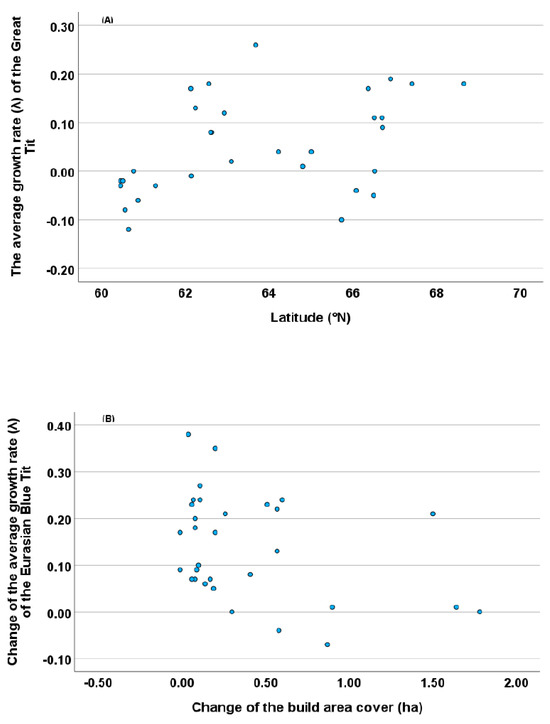
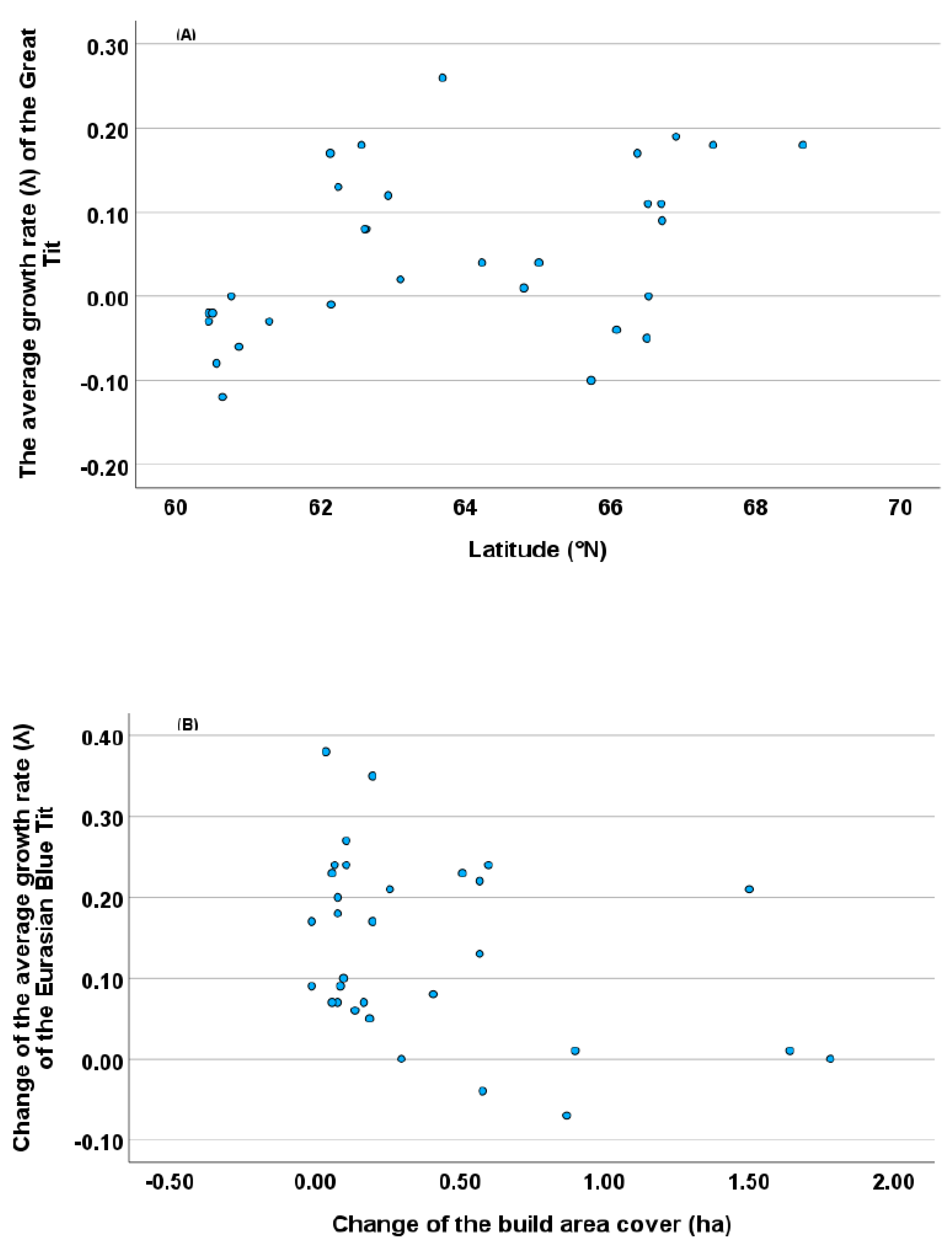

Disclaimer/Publisher’s Note: The statements, opinions and data contained in all publications are solely those of the individual author(s) and contributor(s) and not of MDPI and/or the editor(s). MDPI and/or the editor(s) disclaim responsibility for any injury to people or property resulting from any ideas, methods, instructions or products referred to in the content. |
© 2026 by the authors. Licensee MDPI, Basel, Switzerland. This article is an open access article distributed under the terms and conditions of the Creative Commons Attribution (CC BY) license.