
Article

Regulation of the Dependence Period in Booted Eagles: Effects of Nutritional Condition

by
Virginia Morandini
1,
Jorge García-Macía
2 and
Miguel Ferrer
1,*
1
Applied Ecology Group, Doñana Biological Station, CSIC, Avda. Américo Vespucio s/n, E-41092 Seville, Spain
2
Fundación Migres, CIMA, N-340 km 85, E-11380 Tarifa, Spain
*
Author to whom correspondence should be addressed.
Birds 2026, 7(1), 12; https://doi.org/10.3390/birds7010012
Submission received: 3 October 2025 / Revised: 8 February 2026 / Accepted: 9 February 2026 / Published: 11 February 2026

Simple Summary

The post-fledging dependence period is crucial in the development of young birds, conditioning their future performance. This period is regulated by parental investment and the young’s demands associated with their development and physical condition. We examine post-fledging dependence regulation in the Booted Eagle. Here, we analyzed the blood plasma chemistry of 21 nestlings in southern Spain and compared hatching date with urea levels and a body condition index. Urea levels showed a stronger negative relationship with the length of the dependence period than with the hatching date or body condition index. Summarizing, our results support the idea that nutritional conditions determine the length of the dependence period. Parental choice of whether to prolong or reduce the dependence period is limited to the stage when the young have already become skilled in flight. So, the total length of the dependence period is determined, in addition to any parental decision, by the nutritional condition of the young, which determines the age when the first soaring flight occurs, and the total length of the dependence period. These results are in accordance with other studies on raptors.

Abstract

The post-fledging dependence period is a crucial stage in the development of altricial birds that may influence their future performance and fitness. This period is regulated by parental investment, in terms of food provisioning and protection, and the young’s demands associated with their development and physical condition. We examined post-fledging dependence regulation in 21 Booted Eagle (Hieraaetus pennatus) nestlings in southern Spain. We compared the dependence timing among juvenile birds from different territories. Here, we analyzed the blood plasma chemistry of nestlings in southern Spain and compared blood biochemistry parameters, including urea levels and a body condition index with the hatching date. Urea levels showed a stronger negative relationship with the length of dependence period than with the hatching date or body condition index. Our results support that better nourished nestlings attain independence later than those in an inferior condition, highlighting the potential of urea levels as a reliable indicator of nestling status. In this study, we describe the concentrations of selected chemical parameters in the plasma of free-living Booted Eagle nestlings, including chemical parameters that have been shown to be related to nutritional condition. Young with a better nutritional condition started dispersal later. Blood parameters can be used as a very useful complementary technique when approaching ecological issues. Early dispersal onset seems to be controlled by endogenous factors that are evolutionarily selected since it should provide inherent benefits in terms of future fitness.

1. Introduction

The young of altricial birds are still dependent on parental care for some time after fledging. This period, from the first flight out of the nest until birds attain independence from their parents, is known as the post-fledging dependence period, which is shaped by several ecological drivers [1] and represents the scenario of the parental–offspring conflict [2,3]. When we speak of the “dependence period” we are referring to the period of time after the chick has left the nest but in which it still looks to its parents to care for it and, in particular, to bring it food. It is the phase just prior to juvenile dispersal and is integral to our understanding of the latter phenomenon. It is during this period that the phenomenon which we refer to as parental–filial conflict manifests itself for the first time. From the parents’ point of view, the longer it can invest time in its offspring and bring them the benefits of its experience, the better, since it increases their chances of facing the dispersal stage in better conditions. Given the high mortality rate common to all species of birds during the first months of life, chicks that are well-prepared when they leave the relative security of the nest stand a better chance of survival. In this sense at least, the parent has much to gain by prolonging the period in which it can invest in its offspring and increase the chances of passing on its genes. Nevertheless, an exaggerated period of parental investment runs the risk of exhausting the parent, thereby increasing its chances of dying or simply lowering the probability of successful breeding the following year by giving it less time to recover sufficiently. However, the young eagle sees the problem from a completely different point of view, since the more time the parent invests in it, the greater its chances of survival will be. Thus, one would expect the chick to push for the parental investment to continue for as long as possible, whilst it is up to the parents to decide when to stop feeding their offspring.
For adults, the optimum length of the dependence period will always be that which maximizes their net lifetime reproductive success. For the offspring, however, the optimum length is that which maximizes their probability of surviving to reproductive age, even if it means a lower reproductive success for the parents [3,4,5]. Development during this stage may affect subsequent survival probabilities and the performance of young birds after the break-up of family ties [6,7,8,9,10].
Generally speaking, little is known about the dependence period in birds; the information that does exist for birds of prey reveals that its duration is very variable, as is the progress made in learning flying techniques and as are the factors that bring it to an end. Different studies have focused on the proximal factors influencing the length of the dependence period, which are related to both parental and offspring traits but also to environmental conditions like timing of reproduction [1,4,5,6,7,8,9,10].
Food availability has proved to be one of the main factors that determine the duration of dependence as well as the young’s decisions related to the independence onset [3,4,5,6,7,8,9]. According to the resource competition hypothesis, siblings in better nutritional conditions will tend to monopolize resources and extend their stay in the parental territory, while subordinates will be forced to leave the territory earlier [10,11,12,13]. However, ontogeny hypotheses state that better nourished siblings can reach a better body condition, which permits them to attain independence earlier than subordinates in a worse condition [5,12,13,14,15].
Over the last 30 years, the study of the hematology and biochemistry of the blood of birds of prey has advanced a great deal, showing a way forward for the solution of this problem and providing ecologists with a simple and objective technique for evaluating an individual’s condition.
Numerous studies have demonstrated that the variation in blood chemistry values is dependent on factors both intrinsic and extrinsic to the bird studied, such as sex, age, circadian rhythms and diet quality [16,17,18,19]. In the case of birds of prey, it has been shown that the level of urea present in the blood is a good indicator of the bird’s nutritional state, as it is slow to respond to acute fasting and slow to recover from a state of chronic fasting, with low sensitivity to recent ingestion [19,20,21,22,23].
Avian hematology has been used in ornithological studies because it provides biological data about these animals, their biology, and the detection of possible pathological states. Determination of nutritional and physiological conditions can be very important for understanding ecological and behavioral issues. Despite technology for analyzing the concentrations of blood constituents being widely available and well understood, studies of blood parameters in free-living raptors are, though increasing, still rare [23,24,25,26,27].
In this study, we analyzed the regulation of the length of the dependence period of juvenile Booted Eagles by testing the influence of young nutritional conditions. In addition, we investigated potential correlations between hatching dates and biochemical blood parameters and body condition index (BCI). According to the resource competition hypothesis, we expected longer dependence periods in nestlings with better nutritional conditions (i.e., lower urea levels in blood). Alternatively, under the ontogeny hypothesis, we expect the opposite, i.e., nestlings in better nutritional conditions (i.e., higher urea levels in blood) attain independence earlier than subordinates in worse conditions.

2. Materials and Methods

2.1. Study Area

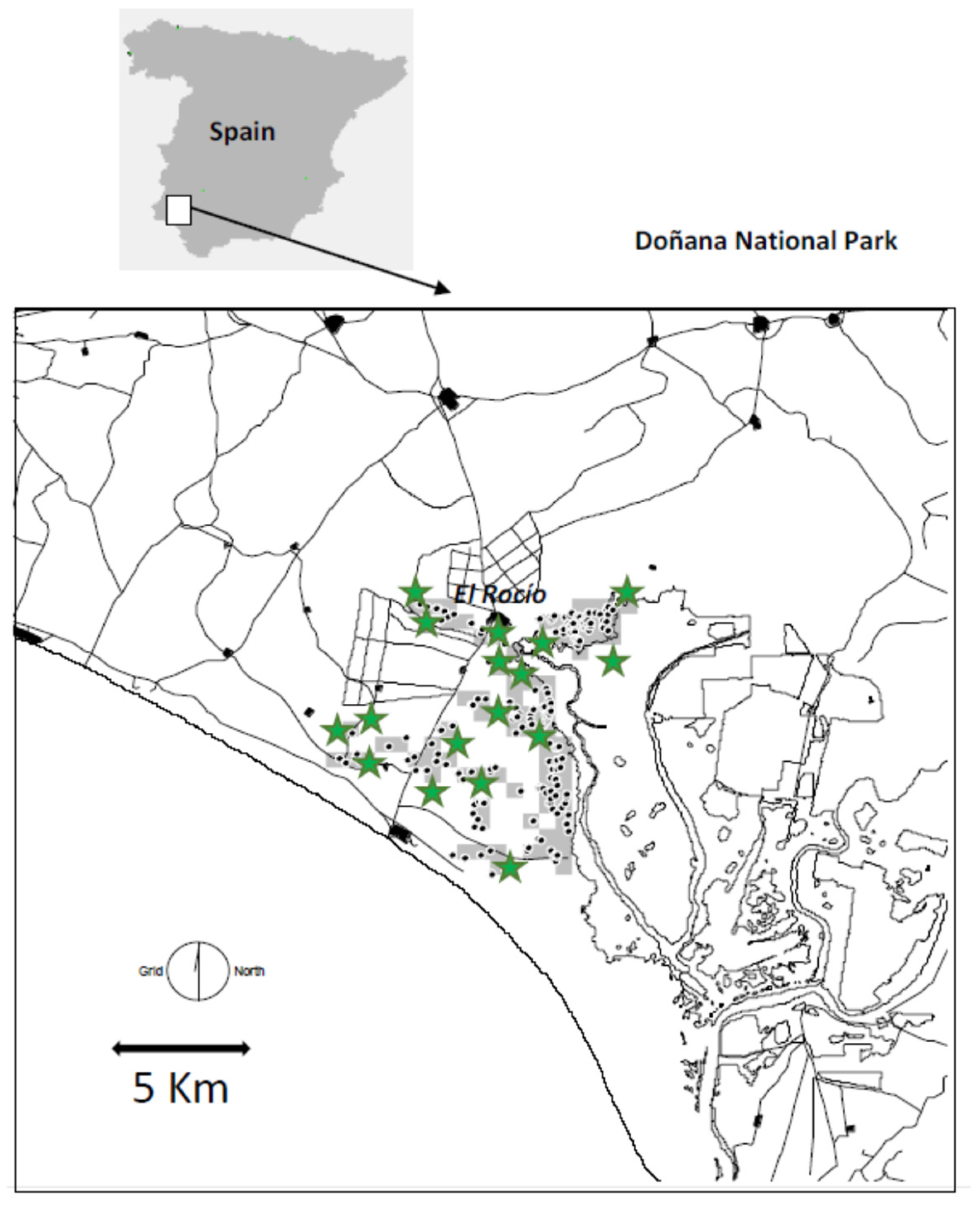
We studied a sample of Booted Eagles breeding in the Doñana National Park, southwestern Spain (37° N, 6°30′ W). The study area is about 230,000 ha and includes five main landscape types: (1) Eucalyptus Eucaliptus spp. plantations, (2) scattered cork oak Quercus suber with scrubland dominated by Genista sp., Rosmarinus sp. and Lentiscus sp., (3) forests of stone pines Pinus pinea, (4) coastal sand dunes and (5) marshland. Doñana National Park is characterized by a dry-humid Mediterranean climate (annual rainfall: 300–2000 mm, average annual temperature: 9–19 °C). The Doñana National Park population showed density-dependent productivity across habitat heterogeneity, with higher quality territories closer to a nearby marsh border [28,29,30]. See Figure 1.

2.2. Study Species

The Booted Eagle is a trans-Saharan migrant, arriving in Europe in early-March and leaving in late-September on average. Individuals display strong philopatric behavior and low divorce rates since they usually return to the same territories that they occupied in previous years and typically breed with the same partner each year [28,29,30]. The female usually lays 2 eggs, sometimes even 3, which hatch after 37–40 days of incubation. The European population has been estimated at 3600–6900 pairs, most of them located in the Iberian Peninsula. Although the Booted Eagle is one of the most common birds of prey in the Mediterranean forests and woodland areas, many aspects of its biology and ecology are poorly known [30]. In the Iberian Peninsula, Booted Eagles select areas with a mixture of woodlands and open lands, where they prey mainly on reptiles (ocellated lizard Lacerta lepida), birds (Rock Dove Columba livia, Eurasian Jay Garrulus glandarius) and mammals (wild rabbit Oryctolagus cunniculus) [31]. In Europe, Booted Eagles usually nest in trees, using large platforms (built by them or by other raptor species), which are often used for many years [30]. The Booted Eagle is classified as “lest concern” in the IUCN threat status. It is classified as Least Concern in the IUCN Global Red List, although it has an unknown population trend [32]. In the European scale it is also considered of Least Concern, showing an increasing population trend.
The Booted Eagle is a migratory, medium-sized territorial raptor with marked reversed sexual dimorphism, with the male being the smallest sex (females around 22% heavier than males). In comparative raptor studies of siblicide and brood reduction, the Booted Eagle is considered to exhibit facultative fratricide. Pale and dark morphs occur with several intermediate plumages. In Doñana National Park, 13.8% were dark morph (own data). Juveniles are also polymorphic and very similar to adults. In this study, all the Booted Eagle pairs were nesting in trees. Territory sizes and characteristics were known for the same study area [28,29,30].

2.3. Radio-Tagging and Post-Fledging Monitoring

During our study, we monitored 14 different territories, and we sexed 21 nestlings (6 in 1996, 9 in 1997 and 6 in 1999). The sample includes 9 females and 12 males. At 35–45 days old, 21 nestlings from 17 nests were equipped with battery-powered radio-transmitters (models TW-3, Biotrack Ltd., Dorset, UK). Transmitters were fixed on the back of the nestlings by a harness [33] and did not exceed a maximum of 2.5% of their body weight at fledging. Nestlings were also marked with a metal ring from the Spanish Environmental Department and a colored-coded ring to be read from a distance.
Observations started when the young left the nest, which we defined as the first time the young were observed flying or perched on a place inaccessible from the nest, and concluded when the young reached independence. The independence date was considered the first day that the young did not spend the night in the natal territory [5]. ‘Natal’ territory was considered to be an area within a radius of 3.25 km from the nest, in accordance with the mean inter-nest distance estimated for the species [29,30]. During the post-fledgling period, each young was located at least every 2 days by visual contact or radio-telemetry (triangulation), using a receiver (models Stabo, GFT, Stuttgart, Germany; and R1000, Communication Specialist Inc., Vicksburg, MS, USA) and a three-element Yagi directional antenna [33]. Each nest was observed for a minimum of 6 complete days.

2.4. Blood Collection and Body Measurements

Each spring, inside the studied area, all previously known territories were visited to record occupancy. Nest-sites were easily detected thanks to the conspicuous behavior of the birds (mating flights, singing at the beginning of the breeding season). Once we suspected incubation started, we waited 40 days (the incubation period) before climbing up to the nests to take blood samples for sexing chicks. Any individuals who showed abnormal clinical signs or biochemical outliers were excluded from the sample.
Laying and hatching dates were estimated from the timing of nest visits and examinations of nest contents.
The total handling time of birds was less than 10 min. We measured forearm length (to the nearest mm) using a ruler. Body weight was recorded with a spring scale (to the nearest 10 g). All the measurements were taken by the same observer (M. Ferrer). The body condition index (BCI) was calculated for all the nestlings’ eagles using the residuals of a regression of the cube root of mass (dependent variable) against the forearm length (independent variable) [34]. The brachial vein of each bird was lanced with a hypodermic needle and 2 mL of blood was collected in a heparinized tube. Blood samples were taken from 35- to 45-day-old nestlings. Blood was carefully placed into tubes containing lithium heparin to prevent coagulation and avoid the formation of bubbles. Blood was centrifuged (10 min; 3000 rpm), and the plasma was stored at −80 °C until it was analyzed for amylase (AMY), cholesterol (CHO), creatinine (CRE), creatine kinase (CK), glucose (GLU), aspartate aminotransferase (DAT), alanine aminotransferase (AAT), total protein (PRO), urea (URE) and uric acid (UA) using a computer process-controlled multichannel auto-analyzer (Cobas Integra 400, Roche Diagnostic, Rotkreuz, Switzerland). For analysis purposes, we standardized hatching dates as the difference in days between the earliest record for all years and each record. Blood samples were collected between 11:00 AM and 3:00 PM to avoid variations in blood parameters due to circadian rhythms [23,24].
The cellular fraction was used to sex the eagles. We used primers 2945F, cfR and 3224R to amplify the W chromosome gene following one of Ellegren’s recommendations [35]. Analyses were carried out at Doñana Biological Station.

2.5. Statistical Analyses

We conducted Generalized Linear Models (GLM) analyses to study the relationship between hatching date, body condition index, and biochemical nutritional indicators. Because our study was conducted with some of the nestlings belonging to the same nest, the quality of parents and/or territory, as well as the study years, might affect results. To avoid potential pseudo-replication, we conducted a GLM using mean values per brood, with length of dependence as a dependent variable and “Sex”, “Relative hatching date”, “Urea”, and “Body condition index” as explanatory variables. We used an information-theoretic approach to develop a priori model sets, and we ranked models using Akaike’s information criterion (AIC), ΔAIC (the difference in AIC between each candidate model and the model with the lowest AIC value). Models within 2 ΔAIC values of the top model were considered competitive. A model including only the intercept was included before ranking the models. The degree to which 95% confidence intervals for slope coefficients (β) had zero overlap was also used to evaluate the strength of evidence for competing models within the model set.
We explored correlations among variables potentially related to each other, like blood-based and body index variables, with Spearman correlations. For analyses, if covariates included in the models were correlated with an r > 0.70 Spearman correlation after the Bonferroni correction method, we did not include both parameters in the same model. That was the case with urea and uric acid (r = 0.88). We conducted a GLM with the rest of the blood variables and the length of dependence. We performed a multiple regression, with standardized hatching dates as the dependent variable and biochemistry parameters and the body condition index as independent variables. We used the STATISTICA 13.3 package (Statsoft Inc., Tulsa, OK, USA). Statistical significance was set at α = 0.05.

3. Results

The young left the area of the nest, attaining independence, after a mean dependence of 41.07 ± 11.51 days (range 23–61 days, n = 14), when 94.90 ± 12.48 days old (range 77–114 days). Mean urea plasma level in nestlings was 38.92 ± 18.56 mg/dL (range 11.3–74.0 mg/dL, n = 14). Non-significant differences were found in the duration of the dependence period between broods with one or two chicks (one-chick 36.22 ± 8.9 days, range 29–43 days, n = 9; two-chicks 45.00 ± 13.28 days, range 33–47 days, ANOVA; F = 2.925; df = 1, 11; p = 0.138) and between sexes (males 40.6 ± 11.20 days; female 42.0 ± 14.08 days, ANOVA; F = 0.061; df = 1, 11; p = 0.875), with the longest dependent period being that of two-chick broods with two females (2-females 52.50 ± 12.50 days) and the shortest being that of one-chick males (1-male 33.60 ± 8.9 days), but again non-significant. Years had a non-significant effect on urea concentration, length of the dependence period and hatching date (“Years” Wilks value = 0.269, F = 1.55, df = 9, p = 0.197).

3.1. The Regulation of the Dependence Period Length

Only blood urea levels were strongly related to the length of the dependence period (p < 0.001). We did not find any significant effect of hatching date or body index on the length of the dependence period. Neither brood size, sex nor year showed significant effects on the length of the dependence period (Table 1). No blood-related variables, except urea, showed a significant relationship with the length of dependence (Table 2).
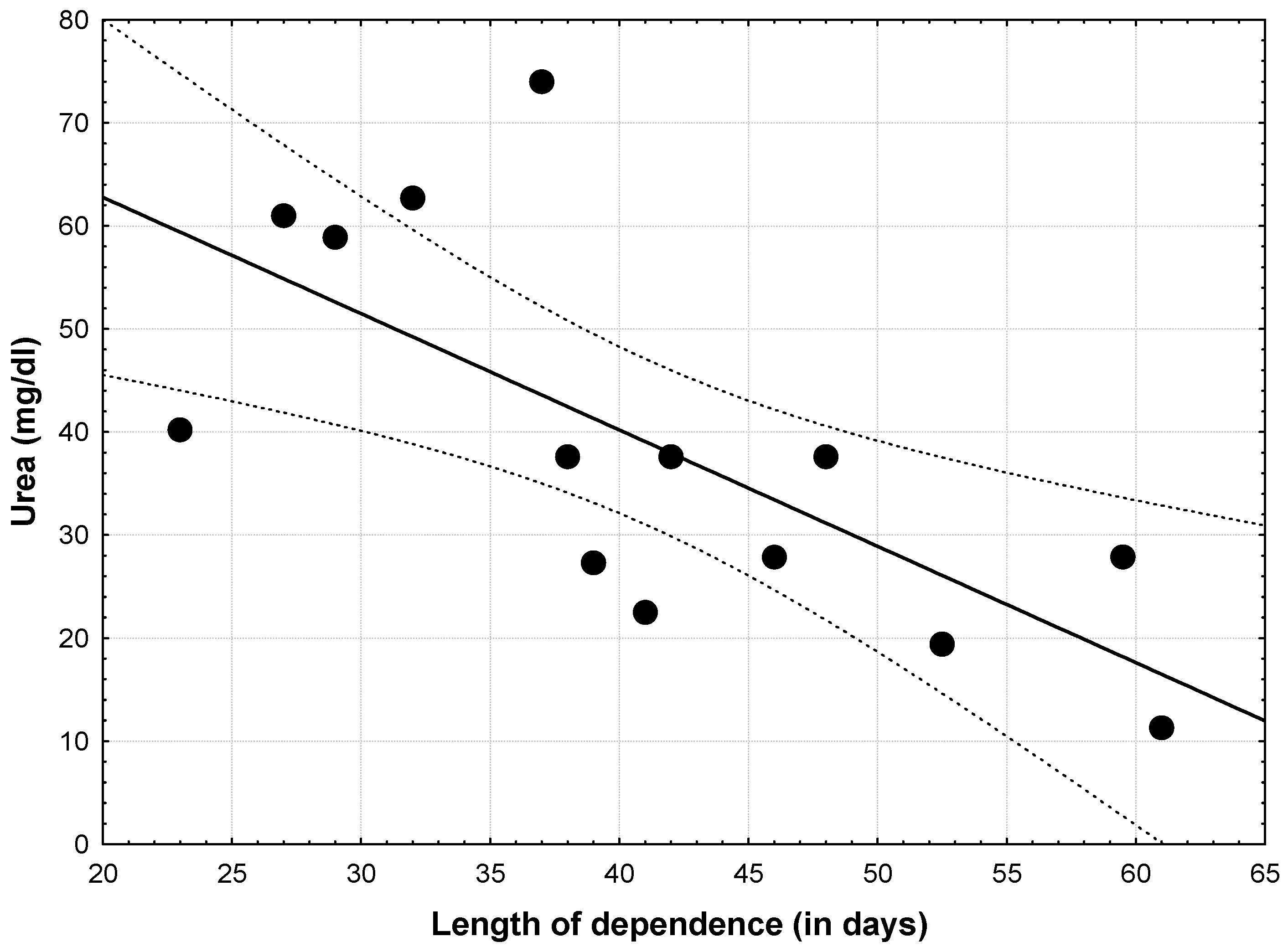
Considering only urea concentration in blood, 49% of the variance in the length of the post-fledgling period was explained by urea level alone (Figure 2), with the better nourished young (lower urea levels) having a longer period under parental care (r = −0.700; p = 0.005; R2 = 0.490).

3.1.1. First Phase of Dependence Period

We define the first phase of the dependence period as the time starting when chicks leave the nest and ending with the first soaring flight. The young accomplished soaring flights after a mean of 13.9 ± 6.08 days (range 2–25 days, n = 21) after their first flight, at 67.5 ± 5.79 days old (range 58–79 days). Non-significant differences were found in the duration of the first phase of the dependence period between broods with one or two chicks (ANOVA; F = 0.627; df = 1, 11; p = 0.438) and between sexes (ANOVA; F = 0.276; df = 1, 11; p = 0.605). A highly significant relationship between urea level and duration of the first phase of dependence was found (first phase: urea; r = 0.557; p = 0.038; R2 = 0.311).
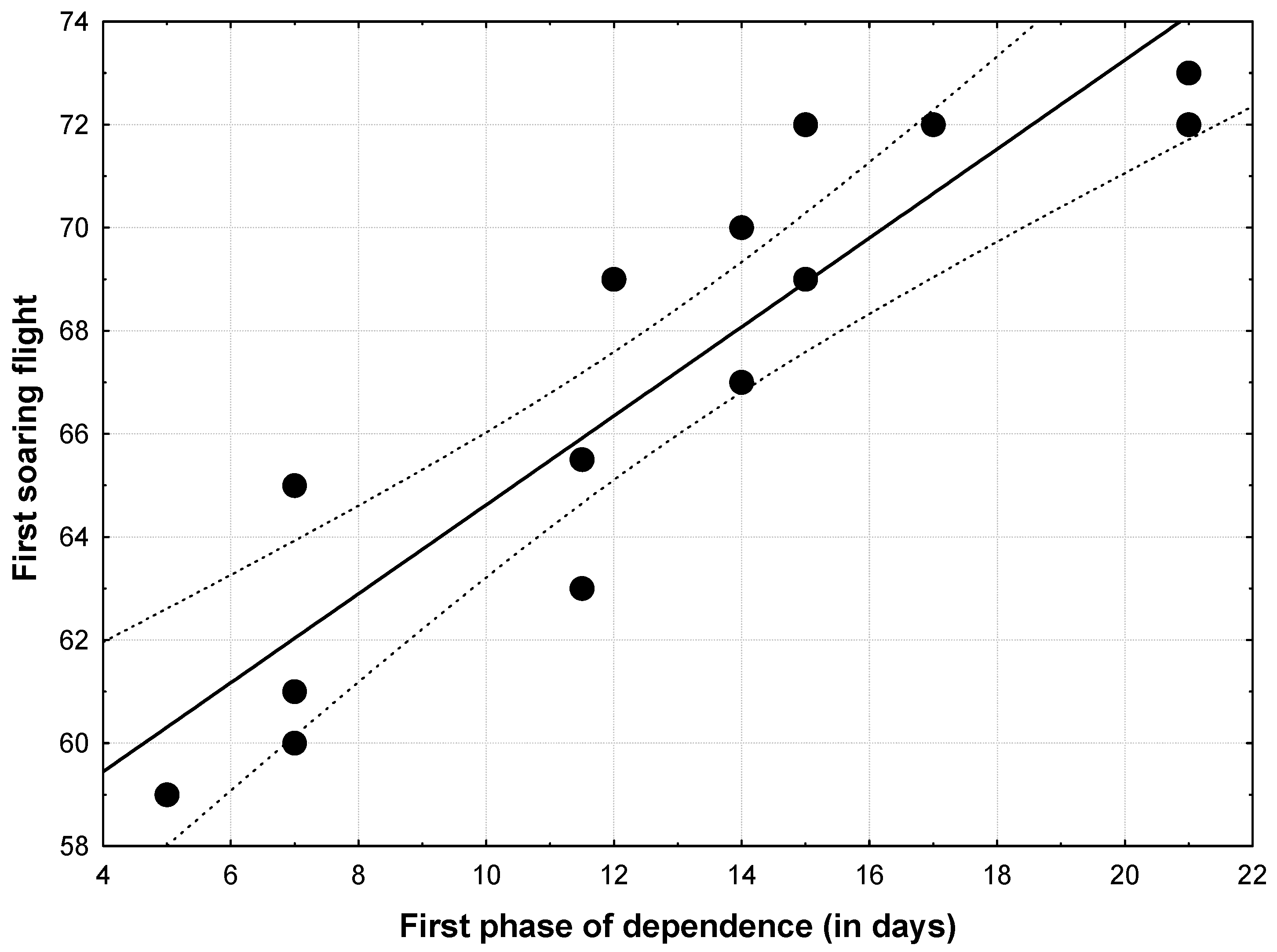
Age of nestlings at the first soaring flight was significantly related to the length of the first phase of the dependence period, starting from the time when chicks leave the nest to the first soaring flight (Figure 3; r = 0.9068; p < 0.001; R2 = 0.822), with the young eagles soaring earlier for the first time being those who had a longer first phase of dependence.

3.1.2. Second Phase of Dependence Period

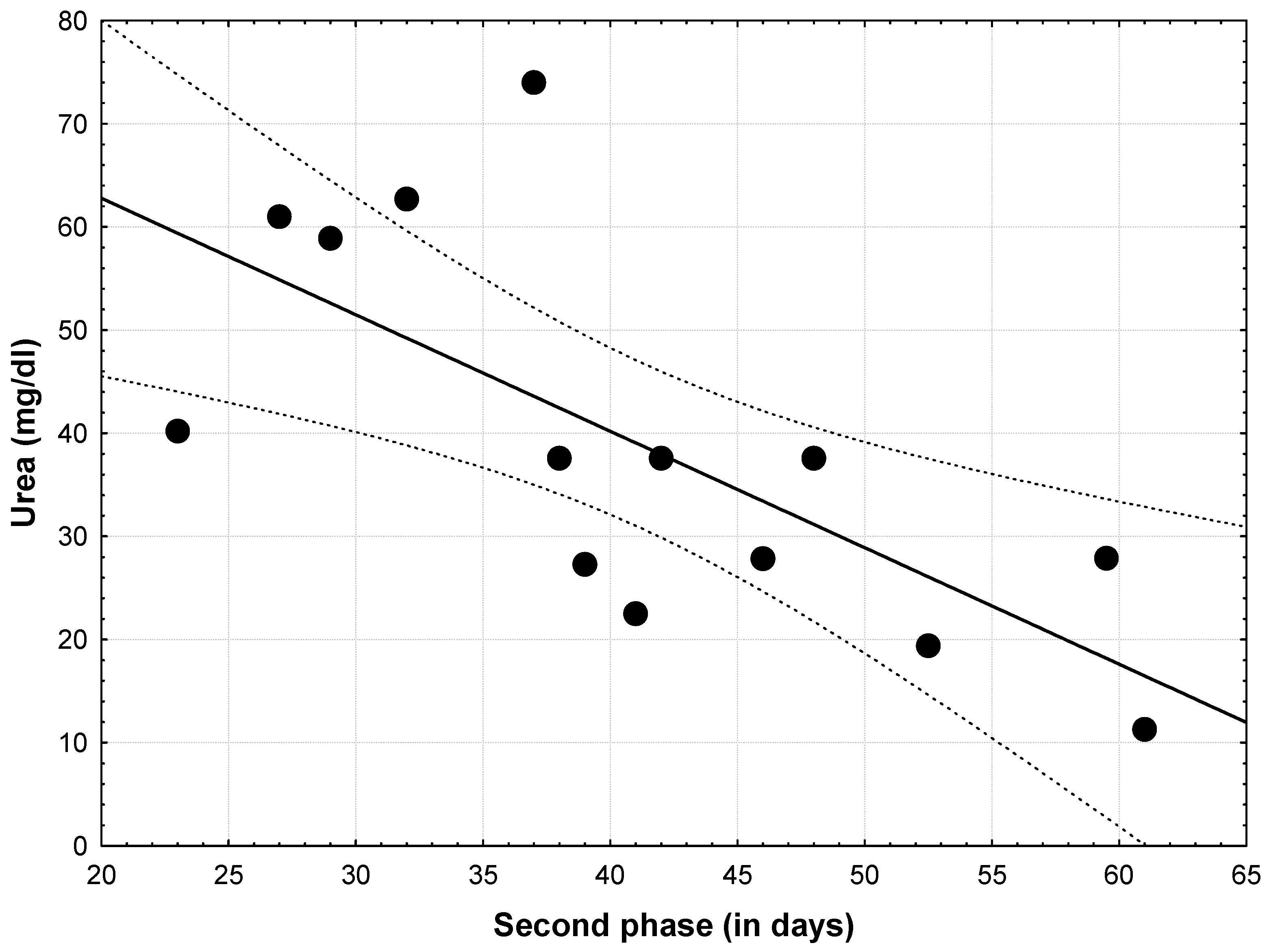
We define the second phase of the dependence period as the time from the first soaring flight to the date of independence. The young attained independence after a mean of 27.3 ± 16.39 days (range 1–54 days, n = 21) after their first soaring flight, when they were 94.90 ± 12.48 days old (range 577–114 days old). Non-significant differences were found in the duration of the second phase of the dependence period between broods with one or two chicks (ANOVA; F = 0.931; df = 1, 11; p = 0.347) and between sexes (ANOVA; F = 0.423; df = 1, 11; p = 0.523). Urea levels were significantly and negatively related to the duration of this second phase (Figure 4; r = −0.700; p = 0.005; R2 = 0.4903), with the young eagles that attained independence later being those with better nutritional conditions.
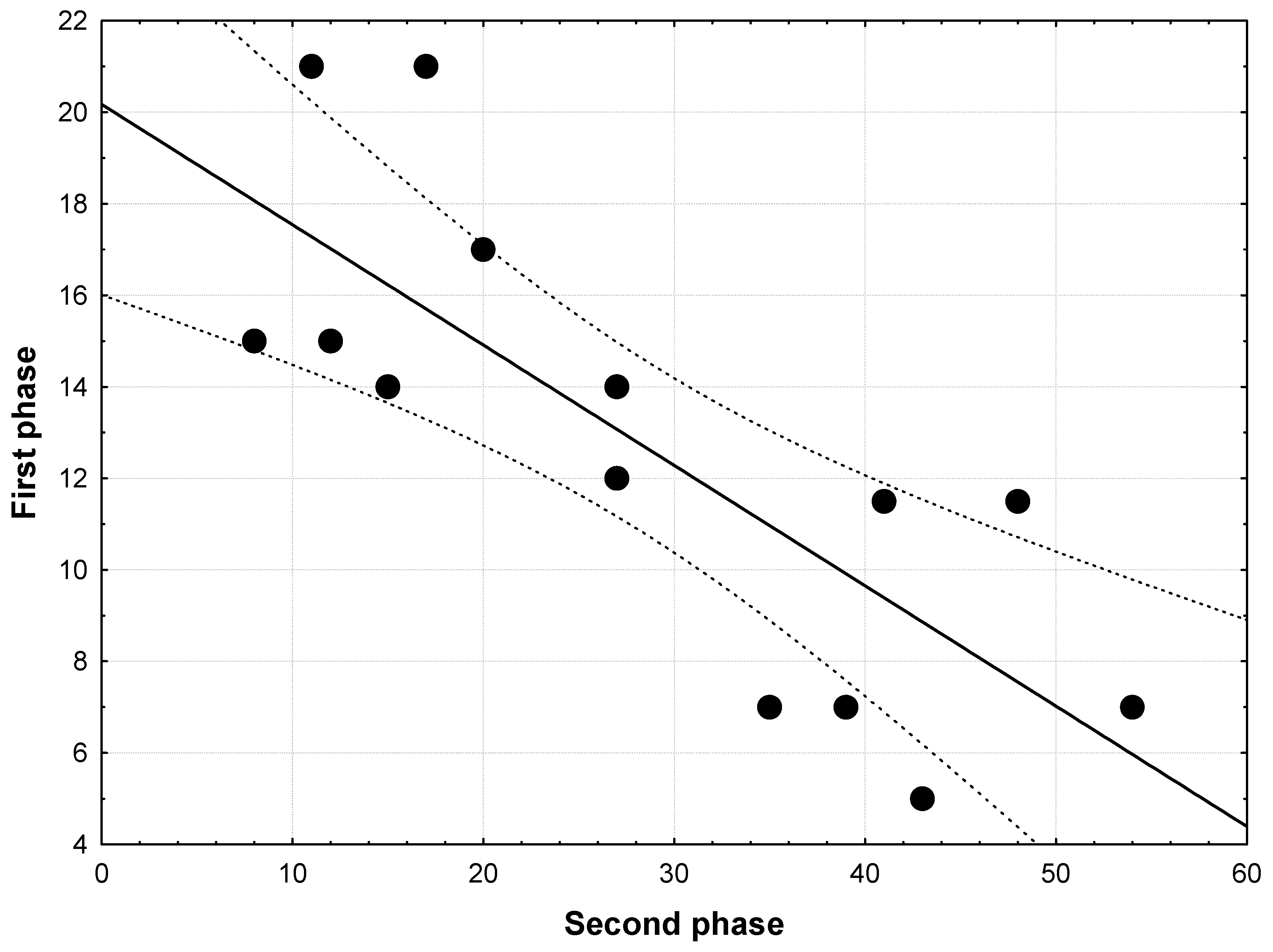
A 13. 9 ± 6.08; Second phase: from the first soaring flight to the date of independence: (mean = 27.33 ± 16.39) was found (Figure 5; r = 0.784; p < 0.001; R2 = 0.615), with the young eagles soaring earlier being those who attained independence later (t-student for dependent samples t = −2.860, p = 0.009).

3.2. Hatching Date and Nutritional Conditions

In Table 2, the results of the multiple regression are shown, demonstrating that only urea concentration was correlated with hatching dates and showing worse conditions for chicks that hatched later in the breeding season. Only urea was selected in the multivariate regression, showing a stronger correlation. Urea levels suggest that nestlings that hatch later in the season will be in poorer nutritional condition.

4. Discussion

In this study, we analyzed the regulation of the length of the dependence period of juvenile Booted Eagles, testing the influence of young nutritional conditions. In addition, we investigated the potential correlations between hatching dates and biochemical blood parameters and body condition index (BCI). Our results support the resource competition hypothesis, showing longer dependence periods in nestlings with better nutritional conditions (i.e., lower urea levels in blood). Nevertheless, results should be interpreted as preliminary and warrant validation in other species and by studying larger populations
It has been frequently demonstrated that differences between BCI and plasma biochemistry are indicators of nutritional condition [17,20,21,22,23,36]. No blood-related variables, except urea, showed a significant relationship with the length of the dependence period, with the better nourished young (lower urea levels) having a longer period under parental care. These results, shown in Table 2, would suggest that chicks who hatch later are nutritionally worse-off and receive less parental investment, probably being in worse condition than earlier-hatching chicks when the time for dispersal arrives. Such inequalities in the levels of parental investment received by the chicks can lead to differing behavioral patterns at the time of dispersal. We did not find any significant effect of hatching date or body condition index on the length of the dependence period. Neither brood size, sex, nor year showed significant effects on the length of the dependence period.
The results obtained in this study support the view that the dependence period is in fact composed of two different phases controlled by different factors: (1) the first phase of the dependence period, starting from the time when chicks leave the nest to the first soaring flight, and (2) the second phase, from the first soaring flight to the date of independence.
Age of nestlings at the first soaring flight was significantly and negatively related to the length of the first phase, with the young eagles soaring earlier for the first time being those who experienced a longer duration of the first phase and those with better nutritional conditions. Also, urea levels were significant but negatively related to the duration of the second phase, with the young eagles that attained independence later being those with better nutritional conditions (lower urea levels). A highly significant and negative relationship between the length in days of the two phases of dependence was found, with the young eagles soaring earlier being those who attained independence later. These results are similar to those found in raptors [4,5,6,7,8,10,11,12].
A wide variety of birds fast and exhibit a decrease in body mass during certain stages of their annual life cycles [18,36,37,38,39,40]. Birds fast when food is scarce but also when it is plentiful if they are engaged in other important activities that compete with feeding, such as incubation, molting, and migration. In the wild, many avian species undergo intermittent periods of food deprivation. Fluctuations in food availability may impose fasting for more or less predictable periods of time. Fasting endurance may have an adaptive value. Despite the importance of fasting capacity in the life history of many species of birds, little is known about metabolic responses to food deprivation. This contrasts with the large number of studies dealing with feeding ecology.
Physiological responses to fasting have been studied in Great White Pelicans (Pelecanus onocrotalus) [41], Yellow-Legged Gulls (Larus cachinnans) [42], Bonelli’s Eagles (Hieraaetus fasciatus) [21], Short Toed Eagles (Circaetus gallicus) [20], Whited Tailed Eagles (Haliaetus albicilla) [38], Common Buzzards (Buteo buteo) [43], Swainson’s Hawks (Buteo swainsoni) [39], Peregrine Falcons (Falco peregrinus) [44], Northern Goshawks (Accipiter gentilis) [45], Gentoo Penguins (Pygoscelis papua) [16], King Penguins (Aptenodytes patagonicus) [37], Emperor Penguins (Aptenodytes forsteri) [46], Rockhopper Penguins (Eudyptes chrysocome) [47], among other species.
At the moment protein catabolism is activated, the increase in urea levels in the blood is continuous and constant. In raptors, as already shown for several species, including the Spanish Imperial Eagle, Aguila adalberti [48], the protein catabolism activation occurs very quickly, given the characteristic poor fat storage capacity of this group, a very common feature in flying birds [49]. Even in the smaller Antarctic penguin, as with the Chinstrap Penguin (Pygoscelis antarctica) [40], the protein catabolism activation starts on the 5th day of fasting. Urea is not sensitive to recent ingestion (in contrast to glucose concentration, for example), and increases and decreases in blood concentration are slow. Plasma urea concentration is an index of protein catabolism. Urea levels in blood increase with fasting and decrease slowly with refeeding [43,50], making them good indicators of nutritional condition for species of birds with poor fat reserves, such as raptors [39,43,44,45]. Urea levels in blood have been used as an index of body condition in raptors [26,38,39,43,44,45].
Urea is a minor pathway for protein degradation in birds, but the activity of liver arginase (the enzyme on which urea production in birds depends) increases after prolonged fasting, and the rise in urea during protein catabolism may be explained by greater arginine availability [50,51]. The time between when a bird goes from using up its fat reserves to when it starts using its muscle tissues as an energy source varies according to the individual’s initial condition and the species’ capacity for storing fat reserves.
Three phases have been described that are associated with changes in the relative rate of mass loss, and the nature and quantity of fuel oxidized in geese. During phase I in the fasting period, the daily rate of mass loss and the resting metabolic rate decrease progressively. Urea concentration in the blood also decreases during phase I, reflecting a progressive reduction in proteolysis and an increase in the beta-hydroxybutyrate concentration, which results from an increase in fat mobilization. Phase II is the longest period during which the rates of mass loss and metabolism remain low and fat becomes the main source of fuel. During this period, the urea concentration is low and the ketone body concentration in the blood increases. This permits the conservation of body proteins, which have vital structural and regulatory roles. Phase III corresponds to a critical period where body proteins are metabolized and urea concentration increases dramatically. Beta-hydroxybutyrate levels in the blood decrease, and the rate of mass loss increases. Changes in certain blood parameters are indicative of the type of energy sources used during the three phases described for prolonged fasting. Beta-hydroxybutyrate is one of the ketone bodies produced after the partial oxidation of fatty acids resulting from triglyceride hydrolysis, so its concentration is related to lipid catabolism [37,40,42,43,46]. Urea concentration is an indicator of protein catabolism.
All the articles published by many authors show a continuous and linear increase in nitrogenized residues that occurs as soon as protein catabolism starts. The time between when a bird uses up its fat reserves and when it starts using its own muscle tissue as an energy source varies according to the individual’s initial condition and the species’ capacity for storing fat reserves. The emperor penguin, which shows an extreme example of fat storage capacity, can subsist for two months on its own fat reserves before beginning to use its own proteins. At the moment protein catabolism is activated, the increase in urea levels in the blood is continuous and constant. In raptors, as already shown for several species, including the Spanish Imperial Eagle, the protein catabolism activation occurs very quickly, given the characteristic poor fat storage capacity of this group, a very common feature in flying birds. Even in the smaller Antarctic penguin, as with the Chinstrap Penguin, protein catabolism activation starts on the 5th day of fasting [41].
Urea levels in blood increase with fasting and decrease slowly with refeeding, making it a good indicator of nutritional condition in species of birds with poor fat reserves, such as raptors. Urea levels in blood have been used as an index of body condition in raptors [26,38,39,43,44,45]. Urea levels increase as a response to starvation and decrease after refeeding because proteins are actively mobilized as an energy source, increasing the nitrogenous excretion components released into the blood [49,50,51]. Urea is not sensitive to recent ingestion (in contrast to glucose concentration, for example) and increases and decreases in blood concentration are slow [43,46,47]. All of the monitored wild nestlings survived to fledging. The sub-lethal effects of poor conditions can still have profound impacts on individual fitness, especially as they relate to migration [52]. Booted Eagles in Western Europe undertake a seasonal migration to overwinter in Africa. Migration is energetically demanding, and juveniles that hatch later in the breeding season may be at a disadvantage if they depart in poor nutritional condition.
Plasma urea concentration is an index of protein catabolism. Urea is a minor pathway for protein degradation in birds, but the activity of liver arginase (the enzyme on which urea production in birds depends) has increased after a prolonged fast, and the rise in urea during protein catabolism may be explained by greater arginine availability. The time between when a bird uses up its fat reserves and when it starts using its own muscle tissues as an energy source varies according to the individual’s initial condition and the species’ capacity for storing fat reserves.
Small samples increase the risk of Type I/II errors and inflated effect sizes. The total sample size (n = 21) is too small for models with multiple fixed effects and random effects. To avoid pseudo-replication due to using nestlings from the same nest, we decided to use only mean values in each brood, avoiding in this way any potential pseudo-replication, but losing interaction analyses. Dehydration or variation in protein intake would affect urea levels in the blood. Even when we pointed out, urea is still only a correlational proxy. Nevertheless, we suggest that elevated urea values in nestling samples reflect prior food limitations that also caused delayed development. There is a marginally significant relation between urea and BCI (r = −0.4196; p = 0.058), supporting the causal inference. The body condition index (BCI) was calculated for all the nestlings’ eagles using the residuals of a regression of the cube root of mass (dependent variable) against the forearm length (independent variable). However, there are many discussions about how accurate the BCI is as an indicator of nutritional status [34]. Among other reasons, differences among individuals in size and length are expected due to genetic reasons. So, large individuals are nearly always going to show a positive BCI, even under starvation. BCI is only a good estimator of nutritional conditions when repeated measures of the same individual are used.

5. Conclusions

To summarize, our results support the idea that nutritional conditions determine the length of the dependence period. Thus, the dependence period seems to consist of two separate phases, each representing roughly half of the total period, so variations occurring in either phase affect the overall length. Parental choice of whether to prolong or reduce the dependence period appears to be limited to the stage when the young have already become skilled in flight. To stimulate independence in young eagles when they are still unable to make soaring flights makes no sense. So, the total length of the dependence period is determined, in addition to any parental decision, by the nutritional condition of the young, which determines the age when the first soaring flight occurred, and the total length of the dependence period.
These results are in accordance with other studies on raptors [4,5,6,7,8,10,11] showing the influence of nestlings’ nutritional conditions in the dependence period. The age at which the young eagles gain independence can be influenced by many factors connected with the quantity of food available in the surrounding area, the “quality” of the parents, the physical condition of the young bird, etc. An important link is also found with the hatching date (taking as “Day 1” the first hatch recorded in the three years of the study), with independence being reached at an earlier age, the later the eggs hatched. When we look at the period of time from the first soaring flight to the date of independence, this second phase is not affected by the age at which the first soaring flight was completed, but it did show a strong relationship with the level of urea in the blood.
The study of factors that have a bearing on the duration of the dependence period shows that the total duration time of the dependence period in the Booted Eagle is closely related to a mastery of flight, and in particular, the first soaring flight; the longer this flight takes to develop, the longer the dependence period will last.
The dependence period can be divided into two stages, each of which is influenced by different factors. The first stage runs from the time the chick leaves the nest up until it performs its first soaring flight, whilst the second covers the time from this flight through to the end of the dependence period. The duration of phase one, during which various types of flight are perfected, is determined by the age at the first soaring flight. Young birds with a higher level of urea in the blood took longer to develop sufficiently to be able to carry out a soaring flight; lacking the necessary nutrients, which they depend on their parents to bring them, they had to rely on internal reserves, thereby increasing their nitrogen residues and, as a consequence, the level of urea in the blood. This delay produces a significant increase in the total duration of the dependence period.
The second stage of the dependence period is considered from the first soaring flight up until independence. The duration of this period, in which the chick comes to master all techniques of flight, is basically determined by the urea level, being longer for young birds with low levels, i.e., in better nutritional conditions. Later, parents have less time to prolong the second stage of dependence.
Thus, the dependency period is made up of two distinct stages, each one representing approximately half of the total, where variations in one or the other have an important effect on the period viewed as a whole. In the first stage, the parents can do nothing to speed up the process. The duration of the second stage, however, seems to be governed much more by a paternal decision as to when it should end, irrespective of the physical condition of the chick. In fact, the first phase seems to be related to the ability for soaring flights of the young. The length of the second phase seems to depend more on the nutritional conditions, being longer in good quality territories and with good quality parents, too, who are able to provide high-quality food to their young.

Author Contributions

Conceptualization, M.F. and V.M.; methodology, M.F.; software, M.F.; validation, M.F., V.M. and J.G.-M.; formal analysis, M.F. and J.G.-M.; investigation, M.F. and V.M.; resources, M.F.; data curation, V.M.; writing—original draft preparation, M.F.; writing—review and editing, V.M. and J.G.-M. All authors have read and agreed to the published version of the manuscript.

Funding

This research received no external funding.

Institutional Review Board Statement

Our research has been evaluated and approved by the Ethical Committee of the Spanish Council for Scientific Research, which is the oversight authority for such matters in Spain (registration number 16/98, CSIC). The project was also authorized by the Andalusia environmental administration (i.e., Consejería de Medio Ambiente, Junta de Andalucía), which has granted the appropriate licenses for handling, tagging and blood-sampling the nestlings. Procedures used in this study comply with the laws, guidelines and regulations for working in the Doñana National Park during the study period. We would like to thank RBD fieldworks, which monitored Booted Eagle in Doñana National Park for more than 20 years. All applicable international, national, and/or institutional guidelines for the care and use of animals were followed.

Data Availability Statement

The data presented in this study are available on request from the corresponding author due to privacy, legal or ethical reasons.

Acknowledgments

We are indebted to EBD-CSIC fieldworkers who have monitored Booted Eagle population in Doñana National Park for more 20 years and especially to L. Garcia, and J. Cuesta. The authors have reviewed and edited the output and take full responsibility for the content of this publication.

Conflicts of Interest

The authors declare no conflicts of interest.

References

  1. Gallego-García, D.; Sarasola, J.H. Ecological drivers of variation in the extent of the post-fledging dependence period in the largest group of diurnal raptors. IBIS 2025, 167, 345–356. [Google Scholar] [CrossRef]
  2. Trivers, R.L. Parental investment and sexual selection. In Sexual Selection and the Descent of Man; Campbell, D., Ed.; Aldine: Chicago, IL, USA, 1972; pp. 136–179. [Google Scholar]
  3. Clutton-Brock, T.H. The Evolution of Parental Care; Princeton, University Press: Princeton, NJ, USA, 1991. [Google Scholar]
  4. Bustamante, J. Post-fledging dependence period and development of flight and hunting behaviour in the Red Kite Milvus milvus. Bird Study 1993, 40, 181–188. [Google Scholar] [CrossRef]
  5. Alonso, J.C.; Gonzalez, L.M.; Heredia, B.; Gonzalez, J.L. Parental care and the transition to independence of Spanish imperial eagles Aquila heliaca in Doñana Nacional Park, southwest Spain. IBIS 1987, 129, 212–224. [Google Scholar] [CrossRef]
  6. Amar, A.; Arroyo, B.E.; Bretagnolle, V. Post-fledging dependency and dispersal in hacked and wild Montagu’s harriers Circus pygargus. IBIS 2000, 142, 21–28. [Google Scholar] [CrossRef]
  7. Bustamante, J. Family break-up in black and red kites Milvus migrans and M. milvus: Is time of independence an offspring decision? IBIS 1994, 136, 176–184. [Google Scholar] [CrossRef]
  8. Penteriani, V.; Delgado, M.M.; Maggio, C.; Aradis, A.; Sergio, F. Development of chicks and predispersal beaviour of young in the eagle owl Bubo bubo. IBIS 2004, 147, 155–168. [Google Scholar] [CrossRef]
  9. Newton, I. Population Ecology of Raptors; T. and A. D. Poyser: Hertfordshire, UK, 1979. [Google Scholar]
  10. Bustamante, J.; Hiraldo, F. Factors influencing family rupture and parent-offspring conflict in the black kite Milvus migrans. IBIS 1990, 132, 58–67. [Google Scholar] [CrossRef]
  11. Arroyo, B.E.; De Cornulier, T.; Bretagnolle, V. Parental investment and parent-offspring conflicts during the post-fledging period in Montagu’s Harrier. Anim. Behav. 2002, 63, 235–244. [Google Scholar] [CrossRef]
  12. Eldegard, K.; Sonerud, G.A. Experimental increase in food supply influences the outcome of within-family conflicts in Tengmalm’ owl. Behav. Ecol. Sociobiol. 2010, 64, 815–826. [Google Scholar] [CrossRef]
  13. Murray, B.G., Jr. Dispersal in vertebrates. Ecology 1967, 48, 975–978. [Google Scholar] [CrossRef]
  14. Naef-Daenzer, B.; Widmer, F.; Nuber, M. Differential postfledging survival of great and coal tits in relation to their condition and fledging date. J. Anim. Ecol. 2001, 70, 730–738. [Google Scholar] [CrossRef]
  15. Holekamp, K.E. Proximal causes of natal dispersal in Belding’s Ground Squirrel (Spermophilus beldingi). Ecol. Monog. 1986, 56, 365–391. [Google Scholar] [CrossRef]
  16. Cherel, Y.; Freby, F.; Gilles, J.; Robin, J.-P. Comparative fuel metabolism in Gentoo and King Penguins: Adaptation to brief versus prolonged. Polar Biol. 1993, 13, 263–269. [Google Scholar] [CrossRef]
  17. Morandini, V.; Ferrer, M. Physiological condition determines behavioral response of nestling Black-browed Albatrosses to a shy-bold continuum test. Ethol. Ecol. Evol. 2019, 31, 266–276. [Google Scholar] [CrossRef]
  18. Balasch, J.; Musquera, S.; Palacios, L.; Jimenez, M.; Palomeque, J. Comparative haematology of some falconiforms. Condor 1976, 78, 258–273. [Google Scholar] [CrossRef]
  19. Geffre, A.; Friedrichs, K.; Harr, K.; Concordet, D.; Trumel, C.; Braun, J.P. Reference values: A review. Vet. Clin. Pathol. 2009, 38, 288–298. [Google Scholar] [CrossRef]
  20. Baumbusch, R.; Morandini, V.; Urios, V.; Ferrer, M. Blood plasma biochemistry and the effects of age, sex, and captivity in Short toed Snake Eagles (Circaetus gallicus). J. Ornithol. 2021, 162, 1141–1151. [Google Scholar] [CrossRef]
  21. Balbontin, J.; Ferrer, M. Condition of large brood in Bonelli’s Eagle Hieraaetus fasciatus. Bird Study 2005, 52, 37–41. [Google Scholar] [CrossRef][Green Version]
  22. Bowerman, W.W.; Stickle, J.E.; Giesy, J.P. Hematology and serum chemistries of nestling bald eagles (Haliaeetus leucocephalus) in the lower peninsula of MI, USA. Chemosphere 2000, 41, 1575–1579. [Google Scholar] [CrossRef]
  23. Casado, E.; Balbontin, J.; Ferrer, M. Plasma chemistry in Booted Eagles (Hieraaetus pennatus) during breeding season. Comp. Biochem. Physiol. A 2002, 131, 233–241. [Google Scholar] [CrossRef]
  24. Dobado-Berrios, P.; Ferrer, M. Age-related changes of plasma alkaline phosphatase and inorganic phosphorus, and late ossification of the cranial roof in the Spanish imperial eagle (Aquila adalberti). Physiol. Zool. 1997, 70, 421–427. [Google Scholar] [CrossRef]
  25. Dujowich, M.; Mazet, J.K.; Zuba, J.R. Hematologic and biochemical reference intervals for captive California condors (Gymnogyps californianus). J. Zoo Wildl. Med. 2005, 36, 590–597. [Google Scholar] [CrossRef]
  26. Polo, F.J.; Celdrán, J.F.; Peinado, V.I.; Viscor, G.; Palomeque, J. Hematological values for four species of birds of prey. Condor 1992, 94, 1007–1013. [Google Scholar] [CrossRef]
  27. Polo, F.J. Estudio Bioquímico y Enzimático del Plasma de Aves en Cautividad. Ph.D. Thesis, University of Barcelona, Barcelona, Spain, 1995. [Google Scholar]
  28. Morandini, V.; Baumbush, R.; Balbontin, J.; Ferrer, M. Age of the breeders, but not territory quality, explains hatching sex ratio in Booted Eagles. J. Avian Biol. 2020, 51, e02511. [Google Scholar] [CrossRef]
  29. Suarez, S.; Balbontin, J.; Ferrer, M. Nesting habitat selection by Booted Eagles Hieraeetus pennatus and implications for management. J. Appl. Ecol. 2000, 37, 215–223. [Google Scholar] [CrossRef]
  30. Casado, E.; Seoane, S.S.; Lamelin, J.; Ferrer, M. The regulation of brood reduction in Booted Eagles Hieraaetus pennatus through habitat heterogeneity. IBIS 2008, 150, 788–798. [Google Scholar] [CrossRef]
  31. Martínez, J.E.; Calvo, J.F. Prey partitioning between mates in breeding booted eagles (Hieraaetus pennatus). J. Raptor Res. 2005, 39, 159–163. [Google Scholar]
  32. BirdLife International. “Hieraaetus pennatus.” The IUCN Red List of Threatened Species 2016, e.T22696092A93543946. Available online: https://www.iucnredlist.org/species/22696092/93543946 (accessed on 2 October 2025).
  33. Kenward, R.E. A Manual for Wildlife Radio Tagging; Academic Press: Cambridge, MA, USA, 2000. [Google Scholar]
  34. Green, A.J. Mass/Length Residuals: Measures of body condition or generators of spurious results? Ecology 2001, 82, 1473–1483. [Google Scholar] [CrossRef]
  35. Griffiths, R.; Double, M.C.; Orr, K.; Dawson, R.J. A DNA test to sex most birds. Mol. Ecol. 1998, 7, 1071–1075. [Google Scholar] [CrossRef]
  36. Ferrer, M.; Morandini, V.; Perry, L.; Bechard, M. Factors affecting plasma chemistry values of the black-browed albatross Thalassarche melanophrys. Polar Biol. 2017, 40, 1537–1544. [Google Scholar] [CrossRef]
  37. Cherel, Y.; Le Maho, Y. Changes in body mass and plasma metabolites during short-term fasting in the king penguin. Condor 1988, 90, 257–258. [Google Scholar] [CrossRef]
  38. Ferrer, M.; Evans, R.; Hedley, J.; Hollamby, S.; Meredith, A.; Morandini, V.; Selly, O.; Smith, C.; Whitfield, D.P. Hacking Techniques Improve Health and Nutritional Status of Nestling White-tailed Eagles. Ecol. Evol. 2023, 13, e9776. [Google Scholar] [CrossRef]
  39. Sarasola, J.H.; Negro, J.J.; Travaini, A. Nutritional condition and serum biochemistry for free-living Swainson’s Hawks wintering in central Argentina. Comp. Biochem. Physiol. A 2004, 137, 697–701. [Google Scholar] [CrossRef]
  40. Alonso-Alvarez, C.; Ferrer, M.; Viñuela, J.; Amat, J.A. Plasma chemistry of Chinstrap Penguin Pygoscelis antarctica during fasting periods: A case of poor adaptation to food deprivation? Polar Biol. 2003, 26, 14–19. [Google Scholar] [CrossRef]
  41. Shmueli, M.; Izhaki, I.; Zinder, O.; Arad, Z. The physiological state of captive and migrating Great White Pelicans (Pelecanus onocrotalus) revealed by their blood chemistry. Comp. Biochem. Physiol. A 2000, 125, 25–32. [Google Scholar] [CrossRef] [PubMed]
  42. Alonso-Alvarez, C.; Ferrer, M. A biochemical study of fasting, sub-feeding, and recovery processes in yellow-legged gulls (Larus cachinnans). Physiol. Biochem. Zool. 2001, 74, 703–713. [Google Scholar] [CrossRef] [PubMed]
  43. García-Rodriguez, T.; Ferrer, M.; Carrillo, J.C.; Castroviejo, J. Metabolic responses of Buteo buteo to long-term fasting and refeeding. Comp. Biochem. Physiol. A 1987, 87, 381–386. [Google Scholar] [CrossRef]
  44. Lumeij, J.T.; Remple, J.D. Plasma urea, creatinine and uric acid concentrations in relation to feeding in Peregrine Falcons (Falco peregrinus). Avian Pathol. 1991, 20, 79–83. [Google Scholar] [CrossRef] [PubMed]
  45. Hanauska-Brown, L.A.; Dufty, A.M.; Roloff, G.J. Blood chemistry, cytology, and body condition in adult Northern Goshawks (Accipiter gentilis). J. Raptor Res. 2003, 37, 299–306. [Google Scholar]
  46. Robin, J.P.; Sardet, C.; Groscolas, R.; Le Maho, Y. Protein and lipid utilization during long-term fasting in Emperor Penguins. Am. J. Physiol. 1988, 254, 61–68. [Google Scholar] [CrossRef]
  47. Morandini, V.; Ferrer, M.; Perry, L.; Bechard, M. Blood chemistry values in nestlings of Rockhopper penguins (Eudyptes chrysocome): The effect of sex and body condition. Polar Biol. 2018, 41, 2533–2541. [Google Scholar] [CrossRef]
  48. Ferrer, M.; Morandini, V. Better nutritional condition changes the distribution of juvenile dispersal distances: An experiment with Spanish imperial eagles. J. Avian Biol. 2017, 48, 1342–1347. [Google Scholar] [CrossRef]
  49. Griminger, P.; Scanes, C.G. Avian Physiology; Sturkie, P.D., Ed.; Springer: New York, NY, USA, 1986; pp. 326–344. [Google Scholar]
  50. Okumura, J.I.; Tasaki, I. Effect of fasting, refeeding and dietary protein level on uric acid and ammonia content of blood, liver and kidney in chickens. J. Nutr. 1969, 97, 316–320. [Google Scholar] [CrossRef]
  51. Lemonde, A. Urea production in chick liver slices. Can. J. Biochem. Physiol. 1959, 37, 1187–1190. [Google Scholar] [CrossRef]
  52. Marra, P.P.; Studds, C.E.; Wilson, S.; Sillett, T.S.; Sherry, T.W.; Holmes, R.T. Non-breeding season habitat quality mediates the strength of density-dependence for a migratory bird. Proc. R. Soc. B 2015, 282, 20150624. [Google Scholar] [CrossRef] [PubMed]
Figure 1. Location of the study area (Doñana National Park, SW, Spain). Green stars indicate the location of the 14 nests with radio-tagged nestlings in this study. Black dots indicate the bulk of the breeding Booted Eagle population.
Birds 07 00012 g001
Figure 2. Considering only urea concentration in blood, 49% of the variance in the length of the post-fledgling period was explained by urea level alone, with the better nourished young (lower urea levels) having a longer period under parental care (r = −0.7002; p = 0.005; R2 = 0.490).
Birds 07 00012 g002
Figure 3. Age at first soaring flight of nestlings was significantly related to the length of the first phase of the dependence period, starting from the time when chicks leave the nest to the first soaring flight (r = 0.906; p < 0.001; R2 = 0.822), with the young eagles soaring earlier for the first time being those with a longer first phase of dependence.
Birds 07 00012 g003
Figure 4. In the second phase of the dependence period (from the first soaring flight to the date of independence), urea levels were significantly and negatively related to the duration of the second phase (r = −0.700; p = 0.005; R2 = 0.490), with the young eagles that attained independence later being those with better nutritional conditions.
Birds 07 00012 g004
Figure 5. A highly significant and negative relationship between the length in days of the two phases of the dependent period (first phase: from the abandonment of the nest to the first soaring flight; second phase: from the first soaring flight to the date of independence) was found (r = 0.784; p < 0.001; R2 = 0.615), with the young eagles soaring earlier being those who attained independence later.
Birds 07 00012 g005
Table 1. Results of GLM analyses of factors affecting the length of the dependence period. Only the blood urea levels of nestlings were strongly related to the length of the dependence period (p < 0.001). We also present estimates and confidence intervals. The degree to which 95% confidence intervals for slope coefficients (β) overlapped zero was also used to evaluate the strength of evidence for competing models within the model set.
Model Building Results (Length of Dependence Period)
Distribution: NORMAL Link Function: LOG
Var.—1Var.—2Var.—3DfAICL.Ratio—Chi2p
Urea 1100.3510.710.001
UreaBody
condition
index
2101.5011.600.003
Hatching dateUrea 2102.2810.830.004
Hatching dateUreaBody
condition
index
3103.4911.620.008
Confidence Intervals of Estimates
EstimateColumnLower CL—95, %Upper CL—95, %
Intercept4.237013.83904.6350
Hatching date−0.00052−0.00950.0085
Urea−0.01373−0.0205−0.0070
Body index−0.45004−1.40990.5098
Table 2. Results of multiple regression are shown, demonstrating that only urea concentration, among biochemistry parameters and body index, was correlated to hatching dates. Results showed worse nutritional conditions for chicks that hatched later in the breeding season. These are birds that have suffered food shortage and have had to catabolize body tissue, thereby increasing nitrogen residues and, in consequence, the urea concentration in blood. However, the proportion of variance in urea explained by hatching date was 25.3%.
Hatching Date as Dependent Variable:
R = 0.572 Adjusted R2 = 0.253
BetaSE BetaBSE Bt (18)p-Level
Intercept 13.9675.7132.4440.025
UREA0.5730.1930.3660.1232.9650.008
CHOL−0.129−0.222−0.0290.0498−0.5810.585
CREA0.1940.4875.40813.5450.3990.706
CK−0.4160.341−0.0260.0216−1.2210.276
PROTEIN−0.1980.321−2.9124.729−0.6150.564
Body index0.0360.1933.37617.8440.1890.852
Disclaimer/Publisher’s Note: The statements, opinions and data contained in all publications are solely those of the individual author(s) and contributor(s) and not of MDPI and/or the editor(s). MDPI and/or the editor(s) disclaim responsibility for any injury to people or property resulting from any ideas, methods, instructions or products referred to in the content.