


Simple Summary
Raptors (birds of prey) typically consume vertebrate and invertebrate prey. However, some species have also been recorded consuming fruits. We described instances of the Black Kite (Milvus migrans) and Whistling Kite (Haliastur sphenurus) consuming avocado (Persea americana) fruit in northern Australia. This appears to be the first instance of fruit consumption by raptors in Australia. We also review and document instances of fruit consumption by 29 species of raptors across the world, significantly more than previous reviews.
Abstract
The diets of raptors are some of the best studied and well-known of all bird groups. Raptors are typically carnivores, hunting and feeding on vertebrates and, for some species, invertebrates. Here, we described instances of the Black Kite (Milvus migrans) and Whistling Kite (Haliastur sphenurus) consuming non-native avocado (Persea americana) fruit in commercial orchards in northern Australia, over multiple years. This appears to be the first instance of frugivory by raptors in Australia. We review instances of frugivory for other raptor species globally. This review finds that 29 species of raptor from the families Falconidae, Accipitridae and Cathartidae have been recorded consuming fruit, significantly more than previous reviews.
1. Introduction
The diets of diurnal raptors are some of the best studied and well-known of all bird groups (e.g., [1,2]). Raptors are typically carnivores, hunting and feeding on vertebrates and, often in smaller species, invertebrates, but with regional variation [1,2,3,4]. Some raptors are known to utilise vegetable matter such as fruit (e.g., [3,5,6]), with a small number utilising fruit on a regular basis (e.g., Palm-nut Vulture Gypohierax angolensis [2,7]), although generally raptors are not considered frugivores [8].
However, major reviews of Australian raptors [9,10,11,12,13] and other peer-reviewed and grey literature have not noted frugivory from raptor species occurring on that continent. Here, we described instances of frugivory in the Black Kite (Milvus migrans) and Whistling Kite (Haliastur sphenurus) in northern Australia over multiple years and review instances of frugivory for other raptor species globally. We define frugivory as the consumption of fruit, in line with other reviews [5,14], but do not imply raptors conduct exclusive or extensive frugivory (e.g., [15]).
2. Observations and Methods
2.1. Observations
In 2002, Jack Leighton (JL) first observed Black Kites around avocado (Persea americana) orchards (a tree species native to Mexico, but widely planted in commercial crops in many countries) in flocks of approximately 100, at Mareeba, on the Atherton Tablelands, north Queensland, Australia (16°59′0″ S, 145°25′0″ E). That year there were low numbers of grasshoppers and locusts, which would be the main source of food for Black Kites, other than mice and native rats in the region (JL pers. obs.). Black Kites were observed eating the post-harvest avocado fruit that had dropped to the ground. In these instances, three or four Black Kites gathered around each fallen fruit and eat it where it lay on the ground. The fruit would average 200–300 g. In these and subsequent observations, kites were clearly seen to be consuming the flesh of the avocado fruit, rather than invertebrates on or near the fruit. Post consumption, Black Kites were observed to perch in a tall tree for the rest of the day with little further activity. In these observations, there seemed to be no attempt to carry the avocado fruit and it was assumed at this time that this may have been because the ripe fruit was soft and not easy to hold.
As a resident of the Atherton Tablelands and, at times, working in avocado orchards in the region, it is estimated that JL made over 100 observations of Black Kites (mostly) and Whistling Kites (occasionally) consuming avocado fruits over the period 2002 to 2020. Observations were made on an opportunistic basis and all instances of frugivory by kites were directly after harvest and for a period of no more than three months after harvest.
Most avocado farms (approximately 20, ranging from 5 to 20 ha) on the Atherton Tablelands had flocks of Black Kites in years of observation between 2002 and 2012. Kites would often be seen on the ground foraging in the manner described above. As the avocado orchards were at different elevations the fruit would ripen over a wide period of time (i.e., 8 to 10 months of the year) providing a relatively consistent resource.
From 2002–2012, a small avocado orchard at Wondecla (17°26′24″ S, 145°25′48″ E, approx. 900 m asl), north Queensland, had a population of Whistling Kites, which were also observed by JL foraging on fallen, ripe avocados, until the plantation was bulldozed in the early 2010s. At no times were Whistling Kites seen to forage with Black Kites at this location.
In 2013, at the Mareeba Airport (17°04′09″ S, 145°25′09″ E), where there were orchards on both sides of the highway, flocks of up to 400 Black Kites were feeding on fallen avocado fruit. In the same year, a flock in excess of 1000 Black Kites was present at the Mareeba Rubbish Tip. The years 2011 and 2012 were successful breeding years for the Long-haired Rat (Rattus villosissimus) in the Channel Country [16], which resulted in significant breeding events for Black Kites in the region (JL pers. obs.; consistent with previous Long-haired Rat eruption events in western Queensland [17]). This resulted in a large increase in the numbers of Black Kites in Queensland, and as food declined (particularly following drought of 2013), most Black Kites dispersed, causing irruptive movements to regions outside usual range elsewhere [9,18]. This is likely to be a cause of large numbers recorded on the Atherton Tablelands in 2013.
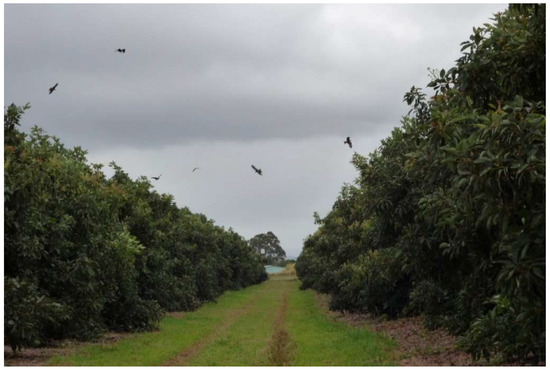
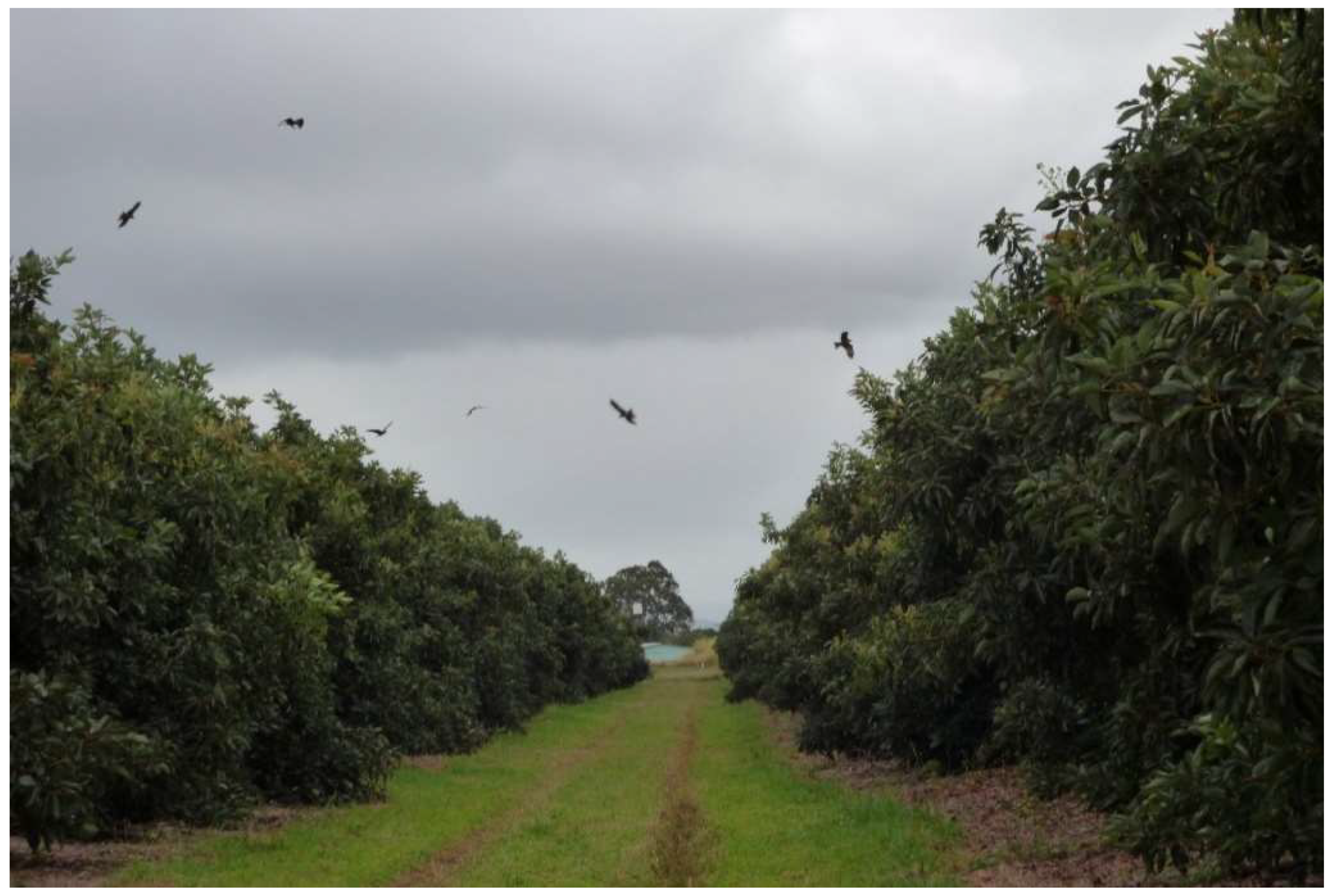
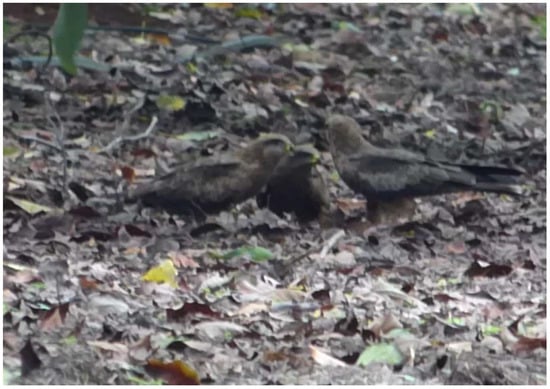
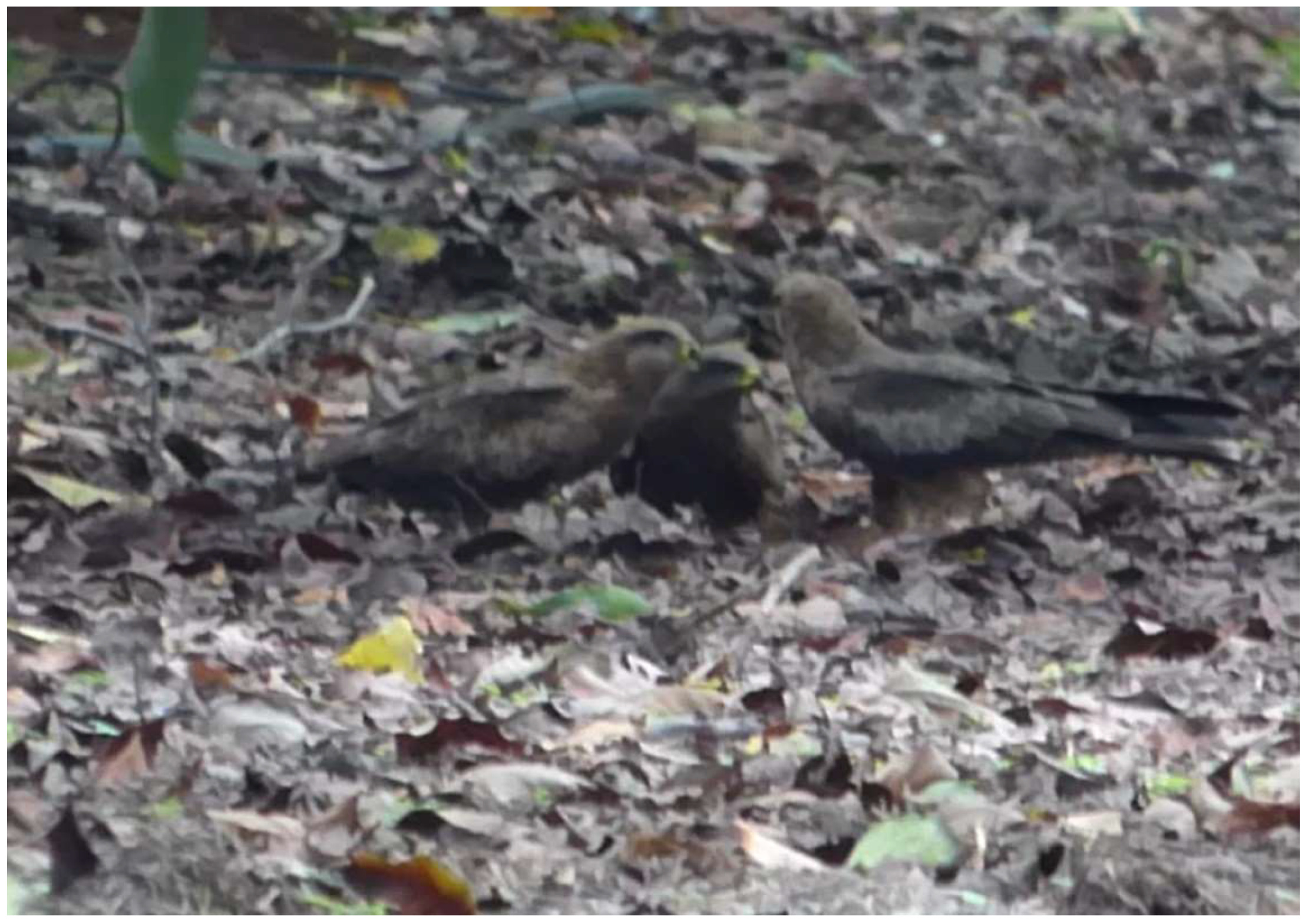
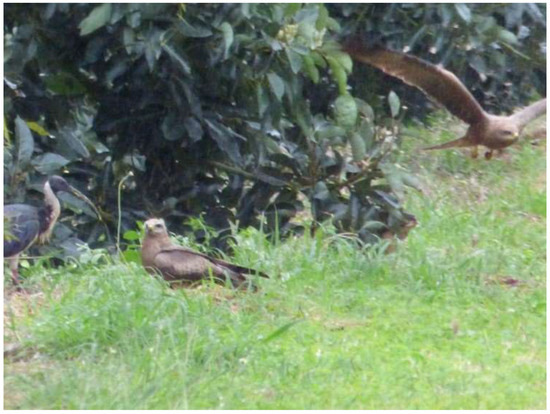
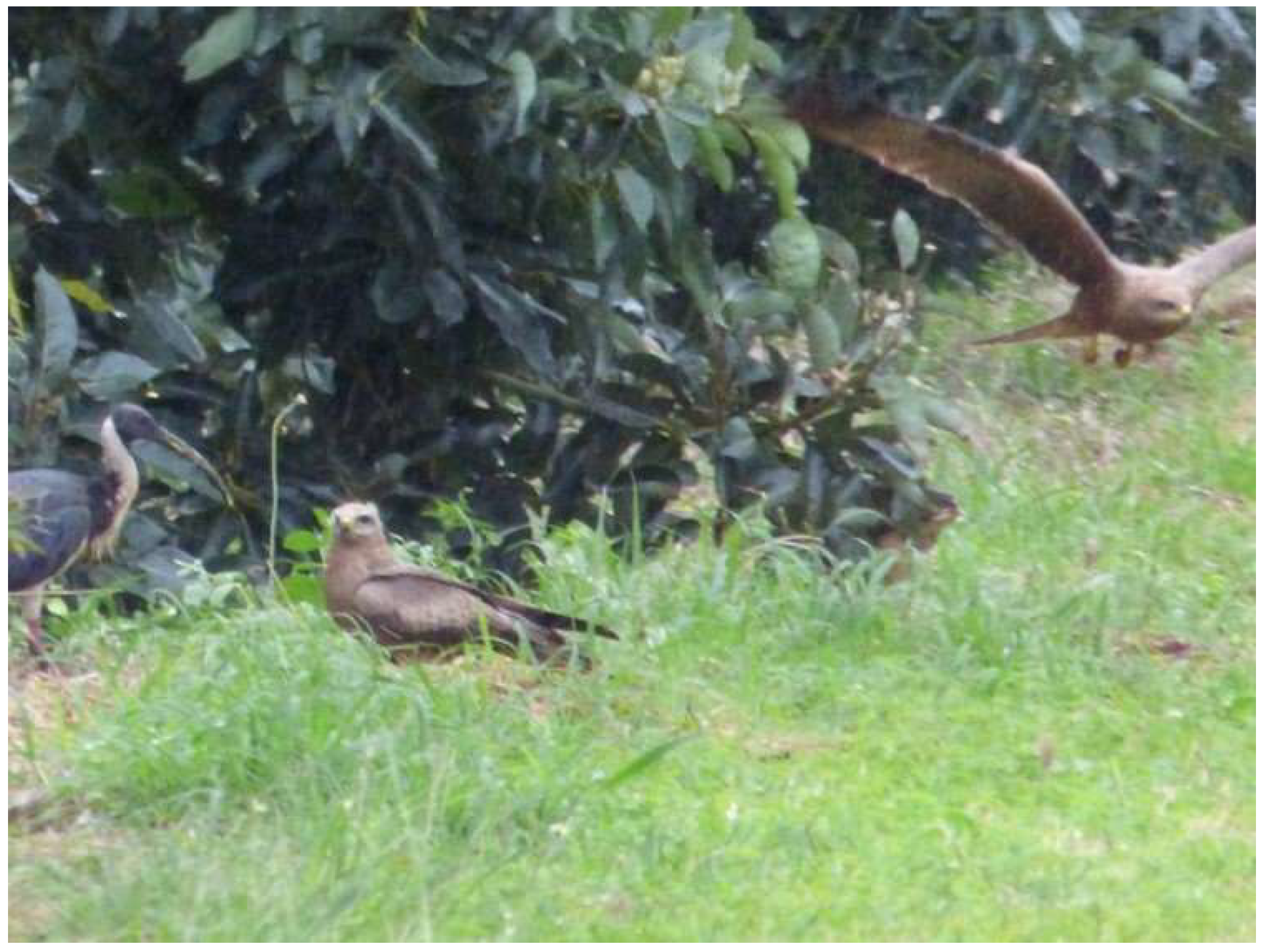
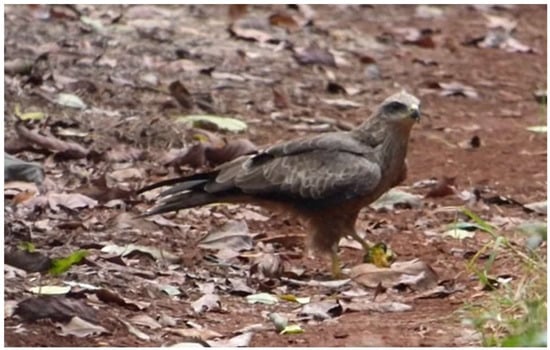
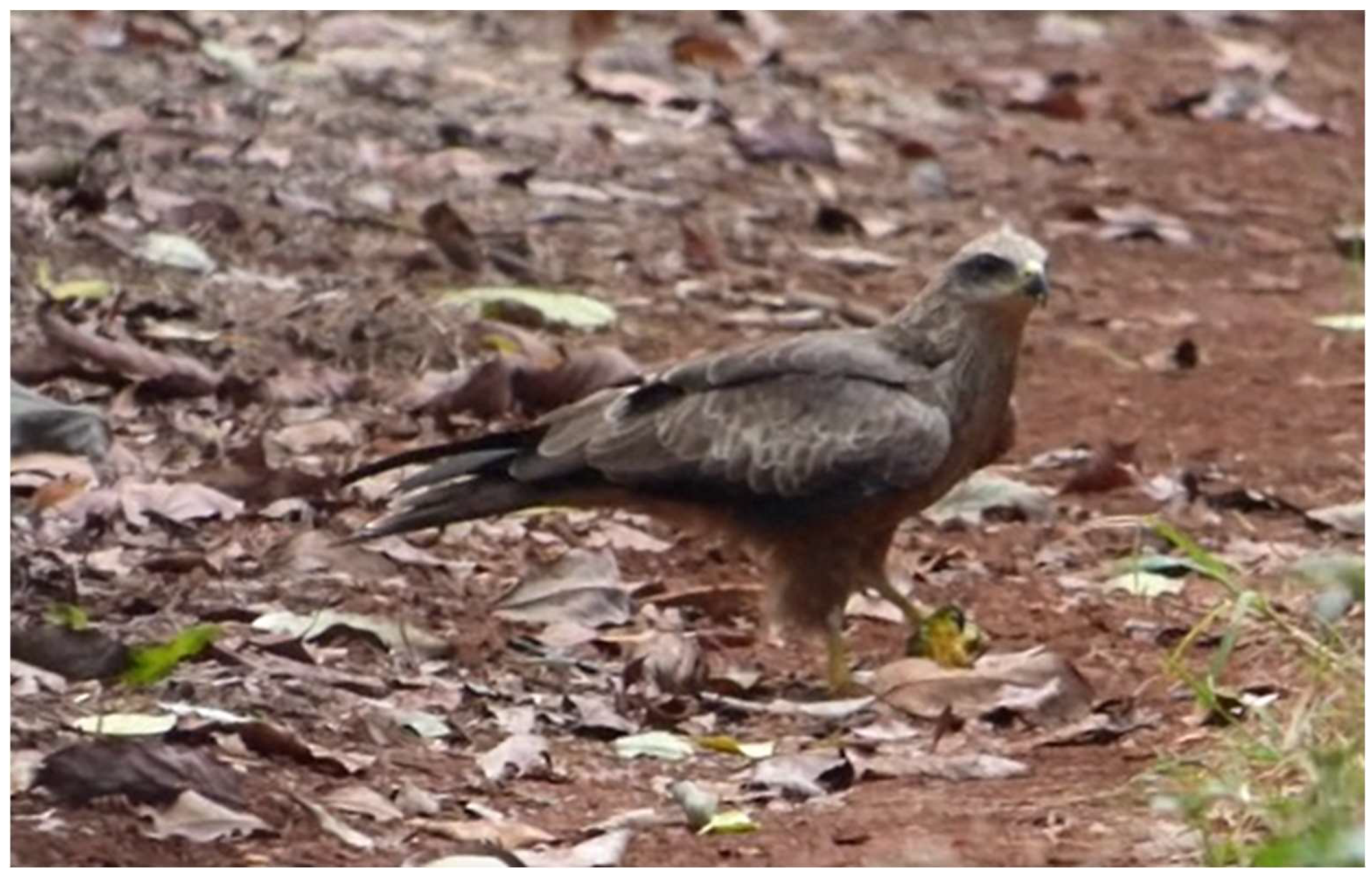
Between 2012 and 2018, there was a rapid expansion of avocado plantings on the Atherton Tablelands (e.g., [19]), with more and larger (20–500 ha) orchards. However, due to the newer practice of hedging the trees and topping, where all the fruit are easily picked via ‘cherry-pickers’ (aerial work platforms), there was fewer leftover fruit on the ground, and Black Kites seemed to be not as plentiful as they were in the past (or were more dispersed). Nonetheless, in May 2018 at an orchard in Mareeba, JL noted approximately 100 Black Kites (in previous years there would have been 400–500) (Figure 1). In these observations, competition between Straw-necked Ibis (Threskiornis spinicollis) and Black Kites for fallen fruit was observed (i.e., Ibis chasing Kites away; Figure 2 and Figure 3; Supplementary video S1), as was a Black Kite carrying fallen fruit in its talons (Figure 4; Supplementary video S2). At the edge of the same orchard was a tip from the packing shed on the farm. The fruit at the tip were ‘Hass’ variety of avocado, which turn a dark colour as they ripen. Black Kites seemed uninterested in these and instead searched the orchard for ‘Shepard’ variety fruits—‘Shepard’ fruits are green when they ripen, and have a slightly thinner skin. A single Whistling Kite was also observed foraging on avocado fruits with Black Kites at this orchard.
Figure 1.
Black Kites circling avocado orchards, Mareeba, Queensland, Australia. Photo: Jack Leighton.
Figure 2.
Three Black Kites consuming avocado flesh, Mareeba, Queensland, Australia. Photo: Jack Leighton.
Figure 3.
Straw-necked Ibis competing with Black Kites for fallen avocado fruits, Mareeba, Queensland, Australia (see also Supplementary video S1). Photo: Jack Leighton.
Figure 4.
Black Kite with partially consumed avocado fruit held by left foot before flying off with the fruit, Mareeba, Queensland, Australia (see also Supplementary video S2). Photo: Jack Leighton.
We did not record quantitative data on fruit biomass ingested per unit of time, nor the relative intake of fruit compared to other prey types. JL has not observed Black or Whistling Kites breeding on the Atherton Tablelands. Their breeding usually occurs west of the Great Dividing Range when the seasons are good (i.e., rodent or locust plagues) and move to the east as their breeding grounds dry out (JL pers. obs.), although movement patterns of Black Kites in Australia are not well known [9]. Most birds observed feeding on avocados were adults.
Avocado growers do not seem to have a concern with this scavenging behaviour, as the decaying fruit would otherwise harbour fungi. In nineteen years since the initial observations, no Black Kites have been observed picking or consuming fruit directly from the trees.
2.2. Literature Review
We reviewed major Australian and international handbooks, conducted literature searches using Google, Google Scholar and Scopus (with search terms which included the words “raptors” or “birds of prey”, with “frugivory” or “fruit” or “frugivorous”) and reviewed individual raptor species profiles in online databases such as Birds of the World (https://birdsoftheworld.org/, accessed on March–July 2021) in March–July 2021 for instances of frugivory in raptors. Searches were conducted in English, but non-English language sources were interrogated if they turned up in searches. Where relevant sources were found we interrogated the references in those sources and searched for other papers that may have cited those sources. All material that had original details of frugivory in raptors were included (books, book chapters, peer-reviewed journal articles, non-peer-reviewed articles, theses, websites, databases).
3. Results of Literature Review and Discussion
The Whistling Kite takes a variety of small animals (but particularly introduced European Rabbits Oryctolagus cuniculus and European Hares Lepus europaeus occidentalis) and carrion (especially in winter, the non-breeding season), including mammals, birds, reptiles, fish, crustaceans, insects, large carcasses, and offal [9]. In Australia, the Black Kite is a scavenger, taking carrion, offal and garbage, but also taking small mammals, small birds, reptiles, frogs, grasshoppers and fish [9]. It can exploit plagues of mammals (e.g., European Rabbits, House Mouse (Mus musculus) and Long-haired Rats) and locusts and grasshoppers [9].
The observations of Black Kites and Whistling Kites consuming avocado fruit over multiple years appear to be the first instances of frugivory by wild raptors in Australia. This represents the first instance of frugivory for the Whistling Kite, an endemic species to Australia, New Guinea, the Solomons and New Caledonia [9]. For the Black Kite, a raptor with a range from Africa, Europe, Asia and Australia, there are few other records of frugivory, none from the Australasian subspecies M. m. affinis and none of consumption of avocado. Those records include Thiollay [3] (p. 67), who stated that breeding Black Kites in the savannas of central Ivory Coast in Africa included a high proportion of oil palm Elaeis guineensis fruits in its diet and “even brought them in large numbers to their nest to feed the young, a remarkable practice, given that it would seem energetically unprofitable to carry in such largely indigestible fruits, one by one”. Cramp and Simmons [20] noted the only plant food recorded for Black Kites was the pericarp of oil palm nuts, while no records of fruit consumption by this species have been recorded in Asia [21,22] nor Australia [9].
In a review of frugivory by vertebrates in the adjoining Oriental (Indomalayan) Region, Corlett ([21], p. 430), suggested “hawks and their relatives generally feed on vertebrates and large insects, but there are reliable records of the consumption of small fruits by the Pacific Baza, Aviceda subcristata (Bell 1984 [23], Debus 1994 [24]), and Roberts (1991) [25] states that ‘other authors’ (not named) have recorded frugivory by the Oriental Honey-buzzard, Pernis ptilorhynchus”. Despite the breeding range for Pacific Baza extending from Australia, Indonesia, Papua New Guinea, and Solomon Islands, it appears all records of frugivory are from New Guinea (Table 1).
Major monographs on raptors or birds more generally and three previous reviews on frugivory in raptors (or specific families of raptors) identified different numbers and species (Table 1). Brown and Amadon [26] and Ferguson-Lees and Christie [2] in their reviews of raptors of the world identified fruit consumption by 13 and 18 species of raptors, respectively, but while they provided a list of references for each species, did not cite the original sources of frugivory. Galetti and Guimarães [5] in describing seed dispersal by Crested Caracaras (Caracara plancus) identified 13 raptor species that consumed fruit, largely drawn from the 1995 Handbook of the Birds of the World ([27]; and chapters within, i.e., [1,3,4]) as well as source material used in that Handbook and subsequent records until 2004, but did not cite Ferguson-Lees and Christie [2]. Shlee [6], in documenting the first instance of the King Vulture (Sarcoramphus papa) consuming fruit (moriche palm Mauritia flexuosa), identified eight raptor species that consumed fruit, but did not cite del Hoyo et al. [27], Ferguson-Lees and Christie [2], or Galetti and Guimarães [5]. Pérez-Méndez and Rodríguez ([14], p. 141), in their review of raptors as seed dispersers, suggested “Sixteen of the 312 raptors considered by Ferguson-Lees and Christie [2] consume deliberately fruits at least occasionally”, listing those identified by Ferguson-Lees and Christie [2] (although they seem to have missed the Long-crested Eagle (Lophaetus occipitalis) and Great Black Hawk (Buteogallus urubitinga), which were both identified by Ferguson-Lees and Christie [2]), but they list 20 in total from that source, Galetti and Guimarães [5] and others. The online Birds of the World database, which was largely drawn from Handbook of the Birds of the World entries ([1,3,4], and individual species accounts within, plus additional information since 1994), as well as from Ferguson-Lees and Christie [2], documented 25 species as consuming fruit as of July 2021, but did not include records of the Oriental Honey-buzzard, Great Black Hawk and Plumbeous Kite (Ictinia plumbea) (Table 1). Based on these reviews, plus the addition of the Whistling Kite from the observations described in this paper, there are 29 species that have been known to consume fruit or other vegetable matter globally (Table 1). In addition, Ospreys (Pandion haliaetus) have been observed deliberately ingesting green algae (Rhizoclonium sp., belonging to the family Cladophoraceae) and slime near the banks of an agricultural water reservoir at Tenerife, Canary Islands [28].
The majority of the raptor species recorded consuming fruit, and also the most frequently consumed fruits, are rich in lipids (genera Elaeis, Raphia, Cocos, Spondias, etc.) [14]. Galetti and Guimarães [5] suggest that lipid-rich fruits could be used by generalist or insect-specialized raptors because they are chemically analogous to animal prey and may satisfy the raptor’s lipid needs. Likewise, Shlee [6], in observing King Vultures consuming fruits of moriche palms Mauritia flexuosa in Venezuela, suggested the fat content of that fruit may partially compensate for a lack of carrion.
Avocado fruits also have a high lipid content [29], which increase as they ripen [30]. Besides the observation of the Black Kite and Whistling Kite in this paper, the Black Vulture (Coragyps atratus) is the only other raptor species known to consume avocados (Table 1). Röhl [31] found that American Black Vultures feed on avocado when carrion is scarce.
The year 2002 was a bad drought year in North Queensland [32], and there were noticeably lower numbers of grasshoppers and locusts, which would be an important food source for Black Kites and Whistling Kites, other than mice and native rats (JL pers. obs.), and so may also have been a driver for avocado fruit consumption by these species. Similar to our observations on the Atherton Tableland, Woods [33] (p. 237) suggested many (non-raptor) bird species “are fond of ripe, soft avocados” in California, USA, and suggested that as the fruits are picked when hard, there is little conflict. The ripe (and thus soft) nature of the avocado fruit consumed by Black and Whistling Kites outlined in our observations also corresponds with frugivorous behaviour of other raptors, e.g., “rotting coconuts” [34], “rotten pumpkins” [35] and “rotting apples” [2].
However, at least nine raptor species consumed berries, figs and apples (including some species that have only been recorded consuming these), which would have lower lipid content than the fruits described above. The review by Shanahan et al. [36] of fig-eating vertebrate fauna did not include any raptors, despite three species being identified in our review.
Further research of kites in North Queensland and indeed other instances of frugivory in raptors could focus on (1) quantitative data on fruit biomass ingested per unit of time, (2) the relative intake, measured either as the percentage of successful feeding attempts or the relative daily fruit intake, and (3) the annual variability of fruit availability during the multiple years.
Table 1.
Comparisons of lists of raptors consuming fruits or other vegetable matter from major handbooks or reviews, as well as other records not listed in those sources, and observations from this paper.
4. Conclusions
Here, we document the first instances of frugivory by wild raptors in Australia, including the first instance frugivory for the Whistling Kite and the first instance of the Black Kite consuming avocados. Considering the lack of records in Australia, it is likely that the frugivory for both species is opportunistic, exploiting locally abundant fruit when other resources are scarce. Nonetheless, observations of Black Kites feeding on fallen avocado fruits over a period of almost 20 years suggests a more regular consumption, in North Queensland at least. In addition, we found 29 species of diurnal raptors documented in the literature (and our observations) to have consumed fruit, up from the 13 in the review by Galetti and Guimarães [5] and 18 by Ferguson-Lees and Christie [2]. The findings here support the statement by Galetti and Guimarães [5] (p. 134) that “Based on the scarcity of natural history data for several forest-dwelling species, it is possible that more species of kites and hawks eventually consume fruits, acting as non-specialized frugivores”. However, we suggest it is likely that more raptor species than those that are forest-dwelling are likely to consume fruit. The episodic nature of the activity for most species may contribute to scarcity of records. Further observations of frugivory by raptors should be documented in order to better understand the frequency of the behaviour.
Supplementary Materials
The following are available online at https://www.mdpi.com/article/10.3390/birds2040025/s1, Video S1: Black Kites consuming fallen avocado fruit and competition from Straw-necked Ibis, Mareeba, Queensland, Australia (Video: Jack Leighton); Video S2: Black Kite consuming avocado fruit and flying off with the fruit, Mareeba, Queensland, Australia (Video: Jack Leighton).
Author Contributions
Conceptualization, J.A.F. and J.L.; methodology, J.A.F. and J.L.; writing—original draft preparation, J.A.F. and J.L.; writing—review and editing, J.A.F. and J.L. All authors have read and agreed to the published version of the manuscript.
Funding
This research received no external funding.
Institutional Review Board Statement
The study was conducted according to the guidelines of the Declaration of Helsinki.
Informed Consent Statement
Not applicable.
Data Availability Statement
The new data were created in this study are available on request.
Acknowledgments
We thank Del Richards for connecting the authors to document these observations and place them in a broader ornithological context. Three reviewers and editor Jukka Jokimäki provided constructive comments that improved this paper.
Conflicts of Interest
The authors declare no conflict of interest.
References
- White, C.; Olsen, P.; Kiff, L. Family Falconidae (Falcons and Caracaras). In Handbook of the Birds of the World: New World Vultures to Guineafowl; del Hoyo, J., Elliott, A., Sargatal, J., Eds.; Lynx Edicions: Barcelona, Spain, 1994; Volume 2, pp. 216–247. [Google Scholar]
- Ferguson-Lees, J.; Christie, D.A. Raptors of the Word; Christopher Helm: London, UK, 2001. [Google Scholar]
- Thiollay, J.M. Family Accipitridae (Hawks and Eagles). In Handbook of the Birds of the World: New World Vultures to Guineafowl; del Hoyo, J., Elliott, A., Sargatal, J., Eds.; Lynx Edicions: Barcelona, Spain, 1994; Volume 2, pp. 52–105. [Google Scholar]
- Houston, D.C. Family Cathartidae (New World vultures). In Handbook of the Birds of the World: New World Vultures to Guineafowl; del Hoyo, J., Elliott, A., Sargatal, J., Eds.; Lynx Edicions: Barcelona, Spain, 1994; Volume 2, pp. 24–41. [Google Scholar]
- Galetti, M.; Guimarães, P.R., Jr. Seed dispersal of Attalea phalerata (Palmae) by crested caracaras (Caracara plancus) in the Pantanal and a review of frugivory by raptors. Ararajuba 2004, 12, 133–135. [Google Scholar]
- Schlee, M.A. King Vultures (Sarcoramphus papa) forage in moriche and cucurite palm stands. J. Raptor Res. 2005, 39, 458–461. [Google Scholar]
- Carneiro, C.; Henriques, M.; Barbosa, C.; Tchantchalam, Q.; Regalla, A.; Patrício, A.R.; Catry, P. Ecology and behaviour of Palm-nut Vultures Gypohierax angolensis in the Bijagós Archipelago, Guinea-Bissau. Ostrich 2017, 88, 113–121. [Google Scholar] [CrossRef] [Scilit]
- Kissling, W.D.; Böhning–Gaese, K.; Jetz, W. The global distribution of frugivory in birds. Global Ecol. Biogeogr. 2009, 18, 150–162. [Google Scholar] [CrossRef] [Scilit]
- Marchant, S.; Higgins, P.J. (Eds.) Handbook of Australian, New Zealand and Antarctic Bird: Raptors to Lapwings; Oxford University Press: Melbourne, VIC, Australia, 1993; Volume 2. [Google Scholar]
- Olsen, P. Australian Birds of Prey: The Biology and Ecology of Raptors; UNSW Press: Sydney, NSW, Australia, 1995. [Google Scholar]
- Hollands, D. Eagles, Hawks and Falcons of Australia; Bloomings Books: Melbourne, VIC, Australia, 2003. [Google Scholar]
- Garnett, S.; Duursma, D.; Ehmke, G.; Guay, P.-J.; Stewart, A.; Szabo, J.K.; Weston, M.A.; Bennett, S.; Crowley, G.M.; Drynan, D.; et al. Biological, ecological, conservation and legal information for all species and subspecies of Australian bird. Sci. Data 2015, 2, 150061. [Google Scholar] [CrossRef] [Scilit] [PubMed]
- Debus, S. Birds of Prey of Australia: A Field Guide; CSIRO Publishing: Melbourne, VIC, Australia, 2019. [Google Scholar]
- Pérez-Méndez, N.; Rodríguez, A. Raptors as seed dispersers. In Birds of Prey: Biology and Conservation in the XXI Century; Sarasola, J.H., Grande, J.M., Negro, J.J., Eds.; Springer: New York, NY, USA, 2018; pp. 139–158. [Google Scholar]
- Jordano, P. Fruits and frugivory. In Seeds: The Ecology of Regeneration in Plant Communities, 2nd ed.; Fenner, M., Ed.; CABI Publishing: Wallingford, UK, 2000; pp. 125–166. [Google Scholar]
- Arthur, C. Ravenous Rats Pester Outback Campers. ABC News. 25 August 2011. Available online: https://www.abc.net.au/news/2011-08-25/outback-campers-flee-ravenous-rats/2855154 (accessed on 13 May 2021).
- Ey, A. Notes on Letter-winged Kites breeding in western Queensland, 1972–1983. Aust. Bird Watch. 1984, 10, 243–247. [Google Scholar]
- Cupper, J.; Cupper, L. Hawks in Focus: A Study of Australia’s Birds of Prey; Jaclin Enterprises: Mildura, VIC, Australia, 1981. [Google Scholar]
- Thomas, R. Horticulture Booming in the Region. The Express. 16 December 2019. Available online: https://www.theexpressnewspaper.com.au/latest-news/horticulture-booming-in-the-region (accessed on 14 August 2021).
- Cramp, S.; Simmons, K.E.L. Handbook of the Birds of Europe, the Middle East and North Africa. Hawks and Bustards; Oxford University Press: Oxford, UK, 1980; Volume 2. [Google Scholar]
- Corlett, R.T. Frugivory and seed dispersal by vertebrates in the Oriental (Indomalayan) Region. Biol. Rev. 1998, 73, 413–448. [Google Scholar] [CrossRef] [Scilit]
- Corlett, R.T. Frugivory and seed dispersal by vertebrates in tropical and subtropical Asia: An update. Global Ecol. Conserv. 2017, 11, 1–22. [Google Scholar] [CrossRef] [Scilit]
- Bell, H.L. New or confirmatory information on some species of New Guinean birds. Aust. Bird Watch. 1984, 10, 209–228. [Google Scholar]
- Debus, S.J.S. Pacific Baza, Aviceda subcristata. In Handbook of the Birds of the World: New World Vultures to Guineafowl; del Hoyo, J., Elliott, A., Sargatal, J., Eds.; Lynx Edicions: Barcelona, Spain, 1994; Volume 2, pp. 107–108. [Google Scholar]
- Roberts, T.J. The Birds of Pakistan; Oxford University Press: Karachi, Pakistan, 1991; Volume 1. [Google Scholar]
- Brown, L.H.; Amadon, D. Eagles, Hawks and Falcons of the World; Country Life Books: London, UK, 1968. [Google Scholar]
- del Hoyo, J.; Elliott, A.; Sargatal, J.; Cabot, J. (Eds.) Handbook of the Birds of the World: New World Vultures to Guineafowl; Lynx Edicions: Barcelona, Spain, 1992; Volume 2. [Google Scholar]
- Siverio, F.; Siverio, M.; Hernández, J.J. Slime and algae ingestion by Ospreys. Br. Birds 2008, 102, 36. [Google Scholar]
- Bora, P.S.; Narain, N.; Rocha, R.V.; Paulo, M.Q. Characterization of the oils from the pulp and seeds of avocado (Cultivar: Fuerte) fruits. Grasas Aceites 2001, 52, 171–174. [Google Scholar]
- Kilaru, A.; Cao, X.; Dabbs, P.B.; Sung, H.J.; Rahman, M.M.; Thrower, N.; Zynda, G.; Podicheti, R.; Ibarra-Laclette, E.; Herrera-Estrella, L.; et al. Oil biosynthesis in a basal angiosperm: Transcriptome analysis of Persea Americana mesocarp. BMC Plant Biol. 2015, 15, 203. [Google Scholar] [CrossRef] [Scilit]
- Röhl, E. Fauna descriptiva de Venezuela. Bol. Acad. Cienc. Fis. Mat. Nat. 1949, 12, 1–495. [Google Scholar]
- Bureau of Meteorology. Previous Droughts. Available online: http://www.bom.gov.au/climate/drought/knowledge-centre/previous-droughts.shtml (accessed on 14 August 2021).
- Woods, R.S. Acquired food habits of some native birds. Condor 1932, 34, 237–240. [Google Scholar] [CrossRef] [Scilit]
- Crafts, R.C., Jr. Turkey vultures found to feed on coconut. Wilson Bull. 1968, 80, 327–328. [Google Scholar]
- Green, J. Turkey buzzards eat pumpkins. Bird-Lore 1927, 29, 117–118. [Google Scholar]
- Shanahan, M.; So, S.; Compton, S.G.; Corlett, R.T. Fig-eating by vertebrate frugivores: A global review. Biol. Rev. 2001, 76, 529–572. [Google Scholar] [CrossRef] [Scilit]
- Holste, M.; Ruth, J.M.; Eitniear, J.C. King Vulture (Sarcoramphus papa), version 1.0. In Birds of the World; Schulenberg, T.S., Ed.; Cornell Lab of Ornithology: Ithaca, NY, USA, 2020. [Google Scholar] [CrossRef] [Scilit]
- Buskirk, W.; Lechner, M. Frugivory by Swallow-tailed Kites in Costa Rica. Auk 1978, 95, 767–768. [Google Scholar]
- Haverschmidt, F. The Black Vulture and the Caracara as vegetarians. Condor 1947, 49, 210. [Google Scholar]
- Pinto, O. Dos frutos Dos frutos da palmeira Elaeis guineensis na dieta de Cathartes aura ruficollis. Hornero 1965, 10, 276–277. [Google Scholar]
- Elias, J.; Valencia, D. Unusual feeding behavior by a population of Black Vultures. Wilson Bull. 1982, 94, 214. [Google Scholar]
- McIlhenny, E.A. An unusual feeding habit of the Black Vulture. Auk 1945, 62, 136–137. [Google Scholar] [CrossRef] [Scilit]
- The Peregrine Fund. Welcome to the Global Raptor Information Network. 2017. Available online: https://globalraptors.org/grin/indexAlt-ORIGINAL.asp (accessed on 1 June 2021).
- Buckley, N.J. Food finding and the influence of information, local enhancement, and communal roosting on foraging success of North American vultures. Auk 1996, 113, 473–488. [Google Scholar] [CrossRef] [Scilit]
- Buckley, N.J. Black Vulture (Coragyps atratus), version 1.0. In Birds of the World; Poole, A.F., Gill, F.B., Eds.; Cornell Lab of Ornithology: Ithaca, NY, USA, 2020. [Google Scholar] [CrossRef] [Scilit]
- Bildstein, K.L. Raptors: The Curious Nature of Diurnal Birds of Prey; Cornell University Press: New York, NY, USA, 2017. [Google Scholar]
- Hiraldo, F.; Delibes, M.; Donazar, J.A. Comparison of diets of turkey vultures in 3 regions of northern Mexico. J. Field Ornithol. 1991, 62, 319–324. [Google Scholar]
- Sick, H. Ornitologia Brasileira; Nova Fronteira: Rio de Janeiro, Brazil, 1997. [Google Scholar]
- Davis, D. Maintenance and social behavior of roosting Turkey Vultures. In Vulture Biology and Management; Wilbur, S.R., Jackson, J.A., Eds.; University of California Press: Berkeley, CA, USA, 1983; pp. 322–329. [Google Scholar]
- Wetmore, A. The Birds of the Republic of Panama. Part 1. Tinamidae (tinamous) to Rynchopidae (skimmers); Smithsonian Miscellaneous Collections 150; Smithsonian Institution: Baltimore, MD, USA, 1965. [Google Scholar]
- Paterson, R.L. High incidence of plant material and small mammals in the autumn diet of Turkey Vultures in Virginia. Wilson Bull. 1984, 96, 467–469. [Google Scholar]
- Kirk, D.A.; Mossman, M.J. Turkey Vulture (Cathartes aura), version 1.0. In Birds of the World; Poole, A.F., Gill, F.B., Eds.; Cornell Lab of Ornithology: Ithaca, NY, USA, 2020. [Google Scholar] [CrossRef] [Scilit]
- Brown, L.H.; Urban, E.K.; Newman, K. The Birds of Africa; Academic Press: London, UK, 1982. [Google Scholar]
- Thiollay, J.-M. Les rapaces d’une zone de contact savane-forêt en Côted’Ivoire: Spécialisations alimentaires. Alauda 1978, 46, 147–170. [Google Scholar]
- Kemp, A.C.; Marks, J.S. African Harrier-Hawk (Polyboroides typus), version 1.0. In Birds of the World; del Hoyo, J., Elliott, A., Sargatal, J., Christie, D.A., de Juana, E., Eds.; Cornell Lab of Ornithology: Ithaca, NY, USA, 2020. [Google Scholar] [CrossRef] [Scilit]
- Safford, R.J.; Hawkins, A.F.A. (Eds.) The Birds of Africa. The Malagasy Region; Christopher Helm: London, UK, 2013; Volume 8. [Google Scholar]
- Kemp, A.C.; Kirwan, G.M. Madagascar Harrier-Hawk (Polyboroides radiatus), version 1.0. In Birds of the World; del Hoyo, J., Elliott, A., Sargatal, J., Christie, D.A., de Juana, E., Eds.; Cornell Lab of Ornithology: Ithaca, NY, USA, 2020. [Google Scholar] [CrossRef] [Scilit]
- Dowsett-Lemaire, F.; Dowsett, R.J. The Birds of Malawi: An Atlas and Handbook; Tauraco Press & Aves: Liège, Belgium, 2006. [Google Scholar]
- Kemp, A.C.; Kirwan, G.M. Palm-nut Vulture (Gypohierax angolensis), version 1.0. In Birds of the World; del Hoyo, J., Elliott, A., Sargatal, J., Christie, D.A., de Juana, E., Eds.; Cornell Lab of Ornithology: Ithaca, NY, USA, 2020. [Google Scholar] [CrossRef] [Scilit]
- Orta, J.; Kirwan, G.M.; Christie, D.A.; Garcia, E.F.J.; Marks, J.S. Egyptian Vulture (Neophron percnopterus), version 1.0. In Birds of the World; del Hoyo, J., Elliott, A., Sargatal, J., Christie, D.A., de Juana, E., Eds.; Cornell Lab of Ornithology: Ithaca, NY, USA, 2020. [Google Scholar] [CrossRef] [Scilit]
- Orta, J.; Kirwan, G.M.; Garcia, E.F.J. European Honey-buzzard (Pernis apivorus), version 1.0. In Birds of the World; del Hoyo, J., Elliott, A., Sargatal, J., Christie, D.A., de Juana, E., Eds.; Cornell Lab of Ornithology: Ithaca, NY, USA, 2020. [Google Scholar] [CrossRef] [Scilit]
- Lemke, T.O. Fruit-eating behavior of swallow-tailed kites (Elanoides forficatus) in Colombia. Condor 1979, 81, 207–208. [Google Scholar] [CrossRef] [Scilit]
- Chaves, L. Nuevos datos sobre canto, forrejeos y dieta de cuatro especies de aves en Costa Rica. Zeledonia 2000, 4, 8–14. [Google Scholar]
- Gerhardt, R.P.; Gerhardt, D.M.; Vasquez, M.A. Food delivered to nests of Swallow-tailed Kites in Tikal National Park, Guatemala. Condor 2004, 106, 177–181. [Google Scholar] [CrossRef]
- Meyer, K.D.; McGehee, S.M.; Collopy, M.W. Food deliveries at Swallow-tailed Kite nests in southern Florida. Condor 2004, 106, 171–176. [Google Scholar] [CrossRef]
- Gerhardt, R.P.; Vasquez, M.A.; Gerhardt, D.M. Breeding biology, food habits, and siblicide of Swallow-tailed Kites. In Progress Report IV, 1991: Maya Project: Use of Raptors and Other Fauna as Environmental Indicators for Design and Management of Protected Areas and for Building Local Capacity for Conservation in Latin America; Whitacre, D.F., Burnham, W.A., Jenny, J.P., Eds.; The Peregrine Fund: Boise, ID, USA, 1991; pp. 65–71. [Google Scholar]
- Meyer, K.D. Swallow-tailed Kite (Elanoides forficatus), version 1.0. In Birds of the World; Poole, A.F., Gill, F.B., Eds.; Cornell Lab of Ornithology: Ithaca, NY, USA, 2020. [Google Scholar] [CrossRef] [Scilit]
- Debus, S.; Kirwan, G.M. Pacific Baza (Aviceda subcristata), version 1.0. In Birds of the World; del Hoyo, J., Elliott, A., Sargatal, J., Christie, D.A., de Juana, E., Eds.; Cornell Lab of Ornithology: Ithaca, NY, USA, 2020. [Google Scholar] [CrossRef] [Scilit]
- Fleay, D. Looking at Animals; Boolarong Publications: Brisbane, QLD, Australia, 1981. [Google Scholar]
- Gilliard, E.T.; LeCroy, M. Results of the 1958–1959 Gilliard New Britain Expedition. 4. Annotated list of birds of the Whiteman Mountains, New Britain. Bull. Am. Mus. Natur. Hist. 1967, 135, 175–216. [Google Scholar]
- Pratt, T.K.; Beehler, B.M. Birds of New Guinea, 2nd ed.; Princeton University Press: Princeton, NJ, USA, 2014. [Google Scholar]
- Wells, D.R. The Birds of the Thai-Malay Peninsula. Non-Passerines; Academic Press: London, UK, 1999; Volume 1. [Google Scholar]
- Clark, W.S.; Kirwan, G.M. Black Baza (Aviceda leuphotes), version 1.0. In Birds of the World; del Hoyo, J., Elliott, A., Sargatal, J., Christie, D.A., de Juana, E., Eds.; Cornell Lab of Ornithology: Ithaca, NY, USA, 2020. [Google Scholar] [CrossRef] [Scilit]
- Barlow, C.R. The utilization of oil-palm kernel by Necrosyrtes monachus in The Gambia. Vulture News 2004, 51, 60–62. [Google Scholar]
- Kemp, A.C.; Christie, D.A.; Marks, J.S.; Sharpe, C.J. Hooded Vulture (Necrosyrtes monachus), version 1.0. In Birds of the World; del Hoyo, J., Elliott, A., Sargatal, J., Christie, D.A., de Juana, E., Eds.; Cornell Lab of Ornithology: Ithaca, NY, USA, 2020. [Google Scholar] [CrossRef] [Scilit]
- Kemp, A.C.; Boesman, P.F.D.; Marks, J.S. Long-crested Eagle (Lophaetus occipitalis), version 1.1. In Birds of the World; Rodewald, P.G., Billerman, S.M., Eds.; Cornell Lab of Ornithology: Ithaca, NY, USA, 2020. [Google Scholar] [CrossRef] [Scilit]
- Jacomassa, F.A.F. Observations of a nest of the Plumbeous Kite, Ictinia plumbea (Gmelin, 1788) (Falconiformes: Accipitridae) in southern Brazil. Biotemas 2011, 24, 77–82. [Google Scholar]
- David, T.S.; Orta, J.; Marks, J.S.; Garcia, E.F.J.; Kirwan, G.M. Black Kite (Milvus migrans), version 1.1. In Birds of the World; Billerman, S.M., Ed.; Cornell Lab of Ornithology: Ithaca, NY, USA, 2021. [Google Scholar] [CrossRef] [Scilit]
- Tyler, M.T. Common Buzzard feeding on apple. Brit. Birds 2000, 93, 90. [Google Scholar]
- Orta, J.; Boesman, P.F.D.; Marks, J.S.; Garcia, E.F.J. Common Buzzard (Buteo buteo), version 1.0. In Birds of the World; Billerman, S.M., Keeney, B.K., Rodewald, P.G., Schulenberg, T.S., Eds.; Cornell Lab of Ornithology: Ithaca, NY, USA, 2020. [Google Scholar] [CrossRef] [Scilit]
- Thorstrom, R. Fruit-eating behavior of a Barred Forest-Falcon. J. Raptor Res. 1996, 30, 44. [Google Scholar]
- Whittaker, A. A new species of forest-falcon (Falconidae: Micrastur) from southeastern Amazonia and the Atlantic rainforests of Brazil. Wilson Bull. 2002, 114, 421–445. [Google Scholar] [CrossRef] [Scilit]
- Bierregaard, R.O.; Kirwan, G.M. Barred Forest-Falcon (Micrastur ruficollis), version 1.0. In Birds of the World; del Hoyo, J., Elliott, A., Sargatal, J., Christie, D.A., de Juana, E., Eds.; Cornell Lab of Ornithology: Ithaca, NY, USA, 2020. [Google Scholar] [CrossRef] [Scilit]
- Schubart, O.; Aguirre, A.C.; Sick, H. Contribuição para o conhecimento da alimentação das aves brasileiras. Arquivos Zool. 1965, 12, 95–249. [Google Scholar]
- Thiollay, J.M. Foraging, home range use and social behavior of a group-living rain-forest raptor, the red-throated caracara Daptrius americanus. Ibis 1991, 133, 382–393. [Google Scholar] [CrossRef] [Scilit]
- Haverschmidt, F. Notes on the feeding habits and food of some hawks in Surinam. Condor 1962, 64, 154–158. [Google Scholar] [CrossRef] [Scilit]
- Bierregaard, R.O.; Kirwan, G.M.; Boesman, P.F.D. Black Caracara (Daptrius ater), version 1.0. In Birds of the World; del Hoyo, J., Elliott, A., Sargatal, J., Christie, D.A., de Juana, E., Eds.; Cornell Lab of Ornithology: Ithaca, NY, USA, 2020. [Google Scholar] [CrossRef] [Scilit]
- Windsor, D. Birds as predators on the brood of Polybia wasps (Hymenoptera: Vespidae: Polistinae) in a Costa Rican deciduous forest. Biotropica 1976, 8, 111–116. [Google Scholar] [CrossRef] [Scilit]
- Davis, C.; McCann, S. Red-throated Caracara (Ibycter americanus), version 1.0. In Birds of the World; Schulenberg, T.S., Ed.; Cornell Lab of Ornithology: Ithaca, NY, USA, 2020. [Google Scholar] [CrossRef] [Scilit]
- Skutch, A.F. The scourge of the wasps. Anim. King. 1959, 62, 8–15. [Google Scholar]
- Bierregaard, R.O.; Boesman, P.F.D.; Marks, J.S. Carunculated Caracara (Phalcoboenus carunculatus), version 1.0. In Birds of the World; del Hoyo, J., Elliott, A., Sargatal, J., Christie, D.A., de Juana, E., Eds.; Cornell Lab of Ornithology: Ithaca, NY, USA, 2020. [Google Scholar] [CrossRef] [Scilit]
- Skoruppa, M.K.; Lee, M.C. Crested Caracaras feed on pecans in south-central Texas. J. Raptor Res. 2008, 42, 299–301. [Google Scholar] [CrossRef] [Scilit]
- Levy, S.H. Status and Distribution of the Crested Caracara in Arizona; Report to Arizona Game and Fish Department; Arizona Game and Fish Department: Phoenix, AZ, USA, 1988. [Google Scholar]
- Morrison, J.L.; Pias, K.E.; Abrams, J.; Gottlieb, I.G.W.; Deyrup, M.; McMillian, M. Invertebrate diet of breeding and nonbreeding Crested Caracaras (Caracara cheriway) in Florida. J. Raptor Res. 2008, 42, 38–47. [Google Scholar] [CrossRef] [Scilit]
- Morrison, J.L.; Dwyer, J.F. Crested Caracara (Caracara plancus), version 1.0. In Birds of the World; Poole, A.F., Ed.; Cornell Lab of Ornithology: Ithaca, NY, USA, 2021. [Google Scholar] [CrossRef] [Scilit]
- Jenness, D. Crested Caracara in Arizona: Background and recent expansion. Arizona Birds 2015, 2015, 1–10. Available online: https://arizonabirds.org/journal/2015/arizona-birds-crested-caracara-expansion.pdf (accessed on 12 July 2021).
- Rojas Carranza, A.H.; Anderson, N.E. First Record of Consumption of Peach Palm Fruits (Bactris gasipaes) by the Crested Caracara (Caracara cheriway) in Costa Rica. Spizaetus Neotropic. Raptor Netw. Newsl. 2019, 28, 2–8. [Google Scholar]
- Villalobos, M.P.; Bagno, M.A. Avian frugivores feeding on Mauritia flexuosa (Arecaceae) fruits in Central Brazil. Rev. Bras. Ornitol. 2012, 20, 26–29. [Google Scholar]
- Paula, W.S.; Souza, R.N.; Santos, E.G. Fruit consumption and seed dispersal of Caryocar brasilense (Caryocaraceae) by Caracara plancus (Falconidae). Braz. J. Biol. 2021, 81, 1127–1128. [Google Scholar] [CrossRef] [Scilit]
- Sazima, I. The jack-of-all-trades raptor: Versatile foraging and wide trophic role of the Southern Caracara (Caracara plancus) in Brazil, with comments on feeding habits of the Caracarini. Rev. Bras. Ornitol. 2007, 15, 592–597. [Google Scholar]
- Jimenez, D. ebird CHECKLIST S65206300. El Paujil Natural Reserve, Santander, Colombia, 23 November 2014. Available online: https://ebird.org/checklist/S65206300 (accessed on 12 July 2021).
- Bierregaard, R.O.; Kirwan, G.M.; Boesman, P.F.D.; Marks, J.S. Yellow-headed Caracara (Milvago chimachima), version 1.0. In Birds of the World; del Hoyo, J., Elliott, A., Sargatal, J., Christie, D.A., de Juana, E., Eds.; Cornell Lab of Ornithology: Ithaca, NY, USA, 2020. [Google Scholar] [CrossRef] [Scilit]
- Tobar, C.; Rau, J.; Santibáñez, A.; Arriagada, A.; Sade, S.; Araneda, R.; Tello, F. Diet of the Chimango Caracara (Milvago chimango) in agroecosystems of Osorno city, southern Chile. Bol. Chileno Orn. 2014, 20, 13–16. [Google Scholar]
- Bierregaard, R.O.; Kirwan, G.M.; Boesman, P.F.D. Chimango Caracara (Milvago chimango), version 1.0. In Birds of the World; del Hoyo, J., Elliott, A., Sargatal, J., Christie, D.A., de Juana, E., Eds.; Cornell Lab of Ornithology: Ithaca, NY, USA, 2020. [Google Scholar] [CrossRef] [Scilit]
- Sclater, P.L.; Hudson, W.H. Argentine Ornithology Volume II (of II): A Descriptive Catalogue of the Birds of the Argentine Republic; R.H. Porter: London, UK, 1889. [Google Scholar]
- Kemp, A.C.; Kirwan, G.M.; Bonan, A. Gray Kestrel (Falco ardosiaceus), version 1.0. In Birds of the World; del Hoyo, J., Elliott, A., Sargatal, J., Christie, D.A., de Juana, E., Eds.; Cornell Lab of Ornithology: Ithaca, NY, USA, 2020. [Google Scholar] [CrossRef] [Scilit]
- Young, L.M.; Bell, R.J.H. Frugivory and primary seed dispersal by a New Zealand falcon (Falco novaeseelandiae) at Red Tarns, Mt Sebastapol, New Zealand. Notornis 2010, 57, 94–95. [Google Scholar]
- Debus, S.; Kirwan, G.M.; Christie, D.A. New Zealand Falcon (Falco novaeseelandiae), version 1.0. In Birds of the World; del Hoyo, J., Elliott, A., Sargatal, J., Christie, D.A., de Juana, E., Eds.; Cornell Lab of Ornithology: Ithaca, NY, USA, 2020. [Google Scholar] [CrossRef] [Scilit]
- Bierregaard, R.O.; Kirwan, G.M. Bat Falcon (Falco rufigularis), version 1.0. In Birds of the World; del Hoyo, J., Elliott, A., Sargatal, J., Christie, D.A., de Juana, E., Eds.; Cornell Lab of Ornithology: Ithaca, NY, USA, 2020. [Google Scholar] [CrossRef] [Scilit]
- Garrigues, R. Bat Falcon adds diversity to diet. Gone Bird. Newsl. 2003, 4. Available online: https://www.angelfire.com/bc/gonebirding/news14.html (accessed on 15 July 2021).
- Elliott, T.F.; Jusino, M.A.; Trappe, J.M.; Lepp, H.; Ballard, G.-A.; Bruhl, J.J.; Vernes, K. A global review of the ecological significance of symbiotic associations between birds and fungi. Fungal Divers. 2019, 98, 161–194. [Google Scholar] [CrossRef] [Scilit]
Publisher’s Note: MDPI stays neutral with regard to jurisdictional claims in published maps and institutional affiliations. |
© 2021 by the authors. Licensee MDPI, Basel, Switzerland. This article is an open access article distributed under the terms and conditions of the Creative Commons Attribution (CC BY) license (https://creativecommons.org/licenses/by/4.0/).