
Case Report

Unilateral to Bilateral Lumbosacral Plexopathy After Radiation Therapy: A Case Report

1
Department of Microbiology and Immunology, University of North Texas Health Science Center, Fort Worth, TX 76107, USA
2
School of Osteopathic Medicine, University of Incarnate Word, San Antonio, TX 78235, USA
3
Department of Radiation Oncology, Texas Oncology, McKinney, TX 75071, USA
4
Department of Medical Education, University of North Texas Health Science Center, Fort Worth, TX 76107, USA
5
Department of Neurosurgery, The Medical City of Frisco, Frisco, TX 76107, USA
*
Author to whom correspondence should be addressed.
Radiation 2025, 5(4), 36; https://doi.org/10.3390/radiation5040036
Submission received: 3 September 2025 / Revised: 20 November 2025 / Accepted: 26 November 2025 / Published: 28 November 2025

Simple Summary

Radiation-induced lumbosacral plexopathy (RILSP) appears to be an underreported phenomenon after pelvic radiation. Knowledge of this case and the workup leading to the diagnosis will inform clinicians on the importance of thorough history and physical examination, as well as how to correlate neurological exam with diagnostic results to appropriately treat patients and avoid unnecessary spinal surgery.

Abstract

Radiation therapy (RT) has been one of the standard treatments for prostate cancer; however, its potential impact on nearby neural structures, such as the lumbosacral plexus (LSP), is often overlooked. The lack of contouring in treatment plans has led to unintended consequences. Radiation-induced lumbosacral plexopathy (RILSP) is a rare but serious complication that presents with progressive lower extremity sensory changes and weakness, mimicking radiculopathy. We report the case of a 66-year-old male who developed bilateral lower extremity neurological deficits post-pelvic radiation for prostate cancer. Radiographically, no compressive lesions were found, and the Electromyography (EMG) revealed involvement of nerves inconsistent with radiculopathy. This led to the diagnosis of RILSP. This case highlights the importance of recognition of RILSP in contrast to radiculopathy in patients with unexplained neurological symptoms after pelvic RT. This highlights the importance of incorporating the LSP as an organ at risk while planning for RT and reviewing retrospectively the dosimetry. It also emphasizes the need for improved contouring of LSP in radiation planning to minimize adverse effects. This sentiment is reflected in the literature, along with the consensus that more research is needed to address the true rate of RILSP.

1. Introduction

When delivering radiation therapy (RT) for prostate cancer, nearby neural structures require careful dosing limitations. Despite the proximal location of the lumbosacral plexus (LSP), it is not routinely designated as an organ at risk (OAR) [1,2]. Considering that dose-volume histogram (DVH) metrics cannot be used to evaluate the dose delivered to the LSP, patients receiving RT may be at risk of unintended side effects, which is particularly concerning given that RT-induced neuropathy is often irreversible [3]. Radiation-induced lumbosacral plexopathy (RILSP) has been long recognized as a crucial diagnostic challenge in oncology. This case report details the development of RILSP, which unfortunately has no effective treatment, but does have a difficult recovery.

2. Case Report

Following a diagnosis of prostate cancer, a 66-year-old male patient underwent robotic-assisted laparoscopic radical prostatectomy (RALP) for a Gleason 9 (4 + 4) prostatic adenocarcinoma with extra prostatic extension and seminal vesicle invasion (cT3b clinical stage). Initially, his prostate-specific antigen (PSA) was elevated, and no nodal or distant metastases were identified. Adjuvant Therapy including androgen deprivation therapy (ADT) with Relugolix and pelvic intensity-modulated radiation therapy (IMRT) was initiated. IMRT was delivered using Varian TrueBeam linear accelerator over a 2-month course. The patient was initially treated to the prostate bed and pelvic lymph nodes with 45 Gy in 25 fractions, then followed up with a cone-down boost of 9 Gy in 5 fractions to the prostate/seminal vesicle bed. Then, a second boost of 18 Gy in ten fractions were delivered to the prostate bed alone, leading to a total dose of 72 Gy (7200 cGy), falling within limits [4,5]. For reference, 7200 cGy in forty fractions correspond to 72 Gy total and 1.8 Gy per fraction. The biologically equivalent dose in 2 Gy fractions (EQD2) is approximately 72 Gy for tumor. The treatment plan utilized a 6 MV photon beam with daily imaging guidance and standard margin expansions for the target volumes.
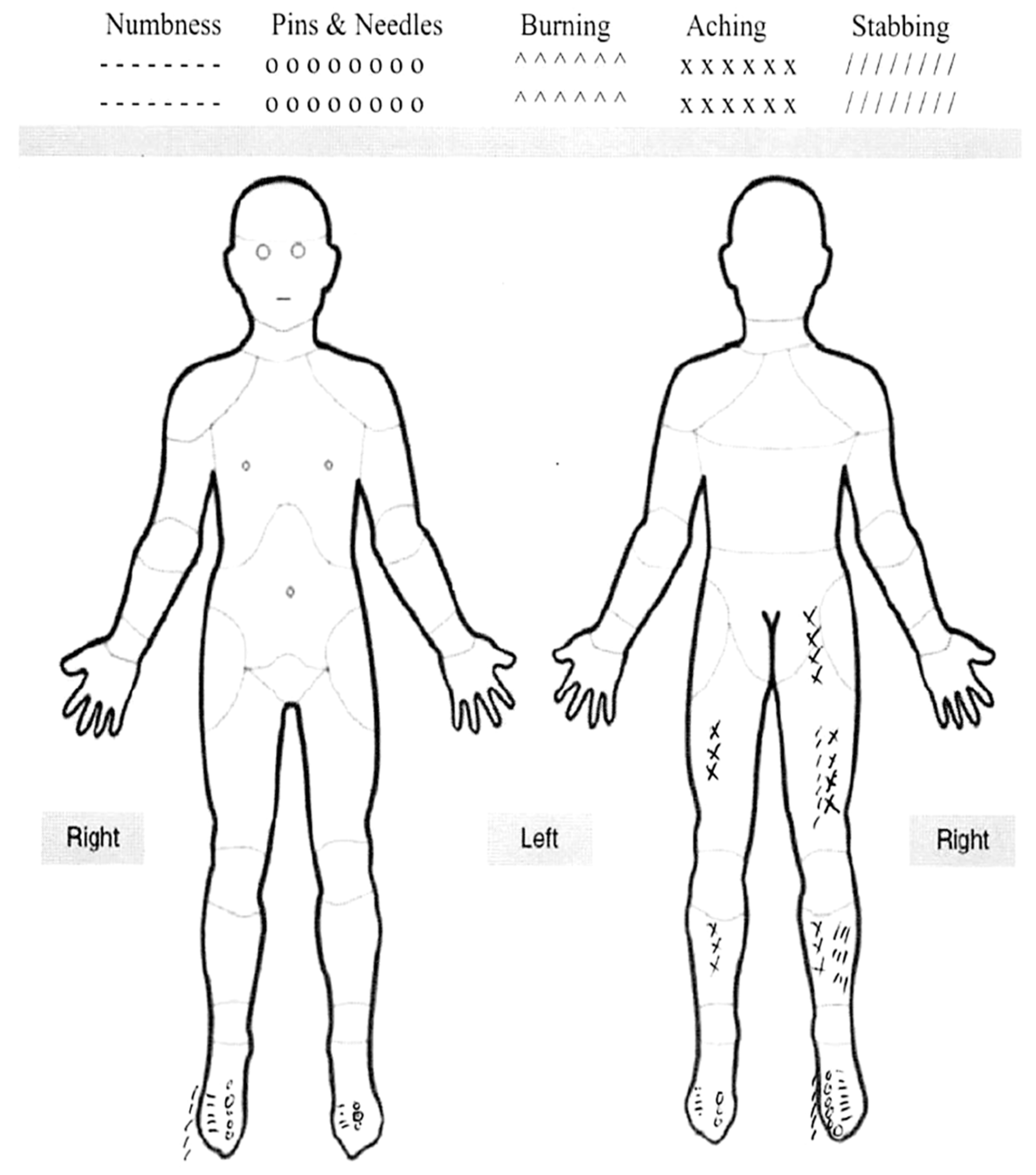
Three months following the conclusion of IMRT, the patient developed low back and right leg pain. With unsuccessful medical management and the progression to bilateral pain, the patient was referred to neurosurgery to investigate suspected radiculopathy. While at the neurosurgical clinic (approximately 6 months post-RT), the physical examination yielded bilateral flail foot (Table 1), along with self-reported sensory descriptions. (The patient marked areas of numbness and tingling in a stocking distribution, Figure 1). Furthermore, CT Myelogram, pelvic MRI, and ultrasound yielded no abnormalities. Specifically, the pelvic MRI with gadolinium showed no recurrent tumor, no abnormal root enhancement, and intact neurovascular structures. The lumbar spine MRI showed a moderate L5–S1 disk bulge with right foraminal stenosis, which did not explain the patient’s exam findings. Despite these degenerative changes at L5–S1, no evidence of compressive lesion that could account for the bilateral deficit was found. Given the patient’s bilaterally positive Hofman’s sign and right ankle edema, a venous duplex ultrasound was performed to rule out a deep vein thrombosis (DVT), which was negative. Thus, no signs of vascular etiology were found.
Electromyography (EMG) demonstrated abnormalities in nerves originating from L4 to S2 nerve roots (Table 2). The most significant EMG findings were active degeneration (fibrillations and positive sharp waves) in the bilateral tibialis anterior, extensor hallucis longus, extensor digitorum brevis, and gastrocnemius muscles, with reduced recruitment and interference patterns. Muscles innervated by the higher lumbar roots (e.g., vastus medialis and tensor fasciae latae) and the sciatic nerve trunk (e.g., biceps femoris) remained normal, as did the paraspinal muscles. These findings suggest a diffuse LSP involvement rather than isolated radiculopathy. Ruling out other possible causes, a suspected diagnosis of radiation-induced neuropathy was concluded. The comprehensive laboratory workup was unremarkable. The patient has a normal hemoglobin A1c (no diabetes), normal vitamin B12 and thyroid levels, no evidence of autoimmune vasculitis (normal ESR/CRP aside from mild anemia), negative serum protein electrophoresis (no paraproteinemia), and negative tests for HIV and Lyme disease. After other etiologies were excluded, the temporal association with RT and pattern of EMG abnormalities indicated to RILSP.
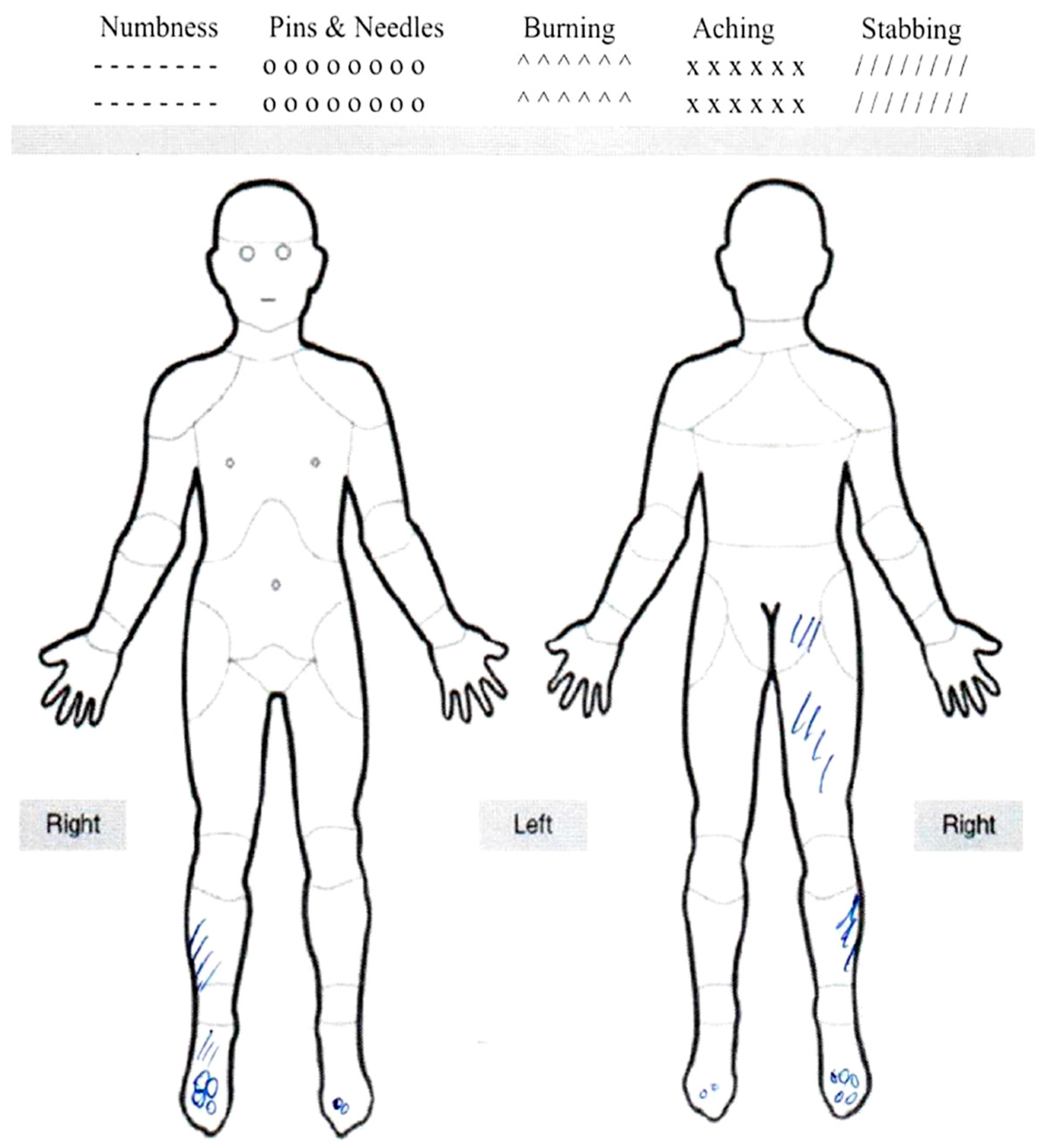
At a 12-month follow-up, despite all conservative treatment options, the patient continued experiencing neurological deficits (bilateral foot drop and sensory loss) (Figure 2). His cancer remained in remission and post-therapy surveillance MRI and PSA levels showcased no recurrence. The patient’s urinary function was at baseline with no incontinence beyond expected post-prostatectomy stress urinary leakage. Given the lack of a specific treatment for RILSP, management was shifted toward symptom relief such as physical therapy, bracing for foot drop, and neuropathic pain medications. Melatonin was added as an adjunct for its potential neuropathic effects, although evidence is limited. A year after RT, the patient had minimal neurological improvement, consistent with the poor prognosis associated with radiation plexopathies.

3. Discussion

Differentiating between radiculopathy, neuropathy, and plexopathy involves motor examinations to localize abnormalities to a specific radicular myotome or peripheral nerve distribution [6]. In this case, the patient exhibited EMG abnormalities involving the bilateral deep fibular (L4–S1) and tibial nerves (S1–S2), while the bilateral sciatic nerves (L5–S2) appeared unaffected. This is atypical. In radiculopathy caused by disk herniation or foraminal stenosis, one would expect abnormalities across all nerves supplied by the affected nerve root [6]. The sparing of the sciatic nerves, despite involvement of their downstream branches, suggests a non-mechanical etiology localized to the plexus. Furthermore, the superior and inferior gluteal nerves, also arising from the L4–S2 roots, appeared normal on EMG—again inconsistent with a classic single-root radiculopathy pattern. These findings, paired with a normal paraspinal EMG, strongly favor plexopathy.
RILSP is a potential complication of RT targeting pelvic organs. It is driven by mechanisms of chronic inflammation, microvascular injury, and progressive fibrosis, inducing delayed neurotoxicity that progresses for years before being noted as clinically significant [7]. The clinical presentation of RILSP mimics lower motor neuron syndromes, often presenting with unilateral or bilateral weakness, muscular atrophy, pain, and evolving sensory or proprioceptive deficits [8]. In this patient, the onset of neuropathy was subacute (3 months post-RT). It was initially unilateral, later becoming bilateral over a few months. This course aligns with the other reported cases of radiation plexopathy; however, latency ranges from months to years.
To date, only a few published cases reported RILSP specifically after prostate RT. One prior case developed symptoms 5 years post-treatment, including a progression to bilateral lower extremity weakness, paresthesia, and numbness over a period of 3 months. Physical exam in that case showcases a partial paralysis of both proximal and distal leg muscles, impaired proprioception, and diminished reflexes below the knees bilaterally, with EMG findings consistent with plexopathy [7]. Another recent case also highlighted the coexistence of RILSP and pelvic insufficiency fractures in a prostate cancer survivor patient presenting with bilateral foot drop and pain several years post RT [9]. Our cases now add to this limited literature. Recognizing that RILP is rare is important to clinicians. It is most likely underreported due to delayed presentation and confounding comorbidities. In a study of fifty cervical cancer patients, 8% developed RILSP within 5 years of RT. This suggests underreporting of this condition overall. In that cohort, patients who did not develop RILSP had a mean maximal LSP dose of 53.0 Gy. Those that developed RILSP received 59.6 Gy. This difference does seem modest, but it exceeds the traditional spinal cord dose thresholds and can potentially be clinically significant [1,2,10,11]. Our patient was delivered a total of 72 Gy to the prostate bed; however, without a routine LSP contouring, the exact dose delivered to the plexus was unknown until after. We, respectively, contoured the lumbosacral plexus on his planning CT using a standard anatomy atlas. We found the LSP maximum dose was in the high 60s Gy with an estimated mean dose above 55 Gy. This was consistent with the doses seen in the patients who developed RILSP. These reconstructed dose-volume metrics further support that the plexus was exposed to neurotoxic doses.
Currently, there are no established normal tissue dose constraints in conventional RT for lumbosacral plexus. Historically, physicians reference a spinal cord tolerance of 45–50 Gy as a surrogate, but plexus fibers have a different sensitivity. Emerging data showcase these findings. For instance, in carbon ion RT for pelvic recurrences in rectal cancer, RILSP incidence was in 22.5% of plexuses at 2-year follow-up. An analysis of DVH parameters showed that patients with RILSP had a significantly higher dose at the LSP than those without. Although this is a different modality of LET carbon ions, these results highlight the relevance of volumetric plexus dosing and recommend that parts of the LSP receiving more than 50 Gy can significantly increase the risk of neuropathy risk. Some authors have even recommended adding the LSP as an organ at risk (OAR) in pelvic RT planning. They aim to limit LSP dosing to under 45 Gy when feasible. Now, in the context of prostate cancer, similar principles should apply, especially since dose-escalated regimens of over 70 Gy are common [12].
Proactive measures while planning RT could mitigate such complications. Contouring the LSP on simulation scans is challenging with a conventional CT scan alone because of poor soft tissue contrast. However, more advanced imaging techniques and atlas-based approaches can assist. A standardized MR neurography sequence could help with the visualization of the lumbosacral nerves. One study showed that fusing MR neurography with planning CT-helped delineation of LSP. It also revealed in IMRT prostate plans that majority of patients received more than 50 Gy to portions of their plexus [13]. In that study, patients who developed RILSP reached a maximum dose of 69 Gy. These results underscore the importance of measuring and reporting plexus doses in pelvic RT. Although it is labor intensive to commit to manual LSP contouring, recent advances in machine learning have enabled accurate and automated delineation of the LSP [14]. For example, deep learning models have achieved high overlap with expert contours of the lumbosacral nerves on CT, facilitation efficient identification of the plexus structure [15]. The use of an auto segmentation tool for the LSP might have allowed us to monitor and potentially adjust the dose in this critical neural tissue in our patient. Had such measures been implemented, the outcome for this patient might have differed. Prioritizing dose monitoring and contouring of the LSP is essential in reducing RILSP incidence. We advocate for routine consideration of the lumbosacral plexus in prostate cancer RT planning, especially if it is a high-dose case.
Neurologically, this case also highlights the importance of a comprehensive workup for bilateral leg weakness in a cancer surviving patient. Our patient’s initial presentation raised a concern for potential lumbar radiculopathy or motor neuropathy. The absence of radicular pain, a normal spine imaging results, and non-dermatomal sensory loss prompted to pursue further investigation. The EMG results were pivotal in localizing the lesion to the plexus and ruling out a differential diagnosis of demyelinating polyneuropathy. Correlating the EMG findings to the clinical exam findings of bilateral foot drop and intact hip and knee strength pointed away from an upper motor neuron process or cauda equina syndrome. The normal paraspinal EMG excluded an L5/S1 radiculopathy. Additionally, the normal proximal nerve conduction was in line with plexopathy rather than distal polyneuropathy. Lumbosacral Plexopathy as a differential diagnosis is broad as it includes diabetic lumbosacral radiculoplexus neuropathy, neoplastic plexus invasion, autoimmune plexitis, and other rare causes. In our patient, there was no history of diabetes and the extensive laboratory workup ruled out any inflammatory, metabolic, or infectious causes. There was no evidence of a tumor recurrence that was compressing the nerves. Androgen deprivation therapy (ADT) can worsen metabolic profiles, increasing the risk of diabetes and neuropathy [16]. Our patient’s glucose was well controlled and there were no signs of diabetic neuropathy. While ADT related metabolic effects can contribute to peripheral nerve susceptibility, in this case it did not play a major role. The only significant factor was the recent RT, making RILSP the most plausible diagnosis by exclusion.
RILSP can significantly impact a patient’s quality of life. Pelvic radiation can have other neurological and functional sequelae besides the motor deficits. For example, pelvic insufficiency fractures as reported in other cases [9], and radiation induced enteritis and cystitis may occur. In another case, the patient experienced bladder dysfunction with plexopathy [7]. Our patient did not exhibit any new urinary incontinence. Nevertheless, physicians should remain vigilant in prostate cancer surviving patients as prior RT is a known risk factor for long-term urinary incontinence. It can even reduce the success of surgical incontinence interventions [16]. This highlights that the consequences of radiation extend beyond just the treatment period and affect multiple organ systems.
Currently, there is no definitive treatment outlined for RILSP. Management is focused on symptom control and support. These include neuropathic pain medications, physical therapy, orthotic devices for foot drop, and in selected cases, trials of corticosteroids or other therapies. Prevention, therefore, is paramount. Identifying patients at risk and modifying the RT plan accordingly, we may prevent this debilitating complication. For instance, this could be performed by using advanced techniques such as IMRT/VMAT with strict OAR constraints. This could sacrifice dose coverage to avoid high plexus doses. This case report adds to the call in the literature for radiation oncologists to contour and spare the LSP when treating pelvic malignancies when feasible. Advanced imaging like MR neurography and auto segmentation tools make this achievable [15]. As more cases get reported and analyzed, we hope the plexus dose tolerances will be better outlined. This will enable evidence-based guidelines to avoid RILSP with compromising tumor control.

4. Conclusions

The instigator of the patient’s symptoms appeared to be RT-induced neuropathy, which damaged the lumbosacral plexus. Given the thorough exclusion of other causes and the correspondence of the deficit pattern with the irradiated region, we conclude that this case represents radiation-induced lumbosacral plexopathy (RILSP). Currently, there are only a few case reports documenting similar symptoms after prostate RT, albeit with variance in presentation and latency. Practitioners should consider RILSP in the differential diagnosis of unexplained lower extremity neuropathy in a patient with a history of pelvic irradiation, especially when the pattern of sensory loss and weakness does not conform to radiculopathy or peripheral neuropathy. Early recognition of RILSP could prevent unnecessary invasive interventions such as spine surgery. From a preventative standpoint, this case underscores the importance of LSP contouring as an OAR during pelvic RT treatment planning. By defining and monitoring the dose delivered to the delicate neural structures of the lumbosacral plexus, future RILSP cases could be avoided. Ongoing research and RILSP reporting will help to create a dose effect relationship and refine the RT guidelines. Meanwhile, a high index of suspicion and multidisciplinary management are crucial to addressing this complication. Physicians should remain aware that sciatic neuropathy or plexopathy is a possible delayed adverse effect post-pelvic RT. Comprehensive workup including EMG imaging is essential for making a correct diagnosis. Collaboration between neurologists and oncologists is crucial to optimize care for affected patients and to develop strategies to minimize RILSP in the growing population of cancer survivors.

Author Contributions

Conceptualization, E.M. and R.D.; methodology, E.M.; software, not applicable; validation, E.M., R.M. and A.S.; formal analysis, E.M.; investigation, E.M.; resources, R.D.; data curation, E.M.; writing—original draft preparation, R.M.; writing—review and editing, E.M., R.D. and A.S.; visualization, R.M.; supervision, R.D.; project administration, E.M.; funding acquisition, not applicable. All authors have read and agreed to the published version of the manuscript.

Funding

This research received no external funding.

Institutional Review Board Statement

Ethical Review and approval were waived for this study due to not meeting the federal and university criteria as research activity subject to research subject regulation. Thus, no IRB protocol review is needed for case reports on a single subject/patient. However, all faculty, staff, and students involved in this case report still followed all appropriate professional, institutional, and HIPAAA regulations regarding protected health information.

Informed Consent Statement

Written informed consent has been obtained from the patient(s) to publish this paper.

Data Availability Statement

Due to the sensitive nature of clinical data and the need to protect patient privacy, the datasets generated and analyzed for this case report are not publicly available but may be obtained from the corresponding author upon reasonable request.

Conflicts of Interest

The authors declare no conflicts of interest.

References

  1. Tunio, M.; Al Asiri, M.; Bayoumi, Y.; Balbaid, A.A.O.; AlHameed, M.; Gabriela, S.L.; Ali, A.A.O. Lumbosacral plexus delineation, dose distribution, and its correlation with radiation-induced lumbosacral plexopathy in cervical cancer patients. Onco Targets Ther. 2015, 8, 21–27. [Google Scholar] [CrossRef] [PubMed]
  2. Yi, S.K.; Mak, W.; Yang, C.C.; Liu, T.; Cui, J.; Chen, A.M.; Purdy, J.A.; Monjazeb, A.M.; Do, L. Development of a standardized method for contouring the lumbosacral plexus: A preliminary dosimetric analysis of this organ at risk among 15 patients treated with intensity-modulated radiotherapy for lower gastrointestinal cancers and the incidence of radiation-induced lumbosacral plexopathy. Int. J. Radiat. Oncol. Biol. Phys. 2012, 84, 376–382. [Google Scholar] [PubMed]
  3. Delanian, S.; Lefaix, J.L.; Pradat, P.F. Radiation-induced neuropathy in cancer survivors. Radiother. Oncol. 2012, 105, 273–282. [Google Scholar] [CrossRef] [PubMed]
  4. Ganswindt, U.; Paulsen, F.; Anastasiadis, A.G.; Stenzl, A.; Bamberg, M.; Belka, C. 70 Gy or more: Which dose for which prostate cancer? J. Cancer Res. Clin. Oncol. 2005, 131, 407–419. [Google Scholar] [CrossRef] [PubMed]
  5. Zaorsky, N.G.; Palmer, J.D.; Hurwitz, M.D.; Keith, S.W.; Dicker, A.P.; Den, R.B. What is the ideal radiotherapy dose to treat prostate cancer? A meta-analysis of biologically equivalent dose escalation. Radiother. Oncol. 2015, 115, 295–300. [Google Scholar] [CrossRef] [PubMed]
  6. Robblee, J.; Katzberg, H. Distinguishing Radiculopathies from Mononeuropathies. Front. Neurol. 2016, 7, 111. [Google Scholar] [CrossRef] [PubMed]
  7. Almeida, L.R.; Faustino, D.; Esteves, L.R.; Gante, C.; Soares, A.W.; Oliveira, T.; Dias, J.L.; Dias, L. Radiation-Induced Lumbosacral Plexopathy. Cureus 2023, 15, e36842. [Google Scholar] [CrossRef] [PubMed]
  8. Dahele, M.; Davey, P.; Reingold, S.; Shun Wong, C. Radiation-induced lumbo-sacral plexopathy (RILSP): An important enigma. Clin. Oncol. 2006, 18, 427–428. [Google Scholar] [CrossRef] [PubMed]
  9. Güler, T.; Yurdakul, F.G.; Karasimav, Ö.; Kılıç, Z.; Yaşar, E.; Bodur, H. Radiation-induced lumbosacral plexopathy and pelvic insufficiency fracture: A case report of unique coexistence of complications after radiotherapy for prostate cancer. Joint Dis. Relat. Surg. 2024, 35, 455–461. [Google Scholar] [CrossRef] [PubMed]
  10. Milano, M.T.; Constine, L.S.; Okunieff, P. Normal tissue tolerance dose metrics for radiation therapy of major organs. Semin. Radiat. Oncol. 2007, 17, 131–140. [Google Scholar] [CrossRef] [PubMed]
  11. Emami, B.; Lyman, J.; Brown, A.; Cola, L.; Goitein, M.; Munzenrider, J.E.; Shank, B.; Solin, L.J.; Wesson, M. Tolerance of normal tissue to therapeutic irradiation. Int. J. Radiat. Oncol. Biol. Phys. 1991, 21, 109–122. [Google Scholar] [CrossRef] [PubMed]
  12. Kumazawa, T.; Shiba, S.; Miyasaka, Y.; Okazaki, S.; Miyasaka, Y.; Ohtaka, T.; Kiyohara, H.; Ohno, T. Lumbosacral plexopathy after carbon-ion radiation therapy for postoperative pelvic recurrence of rectal cancer: Subanalysis of a prospective observational study (GUNMA 0801). Adv. Radiat. Oncol. 2025, 10, 101711. [Google Scholar] [CrossRef] [PubMed]
  13. Cao, X.; Gao, X.S.; Li, W.; Liu, P.; Qin, S.B.; Dou, Y.B.; Li, H.Z.; Shang, S.; Gu, X.B.; Ma, M.W.; et al. Contouring lumbosacral plexus nerves with MR neurography and MR/CT deformable registration technique. Front. Oncol. 2022, 12, 818953. [Google Scholar] [CrossRef] [PubMed]
  14. Hamabe, A.; Ishii, M.; Kamoda, R.; Sasuga, S.; Okuya, K.; Okita, K.; Akizuki, E.; Miura, R.; Korai, T.; Takemasa, I. Artificial intelligence-based technology to make a three-dimensional pelvic model for preoperative simulation of rectal cancer surgery using MRI. Ann. Gastroenterol. Surg. 2022, 6, 788–794. [Google Scholar] [CrossRef] [PubMed]
  15. Fan, G.; Liu, H.; Wu, Z.; Li, Y.; Feng, C.; Wang, D.; Luo, J.; Wells, W.M.; He, S. Deep learning–based automatic segmentation of lumbosacral nerves on CT for spinal intervention: A translational study. AJNR Am. J. Neuroradiol. 2019, 40, 1074–1081. [Google Scholar] [CrossRef] [PubMed]
  16. Sacco, E.; Campetella, M.; Marino, F.; Gavi, F.; Moretto, S.; Pastorino, R.; Bizzarri, F.P.; Pierconti, F.; Gandi, C.; Bientinesi, R. Preoperative risk factors for failure after fixed sling implantation for post-prostatectomy stress urinary incontinence (FORESEE): A systematic review and meta-analysis. Eur. Urol. Open Sci. 2025, 77, 58–77. [Google Scholar] [CrossRef] [PubMed]
Figure 1. Patient’s self-described pain pattern upon initial presentation to the neurosurgery clinic.
Radiation 05 00036 g001
Figure 2. The patient’s self-described pain pattern upon follow-up to the neurosurgery clinic.
Radiation 05 00036 g002
Table 1. Neurological examination at first presentation to neurosurgery clinic.
SideSpecific AssessmentNerve RootsDescription
Motor (Strength)BilateralHip Flexion—psoas/iliacusL1–L45/5
BilateralKnee Extension—quadriceps femorisL2–L45/5
RightFoot Dorsiflexion—tibialis anteriorL40/5 or 1/5
RightHallux extension—extensor hallucis longusL50/5 or 1/5
RightFoot Plantarflexion—gastrocnemius/soleusS10/5 or 1/5
SensoryLeftDermatomal Pain SensationL5, S1Decreased sensation to pin prick
RightDermatomal Pain SensationL4, L5, S1Decreased sensation to pin prick
Deep Tendon Reflexes (DTRs)LeftPatellar ReflexL2–L42+
RightPatellar ReflexL2–L42+
LeftAchilles ReflexS1–S20
RightAchilles ReflexS1–S20
Other Findings Positive Homan’s sign bilaterally. Right ankle edema
Comments Patient requires walker to ambulate
Table 2. EMG findings after initial neurosurgery consultation. Abbreviations: L/ = Left-Sided Muscle, R/ = Right-Sided Muscle, Ins Act = Insertional Activity, Fibs = Fibrillation Potentials, Psw = Positive Sharp Waves, Recrt = Recruitment Pattern, Int Pat = Interference Pattern, Nml = Normal, Incr = Increased.
Side/MuscleNerveRootIns ActFibsPswRecrtInt Pat
L/Tibialis AnteriorDeep FibularL4–L5Incr3+4+Rapid50%
L/Extensor
Digitorum Brevis
Deep FibularL5, S1Incr2+3+Rapid50%
L/Extensor
Hallucis Longus
Deep FibularL5, S1Incr2+3+Rapid50%
L/GastrocnemiusTibialS1–S2Incr2+4+Rapid50%
L/Vastus MedialisFemoralL2–L4NmlNmlNmlNmlNml
L/Biceps Femoris Long HeadSciaticL5–S2NmlNmlNmlNmlNml
L/Tensor Fasciae LataeSuperior GlutealL4, L5, S1NmlNmlNmlNmlNml
L/Gluteus
Maximus
Inferior GlutealL5–S2NmlNmlNmlNmlNml
L/Lumbar Paraspinal MidRamiL3, L4NmlNmlNml
L/Lumbar Paraspinal LowRamiL5–S1NmlNmlNml
R/Tibialis
Anterior
Deep FibularL5, S1Incr4+4+Rapid25%
R/Extensor
Digitorum Brevis
Deep FibularL4, L5Incr4+3+Rapid25%
R/Extensor
Hallucis Longus
Deep FibularL5, S1Incr3+4+Rapid25%
R/GastrocnemiusTibialS1, S2Incr3+3+Rapid25%
R/Vastus MedialisFemoralL2–L4NmlNmlNmlNmlNml
R/Biceps Femoris Long HeadSciaticL5–S2NmlNmlNmlNmlNml
R/Tensor Fasciae LataeSuperior GlutealL4, L5, S1NmlNmlNmlNmlNml
R/Gluteus
Maximus
Inferior GlutealL5–S2NmlNmlNmlNmlNml
R/Lumbar Paraspinal MidRamiL3, L4NmlNmlNml
R/Lumbar Paraspinal LowRamiL5–S1NmlNmlNml
Disclaimer/Publisher’s Note: The statements, opinions and data contained in all publications are solely those of the individual author(s) and contributor(s) and not of MDPI and/or the editor(s). MDPI and/or the editor(s) disclaim responsibility for any injury to people or property resulting from any ideas, methods, instructions or products referred to in the content.