1. Introduction
The 2030 Agenda for Sustainable Development has identified sustainable tourism as a central priority, with specific goals addressing responsible consumption, cultural valorisation, heritage preservation and inclusive economic growth. In this context, destinations are increasingly expected to balance value creation with environmental and social responsibility, ensuring that tourism development contributes to long-term territorial well-being (
Broccardo et al., 2017;
Yi et al., 2021). This challenge is especially pertinent in emerging tourism niches such as film-induced tourism, where the sudden increase in visibility generated by audiovisual productions can intensify pressures on local communities and ecosystems.
Film-induced tourism is defined as the phenomenon in which films and television series influence destination choice and shape tourist expectations (
Beeton, 2016;
Riley & Van Doren, 1992). While this segment can enhance destination image and stimulate local economies, it also raises questions concerning authenticity, destination carrying capacity and the equitable distribution of benefits (
Hudson & Ritchie, 2006;
Strielkowski, 2017). Despite its growing relevance, extant research has predominantly focused on image formation, promotional effects and visitor motivations, with limited attention to how film-related experiences can be strategically designed and governed through experiential, emotional and sustainability-oriented approaches.
Concurrently, marketing and branding in tourism have evolved towards experiential and value-based perspectives. Experiential marketing emphasises the role of emotions, narratives and co-creation in shaping memorable tourist journeys (
Batat, 2024), while purpose-driven branding highlights the alignment between organisational purpose, stakeholder well-being and long-term value creation (
Gulati, 2022;
Fernandes et al., 2024). However, these perspectives remain insufficiently integrated in the context of film-induced destinations, where emotional engagement, territorial authenticity and sustainability must be jointly considered.
The present article addresses this gap by proposing a purpose-driven experiential marketing framework for film-induced destinations. The model articulates five interconnected dimensions integrated experience, branding, people, emotional touchpoints and processes designed to support the creation of emotionally resonant and sustainability-oriented tourist experiences. To emphasise its practical relevance, the framework is aligned with selected indicators from the Global Reporting Initiative (GRI), which provides internationally recognised guidelines for ethically grounded, transparent and sustainability-oriented management.
The study adopts a predominantly conceptual and exploratory design. First, it draws on interdisciplinary literature concerning experiential marketing, emotional branding, film-induced tourism and sustainable destination management. The literature review followed a narrative synthesis approach. Rather than constituting a formal systematic review, the literature review was structured to support the conceptual development of the proposed framework. Within marketing thought, the marketing-mix remains one of the most influential strategic frameworks for understanding how value is designed and delivered in organisational contexts. The traditional marketing mix has long provided a dominant framework for structuring marketing strategy around the coordination of product, price, place and promotion (
Kotler & Keller, 2016). Second, the study develops a conceptual framework that reconfigures the traditional marketing mix into a purpose-led experiential model. Third, it provides an exploratory illustration based on stakeholder insights from Monsanto, a rural Portuguese village that recently gained international visibility as a filming location for HBO’s House of the Dragon. The objective of this illustration is not empirical validation, but rather to support conceptual clarity and demonstrate the model’s potential applicability in a real-world context.
By integrating experiential, emotional and sustainability-oriented perspectives, this article contributes to the theoretical development of film-induced tourism, while also offering practical guidance for destination management organisations (DMOs), cultural programmers and creative industry actors. Furthermore, it establishes a foundation for future research, including cross-regional comparisons and quantitative evaluations of experiential dimensions.
In consideration of the aforementioned factors, the present study is concerned with the resolution of two research questions, which in turn inform the development of the proposed conceptual framework.
RQ1. How does organisational purpose shape experiential marketing in film-induced destinations?
RQ2. What dimensions should structure a purpose-driven experiential marketing framework aligned with GRI sustainability indicators?
The inquiries facilitate the articulation of a model that integrates experiential, emotional and sustainability-oriented perspectives, thereby providing the foundation for the exploratory illustration developed from stakeholder insights in Monsanto.
2. Literature Review
2.1. Film-Induced Tourism: Concepts, Impacts and Gaps
Film-induced tourism is defined as the influence of films and television series on destination awareness, image formation and travel decisions (
Beeton, 2016;
Riley & Van Doren, 1992). Audiovisual narratives are known to create symbolic meanings and emotional associations that often motivate tourists to visit the places portrayed on screen. Consequently, destinations featured in popular productions may experience increased visibility, international recognition and new tourism flows (
Hudson & Ritchie, 2006).
The impacts of film-induced tourism are manifold. In principle, the potential benefits of this approach include the stimulation of local economies, the diversification of tourism offerings and the reinforcement of cultural identity, particularly in rural or lesser-known territories (
Strielkowski, 2017;
Yi et al., 2022). However, sudden exposure may also generate pressures on natural and cultural resources, contribute to overtourism and create tensions between authenticity and commodification (
Breiby et al., 2020;
Lindberg et al., 2021). These challenges are especially pertinent in small-scale destinations, where an increase in visitation can exceed the local carrying capacity, resulting in a disruption to community dynamics.
Despite the considerable expansion of research on film-induced tourism, the field remains concentrated in three dominant areas: destination image, tourist motivations and promotional strategies. Whilst these contributions are valuable, they offer a fragmented understanding of how film-related experiences are designed, delivered and governed. There has been limited attention paid to experiential marketing, emotional branding and co-creation processes, despite their central role in shaping memorable and meaningful tourist experiences.
Furthermore, sustainability considerations—although frequently mentioned—are rarely integrated into strategic frameworks for film-induced destinations. There is a paucity of research exploring the potential for DMOs to align the development of film-related tourism with broader societal values, responsible management practices, and sustainability reporting tools.
This finding indicates a clear absence of conceptual models that integrate experiential design, emotional engagement, organisational purpose and sustainability-oriented management. Addressing this gap provides the foundation for the purpose-driven experiential marketing framework proposed in this study.
2.2. Experiential Marketing and Emotional Branding in Tourism
Experiential marketing has become a central approach in the tourism industry, with the objective being the design of memorable, multisensory and emotionally engaging experiences that go beyond functional attributes (
Pine & Gilmore, 1999;
Schmitt, 1999). In contrast to an emphasis on products or services, experiential marketing underscores the significance of immersion, storytelling and symbolic value in influencing tourist perceptions and behaviours. In this perspective, destinations are conceptualised as experiential platforms wherein visitors co-create meaning through interactions with places, people and narratives (
Grönroos & Voima, 2013).
Emotional branding is a concept that complements this view by recognising that strong destination brands are built not only through visual identity or promotional messages, but through affective bonds that connect visitors to the essence and personality of a place (
Gobé, 2001;
Hudson & Ritchie, 2006). The role of emotions in shaping memory, attachment and loyalty is a particularly salient factor in tourism contexts, where experiences are inherently subjective and symbolic. Audiovisual narratives, including films and series, serve to amplify these emotional dynamics by offering predetermined storyworlds that shape expectations and facilitate a deeper engagement with the narrative destination.
Despite the relevance of these perspectives, their application to film-induced tourism remains limited. Existing studies have tended to focus on image formation or promotional effects, paying less attention to how experiential design and emotional touchpoints can be strategically managed throughout the tourist journey. Furthermore, there is a paucity of contributions that explore how DMOs can integrate co-creation, authenticity and narrative immersion into film-related experiences. However, these elements have been shown to strongly influence visitor satisfaction and place attachment.
A further gap pertains to the absence of frameworks that connect experiential marketing with sustainability-oriented destination management. While emotional engagement has the potential to enhance value creation, it must be aligned with responsible practices to avoid superficial or extractive approaches. This underscores the necessity for models that encompass experiential, emotional and sustainability dimensions a domain that the present study addresses through a purpose-driven experiential marketing framework.
2.3. Purpose-Driven Marketing and Sustainable Destination Management
In parallel with the literature on film-induced tourism and destination image, increasing attention has been paid to how places are strategically positioned and communicated to different audiences. Place branding refers to the strategic development and communication of the identity, meaning and value of a geographical location, with the aim of shaping perceptions among residents, visitors, investors and other stakeholders (
Kavaratzis & Hatch, 2013;
Zenker et al., 2017). Within tourism, place branding increasingly incorporates experiential and emotional elements as destinations seek to differentiate themselves in competitive markets.
In accordance with the experiential perspective that has been previously discussed, the tourist journey in film-induced destinations can be conceptualised as a dynamic process that is influenced by expectations, interactions and emotional responses. In lieu of a linear sequence of stages, the journey under discussion involves multiple touchpoints. The nature of these touchpoints is such that some are controlled by the destination management organisation (DMO), whereas others are co-created by tourists or influenced by external actors. It is these multiple touchpoints that collectively determine the quality and memorability of the experience (see
Grönroos & Voima, 2013;
Pine & Gilmore, 1999).
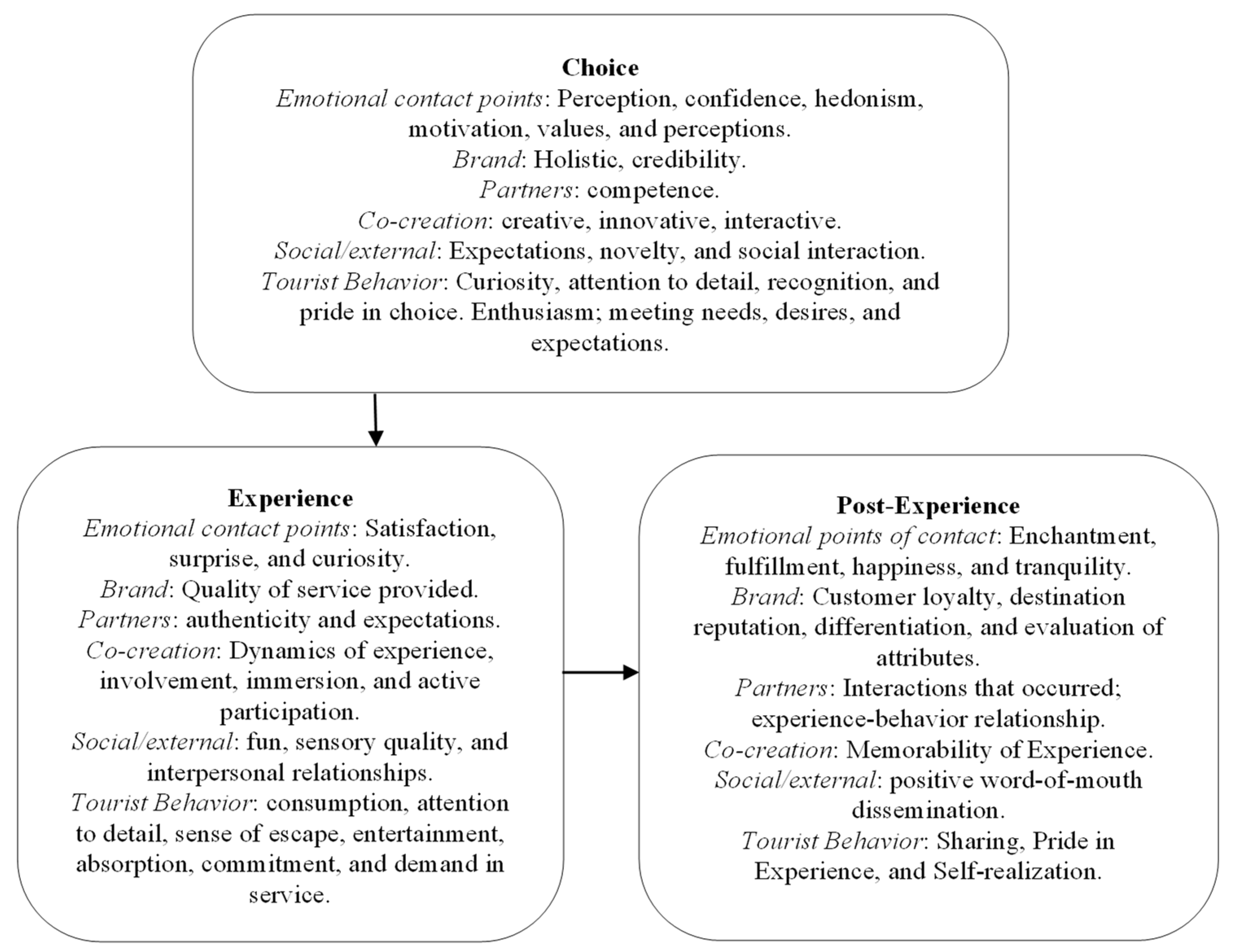
To structure this process analytically, the present study adopts a three-stage model comprising the choice, experience and post-experience phases, consistent with established approaches to consumer and tourist journeys (
Berry et al., 2006;
Pieters et al., 2001). The choice stage encompasses pre-visit interactions, including information search, expectations shaped by audiovisual narratives and trust in the destination’s communication. The experience stage refers to the on-site encounter with the destination, where environmental cues, service interactions and narrative immersion play a central role (
Steadman et al., 2021). In conclusion, the post-experience stage encompasses memory formation, emotional resonance, word-of-mouth and digital engagement. These factors contribute to long-term attachment and destination image.
Across these stages, tourists interact with four categories of emotional touchpoints: brand-managed, partner-managed, co-created and social/external. These touchpoints have been shown to influence how visitors interpret the destination, how they connect emotionally with film-related narratives, and how they evaluate the overall experience (
Batat, 2024;
Hudson & Ritchie, 2006). It is imperative to comprehend the dynamics between these factors to formulate experiential strategies that are purpose driven.
Figure 1 provides a synopsis of the process model, illustrating the unfolding of the tourist journey and the way emotional touchpoints influence the formation of experiences in film-induced destinations.
2.4. The Configuration of the Marketing-Mix in the Context of the Film-Induced Destination
2.4.1. The Configurational Process
The marketing mix is a holistic system; its effectiveness is contingent on the coherence of its elements rather than on isolated actions. When approached as an integrated whole, it becomes more dynamic and powerful than the sum of its individual variables; overlooking this systemic nature weakens strategic understanding and decision-making (
Carvalho, 2012;
MacInnis et al., 2020). When viewed through the lens of complexity, the mix is seen to have a multidimensional character, shaped by a variety of factors including tourists, organisational purpose, ethics, sustainability, culture and stakeholder relationships (
Morin, 1986;
Carvalho, 2012).
The conceptualisation of the marketing-mix as a complex adaptive system enables destination management organisations (DMOs) to detect threats and opportunities, anticipate tourist preferences and enhance adaptability and competitiveness (
Filser et al., 2021). A configurational approach organises and aligns variables into coherent strategies, avoiding reductionist views and providing a rational guide for action (
Ghedin & Franco, 2008). The approach is founded on theory-based learning, rigorous analysis and creativity, fostering adaptability, exploration and collaboration as key sources of innovative value (
Godin, 2020).
In this perspective, a marketing-mix configuration is understood as a constellation of interdependent variables whose internal coherence generates superior performance (
Leinwand & Mainardi, 2011;
Pinto & Curto, 2007). It is important to note that, due to equifinality and non-linearity, different configurations can lead to effective outcomes depending on the specific context (
Grandori & Furnari, 2013). In the context of film-induced destinations, this configurational logic assumes relevance, as Destination Management Organisations (DMOs) are required to align experiential, emotional and sustainability-oriented variables to respond to the heterogeneous expectations of visitors and the constraints imposed by the specific location.
2.4.2. The Driving Forces in the Segment Film-Induced Destination
Technological advances, including digitisation, mobile platforms, artificial intelligence and user-generated content, have had a profound impact on the way destinations are perceived, accessed and shared. Tourists benefit from greater autonomy and connectivity, while Destination Management Organisations (DMOs) leverage digital tools to personalise cinematic experiences and optimise visibility (
Grewal et al., 2020).
Socioeconomic factors, including income disparities, inflation, and lifestyle shifts, influence travel decisions and destination competitiveness. It is imperative for DMOs to adapt to diverse consumer profiles and promote inclusive, resilient development (
Rust, 2020;
Wang & Tziamalis, 2023).
Geopolitical conditions, including conflict, instability and misinformation, have been demonstrated to influence destination image and risk perception. In the context of tourism, the primary concerns of tourists are safety and ethical considerations. In contrast, Destination Management Organisations (DMOs) are tasked with navigating the complex regulatory frameworks in place and the promotion of peace-oriented narratives.
It is becoming increasingly evident that environmental concerns are assuming a pivotal role in the considerations of both tourists and operators. Visitors value ecological integrity and sustainable practices, while Destination Management Organisations (DMOs) seek to align film-related tourism with environmental stewardship and long-term territorial resilience (
Schamp et al., 2019;
Rewtrakunphaiboon, 2009).
Table 1 provides a synopsis of the repercussions that these trends have on both the demand and supply sides of film-induced destination marketing.
The analysis of these trends provides valuable insights that facilitate a more precise understanding of the evolving landscape of film-induced destinations. These insights are of paramount importance for the effective formulation of marketing strategies, as they offer crucial insights into tourist attitudes, behavioural patterns, and expectations for sustainable development (
Bowen & Whalen, 2017). A more profound comprehension of these dynamics empowers DMOs to configure variables with greater efficacy, refine experiential offerings, and capitalise on opportunities that are aligned with their competencies, capabilities, local resources, and territorial identity. The ability to identify, interpret and adapt to such changes is therefore critical for maintaining competitiveness in an increasingly volatile environment (
Bowen & Whalen, 2017). Concurrently, tourism in natural areas that are frequently utilised as filming locations has the potential to engender adverse impacts, including site overuse, resource conflicts and biodiversity loss, with direct ramifications for local communities and destination resilience (
Breiby et al., 2020;
Lindberg et al., 2021). These trends therefore exert a significant influence on DMO decision-makers, shaping both marketing-mix strategies and the broader spectrum of sustainability issues that will determine the future of film-induced tourism.
2.4.3. Variables of the Experiential Marketing-Mix in the Film-Induced Segment Destination
The creation of competitive yet ethical strategies for film-induced destinations necessitates a reconfiguration of the marketing mix that is experiential and purpose-driven, thereby integrating the emotional, cultural and sustainability dimensions. Drawing upon Batat’s experiential perspective and service-dominant logic, we propose a model comprising five interdependent variables: integrated experience, branding, people, emotional touchpoints, and processes. These variables operate as a systemic configuration aligned with destination purpose and stakeholder value.
Integrated Experience
The variable under scrutiny here is one that focuses on holistic experience design, a concept which combines cultural heritage, gastronomy and hospitality. The variable enables co-creation among DMOs, partners and visitors. Integrated experiences have been shown to enhance memorability, authenticity and value creation, and are associated with positive recommendation behaviours and revisit intentions (
Du & Girault, 2019;
Wu et al., 2018;
Meng & Cui, 2020;
Duxbury et al., 2021;
Maia et al., 2023;
Shakya & Vagnarelli, 2024;
Tien et al., 2021). From a sustainability standpoint, integrated experiences should support local value chains and distributed benefits, aligning with GRI 203 (Indirect Economic Impact).
Branding
The concept of branding is predicated on the notion that it serves to position a given destination as distinctive, trustworthy, and culturally authentic. This, in turn, serves to strengthen emotional bonds and long-term identification with the locale. A purpose-driven branding strategy prioritises authenticity, transparency and a clear value proposition, connecting with visitors’ needs and expectations while avoiding greenwashing (
Neves et al., 2024;
Ahmed & Ünüvar, 2022;
Maurya & Mishra, 2012;
Acharya & Rahman, 2016;
Eshuis et al., 2014;
Huerta-Viso et al., 2024;
Fernandes et al., 2024). Community-rooted branding and participatory initiatives are consistent with GRI 413 (Local Community Engagement).
People
The concept of human capital is of pivotal significance to the quality of experience. Employees are considered to act as co-creators of value by exhibiting customer orientation, emotional competence and adaptive behaviours, which shape satisfaction, loyalty and the perceived authenticity of interactions (
Agyeiwaah et al., 2021;
Zhang et al., 2023;
Kusumawati & Rahayu, 2021;
Marques et al., 2018;
Franke & Park, 2006;
Novitasari et al., 2022;
Lam et al., 2022;
Barsade, 2002;
Homburg & Hoyer, 2009). Investment in training and service standards is congruent with GRI 401/404 (Employment & Training).
Emotional Touchpoints
Visitor journeys are characterised by moments of truth, defined as physical and digital touchpoints that evoke emotions, shape perceptions and influence sharing and identification. The management of such moments demands a combination of technical and emotional competencies, as well as an understanding of the pre-visit, on-site and post-experience phases (
Larsen, 2007;
Delcourt et al., 2016;
Delcourt et al., 2017;
Liu et al., 2019;
Hosany & Gilbert, 2010). Privacy-aware digital engagement and UGC management are in alignment with GRI 418 (Customer Privacy).
Processes
It is imperative to recognise that processes serve as the fundamental operational framework, integrating the other variables to ensure consistent, adaptive, and quality-assured delivery. The enhancement of efficiency, reduction in error and sustenance of experiential coherence are all purportedly facilitated by clear workflows, stakeholder participation and governance structures (
Guha et al., 1997;
Strnadl, 2006;
Lemanska-Majdzik & Okreglicka, 2015;
Dumas et al., 2018;
Weske, 2019;
Wagner & Eggert, 2016;
Ziggers & Henseler, 2016;
Tregear, 2015;
Godin, 2020). A participatory, process-oriented approach is conducive to the implementation of GRI 102-43 (Stakeholder Participation).
The five variables operate in a manner that is interdependent: branding attracts and frames expectations; people mediate meaning in moments of truth; processes ensure reliable, ethical delivery; and integrated experience ties them together into memorable, purpose-aligned journeys. The explicit mapping of these indicators to the Global Reporting Initiative (GRI) standards is a notable feature, as it integrates sustainability considerations into the experiential pathway. This approach contrasts with the conventional approach of treating sustainability as a separate policy layer.
The experiential marketing-mix configuration is a tactical instrument that exerts influence on the strategic orientation of DMOs. It has been demonstrated that this capacity enhances the ability of DMOs to design competitive, purpose-driven experiences. The effectiveness of this approach is contingent upon its systematic implementation as a framework for planning, executing, monitoring and re-evaluating marketing initiatives. To operationalise this approach, the reader is invited to refer to
Table 2, which provides a checklist summarising the core strategic decisions associated with each variable and their alignment with relevant GRI sustainability indicators.
Table 2 translates the conceptual framework into a practical decision-support tool for destination management organisations. By summarising key strategic questions and linking each experiential variable to the relevant Global Reporting Initiative (GRI) indicators, the checklist facilitates the implementation of purpose-driven experiential marketing (
Batat, 2024;
Pine & Gilmore, 1999;
Vargo et al., 2020;
Global Reporting Initiative (GRI), 2021). Rather than prescribing a single ’optimal’ configuration, the table encourages context-sensitive adaptation, enabling destination management organisations (DMOs) to align experiential design, stakeholder engagement, and sustainability priorities with territorial specifics.
2.5. Value, Experience and Innovation in Film Tourism
Film tourism has been identified as a pivotal factor in the shaping of destination image and the creation of distinctive experiences. Audiovisual narratives function as cultural intermediaries, impacting perceptions, fostering imaginaries, and attracting flows of visitors motivated by fictional content (
Osácar Marzal et al., 2022;
Riley & Van Doren, 1992;
Beeton, 2016). The city of Barcelona is a prime example of this phenomenon, having been subject to repeated analysis as a symbolic setting in a variety of international films and series. This cultural representation has contributed to the city’s repositioning as a cosmopolitan and creative destination (
Osácar Marzal, 2020). Analogous patterns emerge in Brazil, where narrative immersion reinforces emotional attachment and cultural recognition of territories (
Silveira et al., 2023). Empirical evidence further suggests that engagement with plotlines and characters enhances visit intention and participatory behaviours (
Teng, 2021).
Beyond these cases, other destinations illustrate how film-induced tourism can foster innovation and sustainability. As illustrated by the case of Scotland’s Glenfinnan Viaduct, which was featured in the Harry Potter series, there has been a 300% surge in annual visits. This has led to local authorities implementing visitor flow management and conservation measures. In England, London’s King’s Cross station institutionalised the “Platform 9¾” attraction, integrating queue regulation and sustainable merchandising. Dubrovnik, Croatia, a city that has gained significant cultural and economic influence through its depiction as King’s Landing in the popular television series Game of Thrones, has recently implemented a series of measures aimed at mitigating the adverse effects of overtourism. These measures include the introduction of licensing systems and infrastructure adaptations. In New Zealand, Hobbiton exemplifies best practices in eco-tourism, incorporating large-scale native plant restoration and water-quality initiatives within the film-tourism paradigm. Spain’s Peñíscola utilised the popular television series Game of Thrones as part of the “Peñíscola de Cine” initiative to diversify seasonality and engage local stakeholders via its film commission.
Drawing on these insights, this study adopts an approach centred on value creation and experiential innovation. The concept of value creation is theorised as the intersection of interests among tourists, local communities, stakeholders and organisations, grounded in experiences that resonate emotionally, reflect cultural identity and promote sustainability (
Monteiro et al., 2022). Co-creation has been identified as a critical mechanism, enabling visitors to actively shape their experiences and reinforcing authenticity through participatory processes (
Vargo et al., 2020;
Wu et al., 2018;
Monteiro et al., 2025). Integrated experiences combining cultural immersion, storytelling and interactive activities transcend conventional visitation models, fostering emotional bonds and encouraging more conscious, lasting behaviours (
Monteiro et al., 2025).
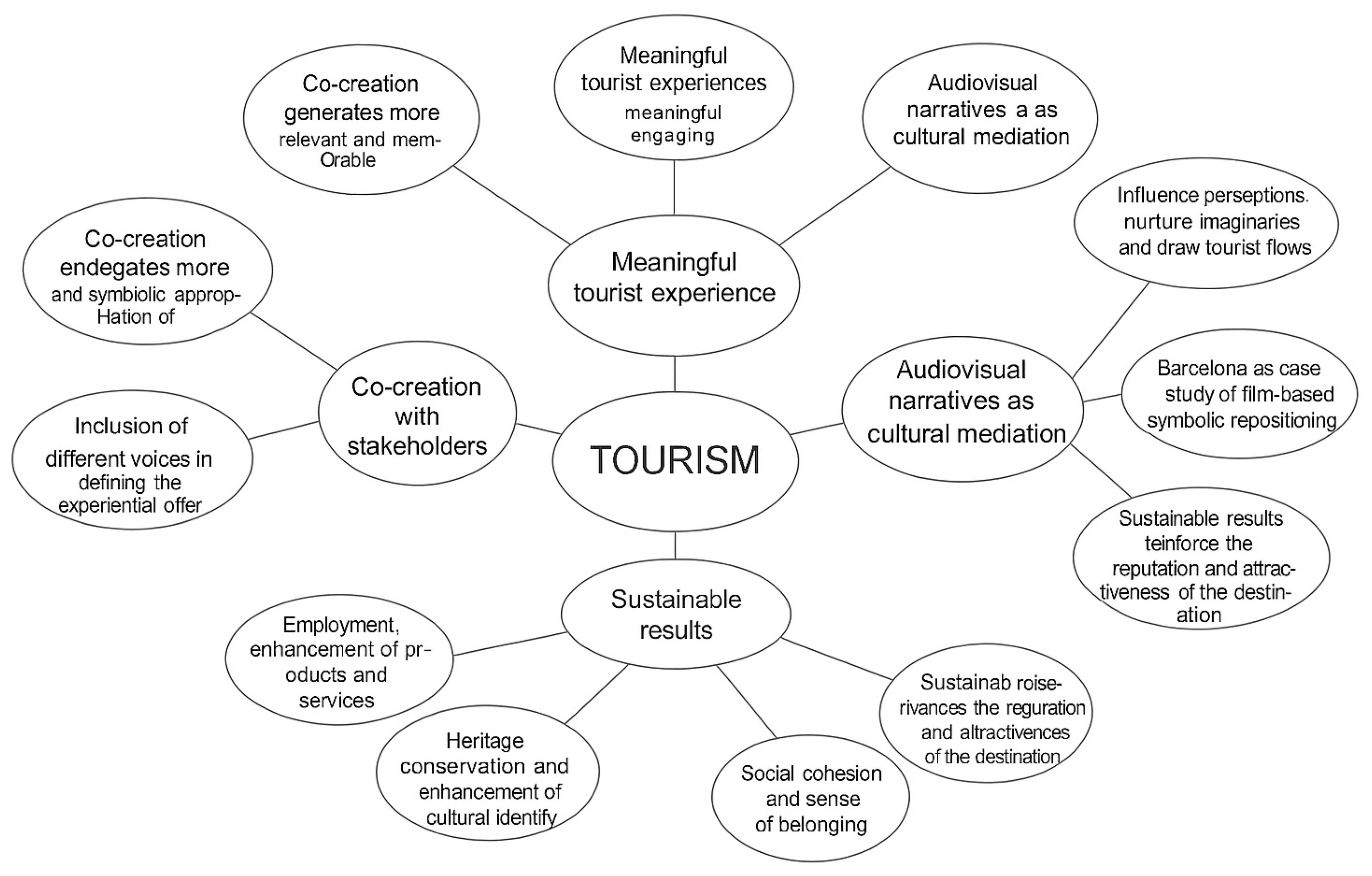
The conceptual framework proposed in this article is structured around four guiding principles: stakeholder co-creation, immersive and narrative-driven experiences, audiovisual cultural mediation and sustainability-oriented outcomes. As demonstrated in
Figure 2, these principles function as an integrated system in which co-creation and narrative innovation converge with territorial authenticity and ethical commitment to sustainability. This configuration serves to enhance the destination’s appeal, thereby generating symbolic and socio-economic value. Consequently, a virtuous cycle of reputation, differentiation and responsible development is established.
When considered as a whole, the relationships illustrated in
Figure 2 demonstrate that film tourism functions as an integrated ecosystem where the emotional, symbolic and sustainability dimensions coalesce. This synthesis provides the conceptual foundation for the experiential marketing framework developed in the following section.
Taken together, the relationships illustrated in
Figure 2 demonstrate that film tourism operates as an integrated system in which co-creation, narrative immersion and audiovisual mediation produce emotional, symbolic and sustainability-oriented value. This synthesis provides the conceptual basis for the experiential marketing framework developed in the following sections.
3. Study
3.1. Research Design and Conceptual Development
The present study adopts a predominantly conceptual and exploratory qualitative design, which is deemed appropriate for the development and illustration of a purpose-driven experiential marketing framework for film-induced destinations. Conceptual research facilitates the integration of interdisciplinary literature and the construction of theory-informed models (
Creswell & Creswell, 2017). The methodological strategy combines the following:
- (1)
An extensive literature review.
- (2)
The development of a conceptual model is the second element to be considered.
- (3)
An illustrative application employing stakeholder insights from Monsanto (Portugal).
The decision to utilise thematic analysis as the primary analytical approach is indicative of its efficacy in identifying patterns across qualitative data while preserving contextual meaning (
Braun & Clarke, 2006). Thematic analysis, in contrast to grounded theory, which is concerned with generating theories, is better suited to exploratory validation of pre-defined conceptual dimensions. Although text analysis was considered, it was ultimately deemed insufficient for capturing the experiential and emotional nuances central to this study.
3.1.1. Literature Review and Conceptual Sources
The framework draws on literature concerning experiential marketing and emotional branding (
Batat, 2024;
Gobé, 2001), purpose-driven strategy and marketing-mix evolution (
Blount & Leinwand, 2019;
Vargo et al., 2020), film-induced tourism and place branding (
Beeton, 2016;
Connell, 2012;
Hudson & Ritchie, 2006), and sustainability frameworks applied to tourism, particularly the
Global Reporting Initiative (GRI) (
2021). The five dimensions of the model integrated experience, branding, people, emotional touchpoints and processes were informed by these sources.
3.1.2. Why GRI Instead of ESG?
The study employs the GRI framework due to its operational suitability for destination management organisations (DMOs). While ESG indicators primarily address investor-oriented risk, GRI standards provide process-level guidance (e.g., GRI 203, 413 and 418) that can be mapped directly onto visitor journeys, stakeholder involvement, experiential design and community impacts. These factors render GRI more appropriate for purpose-driven marketing in film-induced destinations.
3.2. Empirical Illustration: Stakeholder Insights from Monsanto
This study does not seek to provide empirical validation; rather, it is an exploratory illustration designed to demonstrate the applicability of the model in a real-world context. Monsanto, a rural Portuguese village that boasts a strong cultural identity, recently gained international exposure as a filming location for the popular television series, House of the Dragon. Despite the paucity of official longitudinal visitation data at the time of writing, institutional stakeholders have reported a discernible increase in international awareness and visitor interest following the broadcast of House of the Dragon. This lends further support to the notion of Monsanto as a pertinent location for the examination of the experiential, symbolic and operational implications of film-induced tourism. This setting is pertinent for the exploration of intersections between film narratives, emotional engagement, place identity and experiential marketing.
- ✓
Data collection methodology
Between May and July 2025, a total of 25 semi-structured interviews were conducted with a range of stakeholders. For the purposes of this article, eight interviews were purposively selected to illustrate the dimensions of the proposed conceptual framework. These included:
- −
three tourists of different ages, nationalities and travel motivations.
- −
two local entrepreneurs operating in the hospitality and gastronomy sectors.
- −
two institutional representatives, one from the regional tourism board and one from the local authority.
- −
one long-term resident of the destination.
The interviews lasted between 30 and 45 min, were audio-recorded with the participants’ informed consent, transcribed verbatim and analysed thematically.
Examples of guiding interview questions included:
- −
how film narratives influence destination identity.
- −
which elements contribute to a memorable visitor experience in a film-related context.
- −
how destination management organisations should incorporate sustainability into experiential design.
- ✓
Analytical approach
The analytical approach adopted in this study entailed the utilisation of a coding system that was guided by the five dimensions of the conceptual model and relevant GRI indicators. The objective of the analysis was to:
- (i)
illustrate how each experiential dimension manifests in practice.
- (ii)
identify convergences and divergences across stakeholder perspectives.
- (iii)
assess the degree of conceptual-to-practical coherence within the proposed framework; and
- (iv)
support the relevance of the framework and its potential for transferability.
3.3. Alignment with Global Reporting Initiative (GRI)
To reinforce both operational and ethical consistency, each dimension of the experiential marketing model was mapped to relevant GRI indicators, thereby strengthening its applicability for DMOs adopting sustainability-oriented management. This alignment ensures that experiential strategies are not only market-driven but also transparent and socially responsible, addressing the principles of the 2030 Agenda for Sustainable Development.
Key links include the following:
The subject under discussion is GRI 203, which concerns the indirect economic impact of local value creation through integrated experiences.
The subject under discussion is GRI 413—Local Community Engagement, which is defined as the process of co-creation, resident involvement and authenticity.
Emotional intelligence (GRI 401/404) is a key component of staff development, particularly in the context of employment and training, where it is essential to cultivate emotional competence to ensure optimal performance and well-being in the workplace.
The fourth module of the programme, entitled ‘Customer Privacy: Digital Touchpoints and Post-Visit Engagement’, is designated GRI 418.
In accordance with GRI 102-43, the subject of stakeholder participation is addressed, with reference to participatory processes and governance.
The mapping is summarised in
Table 3, which presents the correspondence between the five dimensions of the experiential marketing model and the relevant GRI indicators.
This alignment positions the model simultaneously as
A strategic marketing framework.
A sustainability-oriented management tool.
A practical resource for DMOs, cultural programmers, event organisers and film-related initiatives.
Finally, stakeholder comments highlight how emotional appeal, narrative identity and audiovisual influence shape value creation in film-induced destinations, reinforcing the multidimensional nature of the proposed framework.
4. Findings and Discussion
4.1. Findings
The present study presents illustrative findings from semi-structured interviews with multiple stakeholder profiles connected to Monsanto. The profiles in question include tourists, repeat visitors/residents, local entrepreneurs and institutional representatives. The interviews were conducted using a standard guide that focused on the attractiveness and distinctiveness of the House of the Dragon setting, perceived economic and reputational effects, experience quality, feedback mechanisms, community engagement and human-resources aspects. The analysis was oriented by the five dimensions of the proposed model integrated experience, branding, people, emotional touchpoints and processes enabling the identification of converging patterns as well as meaningful divergences across participants. The quotations that follow illustrate these patterns and provide direct evidence for each theme.
4.1.1. Integrated Experience (Content, Authenticity and Co-Creation)
Interviewees consistently valued experiences that combine heritage, local history and filming locations, reporting greater memorability when guided narratives link series hotspots to the territory’s identity. As one entrepreneur noted, “We participated in a guided tour that integrated historical elements with filming locations, creating a sense of authenticity” (Entrepreneur #1). The following enhancements were suggested:
- ✓
Themed House of the Dragon tours.
- ✓
Historical re-enactments/live performances.
- ✓
A cinema-and-heritage interpretation centre.
- ✓
Gastronomy trails tied to the theme.
These findings align with experiential marketing principles emphasising immersion and co-creation as drivers of authenticity and memorability (
Pine & Gilmore, 1999;
Batat, 2024;
Vargo et al., 2020). Concurrently, the series’ centrality in terms of motivation exhibited variability. For a subset of individuals, the audiovisual connection was found to be a decisive factor in their decision to visit or recommend the series. Conversely, for others, this connection was either moderate or non-central, with the perspective that Monsanto possesses an independent existence that transcends its screen appeal. This ambivalence suggests the need to calibrate the balance between cinematic narrative and place identity for distinct segments (
Connell, 2012;
Hudson & Ritchie, 2006).
4.1.2. Branding and Notoriety (The Role of Audiovisual Narratives)
It was widely acknowledged by participants that the series had enhanced the destination’s visibility and had influenced expectations regarding the attractions to be seen and photographed. As one tourist explicitly noted, “
We came because the series made the village famous” (Tourist #2). However, the extent to which the series alone drives recommendation proved asymmetric: while there were enthusiastic endorsements grounded in the association, there were also conditional or neutral positions (e.g., recommending with reservations or acknowledging a low impact on motivation). These findings are in accordance with the literature on film-induced tourism, which emphasises the promotional power of audiovisual narratives while cautioning against over-reliance on media exposure (
Beeton, 2016;
Cardoso et al., 2017). The findings suggest a potential evolution from reactive awareness to an identity-led positioning, wherein cinematic representation serves to complement territorial authenticity (
Morgan et al., 2011).
4.1.3. People (Welcome, Emotional Mediation and Capability)
Human interaction was found to be a critical touchpoint in the research. One visitor recalled, “
Staff welcomed us warmly and explained the filming story” (Tourist #1), thereby emphasising the role of emotional competence and empathetic mediation in enhancing satisfaction and perceived authenticity (
Barsade, 2002;
Delcourt et al., 2017). The interviewees articulated their expectations for enhanced professionalisation and uniformity across these human touchpoints, particularly in the context of expanding themed offerings, such as guided tours, re-enactments, and workshops. About institutional infrastructure, the presence of teams dedicated exclusively to the thematic line remains ambiguous. Furthermore, there was an absence of detailed descriptions concerning systematic training in destination storytelling and emotional skills. These gaps resonate with the prevailing calls for investment in human capital as a pivotal factor in determining service quality and experiential value (
Agyeiwaah et al., 2021;
Lam et al., 2022).
4.1.4. Emotional Touchpoints (Digital and On-Site)
Digital engagement constituted an intrinsic element of the journey. As one participant explained, “
Sharing photos online was part of the fun” (Tourist #3), confirming the amplifying effect of user-generated content (UGC) on emotional connection and co-created storytelling (
Hosany & Gilbert, 2010;
Liu et al., 2019). On-site, the design of routes (linking series hotspots with heritage landmarks) and micro-sensory moments (gastronomy, viewpoints, the textures of granite) were perceived as stimulators of emotion and memory. The presence of these elements served to reinforce brand connection, whereas their absence resulted in an experience that was fragmented. These patterns suggest scope for curation and prompts (e.g., points of interest suitable for Instagram, official hashtags, micro photo-trails) to support cohesive storytelling across the visitor journey (
Batat, 2024).
4.1.5. Processes (Access, Information and Feedback)
Operational aspects also exerted an influence on perceptions of quality and trust. An institutional representative observed that the booking app was easy to use and respected privacy (Institutional #1), suggesting that transparent, user-friendly and privacy-aware processes are important for accessibility and confidence (
Weske, 2019). Concurrently, interviewees did not demonstrate the existence of a formal, continuous, multichannel system for the collection and management of thematic feedback (e.g., post-visit surveys specific to a film-related route, analytical dashboards, systematic UGC monitoring). The areas of wayfinding and interpretive support were identified as areas for improvement with a view to reducing friction and standardising quality. In a similar vein, the initiation of collaborative processes with local entrepreneurs, encompassing the coordination of opening hours, the consolidation of experiences, and the creation of themed passes, has been observed to be in its nascent stages. However, these initiatives have garnered the support of numerous participants (
Strnadl, 2006;
Ziggers & Henseler, 2016).
4.1.6. Perceived Sustainability (Expectations and Watch-Points)
Many interviewees placed a high value on sustainable practices, acknowledging their significance in terms of preservation and authenticity. However, the respondents also expressed uncertainty regarding the existence of tangible, concrete measures within the on-site experience, including but not limited to flow management at sensitive hotspots, protection of fragile assets, soft-mobility options, explicit community involvement, and mechanisms for the distribution of benefits. The prevailing expectation is that cinematic narratives will be influenced by sustainability principles and made tangible in operations (e.g., carrying-capacity guidance, responsible-visitor information, local/regenerative merchandising, route designs that distribute footfall). These findings resonate with the literature advocating for integrated sustainability in tourism development (
Swarbrooke, 1999;
Yi et al., 2022) and align with frameworks such as the
Global Reporting Initiative (GRI) (
2021).
4.1.7. Convergences and Divergences Across Stakeholders
Convergences included: (i) valuing integrated, interpreted experiences; (ii) recognising the series’ catalytic role in visibility; (iii) the importance of welcome and mediation by people; (iv) the centrality of digital touchpoints and sharing; (v) the need for clearer processes for information and feedback; and (vi) the relevance of sustainability as a condition for quality and legitimacy in tourism development.
Divergences concerned: (i) the weight of the series in motivation and recommendation (from decisive to peripheral); (ii) content preferences (greater emphasis on local culture vs. stronger emphasis on the House of the Dragon theme); (iii) investment expectations in re-enactments/infrastructure (some requesting deeper immersion, others wary of over-theming); and (iv) intention to return tied to the theme (higher among media-motivated first-timers; more moderate among repeat visitors driven primarily by nature/heritage).
4.1.8. Interpretive Synthesis Against the Proposed Model
The illustrative findings from Monsanto lend support to the model’s five dimensions as a means of interpreting cinematic experience.
The integrated experience is the primary value driver when territorial authenticity, audiovisual narrative and active participation are coherently fused (
Pine & Gilmore, 1999;
Batat, 2024).
The notion of branding as a facilitator of access, as posited by
Morgan et al. (
2011) and
Connell (
2012), is predicated on the premise that the destination’s inherent identity and its experiential translation are pivotal in ensuring enduring differentiation.
Emotional touchpoints, especially those in the digital realm, serve to extend the experience and multiply visibility through UGC. This phenomenon necessitates the implementation of curation and ethical safeguards (
Hosany & Gilbert, 2010;
Liu et al., 2019).
The establishment of clear processes (information, wayfinding, booking, feedback, partnerships) is of paramount importance in ensuring consistency, efficiency and learning (
Weske, 2019;
Strnadl, 2006).
It is important to note that these findings are exploratory in nature and are based on a non-representative set of interviews. The purpose of the illustrations is twofold: firstly, to demonstrate the applicability of the conceptual framework, and secondly, to identify operational priorities and research hypotheses for subsequent, more rigorous studies.
In summary, the findings illustrate how the five dimensions of the proposed framework integrated experience, branding, people, emotional touchpoints and processes emerge across stakeholder narratives in the Monsanto context. While these findings are not necessarily generalisable to the wider population, they do provide a valuable indication of how film-induced tourism may generate experiential and emotional value that is consistent with a purpose-driven sustainability perspective.
4.2. Discussion
The findings provide illustrative support for the purpose-driven experiential marketing model, offering insight into how its five dimensions may operate in film-induced destinations. Three overarching insights emerge from this analysis.
Firstly, the results indicate that purpose is not merely a strategic statement but may function as a guiding principle that shapes operational marketing practices. These dynamics appear to influence the incorporation of emotional, cultural and sustainability elements into the tourist experience, contributing to a shift from transactional approaches towards value-based engagement (
Hurth & Vrettos, 2021;
Fernandes et al., 2024). The analysis of stakeholder narratives suggests a preference among visitors for experiences that combine authenticity, narrative immersion and ethical positioning. In this sense, purpose may serve as an anchor for trust, differentiation and long-term value creation (
Sinek, 2017).
Secondly, the experiential marketing mix derived from the literature—integrated experience, branding, people, emotional touchpoints and processes—appears to be applicable in a real-world context. Evidence from Monsanto indicates that these dimensions are interdependent: branding attracts tourists, people mediate emotional meaning, emotional touchpoints stimulate sharing and identification, and processes help ensure consistency, efficiency and protection (e.g., data privacy). This interdependence supports the view that experiential marketing in film tourism benefits from a holistic, integrated approach rather than isolated tactical actions (
Batat, 2024;
Pine & Gilmore, 1999;
Vargo et al., 2020).
Thirdly, the findings were mapped onto selected GRI indicators, illustrating the potential for experiential marketing to intersect with communicative, promotional, sustainability reporting and governance purposes. Alignment with GRI 203 (Indirect Economic Impact), 413 (Local Community Engagement), 404 (Training and Education) and 418 (Data Privacy) suggests that Destination Management Organisations (DMOs) may operationalise sustainability through the experiential journey itself rather than regarding it as an external or parallel policy layer (
Global Reporting Initiative (GRI), 2021;
Yi et al., 2022).
On this basis, three implications arise for destinations associated with film exposure:
Co-creation and user-generated content (UGC) appear to play a significant role in strengthening loyalty and deepening attachment to the destination (
Hosany & Gilbert, 2010;
Liu et al., 2019).
Sustainability frameworks such as the Global Reporting Initiative (GRI) may provide a meaningful structure for destination management strategies that prioritise transparency, community well-being and long-term competitiveness (
Swarbrooke, 1999;
Yi et al., 2022).
Overall, the discussion offers preliminary insight into the relevance of a purpose-driven, experiential approach as a strategic lens for destinations seeking to leverage audiovisual exposure while promoting social, cultural and environmental responsibility.
4.3. Theoretical Implications
The present study offers several contributions to theory in the fields of experiential marketing, film-induced tourism and sustainable destination management.
A key contribution lies in extending the conceptual foundations of experiential marketing by embedding it within film-induced destinations and linking it to organisational purpose. While a substantial body of research has examined the influence of films on destination image and travel motivation (
Beeton, 2016;
Hudson & Ritchie, 2006), the proposed model goes beyond image effects by introducing purpose-driven experiential marketing as a multidimensional construct in which emotional value, territorial authenticity and sustainability operate as primary drivers of experience design. This responds to calls for frameworks that integrate ethical, emotional and socio-cultural dimensions more explicitly into tourism experiences (
Batat, 2024;
Araújo-Vila et al., 2024).
A further theoretical contribution relates to place branding and cultural tourism. The model emphasises the mediating role of audiovisual narratives in strengthening territorial identity. This perspective enriches existing approaches which have traditionally prioritised positioning strategies and promotional imagery (
Anholt, 2007;
Morgan et al., 2011). Cinematic representation may foster symbolic co-creation between tourists and destinations, reinforcing authenticity and cultural resonance (
Connell, 2012;
Richards, 2011).
Another contribution concerns sustainability, an area that has received relatively limited attention within film-tourism theory. The alignment of the five experiential dimensions with Global Reporting Initiative (GRI) indicators and the United Nations Sustainable Development Goals (SDGs) introduces a systematic lens through which socio-economic, cultural and environmental impacts may be considered (
Global Reporting Initiative (GRI), 2021;
Yi et al., 2022). This integration supports emerging debates around responsible tourism development and the balance between cultural valorisation and commercialisation (
Méndez-León et al., 2021;
Fernandes et al., 2024).
Finally, although Monsanto is used as an illustrative case, the conceptual model demonstrates potential transferability to other film-induced destinations. Its emphasis on purpose, experiential design and sustainability offers a versatile framework applicable across diverse territorial and cultural contexts. This positions the model as a useful reference point for future research on experiential tourism and the strategic role of audiovisual narratives in destination management (
Pike & Page, 2014;
Vargo et al., 2020).
4.4. Limitations and Future Research
Despite the conceptual contributions of this study, several limitations should be acknowledged.
The primary limitation concerns the exploratory nature of the empirical component. While illustrative, the qualitative insights from Monsanto offer indicative understanding rather than systematic empirical validation of the model. The strategic subsample of interviews was diverse but not designed to support generalisation or claims of representativeness. In particular, the illustrative excerpts reported in the paper include only a small number of resident and tourist voices. As such, the interview material should be interpreted as exploratory evidence supporting conceptual reflection, rather than as a sufficient empirical basis for generalisable conclusions. Future research should incorporate larger datasets and apply rigorous qualitative protocols such as multi-coder thematic analysis or grounded theory to strengthen analytical depth and reliability (
Braun & Clarke, 2006;
Corbin & Strauss, 2014).
A second limitation relates to the specific cultural and geographical context examined during an early stage of film-induced visibility. Film tourism dynamics often evolve over time, influenced by media cycles, infrastructure development and resident attitudes (
Connell, 2012;
Beeton, 2016). Longitudinal research would therefore be valuable in assessing how the five dimensions—particularly emotional touchpoints and integrated experience—change across destination maturity stages.
Thirdly, although the framework aligns with GRI sustainability indicators, operational measurement was beyond the scope of this study. Future research could examine how Destination Management Organisations (DMOs) might translate these indicators into actionable metrics and integrate them into monitoring systems for visitor experience, community impact and environmental performance. Mixed methods design combining surveys, digital trace data (e.g., UGC analytics) and socio-economic indicators would provide more comprehensive evaluation (
Swarbrooke, 1999;
Yi et al., 2022).
A further limitation concerns the complex psychological processes underpinning experiential and narrative components of film tourism, including identity projection, media–place affinity and digital co-creation. These remain under-explored within sustainability-oriented tourism marketing. Insights from psychology, cultural studies and digital anthropology may help refine the emotional and symbolic aspects of the model (
Hosany & Gilbert, 2010;
Larsen, 2007).
Finally, comparative studies across destinations varying in scale, media reach, governance structures and cultural heritage would enhance understanding of the model’s transferability. Its application to urban, rural and cross-border settings, or to festivals and creative events, may reveal different configurations and boundary conditions (
Pike & Page, 2014;
Richards, 2011).
In conclusion, the model provides a foundation for further theoretical development and empirical investigation. Its broader validation will depend on extended samples, diversified destinations, quantitative metrics and interdisciplinary approaches capable of capturing the multidimensional nature of experiential, film-induced tourism.
5. Conclusions
The article proposed a framework for experiential marketing in the context of film-induced destinations, with a particular focus on integrating emotional engagement, value-based branding and sustainability considerations aligned with Global Reporting Initiative (GRI) indicators. The framework was illustrated through qualitative insights from Monsanto, a rural village where international audiovisual exposure intersects with local identity and heritage.
Rather than claiming empirical validation, the study offers an exploratory illustration designed to demonstrate the framework’s relevance and potential transferability. The findings suggest that co-creation, territorial authenticity and emotionally resonant branding may enhance the meaningfulness of film-related tourism experiences, while simultaneously supporting socially responsible destination strategies. These insights contribute to ongoing debates on how Destination Management Organisations (DMOs) can operationalise purpose and sustainability within experiential marketing practices.
While the conceptual model provides a useful foundation, further research is required to test and refine its applicability across diverse cultural and geographical contexts. Such efforts may help deepen understanding of how cinematic narratives, experiential design and governance mechanisms interact in shaping sustainable tourism futures.
This conceptual contribution provides a foundation for advancing research and practice in film-induced tourism, offering DMOs a strategic lens to integrate purpose, experiential design and sustainability.