
Gen Z’s Travel Preferences: Reflective and Nature-Rooted Tourism with the Concept of Eco-Experiential Tourism

 , , , and
Abstract
1. Introduction
- How is the tourism space evolving to accommodate Gen Z’s tourism activities? Is the Gen Z tourism space different from the tourism spaces that accommodated previous generations’ tourism activities?
- What are the push and pull factors that influence Gen Z’s travel motivations?
- What are the preferences of Gen Z tourists? Do these preferences take environmental sustainability into account?
2. Literature Review
2.1. Generation Z (Gen Z) Characteristics
2.2. Tourism Motivation: Push Factors and Pull Factors of Tourism
2.3. Intergenerational Tourism Behavior
2.4. Tourists’ Concern for Nature
3. Materials and Methods
3.1. Research Location
3.2. Sampling Design
3.3. Data Collections and Research Instruments
- Mapping the location of tourist attractions;
- Mapping the location of tourist facilities at tourist attractions, including amenities (restaurants, accommodations, parking areas, restrooms, souvenir shops) and ancillary facilities (supporting facilities such as Automatic Teller Machine (ATM) centers, health posts, banks, money changers, rest areas);
- Mapping the tourist activity points engaged with by Gen Z tourists.
3.4. Validity and Reliability Test
3.5. Data Analysis
4. Result
4.1. Profile of Samples
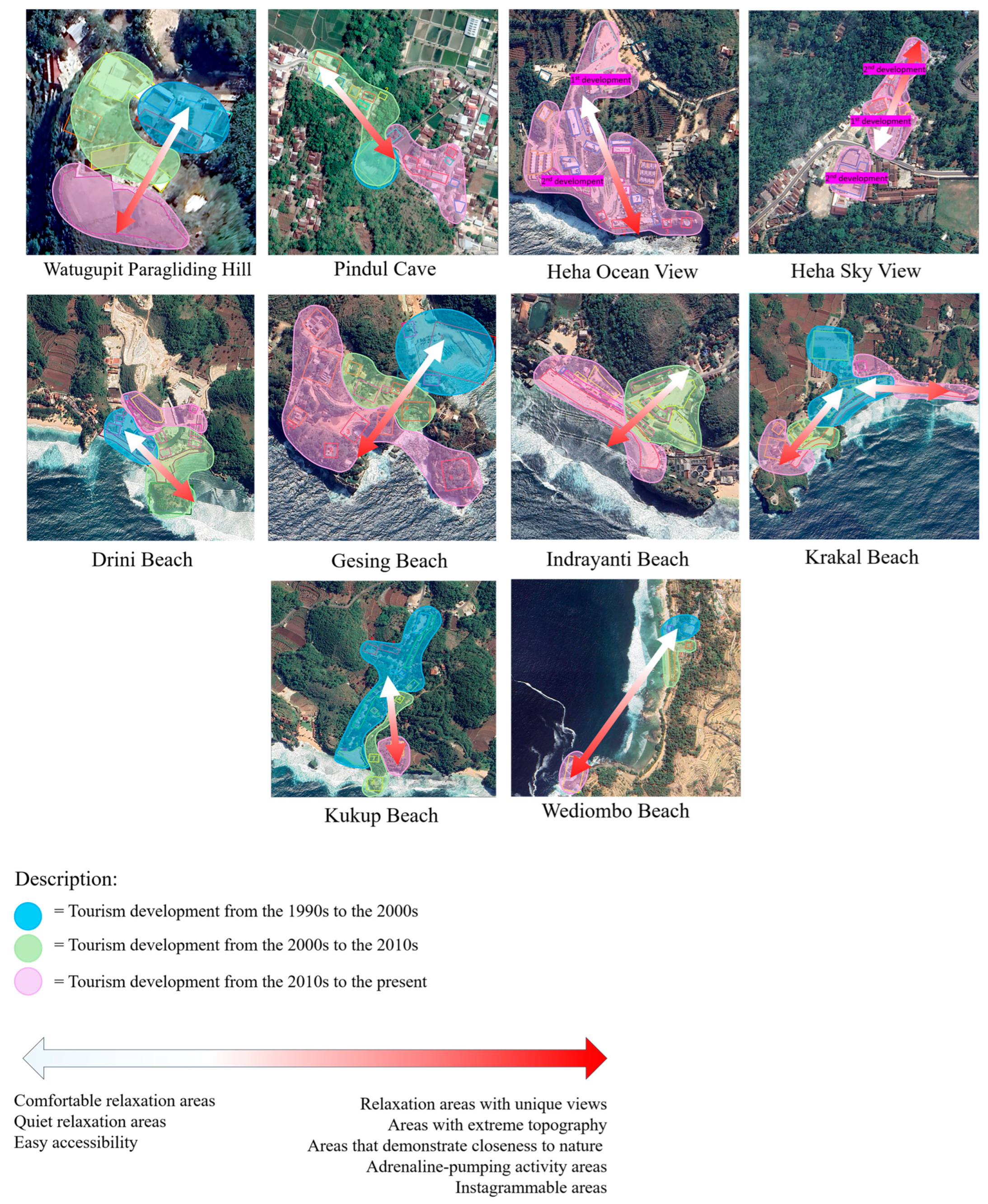
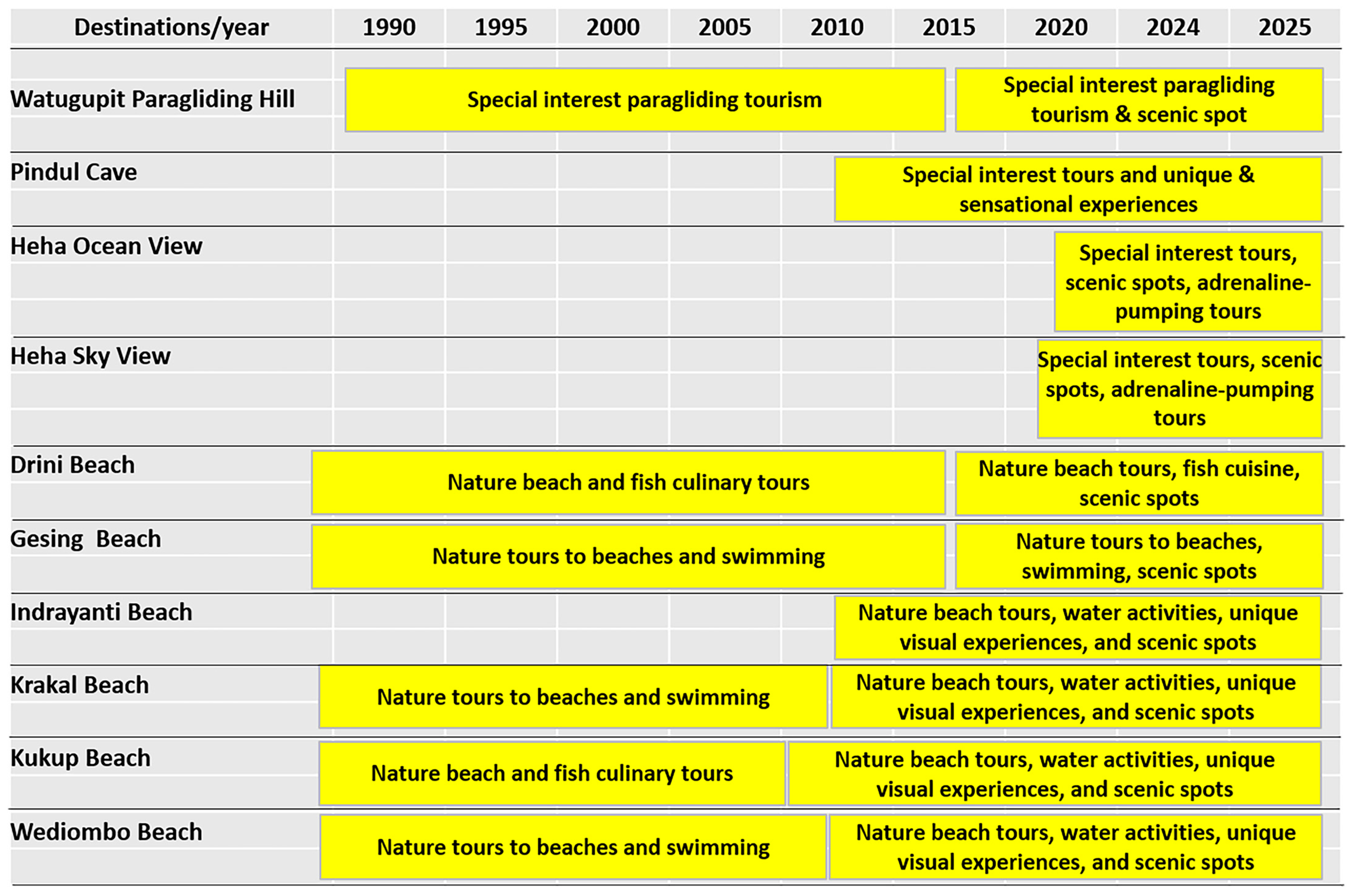
4.2. Spatial Development of Tourism
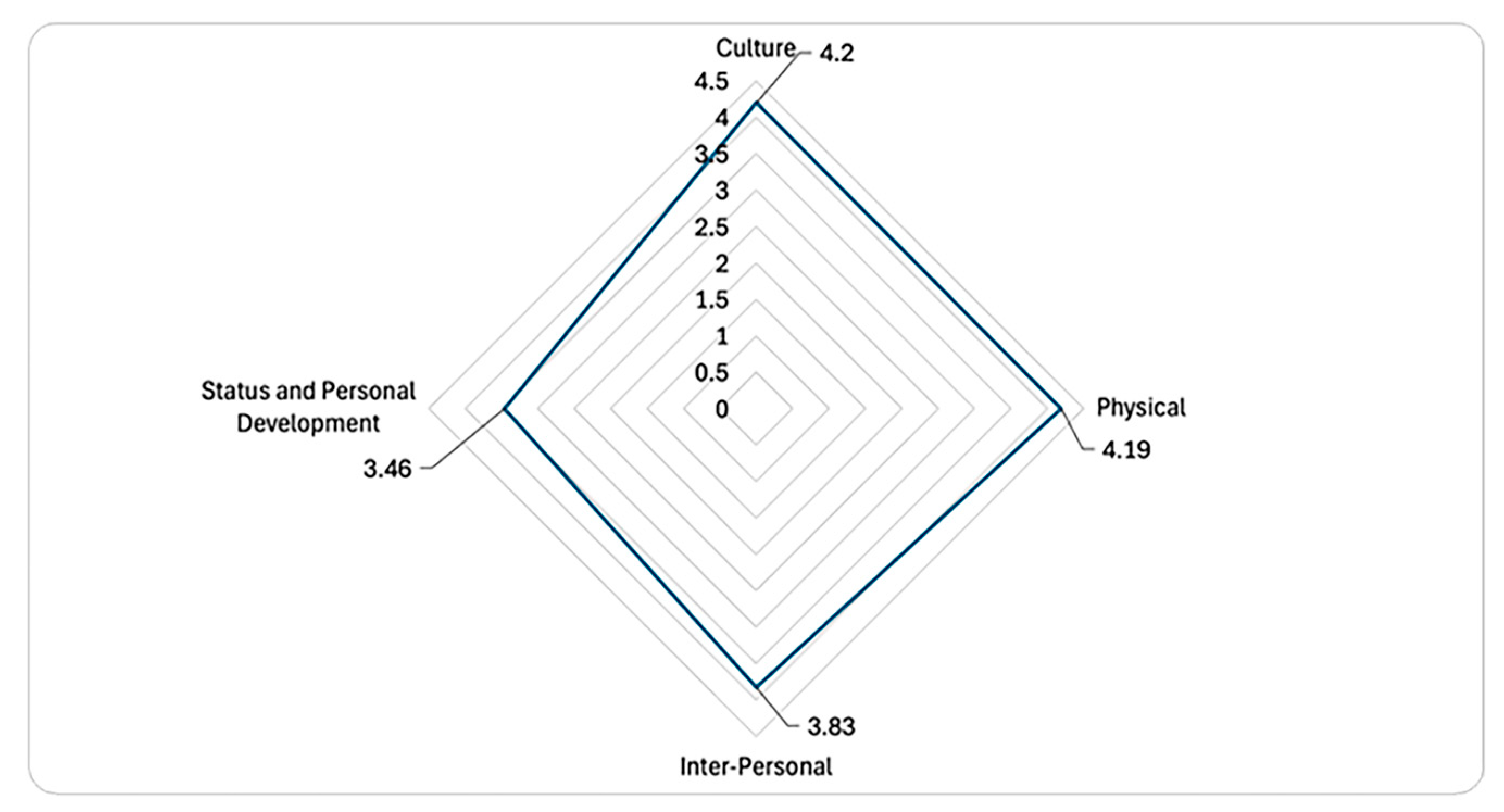
4.3. Analysis of Gen Z Tourism Push Factors
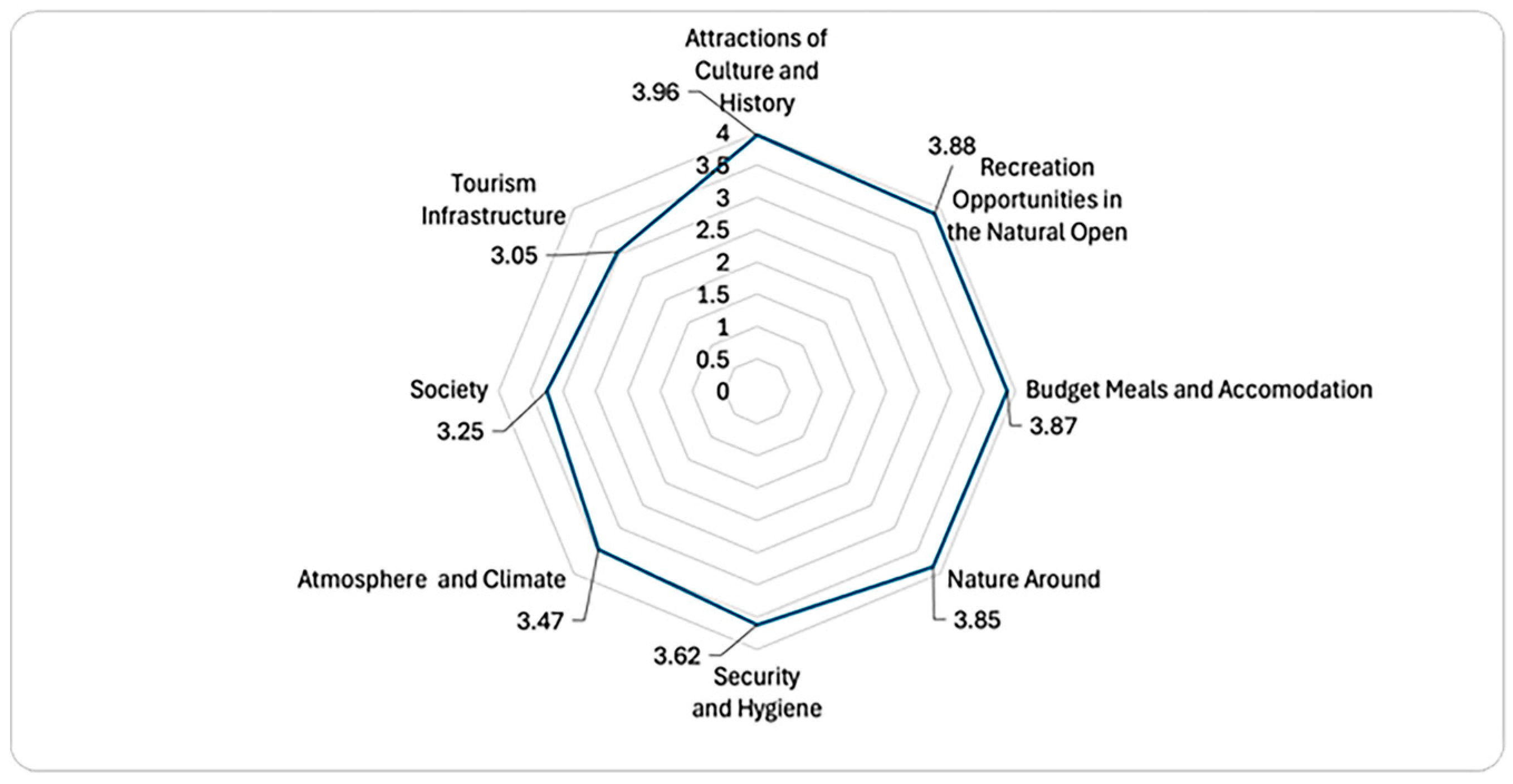
4.4. Analysis of Gen Z Tourism Pull Factors
5. Discussion
6. Conclusions
6.1. Practical Implications
6.2. Theoretical Implications
6.3. Research Limitation
6.4. Further Research
Author Contributions
Funding
Institutional Review Board Statement
Informed Consent Statement
Data Availability Statement
Conflicts of Interest
References
- Akgiş İlhan, Ö., Özoğul Balyalı, T., & Günay Aktaş, S. (2022). Demographic change and operationalization of the landscape in tourism planning: Landscape perceptions of the generation Z. Tourism Management Perspectives, 43, 100988. [Google Scholar] [CrossRef]
- Antara, M., & Prameswari, Y. A. (2018). Push and pull factors of tourists visit the tourism destination of Bali, Indonesia. Journal of Tourism and Hospitality Management, 6(1), 112–120. Available online: https://jthm.thebrpi.org/journals/jthm/Vol_6_No_1_June_2018/11.pdf (accessed on 1 November 2025).
- Aspariyanthi, N. L. P. P., Rahjasa, P. S. L., & Rahadiarta, I. G. N. P. S. (2023). Generation Z travel planning: Analysis of tourist preferences in adventure tourism in Bali province. LACULTOUR: Journal of Language and Cultural Tourism, 2(1), 55–59. [Google Scholar] [CrossRef]
- Beerli, A., & Martín, J. D. (2004). Factors influencing destination image. Annals of Tourism Research, 31(3), 657–681. [Google Scholar] [CrossRef]
- Buffa, F. (2015). Young tourists and sustainability. Profiles, attitudes, and implications for destination strategies. Sustainability, 7(10), 14042–14062. [Google Scholar] [CrossRef]
- Cao, X., Qiu, J., Wang, L., & Zhou, G. (2022). An integrative model of tourists’ pro-environmental behavior based on the dual path of rational planning and embodied emotion. International Journal of Environmental Research and Public Health, 19(13), 7910. [Google Scholar] [CrossRef]
- Chang, C.-W., & Chang, S.-H. (2023). The impact of digital disruption: Influences of digital media and social networks on forming digital natives’ attitude. SAGE Open, 13(3), 1–10. [Google Scholar] [CrossRef]
- Chicca, J., & Shellenbarger, T. (2018). Connecting with generation Z: Approaches in nursing education. Teaching and Learning in Nursing, 13(3), 180–184. [Google Scholar] [CrossRef]
- Chillakuri, B. (2020). Understanding generation Z expectations for effective onboarding. Journal of Organizational Change Management, 33(7), 1277–1296. [Google Scholar] [CrossRef]
- Cohen, S. A., & Cohen, E. (2019). New directions in the sociology of tourism. Current Issues in Tourism, 22(2), 153–172. [Google Scholar] [CrossRef]
- Corbisiero, F., & Ruspini, E. (2018). Millennials and generation Z: Challenges and future perspectives for international tourism. Journal of Tourism Futures, 4(1), 3–6. [Google Scholar] [CrossRef]
- David, B. D. C. (2023). Empirical analysis of the 5-a’S of tourism and its impact on tourists’ travel intentions. International Journal of Management Studies and Social Science Research, 5(5), 157–163. [Google Scholar] [CrossRef]
- Dimock, M. (2019). Defining generations: Where millennials end and generation Z begins. Pew Research Center, 17(1), 1–7. [Google Scholar]
- Elshaer, I. A., Azazz, A. M., & Fayyad, S. (2024). Residents’ environmentally responsible behavior and tourists’ sustainable use of cultural heritage: Mediation of destination identification and self-congruity as a moderator. Heritage, 7(3), 1174–1187. [Google Scholar] [CrossRef]
- Gabrielova, K., & Buchko, A. A. (2021). Here comes generation Z: Millennials as managers. Business Horizons, 64(4), 489–499. [Google Scholar] [CrossRef]
- Goeldner, C., & Ritchie, J. R. (2006). Tourism principles, practices and philosophies (10th ed.). John Wiley & Sons. [Google Scholar]
- Gretzel, U., Sigala, M., Xiang, Z., & Koo, C. (2015). Smart tourism: Foundations and developments. Electron Markets, 25, 179–188. [Google Scholar] [CrossRef]
- Gunungkidul Regency Central Statistics Agency. (2024a). Gross regional domestic product of gunungkidul regency by industry 2019–2023. Gunungkidul Regency Central Statistics Agency.
- Gunungkidul Regency Central Statistics Agency. (2024b). Gunungkidul regency tourism statistics table. Gunungkidul Regency Central Statistics Agency.
- Haddouche, H., & Salomone, C. (2018). Generation Z and the tourist experience: Tourist stories and use of social networks. Journal of Tourism Futures, 4(1), 69–79. [Google Scholar] [CrossRef]
- Han, H. (2021). Consumer behavior and environmental sustainability in tourism and hospitality: A review of theories, concepts, and latest research. Journal of Sustainable Tourism, 29(7), 1021–1042. [Google Scholar] [CrossRef]
- Hernanda, D. W., Mindarti, L. I., & Riyanto. (2018). Community empowerment based on good tourism governance in the development of tourism destination (case study of Kawah Ijen Tourism Buffer Zone Kampung Kopi Gombengsari Village, Kalipuro District, Banyuwangi Regency). Journal of Indonesian Tourism and Development Studies, 6(2), 126–135. [Google Scholar] [CrossRef]
- Hoxha, V., & Zeqiraj, E. (2020). The impact of generation Z in the intention to purchase real estate in Kosovo. Property Management, 38(1), 1–24. [Google Scholar] [CrossRef]
- Huang, S., & Hsu, C. H. C. (2009). Travel motivation: Linking theory to practice. International Journal of Cultural Tourism and Hospitality Research, 3(4), 287–295. [Google Scholar] [CrossRef]
- Hussain, K., Mohammad, M., Alam, D., Malik, A., & Tarhini, A. (2024). Heliyon from likes to luggage: The role of social media content in attracting tourists. Heliyon, 10(19), e38914. [Google Scholar] [CrossRef]
- Irimias, A., Mitev, A., & Michalko, G. (2016). Demographic characteristics influencing religious tourism behaviour: Evidence form a central-eastern-European country. International Journal of Religious Tourism and Pilgrimage, 4(4), 19–32. [Google Scholar] [CrossRef]
- Ivasciuc, I. S., Sequeira, A. S., Brown, L., Ispas, A., & Peyré, O. (2025). Digital natives on the move: Cross-cultural insights into generation Z’s travel preferences. Sustainability, 17(14), 6601. [Google Scholar] [CrossRef]
- Jalilvand, M. R., & Samiei, N. (2012). The effect of electronic word of mouth on brand image and purchase intention: An empirical study in the automobile industry in Iran. Marketing Intelligence and Planning, 30(4), 460–476. [Google Scholar] [CrossRef]
- Jiang, Y., Lyu, C., & Li, J. (2024). Unpacking generation Z tourists’ motivation for intangible cultural heritage tourism. Tourism Recreation Research, 50(5), 1263–1269. [Google Scholar] [CrossRef]
- Jönsson, C., & Devonish, D. (2008). Does nationality, gender, and age affect travel motivation? A case of visitors to the Caribbean Island of Barbados. Journal of Travel and Tourism Marketing, 25(3–4), 398–408. [Google Scholar] [CrossRef]
- Kara, N. S., & Mkwizu, K. H. (2020). Demographic factors and travel motivation among leisure tourists in Tanzania. International Hospitality Review, 34(1), 81–103. [Google Scholar] [CrossRef]
- Kassean, H., & Gassita, R. (2013). Exploring tourists’ “push and pull” motivations to visit mauritius as a holiday destination. Tourismos: An International Multidiciplinary Journal of Tourism, 8(2), 39–56. [Google Scholar] [CrossRef]
- Khalilzadeh, J., Kozak, M., & Del Chiappa, G. (2024). Tourism motivation: A complex adaptive system. Journal of Destination Marketing & Management, 31, 100861. [Google Scholar] [CrossRef]
- Khuc, V. Q., Doan, D. N., Nguyen, A. T., Hoang, K. L., Le, K. C., Tran, T. T., Le, D. H., Nguyen, T. H., Tran, T. Q. T., & Doan, P. T. (2025). Exploring youth tourists’ perceptions and willingness to pay for improving community-based tourism associated with cultural preservation in Vietnam. Tourism and Hospitality, 6(4), 219. [Google Scholar] [CrossRef]
- Kim, J., & Tussyadiah, I. P. (2013). Social networking and social support in tourism experience: The moderating role of online self-presentation strategies. Journal of Travel & Tourism Marketing, 30(1–2), 78–92. [Google Scholar] [CrossRef]
- Konieczna, P., & Trybu’s-Borowiecka, K. (2025). Touristic behaviors of generation Z: Reasons behind the reduction in travel among young people. Sustainability, 17, 7919. [Google Scholar] [CrossRef]
- Krisnadevi, D. A. P. P., Sudiarta, I. N., & Suwena, I. K. (2020). Preferensi dan persepsi wisatawan mancanegara ke Nusa Penida, Klungkung. Jurnal IPTA (Industri Perjalanan Wisata), 8(1), 18–23. [Google Scholar]
- Lanier, K. (2017). 5 things HR professionals need to know about generation Z: Thought leaders share their views on the HR profession and its direction for the future. Strategic HR Review, 16(6), 288–290. [Google Scholar] [CrossRef]
- Luong, T.-B. (2023). Eco-destination image, place attachment, and behavioral intention: The moderating role of eco-travel motivation. Journal of Ecotourism, 23(4), 631–656. [Google Scholar] [CrossRef]
- Mahendrayani, I. G. A. P. S., & Suryawan, I. B. (2017). Strategi Pemasaran Daya Tarik Wisata Untuk Meningkatkan Jumlah Kunjungan Wisatawan Ke Daya Tarik Wisata Sangeh Kabupaten Badung Provinsi Bali. Jurnal Destinasi Pariwisata, 5(2), 240–247. [Google Scholar] [CrossRef]
- Mandić, A., Knight, D. W., Vuković, M., & Thomsen, B. (2025). Place attachment, awareness of environmental responsibility and pro-environmental behaviour of visitors in protected natural areas. Tourism Planning & Development, 22(5), 705–730. [Google Scholar] [CrossRef]
- Marques, J., Gomes, S., Ferreira, M., Rebuá, M., & Marques, H. (2025). Generation Z and travel motivations: The impact of age, gender, and residence. Tourism and Hospitality, 6(2), 82. [Google Scholar] [CrossRef]
- Martínez Caro, L., & Martínez García, J. A. (2008). Developing a multidimensional and hierarchical service quality model for the travel agency industry. Tourism Management, 29(4), 706–720. [Google Scholar] [CrossRef]
- Mill, R. C., & Morrison, A. M. (2009). The tourism system. Kendall Hunt Publishing Company. [Google Scholar]
- Minazzi, R., & Grechi, D. (2025). Exploring gen Z sustainable behavior in the hospitality industry. Administrative Sciences, 15(7), 266. [Google Scholar] [CrossRef]
- Mohsin, A., Lengler, J., & Chaya, P. (2017). Does travel interest mediate between motives and intention to travel? A case of young Asian travellers. Journal of Hospitality and Tourism Management, 31, 36–44. [Google Scholar] [CrossRef]
- Munar, A. M., Gyimóthy, S., & Cai, L. (2013). Tourism social media: Transformations in identity, community and culture. Emerald Group Publishing Limited. [Google Scholar] [CrossRef]
- Mutinda, R., & Mayaka, M. (2012). Application of destination choice model: Factors influencing domestic tourists destination choice among residents of Nairobi, Kenya. Tourism Management, 33(6), 1593–1597. [Google Scholar] [CrossRef]
- Naidoo, P., Ramseook-Munhurrun, P., Seebaluck, N. V., & Janvier, S. (2015). Investigating the motivation of baby boomers for adventure tourism. Procedia—Social and Behavioral Sciences, 175, 244–251. [Google Scholar] [CrossRef]
- Nicoletta, R., & Servidio, R. (2012). Tourists’ opinions and their selection of tourism destination images: An affective and motivational evaluation. Tourist Management Perspectives, 4, 19–27. [Google Scholar] [CrossRef]
- Nowacki, M., & Kowalczyk-anioł, J. (2023). Gen Z’ s attitude towards green image destinations, green tourism and behavioural intention regarding green holiday destination choice: A study in Poland and India. Sustainability, 15(10), 7860. [Google Scholar] [CrossRef]
- Octaviany, V., & Ervina, E. (2023). Traveller behavioral changes: Push and pull factors analysis. Asia-Pacific Management and Business Application, 12(1), 115–136. [Google Scholar] [CrossRef]
- Octaviany, V., & Mardiyana, E. (2024). Generation travel behavior to visit tourism destination. Asian Journal of Social Science and Management Technology, 6(2), 54–65. [Google Scholar]
- Otcheskiy, I., Mutaliyeva, L., Yudina, E., Stepanova, D., Shelygov, A., & Seminskaya, E. (2023). Developing tourist destination potential under influence of internal and external factors. Anais Brasileiros de Estudos Turísticos: ABET, 13(1), 1–8. [Google Scholar]
- Pearce, P. L., & Lee, U. I. (2005). Developing the travel career approach to tourist motivation. Journal of Travel Research, 43(3), 226–237. [Google Scholar] [CrossRef]
- Petrevsk, B. (2012). Tourism contribution to regional development: Best practice in macedonia. Journal of Community Positive Practices, 12(3), 424–440. [Google Scholar]
- Pinho, M., & Gomes, S. (2023). Generation Z as a critical question mark for sustainable tourism—An exploratory study in Portugal. Journal of Tourism Futures, 10(3), 486–503. [Google Scholar] [CrossRef]
- Pomfret, G., Sand, M., & May, C. (2023). Journal of outdoor recreation and tourism conceptualising the power of outdoor adventure activities for subjective well-being: A systematic literature review. Journal of Outdoor Recreation and Tourism, 42, 100641. [Google Scholar] [CrossRef]
- Popescu, R., & Zamfir, A. (2011). Strategic role of ecotourism for romania’ s regional development (pp. 250–258). University of Ostrava. [Google Scholar]
- Popşa, R. E. (2024). Exploring the generation Z travel trends and behavior. Studies in Business and Economics, 19(1), 189–199. [Google Scholar] [CrossRef]
- Pricope Vancia, A. P., Băltescu, C. A., Brătucu, G., Tecău, A. S., Chițu, I. B., & Duguleană, L. (2023). Examining the disruptive potential of generation Z tourists on the travel industry in the digital age. Sustainability, 15(11), 8756. [Google Scholar] [CrossRef]
- Priporas, C. V., Stylos, N., & Kamenidou, I. (2020). City image, city brand personality and generation Z residents’ life satisfaction under economic crisis: Predictors of city-related social media engagement. Journal of Business Research, 119, 453–463. [Google Scholar] [CrossRef]
- Purnomo, S., Rahayu, E. S., Riani, A. L., Suminah, S., & Udin, U. (2020). Empowerment model for sustainable tourism village in an emerging country. The Journal of Asian Finance, Economics and Business, 7(2), 261–270. [Google Scholar] [CrossRef]
- Rani, F. P., Kusuma, H. E., & Tampubolon, A. C. (2020). Hubungan Motivasi, Kegiatan dan Karakter Tempat Wisata Pada Pusaka Saujana Imogiri Yogyakarta. Jurnal Master Pariwisata (JUMPA), 6(2), 470–495. [Google Scholar] [CrossRef]
- Richards, G. (2021). Rethinking cultural tourism. Edward Elgar. [Google Scholar] [CrossRef]
- Richards, G., & Morrill, W. (2020). Motivations of global millennial travelers. Revista Brasileira de Pesquisa em Turismo, 14(1), 126–139. [Google Scholar] [CrossRef]
- Rif’an, A., Maarif, F., & Situmorang, D. A. G. (2024). Understanding generation Z’s ecotourism motivation and perception in central sulawesi. Jurnal Wasian, 11(2), 39–46. [Google Scholar] [CrossRef]
- Robinson, V. M., & Schänzel, H. A. (2019). A tourism inflex: Generation Z travel experiences. Journal of Tourism Futures, 5(2), 127–141. [Google Scholar] [CrossRef]
- Salinero, Y., Prayag, G., Gomez-Rico, M., & Molina-Collado, A. (2022). Generation Z and pro-sustainable tourism behaviors: Internal and external drivers. Journal of Sustainable Tourism, 33(6), 1059–1078. [Google Scholar] [CrossRef]
- Samitra, D., & Rozi, Z. F. (2017, December 14–15). Conservation character of biology learning for Z generation. Conference Proceeding BICSE (pp. 168–171), Bengkulu, Indonesia. [Google Scholar]
- Sandeep, K., & Vinod, K. (2014). Perception of socio-culture impacts of tourism: A sociological review. International Research Journal of Social Sciences, 3(2), 40–43. [Google Scholar]
- Savas, B., Beskaya, A., & Famil, S. (2010). Analyzing the impact of international tourism on economic growth in Turkey. ZKU Journal of Social Sciences, 6(12), 121–136. [Google Scholar]
- Scheyvens, R., & Biddulph, R. (2018). Inclusive tourism development. Tourism Geographies: An International Journal of Tourism Space, Place and Environment, 20(4), 589–609. [Google Scholar] [CrossRef]
- Schönherr, S., & Pikkemaat, B. (2024). Young peoples’ environmentally sustainable tourism attitude and responsible behavioral intention. Tourism Review, 79(4), 939–952. [Google Scholar] [CrossRef]
- Seibert, S. A. (2021). Problem-based learning: A strategy to foster generation Z’s critical thinking and perseverance. Teaching and Learning in Nursing, 16(1), 85–88. [Google Scholar] [CrossRef]
- Semara, I. M. T., & Lestari, D. (2021). Pengaruh Terpaan Informasi Pandemi COVID-19 Terhadap Loyalitas Wisatawan Berwisata Dengan Minat Berkunjung Sebagai Variabel Mediasi. Jurnal IPTA, 9(2), 258–268. [Google Scholar] [CrossRef]
- Solmaz, R. A. B., Kara, N., & Kartal, Ö. (2017). The importance of graphology in determining of the managerial qualities of the future women leaders within the Z generation: A research done on international business management students of coventry university. European Journal of Interdisciplinary Studies, 3(3), 98–102. [Google Scholar] [CrossRef][Green Version]
- Subawa, N. S., Widhiastini, N. W., Pika, P. A. T. P., Suryawati, P. I., & Astawa, I. N. D. (2020). Generation Z behavior and low price products in the era of disruption. International Journal of Social Sciences and Management Review, 3(3), 1–12. [Google Scholar]
- Suherlan, H., & Hidayah, N. (2025). Preferences of Indonesian netizen towards tourism: Does demographics matter? ASEAN Journal of Hospitality and Tourism, 23(2), 101–115. [Google Scholar] [CrossRef]
- Sukrana, B., Hassan, S., Islam Jui, F., Shakur, M. S., Debnath, B., & Bari, M. A. B. M. (2025). Investigating the influence of the push and pull factors in eco-resort selection to promote sustainable tourism in Bangladesh. Sustainable Futures, 9, 100619. [Google Scholar] [CrossRef]
- Susanti, A., & Natalia, T. W. (2018). Public space strategic planning based on Z generation preferences. IOP Conference Series: Materials Science and Engineering, 407(1), 012076. [Google Scholar] [CrossRef]
- Šimková, E., & Holzner, J. (2014). Motivation of tourism participants. Procedia—Social and Behavioral Sciences, 159, 660–664. [Google Scholar] [CrossRef]
- Taber, K. S. (2018). The use of Cronbach’s alpha when developing and reporting research instruments in science education. Research in Science Education, 48(6), 1273–1296. [Google Scholar] [CrossRef]
- Turner, M. (2020). Stats: How gen zers will change travel trends. Available online: https://www.travelagentcentral.com/your-business/stats-how-gen-zers-will-change-travel-trends (accessed on 1 November 2025).
- Uriely, N. (2005). The tourist experience: Conceptual developments. Annals of Tourism Research, 32(1), 199–216. [Google Scholar] [CrossRef]
- Wani, M. D., Shah, S. A., & Dada, Z. A. (2025). Eco-conscious tourism in India: Investigating the interplay between green hotel practices and traveler decision-making. Tourism and Hospitality Research, 1–17. [Google Scholar] [CrossRef]
- Yousaf, A., Amin, I., & Jose Antonio, C. (2018). Tourists’ motivations to travel: A theoretical perspective on the existing literature. Tourism and Hospitality Management, 24(1), 197–211. [Google Scholar] [CrossRef]
- Yuliana, A. E., & Murtini, S. (2021). Persepsi Wisatawan Generasi Z Terhadap Daya Tarik Atraksi Wisata Swafoto di Air Terjun Srambang Kabupaten Ngawi. Jurnal Swara Bumi, 2(2). Available online: https://ejournal.unesa.ac.id/index.php/swara-bhumi/article/view/43576 (accessed on 1 November 2025).
- Zaei, M. E., & Zaei, M. E. (2013). The impacts of tourism industry on host community. European Journal of Tourism Hospitality and Research, 1(2), 12–21. [Google Scholar] [CrossRef]



| Information Extracted and Description | Period 1990s to the 2000s * | Period 2000s to the 2010s * | Period 2010s to the present * | |
|---|---|---|---|---|
| Favorite tourist attractions | Which tourist attractions are most frequently chosen by tourists? Favorite tourist attractions indicate high levels of interest among tourists. This information can indicate tourist preferences regarding the attractions offered. | |||
| Preferred tourist activities | What activities do tourists engage in during their stay at the tourist attraction? This information could reveal tourists’ favorite activities, which could be analyzed in studies of tourist motivation. | |||
| Favorite tourist locations at tourist attractions | Where are tourist activities carried out during their stay at the tourist attraction? Because the tourist space shows traces of tourist activities, this information supports the analysis of tourist preferences. | |||
| Existing tourist facilities | What tourist facilities are provided to accommodate tourist activities? Because the development of tourist facilities reflects tourist activity, this information supports the analysis of tourist preferences. | |||
| Available tourist attractions | What tourist attractions are available? This information provides an overview of tourist attractions and can help identify tourists’ favorite attractions for analysis in studies of tourist motivation. | |||
| Development of tourist amenities | What tourist amenities have been developed/added? This information demonstrates how tourist managers respond to tourist demands. | |||
| Development of tourist supporting tourist facilities | What supporting tourism facilities have been developed/added? This information demonstrates tourism managers’ responses to tourist demands. | |||
| Shifts in favorite tourist locations at tourist attractions | How have tourist spaces changed/shifted at tourist attractions? This information can indicate shifts in the choice of tourist spaces based on tourist motivations. | |||
| Factors | Reference Indicators (Antara & Prameswari, 2018) | New Indicators (Based on the Grand Tour) | ||
|---|---|---|---|---|
| Tourism Push Factors | ||||
| Culture | 1 | Look around/Sightseeing | 1 | Look around/Sightseeing |
| 2 | Experience the new culture | 2 | Experience the new culture | |
| 3 | Enjoying the uniqueness of nature | |||
| 4 | Feeling the thrill of traveling | |||
| Status and Personal Development | 3 | Prestige | 5 | Prestige |
| 4 | Fashionability | 6 | Fashionability | |
| 5 | Enhancing knowledge | 7 | Enhancing knowledge | |
| 6 | Learning a new skill | 8 | Learning a new skill | |
| 9 | Increasing personal documentation | |||
| 10 | Collecting material for publication | |||
| Physical | 7 | Relaxation | 11 | Relaxation |
| 8 | Exercise and health | 12 | Exercise and health | |
| 9 | Sexuality | 13 | Sexuality | |
| Inter-Personal | 10 | Escapism | 14 | Escaping routine/boredom |
| 11 | Nostalgia | 15 | Nostalgia | |
| 12 | Romantic | 16 | Romantic | |
| 13 | Adventure | 17 | Adventure | |
| 14 | Spiritual fulfillment | 18 | Spiritual fulfillment | |
| 15 | Visit a friend or relative | 19 | Visit a friend and a relative | |
| 16 | Making new friends | 20 | Making new friends | |
| 21 | Refreshing | |||
| 22 | Strengthening family/group bonds | |||
| 23 | Calming longing to see family/groups | |||
| Tourism Pull Factors | ||||
| Nature Around | 17 | Natural ecological sites | 24 | Natural ecological sites |
| 18 | Lakes, rivers, beaches, and mountains | 25 | Lakes and rivers | |
| 19 | Rural | 26 | Rural | |
| 20 | Park and forest tour | 27 | Park and forest tour | |
| 28 | Beach | |||
| 29 | Mountain | |||
| 30 | Unique location | |||
| Atmospheric and Climate | 21 | Exotic atmosphere | 31 | Exotic atmosphere |
| 22 | Weather | 32 | Weather | |
| Tourism Infrastructure | 23 | Modern city | 33 | Modern city |
| 24 | Shopping area | 34 | Shopping area | |
| 25 | Bar/Pub/Nightlife | 35 | Bar/Pub/Nightlife | |
| Budget Meals and accommodation | 26 | Low-price accommodation | 36 | Low-price accommodation |
| 27 | Star hotel | 37 | Star hotel | |
| 28 | Low-price restaurant | 38 | Low-price restaurant | |
| 29 | High-quality restaurant | 39 | High-quality restaurant | |
| 40 | Camping | |||
| Attractions of Culture and History | 30 | Building and historic sites | 41 | Building and historic sites |
| 31 | Art- and culture-related activities | 42 | Art- and culture-related activities | |
| 32 | Museums and art galleries | 43 | Museums and art galleries | |
| 33 | Handicrafts and local culture | 44 | Handicrafts and local culture | |
| Society | 34 | Local communities are attractive and friendly | 45 | Local communities are attractive and friendly |
| 35 | Meet with multiple groups of various ethnicities | 46 | Meet with numerous groups of various ethnicities | |
| 36 | Unique/different community | 47 | Unique/different community | |
| Security and Hygiene | 37 | Public transportation | 48 | Public transportation |
| 38 | Personal security | 49 | Personal security | |
| 39 | Standard of hygiene and cleanliness | 50 | Standard of hygiene and cleanliness | |
| Recreation opportunities in the natural open | 40 | Surfing | 51 | Surfing |
| 41 | Adventure | 52 | Adventure | |
| 42 | Swimming and sunbathing | 53 | Swimming and sunbathing | |
| 43 | Diving and snorkeling | 54 | Diving and snorkeling | |
| 55 | Mountain climbing | |||
| Tourism Management Profile | |||
| N | Percentage (%) | ||
| Gender | Male | 19 | 67.86% |
| Female | 9 | 32.14% | |
| Length of service | 11–20 years | 4 | 14.29% |
| 21–30 years | 11 | 39.29% | |
| 31–40 years | 13 | 46.43% | |
| Tourist profile | |||
| N | Percentage (%) | ||
| Gender | Male | 93 | 63.27% |
| Female | 54 | 36.73% | |
| Age | 12–15 years | 1 | 0.68% |
| 16–19 years | 10 | 6.80% | |
| 20–23 years | 105 | 71.43% | |
| 24–27 years | 31 | 21.09% | |
| Origin | Local tourists | 79 | 53.74% |
| Out-of-town tourists | 65 | 44.22% | |
| Foreign tourists | 3 | 2.04% | |
| Family Status | Single | 133 | 90.48% |
| Childless couple | 1 | 0.68% | |
| Family with children | 13 | 8.84% | |
| Occupation | Student | 102 | 69.39% |
| Unemployed | 18 | 12.24% | |
| Employee | 27 | 18.37% |
| Factors | Indicators | Mean | SD |
|---|---|---|---|
| Culture | Enjoying the uniqueness of nature | 4.41 | 0.72 |
| Look around/Sightseeing | 4.39 | 0.63 | |
| Feeling the thrill of traveling | 4.08 | 0.89 | |
| Experience the new culture | 3.93 | 0.94 | |
| Physical | Relaxation | 4.35 | 0.76 |
| Sexuality | 4.31 | 0.80 | |
| Exercise and health | 3.90 | 1.00 | |
| Inter-Personal | Escaping routine/boredom | 4.41 | 0.69 |
| Strengthening family/group bonds | 4.28 | 0.71 | |
| Calming longing to see family/groups | 4.13 | 0.80 | |
| Visit a friend and a relative | 3.93 | 0.96 | |
| Making new friends | 3.91 | 0.98 | |
| Romantic | 3.88 | 1.01 | |
| Adventure | 3.66 | 1.02 | |
| Spiritual fulfillment | 3.44 | 1.05 | |
| Refreshing | 3.37 | 1.13 | |
| Nostalgia | 3.33 | 1.11 | |
| Status and Personal Development | Prestige | 4.08 | 0.87 |
| Learning a new skill | 3.93 | 0.99 | |
| Increasing personal documentation | 3.86 | 1.04 | |
| Collecting material for publication | 3.57 | 1.01 | |
| Enhancing knowledge | 2.92 | 1.21 | |
| Fashionability | 2.43 | 1.20 |
| Factors | Indicators | Mean | SD |
|---|---|---|---|
| Attractions of Culture and History | Handicrafts and local culture | 4.29 | 0.90 |
| Museums and art galleries | 4.21 | 0.99 | |
| Art- and culture-related activities | 3.75 | 1.03 | |
| Building and historic sites | 3.58 | 0.96 | |
| Recreation Opportunities in the Natural Open | Surfing | 4.05 | 0.77 |
| Swimming and sunbathing | 3.96 | 0.89 | |
| Diving and snorkeling | 3.93 | 0.85 | |
| Adventure | 3.76 | 1.00 | |
| Mountain climbing | 3.69 | 1.04 | |
| Budget Meals and Accommodation | Low-price accommodation | 3.95 | 0.91 |
| Low-price restaurant | 3.95 | 0.98 | |
| Star hotel | 3.94 | 0.91 | |
| Camping | 3.76 | 0.90 | |
| High-quality restaurant | 3.73 | 0.99 | |
| Nature Around | Unique location | 3.94 | 0.86 |
| Lakes and rivers | 3.94 | 0.90 | |
| Park and forest tour | 3.85 | 1.04 | |
| Mountain | 3.84 | 0.94 | |
| Natural ecological sites | 3.81 | 0.91 | |
| Rural | 3.80 | 0.97 | |
| Beach | 3.78 | 0.88 | |
| Security and Hygiene | Standard of hygiene and cleanliness | 4.48 | 0.67 |
| Personal security | 3.44 | 1.07 | |
| Public transportation | 2.94 | 1.02 | |
| Atmosphere and Climate | Exotic atmosphere | 3.52 | 0.96 |
| Weather | 3.41 | 1.01 | |
| Society | Meet with people from various ethnic groups | 3.77 | 0.91 |
| Unique/different community | 3.26 | 1.01 | |
| Local communities are attractive and friendly | 2.72 | 1.13 | |
| Tourism Infrastructure | Bar/Pub/Nightlife | 3.81 | 0.92 |
| Shopping area | 2.85 | 1.16 | |
| Modern city | 2.50 | 1.32 |
Disclaimer/Publisher’s Note: The statements, opinions and data contained in all publications are solely those of the individual author(s) and contributor(s) and not of MDPI and/or the editor(s). MDPI and/or the editor(s) disclaim responsibility for any injury to people or property resulting from any ideas, methods, instructions or products referred to in the content. |
© 2026 by the authors. Licensee MDPI, Basel, Switzerland. This article is an open access article distributed under the terms and conditions of the Creative Commons Attribution (CC BY) license.
Share and Cite
Marlina, E.; Sukmawati, A.M.; Wahyuhana, R.T.; Ratriningsih, D.; Amrullah, A. Gen Z’s Travel Preferences: Reflective and Nature-Rooted Tourism with the Concept of Eco-Experiential Tourism. Tour. Hosp. 2026, 7, 15. https://doi.org/10.3390/tourhosp7010015
Marlina E, Sukmawati AM, Wahyuhana RT, Ratriningsih D, Amrullah A. Gen Z’s Travel Preferences: Reflective and Nature-Rooted Tourism with the Concept of Eco-Experiential Tourism. Tourism and Hospitality. 2026; 7(1):15. https://doi.org/10.3390/tourhosp7010015
Chicago/Turabian StyleMarlina, Endy, Annisa Mu’awanah Sukmawati, Ratika Tulus Wahyuhana, Desrina Ratriningsih, and Adam Amrullah. 2026. "Gen Z’s Travel Preferences: Reflective and Nature-Rooted Tourism with the Concept of Eco-Experiential Tourism" Tourism and Hospitality 7, no. 1: 15. https://doi.org/10.3390/tourhosp7010015
APA StyleMarlina, E., Sukmawati, A. M., Wahyuhana, R. T., Ratriningsih, D., & Amrullah, A. (2026). Gen Z’s Travel Preferences: Reflective and Nature-Rooted Tourism with the Concept of Eco-Experiential Tourism. Tourism and Hospitality, 7(1), 15. https://doi.org/10.3390/tourhosp7010015