1. Introduction
Fossil fuels—coal, oil, and natural gas—are the primary contributors to global climate change, accounting for more than 75% of global greenhouse gas emissions and nearly 90% of all carbon dioxide emissions. These greenhouse gases form a layer around the Earth, trapping solar heat and causing global warming and climate change. The current rate of global warming is faster than at any other time in recorded history [
1]. Over time, rising temperatures alter weather patterns and disrupt the natural balance, posing significant risks to humanity and all other life forms on Earth.
Porous materials have been widely used as adsorbents and catalysts. Traditional examples include activated carbon, silica, and zeolites. In recent years, metal-organic frameworks (MOFs) have garnered significant attention. MOFs are porous coordination polymers composed of metal ions, organic ligands, and counteranions. Due to the diversity of their building blocks, MOFs offer more controllable synthesis and unique structural properties compared to conventional porous materials [
2,
3,
4,
5,
6,
7,
8].
Among these materials, Elastic Layer-structured Metal-Organic Frameworks (ELMs) exhibit weak interlayer interactions within the two-dimensional plane, resulting in flexible longitudinal binding [
9]. Under specific pressure conditions, ELMs undergo structural transformations that cause a sudden increase in sorption capacity [
10]. This phenomenon, known as the gate phenomenon [
11], endows ELMs with excellent sorption performance and recyclability. However, in practical applications, it is essential to consider the impact of additional components present in industrial exhaust gases, such as water vapor, SO
2 [
12], H
2S, and nitrogen oxides, on the sorption behavior of ELMs. Watanabe et al. have extensively studied the effects of water vapor and proposed a method to mitigate these effects by encapsulating ELM-11 with ELM-12 [
13].
Previous studies investigating the effects of acidic gases, such as the impact of H
2S on the adsorption capacity of ZIF-8 or HKUST-1, have employed various characterization methods, including volumetric isotherm measurements and SEM observations, to analyze MOFs after exposure to acidic gases. These studies have demonstrated that, after a certain period of H
2S exposure, MOFs undergo structural changes to varying degrees, including a significant decrease in porosity and a reduction in sorption capacity [
14].
Selective adsorption is widely recognized as an effective strategy for removing low concentrations of NO
2; however, its strong reactivity often poses challenges in maintaining material stability and reusability [
15].
At the molecular level, NO
2 molecules are known to strongly chemisorb on metal active sites, forming stable metal–NO
2 interactions that can induce irreversible structural changes under high exposure conditions [
16]. The coordination of NO
2 to transition metal centers through multiple binding modes further underscores the importance of understanding metal–NO
2 bonding mechanisms in porous materials [
16]. And in MOF systems, NO
2 has also been reported to dissociatively adsorb on coordinatively unsaturated metal sites, forming nitrate-related species that may lead to degradation or poisoning of adsorption sites [
17].
Conversely, certain robust frameworks have demonstrated reversible NO
2 adsorption through cooperative host–guest interactions, indicating that structural design plays a critical role in maintaining adsorption stability [
18]. Additionally, the introduction of synergistic metal binding sites has been shown to enhance NO
2 binding affinity and improve adsorption performance at low concentrations [
19]. When applying ELM-11 for CO
2 capture from factory exhaust gases, it is crucial to understand the effects of water vapor and acidic gases such as NO
x and SO
x.
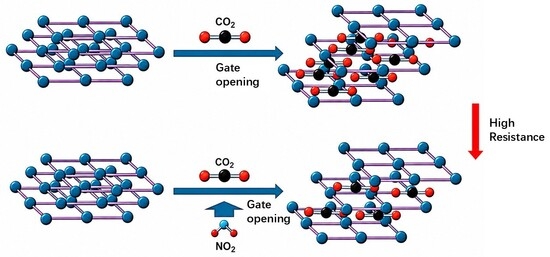
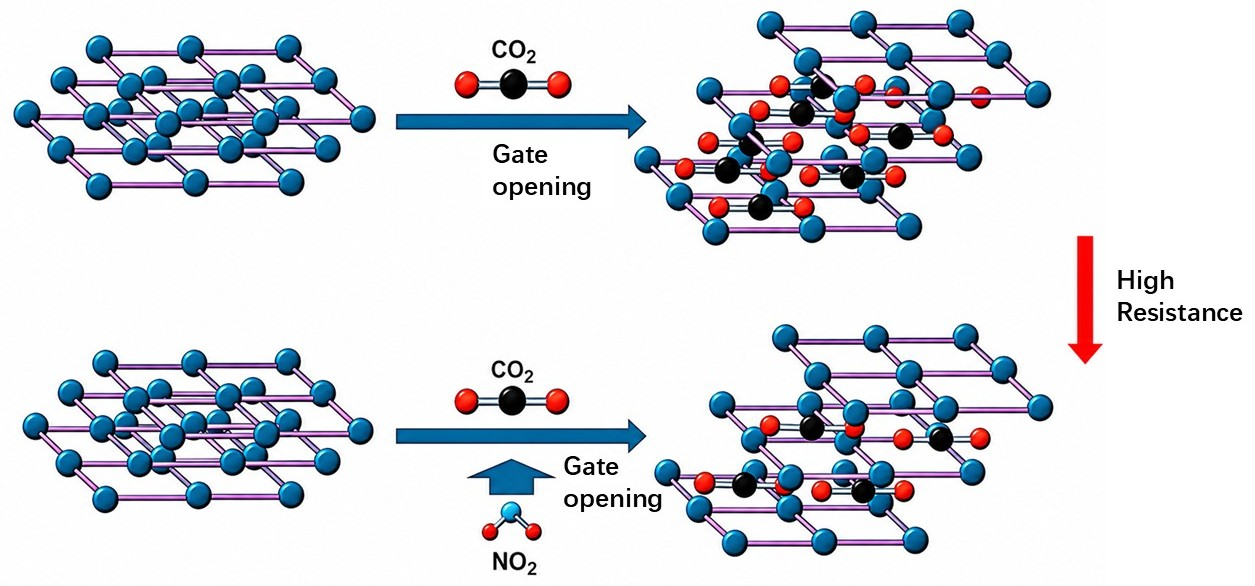
In this study, we investigated the impact of NO2 on the CO2 sorption capacity of ELM-11. Initially, we examined the superficial changes in CO2 sorption under the influence of NO2. Since NO2, like H2S, is an acidic gas, we hypothesized that NO2 might similarly impair the sorption performance of MOFs, potentially in a time-dependent manner. To test this hypothesis, ELM-11 samples were exposed to 1000 ppm NO2 (balanced with N2) for short (1 h) and long (20 h) durations. Subsequently, the CO2 sorption capacity at 303 K was measured using both thermogravimetric analysis and volumetric methods to assess changes in sorption behavior.
2. Materials and Methods
2.1. Materials
ELM-11, which is [Cu(bpy)
2(BF
4)
2]
n (bpy = 4,4′-bipyridine), was synthesized according to previously reported procedures. Prior to each experiment, the as-synthesized material (denoted as pre-ELM-11) was stored under ambient conditions [
11]. High-purity N
2, CO
2, and NO
2 (1000 ppm balanced with N
2) gases were supplied from certified gas cylinders and used without further purification. In a typical composition of untreated exhaust gas from a coal-fired power plant, NO
x is approximately 500 ppm [
20]; however, in this experiment, NO
2 was used at about twice that concentration.
2.2. NO2 Treatment Procedure
pre-ELM-11 samples were activated using a thermogravimetric analyzer (DTG-60, Shimadzu Corp., Kyoto, Japan) prior to NO2 exposure. Approximately 20 mg of the sample was loaded into an aluminum pan and heated from room temperature to 393 K at a rate of 10 K min−1 under a N2 flow of 100 mL min−1, followed by isothermal holding at 393 K for 280 min to remove adsorbed H2O molecules and obtain ELM-11.
After activation, the temperature was maintained at 303 K and the gas atmosphere was switched to 1000 ppm NO2 (balanced with N2) at a flow rate of 100 mL min−1. The samples were exposed to NO2 for predetermined durations (0, 1, 3, 6, 15, and 20 h). Following NO2 treatment, the gas atmosphere was switched to CO2 for sorption measurements at 303 K, ensuring that the samples were not exposed to ambient air.
2.3. Gravimetric CO2 Sorption Measurements
Gravimetric CO2 sorption experiments were performed using a TG–DTA system (DTG-60, Shimadzu Corp., Kyoto, Japan). Following NO2 treatment, pure CO2 gas was introduced at a flow rate of 100 mL min−1, and CO2 sorption was carried out at 303 K. Changes in the sample mass were continuously recorded over time. The sorption capacity was determined based on the mass increase during CO2 exposure.
2.4. Volumetric CO2 Sorption Measurements
Volumetric CO2 sorption isotherms were measured at 303 K using a volumetric gas adsorption analyzer (BELSORP MaxII, MicrotracBEL Corp., Osaka, Japan) at pressures up to 0.1 MPa. Samples were activated under vacuum prior to measurement using the same activation protocol as described above. CO2 sorption isotherms using pure CO2 gas were collected to compare the sorption capacities of ELM-11 before and after 3 h and 20 h of NO2 treatment.
Furthermore, based on reaction kinetics and Arrhenius theory, it is assumed that if ELM-11 is influenced by the chemical reactivity of NO2, the sorption performance of ELM-11 after NO2 exposure may vary under different temperature conditions.
Considering that the reaction activity of NO
2 with Cu
2+ is positively correlated with temperature [
21], and assuming that the interaction between NO
2 and ELM-11 primarily occurs at the copper ions in the framework, it is expected that the extent of sorption performance degradation induced by NO
2 may depend on the temperature. In particular, under relatively higher temperature conditions, a larger decrease in the sorption capacity of ELM-11 may occur compared with that under relatively lower temperature conditions. The decrease in sorption capacity is calculated as follows:
where
E(N,M) represents the extent of the decrease in sorption capacity. Depending on the temperature conditions,
N and
M are set to 273 and 303 K, where
N denotes the temperature at which ELM-11 is exposed to NO
2, and
M denotes the temperature at which CO
2 sorption is measured.
denotes the CO2 sorption capacity of ELM-11 measured at a specific temperature M after exposure to NO2 at that temperature N. denotes the CO2 sorption capacity of pristine ELM-11 measured at a specified temperature M without any prior treatment, which serves as the control sample.
2.5. FT-IR Measurements
FT-IR measurements were performed to investigate changes in chemical bonds in ELM-11 after exposure to NO2. Approximately 40 mg of ELM-11 was pressed into a pellet (13 mm diameter) under a pressure of 800 kg using a tablet press. The pellet was then placed in a sealed cylindrical reactor equipped with heating and gas-flow control functions, designed to prevent the sample from exposure to ambient air.
The sample was activated at 393 K under a N2 atmosphere for 280 min and subsequently exposed to 1000 ppm NO2 at a flow rate of 100 mL min−1 for up to 100 h. FT-IR spectra were collected at designated time intervals using an FT-IR spectrometer (FI/IR-4X, JASCO, Tokyo, Japan). After NO2 exposure, the gas atmosphere was switched back to N2, and the sample was heated to 453 K to examine the desorption behavior of NO2.
2.6. TG–MS Analysis
TG–MS measurements were conducted to analyze the thermal decomposition products of ELM-11 after 100 h of exposure to 1000 ppm NO2 gas. Approximately 2 mg of the sample was loaded into an aluminum pan and placed in the TG–MS system. Before thermal decomposition, the sample was pretreated at 393 K under a helium atmosphere to remove physically adsorbed NO2.
The sample was then heated from room temperature to 573 K at a rate of 1 K min−1 under a continuous flow of helium. The evolved gases were transferred through a capillary line to the MS apparatus for analysis. Both dry NO2-treated samples and samples treated with moist NO2 were examined for comparison.
2.7. Powder X-Ray Diffraction (PXRD) Measurements
Powder X-ray diffraction (PXRD) measurements were performed to examine structural changes in ELM-11 after NO2 exposure. pre-ELM-11 samples were activated using the same thermal protocol described above and subsequently exposed to 1000 ppm NO2 for 0, 3, 6, 9, and 10 h. Samples activated and subsequently exposed to ambient air after treatment were denoted as rELM-11 or rELM-11@NO2.
PXRD patterns were recorded using a powder X-ray diffractometer with Cu Kα radiation at room temperature. The diffraction patterns of pre-ELM-11, rELM-11, and rELM-11@NO2 samples were compared to evaluate changes in crystallinity and structural characteristics.
3. Results and Discussion
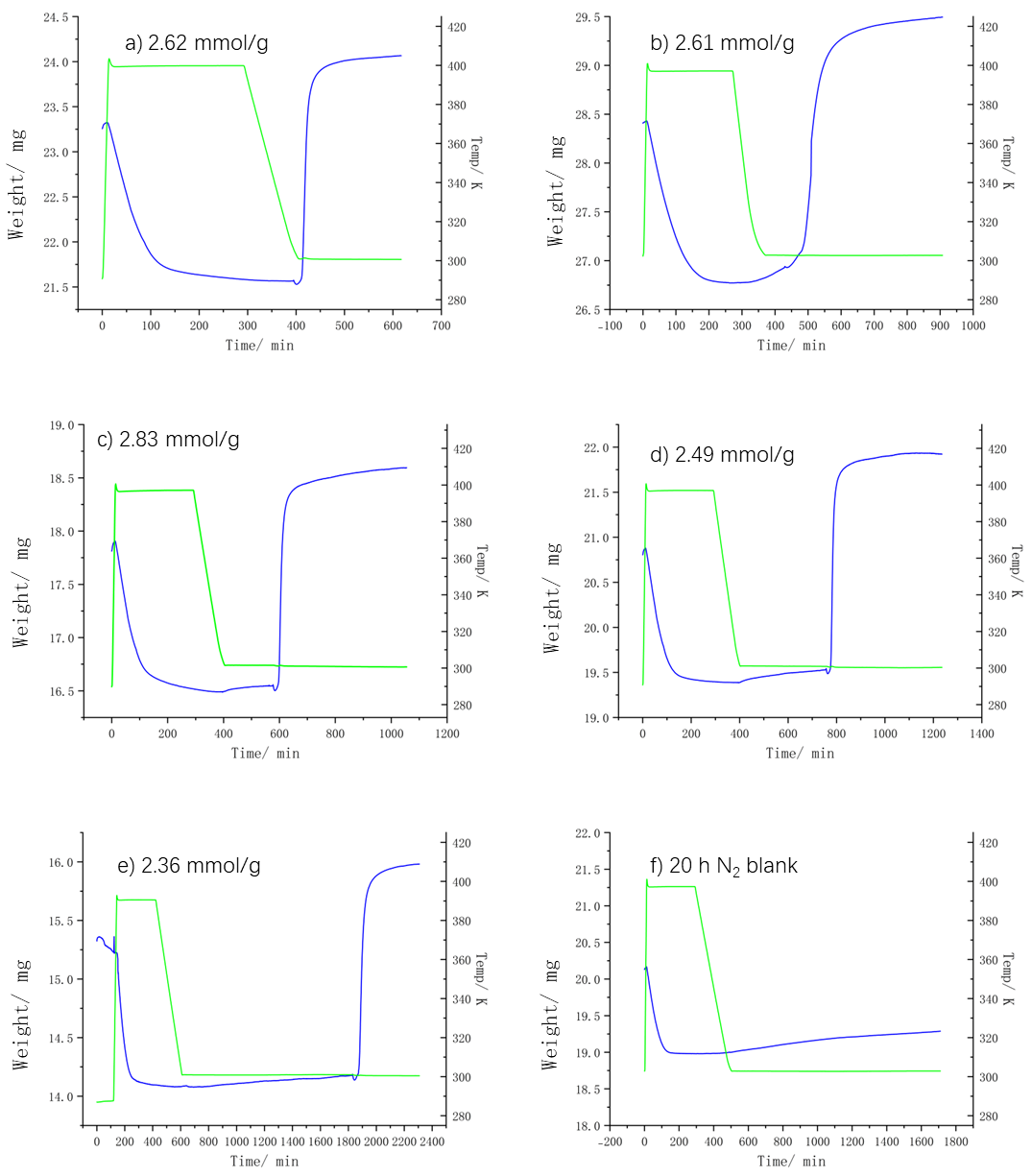
First, the CO
2 sorption capacity was evaluated using gravimetric analysis using pure CO
2 gas, as shown in
Figure 1. The CO
2 sorption capacity was measured to be 2.62 mmol/g at 303 K without exposure to NO
2. The effect of NO
2 exposure on the CO
2 sorption performance of ELM-11 was assessed after varying exposure durations, as shown in
Figure 1b–e.
Figure 1f shows the baseline under a nitrogen gas flow. In the absence of NO
2 gas, the baseline exhibited a mass increase of approximately 1.4%, depending on instrument conditions such as variations in gas temperature. Upon exposure to NO
2 for the specified durations, a further slight increase in mass was observed, attributed to NO
2 sorption. By subtracting the baseline mass increase from this value, the amounts of sorbed NO
2 were estimated to be 0.030, 0.027, 0.095, and 0.36 mmol g
−1 for NO
2 exposure times of 1 h, 3 h, 6 h, and 20 h, respectively.
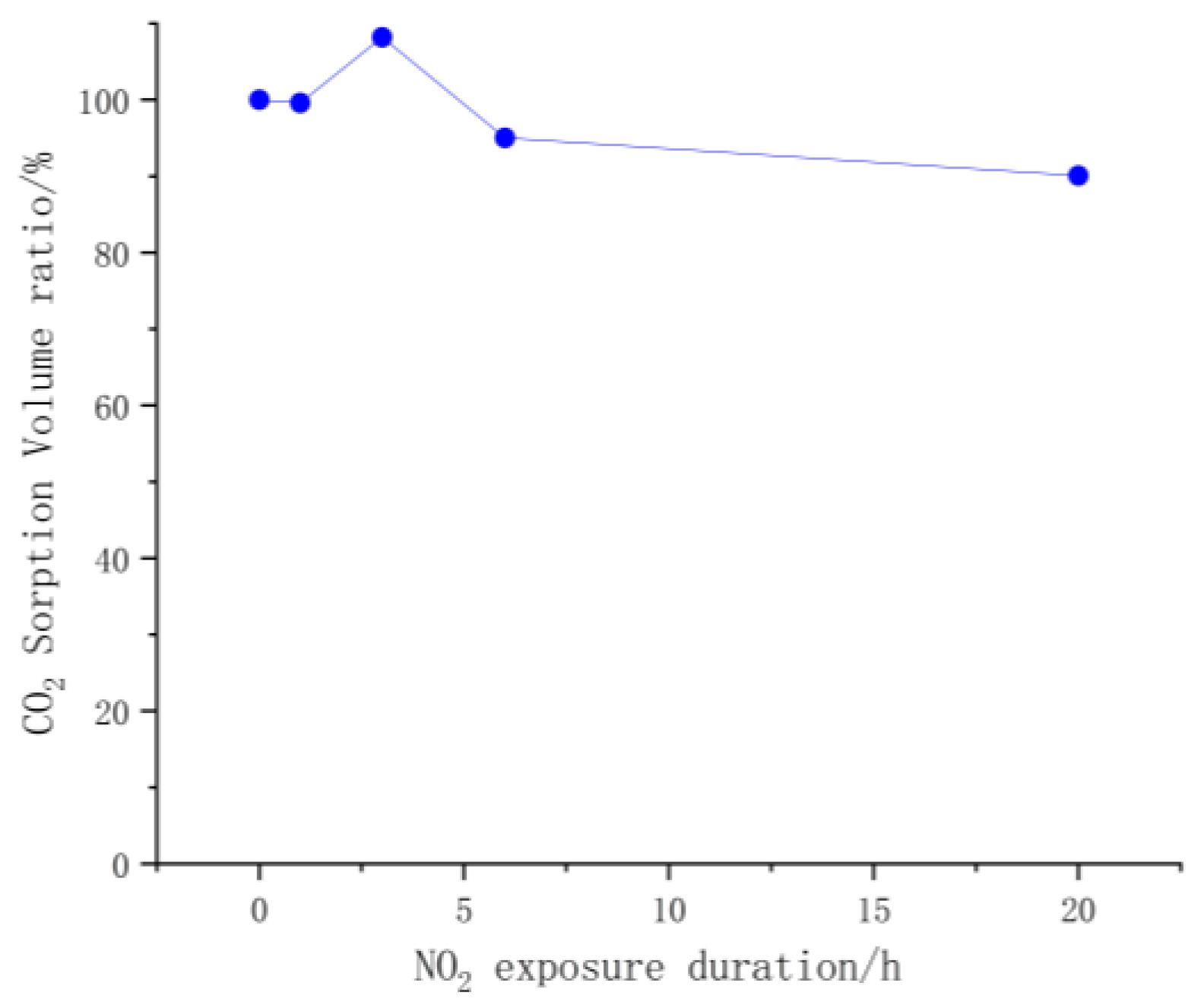
Figure 2 shows the plot of CO
2 sorption after each treatment duration, derived from
Figure 1b–e, as a function of NO
2 exposure time. Notably, after 3 h of exposure, the CO
2 sorption capacity increased compared to the untreated NO
2 sample. This result was reproducible and consistent across two independent experiments, as demonstrated in
Figure S1 (Supporting Information). In both cases, 3 h of NO
2 exposure enhanced CO
2 sorption. However, with further increases in treatment time, the CO
2 sorption capacity gradually declined, decreasing by approximately 10% after 20 h of exposure. These findings suggest that, as will be discussed later, short-term NO
2 exposure may induce structural or chemical modifications in ELM-11, potentially leading to a temporary enhancement of its gate-opening behavior.
To further validate the gravimetric results, volumetric CO
2 sorption isotherms were recorded at 303 K after exposure to NO
2 for 3 h using pure CO
2 gas, as shown in
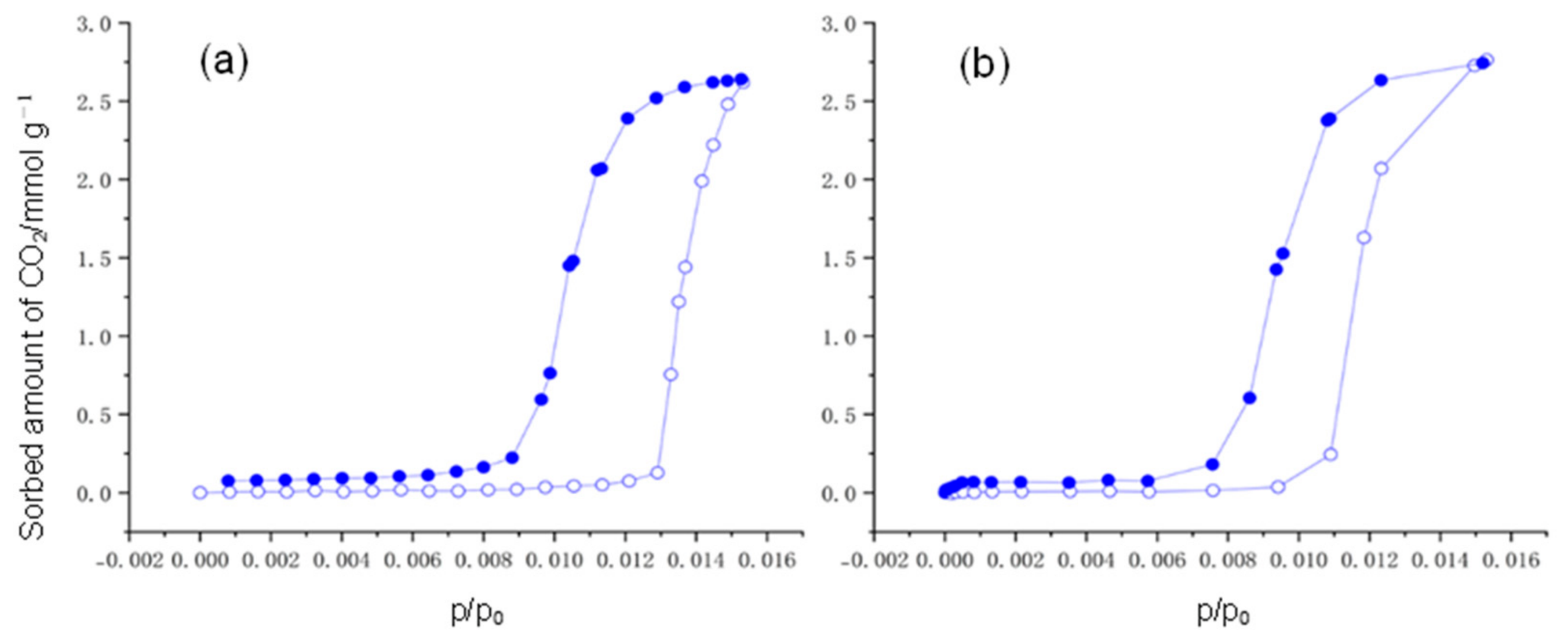
Figure 3, alongside the untreated results. The amount of CO
2 sorbed at 303 K after 3 h of NO
2 exposure increased by 5.3% compared to the untreated sample. This increase was reproducibly confirmed when the experiment was repeated 4 times.
Next, NO
2 treatment was conducted at 273 K and 303 K for 20 h. Subsequently, CO
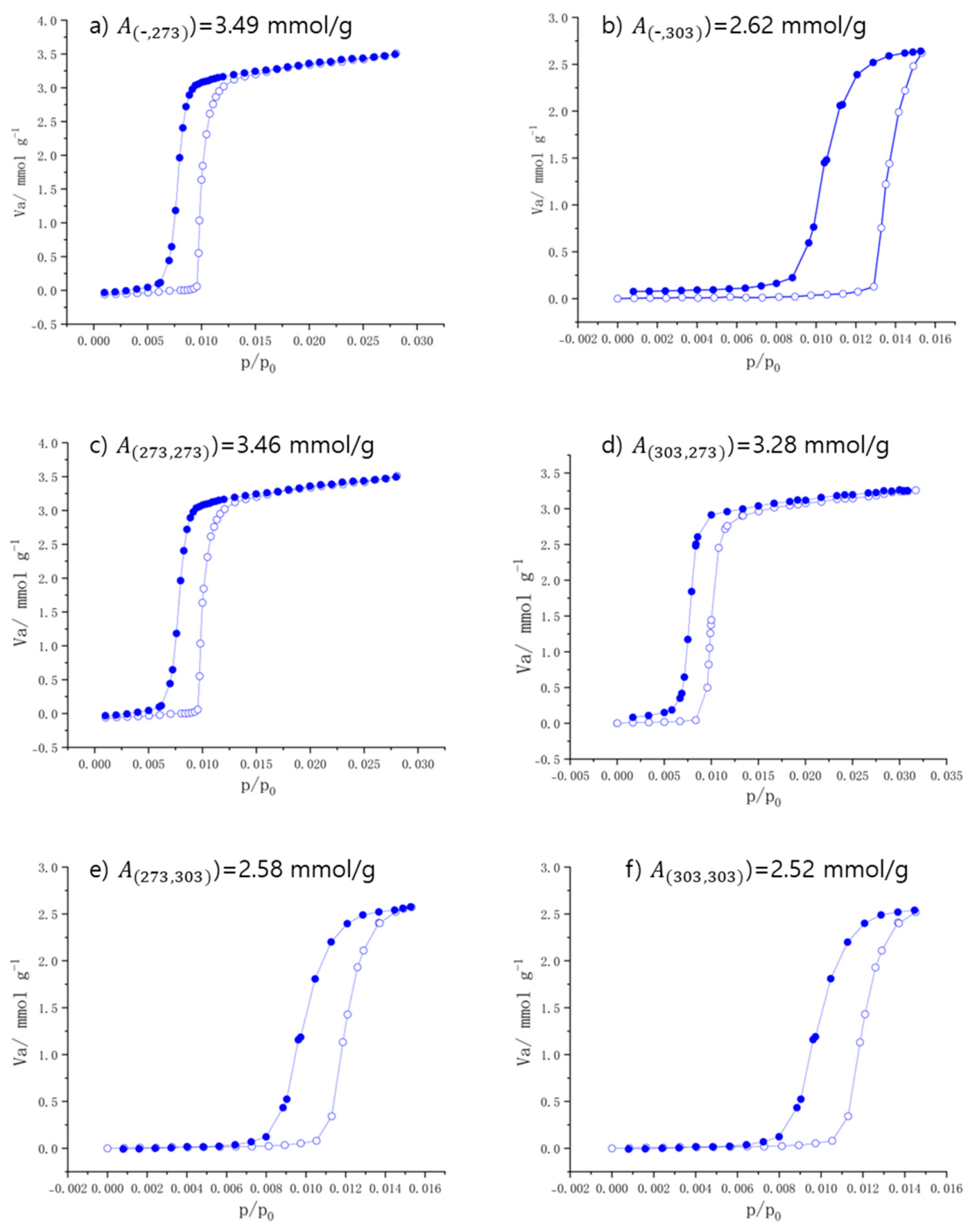
2 sorption measurements were performed at both temperatures. As shown in
Figure 3a and
Figure 4a, the CO
2 sorption isotherms of ELM-11 differ due to changes in gate-opening pressure with temperature [
10]. The CO
2 sorption capacity measured at 273 K represents the saturation capacity; however, at 303 K, saturation was not reached up to 0.1 MPa, resulting in a lower CO
2 sorption capacity. After 20 h of NO
2 exposure, the deactivation effect of NO
2 became evident, and the CO
2 sorption amount slightly decreased from 2.62 to 2.52 mmol/g at p/p
0 = 0.015 (
Figure 3a and
Figure 4f). At this point, it was observed that the gate-opening pressure decreased upon NO
2 exposure. However, after 3 h of NO
2 exposure, as shown in
Figure 3b, although the gate-opening pressure decreased, the deactivation effect of NO
2 was not yet apparent, and the CO
2 sorption capacity was maintained; thus, only the effect of the decreased gate-opening pressure was observed. In other words, the amount of CO
2 sorbed increases as the gate-opening pressure decreases. Due to this mechanism, it is expected that the amount of CO
2 sorbed after 3 h of NO
2 exposure will be greater than that of untreated samples. This effect is thought to be similar to the reported influence of ethanol treatment in lowering the gate-opening pressure [
22].
The CO
2 sorption capacity of untreated ELM-11 at 273 K, shown in
Figure 4a,d, decreased from 3.49 mmol g
−1 to 3.28 mmol g
−1 after NO
2 treatment at 303 K, corresponding to an approximate 6.1% reduction. This value is consistent with the gravimetric results, indicating that the observed decrease in sorption capacity is reproducible and not due to experimental artifacts, although the gravimetric CO
2 sorption measurements were conducted at 303 K. The results obtained at different temperatures are summarized in
Table 1 as follows:
>
>
≈
.
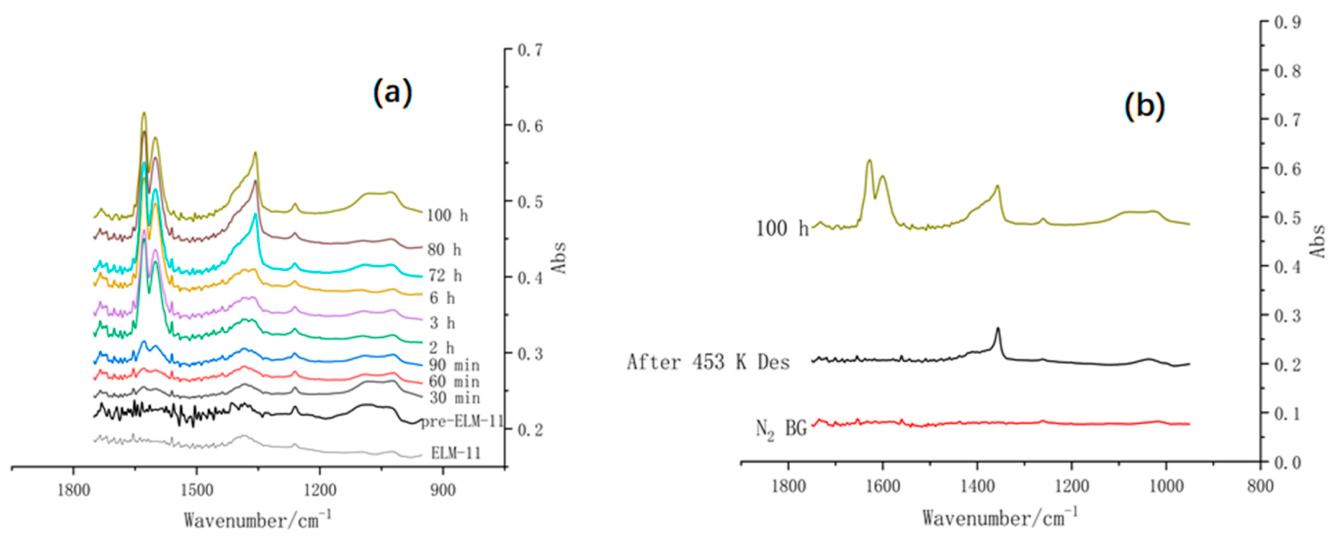
FT-IR spectroscopy was employed to investigate the molecular-level interaction between NO
2 and ELM-11.
Figure 5a shows the evolution of FT-IR spectra during NO
2 exposure. Two characteristic absorption bands, located at approximately 1600 and 1360 cm
−1, gradually intensified with increasing exposure time.
The band at approximately 1600 cm
−1 corresponds to the reported vibrational modes of molecular NO
2 [
23] and is therefore attributed to physically adsorbed NO
2. In contrast, the band at approximately 1360 cm
−1 is assigned to symmetric N–O stretching vibrations [
24], suggesting the formation of chemically bound nitrogen–oxygen species. The simultaneous enhancement of both bands indicates that NO
2 undergoes both physical sorption and chemical sorption on ELM-11.
After switching the gas atmosphere to N
2 and heating the sample to 453 K, the absorption band at 1600 cm
−1 disappeared completely, while a weak residual band at 1360 cm
−1 remained (
Figure 5b). This observation confirms that physically sorbed NO
2 can be fully desorbed under low NO
2 partial pressure and elevated temperature, whereas chemically sorbed species are more thermally stable.
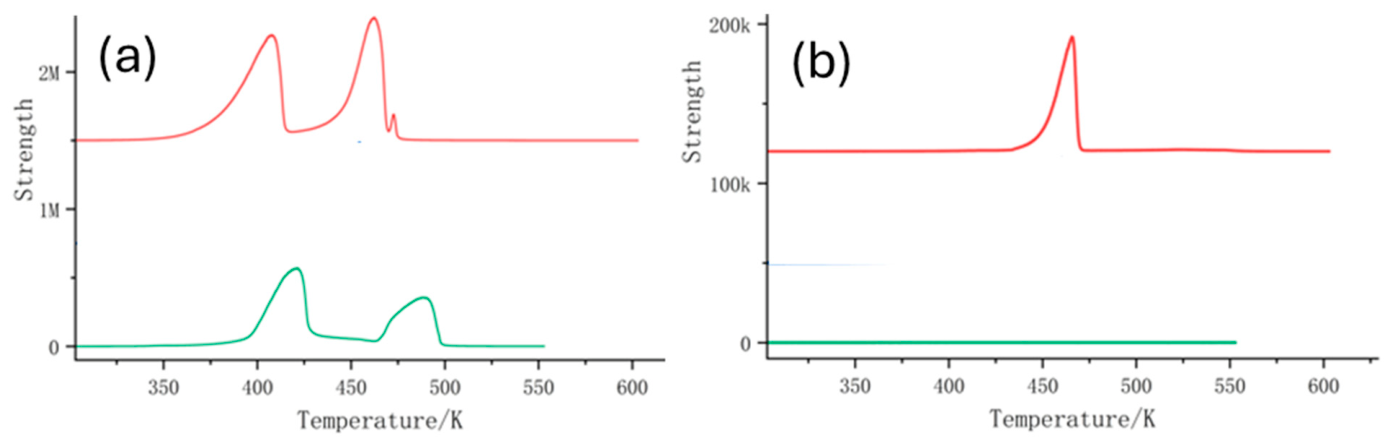
TG-MS analysis was conducted to identify the chemical species produced during NO
2 exposure.
Figure 6a shows the mass spectrum corresponding to
m/
z = 156, which is attributed to 4,4′-bipyridine (bpy), a structural ligand of ELM-11 [
13]. In untreated ELM-11, the mass loss associated with bpy occurred in two stages, at 400–425 K and 470–500 K.
Figure 6b shows the mass spectrum corresponding to
m/
z = 30, which is attributed to nitric oxide (NO
+) [
25]. Notably, no peak at
m/
z = 30 was observed in untreated ELM-11. In contrast, the NO
2-treated samples exhibited an early mass decrease in bpy at 370–420 K and 430–470 K. This early change suggests that NO
2 destabilizes the lattice framework by coordinating with ELM-11.
In
Figure 6b, the NO
+ signal was detected only in the NO
2-treated sample, indicating that NO-containing species were generated during thermal decomposition. The peak appeared around 470 K. Since this occurs after the ELM-11 framework has broken down, it is believed that NO
2 was strongly bound to Cu
2+ and released along with the framework decomposition. Consistent with previous reports, this behavior suggests the formation of nitrosyl or nitrite-like compounds resulting from the reaction of NO
2 with Cu
2+ centers in ELM-11. These findings corroborate the FT-IR analysis results regarding the chemical sorption of NO
2.
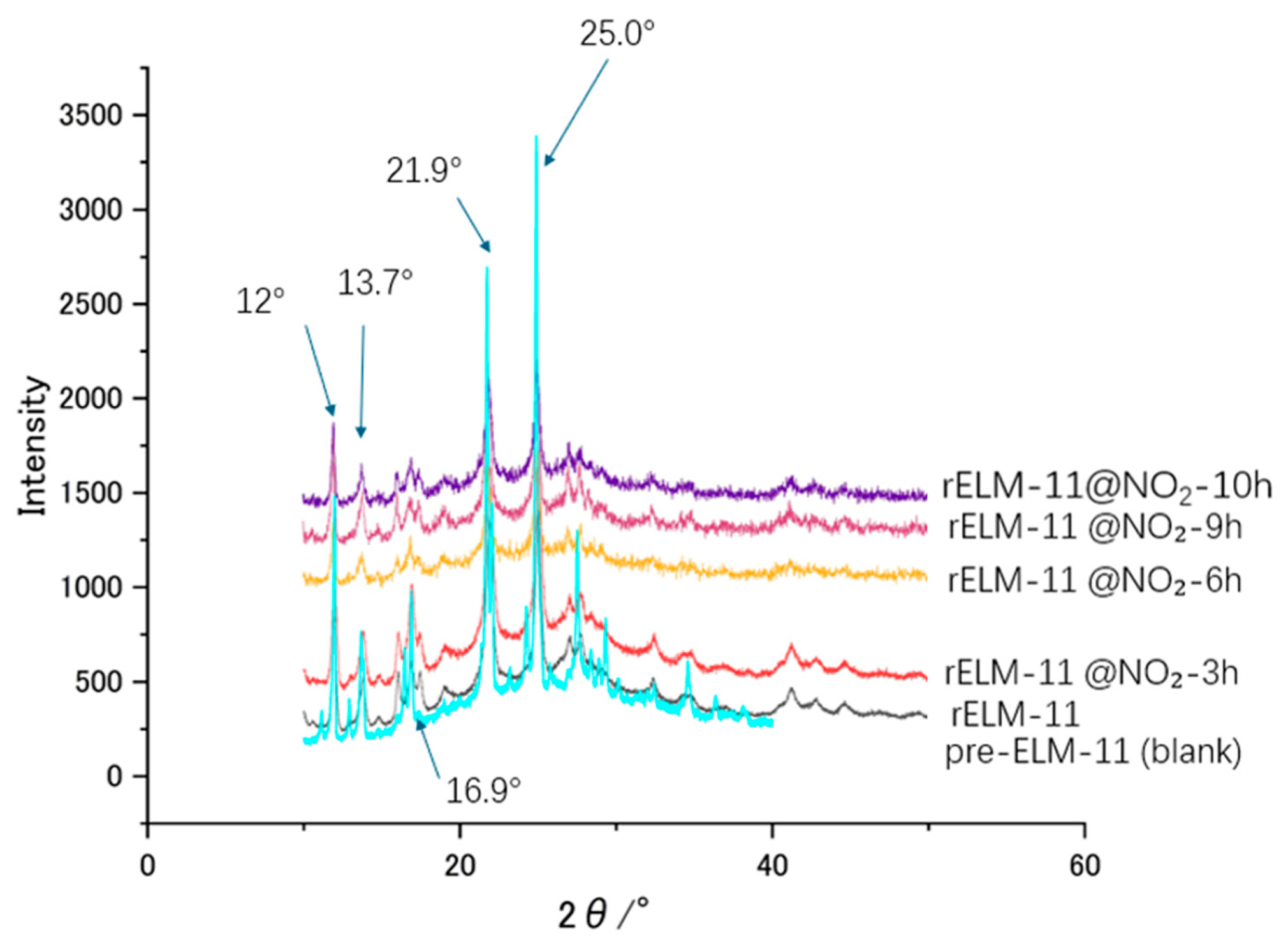
PXRD analysis was conducted to evaluate structural changes in ELM-11 after NO
2 exposure.
Figure 7 compares the PXRD patterns of pre-ELM-11, rELM-11, and rELM-11@NO
2 samples. After activation and exposure to ambient air, the diffraction patterns of rELM-11 and rELM-11@NO
2 were largely similar, indicating that prolonged NO
2 exposure does not cause significant degradation of the layered framework.
Observation of the experimental results revealed that, compared with pre-ELM-11, the double peaks around 2
θ = 16.9° changed to triple peaks, the single peak around 2
θ = 25° changed to a double peak [
26], and the intensity of the main peak decreased.
Notably, the diffraction peak at approximately 2
θ = 16.9° exhibited a pronounced increase in intensity for the rELM-11@3h sample. This change was reproducible and coincided with the temporary enhancement of CO
2 sorption capacity observed in the gravimetric experiments. Previous studies have suggested that variations in this diffraction feature are associated with interlayer expansion in elastic layered MOFs [
27]. Therefore, the enhanced sorption capacity after short-term NO
2 exposure may be attributed to subtle structural rearrangements that facilitate gate opening. Indeed, isotherms obtained from volumetric measurements of samples exposed to NO
2 at 303 K for 3 h showed a lower gate-opening pressure than those of untreated samples. Consequently, when the untreated isotherm is shifted toward lower pressure, the sorption amount increases.
Based on the combined results of gravimetric analysis, FT-IR spectroscopy, TG–MS, and PXRD measurements, a mechanistic interpretation of the effect of NO2 on ELM-11 can be proposed. NO2 interacts with ELM-11 through both physical sorption and chemical sorption. Physical sorption is reversible and does not permanently affect sorption performance, whereas chemical sorption likely involves interactions between NO2 and Cu2+ centers, leading to partial modification of the coordination environment. However, since the partial pressure of NO2 is not high enough to expand the layered structure, the gate of ELM-11 remains closed. This suggests that NO2 molecules interact with Cu2+ at the edges or surfaces of the crystal lattices of ELM-11, rather than within the lattice interior.
Short-term exposure to NO2 may induce slight structural relaxation, enhancing gate-opening behavior and temporarily increasing CO2 sorption capacity. However, with prolonged exposure, cumulative chemical interactions gradually reduce the flexibility of the layered structure, resulting in a modest decrease in sorption capacity. Nevertheless, due to the elastic nature of ELM-11, the overall framework remains largely intact, which explains its superior resistance to acidic gases compared to rigid MOFs.
As shown below, we compared the NO
2 exposure resistance of ELM-11 with previously reported results for rigid MOFs exposed to acidic gases [
14]. The relative CO
2 sorption capacities of ELM-11 after NO
2 exposure were compared with those of HKUST-1 after H
2S exposure. HKUST-1 reportedly loses approximately 96% of its sorption capacity within a few hours in an acidic gas environment, whereas ELM-11 retained approximately 90% of its sorption capacity even after 20 h of NO
2 exposure.
While these two acidic gases exhibit different properties and may not be directly comparable, the marked differences in their behavior can be attributed to the distinct sorption mechanisms of the two materials. In rigid MOFs such as HKUST-1, CO2 sorption primarily depends on permanent microporosity and the integrity of metal–ligand coordination bonds. Acidic gases like H2S can directly attack the Cu2+–ligand bonds, causing irreversible framework degradation. In contrast, ELM-11 exhibits a flexible layered structure, in which CO2 sorption is governed by pressure-induced structural relaxation rather than permanent pore accessibility. As a result, partial chemical modification does not immediately lead to a catastrophic loss of sorption capacity. The comparison of the data largely aligns with our expectations, confirming that NO2 exerts a chemical effect on ELM-11. This finding provides a foundation for future experiments and offers fundamental evidence.