

Article

Associations Between Young Adult Emotional Support Derived from Social Media, Personality Structure, and Anxiety


1
Fulbright College of Arts & Sciences, University of Arkansas, Fayetteville, AR 72701, USA
2
College of Education, University of Alabama, Tuscaloosa, AL 35487, USA
*
Author to whom correspondence should be addressed.
Psychiatry Int. 2026, 7(1), 18; https://doi.org/10.3390/psychiatryint7010018
Submission received: 21 October 2025 / Revised: 3 December 2025 / Accepted: 5 January 2026 / Published: 13 January 2026

Abstract

Background: Longitudinal studies demonstrate an association between social media use and anxiety. However, the mechanism of this association in terms of emotional support is not completely understood. Methods: We used survey data among a national sample of 2403 individuals aged 18–30. Primary measures included the 4-item Patient-Reported Outcome Measurement Information System (PROMIS) scale to assess anxiety, self-reported emotional support derived from social media (SMES), and the 10-item Big Five Inventory (BFI-10) to determine personality structure. We performed factorial analysis of variance (ANOVA) and multiple regression analyses to examine the associations among these variables while controlling for age and sex. Results: SMES was associated with decreased anxiety. These associations were more pronounced among females. Personality traits of high openness to experience, high extraversion, high agreeableness, and low conscientiousness were associated with increased SMES. Limitations: Due to the cross-sectional research design and observation data, causal relationship could not be established. Conclusions: Emotional support derived from social media (SMES) may be linked to reduced anxiety, especially among females. SMES may also be linked with specific personality characteristics. Future research should investigate these associations longitudinally.

1. Background

Anxiety is the second leading cause of disability [1] and mortality [2] worldwide. About 31% of adults in the U.S. will experience an anxiety disorder within their lifetime [3], and the median age of onset is 17 years [4]. Anxiety increases the risk for multiple other problematic outcomes, including depression [5] and suicide [6]. It has also been linked to numerous social, biological, and environmental factors, including stress-induced inflammation, dysregulation of the gut microbiome [7], sleep disruption [8], migraine headaches [9], negative workplace culture [10], maladaptive perfectionism, and low self-esteem [11]. It also impacts academic performance [12] and is associated with negative post-event rumination [13]. Therefore, further investigating the effects of this condition would be valuable due to its increased prevalence in young adulthood [14].
Recently, research has also connected emotional support with symptoms of anxiety. Emotional support is a type of social interaction between individuals that focuses on caring and showing concern for one another through verbal and nonverbal processes [15]. These interactions can also be described as having components of human environmental attachments that involve self-congruency, emotional reaction, and behavior [16]. Social support is influenced by both inherent and acquired means [17]. In fact, studies have identified social support from in-person relationships as a protective factor for mental health conditions such as anxiety [18,19,20]. Similarly, lower levels of social support have been associated with increased anxiety [21]. These findings from prior studies are consistent with the main-effects and stress-buffering hypothesis of social support, a widely accepted theory of social support that describes the relationship between social support and health outcomes [22].
The main-effects and stress-buffering hypothesis of social support, originally proposed by Cohen and Wills (1985) [22], suggests two pathways. The main-effects model hypothesizes social support integration as preventative to negative emotional and physical health outcomes [22]. The stress-buffering model hypothesizes that social support acts as a form of protection when individuals experience higher levels of stress, preventing possible adverse emotional and physical health outcomes [22]. Although numerous factors contribute to stress and social support, it may be that social support on social media reveals a more comprehensive or unique representation of the prior model that more accurately represents the overall process of stress, social support, and well-being in virtual spaces.
In fact, prior studies have found inconsistent results with these specific models [23,24,25]. For example, Bovier et al. (2004) [23] surveyed a sample of university students about perceived stress, internal resources, and found that the negative effect of stress on mental health was buffered by social support. Another study found depression with a similar effect [24]. However, Kornblith et al. (2001) [25] explored the effect of social support and stress among a sample of patients with Stage II breast cancer and found that their results were consistent with the direct-effects model instead of the stress-buffering model. Stressful life events and social support were significantly associated with the psychological status of the patient across all levels of various stressors [25]. The mixed results could be partly explained by the fact that stress varies by type, level, and the overall process of coping that impacts health in distinct ways. Therefore, the model may be missing unique behaviors that link these variables with support and health outcomes in a time that communication is becoming primarily used on social media and other-related media devices.
Therefore, it continues to remain an open question as to whether emotional support derived from social media (SMES) is also associated with lower levels of stress or anxiety. Interestingly, Shensa et al. (2020) [26] explored how social media emotional support was associated with depression and found that—while emotional support derived from in-person relationships was, as expected, associated with lower depressive symptoms—emotional support derived from social media was unexpectedly associated with increased depressive symptoms. Especially given this paradoxical finding, more study is needed to confirm, compare, or refute these findings in terms of anxiety symptoms.
Conditions such as anxiety are known to vary substantially by personality type [27]. For example, anxiety has been associated with high neuroticism [27,28,29,30,31] and negatively associated with the personality traits of openness to experience, conscientiousness, agreeableness [30,31,32] and extraversion [30,32]. Nevertheless, Barańczuk (2019) [33] explored the relationship of personality and perceived social support and found that high neuroticism and low openness to experience, conscientiousness, extraversion, and agreeableness was associated with a lower perception of social supports available. However, to our knowledge, no published research has examined the association of personality traits and social media emotional support. It may be that specific patterns of emotional support on social media platforms can be identified with specific personality profiles during a time of expansion in artificial intelligence.
There are many reasons why emotional support in the context of social media, personality characteristics, and anxiety are connected. Use of certain forms of technology is known to affect personality [34]. However, social media has been relatively unexplored in this evolving context.
Therefore, we sought to better understand associations between social media emotional support, personality structure, and anxiety using data from a national sample of young adults. Improving an understanding of these differences may ultimately help tailor interventions related to social media in order to improve overall well-being. The study aims were to: (1) determine if there is a link between emotional support on social media and anxiety; and (2) assess if the association is different for individuals with specific personality structures. Based on related prior research [26,35], we hypothesized that social media emotional support would be associated with elevated anxiety (H1). In terms of personality, based on the results of a large meta-analysis [33], we hypothesized that the association between social media emotional support would significantly be different, with those with high neuroticism (H2a) and low openness (H2b), low conscientiousness (H2c), low extraversion (H2d), and low agreeableness (H2e) having decreased perceived emotional support on social media.

2. Method

2.1. Study Sample

Participants were recruited using Qualtrics Sampling Services between March and September in 2018. Qualtrics specializes in survey data, partnering with web-based panel providers to obtain a diverse group of respondents [36]. A “balanced start” methodology that represented the U.S. population in terms of various factors (e.g., sex, age, and race) was used within the recruitment process. Inclusion criteria for the study included being 18–30 years old, read English, and submit responses using a digital interface. The University of Pittsburgh Institutional Review Board approved the study and informed consent was provided. Gift cards were given to compensate study participants for their time. The final sample comprised 2403 individuals with complete responses. 68.2% were White, 7.6% Black, 14.4% Hispanic, and 8.4% Asian. Gender was approximately equal, with 50.8% being female.

2.2. Measures

2.2.1. Anxiety

The Patient Reported Outcomes Measurement Information System (PROMIS) four-item anxiety scale has been validated as an appropriate measure for screening patients with chronic pain [37] and this was used to evaluate anxiety. The 4-item questionnaire asked participants about their feelings of fear, threat, and stress [38] that had occurred in the past 7 days [39]. Each question followed a 5-point Likert answering scale of 1–5 (1 = never, 2 = rarely, 3 = sometimes, 4 = often, 5 = always). The sum of the four items was then created as a composite score. Final measurement had a range of 4–20, with higher scores indicating more severe anxiety symptoms [40]. The scale suggested excellent consistency and reliability (Cronbach’s α = 0.91). The Cronbach’s alpha is commonly used in the social sciences to determine reliability of test items, with an acceptable range of 0.8–0.9 indicating good-excellent [41].

2.2.2. Social Media Emotional Support

Social media emotional support (SMES) was measured using a validated scale from previous research [26]. Four questions pertaining to social media emotional support were administered to participants, such as “I have people on social media to listen to me when I need to talk.” Each question followed a 5-point Likert answering scale of 1–5 (1 = never, 2 = rarely, 3 = sometimes, 4 = usually, 5 = always). The sum of the four items was then created as a composite score. Final measurement had a range of 4–20, with higher scores indicating greater levels of social media emotional support. The scale suggested excellent internal consistency and reliability (Cronbach’s α = 0.94).

2.2.3. Personality

The 10-item Big Five Inventory (BFI-10) was used to evaluate personality traits (openness, conscientiousness, extraversion, agreeableness, and neuroticism) [42]. Participants responded to 2 items for each of the five personality traits about how they were related to specific personality characteristics on a 0–5 scale (0 = strongly disagree, 5 = strongly agree). The Cronbach’s alpha for openness, conscientiousness, extraversion, agreeableness, and neuroticism was 0.10, 0.37, 0.52, 0.23, and 0.47, respectively. Because there were only two items measuring each personality trait, the range for Cronbach’s alpha appeared to be low. A previously validated cut point of 7 was used to identify each personality trait as either yes (at or above 7) or no (below 6) [43].

2.2.4. Gender

Participants self-reported their sex as either female (1) or male (0).

2.2.5. Age

Age was measured in years as a continuous variable. The mean for age was 26.77, with a standard deviation of 2.90.

2.3. Data Analysis

For data analysis, participants with complete data were included. We used factorial analysis of variance (ANOVA) and multiple regression analyses to examine the associations between social media emotional support, personality structure, and anxiety while controlling for age and sex. A significance level (α) of 0.05 was used for all statistical tests and data was analyzed using SAS/STAT software, Version 9.4 (TS1M4) of the SAS System for Windows. Copyright© 2002–2012 SAS Institute Inc. SAS and all other SAS Institute Inc. product or service names are registered trademarks or trademarks of SAS Institute Inc., Cary, NC, USA.

3. Results

Table 1 presents zero-order bivariate correlations among study variables. We found a significant and positive correlation between anxiety and social media emotional support (r = 0.17, p < 0.01). All five personality characteristics had significant associations with social media emotional support. Age was negatively correlated with social media emotional support (r = −0.08, p < 0.01), with younger people reporting increased social media emotional support. In terms of anxiety, we found a significant and negative correlation with age (r = −0.10, p < 0.01). Younger people were significantly associated with an increased risk for anxiety. Four personality characteristics had significant associations with anxiety. Gender was positively correlated with anxiety (0.11, p < 0.01).
To analyze the effect of each personality trait and gender on social media emotional support, a series of five, two-way factorial ANOVA’s were performed. Assumptions of ANOVA analyses were also examined before any interpretations were made. In terms of normality, the results obtained from the univariate statistics of social media emotional support suggested that the skewness and kurtosis both fell within the range of −1 and 1, indicating normality of the dependent variable. The homogeneity of variance assumption test had p values greater than 0.05, suggesting group variances and group sizes were homogeneous. In terms of independence, the participants were randomly selected, and they were all independent. Therefore, all the assumptions of ANOVA were met, and the results were trustworthy [44].
Each personality trait (e.g., neuroticism) and interaction term (e.g., neuroticism x gender) was included in each model. Because none of the interaction terms for each personality trait and gender was statistically significant, the main effects of the personality trait were reported, with age and gender controlled. All the main effects of each personality trait except for neuroticism (F (1, 2399) = 0.35, p = 0.55) were statistically significant (Table 2). Therefore, there was a difference between the participants’ perception of social media emotional support based on their personality trait except for neuroticism.
The pairwise comparison of social media emotional support based on personality and gender is presented in Table 3. Participants who were more open, less conscientious, more extraverted, more agreeable, and female tended to report higher social media emotional support.
To examine the relationship between social media emotional support, frequency of social media use, anxiety, gender, and age, a multiple regression analysis with social media emotional support as the dependent variable, and the other variables as independent predictors was conducted. Also, the interaction between anxiety and gender, and the interaction between anxiety and age, were included in the model. The ANOVA test of the model yielded a F statistic of 36.98 with a p value < 0.001, suggesting that the regression model was significant. The R squared was 0.09, indicating that 9% of the variability in social media emotional support could be explained by the predictors. The standard regression coefficients as shown in Table 4 suggest that the interaction of anxiety and gender was statistically significant at an alpha level of 0.05. The interaction coefficient was −0.12, and the main effect of anxiety was −0.13. Therefore, for males, the main effect of anxiety was −0.13, while that for females was −0.25. This implied that for males, one unit increase in anxiety score was associated with 0.13 unit decrease in social media emotional support, whereas for females, one unit increase in anxiety score was associated with 0.25 unit decrease in social media emotional support. In other words, the effect of anxiety on social media emotional support was more pronounced for females. Figure 1 displays the graphical presentation of the interaction effect. As anxiety increased, social media emotional support decreased. Males appeared to have higher anxiety than females and lower social media emotional support, overall. This showcases the interaction between anxiety and gender on social media emotional support.
The increase in social media time in minutes was associated with higher social media emotional support scores. Younger people reported higher social media emotional support, with one year increase in age being associated with 0.19 unit decrease in social media emotional support.

4. Discussion

This study aimed to examine the relationship between self-perceived anxiety and social media emotional support as well as the association between personality traits and social media emotional support after controlling for gender. Among a large national sample of young adults in the U.S., we found that social media emotional support was strongly associated with a decrease in anxiety symptoms, and the effect was more pronounced among females. However, causal relationship could not be determined because of the research design (e.g., social media emotional support may lower anxiety or anxiety may lower perceived social media emotional support). In terms of personality, participants who were more open, less conscientious, more extraverted, and more agreeable reported higher perceived social media emotional support.
The fact that social media emotional support was associated with a lower risk for anxiety contradicted H1. This finding is consistent with both the main-effects and stress-buffering hypothesis of social support, which describes positive social relationships reducing anxiety symptoms [22}. Due to the research design, the direction of this finding is undetermined, and this is the reason that it does not fully capture one model over the other one. For example, social media emotional support may lower anxiety symptoms by the perception of receiving more support on social media, or individuals with anxiety may perceive lower support on social media. These results are consistent with the mixed findings from prior research [23,24,25] and demonstrates the need for future research to begin to develop new models that focus on social support in different types of environments that may range in perception, experience, and coping strategy.
Prior related-research has found similar associations with social support acting as a protective factor against anxiety symptoms [21,22]. However, much of the work has placed emphasis on in-person relationships and the prior theoretical framework was missing [18,19,20,26]. Therefore, it would be valuable for future studies to explore these associations longitudinally and place emphasis on mindset and perception using social media and other-related media types. It may be that positive versus negative social media mindsets [45], with perceived social safeness [46] contributing to usage, impacts actions such as seeking valuable emotional support.
The results also suggest that males and females may perceive emotional support on social media in unique ways. This finding is likely explained by how experiences of socialization and gender roles in society influence perceived social support [47]. Prior research has also found that higher levels of social support appear to slightly benefit females more than males when measuring their overall mental health [20]. Altogether, these relationships tend to be well established at this point and could offer public health practitioners with the knowledge to improve ways to treat individuals with anxiety.
We also know that expressing emotion is an important coping mechanism. In fact, Gomes et al. (2022) [48] found that individuals who suppress their emotions report higher distress levels and having higher suppression of emotions when less social support is perceived. This may indicate that people with higher levels of anxiety are more vulnerable to negative effect due to the suppression of emotion on social media platforms. Therefore, media literacy with a focus on empathy would be a valuable public health intervention in young adulthood.
Although we expected low openness, conscientiousness, extraversion, agreeableness, and those with high neuroticism (H2a, H2b, H2c, H2d, and H2e) to have decreased social media emotional support based on prior research [33], the hypotheses held true for all traits except for neuroticism and conscientiousness, contradicting H2a and H2c. One reason for this difference could be the impact of varying degrees of human biological exposures and traumas that can result in varying levels and changes in personality and character traits [34]. Thus, it may be that those who are more open, extraverted, and agreeable (H2b, H2d, H2e) may be using social media in ways that promote positive interactions and perceptions, feeling more supported and less anxious as a result.
There was no significant difference found for neuroticism and social media emotional support, not supporting hypothesis H2a. Neuroticism, a complex personality trait, is known for its negative affectivity (e.g., anxiety, worry, mood dysregulation) [49]. Thus, it may be that those who are more neurotic may perceive content on social media platforms more negatively, with complicated relationships (e.g., romantic relationships [50]), feelings of emotional burden, and personal inadequacy impacting how social media emotional support is sent and received in its various forms. Therefore, support may not be instigated or received within one’s social network in healthy ways, and this could increase the risk for developing various mental health problems, such as anxiety.
The fact that low conscientiousness was associated with increased perceived social media emotional support contradicted H2c. Conscientiousness is a personality trait that focuses on punctuality within all facets of the trait characteristics (e.g., orderliness, self-control, responsibility) [51]. It has also been described as a core determinant of health and successful life transitions [51]. Therefore, low conscientiousness is best defined as the less desirable characteristics of the trait (e.g., disorganization, indiscipline, irresponsibility). Thus, it may be that those with low conscientiousness are using social media in ways that impact their perception of receiving more emotional support. It will be valuable for additional research to explore these associations further, including varying levels of personality, specific social media platforms, social media content, and social support characteristics.
Though intervention can be improved with new research, future work can enhance findings by focusing efforts on both the technological and biological factors of human development that impact multiple facets of behavior in an ever-changing techno-environment to improve both physical and mental health. Improving perception, communication, and emotional support both in-person and on social media platforms is integral for improving health and wellbeing, especially during global pandemics and for individuals that primarily communicate using digital means.

5. Limitations

Several limitations warrant consideration. The study was cross-sectional and used self-reported survey data; therefore, we could not hypothesize the directionality for anxiety. Prioritizing a longitudinal approach would enhance overall interpretation of results by offering a more comprehensive measurement of social media emotional support across time.
Anxiety was assessed using the 4-item anxiety scale. While this has been a validated measurement for severity of symptoms, it may be useful for future research to follow-up with varying levels of anxiety across time.
For the assessment of personality traits, we used dichotomized variables that have shown reliability in prior research [43]. Enhancing these personality measurement scales to instead focus on developmental trait characteristics would contribute to distinguishing between distinct trait features that may be transitional across the lifespan.
In terms of the theoretical model of social support initially developed in 1985, there are several limitations due to the time lapse. The main-effects and stress-buffering hypothesis of social support describing positive social relationships reducing anxiety symptoms remains unclear when studying associations that focus on social media. Therefore, future research should begin to develop a revised model of social support that focuses on virtual communication and in-person social support. Distinguishing how both processes differ during technological advancements would be invaluable.
Finally, a national sample of adults ages 18 to 30 were used for our sample; therefore, results cannot be generalized to children, adolescents, or adults above the age of 30. Exploring these associations across important lifespan milestones that adept to ever-changing social conditions would help address unique behavioral and perceptual differences in sending and receiving support.

6. Conclusions

This cross-sectional study used a national sample of young adults to explore the associations between social media emotional support, personality structure, and anxiety. Findings suggest that social media emotional support may be a protective factor against anxiety, especially for females. In terms of personality, high openness to experience, high extraversion, high agreeableness, and low conscientiousness were associated with increased social media emotional support. Future interventions should promote positive ways to obtain emotional support on social media to improve mental health.

Author Contributions

Conceptualization, R.A.M. and C.C.; methodology, R.A.M. and C.C.; formal analysis, R.A.M. and C.C.; interpretation, R.A.M. and C.C.; writing—original draft preparation, R.A.M. and C.C.; writing—review and editing, R.A.M. and C.C.; supervision, R.A.M. and C.C. All authors have read and agreed to the published version of the manuscript.

Funding

The Fine Foundation funded this research and had no influence in any part of the research or publication process. There are no financial disclosures to be reported by authors.

Institutional Review Board Statement

The study was conducted in accordance with the Declaration of Helsinki, and approved by the Institutional Review Board of University of Pittsburgh (protocol code PRO12010572 and date of approval 28 March 2012).

Informed Consent Statement

Informed consent was obtained from all subjects involved in the study.

Data Availability Statement

The data presented in this study are available upon reasonable request from the corresponding author.

Acknowledgments

We gratefully acknowledge Brian Primack for providing the dataset used in this study.

Conflicts of Interest

The authors declare no conflict of interest.

References

  1. Whiteford, H.A.; Degenhardt, L.; Rehm, J.; Baxter, A.J.; Ferrari, A.J.; Erskine, H.E.; Charlson, F.J.; Norman, R.E.; Flaxman, A.D.; Johns, N.; et al. Global Burden of Disease Attributable to Mental and Substance Use Disorders: Findings from the Global Burden of Disease Study 2010. Lancet 2013, 382, 1575–1586. [Google Scholar] [CrossRef]
  2. Walker, E.R.; McGee, R.E.; Druss, B.G. Mortality in Mental Disorders and Global Disease Burden Implications: A Systematic Review and Meta-Analysis. JAMA Psychiatry 2015, 72, 334–341. [Google Scholar] [CrossRef] [PubMed]
  3. Alegria, M.; Jackson, J.S.; Kessler, R.C.; Takeuchi, D. Collaborative Psychiatric Epidemiology Surveys (CPES), 2001–2003 [United States]; ICPSR Data Holdings: Ann Arbor, MI, USA, 2007. [Google Scholar] [CrossRef]
  4. Solmi, M.; Radua, J.; Olivola, M.; Croce, E.; Soardo, L.; Salazar de Pablo, G.; Il Shin, J.; Kirkbride, J.B.; Jones, P.; Kim, J.H.; et al. Age at Onset of Mental Disorders Worldwide: Large-Scale Meta-Analysis of 192 Epidemiological Studies. Mol. Psychiatry 2022, 27, 281–295. [Google Scholar] [CrossRef] [PubMed]
  5. Parker, G.; Wilhelm, K.; Mitchell, P.; Austin, M.-P.; Roussos, J.; Gladstone, G. The Influence of Anxiety as a Risk to Early Onset Major Depression. J. Affect. Disord. 1999, 52, 11–17. [Google Scholar] [CrossRef] [PubMed]
  6. Lew, B.; Huen, J.; Yu, P.; Yuan, L.; Wang, D.-F.; Ping, F.; Abu Talib, M.; Lester, D.; Jia, C.-X. Associations between Depression, Anxiety, Stress, Hopelessness, Subjective Well-Being, Coping Styles and Suicide in Chinese University Students. PLoS ONE 2019, 14, e0217372. [Google Scholar] [CrossRef]
  7. Peirce, J.M.; Alviña, K. The Role of Inflammation and the Gut Microbiome in Depression and Anxiety. J. Neurosci. Res. 2019, 97, 1223–1241. [Google Scholar] [CrossRef]
  8. Chellappa, S.L.; Aeschbach, D. Sleep and Anxiety: From Mechanisms to Interventions. Sleep Med. Rev. 2022, 61, 101583. [Google Scholar] [CrossRef]
  9. Peres, M.F.P.; Mercante, J.P.P.; Tobo, P.R.; Kamei, H.; Bigal, M.E. Anxiety and Depression Symptoms and Migraine: A Symptom-Based Approach Research. J. Headache Pain 2017, 18, 37. [Google Scholar] [CrossRef]
  10. Rasool, S.F.; Wang, M.; Zhang, Y.; Samma, M. Sustainable Work Performance: The Roles of Workplace Vi-olence and Occupational Stress. Int. J. Environ. Res. Public Health 2020, 17, 912. [Google Scholar] [CrossRef]
  11. Doyle, I.; Catling, J.C. The Influence of Perfectionism, Self-Esteem and Resilience on Young People’s Mental Health. J. Psychol. 2022, 156, 224–240. [Google Scholar] [CrossRef]
  12. Barbosa-Camacho, F.J.; Romero-Limón, O.M.; Ibarrola-Peña, J.C.; Almanza-Mena, Y.L.; Pintor-Belmontes, K.J.; Sánchez-López, V.A.; Chejfec-Ciociano, J.M.; Guzmán-Ramírez, B.G.; Sapién-Fernández, J.H.; Guz-mán-Ruvalcaba, M.J.; et al. Depression, Anxiety, and Academic Performance in COVID-19: A Cross-Sectional Study. BMC Psychiatry 2022, 22, 443. [Google Scholar] [CrossRef] [PubMed]
  13. Kashdan, T.B.; Roberts, J.E. Social Anxiety, Depressive Symptoms, and Post-Event Rumination: Affective Consequences and Social Contextual Influences. J. Anxiety Disord. 2007, 21, 284–301. [Google Scholar] [CrossRef] [PubMed]
  14. Goodwin, R.D.; Weinberger, A.H.; Kim, J.H.; Wu, M.; Galea, S. Trends in Anxiety among Adults in the United States, 2008–2018: Rapid Increases among Young Adults. J. Psychiatr. Res. 2020, 130, 441–446. [Google Scholar] [CrossRef] [PubMed]
  15. American Psychiatric Association. APA Dictionary of Psychology. 2022. Available online: https://dictionary.apa.org/emotional-support (accessed on 19 November 2025).
  16. Huang, L.; Picart, J.; Gillan, D. Toward a Generalized Model of Human Emotional Attachment. Theor. Issues Ergon. Sci. 2021, 22, 178–199. [Google Scholar] [CrossRef]
  17. Kessler, R.C.; Kendler, K.S.; Heath, A.; Neale, M.C.; Eaves, L.J. Social Support, Depressed Mood, and Adjustment to Stress: A Genetic Epidemiologic Investigation. J. Pers. Soc. Psychol. 1992, 62, 257–272. [Google Scholar] [CrossRef]
  18. Taylor, S.E. Social Support: A Review. In The Oxford Handbook of Health Psychology; Oxford University Press: Oxford, UK, 2012; pp. 190–214. [Google Scholar] [CrossRef]
  19. Thoits, P.A. Mechanisms Linking Social Ties and Support to Physical and Mental Health. J. Health Soc. Behav. 2011, 52, 145–161. [Google Scholar] [CrossRef]
  20. Milner, A.; Krnjacki, L.; LaMontagne, A.D. Age and Gender Differences in the Influence of Social Support on Mental Health: A Longitudinal Fixed-Effects Analysis Using 13 Annual Waves of the HILDA Cohort. Public Health 2016, 140, 172–178. [Google Scholar] [CrossRef]
  21. Zimet, G.D.; Dahlem, N.W.; Zimet, S.G.; Farley, G.K. The Multidimensional Scale of Perceived Social Support. J. Pers. Assess 1988, 52, 30–41. [Google Scholar] [CrossRef]
  22. Cohen, S.; Wills, T.A. Stress, Social Support, and the Buffering Hypothesis. Psychol. Bull. 1985, 98, 310–357. [Google Scholar] [CrossRef]
  23. Bovier, P.A.; Chamot, E.; Perneger, T.V. Perceived Stress, Internal Resources, and Social Support as Deter-Minants of Mental Health Among Young Adults. Qual. Life Res. 2004, 13, 161–170. [Google Scholar] [CrossRef]
  24. Wang, X.; Cai, L.; Qian, J.; Peng, J. Social Support Moderates Stress Effects on Depression. Int. J. Ment. Health Syst. 2014, 8, 41. [Google Scholar] [CrossRef] [PubMed]
  25. Kornblith, A.B.; Herndon, J.E.; Zuckerman, E.; Viscoli, C.M.; Horwitz, R.I.; Cooper, M.R.; Harris, L.; Tkaczuk, K.H.; Perry, M.C.; Budman, D.; et al. Social Support as a Buffer to the Psychological Impact of Stressful Life Events in Women with Breast Cancer. Cancer 2001, 91, 443–454. [Google Scholar] [CrossRef] [PubMed]
  26. Shensa, A.; Sidani, J.E.; Escobar-Viera, C.G.; Switzer, G.E.; Primack, B.A.; Choukas-Bradley, S. Emotional Support from Social Media and Face-to-Face Relationships: Associations with Depression Risk Among Young Adults. J. Affect. Disord. 2020, 260, 38–44. [Google Scholar] [CrossRef] [PubMed]
  27. Brandes, M.; Bienvenu, O.J. Personality and Anxiety Disorders. Curr. Psychiatry Rep. 2006, 8, 263–269. [Google Scholar] [CrossRef]
  28. Abdel-Khalek, A.M. Construction of Anxiety and Dimensional Personality Model in College Students. Psychol. Rep. 2013, 112, 992–1004. [Google Scholar] [CrossRef]
  29. Hakulinen, C.; Jokela, M.; Kivimäki, M.; Elovainio, M. Personality Traits and Mental Disorders. In The Cambridge Handbook of Personality Psychology; Cambridge University Press: Cambridge, UK, 2020; pp. 183–192. [Google Scholar] [CrossRef]
  30. Nordahl, H.; Ebrahimi, O.V.; Hoffart, A.; Johnson, S.U. Trait Versus State Predictors of Emotional Distress Symptoms. J. Nerv. Ment. Dis. 2022, 210, 943–950. [Google Scholar] [CrossRef]
  31. Shi, M.; Liu, L.; Wang, Z.Y.; Wang, L. The Mediating Role of Resilience in the Relationship Between Big Five Personality and Anxiety Among Chinese Medical Students: A Cross-Sectional Study. PLoS ONE 2015, 10, e0119916. [Google Scholar] [CrossRef]
  32. Nikčević, A.V.; Marino, C.; Kolubinski, D.C.; Leach, D.; Spada, M.M. Modelling the Contribution of the Big Five Personality Traits, Health Anxiety, and COVID-19 Psychological Distress to Generalised Anxiety and Depressive Symptoms During the COVID-19 Pandemic. J. Affect. Disord. 2021, 279, 578–584. [Google Scholar] [CrossRef]
  33. Barańczuk, U. The Five Factor Model of Personality and Social Support: A Meta-Analysis. J. Res. Pers. 2019, 81, 38–46. [Google Scholar] [CrossRef]
  34. Giordano, J. (Ed.) Neurotechnology; CRC Press: Boca Raton, FL, USA, 2012. [Google Scholar] [CrossRef]
  35. Shensa, A.; Sidani, J.E.; Dew, M.A.; Escobar-Viera, C.G.; Primack, B.A. Social Media Use and Depression and Anxiety Symptoms: A Cluster Analysis. Am. J. Health Behav. 2018, 42, 116–128. [Google Scholar] [CrossRef]
  36. Ibarra, J.L.; Agas, J.M.; Lee, M.; Pan, J.L.; Buttenheim, A.M. Comparison of Online Survey Recruitment Platforms for Hard-to-Reach Pregnant Smoking Populations: Feasibility Study. JMIR Res. Protoc. 2018, 7, e8071. [Google Scholar] [CrossRef]
  37. Kroenke, K.; Yu, Z.; Wu, J.; Kean, J.; Monahan, P.O. Operating Characteristics of PROMIS Four-Item De-pression and Anxiety Scales in Primary Care Patients with Chronic Pain. Pain Med. 2014, 15, 1892–1901. [Google Scholar] [CrossRef]
  38. Dean, E. Anxiety. Nurs. Stand. 2016, 30, 15. [Google Scholar] [CrossRef]
  39. Pilkonis, P.A.; Choi, S.W.; Reise, S.P.; Stover, A.M.; Riley, W.T.; Cella, D. Item Banks for Measuring Emotional Distress from the Patient-Reported Outcomes Measurement Information System (PROMIS®): Depression, Anxiety, and Anger. Assessment 2011, 18, 263–283. [Google Scholar] [CrossRef] [PubMed]
  40. Cella, D.; Choi, S.W.; Condon, D.M.; Schalet, B.; Hays, R.D.; Rothrock, N.E.; Yount, S.; Cook, K.F.; Gershon, R.C.; Amtmann, D.; et al. PROMIS® Adult Health Profiles: Efficient Short-Form Measures of Seven Health Domains. Value Health 2019, 22, 537–544. [Google Scholar] [CrossRef] [PubMed]
  41. Cronbach, L.J. Coefficient Alpha and the Internal Structure of Tests. Psychometrika 1951, 16, 297–334. [Google Scholar] [CrossRef]
  42. Gosling, S.D.; Rentfrow, P.J.; Swann, W.B. A Very Brief Measure of the Big-Five Personality Domains. J. Res. Pers. 2003, 37, 504–528. [Google Scholar] [CrossRef]
  43. Merrill, R.A.; Cao, C.; Primack, B.A. Associations Between Social Media Use, Personality Structure, and Development of Depression. J. Affect. Disord. Rep. 2022, 10, 100385. [Google Scholar] [CrossRef]
  44. Keppel, G.; Wickens, T.D. Design and Analysis: A Researcher’s Handbook; Pearson Prentice Hall: London, UK, 2004. [Google Scholar]
  45. Lee, A.Y.; Hancock, J.T. Social Media Mindsets: A New Approach to Understanding Social Media Use and Psychological Well-Being. J. Comput. Mediat. Commun. 2023, 29, zmad048. [Google Scholar] [CrossRef]
  46. Nguyen, L.; Phillips, C.V.; Rodriguez, A.; Young, A.R.; Ramdass, J.V. Relationships Matter! Social Safeness and Self-Disclosure May Influence the Relationship Between Perceived Social Support and Well-Being for In-Person and Online Relationships. J. Appl. Soc. Psychol. 2022, 52, 1211–1220. [Google Scholar] [CrossRef]
  47. Matud, M.P.; Ibáñez, I.; Bethencourt, J.M.; Marrero, R.; Carballeira, M. Structural Gender Differences in Perceived Social Support. Pers. Individ. Dif. 2003, 35, 1919–1929. [Google Scholar] [CrossRef]
  48. Gomes, P.; Matos, P.M.; Silva, E.R.; Silva, J.; Silva, E.; Sales, C.M.D. Distress Facing Increased Genetic Risk of Cancer: The Role of Social Support and Emotional Suppression. Patient Educ. Couns. 2022, 105, 2436–2442. [Google Scholar] [CrossRef]
  49. Friedman, H.S. Neuroticism and Health as Individuals Age. Personal. Disord. Theory Res. Treat. 2019, 10, 25–32. [Google Scholar] [CrossRef]
  50. Asselmann, E.; Specht, J. Changes in Happiness, Sadness, Anxiety, and Anger around Romantic Relationship Events. Emotion 2023, 23, 986–996. [Google Scholar] [CrossRef]
  51. Roberts, B.W.; Lejuez, C.; Krueger, R.F.; Richards, J.M.; Hill, P.L. What Is Conscientiousness and How Can It Be Assessed? Dev. Psychol. 2014, 50, 1315–1330. [Google Scholar] [CrossRef]
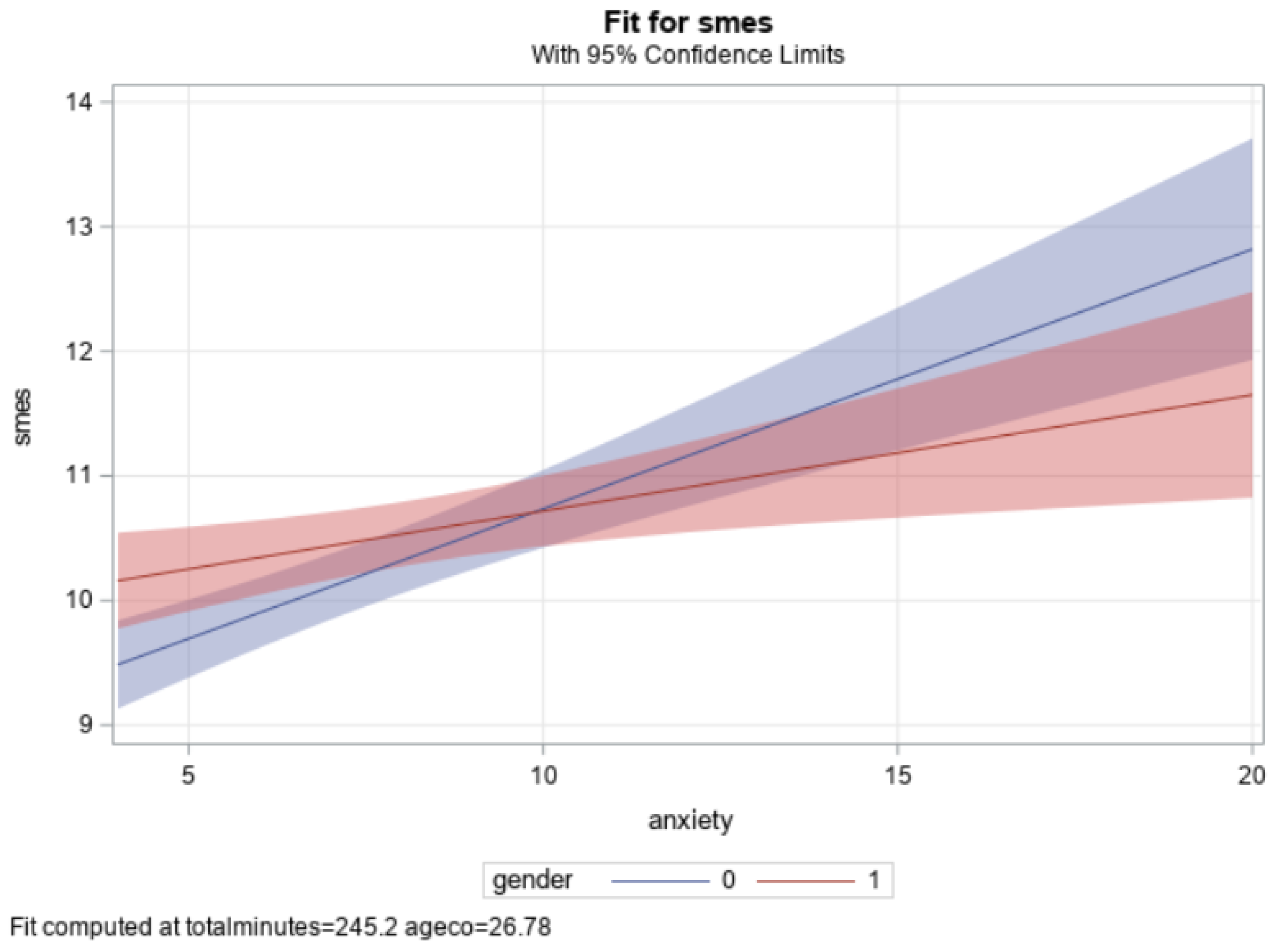
Figure 1. Interaction effect of anxiety and gender to predict SMES.
Psychiatryint 07 00018 g001
Table 1. Bivariate correlations among study variables for the full sample (N = 2403).
Study Variables123456789
1. SMES-
2. Anxiety0.17 **-
3. Age−0.08 **−0.10 **-
4. Gender0.06 *0.11 **−0.06 *-
5. Openness0.06 *0.04−0.020.02-
6. Conscientious.−0.06 *−0.22 **0.07 **0.040.10 **-
7. Extraversion0.14 **−0.10 **0.020.000.060.11 **-
8. Agreeableness0.09 **−0.15 *0.020.030.050.16 **0.12 **-
9. Neuroticism0.04 *0.44 *−0.08 **0.24 **0.02−0.22 **−0.23 **−0.22 **-
Note: Statistical significance * p < 0.05, ** p < 0.01.
Table 2. ANOVA results for SMES based on personality traits.
Study VariablesdfFp-Value
Openness14.690.0046
Conscientiousness19.190.0025
Extraversion120.72<0.0001
Agreeableness118.73<0.0001
Neuroticism10.350.5536
Table 3. Means and standard deviations of SMES based on personality traits and gender from sample (N = 2403).
Study VariablesSMES (Mean)SMES (SD)
Openness
  Yes10.584.74
  No10.174.74
Conscientiousness
  Yes10.164.73
  No10.784.75
Extraversion
  Yes11.014.72
  No10.074.73
Agreeableness
  Yes10.734.84
  No9.894.56
Neuroticism
  Yes10.444.56
  No10.324.85
Gender
  Female10.644.68
  Male10.094.79
Table 4. Regression coefficients for predicting SMES using the study variables, interaction terms, and their corresponding p values.
Study VariablesCoefficientstp-Value
Anxiety−0.13−0.550.58
Social Media (in minutes)0.00110.81<0.001
Gender1.132.670.01
Age−0.19−2.60.01
Anxiety * Gender−0.12−2.390.02
Anxiety * Age0.011.490.14
Disclaimer/Publisher’s Note: The statements, opinions and data contained in all publications are solely those of the individual author(s) and contributor(s) and not of MDPI and/or the editor(s). MDPI and/or the editor(s) disclaim responsibility for any injury to people or property resulting from any ideas, methods, instructions or products referred to in the content.


