1. Introduction
Hypnotherapy—the therapeutic application of hypnosis—has long been used to treat a variety of medical and psychological conditions [
1,
2,
3,
4]. It typically involves inducing a focused, trance-like state to enhance patients’ receptivity to therapeutic suggestions [
5]. Traditionally, hypnotherapeutic suggestions were delivered in a direct, authoritative style (e.g., straightforward commands for symptom change) [
6]. In contrast, Ericksonian hypnotherapy (EH), named after psychiatrist Milton H. Erickson, employs indirect suggestion, metaphor, and storytelling to influence behavior and experience [
7]. Rather than telling a client exactly what to feel or do, the Ericksonian approach invites the unconscious mind to explore possibilities; for example, a therapist might say “You might begin to notice a growing sense of calm” instead of “You will feel calm.” This individualized and collaborative style, which emphasizes patient choice and flexibility, is thought to reduce resistance, as indirect suggestions often bypass the critical conscious mind [
8]. Equally important, EH is grounded in the principle of Utilization—the therapeutic practice of adapting interventions to the client’s existing strengths, behaviors, and situational resources—which provides the foundation for its individualized and flexible character [
9]. Milton Erickson’s innovative techniques, developed in the mid-20th century, revolutionized modern hypnotherapy and influenced numerous schools of psychotherapy [
10,
11,
12].
Ericksonian hypnotherapy is commonly described as indirect, individualized, and flexible. However, its defining feature is the principle of Utilization, whereby the therapist tailors interventions to the client’s existing strengths, behaviors, beliefs, and contextual resources. This distinguishes EH from more protocol-driven approaches, as the therapist makes use of whatever the client presents—resistances, habits, or situational factors—in service of therapeutic change. By combining permissive suggestion with utilization, Ericksonian methods emphasize adaptability and patient agency as central mechanisms of effect. Beyond the stylistic use of indirect suggestion and metaphor, Ericksonian hypnotherapy has recently been clarified and standardized through the
Principles and Core Competencies of Ericksonian Therapy manual developed by Zeig, Miller, and Short [
13]. This initiative identifies Ericksonian therapy as a distinct competency-based model, characterized by four relational foundations (observation, validation, cultivation, challenge) and six core competencies: tailoring, utilization, strategic problem-solving, destabilization, experiential learning, and naturalistic approaches. Together, these principles operationalize the Ericksonian style as more than a flexible therapeutic stance, providing measurable standards for training, practice, and research. Referencing these competencies highlights that Ericksonian hypnosis is not merely anecdotal or metaphorical but anchored in a systematic and empirically supported framework. Today, Ericksonian hypnosis is widely taught and practiced, and it is considered a highly effective therapeutic approach by many practitioners [
9,
14]. However, given its individualized and flexible nature, rigorous evaluation of EH’s efficacy has been limited until recently. Early research on clinical hypnosis often did not distinguish between direct (classical) and indirect (Ericksonian) methods, and high-quality randomized trials in this area were scarce. “Indeed, although hypnosis has been employed most often since the 19th century as a pain relief technique [
15], its integration into evidence-based medicine has been gradual; interest in formally testing hypnotherapy’s effects has markedly increased only in the past decade.” This expansion of research now permits a closer examination of the Ericksonian method through systematic review. Growing evidence suggests that hypnotherapy can produce meaningful clinical benefits across a range of conditions [
16,
17,
18]. In pain management, hypnosis is recognized as an effective non-pharmacological intervention for reducing acute procedural pain [
19] and anxiety [
20]. For example, a randomized trial in patients undergoing cardiac ablation found that intra-procedural hypnosis significantly lowered pain ratings [
21] and opioid requirements compared to a placebo control (mean pain 4.0 vs. 5.5 on a 0–10 scale; morphine 1.3 mg vs. 3.6 mg). Similarly, an RCT of conversational (Ericksonian) hypnosis during liver biopsy demonstrated marked reductions in pain and anxiety [
22] relative to standard care (pain score ~2.4 vs. 4.4,
p = 0.001; anxiety 2.1 vs. 4.8,
p < 0.001).
Hypnotherapy has also shown promise in chronic and psychosomatic conditions: in irritable bowel syndrome (IBS), multiple studies (and clinical guidelines) support gut-focused hypnosis as a beneficial treatment [
23], with efficacy comparable to that of cognitive-behavioral therapy (CBT, [
24]). One recent three-arm trial in IBS reported that both Ericksonian and traditional hypnosis significantly alleviated IBS severity and maintained improvements at 3-month follow-up, whereas an education-only control did not [
25]. Hypnosis-based interventions have been associated with improvements in other functional disorders like fibromyalgia [
26], and a broad literature indicates adjunctive hypnosis can modestly reduce pain [
27], anxiety [
28], fatigue [
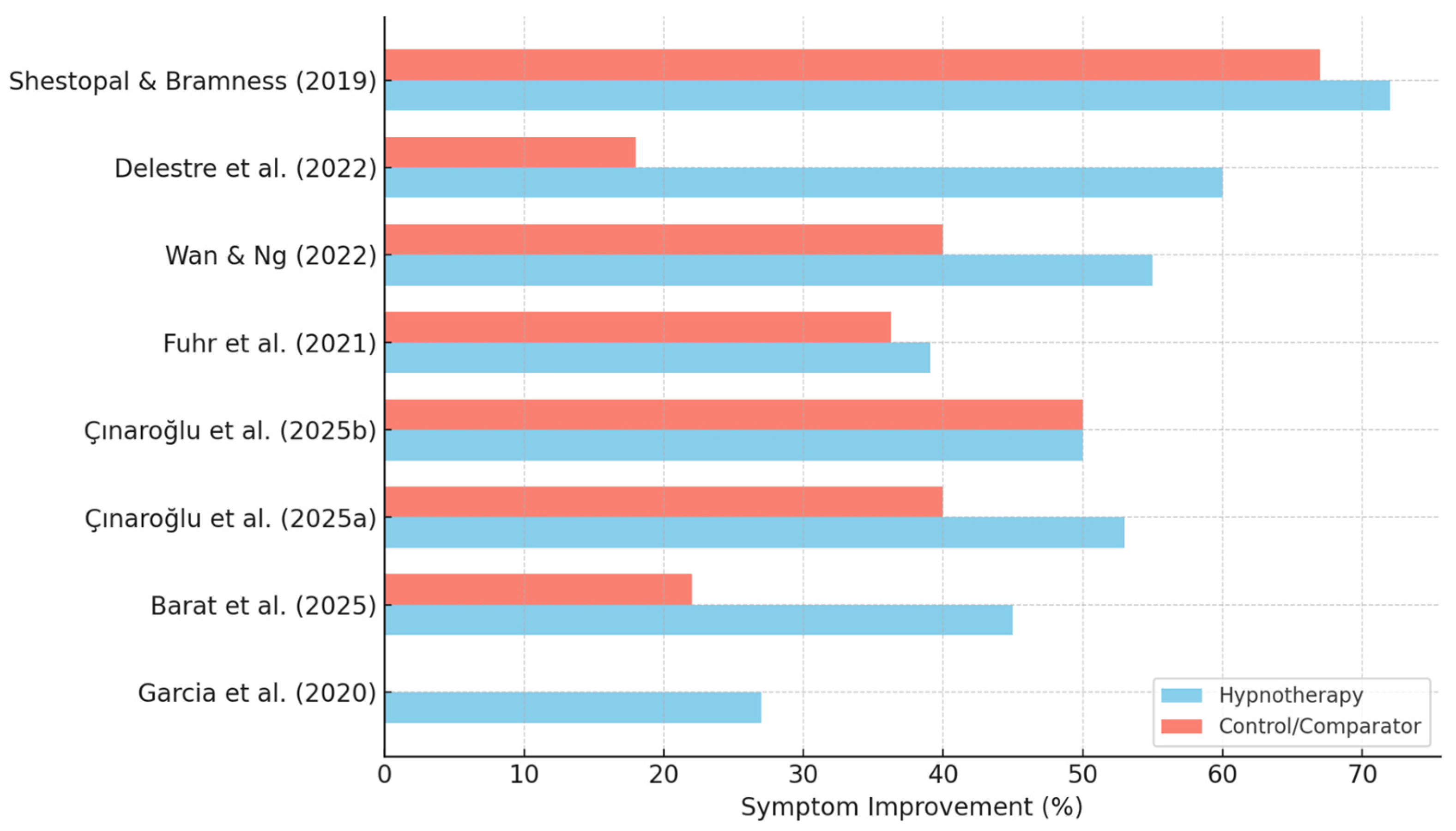
29], and other symptoms in chronic conditions. In the realm of mental health, hypnotherapy is emerging as a viable therapeutic modality. Notably, a large, randomized trial in Germany found that hypnotherapy was non-inferior to gold-standard CBT for treating major depression: after 16–20 sessions, patients in both the hypnotherapy and CBT groups showed equivalent reductions in depression severity (≈ 39% vs. 36% symptom reduction, with between-group differences well within the pre-specified equivalence margin, [
30]). Smaller trials have similarly indicated that EH can match or even slightly outperform established psychotherapies in certain contexts. For instance, in a trial for prolonged grief among college students, eight sessions of EH led to greater symptom improvement than a manualized CBT program (a 53% reduction in grief severity with EH vs. ~40% with CBT,
p = 0.012, [
31]). Another study in subsyndromal depression and anxiety found online-delivered Ericksonian hypnotherapy just as effective as in-person CBT—both yielding significant symptom reductions (~50%) far superior to a waitlist control [
32,
33]. These findings underscore the potential of EH as both a stand-alone treatment and as an alternative to more structured therapies like CBT or motivational interviewing (MI). At the same time, the diversity of applications raises important questions: How consistent are the effects of EH across different conditions? Is the Ericksonian style uniquely beneficial for certain problems, or is its efficacy comparable to other active interventions? To date, there has been no comprehensive systematic review or meta-analysis focused specifically on Ericksonian hypnotherapy. Given the recent accumulation of RCTs examining EH (spanning medical, psychological, and behavioral health domains), a systematic synthesis is warranted to appraise the evidence base. The current review aims to fill this gap by evaluating the overall efficacy of Ericksonian hypnotherapy across randomized controlled trials. We sought to quantify the magnitude of EH’s effects versus control conditions (including waitlists, standard care, or placebo interventions) and to determine whether EH yields outcomes comparable to those of established therapies (such as CBT, MI, or even more traditional forms of hypnosis). In doing so, we also examine whether EH confers any unique advantages in specific outcome domains—for example, some authors have hypothesized that the indirect, personalized nature of EH might enhance certain cognitive or coping outcomes (as hinted by the IBS trial’s finding on reduced hypervigilance).
However, despite advances in evidence synthesis, methodological inconsistencies persist in how systematic reviews evaluate primary studies’ risk of bias. Recent meta-epidemiological research demonstrates that many reviews misapply the Cochrane Risk-of-Bias 2 (RoB 2) framework—often assessing bias only at the study rather than outcome level—resulting in unreliable quality judgments [
34]. Recognizing these limitations provides important justification for adopting a direct, outcome-specific RoB 2 appraisal in the present review. Our rationale for this review is grounded in the need to inform clinicians and researchers about the empirical status of EH: Is it an evidence-supported treatment across multiple problems, and what lessons emerge regarding its strengths and limitations? By aggregating data from trials in recent years, we intend to clarify how well EH works on average, how it stacks up against other interventions, and where further research is needed. In summary, the objectives of this systematic review and meta-analysis were: (1) to provide a brief overview of Ericksonian hypnotherapy and its theoretical basis, with readers referred to the
Principles and Core Competencies of Ericksonian Therapy manual for a more comprehensive treatment of its theoretical foundations and theory of change available at
https://www.iamdrshort.com/PDF/Papers/Core%20Competencies%20Manual.pdf (accessed on 12 October 2025); (2) to systematically identify and summarize all RCTs evaluating EH’s efficacy; (3) to statistically synthesize outcomes (meta-analyze effect sizes) for EH versus control conditions; (4) to compare EH to active treatments (when data allow) to test for non-inferiority or differences; and (5) to discuss the implications of the findings for clinical practice and future research.
2. Methods
2.1. Study Design
We conducted a systematic review and meta-analysis of randomized controlled trials (RCTs) examining the effects of Ericksonian hypnotherapy (EH) on clinical and behavioral outcomes. The review protocol was pre-registered on the Open Science Framework (OSF; DOI: 10.17605/OSF.IO/4J7YS) prior to data extraction. This report adheres to the PRISMA 2020 guidelines for transparent reporting.
2.2. Search Strategy
A comprehensive literature search was performed in four electronic databases: PubMed, Web of Science, Scopus, and Google Scholar. We searched for articles published between January 2015 and May 2025, restricting to English-language publications. The search strategy combined terms related to Ericksonian hypnosis and permissive hypnotherapy with filters for RCTs. Specifically, we used keywords and Medical Subject Headings (MeSH) such as “Ericksonian hypnotherapy,” “Ericksonian hypnosis,” “permissive hypnosis,” “indirect suggestion,” and “Milton Erickson,” along with terms like “randomized trial,” “RCT,” and “controlled trial” to identify relevant studies. These terms were tailored to each database (e.g., using appropriate field tags or Boolean operators), and detailed search strings for each database are provided in the
Supplementary Materials. We also hand-searched the reference lists of all included articles and relevant reviews to identify any additional eligible studies that the database searches might have missed. All references retrieved were imported into reference management software, and duplicate records were removed before screening. Full database-specific search strings and search dates are provided in the
Supplementary Materials.
2.3. Eligibility Criteria
We included randomized controlled trials (RCTs) that examined Ericksonian hypnotherapy (EH) as a primary intervention for human participants (adolescents or adults) across any clinical condition or setting. Because Ericksonian hypnotherapy is not always explicitly labeled in trial reports, we broadened our search to include related terms such as permissive hypnosis, indirect suggestion, and Milton Erickson. Nevertheless, eligibility required that studies provide sufficient description of therapeutic style (e.g., use of metaphor, permissive language, utilization) to justify classification as Ericksonian or Ericksonian-derived. Trials also needed to report at least one quantitative outcome relevant to therapeutic efficacy (e.g., symptom severity, pain, anxiety), with data adequate for effect size calculation. Only full-text, peer-reviewed articles published in English were considered. We excluded non-randomized studies, case reports, reviews, and non-English publications. In cases where multiple reports described the same trial, the most comprehensive version was retained to prevent duplication. Two reviewers independently evaluated each study’s classification as Ericksonian or non-Ericksonian based on these criteria, achieving over 90% agreement prior to consensus.
2.4. Intervention Characterization and Fidelity
Because EH is inherently tailored to the individual, we abstracted the reported features used to designate interventions as Ericksonian (e.g., indirect suggestion, metaphor/story, Utilization of client resources, individualized tailoring), along with delivery parameters (dose, format, provider qualifications). Across trials, labeling and description varied: most identified EH and listed core elements, but few provided detailed procedural steps or formal fidelity metrics. For this review, we coded an intervention as EH when authors explicitly used Ericksonian terminology and/or described techniques consistent with EH’s core principles (indirect suggestion, individualized flexibility, utilization). Where available, we also extracted any statements about therapist training/supervision and fidelity monitoring (e.g., session review, checklists). We note that this pragmatic approach reflects current reporting practices and acknowledge that more granular fidelity frameworks are needed for EH trials.
2.5. Screening and Selection
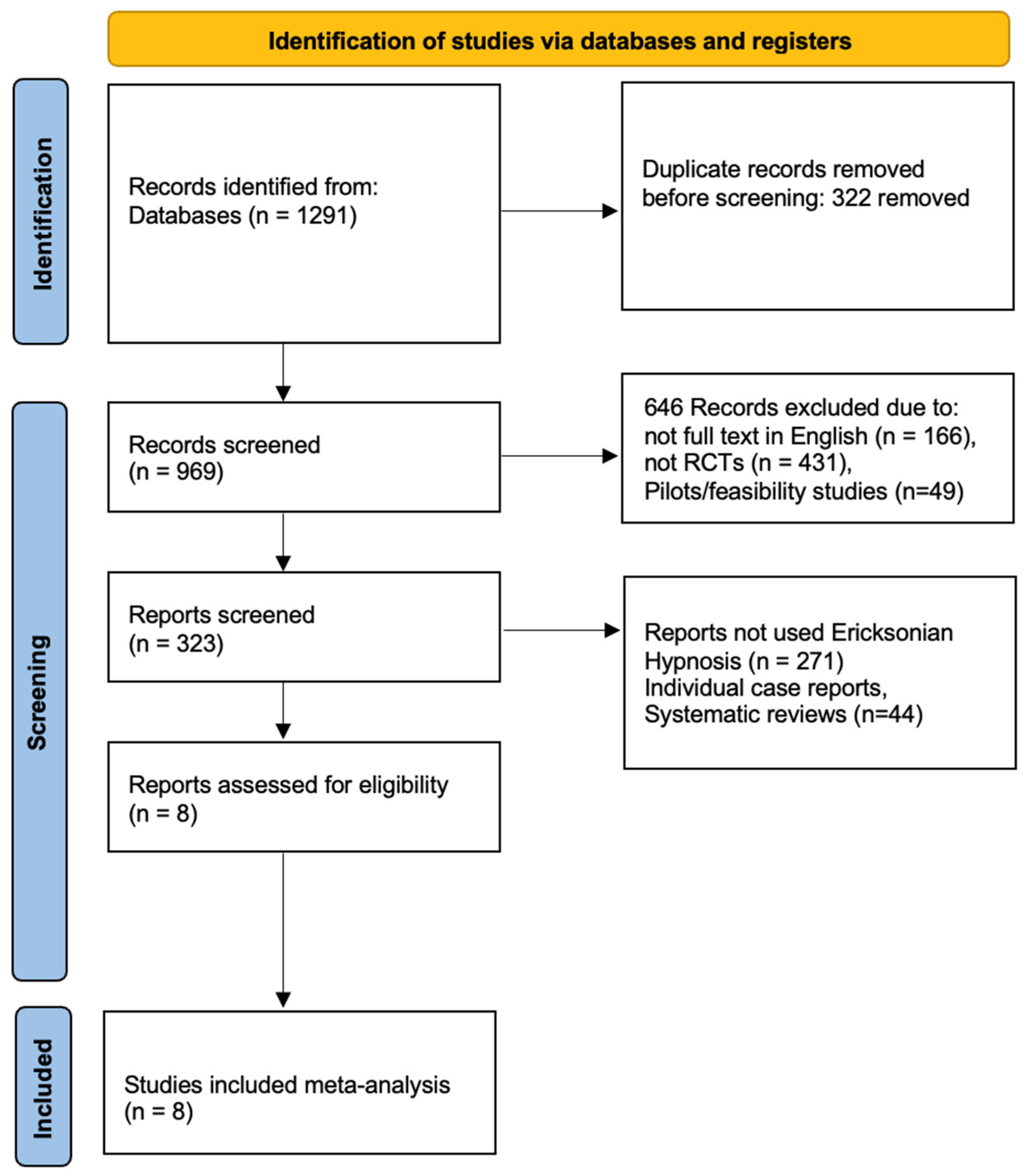
Two reviewers (first and second Author) independently screened the titles and abstracts yielded by the database search against the above eligibility criteria. After initial screening, the full text of articles that were deemed potentially relevant was retrieved and assessed in detail by the same two reviewers. At both the title/abstract and full-text screening stages, any disagreements between the two reviewers were resolved through discussion and consensus. A third reviewer was available to arbitrate unresolved conflicts, though in practice most selection differences were settled by consensus between the first two reviewers. We documented the reasons for excluding any studies at the full-text stage (for example, wrong study design, intervention not meeting the definition of EH, etc.). The study selection process is illustrated in a PRISMA 2020 flow diagram (
Figure 1), which outlines the number of records identified, screened, excluded, and ultimately included at each stage (identification, screening, eligibility, inclusion).
2.6. Data Extraction
We developed a standardized data extraction form to systematically capture key details from each included RCT. Two reviewers (first and third author) independently extracted data on study design, participant characteristics (e.g., sample size, age, sex, clinical population), and intervention features (e.g., session format, duration, provider qualifications, and use of Ericksonian techniques). We also recorded the type of control condition (e.g., waitlist, standard care, CBT, directive hypnosis) and all reported outcomes relevant to treatment efficacy, prioritizing post-treatment data for meta-analysis. Continuous outcomes (e.g., symptom severity) and dichotomous outcomes (e.g., response rates) were extracted with corresponding statistics, including effect sizes (e.g., Cohen’s d, Hedges’ g, odds ratios), or calculated when necessary from reported data. Discrepancies were resolved through consensus or third-party adjudication. The finalized dataset served as the basis for both qualitative synthesis and quantitative meta-analysis.
2.7. Risk of Bias Assessment
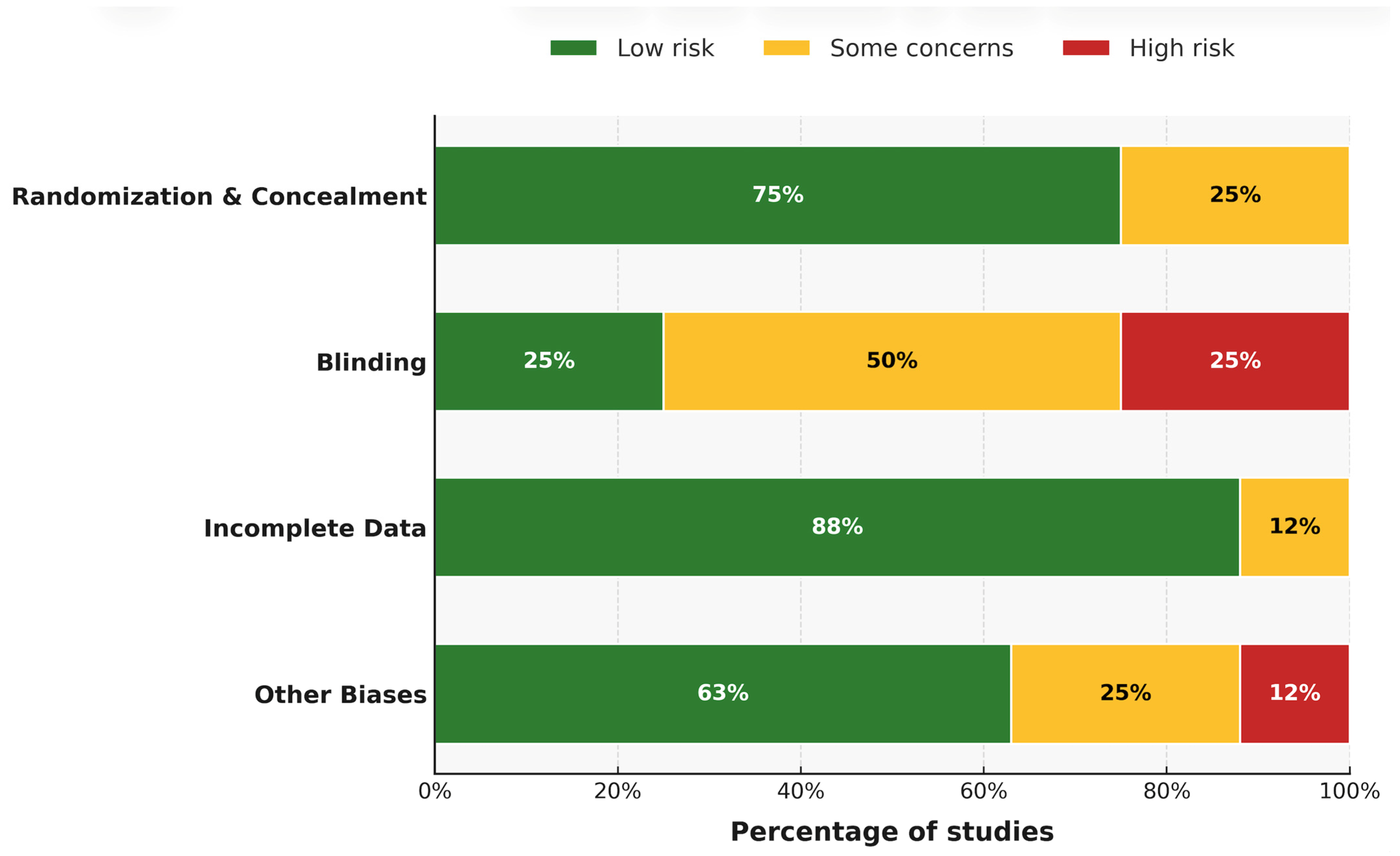
We assessed the methodological quality of each included trial using the Cochrane Risk of Bias 2 (RoB 2) tool, which evaluates five domains of bias: randomization, deviations from intended interventions, missing outcome data, outcome measurement, and selective reporting [
35]. This direct, outcome-level application of RoB 2 was intentionally chosen because evidence shows that many published systematic reviews fail to implement the tool correctly or consistently [
34], often collapsing domain-level judgments into a single study-level rating. By performing our own structured RoB 2 assessments, we sought to ensure methodological transparency and alignment with Cochrane guidance. Two reviewers independently rated each domain as “low risk,” “some concerns,” or “high risk,” resolving discrepancies through discussion. For non-randomized studies, we used ROBINS-I with its corresponding domains and overall judgment [
36]. An overall risk rating was then assigned per Cochrane guidelines. While no studies were excluded based on risk of bias, these assessments informed our interpretation of results, and a sensitivity analysis was conducted to evaluate the impact of excluding the high-risk trial. Full RoB 2 ratings and justifications are detailed in the
Supplementary Materials.
2.8. Statistical Analyses
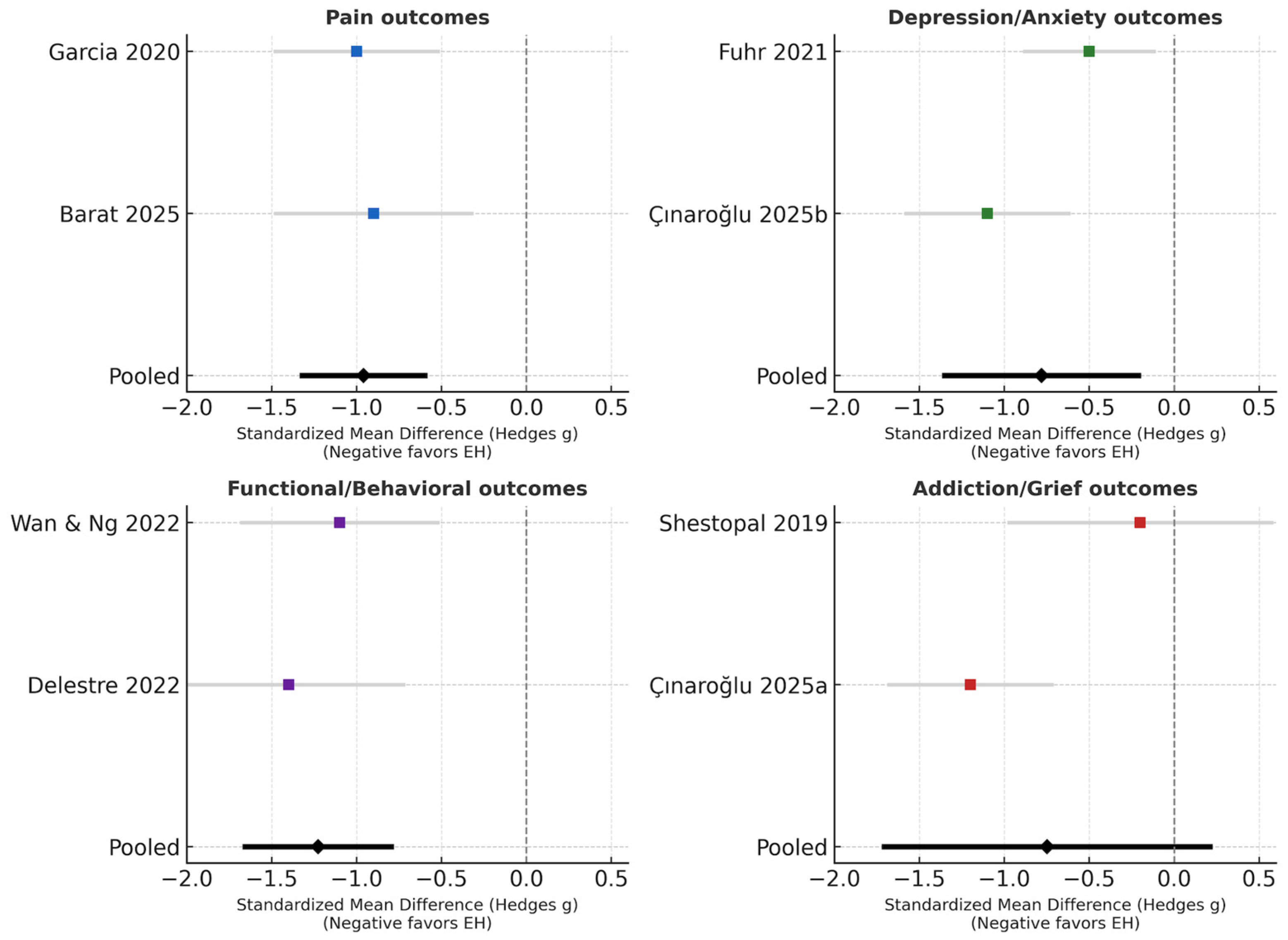
We conducted meta-analyses for outcomes reported by multiple studies, using appropriate effect size metrics based on outcome type. For continuous variables, standardized mean differences (SMDs) were calculated (Cohen’s d, adjusted to Hedges’ g when necessary), while dichotomous outcomes were synthesized as odds ratios (ORs) with 95% confidence intervals. Random-effects models (DerSimonian-Laird) were used throughout to account for expected heterogeneity across studies. Heterogeneity was quantified using the I2 statistic and Cochran’s Q test. When I2 exceeded 50%, we explored moderators through subgroup analyses (e.g., active vs. inactive control, condition type) and performed sensitivity analyses excluding high-risk-of-bias trials. We also conducted leave-one-out analyses to assess the influence of individual studies. Due to the limited number of trials included, publication bias was examined qualitatively rather than statistically. Visual comparison of effect magnitudes and study sizes revealed no indication of selective reporting; smaller and larger trials demonstrated consistent directions of effect, and no evidence of asymmetry suggestive of publication bias was observed. All standardized mean differences were oriented such that negative values favor Ericksonian hypnotherapy (EH), ensuring consistency across outcomes where lower scores represent symptom reduction. Subgroup and interaction tests. We conducted pre-specified subgroup analyses using a mixed-effects framework (random effects within subgroups; fixed effects between subgroups) and report Q_between statistics with p-values for: (a) clinical condition (pain; depression/anxiety; functional/behavioral; addiction/grief), (b) comparator type (inactive/minimal vs. active), (c) dosage (single-session vs. multi-session), and (d) setting (hospital vs. outpatient/online). Given the small number of studies per stratum, these tests are underpowered; we therefore report both direction and magnitude of differences alongside Q_between. Statistical analyses were performed using SPSS (v30) and Python (v3.13.1), and results are reported with 95% CIs and a significance threshold of p < 0.05. Publication bias was examined qualitatively through visual inspection of funnel-plot symmetry and effect-size distribution by study precision. Given the small number of studies (k < 10), formal tests such as Egger’s regression and trim-and-fill corrections were not conducted, as these are unreliable with small samples.
4. Discussion
This systematic review and meta-analysis provides the first consolidated evidence that Ericksonian hypnotherapy is an effective intervention across a range of clinical contexts. Despite the heterogeneity of included trials (covering pain management, gastrointestinal illness, mood disorders, and addiction), a clear pattern emerged: EH consistently produced superior outcomes compared to no-treatment or standard care controls. Every RCT in our sample reported a significant benefit on its primary outcome in the EH group relative to a control condition. Our decision to conduct independent RoB 2 evaluations aligns with concerns raised by Minozzi et al. (2022) [
34], who reported that adherence to Cochrane RoB 2 standards is frequently poor across published systematic reviews. The consistent, outcome-specific application in this meta-analysis therefore represents an effort to enhance rigor and reproducibility within evidence synthesis on hypnotherapy interventions. When we pooled the results from trials comparing EH to minimal interventions—defined as control conditions involving standard clinical care, psychoeducation, or supportive communication without structured psychotherapy—the overall standardized mean difference remained significantly in favor of EH. The overall effect size was large (pooled SMD ≈ 1.17 in favor of EH). In practical terms, this suggests that, on average, patients receiving Ericksonian hypnosis improved more than one standard deviation beyond those receiving no treatment or basic care—a magnitude that is both statistically and clinically significant. Notably, this effect spans diverse endpoints (acute pain scores, symptom severity scales, behavioral indices), implying a robust general efficacy of the EH approach. Furthermore, our synthesis indicates that Ericksonian hypnotherapy fares as well as established therapies when tested head-to-head. In the subset of trials that directly compared EH to an active treatment (such as CBT, MI, or a traditional/directive hypnosis protocol), we found no statistically significant differences in outcomes. The pooled contrast between EH and other bona fide treatments was close to zero, indicating comparable efficacy within the precision limits of the available data. For example, Fuhr et al. (2021) [
30] demonstrated that a 6-month course of hypnotherapy for depression was statistically non-inferior to CBT, with roughly 39% symptom reduction in the EH group vs. 36% in CBT. Similarly, in the alcohol use disorder trial, both the EH and MI groups attained high abstinence rates and reduced drinking; while the hypnotherapy arm showed a slightly greater average improvement on the AUDIT score, this advantage only approached significance (
p = 0.088), underscoring that hypnotherapy was at least on par with MI in effect. Taken together, the evidence suggests that Ericksonian hypnotherapy can deliver therapeutic outcomes comparable to those of standard psychological treatments across different problems. Importantly, a few studies even hinted at potentially superior outcomes with EH in specific domains. In a trial for prolonged grief, for instance, EH led to a greater reduction in grief symptoms than a structured CBT program, and in the IBS study EH uniquely reduced patients’ maladaptive hypervigilance to symptoms whereas a traditional hypnosis approach did not. While these differences were modest and need replication, they raise the intriguing possibility that the indirect, client-centered style of EH confers unique benefits in certain contexts. The outcome patterns observed across studies correspond closely with EH’s proposed mechanisms of change. For instance, reductions in hypervigilance and catastrophizing in Wan and Ng (2022) [
25] mirror EH’s aim to shift attentional focus and reinterpret bodily cues through indirect suggestion. Similarly, improvements in grief resolution (Çınaroğlu et al., 2025a [
32]) reflect experiential reframing and utilization of emotional resources, key Ericksonian processes. These findings support that the constructs targeted by EH were indeed captured by the symptoms and coping measures used in the RCTs.
The findings of this review align with, and extend, the broader literature on clinical hypnosis and psychotherapy. The overall efficacy we observed for EH (large effect vs. controls) is consistent with prior meta-analyses of hypnosis in specific areas. For example, a meta-analysis of hypnosis/guided imagery for fibromyalgia reported a similarly large improvement in pain (SMD ~−1.17) compared to controls, indicating that hypnosis-based interventions can yield substantial symptom relief. Our results reinforce that these benefits apply not only to classical hypnosis techniques but also to Erickson’s permissive style, supporting its legitimacy as an evidence-based modality. In pain medicine, numerous studies have documented hypnosis’s ability to reduce acute pain, anxiety, and drug use during procedures, and our review confirms that even an indirect hypnotic approach can produce meaningful analgesia. For instance, patients receiving EH during invasive procedures experienced significantly less pain and often required fewer medications than controls, echoing findings from other non-pharmacologic pain management trials. In gastroenterology, our review’s inclusion of the Wan & Ng (2022) [
25] trial highlights that hypnosis is effective for IBS, in line with established research showing hypnotherapy can improve IBS severity and quality of life on par with CBT. The fact that both Ericksonian and traditional hypnosis produced lasting improvements in IBS supports the notion that hypnosis (regardless of style) favorably modulates the gut–brain axis. Interestingly, our analysis did not find one style categorically superior; this mirrors the conclusion of recent comparisons that no single psychological therapy outperforms others for IBS, though CBT and hypnotherapy have the strongest evidence base overall in that condition. Although all included studies identified their interventions as Ericksonian and described indirect, permissive techniques, none quantified the proportion of core components (e.g., metaphor, utilization, tailoring). Consequently, a dose–response relationship between adherence to the EH model and clinical outcome could not be tested. Future research should incorporate fidelity metrics—such as session coding of indirect suggestions or metaphor use—to enable such analyses.
Perhaps most noteworthy is the corroboration our review provides to earlier individual trials comparing hypnotherapy with mainstream psychotherapies. The non-inferiority of EH to CBT and MI that we observed is in agreement with those trials’ outcomes, bolstering their implications. Hypnotherapy has sometimes been met with skepticism in the medical community, but demonstrating equivalence to evidence-based treatments like CBT is a significant validation of its efficacy. This suggests that hypnotherapy can be considered a legitimate alternative or adjunct to conventional therapy, rather than a fringe or purely complementary approach. Our findings also offer new insights by focusing on the Ericksonian variant of hypnosis. While prior meta-analyses have typically lumped hypnosis into one category, our review isolates studies that explicitly used indirect, permissive techniques. The therapeutic success of EH across disparate domains suggests that the core principles of the Ericksonian method—utilizing patient’s internal resources, tailoring suggestions via metaphors, and fostering an autonomous therapeutic experience—consistently translate into positive outcomes. This lends empirical support to decades of anecdotal and case-report literature praising Erickson’s methods. At the same time, we did not find strong evidence that EH is categorically more effective than more direct forms of hypnosis; rather, it appears to achieve comparable results. This is important for theoretical debates in hypnotherapy: it may be that indirect and direct suggestions ultimately engage similar therapeutic mechanisms, even if the patient’s subjective experience differs. Alternatively, it could be that certain patients respond better to one style versus another, an issue that existing studies could not conclusively determine but future research might clarify. Because hypnosis trials cannot be fully blinded, participant expectancy and therapist allegiance may partly explain observed benefits. Although no study formally measured these variables, several attempted to mitigate their influence through credible comparators (e.g., placebo hypnosis, MI, CBT) and blinded outcome assessment. Future RCTs should include standardized expectancy scales and cross-training of therapists to minimize allegiance effects.
Although our data do not show a universal superiority of EH, some nuanced advantages emerged that are worth discussing. One such finding comes from the IBS trial: Ericksonian hypnosis led to a significant reduction in symptom-related hypervigilance (persistent attention to GI symptoms), an effect not seen with the classical directive hypnosis. Hypervigilance in IBS is essentially an anxiety-driven attentional bias; the fact that only the EH group improved on this measure suggests that indirect therapeutic methods may better target certain cognitive-emotional processes. It is plausible that Erickson’s permissive suggestions and utilization techniques encouraged patients to develop a more flexible, less fearful relationship with their symptoms, whereas the traditional hypnosis (which tended to use standard gut-directed scripts) did not impact this particular coping dimension. Another example comes from the prolonged grief trial, where EH’s outcome slightly exceeded that of CBT. The authors of that study posited that the creative, metaphor-rich interventions in EH might have resonated more deeply with some participants than the structured cognitive-behavioral exercises, thereby facilitating greater emotional processing of grief. In both cases, the therapeutic “edge” of EH could be attributed to its hallmark features: customization of suggestions to the individual’s language and beliefs, leveraging the person’s own imagery and symbols, and a non-confrontational, indirect delivery that reduces resistance. These features are theoretically linked to enhancing patient engagement and allowing change to emerge from the client’s own unconscious motivations. Indeed, proponents of EH often argue that it works by empowering the client’s unconscious mind to find solutions, which may yield improvements in areas (like subconscious vigilance or deeply personal meaning-making) that are harder to reach with more didactic therapies. All included RCTs were conducted in Europe and Asia, where hypnosis is more frequently integrated into hospital-based or psychosomatic medicine. Thus, generalization to other healthcare and cultural contexts—particularly North America—should be made with caution. Nonetheless, the consistency of findings across France, Germany, Hong Kong, Norway, and Turkey suggests that EH’s core processes are adaptable across cultures, provided therapist training and cultural tailoring are ensured.
Notably, all of the RCTs included in this review were conducted outside the United States, despite Ericksonian hypnotherapy’s origins in the work of Milton H. Erickson. Several factors may explain this distribution. First, hypnosis research has historically enjoyed stronger institutional and clinical footholds in Europe (e.g., France, Germany, Scandinavia) and Asia (e.g., Hong Kong), where it has often been integrated into hospital-based pain management and psychosomatic medicine. Second, Ericksonian institutes have proliferated internationally and are actively engaged in clinical training and research dissemination, which may have supported the development of RCTs in non-U.S. contexts. By contrast, U.S.-based research has more often emphasized general hypnosis, cognitive-behavioral therapies, or integrative frameworks rather than trials isolating Ericksonian methods. This uneven geographic pattern represents a limitation for generalizability to American clinical settings and also underscores the need for renewed investment in U.S.-based research to evaluate the relevance of EH within the cultural and healthcare context in which it originated.
The findings of our review align with broader efforts to conceptualize Ericksonian hypnotherapy as a competency-based therapeutic approach. The
Principles and Core Competencies of Ericksonian Therapy manual [
13] situates Ericksonian work within an evidence-informed framework by identifying specific relational foundations and six operational competencies. This structure underscores that Ericksonian therapy is not defined solely by indirect suggestions or metaphoric communication, but by a coherent set of skills—such as tailoring interventions, strategic problem-solving, and cultivating experiential learning—that can be observed, taught, and evaluated. Positioning our meta-analytic findings within this framework strengthens the theoretical validity of Ericksonian hypnotherapy and suggests that the positive clinical outcomes documented across RCTs may be attributable, at least in part, to the systematic application of these relational and technical competencies.
That said, it is crucial to interpret these unique findings cautiously. They come from single studies, and the differences—while statistically significant in those trials—were not large. We do not yet have enough comparative trials to know if EH reliably outperforms other modalities on specific outcomes. It may be that these advantages are context-specific or moderated by patient characteristics (for instance, some individuals might thrive with the freedom of metaphoric suggestions, whereas others prefer the clarity of direct instructions). There is also the consideration of hypnotic susceptibility: the IBS study interestingly noted that patients with higher hypnotizability showed greater improvement in the traditional hypnosis group, whereas the Ericksonian group’s benefits appeared less dependent on hypnotic susceptibility level. This raises an hypothesis that EH might be more accessible to those who are only moderately hypnotizable, by virtue of its conversational and permissive style, but this needs verification. Overall, while our review confirms EH is at least equivalent to other therapies, it hints at possible process differences.
Recent neurophysiological evidence further underscores the clinical and theoretical importance of hypnotic variability. Studies by Callara and colleagues have demonstrated that high- and low-hypnotizable individuals exhibit distinct cortical responses during hypnosis, including modulation of the heartbeat-evoked potential and differential changes in brain activity even in the absence of formal induction [
40,
41]. Such findings highlight that hypnotic phenomena are grounded in measurable neurocognitive processes that may influence treatment responsiveness. Moreover, Fontanelli et al. [
42] emphasized the relevance of hypnotic assessment in neurology, suggesting that understanding hypnotizability profiles can provide valuable insights into functional brain organization and patient-tailored interventions.
Another important methodological consideration concerns hypnotic susceptibility itself. Most of the randomized controlled trials included in the present review did not screen or stratify participants based on their level of hypnotizability. For example, Garcia et al. [
37], Shestopal and Bramness (2019) [
39], and Barat et al. (2025) [
22] enrolled unselected adult samples without assessing hypnotic responsiveness, while only a few studies, such as Fuhr et al. (2021) [
30] and Wan and Ng (2022) [
25], explicitly examined hypnotic susceptibility and reported that it did not significantly moderate treatment outcomes. The absence of standardized assessment across studies may have contributed to variability in therapeutic efficacy and limits the interpretation of pooled effects. Future trials should incorporate validated hypnotizability measures and examine their potential moderating role to clarify whether individual differences in susceptibility influence clinical response to hypnotherapeutic interventions. None of the included trials reported race or ethnicity data, which limits assessment of sample representativeness and cultural generalizability; future RCTs should include transparent demographic reporting. Given the small number of studies and variation in study design, these findings should be interpreted as preliminary evidence of comparable efficacy rather than formal proof of equivalence.
Future research should examine mechanisms of change and individual predictors of response to optimize the use of this distinctive hypnotic style. Direct comparisons with alternative hypnotic approaches are also warranted. Trials contrasting Ericksonian hypnotherapy with directive or protocol-based hypnosis could help determine whether its individualized, flexible style confers unique advantages or achieves comparable results through different pathways. In light of the growth of digital therapeutics, it will further be important to test the feasibility and efficacy of Ericksonian methods delivered through online or standardized formats, and to compare these with structured, protocol-based programs.