


Abstract
Periodontitis is a dysbiosis-driven inflammatory disease in which a pathogenic subgingival biofilm disrupts the host–microbe equilibrium and promotes progressive loss of tooth-supporting tissues. While periodontal destruction has traditionally been explained mainly through the host immune response, increasing experimental and clinical evidence suggests that epithelial–mesenchymal transition (EMT)-like changes in the gingival epithelium may contribute to barrier failure and tissue remodeling during disease progression. EMT is characterized by reduced epithelial adhesion and polarity, alongside a shift toward a mesenchymal-like phenotype with enhanced motility and impaired epithelial barrier function. This narrative review focuses on how periodontal pathogens, particularly red complex organisms and keystone species, may trigger gingival EMT through virulence factors such as gingipains, fimbriae, lipopolysaccharide, and outer membrane vesicles. These microbial signals can hijack host pathways including TGF-β/Smad, Wnt/β-catenin, and Notch to drive EMT-associated transcriptional changes and downstream functional consequences. Collectively, pathogen-induced gingival EMT may facilitate deeper microbial invasion, perpetuate chronic inflammation, impair wound healing, and contribute to fibrotic remodeling, ultimately linking microbial dysbiosis to connective tissue destruction. Understanding these mechanisms may support the development of EMT-related biomarkers and targeted interventions aimed at preserving epithelial barrier stability in periodontitis.
1. Introduction
Periodontitis is one of the most common chronic inflammatory diseases in the world, resulting in the loss of the periodontal ligament and alveolar bone [1,2]. It is initiated by subgingival biofilm accumulation, which promotes dysbiosis and disrupts the normal homeostatic relationship between the host and the oral microbiome [3,4]. The gingival epithelium, particularly the junctional epithelium, serves as the major physical and biological defense against microorganisms, yet it is not simply a wall; rather, it is a highly dynamic tissue that senses and reacts to microbial insult via numerous and complex signaling pathways [5,6,7].
More recently, EMT-like changes have been proposed as part of periodontitis pathogenesis [7,8]. Under chronic inflammatory conditions, characterized by repeated acute inflammatory episodes, epithelial cells lose their epithelial characteristics (such as E-cadherin) and acquire mesenchymal characteristics (such as vimentin and N-cadherin) [9]. Loss of epithelial characteristics, and therefore disruption of the gingival epithelial barrier [10], occurs due to epithelial cells losing apical-basal polarity and intercellular junctions [11].
EMT occurs in three types: developmental (Type 1), inflammation/repair (Type 2), and cancer-related (Type 3). In periodontitis, EMT-like epithelial plasticity represents a Type 2 EMT-like response driven by inflammation and microbial factors, manifesting as partial or reversible remodeling [7]. Since wound repair and fibrosis signaling overlap with EMT pathways, references to “fibrosis” or “myofibroblast-related” outcomes describe downstream remodeling responses rather than definitive epithelial-to-myofibroblast transition in periodontal tissues [11].
EMT-like changes in periodontal tissues appear to be strongly influenced by interactions of periodontal pathogens with the host epithelium [1]. Periodontal pathogens such as Porphyromonas gingivalis (P. gingivalis) are able to utilize numerous virulence factors to promote both the invasion and colonization of host cells [3]. Through these virulence factors, pathogens cause an EMT resulting in bacterial invasion, thus allowing bacteria to migrate beyond the host’s initial immune defenses and into the connective tissue [5]. Most evidence comes from in vitro models and long-term infection experiments. However, direct causality in human periodontitis remains difficult to prove due to tissue heterogeneity, mixed biofilms, and confounding inflammation. This narrative review summarizes the mechanisms by which periodontal pathogens can promote EMT-like changes and disrupt epithelial barrier function. It also discusses how these events may contribute to downstream tissue destruction in periodontitis.
While the mechanistic pathways discussed here are strongly supported by in vitro models and, to a lesser extent, animal studies, the evidence base in human periodontitis is often observational (histopathology, expression studies, and association with disease severity). For that reason, we explicitly indicate throughout the review whether a finding comes primarily from experimental systems or from human tissues, and we treat causal language in human disease as inference unless directly supported by clinical or histological data.
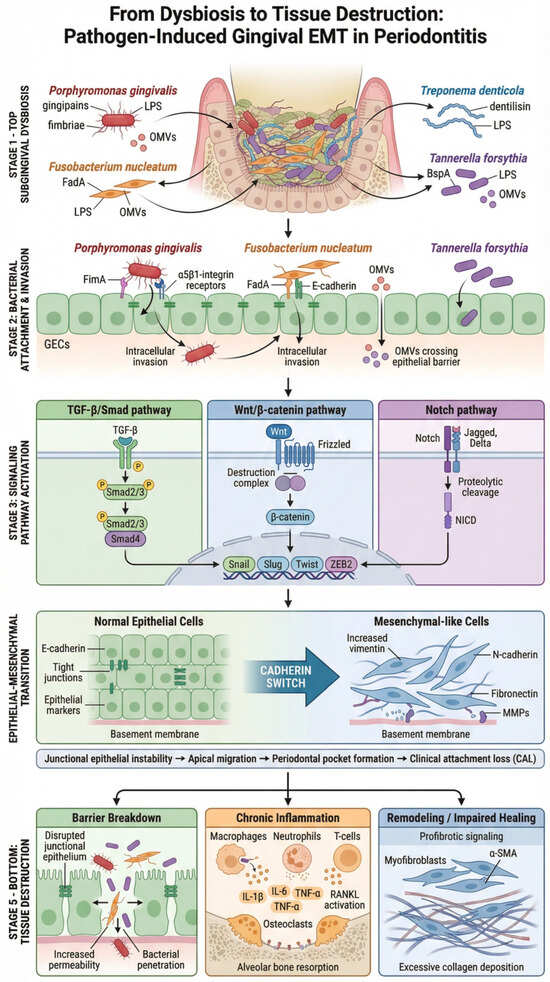
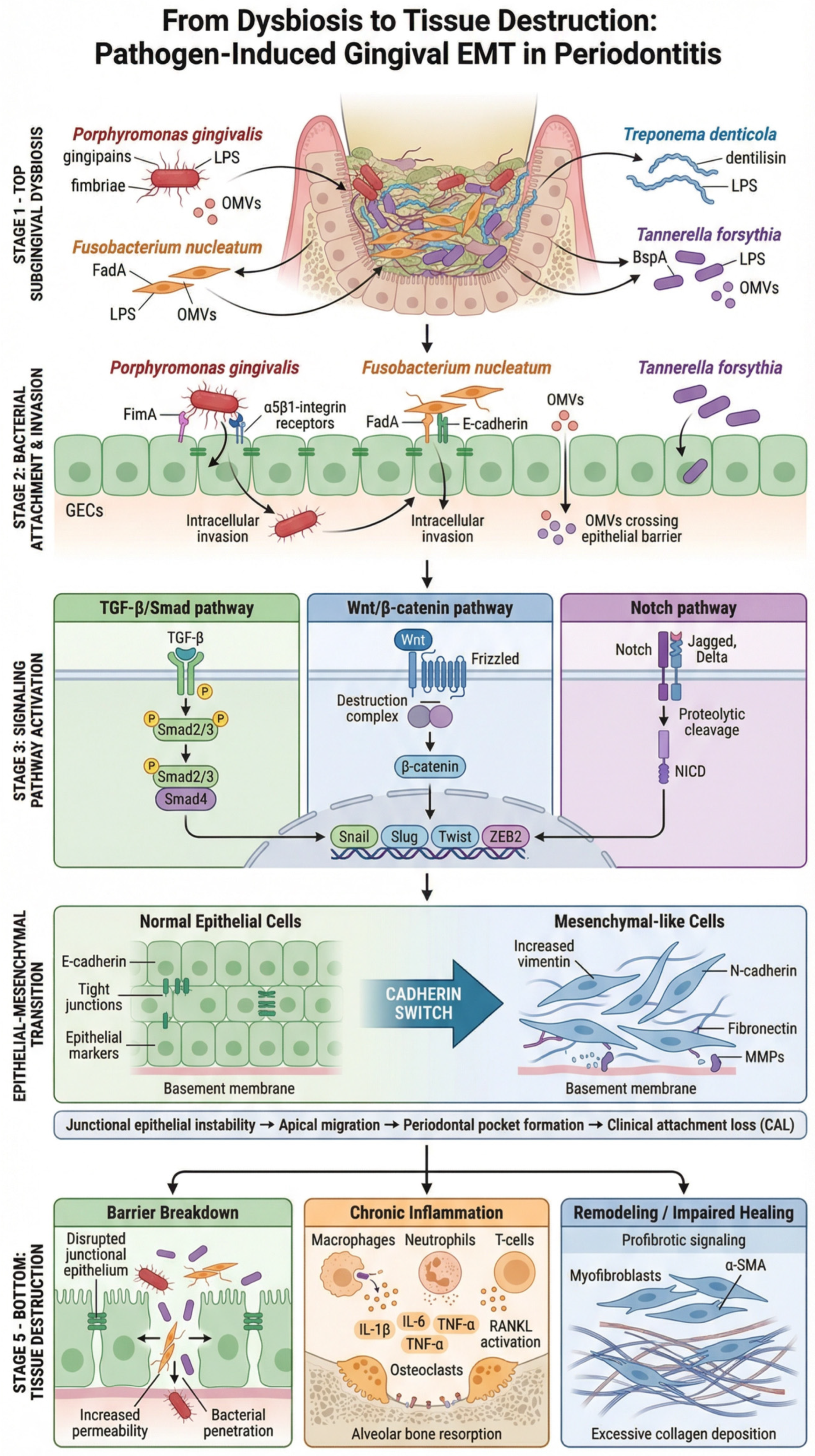
A schematic overview summarizing pathogen-induced EMT-like remodeling and its proposed contribution to junctional epithelial instability, apical migration, pocket formation, and clinical attachment loss is provided in Figure 1.
Figure 1.
From Dysbiosis to Tissue Destruction: Pathogen-Induced Gingival Epithelial–Mesenchymal Transition (EMT) in Periodontitis. Schematic representation of the pathway from subgingival dysbiosis to periodontal tissue destruction via pathogen-induced EMT. Keystone periodontal pathogens release virulence factors that attach to and invade gingival epithelial cells, activating TGF-β/Smad, Wnt/β-catenin, and Notch signaling pathways. This triggers EMT, characterized by loss of epithelial markers (E-cadherin) and gain of mesenchymal markers (vimentin, N-cadherin), leading to junctional epithelial instability, apical migration, periodontal pocket formation, and clinical attachment loss (CAL). Downstream consequences include barrier breakdown with increased bacterial penetration, chronic inflammation with alveolar bone resorption, and tissue remodeling with profibrotic signaling that impairs regenerative healing.
2. Materials and Methods
Literature Search and Study Selection
This paper is a narrative review. A structured literature search was completed using PubMed/MEDLINE, Scopus, Web of Science, and Google Scholar, published up to January 2026, to find studies for this review. The searches were designed to look at both “dysbiosis” and “epithelial–mesenchymal transition (EMT)” and contained (but are not limited to) the following terms: periodontitis, subgingival dysbiosis, gingival epithelium, epithelial–mesenchymal transition (EMT), Porphyromonas gingivalis, Fusobacterium nucleatum, gingipains, fimbriae, lipopolysaccharide (LPS), outer membrane vesicles, and transcription factors associated with EMT such as E-cadherin, vimentin, Snail, Twist, and ZEB.
In selecting studies to link periodontal pathogens (and/or their virulence factors) to EMT-like epithelial changes or barrier disruption, we prioritized articles from peer-reviewed journals, and we also reviewed recently published reviews on the topic so that we would not miss important mechanisms. Since it is often very difficult to establish causation in human periodontitis, we evaluated evidence from all three areas of study (animal studies, in vitro models, human tissue/clinical studies) and discussed the limitations of each in the relevant sections.
3. Subgingival Dysbiosis and Keystone Periodontal Pathogens
3.1. Characterization of the Red Complex and Keystone Pathogens
The ‘red complex’ classically comprises P. gingivalis, Treponema denticola, and Tannerella forsythia [12]. These species are frequently isolated from deep periodontal pockets and are associated with greater disease severity [13]. While the association between these taxa and disease severity is supported by clinical and microbiological studies in humans, many of the mechanistic links discussed in the following sections (adhesion, invasion, EMT-marker shifts, and pathway activation) come primarily from in vitro systems and, to a lesser extent, animal models. For clarity, we indicate when evidence is experimental versus human-based, and we avoid implying direct causality in human periodontitis when the available data are largely associative.
P. gingivalis, as identified as a “keystone pathogen”, has the capability to cause inflammatory bone loss at low levels through structural changes to the oral microbiota [14]. Pathogenicity of these microbes is due to the presence of multiple virulence factors. P. gingivalis uses several cysteine proteases referred to as gingipains that are divided into two types based on specificity; RgpA/RgpB are arginine-specific, and Kgp is lysine-specific [15] and work together to degrade extracellular factors such as cytokines and cell-surface receptors to alter the host’s immune response and disrupt tissue architecture [16]; the bacterial surface is also typically modified with carbohydrates-glycans, this modification may enhance host–pathogen interaction and promote bacterial survival [17].
Treponema denticola, the oral spirochete, contributes to its virulence through motility and the production of dentilisin, a protease that degrades the extracellular matrix and impairs cell-to-cell communication [18,19], while the S-layer of T. forsythia promotes the evasion of the host immune response and the adhesion to host cells [20]. The collective presence of both the red complex species and other members of the orange complex, including Fusobacterium nucleatum, produces a biofilm environment that maintains a chronic infection [21].
3.2. Mechanisms of Bacterial Attachment and Intracellular Invasion
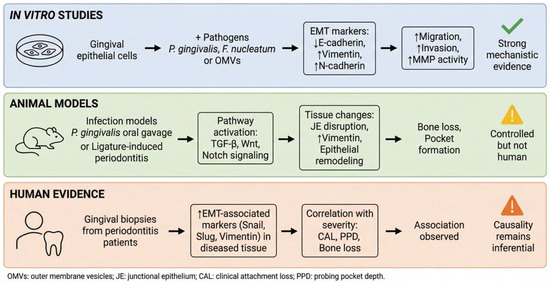
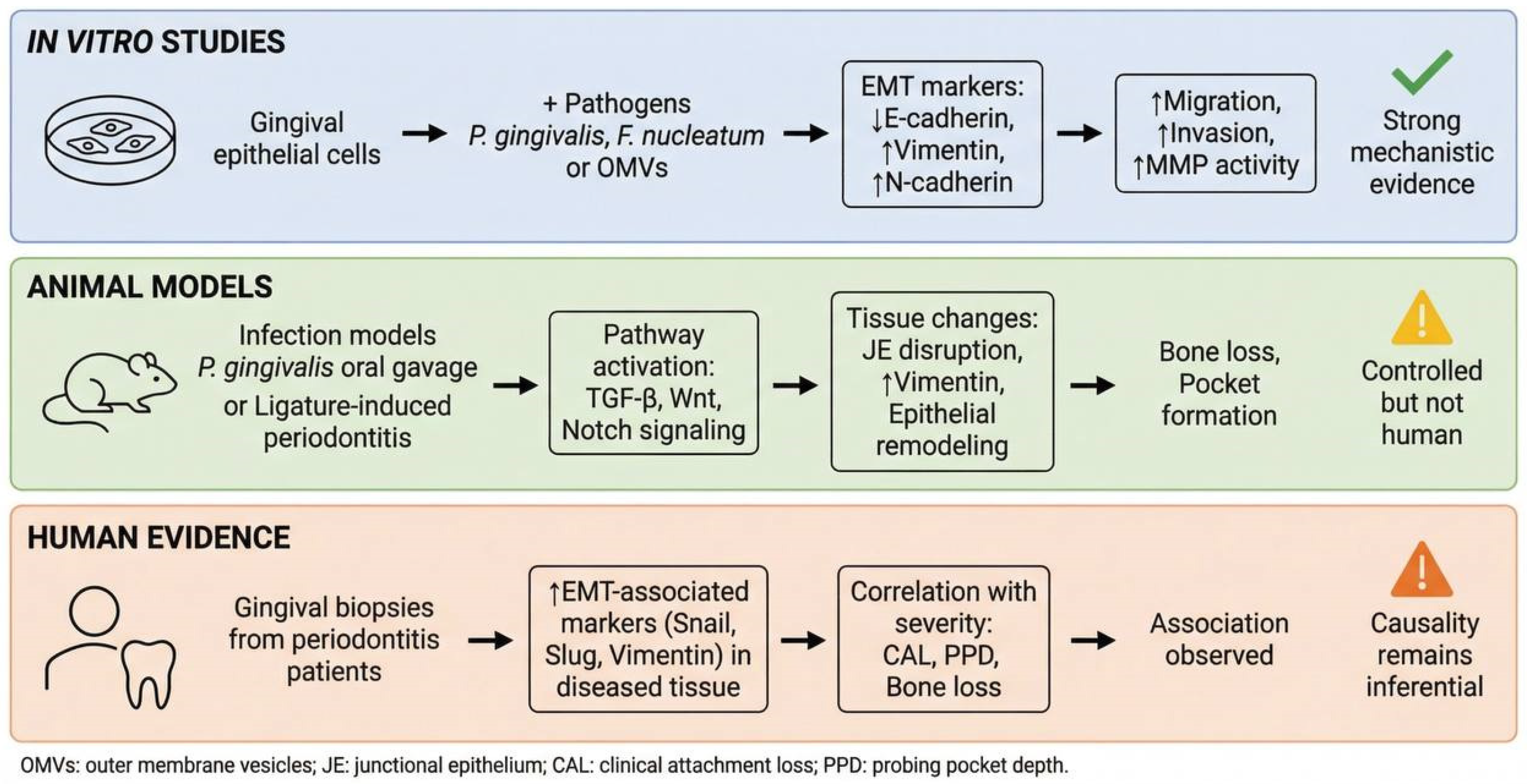
The ability of periodontal pathogens to cause epithelial cells to undergo a change from an epithelial phenotype to a mesenchymal phenotype (EMT) has been shown to correlate with how well those pathogens can adhere to and enter into gingival epithelial cells [5]. It is worth noting that this correlation is best established in experimental models; in humans, invasion-related findings are more difficult to interpret directly because tissues are heterogeneous, and biofilms are polymicrobial (Figure 2). An example of this would be P. gingivalis using its fimbriae; long and thin extensions of itself, to come into close proximity with the host cell’s outer layer, or cell membrane [22]. The primary structure of the fimbriae used by P. gingivalis to attach to the host cell is called FimA [22]. FimA will selectively bind to the conformations of the α5β1-integrin receptors found on epithelial cells, causing an inside-out signaling pathway that ultimately allows the bacteria to enter the epithelial cell [23]. In experimental models, these interactions appear to precede cytoskeletal remodeling and the induction of EMT-related genes [6].
Figure 2.
Evidence Supporting Pathogen-Induced EMT-Like Changes in Periodontitis by Study Type. An evidence map detailing the present level of knowledge regarding pathogen-induced EMT in periodontitis across various research methods (in vitro, animal models, and humans). In vitro studies have demonstrated a high degree of mechanistic evidence for how certain pathogens associated with periodontitis can cause EMT marker changes and functional consequences in gingival epithelial cells. The application of animal models offers in vivo validation, demonstrating the relationship between infection- or ligature-induced periodontitis, activation of signaling pathways, and remodeling of epithelial tissue. While human studies have demonstrated an association between the expression of EMT-associated markers and the severity of the clinical disease, the causal relationship between the two in humans is indirect.
After attaching to a host cell, pathogens can enter via receptor-mediated endocytosis pathways [24]. P. gingivalis will initially be in endocytic vacuoles after internalization, but they may escape into the cytoplasm or be directed to lytic compartments [25]. Some intracellular bacteria can even exit cell via endocytic recycling pathways to neighboring cells without immediately lysing the host cell [26]. This trans-cellular movement is a mechanism for invading more substantive tissue layers [27].
In addition to a whole-cell invasion, periodontal pathogens also release outer membrane vesicles (OMVs), spherical nanostructures, that contain various virulence factors, including gingipains and lipopolysaccharides (LPS) [28]. The advantage of OMVs is that they can cross the epithelial barrier easily compared to the parent bacteria, and are internalized by host cells via endocytic pathways [29]. OMVs will release their cargo once inside the host cell, and have the ability to directly interfere with cellular activity and/or even stimulate the host signaling cascade for inducing EMT [30]. Chronic exposure of the gingival epithelium to these bacterial products causes persistent impairment of cellular function and barrier integrity [31].
4. Gingival EMT in Periodontitis: Core Concepts and Molecular Markers
4.1. Molecular Markers and Phenotypic Changes in Gingival Epithelium
EMT has been divided into three subcategories of biological relevance: Type 1 is associated with embryonic development; Type 2 is associated with chronic wound/chronic inflammation; and Type 3 is associated with tumor progression [1]. With regard to the biology of periodontitis, the primary EMT observed is that of Type 2, due to the constant presence of a pro-inflammatory environment as well as microbial challenge [10]. The hallmark of EMT is termed the “cadherin switch” and is defined by the downregulation of the epithelial cell marker E-cadherin (also known as cadherin-1) and its replacement with the mesenchymal cell marker called N-cadherin [32].
The most important role of the loss of E-cadherin is its ability as the key component of adherens junctions to maintain cellular adhesion, and therefore, the polarity of epithelial cells [33]. When E-cadherin expression decreases, and cells lose their cobblestone-like shape, they begin to look like spindle-shaped, fibroblast-like cells [34]. In addition to the change in phenotype, vimentin, an important intermediate filament protein, will be overexpressed, giving the cells the flexibility required for a migratory phenotype [35]. Additionally, the transformation of cells will also be identified by the production of fibronectin, and matrix metalloproteinases (MMPs) to degrade the basement membrane and to allow the transformed cells to migrate into connective tissue [36].
These molecular changes profoundly affect the gingival barrier. As junctional proteins decrease, paracellular permeability increases and allows bacterial toxins and metabolic by-products to penetrate deeper into periodontal tissues [10]. Furthermore, the migratory phenotype acquired by the epithelial cells could allow an apical migration of the junctional epithelium that is a classic clinical feature of periodontal pocketing [1].
4.2. Core Signaling Pathways: TGF-β, Wnt/β-Catenin, and Notch
EMT induction is governed by a complex network of signaling pathways in response to cell surface stimuli [11]. The transforming growth factor-beta (TGF-β) pathway is widely regarded as the master regulator of EMT [37]. The Smad-dependent canonical pathway sees TGF-β1 bind to its receptors to phosphorylate Smad2 and Smad3, which form a complex with Smad4 and translocate to the nucleus [38]. The complex activates transcription of EMT-inducing factors Snail, Slug, and Twist that repress E-cadherin expression [39].
Periodontal pathogens have been shown to hijack the TGF-β axis. For example, P. gingivalis was shown to elicit host-derived TGF-β1 and activate Smad signaling in human gingival epithelial cells [40,41,42]. Activation is often compounded by the inflammatory milieu in which cytokines such as TNF-α and IL-1β provide additional signals that promote mesenchymal differentiation [43]. TGF-β signaling can also contribute to the anti-inflammatory response during wound healing; however, chronic activation by pathogens can lead to pathological fibrosis [41,44].
The Wnt/β-catenin pathway is also important and plays a direct role in periodontal EMT [45]. In the absence of Wnt signals, β-catenin is degraded by a cytoplasmic destruction complex. When the Wnt pathway is activated, β-catenin is stabilized and translocates to the nucleus, acting as a co-activator for mesenchymal state-promoting genes [45]. Wnt signaling was significantly activated in gingival tissues from experimental periodontitis [46]. There is also extensive crosstalk between Wnt/β-catenin and TGF-β signaling as well as with NF-κB pathway, that collectively drive EMT marker expression such as ZEB2 [47].
Notch signaling once again is a critical pathway involved in cell fate determination and EMT [48]. Activation of the Notch pathway in epithelial cells leads to upregulation of Snail, followed by reduced expression of E-cadherin [49]. In the periodontium, Notch signaling also interacts with other signaling pathways such as periostin, which is strongly expressed in the periodontal ligament, and is involved in both tissue remodeling/regeneration [50]. All three signaling pathways, TGF-β, Wnt, and Notch ultimately result in a self-reinforcing feedback loop and has been shown to support the maintenance of EMT during a chronic microbial challenge [51].
The integration of Wnt, TGF-β and Notch signaling is further complicated by epigenetic modification and changes induced in the hypoxic microenvironment associated with deep periodontal pockets [52]. Hypoxia-inducible factors (HIFs) directly activate EMT transcription factors, as well as synergize with Wnt signaling to promote a mesenchymal phenotype [53]. In summary, collectively these signaling pathways have helped provide a basis for how periodontal pathogens reprogram the host epithelium to elicit the structural and functional failures observed in periodontitis [53].
5. Mechanisms of Pathogen-Induced EMT in Periodontitis
The movement of gingival epithelial cells from a static, polarized state to a migratory, mesenchymal-like state is not just a passive effect of tissue loss but a highly regulated process driven by a few periodontal pathogens [9,11]. These pathogens utilize their own virulence factors to co-opt the host signaling pathways and effectively “reprogram” the epithelial barrier for their own survival and deeper interaction with the tissues. In this section, we will consider the specific roles of various keystone pathogens and the complex intracellular cascades activated by the bacteria [5].
5.1. Porphyromonas gingivalis as a Key Driver of EMT
As a key pathogen in the subgingival biofilm, Porphyromonas gingivalis (P. gingivalis) disproportionately shapes the periodontal environment by modulating the host immune response and cellular homeostasis [3]. Several studies have found that P. gingivalis is a very potent inducer of epithelial–mesenchymal transition (EMT) in gingival epithelial cells [10,54,55]. P. gingivalis uses many of the tools in its arsenal to induce the morphological transformation of the gingival epithelium [7]. The key pathways through which P. gingivalis induces EMT are based on the expression of the cysteine proteases gingipain (Rgp and Kgp) and the expression of fimbriae, which both contribute to adherence and signaling to the host cells. P. gingivalis-induced EMT has been characterized by the down-regulation of epithelial proteins, with a corresponding increase in the expression of mesenchymal proteins [53]. In addition to degrading the structure of the gingival epithelium, P. gingivalis also promoted the generation of TGF-β1 from within the host cells [7]. This produced an autocrine/paracrine signaling pathway that stabilized the mesenchymal phenotype and allowed the bacteria to avoid the initial physical barrier to the periodontium [54].
In addition to the aforementioned effects, P. gingivalis also has the ability to enter the host epithelial cells [54]. This allows the pathogen to affect host gene expression. Once internalized, P. gingivalis can persist intracellularly and modulate host transcriptional responses that favor EMT-associated changes [54]. Its intracellular presence would maintain an EMT stimulus, which may in part explain the strong association between P. gingivalis chronic infection, irreversible attachment loss and periodontal pockets [56].
5.2. Role of Fusobacterium nucleatum and Synergistic Biofilm Effects
While P. gingivalis acts as a primary orchestrator, F. nucleatum serves as a critical “bridge” organism in terms of creating the pathogenic biofilm, and will directly induce EMT [57]. F. nucleatum has the FadA adhesin (Fusobacterium adhesin A) which is a key virulence factor based on its interaction with host epithelial cells [57]. FadA binds specifically to E-cadherin within the apical membrane of epithelial cells, which does more than anchor the bacteria, it initiates intracellular signaling cascades [57].
After binding E-cadherin, FadA disrupts the stability of the adherens junctions between epithelial cells, which leads to the internalization and eventual degradation of E-cadherin [58]. Due to the loss of E-cadherin, β-catenin is released to the cytoplasm and can then translocate to the nucleus to initiate transcription of genes associated with cellular proliferation and mesenchymal transformation [3]. Additionally, there is evidence that F. nucleatum directly induces expression of mesenchymal markers, and increases the migration capacity of oral epithelial cells, supporting its role as a direct contributor to EMT-associated epithelial remodeling [59].
The effect of these bacteria is compounded by the multispecies biofilm [59]. For example, P. gingivalis has been shown to invade epithelial cells at higher levels when F. nucleatum was present, and the bacteria produced metabolites (e.g., hydrogen sulfide) that stress the epithelium, furthering the possibilities for phenotypic shifting [60]. The species Fusobacterium periodonticum can also promote phenotypic shifting within the epithelium (e.g., EMT subtype) through Wnt signaling. It is likely that multiple periodontal bacteria have this plasticity in the epithelium [60].
5.3. Activation of Transcription Factors and Protease-Driven Signaling
EMT is a distinctly molecular exercise, involving the activation of core transcription factors, including Snail (SNAI1), Slug (SNAI2), and Twist, that repress epithelial gene expression by binding to promoters, while activating mesenchymal gene expression [11]. Transcription factor activation is accomplished via multiple mechanisms, including direct bacterial signaling and the secondary inflammatory response related to periodontitis [11].
Protease-driven signaling, particularly within host tissues, is thought to be a pivotal process involved in the various downstream effects of EMT [11]. Matrix metalloproteinases (MMPs) have been shown to be significantly upregulated in periodontal pathogen infections, with MMP-2 and MMP-9 thought to be important actors [36]. MMPs degrade the structural components of the ECM and basement membranes and the degradation of these structural components creates a cascade that can alter how cells are signaled [61].
The inhibition of the ECM by MMPs can also release bound and sequestered growth factors (e.g., TGF-β), which then bind to host receptors to stimulate the Smad dependent pathway and increase levels of Snail and Slug in the host cells [62]. An additional mechanism of action is through the activation of protease activated receptors (PAR), and specifically, PAR-2 [63]. Gingipains, which are virulence factors produced by bacteria, cleave/activate PAR-2 at the surface of gingival epithelial cells, creating a signal transduction pathway that leads to the activation of mitogen-activated protein kinases (MAPKs) and increases expression of EMT markers [63]. This mechanism demonstrates the close association between bacterial enzyme activity and the host cell’s genetic reprogramming [64]. With multiple pathways (i.e., bacterial adhesion to host inflammatory cytokines), there is an increased potential for the epithelial layer to undergo a phenotypic transformation into a mesenchymal layer and maintain that transformed state throughout the periodontal disease process [64].
6. From Gingival EMT to Tissue Destruction: Barrier Breakdown and Remodeling
The effects of EMT go beyond being simply a cell biological process; it plays a significant role as one of the main reasons for the development of the clinical features associated with periodontitis [11]. In terms of the gingival epithelium, through the process of EMT, the cellular “identity” and the functional capabilities of the gingival epithelial cells are changed and compromised, thereby initiating an inflammatory response which can be either immune or non-immune mediated as well as creating a cascade of destructive events [1]. This area of discussion will look at the possible effect of EMT on breaking down the epithelial barrier and ultimately resulting in the production of chronic inflammation and fibrotic tissue [10].
6.1. Junctional Epithelium Barrier Breakdown
The Junctional Epithelium (JE) is the main barrier between the oral cavity and the supporting connective tissue [7]. Unlike other forms of oral epithelium, the JE has a distinct molecular profile and a greater degree of permeability that allows for the movement of select immune cells and gingival crevicular fluid through it [7]. While this increased permeability could have provided an opportunity for enhanced immune surveillance of the bacterial environment, it also created a number of challenges for the JE itself [65]. The JE’s susceptibility to the myriad effects of EMT resulted in its being considered as “leaky” as a direct consequence [65]. In addition to creating a breach in immune cell permeability through the JE when bacteria cause EMT, the barrier is compromised at many different levels of function [66]. One of the significant effects of barrier compromise is the dissolution of intercellular junctions, which include tight junctions (TJ), adherens junctions (AJ), and desmosomes [66]. TJ play a key role in controlling paracellular permeability, and consist of proteins such as claudins and occludins that are dramatically reduced or eliminated during the EMT process [66], thereby leading to a loss of molecular “sewing,” and an increase in the permeability of the epithelium that would allow bacterial toxins, enzymes, and pathogens to invade the periodontal ligament and alveolar bone [67].
In addition to the loss of E-cadherin in the AJ that results in the loss of physical adhesion between cells, there is also a loss of contact inhibition of movement [68]. As a result of undergoing EMT, the epithelial cells that line the junctional epithelium will develop a migratory phenotype and undergo a reorganization of their actin cytoskeleton and express vimentin [69]. The reorganized actin cytoskeleton and expression of vimentin will facilitate the apical migration of these epithelial cells along the root surface-a clinical manifestation of the apical migration of the epithelial attachment and subsequent formation of the periodontal pocket [69]. The ability of the junctional epithelium cells to migrate apically is one of the hallmarks of periodontitis, and represents a permanent loss of biological seal [69,70].
6.2. Fostering Chronic Inflammation and Alveolar Bone Resorption
EMT serves as a link between the bacterial insult and the sustained chronic inflammation that advances periodontitis pathology [71]. Cells undergoing EMT do not only change their morphology but also their secretome. The embryonic-like cells will become active sources of pro-inflammatory cytokines (i.e., interleukin-1 beta (IL-1β), interleukin-6 (IL-6), and tumor necrosis factor-alpha (TNF α) [71]. This creates a self-sustaining inflammatory environment in which these reformed epithelial cells aid in perpetuating cytokine signaling and recruiting and activating immune cells (i.e., macrophages and neutrophils) into the inflammatory site [71].
The inflammatory signaling molecules released during EMT also contribute to alveolar bone homeostasis [71]. Pro-inflammatory cytokines (i.e., TNF α and IL-1β) are well known stimulators of Receptor Activator of Nuclear Factor Kappa-B Ligand (RANKL) expression [72,73,74]. RANKL is the primary driver of osteoclastogenesis, and osteoclasts are responsible for bone resorption [74]. The shift in the RANKL/osteoprotegerin (OPG) ratio promotes bone resorption from the signaling pathways of EMT [71].
Additionally, the presence of the mesenchymal-like cells at the inflammatory site can produce extracellular vimentin [70]. Extracellular vimentin has been shown to enhance the inflammatory response and worsen the injury [70]. Together, increased epithelial permeability, osteoclastogenic signaling, and cytokine amplification create a self-reinforcing cycle in which repeated EMT activation accelerates periodontal breakdown unless therapeutically interrupted [75].
6.3. Contributing to Gingival Fibrosis and Impaired Wound Healing
Although periodontitis is typically discussed in terms of connective tissue loss, disease progression can also involve pathological remodeling and fibrosis [76]. EMT may contribute to these changes by generating myofibroblast-like cells that promote excessive collagen deposition and tissue contraction [76]. These profibrotic features likely reflect pathway convergence during chronic repair rather than a distinct EMT subtype operating in periodontal epithelium. Furthermore, the gingival epithelial cells during the latter stages of chronic inflammation, or chronic exposure to certain medications, can transition to a fully mesenchymal state [11].
The result of the fully mesenchymal state is to fully transform to myofibroblasts [10]. These myofibroblasts that arise via EMT are characterized by increased expression of alpha-smooth muscle actin (α-SMA) and improved Type I collagen production. In the case of drug-induced gingival overgrowth, those patients had higher levels of EMT markers that correlated with the extent of gingival thickening and abundance of dense fibrotic extracellular matrix [77,78]. Of note, this fibrotic response is different than wound healing; it is excessive and disorganized, which interferes with the normal structure and function of the gingiva [79].
The presence of EMT-like cells in the periodontal pocket severely limits the possibility of regenerative wound healing [11]. Given the nature of these cells, as they have lost their epithelial identity and gained a migratory pro-inflammatory phenotype, they do not re-establish a functional junctional epithelium post therapy [1]. These cells do not work toward the restoration of the biological seal and continue to build the fibrotic environment that prevents re-attachment of the periodontal ligament to the root surface [80]. This is why contemporary regenerative therapies continually fail to achieve complete restitution ad integrum at sites with chronic inflammatory conditions that resulted in extensive epithelium phenotypic reprogramming [81].
7. Clinical Implications and Future Directions
Viewing periodontitis through the lens of gingival EMT shifts attention from bacterial presence alone toward how pathogens reprogram epithelial behavior and barrier function. This perspective may support the development of EMT-related biomarkers and targeted therapies aimed at stabilizing the gingival epithelium and improving regenerative outcomes [82].
7.1. Potential Utility of EMT Markers for Periodontal Disease Diagnosis
Current diagnostic measures, including clinical attachment loss (CAL) and radiographic bone loss, are largely retrospective and reflect past destruction rather than real-time disease activity [83]. At this juncture in the field of periodontitis, “real-time” biomarkers favored, especially ones that identify active disease sites or the risk for future progression of disease [84]. Because EMT markers are representative of an early cellular change in the disease process, their utility is significant [1].
EMT associated molecules found in gingival crevicular fluid (GCF) or saliva would offer a non-invasive diagnostic methodology [85]. Several research designs have mentioned their candidates for the use as potential biomarkers, including transcription factors like Slug and Snail, or mesenchymal markers such as vimentin and N-cadherin [86]. Elevated levels of these markers in GCF have shown a direct correlation to clinical parameters of disease severity, suggesting these might be practical to determine the activity of a periodontal pocket [87,88].
In addition to protein markers, non-coding RNAs, especially microRNAs (miRNAs) and long non-coding RNAs (lncRNAs), are new and provide great potential for sensitive biomarkers for EMT in periodontitis. One example of work is miRNA panels related to EMT and angiogenesis that have been isolated from chronic periodontitis patients, which provide for an interesting potential molecular signature for periodontal disease [89]. Furthermore, lncRNAs such as Malat1 and Neat1 have been associated with the dysbiotic microbiome and/or expression of EMT markers in diseased periodontal tissues [86].
7.2. Therapeutic Targeting of EMT Pathways for Tissue Regeneration
The overall objective of periodontal treatment is to restore damaged connective tissue structures that support teeth (periodontal ligament, cementum, and alveolar bone) [90]. However, the transformation of cells from an epithelial to a mesenchymal state at sites of injury during wound healing typically leads to scarring, and not to the restoration of native tissue architecture. Thus, either preventing the onset of epithelial–mesenchymal transition (EMT) or promoting the reverse process of mesenchymal to epithelial transition (MET) may significantly improve regenerative success in periodontal treatments. A promising method for blocking EMT involves using pharmacological agents that inhibit the action of small molecules that signal the onset of EMT or using neutralizing antibodies to prevent the activation of EMT pathways [91]. Inhibiting the TGF-β1/Smad axis or the Wnt/β-catenin pathway may block the conversion of junctional epithelium to a mesenchymal phenotype [92]. Additionally, the inhibition of certain matrix metalloproteinases (MMPs), such as MMP-9, has been found to inhibit EMT or completely suppress it [93]; this inhibition could be used in combination with scaling and root planing to promote regeneration [93].
Another novel way to treat EMT and the subsequent reprogramming of the host epithelium to a bacterial-friendly disease state is through the application of miRNA-based therapeutics to reset the cellular phenotype. Due to their ability to simultaneously regulate multiple genes within a single signaling pathway, miRNAs are ideal candidates for the modulation of complex biological processes like EMT. It has recently been demonstrated that miR-34 can inhibit Wnt signaling, thereby suppressing EMT [92], and thus miR-34 is a candidate for the prevention of epithelial instability and the reversal of disease caused by bacteria. Moreover, the development of new methods to deliver miRNA locally to the site of the periodontal pocket, including hydrogels or self-assembling peptide scaffolds, will provide a means of delivering miR-34 inhibitors to the affected area, while minimizing systemic side effects, improving the local delivery of the inhibitor, and increasing the effectiveness of the treatment [94]. For these reasons, EMT-pathway modulation is best viewed as a promising research direction at present, but one that still requires careful validation of delivery feasibility, safety, and clinically relevant endpoints before it can be considered clinically actionable [95].
Translational Considerations and Current Limitations
Although EMT-targeted strategies are conceptually appealing, the translation to routine periodontal care is not straightforward. Most pathway modulators would need local delivery (gels, fibers, hydrogels, or scaffolds), but periodontal pockets are challenging due to the dynamic environment of crevicular fluid flow and constant presence of biofilm leading to possible instability or washout of dosing [96]. Safety is also an issue because EMT-related signaling crosstalks with regular epithelial turnover and wound healing; thus, it may impair repair or compromise barrier recovery in susceptible individuals if broadly inhibited. Proving a positive result will require coupling pathway modulation to clinically relevant endpoints (CAL, probing pocket depth (PPD)) along with barrier-related readouts (junctional markers, permeability/inflammation resolution) [97]. From a regulatory standpoint, repurposing agents with known safety profiles may be more realistic than developing new EMT-specific inhibitors for periodontitis.
8. Conclusions
Framing periodontitis progression as a dysbiosis-driven process that includes gingival EMT provides a useful mechanistic bridge between microbial challenge and tissue destruction. Beyond direct enzymatic damage, keystone pathogens such as P. gingivalis and bridging organisms such as F. nucleatum can reshape epithelial signaling, weaken junctional integrity, and promote persistent inflammation and remodeling. EMT-related markers in saliva or gingival crevicular fluid may improve real-time assessment of disease activity, while therapeutic strategies targeting EMT-associated pathways could enhance periodontal healing and regenerative predictability.
Author Contributions
Conceptualization, H.M.A. and S.S.S.; methodology, H.M.A.; software, H.M.A.; validation, H.M.A. and S.S.S.; formal analysis, H.M.A.; investigation, H.M.A.; resources, H.M.A.; data curation, H.M.A.; writing—original draft preparation, H.M.A.; writing—review and editing, H.M.A. and S.S.S.; visualization, H.M.A.; supervision, S.S.S.; project administration, H.M.A.; funding acquisition, not applicable. All authors have read and agreed to the published version of the manuscript.
Funding
This research received no external funding.
Institutional Review Board Statement
Not applicable. This study is a narrative review and did not require ethical approval as it does not involve human participants, patient data, or animal research.
Informed Consent Statement
Not applicable. No new human data were collected for this review.
Data Availability Statement
No new experimental data were generated. The illustrative figures created for this review are available from the corresponding author upon reasonable request.
Acknowledgments
During the preparation of this review, the authors used Paperpal V.5.43.3 and Quilbot V.40.77.9 for the purposes of checking grammar and improving writing. The authors have reviewed and edited the output and take full responsibility for the content of this publication.
Conflicts of Interest
The authors declare no conflicts of interest.
Abbreviations
AJ, adherens junctions; α-SMA, alpha-smooth muscle actin; CAL, clinical attachment loss; ECM, extracellular matrix; EMT, epithelial–mesenchymal transition; EMT-TFs, epithelial–mesenchymal transition transcription factors; FadA, Fusobacterium adhesin A; FGF, fibroblast growth factor; GCF, gingival crevicular fluid; HGF, hepatocyte growth factor; HIF, hypoxia-inducible factor; IL-1β, interleukin-1 beta; IL-6, interleukin-6; JE, junctional epithelium; Kgp, lysine-specific gingipain; lncRNA, long non-coding RNA; LPS, lipopolysaccharide; MAPK, mitogen-activated protein kinase; MET, mesenchymal–epithelial transition; miRNA, microRNA; MMP, matrix metalloproteinase; NF-κB, nuclear factor kappa B; Notch, Notch signaling pathway; OMVs, outer membrane vesicles; OPG, osteoprotegerin; PAR-2, protease-activated receptor-2; PCR, polymerase chain reaction; RANKL, receptor activator of nuclear factor kappa-B ligand; Rgp, arginine-specific gingipain; RTK, receptor tyrosine kinase; Smad, suppressor of mothers against decapentaplegic; TGF-β, transforming growth factor-beta; TJ, tight junctions; TNF-α, tumor necrosis factor-alpha; Wnt, Wingless/Int signaling pathway.
References
- Saliem, S.S.; Bede, S.Y.; Abdulkareem, A.A.; Abdullah, B.H.; Milward, M.R.; Cooper, P.R. Gingival tissue samples from periodontitis patients demonstrate epithelial–mesenchymal transition phenotype. J. Periodontal Res. 2023, 58, 247–255. [Google Scholar] [CrossRef] [Scilit]
- Mohammed, A.; Fadhil, R.; Mahmood, M.S.; Al-Waeli, H.A. Diagnostic biomarkers for periodontitis (observational case-control study). J. Baghdad Coll. Dent. 2024, 36, 11–19. [Google Scholar] [CrossRef] [Scilit]
- Abdulkareem, A.A.; Al-Taweel, F.B.; Al-Sharqi, A.J.; Gul, S.S.; Sha, A.; Chapple, I.L. Current concepts in the pathogenesis of periodontitis: From symbiosis to dysbiosis. J. Oral Microbiol. 2023, 15, 2197779. [Google Scholar] [CrossRef] [Scilit]
- Fernandes, G.V.O.; Mosley, G.A.; Ross, W.; Dagher, A.; Martins, B.G.d.S.; Fernandes, J.C.H. Revisiting Socransky’s complexes: A review suggesting updated new bacterial clusters (GF-MoR Complexes) for periodontal and peri-implant diseases and conditions. Microorganisms 2024, 12, 2214. [Google Scholar] [CrossRef] [Scilit]
- Abdulkareem, A.A.; Shelton, R.; Landini, G.; Cooper, P.; Milward, M.R. Potential role of periodontal pathogens in compromising epithelial barrier function by inducing epithelial-mesenchymal transition. J. Periodontal Res. 2018, 53, 565–574. [Google Scholar] [CrossRef] [Scilit]
- Abdulkareem, A.; Shelton, R.; Landini, G.; Cooper, P.; Milward, M. Periodontal pathogens promote epithelial-mesenchymal transition in oral squamous carcinoma cells in vitro. Cell Adhes. Migr. 2018, 12, 127–137. [Google Scholar] [CrossRef] [Scilit]
- Abdulkareem, A.A. Potential Involvement of Epithelial-Mesenchymal Transition in the Pathogenesis of Periodontitis. Ph.D. Thesis, University of Birmingham, Birmingham, UK, 2017. [Google Scholar]
- Meng, Z.; Yang, T.; Liu, D. Type-2 epithelial-mesenchymal transition in oral mucosal nonneoplastic diseases. Front. Immunol. 2022, 13, 1020768. [Google Scholar] [CrossRef] [Scilit] [PubMed]
- Ma, Y.; Yu, Y.; Yin, Y.; Wang, L.; Yang, H.; Luo, S.; Zheng, Q.; Pan, Y.; Zhang, D. Potential role of epithelial–mesenchymal transition induced by periodontal pathogens in oral cancer. J. Cell. Mol. Med. 2024, 28, e18064. [Google Scholar] [CrossRef] [Scilit] [PubMed]
- Alanbari, B.F.; Al-Taweel, F.B.; Cooper, P.R.; Milward, M.R. Induction of Epithelial–Mesenchymal Transition in Periodontitis Rat Model. Eur. J. Dent. 2025, 19, 428–437. [Google Scholar] [CrossRef] [Scilit] [PubMed]
- Saliem, S.S.; Bede, S.Y.; Cooper, P.R.; Abdulkareem, A.A.; Milward, M.R.; Abdullah, B.H. Pathogenesis of periodontitis—A potential role for epithelial-mesenchymal transition. Jpn. Dent. Sci. Rev. 2022, 58, 268–278. [Google Scholar] [CrossRef] [Scilit]
- Gaur, V.; Varia, O.; Patel, R.; Patel, P.; Kumari, P.; Patel, D. Advances in Molecular Diagnostics of Red Complex Bacteria: The Role of PCR in Periodontal Pathogen Detection and Clinical Implications. Sch. Acad. J. Biosci. 2025, 5, 536–541. [Google Scholar] [CrossRef] [Scilit]
- Kametani, M.; Nagasawa, Y.; Usuda, M.; Kaneki, A.; Ogawa, M.; Shojima, K.; Yamazaki, H.; Tokumoto, K.; Matsuoka, D.; Suehara, K.; et al. Relationship Between the Presence of Red Complex Species and the Distribution of Other Oral Bacteria, Including Major Periodontal Pathogens in Older Japanese Individuals. Int. J. Mol. Sci. 2024, 25, 12243. [Google Scholar] [CrossRef] [Scilit]
- Curtis, M.A.; Garnett, J.A.; Darveau, R.P. The Keystone-Pathogen Hypothesis Updated: The Role of Porphyromonas gingivalis in Periodontitis. J. Periodontal Res. 2025. [Google Scholar] [CrossRef] [Scilit]
- Wu, Z.; Long, W.; Yin, Y.; Tan, B.; Liu, C.; Li, H.; Ge, S. Outer membrane vesicles of Porphyromonas gingivalis: Recent advances in pathogenicity and associated mechanisms. Front. Microbiol. 2025, 16, 1555868. [Google Scholar] [CrossRef] [Scilit]
- Blanco, R.; Muñoz, J.P. Porphyromonas gingivalis and Human Cytomegalovirus Co-Infection: A Potential Link Between Periodontal Disease and Oral Cancer Development. Cancers 2025, 17, 1525. [Google Scholar] [CrossRef] [Scilit]
- Zhao, D.; Wu, Q.; Li, Z.; Liu, Y.; Yi, S.; Zhou, X.; Peng, X. Glycosylation orchestrates virulence and pathogenicity of periodontal keystone pathogens. Crit. Rev. Microbiol. 2025, 52, 104–117. [Google Scholar] [CrossRef] [Scilit] [PubMed]
- Pisani, F.; Pisani, V.; Arcangeli, F.; Harding, A.; Singhrao, S.K. The mechanistic pathways of periodontal pathogens entering the brain: The potential role of treponema denticola in tracing Alzheimer’s disease pathology. Int. J. Environ. Res. Public Health 2022, 19, 9386. [Google Scholar] [CrossRef] [Scilit] [PubMed]
- Ganther, S.; Radaic, A.; Malone, E.; Kamarajan, P.; Chang, N.-Y.N.; Tafolla, C.; Zhan, L.; Fenno, J.C.; Kapila, Y.L. Treponema denticola dentilisin triggered TLR2/MyD88 activation upregulates a tissue destructive program involving MMPs via Sp1 in human oral cells. PLoS Pathog. 2021, 17, e1009311. [Google Scholar] [CrossRef] [Scilit]
- Kendlbacher, F.L.; Bloch, S.; Hager-Mair, F.F.; Schäffer, C.; Andrukhov, O. Red-complex bacteria exhibit distinctly different interactions with human periodontal ligament stromal cells compared to Fusobacterium nucleatum. Arch. Oral Biol. 2024, 164, 106004. [Google Scholar] [CrossRef] [Scilit]
- Akase, T.; Inubushi, J.; Hayashi-Okada, Y.; Shimizu, Y. Association of Fusobacterium nucleatum in human saliva with periodontal status and composition of the salivary microbiome including periodontopathogens. Microbiol. Spectr. 2024, 12, e00855-24. [Google Scholar] [CrossRef] [Scilit] [PubMed]
- Mantri, C.K.; Chen, C.H.; Dong, X.; Goodwin, J.S.; Pratap, S.; Paromov, V.; Xie, H. Fimbriae-mediated outer membrane vesicle production and invasion of P orphyromonas gingivalis. Microbiologyopen 2015, 4, 53–65. [Google Scholar] [CrossRef] [Scilit] [PubMed]
- Amano, A.; Furuta, N. Cell entry and exit by periodontal pathogen Porphyromonas gingivalis. J. Oral Biosci. 2012, 54, 54–57. [Google Scholar] [CrossRef] [Scilit]
- Ji, S.; Choi, Y. Microbial and host factors that affect bacterial invasion of the gingiva. J. Dent. Res. 2020, 99, 1013–1020. [Google Scholar] [CrossRef] [Scilit] [PubMed]
- Amano, A.; Kuboniwa, M.; Takeuchi, H. Transcellular invasive mechanisms of Porphyromonas gingivalis in host–parasite interactions. J. Oral Biosci. 2014, 56, 58–62. [Google Scholar] [CrossRef] [Scilit]
- Takeuchi, H.; Furuta, N.; Amano, A. Cell entry and exit by periodontal pathogen via recycling pathway. Commun. Integr. Biol. 2011, 4, 587–589. [Google Scholar] [CrossRef] [Scilit]
- de Jongh, C.A.; de Vries, T.J.; Bikker, F.J.; Gibbs, S.; Krom, B.P. Mechanisms of Porphyromonas gingivalis to translocate over the oral mucosa and other tissue barriers. J. Oral Microbiol. 2023, 15, 2205291. [Google Scholar] [CrossRef] [Scilit]
- Li, Z.; Yin, S.; Liu, Y.; Jiang, M.; Lin, L. Effect of Porphyromonas gingivalis outer membrane vesicles on renal tubule epithelial–mesenchymal transition. J. Periodontol. 2025, 96, 920–932. [Google Scholar] [CrossRef] [Scilit] [PubMed]
- Furuta, N.; Tsuda, K.; Omori, H.; Yoshimori, T.; Yoshimura, F.; Amano, A. Porphyromonas gingivalis outer membrane vesicles enter human epithelial cells via an endocytic pathway and are sorted to lysosomal compartments. Infect. Immun. 2009, 77, 4187–4196. [Google Scholar] [CrossRef] [Scilit]
- Furuta, N.; Takeuchi, H.; Amano, A. Entry of Porphyromonas gingivalis outer membrane vesicles into epithelial cells causes cellular functional impairment. Infect. Immun. 2009, 77, 4761–4770. [Google Scholar] [CrossRef] [Scilit]
- Amano, A. Disruption of epithelial barrier and impairment of cellular function by Porphyromonas gingivalis. Front. Biosci. 2007, 12, 3965. [Google Scholar] [CrossRef] [Scilit]
- Shoker, S.S. Influence of Periodontal Pathogens on Induction of Epithelial-Mesenchymal Transition (EMT) in Oral Keratinocytes. Ph.D. Thesis, University of Birmingham, Birmingham, UK, 2022. [Google Scholar]
- Kadeh, H.; Kalati, F.A.; Ramezaninejad, M. Expression patterns of E-cadherin and N-cadherin proteins in the periodontal pocket epithelium of chronic periodontitis. J. Dent. 2023, 24, 125. [Google Scholar]
- Gopinath, D.; Li, Z.; Mohammed, M.M.; Panda, S. Role of Oral Microbes in Epithelial-Mesenchymal Transition in Cancer Progression. Mol. Oral Microbiol. 2025, 40, 191–201. [Google Scholar] [CrossRef] [Scilit]
- Dieterle, M.P.; Steinberg, T.; Husari, A.; Tomakidi, P. Chronic Ethanol Exposure Induces Early Epithelial-to-Mesenchymal Transition (EMT) and Premalignant Changes in Gingival Keratinocytes: An In Vitro Model of Very Early Oral Carcinogenesis. Cells 2025, 14, 1887. [Google Scholar] [CrossRef] [Scilit]
- Toby Thomas, J.; Joseph, B.; Anil, S. Matrix Metalloproteinases (MMPs) in Periodontium; IntechOpen: London, UK, 2024. [Google Scholar]
- Min, Q.; Liu, Y.; Liu, J.; Zhao, Y.; Qin, J. Curcumin suppresses EMT to alleviate oral submucous fibrosis progression through XIST/miR-25-3p-mediated inactivation of the TGF-β1/Smads signalling pathway. Int. Dent. J. 2026, 76, 103975. [Google Scholar] [CrossRef] [Scilit] [PubMed]
- Srinivasan, D.; Balakrishnan, R.; Chauhan, A.; Kumar, J.; Girija, D.M.; Shrestha, R.; Shrestha, R.; Subbarayan, R. Epithelial–Mesenchymal Transition in Cancer: Insights Into Therapeutic Targets and Clinical Implications. MedComm 2025, 6, e70333. [Google Scholar] [CrossRef] [Scilit] [PubMed]
- Sisto, M.; Ribatti, D.; Lisi, S. Organ fibrosis and autoimmunity: The role of inflammation in TGFβ-dependent EMT. Biomolecules 2021, 11, 310. [Google Scholar] [CrossRef] [Scilit]
- Huang, Y.; Zhang, L.; Tan, L.; Zhang, C.; Li, X.; Wang, P.; Gao, L.; Zhao, C. Interleukin-22 inhibits apoptosis of gingival epithelial cells through TGF-β signaling pathway during periodontitis. Inflammation 2023, 46, 1871–1886. [Google Scholar] [CrossRef] [Scilit]
- Ali, B.F.; Al-Rubaie, M.S. Assessment of transforming growth factor beta one (TGF-β1) immunohistochemical (IHC) expression profile in the gingival tissue of patients with different forms of periodontal diseases. J. Baghdad Coll. Dent. 2013, 25, 96–101. [Google Scholar] [CrossRef] [Scilit]
- Atarchi, A.R. Potential of Salivary Matrix Metalloproteinase 9 to Discriminate Periodontal health and disease. J. Baghdad Coll. Dent. 2022, 34, 74–79. [Google Scholar] [CrossRef] [Scilit]
- Peng, R.; Huang, Y.; Huang, P.; Liu, L.; Cheng, L.; Peng, X. The paradoxical role of transforming growth factor-β in controlling oral squamous cell carcinoma development. Cancer Biomark. 2024, 40, 241–250. [Google Scholar] [CrossRef] [Scilit]
- Panahipour, L.; Sordi, M.B.; Kargarpour, Z.; Gruber, R. TGF-β signalling mediates the anti-inflammatory activity of enamel matrix derivative in vitro. Int. J. Mol. Sci. 2022, 23, 9778. [Google Scholar] [CrossRef] [Scilit]
- Di Bartolomeo, L.; Vaccaro, F.; Irrera, N.; Borgia, F.; Pomi, F.L.; Squadrito, F.; Vaccaro, M. Wnt signaling pathways: From inflammation to non-melanoma skin cancers. Int. J. Mol. Sci. 2023, 24, 1575. [Google Scholar] [CrossRef] [Scilit]
- Chen, Y.; Hu, Y. Wnt Signaling activation in gingival epithelial cells and macrophages of experimental periodontitis. Dent. J. 2023, 11, 129. [Google Scholar] [CrossRef] [Scilit]
- Reyes, M.; Urra, H.; Peña-Oyarzún, D. Evaluating the link between periodontitis and oral squamous cell carcinoma through Wnt/β-catenin pathway: A critical review. Front. Oral Health 2025, 6, 1575721. [Google Scholar] [CrossRef] [Scilit]
- Lou, L.; Peng, K.; Ouyang, S.; Ding, W.; Mo, J.; Yan, J.; Gong, X.; Liu, G.; Lu, J.; Yue, P.; et al. Periostin-mediated NOTCH1 activation between tumor cells and HSCs crosstalk promotes liver metastasis of small cell lung cancer. J. Exp. Clin. Cancer Res. 2025, 44, 6. [Google Scholar] [CrossRef] [Scilit]
- Wang, J.; Chao, J. Epithelial Cell Dysfunction in Pulmonary Fibrosis: Mechanisms, Interactions, and Emerging Therapeutic Targets. Pharmaceuticals 2025, 18, 812. [Google Scholar] [CrossRef] [Scilit] [PubMed]
- Nabi-Afjadi, M.; Farzam, F.; Soltani, S.; Golestani, N.; Asl, S.S.; Aziziyan, F.; Zalpoor, H.; Ghasemi, F.; Dabirmanesh, B.; Khajeh, K. The association between periostin and tumor microenvironment: A promising cancer prognostic biomarker and therapeutic target to combat tumor progression and chemoresistance. Cancer Cell Int. 2025, 25, 320. [Google Scholar] [CrossRef] [Scilit] [PubMed]
- Banerjee, M.; Devi Rajeswari, V. A novel cross-communication of HIF-1α and HIF-2α with Wnt signaling in TNBC and influence of hypoxic microenvironment in the formation of an organ-on-chip model of breast cancer. Med. Oncol. 2023, 40, 245. [Google Scholar] [CrossRef] [Scilit] [PubMed]
- Cai, L.; Zhu, H.; Mou, Q.; Wong, P.Y.; Lan, L.; Ng, C.W.K.; Lei, P.; Cheung, M.K.; Wang, D.; Wong, E.W.Y.; et al. Integrative analysis reveals associations between oral microbiota dysbiosis and host genetic and epigenetic aberrations in oral cavity squamous cell carcinoma. npj Biofilms Microbiomes 2024, 10, 39. [Google Scholar] [CrossRef] [Scilit]
- Nasiri, K.; Amiri Moghaddam, M.; Etajuri, E.A.; Badkoobeh, A.; Tavakol, O.; Rafinejad, M.; Mirhosseini, A.F.; Fathi, A. Periodontitis and progression of gastrointestinal cancer: Current knowledge and future perspective. Clin. Transl. Oncol. 2023, 25, 2801–2811. [Google Scholar] [CrossRef] [Scilit]
- Lee, J.; Roberts, J.S.; Atanasova, K.R.; Chowdhury, N.; Han, K.; Yilmaz, Ö. Human primary epithelial cells acquire an epithelial-mesenchymal-transition phenotype during long-term infection by the oral opportunistic pathogen, Porphyromonas gingivalis. Front. Cell. Infect. Microbiol. 2017, 7, 493. [Google Scholar] [CrossRef] [Scilit] [PubMed]
- Sztukowska, M.N.; Ojo, A.; Ahmed, S.; Carenbauer, A.L.; Wang, Q.; Shumway, B.; Jenkinson, H.F.; Wang, H.; Darling, D.S.; Lamont, R.J. Porphyromonas gingivalis initiates a mesenchymal-like transition through ZEB1 in gingival epithelial cells. Cell. Microbiol. 2016, 18, 844–858. [Google Scholar] [CrossRef] [Scilit] [PubMed]
- Takeuchi, H.; Amano, A. Invasion of gingival epithelial cells by Porphyromonas gingivalis. In Periodontal Pathogens: Methods and Protocols; Springer: New York, NY, USA, 2020; pp. 215–224. [Google Scholar]
- Groeger, S.; Zhou, Y.; Ruf, S.; Meyle, J. Pathogenic mechanisms of Fusobacterium nucleatum on oral epithelial cells. Front. Oral Health 2022, 3, 831607. [Google Scholar] [CrossRef] [Scilit]
- Srivastava, S.; Kumar, S. Microbial oncogenesis: The impact of Fusobacterium nucleatum on oral cancer pathways. Med. Oncol. 2025, 43, 18. [Google Scholar] [CrossRef] [Scilit]
- Chen, Y.; Huang, Z.; Tang, Z.; Huang, Y.; Huang, M.; Liu, H.; Ziebolz, D.; Schmalz, G.; Jia, B.; Zhao, J. More than just a periodontal pathogen–the research progress on Fusobacterium nucleatum. Front. Cell. Infect. Microbiol. 2022, 12, 815318. [Google Scholar] [CrossRef] [Scilit]
- Sun, M.; Peng, Z.; Shen, W.; Guo, X.; Liao, Y.; Huang, Y.; Ye, P.; Hu, M.; Lin, Q.; Liu, R. Synergism of Fusobacterium periodonticum and N-nitrosamines promote the formation of EMT subtypes in ESCC by modulating Wnt3a palmitoylation. Gut Microbes 2024, 16, 2391521. [Google Scholar] [CrossRef] [Scilit]
- Khalili-Tanha, G.; Radisky, E.; Radisky, D.; Shoari, A. Matrix metalloproteinase-driven epithelial-mesenchymal transition: Implications in health and disease. J. Transl. Med. 2025, 23, 436. [Google Scholar] [CrossRef] [Scilit]
- Wiśniowski, T.; Bryda, J.; Domosud, J.; Wątroba, S.J. Extracellular matrix metalloproteinases in pathophysiology, diagnostics and treatment of renal cell carcinoma–current state of knowledge and future perspectives. Ann. Agric. Environ. Med. 2025, 32, 27–45. [Google Scholar] [CrossRef] [Scilit]
- Rovai, E.; Holzhausen, M. The role of proteinase-activated receptors 1 and 2 in the regulation of periodontal tissue metabolism and disease. J. Immunol. Res. 2017, 2017, 5193572. [Google Scholar] [CrossRef] [Scilit]
- Yang, X.M.; Bian, H.; Chen, Z.N. CD147/Basigin: From Integrative Molecular Hub to Translational Therapeutic Target. Adv. Sci. 2025, 13, e18884. [Google Scholar] [CrossRef] [Scilit] [PubMed]
- Xin, Y.; Lei, H. The oral mucosal barrier: A dynamic gateway in oral and systemic health. Tissue Barriers 2026, 2610035. [Google Scholar] [CrossRef] [Scilit]
- Vitkov, L.; Singh, J.; Schauer, C.; Minnich, B.; Krunić, J.; Oberthaler, H.; Gamsjaeger, S.; Herrmann, M.; Knopf, J.; Hannig, M. Breaking the gingival barrier in periodontitis. Int. J. Mol. Sci. 2023, 24, 4544. [Google Scholar] [CrossRef] [Scilit]
- Do, T.T.; Nguyen, V.T.; Nguyen, N.T.N.; Duong, K.T.T.; Nguyen, T.T.M.; Le, D.N.T.; Nguyen, T.H. A Review of a Breakdown in the Barrier: Tight Junction Dysfunction in Dental Diseases. Clin. Cosmet. Investig. Dent. 2024, 16, 513–531. [Google Scholar] [CrossRef] [Scilit]
- Gröger, S.E. Impact of Porphyromonas gingivalis and Its Components on Oral Epithelial Cells. Habilitationsschrift, Justus-Liebig-Universität Gießen, Gießen, Germany, 2022. [Google Scholar]
- Lialios, P.; Alimperti, S. Role of E-cadherin in epithelial barrier dysfunction: Implications for bacterial infection, inflammation, and disease pathogenesis. Front. Cell. Infect. Microbiol. 2025, 15, 1506636. [Google Scholar] [CrossRef] [Scilit] [PubMed]
- Yuan, Z.; Smith, P.; McCulloch, C.A. Extracellular vimentin amplifies inflammation: Perspectives for immune injury and therapeutics for periodontitis. FASEB J. 2025, 39, e70286. [Google Scholar] [CrossRef] [Scilit] [PubMed]
- Yuan, Q.; Wu, H.; Tan, H.; Wang, X.; Cao, Y.; Chen, G. Oral Microbial Dysbiosis Driven by Periodontitis Facilitates Oral Squamous Cell Carcinoma Progression. Cancers 2025, 17, 2181. [Google Scholar] [CrossRef] [Scilit]
- Mohammed, S.A.; Akram, H.M. Evaluating the Efficacy of Resveratrol-Containing Mouthwash as an Adjunct Treatment for Periodontitis: A Randomized Clinical Trial. Eur. J. Dent. 2025, 19, 354–365. [Google Scholar] [CrossRef] [Scilit]
- Al-Ghurabi, B.H.; Mohssen, S.M. Salivary level of RANKL and OPG in chronic periodontitis. J. Baghdad Coll. Dent. 2015, 27, 189–194. [Google Scholar] [CrossRef] [Scilit]
- Mohammed, A.K.; Abdullah, B.H. A Comparative Study of Clinicopathological and Immunohistochemical Expression of CD1a, RANK and RANKL in Langerhans Cell Histiocytosis of Jaw and Skull Lesions. J. Baghdad Coll. Dent. 2016, 28, 78–83. [Google Scholar] [CrossRef] [Scilit]
- Marconi, G.D.; Fonticoli, L.; Rajan, T.S.; Lanuti, P.; Della Rocca, Y.; Pierdomenico, S.D.; Trubiani, O.; Pizzicannella, J.; Diomede, F. Transforming growth factor-beta1 and human gingival fibroblast-to-myofibroblast differentiation: Molecular and morphological modifications. Front. Physiol. 2021, 12, 676512. [Google Scholar] [CrossRef] [Scilit] [PubMed]
- Droździk, A.; Droździk, M. Drug-induced gingival overgrowth—Molecular aspects of drug actions. Int. J. Mol. Sci. 2023, 24, 5448. [Google Scholar] [CrossRef] [Scilit]
- Fadl, A.; Leask, A. CCN2: A potential contributor to gingival overgrowth. J. Oral Biosci. 2025, 67, 100587. [Google Scholar] [CrossRef] [Scilit]
- Al-Etbi, I.Q.; Al-Kaisi, R.O. Immunohistochemical expression of HOXA1, and Ki-67 proteins of oral squamous cell carcinoma. J. Baghdad Coll. Dent. 2014, 26, 74–78. [Google Scholar] [CrossRef] [Scilit]
- Rojas, M.A.; Ceccarelli, S.; Gerini, G.; Vescarelli, E.; Marini, L.; Marchese, C.; Pilloni, A. Gene expression profiles of oral soft tissue-derived fibroblast from healing wounds: Correlation with clinical outcome, autophagy activation and fibrotic markers expression. J. Clin. Periodontol. 2021, 48, 705–720. [Google Scholar] [CrossRef] [Scilit]
- Nikoloudaki, G. Functions of matricellular proteins in dental tissues and their emerging roles in orofacial tissue development, maintenance, and disease. Int. J. Mol. Sci. 2021, 22, 6626. [Google Scholar] [CrossRef] [Scilit] [PubMed]
- Al-Mufti, S.M.; Abdulkareem, A.A.; Chasib, N.H.; Milward, M.; Cooper, P.R. Long Noncoding RNA Malat1 and Neat1 Associated with Dysbiotic Microbiome and Epithelial-Mesenchymal Transition in Periodontitis. Mol. Oral Microbiol. 2025, 41, e70010. [Google Scholar] [CrossRef] [Scilit] [PubMed]
- Debnath, D.; Tatuskar, P.; Attar, S.M.F. From bacterial origins to multifactorial complexity: Tracing the evolution of periodontitis pathogenesis from early era to 2017: A review article. Int. J. Oral Health Sci. 2024, 14, 55–66. [Google Scholar] [CrossRef] [Scilit]
- Salvi, G.E.; Roccuzzo, A.; Imber, J.C.; Stähli, A.; Klinge, B.; Lang, N.P. Clinical periodontal diagnosis. Periodontol. 2000 2023. [Google Scholar] [CrossRef] [Scilit] [PubMed]
- Al-Taweel, F.; Abdulkareem, A.; Abdulbaqi, H. Association of modifiable and non-modifiable risk factors with periodontal disease in Iraqi individuals: A retrospective study. J. Stomatol. 2019, 72, 222–227. [Google Scholar]
- Natarajan, J.; Chandrashekar, C.; Radhakrishnan, R. Critical biomarkers of epithelial-mesenchymal transition in the head and neck cancers. J. Cancer Res. Ther. 2014, 10, 512–518. [Google Scholar] [CrossRef] [Scilit]
- Baru, O.; Raduly, L.; Bica, C.; Chiroi, P.; Budisan, L.; Mehterov, N.; Ciocan, C.; Pop, L.A.; Buduru, S.; Braicu, C.; et al. Identification of a miRNA panel with a potential determinant role in patients suffering from periodontitis. Curr. Issues Mol. Biol. 2023, 45, 2248–2265. [Google Scholar] [CrossRef] [Scilit]
- Escalona, L.A.; Mastromatteo-Alberga, P.; Correnti, M. Cytokine and metalloproteinases in gingival fluid from patients with chronic periodontitis. Investig. Clínica 2016, 57, 131–142. [Google Scholar]
- Ashifa, N.; Viswanathan, K.; Srinivasan, S.; Sundaram, R.; k Pavithran, V. Assessment of sclerostin levels in the gingival crevicular fluid of patients with periodontitis: A clinico-biochemical crosssectional study. J. Adv. Periodontol. Implant Dent. 2023, 15, 3. [Google Scholar] [CrossRef] [Scilit]
- Abdelmonem, B.H.; Kamal, L.T.; Wardy, L.W.; Ragheb, M.; Hanna, M.M.; Elsharkawy, M.; Abdelnaser, A. Non-coding RNAs: Emerging biomarkers and therapeutic targets in cancer and inflammatory diseases. Front. Oncol. 2025, 15, 1534862. [Google Scholar] [CrossRef] [Scilit] [PubMed]
- Lauritano, D.; Limongelli, L.; Moreo, G.; Favia, G.; Carinci, F. Nanomaterials for periodontal tissue engineering: Chitosan-based scaffolds: A systematic review. Nanomaterials 2020, 10, 605. [Google Scholar] [CrossRef] [Scilit] [PubMed]
- Guo, L.; Mi, J.; Zhang, H.; Gao, J.; Zhang, S.; Li, L.; Wu, M.; Wang, J.; Huang, H. Endothelial–mesenchymal transition as a novel mechanism for generating myofibroblasts during wound healing and scarring. J. Cosmet. Dermatol. 2023, 22, 661–668. [Google Scholar] [CrossRef] [Scilit]
- Li, Z.; Wei, J.; Chen, B.; Wang, Y.; Yang, S.; Wu, K.; Meng, X. The role of MMP-9 and MMP-9 inhibition in different types of thyroid carcinoma. Molecules 2023, 28, 3705. [Google Scholar] [CrossRef] [Scilit] [PubMed]
- Al Balushi, N.R.B. Self-Assembling Peptide Scaffolds as a Mimic of the Cancer Microenvironment. Ph.D. Thesis, RMIT University, Melbourne, Australia, 2024. [Google Scholar]
- Mishra, M.; Maurya, R.; Yadav, M. Advancements in Nano-Drug Delivery Systems for Effective Management of Periodontitis: A Comprehensive Review. Biol. Sci. 2024, 4, 810–819. [Google Scholar]
- Didriksen, B.J.; Eshleman, E.M.; Alenghat, T. Epithelial regulation of microbiota-immune cell dynamics. Mucosal Immunol. 2024, 17, 303–313. [Google Scholar] [CrossRef] [Scilit]
- Nakajima, M.; Yanagawa, M.; Takikawa, H.; Thien, T.T.; Zegarra-Caceres, L.; Yan, C.; Tabeta, K. Advances in Local Drug Delivery for Periodontal Treatment: Present Strategies and Future Directions. Biomolecules 2025, 15, 903. [Google Scholar] [CrossRef] [Scilit]
- Samal, H.B.; Patra, N.; Boyeena, L.; Das, I.J. Novel Periodontal Pocket Drug Delivery Systems for the Treatment of Periodontitis. Indian Drugs 2021, 58, 7–21. [Google Scholar] [CrossRef] [Scilit]
Disclaimer/Publisher’s Note: The statements, opinions and data contained in all publications are solely those of the individual author(s) and contributor(s) and not of MDPI and/or the editor(s). MDPI and/or the editor(s) disclaim responsibility for any injury to people or property resulting from any ideas, methods, instructions or products referred to in the content. |
© 2026 by the authors. Licensee MDPI, Basel, Switzerland. This article is an open access article distributed under the terms and conditions of the Creative Commons Attribution (CC BY) license.