Article

Amyloid Deposits in Intramural Coronary Arteries of Feline Hearts: A Retrospective Histopathological Study


by
Izabela Janus-Ziółkowska
1,*,
Joanna Bubak
1,
Ewa Sawińska
1,
Marcin Nowak
1 and
Agnieszka Noszczyk-Nowak
2,*
1
Department of Pathology, Wrocław University of Environmental and Life Sciences, CK Norwida 31, 50-375 Wrocław, Poland
2
Department of Internal Medicine and Clinic of Diseases of Horses, Dogs and Cats, Grunwaldzki Sq 47, 50-366 Wrocław, Poland
*
Authors to whom correspondence should be addressed.
J. Mol. Pathol. 2026, 7(1), 10; https://doi.org/10.3390/jmp7010010
Submission received: 23 December 2025 / Revised: 24 February 2026 / Accepted: 28 February 2026 / Published: 3 March 2026

Abstract

Background: Amyloidosis involving the heart is one of the types of the disease recognized in humans and has been previously described in dogs. To date, no data regarding the presence of amyloid in cardiac tissues of a large group of feline patients have been published. Our research aimed to analyze the presence and localization of amyloid in the atrial and ventricular cardiac tissue in retrospectively enrolled cats diagnosed with various types of primary cardiomyopathies, hyperthyroidism-induced cardiomyopathy, myocarditis, and generalized disorders. Methods: This study was conducted on atrial specimens obtained from 119 animals and on ventricular specimens obtained from 69 animals from that group. The atrial and ventricular specimens obtained from the enrolled animals were stained with Congo Red and evaluated in a light microscope and polarized light for the presence of amyloid deposits. Results: Five cases from the enrolled group turned out positive for amyloid deposits: three cats diagnosed with feline hyperthyroidism, one cat diagnosed with kidney glomerulonephritis, and one cat diagnosed with restrictive cardiomyopathy. In all positive cats, the amyloid deposits were present within the small intramural coronary arteries of the left ventricular free wall and interventricular septum and/or left and right atrium. No myocardial amyloid deposits were identified in the study group. Conclusions: In conclusion, cardiac coronary arterial amyloidosis, although infrequent, can be observed in cats.

1. Introduction

Amyloidosis is a heterogeneous group of diseases observed in humans and animals [1,2]. According to the precursor of the fibril protein and the distribution of amyloid deposition, more than 30 amyloid proteins have been identified in humans, and 10 have been documented in animals [2,3]. When stained with Congo Red dye, amyloid deposits are histologically identifiable by either pink–red color in the optic microscope or characteristic apple–green birefringence when examined under cross-polarized light [4]. Amyloid-A (AA)-amyloidosis, the most commonly reported form in animals, is derived from the deposition of serum amyloid-A protein (SAA). This acute phase protein is produced in the liver upon stimulation by proinflammatory cytokines during inflammatory or neoplastic disorders [5,6,7,8]. This form of AA-amyloidosis is referred to as reactive. In cats, the exact pathogenesis of AA-amyloidosis is not clear. However, several hypotheses have been proposed, such as increased circulating concentrations of SAA along with defects in the degrading properties of monocytes or genetic structural abnormalities of proteins. Many conditions, including neoplastic, inflammatory, and metabolic diseases, are associated with high production of SAA in cats [8,9,10], but amyloidosis has been only sporadically reported in non-predisposed breeds [11,12].
In animals, the organs most commonly affected are the spleen, liver, kidneys, as well as gastrointestinal tract mucosa [13,14,15], and brain in the course of feline spongiform encephalopathy [16]. Clinical signs depend on the localization and amount of the amyloid deposition. Amyloid-related chronic kidney disease affects predominantly Abyssinian cats [13] and Shar-Pei dogs [17], while hepatic dysfunction has been reported in Siamese cats with liver deposits [14]. There are studies describing amyloid deposits in various organs in animals, but to the best of the authors’ knowledge, none of them revealed the cardiac involvement in feline patients.
In human medicine, cardiac amyloidosis is associated with high morbidity and mortality [18,19]. It is characterized by the presence of extracellular amyloid deposits that lead to heart failure and symptoms of cardiac microvascular disease [20]. While amyloid deposition is most common in the myocardium, it has also been observed in other cardiac compartments like pericardium and endocardium, atria, and vasculature, but the role of vascular dysfunction remains unknown [21,22].
Most human patients are diagnosed with light-chain amyloid (AL) or transthyretin amyloid (ATTR) amyloidosis. The latter can be age-related, leading to a higher predisposition to cardiac amyloidosis in senile patients [20]. ATTR and AL fibril aggregates lead to the stiffening and thickening of the heart. Mechanical myocardial impairment may be characterized by signs and symptoms of restrictive heart failure [23,24,25]. Additionally, amyloid can induce cardiac atrophy, degeneration, and loss of myocardial compartments, which is caused by a toxic effect of amyloid fibrils [26]. Cardiac involvement in systemic amyloidosis is of particularly poor prognosis [27].
Cardiomyopathies are the most common form of cardiac disease in domestic cats [28,29]. The diagnosis of primary cardiomyopathies is a diagnosis of exclusion, with hyperthyroidism as a main cause of secondary lesions resembling HCM [29,30,31]. Plasma SAA concentration has been measured in cats suffering from cardiomyopathies, showing higher values in animals with generalized cardiac hypertrophy [32,33]. Nonetheless, there are no studies confirming amyloid deposition in cardiac walls or vasculature in that animal species.
We hypothesize that amyloid can play a role in heart failure development, as it is observed in human medicine. As the diagnosis of cardiomyopathies in cats relies on ruling out other clinical causes of left ventricular hypertrophy or its insufficiency, and cardiac amyloidosis has not been previously described, the presence and possible role of amyloid in the development of myocardial changes should be evaluated. Therefore, the aim of this retrospective study was to evaluate the presence and distribution pattern (myocardial vs. vascular) of amyloid deposits in specimens obtained from cardiac atrial and ventricular walls from cats suffering from primary cardiomyopathies, myocarditis, hyperthyroidism-related cardiomyopathy, and generalized disorders.

2. Materials and Methods

The study was conducted on the specimens obtained from hearts subjected to the Unit of Veterinary Cardiopathology in the years 2018–2023.
The pathological reports and paraffin blocks from the included animals were retrieved from the Department archives. The pathological reports included the following information: animal’s breed, age, sex, body weight, heart weight, left ventricular wall thickness (LVW), interventricular septum thickness (IVS), and information about atrial enlargement. LVW and IVS measurements were taken after formalin fixation using a manual caliper with an accuracy of 0.1 mm, as described before [34,35].
Final diagnoses were established based on a synthesis of clinical data from sample cover letters and comprehensive gross and histopathological examinations, where applicable. Diagnoses of cardiomyopathies were strictly classified according to ACVIM consensus statement guidelines [31], focusing on phenotypic markers such as left ventricular wall thickness, atrial enlargement, or diastolic dysfunction, followed by detailed cardiac gross and histopathological examination confirming features of each cardiomyopathy (e.g., ventricular wall thickness, atrial enlargement, myocardial disarray, fibrosis, or fatty infiltrations). Hyperthyroidism-induced hypertrophy was diagnosed in cats with documented clinical hyperthyroidism, according to 2016 AAFP guidelines for the management of feline hyperthyroidism [36], confirmed in post-mortem and histopathological examination of thyroid gland and cardiac tissue presenting myocardial remodeling [34]. Systemic and infectious diseases (e.g., FIP, neoplasia) were diagnosed based on pathognomonic histopathological lesions—such as pyogranulomatous vasculitis for FIP or specific cellular morphology for neoplastic cells—integrated with the patient’s clinical history.
The specimens were fixed, collected, sectioned, and embedded in paraffin blocks in a standardized manner, as described before [34], and kept archived in the Department of Pathology.
To verify the presence of amyloid deposits in cats with various types of cardiomyopathies, hyperthyroidism-induced cardiac hypertrophy or myocarditis, paraffin blocks of ventricular specimens were retrieved (ventricular group): (1) transverse section of the left ventricular wall, right ventricular wall and interventricular septum at the level of upper third ventricular height, (2) longitudinal section of the left ventricular wall, right ventricular wall and interventricular septum at the level of cardiac apex.
To verify the presence of atrial amyloidosis, paraffin blocks of atrial specimens were retrieved (atrial group): (1) section of the left atrial wall and left atrial appendage wall; (2) section of the right atrial wall and right atrial appendage wall.
For the purpose of the current study, the paraffin blocks were freshly cut into 3 μm sections, stained with Congo Red stain, and counterstained with hematoxylin.
All specimens were independently evaluated by two pathologists (IJ and JB) using an Olympus CX41 light microscope (Olympus, Tokyo, Japan), and cases presenting with positive staining for amyloid were selected. The presence of amyloid was confirmed in a polarized light microscopy.
The pathological records of amyloid-positive specimens were subsequently retrieved from the archives of the Department of Pathology, and information about myocardial changes was collected.

3. Results

Specimens obtained from 119 animals were included in the study. Based on the final diagnosis retrieved from the pathological report, cats were divided into several groups, as presented in Table 1. Atrial specimens were retrieved for all animals. Ventricular specimens were retrieved for animals diagnosed with hypertrophic cardiomyopathy (HCM), restrictive cardiomyopathy (RCM), dilated cardiomyopathy (DCM), arrhythmogenic cardiomyopathy (AC), hyperthyroidism-induced cardiac hypertrophy (FHT), and myocarditis (MC). Additionally, six cats without cardiac or generalized disease that died or were euthanized due to traffic injury were selected as a control group for both atrial and ventricular specimens.
The study was conducted on 119 animals aged 1 months-20.5 years (median 7 years), weighing 1.8–10 kg (median 5 kg), with 65.1% being males. The most common breed was European shorthair (n = 82), followed by British shorthair (n = 10), Maine coon (n = 6), Persian (n = 5), Sphynx (n = 4), ragdoll (n = 2), Scottish Fold (n = 2), Siberian (n = 2), and one cat from each of the following breeds: Bengal, European longhair, Neva masquerade, Norwegian forest, Oriental, and Russian blue.
The median heart weight in the studied animals was 21 g (6–52 g). In the animals studied for ventricular amyloidosis, the median LVW thickness was 7.9 mm (3.4 mm–13.5 mm), and the median IVS thickness was 7.0 mm (2.3 mm–11.6 mm).
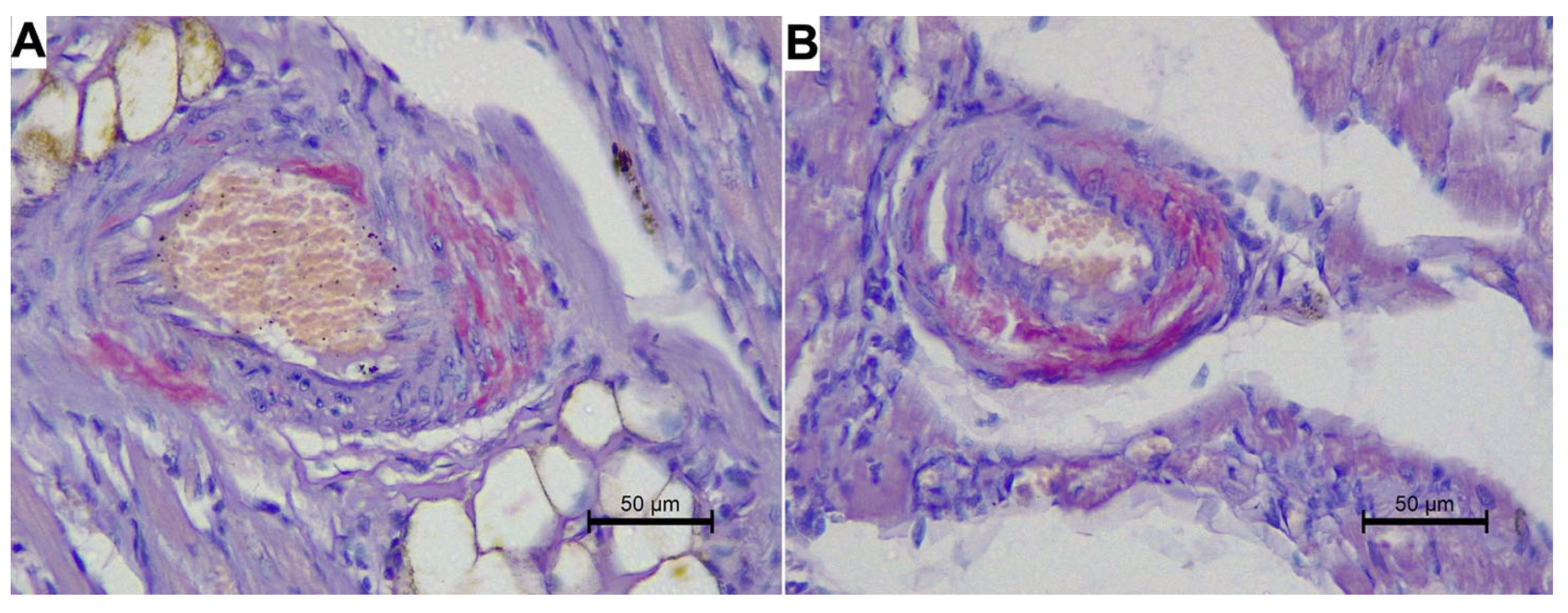
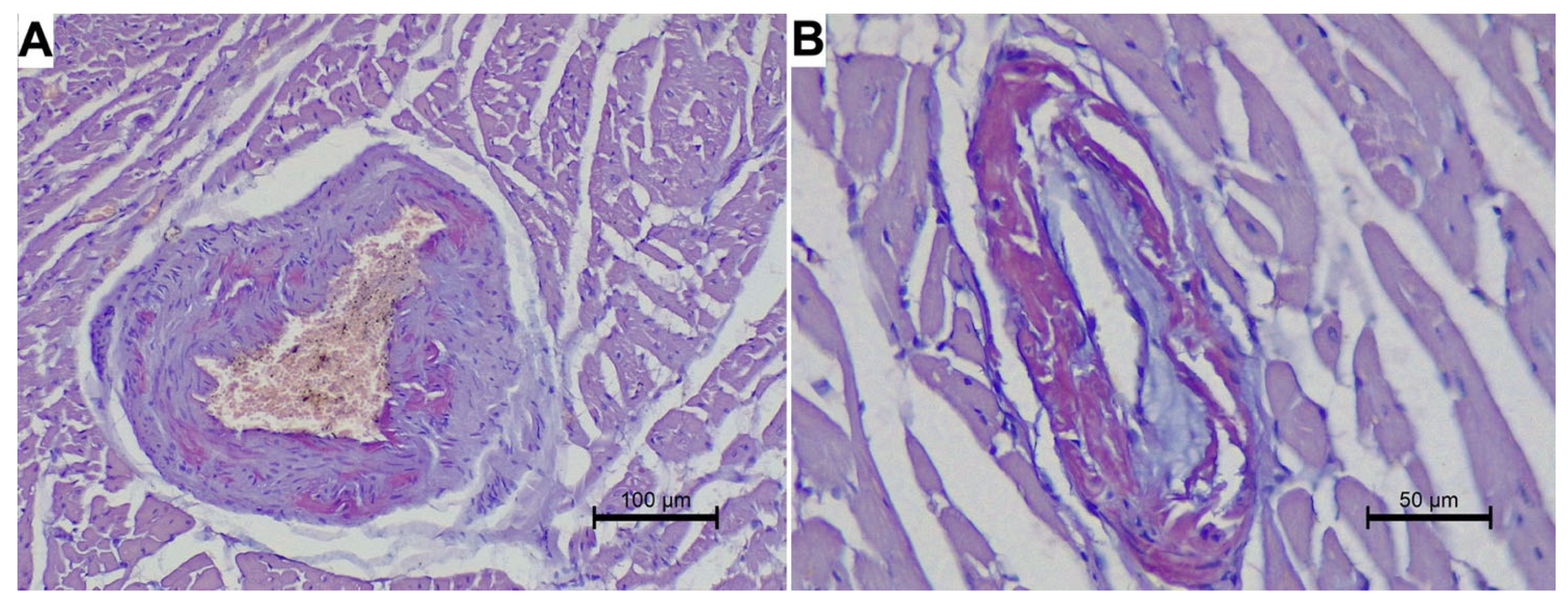
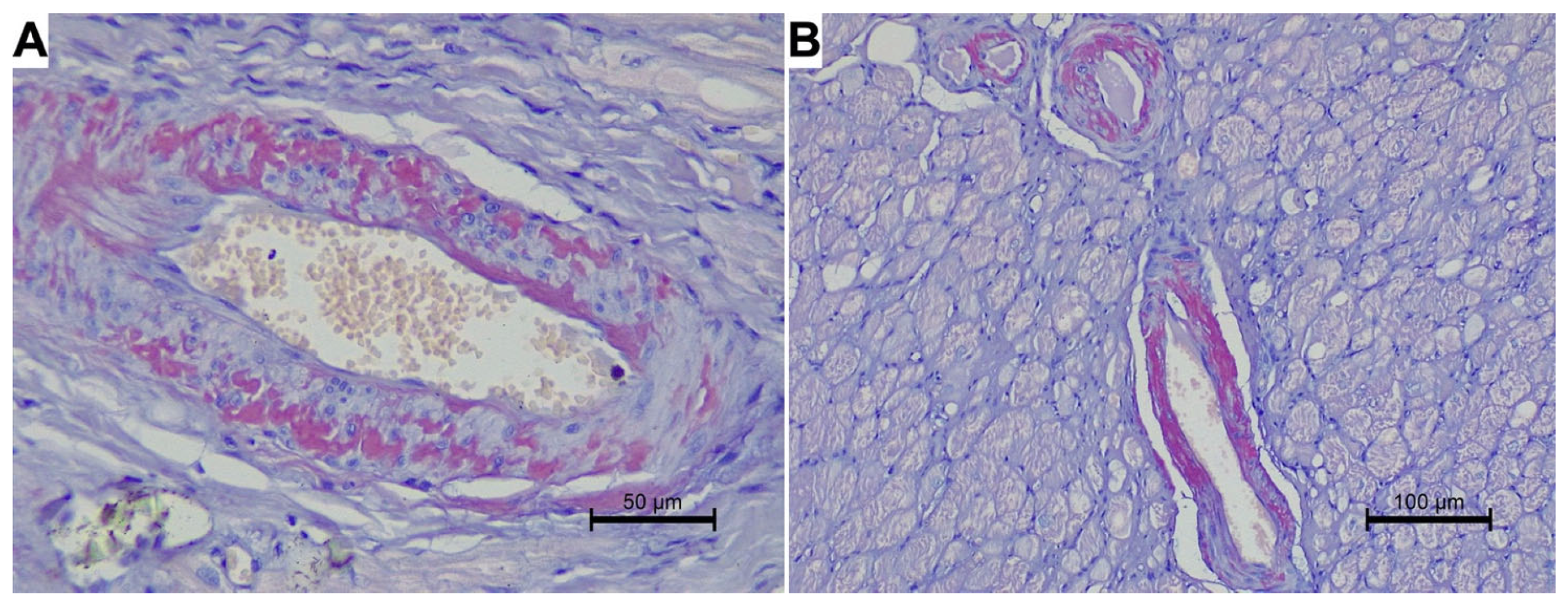
Among the studied specimens (with the exclusion of six control cases), only five cases (4.2%) were positive for amyloid, with no positive result in the control group. Two cats (one diagnosed with RCM and one diagnosed with FHT) presented with both atrial and ventricular amyloid depositions. Additionally, one cat diagnosed with FHT presented only ventricular amyloid deposits, and two cats presented only atrial amyloid deposits (one cat diagnosed with FHT and one cat diagnosed with nephritis). In all five cases, the amyloid was irregularly distributed within the media layer of the small intramural coronary arteries in the myocardium of the left ventricular free wall and interventricular septum and/or atrial specimens (Figure 1, Figure 2 and Figure 3).
Amyloid was present neither in the subepicardial coronary arteries nor in the myocardium in all of the examined specimens. It was also absent in the coronary arteries of the right ventricle in the examined specimens.
The reported details of the amyloid-positive cases together with the results of subsequent histopathological analysis are presented in Table 2 and Table 3.

4. Discussion

The conducted study showed that, although amyloid deposits can be noted in the ventricular specimens of the hearts of cats diagnosed with either cardiac disease or hyperthyroidism, it is a rather rare finding. Moreover, in our study, the amyloid deposits were present only within the coronary arteries and not in the ventricular or atrial myocardium.
Some of the feline pure-breeds have been previously associated with a higher risk of amyloidosis (including familial amyloidosis) [1,37,38,39,40]. In our study, only one Oriental shorthair cat was enrolled and showed negative for amyloid presence. It would be interesting to involve predisposed breeds in future research. However, many studies have been done on these breeds, and none of them describe any amyloid deposition in the cardiac specimens [37,38,40]. Although earlier amyloidosis had been rarely reported in domestic shorthair cats [1,41,42], Ferri et al. [11] described it in over half of the cats kept in the shelters, and all positive cases in our study were ESH cats. Although the latter is probably associated with a high frequency of that breed in the study, it points to a possibility of amyloidosis in domestic shorthair cats.
The presence of amyloid deposits in feline cardiac specimens had not been previously determined in a large group of animals. In a study by Moccia et al. [43], six out of seven examined hearts collected from domestic shorthair cats presented fibril deposition. In that group, amyloid was present not only within arterial walls, as presented in our research, but also perivascular and within the cardiac wall interstitium.
The relationship between the serum amyloid presence and cardiac disease in animals remains a topic of discussion. While it is established that systemic AA amyloidosis results from the deposition of misfolded SAA into insoluble cross-beta amyloid fibrils in various organs—including the kidney, liver, spleen, and heart—the precise conditions under which soluble SAA transitions into pathological deposits remain a subject of intense scientific inquiry [11,44]. Current scientific evidence suggests that while persistently elevated serum SAA levels are generally essential for pathogenesis, they are not, in themselves, a definitive predictor of the disease [45]. In healthy cats, serum SAA concentrations are typically low, but can increase up to 1000-fold during the host innate response to inflammation [44]. However, longitudinal studies on Abyssinian cats with familial amyloidosis have demonstrated that SAA levels often do not significantly differ between affected and unaffected individuals during the early stages of the disease [46]. Instead, significant SAA elevations are frequently observed only in the terminal phases of the condition or during transient inflammatory peaks that also occur in healthy cats, rendering SAA a poor marker for early diagnosis [46]. The current understanding of that association emphasizes the cellular processing of SAA by macrophages and reticuloendothelial cells. These cells endocytose circulating SAA and traffic it to lysosomes for degradation [47]. Amyloidogenesis is believed to occur when this degradation process is faulty, leading to the accumulation of proteolysis-resistant oligomers [44,47]. Genetic and structural variations in the feline SAA protein further modulate its amyloidogenic potential. Feline SAA possesses a unique eight-residue insert that increases the stability and mass of the amyloid fibril core, potentially contributing to its environmental persistence and resistance to host clearance [44]. Specific polymorphisms, such as substitutions at residue 45 (Glutamine vs. Arginine), have been linked to distinct intrarenal distribution patterns, suggesting that minor differences in the primary structure of SAA can dynamically affect where amyloid is deposited within an organ [48]. Despite these insights, uncertainties persist because some studies found no direct correlation between specific SAA sequences and the overall incidence of amyloidosis in certain domestic cat populations, suggesting that environmental stressors or other unknown factors may be equally influential [11,45]. Finally, recent research into the transmissibility of AA amyloidosis has introduced a new dimension to our understanding of SAA. The presence of SAA fragments in cat bile and the significantly higher concentrations of urinary SAA in cats with familial amyloidosis suggest that the protein and its fragments are excreted and may facilitate, similarly to a mechanism observed in cheetahs, a prion-like fecal–oral transmission route, especially in crowded environments like shelters [11,44,49]. This “seeding” mechanism implies that the association between SAA and amyloidosis is not merely a consequence of internal inflammation but can be accelerated by external exposure to pre-formed amyloid fibrils [11,44].
In the context of unclear associations between elevated SAA levels and organ amyloid deposits, together with the rare occurrence of myocardial or coronary amyloidosis in cats, the defining relationship between elevated SAA and the presence of fibrils in the cardiac tissue or cardiac disease remains challenging. In the study of Yuki et al. [8], SAA levels were not higher in cardiomyopathy or hyperthyroidism as compared to healthy cats. At the same time, other research teams [32,33] reported a higher level of SAA in cats with cardiomyopathies and signs of heart failure. Moreover, van Hoek et al. [32] found the correlation of SAA level with the number of hypertrophied regions in the interventricular septum but not in the left ventricular free wall. All five cases recognized as positive in our study presented with cardiac hypertrophy; nonetheless, it was only mild (cardiac mass > 20 g), and in only one case, with ventricular coronary amyloidosis (case 30), the left ventricular wall and interventricular septum thickness were increased as compared to normal cats [34,50].
In veterinary medicine, SAA levels are increased in various inflammatory disorders such as upper respiratory tract infections, pneumonia, pyometra, or feline infectious peritonitis [8]. None of the cats enrolled in our study in the myocarditis group showed the presence of amyloid deposition, suggesting that amyloidosis is not related to myocarditis in cats. On the other hand, in one of the amyloid-positive FHT patients, lympho-plasmocytic myocardial infiltrates were observed in the evaluated specimens. Another case presented coronary amyloidosis with the diagnosis of glomerulonephritis, but without cardiac inflammatory infiltration. Nonetheless, at this point, it does not provide sufficient data to confirm the relationship between heart microvascular amyloidosis and myocardial inflammatory infiltration (including inflammation accompanying other diseases like hyperthyroidism-induced cardiomyopathy).
One of the signs of heart failure associated with higher levels of SAA in cats was left atrial enlargement [32]. In humans, isolated atrial amyloidosis is recognized as a type of cardiac amyloidosis. It is most frequently associated with the presence of arrhythmias such as atrial fibrillation [22,51,52,53]. Our study presented atrial amyloidosis only within the coronary arteries and not within cardiac muscle. Although the clinical information about present arrhythmias was limited due to the retrospective character of the study, it is not likely possible that feline cardiomyopathies leading to atrial enlargement with or without atrial fibrillation are associated with atrial amyloid deposition.
In human medicine, cardiac amyloidosis manifests through two distinct but frequently overlapping histopathological patterns: myocardial (interstitial) infiltration and coronary (vascular) involvement [54]. Myocardial amyloidosis is characterized by the progressive accumulation of insoluble fibrils within the extracellular matrix, which disrupts normal tissue architecture and leads to an infiltrative or restrictive cardiomyopathy [18,54,55]. This interstitial deposition physically distorts myocardial cells and increases ventricular wall stiffness, primarily resulting in diastolic dysfunction and impaired ventricular filling [55,56]. While the global left ventricular ejection fraction may remain ostensibly normal until the terminal stages of the disease, subendocardial myocytes are uniquely susceptible, causing an early impairment of longitudinal contraction that can be detected through tissue Doppler or strain imaging [54,55,57,58]. In any of the examined samples, myocardial interstitial amyloidosis was noted.
In contrast, coronary arterial amyloidosis specifically involves the infiltration of the walls of intramyocardial arteries and arterioles [54,56,57]. The pathophysiologic impact of this vascular involvement is characterized by lumen stenosis, significant narrowing of the microvasculature, and impaired vasodilation [54,57]. Histological analysis of explanted hearts has demonstrated that these deposits often cover the entire circumference of the vessels, resulting in capillary rarefaction and disruption [57]. This triggers cellular hypoxia pathways, as evidenced by the upregulation of vascular endothelial growth factor (VEGF) in both cardiomyocytes and endothelial cells [55,57]. Consequently, coronary amyloidosis can induce myocardial ischemia even in the presence of unobstructed epicardial coronary arteries [54,55,57]. In the studied group, only this form of cardiac amyloidosis was observed. In three positive cases, the coronary amyloidosis was accompanied by cardiomyocyte degeneration of the corresponding cardiac wall (atrial or ventricular), although these results are not sufficient to draw further conclusions on coronary amyloidosis-related ischemia in the described cases.
The clinical implications of these two patterns differ significantly, often complicating the diagnostic process. While the interstitial pattern typically presents as congestive heart failure with thickened walls, the vascular pattern may present in humans as angina pectoris or ischemic heart disease [54,56]. In rare instances, severe small-vessel amyloidosis can lead to global myocardial ischemia and significant systolic dysfunction without the hallmark ventricular wall thickening typically associated with the disease [54]. Furthermore, while most amyloid-related coronary disease affects the intramural vessels, on very rare occasions, deposits may involve the epicardial arteries, creating obstructive lesions that are indistinguishable from atherosclerotic plaques on coronary angiography [54].
As mentioned before, amyloid aggregates may lead to the stiffening and thickening of the heart that resembles restrictive cardiomyopathy [23,24,25]. One of the cats recognized with amyloid deposits in our study was diagnosed as RCM based on the clinical and pathological results. Nonetheless, it is thought-provoking if the presence of amyloid in the coronary arteries would lead to a similar clinical outcome as the myocardial deposits. In the described case, the coronary amyloid deposition was combined with severe myocardial damage and fibrosis—the main cause of clinical cardiac stiffness. It remains an open question if arterial narrowing combined with coronary amyloid deposits can lead to myocardial damage and fibrosis; nonetheless, other cats diagnosed with RCM have not shown the presence of amyloid, and, at the same time, two cats from the FHT group showed lower intensity of myocardial fibrosis than the RCM cat despite the presence of vascular amyloidosis.
In human medicine, one of the proteins involved in the occurrence of amyloidosis is transthyretin (transport-thyroxine-and-retinol; TTR). It is produced in the liver and carries vitamin A (retinol) and a thyroid hormone, thyroxine [20]. The mutation in TTR-encoding genes can lead to cardiac amyloidosis [20,24]. On the other hand, hyperthyroidism was found to promote beta-amyloid deposition in neuronal tissue in mice [59]. To the best of our knowledge, no direct relationship between hyperthyroidism, amyloid-precursor abnormalities, and cardiac (or coronary) amyloidosis has been found so far. Therefore, we believe that the presence of amyloid deposits in three out of 13 cats with known hyperthyroidism is an interesting finding. These three cats presented with amyloid deposits in the arteries of the left ventricular myocardium (including left ventricular free wall and interventricular septum) and/or atrial myocardium. Hyperthyroid cats show myocardial arterial narrowing together with myocardial degeneration and cardiomyocyte hypertrophy [34], which was also noted in cases 7 and 30 presenting with amyloid deposits. As hyperthyroidism is generally associated with cardiac small vessel narrowing [34], but in only three cases it could be associated with amyloid deposition, this relationship should be further evaluated. Moreover, it is interesting that, although we hypothesize that the presence of amyloid results from systemic disease, the protein was present selectively in the intramural coronary arteries of the interventricular septum and left ventricular wall and/or atria, and neither in the right ventricular intramural coronary arteries nor in the subepicardial coronary arteries, regardless of cardiac chamber.
Another mechanism that contributes to the development of TTR-related cardiac amyloidosis in humans is the age-related amyloid deposition originating from normal TTR protein [20,60]. This is the most common type of cardiac amyloidosis in people. In animals, senile amyloidosis was found in brain tissue and involved the deposition of beta-amyloid in dogs, cats, and sea lions [61]. Brain senile amyloidosis was combined with amyloid deposits in the small blood vessels of various internal organs, including the heart [62]. Moreover, in dogs, senile intramural coronary artery amyloidosis has been described [63]. Adversely to humans, in dogs, the amyloid deposits were found mainly within the small coronary arteries, with a seldom occurrence in the interstitial tissue. The amyloid presence was combined with myocardial necrosis and fibrosis. In our study, the histopathological image was similar to that of dogs. Simultaneously, the group of amyloid-positive cats was older than 7 years, but also suffered from hyperthyroidism, glomerulonephritis, or RCM. At the same time, other old cats evaluated in the study have not presented with amyloid deposition. Therefore, it remains an open question whether, in cats, the risk of intramural coronary arterial amyloidosis increases with age, similarly to humans and dogs.
As mentioned before, in humans, the amyloidosis within the heart involves mainly the myocardium with a less common presence of amyloid deposits in the coronary vasculature [21,22,64]. It is interesting that in our study, as it has been previously reported in dogs [63], only coronary arterial amyloid deposits were noted, with no cases of myocardial amyloid presence. In humans with AL-amyloidosis, the coronary impairment is observed. The amyloid deposits affect the small vessel reactivity, leading to impairment in vasodilation. What is interesting, epicardial coronary arteries appear normal on angiography, suggesting small vessel dysfunction [25,64,65].
In non-human species, cardiac involvement manifests through distinct pathophysiological patterns that differ significantly from the typical human presentations of AL and ATTR amyloidosis. In dogs, the condition most frequently manifests as senile cardiac amyloidosis, which is found in approximately 16.5% of dogs over 10 years of age and up to 45.7% of those over 14 years old [63]. A fundamental pathophysiologic difference exists between canine and human senile amyloidosis: while humans typically develop diffuse interstitial infiltration leading to restrictive cardiomyopathy, the canine form is almost exclusively intramural, targeting the walls of middle-sized and small intramural coronary arteries and arterioles [63]. These deposits often begin in the intima or media and can progressively expand to occlude up to 30% or more of the vessel lumen [63,66]. The clinical implications of this vascular focus include frequent focal myocardial necrosis and subsequent fibrosis (cicatrization) as a direct consequence of the vascular lesion [63]. As mentioned before, although we noted some features of cardiomyocyte degeneration and myocardial fibrosis, the myocardium did not show signs of focal myocardial necrosis. Furthermore, recent proteomic studies have identified the fibrinogen Aalpha-chain as a precursor protein in canine coronary amyloid, which represents a unique organ-specific pattern compared to humans and Japanese squirrels, where fibrinogen Aalpha-chain amyloidosis primarily targets the renal glomeruli [66].
Valvular involvement is another significant morphological feature in canine cardiac amyloidosis, occurring in the mitral, tricuspid, and aortic valves [63]. These deposits present as large nodular thickenings or irregular plaque-like deformities that can lead to the total disorganization of the normal valvular laminal structure [63]. Such changes were not reported previously in the domestic cat, and we did not perform the examination of heart valves in the studied group.
In wildlife and exotic species, such as the island fox (Urocyon littoralis), systemic AA amyloidosis reaches an extraordinarily high prevalence of 34% in necropsied populations [67]. In these foxes, cardiac amyloid is localized to the valves, myocardium, and coronary arteries in approximately 36% of systemic cases [67]. Unlike the primarily vascular focus in dogs, the amyloid in island foxes tracks heavily along the basement membrane systemically [67].
The pathophysiologic impact in other captive felids, such as cheetahs, is characterized by an extreme disease prevalence (up to 70%) facilitated by a prion-like horizontal transmission route [49]. While the Tsushima leopard cat displays age-related amyloidosis with a predilection for the arterial walls, cows and avian species like the Japanese quail and Pekin duck exhibit cardiac involvement as part of systemic amyloidosis or a rapid multi-organ failure secondary to chronic inflammatory or infectious stimuli [66,68,69,70]. These findings suggest that while human cardiac amyloidosis is often a primary driver of restrictive heart failure, in animals, the disease frequently presents as a vascular microangiopathy (dogs) or a component of infectious-like systemic outbreaks (wild felids and island foxes) [71]. Lack of information about the presence of amyloid deposits in other organs in the examined group prevents us from drawing a conclusion on the character of cardiac amyloidosis in domestic cats.
One of the serious limitations of our study was a lack of detailed clinical history, including detailed echocardiographic examination, complete blood count, and biomarker measurements like SAA, troponin I, and pro-BNP, resulting from the retrospective character of the study. The availability of year-by-year clinical history and echocardiographic examination records would help to plan the prospective studies, enrich the data available for retrospective analysis, and, as a result, expand our knowledge on disease course, progression, and pathological outcome.
The second serious limitation of our study is the lack of identification of the amyloid precursor protein in the positive cases. It resulted from the lack of validated feline-specific antibodies for IHC in our laboratory at the time. Based on the literature data on feline amyloidosis, one can assume that the predominant amyloid type was the AA type, but future studies involving immunohistochemical and/or mass spectrometry identification of amyloid precursors would enrich the discussion, helping to address the direct cause of amyloid presence in feline coronary arteries.
Another limitation is a relatively small number of cats enrolled in DCM, AC, and RCM groups, resulting from the retrospective character of the study, which can lead to falsely negative results.
The last limitation is the smaller number of cases in the ventricular group as compared to the atrial group, which can limit the strength of some conclusions.
Our retrospective analysis confirmed the presence of amyloid deposits in the cardiac ventricular and/or atrial tissue of feline patients with hyperthyroidism, glomerulonephritis, or restrictive cardiomyopathy, although the amyloid deposits were present only within the walls of small coronary arteries and not within the myocardium. All amyloid-positive cats in our study were senile, but we cannot confirm the relationship between age and amyloidosis in cats.
Our study points out the need for further research that would combine the detailed clinical history, like echocardiography and plasma SAA measurements, and post-mortem examination (pathological and histopathological) to expand our knowledge on possible courses of amyloidosis of heart tissue in feline patients.

Author Contributions

Conceptualization, I.J.-Z., J.B. and A.N.-N.; methodology, I.J.-Z., J.B. and E.S.; investigation, I.J.-Z. and J.B.; resources, J.B. and A.N.-N.; writing—original draft preparation, I.J.-Z. and J.B.; writing—review and editing, E.S., M.N. and A.N.-N.; visualization, I.J.-Z.; funding acquisition, M.N. All authors have read and agreed to the published version of the manuscript.

Funding

This research received no external funding.

Institutional Review Board Statement

This study was conducted on archived animal tissue samples and, according to National Law, did not require approval from the Ethics Committee.

Informed Consent Statement

Not applicable.

Data Availability Statement

The research data are available from the main author upon request.

Acknowledgments

The authors would like to thank the veterinary cardiologists who subjected feline cardiac samples for cardiopathologic examination in the years 2018–2023, with special thanks to Urszula Pasławska, Katarzyna Kraszewska, Marcin Michałek, Grażyna Duda-Adamczyk, and Paweł Bandoch.

Conflicts of Interest

The authors declare no conflicts of interest.

References

  1. Woldemeskel, M. A Concise Review of Amyloidosis in Animals. Vet. Med. Int. 2012, 2012, 427296. [Google Scholar] [CrossRef]
  2. Penticoff, H.B.; Hipkiss, H.K.; Hetak, A.A.; Agnew, D.W.; Fortin, J.S. Survey of Amyloidosis Cases among Different Free-Living Wild and Zoo Animals. Amyloid 2021, 28, 145–152. [Google Scholar] [CrossRef] [PubMed]
  3. Benson, M.D.; Buxbaum, J.N.; Eisenberg, D.S.; Merlini, G.; Saraiva, M.J.M.; Sekijima, Y.; Sipe, J.D.; Westermark, P. Amyloid Nomenclature 2020: Update and Recommendations by the International Society of Amyloidosis (ISA) Nomenclature Committee. Amyloid 2020, 27, 217–222. [Google Scholar] [CrossRef] [PubMed]
  4. Wechalekar, A.D.; Gillmore, J.D.; Hawkins, P.N. Systemic Amyloidosis. Lancet 2016, 387, 2641–2654. [Google Scholar] [CrossRef] [PubMed]
  5. Joaquín, C.J.; David, E.P.; Martínez-Subiela, S. Acute Phase Proteins in Dogs and Cats: Current Knowledge and Future Perspectives. Vet. Clin. Pathol. 2005, 34, 85–99. [Google Scholar] [CrossRef]
  6. Sack, G.H. Serum Amyloid A—A Review. Mol. Med. 2018, 24, 46. [Google Scholar] [CrossRef]
  7. Schiavo, L.; Odatzoglou, P.; Hare, C.; Williams, T.L.; Dobson, J.M. Serum Amyloid A and Other Clinicopathological Variables in Cats with Intermediate- and Large-Cell Lymphoma. J. Feline Med. Surg. 2022, 24, e603–e610. [Google Scholar] [CrossRef]
  8. Yuki, M.; Aoyama, R.; Nakagawa, M.; Hirano, T.; Naitoh, E.; Kainuma, D. A Clinical Investigation on Serum Amyloid A Concentration in Client-Owned Healthy and Diseased Cats in a Primary Care Animal Hospital. Vet. Sci. 2020, 7, 45. [Google Scholar] [CrossRef]
  9. Tamamoto, T.; Ohno, K.; Takahashi, M.; Nakashima, K.; Fujino, Y.; Tsujimoto, H. Serum Amyloid A as a Prognostic Marker in Cats with Various Diseases. J. Vet. Diagn. Investig. 2013, 25, 428–432. [Google Scholar] [CrossRef]
  10. Troìa, R.; Gruarin, M.; Foglia, A.; Agnoli, C.; Dondi, F.; Giunti, M. Serum Amyloid A in the Diagnosis of Feline Sepsis. J. Vet. Diagn. Investig. 2017, 29, 856–859. [Google Scholar] [CrossRef]
  11. Ferri, F.; Ferro, S.; Porporato, F.; Callegari, C.; Guglielmetti, C.; Mazza, M.; Ferrero, M.; Crinò, C.; Gallo, E.; Drigo, M.; et al. AA-Amyloidosis in Cats (Felis Catus) Housed in Shelters. PLoS ONE 2023, 18, e0281822. [Google Scholar] [CrossRef] [PubMed]
  12. Mawby, D.I.; Whittemore, J.C.; Donnell, R.L. Fatal Pulmonary Hemorrhage Associated with Vascular Amyloid Deposition in a Cat. J. Feline Med. Surg. Open Rep. 2018, 4, 2055116918817993. [Google Scholar] [CrossRef] [PubMed]
  13. Genova, F.; Nonnis, S.; Maffioli, E.; Tedeschi, G.; Strillacci, M.G.; Carisetti, M.; Sironi, G.; Cupaioli, F.A.; Di Nanni, N.; Mezzelani, A.; et al. Multi-Omic Analyses in Abyssinian Cats with Primary Renal Amyloid Deposits. Sci. Rep. 2021, 11, 8339. [Google Scholar] [CrossRef] [PubMed]
  14. van der Linde-Sipman, J.S.; Niewold, T.A.; Tooten, P.C.J.; de Neijs-Backer, M.; Gruys, E. Generalized AA-Amyloidosis in Siamese and Oriental Cats. Vet. Immunol. Immunopathol. 1997, 56, 1–10. [Google Scholar] [CrossRef]
  15. Clark, L.; Seawright, A.A. Generalised Amyloidosis in Seven Cats. Pathol. Vet. 1969, 6, 117–134. [Google Scholar] [CrossRef]
  16. Sigurdson, C.J.; Miller, M.W. Other Animal Prion Diseases. Br. Med. Bull. 2003, 66, 199–212. [Google Scholar] [CrossRef]
  17. Segev, G.; Cowgill, L.D.; Jessen, S.; Berkowitz, A.; Mohr, C.F.; Aroch, I. Renal Amyloidosis in Dogs: A Retrospective Study of 91 Cases with Comparison of the Disease between Shar-Pei and Non-Shar-Pei Dogs. J. Vet. Intern. Med. 2012, 26, 259–268. [Google Scholar] [CrossRef]
  18. Martinez-Naharro, A.; Hawkins, P.N.; Fontana, M. Cardiac Amyloidosis. Clin. Med. 2018, 18, s30–s35. [Google Scholar] [CrossRef]
  19. Tahir, U.A.; Doros, G.; Kim, J.S.; Connors, L.H.; Seldin, D.C.; Sam, F. Predictors of Mortality in Light Chain Cardiac Amyloidosis with Heart Failure. Sci. Rep. 2019, 9, 8552. [Google Scholar] [CrossRef]
  20. Garcia-Pavia, P.; Rapezzi, C.; Adler, Y.; Arad, M.; Basso, C.; Brucato, A.; Burazor, I.; Caforio, A.L.P.; Damy, T.; Eriksson, U.; et al. Diagnosis and Treatment of Cardiac Amyloidosis: A Position Statement of the ESC Working Group on Myocardial and Pericardial Diseases. Eur. Heart J. 2021, 42, 1554–1568. [Google Scholar] [CrossRef]
  21. Zampiccoli, E.; Barthelmes, J.; Kreysing, L.; Nägele, M.P.; Nebunu, D.; Haider, T.; von Eckardstein, A.; Gerber, B.; Schwotzer, R.; Ruschitzka, F.; et al. Eyes on Amyloidosis: Microvascular Retinal Dysfunction in Cardiac Amyloidosis. ESC Heart Fail. 2022, 9, 1186–1194. [Google Scholar] [CrossRef] [PubMed]
  22. Vergaro, G.; Aimo, A.; Rapezzi, C.; Castiglione, V.; Fabiani, I.; Pucci, A.; Buda, G.; Passino, C.; Lupón, J.; Bayes-Genis, A.; et al. Atrial Amyloidosis: Mechanisms and Clinical Manifestations. Eur. J. Heart Fail. 2022, 24, 2019–2028. [Google Scholar] [CrossRef] [PubMed]
  23. Dubrey, S.W.; Hawkins, P.N.; Falk, R.H. Amyloid Diseases of the Heart: Assessment, Diagnosis, and Referral. Heart 2011, 97, 75–84. [Google Scholar] [CrossRef] [PubMed]
  24. Ruberg, F.L.; Grogan, M.; Hanna, M.; Kelly, J.W.; Maurer, M.S. Transthyretin Amyloid Cardiomyopathy. J. Am. Coll. Cardiol. 2019, 73, 2872–2891. [Google Scholar] [CrossRef]
  25. Falk, R.H.; Alexander, K.M.; Liao, R.; Dorbala, S. AL (Light-Chain) Cardiac Amyloidosis. J. Am. Coll. Cardiol. 2016, 68, 1323–1341. [Google Scholar] [CrossRef]
  26. Merlini, G.; Bellotti, V. Molecular Mechanisms of Amyloidosis. N. Engl. J. Med. 2003, 349, 583–596. [Google Scholar] [CrossRef]
  27. Shams, P.; Ahmed, I. Cardiac Amyloidosis; StatPearls Publishing: Treasure Island, FL, USA, 2025. [Google Scholar]
  28. Kittleson, M.D.; Côté, E. The Feline Cardiomyopathies: 1. General Concepts. J. Feline Med. Surg. 2021, 23, 1009–1027. [Google Scholar] [CrossRef]
  29. Kittleson, M.D.; Côté, E. The Feline Cardiomyopathies: 2. Hypertrophic Cardiomyopathy. J. Feline Med. Surg. 2021, 23, 1028–1051. [Google Scholar] [CrossRef]
  30. Kittleson, M.D.; Côté, E. The Feline Cardiomyopathies: 3. Cardiomyopathies Other than HCM. J. Feline Med. Surg. 2021, 23, 1053–1067. [Google Scholar] [CrossRef]
  31. Luis Fuentes, V.; Abbott, J.; Chetboul, V.; Côté, E.; Fox, P.R.; Häggström, J.; Kittleson, M.D.; Schober, K.; Stern, J.A. ACVIM Consensus Statement Guidelines for the Classification, Diagnosis, and Management of Cardiomyopathies in Cats. J. Vet. Intern. Med. 2020, 34, 1062–1077. [Google Scholar] [CrossRef]
  32. van Hoek, I.; Hodgkiss-Geere, H.; Bode, E.F.; Hamilton-Elliott, J.; Mõtsküla, P.; Palermo, V.; Pereira, Y.M.; Culshaw, G.J.; Ivanova, A.; Dukes-McEwan, J. Associations among Echocardiography, Cardiac Biomarkers, Insulin Metabolism, Morphology, and Inflammation in Cats with Asymptomatic Hypertrophic Cardiomyopathy. J. Vet. Intern. Med. 2020, 34, 591–599. [Google Scholar] [CrossRef]
  33. Liu, M.; Köster, L.S.; Fosgate, G.T.; Chadwick, C.C.; Sanz-González, Í.; Eckersall, P.D.; Wotton, P.R.; French, A.T. Cardiovascular-renal Axis Disorder and Acute-phase Proteins in Cats with Congestive Heart Failure Caused by Primary Cardiomyopathy. J. Vet. Intern. Med. 2020, 34, 1078–1090. [Google Scholar] [CrossRef] [PubMed]
  34. Janus, I.; Noszczyk-Nowak, A.; Bubak, J.; Tursi, M.; Vercelli, C.; Nowak, M. Comparative Cardiac Macroscopic and Microscopic Study in Cats with Hyperthyroidism vs. Cats with Hypertrophic Cardiomyopathy. Vet. Q. 2023, 43, 1–11. [Google Scholar] [CrossRef] [PubMed]
  35. Janus-Ziółkowska, I.; Bubak, J. The Impact of Short-Term Formalin Fixation on Weight and Ventricular Dimensions in the Hearts of Cats and Small-to-Medium-Sized Dogs. Vet. Sci. 2025, 12, 74. [Google Scholar] [CrossRef] [PubMed]
  36. Carney, H.C.; Ward, C.R.; Bailey, S.J.; Bruyette, D.; Dennis, S.; Ferguson, D.; Hinc, A.; Rucinsky, A.R. 2016 AAFP Guidelines for the Management of Feline Hyperthyroidism. J. Feline Med. Surg. 2016, 18, 400–416. [Google Scholar] [CrossRef]
  37. DiBartola, S.P.; Tarr, M.J.; Benson, M.D. Tissue Distribution of Amyloid Deposits in Abyssinian Cats with Familial Amyloidosis. J. Comp. Pathol. 1986, 96, 387–398. [Google Scholar] [CrossRef]
  38. Niewold, T.A.; van der Linde-Sipman, J.S.; Murphy, C.; Tooten, P.C.J.; Gruys, E. Familial Amyloidosis in Cats: Siamese and Abyssinian AA Proteins Differ in Primary Sequence and Pattern of Deposition. Amyloid 1999, 6, 205–209. [Google Scholar] [CrossRef]
  39. Struck, A.K.; Klotz, D.; Hülskötter, K.; Wohlsein, P.; Schmitz, J.; Bräsen, J.H.; Distl, O. Complex Segregation Analysis of Familial Amyloidosis in Oriental Shorthair Cats. Vet. J. 2020, 265, 105552. [Google Scholar] [CrossRef]
  40. Boyce, J.T.; DiBartola, S.P.; Chew, D.J.; Gasper, P.W. Familial Renal Amyloidosis in Abyssinian Cats. Vet. Pathol. 1984, 21, 33–38. [Google Scholar] [CrossRef]
  41. Beatty, J.A.; Barrs, V.R.; Martin, P.A.; Nicoll, R.G.; France, M.P.; Foster, S.F.; Lamb, W.A.; Malik, R. Spontaneous Hepatic Rupture in Six Cats with Systemic Amyloidosis. J. Small Anim. Pract. 2002, 43, 355–363. [Google Scholar] [CrossRef]
  42. Neo-suzuki, S.; Mineshige, T.; Kamiie, J.; Kayanuma, H.; Mochizuki, Y.; Hisasue, M.; Tsuchiya, R.; Shirota, K. Hepatic AA Amyloidosis in a Cat: Cytologic and Histologic Identification of AA Amyloid in Macrophages. Vet. Clin. Pathol. 2017, 46, 331–336. [Google Scholar] [CrossRef] [PubMed]
  43. Moccia, V.; Vogt, A.-C.; Ricagno, S.; Callegari, C.; Vogel, M.; Zini, E.; Ferro, S. Histological Evaluation of the Distribution of Systemic AA-Amyloidosis in Nine Domestic Shorthair Cats. PLoS ONE 2023, 18, e0293892. [Google Scholar] [CrossRef] [PubMed]
  44. Schulte, T.; Chaves-Sanjuan, A.; Mazzini, G.; Speranzini, V.; Lavatelli, F.; Ferri, F.; Palizzotto, C.; Mazza, M.; Milani, P.; Nuvolone, M.; et al. Cryo-EM Structure of Ex Vivo Fibrils Associated with Extreme AA Amyloidosis Prevalence in a Cat Shelter. Nat. Commun. 2022, 13, 7041. [Google Scholar] [CrossRef] [PubMed]
  45. Tei, M.; Uchida, K.; Chambers, J.K.; Watanabe, K.; Tamamoto, T.; Ohno, K.; Nakayama, H. Variation of Amino Acid Sequences of Serum Amyloid a (SAA) and Immunohistochemical Analysis of Amyloid a (AA) in Japanese Domestic Cats. J. Vet. Med. Sci. 2018, 80, 164–172. [Google Scholar] [CrossRef]
  46. Paltrinieri, S.; Sironi, G.; Giori, L.; Faverzani, S.; Longeri, M. Changes in Serum and Urine SAA Concentrations and Qualitative and Quantitative Proteinuria in Abyssinian Cats with Familial Amyloidosis: A Five-Year Longitudinal Study (2009–2014). J. Vet. Intern. Med. 2015, 29, 505–512. [Google Scholar] [CrossRef]
  47. Phipps-Yonas, H.; Pinard, G.; Ali-Khan, Z. Humoral Proinflammatory Cytokine and SAA Generation Profiles and Spatio-Temporal Relationship Between SAA and Lysosomal Cathepsin B and D in Murine Splenic Monocytoid Cells During AA Amyloidosis. Scand. J. Immunol. 2004, 59, 168–176. [Google Scholar] [CrossRef]
  48. Kobayashi, N.; Kaneda, M.; Ikeda, M.; Kondo, H.; Iwaide, S.; Itoh, Y.; Hisada, M.; Kato, Y.; Sedghi Masoud, N.; Nomura, K.; et al. Polymorphisms in SAA Alter Intrarenal Amyloid Distribution of AA Amyloidosis in Cats. Sci. Rep. 2025, 15, 21553. [Google Scholar] [CrossRef]
  49. Zhang, B.; Une, Y.; Fu, X.; Yan, J.; Ge, F.; Yao, J.; Sawashita, J.; Mori, M.; Tomozawa, H.; Kametani, F.; et al. Fecal Transmission of AA Amyloidosis in the Cheetah Contributes to High Incidence of Disease. Proc. Natl. Acad. Sci. USA 2008, 105, 7263–7268. [Google Scholar] [CrossRef]
  50. Janus-Ziółkowska, I.; Bubak, J.; Noszczyk-Nowak, A. Left Ventricular Dimensions in Feline Hearts Obtained Postmortem (Version 1.0) [Dataset]; Wroclaw University of Environmental and Life Sciences: Wrocław, Polska, 2025. [Google Scholar] [CrossRef]
  51. Sukhacheva, T.V.; Eremeeva, M.V.; Ibragimova, A.G.; Vaskovskii, V.A.; Serov, R.A.; Revishvili, A.S. Isolated Atrial Amyloidosis in Patients with Various Types of Atrial Fibrillation. Bull. Exp. Biol. Med. 2016, 160, 844–849. [Google Scholar] [CrossRef]
  52. Richter, S.; Jahnke, C.; Klingel, K.; Paetsch, I. Isolated Atrial Amyloidosis. Eur. Heart J. 2020, 41, 2695. [Google Scholar] [CrossRef]
  53. Yang, K.; Li, C.; Li, J.; Zhao, S. Isolated Left Atrial Amyloidosis: Masquerading as a Left Atrial Mass. Eur. Heart J. Cardiovasc. Imaging 2023, 24, e30. [Google Scholar] [CrossRef] [PubMed]
  54. Falk, R.H.; Dubrey, S.W. Amyloid Heart Disease. Prog. Cardiovasc. Dis. 2010, 52, 347–361. [Google Scholar] [CrossRef] [PubMed]
  55. Fontana, M.; Ioannou, A.; Cuddy, S.; Dorbala, S.; Masri, A.; Moon, J.C.; Singh, V.; Clerc, O.; Hanna, M.; Ruberg, F.; et al. The Last Decade in Cardiac Amyloidosis. JACC Cardiovasc. Imaging 2025, 18, 478–499. [Google Scholar] [CrossRef] [PubMed]
  56. Hoyer, C.; Angermann, C.E.; Knop, S.; Ertl, G.; Störk, S. Kardiale Amyloidose. Med. Klin. 2008, 103, 153–160. [Google Scholar] [CrossRef]
  57. Chacko, L.; Kotecha, T.; Ioannou, A.; Patel, N.; Martinez-Naharro, A.; Razvi, Y.; Patel, R.; Massa, P.; Venneri, L.; Brown, J.; et al. Myocardial Perfusion in Cardiac Amyloidosis. Eur. J. Heart Fail. 2024, 26, 598–609. [Google Scholar] [CrossRef]
  58. Kristen, A.V. Amyloid Cardiomyopathy. Herz 2020, 45, 267–271. [Google Scholar] [CrossRef]
  59. Lou, K.; Liu, S.; Zhang, F.; Sun, W.; Su, X.; Bi, W.; Yin, Q.; Qiu, Y.; Zhang, Z.; Jing, M.; et al. The Effect of Hyperthyroidism on Cognitive Function, Neuroinflammation, and Necroptosis in APP/PS1 Mice. J. Transl. Med. 2023, 21, 657. [Google Scholar] [CrossRef]
  60. Sekijima, Y. Transthyretin (ATTR) Amyloidosis: Clinical Spectrum, Molecular Pathogenesis and Disease-Modifying Treatments. J. Neurol. Neurosurg. Psychiatry 2015, 86, 1036–1043. [Google Scholar] [CrossRef]
  61. Takahashi, K.; Chambers, J.K.; Takaichi, Y.; Uchida, K. Different Aβ43 Deposition Patterns in the Brains of Aged Dogs, Sea Lions, and Cats. J. Vet. Med. Sci. 2022, 84, 22–0386. [Google Scholar] [CrossRef]
  62. Uchida, K.; Nakayama, H.; Goto, N. Pathological Studies on Cerebral Amyloid Angiopathy, Senile Plaques and Amyloid Deposition in Visceral Organs in Aged Dogs. J. Vet. Med. Sci. 1991, 53, 1037–1042. [Google Scholar] [CrossRef]
  63. Jönsson, L. Senile Cardiac Amyloidosis in The Dog. Acta Vet. Scand. 1974, 15, 206–218. [Google Scholar] [CrossRef]
  64. Dorbala, S.; Vangala, D.; Bruyere, J.; Quarta, C.; Kruger, J.; Padera, R.; Foster, C.; Hanley, M.; Di Carli, M.F.; Falk, R. Coronary Microvascular Dysfunction Is Related to Abnormalities in Myocardial Structure and Function in Cardiac Amyloidosis. JACC Heart Fail. 2014, 2, 358–367. [Google Scholar] [CrossRef]
  65. Migrino, R.Q.; Truran, S.; Gutterman, D.D.; Franco, D.A.; Bright, M.; Schlundt, B.; Timmons, M.; Motta, A.; Phillips, S.A.; Hari, P. Human Microvascular Dysfunction and Apoptotic Injury Induced by AL Amyloidosis Light Chain Proteins. Am. J. Physiol.-Heart Circ. Physiol. 2011, 301, H2305–H2312. [Google Scholar] [CrossRef] [PubMed]
  66. Iwaide, S.; Wachoski-Dark, G.L.; Murakami, T.; Sedghi Masoud, N.; Itoh, Y.; Hisada, M.; Kimura, K.; Shibahara, T.; Haritani, M.; Caswell, J.L. Identification of Fibrinogen Aα-Chain as an Amyloid Precursor Protein in a Case of Canine Coronary Artery Amyloidosis. J. Vet. Diagn. Invest. 2025, 37, 689–693. [Google Scholar] [CrossRef] [PubMed]
  67. Gaffney, P.M.; Imai, D.M.; Clifford, D.L.; Ghassemian, M.; Sasik, R.; Chang, A.N.; O’Brien, T.D.; Coppinger, J.; Trejo, M.; Masliah, E.; et al. Proteomic Analysis of Highly Prevalent Amyloid A Amyloidosis Endemic to Endangered Island Foxes. PLoS ONE 2014, 9, e113765. [Google Scholar] [CrossRef] [PubMed]
  68. Nakayama, Y.; Kamiie, J.; Watanabe, G.; Suzuki, K.; Murakami, T. Spontaneous, Experimentally Induced, and Transmissible AA Amyloidosis in Japanese Quail (Coturnix Japonica). Vet. Pathol. 2017, 54, 912–921. [Google Scholar] [CrossRef]
  69. Chen, H.; Zhu, D.; Wang, M.; Jia, R.; Chen, S.; Liu, M.; Zhao, X.; Yang, Q.; Wu, Y.; Zhang, S.; et al. Amyloid A Amyloidosis Secondary to Avian Tuberculosis in Naturally Infected Domestic Pekin Ducks (Anas Platyrhynchos Domestica). Comp. Immunol. Microbiol. Infect. Dis. 2019, 63, 136–141. [Google Scholar] [CrossRef]
  70. Yamada, M.; Kotani, Y.; Nakamura, K.; Kobayashi, Y.; Horiuchi, N.; Doi, T.; Suzuki, S.; Sato, N.; Kanno, T.; Matsui, T. Immunohistochemical Distribution of Amyloid Deposits in 25 Cows Diagnosed with Systemic AA Amyloidosis. J. Vet. Med. Sci. 2006, 68, 725–729. [Google Scholar] [CrossRef]
  71. Moccia, V.; Tucciarone, C.M.; Garutti, S.; Milazzo, M.; Ferri, F.; Palizzotto, C.; Mazza, M.; Basset, M.; Zini, E.; Ricagno, S.; et al. AA Amyloidosis in Vertebrates: Epidemiology, Pathology and Molecular Aspects. Amyloid 2025, 32, 3–13. [Google Scholar] [CrossRef]
Figure 1. Irregularly distributed amyloid deposits (magenta) within the media layer of intramural coronary arteries; case number 20; Congo Red stain counterstained with hematoxylin. (A): left ventricular free wall; magnification 400×; (B): interventricular septum; magnification 400×.
Jmp 07 00010 g001
Figure 2. Irregularly distributed amyloid deposits (magenta) within the media layer of intramural coronary arteries; case number 21; Congo Red stain counterstained with hematoxylin. (A): left ventricular free wall; magnification 200× (B): interventricular septum; magnification 400×.
Jmp 07 00010 g002
Figure 3. Irregularly distributed amyloid deposits (magenta) within the media layer of intramural coronary arteries; case number 68; Congo Red stain counterstained with hematoxylin. (A): left ventricular free wall; magnification 400× (B): interventricular septum; magnification 200×.
Jmp 07 00010 g003
Table 1. Diagnosis retrieved from the pathological reports for animals enrolled in the study for the evaluation of ventricular or atrial amyloidosis.
GroupVentricular Specimens
n = 69
Atrial Specimens
n = 119
HCM1919
RCM88
DCM44
AC55
FHT1313
MC1414
FIP-2
FLUTD-4
NEO-12
CKD-3
LRTD-5
CONG-7
KI-9
PI 8
Control66
HCM—hypertrophic cardiomyopathy; RCM—restrictive cardiomyopathy; DCM—dilated cardiomyopathy; AC—arrhythmogenic cardiomyopathy; FHT—feline hyperthyroidism; MC—myocarditis; FIP—feline infectious peritonitis; FLUTD—feline lower urinary tract disease; NEO—non-cardiac neoplastic disease; CKD—chronic kidney disease; LRTD—lower respiratory tract disease; CONG—congenital disorder (cardiac); KI—kidney inflammation (nephritis); PI—pancreatic inflammation (pancreatitis).
Table 2. The clinical diagnosis, age, sex, breed, and the results of gross cardiac examination in amyloid-positive cases.
Case Number672930114
DiagnosisKIFHTFHTFHTRCM
Age [years]101215129
SexMFFMM
BreedESHESHESHESHESH
HW [g]24212223.523
LVW thickness [mm]9.05.55.48.54.7
IVS thickness [mm]8.15.87.08.46.3
KI: kidney inflammation (nephritis); FHT: feline hyperthyroidism; RCM: restrictive cardiomyopathy; F: female; M: male; ESH: European shorthair; HW: heart weight.
Table 3. The results of histopathological examination of the hearts in amyloid-positive cases.
Case Number672930114
LAmoderate small arterial wall hypertrophymild interstitial fibrosis; mild cardiomyocyte degenerationmoderate cardiomyocyte degeneration; scattered inflammatory (lympho-plasmocytic) infiltration within the myocardiummoderate cardiomyocyte degenerationsevere cardiomyocyte degeneration; mild interstitial fibrosis
RAmoderate small arterial wall hypertrophymoderate interstitial fibrosis; small mild coronary arterial wall hypertrophymoderate cardiomyocyte degeneration; scattered inflammatory (lympho-plasmocytic) infiltration within the myocardiummoderate cardiomyocyte degenerationsevere cardiomyocyte degeneration
LVWmild focal cardiomyocyte degeneration; mild to moderate perivascular fibrosis; moderate small arterial wall hypertrophymild cardiomyocyte degeneration; multiple small areas of myocardial fibrosis; mild to moderate perivascular fibrosis moderate cardiomyocyte degeneration; scattered inflammatory (lympho-plasmocytic) infiltration within the myocardiummoderate cardiomyocyte degeneration and hypertrophy; severe hypertrophy of small arterial walls; mild interstitial fibrosissevere cardiomyocyte degeneration; severe interstitial fibrosis
IVSmild focal cardiomyocyte degeneration; mild to moderate perivascular fibrosismild cardiomyocyte degeneration; multiple small areas of myocardial fibrosis; mild to moderate perivascular fibrosismoderate cardiomyocyte degeneration; scattered inflammatory (lympho-plasmocytic) infiltration within the myocardiummoderate cardiomyocyte degeneration and hypertrophy; severe hypertrophy of small arterial walls; subendocardial focal myocardial necrosissevere cardiomyocyte degeneration; moderate interstitial fibrosis
RVWmild focal cardiomyocyte degeneration; mild to moderate perivascular fibrosismild cardiomyocyte degenerationmoderate cardiomyocyte degeneration; scattered inflammatory (lympho-plasmocytic) infiltration within the myocardiummoderate cardiomyocyte degeneration and hypertrophysevere cardiomyocyte degeneration; moderate interstitial fibrosis
Distribution of amyloidintramural coronary arteries (media) of the LA, LAA, RA, and RAAintramural coronary arteries (media) of the RAintramural coronary arteries (media) of the LVW and IVSintramural coronary arteries (media) of the LA, LAA, RA, RAA, LVW, and IVSintramural coronary arteries (media) of the RA, LVW, and IVS
LA: left atrium; RA: right atrium; LVW: left ventricular wall; IVS: interventricular septum; RVW: right ventricular wall; LAA: left atrial appendage; RAA: right atrial appendage.
Disclaimer/Publisher’s Note: The statements, opinions and data contained in all publications are solely those of the individual author(s) and contributor(s) and not of MDPI and/or the editor(s). MDPI and/or the editor(s) disclaim responsibility for any injury to people or property resulting from any ideas, methods, instructions or products referred to in the content.