
Next Article in Journal
Analysis of the Particulate Matter Pollution in the Urban Areas of Croatia, EU
Previous Article in Journal
Spatial Characteristics of PM1 Aerosol Chemical Composition over the Greater Athens Area
 
 
Environmental Sciences Proceedings concluded publication with Volume 29, Issue 1. It has been succeeded by Environmental and Earth Sciences Proceedings, which has a revised scope and a new editorial direction and is now published here. To preserve historical data integrity, the information on this webpage is retained but will no longer be updated.
Proceeding Paper

Characterization of Air-Quality Degradation Episodes of PM10 in the Metropolitan Area of São Paulo and Their Relationship with Meteorological Conditions †
by
Maria C. Q. D. Oliveira
*,
Luciana V. Rizzo
and
Anita Drumond
Instituto de CiênciasAmbientais, Químicas e Farmacêuticas, Universidade Federal de São Paulo, Diadema 09913-030, Brazil
*
Author to whom correspondence should be addressed.
Presented at the 3rd International Electronic Conference on Atmospheric Sciences, 16–30 November 2020; Available online: https://ecas2020.sciforum.net/.
Environ. Sci. Proc. 2021, 4(1), 8; https://doi.org/10.3390/ecas2020-08143

Published: 13 November 2020
(This article belongs to the Proceedings of The 3rd International Electronic Conference on Atmospheric Sciences)

Abstract

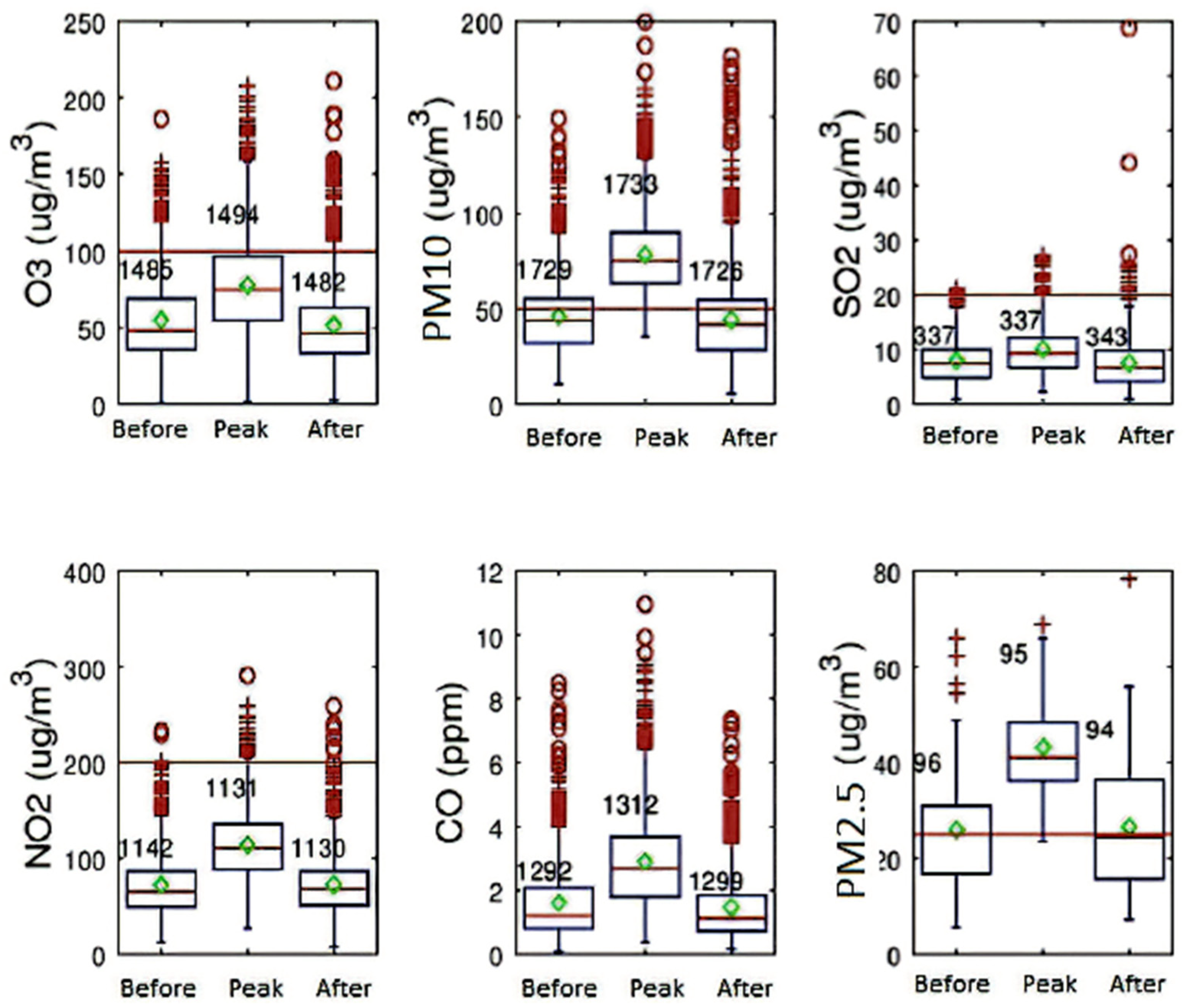
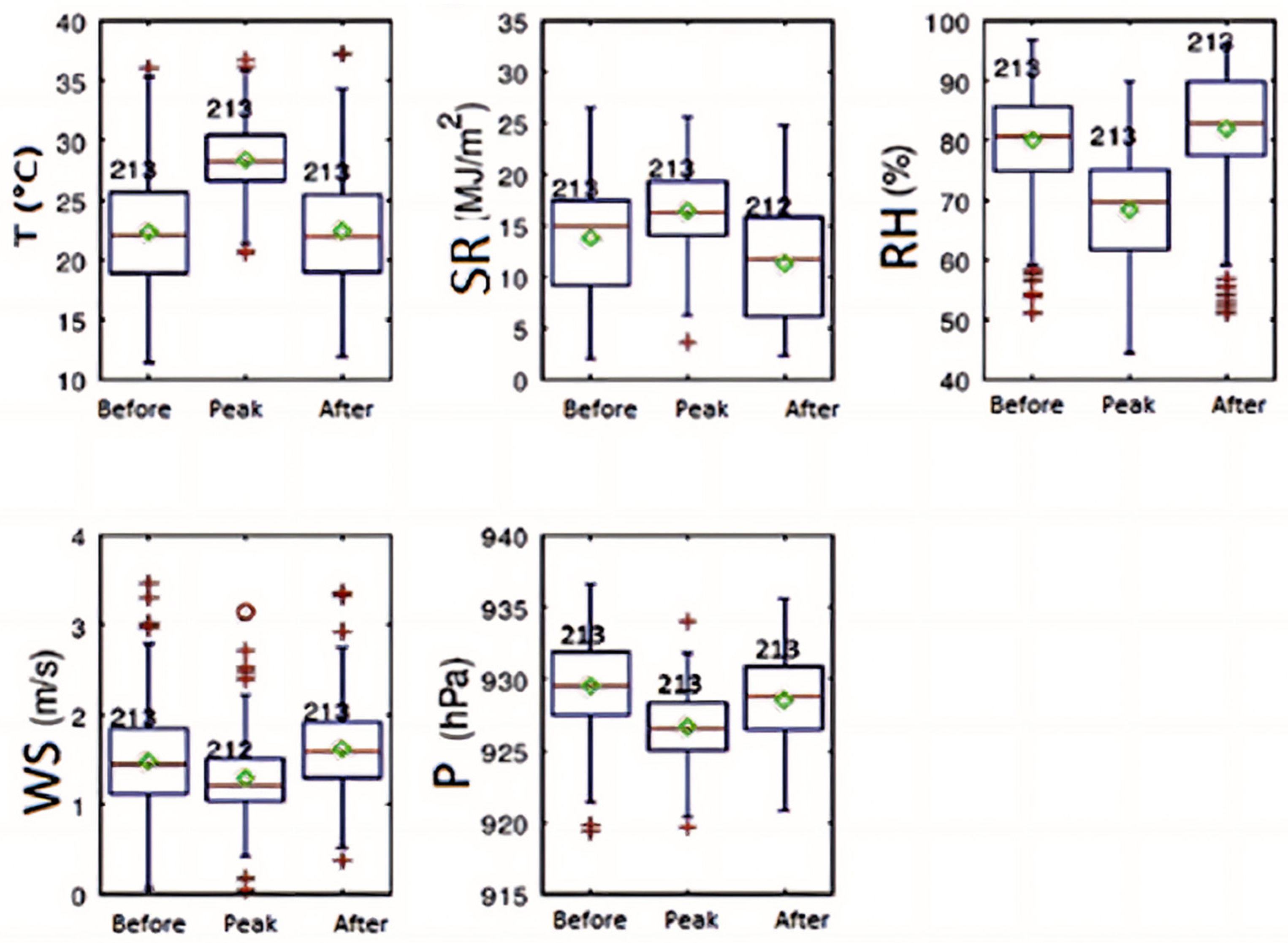
Air pollution is one of the main environmental problems in large urban centers, affecting people’s health and impacting quality of life. The Metropolitan Area of São Paulo (MASP) presents frequent exceedances of air-quality standards in inhalable particulate matter (PM10), a consequence of pollutant emissions modulated by meteorological conditions. This study aims to identify and characterize PM10persistent exceedance events (PEE) inthe MASP between 2005 and 2017, relating them to meteorological conditions. The criteria used to select the events were: (i) events that occurred in at least 50% of the air-quality monitoring stations chosen for this study and, (ii) among the events that met the first criterion, those with a duration equal to or greater than five days, which correspond to the 80% percentile of the event duration distribution. A total 71 persistent episodes of exceedance were selected. The results show that the exceedance of PM10 lasted up to 14 consecutive days and was predominant in the austral winter, accompanied by an increase in maximum temperature (T), a decrease in wind speed (WS) and relative humidity (RH), and a wind direction predominantly from the northwest during the peak concentration of the pollutant. On average, a concentration increase of 60% was observed at the peak of the PEE.
Keywords: air quality; inhalable particulate matter; Metropolitan Area of São Paulo air quality; inhalable particulate matter; Metropolitan Area of São Paulo