


Abstract
Microbial fuel cells (MFCs) offer a sustainable solution for energy generation and wastewater treatment, yet their scalability is hindered by reliance on expensive and non-renewable synthetic membranes. This study addresses the critical need for eco-friendly alternatives by conducting a bibliometric analysis of biopolymers used in MFC membrane development. Using data from Scopus and Web of Science (2012–2025), we applied quantitative and network-based methods to evaluate publication trends, collaboration patterns, and thematic evolution. The analysis identified chitosan, alginate, and cellulose as the most studied biopolymers due to their favorable proton conductivity, biodegradability, and potential for waste-derived production. Key findings include a surge in research output post-2018, strong interdisciplinary collaboration across materials science and microbiology, and emerging interest in nanomaterial integration and 3D printing for membrane enhancement. Despite promising advances, challenges persist with regard to the mechanical stability and standardization of fabrication methods. This study provides a strategic overview of the field, highlighting scientific progress and guiding future research toward scalable, high-performance biopolymer membranes for MFCs applications.
1. Introduction
In the context of 21st-century energy and environmental challenges, microbial fuel cells (MFCs) have emerged as an innovative technology with the potential to convert the chemical energy stored in organic matter into electricity through the activity of electrogenic microorganisms [1,2]. However, one of the main obstacles limiting their scalability and industrial application is the development of membranes that are simultaneously efficient, cost-effective, and sustainable [3]. These membranes must enable effective proton transport while maintaining proper separation between the anode and cathode compartments [4]. In this regard, biopolymers have attracted increasing interest as sustainable alternatives to conventional synthetic materials such as Nafion® (Sigma-Aldrich, St. Louis, MO, USA) [5]. Their biocompatibility, biodegradability, and low environmental impact position them as promising candidates for membrane fabrication in MFCs [6]. Although Nafion® provides high performance, its high cost and limited sustainability have driven the search for more eco-friendly and accessible substitutes [7].
The sustainability of these materials is further enhanced by their potential for production from agro-industrial waste, thereby contributing to the circular economy and reducing dependence on fossil resources [8]. Nevertheless, significant technical challenges remain, including improving durability under prolonged operational conditions and optimizing electrochemical properties, which require innovative approaches and further research [9,10]. For instance, Reyes et al. (2024) developed 3D-printed fungal electrodes incorporating cellulose and conductive additives, achieving microbial batteries with a maximum power output of 12.5 μW/cm2 and a current density of 49.2 μA/cm2, which are capable of powering sensors for 65 h [11]. Similarly, Alalawy et al. (2024) demonstrated that macroalgae could be used as a substrate in MFCs, improving performance through modified anodes, achieving 944 mV and 222.78 mW/cm3, and optimizing electron transfer kinetics and electrocatalytic efficiency [12]. Additionally, numerous studies have focused on biopolymers such as chitosan, alginate, cellulose, and hyaluronic acid, whose tunable properties—including proton conductivity, mechanical stability, and chemical resistance—are critical for optimizing MFC performance [13,14].
In this context, data collection and analysis were conducted using databases such as Scopus and Web of Science, applying metrics including publication trends, citation indices, keyword analysis, and collaboration networks between authors and institutions [15]. This approach provides a comprehensive overview of the evolution and current state of the field, identifying key research trends, influential authors and institutions, collaboration networks, and knowledge gaps [16]. This information facilitates strategic decision-making, guides future research, and promotes more efficient and targeted scientific development [17]. A bibliometric analysis allows for the identification of trends, advancements, and gaps in research, enabling the development of more efficient, cost-effective, and environmentally friendly membranes [18]. This systematic review not only fosters innovation in renewable materials but also enhances the applicability of MFCs in sustainable energy generation and wastewater treatment.
The overarching objective of this study is to conduct a thorough bibliometric analysis of research on biopolymers as sustainable materials for microbial fuel cell membranes, aiming to assess scientific progress, identify key trends, and highlight future opportunities in this emerging field. Through a quantitative and qualitative approach, this study seeks to map academic output, determine the most influential actors, and examine international collaborations, providing a comprehensive view of the current state of the art. Specifically, it aims to (1) analyze the temporal evolution of scientific publications related to biopolymers in MFC membranes, determining their growth and geographic distribution; (2) identify the most studied biopolymers (such as chitosan, alginate, and cellulose) and their comparative advantages over conventional membranes; (3) examine the critical properties of these materials (proton conductivity, mechanical stability, and biodegradability) and their impact on MFC performance; (4) evaluate collaboration networks among leading institutions and researchers, highlighting multidisciplinary contributions; and (5) outline pending challenges and future research directions for optimizing membrane design and applicability. This analysis not only consolidates existing knowledge but also guides new research toward more efficient and sustainable solutions, promoting the adoption of MFCs in renewable energy systems and wastewater treatment applications.
2. Methodology
This study adopts a systematic bibliometric approach to analyze the evolution of research on biopolymers in microbial fuel cell (MFC) membranes. The methodology was structured into four fundamental stages: designing the search strategy, data collection and filtering, quantitative and qualitative analysis, and finally, visualization and interpretation of results. To ensure comprehensive coverage, search criteria were defined based on the thematic axes of biopolymers, MFCs, and sustainability, using key terms in the Scopus database. As a result, the most relevant scientific literature from 2012 to 2025 was captured, including only research articles, reviews, and peer-reviewed conference papers, while excluding patents and editorials to maintain analytical quality. The data collection and filtering stage began with a preliminary search that yielded 128 documents (see Table 1).
Table 1.
Search strategy for scientific documents.
These documents underwent a rigorous three-level refinement process. First, duplicates and studies misaligned with the core topic—such as those exclusively focused on synthetic polymers—were eliminated. To conduct both quantitative and qualitative analysis, various metrics were applied to assess research trends and impact in this field. Temporal trends were examined, tracking the annual evolution of publications and citation growth. Using tools like VOSviewer (1.6.20) collaboration network maps were generated to visualize connections among authors, institutions, and countries, identifying key actors driving knowledge development in biopolymers applied to MFCs. Additionally, the Bibliometrix package in R was employed to perform a co-word analysis, enabling the identification of thematic clusters and emerging areas in the scientific literature. Furthermore, impact indicators such as the h-index, g-index, and m-index were calculated to evaluate the influence of prominent researchers in the field.
3. Results and Analysis
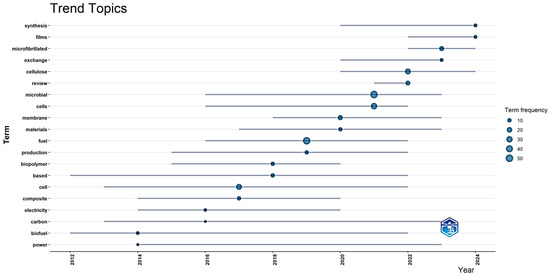
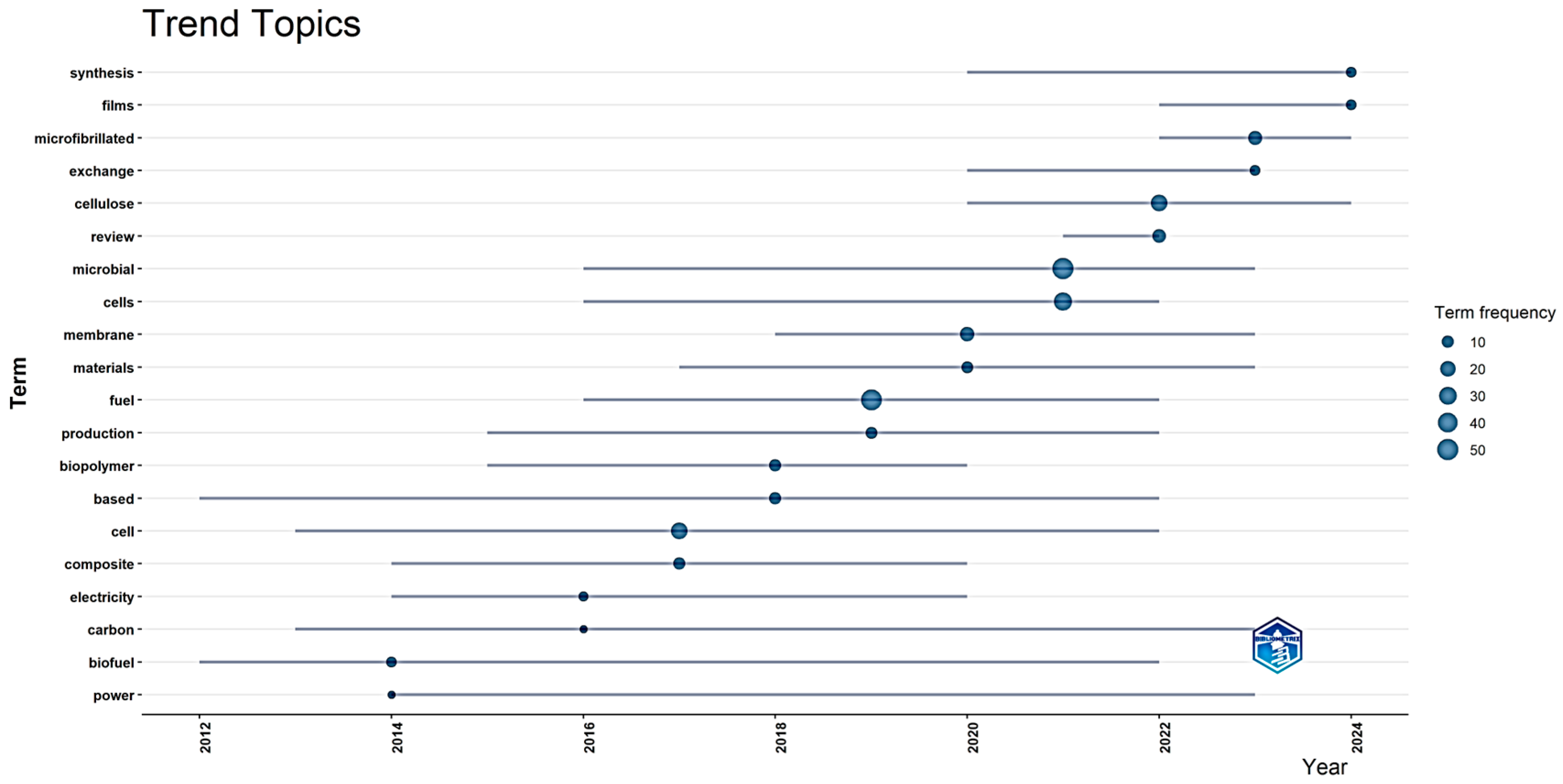
Figure 1 illustrates bibliometric trends in biopolymers for microbial fuel cell (MFC) membranes, highlighting the evolution of key research terms between 2012 and 2025. An increase in the frequency of words such as synthetic, films, microbial fuel, and exchange is observed from 2018 onward, reflecting the growing interest in material optimization for MFCs and the development of new synthesis strategies. The sustained presence of membrane, cellulose, and materials indicates that membrane design and improvement remain constant focal points in the literature, as these elements are critical for proton transport efficiency in MFCs. Additionally, terms such as biopolymer, carbon, and biofuel reinforce the focus on eco-friendly and sustainable alternatives to conventional synthetic membranes, emphasizing the transition toward circular economy models in advanced material production. The emergence of electricity and power underscores the continued prioritization of energy efficiency and electricity generation in this field [19]. Notably, the growing prevalence of the term review suggests an increase in the publication of review articles, indicating an effort to consolidate knowledge and evaluate trends in biopolymer applications [20]. Meanwhile, variations in the frequency of terms like composite and production reflect shifts in fabrication approaches and biopolymer applications in MFCs. The state of the art in biopolymers for MFCs, illustrating how the field has progressed toward more sustainable and efficient materials, with a clear emphasis on optimizing membrane properties to enhance performance and applicability in the energy and environmental sectors [21]. The insights obtained are crucial for guiding future research and improving the implementation of MFCs in renewable energy systems and wastewater treatment.
Figure 1.
Bibliometric trends in biopolymers for membranes in microbial fuel cells.
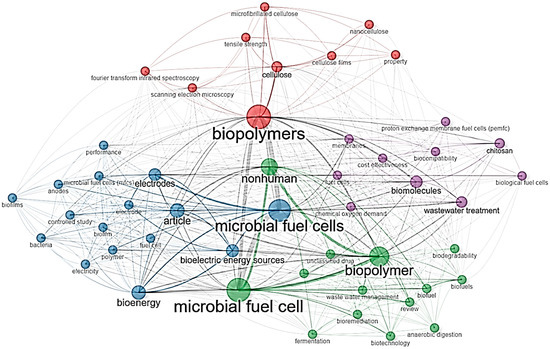
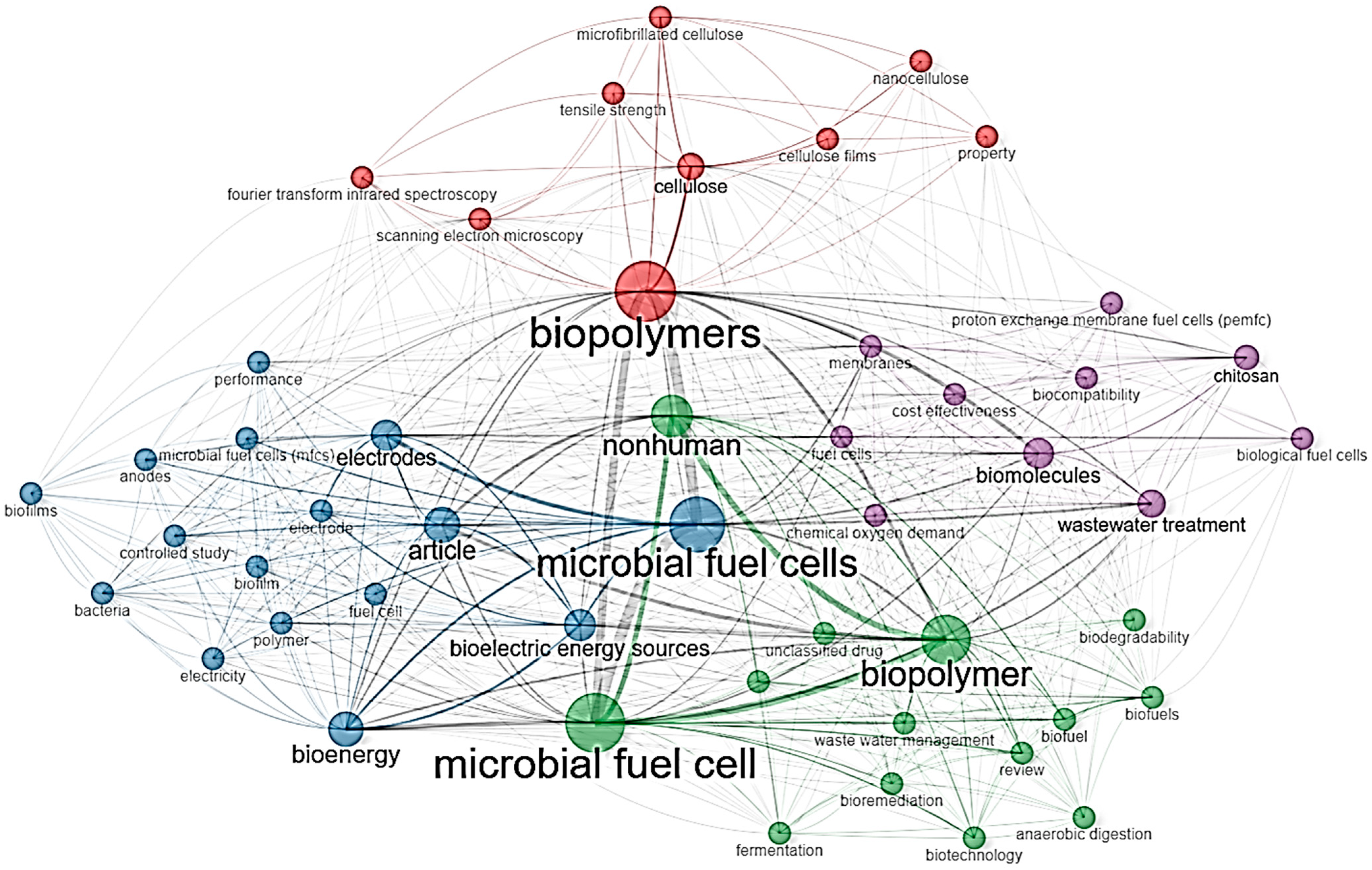
Figure 2 presents a network map of keywords extracted from scientific literature on biopolymers applied to microbial fuel cell (MFC) membranes, revealing dominant thematic patterns and conceptual connections within this research field. The most frequent and central words in the network—biopolymer, microbial fuel cell, membrane, and sustainability—confirm the study’s main focus: the development of sustainable materials to optimize MFC performance. The prominence of terms such as chitosan, cellulose, and alginate highlights the most researched biopolymers, reflecting their relevance due to properties like biocompatibility, proton conductivity, and low cost. Additionally, the strong association between proton exchange and electrochemical performance underscores the critical role of membranes in proton transfer and energy efficiency in MFCs, a finding consistent with the technical challenges discussed in the literature. The network also demonstrates the interdisciplinary nature of this field, with clusters linking concepts from materials science (composite, nanoparticles), microbiology (bacteria, biofilm), and renewable energy (power generation, wastewater treatment). This suggests that recent studies not only explore biopolymer synthesis but also their integration with advanced components (e.g., conductive nanoparticles) to enhance electrochemical properties [22]. The presence of terms like circular economy and green technology reinforces the sustainability framework driving these innovations, aligning with global objectives to reduce reliance on synthetic materials [23]. The density of connections around performance and efficiency indicates that optimizing MFC functionality remains a priority, while the emergence of 3D printing and scalability suggests rising trends toward innovative fabrication methods and large-scale applications [24].
Figure 2.
Networks of the most used words in scientific documents on biopolymers for membranes in MFCs.
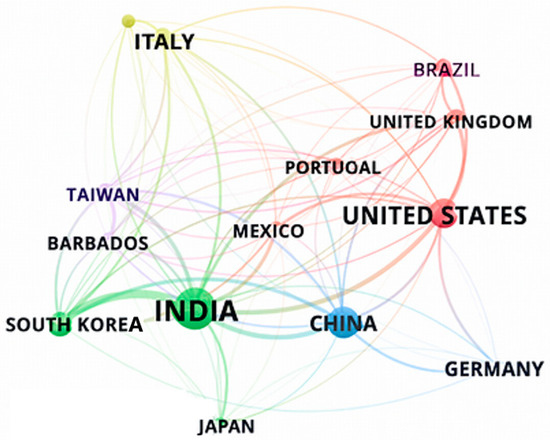
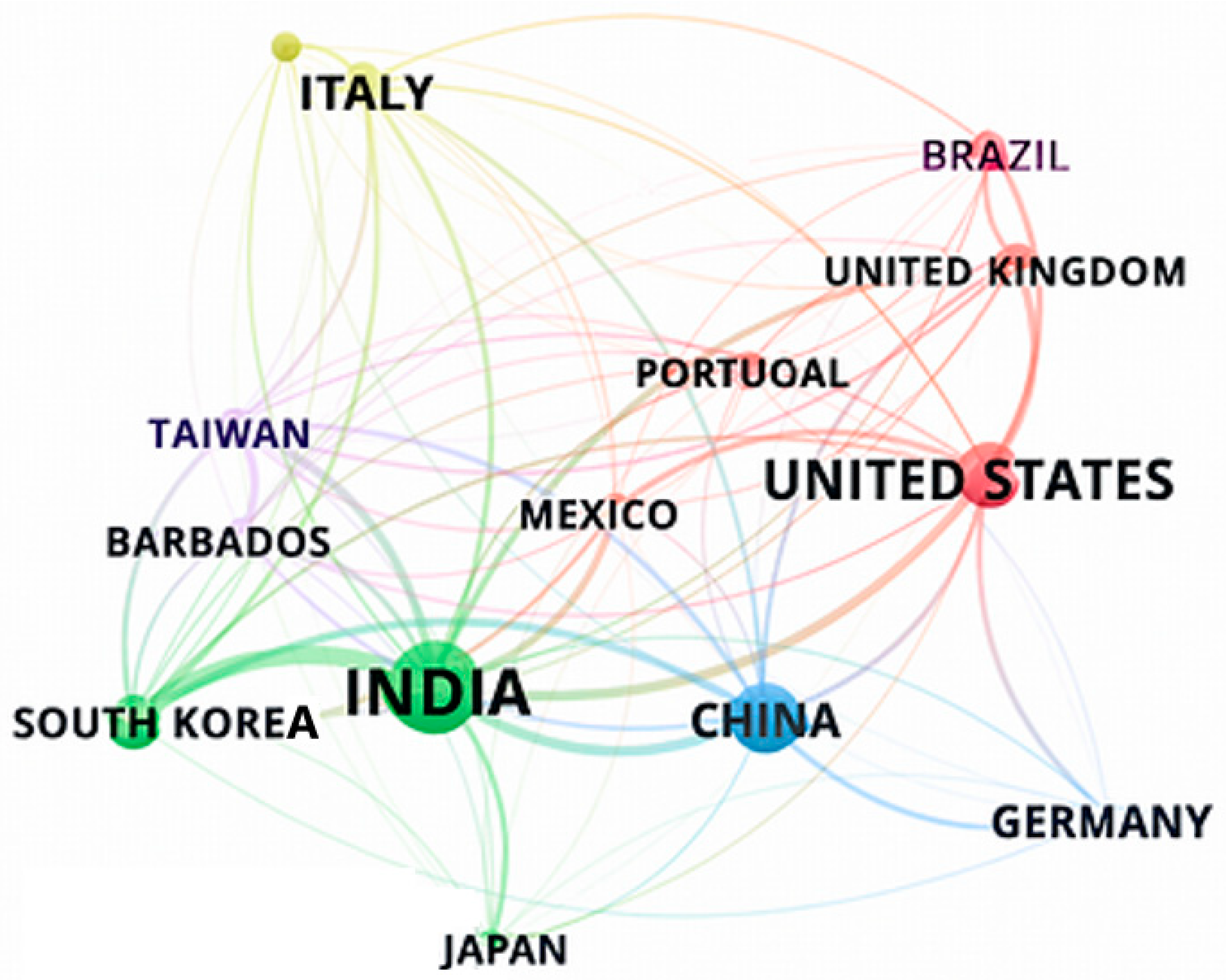
Figure 3 illustrates the geographical distribution of scientific publications related to biopolymers for microbial fuel cell (MFC) membranes, revealing global research patterns and collaboration in this emerging field. The map highlights a significant concentration of academic output in regions such as Asia (particularly China, India, and South Korea), North America (United States and Canada), and Europe (with Germany, Spain, and the United Kingdom at the forefront). This distribution reflects not only the technological leadership of these regions in renewable energy and materials science but also their commitment to sustainable solutions for environmental challenges. In contrast, Africa and Latin America show lower representation, which could be attributed to limitations in research infrastructure or funding, although countries like Brazil and South Africa are making promising but still emerging contributions. Asia’s dominance in scientific production aligns with its investment in biotechnology and circular economy policies, while Europe and North America’s active participation underscores their emphasis on interdisciplinary innovation and technology transfer [25]. Additionally, the figure suggests transnational collaboration networks, evidenced by co-authorship between institutions across continents, enriching the field through knowledge exchange and resource sharing. For example, joint projects between European and Asian universities have propelled advances in modified biopolymers to enhance MFC efficiency. This geographic distribution also reveals strategic opportunities: the scarcity of studies in developing regions highlights the need to foster international collaborations that help overcome local barriers. Similarly, the rise in publications from emerging economies (such as India) indicates untapped potential for investigating local raw materials (e.g., agricultural waste) in biopolymer synthesis [26].
Figure 3.
Geographic distribution of scientific production on biopolymers in MFC membranes.
Table 2 provides a detailed overview of the productivity and impact of leading researchers in the field of biopolymers for microbial fuel cell (MFC) membranes, highlighting significant differences in their contributions. Palanisamy G (India) emerges as the most impactful author, accumulating 491 total citations (TC) despite having only four publications (NP), reflecting the high quality and relevance of his work. This contrasts with Lee C-H (South Korea) and Popuri SR (India), who, despite higher productivity (NP = 5), show significantly lower citation numbers (TC = 83), suggesting that publication quantity does not always correlate with scientific impact. Palanisamy G’s high m-index (0.571) underscores his sustained influence since 2019, while the exceptional m-index of Thangarasu S (Malaysia, 1.000)—the highest in the table—indicates a rapid ascent and adoption of his research since his entry in 2023. The international collaboration metric (MCP%) reveals that Thangarasu S and Palanisamy G are the most active in global research networks, with 35% and 30% of their publications involving multinational co-authorship, respectively. This highlights the importance of international collaborations in amplifying research visibility and impact. On the other hand, Dias MC (Portugal) demonstrates a balance between recent impact (m-index = 0.600) and moderate collaboration (MCP% = 22%), which may reflect a more localized focus with potential for expansion [27]. Geographically, India and South Korea stand out as key research hubs, aligning with previous findings on the global distribution of scientific output. The presence of prestigious institutions, such as the Indian Institute of Technology and Seoul National University, reinforces the role of leading universities in driving innovation in this field [28]. The most influential researchers also emphasize the need for differentiated strategies: while established authors like Palanisamy G contribute high-impact research, emerging figures like Thangarasu S represent opportunities for accelerating scientific progress through collaborations and institutional support. These insights are crucial for guiding funding policies and future research networks.
Table 2.
Productivity and impact indicators of key authors in research on biopolymers for MFC membranes.
The comparative Table 3 provides a structured overview of key techniques used in the fabrication of biomaterial-based electrodes for microbial fuel cells. It categorizes six biomaterials—chitosan, cellulose, alginate, silk fibroin, lignin, and starch—highlighting their respective modification strategies (e.g., crosslinking, nanomaterial doping, surface functionalization), integration methods (such as electrospinning, compression molding, freeze-drying), and reported electrochemical performance [29,30]. This comparison reveals important trends, including the frequent use of carbon-based additives to enhance conductivity and the implementation of porous structures to support microbial colonization. Additionally, certain biomaterials offer added value through antimicrobial or mechanical properties suited for rural applications [31]. Table 3 facilitates informed selection of materials and techniques based on specific design goals for MFCs, promoting sustainable and functional approaches. This synthesis strengthens the manuscript’s critical analysis and directly addresses the reviewer’s recommendation to improve the comparison of techniques and methods used in biomaterials for electrode development.
Table 3.
Comparative table of biomaterial-based electrode techniques in MFCs.
Challenges and Future Research Areas in Biopolymers for MFC Membranes
A critical interpretation of the bibliometric patterns reveals a dynamic and rapidly evolving research landscape in the development of biopolymer-based membranes for microbial fuel cells. The analysis of author networks, keyword clusters, and geographical trends provides strategic insights into the field’s trajectory and future directions. Regarding author networks, productivity and impact indicators (Table 2) highlight the contributions of both established and emerging researchers, with Palanisamy G and Thangarasu S standing out for their high citation rates and international collaborations. The presence of robust co-authorship networks, particularly among institutions in Asia and Europe, suggests the emergence of an interdisciplinary ecosystem that integrates materials science, microbiology, and environmental engineering [32]. This context underscores the importance of leveraging such networks to foster cross-disciplinary innovation, especially in the design of hybrid membranes and the integration of nanomaterials. Moreover, researchers with high m-index values represent strategic partners for collaborative projects and technology transfer initiatives [33,34].
The co-word analysis (Figure 2) reveals dense clusters around terms such as “biopolymer,” “membrane,” “sustainability,” and “proton exchange,” indicating a sustained focus on eco-friendly materials and electrochemical performance. The emergence of concepts like “3D printing,” “nanoparticles,” and “circular economy” reflects a shift toward advanced fabrication techniques and waste valorization [35]. Accordingly, future research should prioritize scalable manufacturing methods—such as electrospinning and additive manufacturing—that enhance membrane microstructure and conductivity [36]. The integration of biopolymers with conductive additives (e.g., graphene oxide, carbon nanotubes) also offers a promising strategy to overcome limitations in mechanical stability and proton transport [37].
Geographical trends (Figure 3) show dominant contributions from China, India, South Korea, and the United States, with emerging activity in Brazil and South Africa. However, Latin America and Africa remain underrepresented, despite their significant potential for sourcing biopolymers from agro-industrial waste. This highlights the need for targeted funding and capacity-building initiatives to support research in these regions, particularly where local biomass can be valorized for membrane development. International collaborations should aim to bridge infrastructural gaps and promote inclusive innovation, in alignment with global sustainability goals [38].
4. Conclusions
The conclusions of this bibliometric analysis provide a comprehensive and critical perspective on the current state of research on biopolymers applied to microbial fuel cell (MFC) membranes. The findings reveal sustained growth in scientific production over the past decade, with a geographic distribution dominated by Asia, Europe, and North America, confirming the achievement of the first objective, which is analyzing the temporal and spatial evolution of the literature. Additionally, biopolymers such as chitosan, alginate, and cellulose were identified as the most frequently studied materials due to their favorable properties of sustainability, biocompatibility, and proton conductivity, fulfilling the second objective related to characterizing the most utilized materials. The analysis also focused on the critical properties of membranes, reviewing studies that emphasize the importance of mechanical stability, proton transport efficiency, and biodegradability for optimizing the electrochemical performance of MFCs. Furthermore, the collaboration network analysis revealed a highly interdisciplinary scientific ecosystem, aligned with the fourth objective of identifying key actors and influential institutions, as well as the formation of active international networks that foster knowledge development and dissemination. Finally, the study successfully met the fifth objective by highlighting major technical challenges—such as limited durability, low conductivity of certain biopolymers, and the lack of standardization in fabrication methods—and proposing emerging research directions, including nanomaterial modifications, advanced techniques like 3D printing, and the utilization of agro-industrial waste.
Author Contributions
Conceptualization, S.J.R.-F.; methodology, M.D.L.C.-N.; validation, S.M.B. and R.N.-N.; formal analysis, S.J.R.-F. and M.D.L.C.-N.; investigation, S.J.R.-F. and D.D.-N.; data curation, M.D.L.C.-N.; writing—original draft preparation R.N.-N.; writing—review and editing, S.J.R.-F.; project administration, S.J.R.-F. and R.N.-N. All authors have read and agreed to the published version of the manuscript.
Funding
This research has been financed by Universidad Autonoma del Peru.
Institutional Review Board Statement
Not applicable.
Informed Consent Statement
Not applicable.
Data Availability Statement
The original contributions presented in this study are included in the article.
Conflicts of Interest
The authors declare no conflicts of interest.
References
- Huang, X.; Duan, C.; Duan, W.; Sun, F.; Cui, H.; Zhang, S.; Chen, X. Role of electrode materials on performance and microbial characteristics in the constructed wetland coupled microbial fuel cell (CW-MFC): A review. J. Clean. Prod. 2021, 301, 126951. [Google Scholar] [CrossRef] [Scilit]
- James, A. Ceramic-microbial fuel cell (C-MFC) for waste water treatment: A mini review. Environ. Res. 2022, 210, 112963. [Google Scholar] [CrossRef] [Scilit] [PubMed]
- Xu, J.; Zhang, X.; Jin, D.; Wu, P. Anammox-coupled microbial fuel cell (Anammox-MFC) for wastewater treatment: A critical review. J. Water Process Eng. 2025, 71, 107285. [Google Scholar] [CrossRef] [Scilit]
- Ahanchi, M.; Jafary, T.; Yeneneh, A.M.; Rupani, P.F.; Shafizadeh, A.; Shahbeik, H.; Pan, J.; Tabatabaei, M.; Aghbashlo, M. Review on waste biomass valorization and power management systems for microbial fuel cell application. J. Clean. Prod. 2022, 380, 134994. [Google Scholar] [CrossRef] [Scilit]
- Li, A.; Ma, B.; Hua, S.; Ping, R.; Ding, L.; Tian, B.; Zhang, X. Chitosan-based injectable hydrogel with multifunction for wound healing: A critical review. Carbohydr. Polym. 2024, 333, 121952. [Google Scholar] [CrossRef] [Scilit]
- Ebrahimi, A.; Sivakumar, M.; McLauchlan, C.; Ansari, A.; Vishwanathan, A.S. A critical review of the symbiotic relationship between constructed wetland and microbial fuel cell for enhancing pollutant removal and energy generation. J. Environ. Chem. Eng. 2021, 9, 105011. [Google Scholar] [CrossRef] [Scilit]
- Afrin, A.; Swamy, P.C.A. Symphony of light: AIE and MFC in carbazole-based cyanostilbenes. J. Mater. Chem. C 2024, 12, 1923–1944. [Google Scholar] [CrossRef] [Scilit]
- Ida, T.K.; Mandal, B. Microbial fuel cell design, application and performance: A review. Mater. Today Proc. 2023, 76, 88–94. [Google Scholar]
- Kurniawan, T.A.; Othman, M.H.D.; Liang, X.; Ayub, M.; Goh, H.H.; Kusworo, T.D.; Mohyuddin, A.; Chew, K.W. Microbial fuel cells (MFC): A potential game-changer in renewable energy development. Sustainability 2022, 14, 16847. [Google Scholar] [CrossRef] [Scilit]
- Naseer, M.N.; Zaidi, A.A.; Khan, H.; Kumar, S.; bin Owais, M.T.; Jaafar, J.; Suhaimin, N.S.; Wahab, Y.A.; Dutta, K.; Asif, M.; et al. Mapping the field of microbial fuel cell: A quantitative literature review (1970–2020). Energy Rep. 2021, 7, 4126–4138. [Google Scholar] [CrossRef] [Scilit]
- Reyes, C.; Fivaz, E.; Sajó, Z.; Schneider, A.; Siqueira, G.; Ribera, J.; Poulin, A.; Schwarze, F.W.; Nyström, G. 3D printed cellulose-based fungal battery. ACS Sustain. Chem. Eng. 2024, 12, 16001–16011. [Google Scholar] [CrossRef] [Scilit]
- Alalawy, A.I.; Zidan, N.S.; Sakran, M.; Hazazi, A.Y.; Salama, E.S.; Alotaibi, M.A. Enhancing bioelectricity generation in seaweed-derived microbial fuel cells using modified anodes with Fe2O3@ AuNPs/PANI nanocomposites. Biomass Bioenergy 2024, 182, 107104. [Google Scholar] [CrossRef] [Scilit]
- Thapa, B.S.; Pandit, S.; Patwardhan, S.B.; Tripathi, S.; Mathuriya, A.S.; Gupta, P.K.; Lal, R.B.; Tusher, T.R. Application of microbial fuel cell (MFC) for pharmaceutical wastewater treatment: An overview and future perspectives. Sustainability 2022, 14, 8379. [Google Scholar] [CrossRef] [Scilit]
- Palanisamy, G.; Thangarasu, S.; Dharman, R.K.; Patil, C.S.; Negi, T.P.P.S.; Kurkuri, M.D.; Pai, R.K.; Oh, T.H. The growth of biopolymers and natural earthen sources as membrane/separator materials for microbial fuel cells: A comprehensive review. J. Energy Chem. 2023, 80, 402–431. [Google Scholar] [CrossRef] [Scilit]
- Donthu, N.; Kumar, S.; Mukherjee, D.; Pandey, N.; Lim, W.M. How to conduct a bibliometric analysis: An overview and guidelines. J. Bus. Res. 2021, 133, 285–296. [Google Scholar] [CrossRef] [Scilit]
- Kumar, M.; George, R.J.; PS, A. Bibliometric analysis for medical research. Indian J. Psychol. Med. 2023, 45, 277–282. [Google Scholar]
- Ülker, P.; Ülker, M.; Karamustafa, K. Bibliometric analysis of bibliometric studies in the field of tourism and hospitality. J. Hosp. Tour. Insights 2023, 6, 797–818. [Google Scholar] [CrossRef] [Scilit]
- Lim, W.M.; Kumar, S. Guidelines for interpreting the results of bibliometric analysis: A sensemaking approach. Glob. Bus. Organ. Excell. 2024, 43, 17–26. [Google Scholar] [CrossRef] [Scilit]
- Ali, A.A.; Al-Othman, A.; Tawalbeh, M. Exploring natural polymers for the development of proton exchange membranes in fuel cells. Process Saf. Environ. Prot. 2024, 189, 1379–1401. [Google Scholar] [CrossRef] [Scilit]
- Nigiz, F.U.; Akel, M. Increased hydrogen transport in microbial fuel cells by using copper based metal organic frameworks doped membrane. Int. J. Hydrogen Energy 2024, 75, 262–270. [Google Scholar] [CrossRef] [Scilit]
- Tiwari, A.; Yadav, N.; Jadhav, D.A.; Sandhwar, V.K.; Saxena, S.; Anghan, K.; Suransh, J. Low-cost earthen membrane: Inclusion of wood ash to improve performance of microbial fuel cell. Environ. Eng. Res. 2024, 30, 240298. [Google Scholar] [CrossRef] [Scilit]
- Pusphanathan, K.; Mohd Zaini Makhtar, M.; Shukor, H.; Mohd Sabri, M.N.I.; Abdul Rasik, N.A.; Shamsuddin, N.A.; Siddiqui, M.R.; Kapoor, R.T.; Rafatullah, M. Effectiveness of Direct Sulfonated Polysulfone in Dual Chamber Microbial Fuel Cells Based Dewatered Sludge for Power Generation. Int. J. Environ. Res. 2024, 18, 100. [Google Scholar] [CrossRef] [Scilit]
- Sabina-Delgado, A.; Kamaraj, S.K.; Hernández-Montoya, V.; Valdés-Valadez, J.O.; Prieto-Muñoz, R.; Cervantes, F.J.; Montes-Morán, M.Á. Optimization of the microbial fuel cells operation for wastewater treatment by using cylindrical ceramic membranes. Int. J. Hydrogen Energy 2024, 72, 400–411. [Google Scholar] [CrossRef] [Scilit]
- Zadeh, P.G.; Rezania, S.; Fattahi, M.; Dang, P.; Vasseghian, Y.; Aminabhavi, T.M. Recent advances in microbial fuel cell technology for energy generation from wastewater sources. Process Saf. Environ. Prot. 2024, 189, 425–439. [Google Scholar] [CrossRef] [Scilit]
- Surti, P.V.; Kailasa, S.K.; Mungray, A.K. Development of a Novel Composite Polymer Electrolyte Membrane for Application as a Separator in a Dual Chamber Microbial Fuel Cell. Ind. Eng. Chem. Res. 2024, 63, 5182–5194. [Google Scholar] [CrossRef] [Scilit]
- Özyörü, Z.İ.; Nigiz, F.U. Electricity production from dairy wastewater using phosphotungstic acid-Poly (vinylidene fluoride) Membrane supported microbial fuel cell. Int. J. Hydrogen Energy 2025, 142, 842–851. [Google Scholar] [CrossRef] [Scilit]
- Satpathy, S.S.; Ojha, P.C.; Ojha, R.; Dash, J.; Pradhan, D. Recent Modifications of Anode Materials and Performance Evaluation of Microbial Fuel Cells: A Brief Review. J. Energy Eng. 2025, 151, 03125001. [Google Scholar] [CrossRef] [Scilit]
- Liang, Y.; Yu, D.; Ma, H.; Zhang, T.; Chen, Y.; Akbar, N.; Pu, S. Progress in enhancing the remediation performance of microbial fuel cells for contaminated groundwater. J. Environ. Sci. 2024, 145, 28–49. [Google Scholar] [CrossRef] [Scilit]
- Ishaq, A.; Said, M.I.M.; Azman, S.B.; Dandajeh, A.A.; Lemar, G.S.; Jagun, Z.T. Utilization of microbial fuel cells as a dual approach for landfill leachate treatment and power production: A review. Environ. Sci. Pollut. Res. 2024, 31, 41683–41733. [Google Scholar] [CrossRef] [Scilit]
- Srivastava, R.; Gaurav, K. Doped polymethyl methacrylate (PMMA) as proton exchange membrane for microbial fuel cell. J. Polym. Eng. 2024, 44, 299–306. [Google Scholar] [CrossRef] [Scilit]
- Sheth, P.; Patil, D.; Kandasubramanian, B.; Mayilswamy, N. Advancements in chitosan membranes for promising secondary batteries. Polym. Bull. 2024, 81, 15319–15348. [Google Scholar] [CrossRef] [Scilit]
- Atkar, A.; Sridhar, S.; Deshmukh, S.; Dinker, A.; Kishor, K.; Bajad, G. Synthesis and characterization of sulfonated chitosan (SCS)/sulfonated polyvinyl alcohol (SPVA) blend membrane for microbial fuel cell application. Mater. Sci. Eng. B 2024, 299, 116942. [Google Scholar] [CrossRef] [Scilit]
- Bijimol, B.I.; Elias, L.; Sreelekshmy, B.R.; Shibli, S.M.A. Effective Exploitation of Sugarcane Byproducts and Industrial Effluents for Strategic Energy Applications: A Review on Recent Developments and Approaches with Special Reference to Microbial Fuel Cells. ACS Appl. Bio Mater. 2025, 8, 3657–3690. [Google Scholar] [CrossRef] [Scilit] [PubMed]
- Janakiraman, V.; Sowmya, S.; Thenmozhi, M. Biopolymer based membrane technology for environmental applications. Phys. Sci. Rev. 2024, 9, 2051–2076. [Google Scholar] [CrossRef] [Scilit]
- Solomon, J.; Ganesh, N.; Sundaram, C.M.; Ravichandran, S.; Dharmalingam, S. Sulphonated graphene oxide as functionalized filler for polymer electrolyte membrane with enhanced anti-biofouling in microbial fuel cells. Colloids Surf. A Physicochem. Eng. Asp. 2024, 699, 134675. [Google Scholar] [CrossRef] [Scilit]
- Yang, Y.W.; Li, M.J.; Hung, T.C. The study on coupled CO2 fixation and power generation in microalgae-microbial fuel cells embedded with oxygen-consuming biofilms. Fuel 2024, 367, 131410. [Google Scholar] [CrossRef] [Scilit]
- Kumar, R.; Mooste, M.; Ahmed, Z.; Zekker, I.; Käärik, M.; Marandi, M.; Leis, J.; Kikas, A.; Otsus, M.; Treshchalov, A.; et al. Catalyzing oxygen reduction by morphologically engineered ZIF-derived carbon composite catalysts in dual-chamber microbial fuel cells. J. Environ. Chem. Eng. 2024, 12, 112242. [Google Scholar] [CrossRef] [Scilit]
- Bahena-Ramírez, J.; López-Díaz, J.A.; García-Mesino, R.L.; Rojano, F.; Pedram, S.; Hernández-Flores, G. Organic agar-based membranes synthesis amended with eggshell to acid mine drainage treatment by bioelectrochemical systems. Int. J. Hydrogen Energy 2025, 141, 1339–1348. [Google Scholar] [CrossRef] [Scilit]

Disclaimer/Publisher’s Note: The statements, opinions and data contained in all publications are solely those of the individual author(s) and contributor(s) and not of MDPI and/or the editor(s). MDPI and/or the editor(s) disclaim responsibility for any injury to people or property resulting from any ideas, methods, instructions or products referred to in the content. |
© 2025 by the authors. Licensee MDPI, Basel, Switzerland. This article is an open access article distributed under the terms and conditions of the Creative Commons Attribution (CC BY) license (https://creativecommons.org/licenses/by/4.0/).