
Abstract
Cement production has the largest carbon-footprint since it leads to the release of carbon dioxide and enormous energy consumption. Therefore, scientific research is being conducted worldwide on the possibility of using other materials that can be used as a cement substitute. A potential alternative material is glass powder. This paper present research results on the use of glass powder as a partial cement replacement with a substitution level of 0–20%. The pozzolanic activity and the influence of glass powder on cement hydration were analyzed. The porosity, the microstructure of the interfacial transition zone and the compressive strength of mortar were also investigated.
1. Introduction
Concrete is the most-often-used construction material, and in the largest quantities, all over the world. The production of concrete significantly impacts the environment, as it consumes major amounts of fossil fuels and raw materials and is energy-intensive. Cement production has the largest carbon-footprint since it leads to the release of carbon dioxide and enormous energy consumption. The production of one ton of cement leads to emissions of about 0.8 tons of CO2 into the atmosphere. Therefore, alternative materials that can substitute cement as a binder in concrete production are currently being sought. Researchers are mostly focused on the use supplementary cementitious materials (SCM) as a partial or complete replacement of cement in mortar and concrete production, i.e., fly ash, slag and silica fume. The use of SCMs contributes to improving the material properties and durability and also brings economic and ecological benefits. However, the decarbonization policy, the transformation towards alternative renewable energy resources and the departure from coal combustion significantly reduce the availability of fly ash [1]. The worldwide slag supply is also quite limited compared to the demand for concrete production [2]. Therefore, scientific research is being conducted worldwide on the possibility of using other materials that can be used as an SCM in the production of concrete as a substitute for cement.
One of the potential alternative materials is recycled powder glass. Glass is a very common material used for the production of everyday appliances such as glasses, dishes and windowpanes, as well as for the production of glass packaging: bottles and jars. Due to the limited-service life, these products must be recycled or landfilled. It has been estimated that the annual worldwide volume of waste glass stored in landfills is about 200 million tons [3]. According to the European Container Glass Federation, the average collection for the recycling rate for glass packaging reached the rate of 78% in 2019 [4]. The unrecycled glass is stored in landfills, causing environmental problems. In recent decades, there has been increasing interest in the use of waste glass as a substitute for cement [5,6,7]. The utilization of ground glass in construction production allows for effective waste management and contributes to the reduction in waste glass volumes in landfills, which is currently a serious problem [8,9]. Most of all, it reduces the consumption of natural resources and greenhouse gas emissions. Previous research related to the assessment of the use of powder glass in cementitious composites revealed that an up to 10–30% replacement of cement with glass powder led to no significant deterioration or even an improvement in the properties and durability of mortar and concrete [10,11,12,13,14,15]. The effect of glass powder on the properties of cement composites depends mainly on the fineness of the glass and is more pronounced in the later curing time [3,8,11,16,17]. Researchers observed a decrease in the mortar and concrete compressive strength in the early curing time with an increase in the substitution level of cement with glass powder. However, in the later curing time, a comparable compressive strength to that of the control cement composites or even a slight increase in strength were reported [12,18,19,20]. Compressive strength improvement is associated mostly with the filler effect of glass powder, which leads to the formation of a denser and less permeable cement matrix.
The effect of glass powder on the properties of cementitious composites is related not only to the filler effect but also to the pozzolanic activity [12,13,19,21,22,23,24,25,26]. The amorphous structure of glass enables its dissolution in a highly alkaline pore solution and acts as a pozzolana in the cement matrix [27,28,29,30]. The pozzolanic reactivity of glass powder increases with the decreasing particle diameter [12,16,31]. The pozzolanic reactivity of glass powder contributes to the formation of C-S-H phases, which, in turn, leads to the densification of the cement microstructure. Thus, the compressive strength increases as the glass powder amount increases.
This paper presents research results on the use of glass powder as a partial cement replacement with a substitution level of 0–20%. The pozzolanic activity and influence of glass powder on cement hydration were analyzed. The porosity, the microstructure of the interfacial transition zone and the mechanical properties of mortar were also investigated. Due to the relatively low pozzolanic activity of the glass powder, its effect on cement hydration is small. The replacement of cement with ground glass up to 10% does not lead to the deterioration of mortar properties. In the later curing time, a slight increase in the mortar compressive strength with the glass powder addition was observed. The influence of glass powder on cement hydration and mortar properties is related mainly to the filler effect and the heteronucleation of the C-S-H phase on the glass powder surface.
2. Materials and Methods
2.1. Materials
Mortar samples were prepared with ordinary Portland cement CEM I 42.5 R, which complies with the requirements of European Standard EN 197-1. The Blaine fineness of cement is about 4100 cm2/g, and the specific gravity is 3.15 g/cm3. The chemical and mineral compositions of cement are given in Table 1. Chemical analysis of the used raw materials was performed with the XRF method (WDXRF AxiosmAX spectrometer, Malvern Panalytical). The mineral composition was calculated in simple form, taking into consideration the relation between the main oxides in the cement clinker.
Table 1.
Chemical and mineral composition of OPC.
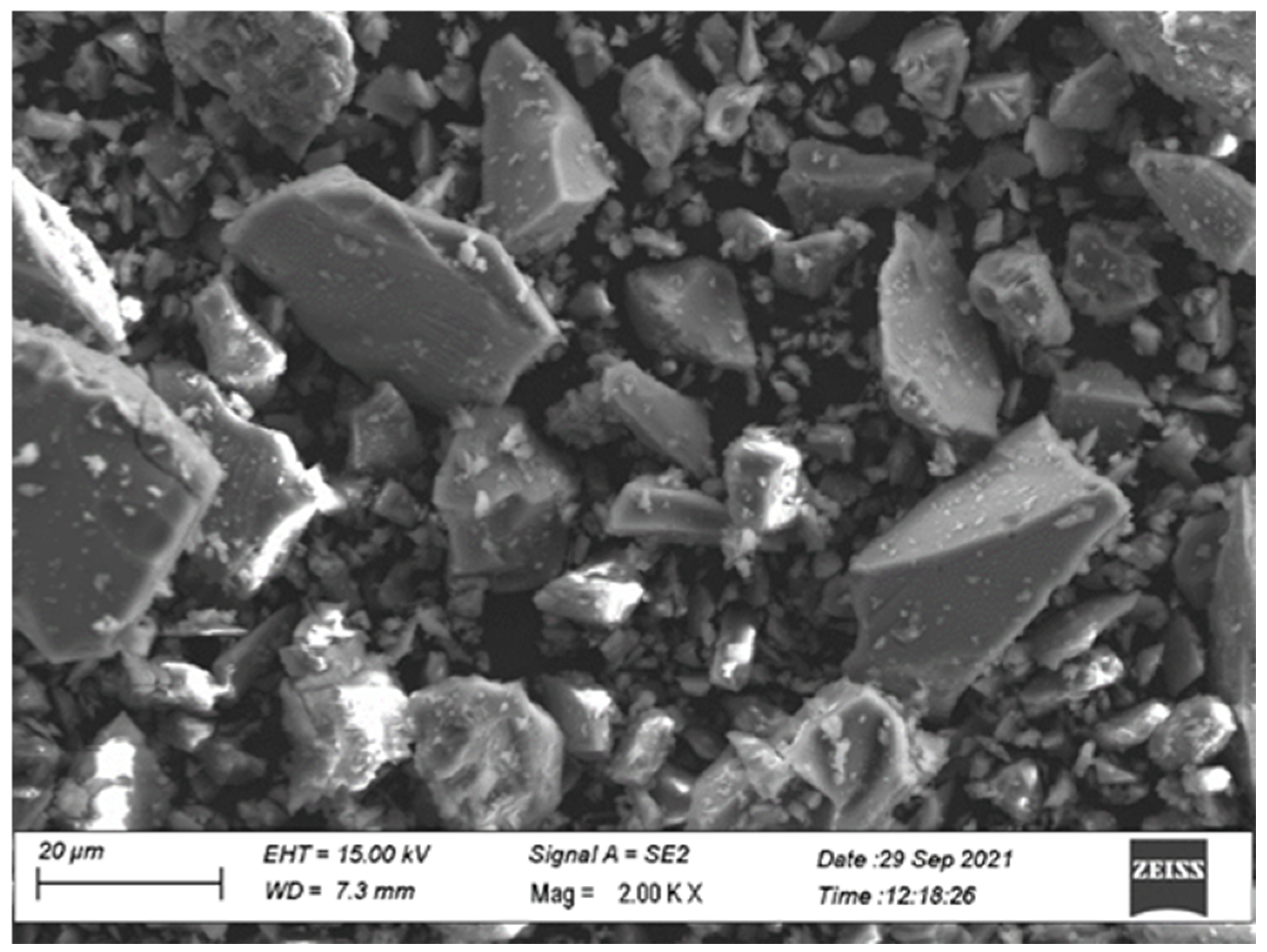
CEN Standard quartz sand and de-ionized water were used for all mortar mixtures. The glass powder used in this study is a post-consumer by-product derived from recycled white glass (bottles and jars). The glass, after preliminary crushing in the crusher, was ground in a laboratory mill to a Blaine fineness of about 2700 cm2/g. The median particle size of the powder glass is about 20 µm, and the specific gravity is 2.31 g/cm3. The results of the chemical composition of the waste glass analysis are presented in Table 2.
Table 2.
Chemical composition of powder glass.
The scanning electron microscope images of powder glass are shown in Figure 1.
Figure 1.
Scanning electron microscope images of glass powder.
2.2. Mixture Proportion and Preparation
The influence of glass powder on cement hydration was analyzed by preparing cement paste with 10% glass addition. To investigate the mechanical properties and microstructure of mortar, five mixtures were prepared, with different amounts of glass powder used as a partial cement substitution, i.e., 5%, 10%, 15% and 20% by cement mass. The composition of each mixture is presented in Table 3. The control mortar was marked as M0 (mortar without glass powder), and the experimental mortars were named, accordingly, M5, M10, M15 and M20, where the number indicates the cement replacement with the glass powder. All mixtures were prepared in accordance with European Standard EN 196-1, placed into 40 × 40 × 160 steel prim molds and consolidated by external vibration. The mortar samples after demolding were cured in water and at 20 ± 1 °C until the testing time.
Table 3.
Mortar mixture proportions for one batch of laboratory mixer, [g].
2.3. Test Methods
The pozzolanic activity of glass powder was assessed by chemical and mechanical methods. The chemical method is based on the determination of the soluble silicon and aluminum oxides content in the glass powder in the NaOH solution. The physical method is based on the determination of the Strength Activity Index (SAI), which is the ratio of the strength of the experimental mortar (cement mortars with 25% cement replacement with glass powder) to that of the reference mortar, and it was conducted in accordance with EN 450-1.
The total heat of hydration after 72 h of hardening cements with the addition of glass waste was determined by the semi-adiabatic method, in accordance with the PN-EN 196-9:2010 standard. The samples prepared with CEM I 42.5 and the addition of 10% waste and the reference sample of pure cement were used. To determine the compressive strength of the specimens after 28, 90 and 180 days of curing, EN 196-1 was employed. The compressive strength is the average value from six specimens tested at each age for each mixture. The porosity of each specimen was determined by the MIP method after 28 days of curing.
The microstructure analyses were carried out using an electron microscope, FESEM-EDX Carl Zeiss Sigma 300 VP (Carl Zeiss Microscopy GmbH, Jena, Germany), after sputtering the samples with graphite (Sputter Quorum Q150 from Quorum Technologies Ltd., East Sussex, UK).
3. Results and Discussion
3.1. Glass Powder Pozzolanic Activity
The study of the pozzolanic activity index of glass powder based on the strength of cement mortars (physical method) indicates the moderate pozzolanic properties of glass. SAI gained 79% and 88% after 28 days and 90 days of curing, respectively. According to EN-450-1, the SAI should not be lower than 75% after 28 days and should not be lower than 85% after 90 days of hardening the mortar. The low pozzolanic activity of the glass powder was also confirmed by the chemical method. Based on the research, it was determined that the content of the reactive ingredients in the glass is about 9%. The content of reactive components in additives with pozzolanic properties, i.e., silica fume and fly ash, is 70–75% and 10–15%, respectively. According to literature reports, glass dust has good pozzolanic properties, and the reactivity increases as the fineness increases [12,16,31]. The lower-than-expected pozzolanic activity of the analyzed glass powder is related to its insufficient fineness.
3.2. Cement Hydration
The influence of glass powder on cement hydration was evaluated on the basis of the analysis of the hydration reaction rate and the microstructure of the hardening cement paste. Two samples were investigated, i.e., pure cement paste and paste with 10% glass powder addition. Cement replacement with glass powder leads to a decrease in the heat release rate and the amount of heat released during hydration. This is of course due to the dilution of cement. At the same time, it was found that a 10% reduction in the cement content resulted in a reduction in the amount of heat released by only 6%. Thus, the relative reduction in heat released during hydration is smaller than the reduction in the cement content in the paste. This indicates a slight acceleration of hydration due to the addition of glass powder.
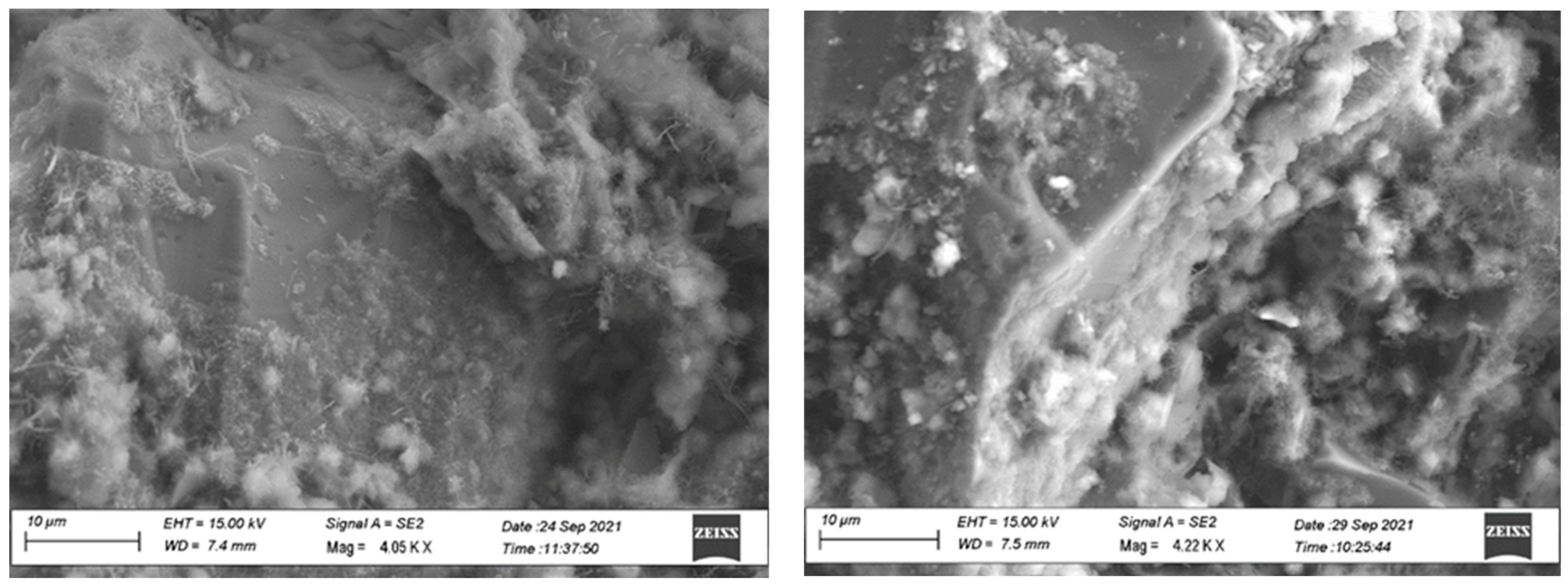
The influence of the glass powder additive on cement hydration was also examined on the basis of the microstructure analysis of the cement matrix in the early period of hydration. It was noticed that the C-S-H phase crystallizes on glass powder particles (Figure 2). Very fine particles of glass powder act as crystallization centers and provide an additional area where C-S-H nuclei can settle. Thus, a slight acceleration of hydration was observed.
Figure 2.
SEM images show the crystallization of C-S-H phases on the glass powder surface after 2 h (left) and after 12 h (right) of hydration.
The interfacial region visible on the glass grain surface is dense, and it is similar to the matrix far from the surface. Calcium hydroxide crystals or increased local porosity were not observed in the area of the contact zone. In particular, the increased concentration of shrinkage cracks was not visible in this area. Heteronucleated small crystals of hydrated calcium silicates are visible on the surface of glass grains.
3.3. Compressive Strength
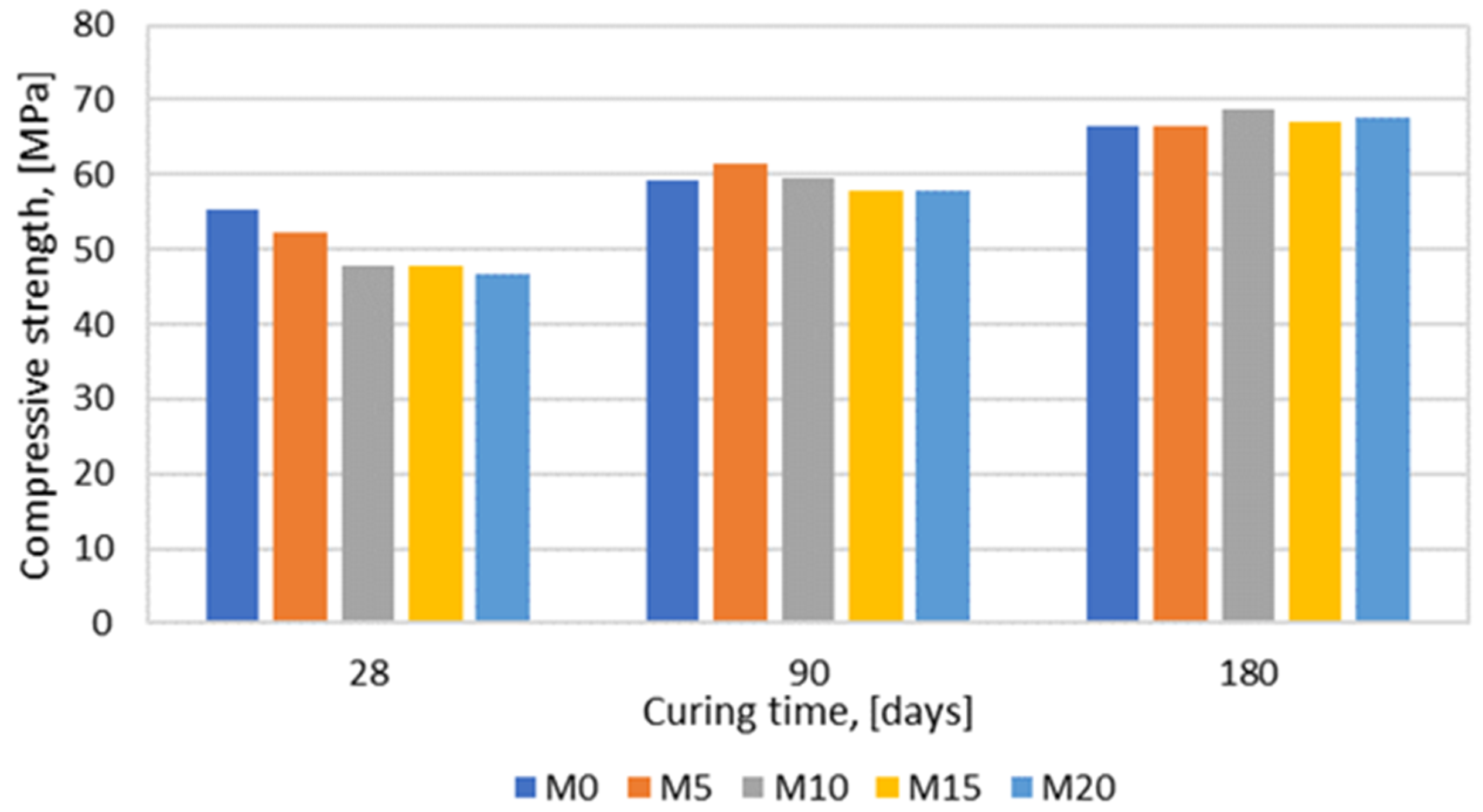
The compressive strength results of mortars at various curing ages with respect to the replacement of glass powder are shown in Figure 3. It is seen that, after 28 days of curing, the mortar compressive strength decreases with the increase in the glass powder content. The most visible mortar compressive strength deterioration, i.e., a 16% decrease, was observed in the case of mortar with a 20% replacement of cement with glass powder. This situation reverses at 90 and 180 days of age, when the partial cement replacement with glass powder does not lead to the compressive strength reduction. Even a slight increase is observed, i.e., 3% for mortar with a 5% glass additive and 4% for mortar with a 10% glass addition after 90 and 180 days of curing, respectively.
Figure 3.
Compressive strength of mortars with glass powder addition.
At an early age, glass powder acts only as an inert material causing the compressive strength reduction. The substitution of cement with glass powder leads to an increase in the water/cement ratio from a value of 0.5 to 0.63 for mortar with a 20% glass powder addition. Thus, due to the dilution of cement, a decrease in compressive strength is observed. The increase in the compressive strength at the later age of the curing of mortar with the glass powder additive may be attributed to the pozzolanic activity of glass powder. The pozzolanic reaction of reactive silica oxide in glass power and calcium hydroxide leads to C-S-H phases formation, which results in cement matrix microstructure densification and, consequently, a mortar compressive strength increase.
3.4. Porosity
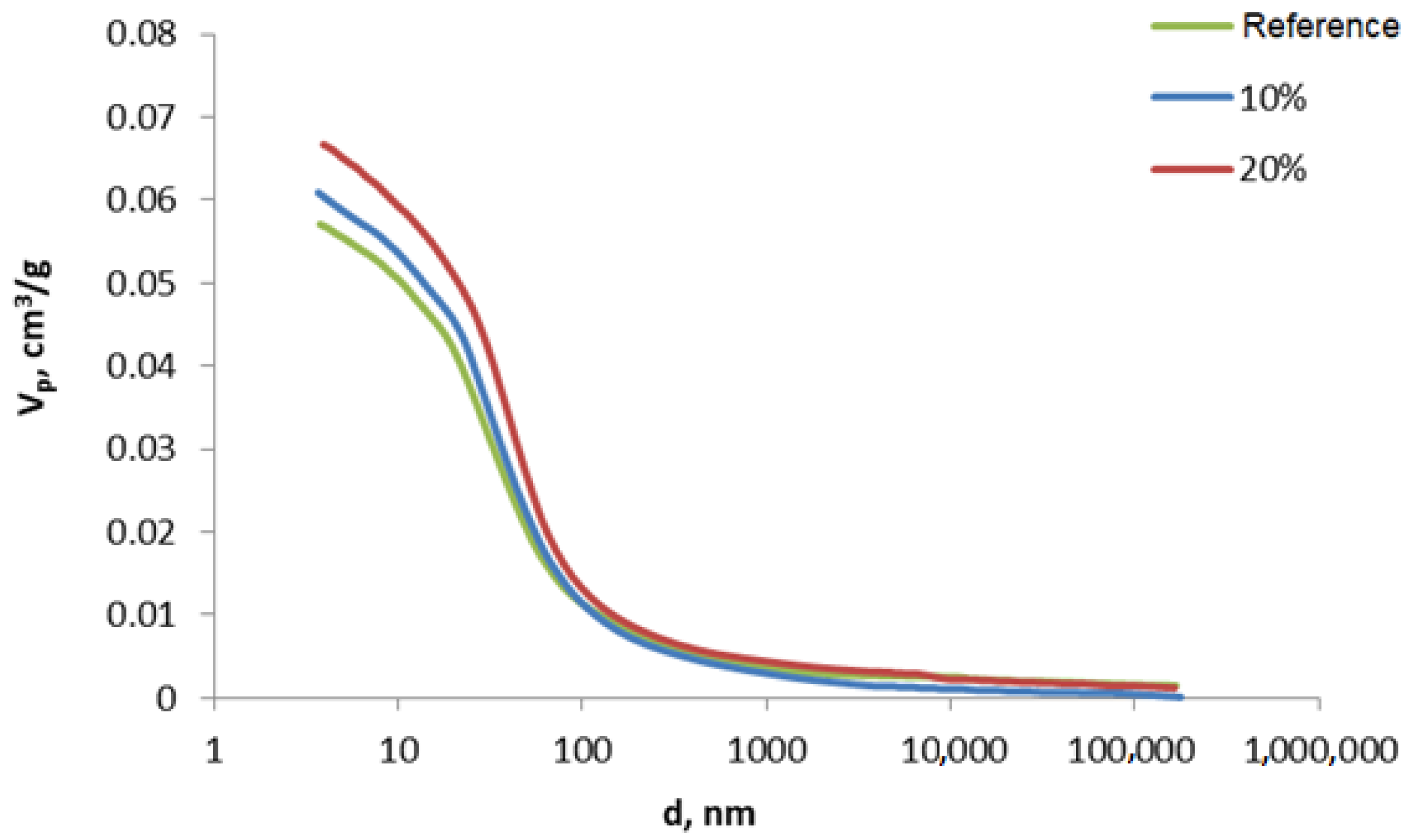
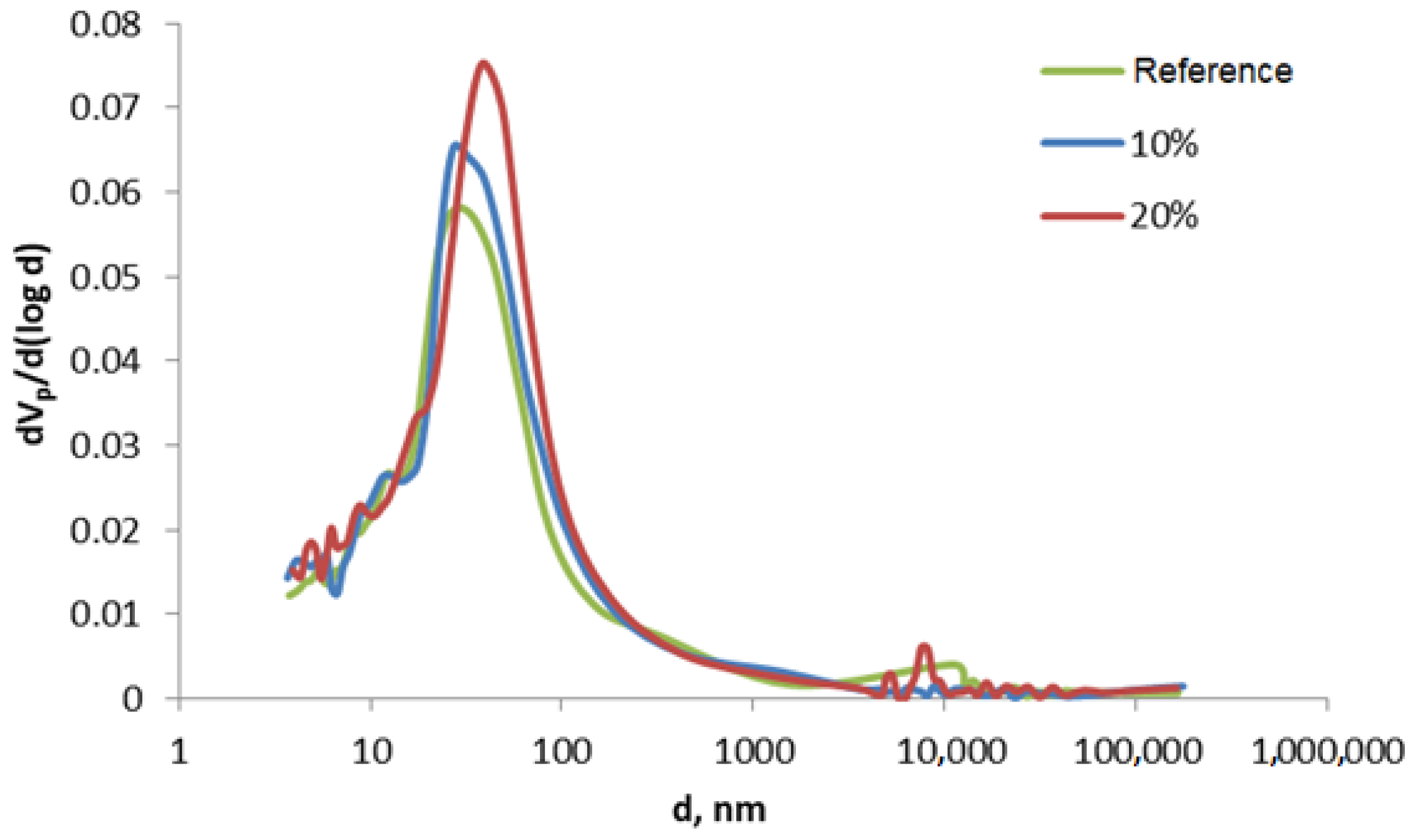
The influence of glass powder on the microstructure was analyzed by mercury porosimetry. Cement was substituted with 10% and 20% glass powder by mass. The porosity and pore size distribution of mortars after 28 days of curing are shown in Figure 4 and Figure 5. By increasing the amount of glass powder, the porosity increases from 0.58 cm3/g for the control mortar to 0.60 cm3/g and 0.66 cm3/g in the case of mortar with 10% and 20% glass powder addition, respectively (about 7% and 12%).
Figure 4.
Total porosity of samples after 28 days of hydration.
Figure 5.
Porosity of samples after 28 days of hydration.
An increase in the amount of the pore in the diameter range of 50–100 µm was observed. There is also a visible shift of the maximum of the pore size distribution towards the pores with larger diameters as the proportion of glass addition increases. This results in a compressive strength decrease. The unfavorable influence of glass powder on the porosity and pore size distribution is mainly due to the substitution of cement with coarser inert glass powder.
4. Conclusions
The following conclusions can be drawn from the research presented in this paper:
- The analyzed glass powder possesses slight pozzolanic reactivity. It is expected that the finer grinding of glass will result in an enhancement of pozzolanic activity.
- The partial replacement of cement with glass powder results in a delay of the hydration rate. However, the reduction in cumulative heat is smaller than the reduction in the cement content, which indicates a slight acceleration of hydration due to the addition of glass powder. The effect of the heteronucleation of the C-S-H phase on the glass powder surface was also observed.
- The addition of glass powder negatively affects the compressive strength of mortar after 28 days of curing. In the latter age, the improvement of the compressive strength of mortar with glass powder addition is observed. This is mainly due to the pozzolanic activity of glass powder, which is revealed in the later time.
- No negative effect on the microstructure in the interfacial region was observed. The glass grain acts as heteronucleation centers of C-S-H crystals.
- Ground waste glass can be used as a replacement for about 10% of cement. In this case, a slight increase in the mortar compressive strength and no significant deterioration of the porosity are observed. In order to use this waste more effectively, it is necessary to grind it finer to a specific surface that is not smaller than that of cement. Then, not only will the pozzolanic activity of the glass be enhanced, but the additional effect of the filler will also be important.
Author Contributions
Conceptualization, M.D. and W.P.; methodology, M.D. and W.P.; validation, M.D., W.P., T.T., A.P. and M.N.; formal analysis, M.D., W.P., T.T., A.P. and M.N.; investigation, M.D., W.P., T.T. and A.P.; resources, M.D., W.P., T.T. and A.P.; data curation, M.D., W.P., T.T. and A.P.; writing—original draft preparation, M.D. and W.P.; writing—review and editing, M.D., W.P., T.T., A.P. and M.N.; visualization, M.D., W.P., T.T. and A.P.; supervision, M.D. and W.P.; project administration, M.D. All authors have read and agreed to the published version of the manuscript.
Funding
This research received no external funding.
Institutional Review Board Statement
Not applicable.
Informed Consent Statement
Not applicable.
Data Availability Statement
Not applicable.
Acknowledgments
The publication cost of this paper was covered by funds from the Polish National Agency for Academic Exchange (NAWA): “MATBUD’2023—Developing international scientific cooperation in the field of building materials engineering” BPI/WTP/2021/1/00002, MATBUD’2023.
Conflicts of Interest
The authors declare no conflict of interest.
References
- Rehana, S.J. Where’s the Fly Ash? Available online: https://www.concreteconstruction.net/producers/wheres-the-fly-ash_o (accessed on 30 September 2021).
- Bentz, D.P.; Ferraris, C.F.; Jones, S.Z.; Lootens, D.; Zunino, F. Limestone and Silica Powder Replacements for Cement: Early-Age Performance. Cem. Concr. Compos. 2017, 78, 43–56. [Google Scholar] [CrossRef] [PubMed]
- Mirzahosseini, M.; Riding, K.A. Influence of Different Particle Sizes on Reactivity of Finely Ground Glass as Supplementary Cementitious Material (SCM). Cem. Concr. Compos. 2015, 56, 95–105. [Google Scholar] [CrossRef]
- Michael Record Collection of Glass Containers for Recycling Hits 78% in the EU. Available online: https://feve.org/glass_recycling_stats_2019/ (accessed on 2 November 2022).
- Dong, W.; Li, W.; Tao, Z. A Comprehensive Review on Performance of Cementitious and Geopolymeric Concretes with Recycled Waste Glass as Powder, Sand or Cullet. Resour. Conserv. Recycl. 2021, 172, 105664. [Google Scholar] [CrossRef]
- Nassar, R.-U.-D.; Soroushian, P.; Sufyan-Ud-Din, M. Long-Term Field Performance of Concrete Produced with Powder Waste Glass as Partial Replacement of Cement. Case Stud. Constr. Mater. 2021, 15, e00745. [Google Scholar] [CrossRef]
- Gołek, Ł. Glass Powder and High-Calcium Fly Ash Based Binders—Long Term Examinations. J. Clean. Prod. 2019, 220, 493–506. [Google Scholar] [CrossRef]
- Khan, M.N.N.; Saha, A.K.; Sarker, P.K. Reuse of Waste Glass as a Supplementary Binder and Aggregate for Sustainable Cement-Based Construction Materials: A Review. J. Build. Eng. 2020, 28, 101052. [Google Scholar] [CrossRef]
- Tan, K.H.; Du, H. Use of Waste Glass as Sand in Mortar: Part I—Fresh, Mechanical and Durability Properties. Cem. Concr. Compos. 2013, 35, 109–117. [Google Scholar] [CrossRef]
- Ortega, J.M.; Letelier, V.; Solas, C.; Miró, M.; Moriconi, G.; Climent, M.Á.; Sánchez, I. Influence of Waste Glass Powder Addition on the Pore Structure and Service Properties of Cement Mortars. Sustainability 2018, 10, 842. [Google Scholar] [CrossRef]
- Jiang, Y.; Ling, T.-C.; Mo, K.H.; Shi, C. A Critical Review of Waste Glass Powder—Multiple Roles of Utilization in Cement-Based Materials and Construction Products. J. Environ. Manag. 2019, 242, 440–449. [Google Scholar] [CrossRef]
- Shao, Y.; Lefort, T.; Moras, S.; Rodriguez, D. Studies on Concrete Containing Ground Waste Glass. Cem. Concr. Res. 2000, 30, 91–100. [Google Scholar] [CrossRef]
- Kamali, M.; Ghahremaninezhad, A. Effect of Glass Powders on the Mechanical and Durability Properties of Cementitious Materials. Constr. Build. Mater. 2015, 98, 407–416. [Google Scholar] [CrossRef]
- Du, H.; Tan, K. Waste Glass Powder as Cement Replacement in Concrete. J. Adv. Concr. Technol. 2014, 12, 468–477. [Google Scholar] [CrossRef]
- Kalakada, Z.; Doh, J.H.; Chowdhury, S. Glass Powder as Replacement of Cement for Concrete—An Investigative Study. Eur. J. Environ. Civ. Eng. 2019, 26, 1–18. [Google Scholar] [CrossRef]
- Idir, R.; Cyr, M.; Tagnit-Hamou, A. Pozzolanic Properties of Fine and Coarse Color-Mixed Glass Cullet. Cem. Concr. Compos. 2011, 33, 19–29. [Google Scholar] [CrossRef]
- Lu, J.; Duan, Z.; Poon, C.S. Combined Use of Waste Glass Powder and Cullet in Architectural Mortar. Cem. Concr. Compos. 2017, 82, 34–44. [Google Scholar] [CrossRef]
- Patel, D.; Tiwari, R.P.; Shrivastava, R.; Yadav, R.K. Effective Utilization of Waste Glass Powder as the Substitution of Cement in Making Paste and Mortar. Constr. Build. Mater. 2019, 199, 406–415. [Google Scholar] [CrossRef]
- Carsana, M.; Frassoni, M.; Bertolini, L. Comparison of Ground Waste Glass with Other Supplementary Cementitious Materials. Cem. Concr. Compos. 2014, 45, 39–45. [Google Scholar] [CrossRef]
- Elaqra, H.; Haloub, M.; Rustom, R. Effect of New Mixing Method of Glass Powder as Cement Replacement on Mechanical Behavior of Concrete. Constr. Build. Mater. 2019, 203, 75–82. [Google Scholar] [CrossRef]
- Dyer, T.D.; Dhir, R.K. Chemical Reactions of Glass Cullet Used as Cement Component. J. Mater. Civ. Eng. 2001, 13, 412–417. [Google Scholar] [CrossRef]
- Nassar, R.-U.-D.; Soroushian, P. Strength and Durability of Recycled Aggregate Concrete Containing Milled Glass as Partial Replacement for Cement. Constr. Build. Mater. 2012, 29, 368–377. [Google Scholar] [CrossRef]
- Shayan, A.; Xu, A. Value-Added Utilisation of Waste Glass in Concrete. Cem. Concr. Res. 2004, 34, 81–89. [Google Scholar] [CrossRef]
- Khmiri, A.; Chaabouni, M.; Samet, B. Chemical Behaviour of Ground Waste Glass When Used as Partial Cement Replacement in Mortars. Constr. Build. Mater. 2013, 44, 74–80. [Google Scholar] [CrossRef]
- Shi, C.; Zheng, K. A Review on the Use of Waste Glasses in the Production of Cement and Concrete. Resour. Conserv. Recycl. 2007, 52, 234–247. [Google Scholar] [CrossRef]
- Najduchowska, M.; Pabiś, E.; Rolka, G.; Baran, T. Właściwości Betonu z Zastosowaniem Stłuczki Szklanej; Stowarzyszenie Producentów Cementu: Wisła, Poland, 2016; Volume 2, pp. 627–648. [Google Scholar]
- Liu, S.; Xie, G.; Wang, S. Effect of Curing Temperature on Hydration Properties of Waste Glass Powder in Cement-Based Materials. J. Therm. Anal. Calorim. 2015, 119, 47–55. [Google Scholar] [CrossRef]
- Matos, A.M.; Sousa-Coutinho, J. Durability of Mortar Using Waste Glass Powder as Cement Replacement. Constr. Build. Mater. 2012, 36, 205–215. [Google Scholar] [CrossRef]
- Omran, A.; Tagnit-Hamou, A. Performance of Glass-Powder Concrete in Field Applications. Constr. Build. Mater. 2016, 109, 84–95. [Google Scholar] [CrossRef]
- Maraghechi, H.; Maraghechi, M.; Rajabipour, F.; Pantano, C.G. Pozzolanic Reactivity of Recycled Glass Powder at Elevated Temperatures: Reaction Stoichiometry, Reaction Products and Effect of Alkali Activation. Cem. Concr. Compos. 2014, 53, 105–114. [Google Scholar] [CrossRef]
- Shi, C.; Wu, Y.; Riefler, C.; Wang, H. Characteristics and Pozzolanic Reactivity of Glass Powders. Cem. Concr. Res. 2005, 35, 987–993. [Google Scholar] [CrossRef]
Disclaimer/Publisher’s Note: The statements, opinions and data contained in all publications are solely those of the individual author(s) and contributor(s) and not of MDPI and/or the editor(s). MDPI and/or the editor(s) disclaim responsibility for any injury to people or property resulting from any ideas, methods, instructions or products referred to in the content. |
© 2023 by the authors. Licensee MDPI, Basel, Switzerland. This article is an open access article distributed under the terms and conditions of the Creative Commons Attribution (CC BY) license (https://creativecommons.org/licenses/by/4.0/).