Abstract
Crankshafts, present in internal combustion engines, are mechanical parts subject to torsion and bending that vary over time and, if the forcing is close to one of the natural frequencies of the system, they can encounter problems of torsional oscillations. These vibrations can lead to maximum oscillation amplitudes, with consequent fatigue stresses that would compromise the resistance and correct functioning of the shaft. The aim of this work is to indicate a methodology for identifying the natural frequencies of the crankshaft and the decomposition of the torques, due to gases and inertia, to identify the different harmonics; in fact, if one of these harmonics is close to the natural frequency of the crankshaft, the system will go into resonance.
1. Introduction
Given the geometric complexity of the crankshafts and the nature of the forcing to which they are subject, mainly due to the thermodynamic cycle of the engine, the study of torsional oscillations turns out to be a fairly complex process [1]. It must be taken into account that each cylinder will generate torques out of phase with each other and that the inertia of each crank mechanism cannot be neglected [2]. Charles et al. [3] conducted a study on early fault detection and diagnosis of medium-speed diesel engines showing how the instantaneous angular speed (IAS) and fast Fourier transform (FFT) analysis are effective for monitoring engines with less than eight cylinders. Burla et al. [4] adopted a parametric software in order to reduce the computational time effort of a finite element (FE) modeling, which is time consuming. Cevik et al. [5] conducted a study based on a statistical investigation and finite element analysis (FEA) methodology to predict the crankshaft torsional stiffness and stress concentration factors (SCF) due to torsion and bending which can be used as inputs for simplified crankshaft multibody models and durability calculations. Schagerberg and McKelvey [6] explore the instantaneous measurement of crankshaft torque and present a simulation model to describe the relationship between an engine’s cylinder pressures and the resulting torque. It has been validated on a 5-cylinder engine using integrated torque and pressure sensors. The research aims to develop a method to estimate and optimize combustion processes for engine control. A study by Londhe and Yadav [7] describes the design and optimization of a torsional vibration damper for a 4-cylinder, 4-stroke engine. It includes a parametric study on inertia, stiffness and damping to reduce vibrations. Dynamometer tests were conducted to verify the model with promising results. The work by Bremer [8] focuses on vibration control through dampers. It discusses the design challenges associated with torsional vibrations in modern engines and how these can be addressed using dynamic models and new materials. Sun et al. [9] address the reduction of crankshaft torsional vibrations in agricultural vehicle diesel engines. They propose improvements such as the adoption of torsional dampers and the verification of results through simulations and experimental tests, ensuring that NVH requirements are met. Khaliullin et al. [10] discuss torsional vibrations of automotive engines considering transmission elements. They analyze the dynamic behavior of the engine-transmission-driving wheel system and propose calculation models to predict resonance phenomena and improve the designs of torsional shock absorbers.
Among the cited paper, Schagerberg and McKelvey [6] and Sun et al. [9] include experimental measurements of combustion gases. In particular, pressure sensors installed on the cylinders are used to measure the internal pressure during the combustion process. The collected data was used to validate dynamic models that relate cylinder pressure to torque generated on the crankshaft.
It is evident how simplified models are necessary to assess the vibrational properties of the crankshaft without compromising the accuracy of the results.
The case of a turbodiesel engine in maximum torque conditions is studied. Starting from a real 3D CAD model of an automotive engine, a model of the crankshaft was obtained and the masses and inertia of this were studied, carrying out a comparison between the results obtained with analytical models and numerically. Acquisitions of the indicated cycle were carried out and the Fourier series decomposition of the overall torque was performed to identify the harmonics and compare them with the natural frequencies of the crankshaft.
2. Materials and Methods
The internal combustion engine in this study is a turbodiesel engine with 1.6 l of capacity, a maximum power of 88kW and a maximum torque of 320 Nm at 1750 rpm.
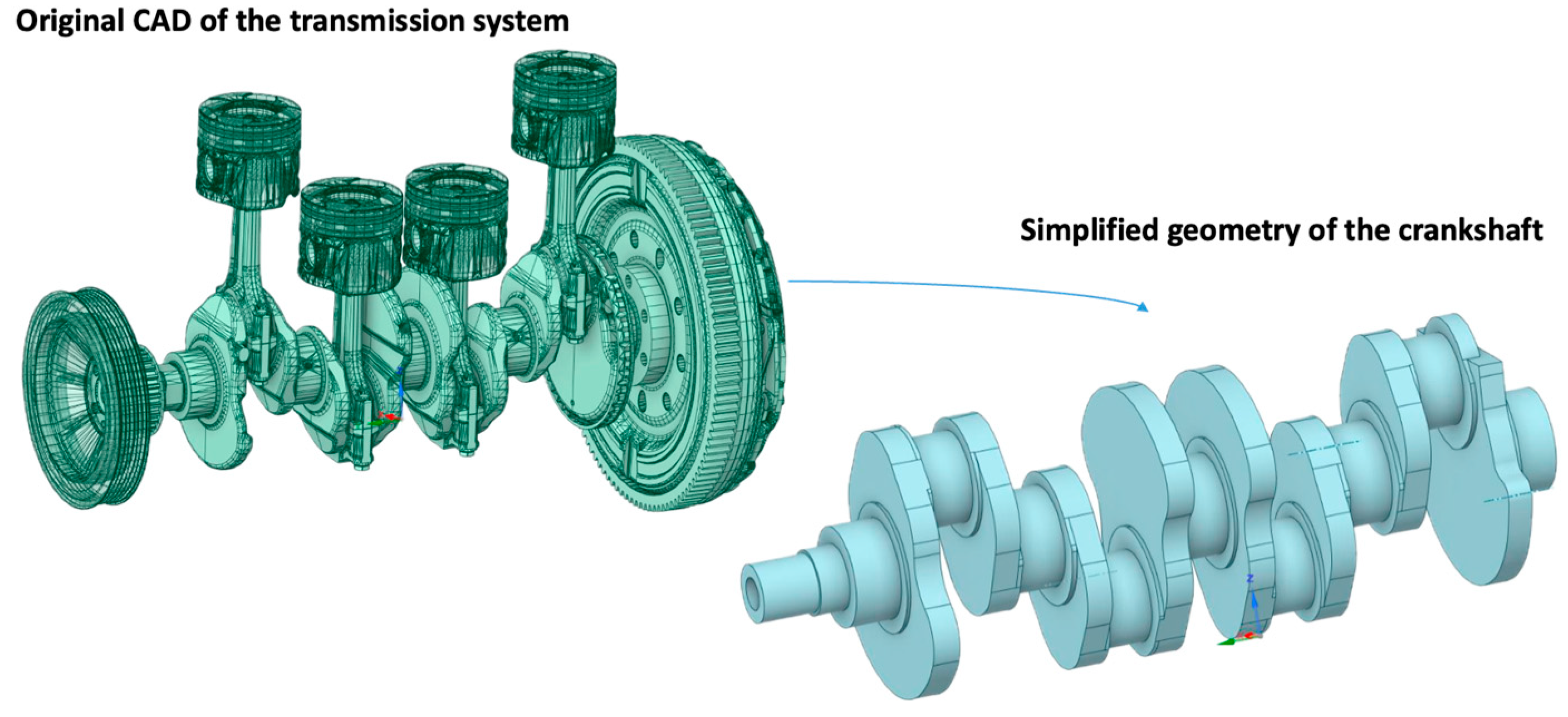
The 3D CAD of the transmission system was retrieved (Figure 1). It is composed of a crankshaft with a piston, pulley and clutch. These components present a very complex geometry, especially the crankshaft; for this reason, it was simplified by maintaining the geometry of the crank to reduce the computational effort.
Figure 1.
3D CAD of the transmission system and the simplified geometry of the crankshaft.
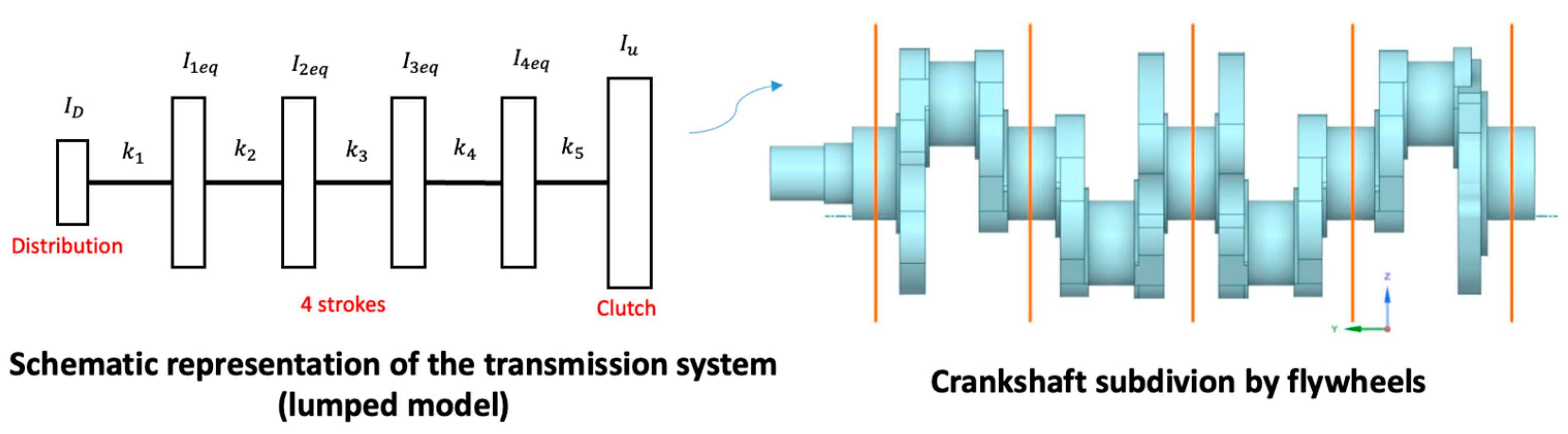
To obtain a lumped model, the transmission system can be divided into six equivalent flywheels, which have a rotational degree of freedom (θi(t)) and their own equivalent inertia (Ii eq): there are four flywheels for the strokes, one for the pulley and one for the clutch (Figure 2). These equivalent flywheels are connected by means of five stiffness, ki.
Figure 2.
Lumped mass system and subdivision of the crankshaft in equivalent flywheels.
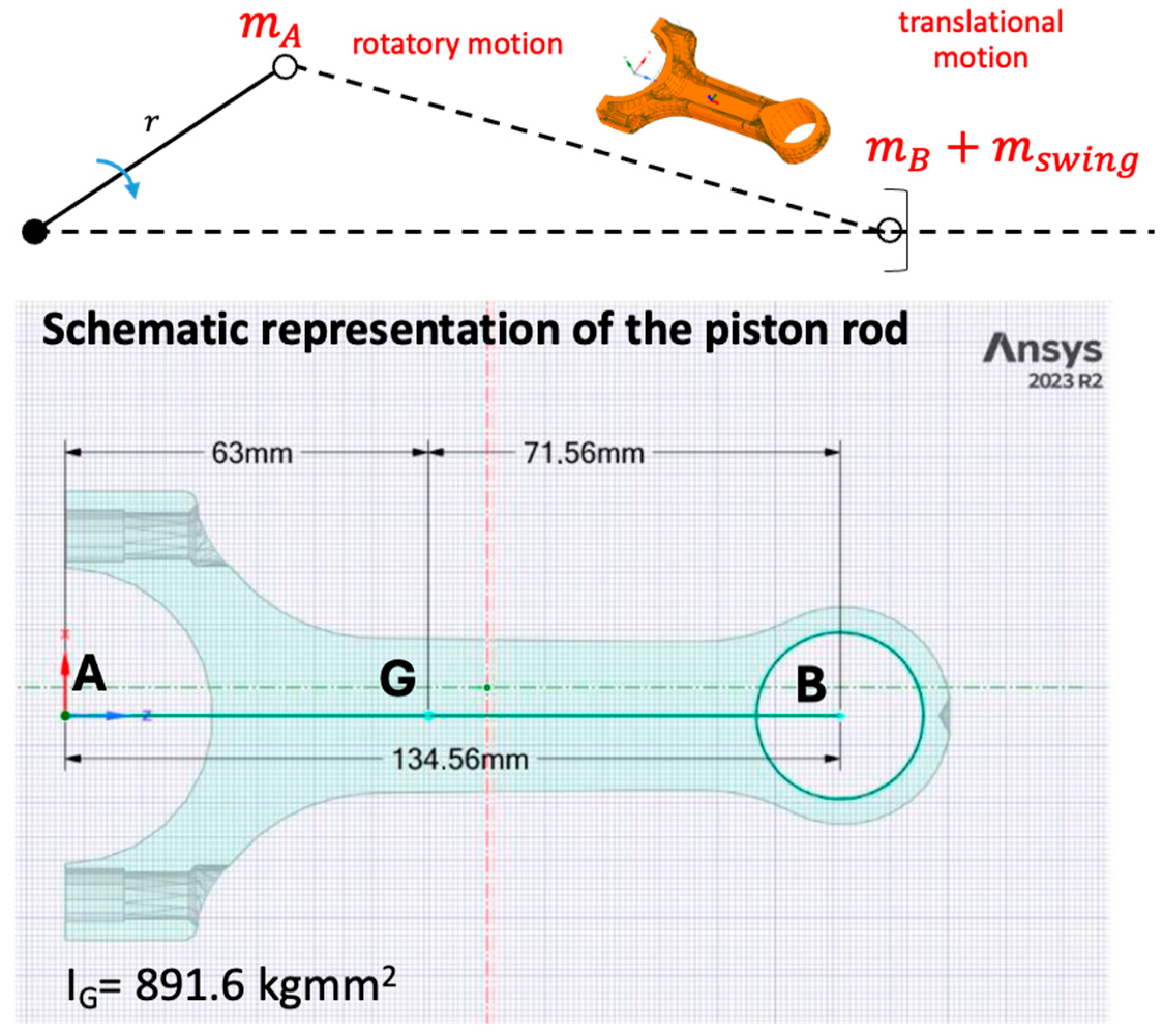
The piston rod system must be reconducted to an equivalent flywheel; however, it is not a pure rotatory system, indeed, the piston rod makes a roto translational movement. The idea is to divide the mass of the piston rod into two masses (Figure 3): the first (mass A) has a pure rotatory movement and it is placed at a distance a from the center of mass G; while the latter (mass B) has a translational movement, and it is placed at a distance b from the center of mass. From the 3D CAD, the mass of the piston rod (mpiston rod) and the moment of inertia estimated at the center of mass (IG) were retrieved and the mass decomposition was performed according to the following equations:
where Ipure is a moment of inertia necessary to obtain the equivalence between the mass and inertia of the piston rod and the two-masses system. It can be thought of as the inertia of an infinitesimal mass at an infinite distance.
Figure 3.
Schematic representation of the piston rod: Mass A with pure rotatory movement; Mass B with translational movement; G center of mass of the piston rod.
The inertia contribution of mass A can be considered a rotational movement, while the one from mass B can be added to the swinging mass (mswing) of the stroke and evaluated as a translational one (Equation (2)). This moment of inertia varies with the crank angle; hence, its average value was estimated. Interpreting the density from the 3D CAD, the mass of each component can be estimated.
The equivalent inertias for the six d.o.f. systems are reported in Table 1.
Table 1.
Equivalent inertia of the lumped system of the transmission system.
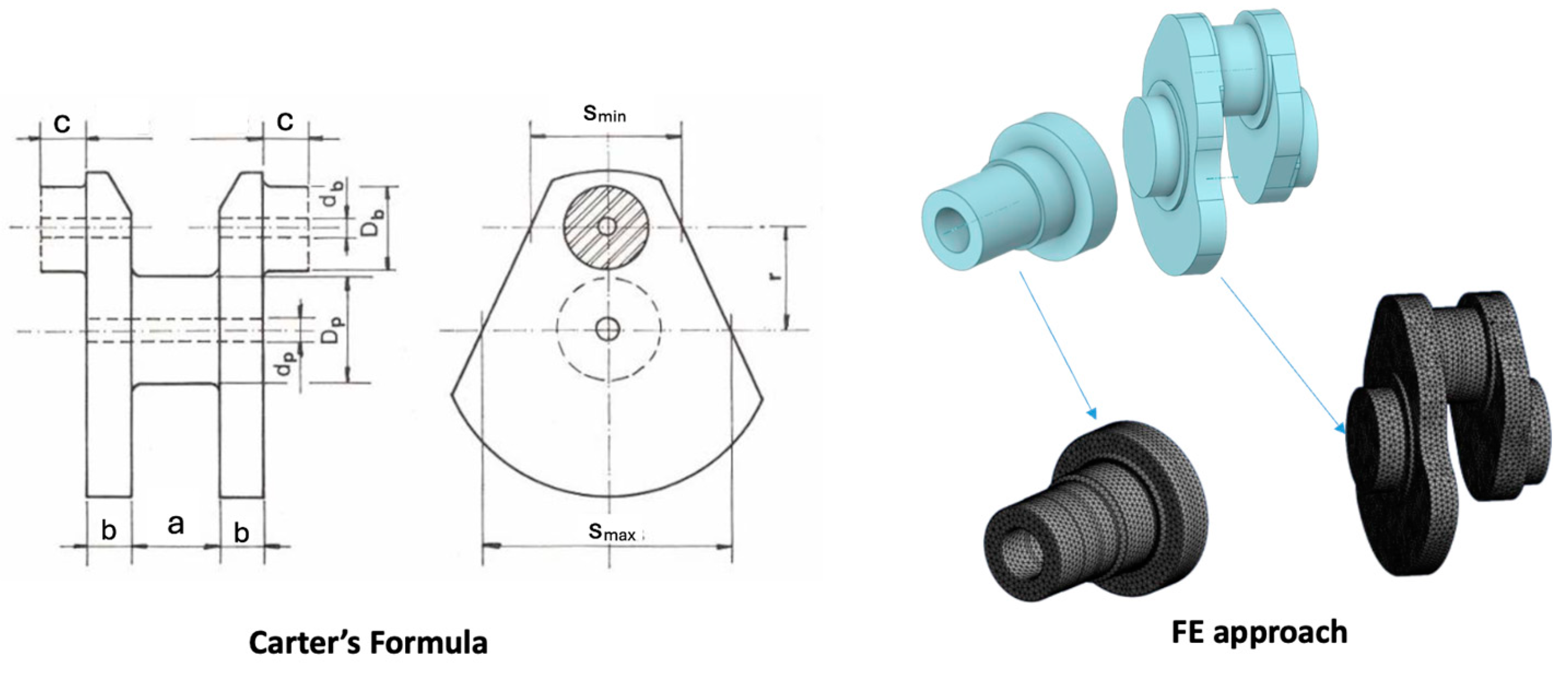
The stiffness for crankshaft was evaluated by adopting an empirical approach by Carter’s Formula [11], and a numerical approach adopting FE simulations. The Carter’s formula (Equation (3)) allows us to estimate the equivalent stiffness of a crankshaft reconducting it to a cylinder with a polar moment of inertia J0, tangential modulus of elasticity G and an equivalent length Lc, which takes into account all of the geometry of the crank (Equation (4), Figure 4).
Figure 4.
Schematic representation of the crank according to Carter and components adopted for stiffness evaluation by FE analysis.
The FE approach consists of dividing the crankshaft into several sections of mesh, fixing them at one side and applying a unitary moment of inertia at the other side. Ansys FE software (2025 R1) was adopted with a mesh of 3 mm and SOLID187 elements. A torque of 1 Nm was applied with remote force function and the relative rotation was evaluated.
In Table 2, the stiffness of the first two sections of the crankshaft are reported and evaluated with both of the approaches, which are in good agreement.
Table 2.
Equivalent stiffens of the lumped system: comparison between Carter’s formula and FE estimations.
3. Results and Discussion
3.1. Lumped System
The 3D CAD of the transmission system has been reconducted to a lumped system by evaluating all the inertia and stiffness (Figure 2). The system has six rotational d.o.f. which correspond to the four strokes, the distribution and the clutch. It is possible to write a system of six equations:
where ω is the angular velocity of the system, [I] is the inertia matrix, [θ] is the vector of rotational d.o.f. and [K] is the stiffness matrix. Equation (5) represents a typical eigenvalue problem; hence, the critical velocities of the crankshaft can be obtained (Table 3).
Table 3.
Critical frequencies of the lumped system.
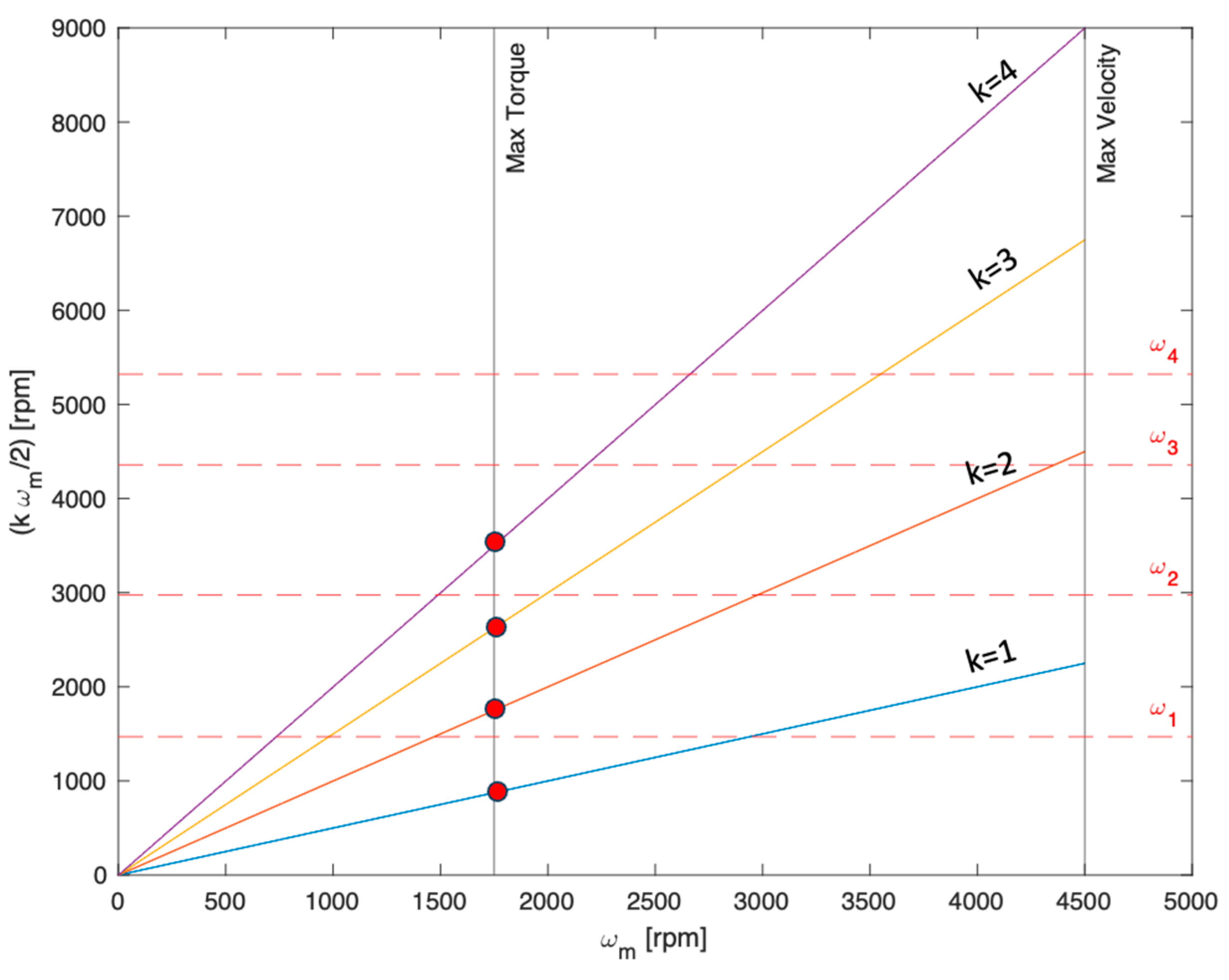
By knowing the critical frequencies, it is possible to construct the harmonic vs. engine velocity diagram (Figure 5), where the critical harmonics of the engine are close to the critical frequencies of the system in the maximum torque conditions (red dots).
Figure 5.
Harmonic frequencies—critical frequencies diagram constructed to identify possible resonance conditions at a given rotational regime of the engine.
3.2. Modal Analysis
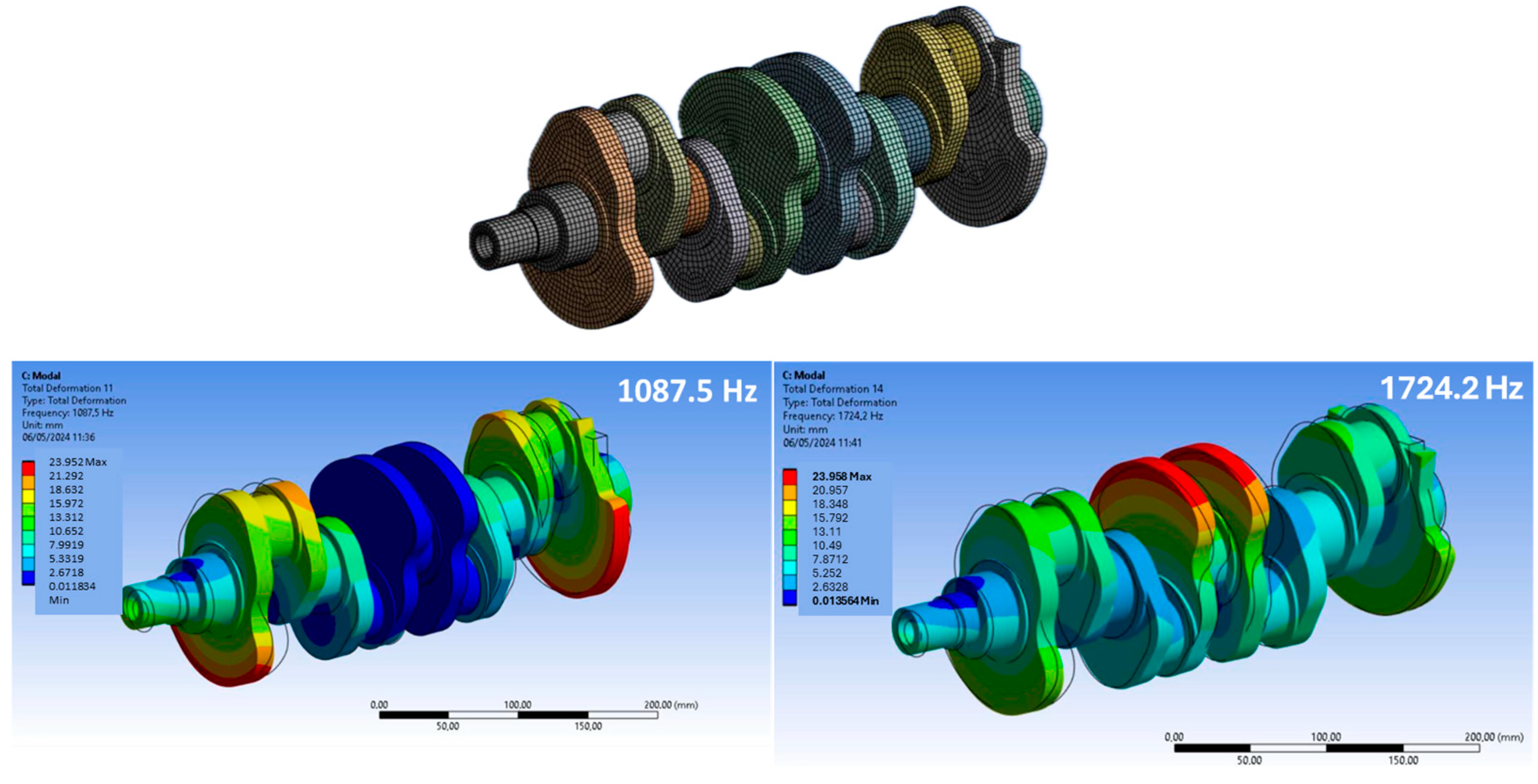
A modal analysis has been performed on the 3D CAD of the crankshaft in order to obtain the critical torsional frequencies of this mechanical component. In the TAB, the critical torsional frequencies obtained by FE analysis and the ones from the lumped system are reported (Table 4). As can be observed, the maximum error is 8%. In Figure 6, the adopted mesh and the deformation of the third and fourth frequencies of the system are reported.
Table 4.
Comparison between critical frequencies of the lumped system and FE modal analysis.
Figure 6.
FE modal analysis of the crankshaft.
It is important to point out that the two approaches are in good agreement and, in particular, the lumped system allows an easy evaluation of the critical frequencies without the necessity to perform FE modal analysis, which can require a large amount of computational time.
3.3. Frequency Analysis of the Engine Torque
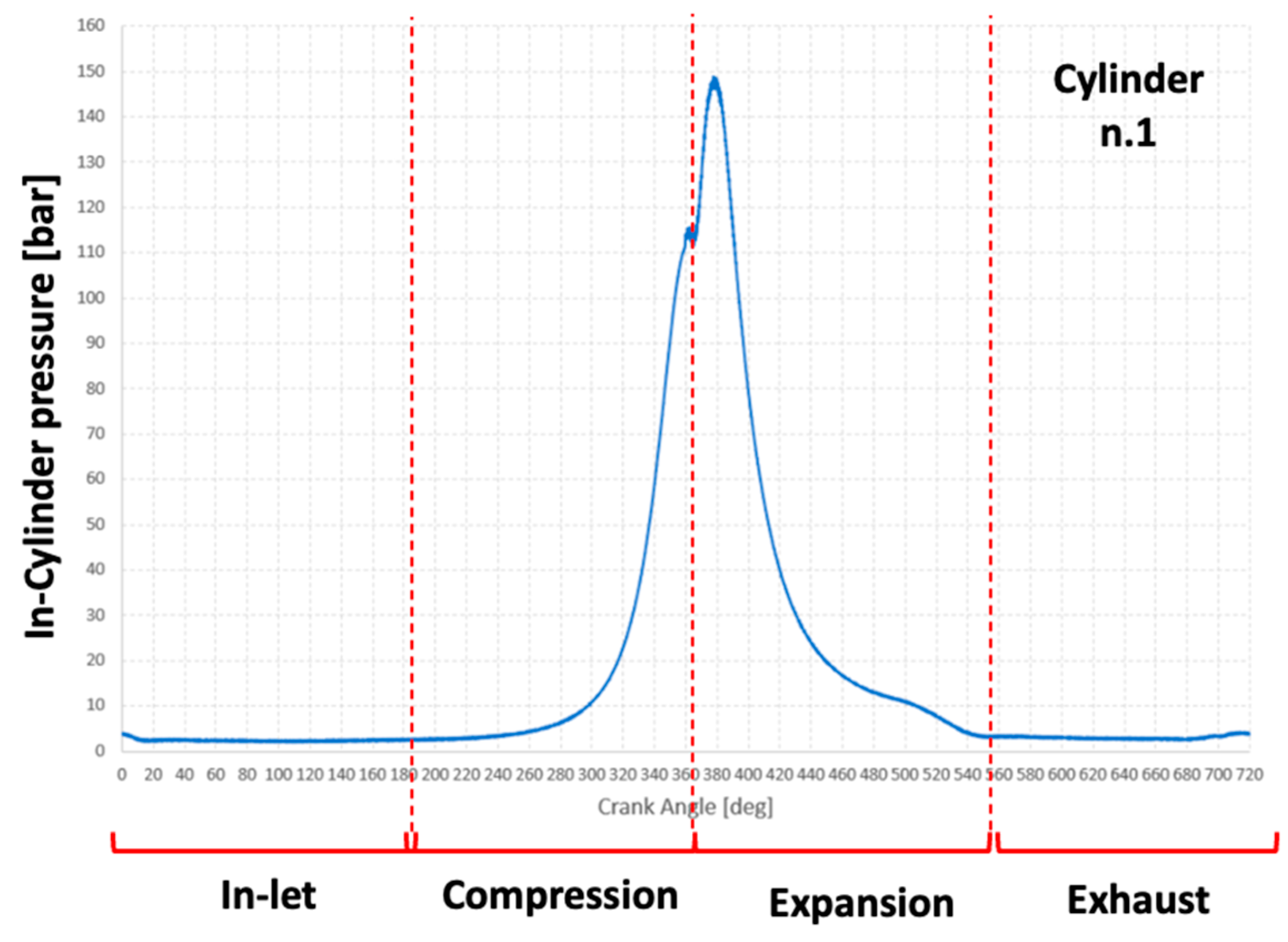
To analyze the external torque that can excite the crankshaft, a Fourier’s decomposition has been applied to the engine torque. By performing an experimental measurement of the indicated cycle, the pressure within the combustion chamber, p, during one thermodynamic cycle of the engine, can be retrieved (Figure 7).
Figure 7.
Experimental measurement of the indicated cycle.
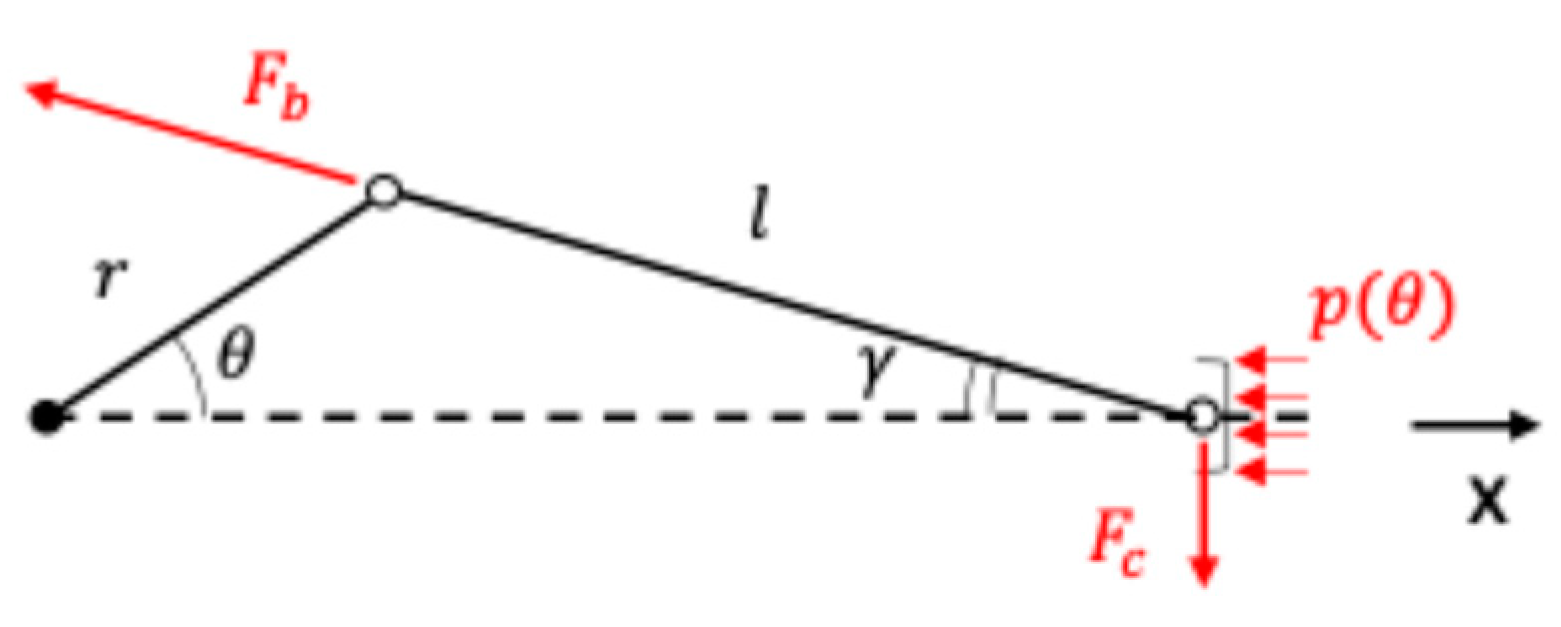
The engine torque due to combustion gases, Mg, can be estimated with Equation (6), according to the scheme of Figure 8.
where Φ is the bore of the cylinder and r is the length of the crank. This torque has a frequency of ωm/2 that is not sinusoidal; for this reason, it can be decomposed according to Fourier.
Figure 8.
Schematic representation of the forces acting on the crank and piston rod.
The torque due to inertia can be estimated with Equation (7) considering the angular (γ) and translational (x) acceleration and velocities.
This torque is due to the crank, to the centrifugal force of the rotational masses, and the mechanical work of the swinging masses.
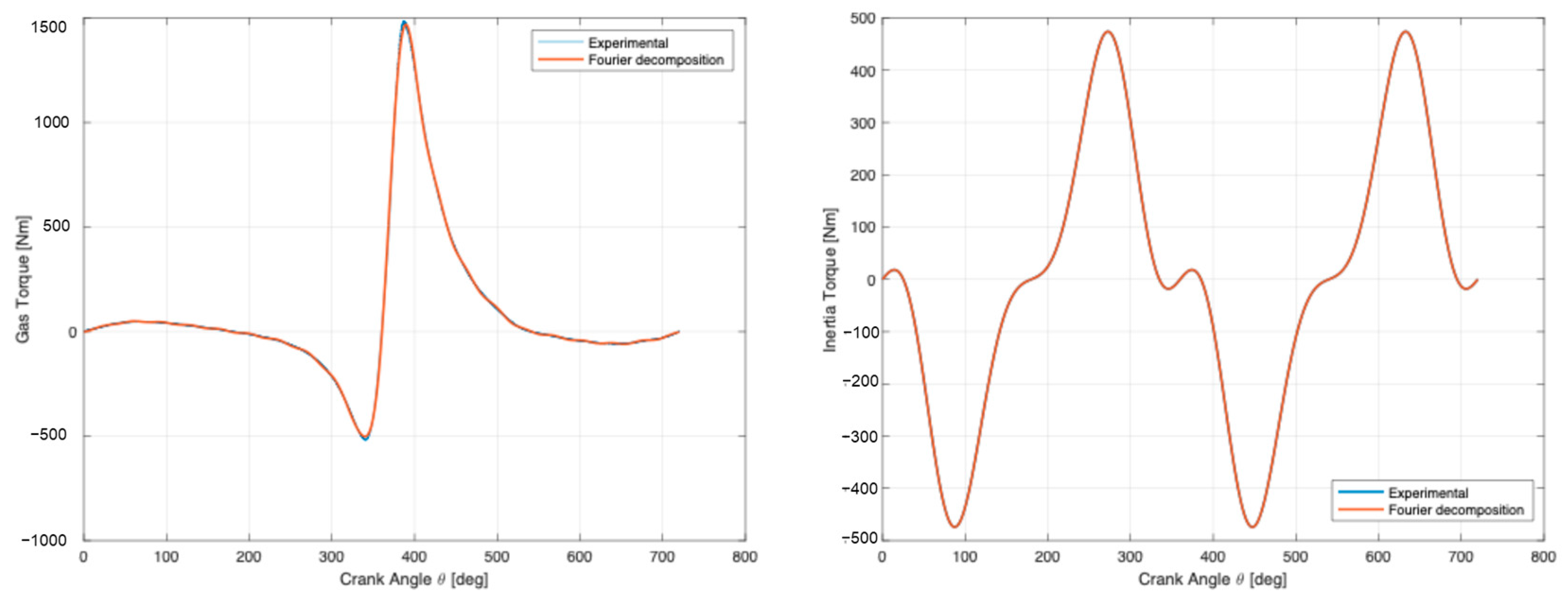
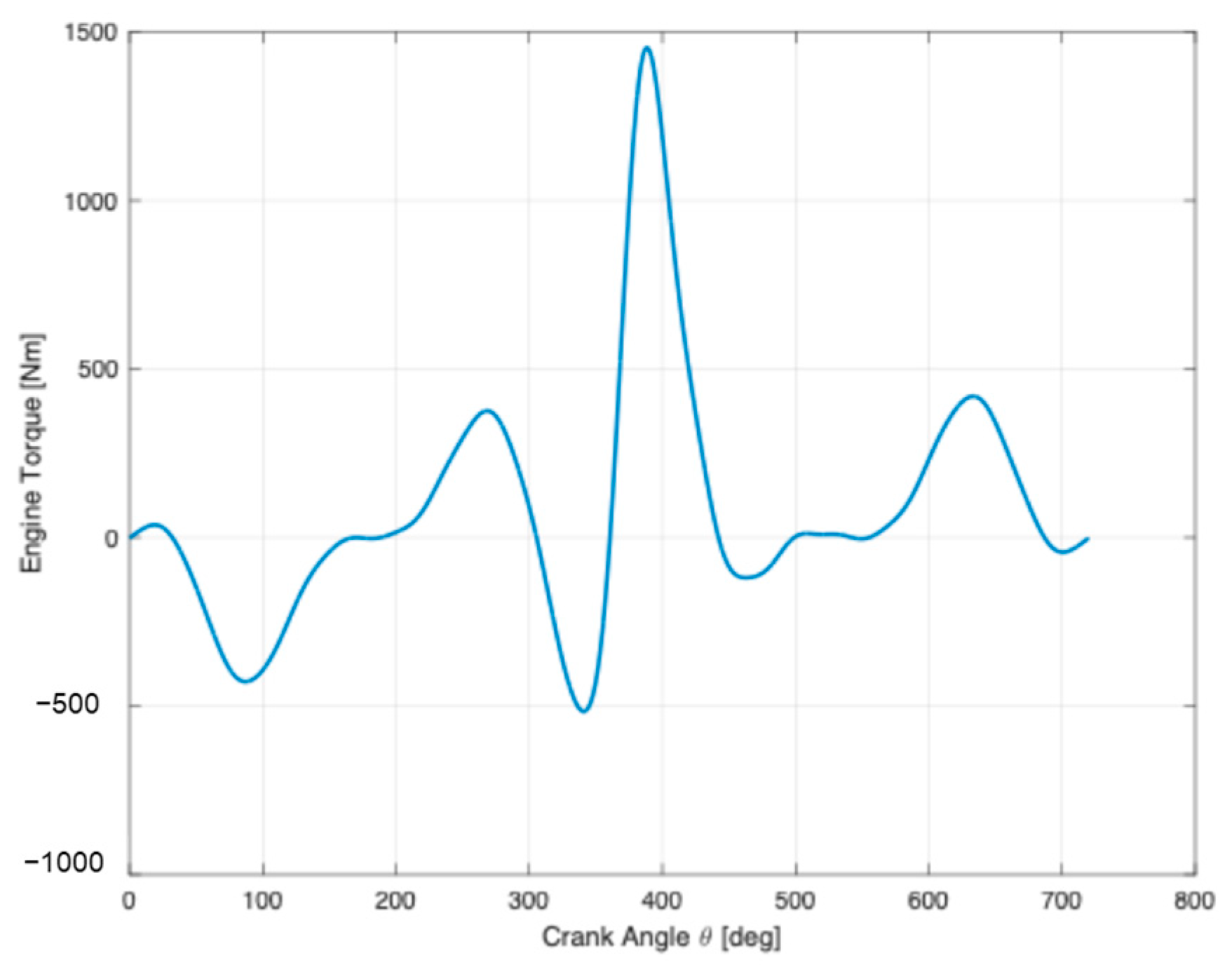
The sum of the gas torque (Figure 9 left) and the inertia torque (Figure 9 right) correspond to the total engine torque (Figure 10) that can be decomposed by Fourier’s series (Equation (8)) as a sum of k sinusoidal moments with frequency kωm/2 and phase ϕ.
Figure 9.
Gas torque and inertia torque at different crank angles.
Figure 10.
Engine torque at different crank angles.
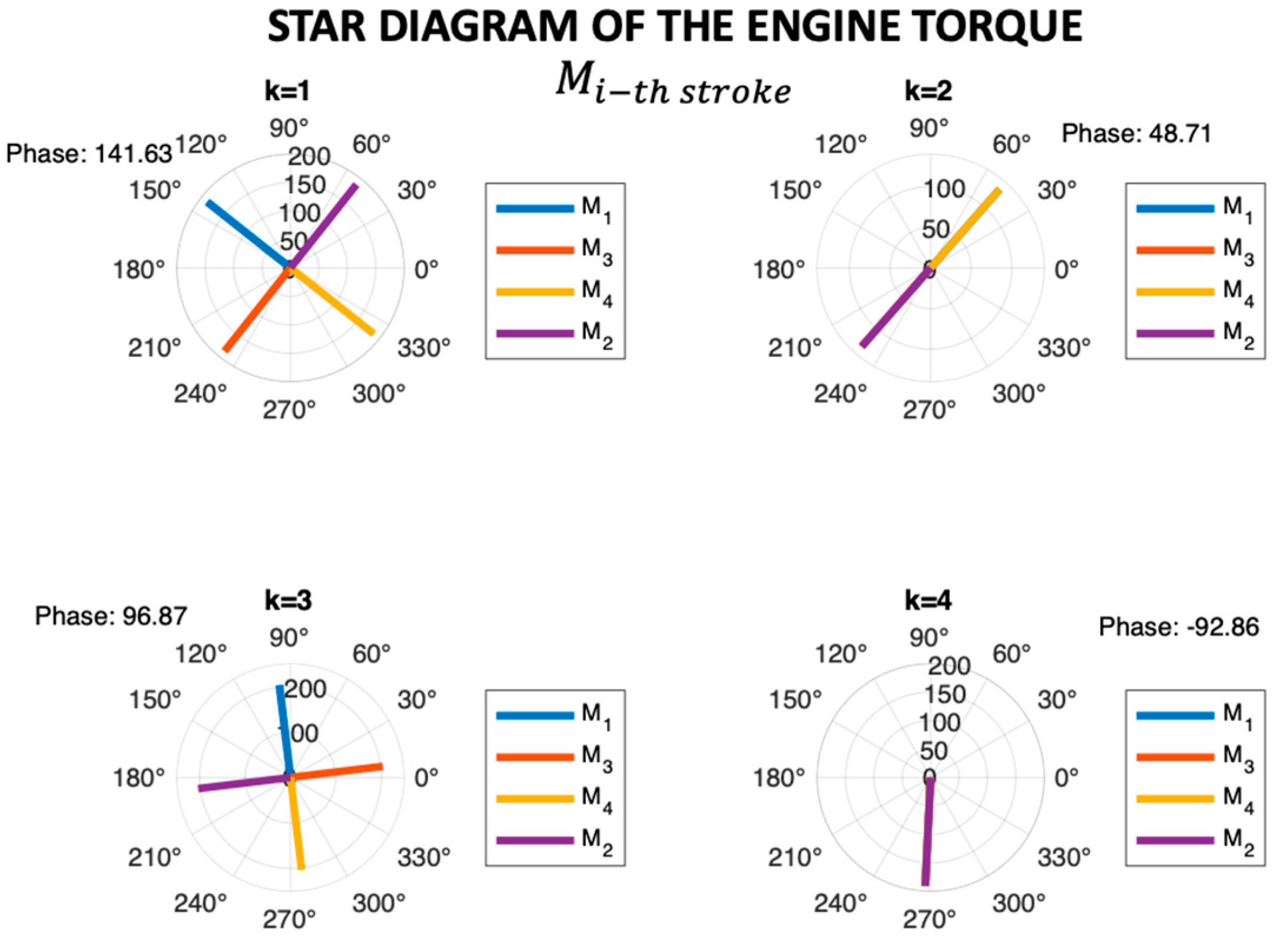
By knowing each term of the Fourier’s series for one cylinder, it is possible to construct the star diagram for the four cylinders to analyze possible resonant conditions that can occur in the cylinders and identify possible critical harmonics. In Figure 11, the first four star diagrams are reported, where Mi is the torque of the k harmonic on the i-th cylinder.
Figure 11.
Star diagram of the engine torque.
The adopted ignition sequency of the strokes is 1-3-4-2. For the first harmonic (k = 1), the phase shift for each torque is equal to 90°; for the second harmonic (k = 2), it is equal to 180°; for the third harmonic (k = 3), it is equal to 270° and for the fourth harmonic, (k = 4) it is equal to 360°. This last condition is the more critical one because all the cylinders are under resonant conditions.
4. Conclusions
In this work, a comparison between analytical and numerical methods for the analysis of torsional oscillation was performed. The engine’s component can be reduced to a lumped system adopting simplification on inertia and stiffness of the crankshaft.
FE modal analysis and lumped model critical torsional frequencies are in good agreement, with an error that is below 8%, allowing an easy and non-time-consuming approach for the estimation of the critical frequencies. Harmonic frequencies—critical frequencies diagram can be constructed to identify possible resonance conditions at a given rotational regime of the engine and the engine torque can be decomposed adopting Fourier’s series to analyze possible resonance conditions that can happen in strokes.
Compared to the state of the art, the present article differs for a series of innovative features. This study combines analytical approaches, such as Fourier series decomposition of the forces and torques generated during the combustion cycle, with numerical analysis based on FEA. This methodology allows for a more comprehensive analysis of torsional oscillations than other articles that focus primarily on just one of these approaches. The paper proposes a lumped mass system to represent the transmission system and driveshaft, significantly reducing the computational burden compared to fully three-dimensional modeling. This simplified approach maintains accuracy comparable with the numerical method (maximum error of less than 8%). Unlike some previous articles that focus only on simulations or theoretical analyses, this work uses experimental measurements of the combustion gases inside the chamber to determine the pressure during the thermodynamic cycle of a real engine. This data is then used to calculate the gas-inertial couples. Introducing a harmonic vs. diagram critical frequency, used to identify resonance conditions based on the engine rotation speed. This allows dangerous frequencies to be analyzed in the operating context of the engine. The study analyzes a specific turbodiesel engine, largely adopted in automotive applications, and links the theoretical results to real-world scenarios, such as maximum torque conditions, making the results directly applicable to engineering design.
Author Contributions
Conceptualization, D.S. and S.B.; methodology, D.S.; software, D.S.; validation, S.B.; formal analysis, D.S.; investigation, S.B.; resources, S.B.; writing—original draft preparation, D.S.; writing—review and editing, D.S. and S.B. All authors have read and agreed to the published version of the manuscript.
Funding
This research received no external funding.
Institutional Review Board Statement
Not applicable.
Informed Consent Statement
Not applicable.
Data Availability Statement
Dataset available on request from the authors.
Conflicts of Interest
The authors declare no conflicts of interest.
References
- Wang, M.; Xiao, N.; Fan, M. The Torsional Vibration Simulation of the Diesel Engine Crankshaft System Based on Multi-Body Dynamic Model. J. Multi-Body Dyn. 2021, 235, 443–451. [Google Scholar] [CrossRef]
- Brusa, E.; Delprete, C.; Genta, G. Torsional vibration of crankshafts: Effects of non-constant moments of inertia. J. Sound. Vib. 1997, 205, 135–150. [Google Scholar] [CrossRef]
- Charles, P.; Sinha, J.K.; Gu, F.; Lidstone, L.; Ball, A.D. Detecting the Crankshaft Torsional Vibration of Diesel Engines for Combustion Related Diagnosis. J. Sound. Vib. 2009, 321, 1171–1185. [Google Scholar] [CrossRef]
- Burla, R.K.; Seshu, P.; Hirani, H.; Sajanpawar, P.R.; Suresh, H.S. Three Dimensional Finite Element Analysis of Crankshaft Torsional Vibrations Using Parametric Modeling Techniques. SAE Trans. 2003, 112, 2330–2337. [Google Scholar] [CrossRef]
- Cevik, M.C.; Rebbert, M.; Maassen, F. A New Approach for Prediction of Crankshaft Stiffness and Stress Concentration Factors; SAE Technical Papers; SAE: Warrendale, PA, USA, 2010. [Google Scholar] [CrossRef]
- Schagerberg, S.; Mckelvey, T. Instantaneous Crankshaft Torque Measurements-Modeling and Validation; SAE: Warrendale, PA, USA, 2003. [Google Scholar]
- Londhe, A.; Yadav, V.H. Design and Optimization of Crankshaft Torsional Vibration Damper for a 4-Cylinder 4-Stroke Engine; SAE: Warrendale, PA, USA, 2008. [Google Scholar]
- Bremer, R.C.; Schwitzer, W.; Murray, C. A Practical Treatise on Engine Crankshaft Torsional Vibration Control; SAE: Warrendale, PA, USA, 1979. [Google Scholar]
- Sun, L.; Luo, F.; Shang, T.; Chen, H.; Moro, A. Research on Torsional Vibration Reduction of Crankshaft in Off-Road Diesel Engine by Simulation and Experiment. J. Vibroeng. 2018, 20, 345–357. [Google Scholar] [CrossRef]
- Khaliullin, F.; Vagizov, T.; Shakirov, R.; Deryushev, I. Torsional Vibrations of Car Crankshaft Engine Taking into Account Elements of Transmission. In Engineering for Rural Development; Latvia University of Life Sciences and Technologies: Jelgava, Latvia, 2021; Volume 20, pp. 979–985. [Google Scholar]
- Carter, B.C. An Empirical Formula for Crankshaft Stiffness in Torsion. Engineering 1928, 126, 36. [Google Scholar]
Disclaimer/Publisher’s Note: The statements, opinions and data contained in all publications are solely those of the individual author(s) and contributor(s) and not of MDPI and/or the editor(s). MDPI and/or the editor(s) disclaim responsibility for any injury to people or property resulting from any ideas, methods, instructions or products referred to in the content. |
© 2025 by the authors. Licensee MDPI, Basel, Switzerland. This article is an open access article distributed under the terms and conditions of the Creative Commons Attribution (CC BY) license (https://creativecommons.org/licenses/by/4.0/).