1. Introduction
Oil recovery is a vital process happening in the petroleum industry that includes various step-by-step processes. The first process is primary oil recovery, which is a natural method of oil lift that recovers only a small volume of original oil-in-place (OOIP). After the primary step of oil recovery, the next process to increase recovery is the secondary oil recovery, which has an rate of oil recovery 15–35% higher than that of OOIP. For recovering oil still trapped even after the secondary recovery, there is a more enhanced method known as enhanced oil recovery (EOR). This consists of substances being artificially injected, and can displace an additional 30–60% of the oil-in-place. Based on the injection substance, the EOR process can be divided into three types: chemical flooding, gas flooding, and thermal recovery.
The improved oil recovery (EOR) technique called chemical flooding uses a chemical solution as the displacement fluid. It mostly involves polymer flooding, polymer/surfactant binary-combination flooding, and surfactant/polymer/alkali ternary-combination flooding. The main reason for the oil displacement and increase in sweep efficiency is wettability alteration and a decrease in interfacial tension when the chemical substance comes into contact with the oil-wet rock pore surface. Regarding chemical injections, the most recent and exciting line of inquiry is the use of nanofluids as the preferred injecting medium, which demonstrates improved efficiency as well as continuous scientific progress. The sol–gel synthesis method for silica nanofluid production will be discussed in this research. The effect of the silica nanofluid on the wettability and interfacial tension of sandstone pores will then be examined. Because of their ability to modify wettability, silica nanoparticles are being studied for improved oil recovery (EOR) in shale-oil reservoirs. According to studies, hydrophilic silica nanoparticles promote a less oily state, allowing oil molecules to detach from mineral surfaces more easily [
1]. However, grafting aminosilanes onto silica nanoparticles can enhance adhesion forces and surface energies, influencing nanoparticle behavior. Studies emphasize the significance of nanoparticle silanization as well as the mineralogical effects on molecular interactions [
2]. Surface-modified silica nanoparticles have been shown in experiments to improve oil recovery by lowering oil–water interfacial tension and changing wettability [
3]. The objective of this study is to investigate the single-step synthesis method of silica nanofluid, its characterization, and its effects on wettability, shown by contact angle determination and interfacial tension, which are the two main mechanisms of the chemical flooding method of enhanced oil recovery.
2. Nanofluid and Enhanced Oil Recovery
Nanofluid-enhanced oil recovery (EOR) technology is an innovative approach to enhancing oil production in oilfields. It entails the dispersion of nanoparticles within a fluid, strategically utilizing the distinctive properties of these nanoparticles (NPs) to engage with reservoir rocks or crude oil, resulting in a significant enhancement of the oil recovery rate [
1]. The main mechanisms during EOR to mobilize trapped oil in the reservoirs are IFT reduction and wettability alteration. Surfactant flooding utilizes these two main techniques to modify capillary number in the oil reservoirs, consequently increasing the oil recovery efficiency [
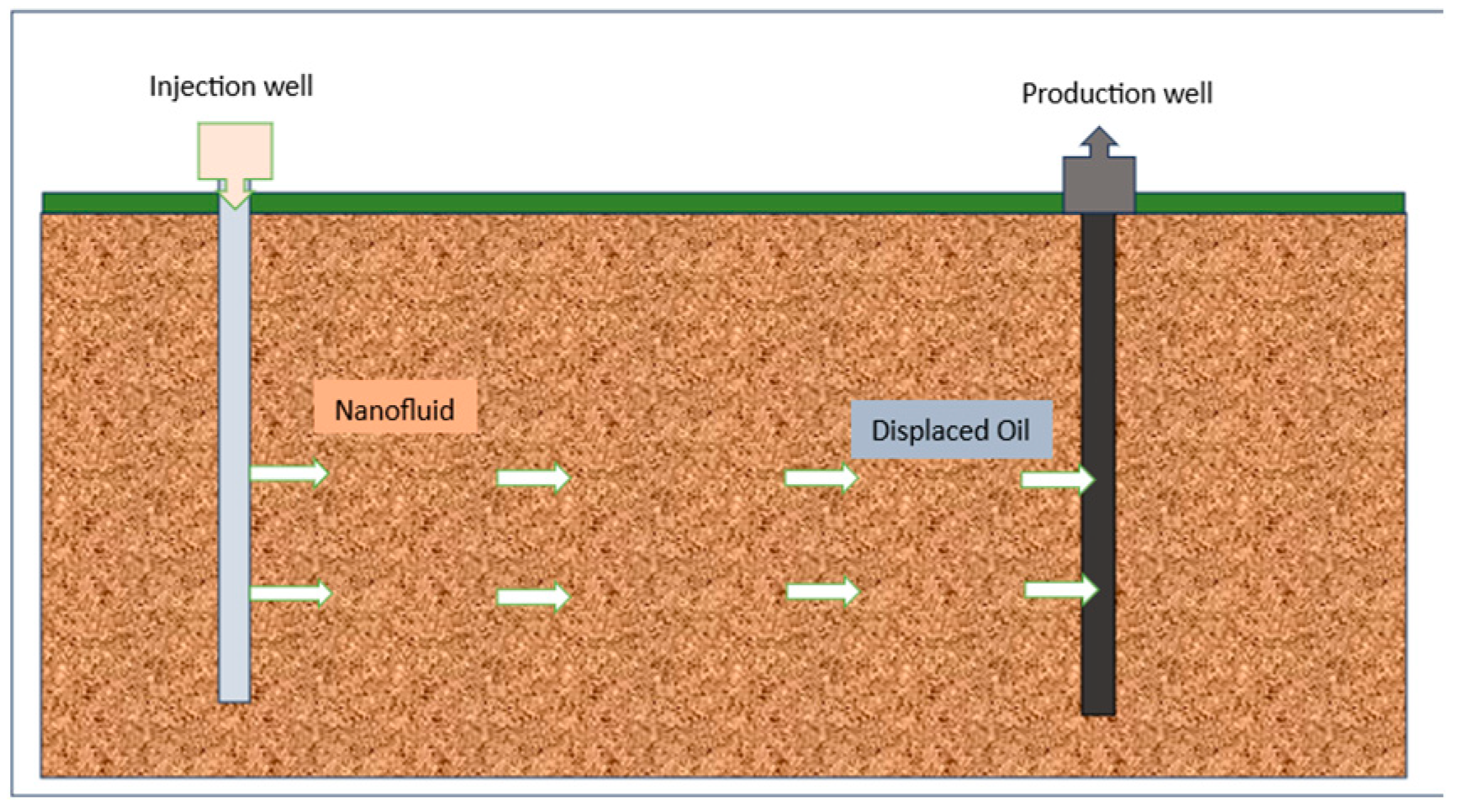
2]. The process consists of injecting the nanofluid with the injection fluid through the well, where it acts upon the rock surface, changing the oil-wet rock surface into a fluid-wet surface and thus displacing the oil through the pores until it reaches the production well, where more trapped oil is recovered, as illustrated in
Figure 1.
3. Single-Step Silica Nanofluid Synthesis
While earlier methods to synthesize silica nanofluids have ranged from using any chemical additive (like polymer, surfactant, or other colloidal solid like TiO
2/Ag NPs) to by pH-controlled synthesis, for this work, the synthesis of a stable silica nanofluid was attempted via the single-step method [
3]. Unlike the two-step method for the synthesis of nanofluid by mixing commercially produced nanoparticles in a base fluid, the single-step method consists of preparing nanofluids via Stöber’s sol–gel method in the presence of a more viscous base fluid, such as a polymeric solution made by mixing polyacrylamide (PAM) in deionized water (DI water), as well as other chemicals such as tetraethyl orthosilicate (TEOS, assay > 99%) as a silica precursor, ethanol (assay > 99.9%) plus DI water as solvent, and ammonium hydroxide as a basic catalyst.
The whole process is carried out in a magnetic stirrer, starting with the base fluid as a PAM solution (80 mL), which was made by mixing PAM with DI water, resulting in a solution with a concentration of 1000 parts per million (ppm). The chemicals required, which are 20 mm (mL) of solvent ethanol, 3 mL of silica precursor TEOS in equal intervals, and 1 mL of catalyst NH
4OH, are then added, and the solution is stirred at 600 rpm (rotation per minute) at controlled room temperature. All the ideal amounts of chemicals and synthesis conditions are obtained through the trial and error method by data provided in the thesis submitted by Krishana Raghav Chaturvedi from the Rajiv Gandhi Institute of Petroleum Technology [
4].
3.1. Chharecterization of Synthesized Silica Nanofluid
3.1.1. Particle Size and Zetapotential Analysis
Particle size and zetapotential determination of the synthesized nanofluid are critical characterization steps that can further predict the performance of the nanofluid. It is shown that the viscosity of nanofluids heavily depends on particle size: the smaller the particles, the higher the viscosity. It is crucial to evaluate the stability of nanofluids before they are injected into reservoirs [
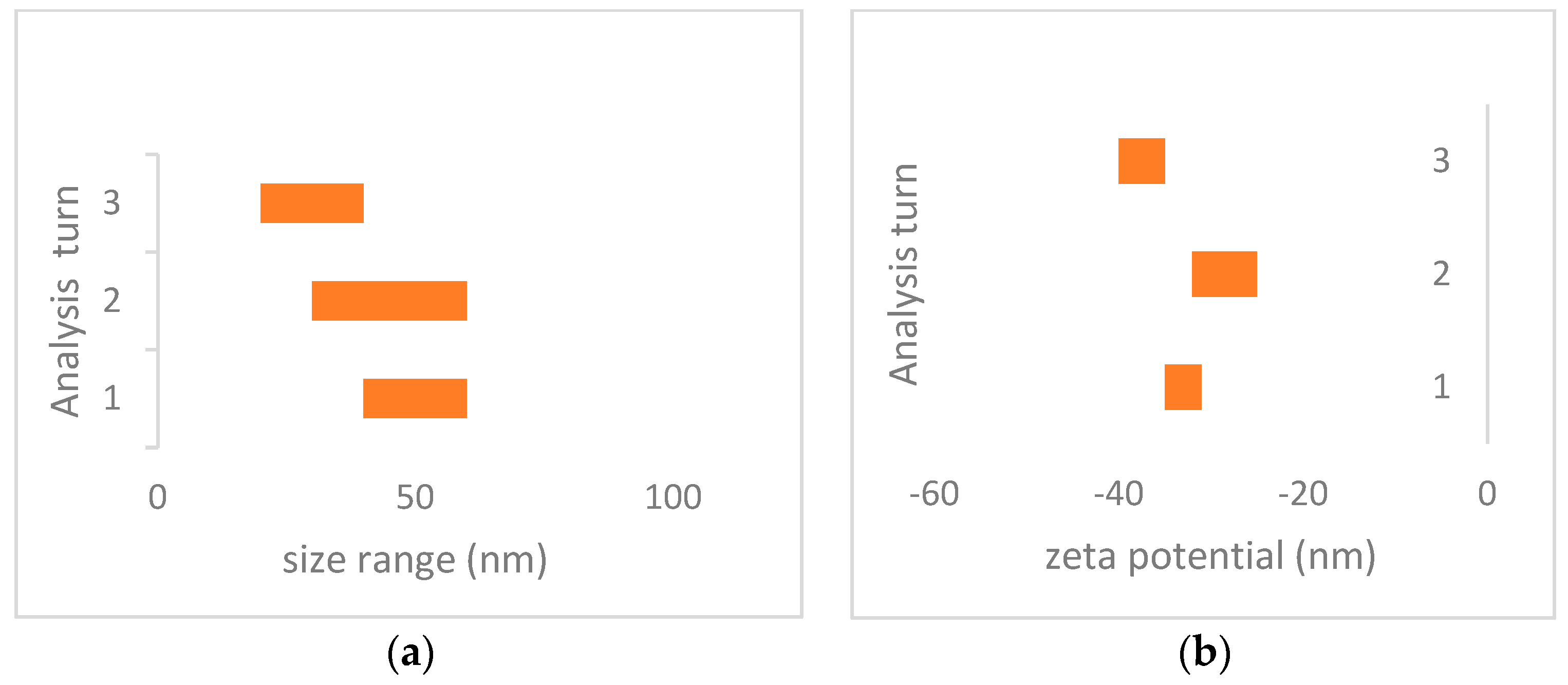
5]. A DLS Zetasizer (Malvern Panalytical Zetasizer Nano) is used for determining the particle size and zetapotential. The synthesized nanofluid is collected as three samples from the same source to achieve an approximate size range of silicon dioxide nanoparticles suspended in the nanofluid. The data obtained from the equipment are shown in
Table 1 and a graphical representation is shown in
Figure 2 and
Figure 3, respectively. The data obtained aligns with the nano size range and stability, making it efficient for further analysis and experimental procedures. The viscosity of the nanofluid is also determined using Say bolt viscometer and found to be 13.23 mPa s.
3.1.2. Morphological Analysis
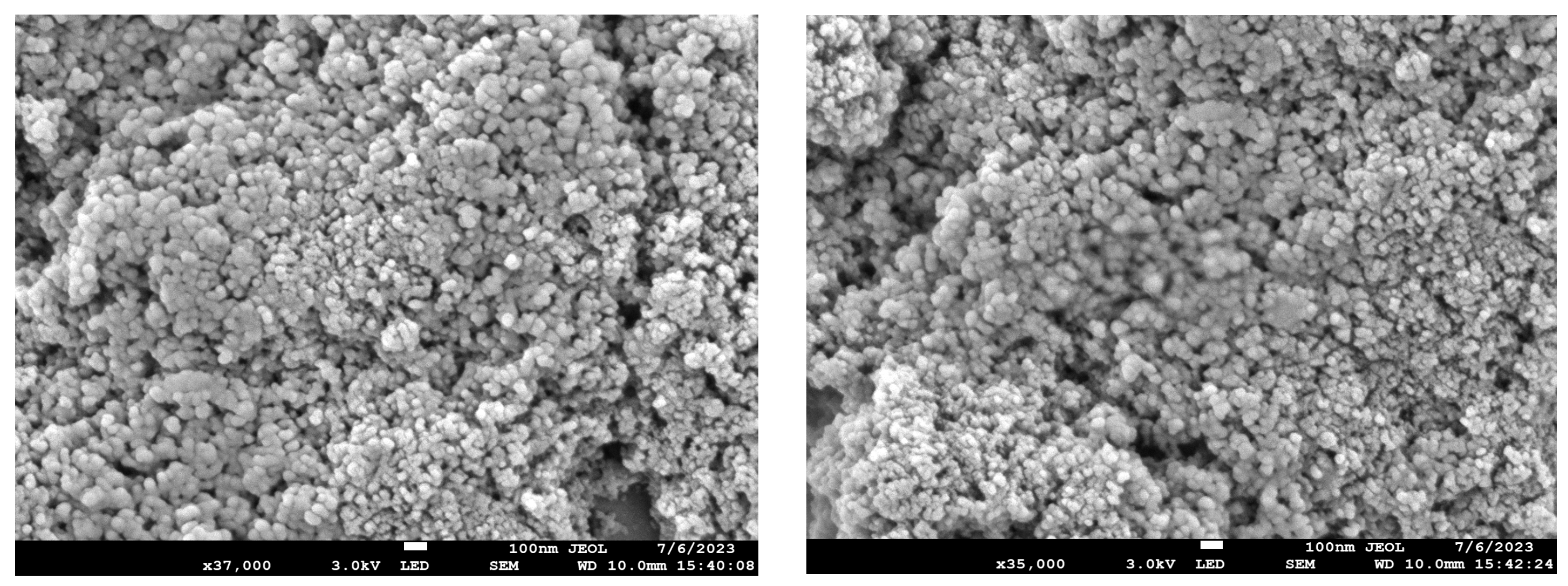
Scanning electron microscopy (SEM) analysis was performed on the sample to study the morphology of the synthesized nanoparticles dispersed in the nanofluid. Since all three samples are from the same mother fluid, we have taken samples 1 and 2 to find the shape analysis. The shape of the nanoparticles in samples 1 and 2 was especially defined and exhibited a spherical shape in agglomerated form, as shown in
Figure 3. This clearly confirms the shape and can also predict that the size range is under 100 nm.
4. Effect of Silica Nanofluid on Wettability and Interfacial Tension in Sandstone Pores
Interfacial tension (IFT) reduction and wettability alteration (WA) are both important enhanced oil recovery (EOR) mechanisms. In oil-wet formations, IFT reduction reduces the magnitude of negative capillary pressure, releasing trapped oil [
6]. Wetting phenomena have been extensively investigated in treatment of rock surfaces in oil reservoirs using nanofluids for enhanced oil recovery (EOR) purposes [
7]. Nanoparticles (NPs) have shown their potential in EOR through surface modification, which results in wettability alteration [
7].
4.1. Study on Wettability Alteration
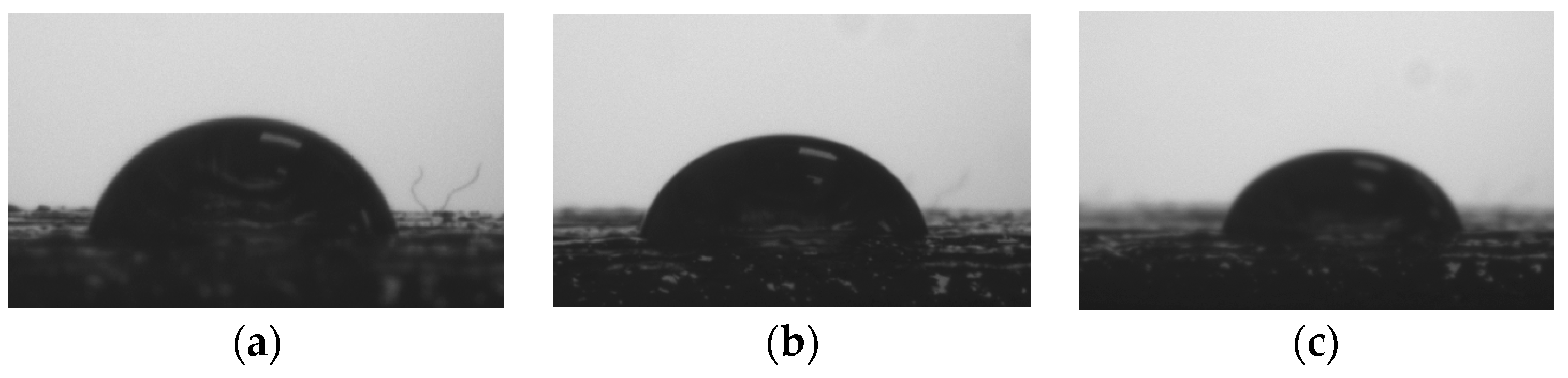
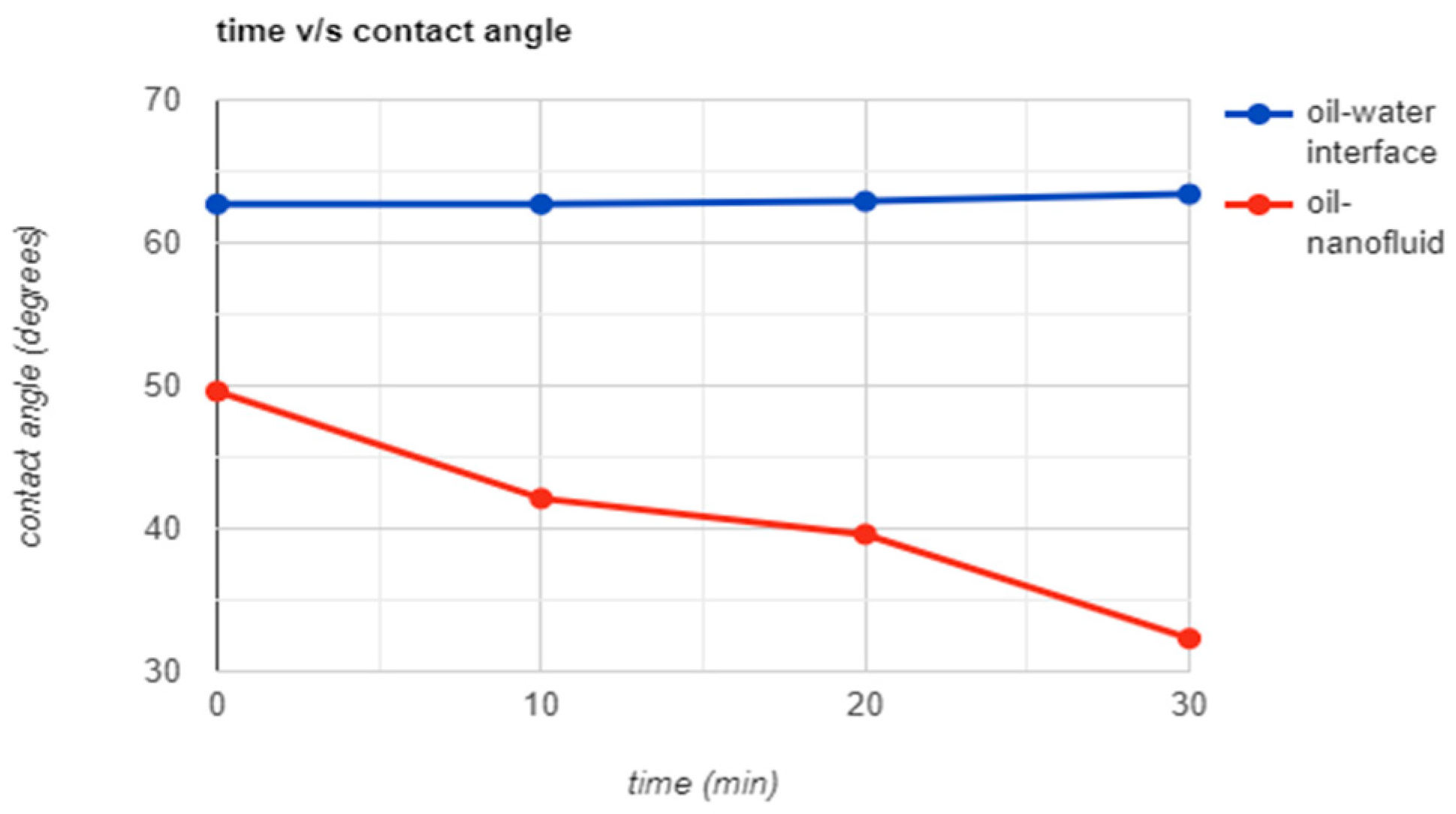
To examine the wettability alteration, the contact angle change is determined here using the Kruss DSA20E Easy Drop Goniometer. For this, the sandstone collected from an outcrop in Gujarat, India, is crushed finely into 100 mesh sizes and mixed with Bombay high crude with an API gravity of 43.6 to form a paste to mimic reservoir surface conditions. After making the surface, the contact angle change is examined over time using the mentioned equipment with droplets of fluid, such as DI water and synthesized silica nanofluid. The data obtained is shown in the below
Table 2.
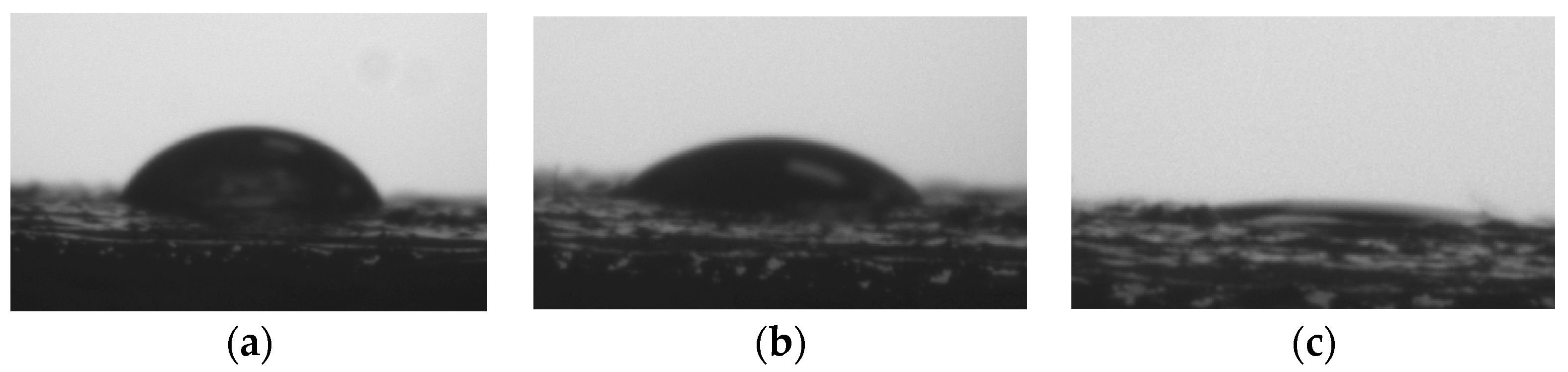
The pictures taken at the time of dropping, 20 min after, and 40 min after for DI water are shown in
Figure 4, and for silica nanofluid in
Figure 5. Also, the comparison from
Table 2 is graphically represented in below
Figure 6.
From the above contact angle analysis, it is clear that the contact angle is altered drastically with dropping silica nanofluid, similar to nanofluid injection in reservoirs; thus, the sandstone surface changes its wettability from oil-wet to fluid-wet, resulting in the mobilization of oil more efficiently.
4.2. Study on Interfacial Tension
Interfacial tension (IFT) as a key enhanced oil recovery (EOR) mechanism has a great role in improving oil recovery [
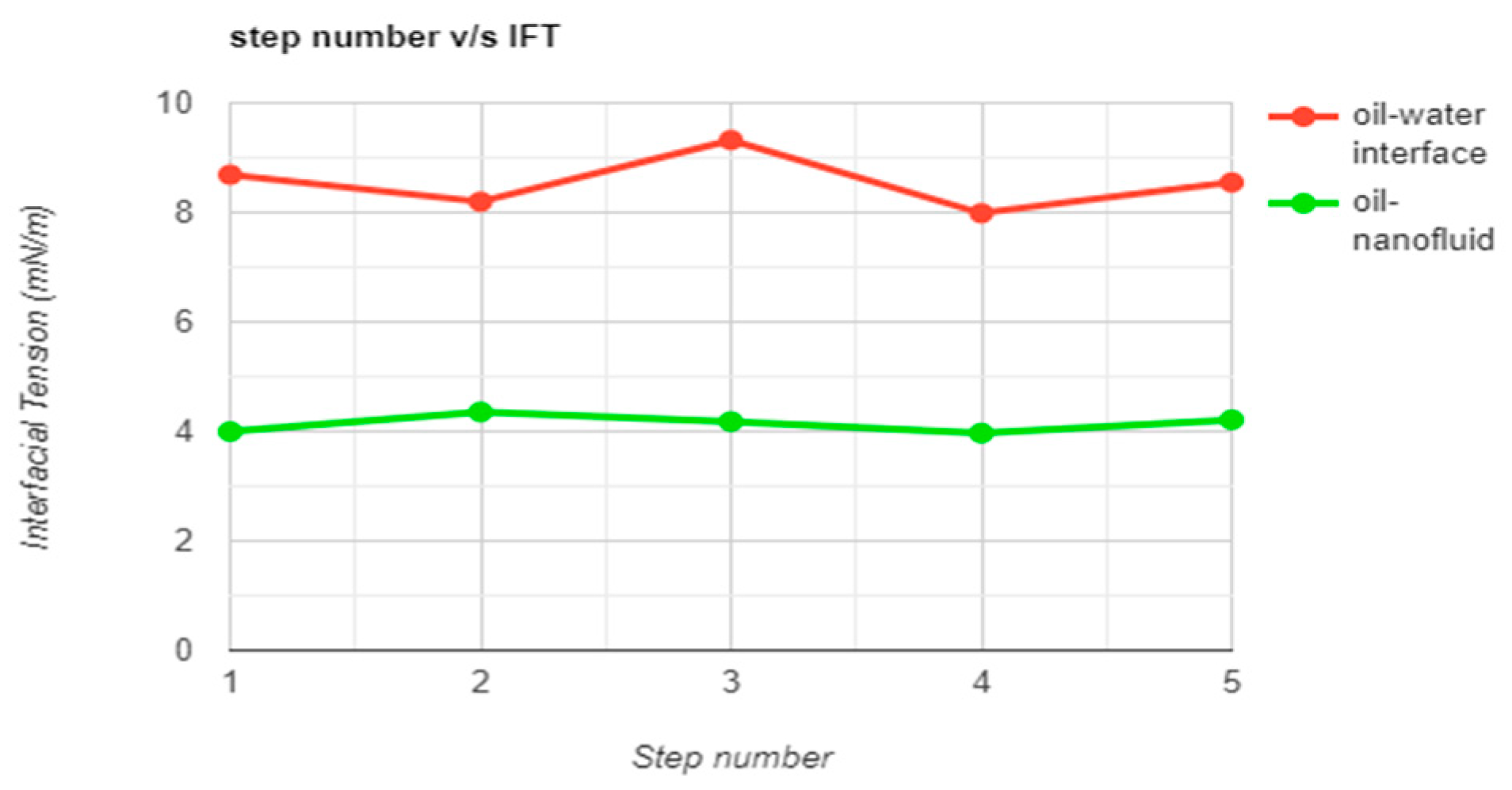
8]. Here, the interfacial tension change is studied between the reservoir oil (Bombay high) and injection fluids DI water and silica nanofluid. IFT is determined using a DTS60 Series Surface tension analyzer between the oil phase and fluid phase. Equal amounts of oil and one of the injection fluids—DI water or nanofluid, for example, 40 mL—are placed in the container inside the tension analyzer and the IFT at the oil–DI water (O/W) interface is measured at least five times, which is mentioned as step number, to meet the accuracy requirements. The same is performed on the oil–nanofluid (O/N) interface to study the IFT change. As the density of Bombay crude is already specified, at 0.8372 g/cm
3 [
9], it is predicted that it will float on silica nanofluid, which has a density of 0.9885 g/cm
3, as determined using a pycnometer. Here also, the IFT comparison of nanofluids is performed with DI water of density 0.9976 g/cm
3. The IFT data obtained after the analysis is shown in
Table 3 and its graphical representation in
Figure 7.
The interfacial tension measurements show that the IFT values for the oil–water interface range from 7.98574 to 9.32274 mN/m and the oil–nanofluid interface values from 3.69080 to 4.355481 mN/m. From the above data shown in
Table 3, it is clear that the reduction in interfacial tension at the nanofluid–oil interface is much greater than at the oil–water interface. So, it is confirmed that using silica nanofluid as an injection fluid will be more effective in displacing the trapped oil from the inner pores of the reservoir rocks. This supports the findings of earlier researchers [
10,
11].
5. Conclusions
This study on the synergistic effect of silica nanofluid on wettability and interfacial tension in sandstone pores concluded with successful results, demonstrating an alteration in wettability from oil-wet to fluid-wet upon application of silica nanofluid and a reduction in interfacial tension, which are the main mechanisms in inner reservoir pores that lead to additional recovery in EOR. Because of these interactions happening between oil, nanofluid, and rock surfaces, oil that is cannot be recovered using primary and secondary recovery methods is recovered in EOR.
While the paper discusses the single-step synthesis process of silica nanofluid, it does not address potential obstacles or limitations of this strategy. Additionally, the literature lacks additional characterization methods for determining surface shape and nanoparticle concentration. Variations in temperature, pressure, and salinity may also impact nanofluid performance in reservoir settings. Hence, future research should explore these effects. Furthermore, the study lacks reservoir-scale simulations to confirm silica nanofluid efficacy in improving oil recovery under realistic circumstances. Further research should investigate the effects of various nanoparticle concentrations, surface functionalization, and additives on nanofluid stability and performance. There is also a need to study the mechanisms governing nanofluid–rock interactions, like nanoparticle deposition and mobilization in porous media. These research pathways will significantly advance understanding of silica nanofluid applications in oil recovery systems.
Author Contributions
Conceptualization, experimentation, and original drafting, M.B.; supervision and review and editing, T.S. and M.K.; review and editing, formal analysis, and funding acquisition, M.Y. and H.I. All authors have read and agreed to the published version of the manuscript.
Funding
This research was supported by the Clean Energy Technologies Research Institute (CETRI), University of Regina Canada.
Institutional Review Board Statement
Not applicable.
Informed Consent Statement
Not applicable.
Data Availability Statement
All data generated or analyzed are included in this article.
Acknowledgments
We thank the EOR Laboratory at Rajiv Gandhi Institute of Petroleum Technology for their resources and guidance in conducting the synthesis and characterization of silica nanofluid using the DLS Zetasizer. The same institute’s central instrumentation facilities made it easier to use SEM analysis for surface and image analysis. We also thank Aligarh Muslim University’s Laboratory of the Interdisciplinary Nanotechnology Center, where the wettability investigation using the Kruss DSA20E Easy Drop Goniometer was carried out, and the Polymer-Surfactant Laboratory in the Department of Petroleum Studies for providing the DTS60 Series surface tension analyzer used for the interfacial tension. The author would like to thank the Clean Energy Technologies Research Institute (CETRI, University of Regina, Canada) for providing resources to aid in carrying out this research.
Conflicts of Interest
There are no conflicts of interest for this research.
References
- Tong, Q.; Fan, Z.; Liu, Q.; Qiao, S.; Cai, L.; Fu, Y.; Zhang, X.; Sun, A. Research Progress in Nanofluid-Enhanced Oil Recovery Technology and Mechanism. Molecules 2023, 28, 7478. [Google Scholar] [CrossRef] [PubMed]
- Manshad, A.K.; Rezaei, M.; Moradi, S.; Nowrouzi, I.; Mohammadi, A.H. Wettability alteration and interfacial tension (IFT) reduction in enhanced oil recovery (EOR) process by ionic liquid flooding. J. Mol. Liq. 2017, 248, 153–162. [Google Scholar] [CrossRef]
- Chaturvedi, K.R.; Fogat, M.; Sharma, T. Low Temperature rheological characterization of single-step silica nanofluids: An additive in refrigeration and gas hydrate drilling applications. J. Pet. Sci. Eng. 2021, 204, 108742. [Google Scholar] [CrossRef]
- Chaturvedi, K.R. Synthesis, Characterization, and Performance Evaluation of Single-step Silica Nanofluids for Improved Flow Behaviour, Crude Mobilization, and Carbon Utilization Doctor of Philosophy. Ph.D. Thesis, Rajiv Gandhi Institute of Petroleum Technology, Jais, India, 2021. [Google Scholar]
- Liang, T.; Hou, J.-R.; Qu, M.; Xi, J.-X.; Raj, I. Application of nanomaterial for enhanced oil recovery. Pet. Sci. 2022, 19, 882–899. [Google Scholar] [CrossRef]
- Deng, X.; Kamal, M.S.; Patil, S.; Hussain, S.M.S.; Mahmoud, M.; Al-Shehri, D.; Al-Shalabi, E.W. Investigation of the Coupled Effect of IFT Reduction and Wettability Alteration for Oil Recovery: New Insights. ACS Omega 2023, 8, 12069–12078. [Google Scholar] [CrossRef]
- Shalbafan, M.; Esmaeilzadeh, F.; Vakili-Nezhaad, G.R. Enhanced oil recovery by wettability alteration using iron oxide nanoparticles covered with PVP or SDS. Colloids Surf. A Physicochem. Eng. Asp. 2020, 607, 125509. [Google Scholar] [CrossRef]
- Ali, J.A.; Kolo, K.; Manshad, A.K.; Stephen, K.; Keshavarz, A. Modification of LoSal water performance in reducing interfacial tension using green ZnO/SiO2 nanocomposite coated by xanthan. Appl. Nanosci. 2018, 9, 397–409. [Google Scholar] [CrossRef]
- Dilawar, S.V.K.; Agrawal, K.M.; Khan, H.U. Sedimentation tendency of Bombay High crude oil: Effect of wax and flow improver additive. Indian J. Chem. Technol. 1995, 2, 258–260. [Google Scholar]
- Goharzadeh, A.; Fatt, Y.Y. Combined effect of silica nanofluid and wettability on enhanced oil recovery process. J. Pet. Sci. Eng. 2022, 215, 110663. [Google Scholar] [CrossRef]
- Udoh, T.H. Improved insight on the application of nanoparticles in enhanced oil recovery process. Sci. Afr. 2021, 13, e00873. [Google Scholar] [CrossRef]
| Disclaimer/Publisher’s Note: The statements, opinions and data contained in all publications are solely those of the individual author(s) and contributor(s) and not of MDPI and/or the editor(s). MDPI and/or the editor(s) disclaim responsibility for any injury to people or property resulting from any ideas, methods, instructions or products referred to in the content. |



 ,
,