

Proceeding Paper

Progressive Collapse and Robustness Analysis of Multi-Story Steel Structures †
1
Department of Civil Engineering, Faculty of Engineering, Cukurova University, 01330 Adana, Türkiye
2
Department of Civil Engineering, Faculty of Engineering and Architecture, Bitlis Eren University, 13000 Bitlis, Türkiye
*
Author to whom correspondence should be addressed.
Presented at the 34th International Scientific Conference on Organization and Technology of Maintenance (OTO 2025), Osijek, Croatia, 12 December 2025.
Eng. Proc. 2026, 125(1), 24; https://doi.org/10.3390/engproc2026125024
Published: 18 February 2026

Abstract

Determining the damage mechanisms of structures that have suffered partial or total collapse under the influence of an earthquake contributes to revealing the causes of damage and taking the necessary precautions. Progressive collapse is a critical structural phenomenon in which local damage triggers a chain reaction, potentially leading to disproportionate failure of an entire system. In recent years, interest in multi-story steel structures has grown significantly due to their efficiency, adaptability, and performance in seismic and urban environments. This study offers a general exploration of the progressive collapse behavior of multi-story steel frames, focusing on robustness evaluation under various column removal scenarios. The aim is to enhance understanding of their structural response and support the development of safer, more resilient design strategies.

1. Introduction

Damage assessment studies conducted after devastating earthquakes are important in terms of revealing the main causes of damage and presenting structural solutions and suggestions accordingly. This data plays a critical role in the development of earthquake-resistant structural design principles. Such studies provide scientific data aimed at understanding the weak points of structures that cause collapse, especially by determining collapse mechanisms and ensuring that similar design errors do not occur in the future. The findings obtained about the nature and spread of structural damage contribute to the development of engineering solutions that will form the basis for both new building designs and the reinforcement of existing structures. Columns, which are vertical structural elements, stand out as critical elements in collapse mechanisms. Damage to such structural elements disrupts the integrity of the structure and significantly affects earthquake performance [1,2,3,4,5,6,7].
What happens when a column in a building suddenly fails? Can this local damage trigger a much larger collapse? These questions lie at the heart of progressive collapse analysis, a structural phenomenon in which a localized failure spreads through the system, potentially leading to the partial or total collapse of the entire structure. Unlike standard structural analyses, which often assume that damage remains confined, progressive collapse studies challenge this assumption by exploring how damage can propagate through a building. Such collapses are not limited to one cause. They can result from extreme events such as explosions, fires, earthquakes, or even hidden weaknesses in design or construction. In each case, the initiating factor may differ, but the outcome reveals the same vulnerability: when structural robustness is not adequately ensured, failure can escalate beyond expectations. Why does this matter now more than ever? Although once considered rare, progressive collapse has been responsible for several major structural failures in recent history, from the Ronan Point apartment collapse in 1968 to more recent events caused by terrorist attacks, seismic forces, or material degradation [8,9,10,11,12,13,14,15,16,17]. These events span different countries, building types, and trigger mechanisms, underlining that the risk is not isolated but global.
How is progressive collapse analysis different from seismic design? While seismic assessments focus on how structures respond to ground shaking, typically through dynamic analysis methods such as response spectrum or nonlinear time-history simulations, progressive collapse studies ask a different question: What if a key load-bearing element is suddenly lost? To answer this, engineers simulate scenarios like the removal of a column or beam and examine whether the structure can redistribute loads without initiating a chain reaction of failures. Modern design guidelines such as UFC 4-023-03 (2016) [18] and GSA (2016) [19] have formalized this approach. They offer clear methodologies for assessing structural robustness under hypothetical but severe loss scenarios. These documents introduce conservative demand-capacity ratios, require verification of alternate load paths, and promote design philosophies aimed not just at life safety, but also at preventing disproportionate collapse. For critical infrastructure in particular, these analyses are no longer optional; they are essential. The recent Kahramanmaraş earthquakes in Türkiye offered a tragic but instructive example. Many buildings failed not only due to seismic forces but also due to their inability to maintain integrity after local damage. These events strongly highlight the need to incorporate progressive collapse criteria into seismic risk assessments, especially in regions where vulnerable and aging building stock remains widespread. Although progressive collapse has attracted increasing scholarly attention in recent years, the majority of studies have predominantly focused on reinforced concrete buildings [20,21,22,23,24,25,26,27]. In contrast, steel-framed structures, despite their widespread use, have received comparatively limited examination within this context [28,29,30,31,32,33,34,35]. Why is this a concern? Steel is often assumed to offer superior performance under extreme conditions due to its inherent ductility, strength, and redundancy. Though in many cases it is true, recent structural failures suggest that this confidence may not always be justified. One particularly compelling case emerged in the aftermath of the devastating 2023 Kahramanmaraş earthquakes, which severely affected southern Türkiye [36,37,38,39,40,41,42,43,44]. Among the many structural failures observed, the progressive collapse of a steel building in Antakya stood out. This was not a case of outdated material or gross design neglect; the structure was steel, theoretically better suited to resist seismic loads. Yet, it failed.
How could this happen? Detailed observations and field investigations revealed that the failure was initiated by localized damage that propagated due to insufficient load redistribution capacity, inadequate connection detailing, and the compounded effects of seismic shaking. This incident serves as a stark reminder that even materials celebrated for their resilience are not immune to collapse under compound stressors. It emphasizes that true robustness lies not merely in material properties but in the integration of structural continuity, well-detailed connections, and design provisions that anticipate non-linear redistribution of forces during sudden member loss (Figure 1). Thus, advancing our understanding of how steel structures behave under progressive collapse conditions, particularly in seismic zones, has become an urgent research priority.

2. Materials and Methods

In this study, the structural response was simulated using the Applied Element Method (AEM), a discrete-based computational technique that integrates aspects of both finite element and discrete element methods. In AEM, the structure is idealized as an assembly of small, rigid elements interconnected by sets of normal and shear springs distributed along their faces. These springs represent the actual mechanical behavior of the material, including elasticity, cracking, crushing, and separation. As external loads are applied, the springs deform, allowing the simulation of both in-plane and out-of-plane responses. Moreover, the springs respond to stress redistribution, allowing the simulation to capture local failures, such as connection fractures or member buckling, and their propagation throughout the structure. Once a predefined failure criterion is met, such as tensile or shear capacity, the corresponding springs are removed, thus enabling the method to capture progressive damage, element separation, and collapse mechanisms [45,46,47,48,49,50]. The formulations for calculating the stiffness of normal and shear springs, and more details, can be found in previous studies [51,52,53,54].

Main Model

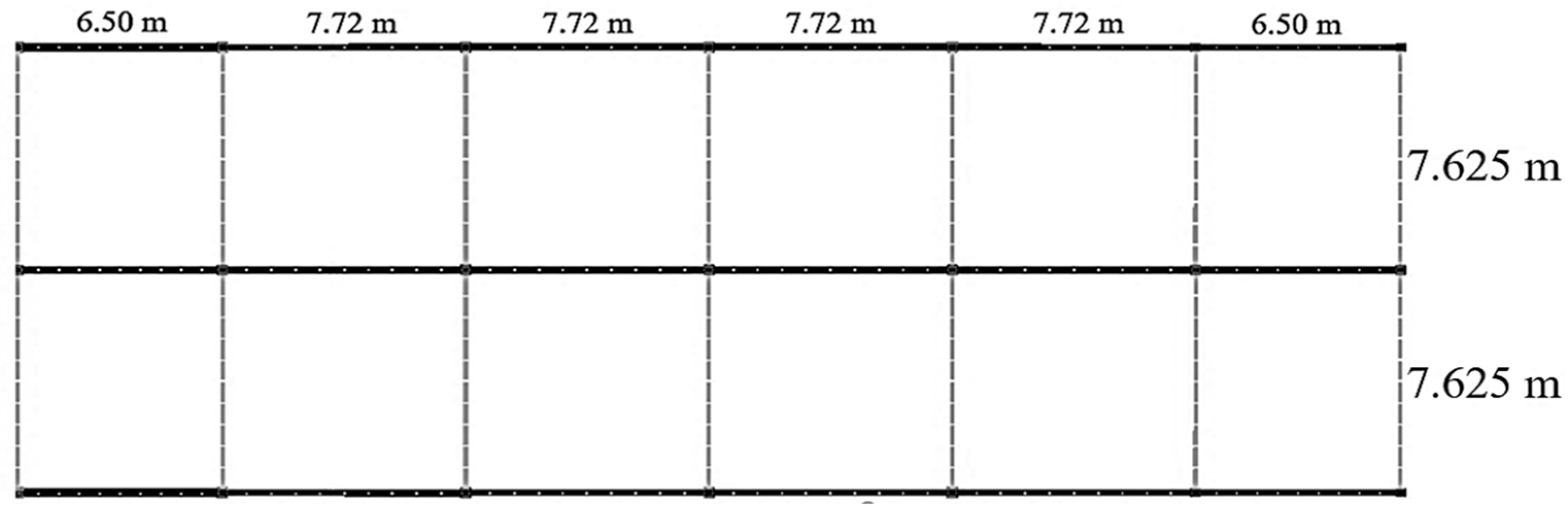
The steel members are discretized into rigid elements connected by normal and shear springs, which accurately replicate the material’s stiffness and nonlinear behavior, including yielding, plastic deformation, and fracture. The structural model investigated in this study is a representative six-story steel moment-resisting frame, developed to evaluate seismic performance and progressive collapse vulnerability. The building features a regular floor plan, composed of six bays in the longitudinal (X) direction and two bays in the transverse (Y) direction. The longitudinal bay widths vary from 6.50 m at the edges to 7.72 m in the interior, while the transverse bays are uniformly spaced at 7.625 m. This layout results in an overall plan dimension of approximately 45.88 m × 15.25 m, representative of mid- to high-rise commercial structures (Figure 2).
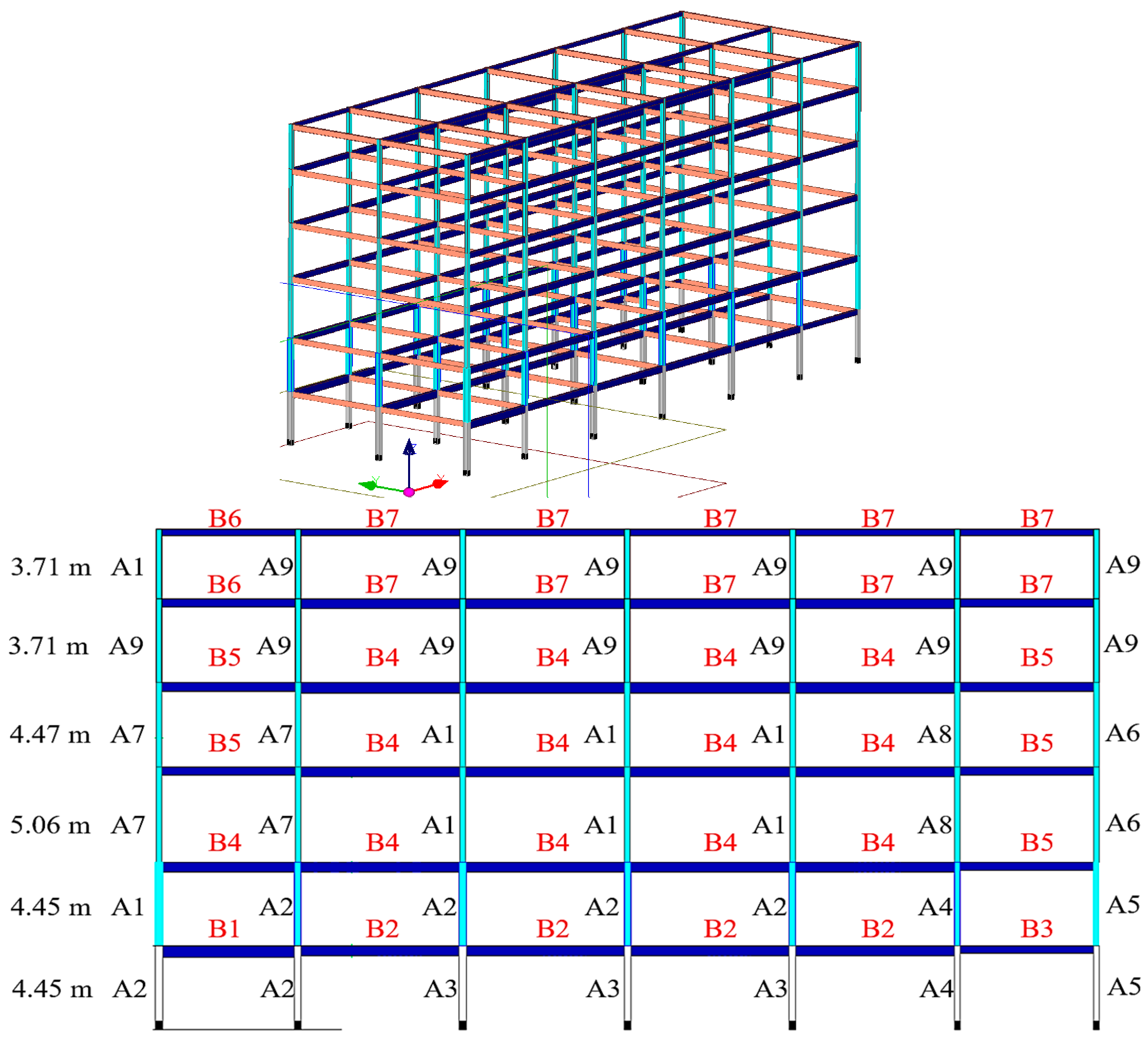
In elevation, the structure exhibits a six-story configuration with non-uniform story heights, reflecting the architectural realities of mixed-use or office buildings. The first two stories have a clear height of 4.45 m, followed by intermediate stories with heights of 5.06 m, 4.47 m, 3.71 m, and again 3.71 m, respectively, before reaching the roof (Figure 3). This vertical irregularity is intentionally preserved to investigate its influence on the global seismic response and localized collapse mechanisms. The base of all columns is assumed to be fully fixed, providing moment continuity and preventing both translational and rotational degrees of freedom at the foundation level. This boundary condition reflects a conservative assumption commonly used in the absence of detailed soil–structure interaction data and ensures the frame can adequately transfer lateral loads through rigid anchorage (Figure 3).
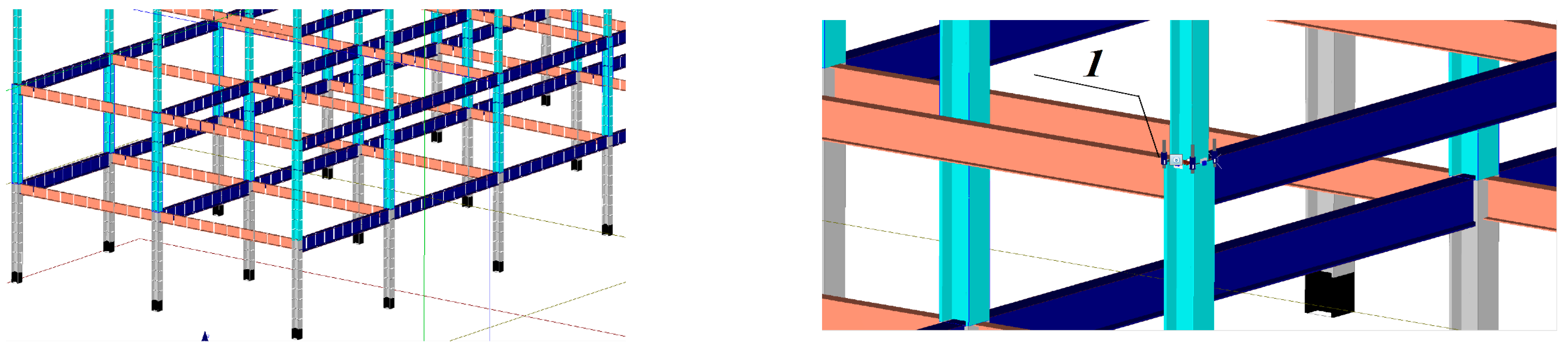
Throughout the superstructure, all beam-column joints are modeled as rigid connections, consistent with moment-resisting frame behavior. This assumption allows full moment transfer and maintains frame stability under lateral and progressive collapse scenarios. Beam ends are constrained to the column faces using rigid joint zones and spring-based connectors. To enable continuous interaction between elements with differing cross-sectional sizes, particularly in regions where column sections change along the height, implicit transition elements composed of steel material were introduced (Figure 4). These intermediate elements ensure compatibility of deformation and stress transfer without artificially stiffening the model, thereby preserving the accuracy of the simulation.
The structural system consists entirely of wide-flange (WF) steel members, selected to reflect practical ranges of section sizes used in contemporary construction, as summarized in Table 1.
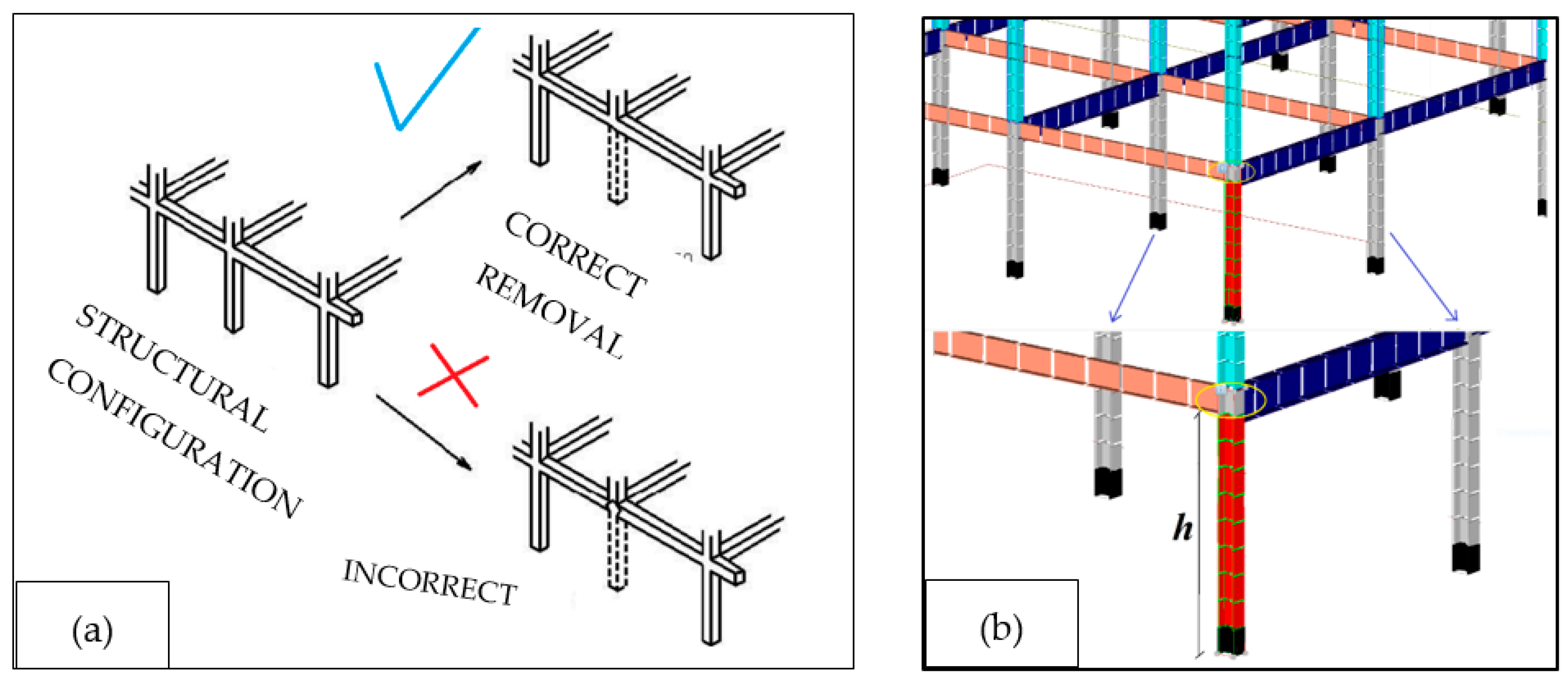
The model employs nine distinct column types (A1–A9) and seven beam types (B1–B7). Heavier columns, such as 12 WF 133 (A2) and 12 WF 120 (A3), with depths of 305 mm, are placed in the core and lower stories to accommodate higher axial demands. Lighter column sections like 10 WF 33 (A9) and 10 WF 54 (A6) are utilized at upper stories and perimeter bays to enhance material efficiency. Beams are selected based on their flexural capacity and expected demand levels. Sections such as 24 B 76 (B1) and 21 WF 62 (B4) are assigned to high-demand zones, whereas lighter members like 14 B 17.2 (B6) and 14 B 22 (B7) are placed where moment and shear requirements are lower. This approach balances structural performance and economy, while maintaining sufficient stiffness and continuity across the floor system. All structural members in the model are assumed to be composed of structural steel with linear-elastic and elastoplastic behavior as defined in the applied element framework. The steel material is modeled with an elastic modulus of E = 200 GPa, Poisson’s ratio ν = 0.3, and a yield strength of fy = 345 MPa, representative of Grade 50 steel commonly used in modern construction. In accordance with the GSA (2016) [19] provisions, the clear height between adjacent lateral supports is removed for each load-bearing column and wall in the PC analysis (Figure 5a,b).
It is further assumed that structural continuity between beams spanning the removed column remains uninterrupted throughout the simulation (Figure 5a,b). The analyses were conducted using the ELS program. Slabs were not included in the model, which represents a limitation of this study. In the AEM-based ELS framework, column removal is simulated by deactivating the corresponding elements at time zero, with a time step of 0.001 s. Since the structure represents a vacated building, no additional loading was applied. The AEM elements are rigidly connected. The presence of slabs is known to increase the overall stiffness and resistance, as reported in previous studies [34].

3. Results and Discussion

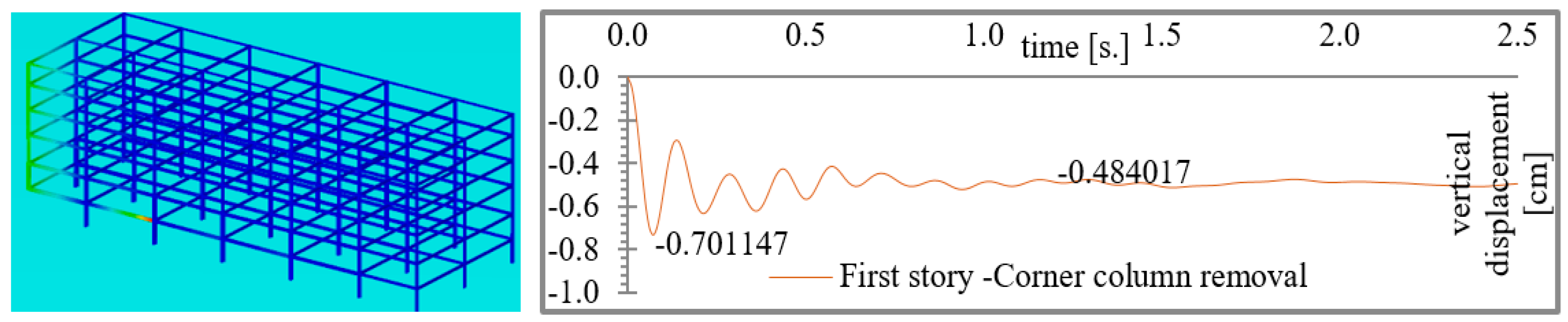
Table 2 summarizes the maximum transient and residual vertical displacements recorded following the removal of three different columns. The most critical case was the removal of the corner column, which resulted in the highest displacements: −0.701 cm transient and −0.484 cm residual. This indicates a relatively low redundancy and limited alternative load paths at the building’s corner.
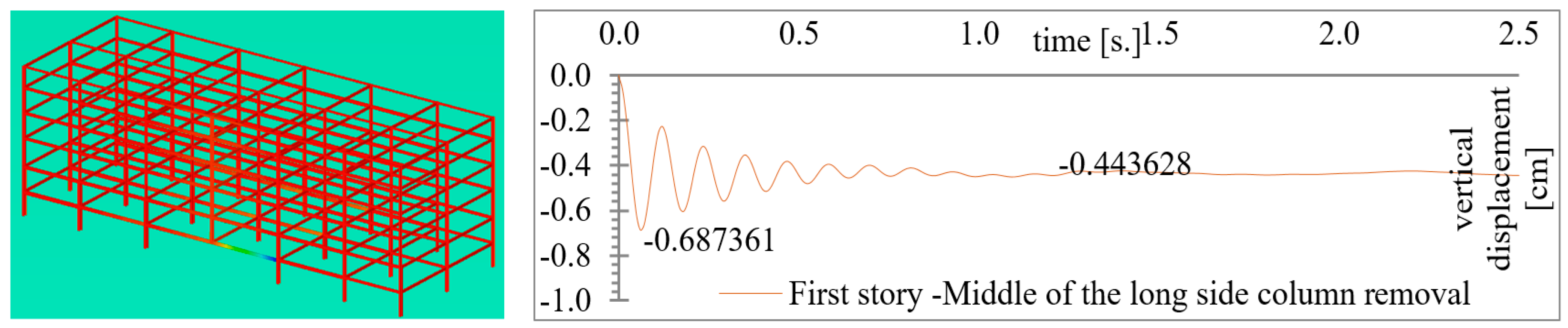
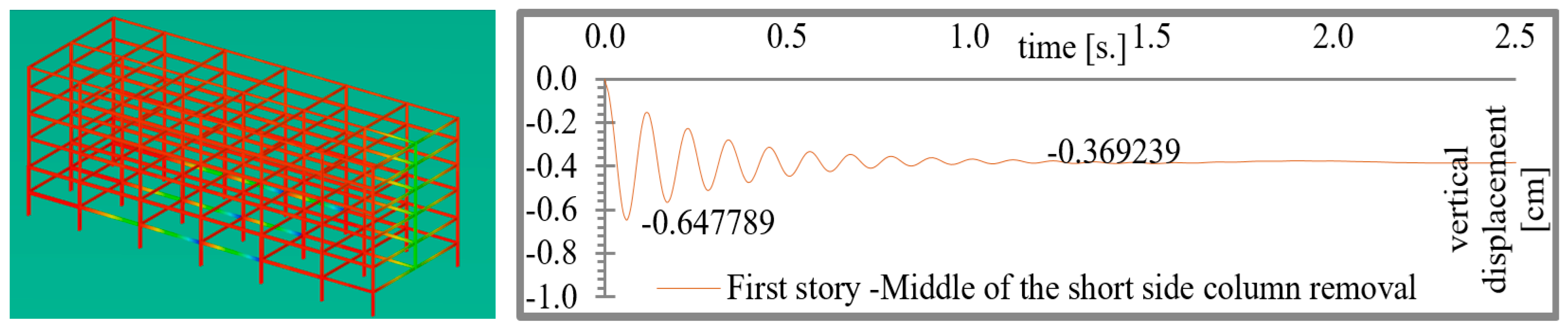
Figure 6, Figure 7 and Figure 8 illustrate the vertical displacement responses of the structure subjected to sudden column removal.
The removal of the column at the mid-span of the long side produced slightly lower values (−0.687 cm/−0.444 cm), while the column at the mid-span of the short side resulted in the lowest displacement values among the three (−0.648 cm/−0.369 cm). Despite these differences, all scenarios exhibited measurable residual deformations, which suggests some level of irrecoverable structural damage, even when total collapse is avoided. These results demonstrate that the structural response varies notably with the location of the removed element.

4. Conclusions

This study examined the progressive collapse response of a mid-rise steel structure by simulating the sudden removal of three key columns: one at the corner, one at the mid-span of the short side, and one at the mid-span of the long side. The numerical results confirm that the location of the removed column has a significant impact on both transient and residual structural response. Corner columns, in particular, emerged as critical points of vulnerability due to limited alternative load paths and reduced redundancy. While informative, the findings are inherently limited by the scope of the model. Only a single building configuration was considered. Among the cases studied, the corner column removal triggered the most pronounced vertical displacements, both transient and residual. This outcome is consistent with the corner column’s limited redundancy and greater exposure to unbalanced load redistribution. These findings reinforce the need to prioritize robustness in areas of a structure where alternate load paths are limited or discontinuous. From a design and retrofit perspective, incorporating progressive collapse checks, especially for edge elements, is essential for improving the resilience of reinforced concrete structures. Where deficiencies are identified, targeted strengthening measures should be applied to prevent disproportionate failure and ensure life safety under extreme events.

Author Contributions

Conceptualization; methodology; software; validation; formal analysis; investigation; resources; data curation; writing—original draft preparation; writing—review and editing; visualization; and supervision, J.Y. and E.I. All authors have read and agreed to the published version of the manuscript.

Funding

This research received no external funding.

Institutional Review Board Statement

Not applicable.

Informed Consent Statement

Not applicable.

Data Availability Statement

All data generated or used during the study appear in the article.

Acknowledgments

Gratitude is expressed to ASI for providing the ELS.

Conflicts of Interest

The authors declare no conflicts of interest.

References

  1. Wang, W.; Li, L.; Qu, Z. Machine learning-based collapse prediction for post-earthquake damaged RC columns under subsequent earthquakes. Soil Dyn. Earthq. Eng. 2023, 172, 108036. [Google Scholar] [CrossRef]
  2. Gurley, C. Progressive collapse and earthquake resistance. Pract. Period. Struct. Des. Constr. 2008, 13, 19–23. [Google Scholar] [CrossRef]
  3. Samanta, N.; Dasgupta, K.; Di-Sarno, L. Ageing-dependent seismic resilience and reliability of the RC wall-frame buildings under mainshock–aftershock sequences. Structures 2026, 85, 111123. [Google Scholar] [CrossRef]
  4. Hamidia, M.; Afzali, M.; Jamshidian, S.; Safi, M. Post-earthquake stiffness loss estimation for reinforced concrete columns using fractal analysis of crack patterns. Struct. Concr. 2023, 24, 3933–3951. [Google Scholar] [CrossRef]
  5. Işık, E.; Radu, D.; Harirchian, E.; Avcil, F.; Arkan, E.; Büyüksaraç, A.; Hadzima-Nyarko, M. Failures in Reinforced-Concrete Columns and Proposals for Reinforcement Solutions: Insights from the 2023 Kahramanmaraş Earthquakes. Buildings 2025, 15, 1535. [Google Scholar] [CrossRef]
  6. Liu, X.; Zhang, J.; Liu, J.; Zhang, M.; Cao, W. Seismic performance and damage assessment of earthquake-damaged HSRAC columns with UHSS repaired by CFRP jackets. Structures 2023, 48, 241–257. [Google Scholar] [CrossRef]
  7. Bilgin, H.; Hadzima-Nyarko, M.; Isik, E.; Ozmen, H.B.; Harirchian, E. A comparative study on the seismic provisions of different codes for RC buildings. Struct. Eng. Mech. 2022, 83, 195–206. [Google Scholar]
  8. Pearson, C.; Norbert, D. Ronan point apartment tower collapse and its effect on building codes. J. Perform. Construct. Facil. 2005, 19, 172–177. [Google Scholar] [CrossRef]
  9. Pearson, C.; Delatte, N. Lessons from the progressive collapse of the Ronan Point apartment tower. Forensic Eng. 2003, 190–200. [Google Scholar] [CrossRef]
  10. Yuzbasi, J.; Arslan, H.M. Applied element method and Finite element method for progressive collapse assessment: A comparative study on the influence of slab types, thicknesses, and damping via three incremental column removals. Structures 2025, 73, 108358. [Google Scholar] [CrossRef]
  11. Russell, J.M.; Sagaseta, J.; Cormie, D.; Jones, A.E.K. Historical review of prescriptive design rules for robustness after the collapse of Ronan Point. Structures 2019, 20, 365–373. [Google Scholar] [CrossRef]
  12. Nair, R.S. Progressive collapse basics. Mod. Steel Constr. 2004, 44, 37–44. [Google Scholar]
  13. Raminfar, E.; Zafarani, M.M.; Birzhandi, M.S.; Zareei, S.A. Progressive collapse of steel structures under blast loads considering soil-structure interaction. Shock. Vib. 2025, 2025, 9971912. [Google Scholar] [CrossRef]
  14. Zhang, J.Z.; Lin, X.; Zhang, W.J.; Yu, Z.W. Collapse behavior and resistance mechanisms of steel modular buildings with corrugated walls: Experimental, numerical, and analytical insights. Thin-Walled Struct. 2025, 212, 113157. [Google Scholar] [CrossRef]
  15. Ghorreshi, E.; Mansoori, M.R.; Hosseini, M.H. Seismic design of mid-rise steel diagrid structures considering life cycle cost. Iran. J. Sci. Technol. Trans. Civ. Eng. 2025, 49, 1–16. [Google Scholar] [CrossRef]
  16. Lu, J.X.; Wu, H.; Fang, Q. Progressive collapse of murrah federal building: Revisited. J. Build. Eng. 2022, 57, 104939. [Google Scholar] [CrossRef]
  17. Yuzbasi, J. Progressive collapse and robustness analysis of steel structures. Cukurova Univ. J. Fac. Eng. 2025, 40, 429–444. [Google Scholar] [CrossRef]
  18. Department of Defense. Design of Buildings to Resist Progressive Collapse (UFC 4-023-03 Change 3, 1 November 2016); Department of Defense: Washington, DC, USA, 2016.
  19. General Services Administration. Alternate Path Analysis & Design Guidelines for Progressive Collapse Resistance (Revision 1); General Services Administration: Washington, DC, USA, 2016.
  20. Vinay, M.; Rao, P.K.R.; Dey, S.; Swaroop, A.H.L.; Sreenivasulu, A.; Rao, K.V. Evaluation of progressive collapse behavior in reinforced concrete buildings. Structures 2022, 45, 1902–1919. [Google Scholar] [CrossRef]
  21. Li, S.; Wang, H.; Liu, H.; Shan, S.; Zhai, C. Experimental study on progressive collapse of self-centering precast concrete frame with infill walls. Eng. Struct. 2023, 294, 116746. [Google Scholar] [CrossRef]
  22. Yuzbasi, J. Experimental verification of full-scale silo structure demolition: Investigating successive column removal with finite element method and progressive collapse simulation through blast load. Struct. Concr. 2024, 25, 4408–4427. [Google Scholar] [CrossRef]
  23. Yi, F.; Yi, W.J.; Sun, J.M.; Ni, J.; He, Q.F.; Zhou, Y. On the progressive collapse performance of RC frame structures under impact column removal. Eng. Struct. 2024, 307, 117926. [Google Scholar] [CrossRef]
  24. Bao, C.; Wang, H.; Long, H.; Alshaikh, I.M.; Al-Gaboby, Z.; Ma, X. Study on progressive collapse mechanism of RC frame structures corroded by chloride. Case Stud. Constr. Mater. 2025, 22, e04472. [Google Scholar] [CrossRef]
  25. Liu, Y.; Xiong, J.; Xiong, M.; Wang, K.; Yujie, D.; Li, G. Experimental study on the seismic and progressive collapse resistance of prefabricated RC column-steel beam substructure. Structures 2025, 78, 109320. [Google Scholar] [CrossRef]
  26. Yuzbasi, J. Controlled demolition: Novel monitoring and experimental validation of blast-induced full-scale existing high-rise building implosion using numerical finite element simulations. J. Civ. Struct. Health Monit. 2024, 15, 891–914. [Google Scholar] [CrossRef]
  27. Liu, B.; Hou, J.; Zhang, K.; Song, L.; Liu, J. Comparative Study between Horizontal–Vertical Mixed and Vertical Progressive Collapse Responses of Reinforced Concrete Planar Frames. J. Struct. Eng. 2025, 151, 04025200. [Google Scholar] [CrossRef]
  28. Sun, R.; Huang, Z.; Burgess, I.W. Progressive collapse analysis of steel structures under fire conditions. Eng. Struct. 2012, 34, 400–413. [Google Scholar] [CrossRef]
  29. Cao, Y.; Jiang, J.; Lu, Y.; Chen, W.; Ye, J. Progressive collapse of steel structures exposed to fire: A critical review. J. Constr. Steel Res. 2023, 207, 107985. [Google Scholar] [CrossRef]
  30. Kuhlmann, U.; Rölle, L.; Izzuddin, B.A.; Pereira, M.F. Resistance and response of steel and steel–concrete composite structures in progressive collapse assessment. Struct. Eng. Int. 2012, 22, 86–92. [Google Scholar] [CrossRef]
  31. Mahmoud, Y.M.; Hassan, M.M.; Mourad, S.A.; Sayed, H.S. Assessment of progressive collapse of steel structures under seismic loads. Alex. Eng. J. 2018, 57, 3825–3839. [Google Scholar] [CrossRef]
  32. Işık, E.; Hadzima-Nyarko, M.; Avcil, F.; Büyüksaraç, A.; Arkan, E.; Alkan, H.; Harirchian, E. Comparison of seismic and structural parameters of settlements in the East Anatolian Fault Zone in light of the 6 February Kahramanmaraş earthquakes. Infrastructures 2024, 9, 219. [Google Scholar] [CrossRef]
  33. Yuzbasi, J. Progressive collapse analysis of reinforced concrete building structures. Bitlis Eren Üniversitesi Fen. Bilim. Derg. 2025, 14, 1204–1219. [Google Scholar] [CrossRef]
  34. Yang, Y.; Li, S.; Kong, D.; Liew, J.R. Steel beam to reinforced concrete column connection performance under column removal scenarios. J. Constr. Steel Res. 2025, 235, 109884. [Google Scholar] [CrossRef]
  35. Işık, E.; Peker, F.; Büyüksaraç, A. The effect of vertical earthquake motion on steel structures behaviour in different seismic zones. J. Adv. Res. Nat. Appl. Sci. 2022, 8, 527–542. [Google Scholar] [CrossRef]
  36. Tapia-Hernández, E.; Geneş, M.C.; Gülkan, P. Damage assessment and seismic response of steel buildings during the Kahramanmaraş, Turkey earthquakes of February 6, 2023. Earthq. Spectra 2025, 41, 1565–1588. [Google Scholar] [CrossRef]
  37. Yuzbasi, J. Post-earthquake damage assessment: Field observations and recent developments with recommendations from the Kahramanmaraş earthquakes in Türkiye on February 6th, 2023 (Pazarcık M7. 8 and Elbistan M7. 6). J. Earthq. Eng. 2024, 29, 3367–3392. [Google Scholar] [CrossRef]
  38. Galasso, C.; Opabola, E.A. The 2023 Kahramanmaraş Earthquake Sequence: Finding a path to a more resilient, sustainable, and equitable society. Commun. Eng. 2024, 3, 24. [Google Scholar] [CrossRef]
  39. Bozdogan, O.; Erdag, A.; Ozdemir, A. Determination of mechanical properties of concrete and steel materials taken from buildings in Antakya after the Kahramanmaraş earthquakes. Case Stud. Constr. Mater. 2024, 21, e03445. [Google Scholar] [CrossRef]
  40. Altunsu, E.; Güneş, O.; Öztürk, S.; Sorosh, S.; Sarı, A.; Beeson, S.T. Investigating the structural damage in Hatay province after Kahramanmaraş-Türkiye earthquake sequences. Eng. Fail. Anal. 2024, 157, 107857. [Google Scholar] [CrossRef]
  41. Georgiev, T. Field observations and assessment of performance level of steel structures after the Kahramanmaras Earthquake Sequence of 2023. In International Conference on the Behaviour of Steel Structures in Seismic Areas; Springer Nature: Cham, Switzerland, 2024; pp. 633–645. [Google Scholar]
  42. Akca, A.H.; Sahin, O.; Koc, K.; Aygörmez, Y. Mechanical and microstructural investigations on concrete of the collapsed buildings after Kahramanmaraş earthquakes. Eng. Sci. Technol. Int. J. 2024, 56, 101784. [Google Scholar] [CrossRef]
  43. Ivanov, M.L.; Chow, W.K. Structural damage observed in reinforced concrete buildings in Adiyaman during the 2023 Turkiye Kahramanmaras Earthquakes. Structures 2023, 58, 105578. [Google Scholar] [CrossRef]
  44. Işık, E.; Hadzima-Nyarko, M.; Radu, D.; Bulajić, B. Study on Effectiveness of Regional Risk Prioritisation in Reinforced Concrete Structures after Earthquakes. Appl. Sci. 2024, 14, 6992. [Google Scholar] [CrossRef]
  45. Yuzbasi, J. Applied element method: Earthquake simulation analysis of soft story and weak story in building structures using solid mechanics. In Proceedings of CIBv 2024; Lecture Notes in Civil Engineering; Springer: Cham, Switzerland, 2025; Volume 665. [Google Scholar] [CrossRef]
  46. ASCE/SEI 41-17; Seismic Evaluation and Retrofit of Existing Buildings. American Society of Civil Engineers: Reston, VA, USA, 2017.
  47. Yuzbasi, J. Fundamentals of Controlled Demolition in Structures: Real-Life Applications, Discrete Element Methods, Monitoring, and Artificial Intelligence-Based Research Directions. Buildings 2025, 15, 3501. [Google Scholar] [CrossRef]
  48. El-Mahdy, O.; El-Kasaby, E.S.; Abusafa, H.; El-Gamal, A. Application of AEM in Progressive Collapse Dynamics Analysis of RC Structures. Stavební Obz.-Civ. Eng. J. 2017, 26, 27. [Google Scholar]
  49. Meguro, K.; Tagel-Din, H. Applied element simulation of RC structures under cyclic loading. J. Struct. Eng. 2001, 127, 1295–1305. [Google Scholar] [CrossRef]
  50. Yuzbasi, J. Debris Simulation in Controlled Demolition of Tall Building Structures: Solid Model-Based Approach. Buildings 2025, 15, 3396. [Google Scholar] [CrossRef]
  51. Meguro, K.; Tagel-Din, H. Applied element method for structural analysis theory and application for linear materials. Doboku Gakkai Ronbunshu 2000, 2000, 31–45. [Google Scholar] [CrossRef]
  52. Tagel-Din, H.; Meguro, K. Applied element method for dynamic large deformation analysis of structures. Struct. Eng. Earthq. Eng. JSCE 2000, 2000, 215–224. [Google Scholar] [CrossRef]
  53. Tagel-Din, H.; Meguro, K. Applied element simulation for collapse analysis of structures. Bull. Earthq. Resist. Struct. Res. Cent. 1999, 32, 113–123. [Google Scholar]
  54. Tagel-Din, H.; Meguro, K. Applied element method for simulation of nonlinear materials: Theory and application for RC structures. Struct. Eng. Earthq. Eng. JSCE 2000, 17, 137–148. [Google Scholar]
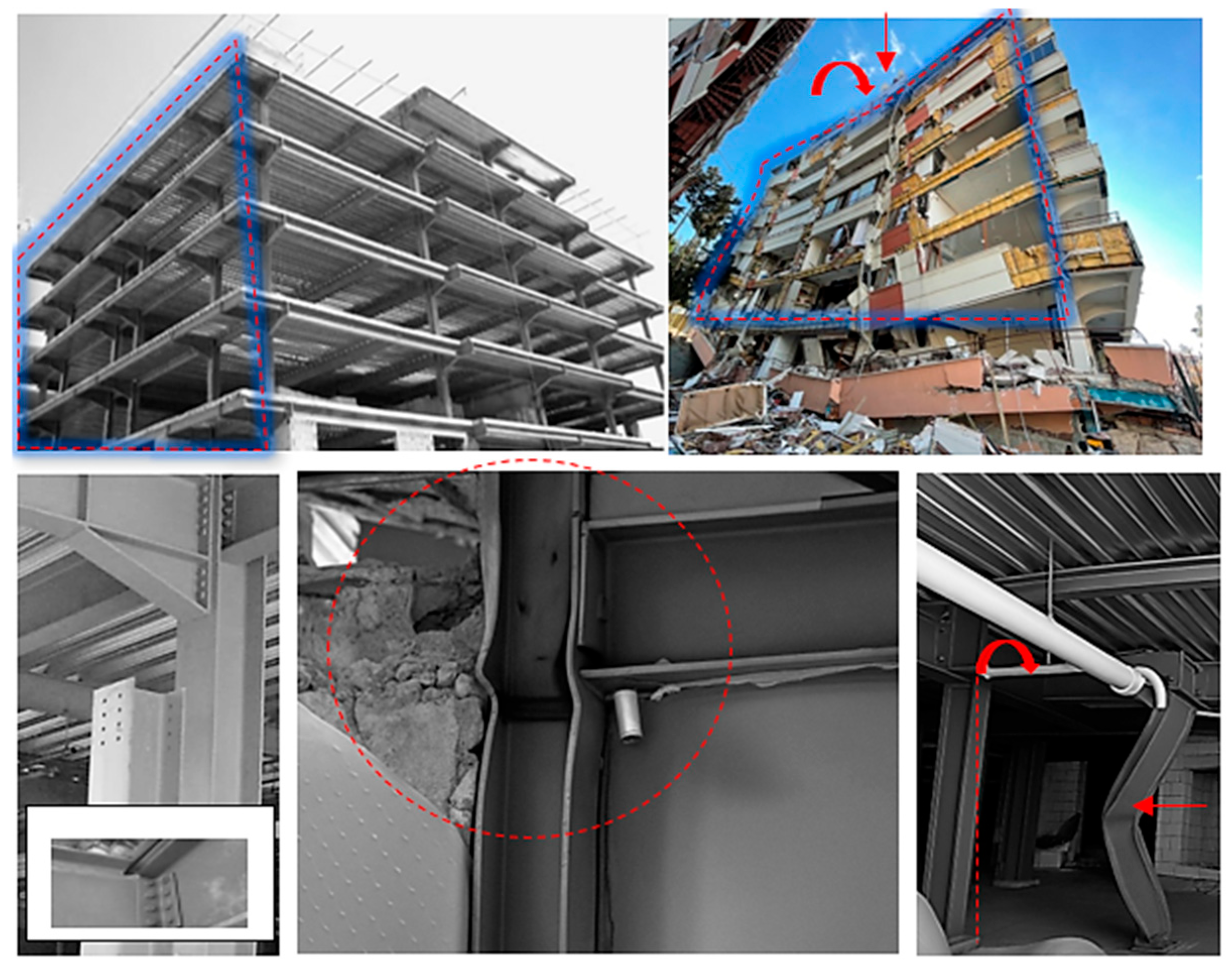
Figure 1. Damaged multi-story steel structure after M7.8 and 7.6 earthquakes.
Engproc 125 00024 g001
Figure 2. Plan view.
Engproc 125 00024 g002
Figure 3. Elevation view of the six-story steel frame and labeled members.
Engproc 125 00024 g003
Figure 4. Meshed view and zoomed-in implicit transition element between columns (1).
Engproc 125 00024 g004
Figure 5. Column removal scenarios: (a) clear height elimination between lateral supports with beam continuity maintained; (b) showing a zoomed-in meshed view.
Engproc 125 00024 g005
Figure 6. Corner column removal and time history displacement results.
Engproc 125 00024 g006
Figure 7. Middle of the long side (edge) column removal and time history displacement results.
Engproc 125 00024 g007
Figure 8. Middle of the short side (edge) column removal and time history displacement results.
Engproc 125 00024 g008
Table 1. Column and beam sections (SI units—approximate).
ColumnColumn Type (US)Mass (kg/m)Depth (mm)Beam NumberBeam Type (US)Mass (kg/m)Depth (mm)
A110 WF 72107.2254B124 B 76~113.1~610
A212 WF 133198.0305B221 B 68~101.2~533
A312 WF 120178.6305B316 B 58~86.3~406
A410 WF 100148.8254B421 WF 6292.3533
A510 WF 89132.5254B518 WF 5074.4457
A610 WF 5480.4254B614 B 17.2~25.6~356
A710 WF 112166.7254B714 B 22~32.7~356
A810 WF 6089.3254
A910 WF 3349.1254
Table 2. Maximum transient and residual vertical displacements after the removal of columns.
Column Removal ScenarioMax Transient Displacement (cm)Residual Displacement (cm)
Middle of the short side column−0.648−0.369
Middle of the long side column−0.687−0.444
Corner column−0.701−0.484
Disclaimer/Publisher’s Note: The statements, opinions and data contained in all publications are solely those of the individual author(s) and contributor(s) and not of MDPI and/or the editor(s). MDPI and/or the editor(s) disclaim responsibility for any injury to people or property resulting from any ideas, methods, instructions or products referred to in the content.