1. Introduction
In recent years, light and ultra-light rockets have been attracting increasing interest. The reason is simple: the number of launches of small satellites and CubeSats is growing, and with it, the demand for affordable and frequent launches. In such systems, cost, technological feasibility, and ease of operation remain key factors.
Traditional liquid rocket engines (LREs) operate on a gas generator or closed cycle. They provide high specific impulse and are based on proven technology. However, such systems are complex in design, expensive to manufacture, and require lengthy fine-tuning.
An alternative is electric pump (EPS) LREs. Fuel is supplied by a pump with an electric motor powered by batteries. This system eliminates the gas generator and turbine, simplifies the design, and reduces costs. The practical feasibility of this approach has been demonstrated by Rocket Lab’s Rutherford engine [
1]. It has been confirmed by European projects for thrusts of 20–30 kN [
2] and research for engines in the 5–6 kN range [
3].
Three main fuel supply schemes are used in rocket technology. The gas generator scheme is simple and reliable, but it loses part of its specific impulse due to gas discharge [
4]. Closed schemes provide maximum efficiency but require complex turbomachinery and increase development costs. Electric pump systems eliminate the gas generator and turbine, simplify the system, and improve fuel supply control [
5]. Comparative studies show that EPS systems are most competitive in the low and medium thrust ranges [
6].
The use of electric pumps has already been proven in practice. Rutherford’s serial EPS engines are installed on Rocket Lab Electron, projects for 20–30 kN are underway in Europe, and a LOX/CH
4 engine with a thrust of 5.4 kN has been demonstrated in South Korea. Cavitation in methane pumps is being studied in China [
7], and hybrid EPS schemes are being researched in Italy and Switzerland [
8,
9]. These projects show that EPS are moving from theory to practice.
EPS LREs also has limitations. The energy density of batteries remains a bottleneck. Modern lithium-ion systems provide 180–250 Wh/kg, which limits the duration of operation at thrusts above 20 kN [
9]. High C-ratings increase heat dissipation, requiring separate cooling circuits [
10,
11]. Cavitation in pumps reduces service life, so inductors are used and NPSH reserves are maintained [
7,
12]. The reliability of power electronics depends on resistance to vibrations and thermal cycles; cryogenically cooled SiC inverters remain a promising solution [
13].
The range of 5–50 kN is typical for suborbital vehicles and small launch vehicles. EPS engines are particularly promising in this area. For light and ultra-light launch vehicles, environmental and flight safety requirements for landing areas are becoming more stringent. Information-analytical and information-prognostic systems at spaceports, including Baikonur, require controlled descent, narrowing of the landing ellipse, and rapid trajectory correction. This affects the thrust profile of the liquid-propellant rocket engine, as well as modulation, duration, and number of pulses. The result is an increase in the requirements for pump pressure and battery power [
14,
15]. Taking this circuit into account sets the criteria for selecting an electric pump and battery. The paper proposes a selection method based on computational simulation modeling.
2. Materials and Methods
At the beginning of the work, we set requirements for electric pumps and batteries, taking into account the mission profiles of light and ultra-light launch vehicles. We considered three options: suborbital flights with short ignition of 5–10 kN engines, orbital missions with long operation at 20–30 kN thrust, and booster blocks or upper stages with multiple ignitions at up to 50 kN thrust. Input data was specified for each option, including chamber pressure of 5–20 MPa, mixture ratio of 2.5–3.5 for LOX/kerosene and LOX/methane pairs, operating time of 30–600 s, and firing frequency from single-pulse to multi-pulse mode. These parameters were used as boundary conditions in the design of the pump system and battery.
We considered several fuel pairs. LOX/kerosene is dense and well-established, but requires a larger cavitation margin. LOX/methane burns cleaner and is suitable for reusable engines, although its density is lower [
7]. N
2O/ethanol and H
2O
2/kerosene were analyzed as “green” alternatives [
16]. The properties of the components dictate the requirements for the pumps. Density and viscosity determine the operating speed and geometry of the impeller, phase properties determine the risk of cavitation, and thermal stability determines the need for cooling. In the calculations, LOX/methane was selected as the base pair as the most promising for engines with a thrust of 5–50 kN [
2].
The method for determining the mass flow rate of components was based on the classic thrust equation:
where
is the engine thrust,
is the specific impulse and
is the acceleration due to gravity.
In the thrust range of 5–50 kN at = 300–340, the mass flow rate was 15–150 kg/s. The oxidizer accounted for 70–75%. These data were used as input parameters for the hydraulic model of the pumps.
The pump head was determined from the pressure balance:
where
is the pressure in the chamber,
is the loss in the pipelines,
is the resistance of the nozzle head,
is the pressure in the tank, and
is the density of the component.
For a comprehensive assessment of the electric pump circuit, we developed a multi-level simulation model consisting of three interconnected subsystems.
2.1. Hydraulic Subsystem
The model describes the dynamics of flows in the pump, pipelines, and combustion chamber nozzles. The calculation is based on the pressure balance equation:
where
is the pump head,
is the mass flow rate,
is the rotational speed, and
are the hydraulic losses in the system.
The cavitation margin (NPSH) was calculated using the method [
12], taking into account the latest data from modern studies of cryogenic cavitation [
7].
2.2. Electromechanical Subsystem
The model simulates the operation of an electric drive consisting of a motor (BLDC or PMSM), an inverter, and a control system. The interaction between the electrical and mechanical parts of the system is described as follows:
where
is torque,
is power,
is voltage,
is current,
is efficiency, and
is angular shaft speed.
The model takes into account commutation losses, electromagnetic oscillations, and thermal limitations of the inverter [
13].
2.3. Thermal Subsystem
The subsystem describes heat dissipation in the battery pack and electric motor. Heat generation in the battery cells was specified by the equation:
where
is the discharge current,
is the internal resistance of the battery.
The model takes into account the thermal resistance of the elements and heat dissipation in a vacuum, where there is no convection.
To assess uncertainties, we applied the Monte Carlo method based on random sampling of parameters:
where
is the parameter vector (e.g., pump efficiency, battery current, thermal resistance),
is random variation, and
is the number of iterations.
The model was implemented in MATLAB/Simulink R2022b using a 0D/1D approach. This provided a balance between accuracy and computational costs. System modeling combined hydraulics, electromechanics, and thermal processes into a single simulation platform and allowed the stability of the system to be evaluated at thrusts of 5–50 kN.
3. Results
The main results of calculations performed for three characteristic thrust levels (5, 20, and 50 kN) are presented in
Table 1. This table contains information on the mass flow rates of components, pump pressures, power consumption ranges, as well as energy requirements and the mass of the battery pack (BP).
As summarized in
Table 1, the total propellant mass flow rate increases from 1.6 kg/s at 5 kN to 16.0 kg/s at 50 kN, while the LOX: CH
4 ratio remains approximately 3:1.
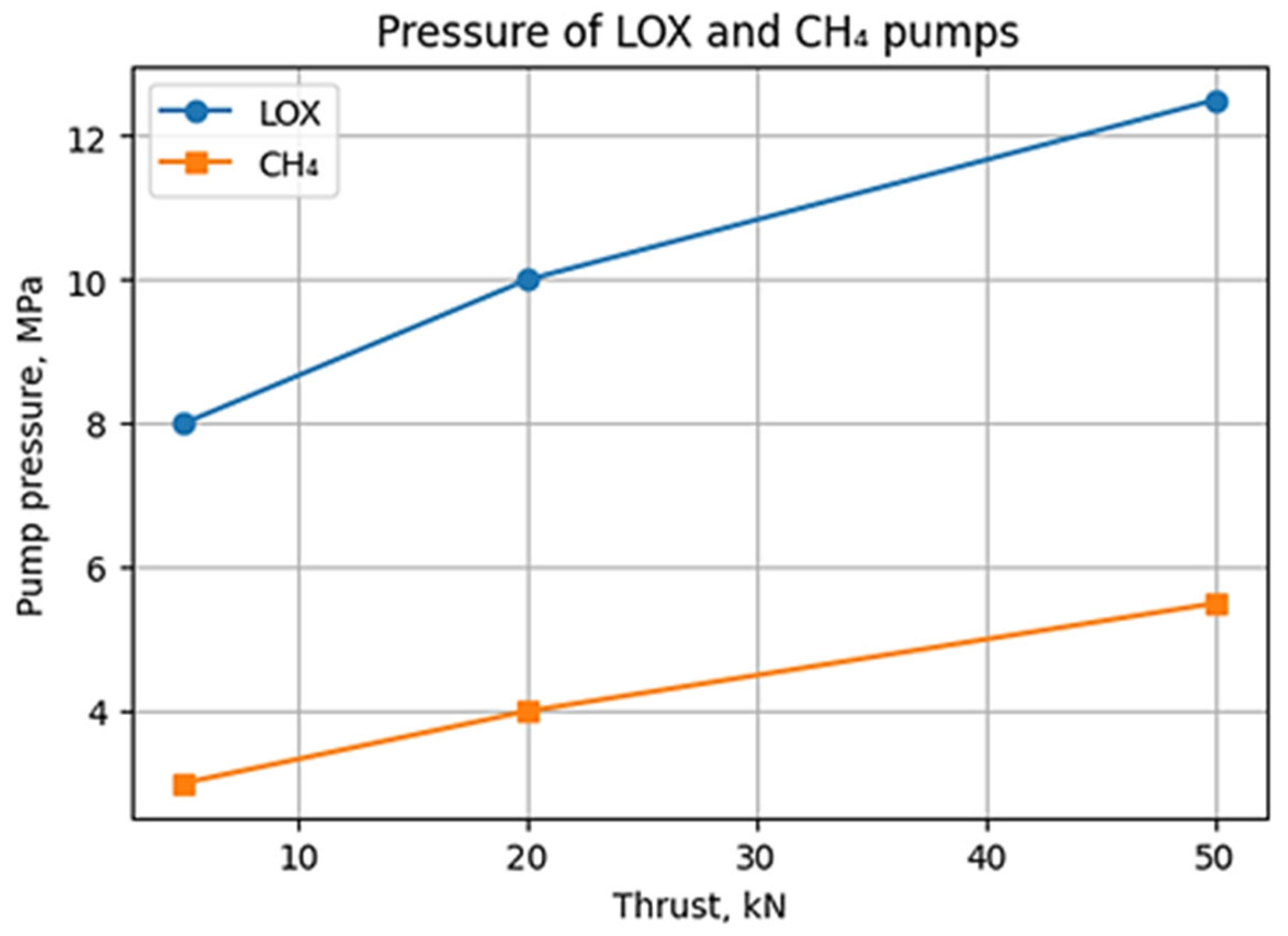
Figure 1 shows the required pump pressures. The oxidizer pump (LOX) operates in the range of 8–13 MPa, and the fuel pump (CH
4) operates in the range of 3–5.5 MPa. This makes the oxidizer pump the most energy-intensive component of the system. Our values correlate well with the results presented in [
2], where a pressure of 10–12 MPa was recorded for an engine with a thrust of 25 kN.
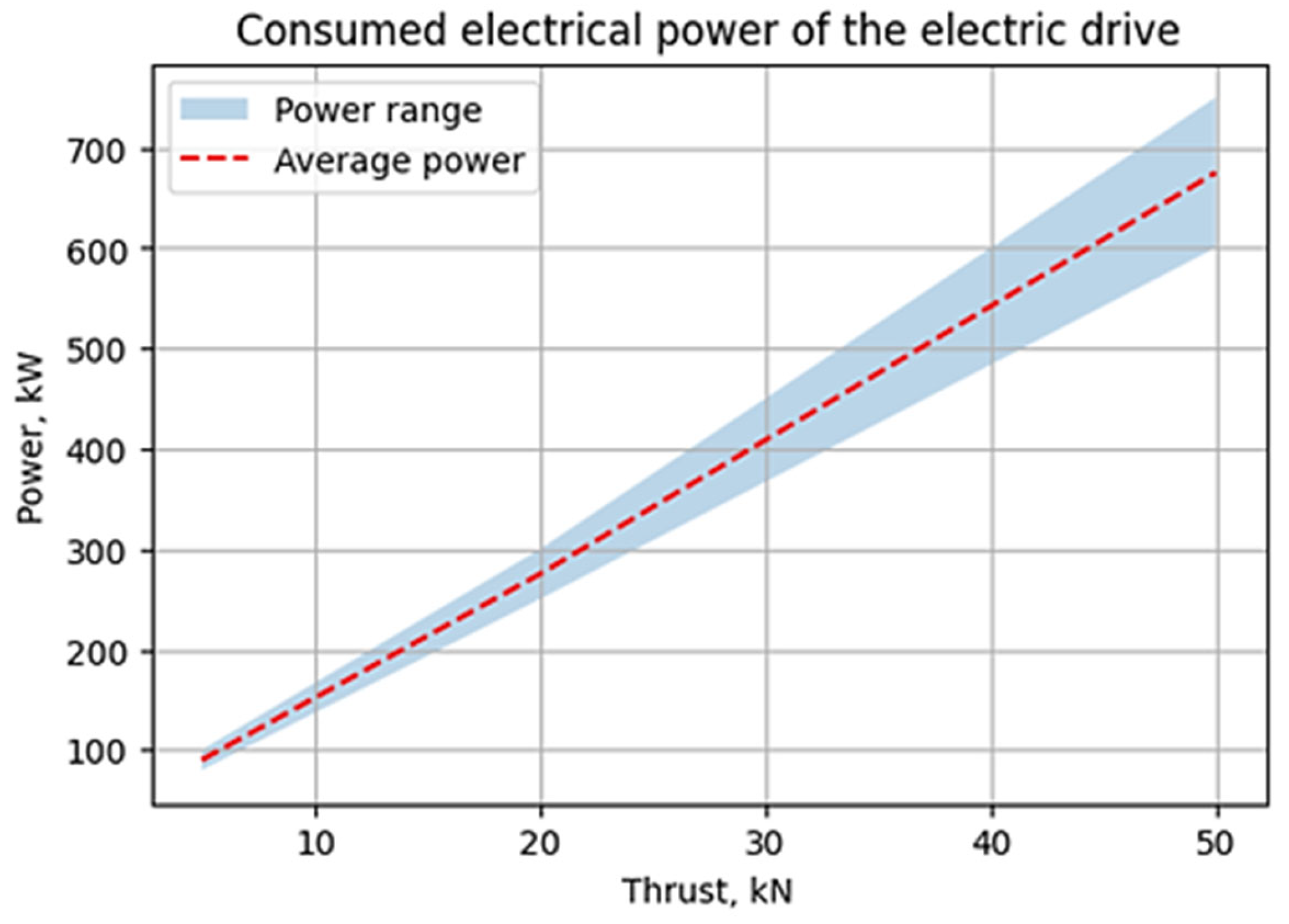
According to
Figure 2, the power consumption of the electric drive shows a clear tendency to increase with increasing thrust. Average power values range from 80–100 kW at a thrust of 5 kN to 600–750 kW at a thrust of 50 kN. The noted variations in power are due to fluctuations in the total efficiency of the system in the range of 0.6–0.7. These results confirm the data presented in study [
17], where for a motor with a thrust of about 30 kN, the power consumption was 400–500 kW.
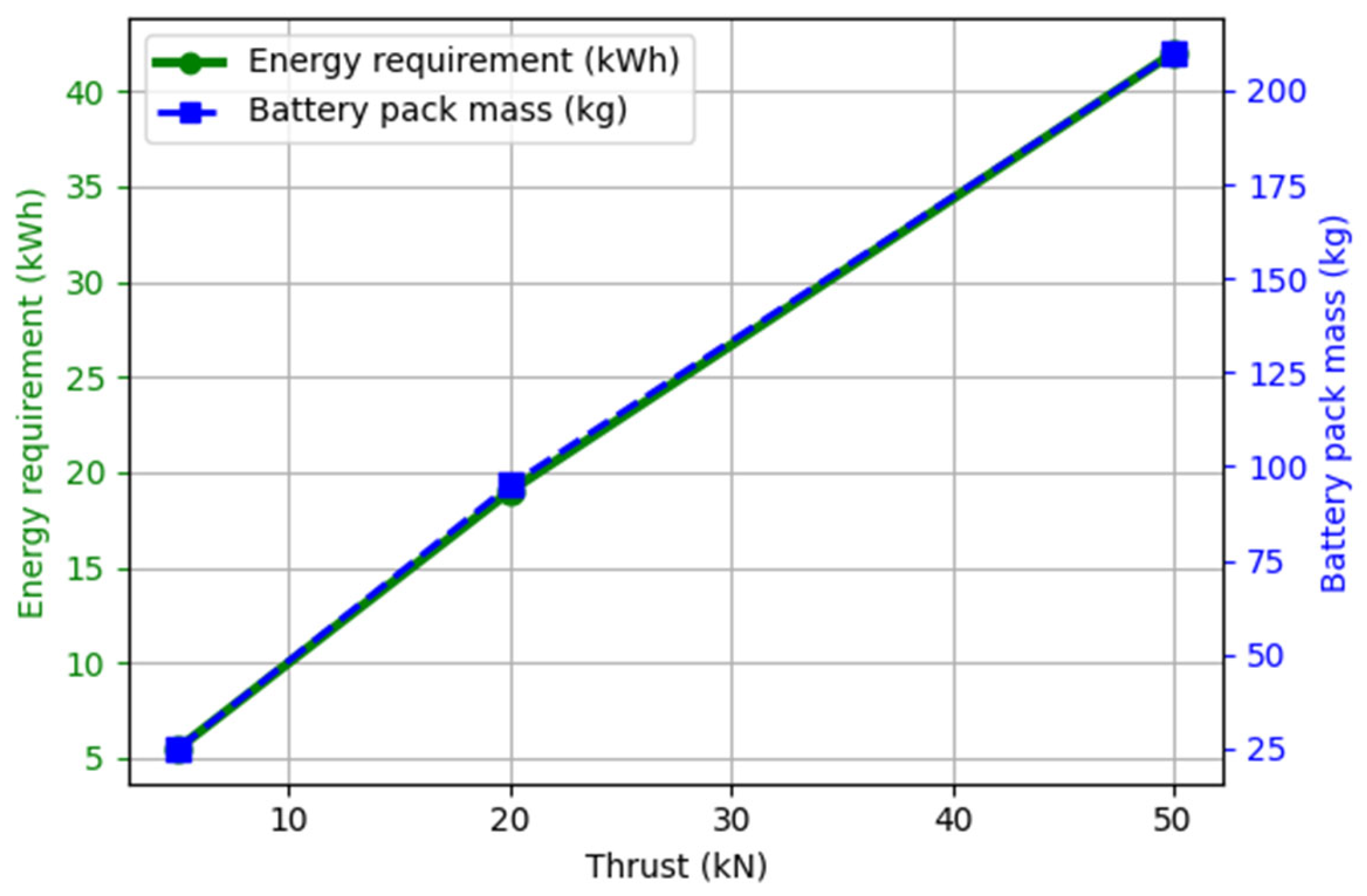
The energy requirements and mass of the battery pack are shown in
Figure 3. With an operating time of 200 s, the total energy consumption increases from 5.5 to 42 kWh for thrusts of 5–50 kN. Accordingly, the mass of the batteries at a specific energy of 200 Wh/kg is 25–210 kg. These estimates are comparable to [
9], where the battery pack mass was approximately 10–20% of the electric drive mass.
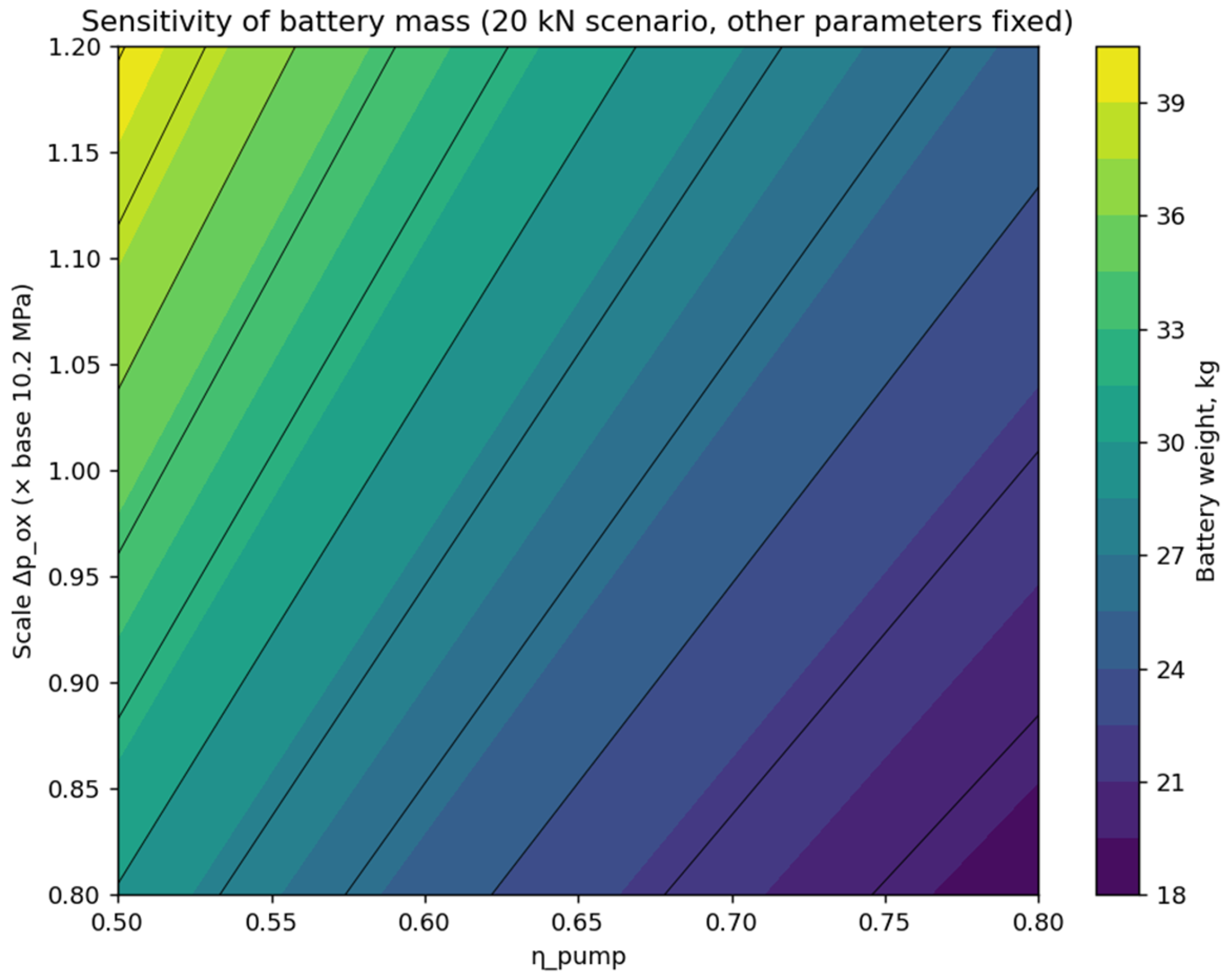
Sensitivity analysis showed that the battery pack mass strongly depends on the hydraulic efficiency of the pumps and the oxidizer pressure level.
Figure 4 shows that when
decreases from 0.80 to 0.50, the battery pack mass increases by more than 60%. A 20% increase in
adds another 8–10 kg.
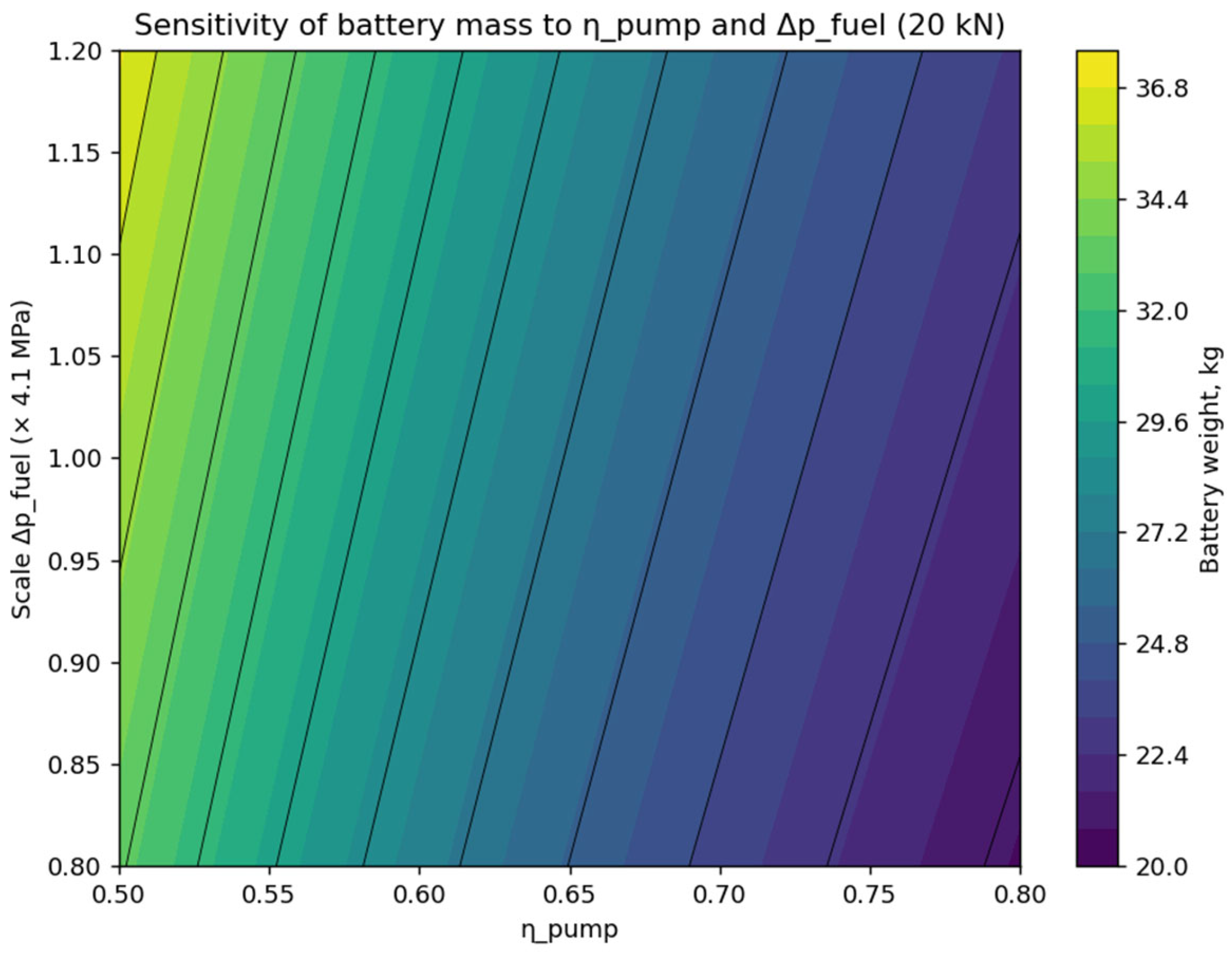
The effect of fuel pressure is less significant. According to
Figure 5, a change in
within ±20% changes the mass of the battery pack by only 3–5 kg.
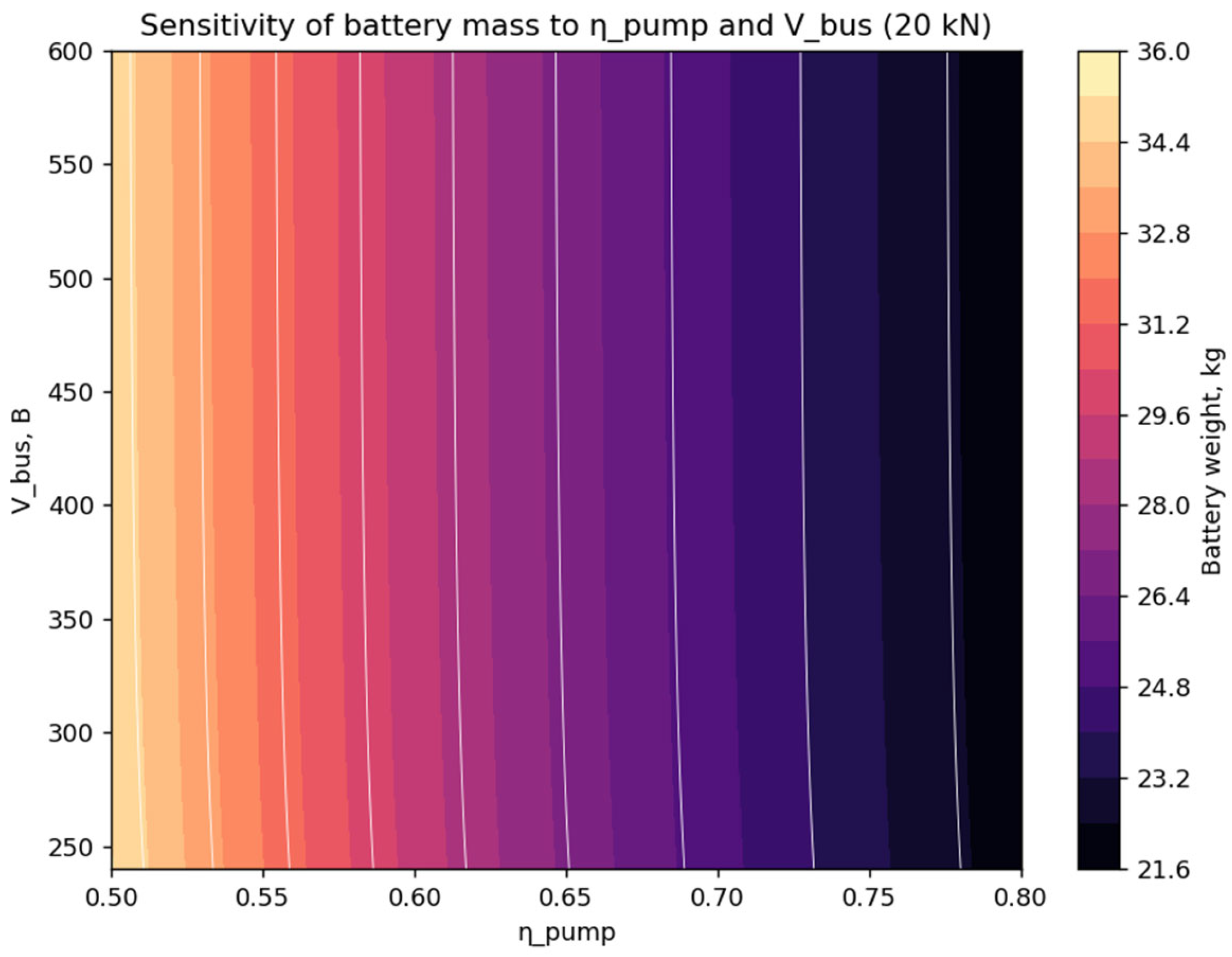
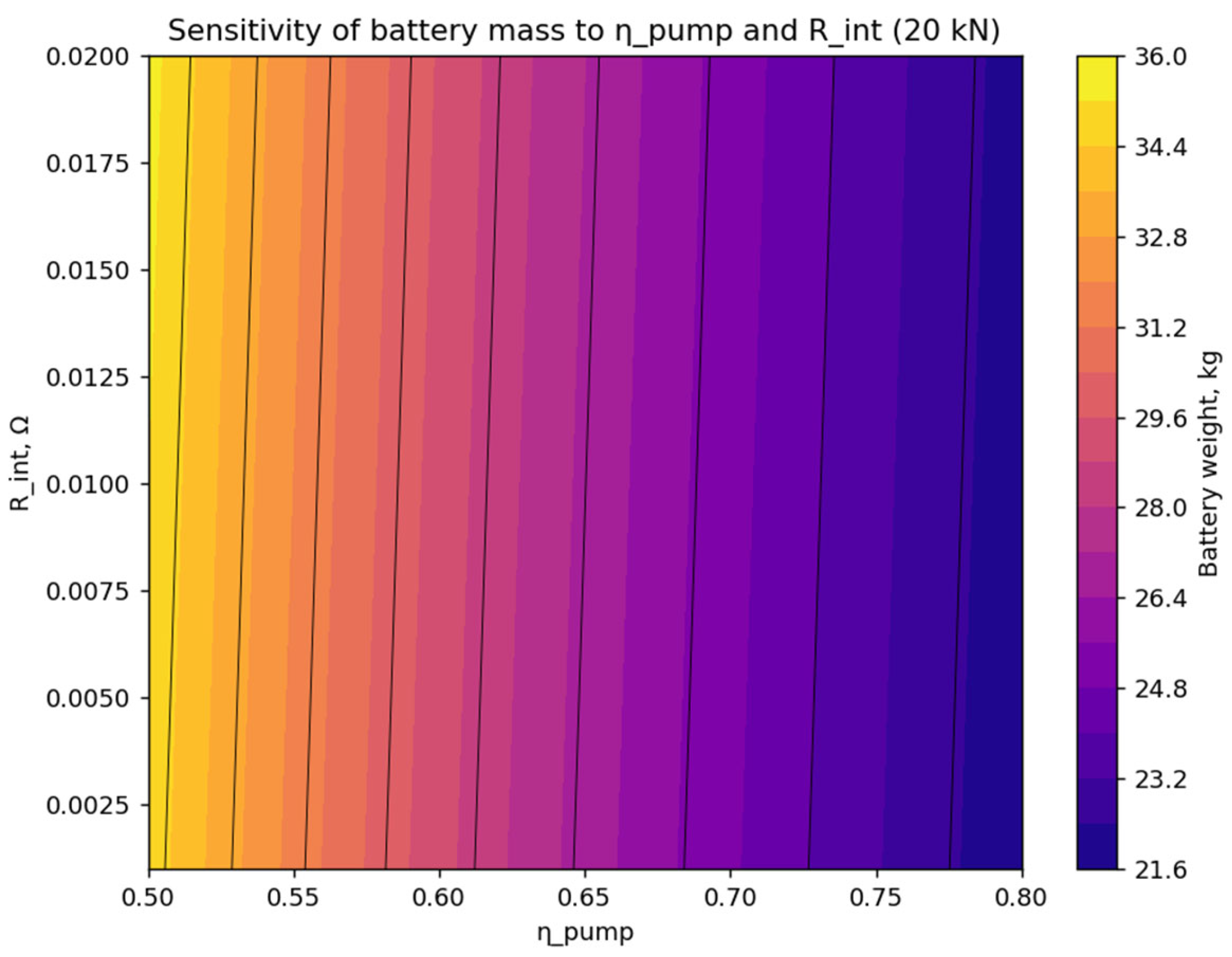
The results for electrical parameters are shown in
Figure 6 and
Figure 7. At a bus voltage of 600 V, the battery pack mass decreases by approximately 25%. When the internal resistance increases to 0.020 ohms, it increases by 5–7 kg.
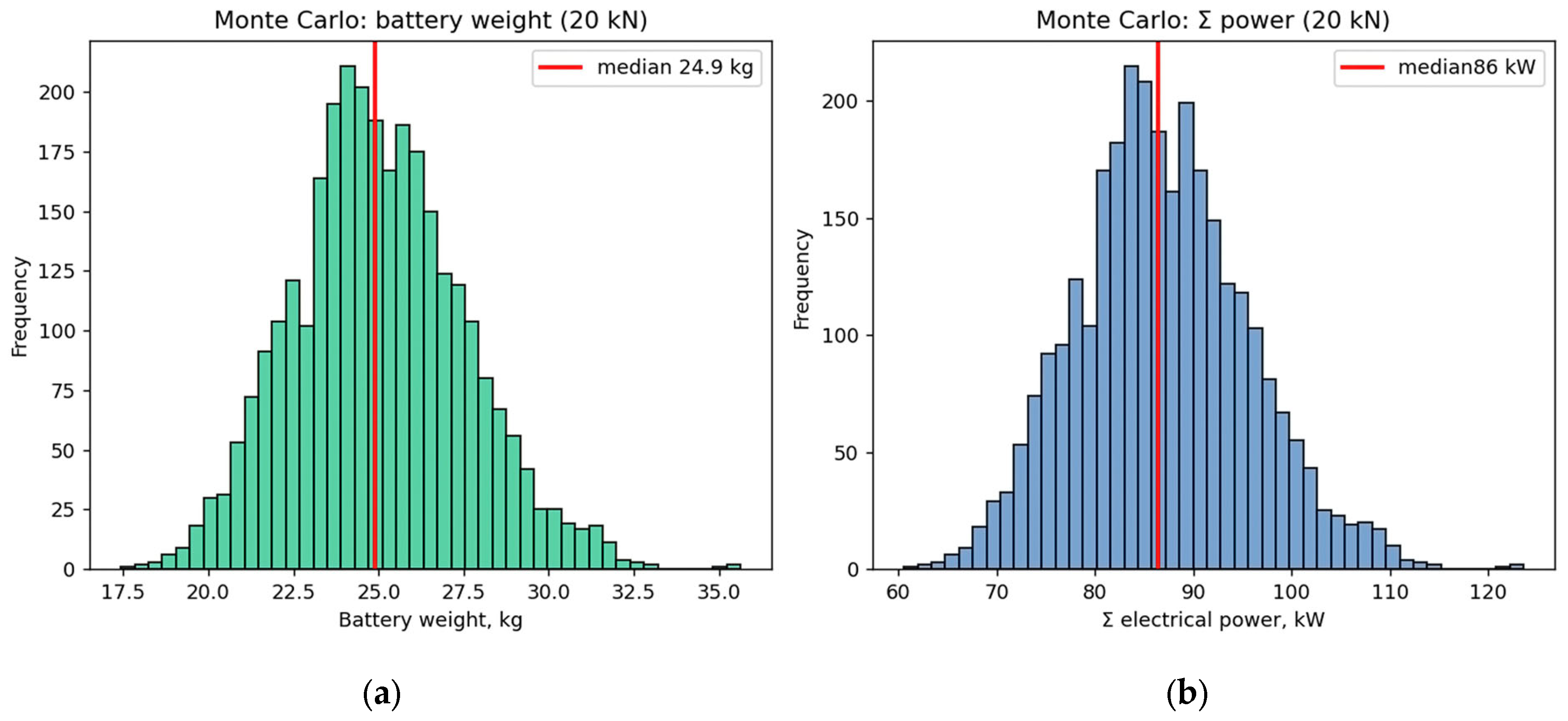
To evaluate the stability of the results, the Monte Carlo method with N = 3000 iterations was used. Changes in pump parameters, component density, specific impulse, bus voltage, and internal battery resistance were randomly incorporated into the model.
Figure 8 illustrates the distribution of battery pack mass and total power. The median mass was 24.9 kg with a range of 22.6–27.6 kg. The median power value is 86 kW, with a range of 78–96 kW. The spread of characteristics is mainly due to changes in pump efficiency and hydraulic losses.
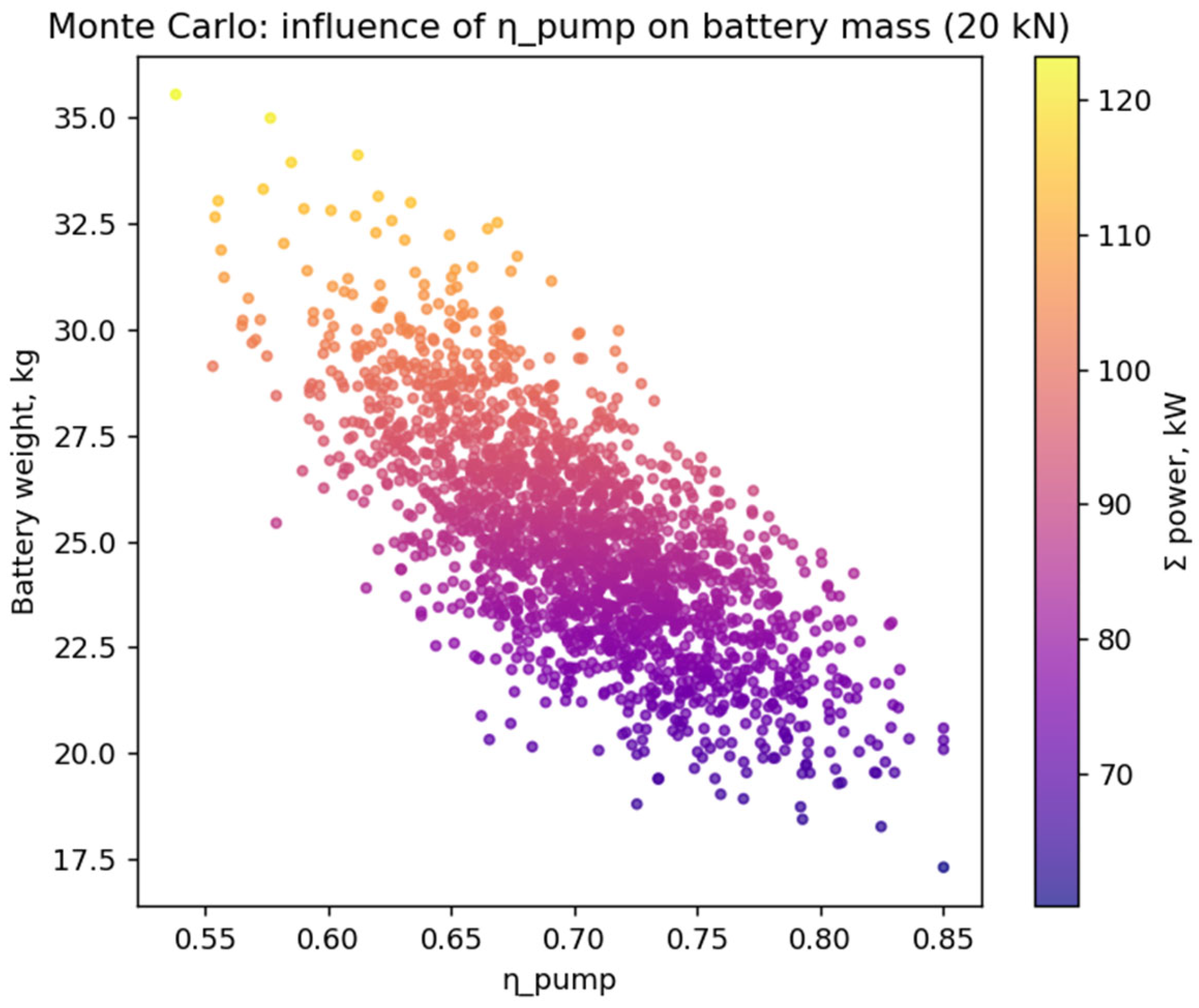
According to the results of Monte Carlo simulation presented in
Figure 9, there is a clear negative correlation between the hydraulic efficiency of the pump (
) and the mass of the battery pack. An increase in
leads to a decrease in battery mass and a reduction in its variability. Analysis of the color scale shows that low pump efficiency (
) results in high energy consumption (over 110–120 kW), while high efficiency (
) allows power consumption to be kept within the range of 70–80 kW. These data clearly indicate that improving pump efficiency is a critical area for optimizing the energy system, allowing for a reduction in both the battery pack mass and the required power of the electric drives.
To quantitatively assess the influence of the parameters, a correlation analysis was performed, and the results are summarized in
Table 2.
The battery pack mass is most strongly influenced by the hydraulic efficiency of the pump . The correlation coefficients were −0.705 according to Pearson and −0.685 according to Spearman. The oxidizer pressure drop is also significant. The correlation is positive, +0.608. The influence of the fuel pressure drop is moderate, +0.216. Other factors, such as specific impulse, component densities, bus voltage, and internal battery resistance, show a weak or statistically insignificant correlation, with a modulus below 0.2.
4. Discussion
Modeling has shown that the electric pump scheme of the liquid rocket engine is most effective in the range of low thrusts of 5–10 kN. In this mode, the mass of the battery pack remains within 25–30 kg, and the power consumption is limited to 80–120 kW. When the thrust is increased to 20 kN, the mass of the batteries increases to approximately 95 kg, and the power to 300 kW. These parameters remain feasible provided that high-efficiency pumps () and a bus voltage of at least 400 V are used. In the 50 kN range, the situation changes: the battery pack mass exceeds 200 kg, and the power reaches 0.7 MW. This significantly limits the practical application of the scheme. The critical factor is the scaling of thrust, which leads to a sharp increase in energy and thermal loads.
The key factors determining the characteristics of the battery pack are the hydraulic efficiency of the pumps and the pressure drop in the oxygen line. Their significance has been confirmed by both sensitivity analysis and correlation analysis results. Electrical parameters—bus voltage and internal battery resistance—have a secondary effect but become critical at power levels above 300 kW. Monte Carlo simulation confirmed the stability of the obtained estimates: at a thrust of 20 kN, the spread of the battery mass was only ±10%, which indicates the reliability of the model.
The conclusions of this work are consistent with foreign studies [
16,
17] and the practice of Rocket Lab and Astra. These sources show that electric pump circuits are justified for low-thrust liquid rocket engines, up to 20 kN, when the mass of the batteries remains at an acceptable level. With further increases in thrust, energy requirements increase disproportionately, as confirmed by the results obtained. A comparison with modern lithium-ion batteries with a specific energy of 200–250 Wh/kg indicates the limits of current technology. For thrusts above 50 kN, a transition to new-generation batteries, such as Li-S or solid-state batteries, is required.
The study has limitations. The use of 0D/1D models of pumps and accumulators does not reflect transient modes and degradation of elements. Thermal management and integration of cooling circuits were not considered, which can significantly affect the results during long-term operation. The thrust range of 5–50 kN narrows the scope of applicability of the conclusions. Despite this, the estimates obtained are useful for preliminary engineering calculations and serve as a basis for recommendations on optimizing small and medium thrust electric pump liquid rocket engines.
5. Conclusions
A method for selecting an electric pump and battery pack for a low-thrust liquid rocket engine is proposed. It is based on joint modeling of hydraulic, electromechanical, and thermal subsystems in a single environment and is supplemented by statistical analysis. Sensitivity and correlations show the leading role of the hydraulic efficiency of the pump and the pressure drop in the oxygen path. Monte Carlo simulation confirms the stability of the estimates and allows the working ranges to be outlined. The scheme is most effective at thrusts of 5–10 kN, remains feasible at around 20 kN with high pump efficiency and bus voltage not lower than 400 V, and at 50 kN, its applicability is limited by the increase in energy and thermal loads. The practical value of the method is its applicability to the design of engines for light launch vehicles and small spacecraft with strict restrictions on mass and energy consumption. The limitations of the work are related to simplified 0D/1D models and the lack of experimental verification, as well as incomplete development of the thermal circuit and battery degradation. Further steps include refining thermal regimes, accounting for cyclic battery aging, and expanding the set of scenarios, which will improve the accuracy of forecasts and the reliability of design recommendations.
Author Contributions
Conceptualization, K.M. and K.A.; methodology, M.N.; software, K.M.; validation, A.B., Z.K. and N.K.; formal analysis, M.N.; investigation, K.M.; resources, M.N.; data curation, Z.K.; writing—original draft preparation, K.M.; writing—review and editing, K.M.; visualization, A.B.; supervision, K.A.; project administration, K.A.; funding acquisition, K.A. All authors have read and agreed to the published version of the manuscript.
Funding
This research was funded by the Science Committee and Higher Education of the Republic of Kazakhstan, grant number BR27195331.
Institutional Review Board Statement
Not applicable.
Informed Consent Statement
Not applicable.
Data Availability Statement
The data generated in this study are presented in the article. For any clarifications, please contact the corresponding author.
Conflicts of Interest
The authors declare no conflicts of interest.
Abbreviations
The following abbreviations are used in this manuscript:
| LRE | Liquid rocket engines |
| EPS | Electric pump systems |
| LOX | Liquid Oxygen |
| CH4 | Methane |
| NPSH | Net Positive Suction Head |
| N2O | Nitrous Oxide |
| H2O2 | Hydrogen peroxide |
References
- Rocket Lab. Rutherford Engine—State-of-the-Art Oxygen and Kerosene Pump-Fed Engine with High-Performance Electric Propellant Pumps; DARPA R3D2 Press Kit; Rocket Lab: Long Beach, CA, USA, 2019. [Google Scholar]
- Danescu, S.; Ifrim, D.; Cancescu, A.; Andreescu, T. Exploring the potential of electropump feed systems for extending high thrust and deep throttle performance for CH4/LOX rocket engines. In Proceedings of the Aerospace Europe Conference—EUCASS—CEAS 2023, Lausanne, Switzerland, 9–13 July 2023. [Google Scholar] [CrossRef]
- Park, Y.-K.; Yoon, J.; Kim, D.; Yoon, Y. Design and Verification of Electric Pump for Small LOX/Methane Rocket Engine. Int. J. Aeronaut. Space Sci. 2023, 24, 955–969. [Google Scholar] [CrossRef]
- Kwak, H.-D.; Kwon, S.; Choi, C.-H. Performance assessment of electrically driven pump-fed LOX/kerosene cycle rocket engine: Comparison with gas generator cycle. Aerosp. Sci. Technol. 2018, 77, 67–82. [Google Scholar] [CrossRef]
- Fujii, G.; Gaiser, N.; Gernoth, A.; Perigo, D. Modelling of Electrical Pump-Fed Propulsion Systems for Trade-Off Assessments. Trans. Jpn. Soc. Aeronaut. Space Sci. Aerosp. Technol. Jpn. 2020, 18, 375–383. [Google Scholar] [CrossRef]
- Shoyama, T.; Wada, Y.; Shimagaki, M.; Hashimoto, T.; Takada, S. Liquid propellant rocket engine cycles partially using electric turbopump. Acta Astronaut. 2024, 224, 138–147. [Google Scholar] [CrossRef]
- Lin, Y.; Wang, L.; Zhang, F.; Li, X.; Zhu, Z. Study on cryogenic cavitation and its temperature-pressure correlated characteristics of methane pump in rocket engine. Aerosp. Sci. Technol. 2024, 155, 109679. [Google Scholar] [CrossRef]
- Casalino, L.; Masseni, F.; Pastrone, D. Viability of an Electrically Driven Pump-Fed Hybrid Rocket for Small Launcher Upper Stages. Aerospace 2019, 6, 36. [Google Scholar] [CrossRef]
- Masseni, F. Optimal battery selection for hybrid rocket engine. Adv. Aircr. Spacecr. Sci. 2022, 9, 401–414. [Google Scholar] [CrossRef]
- Hwang, F.S.; Confrey, T.; Reidy, C.; Picovici, D.; Callaghan, D.; Culliton, D.; Nolan, C. Review of battery thermal management systems in electric vehicles. Renew. Sustain. Energy Rev. 2024, 192, 114171. [Google Scholar] [CrossRef]
- Afzal, A.; Abdul Razak, R.K.; Mohammed Samee, A.D.; Kumar, R.; Ağbulut, Ü.; Park, S.G. A critical review on renewable battery thermal management system using heat pipes. J. Therm. Anal. Calorim. 2023, 148, 8403–8442. [Google Scholar] [CrossRef] [PubMed]
- Kumar, P.R.; Kumar, B.P.; Harikumar, K.; Panigrahi, S.; Nair, P.U.; Jayan, N. Cavitation Performance of a Cryogenic Upper Stage Liquid Rocket Engine Pump Operating in Liquid Hydrogen. In Proceedings of the 26th National & 4th International ISHMT-ASTFE Heat and Mass Transfer Conference, Chennai, India, 17–20 December 2021; pp. 1437–1442. [Google Scholar] [CrossRef]
- Chen, R.; Niu, J.; Ren, R.; Gui, H.; Wang, F.; Tolbert, L.; Choi, B.; Brown, G. A Cryogenically Cooled MW Inverter for Electrified Aircraft Propulsion. In Proceedings of the AIAA Propulsion and Energy 2020 Forum, Virtual Event, 24–28 August 2020. [Google Scholar] [CrossRef]
- Alipbayev, K.A.; Yermoldina, G.T.; Bapishev, A.M.; Aden, A.E. Modernization of the Information and Analytical System of the Crash Areas of the Baikonur Cosmodrome during the Controlled Descent of the Spent Stage of the Launch Vehicle. In Proceedings of the 2021 International Conference on Electrical, Communication, and Computer Engineering (ICECCE), Kuala Lumpur, Malaysia, 12–13 June 2021; pp. 1–7. [Google Scholar] [CrossRef]
- Yermoldina, G.T.; Trushlyakov, V.I.; Alipbayev, K.A.; Utegenova, A.U. Information and Forecasting System for Determining the Launch and Impact Areas of Ultralight Launch Vehicles, Taking into Account the Requirements of Environmental Safety. J. Theor. Appl. Inf. Technol. 2022, 100, 52–60. [Google Scholar]
- Ordonez Valles, L.; Apel, U.; Tajmar, M. Monte Carlo analysis of a 400 N electric pump-fed engine powered by green propellants: Key trends towards an optimal subsystem design. Acta Astronaut. 2024, 225, 234–242. [Google Scholar] [CrossRef]
- Bai, X.; Xu, M.; Li, Q.; Yu, L. Trajectory-battery integrated design and its application to orbital maneuvers with electric pump-fed engines. Adv. Space Res. 2022, 70, 825–841. [Google Scholar] [CrossRef]
| Disclaimer/Publisher’s Note: The statements, opinions and data contained in all publications are solely those of the individual author(s) and contributor(s) and not of MDPI and/or the editor(s). MDPI and/or the editor(s) disclaim responsibility for any injury to people or property resulting from any ideas, methods, instructions or products referred to in the content. |




 ,
,