


Abstract
Automation and digitization have gained every aspect of our life. Performance and digital are precepted as twins, and thus process improvement (i.e., performance continuous seek) has fatally met digital. Digital transformation implies a good understanding of processes, their optimization, and the common leitmotiv behind the methods used to improve them (continuous improvement). Beyond the existing methods and tools for process improvement lays the need to work under the same “roof” process optimization and digital transformation. This paper presents the methods for process assessment and process improvement and highlights the link between the process of digital transformation.
1. Introduction
To gain more, spend less, and obtain client satisfaction systems led during the previous century to the emergence and growth of the concept of process and then process improvement.
The last century has also witnessed a fast and generalized digital revolution that let digitization into many aspects of life and businesses. New models of business models, exclusively built on digital services and products, appeared, drastically changing the markets worldwide.
In the current century, digital transformation as a concept emerged and was developed for organizations and business to the point where it has become not just a “nice to have” but a mandatory path through which the growth and even survival of companies is determined.
The process improvement and digital transformation naturally came across one other. They are now inseparable and give great results when combined and are used the right way.
The current work, after defining the scope and giving some definitions, will present some well-known methods for process improvement, and process assessment.
The benefits of digital transformation will be highlighted and the convergence with process improvement presented and discussed.
Finally, a vision on how to better “coordinate” digital transformation and process improvement will be shown.
2. Scope and Definitions
The aim of this paper is to give an overview of the existing methods that cover both process maturity assessment and process improvement. Some are widely used and have proven their efficiency while others are topics under active research.
Many definitions of the “process” can be found in the literature. Davenport T.H defines it as
“an organized, measurable set of activities aimed at producing a specific output for a specific customer or market. The business process puts a lot of pressure on how work is done within an organization as opposed to a product-centric emphasis. A process is therefore a specific order of activities defined in time and space, with a definite beginning and end on clearly specified inputs and outputs: the structure of the action. A process approach means that the organization adopts the customer’s point of view. Processes are the structures by which an organization does what is necessary to create value for its customers”.[1]
Mohamed Zairi SABIC Chair in Best Practice Management, University of Bradford, UK defines it more precisely as
“A process is an approach for converting inputs into outputs. It is the way in which all the resources of an organization are used in a reliable, repeatable and consistent way to achieve its goals”.[2]
Before starting the process of improving business processes it is vital to understand the performance gap between design and execution so as to perform the required adjustments.
It all starts with understanding source of performance Gap i.e design vs. execution. This crucial step allos to develop an intervention plan which consists of both finding and fixing execution problems and improving design (either by modifying or replacing it) [3].
Once the intervention plan done, measurement of the results takes place to ensure process compliance. A new performance target is defined based on process performance, customer needs and benchmark competitors. The loop starts over again to understand the gap between design and execution.
The process management cycle is widely inspired by the Deeming wheel of improvement with a focus on process design [4].
Although there are many authors who tried to define the digital transformation, there is no agreed-upon definition. The perspectives to deal with digital transformation are numerous and so are the definitions.
Fitzgerald defined the digital transformation as
“Digital transformation is the use of new digital technologies such as social media, mobile technology, analytics, or embedded devices to enable major business improvements including enhanced customer experiences, streamlined operations, or new business models”.[5]
While Hinings stated that
“Digital transformation is the combined effects of several digital innovations bringing about novel actors (and actor constellations), structures, practices, values, and beliefs that change, threaten, replace, or complement existing rules of the game within organizations, ecosystems, industries, or fields”.[5]
So, digital transformation is obviously not just about technology but also deals with several aspects that were not always considered by the past such as
- User and customer experience
- Corporate culture
- Ecosystem
- Processes (assessment and improvement)
The digital transformation perspective, when we think about improving the business processes, is key because
- Process improvement very often means digitization;
- Measuring performance (i.e., the gap between design and execution) is much easier and more reliable using digital tools and methods;
- The measures taken throughout the course of time are very useful data for analysis and prediction using AI.
3. Business Process Improvement
In this section, we will present some of the business improvement methods which efficiency and benefits that have been well proven through successful experiences.
Many of the methods are based on quality techniques improved through the course of time by quality leaders such as Crosby [6], Deming [4], Ishikawa [7], Juran [8], and Feigenbaum [9].
The The BPTrends Pyramid and levels of corporate BP activity [3] shows that the process redesign and improvement is located in a middle layer just below the enterprise architecture level (strategy, process architecture, performance measurement…) and above the implementation level (human resource development and IT development).
3.1. 5S Technique
The 5S methodology traces its lineage to post-war Japan, where the leaders of burgeoning Toyota Industries were seeking to reduce manufacturing waste and inefficiencies, and optimize efficiency and flow.
The 5S approach stands for five Japanese words: seiri (整理), seiton (整頓), seisō (清掃), seiketsu (清潔), and shitsuke (躾) that translates to “sort”, “set in order”, “shine”, “standardize”, and “sustain”, which is a process improvement technique widely used in industries and domestic areas. The 5S concept focuses on effective workplace organization, simplifies the workplace environment, and reduces waste while increasing quality and safety [10].
The “Seiri/Sort” step means to go thoroughly to the workplace to see what is needed for the tasks at hand and what is not and at what frequency. It is aiming at giving things, in the workplace, their right places.
This step is not just about tools and equipment, it also concerns supplies that may be found in an excessive quantity and must therefore be brought back to storage, thus avoiding waste and acting in a “just in time” manner.
“Seiton/Set in order” is to give things, in the workplace, their permanent place depending on the sequence and frequency of use. The more we use things, the closest they must be to hand.
A process of categorization can then be conducted and visually shown to the employees through labels, colored markers, and drawings on the floor.
“Seisō/Shine” is a step intended to keep the workplace clean and appealing and well received by the customers who may come onsite. The dust and dirt may cause damage to the equipment and the product, so it is better to keep them away.
Furthermore, any damage caused to the equipment is a waste of time and a non-value-added time, whereas a dirty area can contribute to safety issues.
“Seiketsu/standardize” is a mean to apply the best practices and actions that were set in the above steps to other similar workplaces.
This is conducted by preparing work instructions, checklists, standard work, and other documentation. If those actions are missed, the operators may go back to doing things their way, and all the efforts will be lost.
Seiketsu aims at setting ground rules for the workplace, and setting prevention of
- Accumulation of unnecessary items;
- Contamination of machines or materials;
- Breakdown of procedures.
“Shitsuke/Sustain” This last step may be the hardest since everyone must hold to the changes. The goal is to maintain the four previous steps and make a habit out of them.
This is quite similar to a change management strategy where using internal communication (newsletters, guidebooks, and standup meetings …), and auditing are some of the best ways to ensure that the team will hold on to the changes made.
3.2. Kaizen
Kaizen philosophy, which means ‘continuous improvement’ in Japanese, is a concept rooted in Japanese culture, with deep roots in the Eastern traditions of Zen Buddhism and Shintoism.
In the 1950s, Japan, in the midst of post-World War II reconstruction, was looking for a way to regain its economic competitiveness. The Kaizen philosophy emerged in this context, influenced by the ideas of W. Edwards Deming, an American statistician who introduced concepts of statistical quality control [11].
This philosophy implies that small, incremental changes routinely applied and sustained over a long period result in significant improvements. The Kaizen strategy aims to involve workers from multiple functions and levels in the organization in working together to address a problem or improve a process.
Kaizen involves identifying issues and opportunities, creating solutions and rolling them out, and then cycling through the process again for inadequately addressed issues and problems. A cycle made up of seven steps can be implemented for continuous improvement and can provide a systematic method for executing this process.
Because Kaizen has proven its effectiveness, it has been implemented by many tools such as
- PDCA: Plan-Do-Check-Act or Deming wheel for continuous improvement;
- PDSA: Plan-Do-Study-Act, where, in the study step, we go deeper in the process of analyzing things instead of checking and passing by;
- DMAIC: Define-Measure-Analyze-Improve-Control.
3.3. Lean
Muda stands for waste, i.e., any human activity which absorbs resources but creates no value [12].
Muda is everywhere, but luckily there an antidote called “Lean Thinking” which can be described as follows:
“It provides a way to specify value, line up value-creating actions in the best sequence, conduct these activities without interruption whenever someone requests them, and perform them more and more effectively. In short, lean thinking is lean because it provides a way to do more and more with less and less human effort, less equipment, less time, and less space—while coming closer and closer to providing customers with exactly what they want”.[12]
Lean is built on five core principles which were proposed by Womack and Jones in 1996 to guide managers through a lean transformation:
- Identify Value: Value is what the customer is willing to pay for. Sometimes customers do not know what they want or how to express it. Many techniques could be used to help the customers at this end such as interviews, surveys, and web analysis.
Knowing what customers want helps to eliminate unnecessary work.
- Map the Value Stream: The goal of this step is to use the customer’s value as a reference point to identify all the activities that contribute to these values. Activities that do not add value to the end customer are considered waste.
- Create a Flow: After removing the waste from the value stream, the following actions are meant to ensure that the flow of the remaining steps run smoothly without interruptions or delays. Some strategies for ensuring that value-adding activities flow smoothly include breaking down steps, reconfiguring the production steps, leveling out the workload, creating cross-functional departments, and training employees to be multi-skilled and adaptive.
- Establish a Pull System: Inventory is considered one of the biggest wastes in any production system. The goal of a pull-based system is to limit inventory and work in process (WIP) items while ensuring that the requisite materials and information are available for a smooth flow of work.
In other words, a pull-based system allows for just-in-time delivery and manufacturing where products are created at the time that they are needed and in just the quantities needed. Pull-based systems are always created from the needs of the end customers.
- Seek Continuous Improvement: Pursuing continuous perfection is a key step because it makes lean thinking and continuous process improvement a part of the organizational culture.
3.4. Six Sigma
Six Sigma is a methodology used to improve business processes by utilizing statistical analysis rather than guesswork. Processes are improved by controlling variation and understanding the intricacies within them.
Six Sigma is defined by five steps referred to as DMAIC:
- Define: Outline problems and issues within the process from both the business and client perspectives;
- Measure: Narrowing of the project focus occurs, and baseline data are collected;
- Analyze: Data are examined to help identify the root cause of an issue and help remove inefficiencies;
- Improve: Establish ways to improve the process and correct deficits. The improve phase may include solution brainstorming, evaluation, and optimization, as well as an implementation plan;
- Control: Monitor and maintain the solution.
Six Sigma relates to the Greek letter Sigma that is used to denote standard deviation from the mean. Six Sigma quality signifies a process that produces fewer than 3.4 defects per million opportunities, indicating an extremely high level of performance.
Six Sigma stands for six standard deviations (6 σ) between average and acceptable limits. LSL and USL stand for “Lower Specification Limit” and “Upper Specification Limit”, respectively. Specification Limits are derived from the customer requirements, and they specify the minimum and maximum acceptable limits of a process [13].
Even though it may seem that seven or more σ are better than six σ, the practitioners’ 6σ process is good enough to be reliable in almost all major situations except some systems whose defects can cause unrepairable consequences.
3.5. A Comparative View
The methodologies we have detailed previously are client-centric and this satisfaction is the main metric that is used to measure the efficiency of the actions.
Nevertheless, every cloud has a silver lining, and some disadvantages may rise in the course of time. A good strategy for risk management alongside the deployment of process improvement methodology is one important key success factor. The objective of Table 1 is to compare the methodologies cited previously.
Table 1.
The pros and cons of process improvement methodologies.
4. The Digital Transformation Perspective
When starting a digital transformation process, a good assessment of the digital maturity constitutes a very important first step before the gap analysis and then the definition of the target and the trajectory.
4.1. The Maturity Assessment
Based on the assumption of predictable patterns of organizational evolution and change, maturity models typically represent theories about how an organization’s capabilities evolve in a stage-by-stage manner along an anticipated, desired, or logical path (van den Ven and Poole [14], Gottschalk 2009 [15], Kazanjian and Drazin [16]).
Several methods exist to assess the maturity of the existing systems, the difference between them is just the center they focus on. Some of them have a special zoom on the digital maturity while others do not. They can be classified in
- Capability-Based Assessments: McKinsey Digital Maturity Model, Accenture’s Digital Maturity Framework, Bain & Company’s Digital Maturity Diagnostic;
- Strategic and Organizational Assessments: Gartner’s Digital Maturity Model, Deloitte’s Digital Maturity Model, Boston Consulting Group (BCG) Digital Maturity;
- Technology-Centric Maturity Models: Forrester’s Digital Maturity Model, Microsoft’s Digital Transformation Framework;
- Customer-Centric Models: Capgemini’s Digital Maturity Framework, PwC’s Digital Maturity Assessment;
- Process-Oriented Models: SAP’s Digital Transformation Framework, IBM’s Digital Transformation Assessment;
- Comprehensive, Multi-Dimensional Models: The Digital Capability Framework by TCS Benchmarking and Comparative Models, EY’s Digital Maturity Index (DMI);
- Benchmarking and Comparative Models: McKinsey & Company Digital Quotient (DQ), Accenture’s Digital Benchmarking.
The above methods do the assessment by evaluating the maturity of some key dimensions such as
- Strategy and Leadership: Focuses on the vision, commitment, and leadership for digital transformation.
- Technology and Infrastructure: Includes the adoption of cloud, AI, IoT, and other emerging technologies.
- Customer Experience: Looks at how digital solutions enhance customer interactions and relationships.
- Data and Analytics: Evaluates an organization’s data capabilities, data-driven decision-making, and analytics maturity.
- Culture and Organization: Assesses how organizational culture supports digital adoption, collaboration, and innovation.
- Operations and Processes: Focuses on process optimization through digital technologies like automation, AI, and business process management (BPM).
Those dimensions are, in turn, in terms of maturity evaluated through quantitative and qualitative tools such as
- Surveys and Questionnaires: Many firms use structured surveys or questionnaires to collect data on the organization’s digital maturity across various domains.
- Interviews and Workshops: Personal interviews and collaborative workshops help gather deeper insights from key stakeholders across the organization.
- Quantitative Scoring Systems: Maturity models often use scoring systems to rate an organization’s maturity across each dimension.
The evaluation of maturity has a visual representation to make it easier to understand and to quickly identify the gaps and decisions and follow the impact of the actions.
A common principle is to represent maturity as a number of cumulative stages, where higher stages build on the requirements of lower stages. The practice, with the highest number representing high maturity and the lowest number representing low maturity, appears to have wide practical acceptance. This evolution toward maturity has been visualized in a number of ways, e.g., using a ladder representation or using a spider web representation [17].
4.2. Digital Transformation Improvement Effects
Digital transformation projects have beneficial effects on all aspects of organizations, and these benefits are perceived either internally or externally.
- Improved quality and reduced costs;
- Increased agility;
- Increased profits;
- Digital culture development.
Digital transformation process is also very dependent and aware of the ecosystem and both opportunities and threats that may arise. It must therefore not have a constant speed but have the agility to slow down or go fast, should the external environment change.
So, the philosophy of continuous improvement is in the DNA of digital transformation, as well as the variable speed for implementing improvement depending on exogenous parameters.
4.3. Digital Transformation vs. Process Improvement
We had the opportunity to describe some methods that are aimed at process improvement. This is, of course, conducted after defining the baseline and the target through an assessment.
The digital transformation and process improvement work hand in hand to make structures tend to excellence via continuous improvement. We cannot imagine one working without the other.
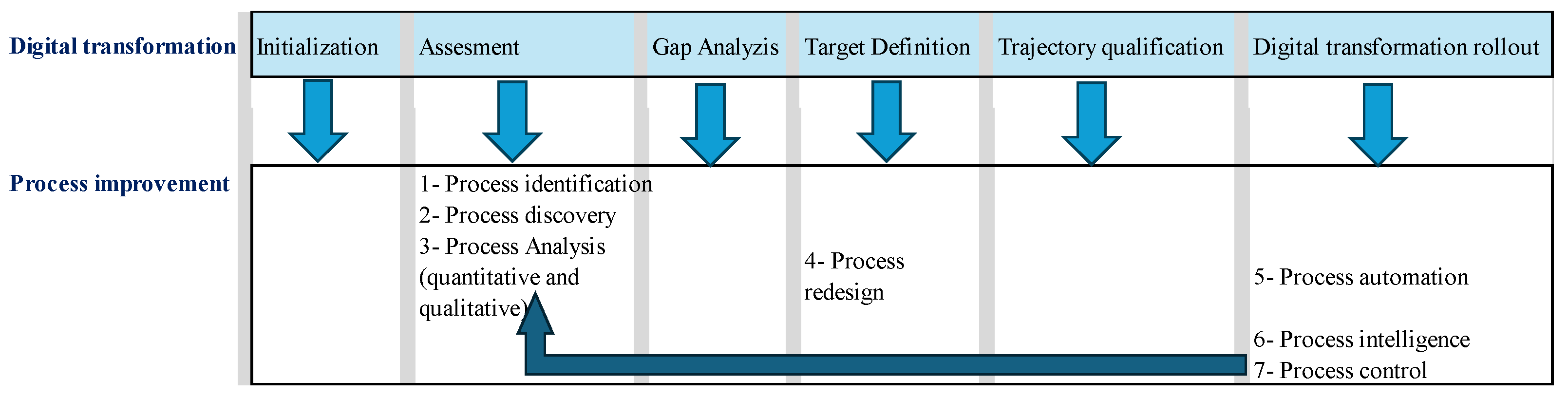
Figure 1 shows the close link between the two domains. Digital is key to help through simplifying the processes and controlling them, allowing fast readjustment should any inefficiency appear.
Figure 1.
Digital transformation and process improvement link.
The process intelligence may include AI features to take advantage of the generated data for analytics of predictive purposes.
The bridges between the two domains were established long ago but some challenges may be faced when trying to bring them simultaneously to practice the methods and tools, for assessing maturity, improving the processes, and rolling out digital transformation:
- Lack of an integrated conceptual framework to lead in an optimal way simultaneously with the digital transformation and the process improvement;
- A wrong priority choice, for the processes, when it comes to rollout digital transformation, may lead to unexpected outcomes;
- The timeframe for digital transformation is wider than for process improvement;
- The change management scope is much bigger for digital transformation than for process improvement.
To improve the convergence of digital transformation and process improvement and minimize the risks due to some real differences between the two approaches, the idea of designing an integrated conceptual framework in a transparent and layered way giving a 360° view is under search.
5. Conclusions
Through this work, we tried to present some of the most used methods for process improvement and for process maturity assessment. The actual methods have some particularities that make them:
- More efficient in certain fields of business/management (manufacturing for instance);
- Hard to deploy fully (going through all steps) when the time is a constraint, and results should be reached very fast;
- Cover just part of the need so the practitioners should sometimes mix methods to obtain the expected outcomes.
This complexity increases when process re-engineering is conducted in a concomitant way with a digital transformation project.
The need for a conceptual framework encompassing the strengths of the existing methods centered on its users (easiness of understanding and deploying) and working natively and efficiently with digital transformation activities is real and, I guess, expected by many.
Author Contributions
Writing—original draft preparation, N.O.; Validation, R.S. and W.C. All authors have read and agreed to the published version of the manuscript.
Funding
This research received no external funding.
Institutional Review Board Statement
Not applicable.
Informed Consent Statement
Not applicable.
Data Availability Statement
Data is contained within the article.
Conflicts of Interest
The authors declare no conflict of interest.
References
- Senkus, P.; Glabiszewski, W.; Wysokinska-Senkus, A.; Panka, A. Process Definitions—Critical Literature Review. Eur. Res. Stud. J. 2021, 24, 241–255. [Google Scholar] [CrossRef]
- Zairi, M. Business process management: A boundaryless approach to modern competitiveness. Bus. Process Manag. J. 1997, 3, 64–80. [Google Scholar] [CrossRef]
- Brocke, J.V.; Rosemann, M. Handbook on Business Process Management 1: Introduction, Methods, and Information Systems; Springer: Berlin/Heidelberg, Germany, 2015. [Google Scholar] [CrossRef]
- Deming, W.E. Out of the Crisis; MIT Press Series; MIT Press: Cambridge, MA, USA, 2000. [Google Scholar]
- Kraus, S.; Jones, P.; Kailer, N.; Weinmann, A.; Chaparro-Banegas, N.; Roig-Tierno, N. Digital Transformation: An Overview of the Current State of the Art of Research. Sage Open 2021, 11, 21582440211047576. [Google Scholar] [CrossRef]
- Crosby, P.B. Quality is Free: The Art of Making Quality Certain; McGraw-Hill: New York, NY, USA, 1979. [Google Scholar]
- Ishikawa, K. Guide to Quality Control; Asian Productivity Organization: Tokyo, Japan, 1996. [Google Scholar]
- Juran, J.M. Juran’s Quality Control Handbook, 4th ed.; McGraw-Hill: New York, NY, USA, 1988. [Google Scholar]
- Feigenbaum, A.V. Total Quality Control, 3rd ed.; McGraw-Hill: New York, NY, USA, 1991. [Google Scholar]
- Beno, J.; Rao, M.V.; Beno, J.; Das, S.K. Process Control & Inspection using 5s Method and Computation with Pareto Analysis. In Proceedings of the 2021 International Conference on Advances in Computing, Communication, and Control (ICAC3), Mumbai, India, 3–4 December 2021; pp. 1–5. [Google Scholar] [CrossRef]
- Carrillo-Beltrán, J.C.C.; Llanos-Ramírez, M.D.C.; Ramírez-Jiménez, A.; Bogarin-Correa, M.R. Educational innovation: An approach to the Japanese Kaizen method in university students. Reflections and perspectives. J. Educ. Theory/Rev. Teoría Educ. 2024, 8, 1. [Google Scholar] [CrossRef]
- Womack, J.P.; Jones, D.T. Banish Waste and Create Wealth in Your Corporation; Free Press: New York, NY, USA, 2003; p. 402. [Google Scholar]
- Six Sigma Revealed. Available online: https://www.sixsigma-institute.org/contents/Six_Sigma_Revealed_by_International_Six_Sigma_Institute.pdf (accessed on 10 April 2025).
- Van de Ven, A.H.; Poole, M.S. Explaining development and change in organizations. Acad. Manag. Rev. 1995, 20, 510–540. [Google Scholar] [CrossRef]
- Gottschalk, P. Maturity levels for interoperability in digital government. Gov. Inf. Q. 2009, 26, 75–81. [Google Scholar] [CrossRef]
- Kazanjian, R.K.; Drazin, R. A stage-contingent model of design and growth for technology based new ventures. J. Bus. Ventur. 1990, 5, 137–150. [Google Scholar] [CrossRef]
- Maier, A.M.; Moultrie, J.; Clarkson, P.J. Assessing Organizational Capabilities: Reviewing and Guiding the Development of Maturity Grids. IEEE Trans. Eng. Manag. 2012, 59, 138–159. [Google Scholar] [CrossRef]
Disclaimer/Publisher’s Note: The statements, opinions and data contained in all publications are solely those of the individual author(s) and contributor(s) and not of MDPI and/or the editor(s). MDPI and/or the editor(s) disclaim responsibility for any injury to people or property resulting from any ideas, methods, instructions or products referred to in the content. |
© 2025 by the authors. Licensee MDPI, Basel, Switzerland. This article is an open access article distributed under the terms and conditions of the Creative Commons Attribution (CC BY) license (https://creativecommons.org/licenses/by/4.0/).


