

You are currently viewing a new version of our website. To view the old version click .
Chemistry Proceedings
  • Proceeding Paper
  • Open Access

23 November 2023

Diagnosis, Photogrammetry and Conservation Treatment with Nanomaterials of Sacidava Fortress †

,
,
,
,
,
,
,
and
1
Research Group “Evaluation and Conservation of Cultural Heritage”, National Institute of Research and Development for Chemistry and Petrochemistry—ICECHIM, 202 Splaiul Independentei, 060021 Bucharest, Romania
2
Doctoral School of Materials Engineering, Valahia University of Târgoviște, 35 Lt. Stancu Ion, 130105 Targoviste, Romania
3
National History and Archaeology Museum, 12 Piata Ovidiu, 900745 Constanta, Romania
4
Department of Pharmacy, University Ovidius of Constanta, 6 Capitan Aviator Al. Șerbanescu, Campus, Corp C, 900527 Constanta, Romania
This article belongs to the Proceedings Exploratory Workshop "Innovative Cross-Sectoral Technologies", Vth Edition, Secvent Project Meeting

Abstract

The diagnosis, thermography, aerial photogrammetry, and conservation treatment with nanomaterials (CHAp) for some samples from Sacidava Fortress, Romania, are analyzed and the results are discussed accordingly in this paper.

1. Introduction

Sacidava Citadel is a Geto-Dacian settlement and a Roman castrum, from the Roman era (Trajan era), located on the right bank of the Danube, on the plateau of the Musait hill, between the towns of Rașova and Dunăreni, dating back to the II-VII centuries AD [1].
Currently, the fortress is in an advanced state of deterioration, with only a few walls excavated through partial archaeological works, which led to a significant loss for this monument of cultural heritage. Physico-chemical environmental factors and biological factors participate synergistically or antagonistically in the process of deterioration of the remaining walls of this monument [2,3,4]. The degree of stone deterioration depends on the physico-chemical environmental factors, the composition and nature of the stone material itself, and biological factors. These latter factors are responsible for biodeterioration, which is defined as “any undesirable change in the properties of a material caused by the vital activities of associated organisms” [5]. The European standard EN15898 defines the main general terms used in the field of conservation of cultural goods (2011) [6].
In this paper, several samples from the Sacidava Fortress are analyzed, in order to identify the origin of the raw materials and the deterioration processes that took place at this monument. Many nanomaterials have been used up to date for chemical consolidation and antimicrobial restoration of different surfaces from everywhere in the world [7,8,9,10,11,12,13]. In this paper, a conservation nanomaterial such as carbonate hydroxyapatite (CHAp) will be tested, and the results are discussed accordingly, together with some planned-flight aerial photogrammetry scans for systematic mapping correlated with thermogrammetry.

2. Materials and Methods

2.1. Locations and Collection of Archaeological Evidence

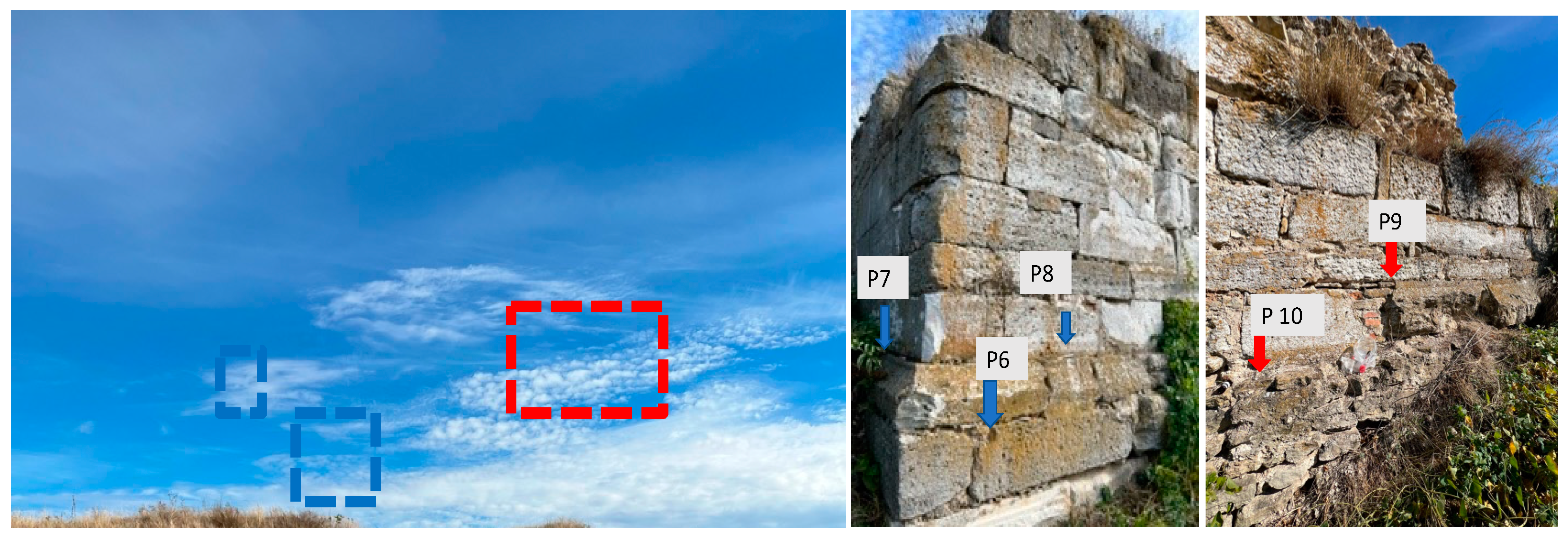
This study was conducted on a number of samples collected from 10 collection points in October 2022 from this archaeological area using non-invasive methods. Four samples were taken from the south-western sector, positioned at distances of approximately 1.5–2 m, being collected from areas with visible structural damage (Figure 1). Sector walls built of large stone blocks, at the base of marble pieces, were 4 m in height.
Figure 1. Collection area and their location (blue and red frames indicate the places where the samples have been collected).

2.2. Methods and Equipments

Some advanced analytical techniques such as X-ray diffraction (XRD) (Rigaku Corporation, Tokyo, Japan), X-ray fluorescence wavelength dispersed (WDXRF) (Rigaku ZSX Primus II spectrometer (Rigaku, The Woodlands, TX, USA), Fourier-transformed infrared spectroscopy (FTIR) (Vertex 80 spectrometer (Bruker Optik GMBH, Ettlingen, Germany), with the attenuated total reflectance mode, ATR), Raman spectroscopy (Raman wavelength portable analyzer (Rigaku, USA)), scanning electron microscopy (SEM) (FEI Quanta Inspect FEG Scanning Electron Microscope (FEI, Hillsboro, OR, USA), optical microscopy (OM) (Video Microscope EdmundOptics - magnifications: 2×, 8×, 12×, 14×), equipped with a digital video camera AmScope 3.2MP MT9T001 CMOS C-Mount camera), and stereo-microscopy (SM), (magnification of 20× or 40×) (both microscopes and accessories from EUROMEX Microscopen B.V., Papenkamp 20, BD Arnhem, The Netherlands).
For microbiological analysis, harvesting was carried out from the surfaces of the stones using a sterile swab (4 cm2). Twelve samples were taken from flat surfaces and with different porosities. The samples were transported to sterile enclosures and inoculated directly into Sabouraud Dextrose Agar culture media (selective medium for fungi) and Nutrient Agar (selective medium for bacteria), solids located in Petri dishes. The plates were placed in the incubator at 350 °C. Colonies were analyzed 24 h and 48 h after inoculation. The morphological characters were examined under stereomicroscope (OPTIKA) and epifluorescence microscope (Optika B350).
For thermography, a Catepillar 61 thermal serial camera with FLIR system was used, and for the photogrammetry, a professional drone type Mavic 2 Enterprise was used for the acquisition of aerial images and on a series of application programs designed to analyze and process images captured from archaeological sites.
Carbonated hydroxyapatite (CHAp), used in this paper as a consolidant, has been synthesized as reported in our previous paper [7].

3. Results and Discussion

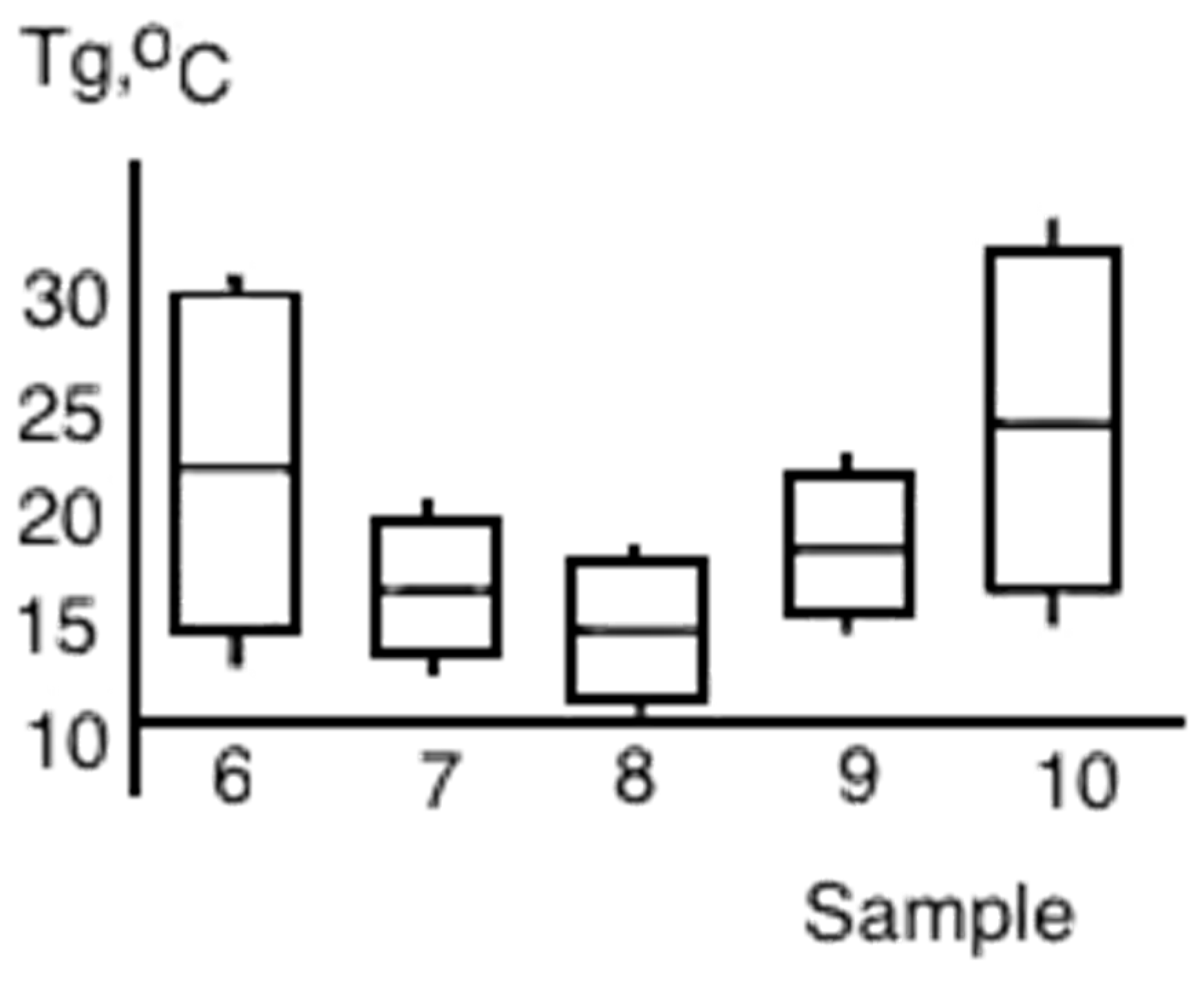
The microclimate analysis was carried out via thermographic evaluation of the main analyzed pieces [14,15]. This method allows for the identification in situ of temperature and humidity variations, physico-chemical parameters that allow us to understand the specific distribution and variation of biota [16]. The temperature identified on the investigated samples indicates good connection between the type of material and the temperature values recorded (Figure 2).
Figure 2. Variations in temperatures recorded at the surface of the analyzed stones (minimum, maximum and average values).
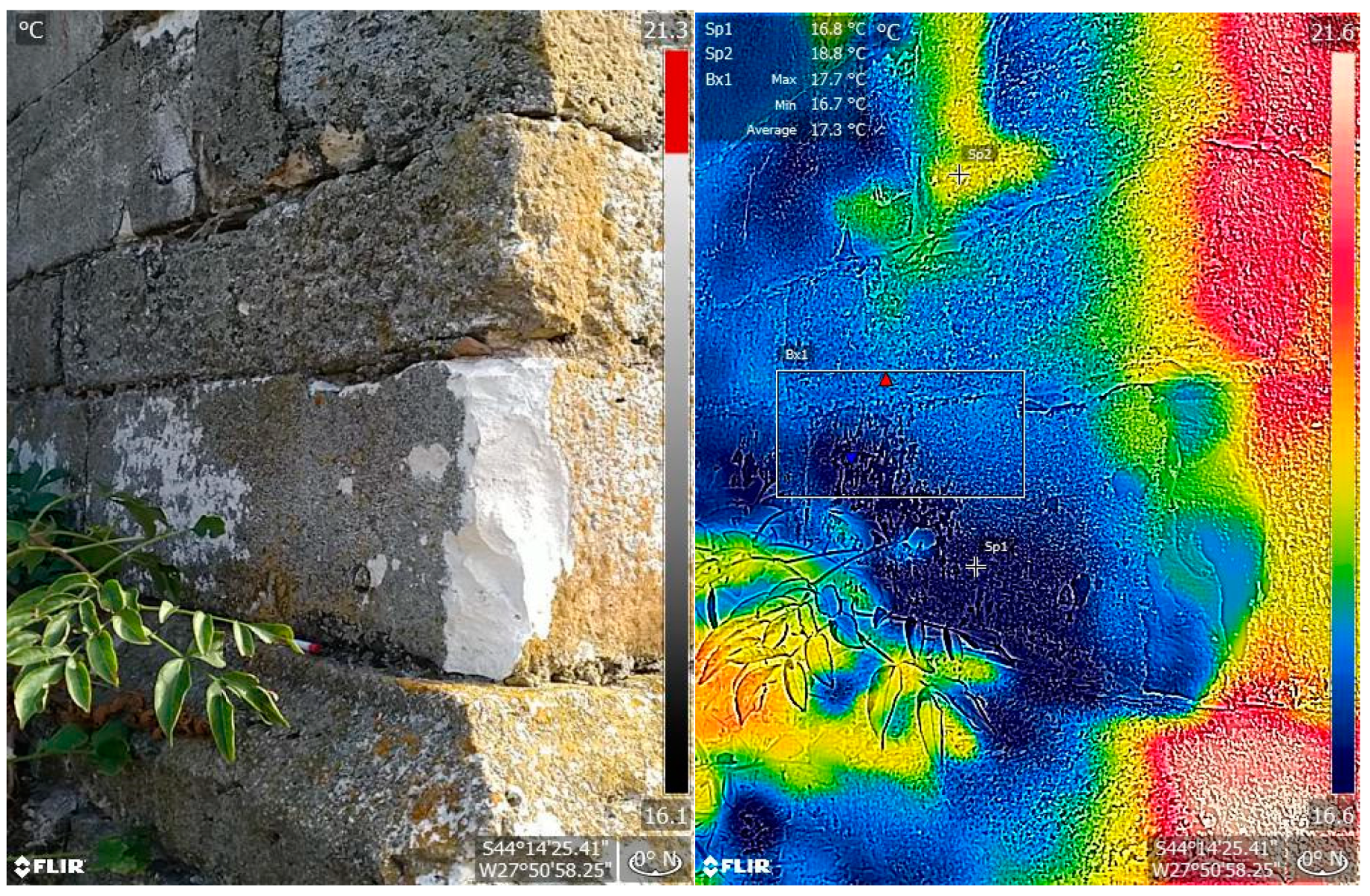
It can be found that, on the same stone component, there can be differences of about 10–15 °C, which give the organisms associated with these surfaces’ adequate ecological adaptations and allow them to survive in this type of microhabitat. Meanwhile, the thermography allowed us to highlight the fact that the presence of crusty lichens makes the covered surfaces register much higher temperature values than the support stone, without lichens, at the measured humidity of about 50%. Except the visible surface cracks, thermographic inspection put into evidence further cracking, difficult to be detected through visual testing (Figure 3).
Figure 3. The thermogramms of Sacidava sample.
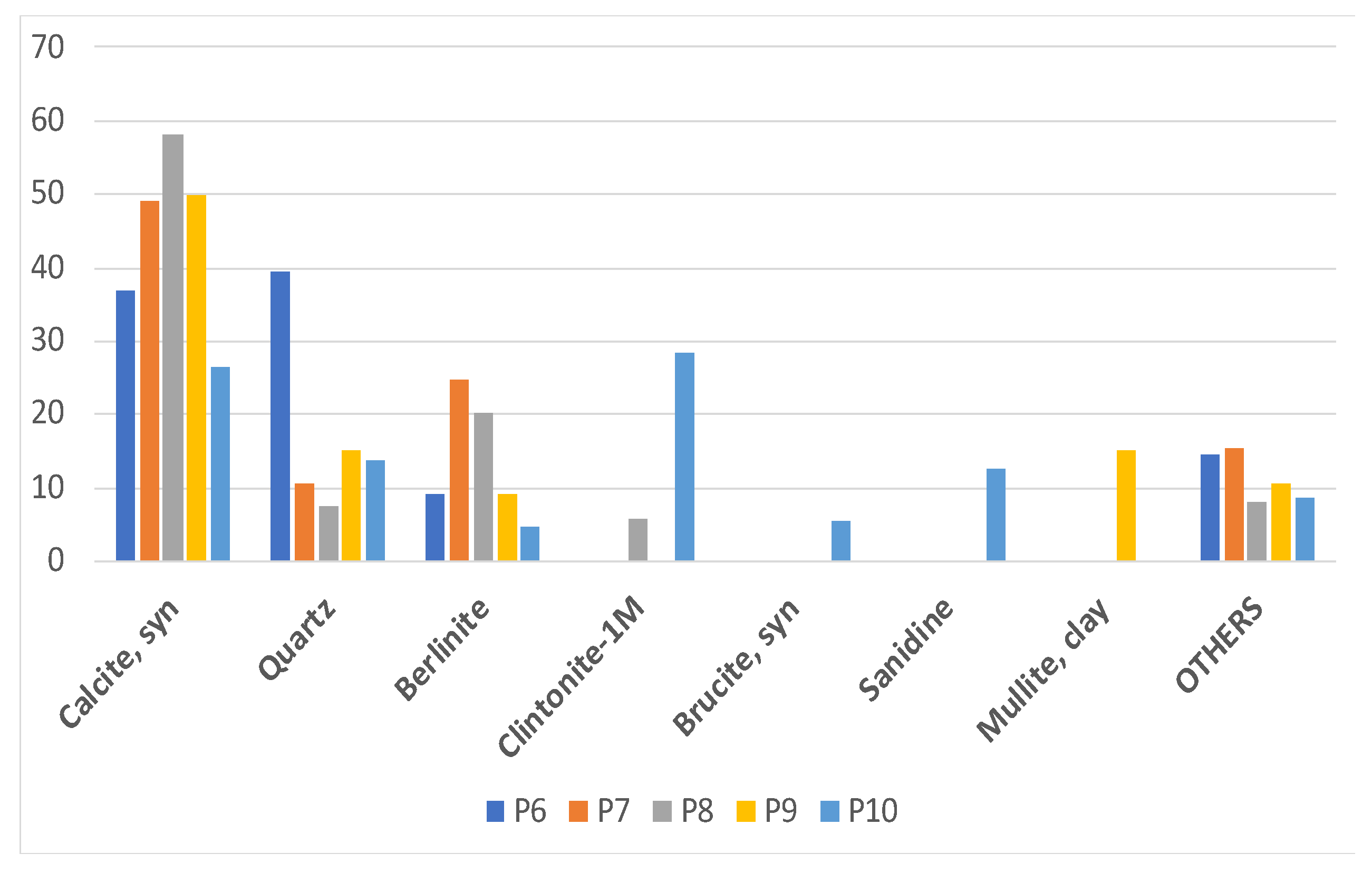
The physicochemical analysis, absolutely necessary in such experiments [17], was performed in this paper using WDXRF, XRD and FTIR. WDXRF allowed to see the elemental composition of mortar samples taken from the bricks existing in the fortress, revealing the presence of CaO, SiO2, Al2O3, and Fe2O3 (Table 1). XRD correlated with WDXRF analysis of mortars evidenced some minerals such as quartz, calcite, small amounts of feldspars, berlinite, brucite, the last one being responsible for the reinforced resistance structure inside the walls of this fortress (Figure 4).
Table 1. The composition of the samples via WDXRF.
Figure 4. XRD distribution of the main components.
XRD technique (Figure 4) correlated with XRF analysis of mortars identified several crystalline phases: quartz (SiO 2-28 (2q)) and calcite/dolomite (carbonate Ca and Mg-30, 38(2q)), small amounts of feldspaths (cations containing alkali metal aluminosilicate and alkaline earth metals), as well as mica and berlinite [18].
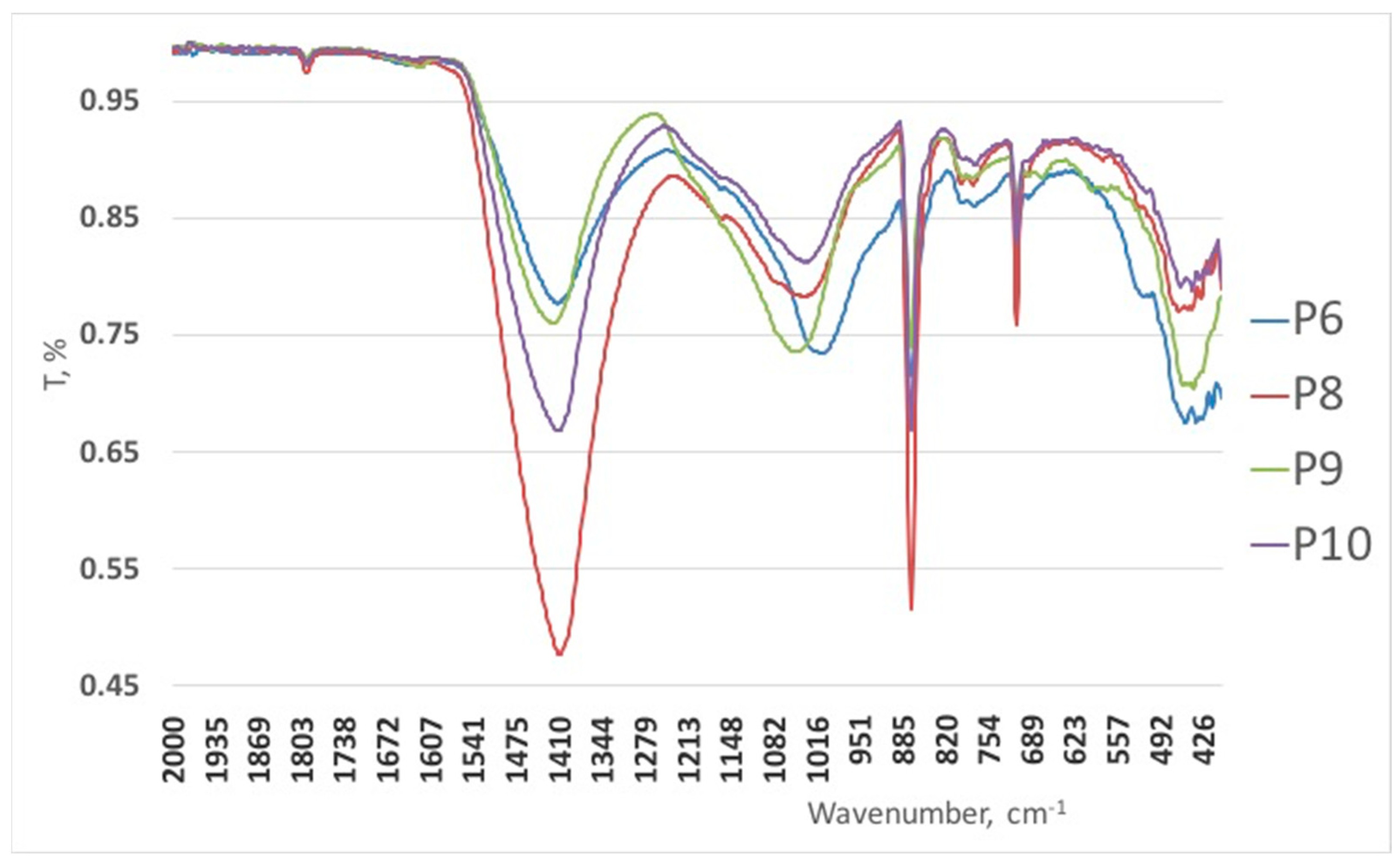
FTIR spectra Figure 5, put into evidence the bands assigned to the carbonate phases (1800 cm−1, 1406–1440 cm−1, 873 cm−1 and 711 cm−1), bound water (bands at 3370 and 1630–1640 cm−1), most probably linked to silicate and aluminate hydrates (strong silicate bands (Si–O) at 1011–1022 cm−1) and Al–O bands around 1000 cm−1. Similar results have been reported in the literature [19,20].
Figure 5. FTIR spectra of the Sacidava samples.
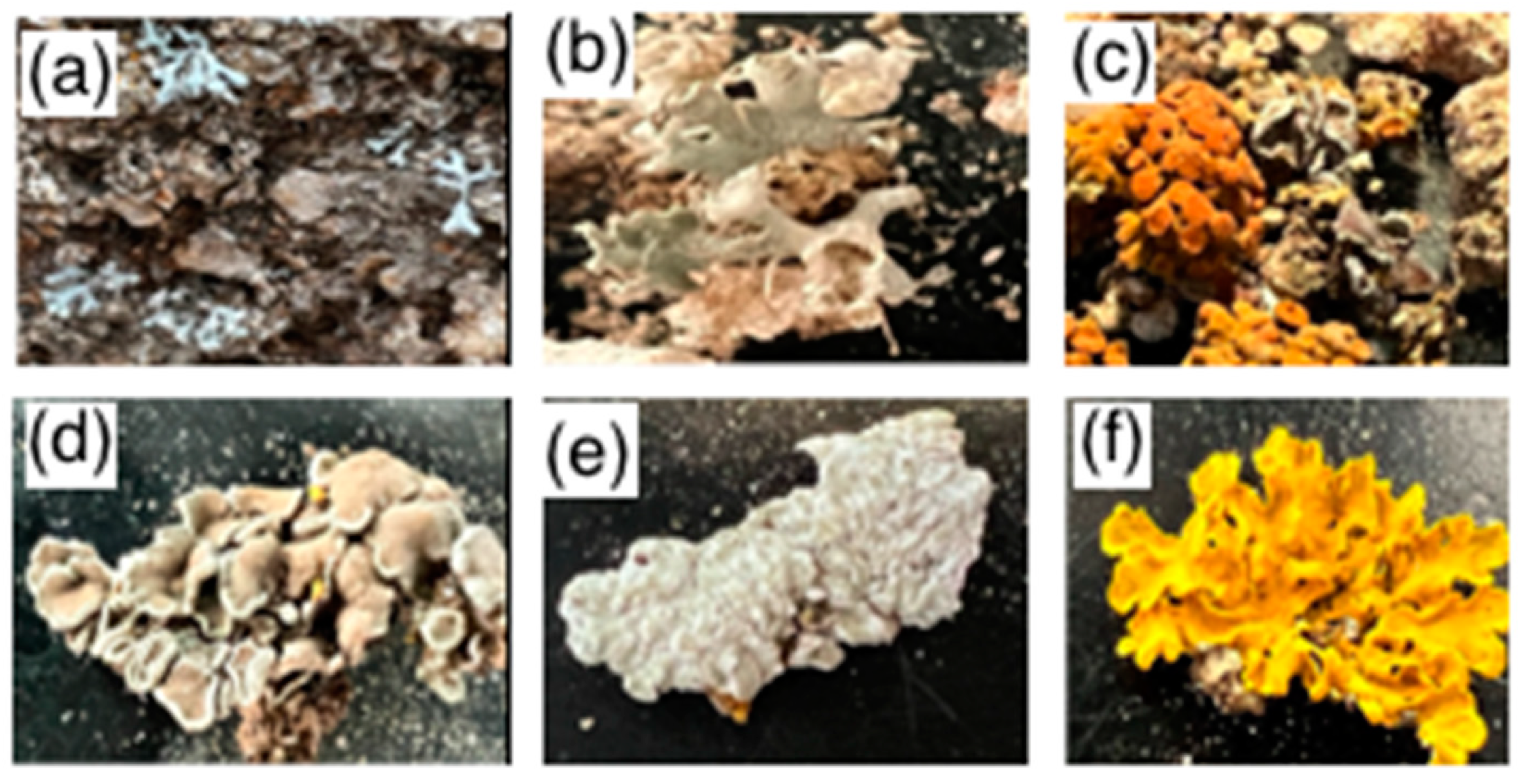
Macroscopically, crusty, folious lichens and mosses are distinguished; Figure 6. Lichens with crusty thallus form compact elements on the surface of the stone substrate [21,22]. All species are tolerant to environmental pollutants. The degree of microcolony coverage is high on intensely uneven calcareous structures. The identificated species were Physcia tenella (a,b), Caloplaca saxicola (Hoffm.) Norden (c), Rhizoplaca chrysoleuca (Sm.) Zopf sin Lecanora chrysoleuca (d), Aspicilia calcarea (L.) Mudd (Circinaria calcarea (L.) A. Nordin Savić & Tibell) (e), Xanthoria parietina (f); Figure 6.
Figure 6. The lichens identified on Sacidava samples Physcia tenella (a,b), Caloplaca saxicola (Hoffm.) Norden (c), Rhizoplaca chrysoleuca (Sm.) Zopf sin Lecanora chrysoleuca (d), Aspicilia calcarea (L.) Mudd (Circinaria calcarea (L.) A. Nordin Savić & Tibell) (e), Xanthoria parietina (f).
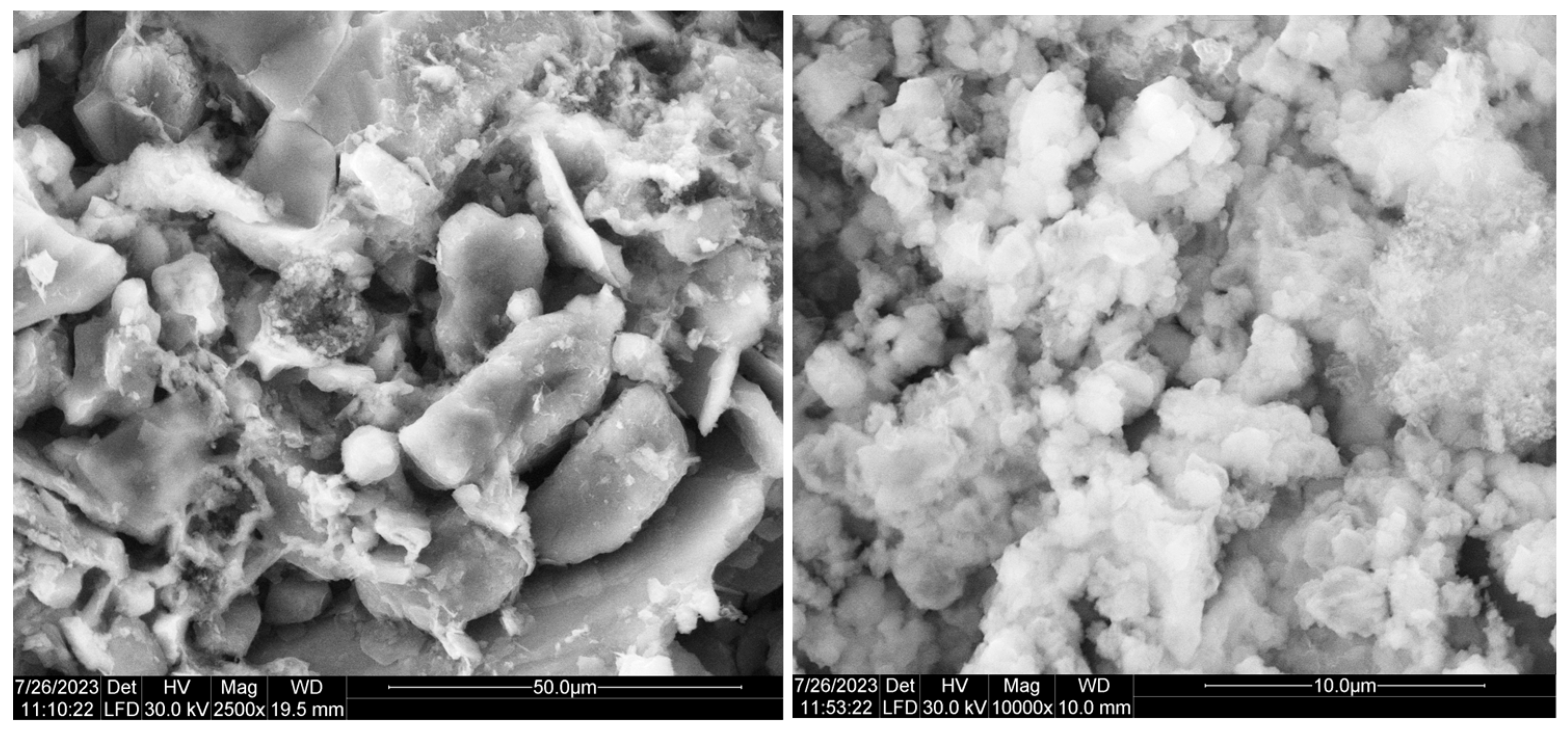
Treated with carbonated hydroxyapatite, the samples collected from Sacidava fortress became homogeneously covered. The acicular formations of the initial samples, most probably due to gypsum, mica or cuartz, became completely covered by carbonated hydroxyapatite through an homogeneous layer, as could be seen in Figure 7, in good agreement with other literature reports [23].
Figure 7. Sacidava samples non-treated (left) and treated (right) with (CHAp).
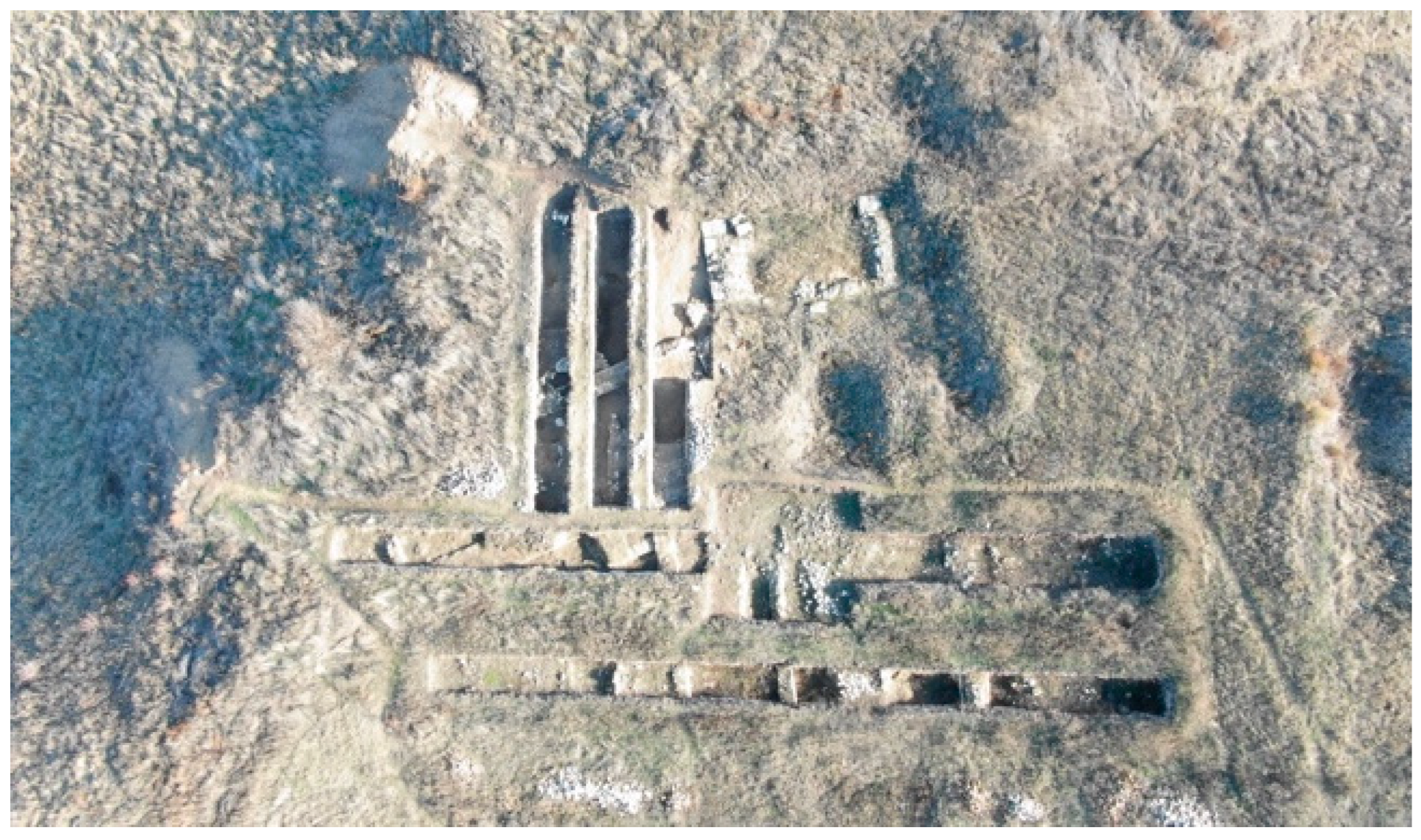
As far as 3D technologies are concerned, preliminary studies have shown that the software processing technique and procedures used are feasible [24,25]. Aerial scans were performed, and precise locations were made of the places from which the samples subjected to investigations were taken. Aerial photogrammetry scans will be extended with planned flights for systematic mapping of the area of interest. For this archaeological objective, the drone was tested in manually controlled flight to capture images with size 4000 × 3000 pixels. The local weather conditions were wind speed 3.5 m/s with gusts up to 5 m/s, air temperature 11 °C, air humidity 56%, very good visibility, and sunny. The areas with visible ruins were scanned, and panoramic video sequences of larger areas of the fortress perimeter were captured, including photo and video with the areas of recent archaeological excavations (Figure 8).
Figure 8. The aerial image of Sacidava fortress with drone.

4. Conclusions

The samples from Sacidava Fortress, Romania, are analyzed for the diagnosis, aerial photogrammetry, thermography and conservation treatment with nanomaterials (CHAp), and the results are discussed accordingly in this paper. Non-invasive techniques, such as WDXRF, XRD and FTIR, allowed to see the elemental composition of mortar samples taken from the bricks existing in the fortress. Also, some imagistic techniques such as SEM and thermographic inspection put into evidence further cracking, difficult to be detected through visual testing. Lastly, the identification of different lichens has been put into evidence, and the conservation technique with carbonated hydroxyapatite nanomaterials have been promoted in this paper.

Author Contributions

Conceptualization, R.-M.I.; methodology, R.-M.I. and V.S.; software, S.I.; validation, R.-M.I., V.S. and S.M.C.; formal analysis, V.S. and R.A.T.; investigation, L.I., R.M.G., S.S.-T. and A.I.G.; resources, R.-M.I.; data curation, V.S. and S.I.; writing—original draft preparation, R.-M.I.; writing—review and editing, R.-M.I.; visualization, R.-M.I.; supervision, R.-M.I.; project administration, R.-M.I.; funding acquisition, R.-M.I. All authors have read and agreed to the published version of the manuscript.

Funding

This work was supported by the project PN-III-P2-2.1-PED-2021-3885 (687PED/2022, from Research and Innovation Ministry (MCID).

Institutional Review Board Statement

Not applicable.

Data Availability Statement

Data are contained within the article.

Acknowledgments

Special thanks are due to Eng. Nelu Ion, for all his support given to the sampling and processing of the samples from Sacidava fortress.

Conflicts of Interest

The authors declare no conflict of interest.

References

  1. Scorpan, C. Săpăturile arheologice de la Sacidava. Pontica 1973, VI, 267–331. [Google Scholar]
  2. Camuffo, D. Deterioration Processes of Historical Monuments. In Acidification and Its Policy Implications; Elsevier Science Publishers: Amsterdam, The Netherlands, 1986; Volume 30, pp. 189–221. [Google Scholar]
  3. Ion, R.M.; Colesniuc, S.; Schroder, V.; Gheboianu, A.I.; Slamnoiu-Teodorescu, S. Sacidava fortress: Materials and their structural/compositional identification. In Proceedings of the VIII International European Congress on Social Sciences, Rijeka, Croatia, 4–5 December 2022. [Google Scholar]
  4. Pathak, S.; Singh, A.K. Deterioration Processes of Historical Monuments. Int. J. Innov. Res. Sci. Eng. Technol. (IJIRSET) 2020, 9, 7520–7523. [Google Scholar]
  5. Hueck, H.J. The biodeterioration of materials—An appraisal. Int. Biodeter. Biodegrad. 2001, 48, 5–11. [Google Scholar] [CrossRef]
  6. EN 15898; Conservation of Cultural Property—Main General Terms and Definitions. European Committee for Standardization: Brussels, Belgium, 2011.
  7. Ion, R.-M.; Iancu, L.; Vasilievici, G.; Grigore, M.E.; Andrei, R.E.; Radu, G.-I.; Grigorescu, R.M.; Teodorescu, S.; Bucurica, I.A.; Ion, M.-L.; et al. Ion-substituted carbonated hydroxyapatite coatings for model stone samples. Coatings 2019, 9, 231. [Google Scholar] [CrossRef]
  8. Ion, R.M.; Iancu, L.; David, M.E.; Grigorescu, R.M.; Trica, B.; Somoghi, R.; Vasile, S.F.; Dulama, I.D.; Gheboianu, A.I.; Tincu, S. Multi-Analytical Characterization of Corvins’ Castle—Deserted Tower. Construction Materials and Conservation Tests. Heritage 2020, 3, 941–964. [Google Scholar] [CrossRef]
  9. Iancu, L.; Ion, R.; Grigorescu, R.; David, M.E.; Ghiurea, M.; Vasilievici, G.; Stirbesc, R.M.; Dulama, I.D. Double substituted carbonated hydroxyapatite for stone consolidation. J. Sci. Arts 2020, 20, 713–730. [Google Scholar] [CrossRef]
  10. Ion, R.M.; Turcanu-Carutiu, D.; Fierascu, R.C.; Fierascu, I. Chalk stone restoration with hydroxyapatite–based nanoparticles. Sci. Bull. Valahia Univ. Mater. Mech. 2014, 9, 16–19. [Google Scholar]
  11. Ion, R.-M.; Ion, M.-L.; Radu, A.; Suica-Bunghez, R.-I.; Fierascu, R.-C.; Fierascu, I.; Teodorescu, S. Nanomaterials-based mortars for building façades preservation. Rom. J. Mater. 2016, 46, 412–418. [Google Scholar]
  12. Ion, R.-M.; Turcanu-Carutiu, D.; Fierascu, R.C.; Fierăscu, I.; Bunghez, I.R.; Ion, M.L.; Teodorescu, S.; Vasilievici, G.; Rădiţoiu, V. Caoxite-hydroxyapatite composition as consolidating material for the chalk stone from Basarabi-Murfatlar churches ensemble. Appl. Surf. Sci. 2015, 358, 612–618. [Google Scholar] [CrossRef]
  13. Sassoni, E. Hydroxyapatite and Other Calcium Phosphates for the Conservation of Cultural Heritage: A Review. Materials 2018, 11, 557–565. [Google Scholar] [CrossRef]
  14. Gavrilov, D.; Maev, R.G.; Almond, D.P. A review of imaging methods in analysis of works of art. Thermographic imaging method in art analysis. Can. J. Phys. 2014, 92, 341–364. [Google Scholar] [CrossRef]
  15. Dritsa, V.; Orazi, N.; Yao, Y.; Paoloni, S.; Koui, M.; Sfarra, S. Thermographic Imaging in Cultural Heritage: A Short Review. Sensors 2022, 22, 9076. [Google Scholar] [CrossRef] [PubMed]
  16. Chen, J.; Blume, H.P.; Beyer, L. Weathering of rocks induced by lichen colonization—A review. CATENA 2000, 39, 121–146. [Google Scholar] [CrossRef]
  17. Ion, R.-M.; Barbu, M.G.; Gonciar, A.; Vasilievici, G.; Gheboianu, A.I.; Slamnoiu-Teodorescu, S.; David, M.E.; Iancu, L.; Grigorescu, R.M. A Multi-Analytical Investigation of Roman Frescoes from Rapoltu Mare (Romania). Coatings 2022, 12, 530. [Google Scholar] [CrossRef]
  18. Barnoos, V.; Oudbashi, O.; Shekofteh, A. The deterioration process of limestone in the Anahita Temple of Kangavar (West Iran). Herit. Sci. 2020, 8, 66. [Google Scholar] [CrossRef]
  19. Tamburini, D.; Łucejko, J.J.; Modugno, F.; Colombini, M.P.; Pallecchi, P.; Giachi, G. Microscopic techniques (LM, SEM) and a multi-analytical approach (EDX, FTIR, GC/MS, Py-GC/MS) to characterise the decoration technique of the wooden ceiling of the House of the Telephus Relief in Herculaneum (Italy). Microchem. J. 2014, 116, 7–14. [Google Scholar] [CrossRef]
  20. Tosunlar, M.B.; Beycan, A.D.O.; Korkanç, M. Non-destructive test investigations on the deterioration of roman mausoleum in Karadag central Anatolia, Turkey. Mediterr. Archaeol. Archaeom. 2020, 20, 199–205. [Google Scholar]
  21. Kumar, J.; Khare, R.; Rai, H.; Upreti DK Tayade, A.; Hota, S.; Chaurasia, O.P.; Srivastava, R.B. Diversity of lichens along altitudinal and land use gradients in the Trans Himalayan cold desert of Ladakh. Nat. Sci. 2012, 10, 1–9. [Google Scholar]
  22. Mihajlovski, A.; Seyer, D.; Benamara, H.; Bousta, F.; Di Martino, P. An overview of techniques for the characterization and quantification of microbial colonization on stone monuments. Ann. Microbiol. 2015, 65, 1243–1255. [Google Scholar] [CrossRef]
  23. Zhu, Q.X.; Jiang, W.H.; Shao, C.; Bao, Y. Thermophysical and Mechanical Properties of Carbonated Hydroxyapatite. In Proceedings of the 7th China International Conference on High-Performance Ceramics (CICC 7), Xiamen, China, 4–7 November 2011; pp. 989–1000. [Google Scholar]
  24. Trebeleva, G.; Glazov, K.; Kizilov, A.; Sakania, S.; Yurkov, V.; Yurkov, G. Roman Fortress Pitiunt: 3D-Reconstruction of the Monument Based on the Materials of Archaeological Research and Geological Paleoreconstructions. Appl. Sci. 2021, 11, 4814. [Google Scholar] [CrossRef]
  25. Büyüksalih, G.; Kan, T.; Özkan, G.E.; Meriç, M.; Isın, L.; Kersten, T.P. Preserving the knowledge of the past through virtual visits: From 3D Laser scanning to virtual reality visualisation at the Istanbul Çatalca İnceğiz caves. PFG J. Photogramm. Remote Sens. Geoinf. Sci. 2020, 88, 133–146. [Google Scholar] [CrossRef]
Disclaimer/Publisher’s Note: The statements, opinions and data contained in all publications are solely those of the individual author(s) and contributor(s) and not of MDPI and/or the editor(s). MDPI and/or the editor(s) disclaim responsibility for any injury to people or property resulting from any ideas, methods, instructions or products referred to in the content.

Article Metrics

Citations

Article Access Statistics

Multiple requests from the same IP address are counted as one view.