Article

The Role of the Neutrophil-to-Lymphocyte Ratio in Patients with Diabetes and Atrial Fibrillation: Insights from the National Spanish Registry Sumamos-FA-SEMI


by
José Carlos Arévalo-Lorido
1,2,3,
Juana Carretero-Gómez
1,2,4,*,
Alberto Muela Molinero
5,
Esther Montero-Hernández
6,
Juan Bosco López-Sáez
7,
Maria Isabel González-Anglada
8,
Miguel Angel Vazquez-Ronda
9,10,11,
Jesús Castiella-Herrero
12,
José Pablo Miramontes-González
13,14,
Rocío García-Alonso
15 and
on behalf of Sumamos-FA-SEMI Registry
1
Servicio de Medicina Interna, Hospital Universitario de Badajoz, Avda. de Elvas s/n, 06080 Badajoz, Spain
2
Instituto Universitario de Investigación Biosanitario de Extremadura (INUBE), Avda. de la Investigación s/n, 06006 Badajoz, Spain
3
Fundación para la Formación y la Investigación de los Profesionales de la Salud de Extremadura (FUNDESALUD), C/Pío Baroja, 10, 06800 Mérida, Spain
4
CICAB: Centro de investigación clínica del área de Badajoz, Avda. de Elvas s/n, 06080 Badajoz, Spain
5
Servicio de Medicina Interna, Complejo asistencial Universitario de León, Calle Altos de Nava s/n, 24008 León, Spain
6
Servicio de Medicina Interna, Hospital Puerta de Hierro, C. Joaquín Rodrigo, 1, 28222 Majadahonda, Spain
7
Servicio de Medicina Interna, Hospital Universitario Puerto Real, Calle Romería, 7, 11510 Puerto Real, Spain
8
Servicio de Medicina Interna, Hospital Universitario Fundación de Alcorcón, C. Budapest, 1, 28922 Alcorcón, Spain
9
Servicio de Medicina Interna, Hospital Universitario Infanta Sofia, P.º de Europa, 34, 28702 San Sebastián de los Reyes, Spain
10
Departamento de Medicina, Facultad de Medicina, Salud y Deportes, Universidad Europea de Madrid, C. Tajo s/n, 28670 Villaviciosa de Odón, Spain
11
Fundación para la Investigación e Innovación Biomédica del Hospital Universitario Infanta Sofía y Hospital Universitario del Henares (FIIB HUIS-HUHE), Paseo de Europa, 34, 28702 San Sebastián de los Reyes, Spain
12
Servicio de Medicina Interna, Hospital de Calahorra, Carretera de Logroño s/n, 26500 Calahorra, Spain
13
Servicio de Medicina Interna, Hospital Universitario Rio Hortega, Calle Dulzaina, 2, 47012 Valladolid, Spain
14
Departamento de Medicina, Facultad de Medicina, Universidad de Valladolid, Av. Ramón y Cajal, 7, 47003 Valladolid, Spain
15
Servicio de Medicina Interna, Complejo asistencial de Ávila, Avda. Juan Carlos I s/n, 05004 Ávila, Spain
*
Author to whom correspondence should be addressed.
Diabetology 2026, 7(1), 11; https://doi.org/10.3390/diabetology7010011
Submission received: 10 November 2025 / Revised: 23 December 2025 / Accepted: 29 December 2025 / Published: 5 January 2026

Abstract

Aim: To analyse the importance of inflammation in the disease burden and prognosis of patients with type 2 diabetes (T2DM) and atrial fibrillation (AF). We assessed these patients according to their neutrophil-to-lymphocyte ratio (NLR) values, examining their baseline characteristics and their prognosis at one year of follow-up based on a prospective AF registry in Spain (Sumamos-FA-SEMI). Methods: A prospective, multicentre, observational study of patients with AF (Sumamos-FA-SEMI) was conducted. We categorised the patients into four groups according to the presence of T2DM and NLR levels with a reference cut-off point of three. We compared the characteristics of the four groups and evaluated the prognosis using the mean values of all-cause mortality and all-cause mortality plus readmissions during a year of follow-up. Results: We analysed 1071 patients, 482 of whom had T2DM. This group had significantly higher rates of obesity and comorbidities. Groups with an NLR greater than three points had a higher prevalence of cancer, lower HDL cholesterol levels, and more albuminuria. Other inflammatory markers, such as C-reactive protein, were also higher in these groups. Regarding prognosis, groups (both with and without T2DM) with an NLR greater than three had significantly higher mortality, with a higher probability in those without T2DM (HR 3.58, 95% CI: 1.99–6.43, p < 0.00). In terms of mortality and readmissions, only the group without T2DM and with an NLR greater than three had significantly higher mortality (HR 2.19, 95% CI: 1.51–3.19, p < 0.00). Conclusions: Among atrial fibrillation patients, the combination of T2DM and high inflammation (NLR) was linked to higher comorbidity, worse metabolic and kidney disease, and the poorest prognosis. Surprisingly, the highest risk of readmission or death was in non-T2DM patients with higher NLR levels, suggesting that T2DM treatments may mitigate risk.

1. Introduction

Epidemiological research has long suggested a link between diabetes mellitus (T2DM) and an increased risk of atrial fibrillation (AF). The Framingham Heart Study identified diabetes, along with hypertension and valvular heart disease, as an independent risk factor for AF in both men and women [1]. More recently, several meta-analyses have confirmed this relationship [2,3]. Both T2DM and AF have shown an inflammatory basis for their pathogenesis, and inflammatory activity even plays a significant role in the disease outcome. Inflammation may induce AF, but AF contributes to inflammation, leading to a vicious cycle [4]. Inflammation also plays a well-known role in T2DM and its complications [5,6]. The mechanisms underlying the increased propensity to AF in T2DM are incompletely understood but are thought to involve electrical, structural, and autonomic remodelling in the atria, where several inflammatory mechanisms, among others, are involved in this susceptibility [7].
The neutrophil-to-lymphocyte ratio (NLR) is a simple, readily available marker believed to indicate systemic inflammation, a key factor in the development and progression of cardiovascular disease (CVD) [8]. The NLR has shown a predictive role both in patients with T2DM [9] and in patients with AF [10]. The importance of NLR in T2DM is likely due to the ravelled role of inflammation in the disease. In patients with T2DM, the increased oxidative stress and necrosis of neutrophils trigger an inflammatory response that impairs endothelial function. NLR has been actually considered as a risk factor for all-cause and cardiovascular mortality in patients with DM [11]. In the case of AF, oxidative stress, inflammation, prothrombotic state and genetics, were linked to the initiation and perpetuation of AF, resulting in atrial structural abnormalities and electrophysiological changes [12]. Recognising the key role of inflammation in the development of cardiovascular diseases, inflammatory biomarkers like the NLR have acquired particular interest in recent years as a predictive marker in patients with AF.
The Sumamos-FA-SEMI registry is a Spanish multicentric registry whose goal was to update the profile of patients with atrial fibrillation (AF) who are treated in internal medicine wards according to characteristics implicit in elderly patients [13].
To analyse the importance of inflammation in the disease burden and prognosis of patients with T2DM and AF, our aim is to assess these patients according to their NLR values, examining their baseline characteristics and their prognosis (mortality and readmissions) at one year of follow-up, in the setting of our Sumamos-FA-SEMI registry.

2. Methods

A prospective, multicentre, observational study was conducted using data from the Sumamos-FA-SEMI registry, which was contributed to by 31 hospitals across the country. Inclusion criteria included patients older than 18 years who were treated in internal medicine services, either in the outpatient setting or during hospitalisation, with a diagnosis of atrial fibrillation (AF), whether previously known or diagnosed during the index hospital admission, always confirmed by a 12-lead electrocardiogram (ECG), and who had provided written informed consent (from the patient or a legal representative). Exclusion criteria included patients without an ECG-confirmed diagnosis of AF, those who did not provide informed consent, and patients participating in a pharmacological interventional clinical trial. Two recruitment periods were established: the first one was in October and November 2023, and the second one was in April and May 2024. Patients were informed and had to sign an informed consent form to be included. The project was approved by the Ethics Committee of the University Hospital of Badajoz (register number: CEI026/23, 19 April 2023) and adhered to the principles set forth in the Declaration of Helsinki. It also was sponsored by the Spanish Foundation of Internal Medicine (FEMI) and the Spanish Society of Internal Medicine (SEMI).

2.1. Variables

Data collection was carried out in an anonymized online database created for this specific purpose [13]. The registry included sociodemographic, clinical, analytical, imaging, therapeutic, and outcome data. Hematologic parameters were performed by an automated haematology analyser (flow cytometry and electrical impedance). Blood biochemistry analysis was performed by spectrophotometry techniques. Thrombotic and haemorrhagic risk upon inclusion were assessed using the CHA2DS2-VASc and HAS-BLED scales, respectively. Secondarily, and in accordance with recent European guidelines [14], the CHA2DS2-VA scale was used to calculate thrombotic risk. Other variables analysed comorbidities (Charlson comorbidity index, CCI [15]), nutritional status (MNA short-form [16]), functional capacity (Barthel index, BI [17]), and quality of life (EQ-5D, [18]).
The NLR was calculated as the ratio between neutrophil and lymphocyte counts measured in peripheral blood. The sample was categorised according to a cut-off point of 3 according to previous studies [10]. To evaluate inflammation, the systemic immune inflammation index (SII) was also calculated; this is a ratio calculated as (neutrophil × platelet)/lymphocyte counts in cells/L that has also been studied as a biomarker reflecting immune and inflammatory status [19]. Additionally, the high-sensitivity C-reactive protein (CRP)-to-albumin ratio (CAR) was determined. This ratio is a new marker based on inflammation; its high levels can increase the risk of cardiovascular disease [20]. The CAR was calculated using the following formula: CAR = CRP (mg/L)/albumin (g/L) [21].
We classified patients (Figure 1) according to the presence/absence of T2DM and NLR levels based on a cut-off point of 3 [10]. Group 1 included patients without T2DM and a level of NLR lower than 3. Group 2 was defined by patients without T2DM and an NLR level higher than 3. Group 3 grouped patients with T2DM with NLR levels lower than 3 and, finally, Group 4 consisted of patients with T2DM and an NLR higher than 3.

2.2. Outcomes

We analysed differential characteristics among the groups; then, we considered differential global mortality between the groups during a one-year follow-up and differences in a composite endpoint of total mortality and readmissions during the same period of follow-up.

2.3. Statistical Analysis

Categorical variables were expressed as absolute counts and percentages (%), while continuous variables were expressed as the mean and standard deviation or median and interquartile range depending on the normality of the distributions which were analysed with the test of Lilliefors. The Kruskal–Wallis’s rank sum test or an ANOVA was used for continuous variables, and chi-squared tests were used for categorical variables to analyse group differences. To identify the determinants of mortality in AF patients, a Cox regression analysis was performed. Kaplan–Meier curves were plotted to assess the association of the NLR with all-cause and cardiovascular mortality, and weighted Cox proportional regression models were constructed. Cox models included covariates that were both clinically meaningful and statistically significant in the univariate analyses. Model 1 was unadjusted. Age, sex, BMI, glucose, the Charlson comorbidity index (CCI), and treatment with sodium–glucose cotransporter 2 inhibitors (SGLT2i) were adjusted in Model 2 with respect to all-cause mortality and readmissions. Models 3 and 4 only referred to all-cause mortality. Model 3 was unadjusted; again, age, sex, BMI, glucose, the CCI, and treatment with SGLT2i were adjusted in Model 4.
All analyses were conducted using R software version 4.3.3. p < 0.05 was considered statistically significant.

3. Results

A total of 1241 patients were recruited, the data of 1071 of whom (557 women (51.9%), median age: 83 years (10)) were analysed. The remaining 170 were excluded due to lack of critical study variables or lack of follow-up. Out of the 1071 patients analysed, 482 (44.9% women, median age of 82 ± 8.1) had a history of T2DM. A total of 598 patients (52.3% women, mean age 83 + 10) had high NLRs (>3). The main characteristics by group are displayed in Table 1.
The groups that included patients with T2DM (groups 3 and 4) were older, were more likely to be obese (p < 0.0001), had a larger waist circumference (WC) (p = 0.02), were more likely to have dyslipidaemia (p = 0.0001), and had a higher prevalence of ischemic heart disease (p = 0.0012) or peripheral arterial disease (p = 0.0001), as well as a generally higher incidence of comorbidities (p < 0.0001). Among both groups of people with T2DM (groups 3 and 4), those with more inflammation showed a higher prevalence of heart failure (p = 0.0021) and kidney disease (p= 0.0001), with a higher albumin/creatinine ratio (UACR) (p = 0.0007), a larger WC (p = 0.02), and higher glucose (p < 0.0001) and glycated haemoglobin (A1C) (p < 0.0001) levels. Conversely, the groups with greater inflammation (groups 2 and 4) had a higher prevalence of cancer (p = 0.04), lower haematocrit (p < 0.0001) and HDL levels (p < 0.00), and greater albuminuria (p = 0.0007). Regarding the other inflammatory indices, SII, CAR, and C-reactive protein were also higher in the groups with an NLR >3. Finally, regarding treatments, group 4 (people with T2DM and NLR > 3) had a significantly higher percentage of people treated with statins, oral anticoagulants, angiotensin receptor blockers (ARB), mineralocorticoid receptor antagonists (MRA), and SGLT2i.

Outcomes

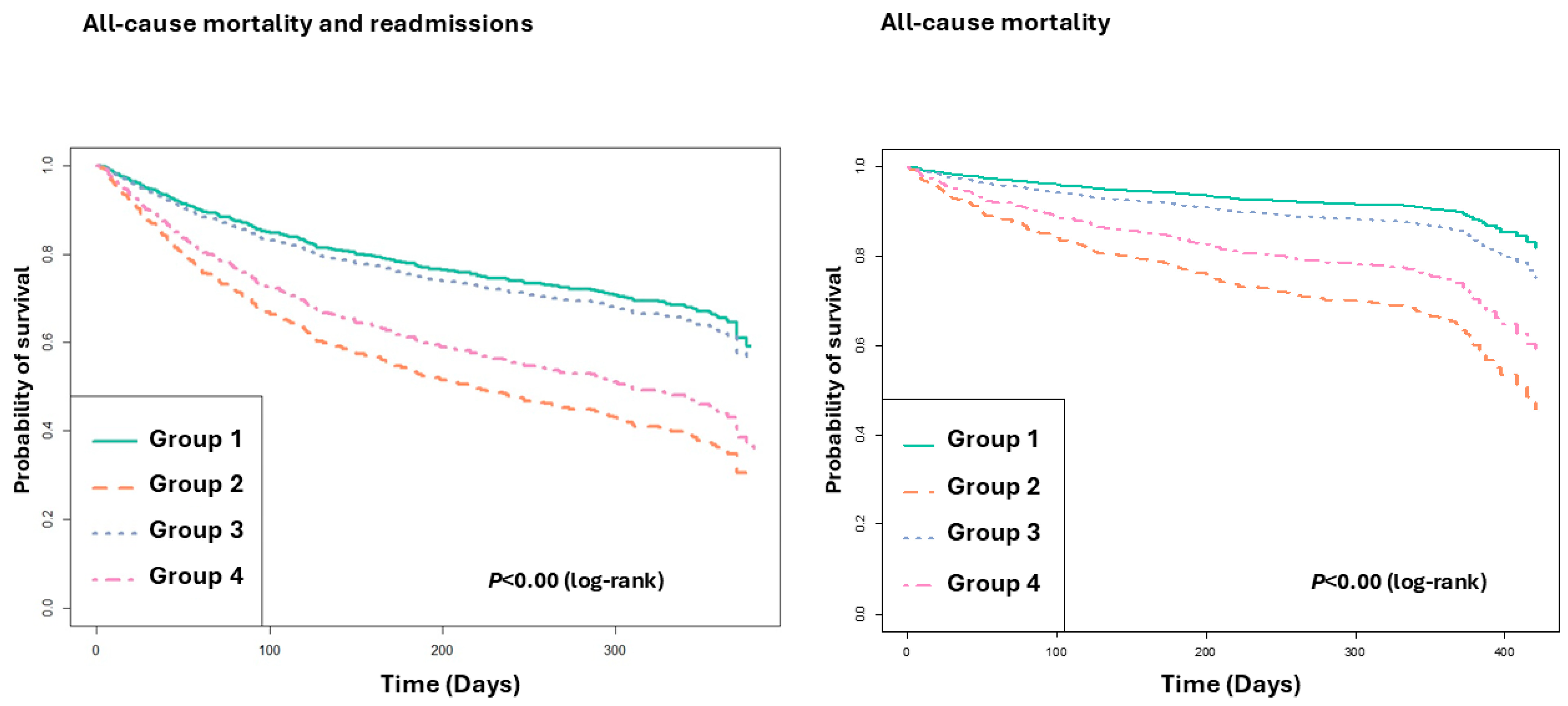
Regarding prognosis, 284 patients died during the one-year follow-up period. With respect to the combined endpoint of all-cause mortality and readmissions (Figure 2, Table 2), group 2 showed the worst prognosis both in the Kaplan–Meier curves (p < 0.00), and in the adjusted Cox regression model (HR 2.19, 95% CI: 1.51–3.19, p < 0.0001). Similarly, with respect to all-cause mortality, group 2 also had the worst prognosis both in its correspondent Kaplan–Meier curves (p < 0.00) and adjusted Cox regression model (HR 3.58, 95% CI: 1.99–6.43, p < 0.0001).

4. Discussion

Our results show how the NLR has relevance in the prognosis of patients with AF and with or without T2DM. It has long been known that inflammation plays an important role in the development and prognosis of atrial fibrillation [22] and that some inflammatory markers, such as the NLR, but also the SII, can increase mortality in critically ill patients with AF [23]. However, the relative importance of inflammation, as assessed by the NLR, in individuals with or without T2DM in an AF setting has not been previously explored. Our study results show that people with T2DM and elevated NLR levels, compared to people without T2DM but with elevated NLR levels, have the highest NLR and SII values but lower CRP and CAR levels. CRP (and CAR) acts by activating complements [24], and neutrophils (and therefore the NLR and SII) act by activating other cells related to the immune response, including platelets [25]. This suggests a different preferential inflammatory pathway between T2DM and non-T2DM in an AF setting.
Conversely, patients in the T2DM group with an elevated NLR are younger and predominantly male, with more comorbidities and higher thrombotic risk, as measured by the CHA2DS2-VASc and CHA2DS2-VA scores. Several studies have suggested a link between thrombogenesis and inflammation, as well as an association between the NLR, among others, and left atrial thrombus in patients with valvular AF [26]. Furthermore, lower HDL cholesterol is observed in this group of patients with T2DM and elevated NLRs. This may contribute to a greater degree of inflammation, since a lack of anti-inflammatory properties is related to cholesterol’s ability to inhibit the expression of adhesion molecules in endothelial cells, thus reducing blood monocyte recruitment into the artery wall [27]; as a consequence, people with lower HDL may have a higher inflammatory state.
Regarding mortality and the combined endpoint of mortality and readmissions, the group with the worst prognosis in our series was group 2 compared to group 1, namely people with a high NLR but without T2DM compared to people without T2DM and a low NLR. However, in the mortality analysis, both groups 2 and 4 had significantly higher risk of mortality compared to group 1 (Table 2). There is considerable evidence that the presence of T2DM in patients with AF implies a worse prognosis due to an increase in both cardiovascular and all-cause mortality. This was recently shown in a meta-analysis, with up to 37% higher mortality in the group of people with T2DM [28]. Based on the results of our analysis, the role of inflammation, as measured by the NLR, may be relevant, since the group of patients with T2DM and an elevated NLR significantly showed increased mortality compared to patients with neither T2DM nor inflammation. Furthermore, patients with a high NLR but without T2DM had even higher mortality risk than those with both T2DM and a high NLR. This attenuated effect on prognosis between individuals with and without diabetes mellitus in the elevated NLR groups may be primarily due to differences in treatment between the groups. The higher percentage of individuals on anticoagulants, those treated with statins, and the significant difference in the use of SGLT2is in those with T2DM and an elevated NLR may have contributed to lower mortality and readmission rates in this group. The potential pleiotropic effect of statins reducing inflammation is well known [29], and similarly, SGLT2is have been shown to also act as anti-inflammatory agents, not only reducing the plasma concentrations of inflammatory biomarkers but also acting on inflammatory signalling pathways such as the inhibition of the NLRP3 inflammasome [30]. In any case, further studies are needed to better differentiate the effects of inflammation on the prognosis of individuals with and without T2DM in the context of AF.
Our study has some weaknesses. First, it is an observational study and therefore subject to bias from other uncontrolled factors that may have influenced the results. We used the NLR as a marker of inflammation. Although it is not very specific, it is easy to obtain in routine clinical practice, and previous studies have shown it to be a marker of all-cause mortality risk in people with diabetes mellitus [11]. We have not analysed the anticoagulation tests because of the potential misinterpretation of these tests. The oral anticoagulant treatment consisted of acenocoumarin and direct oral anticoagulants (apixaban, edoxaban, rivaroxaban, and dabigatran), the latter would have little impact on routine anticoagulation tests. On the other hand, as a strength, to our knowledge, this is the first study to analyse the prognostic value of the NLR in people with AF, differentiating between the presence and absence of T2DM.

5. Conclusions

In our cohort of people with AF, those who also had T2DM and a high NLR (as a proxy for a greater inflammatory state) had more comorbidities and worse metabolic control and kidney disease compared to patients with diabetes and a lower NLR (less inflammation). Additionally, people with AF and inflammation (high NLR) had the worst prognosis. In this case, those without T2DM were more likely to be readmitted or die, although associated factors such as treatments may have mitigated this probability in patients with DM and greater inflammation.

Author Contributions

Conceptualization, J.C.A.-L. and J.C.-G.; methodology J.C.A.-L., J.C.-G., J.P.M.-G. and R.G.-A.; validation, all authors; formal analysis, J.C.A.-L.; resources, all authors; data curation, J.C.A.-L.; writing—original draft preparation, J.C.A.-L. and J.C.-G.; writing—review and editing, all authors; visualisation, all authors; funding acquisition, J.C.A.-L. and J.C.-G. All authors have read and agreed to the published version of the manuscript.

Funding

This manuscript received no funding. The Spanish Foundation for Internal Medicine (FEMI) covered the management costs and the electronic data collection for the Sumamos-FA-SEMI registry.

Institutional Review Board Statement

The project was approved by the Ethics Committee of the University Hospital of Badajoz (register number: CEI026/23, 19 April 2023) and adhered to the principles set forth in the Declaration of Helsinki. It also was sponsored by the Spanish Foundation of Internal Medicine (FEMI) and the Spanish Society of Internal Medicine (SEMI).

Informed Consent Statement

Informed consent was obtained from all subjects involved in the study.

Data Availability Statement

Access to the data may be granted upon reasonable request to authors.

Acknowledgments

We would like to thank all researchers who collaborated in the SUMAMOS-FA-SEMI registry: Arevalo Lorido Jose Carlos; Casado Cerrada Jesus; Quirós Raul; Gullón Ojesto Alejandra; Formiga Francesc; Castilla Guerra Luis; Muñoz Rivas Nuria; García Alonso Rocio; Astudillo Ortega Pablo; Casado Escribano Pedro; Carretero Gomez Juana; Carrasco Sanchez Javier; Miramontes González Pablo; Fernandez Rodriguez Jose Maria; Hernandez Luis Rubén; Asperilla Gallardo Maria Soledad; Arenas Iglesias Ana; Cabestre Pinilla Paula; Arnaiz Font Marc; Castiella Herrero Jesus; Serrallonga Fustier Aleix; Cortés Rodriguez Begoña; Tabares Rodriguez Susana; Baeza Trinidad Ramon; Jiménez Segovia Fernando; Muela Molinero Alberto; Lopez Saez Juan Bosco; Garcia Ordoñez Miguel Angel; Rodriguez Avila Elisa Esther; Garcia Alonso Rocio; Martin Sanchez Maria José; Gonzalez Anglada Maria Isabel; Espino Montoro Antonio; Garcia Garcia José Angel; Salamanca Garcia Prado; Varona Arche Jose Felipe; Pelaez Ballesta Ana; Osuna Sanchez Julio; Martinez Garcia Francisco; Piñero Ivan; Gañan Moreno Eduardo; Diaz Cañestro Manuel; Martin Rodriguez Sonia; Seoane Beatriz; Vazquez Ronda Miguel Angel; Montero Hernandez Esther; Cuenca Abarca Ana; Cantero Nieto Lucia Maria; Alonso Ecenarro Fernando; Alcala Pedrajas Jose Nicolas; Cepeda Rodrigo Jose Maria; Rueda Herrera Marta; Snopkowska Lesniak Sara Weronika; Escorial Moya Cristina; Moya Mateo Eva; Martin Jose Alfredo; Fraile ME; Paula Pl; RM Blazquez; Garcia Calle David.

Conflicts of Interest

None of the authors have any conflicts of interest with respect to the present analysis.

References

  1. Benjamin, E.J.; Levy, D.; Vaziri, S.M.; D’Agostino, R.B.; Belanger, A.J.; Wolf, P.A. Independent risk factors for atrial fibrillation in a population-based cohort. The Framingham Heart Study. JAMA 1994, 271, 840–844. [Google Scholar] [CrossRef] [PubMed]
  2. Li, W.; Wang, Y.; Zhong, G. Glycemic variability and the risk of atrial fibrillation: A meta-analysis. Front. Endocrinol. 2023, 14, 1126581. [Google Scholar] [CrossRef]
  3. Alijla, F.; Buttia, C.; Reichlin, T.; Razvi, S.; Minder, B.; Wilhelm, M.; Muka, T.; Franco, O.H.; Bano, A. Association of diabetes with atrial fibrillation types: A systematic review and meta-analysis. Cardiovasc. Diabetol. 2021, 20, 230. [Google Scholar] [CrossRef]
  4. Hu, Y.F.; Chen, Y.J.; Lin, Y.J.; Chen, S.A. Inflammation and the pathogenesis of atrial fibrillation. Nat. Rev. Cardiol. 2015, 12, 230–243. [Google Scholar] [CrossRef]
  5. Tsalamandris, S.; Antonopoulos, A.S.; Oikonomou, E.; Papamikroulis, G.-A.; Vogiatzi, G.; Papaioannou, S.; Deftereos, S.; Tousoulis, D. The Role of Inflammation in Diabetes: Current Concepts and Future Perspectives. Eur. Cardiol. 2019, 14, 50–59. [Google Scholar] [CrossRef]
  6. Zhao, L.; Hu, H.; Zhang, L.; Liu, Z.; Huang, Y.; Liu, Q.; Jin, L.; Zhu, M.; Zhang, L. Inflammation in diabetes complications: Molecular mechanisms and therapeutic interventions. MedComm 2024, 5, e516. [Google Scholar] [CrossRef]
  7. Bohne, L.J.; Johnson, D.; Rose, R.A.; Wilton, S.B.; Gillis, A.M. The Association Between Diabetes Mellitus and Atrial Fibrillation: Clinical and Mechanistic Insights. Front. Physiol. 2019, 10, 135. [Google Scholar] [CrossRef]
  8. Ruparelia, N.; Chai, J.T.; Fisher, E.A.; Choudhury, R.P. Inflammatory processes in cardiovascular disease: A route to targeted therapies. Nat. Rev. Cardiol. 2017, 14, 133–144. [Google Scholar] [CrossRef]
  9. Zhu, B.; Liu, Y.; Liu, W.; Cao, C.; Chen, Y.; Yi, Y.; Guo, X.; Luo, Y.; Weng, S.; Peng, D. Association of neutrophil-to-lymphocyte ratio with all-cause and cardiovascular mortality in CVD patients with diabetes or pre-diabetes. Sci. Rep. 2024, 14, 24324. [Google Scholar] [CrossRef] [PubMed]
  10. Peng, L.; Liu, L.; Chai, M.; Cai, Z.; Wang, D. Predictive value of neutrophil to lymphocyte ratio for clinical outcome in patients with atrial fibrillation: A systematic review and meta-analysis. Front. Cardiovasc. Med. 2024, 11, 1461923. [Google Scholar] [CrossRef] [PubMed]
  11. Dong, G.; Gan, M.; Xu, S.; Xie, Y.; Zhou, M.; Wu, L. The neutrophil-lymphocyte ratio as a risk factor for all-cause and cardiovascular mortality among individuals with diabetes: Evidence from the NHANES 2003–2016. Cardiovasc. Diabetol. 2023, 22, 267. [Google Scholar] [CrossRef] [PubMed]
  12. Sagris, M.; Vardas, E.P.; Theofilis, P.; Antonopoulos, A.S.; Oikonomou, E.; Tousoulis, D. Atrial Fibrillation: Pathogenesis, Predisposing Factors, and Genetics. Int. J. Mol. Sci. 2021, 23, 6. [Google Scholar] [CrossRef] [PubMed]
  13. Arévalo-Lorido, J.C.; Alonso Ecenarro, F.; Luque-Linero, P.; García Calle, D.; Varona, J.F.; Gañán Moreno, E.; González, B.S.; Gomez, J.C.; Gullón, A.; Guerra, L.C. Profile of patients with atrial fibrillation treated in internal medicine departments in spain. SUMAMOS-FA-SEMI registry. Rev. Clin. Esp. 2025, 225, 502283. [Google Scholar] [CrossRef]
  14. Van Gelder, I.C.; Rienstra, M.; Bunting, K.V.; Casado-Arroyo, R.; Caso, V.; Crijns, H.J.G.M.; De Potter, T.J.R.; Dwight, J.; Guasti, L.; Hanke, T.; et al. 2024 ESC Guidelines for the management of atrial fibrillation developed in collaboration with the European Association for Cardio-Thoracic Surgery (EACTS). Eur. Heart J. 2024, 45, 3314–3414. [Google Scholar] [CrossRef]
  15. Charlson, M.E.; Pompei, P.; Ales, K.L.; MacKenzie, C.R. A new method of classifying prognostic comorbidity in longitudinal studies: Development and validation. J. Chronic Dis. 1987, 40, 373–383. [Google Scholar] [CrossRef]
  16. Rubenstein, L.Z.; Harker, J.O.; Salvà, A.; Guigoz, Y.; Vellas, B. Screening for undernutrition in geriatric practice: Developing the short-form mini-nutritional assessment (MNA-SF). J. Gerontol. A Biol. Sci. Med. Sci. 2001, 56, M366–M372. [Google Scholar] [CrossRef]
  17. Mahoney, F.I.; Barthel, D.W. Functional evaluation: The barthel index. Md. State Med. J. 1965, 14, 61–65. [Google Scholar]
  18. Brooks, R. EuroQol: The current state of play. Health Policy 1996, 37, 53–72. [Google Scholar] [CrossRef]
  19. Ye, Z.; Hu, T.; Wang, J.; Xiao, R.; Liao, X.; Liu, M.; Sun, Z. Systemic immune-inflammation index as a potential biomarker of cardiovascular diseases: A systematic review and meta-analysis. Front. Cardiovasc. Med. 2022, 9, 933913. [Google Scholar] [CrossRef]
  20. Yang, X.; Yang, X.; Yang, J.; Wen, X.; Wu, S.; Cui, L. High levels of high-sensitivity C reactive protein to albumin ratio can increase the risk of cardiovascular disease. J. Epidemiol. Community Health 2023, 77, 721–727. [Google Scholar] [CrossRef] [PubMed]
  21. Jiang, Y.; Gu, H.; Zheng, X.; Pan, B.; Liu, P.; Zheng, M. Pretreatment C-Reactive Protein/Albumin Ratio is Associated with Poor Survival in Patients with 2018 FIGO Stage IB-IIA HPV-Positive Cervical Cancer. Pathol. Oncol. Res. 2021, 27, 1609946. [Google Scholar] [CrossRef]
  22. Guo, Y.; Lip, G.Y.; Apostolakis, S. Inflammation in atrial fibrillation. J. Am. Coll. Cardiol. 2012, 60, 2263–2270. [Google Scholar] [CrossRef]
  23. Li, Q.; Nie, J.; Cao, M.; Luo, C.; Sun, C. Association between inflammation markers and all-cause mortality in critical ill patients with atrial fibrillation: Analysis of the Multi-Parameter Intelligent Monitoring in Intensive Care (MIMIC-IV) database. Int. J. Cardiol. Heart Vasc. 2024, 51, 101372. [Google Scholar] [CrossRef] [PubMed]
  24. Nijmeijer, R.; Lagrand, W.K.; Lubbers, Y.T.; Visser, C.A.; Meijer, C.J.; Niessen, H.W.; Hack, C.E. C-reactive protein activates complement in infarcted human myocardium. Am. J. Pathol. 2003, 163, 269–275. [Google Scholar] [CrossRef] [PubMed]
  25. Herrero-Cervera, A.; Soehnlein, O.; Kenne, E. Neutrophils in chronic inflammatory diseases. Cell Mol. Immunol. 2022, 19, 177–191. [Google Scholar] [CrossRef] [PubMed]
  26. Zhou, Y.; Song, X.; Ma, J.; Wang, X.; Fu, H. Association of inflammation indices with left atrial thrombus in patients with valvular atrial fibrillation. BMC Cardiovasc. Disord. 2023, 23, 9. [Google Scholar] [CrossRef]
  27. Barter, P.J.; Nicholls, S.; Rye, K.A.; Anantharamaiah, G.M.; Navab, M.; Fogelman, A.M. Antiinflammatory properties of HDL. Circ. Res. 2004, 95, 764–772. [Google Scholar] [CrossRef]
  28. Xu, J.; Sun, Y.; Gong, D.; Fan, Y. Impact of preexisting diabetes mellitus on cardiovascular and all-cause mortality in patients with atrial fibrillation: A meta-analysis. Front. Endocrinol. 2022, 13, 921159. [Google Scholar] [CrossRef]
  29. Sabeel, S.; Motaung, B.; Nguyen, K.A.; Ozturk, M.; Mukasa, S.L.; Wolmarans, K.; Blom, D.J.; Sliwa, K.; Nepolo, E.; Günther, G.; et al. Impact of statins as immune-modulatory agents on inflammatory markers in adults with chronic diseases: A systematic review and meta-analysis. PLoS ONE 2025, 20, e0323749. [Google Scholar] [CrossRef]
  30. Zhang, R.; Xie, Q.; Lu, X.; Fan, R.; Tong, N. Research advances in the anti-inflammatory effects of SGLT inhibitors in type 2 diabetes mellitus. Diabetol. Metab. Syndr. 2024, 16, 99. [Google Scholar] [CrossRef]
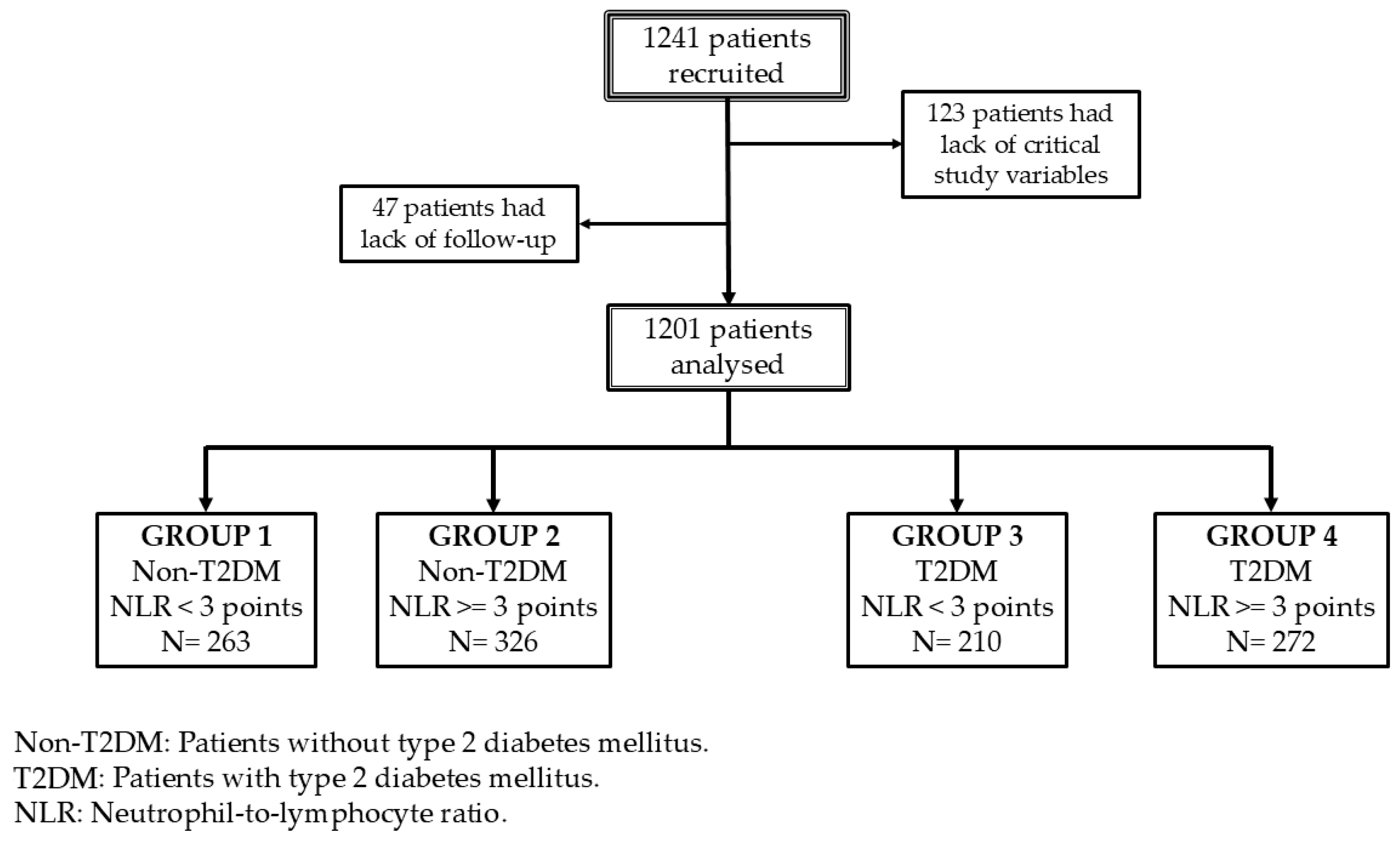
Figure 1. Chart flow of the study.
Diabetology 07 00011 g001
Figure 2. Kaplan–Meier curves of outcomes of the study.
Diabetology 07 00011 g002
Table 1. Baseline characteristics of patients by group.
VariableGroup 1Group 2Group 3Group 4p
N263326210272
Age (year)82 (10)84 (10)82 (11)82 (9)0.001
Sex (Women)147 (55.9)198 (60.7)97 (46.2)115 (42.5)0.0001
BMI (kg/m2)27.2 (6.7)26.4 (7.5)28.4 (7.4)28.3 (7.9)<0.0001
Waist circumference (cm)98 (23.5)96 (35.2)102.5 (24.5)104 (31)0.02
Hypertension (%)221 (84)264 (80.7)202 (96.2)261 (96.3)0.0001
Dyslipidaemia (%)151 (57.4)170 (52.1)158 (75.6)205 (75.6)0.0001
Obesity (%)78 (30.1)99 (30.6)80 (38.8)116 (43)0.002
Tobacco user (%)84 (32.2)92 (28.3)73 (35.1)115 (42.6)0.019
Alcohol user (%)43 (16.3)29 (8.9)35 (16.7)53 (19.5)0.01
Coronary artery disease (%)51 (19.8)50 (15.3)56 (27.2)72 (26.9)0.0012
Cerebrovascular disease (%)47 (17.9)64 (19)36 (17.2)56 (20.7)0.88
Peripheral artery disease (%)11 (4.2)25 (7.7)34 (16.3)43 (15.9)0.0001
Heart failure (%)182 (69.5)236 (72.6)162 (77.5)225 (82.7)0.0021
Chronic kidney disease (%)94 (35.9)129 (39.6)119 (56.9)137 (50.9)0.0001
Obstructive sleep apnoea (%)31 (11.8)40 (12.3)51 (24.6)70 (26.2)0.0001
Cancer (%)28 (10.6)36 (11)14 (6.7)35 (13)0.04
Charlson Comorbidity Index5 (2)6 (2)7 (2)7 (3)<0.0001
MNAsf score10 (3)10 (3)11 (3)10 (3.5)0.001
EuroQoL0.7 (0.3)0.5 (0.4)0.7 (0.2)0.6 (0.3)<0.0001
CHA2DS2-VASc score5 (1)5 (1)6 (1.2)6 (2)<0.0001
CHA2DS2-VA score4 (1.5)4 (2)5 (2)5 (1)<0.0001
HASBLED score3 (1)3 (1.2)3 (2)3 (2)<0.0001
Leucocyte (109/L)6.4 (2.7)8.1 (4.3)6.7 (2.9)8.5 (3.8)<0.0001
Neutrophil (109/L)3.4 (1.6)6 (3.9)3.6 (1.8)6.3 (3.6)<0.0001
Lymphocyte (109/L)1.9 (0.8)1 (0.6)2 (0.9)1.1 (0.6)<0.0001
Haematocrit (%)39.7 (6.1)36.5 (5.9)39.6 (6.9)36.8 (6.1)<0.0001
Platelets (109/L)199 (86.5)207 (122)201 (82.7)220 (118.5)0.002
NLR1.9 (0.8)5.7 (5.6)2 (0.9)5.8 (4.4)<0.0001
CAR0.8 (3)1.8 (3.8)0.7 (2.6)1.5 (3.5)0.0002
SII373.3 (228.2)1216 (1358.9)367 (201.2)1262.6 (1110.1)0.0001
eGFR (mL/min/m2)57.4 (33.5)52.6 (39.1)44.4 (35.5)43.7 (33.7)<0.0001
A1C (%)5.6 (0.6)5.8 (0.6)6.6 (1.5)6.6 (1.2)<0.0001
Glucose (mg/dL)92 (21.2)102 (34)116 (46)122 (57.2)<0.0001
TyG index4.5 (0.3)4.6 (0.3)4.7 (0.4)4.7 (0.3)<0.0001
Total cholesterol (mg/dL)153 (50.5)140 (51.2)142 (58.7)128 (48)<0.0001
HDL cholesterol (mg/dL)45.5 (19)42 (16)43 (17)37 (16)<0.0001
LDL cholesterol (mg/dL)83 (40)76 (39.7)72 (41.5)66.5 (38.2)<0.0001
Triglycerides (mg/dL)95.5 (58.5)89 (47)110 (66.7)99 (53)0.002
Serum uric acid (mg/dL)5.9 (2.8)6.8 (3.5)6.2 (2.4)6.9 (3.3)0.008
C-reactive protein (mg/L)3 (10.1)7 (12.9)3.4 (10.8)5.8 (12.8)<0.0001
Albumin/creatinine ratio (mg/g)83.9 (386.1)185.2 (519.5)111.7 (318.1)238.7 (768.4)0.0007
Treatments at discharge
 SGLT2i23 (8.7)54 (16.1)43 (20.5)96 (35.3)<0.0001
 arGLP101 (0.3)8 (3.8)7 (2.6)<0.0001
 Metformin05 (1.5)115 (54.8)137 (30.4)<0.0001
 DPP4i0016 (7.6)48 (17.7)0.002
 Insulin0025 (11.9)56 (20.6)<0.0001
 ACEIs31 (11.8)46 (14.1)19 (9)38 (13.9)0.29
 ARB45 (17.1)82 (25.1)36 (17.4)83 (30.5)0.0003
 Statins46 (17.5)98 (30)45 (21.4)112 (41.2)<0.0001
 OACs106 (40.3)184 (56.3)74 (35.2)165 (60.7)<0.0001
 MRA9 (3.4)35 (10.7)13 (6.2)32 (11.8)0.0001
ACEIs: angiotensin-converting enzyme inhibitors; ARB: angiotensin receptor blocker; BMI: body mass index; CAR: C-reactive protein-to-albumin ratio; DPP4i: dipeptidyl peptidase-4 inhibitors; eGFR: estimated glomerular filtration ratio; arGLP1: glucagon-like peptide-1 receptor agonists; A1C: glycated haemoglobin; MNAsf score: short-form mini nutritional assessment score; MRA: mineral corticoid receptor antagonists; NLR: neutrophil-to-lymphocyte ratio; OACs: oral anticoagulants; SGLT2i: sodium–glucose cotransporter 2 inhibitors; SII: systemic immune–inflammation index; TyG index: triglyceride–glucose index.
Table 2. Cox regression models.
Total Mortality and Readmissions
Model 1: UnadjustedModel 2: Adjusted
VariableHR95% CIpHR95% CIp
Age1.031.02–1.04<0.00011.031.00–1.050.009
Sex0.880.74–1.040.140.890.68–1.150.377
BMI0.970.95–0.980.00080.990.97–1.020.863
Glucose1.000.99–1.000.271.000.99–1.000.489
Albumin/creatinine ratio1.001.00–1.000.0031.000.99–1.000.262
Treatment with SGLT2is1.321.08–1.610.0051.240.91–1.680.159
Charlson comorbidity index1.141.09–1.19<0.00011.131.06–1.220.0003
Groups
 Group 1Ref.Ref.-Ref.Ref.-
 Group 22.161.71–2.74<0.00012.191.51–3.19<0.0001
 Group 31.170.88–1.540.270.920.58–1.440.729
 Group 41.851.45–2.38<0.00011.440.93–2.230.085
Total Mortality
Model 3: UnadjustedModel 4: Adjusted
VariableHR95% CIpHR95% CIp
Age1.061.04–1.08<0.00011.041.02–1.070.002
Sex1.030.81–1.300.780.870.60–1.260.48
BMI0.970.96–0.990.0010.990.99–1.010.46
Glucose1.000.99–1.000.41.000.99–1.010.73
Albumin/creatinine ratio1.001.00–1.000.031.000.99–1.000.71
Treatment with SGLT2is1.150.87–1.50.321.470.97–2.230.06
Charlson comorbidity index1.231.16–1.3<0.00011.251.14–1.32<0.0001
Groups
 Group 1Ref.Ref.-Ref.Ref.-
 Group 23.032.13–4.31<0.00013.581.99–6.43<0.0001
 Group 31.160.74–1.81<0.00011.080.53–2.190.83
 Group 42.181.49–3.17<0.00011.781.00–3.280.04
BMI: body mass index; SGLT2is: sodium–glucose cotransporter 2 inhibitors.
Disclaimer/Publisher’s Note: The statements, opinions and data contained in all publications are solely those of the individual author(s) and contributor(s) and not of MDPI and/or the editor(s). MDPI and/or the editor(s) disclaim responsibility for any injury to people or property resulting from any ideas, methods, instructions or products referred to in the content.