Article

The Effect of Mineral and Organic Acid Addition on the Ethanol Organosolv Treatment of Waste Orange Peels for Producing Hesperidin-Enriched Extracts

1
Department of Food Quality & Chemistry of Natural Products, Mediterranean Agronomic Institute of Chania (M. A. I. Ch.), International Centre for Advanced Mediterranean Agronomic Studies (CIHEAM), P.O. Box 85, 73100 Chania, Greece
2
Green Processes & Biorefinery Group, Department of Food Science & Nutrition, School of Agricultural Sciences, University of Thessaly, N. Temponera Street, 43100 Karditsa, Greece
*
Author to whom correspondence should be addressed.
Analytica 2025, 6(4), 56; https://doi.org/10.3390/analytica6040056
Submission received: 3 November 2025 / Revised: 5 December 2025 / Accepted: 8 December 2025 / Published: 9 December 2025

Abstract

Waste orange peels (WOP) are a major orange processing residue, and they may be a rich source of precious bioactive polyphenols. Amongst the various WOP constituents, hesperidin holds a prominent position as the most abundant polyphenolic metabolite, with proven biological properties. The current work was performed to provide detailed information on the effect of various acid catalysts to assist hesperidin recovery, using an ethanol organosolv treatment. The treatment developed was first examined by comparing inorganic (HCl) and natural organic (oxalic, citric) acids for their influence on process performance, extraction kinetics, and severity. Following this, optimization was accomplished through response surface methodology, and the extracts produced were investigated with respect to their polyphenolic composition and antioxidant characteristics. The HCl-catalyzed treatment, carried out with 70% ethanol/2% HCl, was proven the most efficacious, giving a total polyphenol yield of 30.7 mg gallic acid equivalents per g of dry mass, and it was shown that the treatment yield was related to severity, obeying a power model. Liquid chromatography–tandem mass spectrometry analysis of the extract generated under optimized conditions (170 min, 80 °C) revealed that hesperidin was extensively hydrolyzed into hesperetin 7-O-glucoside and aglycone (hesperetin). Such an effect was very limited with the oxalic acid-catalyzed treatment, whereas citric acid did not affect the original polyphenolic composition. Overall, the HCl-catalyzed treatment was of significantly higher performance, providing a total flavanone yield of 21.22 mg per g dry mass. The results of this investigation may be of value in adjusting treatment settings for (i) increased flavonoid recovery from WOP and (ii) producing extracts enriched in hesperidin and/or its hydrolysis derivatives. Such practical recommendations may assist the establishment of WOP valorization processes in an integrated biorefinery prospect.

1. Introduction

The rapid expansion of the global population has created unpredictable pressure on utilization of bioresources, leading to an imbalanced overexploitation, degradation of ecosystems, and severe environmental pollution. In this regard, it is of utmost concern that agricultural and food manufacturing generates an outstanding volume of waste. This rejected biomass embraces biological material of a high organic load, and its improper management and uncontrolled dumping in landfills would certainly provoke important risks to environmental aggravation, the conservation of ecosystems, and the safeguarding of public health [1,2]. On the ground of these options, linear economy models are nowadays recognized as both environment-threating and inefficient, whereas circular economy approaches are gaining universal acceptance by encompassing sustainable frames of agricultural practices and food production. A principal pillar of the bioeconomy is the establishment of strategies based on food waste valorization, with the prospect of generating energy, platform chemicals, and high value-added compounds [3,4].
To date, such prospects are based on the development of cutting-edge technologies, aiming at generating substances of high purity and stability and, towards this direction, the use of benign and non-toxic solvents, as well as the deployment of eco-friendly processes, is instrumental [5,6]. One group of the most precious compounds widely occurring in various agro-industrial side streams is polyphenols. Polyphenols are phytochemicals belonging to a number of subfamilies and include simple phenolics, flavonoids, and anthocyanin pigments [7]. Numerous polyphenolic compounds have been proven to display an array of biologically significant activities, such as antioxidant, antimicrobial, and anti-inflammatory effects, but also long-term protection against degenerative diseases, such as cardiovascular disorders and cancer [8]. Thus, a great effort has been expended on polyphenol retrieval from food processing residues, and their harnessing as bioactive food, pharmaceutical, and cosmetic constituents [9,10].
Citruses represent one of the largest fruit crops in the world, and orange production accounts nearly for 60% of the total. Orange processing into juice gives a yield of about 43–50% on a fresh weight basis, and the residual 50% is composed of defected and/or discarded fruits, pulp, peels, and seeds [11,12]. The annual world production of oranges was approximately 46 million tons in 2019, with almost 37% of them destined for processing, to produce various commodities. Based on this, it is irrefutable that orange processing is a major contributor of food side streams. Thus, the development of technologies focusing on the exploitation of orange processing wastes as a source of polyphenols becomes imperative, considering that several studies have soundly demonstrated citrus flavonoid bioactivities [13]. Therefore, it does not come as a surprise that commodities with citrus flavonoids have been commercialized as nutraceuticals and health supplements [14].
In solid–liquid extraction, a principal objective is the deconstruction of plant cell walls, which would hinder the release of intracellular metabolites (polyphenols) and their transfer into the liquid phase. Hence mass transfer would be increased leading to increased extraction yield. The disorganizing and/or partial decomposition of hemicellulose and lignin, which are major cell wall biopolymers, may be achieved by deploying thermal treatments [15]. These treatments are characterized as organosolv treatments and implicate organic solvent or water/solvent processing in combination with high temperatures and/or high pressure [16]. As a result, cellulose–hemicellulose–lignin networks can be untangled, assisting polyphenol release [17,18]. Treatments complemented with mild acid catalysis, imparted by, i.e., citric acid, have been proven to trigger hydrolytic reactions [19,20] and could significantly facilitate polyphenol liberation via cell wall disruption [18].
On this conceptual basis, the current work was undertaken to test various acid catalysts in boosting polyphenol recovery from waste orange peels (WOP), including a mineral (HCl) and two commonly encountered natural organic acids, oxalic and citric acid. Treatment performance was appraised by determining severity and extraction kinetics, and it was optimized through response surface methodology. Finally, the treatment evaluation was based on hesperidin recovery yield, since this flavonoid was by far the predominant WOP polyphenol. Antioxidant activity was also considered, to gain a better understanding of the alterations observed in the overall polyphenolic profile of the extracts produced. As far as it is currently known, such a WOP treatment for efficient hesperidin recovery has never been reported in the past.

2. Materials and Methods

2.1. Chemicals—Reagents

The sodium carbonate (>99.8%), iron(III) chloride hexahydrate, and 2,4,6-tripyridyl-s-triazine (TPTZ) were from Honeywell/Fluka (Steinheim, Germany). The hesperetin (≥95%), hesperidin (hesperetin 7-O-rutinoside) (≥80%), narirutin (≥98%), ascorbic acid, oxalic acid (98%), 2,2-diphenylpicrylhydrazyl (DPPH), and gallic acid were from Sigma-Aldrich (Darmstadt, Germany). The Folin–Ciocalteu reagent and citric acid (99%) were from Merck (Darmstadt, Germany). For chromatographic analyses, high-performance liquid chromatography (HPLC)-purity solvents were used.

2.2. Procurement and Handling of Waste Orange Peels (WOP)

Approximately 2 kg of rejected orange peels were collected from a catering facility (Chania, Greece), within 2 h from the time they were generated, and transferred to the laboratory immediately after. Peels were thoroughly screened to remove the remaining flesh parts and other unwanted material and washed with cold tap water. The washed material was manually cut into pieces of an approximate size of 2 × 2 cm, spread over a tray, and placed into a laboratory oven. WOP drying was performed at 70 °C, for 24 h, and then the dried tissues were comminuted in a table laboratory mill and sieved to produce a material with an average particle diameter < 300 μm. This powder was used as feed for all experiments.

2.3. Extraction Procedure—Solvent Assay

A modification of the method proposed in an earlier work was implemented [21]. An exact amount of 1 g of WOP was placed in a 20 mL glass vial and mixed with water (control extraction) or solutions of water/ethanol with the ratio varying from 10 to 90% (v/v). The extraction was carried out at 70 °C for 180 min, under stirring set at 500 rpm. Both agitation and heating were accomplished using an oil bath and a hotplate/magnetic stirrer (AREC.X, Velp Scientifica, Usmate, Italy). After completion, the mixture was centrifuged at 11,500× g for 10 min, to separate the clear liquid from cell debris. The extracts were stored at −17 °C for no longer than 3 days prior to analyses.

2.4. Acid Effects

To test the effect of acid, the water/ethanol mixture with the highest performance in total polyphenol extraction was combined with HCl to give a final HCl concentration of 1, 1.5, and 2% (w/v). This range was selected based on previous observations [21]. Likewise, oxalic acid and citric acid were tested at concentrations of 6, 9, and 12% (w/v), on the ground of recently published data [22,23]. Extractions and extract handling were accomplished as described in Section 2.3. Control extraction using neat, deionized water (no acid addition) was also similarly performed.

2.5. Examination of Extraction Kinetics

After the preliminary examination, the kinetic model best fitted to the experimental data was described by a single rectangular, 2-parameter hyperbola, as previously applied [24,25]:
Y T P ( t ) =   Y T P ( s ) t t 0.5 +   t
The term YTP(t) represents the yield in total polyphenols at any residence time, t, and YTP(s) represents the yield in total polyphenols at equilibrium (saturation). When t = t0.5, then   Y T P ( t ) =   Y T P ( s ) t t 0.5 +   t .   Thus, it was proposed that the term t0.5 represents the time where 50% of the YTP(s) has been reached [25]. Therefore, 2 × t0.5 may be considered as the time required for the extraction to enter the so-called “regular regime”, which is the slow phase of the extraction, where substantial amount of time is required to achieve small increases in the extraction rate [26]. The initial rate of the extraction, h, and the second-order extraction rate, k, can be computed as follows:
h =   Y T P ( s ) t 0.5
k = 1 Y T P s   t 0.5

2.6. Assessment of Treatment Severity

To assess treatment severity, the following model was used [27]:
R o   =   t   ×   e ( T 100 14.75 )
Based on Equation (4), the severity factor (SF) was determined as shown below:
SF = logRo
Severity is represented by Ro, with the value 100 °C being the reference temperature and 14.75 an empirical factor related to treatment temperature and activation energy. Based on Equation (5), the combined severity factor (CSF) can be computed [28]:
R o = 10 pH   ×   t   ×   e ( T 100 14.75 )
CSF = logRo − pH
It is regarded that CSF is a more integrated form of SF, because it takes into consideration the pH of the treatment, which may be an instrumental factor of the process. Likewise, the alternative combined severity factor (CSF′) was also determined, which has been proposed to provide a fairer comparison of severities of various treatments, where there is wide pH variation [28]:
CSF′ = logRo + |pH − 7|

2.7. Experimental Design and Treatment Optimization

The experimental design destined for treatment optimization included the two most significant variables, the residence time (t) and temperature (T). Considering the use of water/ethanol mixtures, the upper temperature limit used was 80 °C, to avoid high vapor pressure in the extraction vial. On this basis and taking into account the data derived from the kinetic assay, a central composite design was deployed, which included in total 11 design points, with 3 of them being the central ones. The actual levels of both treatment variables (t, T) were codified at 3 levels, −1, 0, and 1, and the codification was performed as previously described in detail [29]. The actual and the codified levels of both treatment variables are presented in Table 1.
The significance (R2, p) of the models built after performing the response surface methodology, along with the significance of each model coefficient, was evaluated on the ground of the associated statistical analyses (lack-of-fit and ANOVA tests), taking 95% as the minimum significance level.

2.8. Spectrophotometric Determinations

A previously established Folin–Ciocalteu assay was used [30] to determine the yield in total polyphenols (YTP), with gallic acid as the standard. Results were reported as mg gallic acid equivalents (GAE) per g of dry WOP mass (DM). The model radical probe DPPH was used to evaluate the antiradical activity (AAR) of the extracts produced, using the methodology described elsewhere [31]. Results were presented as μmol DPPH per g DM. A ferric-reducing power (PR) test was also employed to assess the antioxidant activity, using the TPTZ reagent as the chromophore, and results were given as μmol ascorbic acid equivalents (AAE) per g DM [31].

2.9. Liquid Chromatography–Mass Spectrometry

Before analysis, the samples were diluted using HPLC-grade methanol. Flavones were tentatively identified using liquid chromatography–mass spectrometry (LC–MS) operated in positive ion mode, following the chromatographic and mass spectrometric parameters previously described [32]. Mass spectra and UV–visible data were dereplicated using the approach outlined in an earlier work [33]. Quantification of flavones was carried out using luteolin 7-O-glucoside as an external calibration standard. Additionally, compounds such as ethyl p-coumarate, ethyl ferulate, and ethyl sinapate—identified tentatively—were quantified using p-coumaric acid, ferulic acid, and sinapic acid, respectively, as external standards. Narirutin and hesperidin were also tentatively identified, in negative ion mode, and quantified using commercially available reference standards. All standard solutions were freshly prepared in HPLC-grade methanol before analysis, with concentrations ranging from 0 to 50 μg mL−1. The chromatographic system and analytical methods used were detailed elsewhere [21].

2.10. Data Elaboration and Statistics

The software JMP™ Pro 16 (SAS, Cary, NC, USA) was employed to construct the design of the experiment and perform response-surface methodology, as well as to compute all associated statistical analyses (analysis of variance—ANOVA and lack-of-fit test). Kinetics, non-linear, and linear regressions were examined with SigmaPlot™ 15.0 (Systat Software Inc., San Jose, CA, USA). Statistically significant differences were detected by the Kruskal–Wallis test, using IBM SPSS Statistics™ 29 (SPSS Inc., Chicago, IL, USA), given that the data under examination did not exhibit a normal distribution in the Shapiro–Wilk test. All treatments were performed at least twice, and all chromatographic and spectrophotometric analyses in triplicate. Values were reported as average ± standard deviation (SD).

3. Results

3.1. Optimum Solvent Composition

The initial stage in the establishment of the intended organosolv treatment was to clarify the optimum ethanol proportion in the solvent. This trial was deemed necessary, considering that neat water is not a suitable solvent for WOP polyphenol extraction, as exemplified by several studies [34,35] while some studies employed ethanol concentration (CEtOH) of around 50–80% (v/v), without a concentration screening [36,37]. A few investigations included more thorough testing, revealing significant discrepancies, since ideal CEtOH was shown to vary from 45 to 58% using ultrasound-assisted extraction [34,38] to 72–80% using static maceration [39,40] and 60% using stirred-tank mode extraction [41].
In the light of these findings, preliminary extractions were carried out using EtOH/water mixtures with the percent composition varying from 10 to 90% (Figure 1). Solutions with CEtOH up to 30% showed no significant differentiation in YTP from neat water (p > 0.05), whereas extraction performance was boosted with CEtOH ≥ 50% and peaked at 70% (p < 0.05). No benefit was gained by increasing CEtOH further, as 90% gave a YTP comparable to aqueous extraction. Thus, it would appear that 70% ethanol was the solvent system that provided the best solubility for WOP polyphenols. Therefore, a CEtOH of 70% was chosen as the most appropriate hydroethanolic mixture for the organosolv treatment of WOP.

3.2. Effect of Mineral and Organic Acid Addition

The effect of acid catalysis on the organosolv treatment of WOP was tested with HCl, which is a mineral acid previously used in similar processes [33], and two organic acids, oxalic and citric acid. These two acids were chosen based on (i) their natural occurrence, (ii) their strength, which surpasses other commonly encountered natural organic acids, and (iii) their previously reported efficiency in organosolv treatments [19,20]. As can be seen in Table 2, the addition of HCl favored increased YTP only when used at a concentration of 2% (p < 0.05). On the other hand, the addition of oxalic acid up to 9% did not provoke any significant effect (p > 0.05), whereas further increase in its concentration to 12% resulted in reduced YTP.
Likewise, the addition of citric acid at any concentration tested afforded YTP comparable to control (70% EtOH). Based on these data, the mixture composed of 70% EtOH/2% HCl emerged as the most suitable medium for further examination. However, the use of HCl raised some concerns regarding the stability of WOP polyphenols. This was because recent studies showed that the HCl-catalyzed glycerol organosolv treatment of WOP was detrimental to major polyphenols, such as hesperidin [33]. Thus, to affirm the efficiency of HCl in boosting YTP, but also its actual effect on the polyphenolic composition of the extracts obtained, 70% EtOH/9% oxalic acid was also considered for additional investigation. The concentration of 9% was chosen to maintain the lowest pH possible, to ascertain its effect on the principal polyphenolic compounds of WOP, without compromising YTP. For comparison, 9% citric acid was also tested.

3.3. Effect of Treatment Severity

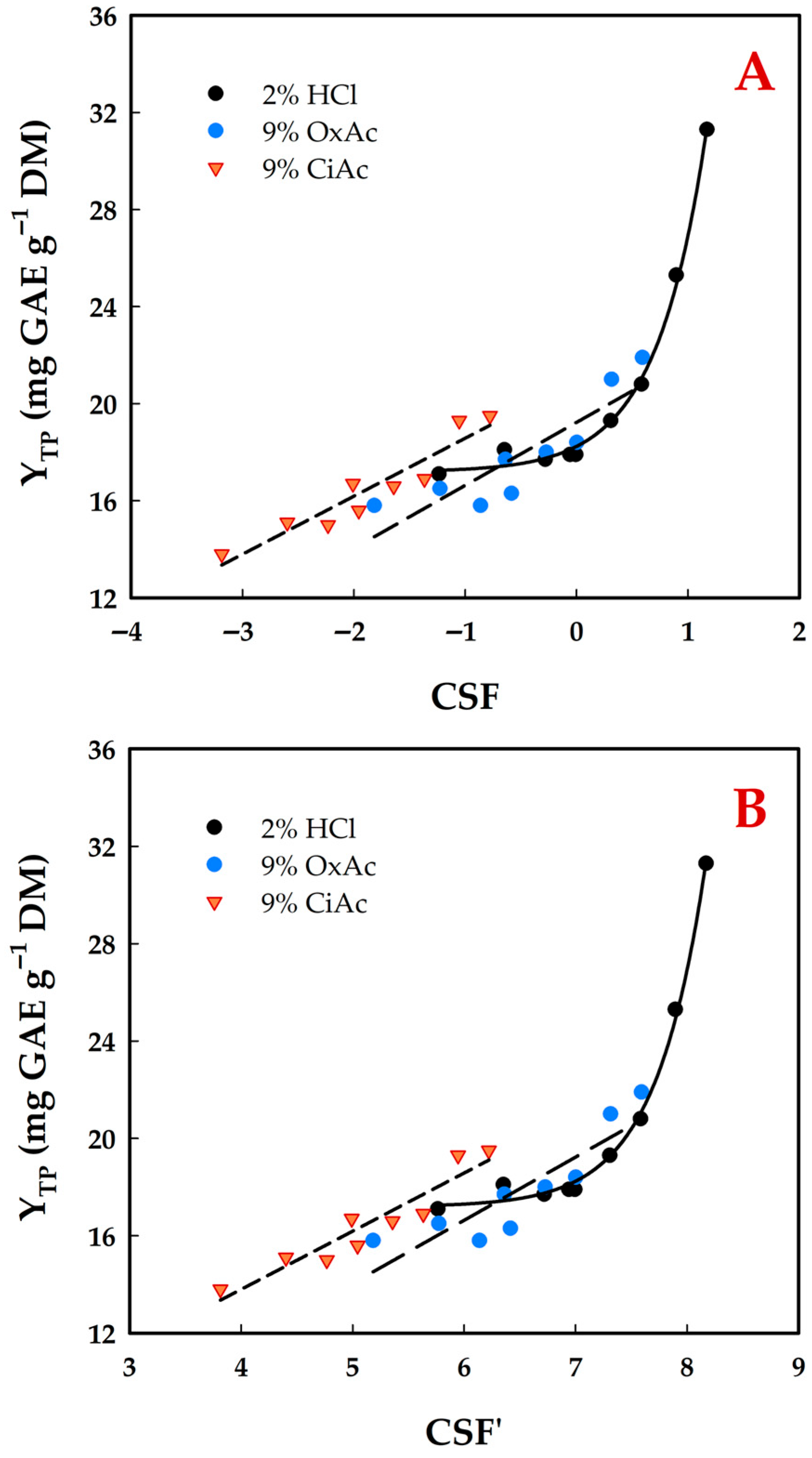
There has been substantial recent evidence that the efficacy of polyphenol recovery with organosolv treatments is tightly correlated with treatment severity. Such a correlation may be manifested as a linear function of severity [22], yet polynomial functions have also been revealed [21]. To examine any possible link between YTP and severity, the combined severity factor (CSF) and its alternative expression (CSF′) were first determined using various pairs of residence time and temperature (Table 3). To attain a significantly higher YTP (31.3 mg GAE g−1 DM), the HCl-catalyzed treatment required a CSF of 1.17 (CSF′ of 8.17). On the other hand, the maximum YTP in the oxalic acid-catalyzed treatment (21.9 mg GAE g−1 DM) was achieved with a CSF of 0.32 (CSF′ = 7.32). The maximum YTP for the citric acid-catalyzed treatment (19.3 mg GAE g−1 DM) did not have significant difference with the one obtained with the oxalic acid-catalyzed treatment (p > 0.05), but it was reached at a CSF of—1.05 (CSF′ of 5.95). On this basis, it was evidenced that the HCl-catalyzed treatment was far more effective, but it exhibited higher severity. By contrast, virtually equal YTP could be obtained using either organic acid (oxalic or citric), but the citric acid-catalyzed treatment had the lowest severity.
Using the matrix of data given in Table 3, correlations between YTP and CSF, but also CSF′, were also established to identify possible mathematical functions that could associate total polyphenol yield with treatment severity. These correlations are depicted in Figure 2.
For both the oxalic acid- and citric acid-catalyzed treatments, it was found that YTP may depend on both CSF and CSF′ in a linear manner, described by the following expressions:
YTP(OxAc) = 2.59 CSFOxAc + 19.23 (R2 = 0.78, p < 0.0001)
YTP(CiAc) = 2.39 CSFCiAc + 20.97 (R2 = 0.89, p < 0.0001)
YTP(OxAc) = 2.59 CSF′OxAc + 1.08 (R2 = 0.78, p < 0.0001)
YTP(CiAc) = 2.39 CSF′CiAc + 4.24 (R2 = 0.89, p < 0.0001)
To the contrary, for the HCl-catalyzed treatment, YTP showed excellent adjustment to both CSF and CSF′ by the following exponential functions:
YTP(HCl) = 1.05 e2.22CSF + 17.19 (R2 = 0.99, p < 0.0001)
YTP(HCl) = (1.82 × 10⁻⁷) e2.22CSF′ + 17.19 (R2 = 0.99, p < 0.0001)
To the best of the authors’ knowledge, the type of correlation found for the HCl-catalyzed treatment is heretofore unreported, and this is an outcome that would merit a profounder examination. On the other hand, it has been previously demonstrated that the total polyphenol yield of the ethanol organosolv treatment of coffee silverskin, catalyzed either by sulfuric or oxalic acid, was strongly linked to severity [42]. In that study, maximum YTP was achieved with oxalic acid catalysis at a CSF′ of 7.61. Similarly, a CSF′ of 7.44 sufficed to attain maximum YTP, when red grape pomace underwent citric acid-catalyzed organosolv treatment using a mixture of water/ethanol/glycerol [22]. Other studies on the organosolv treatment of onion solid wastes with acidic deep eutectic solvents composed of glycerol/citric acid were also in line, reporting highly significant linear correlations between YTP and CSF [43].
The adoption of treatment severity as a tool for assessing polyphenol extraction efficiency has been initially proposed for ferulic acid recovery from wheat bran [44,45], and may be a valuable means of comparing the combined effect of temperature and residence time and on polyphenol recovery. Furthermore, severity expression considering the pH of the treatment may give a more integrated picture of severity effects [46] and could be used over a wide pH range [28,47]. However, severity should be used merely as indicative since the effect of the harshness of a treatment on total polyphenol yield might be related to various attributes, i.e., the recalcitrance of the treated material, the polyphenolic composition, polyphenol thermostability, etc. Moreover, cross (synergistic) effects between temperature and residence time cannot be revealed, but severity could serve as an additional criterion in the selection of variables for pertinent organosolv treatments.

3.4. Extraction Kinetics

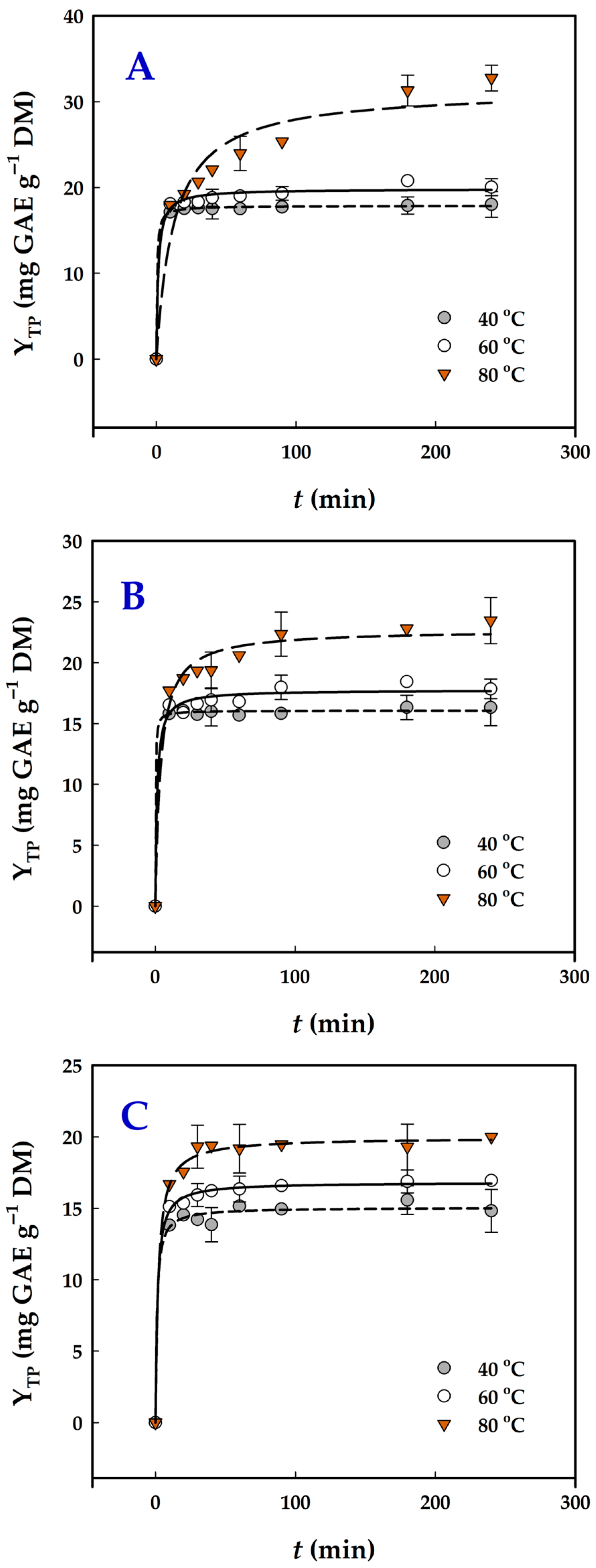
To gain a deeper understanding of the effects of different acid catalysts on polyphenol extractability from WOP, a kinetic trial was performed within a range of temperatures varying from 40 to 80 °C (Figure 3). The mathematical model described by a single rectangular, two-parameter hyperbola, previously implemented for polyphenol extraction [25], produced excellent fitting to the experimental data, as illustrated by the R2 and p-values presented in Table 4.
Considering the second-order extraction rate, k, it was observed that for all acid catalysts tested, there was a decline when the treatment temperature was switched from 40 to 80 °C. The decline was very pronounced in the case of the HCl-catalyzed treatment, but small differences were seen for the citric acid-catalyzed one. These findings did not comply with the Arrhenius model for rate–temperature relations [48,49], where an increase in k may be recorded as a response to increasing temperature. The background for such kinetic behavior cannot be known, although similar results have been reported for polyphenol extraction with deep eutectic solvents [31,50].
It could be claimed that, at low temperatures, the readily extracted polyphenols are rapidly entrained into the liquid phase (solvent) and the k observed might represent a rapid, washing phase of the extraction. However, when the temperature increases, the diffusion of other polyphenols “trapped” within lignocellulosic or pectin networks into the liquid phase is slower, while the deconstruction of these networks by the presence of the acid catalyst for effective polyphenol release might be slow too. In this case, diffusion would be the rate-determining step of the process. Thus, a slower progression of the mass transfer might occur, as manifested by the decreasing k, h, and t0.5, yet extraction yield (YTP(s)) increases, because the liquid phase is enriched with polyphenols deriving from both the washing phase of the extraction and diffusion.
This theory could also be corroborated by the t0.5 values determined, which theoretically represent the time required to attain YTP(s)/2. On this concession, it has been proposed that 2 × t0.5 would be the time required for the extraction to enter the regular regime, which may be regarded as the slow phase of the extraction, where a substantial amount of time results in only small increases in the extraction rate [24]. In all cases examined, it was shown that there was an increase in t0.5 as a response to increasing temperature.
For the citric acid-catalyzed treatment the differences were small, but for the HCl-catalyzed treatment, one significant increase in t0.5 was determined. This finding might indicate that citric acid had little effect on facilitating polyphenol diffusion, whereas the effect of HCl was much stronger. Such an assumption could be reflected on the YTP(s) achieved with each catalyst; at 80 °C, the HCl-catalyzed treatment afforded almost 36% higher YTP(s) compared to the citric acid-catalyzed treatment.

3.5. Response Surface Optimization of Treatment

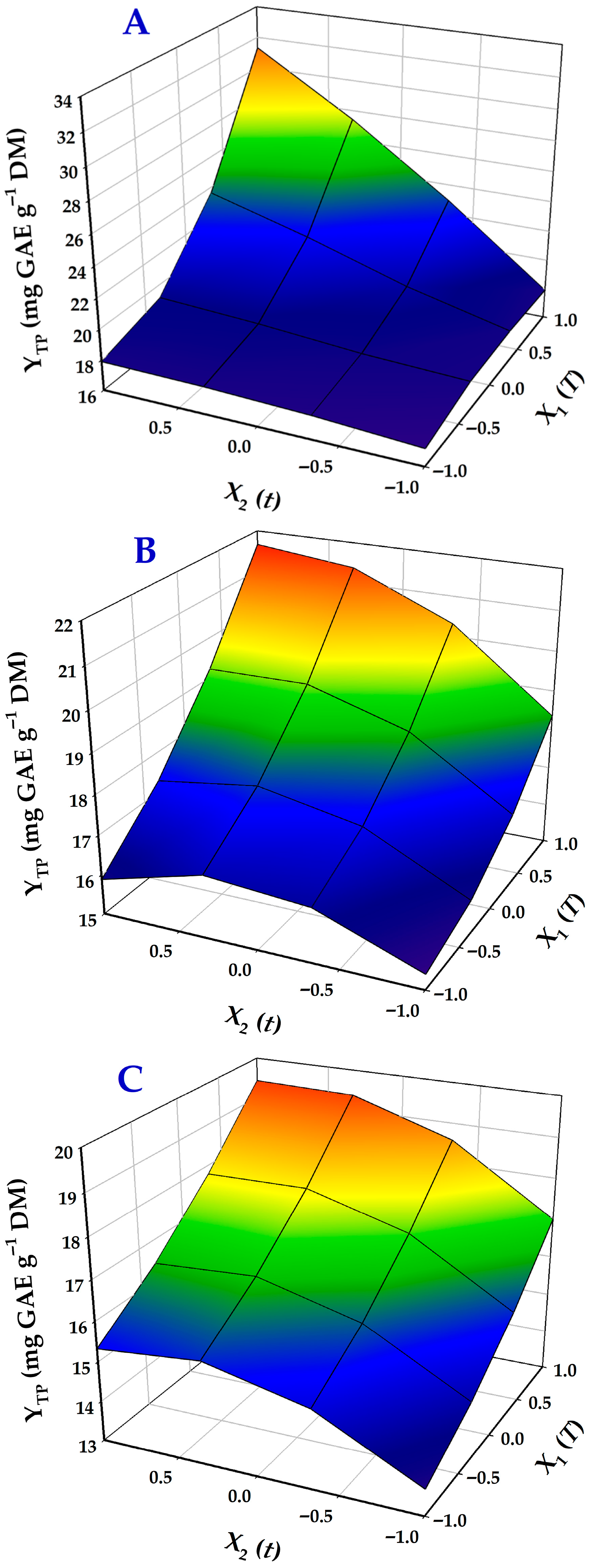
Both the severity-based approach and the kinetic assay provided valuable information on the effect of temperature and residence time, but synergistic effects between these two key variables, as well as their optimum levels, could not be determined. Thus, a response surface methodology was implemented, which was designed to evaluate the effect of these crucial treatment variables, but also to identify possible cross (synergistic) functions between them. The analysis of variance (ANOVA) and lack-of-fit tests were used to appraise the fitted model and response surface suitability (Figures S1–S3), by considering predicted and measured value proximity of the response (YTP) (Table 5). The second-degree polynomial equations (mathematical models), from which non-significant terms were omitted, are shown in Table 6, along with the overall model square correlations coefficients (R2), which give an account of the total variability around the mean given by the models. For all models derived, R2 ≥ 0.95 and p < 0.005, suggesting very satisfactory adjustment to the experimental data. The 3D plots, which were constructed based on the models, depicted an at-a-glance impression of the variable effect on YTP, and illustrated the differences between the three catalysts tested (Figure 4).
For all three treatments, both variables t and T were highly significant (p < 0.005), irrespective of the catalysts used. For the HCl-catalyzed treatment, the cross term between the two variables was also significant, indicating a synergistic effect between them (Figure S1). On the other hand, for the oxalic acid-catalyzed treatment no cross terms were shown to have significant effect, while for the citric acid-catalyzed treatment the quadratic effect of temperature was negative. This finding suggested that, in this case, extending the treatment beyond a certain period would result in decreased YTP. This outcome pointed strongly to differentiated extraction behavior as a function of different catalysts used.
The use of the desirability function (Figures S1–S3) permitted the estimation of the optimum conditions, under which YTP could be maximized (Table 7). These estimations matched perfectly the values determined experimentally (Table 4), evidencing the validity of the established models. However, to further confirm the credibility of using the theoretical optimum settings given in Table 7, three individual treatments were performed with each catalyst, and for the HCl-, oxalic acid-, and citric acid-catalyzed treatments the corresponding YTP determined were 31.6 ± 0.7, 23.2 ± 1.4, and 21.2 ± 1.0 mg GAE g−1 DM. Thus, it was concluded that the models given in Table 6 may be used for accurate YTP predictions, when both t and T obtain values within the limits tested.
The HCl-catalyzed treatment afforded a YTP of 30.7 mg GAE g−1 DM, which may be regarded as a satisfactory yield, considering that in several cases reported in the literature YTP may vary from 7 to around 26 mg GAE g−1 DM, employing techniques such as cyclodextrin-aided extraction [51], ultrasound-assisted extraction [52], and microwave-assisted extraction [53]. On the other hand, the highest YTP (73.4–75.8 mg GAE g−1 DM) have been obtained using deep eutectic solvents [54,55], while levels of 44.1 mg GAE g−1 DM have been achieved with glycerol-based WOP organosolv treatment [33].

3.6. Hesperidin Yield and Antioxidant Activity

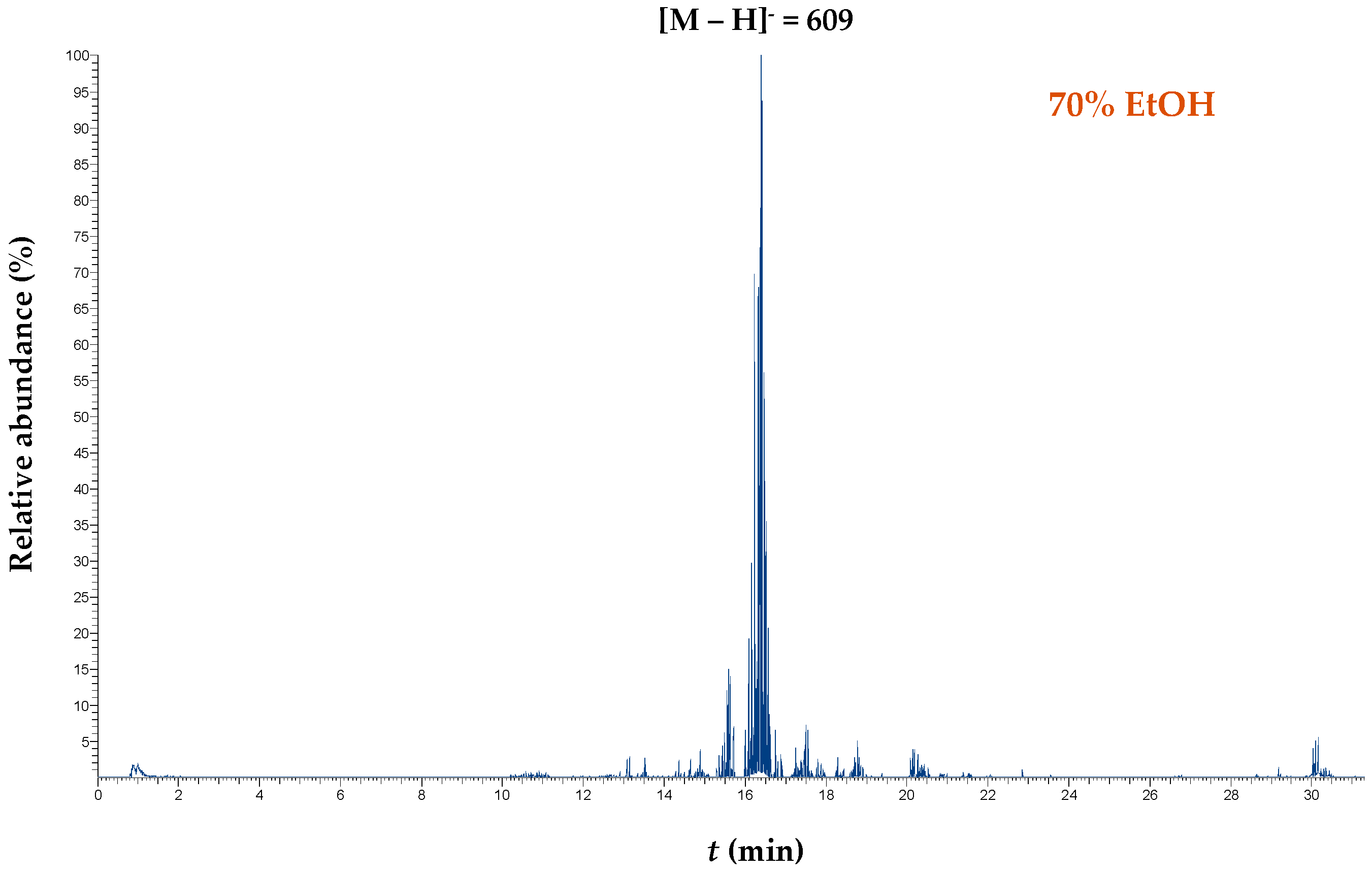
Arguably, hesperidin (hesperetin 7-O-rutinoside) is by far the most abundant polyphenolic metabolite in WOP extracts [56,57,58]. Thus, the examination of the polyphenolic composition of the extracts generated was focused on hesperidin and any possible transformations it might have suffered as a result of the acidity of the solvents used for the treatments. The analysis of the control sample, obtained after treatment with 70% ethanol (no acid catalyst added), showed that the total ion current of the chromatogram was largely dominated by a peak with m/z = 609 (Figure 5), which was ascribed to hesperidin [M − H]. This was also corroborated by the UV–vis spectrum, which exhibited a λmax at 285 nm and a shoulder at 328 nm.
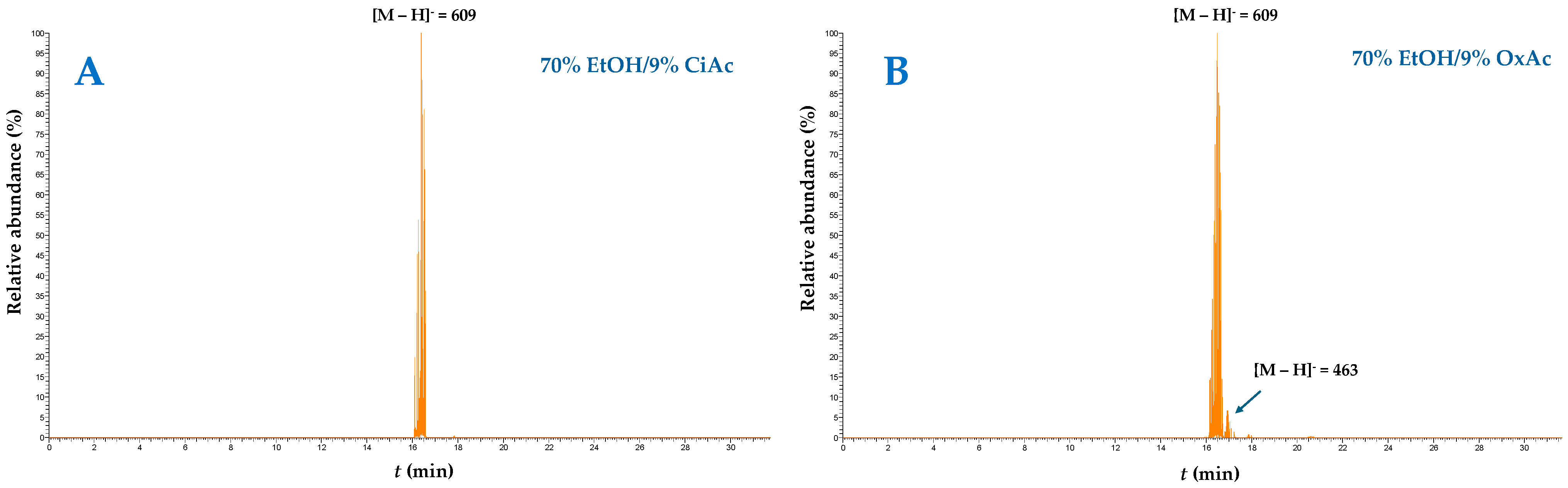
The chromatogram of the extract obtained with the citric acid-catalyzed treatment was identical, which demonstrated that the addition of citric acid had no effect on hesperidin (Figure 6A). To the contrary, the oxalic acid-catalyzed treatment afforded extracts, which were characterized by the appearance of a peak, encountered neither in the control nor in the extract produced with the citric acid-catalyzed treatment (Figure 6B). This peak displayed a molecular ion at m/z = 463 and UV–vis attributes that closely matched those of hesperidin (λmax at 286 nm). This peak was tentatively assigned to hesperetin 7-O-glucoside, and its presence manifested a limited hydrolysis of the rutinose moiety of hesperidin.
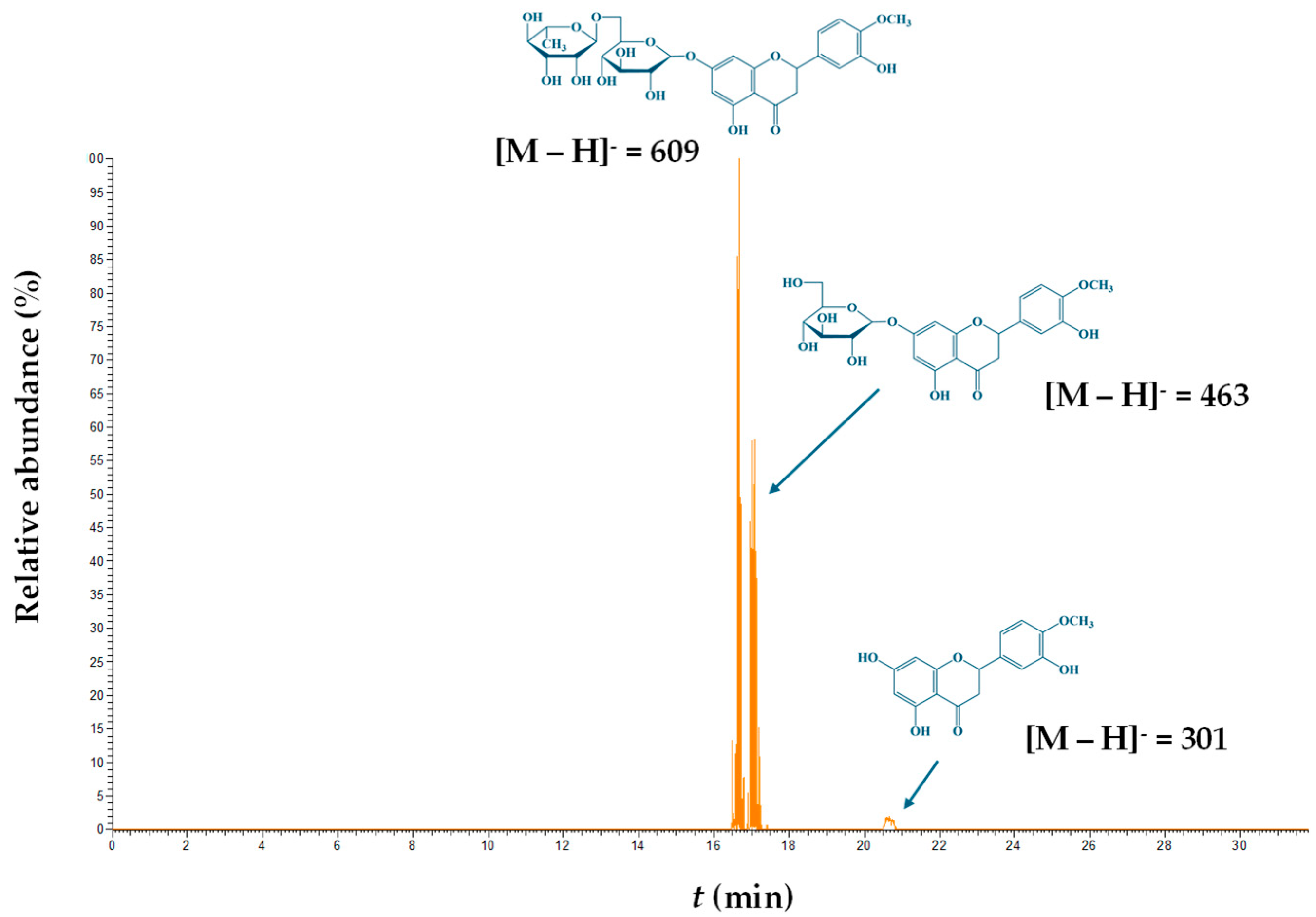
However, illustrative of such a modification was the examination of the extract produced through the HCl-catalyzed treatment. In this case, it was revealed that the formation of hesperetin 7-O-glucoside was far more pronounced, while the aglycone hesperetin (m/z = 301) was also detected (Figure 7). This finding pointed emphatically to the ability of HCl to catalyze, under the conditions employed, partial hesperidin hydrolysis.
The quantitative assay showed that the yield in hesperidin was not significantly affected by the presence of any catalyst (Table 8). By contrast, the HCl-catalyzed treatment had an almost equal yield in hesperetin 7-O-glucoside and a significant yield in the aglycone hesperetin. On the other hand, the oxalic acid-catalyzed treatment resulted in a limited yield in hesperetin 7-O-glucoside, whereas the control and the citric acid-catalyzed treatment gave extracts containing only hesperidin. Overall, the use of HCl as catalysts was proven to boost treatment efficiency, as it provided a total yield of flavanones amounting to 21.22 mg g−1.
Mineral (HCl) acid-catalyzed hydrolysis is known for its efficiency in hydrolyzing flavonoid glycosides, thus liberating the corresponding aglycones [59]. However, it has been shown that flavonoid glycoside hydrolysis may also occur at a neutral pH or even via hydrothermal treatment [60], and that high temperatures (130–165 °C) could promote flavonoid glycoside hydrolysis as well [61]. Recently, it was shown that ethanol contributed to higher yields of flavone glycoside hydrolysis from olive leaves, using 1.5% HCl as a catalyst [23]. This finding was consistent with sulfuric acid-catalyzed hydrolysis of naringin from citrus peels [62]. In another study on naringenin and naringin extraction from grapefruit, the combination of heating and acidification of 70% ethanol with HCl were key factors in obtaining extracts enriched in the aglycone (naringenin) [63]. On the other hand, in glycerol organosolv treatment of WOP at higher temperatures (140 °C), the presence of HCl was detrimental, causing the complete disappearance of hesperidin, while no hydrolysis products were detected [33].
Organic acids, such as oxalic acid, have also been shown to catalyze hydrolytic reactions, liberating flavone aglycones from their corresponding glycosides, upon ethanol organosolv treatment of olive leaves [23]. However, no such action was seen for the citric acid-catalyzed glycerol organosolv treatment of WOP, even at a significantly higher temperature [33]. This was consistent with the findings presented herein, where the citric acid-catalyzed treatment brought about no alteration to hesperidin, as opposed to the oxalic acid-catalyzed treatment, which provoked limited hesperidin hydrolysis. Considering all the above, it would appear that the extent of hydrolysis might be defined by the type of the catalyst, its concentration, and its treatment variables (t, T).
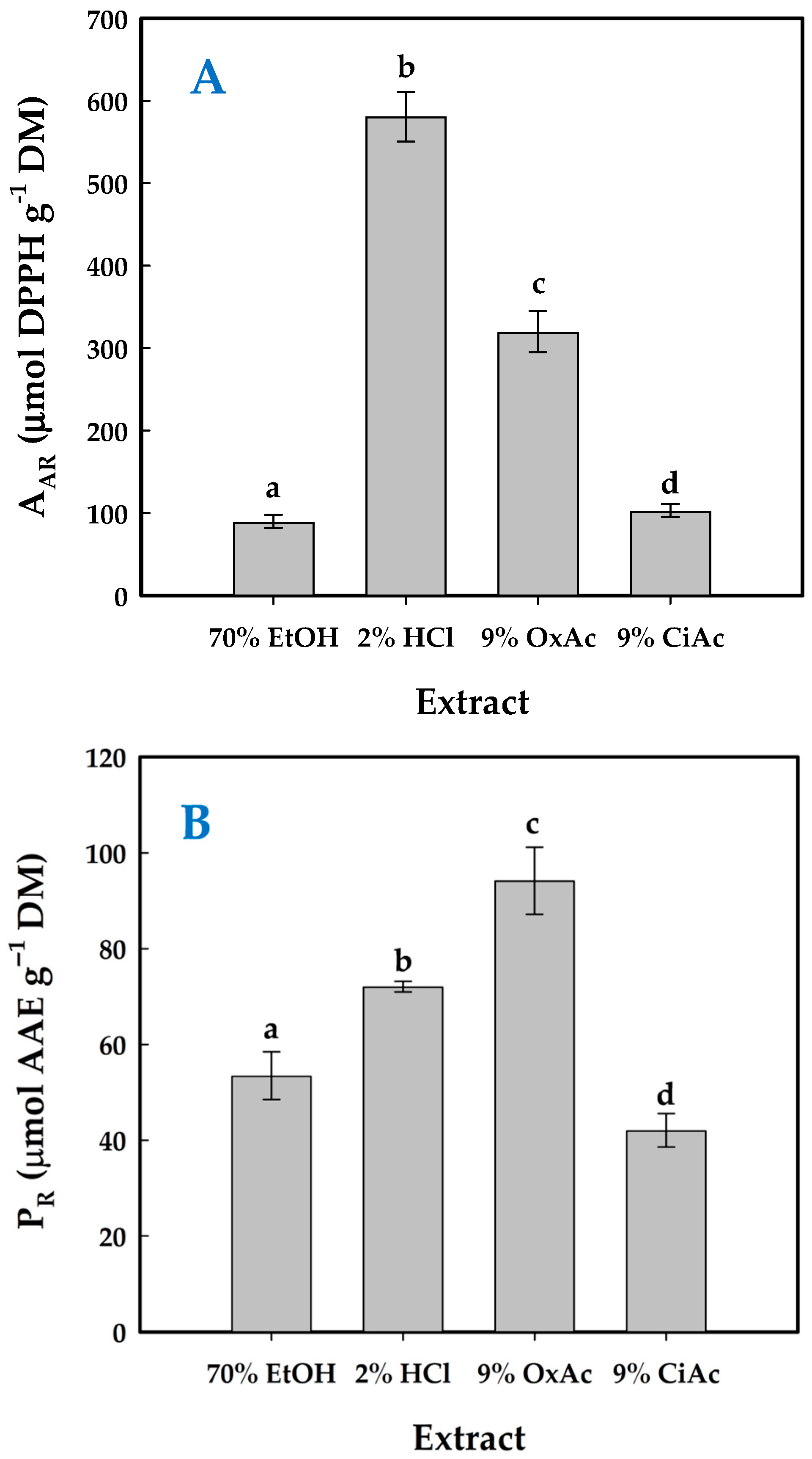
To gain a deeper insight into the consequences of these modifications on hesperidin, the antioxidant activity of the extracts was also assessed. In accordance with the richness in hesperidin, the extract generated from the HCl-catalyzed treatment displayed, by far, higher AAR (Figure 8A). This outcome suggested that hesperidin was probably the principal radical-scavenging compound, and such an assumption would be in accordance with earlier examinations on orange peel extracts, where increased radical scavenging was observed for hesperidin-enriched extracts [64]. However, the results from the ferric-reducing power test were not in the same line, indicating the extract derived from the oxalic acid-catalyzed treatment as the most active (Figure 8B). Such discrepancies could not be interpreted merely on the basis of extract composition and might reflect more complicated interactions amongst the various extract constituents.
On the other hand, evidence from previous studies would concur with the fact that increased levels of aglycone (hesperetin), such as those found in the extract obtained through the HCl-catalyzed treatment, could endow extracts with stronger antioxidant activity. Such a phenomenon has been demonstrated in orange juices enriched with hesperetin through enzymic hesperidin hydrolysis [65], and in chemically produced hesperidin hydrolysates [66]. Early examinations on structure–activity relationships did not reveal a significant difference between the antioxidant potency of hesperidin and hesperetin [67], yet other studies reported a supremacy of the aglycone over the glycoside [68].
However, no simplified extrapolations would be valid, considering that the extracts tested were complex mixtures of several polyphenols. Although high flavonoid concentration has been correlated to some extent with high antiradical activity in orange peel extracts [69], it would be rather impossible to predict the actual antioxidant effect of a flavonoid mixture. In any case, it should be underlined that conversion of a glycoside (hesperidin) into its aglycone (hesperetin) might impact the overall biological activity, since these compounds may have distinct biological effects [70]. Therefore, the effect of the modifications of the polyphenolic composition of WOP extracts goes beyond antioxidant properties. In this regard, the value of this study may be dual; the development of treatments that would preserve the original WOP polyphenolic composition, in order to obtain high hesperidin yields, or switching the conditions into favoring hesperidin hydrolysis and the production of hesperetin-enriched extracts. The choice of a specific treatment would depend on the use of the extract produced, and thus treatment conditions could be adjusted accordingly.

4. Conclusions

The testing of acid catalysts in the ethanol organosolv treatment of WOP pointed clearly to the effectiveness of HCl, compared to both oxalic and citric acids. HCl catalysis was instrumental in achieving a high total polyphenol yield and extracts particularly enriched in flavanones. On the other hand, the HCl-catalyzed treatment was characterized by a higher severity and provoked significant differentiation of the inherent WOP polyphenolic composition. The latter finding might have a dual value, as it may be exploited in adjusting the treatment setting depending on the desired effect. Should a high hesperidin yield be the ultimate goal, the interdependence of treatment time and temperature, as well as the catalysts concentration, may be regulated to achieve increased yields without compromising modifications in the original polyphenolic composition. On the other hand, the treatment could be directed at attaining advanced hesperidin hydrolysis, with the aim of producing hesperetin-enriched extracts. In any case, it was shown that the acid-catalyzed ethanol organosolv treatment could be an effective means of recovering bioactive polyphenols from WOP. The outcome of this study could be of importance in WOP harnessing within wider biorefinery approaches and may enable the development of task-specific processes for efficient WOP utilization to produce high value-added commodities. Extracts rich in hesperidin are commonly incorporated into dietary supplements, functional foods, and topical formulations due to their strong antioxidant, anti-inflammatory, and vasoprotective properties. Biologically, hesperidin helps scavenge free radicals, modulate inflammatory pathways, and support the integrity of blood vessels, contributing to improved microcirculation and reduced capillary fragility. Additionally, it has been studied for its potential antihypertensive, lipid-lowering, and neuroprotective effects, making it a versatile bioactive compound in both nutraceutical and pharmaceutical applications.

Supplementary Materials

The following supporting information can be downloaded at: https://www.mdpi.com/article/10.3390/analytica6040056/s1, Figure S1: Statistical data related to the response surface methodology, deployed to optimize the HCl-catalyzed treatment. A, correlation between actual (measured) and predicted values; B, desirability function; numbers designated with different color in the inset tables denote statistically different values (p < 0.05). Figure S2: Statistical data related to the response surface methodology, deployed to optimize the OxAc-catalyzed treatment. A, correlation between actual (measured) and predicted values; B, desirability function; numbers designated with different color in the inset tables denote statistically different values (p < 0.05); Figure S3: Statistical data related to the response surface methodology, deployed to optimize the CiAc-catalyzed treatment. A, correlation between actual (measured) and predicted values; B, desirability function; numbers designated with different color in the inset tables denote statistically different values (p < 0.05).

Author Contributions

Conceptualization, D.P.M.; methodology, H.A., H.R. and S.G.; validation, H.A., H.R., S.G., H.A., H.R. and S.G.; investigation, H.A., H.R. and S.G.; resources, D.P.M. and S.G., data curation, H.A., H.R., S.G. and D.P.M.; writing—original draft preparation, S.G. and D.P.M.; writing—review and editing, S.G. and D.P.M.; supervision, S.G. and D.P.M.; project administration, S.G. All authors have read and agreed to the published version of the manuscript.

Funding

This research received no external funding.

Data Availability Statement

The original contributions presented in this study are included in the article/Supplementary Materials. Further inquiries can be directed to the corresponding author(s) is accurate.

Conflicts of Interest

The authors declare no conflicts of interest.

References

  1. Bakan, B.; Bernet, N.; Bouchez, T.; Boutrou, R.; Choubert, J.-M.; Dabert, P.; Duquennoi, C.; Ferraro, V.; Garcia-Bernet, D.; Gillot, S. Circular economy applied to organic residues and wastewater: Research challenges. Waste Biomass Valorization 2022, 13, 1267–1276. [Google Scholar] [CrossRef]
  2. Yaashikaa, P.; Kumar, P.S.; Varjani, S. Valorization of agro-industrial wastes for biorefinery process and circular bioeconomy: A critical review. Bioresour. Technol. 2022, 343, 126126. [Google Scholar] [CrossRef]
  3. Amran, M.A.; Palaniveloo, K.; Fauzi, R.; Satar, N.M.; Mohidin, T.B.M.; Mohan, G.; Razak, S.A.; Arunasalam, M.; Nagappan, T.; Sathiya Seelan, J.S. Value-added metabolites from agricultural waste and application of green extraction techniques. Sustainability 2021, 13, 11432. [Google Scholar] [CrossRef]
  4. Monteiro, A.R.; Battisti, A.P.; Valencia, G.A.; de Andrade, C.J. The Production of High-Added-Value Bioproducts from Non-Conventional Biomasses: An Overview. Biomass 2023, 3, 123–137. [Google Scholar] [CrossRef]
  5. Li, Z.; Smith, K.H.; Stevens, G.W. The use of environmentally sustainable bio-derived solvents in solvent extraction applications—A review. Chin. J. Chem. Eng. 2016, 24, 215–220. [Google Scholar] [CrossRef]
  6. Płotka-Wasylka, J.; Rutkowska, M.; Owczarek, K.; Tobiszewski, M.; Namieśnik, J. Extraction with environmentally friendly solvents. Trends Anal. Chem. 2017, 91, 12–25. [Google Scholar] [CrossRef]
  7. Shahidi, F.; Varatharajan, V.; Oh, W.Y.; Peng, H. Phenolic compounds in agri-food by-products, their bioavailability and health effects. J. Food Bioact 2019, 5, 57–119. [Google Scholar] [CrossRef]
  8. De Camargo, A.C.; Schwember, A.R.; Parada, R.; Garcia, S.; Maróstica Júnior, M.R.; Franchin, M.; Regitano-d’Arce, M.A.B.; Shahidi, F. Opinion on the hurdles and potential health benefits in value-added use of plant food processing by-products as sources of phenolic compounds. Int. J. Mol. Sci. 2018, 19, 3498. [Google Scholar] [CrossRef]
  9. Chemat, F.; Vian, M.A.; Ravi, H.K. Towards petroleum-free with plant-based chemistry. Cur. Opin. Green Sustain. Chem. 2021, 28, 100450. [Google Scholar] [CrossRef]
  10. Carpentieri, S.; Soltanipour, F.; Ferrari, G.; Pataro, G.; Donsì, F. Emerging green techniques for the extraction of antioxidants from agri-food by-products as promising ingredients for the food industry. Antioxidants 2021, 10, 1417. [Google Scholar] [CrossRef]
  11. Dassoff, E.S.; Guo, J.X.; Liu, Y.; Wang, S.C.; Li, Y.O. Potential development of non-synthetic food additives from orange processing by-products—A review. Food Qual. Saf. 2021, 5, fyaa035. [Google Scholar] [CrossRef]
  12. Medina-Herrera, N.; Martínez-Ávila, G.C.G.; Robledo-Jiménez, C.L.; Rojas, R.; Orozco-Zamora, B.S. From citrus waste to valuable resources: A biorefinery approach. Biomass 2024, 4, 784–808. [Google Scholar] [CrossRef]
  13. Ortiz-Sanchez, M.; Cardona Alzate, C.A.; Solarte-Toro, J.C. Orange peel waste as a source of bioactive compounds and valuable products: Insights based on chemical composition and biorefining. Biomass 2024, 4, 107–131. [Google Scholar] [CrossRef]
  14. Suri, S.; Singh, A.; Nema, P.K. Recent advances in valorization of citrus fruits processing waste: A way forward towards environmental sustainability. Food Sci. Biotech. 2021, 30, 1601–1626. [Google Scholar] [CrossRef]
  15. Sarker, T.R.; Pattnaik, F.; Nanda, S.; Dalai, A.K.; Meda, V.; Naik, S. Hydrothermal pretreatment technologies for lignocellulosic biomass: A review of steam explosion and subcritical water hydrolysis. Chemosphere 2021, 284, 131372. [Google Scholar] [CrossRef]
  16. Song, B.; Lin, R.; Lam, C.H.; Wu, H.; Tsui, T.-H.; Yu, Y. Recent advances and challenges of inter-disciplinary biomass valorization by integrating hydrothermal and biological techniques. Renew. Sustain. Energy Rev. 2021, 135, 110370. [Google Scholar] [CrossRef]
  17. Pinelo, M.; Arnous, A.; Meyer, A.S. Upgrading of grape skins: Significance of plant cell-wall structural components and extraction techniques for phenol release. Trends Food Sci. Technol. 2006, 17, 579–590. [Google Scholar] [CrossRef]
  18. Gao, Y.; Zietsman, A.J.; Vivier, M.A.; Moore, J.P. Deconstructing wine grape cell walls with enzymes during winemaking: New insights from glycan microarray technology. Molecules 2019, 24, 165. [Google Scholar] [CrossRef]
  19. Bondancia, T.J.; de Aguiar, J.; Batista, G.; Cruz, A.J.; Marconcini, J.M.; Mattoso, L.H.C.; Farinas, C.S. Production of nanocellulose using citric acid in a biorefinery concept: Effect of the hydrolysis reaction time and techno-economic analysis. Ind. Eng. Chem. Res. 2020, 59, 11505–11516. [Google Scholar] [CrossRef]
  20. Liu, W.; Du, H.; Liu, H.; Xie, H.; Xu, T.; Zhao, X.; Liu, Y.; Zhang, X.; Si, C. Highly efficient and sustainable preparation of carboxylic and thermostable cellulose nanocrystals via FeCl3-catalyzed innocuous citric acid hydrolysis. ACS Sustain. Chem. Eng. 2020, 8, 16691–16700. [Google Scholar] [CrossRef]
  21. Casasni, S.; Guenaoui, A.; Grigorakis, S.; Makris, D.P. Acid-Catalyzed organosolv treatment of potato peels to boost release of polyphenolic compounds using 1-and 2-propanol. Appl. Sci. 2023, 13, 9484. [Google Scholar] [CrossRef]
  22. Geropoulou, M.; Yiagtzi, E.; Chatzimitakos, T.; Palaiogiannis, D.; Makris, D.P. Organosolv treatment of red grape pomace for effective recovery of antioxidant polyphenols and pigments using a ternary glycerol/ethanol/water system under mild acidic conditions. Molecules 2024, 29, 563. [Google Scholar] [CrossRef] [PubMed]
  23. Refai, H.; Derwiche, F.; Grigorakis, S.; Makris, D.P. Simultaneous high-performance recovery and extended acid-catalyzed hydrolysis of oleuropein and flavonoid glycosides of olive (Olea europaea) leaves: Hydrothermal versus ethanol organosolv treatment. Int. J. Mol. Sci. 2024, 25, 7820. [Google Scholar] [CrossRef]
  24. Naik, S.; Lentz, H.; Maheshwari, R. Extraction of perfumes and flavours from plant materials with liquid carbon dioxide under liquid—Vapor equilibrium conditions. Fluid Phase Equilib. 1989, 49, 115–126. [Google Scholar] [CrossRef]
  25. Karageorgou, I.; Grigorakis, S.; Lalas, S.; Mourtzinos, I.; Makris, D.P. Incorporation of 2-hydroxypropyl β-cyclodextrin in a biomolecule-based low-transition temperature mixture (LTTM) boosts efficiency of polyphenol extraction from Moringa oleifera Lam leaves. J. Appl. Res. Med. Aromat. Plants 2018, 9, 62–69. [Google Scholar] [CrossRef]
  26. Seikova, I.; Simeonov, E.; Ivanova, E. Protein leaching from tomato seed––experimental kinetics and prediction of effective diffusivity. J. Food Eng. 2004, 61, 165–171. [Google Scholar] [CrossRef]
  27. Overend, R.P.; Chornet, E. Fractionation of lignocellulosics by steam-aqueous pretreatments. Phil. Trans. R. Soc. Lond. Ser. A Math. Phys. Sci. 1987, 321, 523–536. [Google Scholar]
  28. Pedersen, M.; Meyer, A.S. Lignocellulose pretreatment severity–relating pH to biomatrix opening. New Biotech. 2010, 27, 739–750. [Google Scholar] [CrossRef]
  29. Bezerra, M.A.; Ferreira, S.L.C.; Novaes, C.G.; Dos Santos, A.M.P.; Valasques, G.S.; da Mata Cerqueira, U.M.F.; dos Santos Alves, J.P. Simultaneous optimization of multiple responses and its application in Analytical Chemistry—A review. Talanta 2019, 194, 941–959. [Google Scholar] [CrossRef]
  30. Cicco, N.; Lanorte, M.T.; Paraggio, M.; Viggiano, M.; Lattanzio, V. A reproducible, rapid and inexpensive Folin–Ciocalteu micro-method in determining phenolics of plant methanol extracts. Microchem. J. 2009, 91, 107–110. [Google Scholar] [CrossRef]
  31. Lakka, A.; Karageorgou, I.; Kaltsa, O.; Batra, G.; Bozinou, E.; Lalas, S.; Makris, D. Polyphenol extraction from Humulus lupulus (hop) using a neoteric glycerol/L-alanine deep eutectic solvent: Optimisation, kinetics and the effect of ultrasound-assisted pretreatment. AgriEngineering 2019, 1, 403–417. [Google Scholar] [CrossRef]
  32. Anagnostopoulou, M.A.; Kefalas, P.; Kokkalou, E.; Assimopoulou, A.N.; Papageorgiou, V.P. Analysis of antioxidant compounds in sweet orange peel by HPLC–diode array detection–electrospray ionization mass spectrometry. Biomed. Chromatogr. 2005, 19, 138–148. [Google Scholar] [CrossRef] [PubMed]
  33. Abdoun, R.; Grigorakis, S.; Kellil, A.; Loupassaki, S.; Makris, D.P. Process optimization and stability of waste orange peel polyphenols in extracts obtained with organosolv thermal treatment using glycerol-based solvents. ChemEngineering 2022, 6, 35. [Google Scholar] [CrossRef]
  34. Shehata, M.G.; Abd El Aziz, N.M.; Youssef, M.M.; El-Sohaimy, S.A. Optimization conditions of ultrasound-assisted extraction of phenolic compounds from orange peels using response surface methodology. J. Food Proc. Preserv. 2021, 45, e15870. [Google Scholar] [CrossRef]
  35. de Miera, B.S.; Cañadas, R.; González-Miquel, M.; González, E.J. Recovery of phenolic compounds from orange peel waste by conventional and assisted extraction techniques using sustainable solvents. Front. Biosci.-Elite 2023, 15, 30. [Google Scholar] [CrossRef]
  36. Barrales, F.M.; Silveira, P.; Barbosa, P.d.P.M.; Ruviaro, A.R.; Paulino, B.N.; Pastore, G.M.; Macedo, G.A.; Martinez, J. Recovery of phenolic compounds from citrus by-products using pressurized liquids—An application to orange peel. Food Bioprod. Proc. 2018, 112, 9–21. [Google Scholar] [CrossRef]
  37. Saleem, M.; Durani, A.I.; Asari, A.; Ahmed, M.; Ahmad, M.; Yousaf, N.; Muddassar, M. Investigation of antioxidant and antibacterial effects of citrus fruits peels extracts using different extracting agents: Phytochemical analysis with in silico studies. Heliyon 2023, 9, e15433. [Google Scholar] [CrossRef]
  38. Razola-Díaz, M.d.C.; Guerra-Hernández, E.J.; Rodríguez-Pérez, C.; Gómez-Caravaca, A.M.; García-Villanova, B.; Verardo, V. Optimization of ultrasound-assisted extraction via sonotrode of phenolic compounds from orange by-products. Foods 2021, 10, 1120. [Google Scholar] [CrossRef] [PubMed]
  39. Li, S.; Yu, H.; Ho, C.T. Nobiletin: Efficient and large quantity isolation from orange peel extract. Biomed. Chromatogr. 2006, 20, 133–138. [Google Scholar] [CrossRef]
  40. Safdar, M.N.; Kausar, T.; Jabbar, S.; Mumtaz, A.; Ahad, K.; Saddozai, A.A. Extraction and quantification of polyphenols from kinnow (Citrus reticulate L.) peel using ultrasound and maceration techniques. J. Food Drug Anal. 2017, 25, 488–500. [Google Scholar] [CrossRef]
  41. Charunivedha, S.; Aljowaie, R.M.; Elshikh, M.S.; Malar, T. Orange Peel: Low Cost Agro-waste for the extraction of polyphenols by statistical approach and biological activities. BioResources 2024, 19, 9019–9035. [Google Scholar] [CrossRef]
  42. Smyrnakis, G.; Stamoulis, G.; Palaiogiannis, D.; Chatzimitakos, T.; Athanasiadis, V.; Lalas, S.I.; Makris, D.P. Recovery of polyphenolic antioxidants from coffee silverskin using acid-catalyzed ethanol organosolv treatment. ChemEngineering 2023, 7, 72. [Google Scholar] [CrossRef]
  43. Bozinou, E.; Palaiogiannis, D.; Athanasiadis, V.; Chatzilazarou, A.; Lalas, S.I.; Makris, D.P. Glycerol-based deep eutectic solvents for simultaneous organosolv treatment/extraction: High-performance recovery of antioxidant polyphenols from onion solid wastes. Sustainability 2022, 14, 15715. [Google Scholar] [CrossRef]
  44. Pazo-Cepeda, V.; Benito-Román, Ó.; Navarrete, A.; Alonso, E. Valorization of wheat bran: Ferulic acid recovery using pressurized aqueous ethanol solutions. Waste Biomass Valorization 2020, 11, 4701–4710. [Google Scholar] [CrossRef]
  45. Pazo-Cepeda, M.V.; Aspromonte, S.G.; Alonso, E. Extraction of ferulic acid and feruloylated arabinoxylo-oligosaccharides from wheat bran using pressurized hot water. Food Biosci. 2021, 44, 101374. [Google Scholar] [CrossRef]
  46. Jacquet, N.; Richel, A. Adaptation of severity factor model according to the operating parameter variations which occur during steam explosion process. In Hydrothermal Processing in Biorefineries: Production of Bioethanol and High Added-Value Compounds of Second and Third Generation Biomass; Springer International Publishing: Cham, Switzerland, 2017; pp. 333–351. [Google Scholar]
  47. Svärd, A.; Brännvall, E.; Edlund, U. Rapeseed straw polymeric hemicelluloses obtained by extraction methods based on severity factor. Ind. Crops Prod. 2017, 95, 305–315. [Google Scholar] [CrossRef]
  48. Peleg, M.; Engel, R.; Gonzalez-Martinez, C.; Corradini, M.G. Non-Arrhenius and non-WLF kinetics in food systems. J. Sci. Food Agric. 2002, 82, 1346–1355. [Google Scholar] [CrossRef]
  49. Chan, C.-H.; Yusoff, R.; Ngoh, G.-C. Modeling and kinetics study of conventional and assisted batch solvent extraction. Chem. Eng. Res. Des. 2014, 92, 1169–1186. [Google Scholar] [CrossRef]
  50. Jancheva, M.; Grigorakis, S.; Loupassaki, S.; Makris, D.P. Optimised extraction of antioxidant polyphenols from Satureja thymbra using newly designed glycerol-based natural low-transition temperature mixtures (LTTMs). J. Appl. Res. Med. Aromat. Plants 2017, 6, 31–40. [Google Scholar] [CrossRef]
  51. Lakka, A.; Lalas, S.; Makris, D.P. Hydroxypropyl-β-cyclodextrin as a green co-solvent in the aqueous extraction of polyphenols from waste orange peels. Beverages 2020, 6, 50. [Google Scholar] [CrossRef]
  52. Dalmau, E.; Rosselló, C.; Eim, V.; Ratti, C.; Simal, S. Ultrasound-assisted aqueous extraction of biocompounds from orange byproduct: Experimental kinetics and modeling. Antioxidants 2020, 9, 352. [Google Scholar] [CrossRef] [PubMed]
  53. M’hiri, N.; Ioannou, I.; Boudhrioua, N.M.; Ghoul, M. Effect of different operating conditions on the extraction of phenolic compounds in orange peel. Food Bioprod. Proc. 2015, 96, 161–170. [Google Scholar] [CrossRef]
  54. Gómez-Urios, C.; Vinas-Ospino, A.; Puchades-Colera, P.; Blesa, J.; López-Malo, D.; Frígola, A.; Esteve, M.J. Choline chloride-based natural deep eutectic solvents for the extraction and stability of phenolic compounds, ascorbic acid, and antioxidant capacity from Citrus sinensis peel. LWT 2023, 177, 114595. [Google Scholar] [CrossRef]
  55. Kalompatsios, D.; Palaiogiannis, D.; Makris, D.P. Optimized production of a hesperidin-enriched extract with enhanced antioxidant activity from waste orange peels using a glycerol/sodium butyrate deep eutectic solvent. Horticulturae 2024, 10, 208. [Google Scholar] [CrossRef]
  56. M’hiri, N.; Ioannou, I.; Ghoul, M.; Mihoubi Boudhrioua, N. Phytochemical characteristics of citrus peel and effect of conventional and nonconventional processing on phenolic compounds: A review. Food Rev. Int. 2017, 33, 587–619. [Google Scholar] [CrossRef]
  57. Barreca, D.; Mandalari, G.; Calderaro, A.; Smeriglio, A.; Trombetta, D.; Felice, M.R.; Gattuso, G. Citrus flavones: An update on sources, biological functions, and health promoting properties. Plants 2020, 9, 288. [Google Scholar] [CrossRef]
  58. Anoopkumar, A.; Aneesh, E.M.; Sirohi, R.; Tarafdar, A.; Kuriakose, L.L.; Surendhar, A.; Madhavan, A.; Kumar, V.; Awasthi, M.K.; Binod, P. Bioactives from citrus food waste: Types, extraction technologies and application. J. Food Sci. Technol. 2024, 61, 444–458. [Google Scholar] [CrossRef]
  59. Nuutila, A.-M.; Kammiovirta, K.; Oksman-Caldentey, K.-M. Comparison of methods for the hydrolysis of flavonoids and phenolic acids from onion and spinach for HPLC analysis. Food Chem. 2002, 76, 519–525. [Google Scholar] [CrossRef]
  60. de Lima, F.S.; Ida, E.I. Optimisation of soybean hydrothermal treatment for the conversion of β-glucoside isoflavones to aglycones. LWT 2014, 56, 232–239. [Google Scholar] [CrossRef]
  61. Cruz-Zúñiga, J.M.; Soto-Valdez, H.; Peralta, E.; Mendoza-Wilson, A.M.; Robles-Burgueño, M.R.; Auras, R.; Gámez-Meza, N. Development of an antioxidant biomaterial by promoting the deglycosylation of rutin to isoquercetin and quercetin. Food Chem. 2016, 204, 420–426. [Google Scholar] [CrossRef] [PubMed]
  62. Sant, A.; Ahmad, I.; Bhatia, S. Extraction and hydrolysis of naringin from Citrus fruit peels. In IOP Conference Series: Materials Science and Engineering; IOP Publishing: Bristol, UK, 2022; Volume 1263, p. 012031. [Google Scholar]
  63. Stabrauskiene, J.; Marksa, M.; Ivanauskas, L.; Bernatoniene, J. Optimization of naringin and naringenin extraction from Citrus × paradisi L. using hydrolysis and excipients as adsorbent. Pharmaceutics 2022, 14, 890. [Google Scholar] [CrossRef]
  64. Chen, X.-M.; Tait, A.R.; Kitts, D.D. Flavonoid composition of orange peel and its association with antioxidant and anti-inflammatory activities. Food Chem. 2017, 218, 15–21. [Google Scholar] [CrossRef] [PubMed]
  65. da Silva, C.M.G.; Contesini, F.J.; Sawaya, A.C.F.; Cabral, E.C.; da Silva Cunha, I.B.; Eberlin, M.N.; de Oliveira Carvalho, P. Enhancement of the antioxidant activity of orange and lime juices by flavonoid enzymatic de-glycosylation. Food Res. Int. 2013, 52, 308–314. [Google Scholar] [CrossRef]
  66. Zheng, M.; Lu, S.; Xing, J. Enhanced antioxidant, anti-inflammatory and α-glucosidase inhibitory activities of citrus hesperidin by acid-catalyzed hydrolysis. Food Chem. 2021, 336, 127539. [Google Scholar] [CrossRef]
  67. Di Majo, D.; Giammanco, M.; La Guardia, M.; Tripoli, E.; Giammanco, S.; Finotti, E. Flavanones in Citrus fruit: Structure–antioxidant activity relationships. Food Res. Int. 2005, 38, 1161–1166. [Google Scholar] [CrossRef]
  68. Hirata, A.; Murakami, Y.; Shoji, M.; Kadoma, Y.; Fujisawa, S. Kinetics of radical-scavenging activity of hesperetin and hesperidin and their inhibitory activity on COX-2 expression. Anticancer Res. 2005, 25, 3367–3374. [Google Scholar]
  69. Liu, R.; Tao, Y.; Xu, T.; Wu, T.; Yu, Q.; Pan, S.; Xu, X. Antioxidant activity increased due to dynamic changes of flavonoids in orange peel during Aspergillus niger fermentation. Int. J. Food Sci. Technol. 2023, 58, 3329–3336. [Google Scholar] [CrossRef]
  70. Chen, L.; Cao, H.; Huang, Q.; Xiao, J.; Teng, H. Absorption, metabolism and bioavailability of flavonoids: A review. Crit. Rev. Food Sci. Nutr. 2022, 62, 7730–7742. [Google Scholar] [CrossRef]
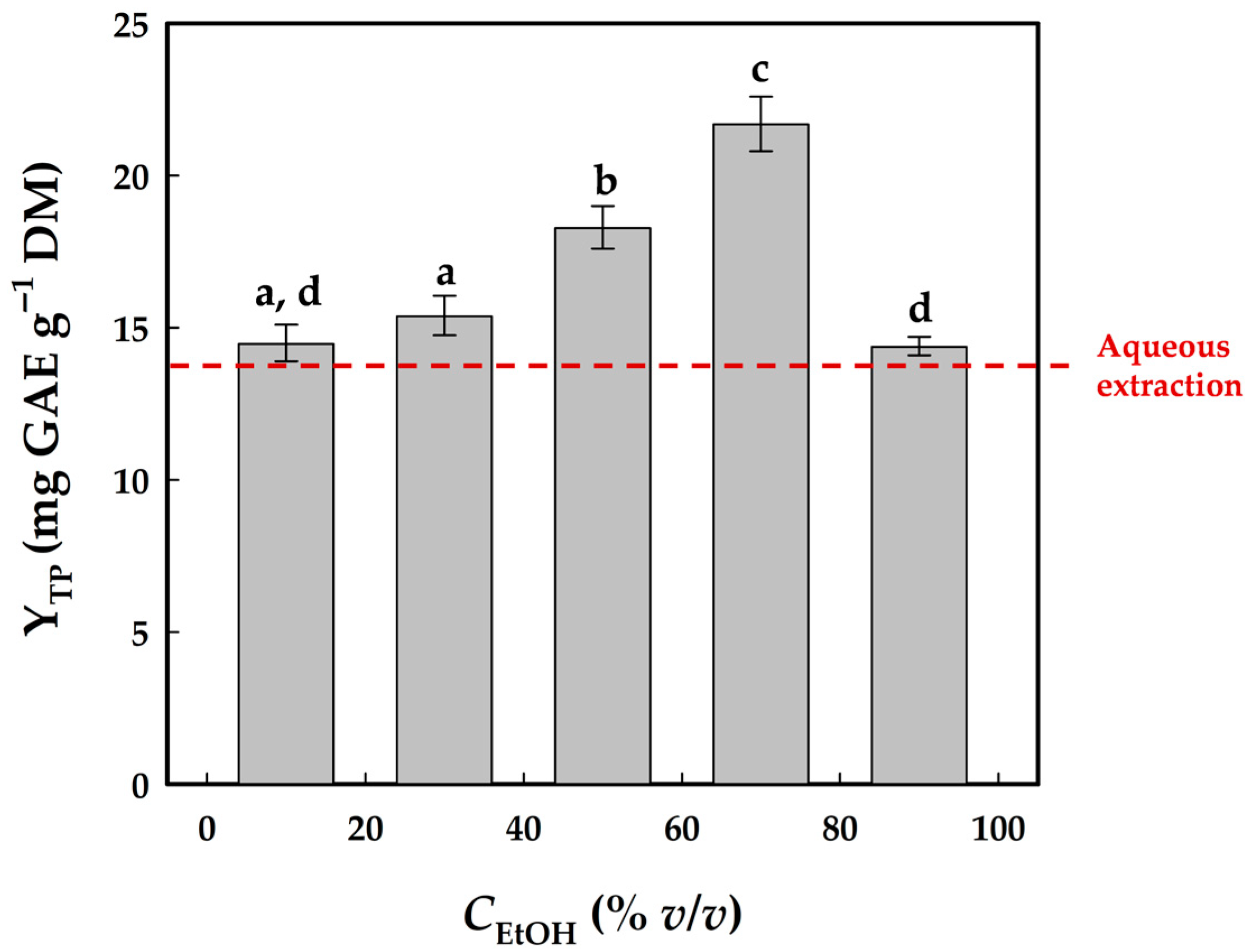
Figure 1. Assay displaying the level of the yield in total polyphenols (YTP) as a function of ethanol percentage in the extraction solvent. Bars assigned with different small letters (a–d) represent statistically different levels (p < 0.05).
Analytica 06 00056 g001
Figure 2. Correlation between yield in total polyphenols (YTP) and CSF (A), and CSF′ (B).
Analytica 06 00056 g002
Figure 3. Kinetics of total polyphenol recovery using treatment with 70% EtOH/2% HCl (A), 70% EtOH/9% oxalic acid (B), and 70% EtOH/9% citric acid (C).
Analytica 06 00056 g003
Figure 4. Three-dimensional diagrams depicting the response (YTP) variation as a function of simultaneous changes in treatment variables (T, t). Plots (AC) correspond to treatments performed with 2% HCl, 9% oxalic acid, and 9% citric acid as the catalyst.
Analytica 06 00056 g004
Figure 5. Total ion current (negative ionization) of the extract obtained by treating WOP with 70% EtOH.
Analytica 06 00056 g005
Figure 6. Selected ion chromatograms (negative ionization mode) illustrating changes in the polyphenolic composition of WOP extracts, obtained by treatments with different acid catalyst. Assignments: CiAc, citric acid (A); OxAc, oxalic acid (B).
Analytica 06 00056 g006
Figure 7. Selected ion chromatograms (negative ionization mode) illustrating changes in the polyphenolic composition of WOP extracts, obtained by the HCl-catalyzed treatment. Peaks with molecular ions at m/z 609, 463, and 301 correspond to hesperidin, hesperetin 7-O-glucoside, and hesperetin (aglycone).
Analytica 06 00056 g007
Figure 8. Antiradical activity (A) and ferric-reducing power (B) exerted by the WOP extracts generated using treatments with different catalysts. Assignments: OxAc, oxalic acid; CiAc, citric acid. Bars designated with different small letters (a, b, c, and d) represent statistically different values.
Analytica 06 00056 g008
Table 1. The codified and the actual values of the treatment variables chosen to construct the experimental design.
CodesCoded and Actual Variable Level
−101
t (min)X11090170
T (°C)X2406080
Table 2. The effect of type and concentration of the acids used on the total polyphenol yield. In all cases the solvent used for treating WOP was 70% EtOH.
Catalyst (% w/v)YTP (mg GAE g−1 DM) ± s.d.
None21.7 ± 0.8 a
HCl
120.9 ± 1.2 a
1.520.5 ± 1.0 a
223.9 ± 1.0 b
Oxalic acid
621.5 ± 0.9 a
921.6 ± 1.1 a
1218.2 ± 1.3 c
Citric acid
620.0 ± 1.0 a
919.5 ± 0.8 a,c
1220.7 ± 1.4 a
Values designated with different small letters (a–c) are statistically different (p < 0.05).
Table 3. The combination of residence time and temperature used to assess the effect of treatment severity on total polyphenol yield. CSF and CSF′ correspond to combined and alternative severity factors.
T
(°C)
t (min)CSFCSF′YTP
(mg GAE g−1 DM)
CatalystCatalystCatalyst
2% HCl9% OxAc9% CiAc2% HCl9% OxAc9% CiAc2% HCl9% OxAc9% CiAc
4010−1.24−1.82−3.195.765.183.8117.1 ± 0.8 a15.8 ± 0.7 a13.8 ± 0.6 a
90−0.28−0.86−2.236.726.144.7717.7 ± 1.0 a15.8 ± 0.8 a15.0 ± 0.7 b
170−0.01−0.59−1.966.996.415.0417.9 ± 0.9 a16.3 ± 0.7 a,c15.6 ± 0.7 b
6010−0.65−1.23−2.606.355.774.4018.1 ± 0.9 a,b16.5 ± 0.8 a,c15.1 ± 0.6 b
900.31−0.27−1.647.316.735.3619.3 ± 0.9 b,c18.0 ± 0.9 b16.6 ± 0.5 c
1700.580.00−1.377.587.005.6320.8 ± 1.1 c18.4 ± 0.8 b16.9 ± 0.7 c
8010−0.06−0.64−2.016.946.364.9917.9 ± 0.8 a17.7 ± 0.7 c,b16.7 ± 0.6 c
900.900.32−1.057.907.325.9525.3 ± 1.0 d21.9 ± 0.8 d19.3 ± 0.8 d
1701.170.59−0.788.177.596.2231.3 ± 1.4 e21.0 ± 1.0 d19.5 ± 0.7 d
Values designated with different small letters (a–e) are statistically different (p < 0.05).
Table 4. Kinetic data determined by implementing the kinetic model described by Equation (1).
CatalystT
(°C)
k (×10−3)
(g mg−1 min−1)
t0.5
(min)
h
(mg g−1 min−1)
YTP(s)
(mg GAE g−1 DM)
2% HCl4055.870.4440.6817.9 ± 0.7 a
6038.551.3115.1119.8 ± 0.9 b
802.5612.432.5331.4 ± 1.8 c
9% OxAc40326.900.1984.7416.1 ± 0.7 d,e
6045.671.2314.4717.8 ± 0.7 a
8011.783.746.0722.1 ± 1.0 b
9% CiAc4064.931.0214.8015.1 ± 0.6 e
6044.091.3512.4416.8 ± 0.7 d
8025.131.9910.0520.0 ± 0.9 b
Values designated with different small letters (a–e) are statistically different (p < 0.05).
Table 5. Data set showing the combination of treatment variables (T, t) used for the experimental design, the actual response (YTP) values found, and the predicted values determined by the models derived from the response surface methodology.
Design PointIndependent VariablesResponse (YTP, mg GAE g−1 DM)
X1 (T, °C)X2 (t, min)HCl-CatalyzedOxalic Acid-CatalyzedCitric Acid-Catalyzed
MeasuredPredictedMeasuredPredictedMeasuredPredicted
1−1 (40)−1 (10)17.117.915.815.413.813.7
2−1 (40)1 (170)17.917.216.315.915.615.3
31 (80)−1 (10)17.918.817.718.416.717.0
41 (80)1 (170)31.330.721.021.719.319.4
5−1 (40)0 (90)17.717.715.816.615.015.4
61 (80)0 (90)25.324.922.321.019.519.1
70 (60)−1 (10)18.116.516.516.315.115.0
80 (60)1 (170)20.822.118.418.216.917.0
90 (60)0 (90)19.319.418.018.216.616.9
100 (60)0 (90)19.819.417.618.217.016.9
110 (60)0 (90)18.819.418.518.217.216.9
Table 6. Mathematical equations (models) derived by implementing response surface methodology.
CatalystEquations (Models)R2p
2% HCl19.4 + 3.6X1 + 2.8X2 + 3.16X1X20.960.0016
9% OxAc18.1 + 2X1 + X20.950.0027
9% CiAc16.9 + 1.9X1 + X2 − 0.9X220.980.0005
Table 7. Optimized conditions and maximum predicted response (YTP) values determined using the desirability function (see Figures S1–S3).
CatalystMaximum Predicted Response
(mg GAE g−1 DM)
Optimal Conditions
t (min)T (°C)
2% HCl30.7 ± 2.717080
9% OxAc21.3 ± 1.317080
9% CiAc19.5 ± 0.714480
Table 8. Effect of treatments performed with different catalysts on the polyphenolic composition of WOP extracts. Values represent means of duplicate trials.
TreatmentY (mg g−1 DM)
HesperidinHesperetin 7-O-glucosideHesperetinTotal
70% EtOH9.78 ± 1.85n.d.n.d.9.78
70% EtOH/2% HCl8.30 ± 0.90 9.09 ± 1.363.84 ± 0.5321.22
70% EtOH/9% OxAx9.43 ± 1.58 0.37 ± 0.04n.d.9.81
70% EtOH/9% CiAc10.83 ± 1.85n.d.n.d.10.83
Disclaimer/Publisher’s Note: The statements, opinions and data contained in all publications are solely those of the individual author(s) and contributor(s) and not of MDPI and/or the editor(s). MDPI and/or the editor(s) disclaim responsibility for any injury to people or property resulting from any ideas, methods, instructions or products referred to in the content.