


Abstract
Primary Biliary Cholangitis (PBC) is a chronic, immune-mediated cholestatic liver disease characterized by progressive intrahepatic bile duct destruction, leading to pruritus, fatigue, cirrhosis, and eventually hepatocellular carcinoma. Early diagnosis has improved with the development of sensitive serologic assays (e.g., antimitochondrial antibodies, antinuclear antibodies) and the introduction of newer biomarkers. Risk stratification has become standardized with the help of GLOBE and UK-PBC scores, alongside non-invasive tools such as vibration-controlled transient elastography, enabling earlier intervention. Ursodeoxycholic acid (UDCA) is the first-line therapy; however, 30–40% of patients show an incomplete response, increasing their risk of liver failure and mortality. Second-line therapies have emerged which provide viable treatment avenues for those who do not respond to UDCA or are unable to tolerate it. However, in certain situations, such as decompensated cirrhosis, carcinoma, or refractory pruritus, liver transplantation constitutes the only curative therapy. While PBC has excellent post-liver transplant (post-LT) outcomes, patients with PBC face higher waitlist mortality as they tend to have lower MELD scores. Management post-LT includes the use of UDCA, immunosuppressants, and surveillance for recurrent PBC. Our review highlights the recent advances in medical management and transplant risk stratification of patients at risk of decompensation, as well as the perioperative transplant period outcomes and long-term post-transplant management strategies in patients with PBC.
1. Introduction
Primary biliary cholangitis (PBC) is a chronic, progressive autoimmune liver disease characterized by immune-mediated destruction of small to medium-sized intrahepatic bile ducts, leading to cholestasis, inflammation, and eventual fibrosis when left untreated [1,2]. In the United States (U.S.), PBC predominantly affects women, with a reported female-to-male incidence ratio of up to 9:1 [3,4]. The disease typically presents between the ages of 30 and 65. Although the exact cause remains unclear, environmental exposures such as infections, chemicals, and certain medications are believed to trigger the disease in genetically predisposed individuals. A positive family history increases the risk, and PBC commonly coexists with other autoimmune conditions, including Hashimoto thyroiditis, Sjögren syndrome, systemic sclerosis, sicca syndrome, celiac disease, and rheumatoid arthritis [5].
The diagnosis of PBC is established when at least two of the following criteria are present: persistent elevation of alkaline phosphatase (ALP) to ≥1.5 times the upper limit of normal, the presence of antimitochondrial antibodies (AMA) or PBC-specific antinuclear antibodies such as anti-gp210 or anti-sp100, and histologic features consistent with non-suppurative cholangitis and interlobular bile duct destruction. Approximately 5% of patients are AMA-negative, and in such cases, a liver biopsy may be necessary, particularly if there is concern regarding an overlap between PBC and autoimmune hepatitis [6]. Elastography can be used for fibrosis staging, and ultrasonography or magnetic resonance cholangiopancreatography are often performed to rule out biliary tract pathology as a cause of cholestatic liver disease.
Ursodeoxycholic acid (UDCA) is the first-line treatment for PBC. It has been shown to improve transplant-free survival, quality of life, and histologic progression, particularly when initiated early in the disease course [7]. A favorable biochemical response is defined by ALP reduction to less than the upper limit of normal and normalization of bilirubin levels [8,9]. For patients with an inadequate response to or intolerance of UDCA, obeticholic acid (OCA) was traditionally used as a second-line therapy [10]. However, it was recently withdrawn from the market as it is no longer FDA-approved due to concerns regarding hepatic decompensation in patients with PBC and underlying cirrhosis [11]. More recently, peroxisome proliferator-activated receptor (PPAR) agonists, such as Seladelpar and Elafibranor, have been approved for use as second-line therapies and can be added to treatment regimens [10,12]. When medical therapies fail to prevent disease progression, liver transplantation (LT) becomes the definitive treatment. Transplantation is usually considered once a patient develops complications of portal hypertension, hepatocellular carcinoma (HCC), end-stage liver disease (ESLD), or when the Model for End-Stage Liver Disease (MELD) score is ≥15. Other metrics used to predict transplant-free survival in UDCA-treated patients with PBC include a total bilirubin greater than 6 mg/dL, Mayo risk score greater than 7.8, or a GLOBE score >0.30 [13,14,15,16]. In PBC, refractory pruritus that is unresponsive to medical management represents a unique indication for transplantation and is associated with significant post-LT improvement in quality of life, even in the absence of advanced cirrhosis [17].
Transplant-free outcomes in PBC vary and have been shown to be closely associated with changes in ALP levels after UDCA initiation. In a large international cohort of UDCA-treated PBC patients, ALP levels after one year of therapy were independently associated with LT-free survival [18]. In this study, patients with a normal GLOBE score had the highest 10-year LT-free survival with normalization of ALP (≤1.0 × ULN), with survival rates of 97.1% for patients <50 years and 90.8% for those ≥50 years. In contrast, patients with ALP > 2.0 × ULN had lower 10-year LT-free survival rates, with survival rates of 94.0% (<50 years) and 82.6% (≥50 years). Notably, for patients <50 years, an ALP > 2.0 × ULN was associated with a statistically significant reduction in LT-free survival compared to an age- and sex-matched general population (p = 0.040), while those with normal ALP had survival comparable to the general population (p = 0.352). For patients with an elevated GLOBE score, ALP remained prognostically relevant in those <50 years, with 10-year LT-free survival rates of 68.4% (ALP ≤ 1.0 × ULN), 72.6% (ALP 1.0–2.0 × ULN), and 58.9% (ALP > 2.0 × ULN). In patients ≥50 years with an elevated GLOBE score, survival was generally poor regardless of ALP, but still higher in those with normal ALP (32.7%) compared to those with ALP > 2.0 × ULN (38.0%). These findings identify a subgroup of patients with persistent ALP elevation, even with a normal GLOBE score, who are at increased risk and may benefit from additional therapy.
Post-transplant outcomes in PBC are generally excellent, with 10-year survival rates exceeding 70% [19]. However, access to liver transplantation remains challenging and current risk tools underprioritize PBC patients, leading to early removal from the list due to higher waitlist mortality rates [20,21,22]. Moreover, recent U.S. registry data have also revealed persistent gender, racial, and ethnic disparities in transplant access for PBC. Non-white patients, especially African Americans and Hispanics, continue to face higher waitlist mortality and lower transplant rates compared to white patients [23,24]. These disparities are further exacerbated by socioeconomic barriers, such as limited insurance coverage and lower educational attainment, which delay timely referral and transplant evaluation [25,26]. There are currently no studies documenting disparities in transplant access for women with PBC; however, transplant waitlist gender disparities have been well-documented in general [27,28,29]. The recent transition from MELD-Na to MELD-3.0 incorporated female sex and serum albumin as model components, which will likely better reflect mortality risk in patients with PBC, given PBC is more prevalent in women. The impact of this new allocation system using MELD 3.0 on outcomes has not yet been extensively studied; however, a recent U.S. transplant registry study found that after implementation of MELD 3.0, transplant access relatively improved for women compared to men, but this advantage diminished over time and was more pronounced in shorter versus taller women [30].
Given the continuous evolution of available therapies and the current changes in the transplant landscape, an updated synthesis of risk stratification strategies, second-line medical treatments, and perioperative and long-term outcomes of LT in PBC is needed. The purpose of this narrative review is to provide a contemporary overview of the advent of using VCE, as well as other clinical risk stratification scores, in predicting the decompensation of PBC, the available novel pharmacological options, and the transplantation recommendations in PBC. The authors performed a thorough literature search using PubMed, examining key studies, clinical guidelines, expert reviews and relevant trials to gather the most current evidence and create a comprehensive and up-to-date review of this topic.
2. Clinical Presentation and Pathogenesis
2.1. Clinical Presentation
The onset and progression of PBC are highly variable. Many patients are asymptomatic at diagnosis and are only identified incidentally by abnormal liver biochemistry tests. Without effective therapy, approximately one-third of patients progress to cirrhosis and its complications, including portal hypertension and hepatic failure, over a period of years to decades [31].
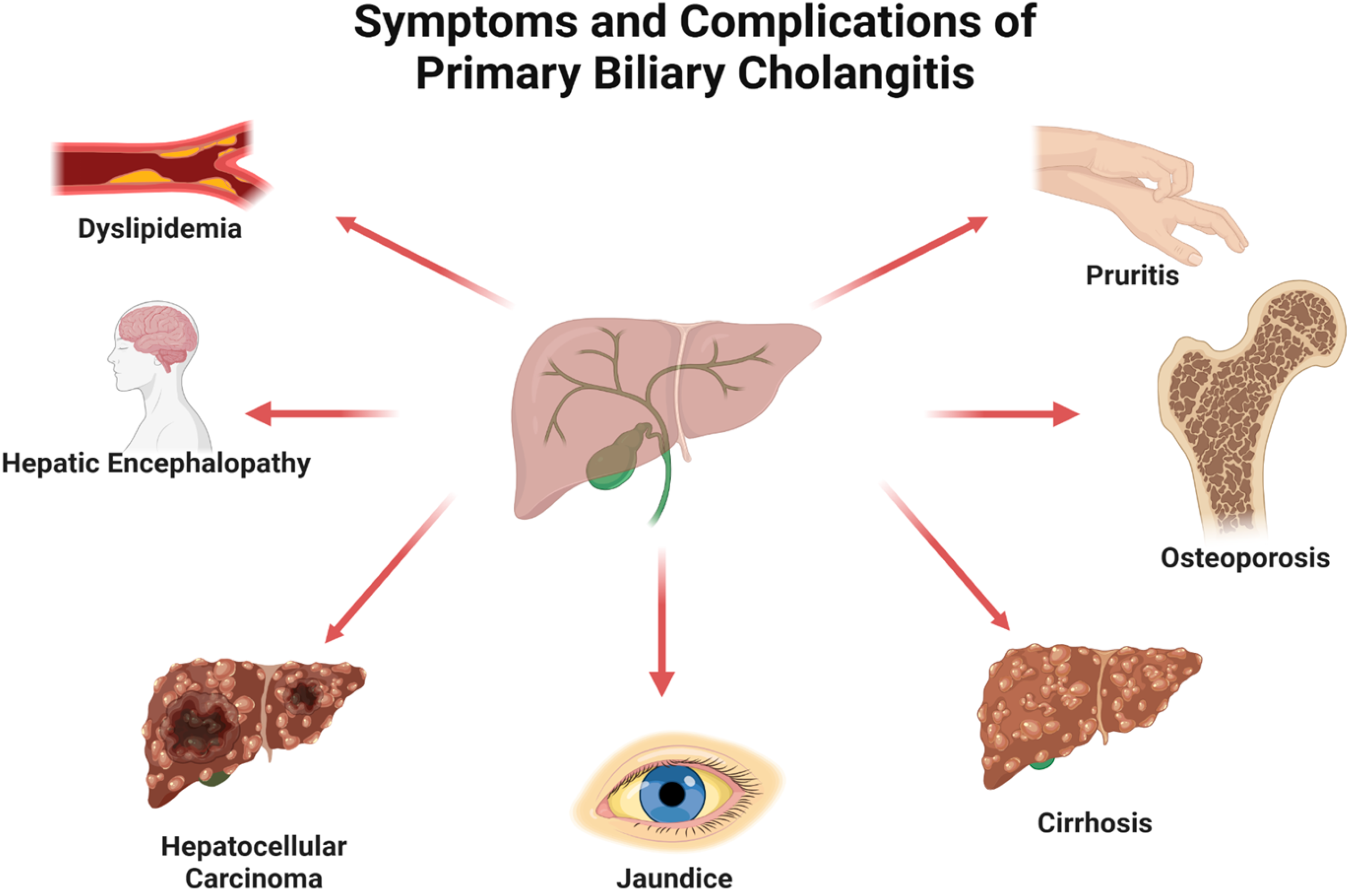
Although many patients do not have symptoms at diagnosis, when symptoms are present, the most common are fatigue and pruritus [32]. Fatigue is frequently reported and can be severe, significantly impairing quality of life [33]. Pruritus may be localized or generalized, often worsening at night, and can also lead to significant distress [34]. Studies have shown that the presence and severity of fatigue and pruritus at the time of diagnosis are independently associated with a worse prognosis and an increased likelihood of requiring liver transplantation [35]. Other clinical features include jaundice, which typically appears later in the disease course, and complications related to cirrhosis, including portal hypertension manifested as ascites, variceal bleeding, and hepatic encephalopathy in advanced cases. Some common manifestations and complications of PBC, as well as of decompensated liver disease, are shown in Figure 1.
Figure 1.
Clinical features of primary biliary cholangitis.
Additional features can include hyperpigmentation, xanthomas, xanthelasmas, and sicca symptoms (dry eyes and mouth), the latter of which are often associated with autoimmune conditions such as Sjögren’s syndrome [14]. Osteoporosis and dyslipidemia are also common in PBC patients. Dyslipidemia manifests as elevated total cholesterol, high-density lipoprotein (HDL) cholesterol, and low-density lipoprotein (LDL) cholesterol levels, and affects 75–95% of patients with PBC [17]. This dyslipidemia results from chronic cholestasis and involves complex alterations in lipid metabolism. Osteoporosis affects 35–45% of patients, with a 3.3-fold increased risk compared to individuals without PBC [36]. In general, laboratory findings usually precede symptoms and include elevated ALP and Gamma-Glutamyl Transferase (GGT). Elevations in aminotransferases are mild and less common; therefore, in cases with significantly elevated AST and/or ALT, autoimmune hepatitis-PBC overlap needs to be ruled out. Hyperbilirubinemia and hypoalbuminemia are late findings in PBC, typically indicating advanced disease [6].
2.2. Pathogenesis
The pathogenesis of PBC is multifactorial, involving a complex interplay of genetic susceptibility and environmental triggers. Studies have identified associations with specific HLA alleles, such as HLA-DRB1*08, HLA-DQB1*04, and HLA-DQA1*04, as well as other immune-related genes (IL12A, IL12RB2, STAT4, CTLA4, IRF5, CD80, etc.). However, only a fraction of the disease risk is explained by genetics [37]. Environmental factors such as smoking, recurrent urinary tract infections, particularly with E. coli, and exposure to xenobiotics (e.g., certain cosmetics and drugs) are implicated in inducing abnormalities in immunotolerance and the generation of AMA, which target the inner mitochondrial membrane of cholangiocytes [38]. Several studies have also implicated Novosphingobium aromaticivorans, an environmental Gram-negative ‘Alphaproteobacterium’, in the pathogenesis of this disease [39]. It is hypothesized that immunological cross-reactivity (molecular mimicry) occurs between bacterial antigens and mitochondrial proteins within hepatocytes, triggering or perpetuating an autoimmune response [39].
2.3. Complications
Complications associated with PBC arise from its progressive destruction of intrahepatic bile ducts. The most significant complications include cirrhosis, portal hypertension (manifesting as esophageal varices, ascites, and splenomegaly), hepatic decompensation (such as hepatic encephalopathy and spontaneous bacterial peritonitis), and hepatocellular carcinoma. Chronic cholestasis also leads to metabolic bone disease (notably osteoporosis and osteopenia), fat-soluble vitamin deficiencies (vitamins A, D, E, K), and hypercholesterolemia. The risk of HCC increases in patients with cirrhosis secondary to PBC [1,14,39]. Compared to the general population, the relative risk of HCC in PBC is markedly elevated, with pooled rate ratios as high as 18.8 [40]. However, the absolute risk remains lower than in other chronic liver diseases.
3. Management of PBC
3.1. Pharmacologic Management
Pharmacologic therapy forms the cornerstone of PBC management. First-line therapy for all patients with PBC is UDCA, dosed at 13–15 mg/kg/day orally, regardless of disease stage [7]. UDCA is recommended as the foundational therapy, as it improves transplant-free survival, delays histologic progression, and reduces the risk of complications [14]. It exerts its therapeutic effect through multiple mechanisms: it is choleretic (stimulates bile flow), cytoprotective (protects cholangiocytes from toxic hydrophobic bile acids), anti-inflammatory, and immunomodulatory. The biochemical response to UDCA is assessed after 3–6 months, with an inadequate response defined by persistently elevated ALP and/or elevated bilirubin [41]. UDCA is generally well-tolerated, with a favorable safety profile [14]. Adverse effects are uncommon and usually mild, most often limited to gastrointestinal symptoms such as diarrhea. Patients with adequate response continue UDCA monotherapy indefinitely. Even if second line therapy is required, UDCA should be continued in combination to other agents unless there is intolerance.
Second-line therapy is indicated for patients with an inadequate biochemical response or intolerance to UDCA. Peroxisome proliferator-activated receptor (PPAR) agonists, such as Seladelpar (a PPAR-δ agonist) and Elafibranor (a dual PPAR-α/δ agonist), are relatively new second-line medical therapies that have both shown efficacy in Phase 3 trials for patients with an inadequate response to UDCA [42]. A recent meta-analysis evaluating the role of Seladelpar in PBC in 496 patients found that it significantly improved ALP normalization and biochemical response compared to placebo, and effectively reduced ALP and ALT levels from baseline to follow-up [43]. Another meta-analysis investigating the efficacy of novel therapies in 878 patients showed significant reductions in ALP levels with novel agents (Seladelpar, fenofibrate, saroglitazar, bezafibrate, elafibranor, and budesonide) compared to controls (p < 0.001) [44]. Seladelpar and Elafibranor have both recently been approved by the FDA in the United States for use with UDCA (in cases of inadequate response) or as monotherapy in patients intolerant to UDCA [45,46]. However, their use is discouraged in patients with decompensated cirrhosis and severe renal impairment [47].
Obeticholic Acid (OCA), a Farnesoid X receptor (FXR) agonist, was another second-line option. However, it was recently withdrawn from the U.S. market due to safety concerns, specifically the risk of hepatic decompensation in patients with PBC and concurrent cirrhosis [11]. Fibrates (fenofibrate, gemfibrozil) are off-label second-line options, particularly in patients with persistent pruritus. Fibrates should be avoided in patients with advanced liver disease or significant renal dysfunction [48]. Budesonide has been studied as an adjunct in non-cirrhotic patients but is not routinely recommended due to limited evidence and potential adverse effects [14,49,50,51,52]. Newer agents currently underdevelopment include saroglitazar, linerixibat and NOX (NADPH Oxidase) inhibitors. The pharmacological management of PBC is summarized in Table 1.
Table 1.
Pharmacotherapy Options in PBC.
3.2. Pruritus Management
Symptom management (e.g., for pruritus) is essential and may involve the use of bile acid sequestrants, Rifampicin, Naltrexone, or Sertraline, but these do not modify disease progression. Recent studies have shown that Seladelpar can mitigate pruritus by decreasing serum IL-13 and bile acids in patients with PBC [56,57]. A phase 3 trial by Hirschfield et al. showed that, compared to placebo, Seladelpar improved pruritus across multiple patient-reported itch measures [58]. In a phase 2 randomized controlled trial (RCT) by Schattenberg et al., patients reported improvement in pruritus after treatment with Elafibranor for 12 weeks; this itching reduction was reported with both the 80 mg and 120 mg Elafibranor dosing [59]. Similarly, in a more recent multinational, phase 3 RCT by Kowdley et al., moderate-to-severe pruritus was reduced after 52 weeks of treatment with Elafibranor [60]. Therefore, PPAR agonists are an excellent second-line option that not only improves ALP normalization but also directly reduces pruritus, one of the most bothersome manifestations of PBC.
Another class of medications, which has shown promising results for controlling pruritus, is ileal bile acid transporter (IBAT) inhibitors, which block the reabsorption of bile acids in the terminal ileum. A Phase 2b RCT, the GLIMMER trial, investigated Linerixibat in PBC patients with pruritus [61]. While the primary analysis did not show a statistically significant difference in mean worst daily itch scores between placebo and Linerixibat, post hoc analyses showed significant dose-dependent reductions in itch. These effects were particularly seen with the 40 mg and 90 mg twice-daily dosing. Linerixibat also led to improvements in health-related quality of life, especially in itch, social, and emotional domains, and reduced sleep interference. The study identified a well-tolerated dose for further phase 3 investigation, supporting linerixibat as a viable option, especially for patients with moderate-to-severe pruritus who are inadequately controlled with current therapies.
3.3. Screening Considerations in PBC
Patients with PBC are routinely evaluated for coexisting autoimmune and metabolic conditions. In particular, patients with PBC are at increased risk for developing metabolic bone diseases, which places them at increased risk of developing fractures pre- and post-transplant [62,63]. Consequently, patients are recommended to undergo routine DEXA screening for osteoporosis and osteopenia, allowing for early interventions, including lifestyle modifications, calcium and vitamin D supplementation, and bisphosphonate therapy [62,63,64]. The American Association for the Study of Liver Diseases (AASLD) recommends that patients with PBC undergo baseline bone mineral density testing at diagnosis, with repeat screening every 2 years thereafter [14].
Moreover, patients should be evaluated for possible autoimmune hepatitis-primary biliary cholangitis (AIH-PBC) overlap syndrome, which occurs in approximately 1–20% of PBC patients [65]. Diagnosis of the overlap syndrome is primarily based on histological findings, which typically reveal interface hepatitis alongside the characteristic bile duct lesions of PBC. However, obtaining liver biopsies is not always feasible. If biopsies are not available, the Paris criteria can be used, which require at least two of three features for each disease [17]. For PBC, alkaline phosphatase ≥ 2 × ULN or GGT ≥ 5 × ULN, positive antimitochondrial antibodies, or florid bile duct lesions on histology. For AIH, ALT ≥ 5 × ULN, IgG ≥ 2 × ULN or positive smooth muscle antibody, or interface hepatitis on histology. Moreover, concurrent AMA and anti-dsDNA positivity is highly specific for overlap syndrome, with anti-dsDNA detected in 60% of overlap patients versus only 4% of PBC patients [66]. It is important to consider AIH-PBC overlap syndrome as it has significantly worse long-term outcomes compared to those with PBC alone, with higher rates of portal hypertension complications, liver-related mortality, and need for transplantation [67]. Identifying overlap syndrome early on allows the implementation of a different therapeutic approach, which consists of combination therapy with UDCA plus immunosuppression with prednisone and/or azathioprine [68]. There should be a high index of suspicion for AIH-PBC overlap syndrome in patients with significant elevations in transaminases disproportionate to their ALP levels, especially if they demonstrate an inadequate response to UDCA monotherapy. Failure to recognize and treat the AIH component overlap syndrome can lead to accelerated disease progression and increased risk of adverse outcomes.
4. Risk Stratification
Current risk stratification in PBC integrates clinical, biochemical, and noninvasive fibrosis assessment to estimate transplant-free survival and guide management. The most widely used validated prognostic tools are the GLOBE score and the UK-PBC score, both of which incorporate age, serum bilirubin, albumin, ALP, and platelet count (GLOBE) or transaminases (UK-PBC) after 1 year of UDCA therapy to predict 5-, 10-, and 15-year risk of LT or liver-related death [69]. These models outperform older tools, such as the Mayo Risk Score, and are now the standard for individualized risk prediction in clinical practice [70].
The GLOBE score is particularly robust, with C-statistics of 0.81–0.82 for transplant-free survival, and the UK-PBC score demonstrates similar accuracy (AUC > 0.90). Both scoring systems have been externally validated and are recommended for routine use to identify high-risk patients who may benefit from early second-line therapy or closer monitoring [71]. The ABA tool (Age, Bilirubin, ALP) provides a simplified approach for non-specialists, stratifying patients into low, intermediate, and high risk categories, and has been shown to facilitate care pathway decisions [72].
Liver stiffness measurement (LSM) by vibration-controlled transient elastography (VCTE) or magnetic resonance elastography is now recognized as a major, independent predictor of clinical outcomes in PBC. VCTE was found to be a reliable indicator of presence (LSM > 11.0 kPa) or absence (LSM ≤ 6.5 kPa) of advanced fibrosis at PBC diagnosis [73]. However, in patients with LSM between these two cutoffs, VCTE is not reliable, and liver biopsy may be required. An extensive multicenter study by Lam et al. also confirmed that tracking changes in LSM using VCTE over time aids in determining PBC prognosis and predicting liver-related complications, transplantation, or death in PBC [74]. Recent studies further support the integration of LSM into risk models, as it refines risk stratification, particularly in patients with intermediate biochemical risk [75,76].
Comparative analyses show that GLOBE and UK-PBC scores exhibit similar and excellent prognostic performance, with the GLOBE score demonstarting slightly higher discriminatory ability in specific cohorts; however, these differences are not statistically significant [70]. The addition of LSM further enhances the accuracy of risk prediction. Marenco-Flores and colleagues highlight that while all major scores (GLOBE, UK-PBC, Mayo) are effective, the choice may be tailored to the clinical context, with LSM providing incremental value for fibrosis staging and outcome prediction [69]. MELD 3.0, which is not specific to PBC, also has utility, as it assesses the severity of ESLD, predicts mortality, and helps identify patients who should be prioritized for liver transplantation. Table 2 provides a side-by-side comparison of the most commonly used prognostic tools in PBC, highlighting their included variables, predictive endpoints, and practical considerations for clinical use.
Table 2.
Prognostic Tools and Scores in PBC.
5. Liver Transplantation in Primary Biliary Cholangitis
Transplant is the definitive treatment for patients with PBC who progress to ESLD despite optimal pharmacologic and non-pharmacologic management. Approximately 30–40% of patients fail to achieve an adequate biochemical response with UDCA. This subgroup is at increased risk of developing complications, including hepatic decompensation and liver-related mortality. A study conducted by Carbone et al. further examined a cohort with inadequate response to UDCA, finding the cumulative incidence of liver transplantation or death reached approximately 10% at 5 years, 22% at 10 years, and 44% at 15 years, particularly in patients who failed to improve bilirubin levels [71]. In such cases, liver transplantation remains the only curative option for patients with end-stage or treatment-resistant PBC [31,64].
5.1. Transplant Indications and Pre-Transplant Evaluation
Determining the need for LT in PBC involves making clinical decisions based on objective findings of disease progression and subjective reports of symptom burden. Transplantation in PBC is currently indicated for patients with decompensated cirrhosis, a MELD 3.0 score of 15 or greater, a total bilirubin level greater than 6 mg/dL, a Mayo risk score greater than 7.8, and for those with hepatocellular carcinoma [31]. Severe intractable pruritus refractory to medical therapy is also a recognized transplant indication, while chronic fatigue alone is not, as it is not as reliably reversible post-transplant [31]. Also, a GLOBE score greater than 0.30 after 1 year of UDCA therapy has helped to identify patients with significantly shorter transplant-free survival and higher risk for liver-related events, requiring LT evaluation [15]. Prompt involvement of hepatologists and transplant centers in the management of these patients is beneficial, as early referral enables comprehensive assessment and optimization before the onset of severe decompensation [62,63,64].
5.2. Transplant Waitlist Outcomes
Although post-transplant outcomes for PBC are generally favorable, many patients face unique challenges while waiting on the transplant list, including early removal from the list, clinical deterioration, and increased mortality risk. Additionally, gender and racial disparities have also been documented [78,79]. The MELD score was widely used to prioritize patients for liver transplantation; however, recent studies have highlighted its limitations, particularly for patients with PBC. The MELD score significantly underestimates the true severity of PBC by failing to reflect cholestatic features, resulting in inappropriately low MELD scores that delay listing for transplantation despite the symptom burden [20,22]. While PBC predominantly affects women, they often have lower MELD scores than men with comparable disease severity, due to lower serum creatinine levels at baseline in women. Moreover, studies have shown that Hispanic patients had more severe liver disease at the time of listing, were less likely to get a transplant, and had to wait longer or died more often while waiting [24]. Consequently, modifications to the MELD score have been implemented over time to optimize its utility, particularly to balance differences based on gender and other parameters. Improvement in predicting short-term mortality was achieved by the addition of serum sodium in MELD-Na, especially in patients with portal hypertension. More recently, with the introduction of MELD 3.0, transplant prioritization was further refined. MELD 3.0 incorporates sex and albumin levels. Further studies are required to assess the impact of this implementation on waitlist outcomes in patients with PBC, which reduces sex-based disparities. Preliminary validation studies have demonstrated that MELD 3.0 provides improved mortality prediction and helps mitigate the systemic disadvantage previously observed in female patients, representing a significant step toward more equitable organ allocation [77,80].
5.3. Post-Transplant Outcomes
Outcomes after liver transplantation for PBC are excellent, with 5- and 10-year patient survival rates of approximately 84–90% and 70%, respectively, which are among the highest for any indication for liver transplantation [81,82]. Graft survival is similarly favorable. However, recurrence of PBC in the allograft occurs in up to 40% of patients over 10 years, although it rarely leads to graft failure [83]. The preventive use of UDCA post-transplant is associated with a reduced risk of recurrence, graft loss, and mortality [84]. Data have also shown that recurrence rates are lower with consistent use of immunosuppression [85,86,87].
In comparison to patients who receive LT, untreated or treatment-refractory PBC patients have a markedly lower survival rate. Specifically, 5-year survival in advanced-stage PBC patients not undergoing LT can fall below 50%, while transplanted patients routinely achieve 5-year survival rates exceeding 85%. Transplantation reverses biochemical cholestasis, which significantly improves symptoms such as pruritus and fatigue, which are usually debilitating and poorly responsive to medical therapy [64]. The improvement in pruritus is rapid, often seen within 24 h, as pruritus is primarily driven by the underlying cholestasis [88]. Fatigue is also thought to be caused by cholestatic metabolites; therefore, patients’ energy levels significantly improve after LT. However, moderate to severe fatigue persists in nearly half of patients two years after transplant [89]. Unlike pruritus and fatigue, osteoporosis and bone loss do not improve after transplantation. Post-LT, patients experience an 8–18% reduction in bone density within the first 3–6 months, with a 20–40% fracture risk within the first post-LT year [62]. Therefore, calcium and vitamin D supplementation after transplant is paramount in addition to periodic DEXA scan screenings. Once osteoporosis is diagnosed, initiation of bisphosphonates, in addition to vitamin D and calcium supplementation, is necessary.
Outcomes following LT for cholestatic liver diseases are generally superior to those seen in patients transplanted for viral or alcohol associated liver disease [90]. Among autoimmune liver diseases, outcomes following LT for PBC are generally favorable, and, in many cases, are superior to outcomes seen with other autoimmune liver diseases, such as primary sclerosing cholangitis (PSC) and autoimmune hepatitis (AIH). After transplant, PBC is associated with five-year graft and patient survival rates of 94% and 90%, respectively [83]. Post-transplant 5-year survival rates for PSC are around 85–90% [14,31]. However, PSC has a relatively high recurrence rate (8–27%), and recurrent PSC is a major cause of graft loss and the need for retransplantation [91]. In comparison, recurrent PBC generally has a limited impact on long-term graft and patient survival [90]. Outcomes following LT for AIH are slightly less favorable than those for PBC, with 5-year survival rates of 73–79%. Compared to PBC and PSC, AIH is associated with higher post-transplant mortality, which can be attributed to increased infectious complications and lower rates of retransplantation [90,92,93].
Living donor liver transplantation (LDLT) has demonstrated outcomes equivalent to, and in some cases superior to, those of deceased donor liver transplantation (DDLT). The advantage of this approach is that patients can be transplanted at lower MELD 3.0 scores, prior to the development of significant portal hypertension. Reported 5-year patient survival rates are approximately 85% for LDLT and 82% for DDLT [81]. In another study, 5-year survival rates among LDLT patients were 86.5% compared to 85.1% among DDLT patients [90]. While graft survival rates are comparable between the two approaches, LDLT offers distinct advantages in access and timing. The indications for LDLT mirror those for DDLT and are based on disease severity, as well as the presence of intractable symptoms that are unresponsive to medical therapy. LDLT is particularly beneficial in scenarios where timely access to a deceased donor organ is unlikely or when waitlist mortality is high. By reducing time to transplantation, LDLT can lower waitlist mortality without compromising, and potentially even improving, post-transplant outcomes.
5.4. PBC Recurrence
Recurrence of PBC after transplantation remains common, with post-LT recurrence rates ranging from 14 to 42% [83,94,95]. Diagnosing recurrent PBC (rPBC) is difficult because PBC-associated auto-antibodies persist after transplant, and the resulting cholestatic pattern is non-specific. Therefore, the diagnosis of rPBC is based on histology. Although surveillance biopsies may detect subclinical histological abnormalities in PBC patients post-transplant, most findings are mild and rarely change management of immunosuppressant regimens [96]. Therefore, annual surveillance biopsies are not recommended due to their invasive nature and lack of evidence to support improved outcomes [14]. Moreover, the majority of patients with normal biochemistry had normal or mild histological changes [96]. Therefore, biopsy is reserved for cases with clinical or biochemical evidence of recurrence.
Recent studies have shown that the recurrence of PBC can increase the risk of graft failure and mortality [95]. Several potential risk factors for PBC recurrence after transplantation have been proposed, including age, early cholestasis after transplantation, the use of certain calcineurin inhibitor-based immunosuppression, and the presence of specific HLA haplotypes; however, these associations have not been consistently demonstrated [90]. Earlier studies suggest that a younger age at the time of transplantation may be associated with an increased risk of recurrence. In contrast, more recent data indicate a possible association between older age at transplantation and higher recurrence rates. However, these findings remain inconclusive and warrant further investigation. Current guidelines for the management of rPBC recommend initiating or continuing UDCA [14]. There are no formal recommendations for the use of newer PPAR agonist therapies, such as Seladelpar and Elafibranor, in the post-transplant setting, as these agents have not been studied in this population yet.
The evidence regarding the association between immunosuppression regimens and the recurrence of PBC is mixed. Earlier cohort studies and meta-analyses have linked tacrolimus use post-transplant with a higher recurrence rate of PBC, while Cyclosporine A use is associated with a reduced risk of PBC recurrence [31,64,86]. However, other studies found opposite associations with an increased risk of rPBC with the use of cyclosporine versus tacrolimus [85]. More recent, larger studies have shown no consistent significant differences in rates of rPBC, graft loss, or mortality between tacrolimus and cyclosporine [87,97]. This demonstrates the heterogeneity of the data making it difficult to draw definitive conclusions. Large prospective studies are warranted to better evaluate this.
6. Management Post-Liver Transplantation
Transplanted patients with PBC typically experience significant improvement in quality of life and resolution of previously debilitating symptoms. A study by Krawczyk et al. showed that while health-related quality of life (HRQoL) is overall worse in patients with PBC compared to healthy individuals, HRQoL improved in 85% of PBC patients after transplantation [98]. Additionally, they also report significant improvements in pruritus and fatigue after transplantation (all p < 0.01). Proper management after transplantation in PBC is crucial in maintaining QoL and reducing disease recurrence, graft loss, and mortality rates. The mainstay of post-LT management is the use of preventive UDCA and immunosuppressants.
6.1. Role of UDCA After Transplantation
Initial studies investigating the role of UDCA in PBC after liver transplantation showed uncertain outcomes [95]. However, there is recent robust evidence showing that prophylactic UDCA improves post-transplant outcomes [31,64,95]. A study by Corpechot et al. showed that the preventive use of UDCA was significantly associated with a reduced risk of rPBC (p < 0.0001), graft loss (p < 0.05), liver-related death (p < 0.05), and all-cause death (p < 0.05) [84]. This large retrospective cohort study also showed that preventative UDCA use was associated with 2.26 years of life gained over 20 years, with even more favorable outcomes observed when UDCA was combined with cyclosporine. Moreover, a meta-analysis by Pedersen et al. found that UDCA use after transplant was associated with decreased odds of biliary complications (p = 0.01) and biliary stones and sludge (p = 0.004) [99]. They also found that the rate of rPBC was lower with prophylactic UDCA compared with not using prophylactic UDCA. Therefore, prophylactic UDCA (10–15 mg/kg/day) should be started soon after liver transplantation to not only improve graft and patient survival, but also prevent the recurrence of PBC.
6.2. Impact of Immunosuppression Regimens
A significant component of post-transplant care is ensuring patients are on appropriate immunosuppressants to reduce the risk of post-transplant rejection. Calcineurin inhibitors (tacrolimus and cyclosporine) are the first-line immunosuppressants used after liver transplant in the United States. Antimetabolites, such as mycophenolate mofetil, can also be used in combination with calcineurin inhibitors, particularly as the concomitant use of mycophenolate allows for the use of lower doses of calcineurin inhibitors, which may limit nephrotoxicity. There is currently no consensus on optimal immunosuppressive strategies for liver transplantation in individuals with PBC [95,100]. A European Liver Transplant Registry study found similar long-term risks of graft loss or patient survival between patients with PBC on tacrolimus or cyclosporine after liver transplantation [97]. However, they found that the maintenance use of mycophenolate was specifically associated with lower risks of graft loss and improved patient survival. In comparison, maintenance use of steroids was associated with higher risks of graft and patient death. Similarly, a Scientific Registry of Transplant Recipients study found no significant survival difference between cyclosporine and tacrolimus, but tacrolimus demonstrated a survival advantage in secondary analyses, such as transplants after the year 2000 and transplants in women [87]. Based on the currently available evidence, UDCA in combination with a calcineurin inhibitor, such as tacrolimus or cyclosporine, in combination with mycophenolate, is an appropriate immunosuppression regimen in patients with PBC. More clinical trials are needed to make definitive recommendations for or against specific immunosuppression agents post-transplant in PBC. Given the variability in reported outcomes, Table 3 summarizes major cohort studies assessing patient and graft survival across commonly used post-transplant immunosuppressants in PBC.
Table 3.
Immunosuppressive Regimens and Their Impact on Patient Outcomes After Liver Transplantation.
7. Controversies
The newer MELD 3.0 model offers a more appropriate stratification of risk for progressive liver disease in patients with PBC. By incorporating variables that are more strongly linked to short-term mortality, MELD 3.0 improves mortality prediction compared to the traditional MELD score. For example, lower albumin levels have been associated with symptoms such as fatigue, and MELD 3.0 includes albumin in its model due to its stronger correlation with mortality, which could improve patient allocation [78]. Additionally, the MELD 3.0 score now differentially weighs patients based on sex, if they are over the age of 18, giving females more weight. Given that PBC predominantly affects females, this adjustment could better reflect the higher risk these patients face while waiting for a transplant.
Patients with PBC often present with low MELD scores, even when their disease is advanced, leading to higher mortality rates on the transplant waitlist, which highlights persistent limitations of current allocation systems. Although MELD 3.0 has improved prioritization for women and better predicts short-term mortality, its ability to fully capture the complex disease burden of PBC remains uncertain. Many PBC patients experience significant morbidity, such as refractory pruritus or portal hypertension complications, before meeting transplant thresholds. Moreover, the presence of severe fatigure and/or pruritus on initial presentation and diagnosis has been linked to poorer prognosis [35]. Therefore, incorporating fatigue and pruritus severity into risk stratification models could improve the identification of patients who are at higher risk of disease progression. Most existing risk stratification scores utilize biochemical markers, without capturing the impact of these important symptoms on outcomes. Furthermore, approximately 40% of PBC patients do not respond to UDCA therapy and are at high risk of progression to ESLD despite having relatively preserved MELD scores [81]. Additionally, PBC patients tend to have higher mortality from cardiovascular-related causes compared to those with PSC, potentially due to factors like older age, diabetes, and slightly higher BMI, and are also more likely to experience dyslipidemia [102].
Additional risk stratification tools to predict biochemical response and clinical outcomes have been validated in large multi-center cohort studies. For example, in a 2024 retrospective cohort study, Lam et al. used a large dataset from 24 tertiary centers in 13 countries to show that longitudinal changes in LSM by VCTE predicted a higher risk of hepatic decompensation, increased rates of liver transplantation, and increased mortality [74]. In addition, LSM, in combination with biochemical response models (e.g., GLOBE, UK-PBC score), provides a dynamic method for assessing risk and could serve as a surrogate endpoint to identify patients who warrant earlier referral for transplant evaluation.
8. Conclusions
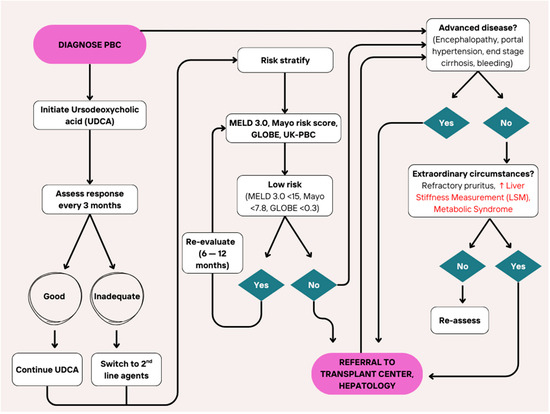
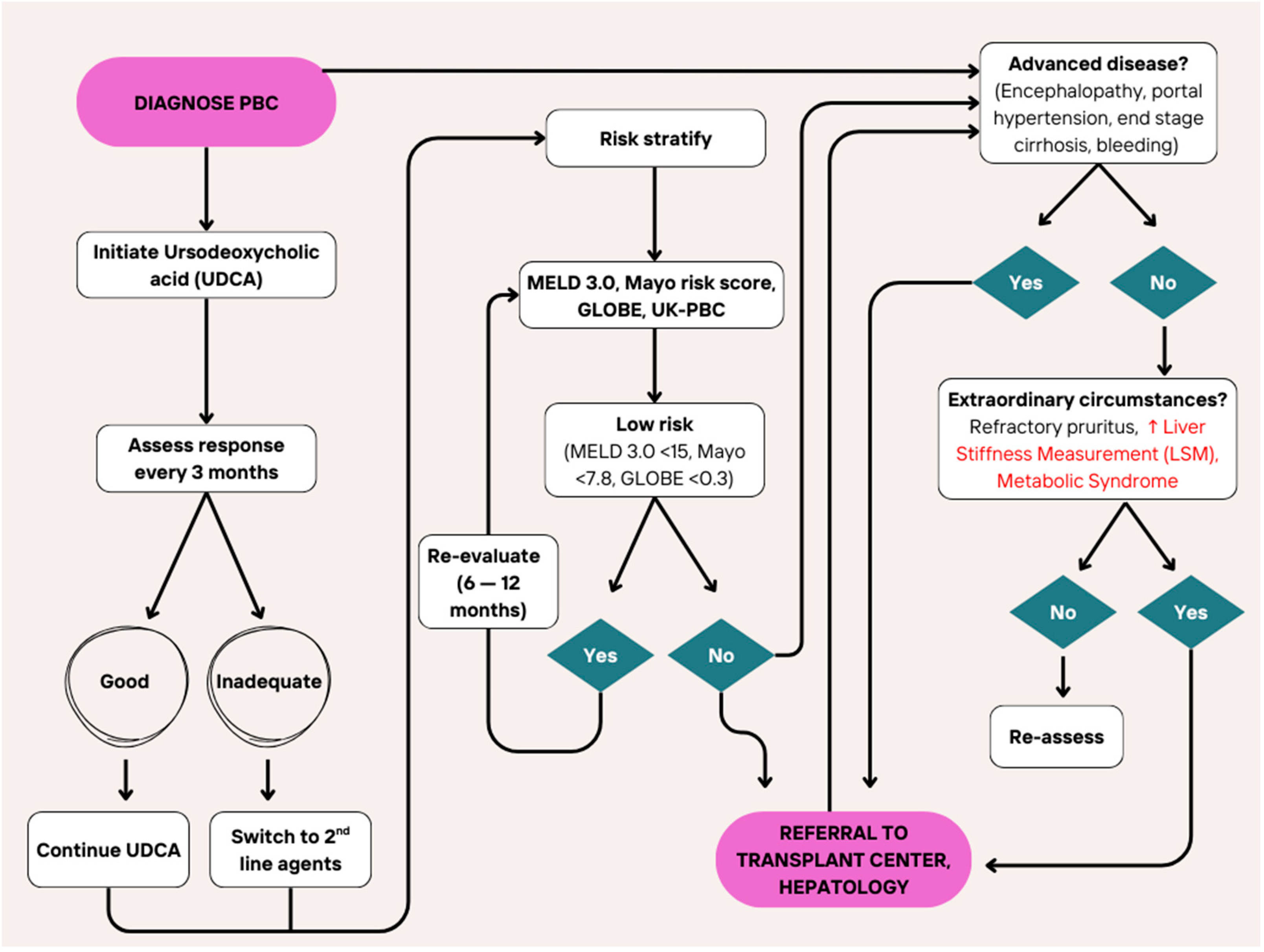
The prognosis of PBC has improved over the last few decades, given the new therapies available as well as the improvement of perioperative transplant care [103]. Despite excellent post-transplant outcomes in PBC, challenges in waitlisting and transplant access still persist, highlighting the need for improved risk stratification models and reconsideration of current transplant criteria and exception policies. There is a need to further characterize waitlist outcomes under the new allocation transplantation in the MELD 3.0 era. Furthermore, additional investigation into rPBC risk factors and management is warranted to ensure improved post-transplant outcomes. We propose a more nuanced approach to transplant stratification in PBC that integrates MELD 3.0, disease-specific prognostic scores, and noninvasive fibrosis assessment, shown in Figure 2.
Figure 2.
Proposed Algorithm for Risk Stratification and Transplant Referral in Primary Biliary Cholangitis.
Author Contributions
Conceptualization, E.M.-M., M.M. and R.K.; methodology, M.M., R.K. and E.M.-M.; investigation, M.M., R.K., E.M.-M., J.E.P.-B., E.S., S.P., C.P. and P.G.; data curation, M.M., R.K., E.M.-M., J.E.P.-B., E.S., S.P., C.P., M.B. and RS; writing—original draft preparation, M.M., R.K., J.E.P.-B., E.S., S.P. and C.P.; writing—review and editing, M.M., R.K., P.G. and E.M.-M.; visualization, M.M., R.K., M.B. and R.S.; supervision, P.G. and E.M.-M.; project administration, M.M., R.K. and E.M.-M. All authors have read and agreed to the published version of the manuscript.
Funding
This research received no external funding.
Institutional Review Board Statement
Not applicable.
Informed Consent Statement
Not applicable.
Data Availability Statement
This narrative review did not generate or analyze new datasets. All information presented is derived from previously published studies available in the public domain.
Acknowledgments
During the preparation of this manuscript, the authors used BioRender for the purposes of creating graphics. The authors have reviewed and edited the output and take full responsibility for the content of this publication.
Conflicts of Interest
The authors declare no conflicts of interest.
References
- Tanaka, A.; Ma, X.; Takahashi, A.; Vierling, J.M. Primary Biliary Cholangitis. Lancet 2024, 404, 1053–1066. [Google Scholar] [CrossRef] [Scilit]
- Parés, A. Primary Biliary Cholangitis. Med. Clin. 2018, 151, 242–249. [Google Scholar] [CrossRef] [Scilit]
- Lv, T.; Chen, S.; Li, M.; Zhang, D.; Kong, Y.; Jia, J. Regional Variation and Temporal Trend of Primary Biliary Cholangitis Epidemiology: A Systematic Review and Meta-Analysis. J. Gastroenterol. Hepatol. 2021, 36, 1423–1434. [Google Scholar] [CrossRef] [Scilit] [PubMed]
- Tanaka, A. Current Understanding of Primary Biliary Cholangitis. Clin. Mol. Hepatol. 2021, 27, 1–21. [Google Scholar] [CrossRef] [Scilit] [PubMed]
- Boonstra, K.; Beuers, U.; Ponsioen, C.Y. Epidemiology of Primary Sclerosing Cholangitis and Primary Biliary Cirrhosis: A Systematic Review. J. Hepatol. 2012, 56, 1181–1188. [Google Scholar] [CrossRef] [Scilit] [PubMed]
- Younossi, Z.M.; Bernstein, D.; Shiffman, M.L.; Kwo, P.; Kim, W.R.; Kowdley, K.V.; Jacobson, I.M. Diagnosis and Management of Primary Biliary Cholangitis. Am. J. Gastroenterol. 2019, 114, 48–63. [Google Scholar] [CrossRef] [Scilit]
- van Hooff, M.C.; Werner, E.; van der Meer, A.J. Treatment in Primary Biliary Cholangitis: Beyond Ursodeoxycholic Acid. Eur. J. Intern. Med. 2024, 124, 14–21. [Google Scholar] [CrossRef] [Scilit]
- Bhushan, S.; Sohal, A.; Kowdley, K.V. Primary Biliary Cholangitis and Primary Sclerosing Cholangitis Therapy Landscape. Am. J. Gastroenterol. 2025, 120, 151–158. [Google Scholar] [CrossRef] [Scilit]
- Murillo Perez, C.F.; Harms, M.H.; Lindor, K.D.; van Buuren, H.R.; Hirschfield, G.M.; Corpechot, C.; van der Meer, A.J.; Feld, J.J.; Gulamhusein, A.; Lammers, W.J.; et al. Goals of Treatment for Improved Survival in Primary Biliary Cholangitis: Treatment Target Should Be Bilirubin within the Normal Range and Normalization of Alkaline Phosphatase. Am. J. Gastroenterol. 2020, 115, 1066–1074. [Google Scholar] [CrossRef] [Scilit]
- Nevens, F.; Andreone, P.; Mazzella, G.; Strasser, S.I.; Bowlus, C.; Invernizzi, P.; Drenth, J.P.H.; Pockros, P.J.; Regula, J.; Beuers, U.; et al. A Placebo-Controlled Trial of Obeticholic Acid in Primary Biliary Cholangitis. N. Engl. J. Med. 2016, 375, 631–643. [Google Scholar] [CrossRef] [Scilit]
- News. Intercept Announces Voluntary Withdrawal of OCALIVA® for Primary Biliary Cholangitis (PBC) from the US Market; US Clinical Trials Involving Obeticholic Acid Placed on Clinical Hold. Available online: https://www.interceptpharma.com/about-us/news/?id=3148535 (accessed on 3 October 2025).
- Hirschfield, G.M.; Beuers, U.; Corpechot, C.; Invernizzi, P.; Jones, D.; Marzioni, M.; Schramm, C. EASL Clinical Practice Guidelines: The Diagnosis and Management of Patients with Primary Biliary Cholangitis. J. Hepatol. 2017, 67, 145–172. [Google Scholar] [CrossRef] [Scilit]
- D’Amico, G.; Garcia-Tsao, G.; Pagliaro, L. Natural History and Prognostic Indicators of Survival in Cirrhosis: A Systematic Review of 118 Studies. J. Hepatol. 2006, 44, 217–231. [Google Scholar] [CrossRef] [Scilit] [PubMed]
- Lindor, K.D.; Bowlus, C.L.; Boyer, J.; Levy, C.; Mayo, M. Primary Biliary Cholangitis: 2018 Practice Guidance from the American Association for the Study of Liver Diseases. Hepatology 2019, 69, 394–419. [Google Scholar] [CrossRef] [Scilit] [PubMed]
- Martin, P.; DiMartini, A.; Feng, S.; Brown, R., Jr.; Fallon, M. Evaluation for Liver Transplantation in Adults: 2013 Practice Guideline by the American Association for the Study of Liver Diseases and the American Society of Transplantation. Hepatology 2014, 59, 1144–1165. [Google Scholar] [CrossRef] [Scilit]
- Lammers, W.J.; Hirschfield, G.M.; Corpechot, C.; Nevens, F.; Lindor, K.D.; Janssen, H.L.A.; Floreani, A.; Ponsioen, C.Y.; Mayo, M.J.; Invernizzi, P.; et al. Development and Validation of a Scoring System to Predict Outcomes of Patients with Primary Biliary Cirrhosis Receiving Ursodeoxycholic Acid Therapy. Gastroenterology 2015, 149, 1804–1812.e4. [Google Scholar] [CrossRef] [Scilit]
- Carey, E.J.; Ali, A.H.; Lindor, K.D. Primary Biliary Cirrhosis. Lancet 2015, 386, 1565–1575. [Google Scholar] [CrossRef] [Scilit] [PubMed]
- de Veer, R.C.; Harms, M.H.; Corpechot, C.; Thorburn, D.; Invernizzi, P.; Janssen, H.L.A.; Battezzati, P.M.; Nevens, F.; Lindor, K.D.; Floreani, A.; et al. Liver Transplant-Free Survival According to Alkaline Phosphatase and GLOBE Score in Patients with Primary Biliary Cholangitis Treated with Ursodeoxycholic Acid. Aliment. Pharmacol. Ther. 2022, 56, 1408–1418. [Google Scholar] [CrossRef] [Scilit]
- Watt, K.D.; Pedersen, R.A.; Kremers, W.K. Evolution of Causes and Risk Factors for Mortality Post-Liver Transplant: Results of the NIDDK Long-Term Follow-Up Study. Am. J. Transplant. 2010, 10, 1420–1427. [Google Scholar] [CrossRef] [Scilit]
- Zhou, K.; Dodge, J.L.; Xu, E.; Emamaullee, J.; Kahn, J.A. Excess Liver Transplant Waitlist Mortality for Patients with Primary Biliary Cholangitis under MELD-Na Allocation. Clin. Transplant. 2022, 36, e14527. [Google Scholar] [CrossRef] [Scilit]
- Cançado, G.G.L.; Deeb, M.; Gulamhusein, A.F. Liver Transplantation for Cholestatic Liver Diseases: Timing and Disease Recurrence. Hepatology 2025, 82, 1016–1035. [Google Scholar] [CrossRef] [Scilit]
- Singal, A.K.; Wong, R.J.; Jalan, R.; Asrani, S.; Kuo, Y.-F. Primary Biliary Cholangitis Has the Highest Waitlist Mortality in Patients with Cirrhosis and Acute on Chronic Liver Failure Awaiting Liver Transplant. Clin. Transplant. 2021, 35, e14479. [Google Scholar] [CrossRef] [Scilit]
- Yalamanchili, V.; Saeian, K.; Jani, A.B. Race and Primary Biliary Cirrhosis: Influence of Ethnicity on Natural History and Outcomes. Clin. Gastroenterol. Hepatol. 2017, 15, 101–109. [Google Scholar] [CrossRef] [Scilit]
- Turan, O.C.; Singh, S.; Keach, J. Racial Disparities in Waitlist Mortality and Transplant Outcomes among Patients with Primary Biliary Cholangitis. Clin. Gastroenterol. Hepatol. 2018, 16, 935–943. [Google Scholar] [CrossRef] [Scilit]
- Artinyan, A.; Mailey, B.; Sanchez-Luege, N.; Khalili, J.; Sun, C.-L.; Bhatia, S.; Wagman, L.D.; Nissen, N.; Colquhoun, S.D.; Kim, J. Race, Ethnicity, and Socioeconomic Status Influence the Survival of Patients with Hepatocellular Carcinoma in the United States. Cancer 2010, 116, 1367–1377. [Google Scholar] [CrossRef] [Scilit]
- Mathur, A.K.; Schaubel, D.E.; Gong, Q.; Guidinger, M.K.; Merion, R.M. Racial and Ethnic Disparities in Access to Liver Transplantation. Liver Transpl. 2010, 16, 1033–1040. [Google Scholar] [CrossRef] [Scilit] [PubMed]
- Cullaro, G.; Sarkar, M.; Lai, J.C. Sex-Based Disparities in Delisting for Being “Too Sick” for Liver Transplantation. Am. J. Transplant. 2018, 18, 1214–1219. [Google Scholar] [CrossRef] [Scilit]
- Locke, J.E.; Shelton, B.A.; Olthoff, K.M.; Pomfret, E.A.; Forde, K.A.; Sawinski, D.; Gray, M.; Ascher, N.L. Quantifying Sex-Based Disparities in Liver Allocation. JAMA Surg. 2020, 155, e201129. [Google Scholar] [CrossRef] [Scilit]
- Nephew, L.D.; Zia, Z.; Ghabril, M.; Orman, E.; Lammert, C.; Kubal, C.; Chalasani, N. Sex Disparities in Waitlisting and Liver Transplant for Acute Liver Failure. JHEP Rep. 2021, 3, 100200. [Google Scholar] [CrossRef] [Scilit]
- Tanaka, T.; Shane, D.M.; Lai, J.C. Sex and Body Size Disparities under MELD 3.0: Evaluation of Persisting Gaps in Liver Transplant Access. Hepatology 2025, 10–97. [Google Scholar] [CrossRef] [Scilit]
- Martin, E.F. Liver Transplantation for Primary Biliary Cholangitis. Clin. Liver Dis. 2022, 26, 765–781. [Google Scholar] [CrossRef] [Scilit]
- Sierra, L.; Ferrigno, B.; Marenco-Flores, A.; Alsaqa, M.; Rojas, N.; Barba, R.; Goyes, D.; Medina-Morales, E.; Saberi, B.; Patwardhan, V.; et al. Primary Biliary Cholangitis Has the Worst Quality of Life Indicators among the Autoimmune Liver Diseases: A United States Cohort. Ann. Hepatol. 2025, 30, 101945. [Google Scholar] [CrossRef] [Scilit]
- Lee, J.Y.; Danford, C.J.; Trivedi, H.D.; Tapper, E.B.; Patwardhan, V.R.; Bonder, A. Treatment of Fatigue in Primary Biliary Cholangitis: A Systematic Review and Meta-Analysis. Dig. Dis. Sci. 2019, 64, 2338–2350. [Google Scholar] [CrossRef] [Scilit]
- Medina-Morales, E.; Barba Bernal, R.; Gerger, H.; Goyes, D.; Trivedi, H.D.; Ferrigno, B.; Patwardhan, V.; Bonder, A. Pharmacological Therapy of Pruritus in Primary Biliary Cholangitis: A Systematic Review and Meta-Analysis of Randomized Clinical Trials. J. Clin. Gastroenterol. 2023, 57, 143–152. [Google Scholar] [CrossRef] [Scilit] [PubMed]
- Quarneti, C.; Muratori, P.; Lalanne, C.; Fabbri, A.; Menichella, R.; Granito, A.; Masi, C.; Lenzi, M.; Cassani, F.; Pappas, G.; et al. Fatigue and Pruritus at Onset Identify a More Aggressive Subset of Primary Biliary Cirrhosis. Liver Int. 2015, 35, 636–641. [Google Scholar] [CrossRef] [Scilit] [PubMed]
- Liao, C.-Y.; Chung, C.-H.; Chu, P.; Wei, K.-Y.; Feng, T.-M.; Lin, F.-H.; Tsao, C.-H.; Wu, C.-C.; Chien, W.-C. Increased Risk of Osteoporosis in Patients with Primary Biliary Cirrhosis. PLoS ONE 2018, 13, e0194418. [Google Scholar] [CrossRef] [Scilit] [PubMed]
- Cordell, H.J.; Fryett, J.J.; Ueno, K.; Darlay, R.; Aiba, Y.; Hitomi, Y.; Kawashima, M.; Nishida, N.; Khor, S.-S.; Gervais, O.; et al. An International Genome-Wide Meta-Analysis of Primary Biliary Cholangitis: Novel Risk Loci and Candidate Drugs. J. Hepatol. 2021, 75, 572–581. [Google Scholar] [CrossRef] [Scilit]
- Purohit, T.; Cappell, M.S. Primary Biliary Cirrhosis: Pathophysiology, Clinical Presentation and Therapy. World J. Hepatol. 2015, 7, 926–941. [Google Scholar] [CrossRef] [Scilit]
- Kaplan, M.M. Novosphingobium Aromaticivorans: A Potential Initiator of Primary Biliary Cirrhosis. Am. J. Gastroenterol. 2004, 99, 2147–2149. [Google Scholar] [CrossRef] [Scilit]
- Liang, Y.; Yang, Z.; Zhong, R. Primary Biliary Cirrhosis and Cancer Risk: A Systematic Review and Meta-Analysis. Hepatology 2012, 56, 1409–1417. [Google Scholar] [CrossRef] [Scilit]
- Paumgartner, G.; Beuers, U. Ursodeoxycholic Acid in Cholestatic Liver Disease: Mechanisms of Action and Therapeutic Use Revisited. Hepatology 2002, 36, 525–531. [Google Scholar] [CrossRef] [Scilit]
- Hirschfield, G.M.; Shiffman, M.L.; Gulamhusein, A.; Kowdley, K.V.; Vierling, J.M.; Levy, C.; Kremer, A.E.; Zigmond, E.; Andreone, P.; Gordon, S.C.; et al. Seladelpar Efficacy and Safety at 3 Months in Patients with Primary Biliary Cholangitis: ENHANCE, a Phase 3, Randomized, Placebo-Controlled Study. Hepatology 2023, 78, 397–415. [Google Scholar] [CrossRef] [Scilit] [PubMed]
- Ashraf, T.; Abunada, O.; Seerani, N.; Ali, K.; Muhammad, A.; Mir, S.L.; Shah, S.A.M.; Hassaan, M.; Kumar, V.; Abbas, W.; et al. The Role of Seladelpar in Primary Biliary Cholangitis: A Systematic Review and Meta-Analysis. BMC Gastroenterol. 2025, 25, 224. [Google Scholar] [CrossRef] [Scilit]
- Gadour, E.; Miutescu, B.; Bashir, H.; Ali, A.; Alanzi, S.; Al-Shahrani, A.A.; Almuhaidb, A.; Mohamed, S.; Abaalkhail, F.; Kuriry, H.; et al. Efficacy and Safety of Novel Oral Anti-Cholestatic Agents for Primary Biliary Cholangitis: Meta-Analyses and Systematic Review. Pharmaceuticals 2025, 18, 697. [Google Scholar] [CrossRef] [Scilit] [PubMed]
- Search Orphan Drug Designations and Approvals. Available online: https://www.accessdata.fda.gov/scripts/opdlisting/oopd/detailedIndex.cfm?cfgridkey=543416 (accessed on 14 October 2025).
- Search Orphan Drug Designations and Approvals. Available online: https://www.accessdata.fda.gov/scripts/opdlisting/oopd/detailedIndex.cfm?cfgridkey=693919 (accessed on 14 October 2025).
- Lindor, K.D.; Bowlus, C.L.; Boyer, J.; Levy, C.; Mayo, M. Primary Biliary Cholangitis: 2021 Practice Guidance Update from the American Association for the Study of Liver Diseases. Hepatology 2022, 75, 1012–1013. [Google Scholar] [CrossRef] [Scilit] [PubMed]
- Corpechot, C.; Chazouillères, O.; Rousseau, A.; Le Gruyer, A.; Habersetzer, F.; Mathurin, P.; Goria, O.; Potier, P.; Minello, A.; Silvain, C.; et al. A Placebo-Controlled Trial of Bezafibrate in Primary Biliary Cholangitis. N. Engl. J. Med. 2018, 378, 2171–2181. [Google Scholar] [CrossRef] [Scilit]
- Liu, C.-H.; Bowlus, C.L. Treatment of Primary Biliary Cholangitis: First-Line and Second-Line Therapies. Clin. Liver Dis. 2022, 26, 705–726. [Google Scholar] [CrossRef] [Scilit]
- MacDonald, N.; Loh, R.; Fenkel, J.M.; Sass, D.A.; Halegoua-DeMarzio, D. Pharmacotherapy for Primary Biliary Cholangitis: An Assessment of Medication Candidacy and Rates of Treatment. BMC Gastroenterol. 2024, 24, 18. [Google Scholar] [CrossRef] [Scilit]
- Levy, C.; Bowlus, C.L. Primary Biliary Cholangitis: Personalizing Second-Line Therapies. Hepatology 2024, 82, 895–910. [Google Scholar] [CrossRef] [Scilit]
- Montano-Loza, A.J.; Corpechot, C. Definition and Management of Patients with Primary Biliary Cholangitis and an Incomplete Response to Therapy. Clin. Gastroenterol. Hepatol. 2021, 19, 2241–2251.e1. [Google Scholar] [CrossRef] [Scilit]
- Vuppalanchi, R.; Cruz, M.M.; Momin, T.; Shaikh, F.; Swint, K.; Patel, H.; Parmar, D. Pharmacokinetic, Safety, and Pharmacodynamic Profiles of Saroglitazar Magnesium in Cholestatic Cirrhosis with Hepatic Impairment and Participants with Renal Impairment. Clin. Pharmacol. Ther. 2025, 117, 240–249. [Google Scholar] [CrossRef] [Scilit]
- Hirschfield, G.M.; Bowlus, C.L.; Jones, D.E.J.; Kremer, A.E.; Mayo, M.J.; Tanaka, A.; Andreone, P.; Jia, J.; Jin, Q.; Macías-Rodríguez, R.U.; et al. Linerixibat in Patients with Primary Biliary Cholangitis and Cholestatic Pruritus (GLISTEN): A Randomised, Multicentre, Double-Blind, Placebo-Controlled, Phase 3 Trial. Lancet Gastroenterol. Hepatol. 2026, 11, 22–33. [Google Scholar] [CrossRef] [Scilit]
- Floreani, A.; Gabbia, D.; De Martin, S. An Update on Novel Investigational Agents for the Treatment of Primary Biliary Cholangitis. Expert Opin. Investig. Drugs 2025, 34, 793–802. [Google Scholar] [CrossRef] [Scilit] [PubMed]
- Kremer, A.E.; Mayo, M.J.; Hirschfield, G.M.; Levy, C.; Bowlus, C.L.; Jones, D.E.; Johnson, J.D.; McWherter, C.A.; Choi, Y.-J. Seladelpar Treatment Reduces IL-31 and Pruritus in Patients with Primary Biliary Cholangitis. Hepatology 2024, 80, 27–37. [Google Scholar] [CrossRef] [Scilit] [PubMed]
- Kremer, A.E.; Mayo, M.J.; Hirschfield, G.; Levy, C.; Bowlus, C.L.; Jones, D.E.; Steinberg, A.; McWherter, C.A.; Choi, Y.-J. Seladelpar Improved Measures of Pruritus, Sleep, and Fatigue and Decreased Serum Bile Acids in Patients with Primary Biliary Cholangitis. Liver Int. 2022, 42, 112–123. [Google Scholar] [CrossRef] [Scilit] [PubMed]
- Hirschfield, G.M.; Kremer, A.E.; Levy, C. Phase 3 Trials of Elafibranor and Seladelpar for Primary Biliary Cholangitis. Reply. N. Engl. J. Med. 2024, 390, 1934–1935. [Google Scholar]
- Schattenberg, J.M.; Pares, A.; Kowdley, K.V.; Heneghan, M.A.; Caldwell, S.; Pratt, D.; Bonder, A.; Hirschfield, G.M.; Levy, C.; Vierling, J.; et al. A Randomized Placebo-Controlled Trial of Elafibranor in Patients with Primary Biliary Cholangitis and Incomplete Response to UDCA. J. Hepatol. 2021, 74, 1344–1354. [Google Scholar] [CrossRef] [Scilit]
- Kowdley, K.V.; Bowlus, C.L.; Levy, C.; Akarca, U.S.; Alvares-da-Silva, M.R.; Andreone, P.; Arrese, M.; Corpechot, C.; Francque, S.M.; Heneghan, M.A.; et al. Efficacy and Safety of Elafibranor in Primary Biliary Cholangitis. N. Engl. J. Med. 2024, 390, 795–805. [Google Scholar] [CrossRef] [Scilit]
- Levy, C.; Kendrick, S.; Bowlus, C.L.; Tanaka, A.; Jones, D.; Kremer, A.E.; Mayo, M.J.; Haque, N.; von Maltzahn, R.; Allinder, M.; et al. GLIMMER: A Randomized Phase 2b Dose-Ranging Trial of Linerixibat in Primary Biliary Cholangitis Patients with Pruritus. Clin. Gastroenterol. Hepatol. 2023, 21, 1902–1912.e13. [Google Scholar] [CrossRef] [Scilit]
- Mijic, M.; Saric, I.; Delija, B.; Lalovac, M.; Sobocan, N.; Radetic, E.; Martincevic, D.; Filipec Kanizaj, T. Pretransplant Evaluation and Liver Transplantation Outcome in PBC Patients. Can. J. Gastroenterol. Hepatol. 2022, 2022, 7831165. [Google Scholar] [CrossRef] [Scilit]
- Trivedi, H.D.; Danford, C.J.; Goyes, D.; Bonder, A. Osteoporosis in Primary Biliary Cholangitis: Prevalence, Impact, and Management Challenges. Clin. Exp. Gastroenterol. 2020, 13, 17–24. [Google Scholar] [CrossRef] [Scilit]
- Levy, C. Primary Biliary Cholangitis Guidance Update: Implications for Liver Transplantation. Liver Transpl. 2018, 24, 1508–1511. [Google Scholar] [CrossRef] [Scilit]
- Nguyen, H.H.; Shaheen, A.A.; Baeza, N.; Lytvyak, E.; Urbanski, S.J.; Mason, A.L.; Norman, G.L.; Fritzler, M.J.; Swain, M.G. Evaluation of Classical and Novel Autoantibodies for the Diagnosis of Primary Biliary Cholangitis-Autoimmune Hepatitis Overlap Syndrome (PBC-AIH OS). PLoS ONE 2018, 13, e0193960. [Google Scholar] [CrossRef] [Scilit] [PubMed]
- Muratori, P.; Granito, A.; Pappas, G.; Pendino, G.M.; Quarneti, C.; Cicola, R.; Menichella, R.; Ferri, S.; Cassani, F.; Bianchi, F.B.; et al. The Serological Profile of the Autoimmune Hepatitis/Primary Biliary Cirrhosis Overlap Syndrome. Am. J. Gastroenterol. 2009, 104, 1420–1425. [Google Scholar] [CrossRef] [Scilit] [PubMed]
- Silveira, M.G.; Talwalkar, J.A.; Angulo, P.; Lindor, K.D. Overlap of Autoimmune Hepatitis and Primary Biliary Cirrhosis: Long-Term Outcomes. Am. J. Gastroenterol. 2007, 102, 1244–1250. [Google Scholar] [CrossRef] [Scilit] [PubMed]
- Graf, M.; Lange, C.M.; Langer, M.M.; Schattenberg, J.M.; Seessle, J.; Dietz, J.; Vermehren, A.; Michael, F.A.; Mondorf, A.; Zeuzem, S.; et al. Primary Biliary Cholangitis (PBC)-Autoimmune Hepatitis (AIH) Variant Syndrome: Clinical Features, Response to Therapy and Long-Term Outcome. J. Clin. Med. 2023, 12, 7047. [Google Scholar] [CrossRef] [Scilit]
- Marenco-Flores, A.; Rojas Amaris, N.; Kahan, T.; Sierra, L.; Barba Bernal, R.; Medina-Morales, E.; Goyes, D.; Patwardhan, V.; Bonder, A. The External Validation of GLOBE and UK-PBC Risk Scores for Predicting Ursodeoxycholic Acid Treatment Response in a Large U.S. Cohort of Primary Biliary Cholangitis Patients. J. Clin. Med. 2024, 13, 4497. [Google Scholar] [CrossRef] [Scilit]
- Goet, J.C.; Murillo Perez, C.F.; Harms, M.H.; Floreani, A.; Cazzagon, N.; Bruns, T.; Prechter, F.; Dalekos, G.N.; Verhelst, X.; Gatselis, N.K.; et al. A Comparison of Prognostic Scores (Mayo, UK-PBC, and GLOBE) in Primary Biliary Cholangitis. Am. J. Gastroenterol. 2021, 116, 1514–1522. [Google Scholar] [CrossRef] [Scilit]
- Carbone, M.; Sharp, S.J.; Flack, S.; Paximadas, D.; Spiess, K.; Adgey, C.; Griffiths, L.; Lim, R.; Trembling, P.; Williamson, K.; et al. The UK-PBC Risk Scores: Derivation and Validation of a Scoring System for Long-Term Prediction of End-Stage Liver Disease in Primary Biliary Cholangitis. Hepatology 2016, 63, 930–950. [Google Scholar] [CrossRef] [Scilit]
- Perez, M.; Gulamhusein, C.F.; Carbone, A. Simplified Care-Pathway Selection for Nonspecialist Practice: The GLOBAL Primary Biliary Cholangitis Study Group Age, Bilirubin, Alkaline Phosphatase Risk Assessment Tool. Eur. J. Gastroenterol. Hepatol. 2021, 33, e266–e273. [Google Scholar] [CrossRef] [Scilit]
- Cristoferi, L.; Calvaruso, V.; Overi, D.; Viganò, M.; Rigamonti, C.; Degasperi, E.; Cardinale, V.; Labanca, S.; Zucchini, N.; Fichera, A.; et al. Accuracy of Transient Elastography in Assessing Fibrosis at Diagnosis in Naïve Patients with Primary Biliary Cholangitis: A Dual Cut-Off Approach. Hepatology 2021, 74, 1496–1508. [Google Scholar] [CrossRef] [Scilit]
- Lam, L.; Soret, P.-A.; Lemoinne, S.; Hansen, B.; Hirschfield, G.; Gulamhusein, A.; Montano-Loza, A.J.; Lytvyak, E.; Parés, A.; Olivas, I.; et al. Dynamics of Liver Stiffness Measurement and Clinical Course of Primary Biliary Cholangitis. Clin. Gastroenterol. Hepatol. 2024, 22, 2432–2441.e2. [Google Scholar] [CrossRef] [Scilit]
- Corpechot, C.; Carrat, F.; Gaouar, F.; Chau, F.; Hirschfield, G.; Gulamhusein, A.; Montano-Loza, A.J.; Lytvyak, E.; Schramm, C.; Pares, A.; et al. Liver Stiffness Measurement by Vibration-Controlled Transient Elastography Improves Outcome Prediction in Primary Biliary Cholangitis. J. Hepatol. 2022, 77, 1545–1553. [Google Scholar] [CrossRef] [Scilit]
- Osman, K.T.; Maselli, D.B.; Idilman, I.S.; Rowan, D.J.; Viehman, J.K.; Harmsen, W.S.; Harnois, D.M.; Carey, E.J.; Gossard, A.A.; LaRusso, N.F.; et al. Liver Stiffness Measured by Either Magnetic Resonance or Transient Elastography Is Associated with Liver Fibrosis and Is an Independent Predictor of Outcomes among Patients with Primary Biliary Cholangitis. J. Clin. Gastroenterol. 2021, 55, 449–457. [Google Scholar] [CrossRef] [Scilit]
- Kim, W.R.; Mannalithara, A.; Heimbach, J.K.; Kamath, P.S.; Asrani, S.K.; Biggins, S.W.; Wood, N.L.; Gentry, S.E.; Kwong, A.J. MELD 3.0: The Model for End-Stage Liver Disease Updated for the Modern Era. Gastroenterology 2021, 161, 1887–1895.e4. [Google Scholar] [CrossRef] [Scilit]
- Goyes, D.; Barba, R.; Medina-Morales, E.; Saberi, B.; Patwardhan, V.; Bonder, A. Waitlist Mortality in Patients with Autoimmune Liver Diseases. Ann. Hepatol. 2022, 27, 100742. [Google Scholar] [CrossRef] [Scilit]
- Nsubuga, J.P.; Goyes, D.; Trivedi, H.D.; Medina-Morales, E.; Patwardhan, V.; Bonder, A. Waitlist Mortality and Posttransplant Outcomes in African Americans with Autoimmune Liver Diseases. J. Transplant. 2021, 2021, 6692049. [Google Scholar] [CrossRef] [Scilit] [PubMed]
- Tejedor, M.; Bellón, J.M.; Fernández de la Varga, M.; Peralta, P.; Montalvá, E.; Selzner, N.; Berenguer, M. Validation of MELD3.0 in 2 Centers from Different Continents. Hepatol. Commun. 2024, 8, e0504. [Google Scholar] [CrossRef] [Scilit]
- Medina-Morales, E.; Ismail, M.; Barba Bernal, R.; Abboud, Y.; Sierra, L.; Marenco-Flores, A.; Goyes, D.; Saberi, B.; Patwardhan, V.; Bonder, A. Two Decades of Liver Transplants for Primary Biliary Cholangitis: A Comparative Study of Living Donors vs. Deceased Donor Liver Transplantations. J. Clin. Med. 2023, 12, 6536. [Google Scholar] [CrossRef] [Scilit] [PubMed]
- Sayiner, M.; Stepanova, M.; De Avila, L.; Golabi, P.; Racila, A.; Younossi, Z.M. Outcomes of Liver Transplant Candidates with Primary Biliary Cholangitis: The Data from the Scientific Registry of Transplant Recipients. Dig. Dis. Sci. 2020, 65, 416–422. [Google Scholar] [CrossRef] [Scilit]
- Montano-Loza, A.J.; Hansen, B.E.; Corpechot, C.; Roccarina, D.; Thorburn, D.; Trivedi, P.; Hirschfield, G.; McDowell, P.; Poupon, R.; Dumortier, J.; et al. Factors Associated with Recurrence of Primary Biliary Cholangitis after Liver Transplantation and Effects on Graft and Patient Survival. Gastroenterology 2019, 156, 96–107.e1. [Google Scholar] [CrossRef] [Scilit] [PubMed]
- Corpechot, C.; Chazouillères, O.; Belnou, P.; Montano-Loza, A.J.; Mason, A.; Ebadi, M.; Eurich, D.; Chopra, S.; Jacob, D.; Schramm, C.; et al. Long-Term Impact of Preventive UDCA Therapy after Transplantation for Primary Biliary Cholangitis. J. Hepatol. 2020, 73, 559–565. [Google Scholar] [CrossRef] [Scilit]
- Egawa, H.; Sakisaka, S.; Teramukai, S.; Sakabayashi, S.; Yamamoto, M.; Umeshita, K.; Uemoto, S. Long-Term Outcomes of Living-Donor Liver Transplantation for Primary Biliary Cirrhosis: A Japanese Multicenter Study: Long-Term Outcomes of LDLT for PBC. Am. J. Transplant. 2016, 16, 1248–1257. [Google Scholar] [CrossRef] [Scilit]
- Li, X.; Peng, J.; Ouyang, R.; Yang, Y.; Yu, C.; Lin, H. Risk Factors for Recurrent Primary Biliary Cirrhosis after Liver Transplantation: A Systematic Review and Meta-Analysis. Dig. Liver Dis. 2021, 53, 309–317. [Google Scholar] [CrossRef] [Scilit]
- Åberg, F.; Sallinen, V.; Tuominen, S.; Helanterä, I.; Nordin, A. Comparison of Cyclosporine and Tacrolimus after Liver Transplantation for Primary Biliary Cholangitis: A Propensity Score-Matched Intention-to-Treat Registry Study. Am. J. Transplant. 2025, 25, 583–593. [Google Scholar] [CrossRef] [Scilit] [PubMed]
- Faisal, A. Understanding Fatigue and Pruritus in Primary Biliary Cholangitis. Clin. Liver Dis. 2024, 23, e0216. [Google Scholar] [CrossRef] [Scilit]
- Carbone, M.; Bufton, S.; Monaco, A.; Griffiths, L.; Jones, D.E.; Neuberger, J.M. The Effect of Liver Transplantation on Fatigue in Patients with Primary Biliary Cirrhosis: A Prospective Study. J. Hepatol. 2013, 59, 490–494. [Google Scholar] [CrossRef] [Scilit] [PubMed]
- Carbone, M.; Neuberger, J. Liver Transplantation in PBC and PSC: Indications and Disease Recurrence. Clin. Res. Hepatol. Gastroenterol. 2011, 35, 446–454. [Google Scholar] [CrossRef] [Scilit] [PubMed]
- Duclos-Vallee, J.-C.; Sebagh, M. Recurrence of Autoimmune Disease, Primary Sclerosing Cholangitis, Primary Biliary Cirrhosis, and Autoimmune Hepatitis after Liver Transplantation. Liver Transpl. 2009, 15, S25–S34. [Google Scholar] [CrossRef] [Scilit]
- Schramm, C.; Bubenheim, M.; Adam, R.; Karam, V.; Buckels, J.; O’Grady, J.G.; Jamieson, N.; Pollard, S.; Neuhaus, P.; Manns, M.M.; et al. Primary Liver Transplantation for Autoimmune Hepatitis: A Comparative Analysis of the European Liver Transplant Registry. Liver Transpl. 2010, 16, 461–469. [Google Scholar] [CrossRef] [Scilit]
- Lee, J.Y.; Danford, C.J.; Patwardhan, V.R.; Bonder, A. Increased Posttransplant Mortality for Autoimmune Hepatitis Compared with Other Autoimmune Liver Diseases. J. Clin. Gastroenterol. 2020, 54, 648–654. [Google Scholar] [CrossRef] [Scilit]
- Barba Bernal, R.; Medina-Morales, E.; Goyes, D.; Patwardhan, V.; Bonder, A. Management of Autoimmune Liver Diseases after Liver Transplantation. Transplantology 2021, 2, 162–182. [Google Scholar] [CrossRef] [Scilit]
- Henson, J.B.; King, L.Y. Post-Transplant Management and Complications of Autoimmune Hepatitis, Primary Biliary Cholangitis, and Primary Sclerosing Cholangitis Including Disease Recurrence. Clin. Liver Dis. 2024, 28, 193–207. [Google Scholar] [CrossRef] [Scilit] [PubMed]
- Vannas, M.; Arola, J.; Nordin, A.; Isoniemi, H. Value of Posttransplant Protocol Biopsies in 2 Biliary Autoimmune Liver Diseases. Medicine 2022, 101, e28509. [Google Scholar] [CrossRef] [Scilit]
- van Hooff, M.C.; de Veer, R.C.; Karam, V.; Adam, R.; Taimr, P.; Polak, W.G.; Pashtoun, H.; Murad, S.D.; Corpechot, C.; Mirza, D.; et al. Type of Calcineurin Inhibitor and Long-Term Outcomes Following Liver Transplantation in Patients with Primary Biliary Cholangitis—An ELTR Study. JHEP Rep. 2024, 6, 101100. [Google Scholar] [CrossRef] [Scilit]
- Krawczyk, M.; Koźma, M.; Szymańska, A.; Leszko, K.; Przedniczek, M.; Mucha, K.; Foroncewicz, B.; Pączek, L.; Moszczuk, B.; Milkiewicz, P.; et al. Effects of Liver Transplantation on Health-Related Quality of Life in Patients with Primary Biliary Cholangitis. Clin. Transplant. 2018, 32, e13434. [Google Scholar] [CrossRef] [Scilit] [PubMed]
- Pedersen, M.R.; Greenan, G.; Arora, S.; Murali, A.R.; Mayo, M.J. Ursodeoxycholic Acid Decreases Incidence of Primary Biliary Cholangitis and Biliary Complications after Liver Transplantation: A Meta-analysis. Liver Transpl. 2021, 27, 866–875. [Google Scholar] [CrossRef] [Scilit] [PubMed]
- You, H.; Wang, Y.; Zhang, L. Guidelines on the Diagnosis and Management of Primary Biliary Cholangitis (2021). J. Clin. Transl. Hepatol. 2023, 11, 736–746. [Google Scholar] [CrossRef]
- Jacob, D.A.; Neumann, U.P.; Bahra, M.; Klupp, J.; Puhl, G.; Neuhaus, R.; Langrehr, J.M. Long-term Follow-up after Recurrence of Primary Biliary Cirrhosis after Liver Transplantation in 100 Patients. Clin. Transplant. 2006, 20, 211–220. [Google Scholar] [CrossRef] [Scilit]
- Singal, A.K.; Fang, X.; Kaif, M.; Hasanin, M.; Mcguire, B.M.; Kuo, Y.-F.; Wiesner, R.H. Primary Biliary Cirrhosis Has High Wait-List Mortality among Patients Listed for Liver Transplantation. Transpl. Int. 2017, 30, 454–462. [Google Scholar] [CrossRef] [Scilit]
- Takamura, M.; Matsuda, Y.; Kimura, N.; Takatsuna, M.; Setsu, T.; Tsuchiya, A.; Osaki, A.; Waguri, N.; Yanagi, M.; Takahashi, T.; et al. Changes in Disease Characteristics of Primary Biliary Cholangitis: An Observational Retrospective Study from 1982 to 2016. Hepatol. Res. 2021, 51, 166–175. [Google Scholar] [CrossRef] [Scilit]

Disclaimer/Publisher’s Note: The statements, opinions and data contained in all publications are solely those of the individual author(s) and contributor(s) and not of MDPI and/or the editor(s). MDPI and/or the editor(s) disclaim responsibility for any injury to people or property resulting from any ideas, methods, instructions or products referred to in the content. |
© 2026 by the authors. Licensee MDPI, Basel, Switzerland. This article is an open access article distributed under the terms and conditions of the Creative Commons Attribution (CC BY) license.