Next Article in Journal
Effect of Submaximal-Dose Semaglutide on MASLD Biopsy-Free Scoring Systems in Patients with Obesity
Previous Article in Journal
Bridging the Bench-to-Bedside Gap with Multimodal Artificial Intelligence in Digestive Diseases
 
 
livers-logo
Article Menu

Article Menu

Article

Early-Stage Australian HCC Patients Treated at Tertiary Centres Show Comparable Survival Across Metropolitan and Non-Metropolitan Residency


by
Jonathan Abdelmalak
1,2,3,
Simone I. Strasser
4,
Natalie L. Ngu
4,
Claude Dennis
4,
Marie Sinclair
3,
Avik Majumdar
3,
Kate Collins
3,
Katherine Bateman
3,
Anouk Dev
5,
Joshua H. Abasszade
5,
Zina Valaydon
6,
Daniel Saitta
6,
Kathryn Gazelakis
6,
Susan Byers
6,
Jacinta Holmes
7,8,
Alexander J. Thompson
7,8,
Jessica Howell
7,8,
Dhivya Pandiaraja
7,
Steven Bollipo
9,
Suresh Sharma
9,
Merlyn Joseph
9,
Rohit Sawhney
10,11,
Amanda Nicoll
10,11,
Nicholas Batt
10,
Myo J. Tang
1,
Stephen Riordan
12,
Nicholas Hannah
13,
James Haridy
13,
Siddharth Sood
13,
Eileen Lam
2,14,
Elysia Greenhill
2,14,
Daniel Clayton-Chubb
1,2,
John Lubel
1,2,
William Kemp
1,2,
Ammar Majeed
1,2,
John Zalcberg
14,15 and
Stuart K. Roberts
1,2,*
add Show full author list remove Hide full author list
1
Department of Gastroenterology, Alfred Health, Melbourne, VIC 3004, Australia
2
Department of Medicine, School of Translational Medicine, Monash University, Melbourne, VIC 3004, Australia
3
Department of Gastroenterology, Austin Hospital, Heidelberg, VIC 3084, Australia
4
AW Morrow Gastroenterology and Liver Centre, Royal Prince Alfred Hospital, Camperdown, NSW 2050, Australia
5
Department of Gastroenterology, Monash Health, Clayton, VIC 3168, Australia
6
Department of Gastroenterology, Western Health, Footscray, VIC 3011, Australia
7
Department of Gastroenterology, St Vincent’s Hospital Melbourne, Fitzroy, VIC 3065, Australia
8
Department of Medicine, St. Vincent’s Hospital, University of Melbourne, Parkville, VIC 3052, Australia
9
Department of Gastroenterology, John Hunter Hospital, New Lambton Heights, Newcastle, NSW 2305, Australia
10
Department of Gastroenterology, Eastern Health, Box Hill, Melbourne, VIC 3128, Australia
11
Department of Medicine, Eastern Health Clinical School, Box Hill, Melbourne, VIC 3128, Australia
12
Department of Gastroenterology, Prince of Wales Hospital, Randwick, NSW 2031, Australia
13
Department of Gastroenterology, Royal Melbourne Hospital, Parkville, VIC 3052, Australia
14
School of Public Health and Preventive Medicine, Monash University, Melbourne, VIC 3004, Australia
15
Department of Medical Oncology, Alfred Health, Melbourne, VIC 3004, Australia
*
Author to whom correspondence should be addressed.
Submission received: 21 September 2025 / Revised: 31 October 2025 / Accepted: 10 December 2025 / Published: 4 January 2026

Abstract

Background: Hepatocellular carcinoma (HCC) poses a significant public health challenge in Australia, with poorer survival observed in non-metropolitan populations. This study investigated whether survival disparities persist between non-metropolitan and metropolitan patients if only those with early-stage HCC treated at metropolitan tertiary referral centres are considered. Methods: We performed a retrospective cohort study across ten Australian tertiary centres involving patients with a new diagnosis of Barcelona Clinic Liver Cancer (BCLC) stage 0 or A, recorded from 1 January 2016 to 31 December 2020. Residential postcodes were entered using the Modified Monash (MM) model to define metropolitan versus non-metropolitan residence. The primary endpoint was adjusted for all-cause mortality. Results: Our study included 854 patients (metropolitan n = 612, and non-metropolitan n = 242) with a median follow-up of 42.6 months. We found no significant survival or mortality differences between the two groups with the unadjusted Kaplan–Meier survival analysis (log-rank test p = 0.612) and with the Cox proportional hazards regression analysis (adjusted HR 0.93, 95% CI 0.64–1.34, p = 0.690). As expected, tumour burden, Child–Pugh Score, and Charlson Comorbidity Index (CCI) were significant predictors of mortality. Conclusions: Our findings suggest that previously observed survival disparities may stem from delayed diagnosis and reduced access to tertiary care in non-metropolitan regions and highlight the need for improved HCC surveillance and referral pathways, particularly for rural and Indigenous communities, to mitigate geographic inequities.

1. Introduction

Hepatocellular carcinoma (HCC) is a significant public health challenge in Australia, with rising incidence and poor survival rates despite advancements in treatment [1]. In Australia, access to healthcare and health-related outcomes are known to differ based on geographic location, with those residing in rural and remote areas, farthest from the large population centres, facing disadvantage across a broad range of health outcomes [2]. Residence in non-metropolitan areas of Australia has been shown to be associated with poorer HCC survival [3,4] however the reasons for this remain undefined.
The primary determinant of survival in HCC is the stage of disease at diagnosis, with median survival greater than 5 years in very-early and early-stage HCC where curative treatment can be offered, compared to the advanced and terminal stages, where the disease is universally fatal [5]. HCC is generally asymptomatic in the very-early and early-stages and therefore surveillance in at-risk patients is relied on for early diagnosis [6]. Indeed, HCC surveillance uptake has been shown to reduce mortality [7].
Furthermore, across all HCC stages, specialised multidisciplinary tertiary-level care is known to improve survival outcomes [8]. Management of HCC exclusively through multidisciplinary team meetings has recently been recommended by both the American and Australian panels of experts as an important quality indicator [9,10,11] and is recommended in international guidelines [12,13,14] due to the strong evidence for its positive impact on outcomes. In Australia, multidisciplinary teams directing HCC management are concentrated in tertiary centres in the large cities.
On this basis, it could be expected that the two primary reasons for the observed survival difference between Australian patients with HCC residing in non-metropolitan and metropolitan areas are systematic differences in stage at diagnosis due to differences in surveillance uptake [15] and differences in access to multidisciplinary tertiary care [16]. Non-metropolitan patients face unique challenges in accessing HCC surveillance, with underdiagnosis of chronic liver disease and individual patient, clinician, and system factors limiting regular access to semi-annual ultrasound [6]. Similarly, geographic distance and clinical care pathways in their current form may pose a significant impediment to non-metropolitan HCC patients’ access to multidisciplinary tertiary care.
We therefore hypothesised that in our existing retrospective cohort of very-early and early-stage HCC patients managed at tertiary centres [17,18,19], there would be no significant differences in survival, as this cohort would only include non-metropolitan patients who had been diagnosed early and had access to tertiary multidisciplinary care. We performed this study to test this hypothesis, in order to better understand the underlying reasons for the survival differences previously observed and to add to the national call for action in correcting systematic inequities [15,20].

2. Methods

As previously described [17,18,19], we performed a multicentre retrospective cohort study involving subjects with Barcelona Clinic Liver Cancer (BCLC) stage 0 or A HCC managed across ten metropolitan tertiary HCC referral centres in the two most populous states of Victoria and New South Wales, including two centres providing state-wide liver transplant services.
Inclusion criteria for the study were as follows: adult aged >18 years of age; first diagnosis of HCC through 1 January 2016–31 December 2020 with either imaging fulfilling LIRAD-5 criteria or a histological diagnosis; documented BCLC 0/A disease; Child–Pugh (CP) A or B; cancer-related performance status of Eastern Cooperative Oncology Group (ECOG) 0; absence of extrahepatic disease and vascular invasion; and residential postcode available in records. Exclusion criteria were as follows: past diagnosis of HCC; diagnosis of a different solid organ malignancy, excluding non-melanotic skin cancer; or insufficient data in the medical record to describe the stage of HCC.
Waiver of consent was sought, with all patient data entered in a de-identified form. Ethics for the study was approved by Monash Health Human Research Ethics Committee (Reference Number: HREC/80727/MonH−2022−302788(v3), 23 February 2022).
Retrospective data collection from available medical records was performed from the date of HCC diagnosis to the end of follow-up, which was either death or the last medical record entry available at the time of data collection. Data relating to key baseline demographic, clinical, and tumour characteristics, treatment, and outcomes were de-identified and inputted into a centralised REDCap electronic data capture tool hosted at Monash University. The Modified Monash Model [21] was used to categorise patients as either metropolitan (Modified Monash (MM) 1) or non-metropolitan (MM 2 to 7) based on their recorded residential postcode. The full data set, as collected on REDCap, can be seen in Supplementary File S1.
Categorical variables were summarised by frequency, non-parametric variables by median and interquartile range, and parametric variables by mean and standard deviation. Comparisons in patient characteristics were performed using the Chi-square test, Mann–Whitney U test, or independent samples t-test for categorical, non-parametric, and parametric continuous variables, respectively. Multivariable Cox proportional hazards analysis was used to assess the impact of metropolitan vs. non-metropolitan residence on all-cause mortality, together with selected clinical covariates known to influence outcomes, with calculation of adjusted hazard ratios with 95% confidence intervals and p-values. Unadjusted Kaplan–Meier survival analysis was also performed, with a log-rank test used to assess significance. For both forms of analysis, the date of diagnosis was used as the index date, and censoring was performed at the date of the last medical entry viewed for surviving patients. Liver transplant was accessed to a similar degree by both groups, and given that it is positioned as a real-world curative treatment for recurrent or refractory HCC, it was not considered a censoring or competing event for the purposes of the analysis in this study. Variables used for adjustment in the Cox proportional hazards analysis were selected based on an a priori judgement of their clinical relevance in predicting survival outcomes. Variables that could be directly affected by residential status (such as choice of treatment modality) were not used for adjustment, as such differences may have been the mechanism through which non-metropolitan patients were subjected to disadvantage. Because of the differing treatments used, we limited our analysis to all-cause mortality/overall survival, as direct comparisons in other oncological outcomes (such as recurrence-free survival) could not be meaningfully made across differing treatment allocation.
A two-tailed p < 0.05 was considered statistically significant. All statistical analysis was performed using SPSS 29.0 (SPSS, Inc., Chicago, IL, USA).

3. Results

A total of 854 patients were included in this study, with 612 (72%) residing in metropolitan and 242 (18%) in non-metropolitan locations. Median follow-up time from diagnosis to death or censoring was 42.6 months.
Table 1 describes the patient characteristics of each group. Non-metropolitan patients, in comparison to metropolitan patients, were significantly more likely to be Indigenous (5% vs. 2%, p = 0.001), have cirrhosis (89% vs. 81%, p = 0.009), have lower platelet counts (median 119 × 109/L vs. 136 × 109/L, p < 0.001), less likely to be diagnosed on surveillance (74% vs. 82%, p = 0.017, remaining patients diagnosed incidentally on imaging performed for other indications), and more likely to be managed at a liver transplant centre (66% vs. 45%, p < 0.001) with corresponding differences in initial treatment strategy, as previously described [17], with greater use of initial transarterial chemoembolization [TACE] (50% vs. 39%) and less use of upfront ablation (16% vs. 24%). Metropolitan patients were much more likely to have chronic hepatitis B as an underlying cause of liver disease (16% vs. 2%, p < 0.001). Age, sex, smoking, Charlson Comorbidity Index (CCI), Child–Pugh Score, tumour burden, and use of transplant over the course of follow-up did not significantly differ between the two groups. Median follow-up was 44.5 months (interquartile range (IQR) of 28.3 to 62.2 months) in the metropolitan group and 39.9 months (IQR 27.0 to 58.1 months) in the non-metropolitan group.
Cox proportional hazards logistic regression, with an overall median follow-up time of 42.6 months (27.8 to 61.0 months), demonstrated no significant association between residence and all-cause mortality (adjusted HR 0.93 95% CI 0.64 to 1.34, p = 0.690) after adjusting for age, sex, managing centre, diabetes, smoking, alcohol, hepatitis B, cirrhosis, Child-Pugh Score (CPS), CCI, platelets, and tumour burden category. Hazard function curves are presented in Figure 1. Adjusted hazard ratios for variables included in the model are shown in detail in Table 2. The statistically significant predictors of all-cause mortality were CPS (adjusted HR 1.42, 95% CI 1.25 to 1.62, p < 0.001), CCI (adjusted HR 1.18, 95% CI 1.08 to 1.28, p < 0.001), and single tumour > 5 cm (adjusted HR 2.15, 95% CI 1.17 to 3.98, p = 0.014, reference category single tumour ≤ 2 cm). The only predictor of reduced mortality was management at a centre with an integrated liver transplant program (adjusted HR 0.68, 95% CI 0.49 to 0.95, p = 0.023). The remaining variables were not significant predictors after multivariable adjustment.
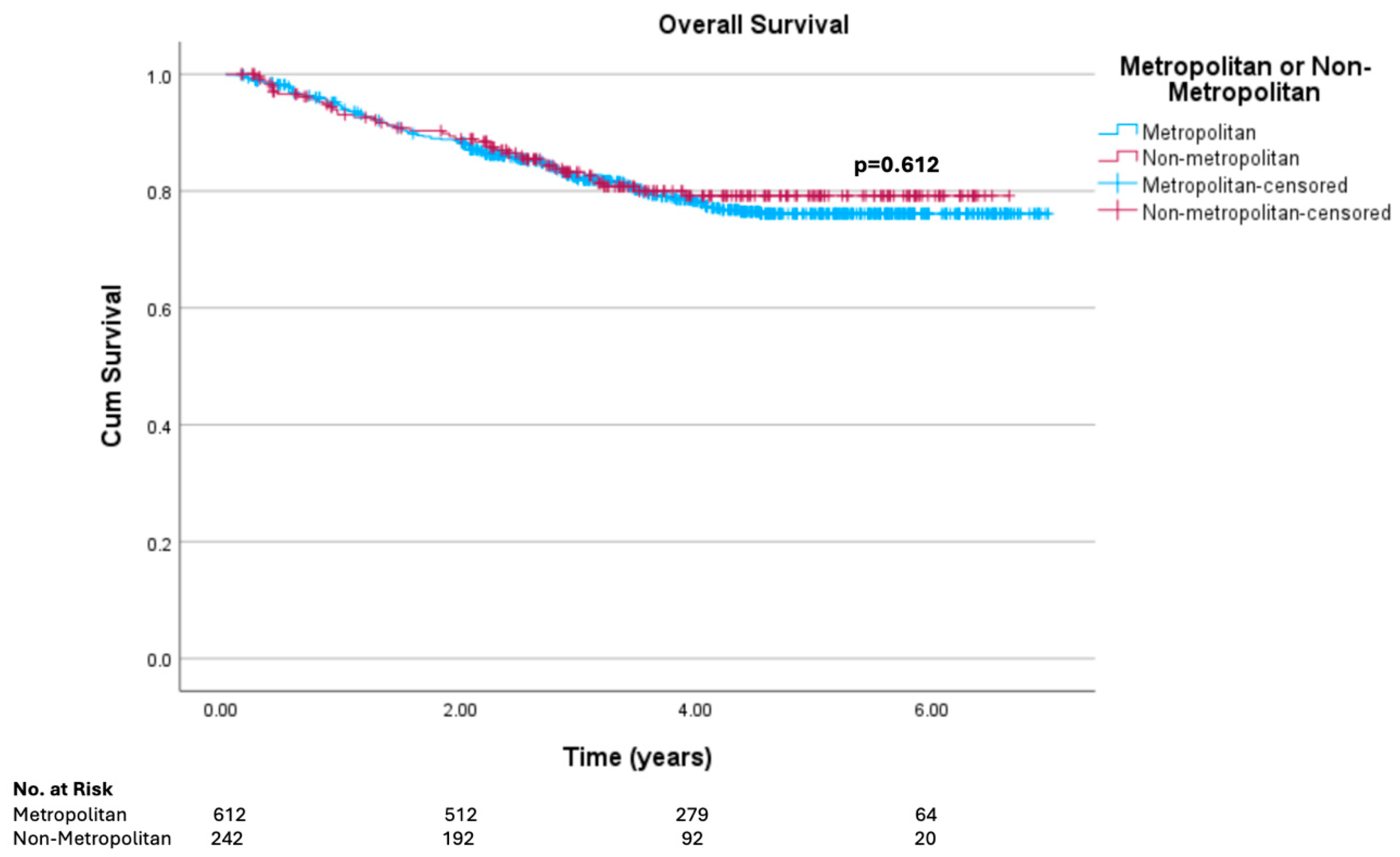
Unadjusted Kaplan–Meier survival analysis similarly demonstrated comparable survival between metropolitan and non-metropolitan residence (log-rank test p = 0.612) over the entire course of follow-up, with survival curves presented in Figure 2.
Sensitivity analysis, using the same Cox proportional hazards analysis but stratifying for each MM classification individually, similarly found no significant differences in survival based on residence. Results are presented in Supplementary Figure S1 and Supplementary Table S1.

4. Discussion

Disparities in outcomes between non-metropolitan and metropolitan residing Australians with HCC represent a significant public health challenge. Similar geographic inequities have been observed in China [22], the USA [23,24], and the UK [25]. There is limited research focusing on delineating the causes of these disparities, with some postulated contributors including the following: later stage at diagnosis mediated by poorer surveillance uptake [26], differential access to post-treatment imaging surveillance to detect tumour recurrence [27], limited availability of aetiologic therapies such as direct acting antivirals for hepatitis C [28], and reduced access to tertiary-level care [26]. Our study is the first to show, in a real-world Australian context, that if only early-stage patients managed at a tertiary centre are considered, these disparities are not observed. Both groups in our study have similar unadjusted overall survival and all-cause mortality after adjusting for key clinical covariates. We believe that this lends significant weight to the notion that the primary reasons for the observed survival gap between metropolitan-living and non-metropolitan-living Australian patients relate to stage at diagnosis and access to tertiary care. This may be true internationally, and we encourage investigators from other nations to replicate our study.
Those living in rural and remote communities, especially First Nations Australians, are known to face systemic barriers to accessing HCC surveillance [29,30], reducing the likelihood that HCC will be diagnosed at an early-stage, where curative therapy is an option. HCC surveillance in Australia involves abdominal ultrasonography with or without serum alpha-fetoprotein testing and is clinician-driven, as no centralised surveillance program currently exists. HCC surveillance uptake in Australian primary care has historically been poor, with one study reporting less than a third of chronic hepatitis B patients receiving appropriate surveillance [31], in contrast to those receiving specialist care, where rates of uptake have been observed to be in excess of 80% [32]. Furthermore, patients at risk for HCC, particularly those with non-viral cirrhosis, often go entirely unrecognised, with one study demonstrating that up to a quarter of patients with HCC are only diagnosed with cirrhosis at the time of HCC diagnosis [33]. Improving identification of those at-risk for HCC and access to HCC surveillance across Australia and similar other multicultural countries is a clear and urgent need, and there has been a recent call for an increase in resources to identify those at-risk and for a national centralised surveillance program [20].
Furthermore, limited access to tertiary healthcare centres, compounded by socioeconomic, cultural, and ethnic factors, may further impede the delivery of curative therapy in otherwise eligible patients. Current referral pathways for those with a new diagnosis of HCC are not currently standardised across Australia, particularly in the more populous states of Victoria and New South Wales, and are also clinician-dependent. Inherent barriers, such as travel time and distrust of non-local services, continue to pose a significant impediment to access to care [34]. Streamlining of referral pathways and integration of local rural and remote services with metropolitan tertiary care, and utilising existing telehealth technologies, could reasonably be expected to enhance access to improved diagnostic accuracy of HCC and to delivery of curative therapies, such as liver resection, percutaneous ablation, and transplantation.
While mortality did not differ between non-metropolitan and metropolitan patients in our retrospective cohort study, we found that large tumour size, increasing Child–Pugh Score, and increasing Charlson Comorbidity Index were clearly significant predictors of mortality, while management at a transplant centre (as compared to a non-transplant centre) was protective. These findings are in keeping with conventionally accepted prognostication in HCC, with tumour size and Child–Pugh Score forming two of the most important factors in the BCLC staging system [5]. Charlson Comorbidity Index, which captures age and non-liver comorbidities, is similarly well-validated in prognostication across a wide range of conditions and populations [35], including in liver disease [36,37]. Management at a transplant centre (as compared to a non-transplant centre) was protective against mortality, as previously observed [17], which may be confounded by selection bias given the retrospective nature of the study.
Our study demonstrating similar survival outcomes does have important limitations. Firstly, the retrospective design raises the possibility of information bias and direct and indirect selection bias in assessing differences in survival. We have attempted to mitigate this by using a multivariable model, but certain key clinical covariates, such as ongoing alcohol intake or adherence to medical therapy, have been unaccounted for. Secondly, statistical power is limited by the duration of follow-up and cohort size. Survival differences may have been observed with greater patient numbers or a longer duration of follow-up, particularly as non-metropolitan patients could be expected to receive systematically different longer-term care, such as future reduced surveillance uptake, which could theoretically delay the detection of late tumour recurrence and negatively affect long-term survival. Thirdly, the residential postcode was recorded at the time of data entry, and patients who moved residence between diagnosis and data entry may not have been captured, raising the possibility of misclassification bias. We would expect that only a small minority of patients may have moved during the study period, and it would be unlikely for this to have significantly affected the results.
Importantly, our results are specific to a cohort of patients with early-stage disease at diagnosis who were referred to a metropolitan tertiary centre for management and, therefore, should not be generalised to all non-metropolitan patients with HCC, many of whom are diagnosed with more advanced disease or have limited access to tertiary care. Regional and rural Australian patients with HCC managed at non-metropolitan centres are not represented by the unique cohort described in our study, and all available evidence suggests that they face inferior survival outcomes compared to those living and managed in metropolitan areas. The similarity in survival outcomes observed in our study suggests that early diagnosis and referral to expert multidisciplinary care are the two key factors needed in non-metropolitan cohorts to achieve parity with metropolitan patients in HCC outcomes.
While we believe that our study provides compelling indirect evidence for stage at diagnosis and access to tertiary care as the likely explanations for the survival gap between metropolitan and non-metropolitan patients, direct evidence should be sought prospectively to definitively assess this, including direct comparisons between metropolitan and non-metropolitan by BCLC stage and by assessing differences in care between those referred to tertiary centres and those not referred, which was not possible in our cohort.

5. Conclusions

We believe that our findings underscore the importance of surveillance uptake and streamlined referral pathways in maximising the outcomes of patients with HCC, particularly those living in non-metropolitan areas in Australia and other similar large nations. Community-based models of care, ideally within the framework of a national centralised screening program, to improve identification of patients at risk for HCC and encourage adherence with semi-annual ultrasound surveillance, are urgently needed and should be expected to reduce the gap in outcomes observed between Australians living in metropolitan and non-metropolitan areas.

Supplementary Materials

The following supporting information can be downloaded at: https://www.mdpi.com/article/10.3390/livers6010002/s1, Figure S1: Cox proportional hazards regression—cumulative risk of all-cause mortality over time by individual modified monash model classification; Table S1: Predictors of all-cause mortality by cox proportional hazards regression—residence by individual modified monash model classification; File S1: Minimum Dataset.

Author Contributions

S.I.S., M.S., A.M. (Avik Majumdar), A.D., Z.V., J.H. (Jacinta Holmes), A.J.T., J.H. (Jessica Howell), S.B. (Steven Bollipo), A.N., R.S., S.R., S.S. (Siddharth Sood), E.L., E.G., J.Z. and S.K.R. contributed to conceptualisation, methodology, and project administration; D.C.-C., J.L., M.J.T., W.K., A.M. (Ammar Majeed), S.I.S., C.D., N.L.N., K.C., K.B., J.H.A., S.B. (Susan Byers), D.S., K.G., D.P., S.B. (Steven Bollipo), A.N., N.B., S.S. (Suresh Sharma), M.J., S.R., S.S. (Siddharth Sood), N.H. and J.H. (James Haridy) contributed to data curation; J.A. performed the formal analyses and prepared the original draft; all authors made important contributions to subsequent review and editing. All authors have read and agreed to the published version of the manuscript.

Funding

This research received no external funding.

Institutional Review Board Statement

The study was conducted in accordance with the Declaration of Helsinki and was approved by the Human Research Ethics Committee of Monash Health (HREC Reference Number: HREC/80727/MonH−2022−302788(v3), 23 February 2022).

Informed Consent Statement

Waiver of consent was sought, with all patient data entered in a de-identified form. Patient consent was waived by the Human Research Ethics Committee of Monash Health for the following reasons: The study did not involve an intervention, it was low-risk in terms of data collection and participant burden, we did not anticipate any risk of harm associated with collecting de-identified data, a significant proportion of the population targeted for recruitment were likely to be unwell or deceased at the time of inclusion in the study, and there was sufficient protection of patient privacy as the data is de-identified.

Data Availability Statement

The data presented in this study are available on request from the corresponding author due to privacy restrictions.

Conflicts of Interest

The authors declare no conflicts of interest.

References

  1. Anonymous. 2023 Cancer Data in Australia; Canberra: AIHW. Available online: https://www.aihw.gov.au/reports/cancer/cancer-data-in-australia/contents/overview#rare (accessed on 10 June 2025).
  2. Wakerman, J.; Humphreys, J.S.; Wells, R.; Kuipers, P.; Entwistle, P.; Jones, J. Primary health care delivery models in rural and remote Australia: A systematic review. BMC Health Serv. Res. 2008, 8, 276. [Google Scholar] [CrossRef]
  3. Taye, B.W.; Clark, P.J.; Hartel, G.; E Powell, E.; Valery, P.C. Remoteness of residence predicts tumor stage, receipt of treatment, and mortality in patients with hepatocellular carcinoma. JGH Open 2021, 5, 754–762. [Google Scholar] [CrossRef]
  4. Nguyen, A.L.T.; Blizzard, C.L.; Yee, K.C.; Palmer, A.J.; de Graaff, B. Survival of primary liver cancer for people from culturally and linguistically diverse backgrounds in Australia. Cancer Epidemiol. 2022, 81, 102252. [Google Scholar] [CrossRef]
  5. Reig, M.; Sanduzzi-Zamparelli, M.; Forner, A.; Rimola, J.; Ferrer-Fàbrega, J.; Burrel, M.; Garcia-Criado, Á.; Díaz, A.; Llarch, N.; Iserte, G.; et al. BCLC strategy for prognosis prediction and treatment recommendation: The 2022 update. J. Hepatol. 2022, 76, 681–693. [Google Scholar] [CrossRef]
  6. Hui, S.; Bell, S.; Le, S.; Dev, A. Hepatocellular carcinoma surveillance in Australia: Current and future perspectives. Med. J. Aust. 2023, 219, 432–438. [Google Scholar] [CrossRef]
  7. Singal, A.G.; Zhang, E.; Narasimman, M.; Rich, N.E.; Waljee, A.K.; Hoshida, Y.; Yang, J.D.; Reig, M.; Cabibbo, G.; Nahon, P.; et al. HCC surveillance improves early detection, curative treatment receipt, and survival in patients with cirrhosis: A meta-analysis. J. Hepatol. 2022, 77, 128–139. [Google Scholar] [CrossRef]
  8. El Dahan, K.S.; Reczek, A.; Daher, D.; Rich, N.E.; Yang, J.D.; Hsiehchen, D.; Zhu, H.; Patel, M.S.; Molano, M.d.P.B.; Sanford, N.; et al. Multidisciplinary care for patients with HCC: A systematic review and meta-analysis. Hepatol. Commun. 2023, 7, e0143. [Google Scholar] [CrossRef] [PubMed]
  9. Asrani, S.K.; Ghabril, M.S.; Kuo, A.; Merriman, R.B.; Morgan, T.; Parikh, N.D.; Ovchinsky, N.; Kanwal, F.; Volk, M.L.; Ho, C.; et al. Quality measures in HCC care by the Practice Metrics Committee of the American Association for the Study of Liver Diseases. Hepatology 2022, 75, 1289–1299. [Google Scholar] [CrossRef]
  10. Maharaj, A.D.; Lubel, J.; Lam, E.; Clark, P.J.; Duncan, O.; George, J.; Jeffrey, G.P.; Lipton, L.; Liu, H.; McCaughan, G.; et al. Monitoring Quality of Care in Hepatocellular Carcinoma: A Modified Delphi Consensus. Hepatology 2022, 76, 3260–3271. [Google Scholar] [CrossRef] [PubMed]
  11. Abdelmalak, J.; Lubel, J.S.; Sinclair, M.; Majeed, A.; Kemp, W.; Roberts, S.K. Quality of care in hepatocellular carcinoma-A critical review. Hepatol. Commun. 2025, 9, e0595. [Google Scholar] [CrossRef] [PubMed]
  12. European Association for the Study of the Liver. EASL Clinical Practice Guidelines: Management of hepatocellular carcinoma. J. Hepatol. 2018, 69, 182–236. [Google Scholar] [CrossRef]
  13. Omata, M.; Cheng, A.-L.; Kokudo, N.; Kudo, M.; Lee, J.M.; Jia, J.; Tateishi, R.; Han, K.-H.; Chawla, Y.K.; Shiina, S.; et al. Asia-Pacific clinical practice guidelines on the management of hepatocellular carcinoma: A 2017 update. Hepatol. Int. 2017, 11, 317–370. [Google Scholar] [CrossRef]
  14. Singal, A.G.; Llovet, J.M.; Yarchoan, M.; Mehta, N.; Heimbach, J.K.; Dawson, L.A.; Jou, J.H.; Kulik, L.M.; Agopian, V.G.; Marrero, J.A.; et al. AASLD Practice Guidance on prevention, diagnosis, and treatment of hepatocellular carcinoma. Hepatology 2023, 78, 1922–1965. [Google Scholar] [CrossRef]
  15. Howell, J.; Combo, T.; Binks, P.; Bragg, K.; Bukulatjpi, S.; Campbell, K.; Clark, P.J.; Carroll, M.; Davies, J.; de Santis, T.; et al. Overcoming disparities in hepatocellular carcinoma outcomes in First Nations Australians: A strategic plan for action. Med. J. Aust. 2024, 221, 230–235. [Google Scholar] [CrossRef]
  16. Baazeem, M.; Kruger, E.; Tennant, M. Current status of tertiary healthcare services and its accessibility in rural and remote Australia: A systematic review. Health Sci. Rev. 2024, 11, 100158. [Google Scholar] [CrossRef]
  17. Abdelmalak, J.; Strasser, S.I.; Ngu, N.L.; Dennis, C.; Sinclair, M.; Majumdar, A.; Collins, K.; Bateman, K.; Dev, A.; Abasszade, J.H.; et al. Different Patterns of Care and Survival Outcomes in Transplant-Centre Managed Patients with Early-Stage HCC: Real-World Data from an Australian Multi-Centre Cohort Study. Cancers 2024, 16, 1966. [Google Scholar] [CrossRef] [PubMed]
  18. Abdelmalak, J.; Strasser, S.I.; Ngu, N.L.; Dennis, C.; Sinclair, M.; Majumdar, A.; Collins, K.; Bateman, K.; Dev, A.; Abasszade, J.H.; et al. Initial Trans-Arterial Chemo-Embolisation (TACE) Is Associated with Similar Survival Outcomes as Compared to Upfront Percutaneous Ablation Allowing for Follow-Up Treatment in Those with Single Hepatocellular Carcinoma (HCC) ≤ 3 cm: Results of a Real-World Propensity-Matched Multi-Centre Australian Cohort Study. Cancers 2024, 16, 3010. [Google Scholar]
  19. Abdelmalak, J.; Strasser, S.I.; Ngu, N.; Dennis, C.; Sinclair, M.; Majumdar, A.; Collins, K.; Bateman, K.; Dev, A.; Abasszade, J.H.; et al. Improved Survival Outcomes with Surgical Resection Compared to Ablative Therapy in Early-Stage HCC: A Large, Real-World, Propensity-Matched, Multi-Centre, Australian Cohort Study. Cancers 2023, 15, 5741. [Google Scholar] [CrossRef]
  20. Howell, J.; Emery, J.D.; Roberts, S.; Thompson, A.J.; Ng, M.; George, J.; A Leggett, B.; Tse, E.; Nguyen, B.; Combo, T.; et al. Opportunities to improve surveillance of hepatocellular carcinoma in Australia. Med. J. Aust. 2025, 223, 61–67. [Google Scholar] [CrossRef] [PubMed]
  21. Versace, V.L.; Skinner, T.C.; Bourke, L.; Harvey, P.; Barnett, T. National analysis of the Modified Monash Model, population distribution and a socio-economic index to inform rural health workforce planning. Aust. J. Rural. Health 2021, 29, 801–810. [Google Scholar] [CrossRef]
  22. Zeng, H.; Chen, W.; Zheng, R.; Zhang, S.; Ji, J.S.; Zou, X.; Xia, C.; Sun, K.; Yang, Z.; Li, H.; et al. Changing cancer survival in China during 2003-15: A pooled analysis of 17 population-based cancer registries. Lancet Glob. Health 2018, 6, e555–e567. [Google Scholar] [CrossRef]
  23. Hester, C.A.; Karbhari, N.; Rich, N.E.; Augustine, M.; Mansour, J.C.; Polanco, P.M.; Porembka, M.R.; Wang, S.C.; Zeh, H.J.; Singal, A.G.; et al. Effect of fragmentation of cancer care on treatment use and survival in hepatocellular carcinoma. Cancer 2019, 125, 3428–3436. [Google Scholar] [CrossRef]
  24. Ajayi, F.; Jan, J.; Singal, A.G.; Rich, N.E. Racial and Sex Disparities in Hepatocellular Carcinoma in the USA. Curr. Hepatol. Rep. 2020, 19, 462–469. [Google Scholar] [CrossRef]
  25. Mysko, C.; Landi, S.; Purssell, H.; Allen, A.J.; Prince, M.; Lindsay, G.; Rodrigues, S.; Irvine, J.; Street, O.; Gahloth, D.; et al. Health inequalities in hepatocellular carcinoma surveillance, diagnosis, treatment, and survival in the United Kingdom: A scoping review. BJC Rep. 2025, 3, 13. [Google Scholar] [CrossRef] [PubMed]
  26. Wong, R.J.; Kim, D.; Ahmed, A.; Singal, A.K. Patients with hepatocellular carcinoma from more rural and lower-income households have more advanced tumor stage at diagnosis and significantly higher mortality. Cancer 2021, 127, 45–55. [Google Scholar] [CrossRef] [PubMed]
  27. Chin, A.; Ismail, A.G.M.; Fan, W.; Cheng, W.; Kontorinis, N.; Chin, J.; Kong, J.; Doyle, A.; Mitchell, T. Reduced survival for rural patients with hepatocellular carcinoma within a tertiary hospital network: Treatment equality is not enough. Intern. Med. J. 2025, 55, 767–776. [Google Scholar] [CrossRef] [PubMed]
  28. Moon, A.M.; Lupu, G.V.; Green, E.W.; Deutsch-Link, S.; Henderson, L.M.; Sanoff, H.K.; Yanagihara, T.K.; Kokabi, N.; Mauro, D.M.; Barritt, A.S. Rural-Urban Disparities in Hepatocellular Carcinoma Deaths Are Driven by Hepatitis C-Related Hepatocellular Carcinoma. Am J Gastroenterol. 2025. [Google Scholar] [CrossRef]
  29. Lubel, J.S.; Roberts, S.K.; Howell, J.; Ward, J.; Shackel, N.A. Current issues in the prevalence, diagnosis and management of hepatocellular carcinoma in Australia. Intern. Med. J. 2021, 51, 181–188. [Google Scholar] [CrossRef]
  30. Wigg, A.J.; Narayana, S.K.; Hartel, G.; Medlin, L.; Pratt, G.; Powell, E.E.; Clark, P.; Davies, J.; Campbell, K.; Toombs, M.; et al. Hepatocellular carcinoma amongst Aboriginal and Torres Strait Islander peoples of Australia. E Clin. Med. 2021, 36, 100919. [Google Scholar] [CrossRef]
  31. Allard, N.; Cabrié, T.; Wheeler, E.; Richmond, J.; MacLachlan, J.; Emery, J.; Furler, J.; Cowie, B. The challenge of liver cancer surveillance in general practice: Do recall and reminder systems hold the answer? Aust. Fam. Physician 2017, 46, 859–864. [Google Scholar]
  32. Low, E.S.; Apostolov, R.; Wong, D.; Lin, S.; Kutaiba, N.; A Grace, J.; Sinclair, M. Hepatocellular carcinoma surveillance and quantile regression for determinants of underutilisation in at-risk Australian patients. World J. Gastrointest. Oncol. 2021, 13, 2149–2160. [Google Scholar] [CrossRef]
  33. Simmons, O.L.; Feng, Y.; Parikh, N.D.; Singal, A.G. Primary Care Provider Practice Patterns and Barriers to Hepatocellular Carcinoma Surveillance. Clin. Gastroenterol. Hepatol. 2019, 17, 766–773. [Google Scholar] [CrossRef]
  34. Gunn, K.M.; Weeks, M.; Spronk, K.J.J.; Fletcher, C.; Wilson, C. Caring for someone with cancer in rural Australia. Support Care Cancer 2022, 30, 4857–4865. [Google Scholar] [CrossRef]
  35. Charlson, M.E.; Carrozzino, D.; Guidi, J.; Patierno, C. Charlson Comorbidity Index: A Critical Review of Clinimetric Properties. Psychother. Psychosom. 2022, 91, 8–35. [Google Scholar] [CrossRef] [PubMed]
  36. Volk, M.L.; Hernandez, J.C.; Lok, A.S.; Marrero, J.A. Modified Charlson comorbidity index for predicting survival after liver transplantation. Liver Transpl. 2007, 13, 1515–1520. [Google Scholar] [CrossRef] [PubMed]
  37. Coppel, S.; Mathur, K.; Ekser, B.; Patidar, K.R.; Orman, E.; Desai, A.P.; Vilar-Gomez, E.; Kubal, C.; Chalasani, N.; Nephew, L.; et al. Extra-hepatic comorbidity burden significantly increases 90-day mortality in patients with cirrhosis and high model for endstage liver disease. BMC Gastroenterol. 2020, 20, 302. [Google Scholar] [CrossRef] [PubMed]
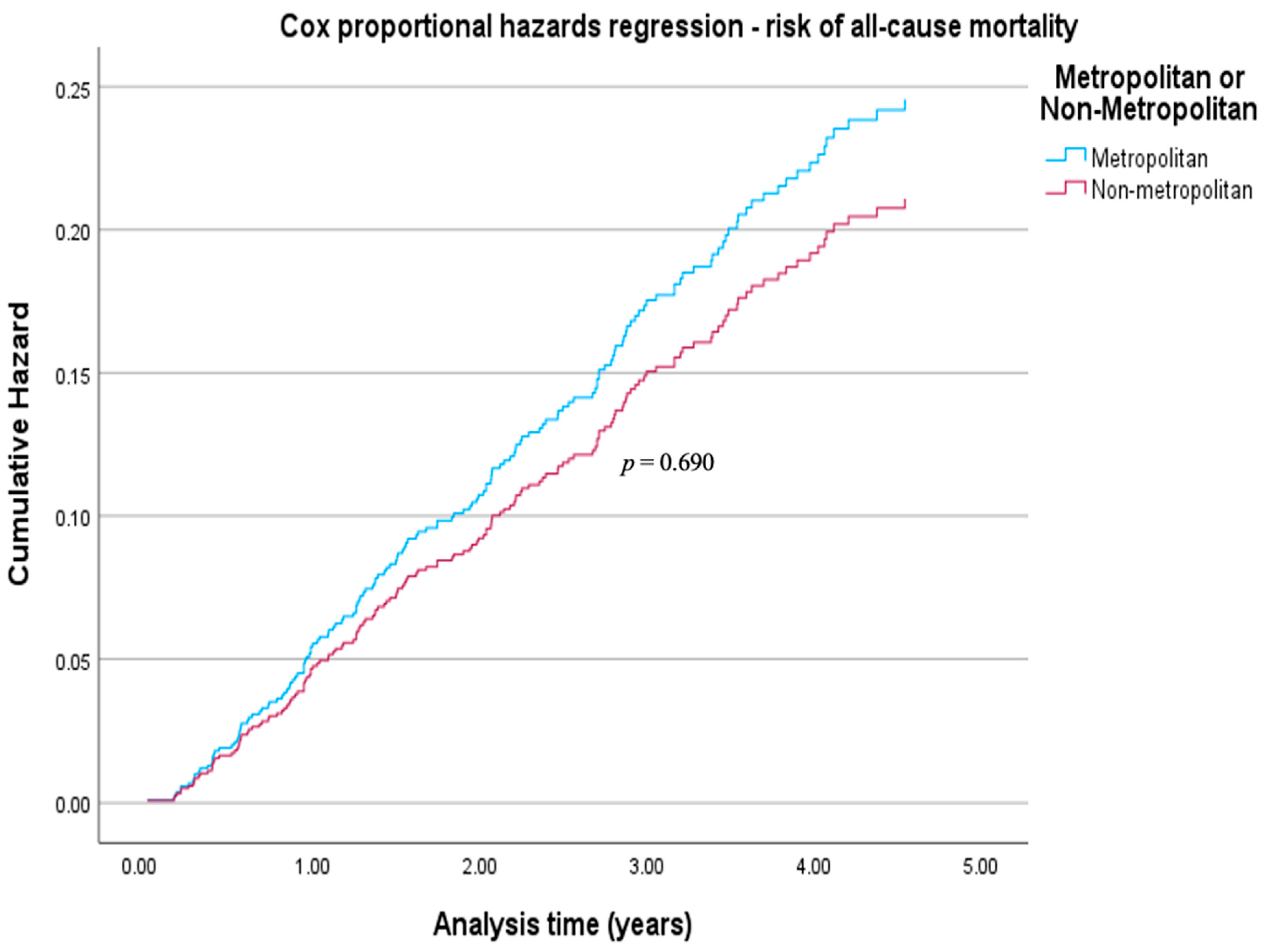
Figure 1. Cox proportional hazards regression—cumulative risk of all-cause mortality over time by metropolitan vs. non-metropolitan residence.
Livers 06 00002 g001
Figure 2. Kaplan–Meier survival analysis—by metropolitan vs. non-metropolitan residence.
Livers 06 00002 g002
Table 1. Patient characteristics in metropolitan and non-metropolitan cohorts.
Metropolitan
n = 612
Non-Metropolitan
n = 242
p-Value
Age at diagnosis64.7 ± 11.564.4 ± 9.40.759
Sex 0.165
Female124 (20%)39 (16%)
Aboriginal and Torres Strait Islander status 0.001
Not documented16 (3%)14 (6%)
Yes10 (2%)12 (5%)
No586 (96%)216 (89%)
Modified Monash Model Classification -
MM1 Metropolitan612 (100%)-
MM2 Regional centre-51 (21%)
MM3 Large rural town-34 (14%)
MM4 Medium rural town-23 (10%)
MM5 Small rural town-129 (53%)
MM6 Remote community-2 (1%)
MM7 Very remote community-3 (1%)
Aetiology <0.001
Alcohol76 (12%)48 (20%)
HBV99 (16%)6 (2%)
HCV100 (16%)37 (15%)
MASLD81 (13%)31 (13%)
Other32 (5%)15 (6%)
metALD36 (6%)19 (8%)
HBV/HCV23 (4%)7 (3%)
HCV + SLD132 (22%)77 (32%)
HBV + SLD33 (5%)2 (1%)
Smoking 0.077
Yes158 (26%)77 (32%)
CCI4 (3 to 6)5 (3 to 6)0.086
Cirrhosis 0.009
Yes502 (82%)216 (89%)
Platelet count (×109/L)136 (89 to 189.5)119 (80 to 158)0.001
Child–Pugh Score 0.709
5335 (55%)134 (55%)
6166 (27%)57 (24%)
763 (10%)27 (11%)
827 (4%)15 (6%)
921 (3%)9 (4%)
Diagnosed due to surveillance 0.017
Yes495 (82%)175 (74%)
Tumour Burden 0.520
Single lesion ≤ 2 cm187 (31%)66 (27%)
Single lesion > 2 cm, ≤3 cm153 (25%)61 (25%)
Single lesion > 3 cm, ≤5 cm99 (16%)36 (15%)
Single lesion > 5 cm58 (9%)21 (9%)
Multinodular, ≤3 nodules, all ≤3 cm115 (19%)58 (24%)
Managing Centre <0.001
Transplant Centre273 (45%)159 (66%)
Initial Treatment 0.008
Resection146 (24%)39 (16%)
Ablation175 (29%)70 (29%)
TACE241 (39%)121 (50%)
Other50 (8%)12 (5%)
Transplantation during follow-up period 0.752
Yes31 (5%)11 (5%)
HBV, hepatitis B virus; HCV, hepatitis C virus; MASLD, metabolic associated steatotic liver disease; metALD, metabolic dysfunction and alcohol-associated liver disease; SLD, steatotic liver disease; CCI, Charlson Comorbidity Index; TACE, trans-arterial chemo-embolisation.
Table 2. Cox proportional hazards model—risk of all-cause mortality.
Adjusted HR95% CIp-Value
Residence
MetropolitanReference--
Non-metropolitan0.930.64 to 1.340.690
Age1.010.99 to 1.020.574
Sex
MaleReference--
Female0.660.42 to 1.030.067
Diabetes
NoReference--
Yes0.920.65 to 1.320.662
Tumour Burden
Single ≤ 2 cmReference--
Single > 2 cm, ≤3 cm1.260.82 to 1.950.293
Single > 3 cm, ≤5 cm1.410.87 to 2.300.166
Single > 5 cm2.151.17 to 3.980.014
Multinodular, ≤3 cm1.150.73 to 1.810.551
Child–Pugh Score1.421.25 to 1.62<0.001
Cirrhosis
NoReference--
Yes1.330.74 to 2.390.335
CCI1.181.08 to 1.28<0.001
Platelet count11.00 to 1.000.426
Alcohol
NoReference--
Yes0.90.63 to 1.280.548
HBV
NoReference--
Yes0.930.60 to 1.440.740
Smoking -
NoReference-0.819
Yes0.960.65 to 1.40
Managing Centre
Non-transplant centreReference--
Transplant centre0.680.49 to 0.950.023
Disclaimer/Publisher’s Note: The statements, opinions and data contained in all publications are solely those of the individual author(s) and contributor(s) and not of MDPI and/or the editor(s). MDPI and/or the editor(s) disclaim responsibility for any injury to people or property resulting from any ideas, methods, instructions or products referred to in the content.