
Article

Gender Differences in Healthy Eating Index as Informed by the Awareness of Diagnosis of Metabolic Dysfunction-Associated Steatotic Liver Disease

1
Department of Social, Behavioral, and Population Sciences, Tulane University Celia Scott Weatherhead School of Public Health and Tropical Medicine, 1440 Canal Street, New Orleans, LA 70112, USA
2
Department of Medicine, Tulane University School of Medicine, 1430 Tulane Ave, New Orleans, LA 70112, USA
3
Division of Gastroenterology and Hepatology, Department of Medicine, Indiana University School of Medicine, 702 Rotary Circle, Indianapolis, IN 46202, USA
4
Roudebush Veterans Administration Medical Center, 1481 W. 10th Street, Indianapolis, IN 46202, USA
5
Department of Pathology, Tulane University School of Medicine, 1430 Tulane Ave, New Orleans, LA 70112, USA
6
Department of Behavioral and Community Health Sciences, School of Public Health, Louisiana State University Health Sciences Center, 2020 Gravier Street, Room 213, New Orleans, LA 70112, USA
7
Division of Gastroenterology and Hepatology, Johns Hopkins University School of Medicine, 1830 East Monument Street, 4th Floor, Baltimore, MD 21287, USA
8
Division of Addiction Medicine, Johns Hopkins University School of Medicine, 1830 East Monument Street, 4th Floor, Baltimore, MD 21287, USA
9
Division of Gastroenterology and Hepatology, Tulane University School of Medicine, 131 S. Robertson St., New Orleans, LA 70112, USA
*
Author to whom correspondence should be addressed.
These authors contributed equally to this work.
Livers 2025, 5(4), 61; https://doi.org/10.3390/livers5040061
Submission received: 26 August 2025 / Revised: 22 October 2025 / Accepted: 12 November 2025 / Published: 28 November 2025

Abstract

Background/Objectives: Dietary quality is a driver of metabolic dysfunction-associated steatotic liver disease (MASLD). Men and women often have different levels of adherence to medical advice, but the effect of gender on adherence to dietary advice as a function of awareness of MASLD is understudied. We aim to investigate the differences in diet quality between men and women who are aware of their diagnosis of MASLD compared to their undiagnosed counterparts. Methods: We utilized the National Health and Nutrition Examination Survey 2017–2020 to identify a nationally representative sample of subjects with MASLD, 127 of whom reported a diagnosis of MASLD (diagnosed MASLD), and 1703 of whom did not report an existing diagnosis of MASLD but met criteria of the disease based on vibration-controlled transient elastography results and cardiometabolic criteria (undiagnosed MASLD). Results: In a gender-stratified analysis of diet quality as a function of reported MASLD diagnosis, women with diagnosed MASLD were more likely than women with undiagnosed MASLD to consume less added sugar and more total and whole fruits. Women with diagnosed MASLD had a 3.06 higher healthy eating index score than undiagnosed women, after adjusting for confounders such as demographics, comorbidities, lifestyle behaviors, and metabolic risk factors. In men, total diet quality did not differ based on awareness of MASLD diagnosis. Conclusions: Women with diagnosed MASLD have superior diets compared to their undiagnosed counterparts. Gender-specific approaches to counseling and prospective studies that investigate causes of gender-driven differences in dietary behavior in the context of MASLD are needed.

1. Introduction

Metabolic dysfunction-associated steatotic liver disease (MASLD) is emerging as a significant cause of liver-related morbidity and mortality in the United States [1,2]. By 2030, the burden of liver disease due to MASLD is projected to rise to 100.9 million cases [3]. This condition is associated with metabolic dysfunction, including insulin resistance, central obesity, and dyslipidemia [4,5]. Nearly 20% of patients with MASH eventually progress to cirrhosis [6]. In the US, the prevalence of MASLD is estimated to be around 25–30% [7,8,9]. Though MASLD is more prevalent in men, the risk of progressing to fibrosis is greater in women with MASLD and they have a significantly higher prevalence of cardiovascular-related mortality and all-cause mortality than their male counterparts [5,6,8,9,10].
While genetic polymorphisms may increase susceptibility to developing MASLD, modifiable metabolic traits are the primary drivers of the disease [11]. Lifestyle interventions, particularly dietary changes and weight loss, remain central to MASLD treatment [5]. In overweight patients with MASLD, weight loss leads to lower hepatic steatosis and fibrosis in a dose-dependent manner, and most guidelines recommend weight loss through a hypocaloric diet [5,12]. There is no single recommended diet specifically for MASLD, but general dietary guidelines include reducing consumption of saturated fats, carbohydrates, and sugary drinks, while increasing fiber and unsaturated fats [13,14].
A healthy diet is crucial for preventing the progression of MASLD. There is growing interest in understanding gender differences in medical adherence, which may help guide gender-specific interventions in the future. For instance, in cardiovascular disease, female gender has been linked to decreased compliance with medications and lifestyle changes [15]. However, in other disease states that mandate strict dietary guidelines such as those necessary for managing celiac disease, diabetes or heart failure, women have shown greater adherence than men [16,17,18]. This variability suggests that gender-driven differences in adherence may depend on the context.
The aim of our study is to investigate the differences in diet quality between men and women who are aware of their diagnosis of MASLD (diagnosed MASLD) compared to those who are unaware of their liver disease (undiagnosed MASLD). By examining these differences, we seek to determine whether a new clinical approach to MASLD is necessary to address gender disparities or dietary counseling. Our work could potentially inform more effective, gender-specific strategies for managing and treating MASLD, ultimately improving patient outcomes.

2. Materials and Methods

2.1. Study Population

The National Health and Nutrition Examination Survey (NHANES) combines interviews and physical examinations conducted biennially to investigate the health and nutritional status of US adults and children and provides a comprehensive dataset for various health-related studies [19]. This project was approved by the National Center for Health Statistics Research Ethics Review Board. Informed consent was obtained from each NHANES participant before data collection [20]. For this study, we utilized pre-pandemic NHANES cycle between January 2017 to March 2020. During this period, NHANES included vibration-controlled transient elastography (VCTE), which is an objective assessment of liver fibrosis through liver stiffness measurement and quantifies hepatic steatosis through the controlled attenuation parameter [21]. These measurements validated cutoffs that correlate with liver biopsy pathology in MASLD, providing a reliable and non-invasive method for assessing liver fibrosis [22]. Individuals aged ≥20 years with complete information on VCTE, alcohol consumption, BMI, metabolic components, and 24 h dietary recall were included. Women who self-reported being pregnant were excluded.

2.2. Determining Undiagnosed and Diagnosed MASLD

We defined participants with undiagnosed MASLD as those satisfying the MASLD criteria set forth by the 2023 multi-society Delphi consensus but who did not report a fatty liver diagnosis at the time of their survey [23]. The new nomenclature has been validated in an existing non-alcoholic fatty liver disease (NAFLD) cohort based on the old criteria, where 98% of registry patients with established NAFLD would also still be classified as MASLD [24]. In addition to being unaware of a fatty liver diagnosis, they met the following criteria: (i) Controlled Attenuation Parameter (CAP) ≥ 294 by VCTE, indicating hepatic steatosis; (ii) at least one of five of the cardiometabolic criteria used when diagnosing MASLD (see Supplemental Material S1); (iii) average daily alcohol use of <20 g for women and <30 g for men in the past 12 months, based on the alcohol use questionnaire (ALQ); (iv) alcohol consumption of <56 g per day for women and <70 g per day for men on 24 h dietary interviews. We identified those with diagnosed MASLD as those who reported fatty liver diagnosis (MCQ510a) and excluded individuals who consumed >56 g of alcohol per day for women and >70 g for men based on 24 h dietary interviews. The amount of alcohol use was calculated based on the definition of a standard drink (14 g of pure alcohol) by the National Institute on Alcohol Abuse and Alcoholism, multiplied by the daily average drinks consumed in the past 12 months [25]. Average daily alcohol use over 12 months was calculated from two questions in the ALQ documenting the average alcohol use frequency (ALQ121) and average number of alcoholic drinks per drinking session (ALQ130) [25,26]. Men who ever had ≥5 drinks per day and women who ever had ≥4 drinks per day almost every day in their life were excluded, as their fatty liver would likely be related to alcohol consumption (ALQ151) [23].

2.3. Healthy Eating Index-2015 Assessment

We utilized the Healthy Eating Index (HEI) to assess diet quality. The 2015 version of the HEI was developed through collaboration between the United States Department of Agriculture and the National Cancer institute. The tool standardizes diet quality by categorizing food groups into those that should be consumed in moderation (moderation components) and those that should form the majority of the diet (adequacy components), resulting in a score from 0 to 100, with 100 being the highest quality diet in accordance with the Dietary Guidelines for Americans [27] When the HEI-2015 was first developed in 1995, a score above 80 indicated a healthy diet, and this cut-off is often used today [26,28]. The HEI-2015 is a robustly validated score and has been correlated with mortality and chronic disease risk [29]. It is highly relevant to MASLD as a higher HEI score has been associated with a lower risk of the disease [14,30,31,32,33].
Detailed dietary intake information was collected to estimate the types and amounts of foods, water, and beverages consumed during two duplicate 24 h periods. This information was gathered by the United States Department of Agriculture (USDA) using the dietary component dataset known as What We Eat in America [28]. To compute the total HEI-2015 score and each component score, we utilized data from the USDA Food Patterns Equivalents Database (FPED) and the total energy intake from the two-day dietary interviews from NHANES [34]. The FPED translates dietary intake data into standardized food pattern components that align with the Dietary Guidelines for Americans. Please see Supplementary Material S2, for the detailed scoring criteria for each of the HEI-2015 components, specifying the specific amounts that correspond to different scores [35].

2.4. Demographic Characteristics

Demographic and socioeconomic information such as age, gender, race, and the family poverty-to-income ratio were collected by trained interviewers during in-home interviews using a Computer-Assisted Personal Interview system.

2.5. Lifestyle Patterns

Non- and light-alcohol drinkers were identified based on information collected in the ALQ section [25]. As outlined in our inclusion criteria, participants at most have light daily alcohol use of <20 g for women and <30 g for men [23]. These thresholds align with recent updates on MASLD nomenclature [23]. Participants’ smoking status was based on the Smoking Questionnaire (SMQ). Those who reported lifetime smoking of 100 cigarettes or more (SMQ020) and were currently smoking cigarettes (SMQ040) were classified as current cigarette smokers. Sufficient physical activity was defined according to the Physical Activity Questionnaire from NHANES and the guidelines provided by the World Health Organization for adults. Participants were classified as sufficient physical activity if they met one of three criteria: (i) engaged in ≥150 min of moderate-intensity aerobic physical activity per week, (ii) engaged in ≥75 min of vigorous-intensity aerobic physical activity per week, and (iii) achieved an equivalent combination of moderate- and vigorous-intensity activity per week [36]. Medical history information was obtained using the Medical Conditions Questionnaire (MCQ), which collected data on various health conditions experienced by participants. The information gathered from the MCQ provided insight into the participants’ medical history, allowing for the assessment of comorbidities and their potential impact on dietary behavior.

2.6. Metabolic Syndrome and BMI

Biochemistry information was obtained from laboratory datasets, and we identified metabolic syndrome using the National Cholesterol Education Program Adult Treatment Panel III criteria [37]. These components include large waist circumference, high blood pressure (BP), elevated triglyceride, low high-density lipoprotein cholesterol (HDL-C), and elevated blood glucose. The following criteria were used to define each abnormal component: (i) large waist circumference: ≥102 cm in men and ≥88 cm in women; (ii) elevated blood pressure: systolic BP ≥ 130 mm Hg or diastolic BP ≥ 85 mm Hg, or current use of antihypertensive medication; (iii) elevated triglycerides: ≥150 mg/dL or current use of medication for elevated triglycerides; (iv) low HDL-C: <40 mg/dL in men and <50 mg/dL in women, or current use of medication for low HDL-C; (v) elevated blood glucose with fasting glucose ≥ 100 mg/dL or current use of antidiabetic medication. Individuals who met any three of the five abnormal components were classified as having metabolic syndrome [37]. Individuals with a body mass index (BMI) < 25, 25 to 29.9, and ≥30 kg/m2 were defined as normal, overweight, and obese, respectively, according to the Centers for Disease Control and Prevention suggested cut-off value for adults [38].

2.7. Statistical Analysis

We presented weighted results as percentages for categorical variables and means ± standard error for continuous variables. To assess differences between undiagnosed and diagnosed groups, chi-square tests were utilized for categorical variables and univariable regression models were utilized for continuous variables.
Multivariable regression models were then performed to evaluate the association between MASLD diagnosis status and HEI score, stratified by gender. We constructed 3 models in sequence. Model 1 included demographic factors such as age, race, and poverty-to-income ratio as potential confounders. Building upon Model 1, the Model 2 additionally considered lifestyle patterns, including current smoking, alcohol use, physical activity, and medical comorbidities. In addition to the potential confounders of diet behavior in Models 1 and 2, Model 3 further adjusted for metabolic syndrome components. Potential confounders were selected according to (1) prior literature suggestion; (2) statistical significance in univariate analysis (p ≤ 0.05); and (3) ensuring robust model estimation. Survey-data modules were employed to adjust for the multistage sampling design, ensuring appropriate adjustments for unequal sampling probabilities. We conducted data management and statistical analyses using the Stata statistical package (StataCorp, College Station, TX, USA), version 17.

3. Results

The gender-stratified prevalence of diagnosed MASLD was 5.0% in men and 7.5% in women. Nationally, this represents approximately 72,568 men and 146,514 women who reported having a MASLD diagnosis. In men, the only significant difference between undiagnosed and diagnosed MASLD groups was the presence of medical conditions, which was higher in diagnosed men (89.8%) compared to undiagnosed men (65.5%) (p = 0.012). In contrast, several demographic and lifestyle factors were significantly different between women with undiagnosed and diagnosed MASLD. Women with diagnosed MASLD were more likely to be older, Mexican Americans or other Hispanics, non-smokers, and have medical conditions compared to women with undiagnosed MASLD (Ps ≤ 0.029).
A higher prevalence of elevated blood glucose was observed in both men and women in the diagnosed MASLD group compared to the undiagnosed MASLD group. Among men, 70.4% of those with diagnosed MASLD had elevated blood glucose compared to 48.0% in the undiagnosed MASLD group (p = 0.028). Similarly, among women, 67.6% of those with diagnosed MASLD had elevated blood glucose compared to 49.2% in the undiagnosed MASLD group (p = 0.006). No other differences in the prevalence of metabolic syndrome components were detected in either gender. VCTE data showed diagnosed women had significantly lower CAP compared to undiagnosed counterparts (292.9 vs. 335.6, p < 0.001), suggesting diagnosed women have less hepatic steatosis. Table 1 demonstrates a detailed distribution of sociodemographic, lifestyle factors, clinical examination of metabolic syndrome components, VCTE parameters, and BMI status among individuals with undiagnosed and diagnosed MASLD in each gender.
In terms of dietary quality, there was no significant difference in the total HEI score between men with diagnosed MASLD and men with undiagnosed MASLD. We only found that men with diagnosed MASLD consumed less refined grains than men with undiagnosed MASLD (7.1 ± 0.5 vs. 5.9 ± 0.2, p = 0.046). Among women, those with diagnosed MASLD had higher HEI scores compared to their undiagnosed counterparts. Specifically, women with diagnosed MASLD consumed less added sugar (7.8 ± 0.2 vs. 6.6 ± 0.2, p < 0.001), more total fruits (3.3 ± 0.3 vs. 2.0 ± 0.1, p < 0.001), and more whole fruits (3.3 ± 0.4 vs. 2.1 ± 0.1, p = 0.017) than women with undiagnosed MASLD. The total HEI score was also higher in women with diagnosed MASLD compared to those with undiagnosed MASLD (53.2 ± 1.3 vs. 48.7 ± 0.6, p = 0.003). Table 2 shows the gender-stratified distributions of each HEI score, total HEI scores, and food security between individuals with undiagnosed and diagnosed MASLD.
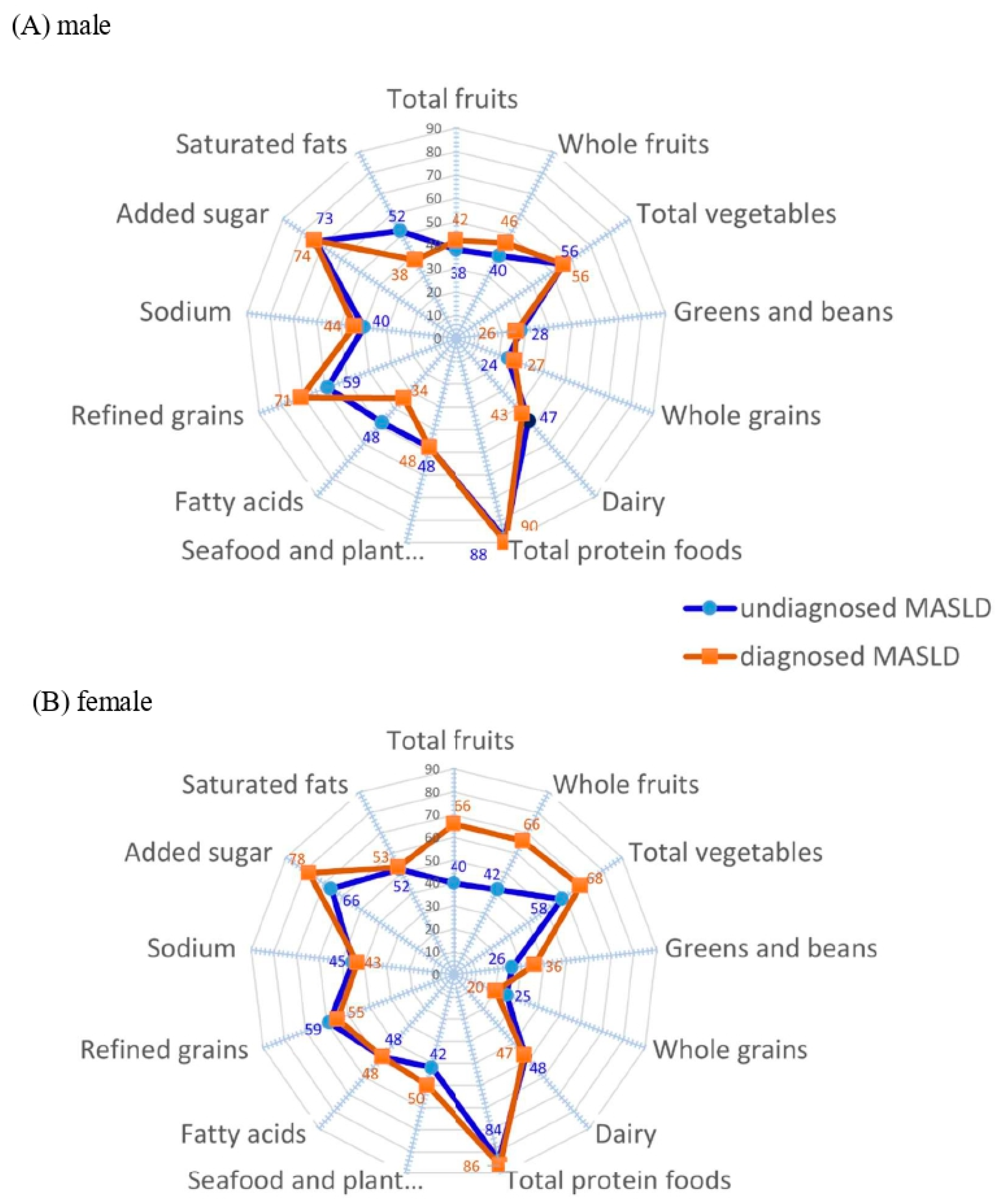
Figure 1A,B (displaying men and women, respectively) are radar plots showing visual comparisons of each component score as a percentage of maximum HEI component score possible.
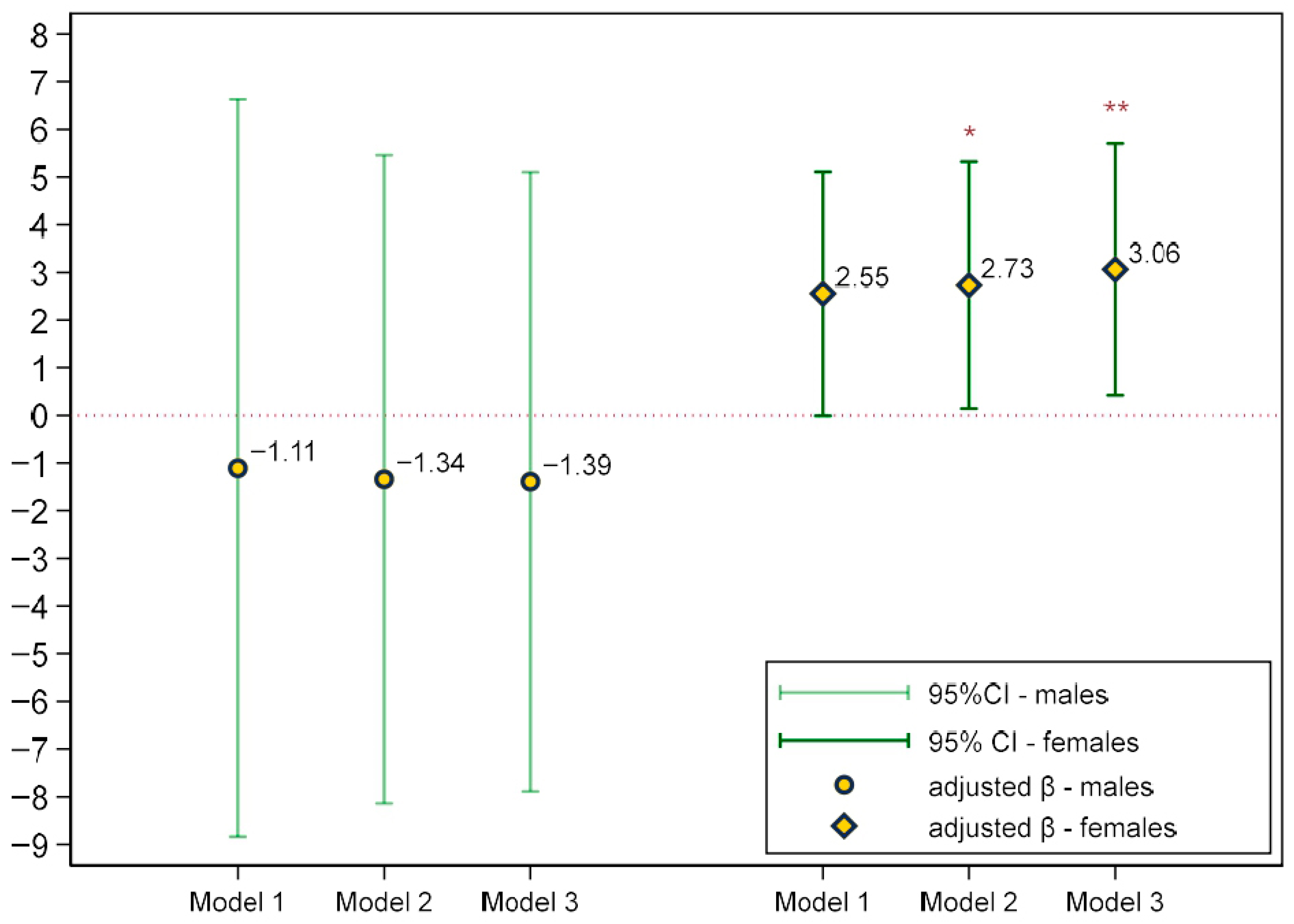
In our multivariable logistic regression analysis shown in Figure 2, we observed that women with diagnosed MASLD had higher HEI scores compared to women with undiagnosed MASLD in Model 2 and 3, whereas diagnosed and undiagnosed men had similar HEI scores. While the unadjusted difference in HEI between women with diagnosed MASLD and undiagnosed MASLD was significant at 4.5, there was no significant difference in total HEI score after adjusting for sociodemographic factors only (Model 1). After additionally adjusting for lifestyle patterns (Model 2), women with diagnosed MASLD have a 2.73 higher HEI score (95% CI = 0.14 to 5.32). In the fully adjusted model (Model 3), women with diagnosed MASLD had a higher HEI score with an adjusted difference of 3.06 (95% CI = 0.42 to 5.70). However, no significant difference in HEI score was observed between men with diagnosed and undiagnosed MASLD before or after adjusting for potential confounders.

4. Discussion

In our study, we observed notable differences in dietary quality between women with diagnosed MASLD and those with undiagnosed MASLD, whereas no such differences were found in men. Women with diagnosed MASLD exhibited higher HEI scores, indicating improved dietary quality, compared to women with undiagnosed MASLD. This difference was primarily driven by improvements in three HEI components: lower added sugar intake, and higher intake of total fruits and whole fruits. Additionally, although not statistically significant, diagnosed women tended to consume more total vegetables, greens and beans, and seafood and plant protein compared to undiagnosed women. In contrast, we did not find significant differences in HEI components, physical activity levels, or cigarette use in men with diagnosed MASLD and those with undiagnosed MASLD. These findings suggest that there may be gender-specific differences in dietary and lifestyle habits among individuals with MASLD.
Gender-driven stigmas surrounding MASLD, traditionally named “fatty liver,” may contribute to differences in how women perceive and manage the condition. MASLD is often linked with stigmas related to overweight and obesity, as those are common comorbid conditions. The renaming of MASLD in 2023 reflects efforts to destigmatize the condition and emphasize its metabolic underpinnings [39]. Research has shown that weight-based stigma disproportionately affects women, leading to negative psychological and social consequences [40,41]. As a result, women may be more motivated to distance themselves from conditions associated with overweight and obesity, such as MASLD, to avoid potential judgment or discrimination [40]. The observed differences in dietary quality and lifestyle behaviors between women with diagnosed MASLD and their undiagnosed counterparts could be influenced by these gender-driven stigmas.
Our finding of dietary differences by awareness of MASLD diagnosis by gender, particularly regarding fruit and vegetable intake, align with existing literature indicating that women are more likely than men to follow recommended dietary guidelines in certain contexts [16,17,42]. However, while men typically consume fewer whole fruits and vegetables than women, this alone may not fully explain the disparity between women with diagnosed and undiagnosed MASLD [43,44]. Notably, in diabetics where the metabolic risk profile closely align with patients with MASLD, women also have higher quality diet than men in terms of avoiding fatty foods, high calorie foods [18,45]. Other factors, such as social and cultural influences, individual perceptions of health and nutrition, and personal motivations for dietary choices, likely play a role in shaping dietary behaviors [46]. Men may have different perceptions of health and nutrition compared to women. Studies have shown that men may be less likely to prioritize health-conscious food choices even if they are aware of their health benefits [43,46,47,48].
While the absolute HEI difference between women with diagnosed MASLD than undiagnosed MASLD of 3.06 may not be clinically significant in the overall diet quality for any individual, this average HEI difference at a population level may reflect a variety of individuals: some may be changing dietary behavior significantly with awareness of disease whereas many may not. Finding relevant subgroups in future studies that have no behavior change may be important to target individuals at risk of continuing poor dietary behavior for a diet driven disease such as MASLD. Furthermore, the HEI improvement in women with diagnosed with MASLD is concentrated in specific components such as total fruits, whole fruits, and reduction in added sugars, where a difference of 3.06 does make a clinically significant difference in intake. Of note, there are many other dietary components such as those included in a Mediterranean diet (whole grains, greens and beans, seafood and plant proteins) where we did not observe differences by MASLD awareness in either men and women. This may reflect an opportunity where dietary counseling can focus in the future [43,45,46,47].
On a global level, the subgroups examined in this study reported low HEI-2015 scores, regardless of their disease awareness. This is an important finding on its own and demonstrates the need for clear dietary recommendations, especially for patients with MASLD and other metabolic syndromes, who are most likely to have low HEI-scores. The broad guidance provided by the American Association for the Study of Liver Disease regarding changes in macronutrient composition may be perceived as vague or ambiguous by some patients, making it challenging for them to translate recommendations into actionable dietary changes [5]. In contrast, other scientific organizations, such as the European Association for the Study of the Liver, offer more specific dietary recommendations based on the Mediterranean Diet, which may be easier to follow [49,50]. The Mediterranean Diet emphasizes the consumption of the healthy components of the HEI-2015 such as whole grains, fruits, vegetables, nuts, seeds, and healthy fats, while limiting processed foods, added sugars, and red meat. Adherence to this diet has been shown to mitigate the risk of developing hepatic fibrosis in MASLD [51].
Finally, we found a low prevalence of disease awareness of MASLD nationally and disparities in disease awareness based on race underscore the importance of addressing gaps in healthcare access and diagnosis, particularly among underserved populations. It is concerning that a majority of individuals in this nationally representative sample were unaware of their MASLD diagnosis, highlighting the need for improved awareness, education, and screening efforts. The observation that more Mexican American or Hispanic women reported diagnosed fatty liver disease more frequently than other ethnicities suggests potential differences in healthcare utilization or provider practices among different racial and ethnic groups. In the US, the Mexican American and Hispanic population has the highest rate of MASLD when compared to other ethnicities. In recent years, there has been a push in the public health sector to screen this population for components of metabolic syndrome, which may explain the increased individual reporting seen in this study [51,52]. However, this conjecture is at odds with the many studies which show that Hispanic/Latinx and Non-Hispanic Black Americans, who carry a disproportionately large burden of metabolic disease in the US, are diagnosed less and have worse liver-related outcomes than their white counterparts [53,54]. Furthermore, like women, Hispanic/Latinx, and Non-Hispanic Black Americans are more impacted by food insecurity and food deserts than their white peers. Race, social determinants of health, and public policy are inextricably linked in this context and future large, longitudinal studies investigating drivers of food security disparities are needed [54].
Our study has several strengths, the first of which is its generalizability and reproducibility by utilizing a nationally representative sample and objectively identifying MASLD using VCTE data [23]. Secondly, the use of duplicate 24 h dietary recall provides a robust assessment of dietary patterns [55]. These methodological strengths contribute to the reliability and validity of our findings, enhancing the overall quality and generalizability of the study results [55]. By leveraging these strengths, we were able to provide a comprehensive analysis of dietary quality and lifestyle patterns among individuals with diagnosed and undiagnosed MASLD, shedding light on potential gender differences and disparities in disease awareness. However, it is important to acknowledge the limitations of our retrospective study design, which relies on self-reported data for certain variables such as medical history and lifestyle factors. First, participants who cannot accurately recall medical history may lead to potential non-differential misclassification of MASLD status. However, participants who were unaware of their diagnosis or did not accurately recall clinical history may have also been misclassified. These misclassifications are likely non-differential related to diet quality, and we would expect they bias our estimates toward the null. Second, reverse-causality could be an explanation for our findings, as women who lead a healthier lifestyle may have greater healthcare engagement and theoretically could be more likely to receive a diagnosis of MASLD. We also acknowledge that while many important covariates were included in our analysis, certain psychosocial factors which may be relevant such as psychiatric conditions, health literacy measures, and social stigma could not be included due to limitations in the dataset. Third, in order to minimize potential confounding from secondary liver conditions, we adjusted for viral hepatitis and other liver-related conditions in the multiple regression models because only 13 participants had known viral hepatitis, representing a very small fraction of the sample (0.7%), and we had limited data on detailed medications use. Fourth, we included metabolic components in the final model that attenuated meaningful behavioral associations. However, metabolic components are highly related to MASLD and also affect diet, so we included them to better isolate the independent association between diagnosis awareness and dietary outcomes. Lastly, while we have a cross-sectional design that generally limits the ability to establish temporal relationships between most variables, the sequential nature of the NHANES process likely ensures that our participants have knowledge of whether they have a MASLD diagnosis prior to the 24 h dietary recall survey assessment of diet quality. This is a crucial aspect of our study design which we leveraged to investigate our study question of whether awareness of MASLD diagnosis influences diet quality.

5. Conclusions

Our study sheds light on the importance of gender-specific approaches to lifestyle counseling in MASLD, aiming to address disparities in dietary adherence between men and women. We found women have improved dietary behavior following awareness of a MASLD diagnosis, but not across all measures of diet quality that benefits MASLD. Clinicians need to provide clearer and more actionable dietary guidance by utilizing validated dietary tracking tools, such as the HEI-2015, and well-studied diets such as the Mediterranean Diet. Furthermore, a key finding is that men may not be motivated towards dietary change following a diagnosis of MASLD the way women are, which presents an important challenge for future research on the perception of this diagnosis by men.
Prospective studies that delve deeper into gender-specific dietary patterns and adherence behaviors can provide valuable insights into optimizing health outcomes for individuals with MASLD and developing a gender specific approach motivating behavioral change. There is also a need for a closer examination of the relationship between race, specifically in Black and Hispanic Americans, and the diagnosis of MASLD. These studies could help refine counseling strategies and develop targeted interventions that effectively address gender and racial disparities in dietary adherence, ultimately improving health outcomes and quality of life for all patients affected by MASLD.

Supplementary Materials

The following supporting information can be downloaded at: https://www.mdpi.com/article/10.3390/livers5040061/s1, Supplementary Material S1: Adult Cardiometabolic Risk Factors, Supplementary Material S2: Healthy Eating Index 2015 Scoring Components.

Author Contributions

Conceptualization, M.N., S.L., H.-Y.L., P.-H.C., T.-S.T. and P.-S.T.; Data curation, W.-T.L.; Formal analysis, W.-T.L.; Funding acquisition, S.L., C.-K.H. and P.-H.C.; Methodology, W.-T.L., M.N., T.-S.T. and P.-S.T.; Software, W.-T.L.; Supervision, S.L., P.-H.C., T.-S.T. and P.-S.T.; Validation, W.-T.L.; Writing—original draft, W.-T.L., M.N. and P.-S.T.; Writing—review & editing, W.-T.L., M.N., S.L., C.-K.H., H.-Y.L., P.-H.C., T.-S.T. and P.-S.T. All authors have read and agreed to the published version of the manuscript.

Funding

We gratefully acknowledge funding from the National Institute on Alcohol Abuse and Alcoholism of the National Institutes of Health under award numbers K23AA028297 (Chen), UH3AA026903, R01AA030312 (Liangpunsakul), R21AA030335 and R01AA031497 (Huang); the Department of Veterans Affairs Merit Award numbers 1I01CX000361 and I01BX006202 (Liangpunsakul); and the National Institute of Diabetes and Digestive and Kidney Diseases of the National Institutes of Health award number R01DK135664 (Huang). The content is solely the authors’ responsibility and does not necessarily represent the official views of the National Institutes of Health or other sponsors.

Institutional Review Board Statement

Waiver of ethical approval was not required due to the retrospective nature of the study and approved National Center for Health Statistics Ethics Review Board Protocol (https://www.cdc.gov/nchs/nhanes/about/erb.html) (accessed on 25 August 2025).

Informed Consent Statement

Informed consent was collected from all participants enrolled in the National Health and Nutrition Examination Survey. No additional consent was obtained for this study.

Data Availability Statement

The original data presented in the study are openly available in [the 2017–2020 NHANES repository] at [https://wwwn.cdc.gov/nchs/nhanes/continuousnhanes/default.aspx?Cycle=2017-2020] (accessed on 25 August 2025).

Conflicts of Interest

The authors declare no conflicts of interest.

References

  1. Wong, R.J.; Aguilar, M.; Cheung, R.; Perumpail, R.B.; Harrison, S.A.; Younossi, Z.M.; Ahmed, A. Nonalcoholic steatohepatitis is the second leading etiology of liver disease among adults awaiting liver transplantation in the United States. Gastroenterology 2015, 148, 547–555. [Google Scholar] [CrossRef] [PubMed]
  2. Wong, R.J.; Cheung, R.; Ahmed, A. Nonalcoholic steatohepatitis is the most rapidly growing indication for liver transplantation in patients with hepatocellular carcinoma in the U.S. Hepatology 2014, 59, 2188–2195. [Google Scholar] [CrossRef]
  3. Estes, C.; Razavi, H.; Loomba, R.; Younossi, Z.; Sanyal, A.J. Modeling the epidemic of nonalcoholic fatty liver disease demonstrates an exponential increase in burden of disease. Hepatology 2018, 67, 123–133. [Google Scholar] [CrossRef]
  4. Le, P.; Chaitoff, A.; Rothberg, M.B.; McCullough, A.; Gupta, N.M.; Alkhouri, N. Population-Based Trends in Prevalence of Nonalcoholic Fatty Liver Disease in US Adults with Type 2 Diabetes. Clin. Gastroenterol. Hepatol. 2019, 17, 2377–2378. [Google Scholar] [CrossRef]
  5. Rinella, M.E.; Neuschwander-Tetri, B.A.; Siddiqui, M.S.; Abdelmalek, M.F.; Caldwell, S.; Barb, D.; Kleiner, D.E.; Loomba, R. AASLD practice guidance on the clinical assessment and management of nonalcoholic fatty liver disease. Hepatology 2023, 77, 1797–1835. [Google Scholar] [CrossRef]
  6. Yanai, H.; Adachi, H.; Hakoshima, M.; Iida, S.; Katsuyama, H. Metabolic-Dysfunction-Associated Steatotic Liver Disease-Its Pathophysiology, Association with Atherosclerosis and Cardiovascular Disease, and Treatments. Int. J. Mol. Sci. 2023, 24, 15473. [Google Scholar] [CrossRef]
  7. Younossi, Z.M.; Koenig, A.B.; Abdelatif, D.; Fazel, Y.; Henry, L.; Wymer, M. Global epidemiology of nonalcoholic fatty liver disease-Meta-analytic assessment of prevalence, incidence, and outcomes. Hepatology 2016, 64, 73–84. [Google Scholar] [CrossRef]
  8. Balakrishnan, M.; Patel, P.; Dunn-Valadez, S.; Dao, C.; Khan, V.; Ali, H.; El-Serag, L.; Hernaez, R.; Sisson, A.; Thrift, A.P.; et al. Women Have a Lower Risk of Nonalcoholic Fatty Liver Disease but a Higher Risk of Progression vs Men: A Systematic Review and Meta-analysis. Clin. Gastroenterol. Hepatol. 2021, 19, 61–71.e15. [Google Scholar] [CrossRef]
  9. Nagral, A.; Bangar, M.; Menezes, S.; Bhatia, S.; Butt, N.; Ghosh, J.; Manchanayake, J.H.; Mamun, A.M.; Shivaram, P.S. Gender Differences in Nonalcoholic Fatty Liver Disease. Euroasian J. Hepatogastroenterol. 2022, 12 (Suppl. S1), S19–S25. [Google Scholar] [CrossRef]
  10. Khalid, Y.S.; Dasu, N.R.; Suga, H.; Dasu, K.N.; Reja, D.; Shah, A.; McMahon, D.; Levine, A. Increased cardiovascular events and mortality in females with NAFLD: A meta-analysis. Am. J. Cardiovasc. Dis. 2020, 10, 258–271. [Google Scholar]
  11. Wang, Y.; Kory, N.; BasuRay, S.; Cohen, J.C.; Hobbs, H.H. PNPLA3, CGI-58, and Inhibition of Hepatic Triglyceride Hydrolysis in Mice. Hepatology 2019, 69, 2427–2441. [Google Scholar] [CrossRef]
  12. Ryan, D.H.; Yockey, S.R. Weight Loss and Improvement in Comorbidity: Differences at 5%, 10%, 15%, and Over. Curr. Obes. Rep. 2017, 6, 187–194. [Google Scholar] [CrossRef]
  13. Hydes, T.J.; Ravi, S.; Loomba, R.; Gray, M.E. Evidence-based clinical advice for nutrition and dietary weight loss strategies for the management of NAFLD and NASH. Clin. Mol. Hepatol. 2020, 26, 383–400. [Google Scholar] [CrossRef]
  14. Tseng, T.S.; Lin, W.T.; Ting, P.S.; Huang, C.-K.; Chen, P.-H.; Gonzalez, G.V.; Lin, H.-Y. Sugar-Sweetened Beverages and Artificially Sweetened Beverages Consumption and the Risk of Nonalcoholic Fatty Liver (NAFLD) and Nonalcoholic Steatohepatitis (NASH). Nutrients 2023, 15, 3997. [Google Scholar] [CrossRef] [PubMed]
  15. Venditti, V.; Bleve, E.; Morano, S.; Filardi, T. Gender-Related Factors in Medication Adherence for Metabolic and Cardiovascular Health. Metabolites 2023, 13, 1087. [Google Scholar] [CrossRef] [PubMed]
  16. Pasternack, C.; Hervonen, K.; Mansikka, E.; Reunala, T.; Kaukinen, K.; Salmi, T. Sex-differences in Gluten-free Dietary Adherence and Clinical Symptoms in Patients with Long-term Treated Dermatitis Herpetiformis. Acta Derm.-Venereol. 2022, 102, adv00713. [Google Scholar] [CrossRef] [PubMed]
  17. Chung, M.L.; Moser, D.K.; Lennie, T.A.; Worrall-Carter, L.; Bentley, B.; Trupp, R.; Armentano, D.S. Gender differences in adherence to the sodium-restricted diet in patients with heart failure. J. Card. Fail. 2006, 12, 628–634. [Google Scholar] [CrossRef]
  18. De Melo, M.; de Sa, E.; Gucciardi, E. Exploring differences in Canadian adult men and women with diabetes management: Results from the Canadian Community Health Survey. BMC Public Health 2013, 13, 1089. [Google Scholar] [CrossRef]
  19. National Health and Nutrition Examination Survey (NHANES). Centers for Disease Control and Prevention. National Center for Health Statistics. Available online: https://www.cdc.gov/nchs/nhanes/index.html (accessed on 15 February 2024).
  20. NHANES Survey. Research Ethics Review Board (ERB) Approval. Centers for Disease Control and Prevention (CDC). National Center for Health Statistics (NCHS). Available online: https://www.cdc.gov/nchs/nhanes/about/erb.html (accessed on 15 February 2024).
  21. Eddowes, P.J.; Sasso, M.; Allison, M.; Tsochatzis, E.; Anstee, Q.M.; Sheridan, D.; Guha, I.N.; Cobbold, J.F.; Deeks, J.J.; Paradis, V.; et al. Accuracy of FibroScan Controlled Attenuation Parameter and Liver Stiffness Measurement in Assessing Steatosis and Fibrosis in Patients with Nonalcoholic Fatty Liver Disease. Gastroenterology 2019, 156, 1717–1730. [Google Scholar] [CrossRef]
  22. Petroff, D.; Blank, V.; Newsome, P.N.; Shalimar, M.D.; Voican, C.S.; Thiele, M.; de Lédinghen, V.; Baumeler, S.; Chan, W.K.; Perlemuter, G.; et al. Assessment of hepatic steatosis by controlled attenuation parameter using the M and XL probes: An individual patient data meta-analysis. Lancet Gastroenterol. Hepatol. 2021, 6, 185–198. [Google Scholar] [CrossRef]
  23. Rinella, M.E.; Lazarus, J.V.; Ratziu, V.; Francque, S.M.; Sanyal, A.J.; Kanwal, F.; Romero, D.; Abdelmalek, M.F.; Anstee, Q.M.; Arab, J.P.; et al. A multi-society Delphi consensus statement on new fatty liver disease nomenclature. Hepatology 2023, 78, 1966–1986. [Google Scholar] [CrossRef] [PubMed]
  24. Hardy, T.; Wonders, K.; Younes, R.; Aithal, G.P.; Aller, R.; Allison, M.; Bedossa, P.; Betsou, F.; Boursier, J.; Brosnan, M.J.; et al. The European NAFLD Registry: A real-world longitudinal cohort study of nonalcoholic fatty liver disease. Contemp. Clin. Trials 2020, 98, 106175. [Google Scholar] [CrossRef] [PubMed]
  25. National Institute on Alcohol Abuse and Alcoholism (NIAAA). What Is a Standard Drink? Available online: https://www.niaaa.nih.gov/alcohols-effects-health/overview-alcohol-consumption/what-standard-drink#:~:text=In%20the%20United%20States%2C%20one,which%20is%20about%2040%25%20alcohol (accessed on 15 February 2024).
  26. Centers for Disease Control and Prevention (CDC). National Center for Health Statistics (NCHS). NHANES Questionnaires, Datasets, and Related Documentation. Available online: https://wwwn.cdc.gov/Nchs/Nhanes/ (accessed on 15 February 2024).
  27. Krebs-Smith, S.M.; Pannucci, T.E.; Subar, A.F.; Kirkpatrick, S.I.; Lerman, J.L.; Tooze, J.A.; Wilson, M.M.; Reedy, J. Update of the Healthy Eating Index: HEI-2015. J. Acad. Nutr. Diet. 2018, 118, 1591–1602. [Google Scholar] [CrossRef]
  28. U.S. Department of Agriculture (USDA) Food and Nutrition Service. HEI Scores for Americans. Available online: https://www.fns.usda.gov/cnpp/hei-scores-americans (accessed on 21 February 2024).
  29. Shan, Z.; Li, Y.; Baden, M.Y.; Bhupathiraju, S.N.; Wang, D.D.; Sun, Q.; Rexrode, K.M.; Rimm, E.B.; Qi, L.; Willett, W.C.; et al. Association Between Healthy Eating Patterns and Risk of Cardiovascular Disease. JAMA Intern. Med. 2020, 180, 1090–1100. [Google Scholar] [CrossRef] [PubMed]
  30. Musso, G.; Gambino, R.; De Michieli, F.; Cassader, M.; Rizzetto, M.; Durazzo, M.; Fagà, E.; Silli, B.; Pagano, G. Dietary habits and their relations to insulin resistance and postprandial lipemia in nonalcoholic steatohepatitis. Hepatology 2003, 37, 909–916. [Google Scholar] [CrossRef]
  31. Perdomo, C.M.; Fruhbeck, G.; Escalada, J. Impact of Nutritional Changes on Nonalcoholic Fatty Liver Disease. Nutrients 2019, 11, 677. [Google Scholar] [CrossRef]
  32. Zhang, W.; Wang, X.; Huang, J.; Wang, S.; Yao, Q.; Li, H. Healthy Eating Index-2015 in relation to risk of metabolic dysfunction-associated fatty liver disease among US population: National Health and Nutrition Examination Survey 2017–2018. Front. Nutr. 2022, 9, 1043901. [Google Scholar] [CrossRef]
  33. Tian, T.; Zhang, J.; Xie, W.; Ni, Y.; Fang, X.; Liu, M.; Peng, X.; Wang, J.; Dai, Y.; Zhou, Y. Dietary Quality and Relationships with Metabolic Dysfunction-Associated Fatty Liver Disease (MAFLD) among United States Adults, Results from NHANES 2017–2018. Nutrients 2022, 14, 4505. [Google Scholar] [CrossRef]
  34. U.S. Department of agriculture (USDA) Food and Nutrition Service. Food Patterns Equivalence Database. Available online: https://www.ars.usda.gov/northeast-area/beltsville-md-bhnrc/beltsville-human-nutrition-research-center/food-surveys-research-group/docs/fped-overview/ (accessed on 21 February 2024).
  35. Shams-White, M.M.; Pannucci, T.E.; Lerman, J.L.; Herrick, K.A.; Zimmer, M.; Mathieu, K.M.; Stoody, E.E.; Reedy, J. Healthy Eating Index-2020: Review and Update Process to Reflect the Dietary Guidelines for Americans, 2020–2025. J. Acad. Nutr. Diet. 2023, 123, 1280–1288. [Google Scholar] [CrossRef]
  36. WHO. World Health Organization (WHO) Guidelines on Physical Activity and Sedentary Behavior; WHO: Geneva, Switzerland, 2020. [Google Scholar]
  37. NCEPNE. Third Report of the National Cholesterol Education Program (NCEP) Expert Panel on Detection, Evaluation, and Treatment of High Blood Cholesterol in Adults (Adult Treatment Panel III) final report. Circulation 2002, 106, 3143–3421. [Google Scholar] [CrossRef]
  38. Centers for Disease Control and Prevention (CDC). Defining Adult Overweight and Obesity. Available online: https://www.cdc.gov/bmi/adult-calculator/bmi-categories.html (accessed on 10 July 2025).
  39. Carol, M.; Perez-Guasch, M.; Sola, E.; Cervera, M.; Martínez, S.; Juanola, A.; Ma, A.T.; Avitabile, E.; Napoleone, L.; Pose, E.; et al. Stigmatization is common in patients with non-alcoholic fatty liver disease and correlates with quality of life. PLoS ONE 2022, 17, e0265153. [Google Scholar] [CrossRef] [PubMed]
  40. Sattler, K.M.; Deane, F.P.; Tapsell, L.; Kelly, P.J. Gender differences in the relationship of weight-based stigmatisation with motivation to exercise and physical activity in overweight individuals. Health Psychol. Open 2018, 5, 2055102918759691. [Google Scholar] [CrossRef] [PubMed]
  41. Nickel, F.; Tapking, C.; Benner, L.; Schüler, S.; Ottawa, G.B.; Krug, K.; Müller-Stich, B.P.; Fischer, L. Video Teaching Leads to Improved Attitudes Towards Obesity-a Randomized Study with 949 Participants. Obes. Surg. 2019, 29, 2078–2086. [Google Scholar] [CrossRef] [PubMed]
  42. Barrea, L.; Verde, L.; Suarez, R.; Frias-Toral, E.; Vásquez, C.A.; Colao, A.; Savastano, S.; Muscogiuri, G. Sex-differences in Mediterranean diet: A key piece to explain sex-related cardiovascular risk in obesity? A cross-sectional study. J. Transl. Med. 2024, 22, 44. [Google Scholar] [CrossRef]
  43. Leblanc, V.; Begin, C.; Corneau, L.; Dodin, S.; Lemieux, S. Gender differences in dietary intakes: What is the contribution of motivational variables? J. Hum. Nutr. Diet. 2015, 28, 37–46. [Google Scholar] [CrossRef]
  44. Fagerli, R.A.; Wandel, M. Gender differences in opinions and practices with regard to a “healthy diet”. Appetite 1999, 32, 171–190. [Google Scholar] [CrossRef]
  45. Gal, A.M.; Arhire, L.I.; Gherasim, A.; Graur, M.; Nita, O.; Dumitrascu, O.; Soimaru, R.M.; Popa, A.D.; Mihalache, L. Association between Diet Quality and Eating Behavior in Type 2 Diabetes Adults: A Cross-Sectional Study. Nutrients 2024, 16, 2047. [Google Scholar] [CrossRef]
  46. Feraco, A.; Armani, A.; Amoah, I.; Guseva, E.; Camajani, E.; Gorini, S.; Strollo, R.; Padua, E.; Caprio, M.; Lombardo, M. Assessing gender differences in food preferences and physical activity: A population-based survey. Front. Nutr. 2024, 11, 1348456. [Google Scholar] [CrossRef]
  47. Wang, Y.; Cao, P.; Liu, F.; Chen, Y.; Xie, J.; Bai, B.; Liu, Q.; Ma, H.; Geng, Q. Gender Differences in Unhealthy Lifestyle Behaviors among Adults with Diabetes in the United States between 1999 and 2018. Int. J. Environ. Res. Public Health 2022, 19, 16412. [Google Scholar] [CrossRef]
  48. Vynckier, P.; Ferrannini, G.; Kotseva, K.; Gevaert, S.; De Bacquer, D.; De Smedt, D. Gender differences in lifestyle management among coronary patients and the association with education and age: Results from the ESC EORP EUROASPIRE V registry. Eur. J. Cardiovasc. Nurs. 2022, 21, 717–723. [Google Scholar] [CrossRef]
  49. Kouvari, M.; Boutari, C.; Chrysohoou, C.; Fragkopoulou, E.; Antonopoulou, S.; Tousoulis, D.; Pitsavos, C.; Panagiotakos, D.; Mantzoros, C. Mediterranean diet is inversely associated with steatosis and fibrosis and decreases ten-year diabetes and cardiovascular risk in NAFLD subjects: Results from the ATTICA prospective cohort study. Clin. Nutr. 2021, 40, 3314–3324. [Google Scholar] [CrossRef]
  50. European Association for the Study of the Liver; European Association for the Study of Diabetes; European Association for the Study of Obesity. EASL-EASD-EASO Clinical Practice Guidelines for the management of non-alcoholic fatty liver disease. J. Hepatol. 2016, 64, 1388–1402. [Google Scholar] [CrossRef]
  51. Gao, V.; Long, M.T.; Singh, S.R.; Kim, Y.; Zhang, X.; Rogers, G.; Jacques, P.F.; Levy, D.; Ma, J. A Healthy Diet is Associated with a Lower Risk of Hepatic Fibrosis. J. Nutr. 2023, 153, 1587–1596. [Google Scholar] [CrossRef]
  52. Cumpian, N.A.; Gutierrez, J.A.; Wu, W.; Saab, S. Targeting MASLD and MASH in the US Hispanic/Latino Population: A Review. JAMA Intern. Med. 2025, 185, 1376. [Google Scholar] [CrossRef]
  53. Aboona, M.B.; Faulkner, C.; Rangan, P.; Ng, C.H.; Huang, D.Q.; Muthiah, M.; Rubin, M.I.N.; Han, M.A.T.; Fallon, M.B.; Kim, D.; et al. Disparities among ethnic groups in mortality and outcomes among adults with MASLD: A multicenter study. Liver Int. 2024, 44, 1316–1328. [Google Scholar] [CrossRef]
  54. Tesfai, K.; Pace, J.; El-Newihi, N.; Martinez, M.E.; Tincopa, M.A.; Loomba, R. Disparities for Hispanic Adults With Metabolic Dysfunction-associated Steatotic Liver Disease in the United States: A Systematic Review and Meta-analysis. Clin. Gastroenterol. Hepatol. 2025, 23, 236–249. [Google Scholar] [CrossRef]
  55. De Keyzer, W.; Huybrechts, I.; De Vriendt, V.; Vandevijvere, S.; Slimani, N.; Van Oyen, H.; De Henauw, S. Repeated 24-hour recalls versus dietary records for estimating nutrient intakes in a national food consumption survey. Food Nutr. Res. 2011, 55, 7307. [Google Scholar] [CrossRef]
Figure 1. The Comparison of Dietary Quality by HEI Component Intake Between Diagnosis Status of MASLD stratified by Male (A) and Female (B). The quality of each dietary component is presented as HEI component score as a percentage of maximum HEI component score possible (the component score from study population/the maximum score for that component) × 100%.
Livers 05 00061 g001
Figure 2. The Gender-stratified Association Between Status of MASLD Diagnosis and Total HEI Score. Model 1 was adjusted for demographic only (age, race, and PIR). Model 2 was adjusted for covariates in model l, and lifestyle patterns (status of cigarettes smoking and alcohol drinking, physical activity, and medical conditions). Model 3 was adjusted for covariates in model 2 and metabolic syndrome components. Abbreviations: healthy eating index (HE), metabolic dysfunction-associated steatotic liver disease (MASLD). Note: * denotes p = 0.040 (95% CI = 0.14 to 5.32) and ** denotes p = 0.025 (95% CI = 0.42 to 5.70).
Livers 05 00061 g002
Table 1. The Distribution of Demographic and Lifestyle Patterns Between Men and Women with MASLD.
Men Women
Subject Recognition of MASLD DiagnosisUndiagnosedDiagnosed UndiagnosedDiagnosed
n 1 = 897 n 1 = 51 p Valuen 1 = 806 n 1 = 76 p Value
Survey-weighted 295.0%5.0% 92.5%7.5%
Demographic factors
Age (year), mean ± se49.4 ± 1.054.5 ± 3.20.1852.0 ± 1.057.3 ± 2.20.025
Race
non-Hispanic White62.6%66.6%0.1762.9%33.3%0.006
non-Hispanic Black7.5%1.5% 10.1%5.7%
Mexican American/other Hispanic19.1%24.7% 18.1%38.6%
others10.7%7.2% 8.8%22.4%
Poverty Income Ratio
Below poverty11.1%9.5%0.8717.6%16.8%0.95
1–2.9930.7%35.4% 34.8%37.3%
≥358.2%55.1% 47.7%45.8%
Lifestyle patterns
Current cigarettes smoker11.7%9.8%0.6915.6%1.0%<0.001
Alcohol use (yes)79.1%73.1%0.4471.7%77.4%0.44
Insufficient Physical activity 362.0%54.4%0.5272.9%82.0%0.39
Medical conditions (yes) 465.5%89.8%0.01273.4%88.6%0.029
Clinical examination
Large waist circumference 578.9%62.2%0.2393.4%90.2%0.33
Elevated blood pressure 661.6%76.5%0.1556.5%73.5%0.12
Elevated triglycerides 755.0%44.3%0.4546.6%57.1%0.11
Low HDL-C 840.3%39.0%0.9051.7%36.9%0.14
Elevated glucose 948.1%70.4%0.02849.2%67.6%0.006
Metabolic syndrome 1057.9%62.2%0.7661.0%70.1%0.10
VCTE Parameters
CAP (dB/m)337.8 ± 2.0295.0 ± 34.20.22335.6 ± 1.8292.9 ± 4.9<0.001
LSM (kPa)7.1 ± 0.37.9 ± 1.00.397.4 ± 0.56.6 ± 0.70.31
Body mass index
normal weight4.0%6.2%0.185.6%10.6%0.23
overweight23.6%41.4% 23.1%24.6%
obese72.5%52.4% 71.3%64.8%
1 Raw number of participants in this study without adjusted for sample survey design. 2 Results were obtained after adjusting sample weights and complex study design. 3 Less than 150 min of moderate intensity physical activity, less than 75 min of vigorous intensity physical activity, or equivalent of combined moderate and vigorous intensity physical activity time. 4 Medical conditions include asthma, diabetes, chronic obstructive pulmonary disease, arthritis, hypertension, congestive heart failure, heart attack, weak/failing kidneys, angina, thyroid problem, and cancer/malignancy. 5 Large waist circumference was defined as ≥88 cm (women) or ≥102 cm (men). 6 High blood pressure was defined as systolic blood pressure ≥130 mmHg or diastolic blood pressure ≥85 mmHg. 7 Elevated triglycerides was defined as ≥150 mg/dL. 8 Low HDL-C was defined as <50 mg/dL (women) or <40 mg/dL (men). 9 Elevated glucose was defined as glucose ≥100 mg/dL or antidiabetic drug treatment. 10 Individuals with 3 out of these 5 components were defined as having metabolic syndrome: large waist circumference, elevated blood pressure, elevated triglycerides, low HDL-C, and elevated glucose. Abbreviations: metabolic dysfunction-associated steatotic liver disease (MASLD), high density lipoprotein cholesterol (HDL-C), controlled attenuation parameter (CAP), liver stiffness measurement (LSM).
Table 2. HEI Components, Total HEI Scores and Food Security Between Men and Women With MASLD.
Men Women
Subject Recognition of MASLD DiagnosisUndiagnosedDiagnosed UndiagnosedDiagnosed
n 1 = 897 n 1 = 51 p Value95% CIn 1 = 806 n 1 = 76 p Value95% CI
Survey-weighted 295.0%5.0% 92.5%7.5%
Dietary components for HEI-2015 score, mean ± se
Moderation components (score scale)
sodium (0–10)4.0 ± 0.14.4 ± 0.70.66(−1.2, 1.9)4.5 ± 0.24.3 ± 0.70.81(−1.5, 1.2)
refined grains (0–10)5.9 ± 0.27.1 ± 0.50.046(0.02, 2.5)5.9 ± 0.25.5 ± 0.50.47(−1.5, 0.7)
saturated fats (0–10)5.2 ± 0.13.8 ± 0.90.11(−3.1, 0.3)5.2 ± 0.25.3 ± 0.50.75(−0.9, 1.2)
added sugar (0–10)7.3 ± 0.17.4 ± 0.60.79(−1.1, 1.5)6.6 ± 0.27.8 ± 0.2<0.001(0.7, 1.9)
Adequacy components (score scale)
total vegetables (0–5)2.8 ± 0.12.8 ± 0.20.95(−0.5, 0.5)2.9 ± 0.13.4 ± 0.30.13(−0.2, 1.2)
greens and beans (0–5)1.4 ± 0.11.3 ± 0.30.68(−0.7, 0.4)1.3 ± 0.11.8 ± 0.30.09(−0.1, 1.1)
total fruits (0–5)1.9 ± 0.12.1 ± 0.50.71(−1.0, 1.5)2.0 ± 0.13.3 ± 0.3<0.001(0.7, 2.0)
whole fruits (0–5)2.0 ± 0.12.3 ± 0.60.62(−1.0, 1.7)2.1 ± 0.13.3 ± 0.40.017(0.2, 2.1)
whole grains (0–10)2.4 ± 0.22.7 ± 0.50.60(−0.8, 1.4)2.5 ± 0.22.0 ± 0.50.32(−1.4, 0.5)
total dairy (0–10)4.7 ± 0.24.3 ± 0.60.59(−1.5, 0.9)4.8 ± 0.14.7 ± 0.30.84(−0.7, 0.6)
total protein foods (0–5)4.4 ± 0.044.5 ± 0.10.24(−0.1, 0.4)4.2 ± 0.14.3 ± 0.10.15(−0.1, 0.4)
seafood and plant proteins (0–5)2.4 ± 0.12.4 ± 0.40.98(−0.7, 0.7)2.1 ± 0.12.5 ± 0.10.06(−0.01, 0.8)
fatty acids (0–10)4.8 ± 0.23.4 ± 0.80.09(−3.0, 0.2)4.8 ± 0.14.8 ± 0.50.96(−0.9, 1.0)
Total HEI-2015 score49.2 ± 0.748.7 ± 4.20.92(−9.6, 8.7)48.7 ± 0.653.2 ± 1.30.003(1.6, 7.3)
1 Raw number of participants in this study without adjustment for sample survey design. 2 Results were obtained after adjusted for sample weights and complex study design. Abbreviations: healthy eating index (HEI), metabolic dysfunction-associated steatotic liver disease (MASLD).
Disclaimer/Publisher’s Note: The statements, opinions and data contained in all publications are solely those of the individual author(s) and contributor(s) and not of MDPI and/or the editor(s). MDPI and/or the editor(s) disclaim responsibility for any injury to people or property resulting from any ideas, methods, instructions or products referred to in the content.