1. Introduction
Molten salt reactors (MSRs) are classified as Generation IV advanced nuclear systems. They utilize liquid salts as both fuel and coolant. This design offers enhanced inherent safety, sustainability, and thermal efficiency. MSRs also have significant potential for applications such as industrial heat supply [
1,
2]. However, the continuous circulation of liquid fuel introduces unique physical phenomena that do not exist in conventional solid-fuel reactors. These pose distinct challenges for reactor operation and safety analysis [
3,
4,
5]. The transport of radioactive fuel salt throughout the primary loop leads to neutron activation of out-of-core components, including heat exchangers and the coolant. As a result, the complexity of radiation protection is increased during operation and maintenance [
6,
7,
8,
9].
Conventional MSR shielding analyses primarily focus on neutron irradiation from the reactor core [
10,
11], often overlooking the dynamic radiation field generated by delayed neutron precursors (DNPs) carried by the circulating fuel. Meanwhile, current research on DNP transport has concentrated on its impact on core reactivity and criticality control [
12,
13], and its implications for shielding design remain insufficiently investigated.
Recent efforts by Davidson et al. [
14,
15,
16] have demonstrated that component activation is determined not only by direct neutron irradiation from the core, but is also significantly influenced by DNPs carried along with the circulating fuel. In Davidson’s work, a sequential calculation process has been established, encompassing prompt neutron transport, nuclide evolution, a precursor Lagrangian flow approach, delayed neutron transport, and material activation. This framework can reflect the impact of delayed neutron flux on the activation of alloys in the main heat exchanger. The results showed that neutron flux within the heat exchanger in the MSBR model was amplified by a factor of approximately 320 due to DNP migration, with gamma dose rates from activated structural materials elevated by nearly two orders of magnitude near maintenance access points, highlighting the significance of delayed neutron flux in regions far from the reactor core.
Nevertheless, the activation of heat exchangers in molten salt reactors still requires further investigation. For instance, in terms of computational methods, the aforementioned multiple neutron transport calculations and source term processing are relatively time-consuming. Moreover, it remains unclear which activation products dominate the radioactivity of the heat exchanger alloy, and the radioactivity level of the secondary loop salt has not been fully evaluated. Compared with conventional loop layouts, how the activation of heat exchangers is affected by prompt neutrons in the integrated compact configuration of molten salt reactors also remains ambiguous. In addition, analyses of material displacement per atom (DPA) and helium production are insufficient, and the irradiation-induced lifetime of heat exchanger materials lacks systematic assessment.
In this work, a Monte Carlo method coupled with DNP migration is adopted [
12]. This method was originally developed for neutron kinetics parameter analysis, tracking six groups of delayed neutron precursors throughout the entire primary loop, and it can directly obtain the neutron source term by coupling the DNP migration field more efficiently. Given that this work focuses on the microscopic particle-scale motion of DNPs, macroscopic hydrodynamic transport arising from turbulence and convection is not involved. Accordingly, we adopt the term migration, rather than the general term transport, to accurately characterize the physical mechanism investigated herein. A 150 MWth compact small modular molten salt reactor (SM-MSR) design concept [
17] is adopted as the reference configuration. Using this model, neutron flux distributions, radioactivity levels, and radiation damage parameters of the HX are systematically compared for scenarios with and without consideration of DNP migration.
2. Calculation Model
The activation of heat exchangers is investigated based on a 150 MW small modular molten salt reactor. It is a graphite-moderated thermal molten salt reactor started with a fuel salt composed of LiF-BeF
2-UF
4-ThF
4, and the enrichment of
235U is 19.75%. The overall loop layout is shown in
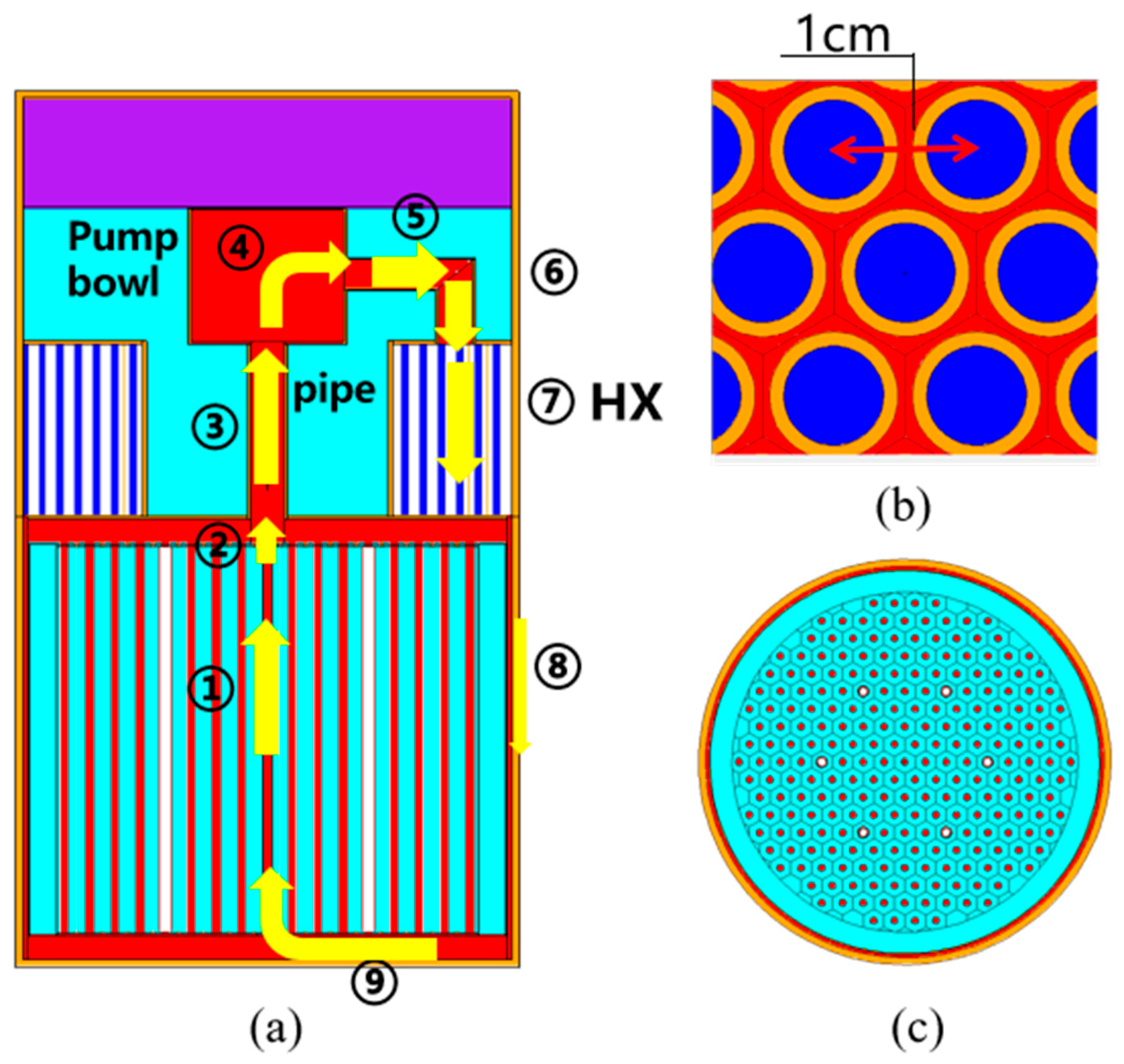
Figure 1. Its design adopts an integrated compact layout, where the core and heat exchanger are vertically stacked within a single shielded vessel. This design enhances passive natural circulation by establishing a top-to-bottom temperature gradient, thereby improving the reliability of decay-heat removal under accident conditions. The compact structure also reduces external piping, meeting modular deployment requirements, while lowering the risk of primary-loop leakage.
The SM-MSR core has a cylindrical geometry with a height of 324 cm and a diameter of 300 cm. The radial structural layers, from inside to outside, consist of a 19 cm-thick reflector, a 1 cm-thick alloy shield, a 3 cm-thick downcomer cavity, and a 6 cm-thick main vessel. The heat exchanger is positioned above the core and adopts an annular cylindrical structure with an inner radius of 85.5 cm, an outer radius of 173 cm, and a height of 142 cm. Its tubes are arranged in a hexagonal lattice configuration with a tube pitch of 1 cm and a wall thickness of 0.1 cm, as illustrated in
Figure 1.
The compact design of MSRs introduces significant challenges for radiation shielding. The close integration of the primary heat exchanger with the reactor core severely limits the space available for shielding. In addition, the use of NaF-BeF
2 coolant in the secondary loop substantially increases neutron activation levels. The objective of this work is therefore to precisely quantify the activation levels of the heat exchanger alloy and coolant—findings that are essential for the development of feasible shielding designs and long-term maintenance planning. Key system parameters are provided in
Table 1.
The migration of precursors in the primary loop is crucial for analyzing the activation of the heat exchanger. In this model, precursors are generated within the fuel channels of the reactor core and then circulate sequentially through the upper plenum, pump bowl, heat exchanger, downcomer cavity, and lower plenum until they decay and release delayed neutrons. The transport of delayed neutron precursors follows the molten salt flow. Based on the total flow rate and the fuel salt volume in each component, the average residence time in each component can be calculated, as listed in
Table 2. The following section will detail how to sample and determine the positions of delayed neutron release.
Figure 1.
Diagram of the small modular molten salt reactor considered in this study: (
a) longitudinal-section of the reactor; (
b) heat exchanger internal pipe, with fuel salt on the shell side and coolant salt on the tube side; (
c) cross-section of the reactor core. Numbers and arrows denote the main components and molten salt flow direction, corresponding to the items in
Table 2.
Figure 1.
Diagram of the small modular molten salt reactor considered in this study: (
a) longitudinal-section of the reactor; (
b) heat exchanger internal pipe, with fuel salt on the shell side and coolant salt on the tube side; (
c) cross-section of the reactor core. Numbers and arrows denote the main components and molten salt flow direction, corresponding to the items in
Table 2.
3. Calculation Method
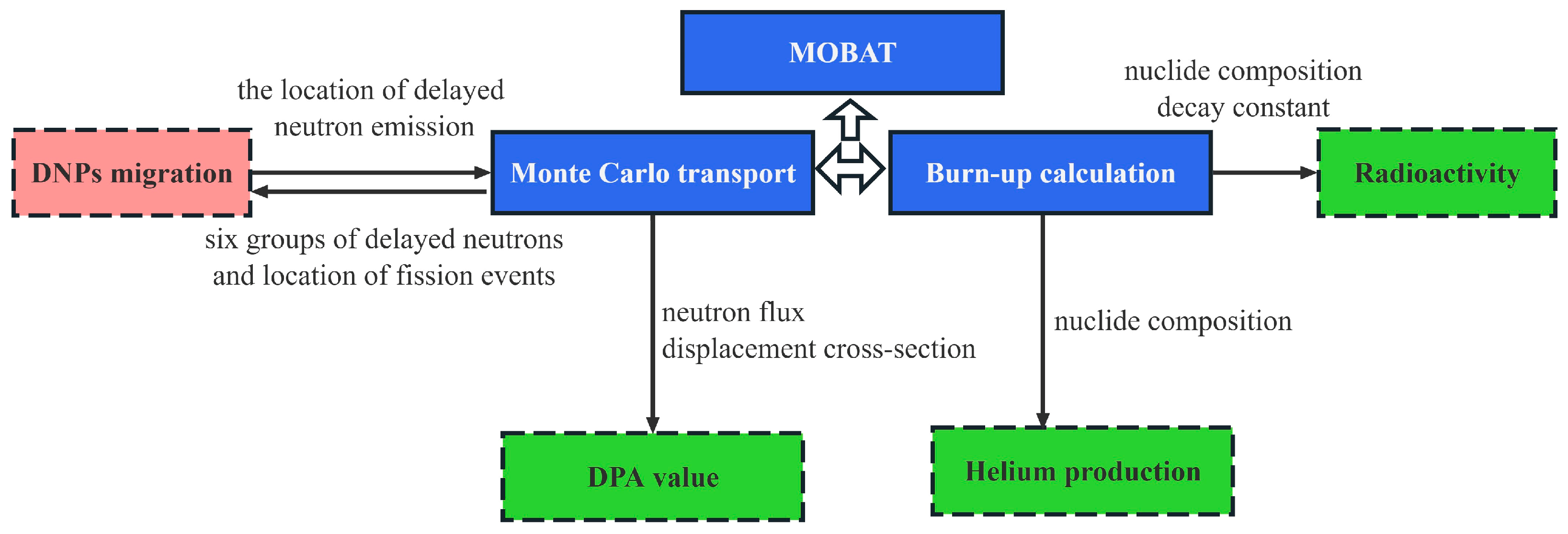
The calculation of radioactivity and radiation damage in coolant salt and heat exchanger alloy is implemented via a MOBAT [
18,
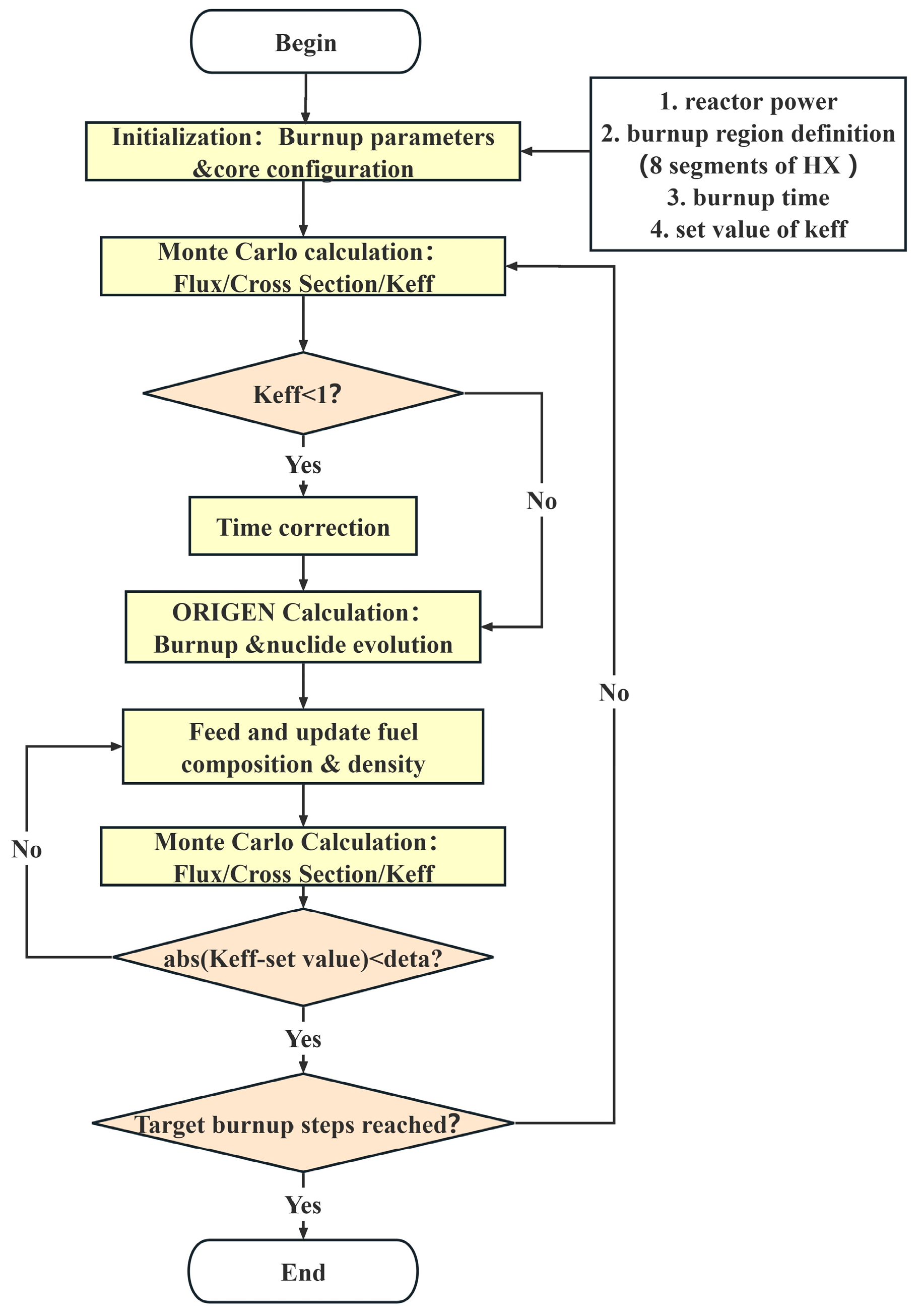
19]-driven multi-module workflow. In addition, the radiation damage calculation covers helium production and displacements per atom. The workflow is illustrated in
Figure 2.
The DNP migration module is coupled with Monte Carlo transport [
20] to enable a more realistic neutron source representation. Six groups of delayed neutrons with distinct decay half-lives [
12] and the locations of fission events are obtained from Monte Carlo transport, while the DNP migration module provides the emission locations of delayed neutrons. These emission locations are then used to update the neutron source term in the Monte Carlo transport calculation, from which the spatial distribution of the neutron flux is thereby derived.
After neutron transport, the evolution of nuclides is calculated using MOBAT, a burn-up code that couples ORIGEN2 and MCNP. It accounts for features such as online refueling and criticality control in MSRs. Based on the nuclide composition and decay data, the radioactivity of materials can be obtained. Similarly, helium production can be directly derived from the burn-up evolution calculation, while the DPA data of materials can be determined using the neutron flux and displacement cross-section data.
3.1. DNP Migration
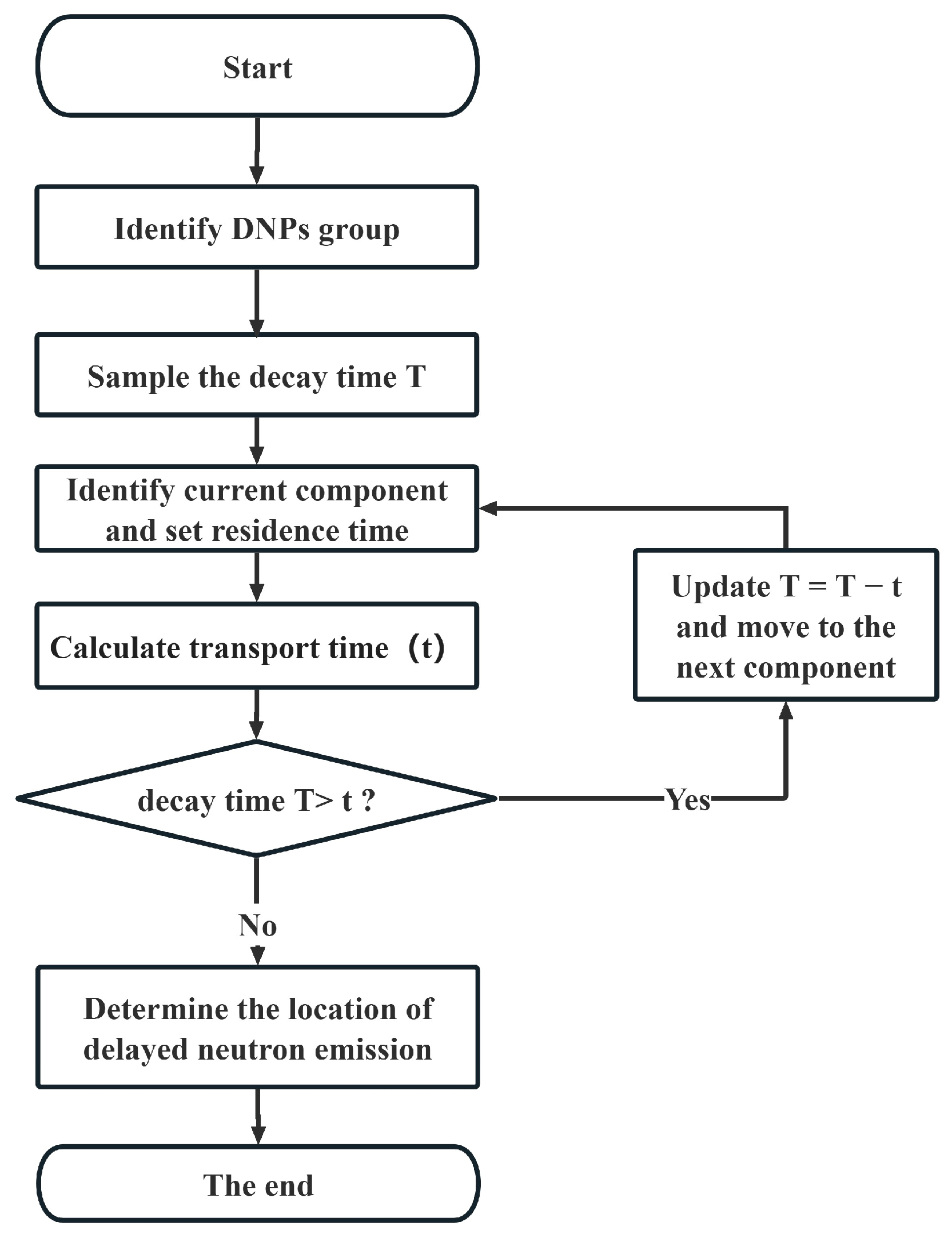
In this section, we describe in detail how the migration of precursors in the loop is implemented and how the final emission location of delayed neutrons is determined, as shown in
Figure 3.
First, the DNP type and location can be extracted from the initial source particles in the Monte Carlo transport calculation. If the particle is a prompt neutron, the precursor transport calculation is not performed. If it is a delayed neutron, the type of DNP is further determined. Sampling is then performed based on the half-life of the DNP to determine the time until the DNP decays, i.e., the total migration time T of the precursor.
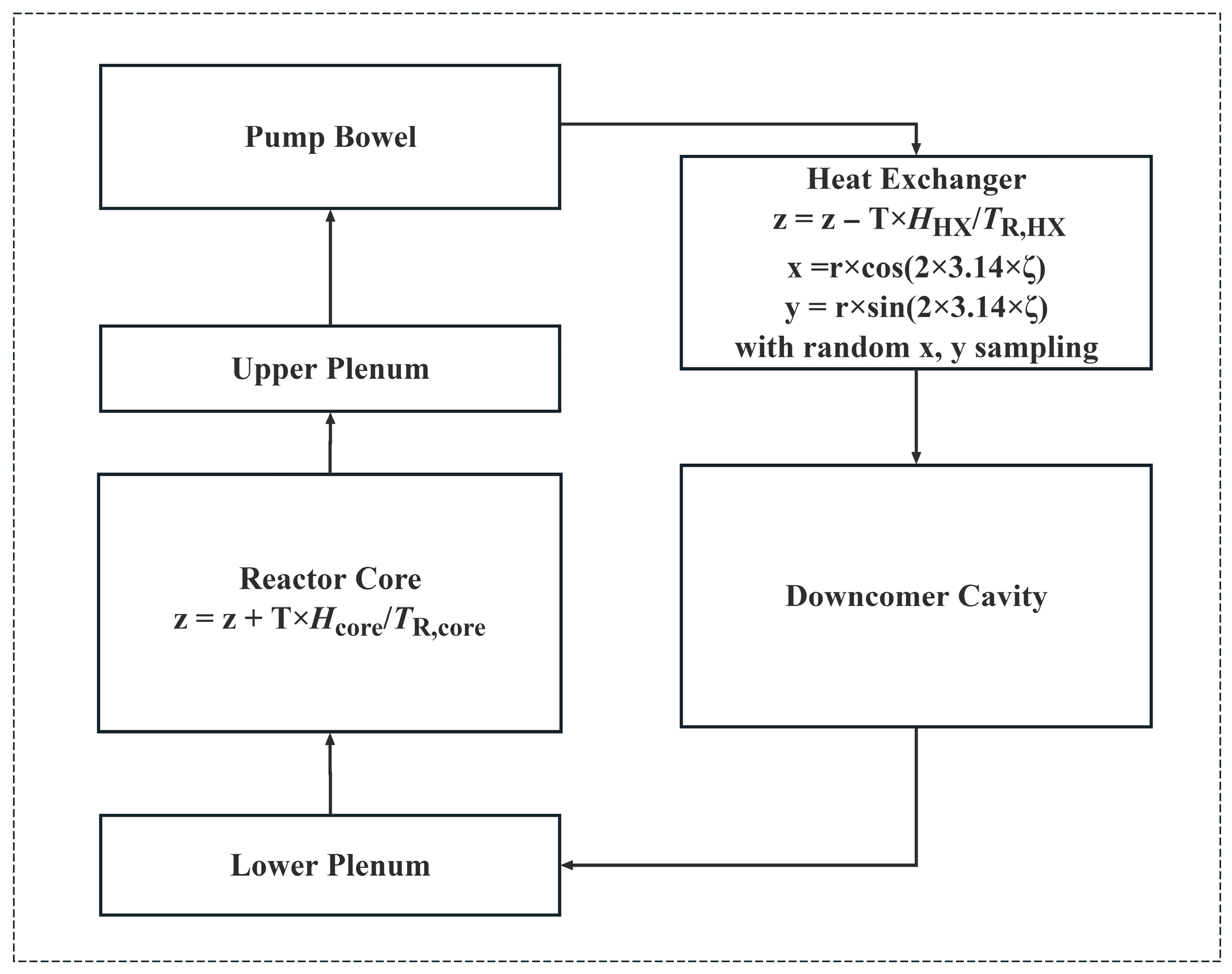
Then, the precursor migration begins from its initial location according to the flow field function until the migration time is reached. The flow field function is a simplified mathematical representation based on the flow field distribution, with piecewise connections across different regions, as shown in
Figure 4. For example, in the core, since the molten salt flows within the channels, it can be assumed that movement occurs only in the z-direction, while the x and y coordinates remain approximately unchanged. In the upper and lower plenums, as well as in the heat exchanger, in addition to movement in the z-direction, radial mixing also occurs, which can be modeled using random sampling to determine the x and y coordinates. Taking the migration of a DNP in the core as an example, the transport time t of the precursor within the core is determined based on its initial z-value and the core outlet height. If the decay time T of the DNP exceeds the in-core transport time t, the precursor has not yet decayed and continues to migrate. In this case, T is updated as T = T − t, and the precursor enters the inlet of the upper plenum, where the migration calculation for that region begins. This process continues until T < t, at which point the final decay location of the DNP is determined based on the current T, the flow velocity in the current component, and the entry position.
Finally, the decay location of the DNP serves as the starting point for delayed neutrons in the Monte Carlo transport calculation.
The DNP migration method employed in this study has been validated in the MSRE model [
12], and the uncertainties in residence time and DNP fractions have also been investigated in reactivity loss, which suggests that the method of DNP migration is reasonable and reliable.
This study compares the radioactivity of heat exchanger components and coolant under two scenarios. The first scenario neglects precursor migration, where the Monte Carlo KCODE source card is applied independently. The second scenario incorporates the DNP migration model.
3.2. Radioactivity Calculation Method
Here, MOBAT was used to calculate the radionuclides in the HX alloy and coolant under different radiation schemes. It can dynamically update cross-section data based on flux and energy spectrum, and can also support online fuel feeding, which can meet the requirements for analysis of fuel cycles in the MSR.
The burn-up calculation flowchart for the coolant salt and heat exchanger (HX) alloy is presented in
Figure 5. First, burn-up zoning is performed. The HX is evenly divided into 8 axial segments from top to bottom. The HX alloy is partitioned into 8 discrete burn-up zones. Each zone is independently input into MOBAT for calculation. In contrast, the coolant salt flowing within the HX tubes is treated as a whole burn-up region. During the burn-up calculation, online fuel feeding and criticality control are implemented. An effective multiplication factor (keff) of 1.01 is preset. If the calculated keff falls below 1.01, fresh fuel is incrementally added until keff returns to approximately 1.01.
Ultimately, the burn-up calculation yields time-resolved inventories of activation nuclides. These inventories are obtained for both the alloy and coolant at distinct burn-up and shutdown decay time points. Subsequently, the radioactivity of these activation products in the HX alloy and coolant salt is quantified using a custom Python 3.10 script. This program incorporates the decay constants of individual nuclides to compute radioactivity. The formula for calculating radioactivity is as follows:
where
A is the radioactivity, with the unit becquerel (Bq),
λ is the decay constant (s
−1),
N is the number of the radioactive nuclide, and
T1/2 is the half-life of the radioactive nuclide.
3.3. DPA and Helium Calculation Methods
The displacement per atom (DPA) calculation in this study is primarily based on the NRT model [
21]. The NRT model is recognized as a standard approach for the evaluation of radiation-induced displacement damage in nuclear applications. The model is characterized by a simple formulation, high computational efficiency, and a well-defined physical basis. It is widely implemented in engineering-scale analysis. It should be noted that the NRT model relies on the binary collision approximation. By neglecting defect recombination and thermal annealing effects, it tends to predict higher DPA values; thus, conservative evaluation results are obtained here.
The DPA rate (
Rdpa) is obtained according to Equation (2):
Here,
β is the atomic displacement efficiency, which is usually 0.8;
Ed is the energy threshold for atomic displacement [
10],
EM is the maximum neutron energy, and
Φ is the neutron flux obtained from MCNP calculations.
The displacement damage cross-section is used from the MT = 444 ENDF/B-VII.1 Nuclear Data Library. The DPA results are obtained using the F4 tally card in combination with the FM multiplication factor card.
High helium content can lead to swelling and helium embrittlement of the alloy material. Therefore, the production of helium in the HX alloy is of concern. Natural Ni contains 68% atom
58Ni and 26% atom
60Ni, with the (n, a) reactions of Equation (3).
Helium can also be produced by the two-step reactions of Equation (4).
However, this reaction requires the production of 59Ni first and results in an incubation time for helium production. At the same time, all other helium production channels from 10B, 54Fe, 60Co and 92Mo are also considered in the calculation.
Helium production [
22] is calculated using ORIGEN2, using Equation (5) for the helium gas production rate (GPR):
where
E is the maximum neutron energy,
σ(n,a)(
Ei) is the (n, a) reaction cross-section at energy
Ei, and
Φ(
Ei) is the neutron flux at energy
Ei.
Throughout this work, the ENDF/B-VII.1 evaluated nuclear data library [
23,
24] is consistently employed for neutron transport, radioactivity and radiation damage calculations. The reliable results can be obtained using ENDF/B-VII.1, as it is a high-fidelity pointwise cross-section library.
4. Results and Discussion
4.1. Neutron Flux Distribution
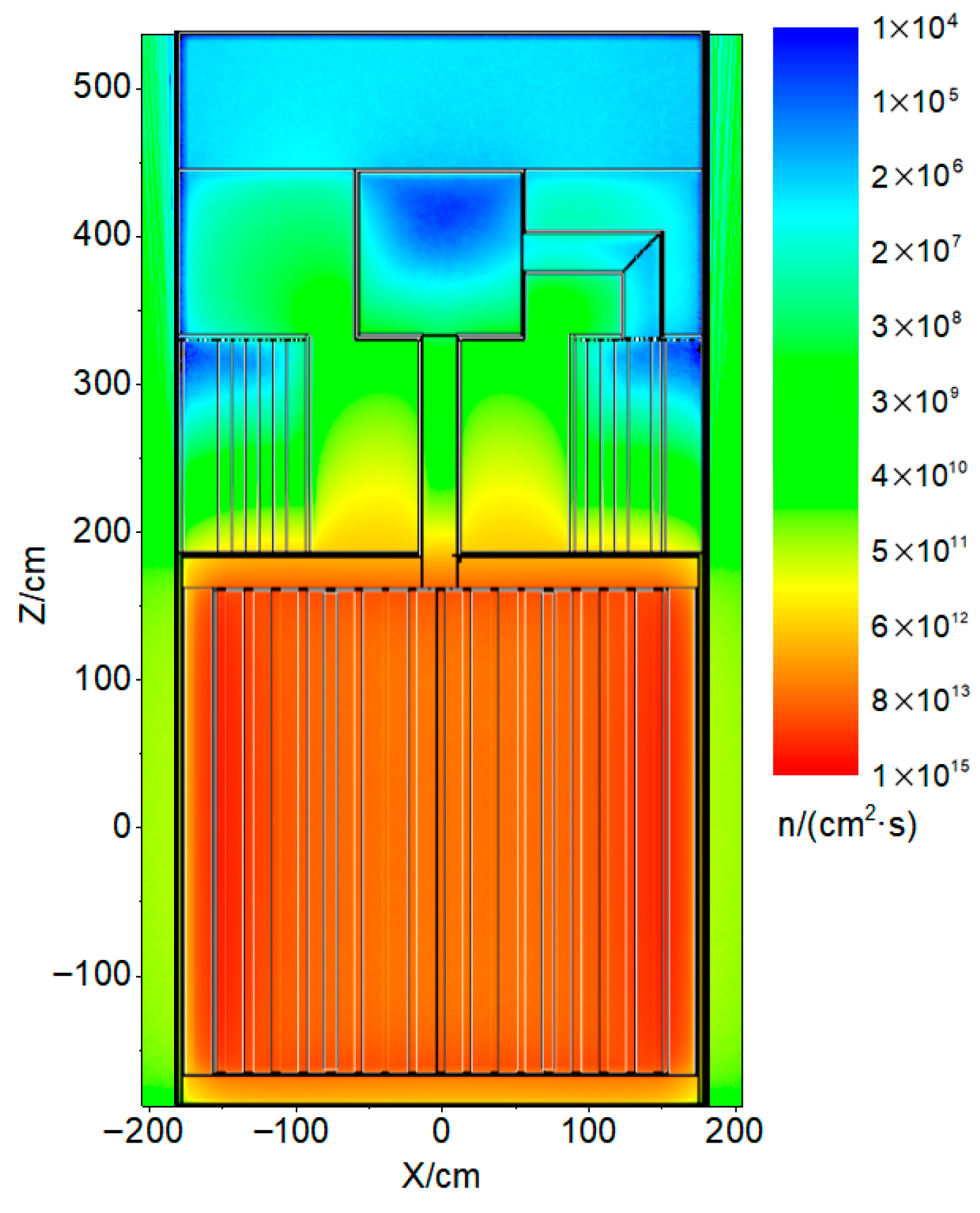
The Monte Carlo calculation results reveal the spatial distribution of neutron flux across the compact primary loop of the modular MSR, with key findings illustrated in
Figure 6. Here, the Fmesh4 tally card is employed to calculate the neutron flux. Its mesh resolution is 1 cm × 1 cm × 1 cm. In order to show the direct visualization of the neutron flux, the results are multiplied by a factor corresponding to 150 MWt neutron source strength. The maximum statistical error of the results is less than 10%.
In the absence of DNP migration, the neutron flux attenuates steeply outward from the core, highlighting the direct radiation damage to primary loop components in this compact design. The highest neutron flux occurs at its central plane near (x = 0, y = 0, z = 0), reaching 6.6 × 10
14 n/(cm
2·s). The region beneath the pump bowl in the upper plenum experiences the second-highest flux, as it is exposed to unshielded direct irradiation from the core. In contrast, the heat exchanger and pump bowl exhibit significantly lower flux levels, as their metallic casings provide substantial neutron shielding. For the heat exchanger, the maximum flux is observed at the bottom-left of the HX, while the minimum is at the upper-right, representing a decrease of approximately seven-orders-of-magnitude from the core to the heat exchanger (
Figure 6). Along the axial direction, the bottom of the heat exchanger exhibits the highest flux (1.0 × 10
13 n/(cm
2·s)), whereas the top shows the lowest, only about 1 × 10
6 n/(cm
2·s). These results demonstrate that, without considering the effects of DNP migration, the neutron flux inside the reactor is dominated by neutrons directly originating from the reactor core.
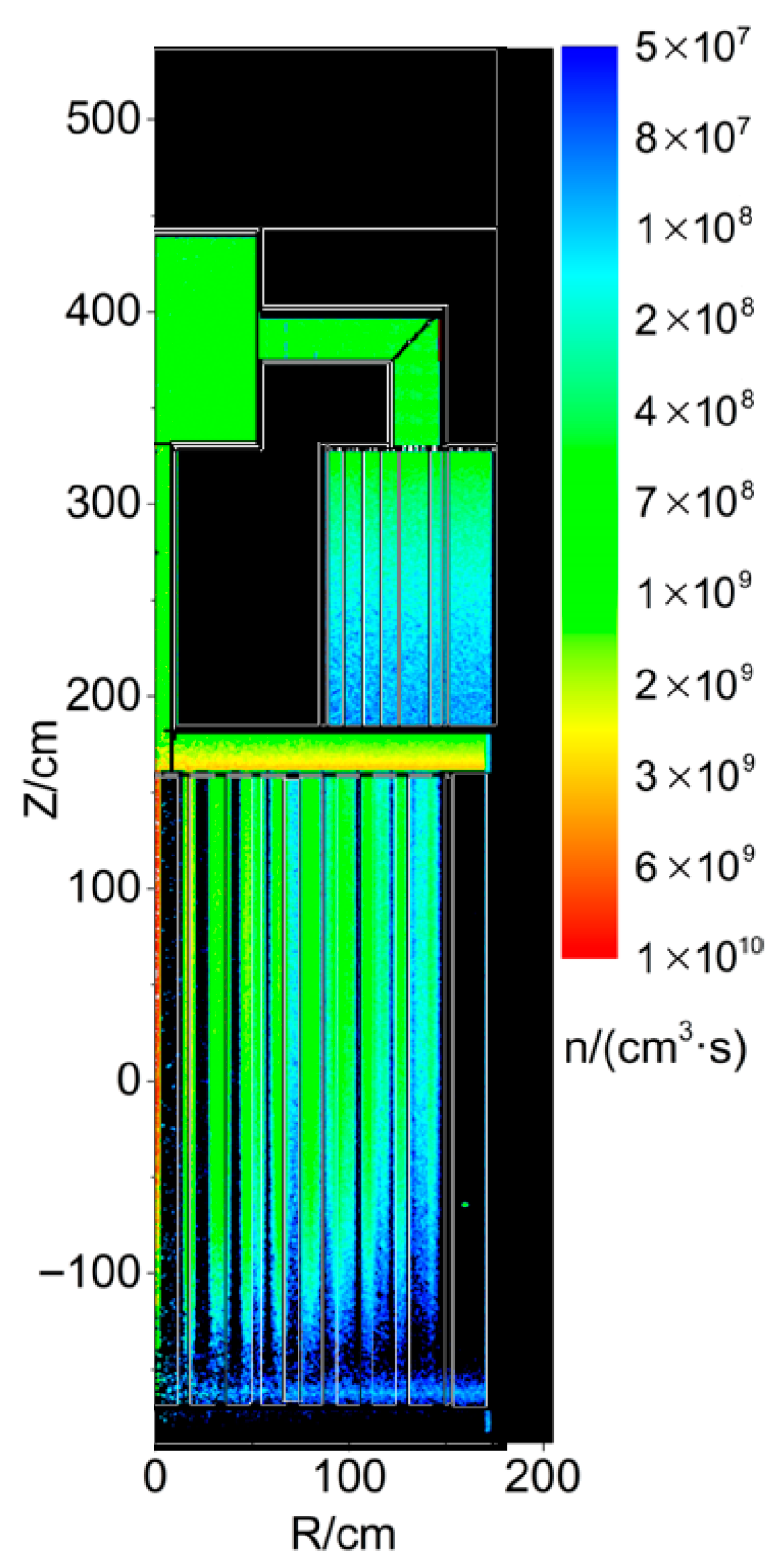
When the migration of DNPs is considered, the source intensity redistribution of delayed neutrons can be calculated by the method in
Section 3.1. As shown in
Figure 7, delayed neutrons are distributed throughout the loop instead of only in the reactor core. The concentration of delayed neutrons is higher in the upper part of the core and the upper part of the heat exchanger, because longer-lived precursors are transported with the flowing salt, while shorter-lived ones decay near their fission sites.
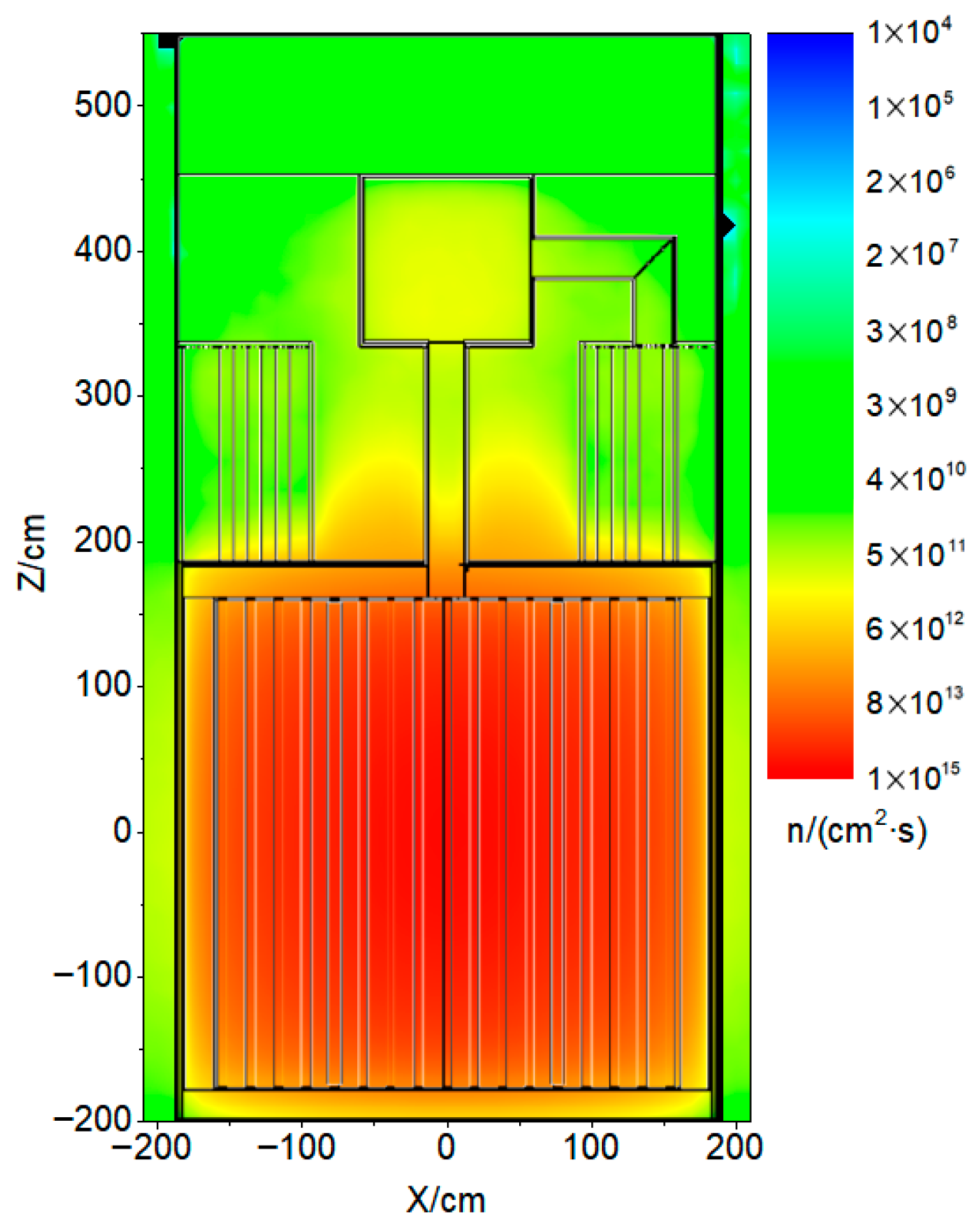
The neutron flux distribution considering DNP migration is shown in
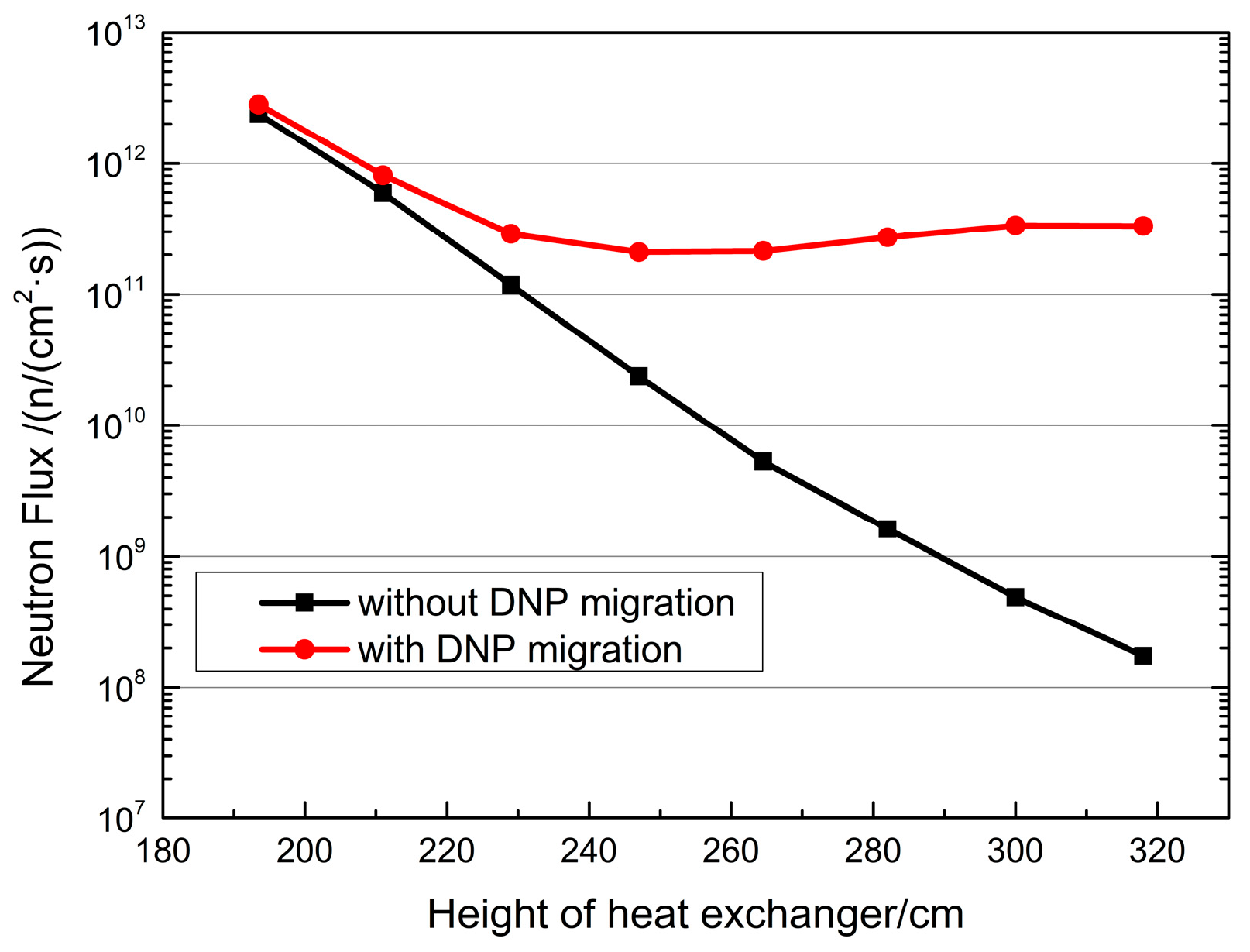
Figure 8. A notable increase in neutron flux is observed in the heat exchanger, particularly in its middle and upper sections. Specifically, the average neutron flux at the top of the heat exchanger rises by three orders of magnitude, from 10
8 n/(cm
2·s) to 10
11 n/(cm
2·s). As shown in
Figure 9, the neutron flux at the top of the heat exchanger is slightly higher than that at the mid-height. This is primarily due to the higher concentration of delayed neutrons in the upper region of the heat exchanger.
This enhancement is not confined to the heat exchanger but is also observed in other shielded components of the primary loop. These results indicate that the increased neutron flux induced by DNPs in the primary loop warrants serious attention.
4.2. Radioactivity of Coolant Salt
In order to estimate the radioactivity of coolant salt in the heat exchanger, the average radioactivity of FNaBe during 30 years of burn-up time and two years of shutdown decay time was calculated. The average radioactivity concentration is obtained by dividing the radioactivity of various nuclides by the mass of the coolant salt in the HX.
The coolant salt reaches radioactivity equilibrium within 10 days of burn-up, with its total radioactivity remaining nearly constant over the entire burn-up time (1–30 years), as shown in
Table 3. Without considering DNP migration, the radioactivity concentration of the coolant salt is 4.40 × 10
11 Bq/kg (
Table 3). When DNP migration is incorporated into the calculation, the total radioactivity increases to 6.92 × 10
11 Bq/kg, representing a nearly 60% rise. This observation underscores a critical characteristic of MSRs: the secondary loop cannot be treated as a simple radioactive isolation loop.
The radionuclides generated by the activation of the FNaBe coolant salt in the heat exchanger are dominated by a combination of short-lived and long-lived species, as shown in
Table 4. Short-lived nuclides (e.g.,
20F,
16N,
6He) contribute the majority of the radioactivity, but they decay to very low levels rapidly and are therefore not a primary concern in radioactivity management.
24Na (half-life: 15 h) is an important radionuclide generated from the stable isotope
23Na through neutron activation. It exhibits high radioactivity and emits high-energy gamma rays at 1.38 MeV and 2.76 MeV upon decay. In the secondary loop, its radioactivity concentration reaches 3.06 × 10
11 Bq/kg, as seen in
Table 4, a level comparable to that in sodium-cooled fast reactors [
25]. Therefore, its activation and the associated shielding design warrant attention during reactor operation. However, approximately 10 days after reactor shutdown, its activity decays to a negligible level.
However, the radioactivity management of long-lived nuclides such as
22Na (half-life: 2.6 years) and
10Be cannot be overlooked. Their radioactivity is difficult to reduce through decay, and therefore, shielding and long-term shutdown decay are typically required during disposal. In the present calculation, the radioactivity concentration of
22Na under DNP migration conditions increases from 3.89 × 10
6 Bq/kg to 6.00 × 10
6 Bq/kg (
Table 4), exceeding the regulatory exemption level (1 × 10
6 Bq/kg) [
26,
27] by a factor of five.
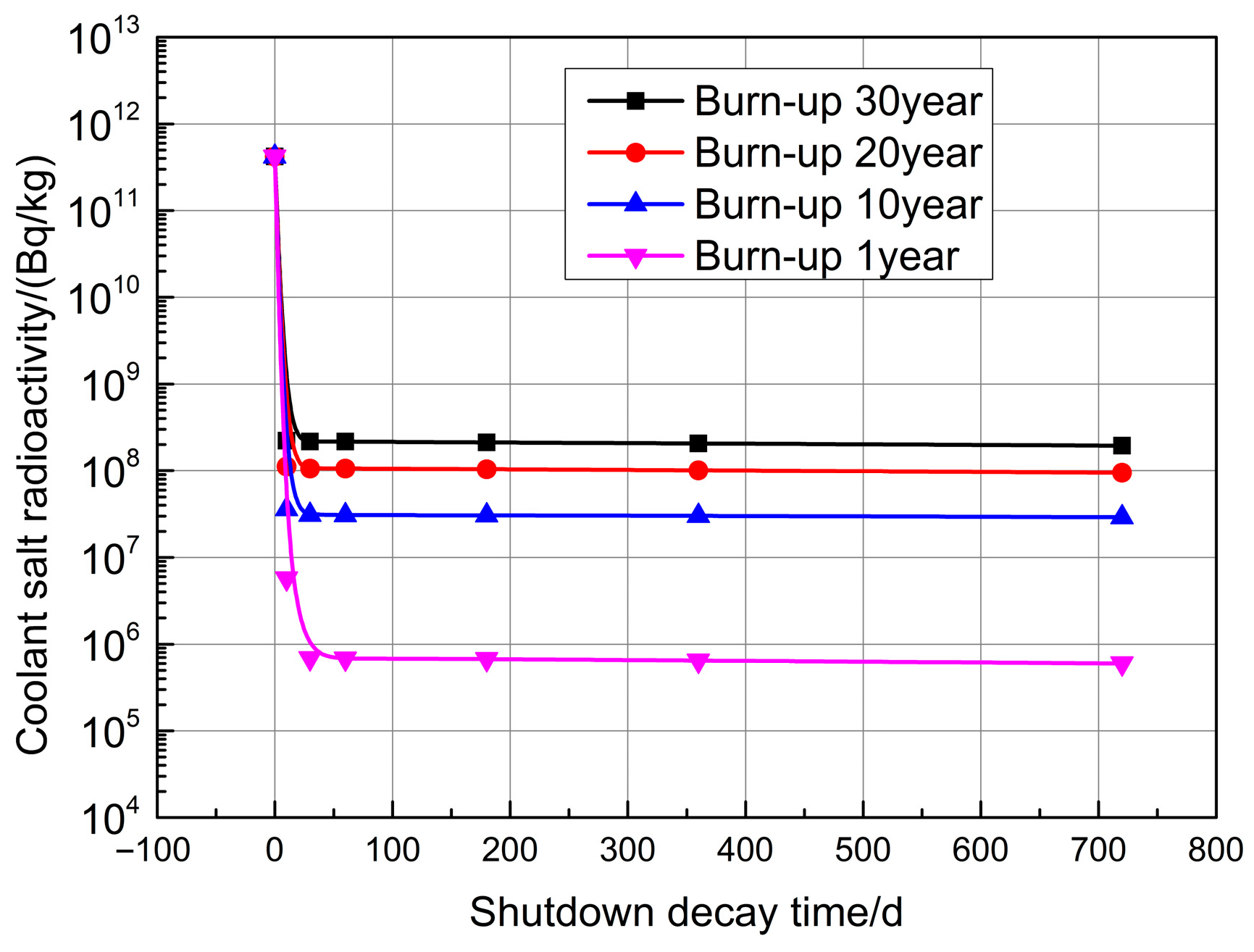
We further calculated the radioactivity of FNaBe after shutdown decay at different burnup times, and the results are shown in
Figure 10. After approximately 50 days, the radioactivity of FNaBe essentially reaches a plateau and no longer decreases, being primarily dominated by
22Na. Since the radioactivity concentration of
22Na varies with different burnup times, the post-shutdown radioactivity levels also differ accordingly. After two years of full power operation, the radioactivity of FNaBe already exceeds the exemption level. This indicates that the traditional approach of treating the secondary loop as a simple radioactive isolation loop is insufficient for MSRs, and a more comprehensive and effective radiation management strategy is required.
4.3. Radioactivity of Heat Exchanger Alloy
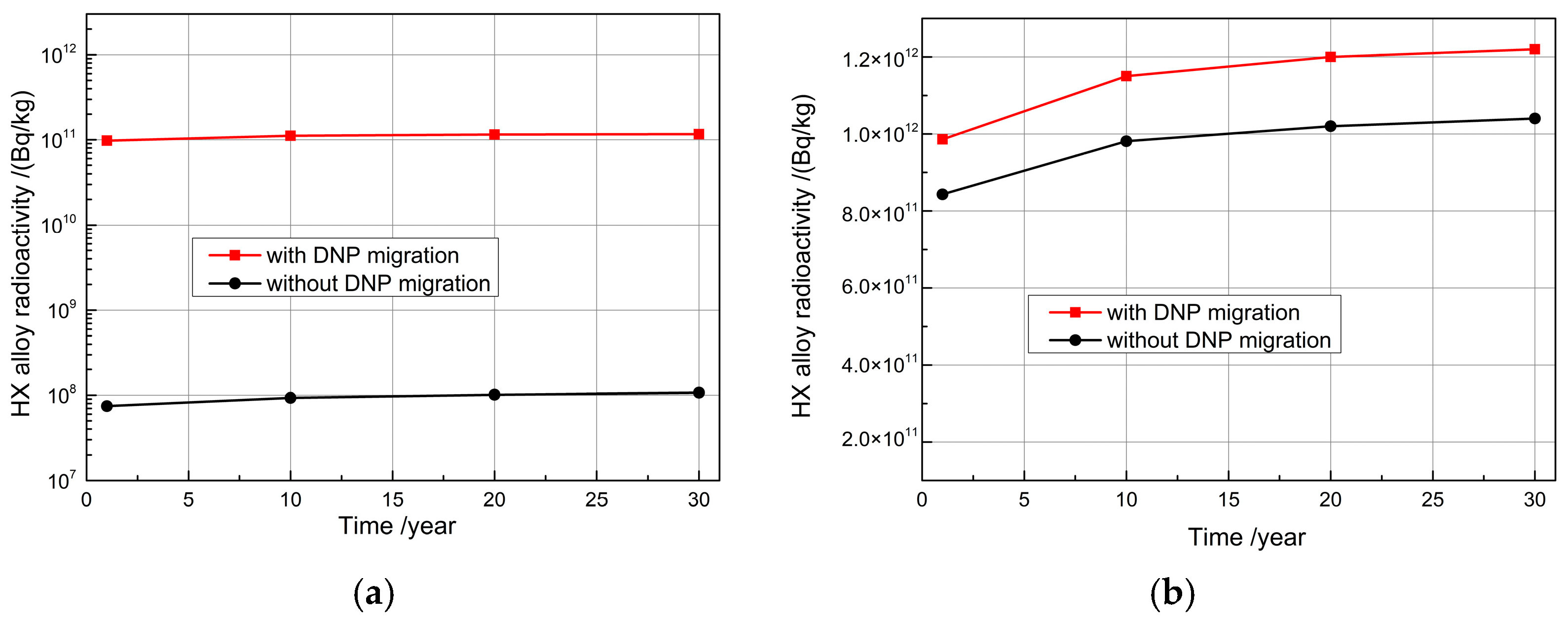
In this section, the activation concentration of the heat exchanger alloy under conditions with and without precursor migration is further calculated, and the results are shown in
Figure 11. The average radioactivity concentration is obtained by dividing the radioactivity of various nuclides by the mass of the heat exchanger alloy.
The highest radioactivity concentration is located at the bottom region of the heat exchanger, where the neutron flux is highest, while the lowest radioactivity concentration occurs at the upper-right region, corresponding to the minimum neutron flux. When the migration of DNPs is incorporated into the model, the radioactivity concentration of the heat exchanger alloy increases significantly, particularly in the upper-right region (
Figure 11). Notably, under DNP migration conditions, the radioactivity of the alloy at the top of the heat exchanger rises by three orders of magnitude, from 7.44 × 10
7 Bq/kg to 9.74 × 10
10 Bq/kg. This indicates that the impact of DNP migration on the activation of heat exchanger alloys is non-negligible in MSRs.
The main radionuclides in the HX alloy are
56Mn,
60Co,
99Mo,
187W,
63Ni, and
51Cr, as shown in
Table 5. When the migration of DNP is taken into account, the averaged radioactivity of these nuclides increases by nearly 20%. Among them,
60Co,
63Ni, and
55Fe exhibit negligible radioactive decay over extended periods due to their relatively long half-lives. Notably,
60Co, with a half-life of 5.27 years, is a key activation product and contributes significantly to the post-shutdown radiation dose.
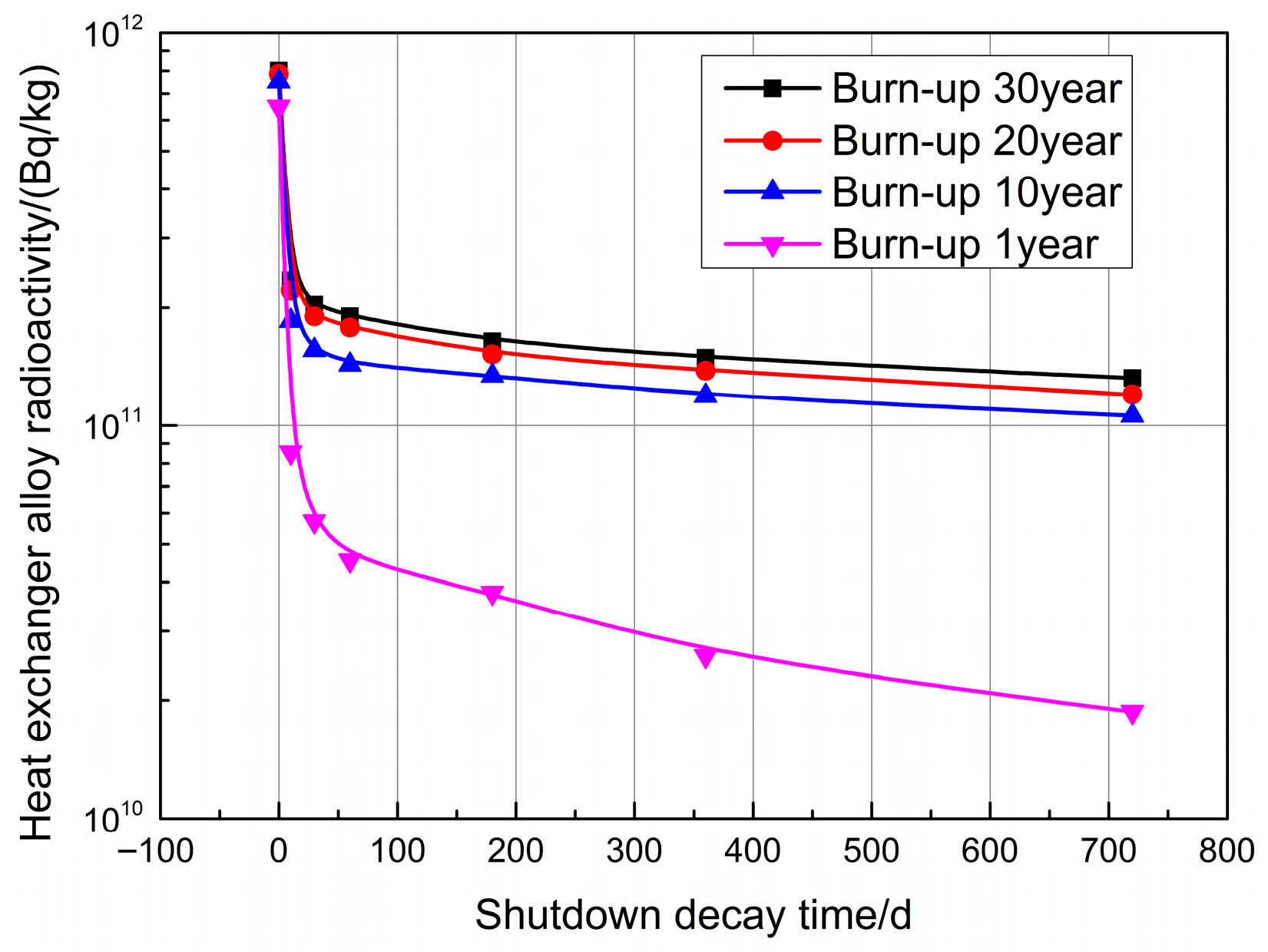
The radioactivity of the heat exchanger alloy is also calculated after shutdown decay at different burnup times from 1 year to 30 years. The results are shown in
Figure 12.
The radioactivity of the activated alloy ranges from 1 × 10¹⁰ to 2 × 10¹¹ Bq/kg after a 180-day decay period. The radioactivity decreases rapidly within the first 180 days of decay and then reaches a stable equilibrium state. Furthermore, the final equilibrium radioactivity increases with the increasing burn-up time. The 1-year burn-up case shows a markedly steeper slope. This is attributed to the dominance of short-lived activation products. In contrast, the 10–30 year burn-up cases display nearly parallel slopes. This behavior reflects the persistence of long-lived radionuclides, and the cumulative inventory of long-lived radionuclides increases with extended burn-up time. This leads to a higher equilibrium radioactivity.
4.4. DPA and Helium Production in HX
When the migration of DNP is taken into account, the DPA in the upper region of the HX alloy is much higher than when DNP migration is not considered. The DPA distribution in the heat exchanger alloy generally is proportional to the neutron flux, and the DPA at the bottom of the heat exchanger is the highest (0.01 dpa/year). Compared to the DPA in the main vessel of 0.025 dpa/year [
10], the average DPA in the heat exchanger is slightly lower.
Helium production in the heat exchanger alloy serves as a key indicator of irradiation damage. As shown in
Table 6, helium production increased with burn-up time, reaching nearly 15 appm after 30 years of burn-up, which is approximately three orders of magnitude lower than that in the core [
10]. According to previous research [
28], the allowed helium in the alloy should be lower than 2000 appm; therefore, the helium in the HX may be unlikely to cause embrittlement of the alloy material.
Overall, although both DPA and helium production increase due to DNP migration, the impact of DNP migration on DPA and helium production is limited.
5. Conclusions
In this study, delayed neutron precursor transport is coupled to activation and damage calculation models, and the effect of DNP transport on radioactivity and radiation damage has been investigated. Thereby, it complements the limitations of traditional shielding analyses.
The results demonstrate that DNP migration significantly alters the neutron flux, activation levels, and radiation damage within the heat exchanger. Accordingly, the radioactivity of both the heat exchanger alloy and coolant salt increases notably. Neglecting DNP flow leads to a significant underestimation of the alloy radioactivity in the upper heat exchanger, by nearly 9.74 × 10¹⁰ Bq/kg. The radioactivity of the primary loop coolant salt remains stable (remaining 6.92 × 10¹¹ Bq/kg) over time. Meanwhile, the radioactivity of Na-22 is elevated (6.00 × 10⁶ Bq/kg after 30 years of burnup). These findings indicate that DNP migration substantially affects the radiation dose to secondary loop equipment. This effect is often overlooked in conventional analyses.
In terms of DPA and helium production, DNP migration leads to a slight increase in both indicators for the HX alloy. Although DPA has an uneven spatial distribution and helium accumulates continuously, the irradiation damage is limited and cannot lead to alloy embrittlement within 30 years of burn-up.
Moreover, it should be emphasized that the impact of DNP migration cannot be mitigated by shielding design during reactor operation. This applies equally to neutron flux, radioactivity, DPA, and helium production. Therefore, the methodology proposed in this work is essential for optimizing the design of an MSR and providing a more accurate basis for predicting component lifespan.
In follow-up research, a comprehensive sensitivity analysis will be performed to provide the uncertainties associated with residence time, DNP fractions, and nuclear data libraries in radioactivity calculation. In addition, more complex flow field functions will be adopted in the DNP migration model, and the related comparison analysis will be conducted.
Author Contributions
Conceptualization, Y.Z. (Yang Zou) and G.Z.; methodology, G.Z. and H.Y.; formal analysis, H.Y.; writing—original draft preparation, H.Y.; writing—review and editing, G.Z. and C.Y.; visualization, X.K., Y.Z. (Yinan Zhu) and Y.D.; supervision, Y.Z. (Yang Zou) and R.Y.; project administration, X.Y.; funding acquisition, H.Y. and G.Z. All authors have read and agreed to the published version of the manuscript.
Funding
This research was funded by State Key Laboratory of Thorium Energy, grant number The Lab-2025-01, Young Potential Program of Shanghai Institute of Applied Physics, Chinese Academy of Sciences, grant number SINAP-YXJH-202412, and Fundamental Research Program of Industrial Foundation, grant number SINAP-CYJJ-202401.
Data Availability Statement
The original contributions presented in this study are included in the article. Further inquiries can be directed to the corresponding authors.
Conflicts of Interest
The authors declare no conflicts of interest.
Abbreviations
The following abbreviations are used in this manuscript:
| DNPs | Delayed neutron precursors |
| MSR | Molten salt reactors |
| HX | Heat exchanger |
| SM-MSR | Small modular molten salt reactor |
| DPA | Displacement per atom |
| GPR | Gas production rate |
References
- Park, S.; Kim, S. Fundamental Understanding of Marine Applications of Molten Salt Reactors: Progress, Case Studies, and Safety. J. Mar. Sci. Eng. 2024, 12, 1835. [Google Scholar] [CrossRef]
- Chen, X.; Xu, Z. Experimental research on heat transfer in a molten salt-heat pipe-thermoelectric generator system based on micro-MSR. Nucl. Eng. Des. 2025, 434, 113911. [Google Scholar] [CrossRef]
- Serp, J.; Allibert, M. The molten salt reactor (MSR) in generation IV: Overview and perspectives. Prog. Nucl. Energy 2014, 77, 308–319. [Google Scholar] [CrossRef]
- Brown, N.R.; Diamond, D.J. Thermal-hydraulic and neutronic phenomena important in modeling and simulation of liquid-fuel molten salt reactors. Nucl. Technol. 2020, 206, 322–338. [Google Scholar] [CrossRef]
- Aufiero, M.; Brovchenko, M. Calculating the effective delayed neutron fraction in the Molten Salt Fast Reactor: Analytical, deterministic and Monte Carlo approaches. Ann. Nucl. Energy 2014, 65, 78–90. [Google Scholar] [CrossRef]
- Cui, Y.; Chen, J.; He, F. Calculation Method of Effective Delayed Neutron Fraction in Graphite-moderated Channel-type Molten Salt Reactor. At. Energy Sci. Technol. 2021, 55, 1448. [Google Scholar]
- Li, R.; Cheng, M. Improvement of the delayed neutron precursor transport model in RELAP5 for liquid-fueled molten salt reactor. Nucl. Eng. Des. 2022, 394, 111817. [Google Scholar] [CrossRef]
- Fiorina, C.; Aufiero, M. Investigation of the MSFR core physics and fuel cycle characteristics. Prog. Nucl. Energy 2013, 68, 153–168. [Google Scholar] [CrossRef]
- Carberry, K.; Petrovic, B. A Comprehensive Approach to Molten Salt Reactor Source Term Generation and Shielding Analyses. Nucl. Technol. 2024, 210, 409–435. [Google Scholar] [CrossRef]
- Yu, H.; Zhu, G. Neutron/gamma radial shielding design of main vessel in a small modular molten salt reactor. J. Nucl. Eng. 2023, 4, 213–227. [Google Scholar] [CrossRef]
- Vanderhaegen, M.; Janssens-Maenhout, G. Considerations on safety and proliferation-resistant aspects for the MSBR design. Nucl. Eng. Des. 2010, 240, 482–488. [Google Scholar] [CrossRef]
- Zhu, G.F.; Yan, R. Application of Monte Carlo method to calculate the effective delayed neutron fraction in molten salt reactor. Nucl. Sci. Tech. 2019, 30, 34. [Google Scholar] [CrossRef]
- Chen, S.; Li, R. Dynamic Effect of the Delayed Neutron Precursor Distribution on System Safety Analysis in Liquid-Fueled Molten Salt Reactor. Energies 2025, 18, 670. [Google Scholar] [CrossRef]
- Davidson, E.E.; Radulescu, G. Reactor cell neutron dose for the molten salt breeder reactor conceptual design. Nucl. Eng. Des. 2021, 383, 111381. [Google Scholar] [CrossRef]
- Cao, Y.; Davidson, E. Application of Monte Carlo code shift for MSBR dose rate calculations. In Proceedings of the International Conference on Physics of Reactors (PHYSOR), Pittsburgh, PA, USA, 15–20 May 2022. [Google Scholar]
- Davidson, E.E.; Betzler, B.R. The importance of delayed neutron precursors in gamma dose calculations for activated primary heat exchanger components in the Molten Salt Breeder Reactor. Ann. Nucl. Energy 2024, 199, 110276. [Google Scholar] [CrossRef]
- Zhu, G.; Guo, W.; Kang, X.; Zou, C.; Zou, Y.; Yan, R.; Dai, Y. Neutronic effect of graphite dimensional change in a small modular molten salt reactor. Int. J. Energy Res. 2021, 45, 11976–11991. [Google Scholar] [CrossRef]
- Zhu, G.; Yan, R. Monte Carlo burnup code development based on multi-group cross section method. Prog. Nucl. Energy 2019, 110, 24–29. [Google Scholar] [CrossRef]
- Zhu, G.; Zou, Y. Low enriched uranium and thorium fuel utilization under once-through and offline reprocessing scenarios in small modular molten salt reactor. Int. J. Energy Res. 2019, 43, 5775–5787. [Google Scholar] [CrossRef]
- Brown, F.B.; Barrett, R.F.; Booth, T.E.; Bull, J.S.; Cox, L.J.; Forster, R.A.; Goorley, T.J.; Mosteller, R.D.; Post, S.E.; Prael, R.E.; et al. MCNP version 5. Trans. Am. Nucl. Soc. 2002, 87, 02–3935. [Google Scholar]
- Noori-Kalkhoran, O.; Gei, M. Evaluation of neutron radiation damage in zircaloy fuel clad of nuclear power plants: A study based on PKA and dpa calculations. Prog. Nucl. Energy 2020, 118, 103079. [Google Scholar] [CrossRef]
- Valls, A.; Grivé, M.; Riba, O. Estimation of the long term helium production in high burn-up spent fuel due to alpha decay and consequences for the canister. MRS Online Proc. Libr. (OPL) 2014, 1665, 297–302. [Google Scholar] [CrossRef]
- ENDF/B-VII.1 Evaluated Nuclear Data Library. Available online: https://www.nndc.bnl.gov/endf-b7.1/ (accessed on 1 March 2026).
- Data Files for the ENDF/B-VII.1 Decay Sublibrary. Available online: https://www.nndc.bnl.gov/endf-b7.1/decay.html (accessed on 1 March 2026).
- International Atomic Energy Agency. IAEA Liquid Metal Coolants for Fast Reactors Cooled by Sodium, Lead and Lead-Bismuth Eutectic; No. NPT-1.6; IAEA: Vienna, Austria, 2012. [Google Scholar]
- Gera, F. The classification of radioactive wastes. Health Phys. 1974, 27, 113–121. [Google Scholar] [CrossRef]
- Haghighi, M.H.; Ford, M.K. Waste Stream Generated and Waste Disposal Plans for Molten Salt Reactor Experiment at Oak Ridge National Laboratory. In Proceedings of the Waste Management Symposium, Tucson, AZ, USA, 24–28 February 2002. [Google Scholar]
- Krsjak, V.; Degmova, J.; Sojak, S.; Slugen, V. Effects of displacement damage and helium production rates on the nucleation and growth of helium bubbles–Positron annihilation spectroscopy aspects. J. Nucl. Mater. 2018, 499, 38–46. [Google Scholar] [CrossRef]
Figure 2.
Workflow of radioactivity and radiation damage calculation modules.
Figure 2.
Workflow of radioactivity and radiation damage calculation modules.
Figure 3.
DNP migration calculation algorithm.
Figure 3.
DNP migration calculation algorithm.
Figure 4.
Schematic diagram of the DNP migration tracking workflow in the primary loop of the molten salt reactor, which illustrates DNP migration tracking across key components including the reactor core, heat exchanger, and plena, where x, y, z are the coordinates within each component, T is the DNP decay time, Hcore and HHX are the heights of the reactor core and heat exchanger, TR,core and TR,HX are the corresponding residence times, r is the radius of the heat exchanger, and ζ is a random number for uniform sampling.
Figure 4.
Schematic diagram of the DNP migration tracking workflow in the primary loop of the molten salt reactor, which illustrates DNP migration tracking across key components including the reactor core, heat exchanger, and plena, where x, y, z are the coordinates within each component, T is the DNP decay time, Hcore and HHX are the heights of the reactor core and heat exchanger, TR,core and TR,HX are the corresponding residence times, r is the radius of the heat exchanger, and ζ is a random number for uniform sampling.
Figure 5.
Burn-up calculation process.
Figure 5.
Burn-up calculation process.
Figure 6.
Neutron flux (n/(cm2·s)) distribution in the whole reactor, including the heat exchanger longitudinal sections without considering the effects of DNP migration.
Figure 6.
Neutron flux (n/(cm2·s)) distribution in the whole reactor, including the heat exchanger longitudinal sections without considering the effects of DNP migration.
Figure 7.
Total intensity (n/(cm3·s)) of delayed neutrons after considering DNP migration.
Figure 7.
Total intensity (n/(cm3·s)) of delayed neutrons after considering DNP migration.
Figure 8.
Neutron flux distribution (n/(cm2·s)) in the whole reactor including the heat exchanger after considering DNP migration.
Figure 8.
Neutron flux distribution (n/(cm2·s)) in the whole reactor including the heat exchanger after considering DNP migration.
Figure 9.
Neutron flux (n/(cm2·s)) distribution in the heat exchanger with and without DNP migration.
Figure 9.
Neutron flux (n/(cm2·s)) distribution in the heat exchanger with and without DNP migration.
Figure 10.
Coolant salt radioactivity concentration (Bq/kg) as a function of decay time (d) for various burnup periods: 1, 10, 20, and 30 years.
Figure 10.
Coolant salt radioactivity concentration (Bq/kg) as a function of decay time (d) for various burnup periods: 1, 10, 20, and 30 years.
Figure 11.
Radioactivity concentration of HX alloy as a function of burn-up time (1 year, 10 years, 20 years and 30 years), comparing (a) the minimum and (b) the maximum levels with/without DNP migration.
Figure 11.
Radioactivity concentration of HX alloy as a function of burn-up time (1 year, 10 years, 20 years and 30 years), comparing (a) the minimum and (b) the maximum levels with/without DNP migration.
Figure 12.
Radioactivity concentration (Bq/kg) of HX alloy as a function of decay time for burn-up periods of 1, 10, 20, and 30 years.
Figure 12.
Radioactivity concentration (Bq/kg) of HX alloy as a function of decay time for burn-up periods of 1, 10, 20, and 30 years.
Table 1.
Main design parameters of small modular molten salt reactor.
Table 1.
Main design parameters of small modular molten salt reactor.
| Reactor Parameters | Values |
|---|
| Reactor Thermal Power | 150 MWt |
| Fuel Salt and Density | LiF-BeF2-ThF4-UF4, 2.71 g/cm3 |
| Mass Flow Rate of Primary Loop | 1000 kg/s |
| 235U Enrichment | 19.75% |
| Reactor Core Height | 324 cm |
| Core Diameter | 300 cm |
| Radial Reflector Thickness | 19 cm |
| Radial Shield Thickness | 1 cm |
| Radial Downcomer Cavity Thickness | 3 cm |
| Main Vessel Thickness | 6 cm |
| Heat Exchanger Inner/Outer Radius | 85.5 cm/173 cm |
| Heat Exchanger Height | 142 cm |
| Heat Exchanger Tube Radius/Thickness | 1 cm/0.2 cm |
| Coolant Density and Mass | NaF-BeF2, 2.1 g/cm3, 1.16 × 10³ kg |
| Heat Exchanger Structural Material and Density | UNS-N10003, 8.9 g/cm3 |
Table 2.
Average residence times(s) of delayed neutron precursors in different components of the primary loop.
Table 2.
Average residence times(s) of delayed neutron precursors in different components of the primary loop.
| Number | Components | Volume/m3 | Residence Time/s |
|---|
| 1 | Reactor Core | 2.2 | 6.11 |
| 2 | Upper Plenum | 1.88 | 5.22 |
| 3 | Rising Pipe 1 | 0.075 | 0.21 |
| 4 | Pump Bowel | 1 | 2.78 |
| 5 | Pipe 2 | 0.036 | 0.10 |
| 6 | Pipe 3 | 0.026 | 0.07 |
| 7 | Heat Exchanger | 2.6 | 7.22 |
| 8 | Downcomer Cavity | 1 | 2.78 |
| 9 | Lower Plenum | 1.88 | 5.22 |
Table 3.
Radioactivity concentration (Bq/kg) of coolant salt in the heat exchanger with and without DNP migration.
Table 3.
Radioactivity concentration (Bq/kg) of coolant salt in the heat exchanger with and without DNP migration.
| Burn-Up Time | Radioactivity of Coolant Salt in the Heat Exchanger (Bq/kg) |
|---|
Without Delayed Neutron
Precursor Migration | with Delayed Neutron Precursor Migration |
|---|
| 1 d | 3.29 × 10¹¹ | 5.07 × 10¹¹ |
| 2 d | 4.05 × 10¹¹ | 6.35 × 10¹¹ |
| 4 d | 4.37 × 10¹¹ | 6.89 × 10¹¹ |
| 10 d | 4.40 × 10¹¹ | 6.92 × 10¹¹ |
| 180 d | 4.40 × 10¹¹ | 6.92 × 10¹¹ |
| 1 year | 4.40 × 10¹¹ | 6.92 × 10¹¹ |
| 10 years | 4.40 × 10¹¹ | 6.92 × 10¹¹ |
| 20 years | 4.40 × 10¹¹ | 6.92 × 10¹¹ |
| 30 years | 4.40 × 10¹¹ | 6.92 × 10¹¹ |
Table 4.
Radioactivity concentration (Bq/kg) of radionuclides produced by FNaBe activation in the heat exchanger after 30 years of burn-up, with and without delayed neutron precursor (DNP) migration.
Table 4.
Radioactivity concentration (Bq/kg) of radionuclides produced by FNaBe activation in the heat exchanger after 30 years of burn-up, with and without delayed neutron precursor (DNP) migration.
| Nuclide | Half-Life [24] | Without Delayed Neutron Precursor Migration | with Delayed Neutron Precursor Migration |
|---|
| Radioactivity/(Bq/kg) | Radioactivity/(Bq/kg) |
|---|
| 24Na | 14.997 h | 3.06 × 10¹¹ | 4.75 × 10¹¹ |
| 20F | 11.163 s | 2.69 × 10¹⁰ | 4.82 × 10¹⁰ |
| 16N | 7.13 s | 1.50 × 10¹⁰ | 1.85 × 10¹⁰ |
| 6He | 0.8067 s | 1.08 × 10¹⁰ | 1.39 × 10¹⁰ |
| 19O | 26.88 s | 1.11 × 10⁹ | 1.35 × 10⁹ |
| 23Ne | 37.24 s | 9.22 × 10⁸ | 1.12 × 10⁹ |
| 22Na | 2.6027 year | 3.89 × 10⁶ | 6.00 × 10⁶ |
| 10Be | 1.51 × 10⁶ year | 7.28 × 10³ | 1.16 × 10⁴ |
Table 5.
Averaged radioactivity concentration (Bq/kg) of the main radionuclides in the HX alloy after 30 years of burn-up, comparing cases with and without DNP migration.
Table 5.
Averaged radioactivity concentration (Bq/kg) of the main radionuclides in the HX alloy after 30 years of burn-up, comparing cases with and without DNP migration.
| Nuclide | Half-Life [24] | Without Delayed Neutron Precursor Migration | with Delayed Neutron Precursor Migration |
|---|
| Radioactivity/(Bq/kg) | Radioactivity/(Bq/kg) |
|---|
| 56Mn | 2.5789 h | 1.66 × 10¹¹ | 1.96 × 10¹¹ |
| 60Co | 5.2747 year | 1.88 × 10¹¹ | 2.19 × 10¹¹ |
| 99Mo | 65.976 h | 2.80 × 10¹¹ | 3.33 × 10¹¹ |
| 187W | 24.00 h | 1.07 × 10¹¹ | 1.23 × 10¹¹ |
| 63Ni | 101.2 year | 2.02 × 10¹⁰ | 2.29 × 10¹⁰ |
| 51Cr | 27.701 day | 1.98 × 10¹⁰ | 2.27 × 10¹⁰ |
| 101Mo | 14.61 min | 7.69 × 10¹⁰ | 9.07 × 10¹⁰ |
| 185W | 75.1 day | 1.97 × 10¹⁰ | 2.35 × 10¹⁰ |
| 55Fe | 2.744 year | 6.69 × 10⁹ | 7.72 × 10⁹ |
| 65Ni | 2.51719 h | 4.17 × 10⁹ | 4.80 × 10⁹ |
Table 6.
Helium production (appm) in the heat exchanger (HX) alloy over 1, 10, 20 and 30 burn-up years, with and without DNP migration.
Table 6.
Helium production (appm) in the heat exchanger (HX) alloy over 1, 10, 20 and 30 burn-up years, with and without DNP migration.
| Burn-Up Time | Helium Production Without Delayed Neutron Precursor Migration | Helium Production with Delayed Neutron Precursor Migration |
|---|
| 1 year | 0.40 | 0.52 |
| 10 years | 3.98 | 5.10 |
| 20 years | 7.85 | 10.03 |
| 30 years | 11.62 | 14.79 |
| Disclaimer/Publisher’s Note: The statements, opinions and data contained in all publications are solely those of the individual author(s) and contributor(s) and not of MDPI and/or the editor(s). MDPI and/or the editor(s) disclaim responsibility for any injury to people or property resulting from any ideas, methods, instructions or products referred to in the content. |




 ,
,