1. Introduction
Commercial use of nuclear reactors, mainly thermal fission reactors for electricity production, began in the 1950s [
1]. One of the technologies developed for that purpose was the Boiling Water Reactor (BWR).
The BWR uses a thermal closed cycle, in which bulk boiling of water occurs inside the reactor core; the steam produced is sent directly to the turbine to turn a generator and produce electricity; then, the steam is condensed and returned as water to the reactor.
Fuel assemblies used in BWR power plants have a standard external size; the initial internal design is a 6 × 6 arrangement with uniform enrichment and without burnable absorbers. The power generated by each fuel pin in the fuel assembly is high (i.e., the linear heat generation rate is high). However, it remains within the thermal limit that does not jeopardize the integrity of the fuel assembly.
To reduce the linear heat generation rate per fuel pin, the array can be increased from 7 × 7, 8 × 8, and 9 × 9 to 10 × 10. This increase reduces the diameter of the fuel pins and increases the heat-transfer area of the fuel assembly. A decrease in the average linear heat generation rate (LHGR) produces lower fuel temperatures, reduced fission gas release, and lower cladding corrosion rates [
1,
2].
The variation in uranium enrichment, radial and axial, along with the use of gadolinium as a burnable absorber, leads to a more uniform power distribution within the fuel assembly and a decrease in the excess reactivity required to reach the desired cycle length [
1]. In addition, the use of burnable neutron absorbers helps reduce the amount of control rod movement needed to compensate for fuel burnup. This strategy increase the lifetime of control rods.
Furthermore, the use of shorter fuel rods, empty fuel rod sections, and inner water channels to replace water rods improves neutron moderation [
3] and increases thermal flux, and is part of the evolution of BWR fuel assemblies. These new design considerations aim to increase reactivity and reduce local power peaking, thereby reducing average assembly enrichment and increasing the average discharge burnup [
2,
4].
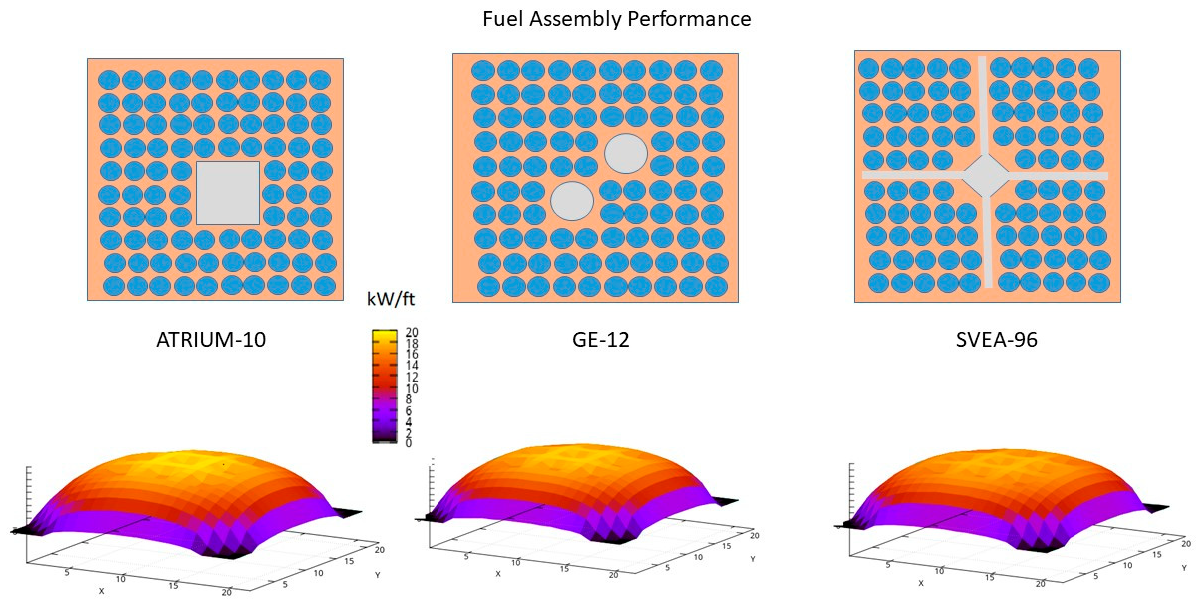
The present study has the objective of assessing the performance of three different BWR fuel designs, Atrium-10, GE-12, and SVEA-96, all of which have implemented the improvements mentioned above, but with a different perspective on the use of inner water channels and partial length rods, having in common a 10-by-10 fuel rod arrangement and different symmetry. At the fuel assembly level, comparisons will be made between enrichment and fuel design, as well as fuel pin power distributions. At the reactor core level, the analysis will show compliance with thermal limits and the cycle length.
2. BWR Fuel Assemblies Assessed [5]
The current main vendors of BWR fuel assemblies are Framatome, Siemens, and Global Nuclear Fuels. A comparative study examining the impact of symmetry differences is performed here, considering fuel assemblies with 10-by-10 arrays and different axial and radial enrichment distributions. The three designs considered must provide the same amount of energy; at the fuel-assembly level, the multiplication factor as a function of burnup must be very similar across them. At a reactor core level, it must produce the same cycle length. The initial reactor core, producing the same energy (cycle length), will have natural uranium fuel assemblies in the periphery, and enriched U-235 fuel assemblies in the central part.
Thus, to design these fuel assemblies, the most likely average enrichment for each design is considered. Specific radial and axial distributions are determined using engineering knowledge; these designs may exhibit different average enrichments attributable to the design itself, but they will provide the same energy when used in the initial reactor core.
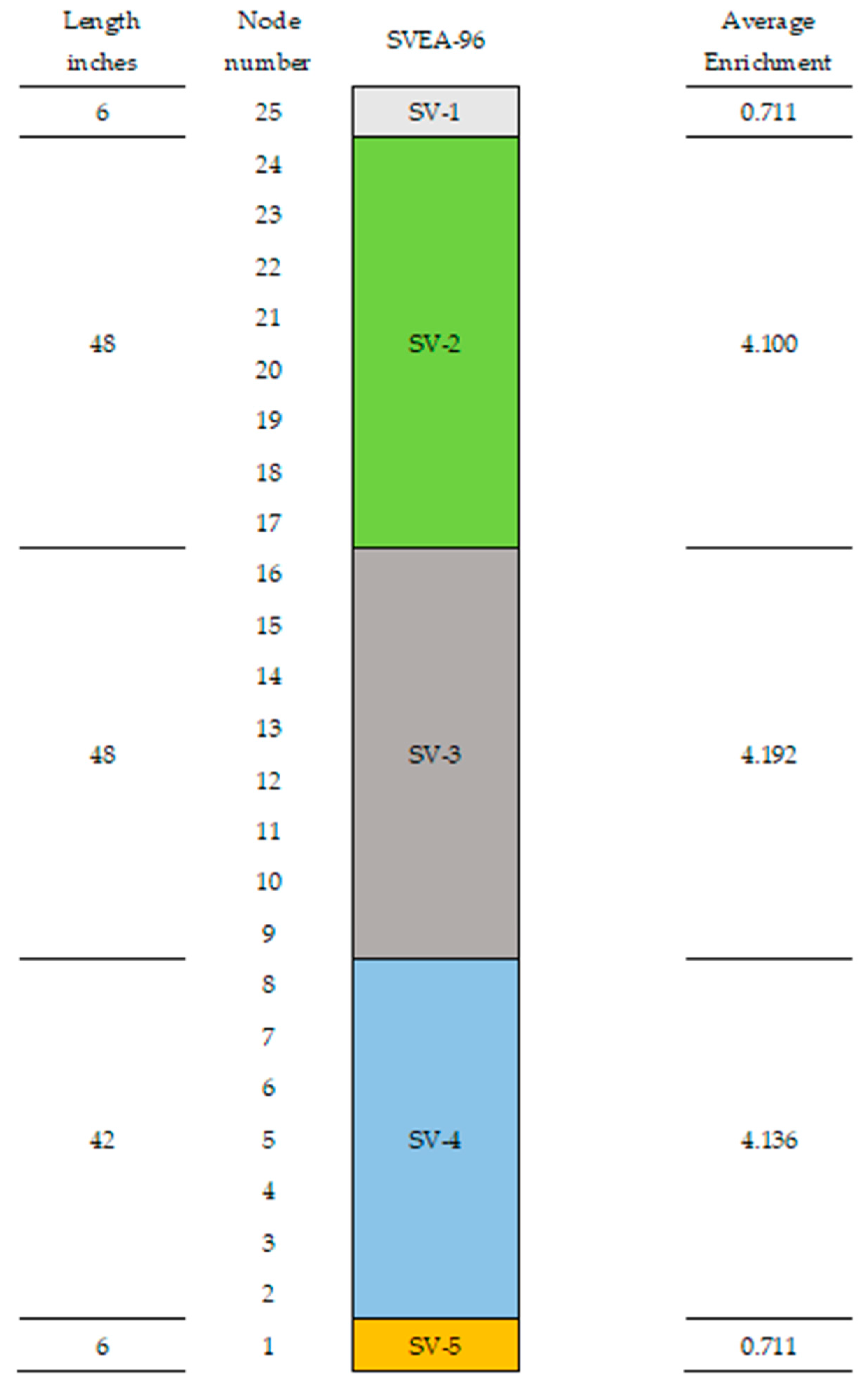
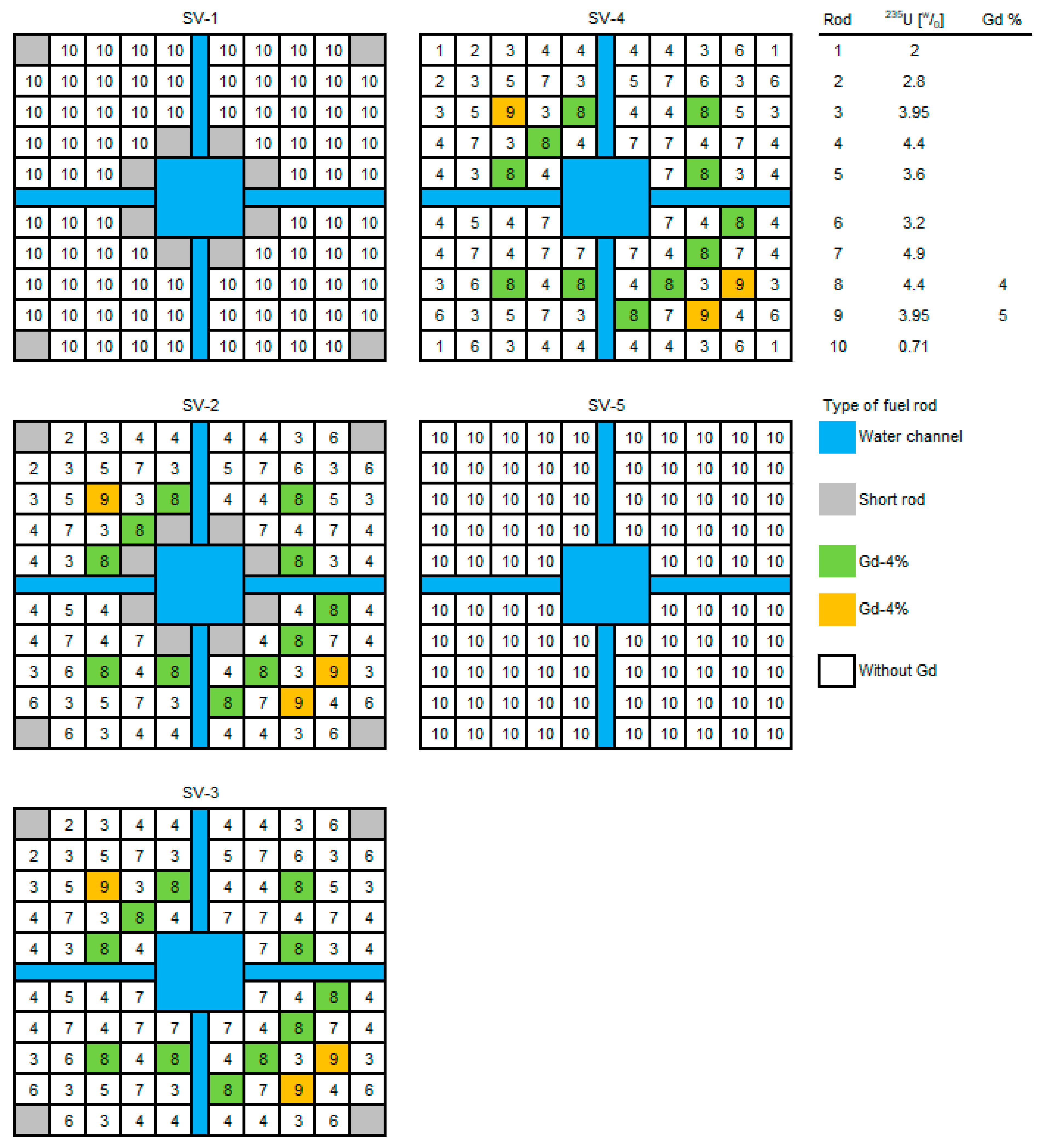
The active height of the BWR fuel assembly is 150 inches, divided into 25 planes, each 6 inches (15.24 cm) thick. SVEA-96 has an axial design composed of 5 sections, where the bottom section has a uniform radial composition of natural uranium; the top section (SV-1) includes 12 empty spaces due to the use of short rods in the four corners of the fuel assembly and 8 short rods around the central water channel [
6,
7]. It has a uniform radial composition of natural uranium; these short rods are also in the SV-2 cell type. The SV-3 fuel cell type has only short rods at the corners, whereas the SV-4 has none.
Figure 1 shows its axial distribution, and
Figure 2 shows the corresponding radial distributions; these fuel cell types maintain half-enrichment symmetry from top-left to bottom-right.
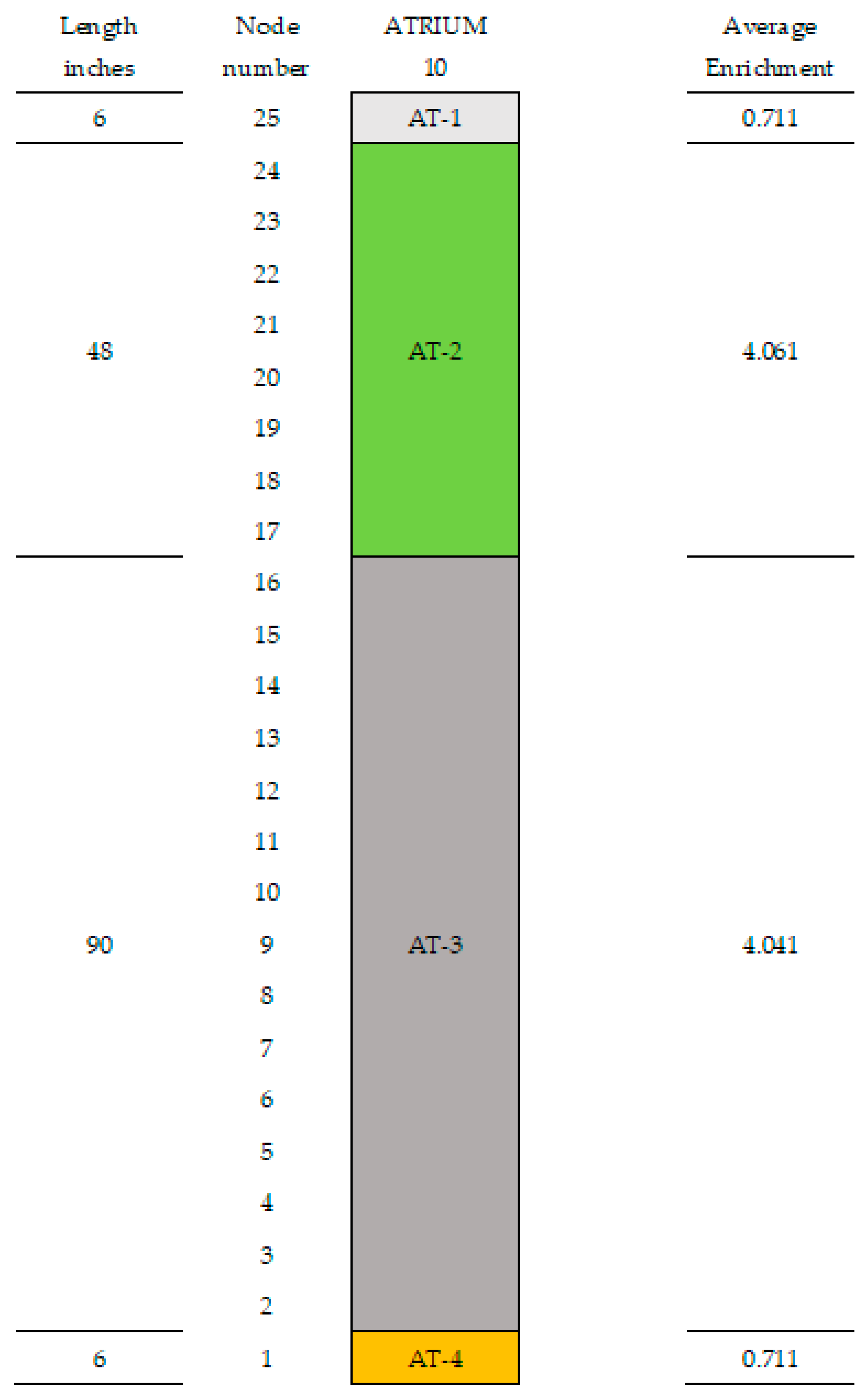
The Atrium fuel assembly design consists of four axial sections, with the top and bottom sections containing natural uranium (
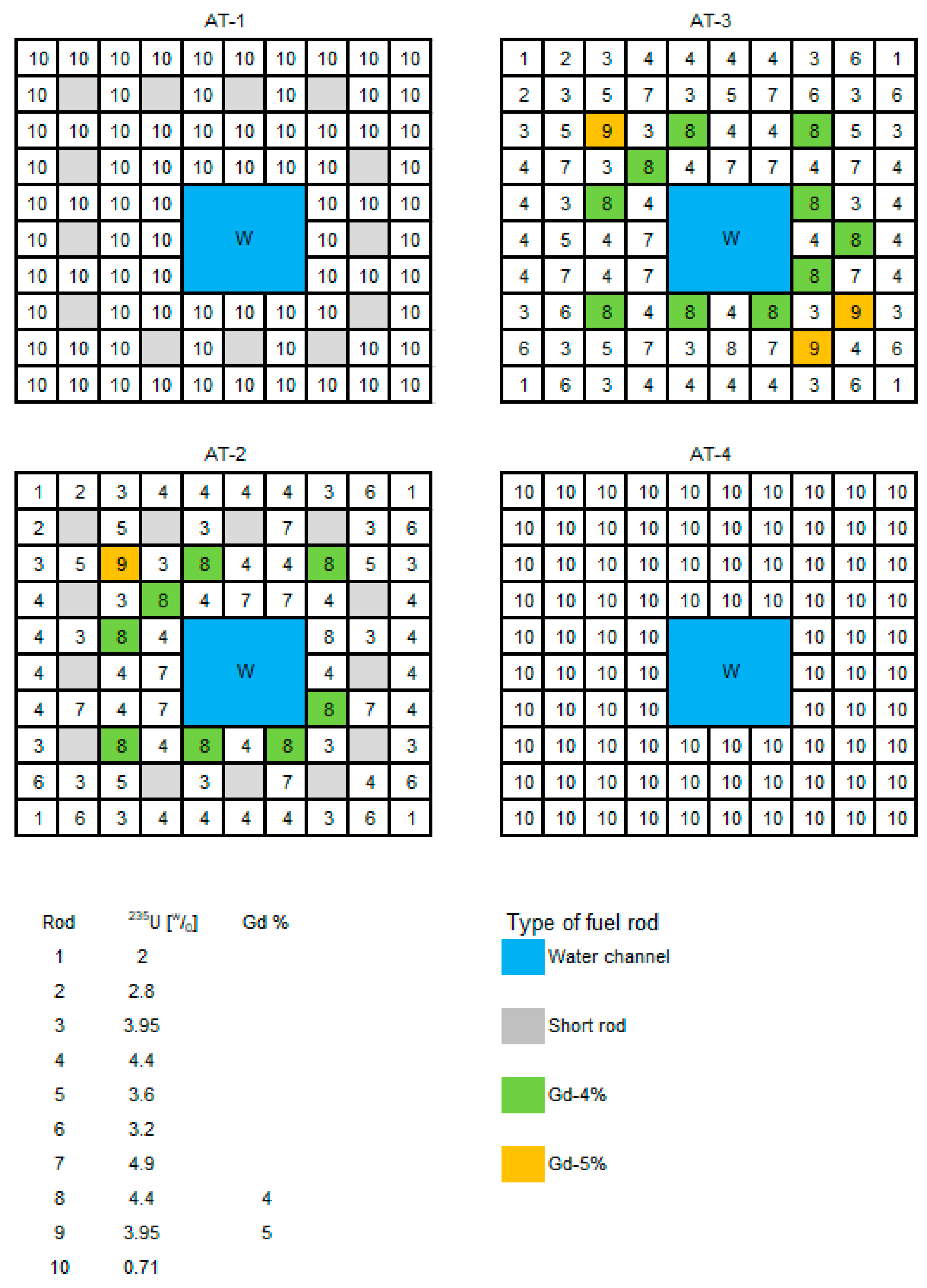
Figure 3). The top section contains 13 short rods, which are also present in the AT-2 section. Atrium fuel cells maintain half-enrichment symmetry from top-left to bottom-right [
8,
9], as shown in
Figure 4.
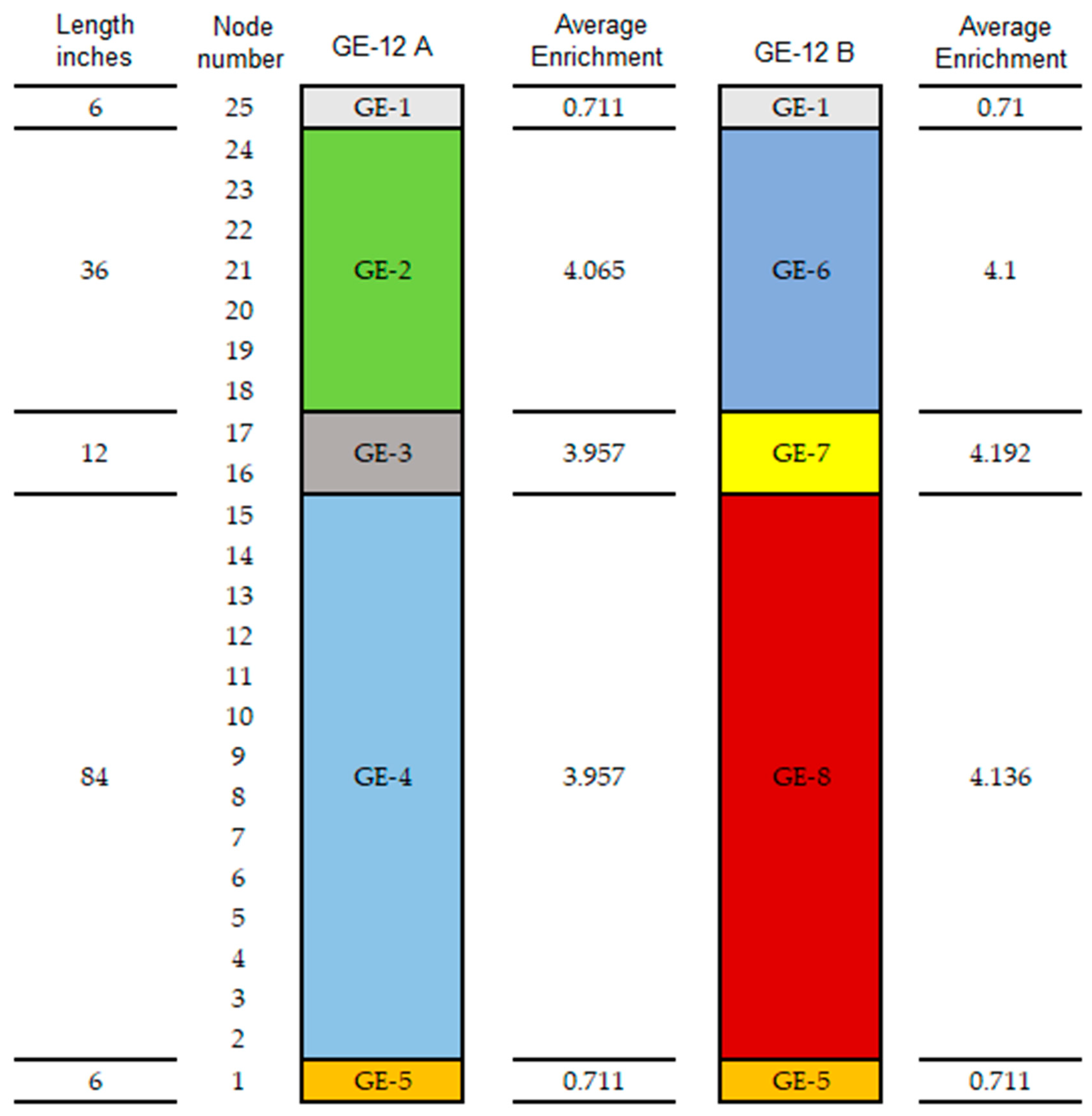
GE-12 has two fuel assemblies, each composed of five axial sections, with the top and bottom sections containing natural uranium.
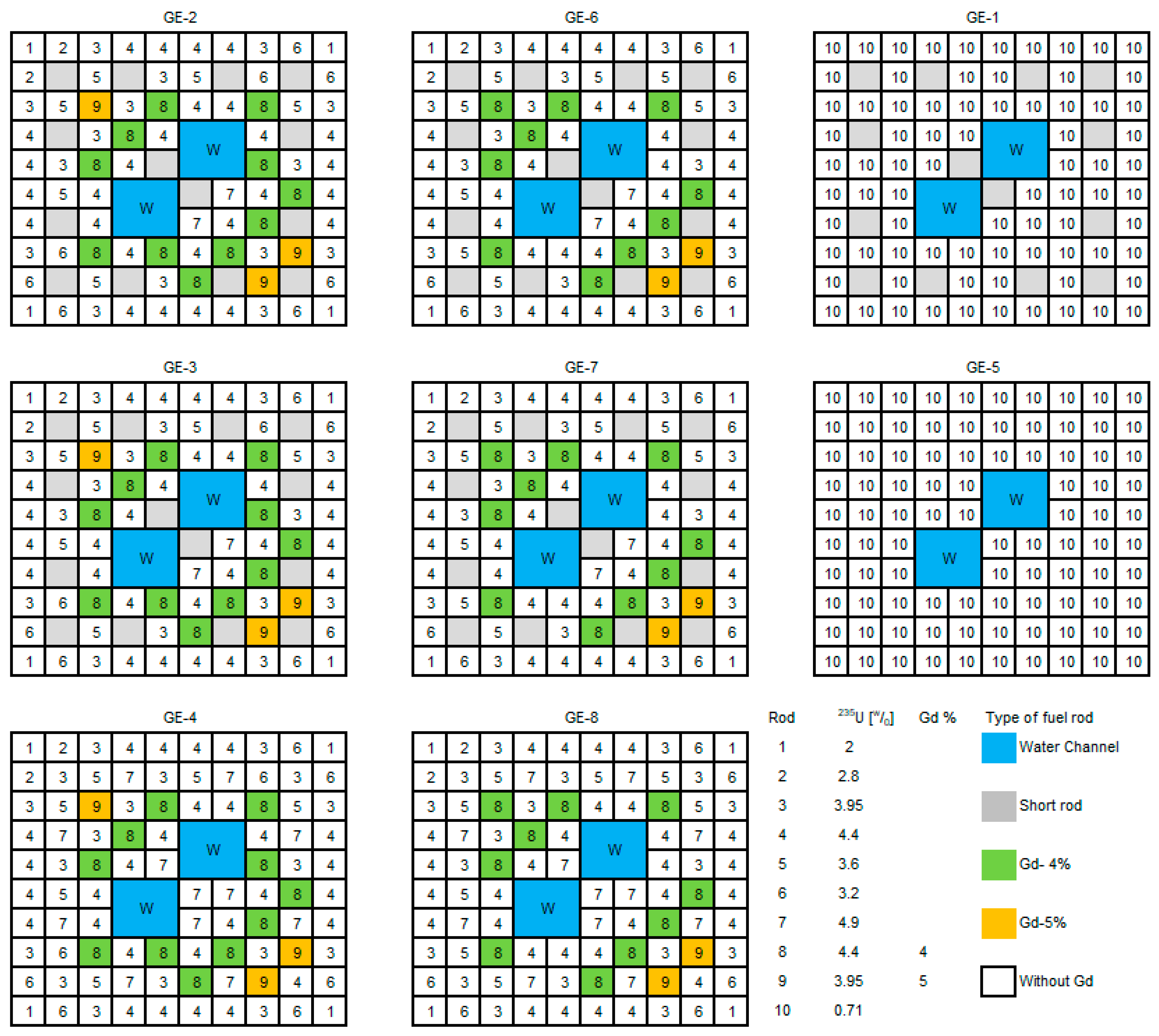
Figure 5 shows these designs. Both designs have 14 short rods that are in the GE-1, GE-2, GE-3, GE-6, and GE-7 sections. GE-12 fuel cells maintain half-enrichment symmetry from top-left to bottom-right [
10,
11];
Figure 6 shows these fuel cells. Reference [
5] contains the geometric description of these fuel assemblies. The use of gadolinium reduces the net enrichment of the uranium fuel pins.
3. BWR Fuel Assembly Performance
The performance of the three fuel assemblies described above was simulated using the CASMO-4 code [
12], and the resulting k-infinity values were compared. CASMO-4 solves the neutron transport equation in two dimensions and is used to generate the homogenized cross-section for each fuel cell type in the three fuel assemblies assessed. To validate the use of CASMO-4 calculations, the k-infinity for a vendor reference fuel assembly is compared with the vendor information [
13] obtained using the vendor’s own code [
14]; the results show relative differences of less than 500 pcm in reactivity (Δk/k) [
15]; here, pcm stands for per cent mille (10
−5) of reactivity. This value is considered acceptable for this type of simulation [
16,
17], indicating adequate modeling for this analysis.
Table 1 shows the main characteristics of the fuel assemblies assessed: number of fuel zones, number of fuel pins, average enrichment, and number of fuel pins with gadolinium. With the axial and radial distributions for each fuel assembly lattice cell given in
Figure 1,
Figure 2,
Figure 3,
Figure 4,
Figure 5 and
Figure 6 and the geometric information given in reference [
5], each one of the cells is modeled in CASMO-4.
The uranium enrichment between the Atrium and the GE fuel assemblies is very similar; meanwhile, SVEA-96 has a slightly higher enrichment, differing by less than 0.09%. From CASMO-4 simulations, the radial power distribution for each fuel assembly is obtained.
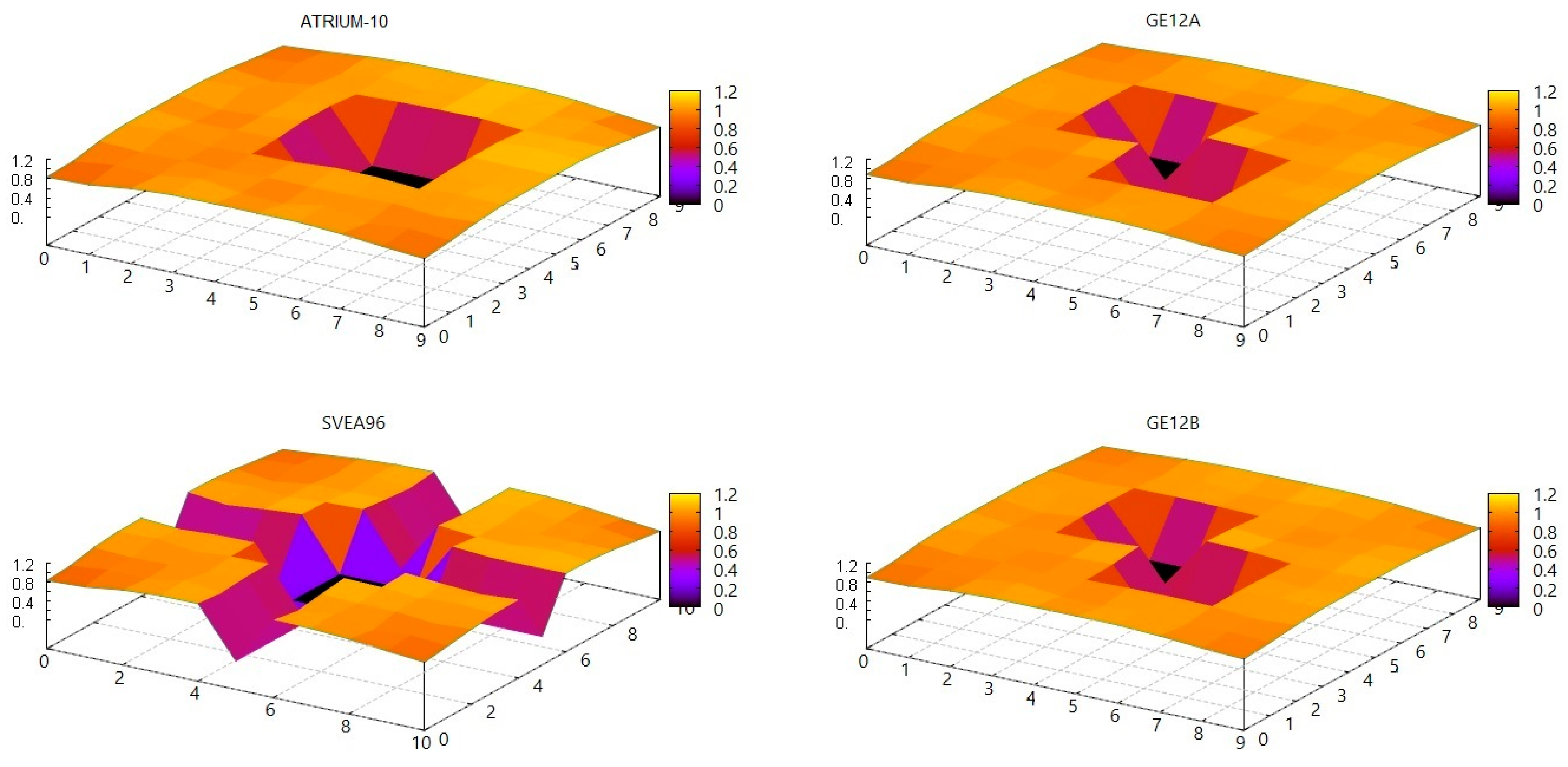
Figure 7 shows this normalized power distribution for cell types AT-2, SV-3, GE-2, and GE-6. SVEA-96 (SV-3) shows a quarter-power distribution fuel assembly symmetry; GE-12 A (GE-2) and B (GE-6) show a half-power distribution fuel assembly symmetry, but they have two different symmetry axes; and finally, the ATRIUM-10 (AT-2) shows a half-power distribution fuel assembly symmetry with one symmetry axis.
Normalized power distribution for SVEA-96 and GE-12 B shows a swing from 0.8 to 1.15, a difference of 0.35; ATRIUM shows a swing from 0.8 to 1.2, a difference of 0.4; and GE-12 A shows a swing from 0.75 to 1.15, a difference of 0.4. These results confirm that power distribution is uniform across all fuel designs, with better symmetry in SVEA-96 and GE-12. However, across all fuel assemblies, the difference between the highest and lowest values is within the same range, with no significant differences affecting their physical integrity.
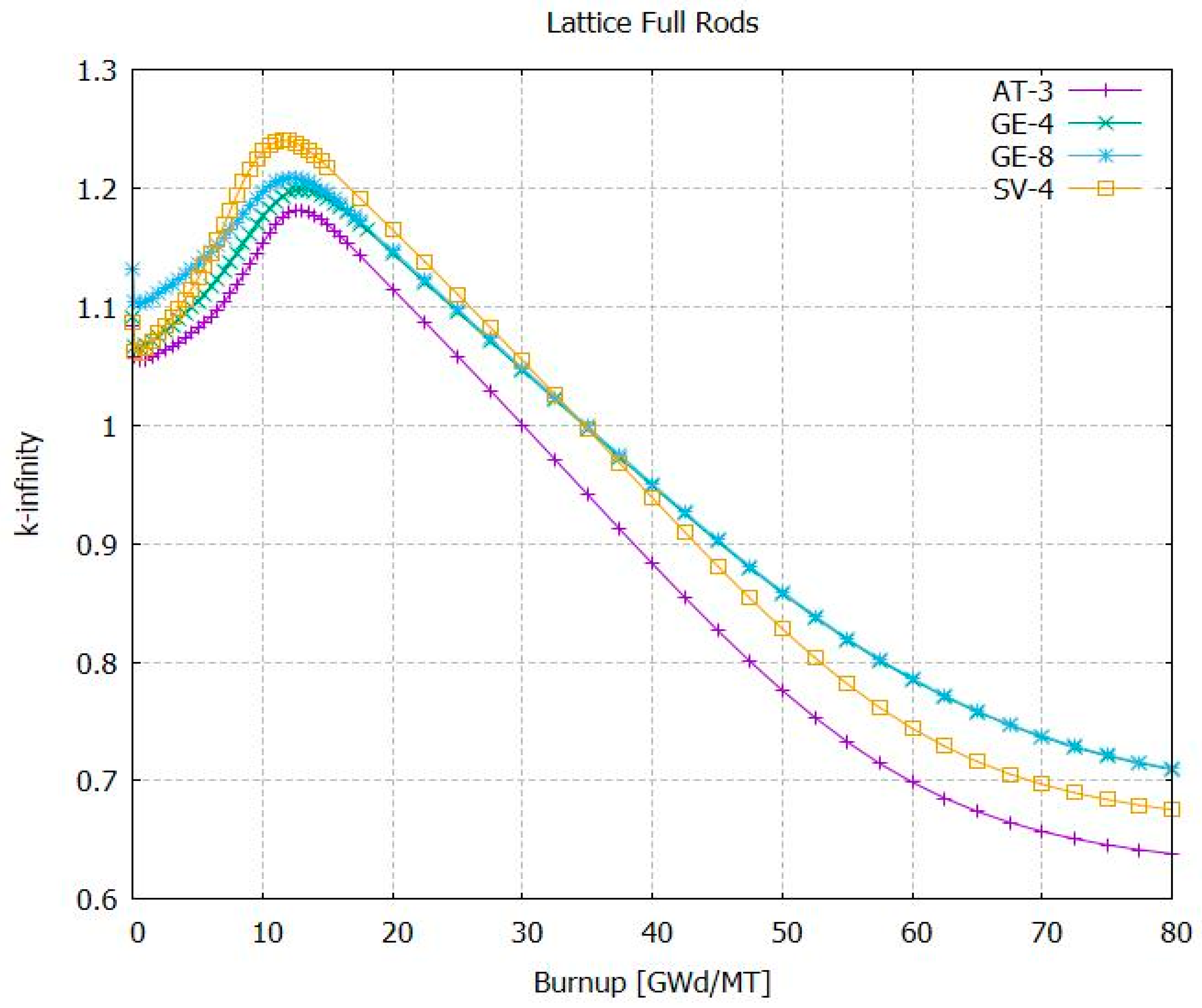
Figure 8 shows the infinite multiplication factor for the cell without short rods for each fuel assembly design. As expected, GE-12 A and B behave similarly to one another after the gadolinium depletes fully, which occurs around 13 GWd/MT. The differences at the beginning are because they contain different amounts of gadolinium rods: GE-4 has 14 gadolinium rods, and GE-8 has 12 gadolinium rods.
AT-3 has 13 gadolinium rods; meanwhile, GE-8 and SV-4 have 14 gadolinium rods. They start from the same k-infinity value and reach a maximum around 13 GWd/MT. However, SV has a higher k-infinity value than GE-4, GE-8, and AT-3, due to greater neutron energy thermalization in the water channel and the cross-water distribution. This is followed by the GE-4 and GE-8, which have two inner water channels replacing eight fuel rods, and the lower value is for the AT-3, which has an inner water channel replacing nine fuel rods. The latter two designs are more similar in the number of fuel rods replaced by water channels; however, the GE-12 design is more symmetrical, improving its performance in k-infinity behavior.
SV-4, GE-4, and GE-8 reach subcriticality (k-infinity < 1) around 35 GWd/MT, indicating their equivalence in producing the same amount of energy, while AT-3 reaches subcriticality around 30 GWd/MT. An increase in moderation within the fuel assembly results in a higher thermal fission rate, which could explain the higher k-infinity value for the SV-4.
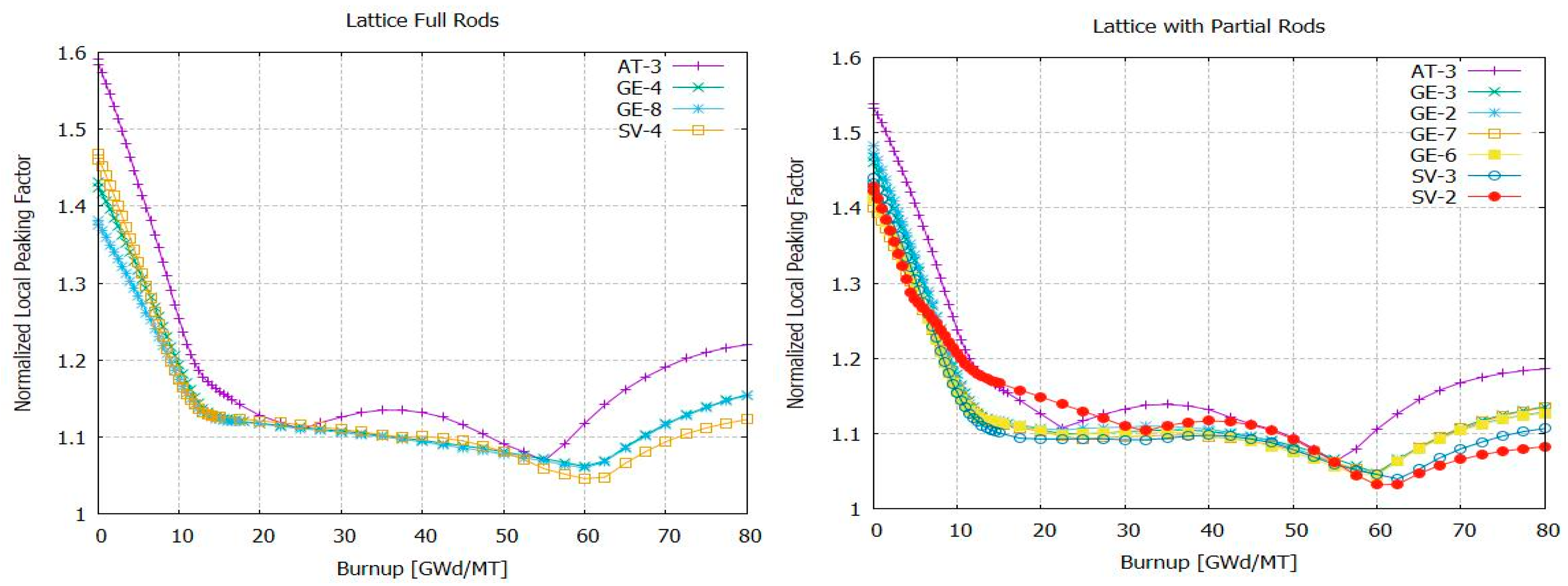
The ratio of the highest power to the average over the fuel assembly is called the local peaking factor, which indicates the maximum allowable power density in the fuel assembly. In current fuel designs, it must be below 1.65 to have safe fuel assembly performance.
Figure 9 shows the local peaking factor behavior across the cells of the fuel assembly as a function of burnup for the assessed designs. The maximum power peaking factor in all cases is below 1.65, which satisfies this safety condition. In addition, the behavior of the fuel cells with short rods shows closer agreement among all the cells considered and a lower peaking factor, which can be attributed to increased water moderation.
4. Reactor Core Performance
To test the performance of these fuel assemblies, a Boiling Water Reactor (BWR) core was modeled, and its operation for one cycle was simulated using the SIMULATE-3 code [
18]. To validate the use of SIMULATE 3, a vendor core is modeled and simulated, and the resulting effective multiplication factor is compared with the vendor-provided data [
19] using the vendor’s code [
20]. The results show relative differences less than 100 pcm, which is an acceptable value [
21].
Here, the nuclear data generated from CASMO-4 for each fuel cell type, along with the reactor core characteristics, which are depicted in
Table 2, and the core configuration given in
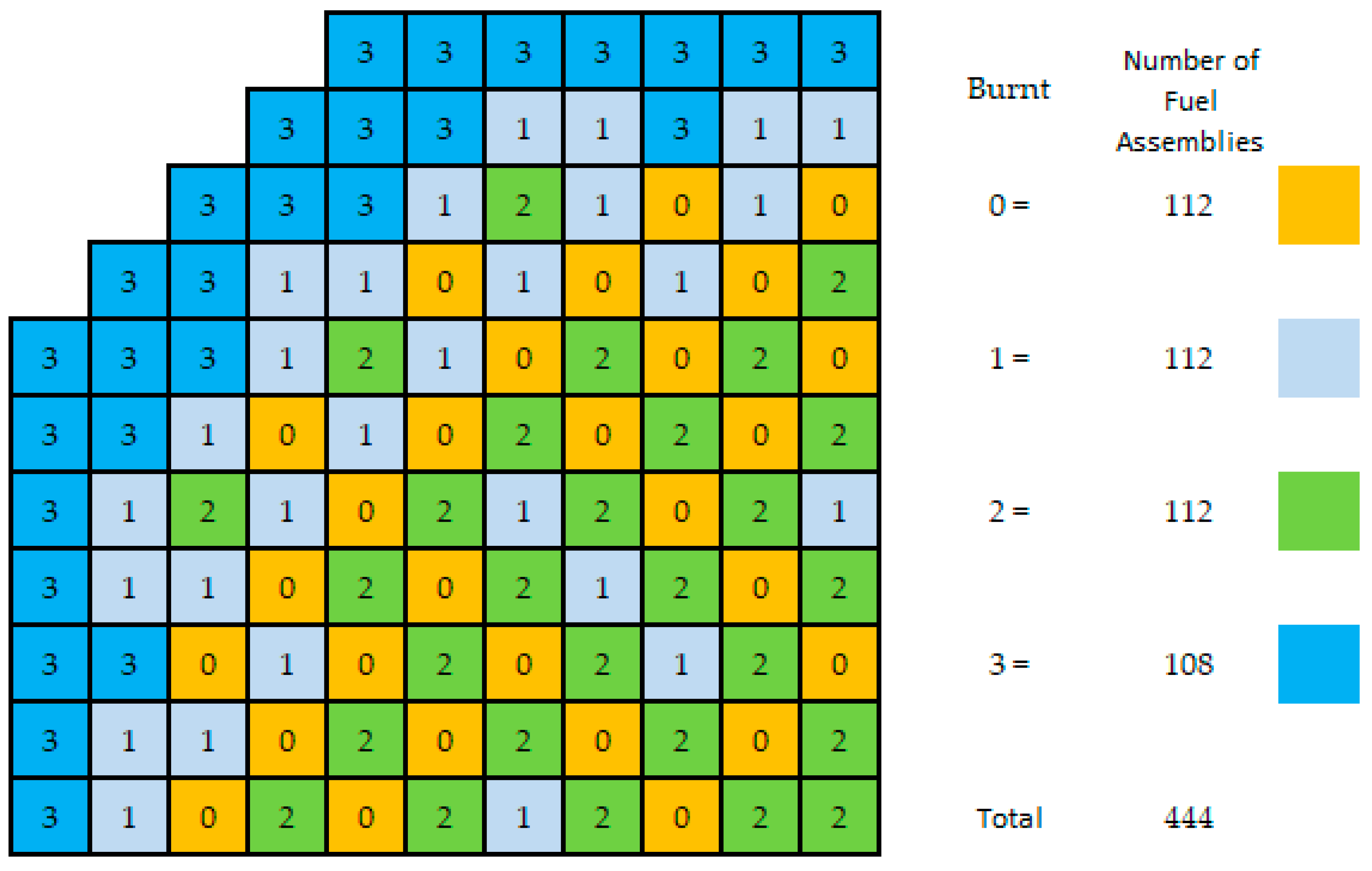
Figure 10, which exhibits an octant core geometry, are used to build the model for each reactor for each type of fuel assembly.
Figure 10 shows the fuel arrangement for a quarter core symmetry.
The reactor core is composed of four batches of fuel assemblies: fresh (0), once-burnt (1), twice-burnt (2), and three-times-burnt (3). The fuel reload is of the low-leakage type, to avoid excess reactivity in the reactor vessel and to provide a more uniform power distribution. The peripheral fuel assemblies are three-times-burnt.
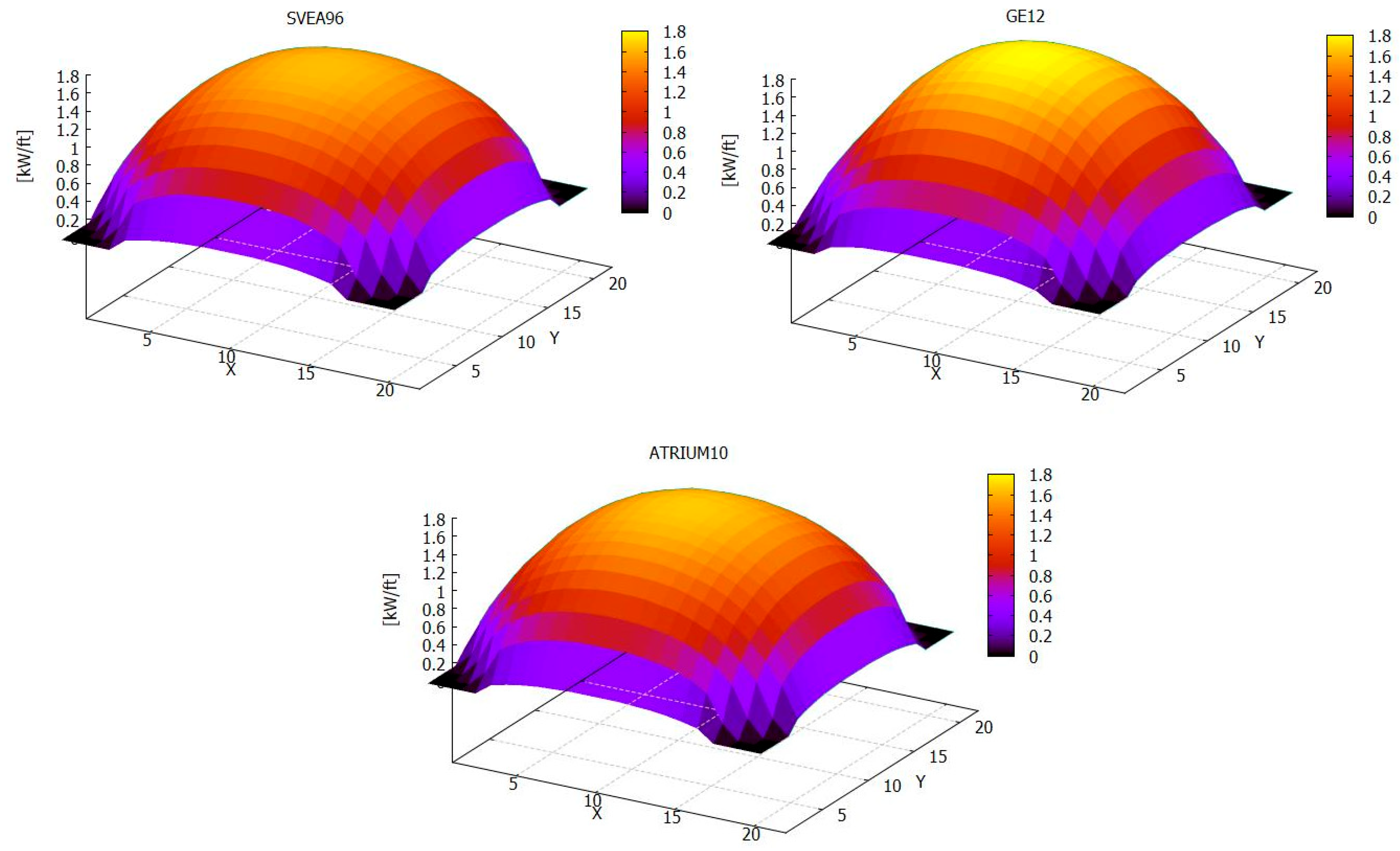
Figure 11 shows the power distribution in these reactor cores at the beginning of the cycle, and
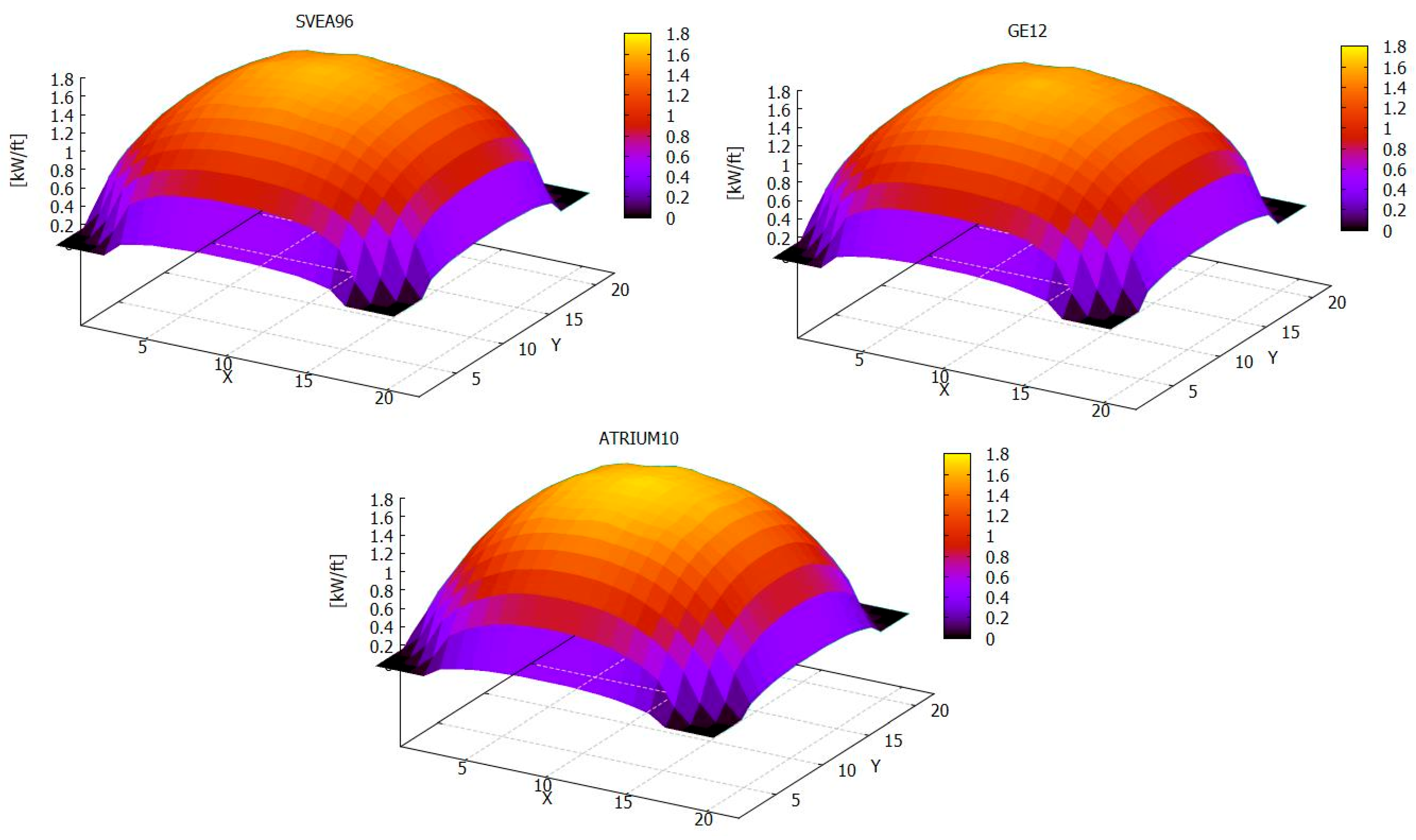
Figure 12 shows it at the end of the cycle. The normalized power goes from 0 to 1.8. The power distribution is homogeneous across all cores, with peaks in the central region not exceeding 1.8; however, at the beginning of the cycle, the SVEA-96 core exhibits the lowest values, followed by the ATRIUM-10 core, and finally the GE-12 core.
By the end of the cycle, the reactor core power distribution remains homogeneous, with power peaks within safety limits, which for the normalized axial power must be below 2.0 [
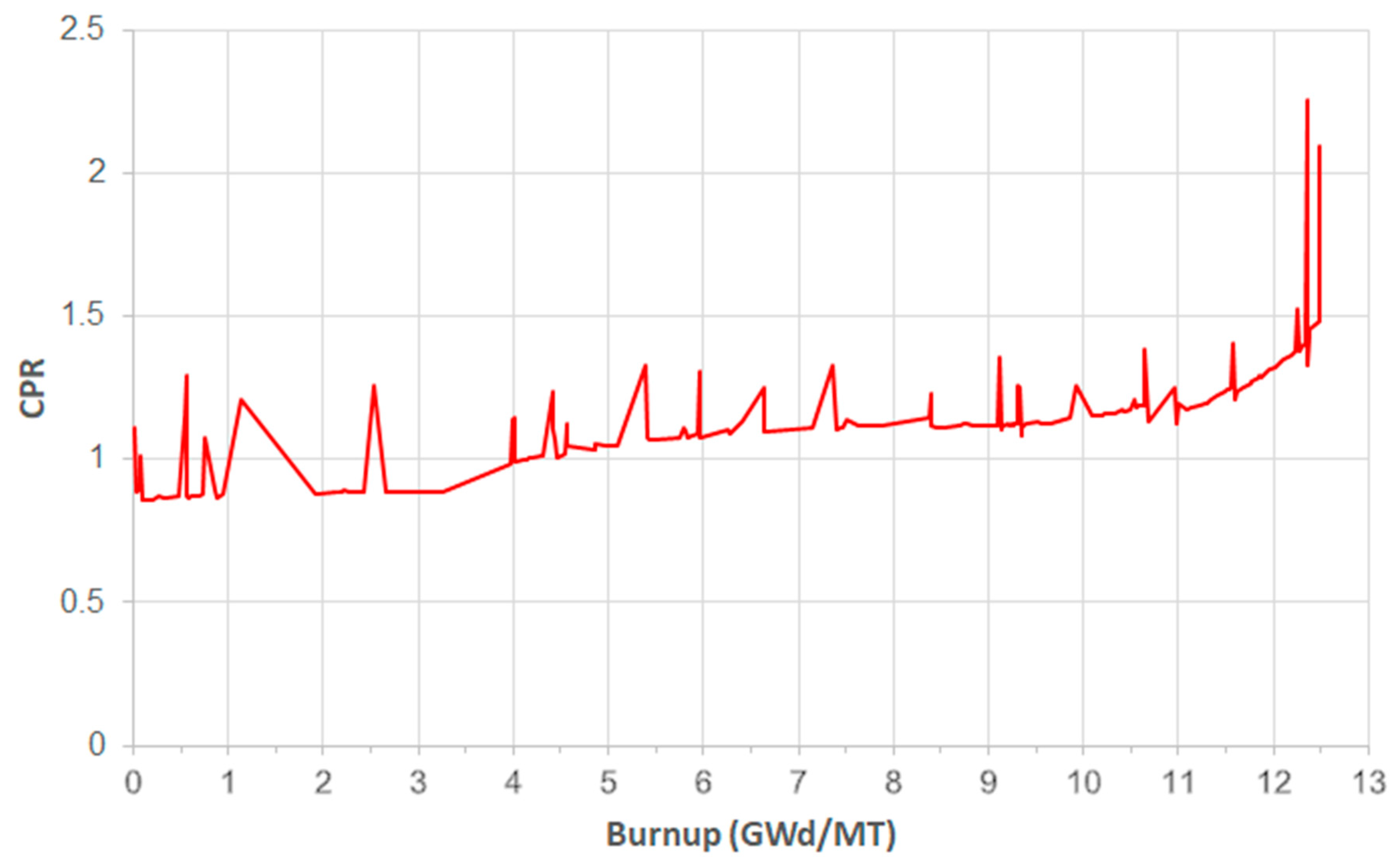
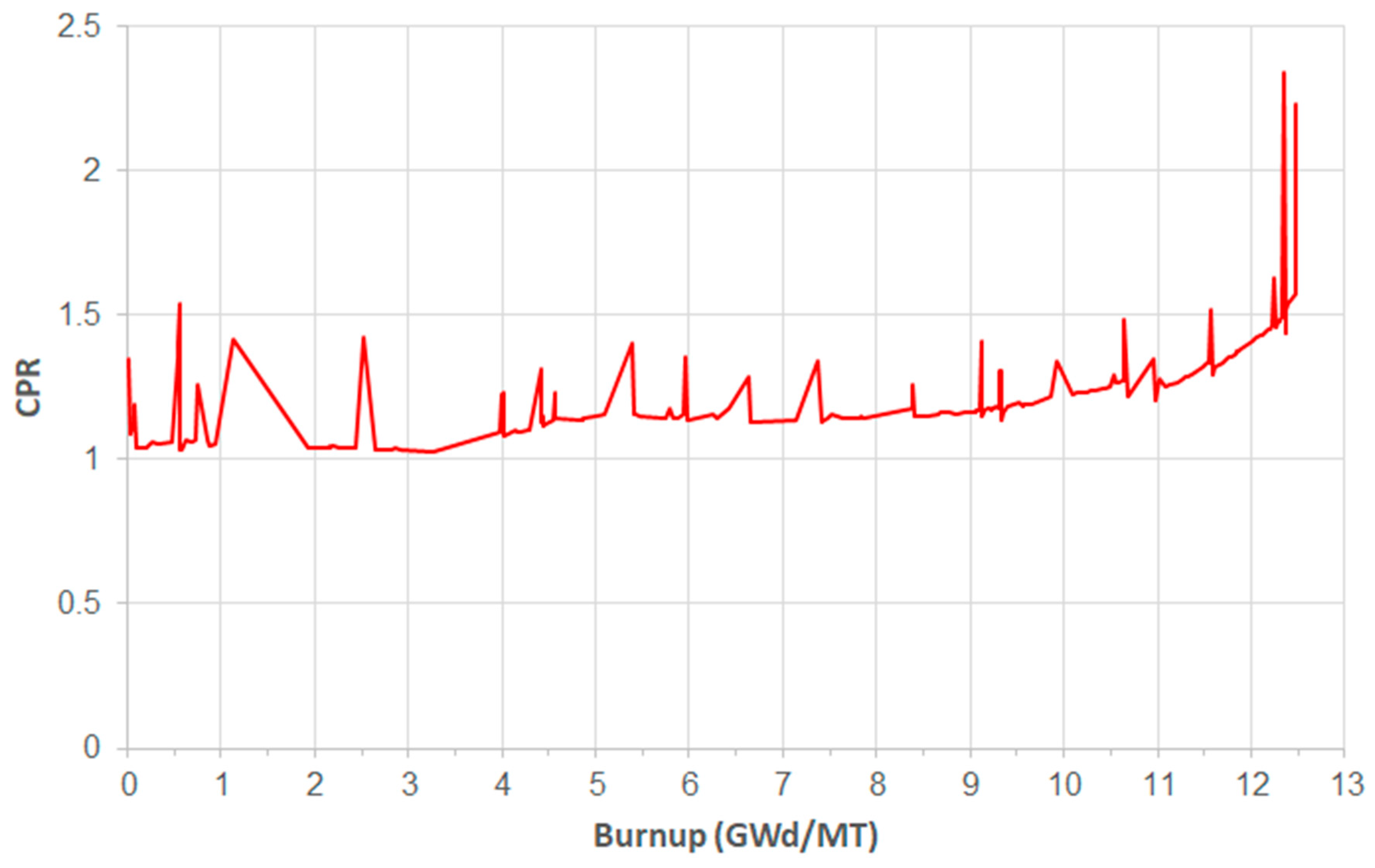
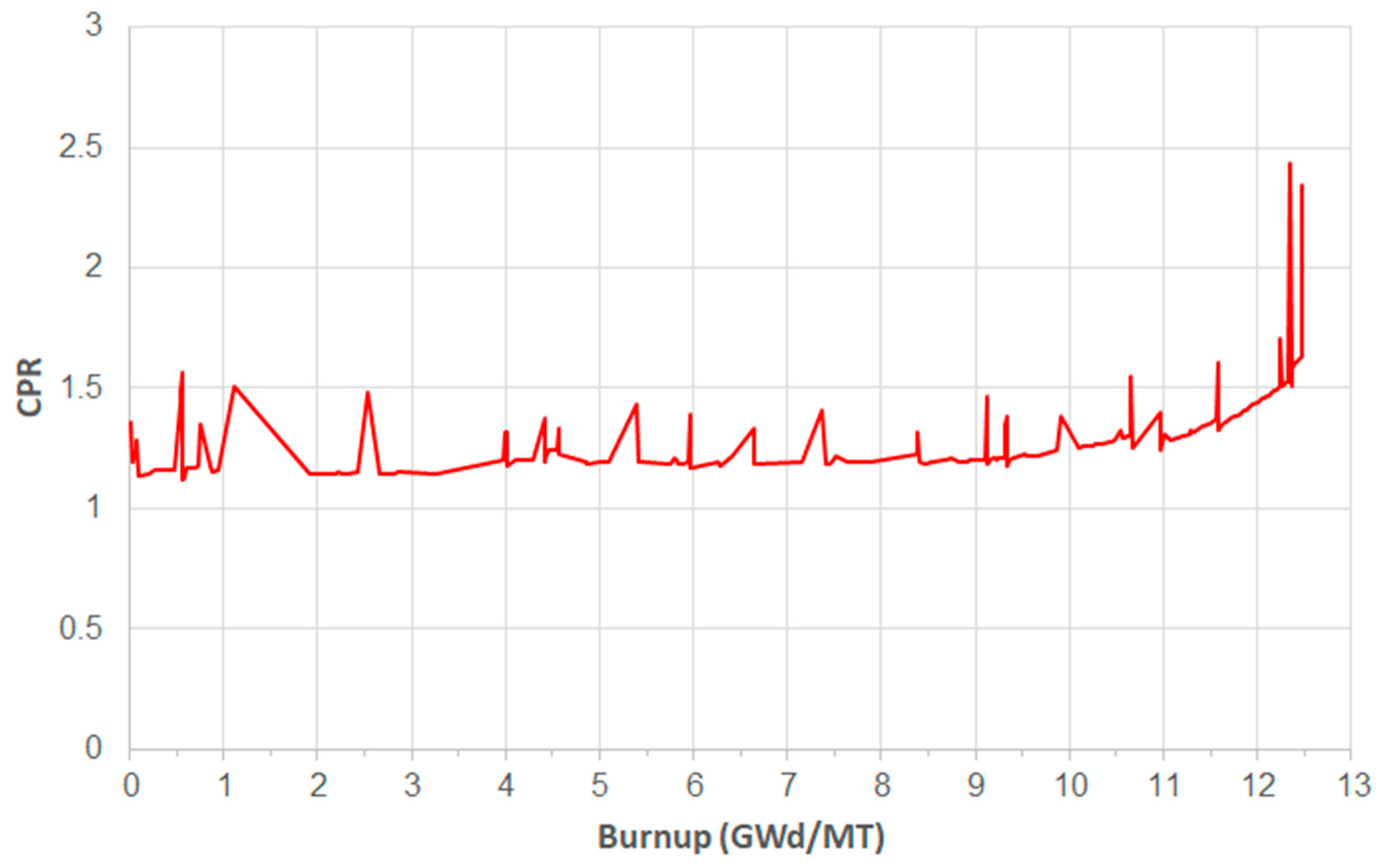
22]. However, the SVEA-96 reactor core has the lowest power distribution, followed by the GE-12 and Atrium-10 cores. At the end of the cycle, ATRIUM-10 will have fuel assemblies with lower burnup and higher reactivity, producing higher power peaks. This behavior of ATRIUM-10 fuel assemblies demonstrates the impact of the symmetric design compared with the other two designs. To validate the adequate performance of these fuel assemblies inside the reactor core, the critical power ratio (CPR) is reported for each fuel assembly design. This safety limit is set to be greater than 1 to ensure that, during the most limiting Anticipated Operational Occurrence (AOO) transient, accounting for uncertainties in monitoring the core operating state, 99.9% of the rods in the core are expected to avoid boiling transition [
22].
Figure 13,
Figure 14 and
Figure 15 show the behavior of this safety limit for the three fuel assembly designs considered.
GE-12 and SVEA cores exhibit CPR values greater than 1 for all burnup steps; the ATRIUM core shows values less than 1 at the beginning of the cycle, making it unsuitable. Possibly, the reactor fuel core arrangement must be modified to satisfy this limit, but this is beyond the scope of the current study.
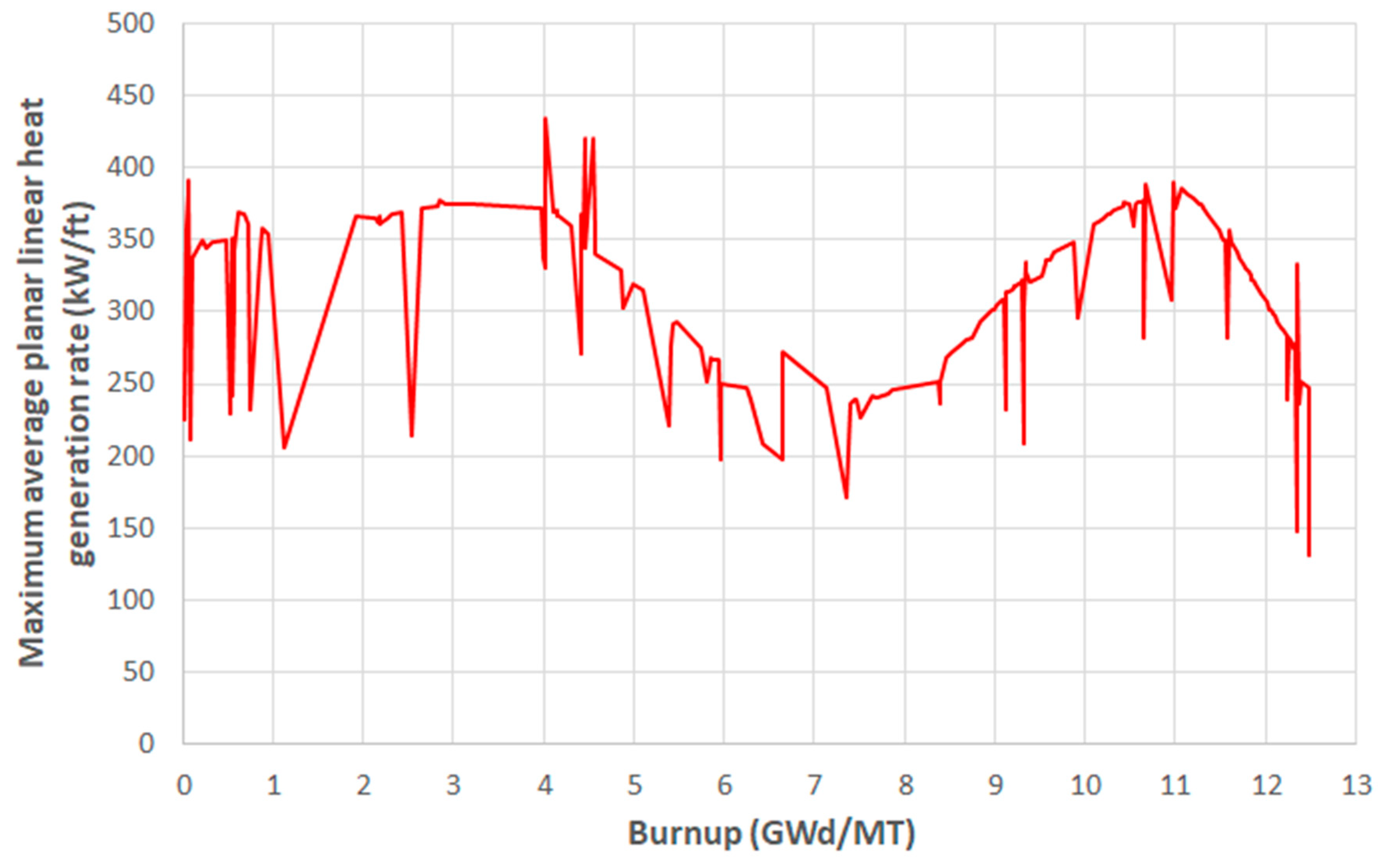
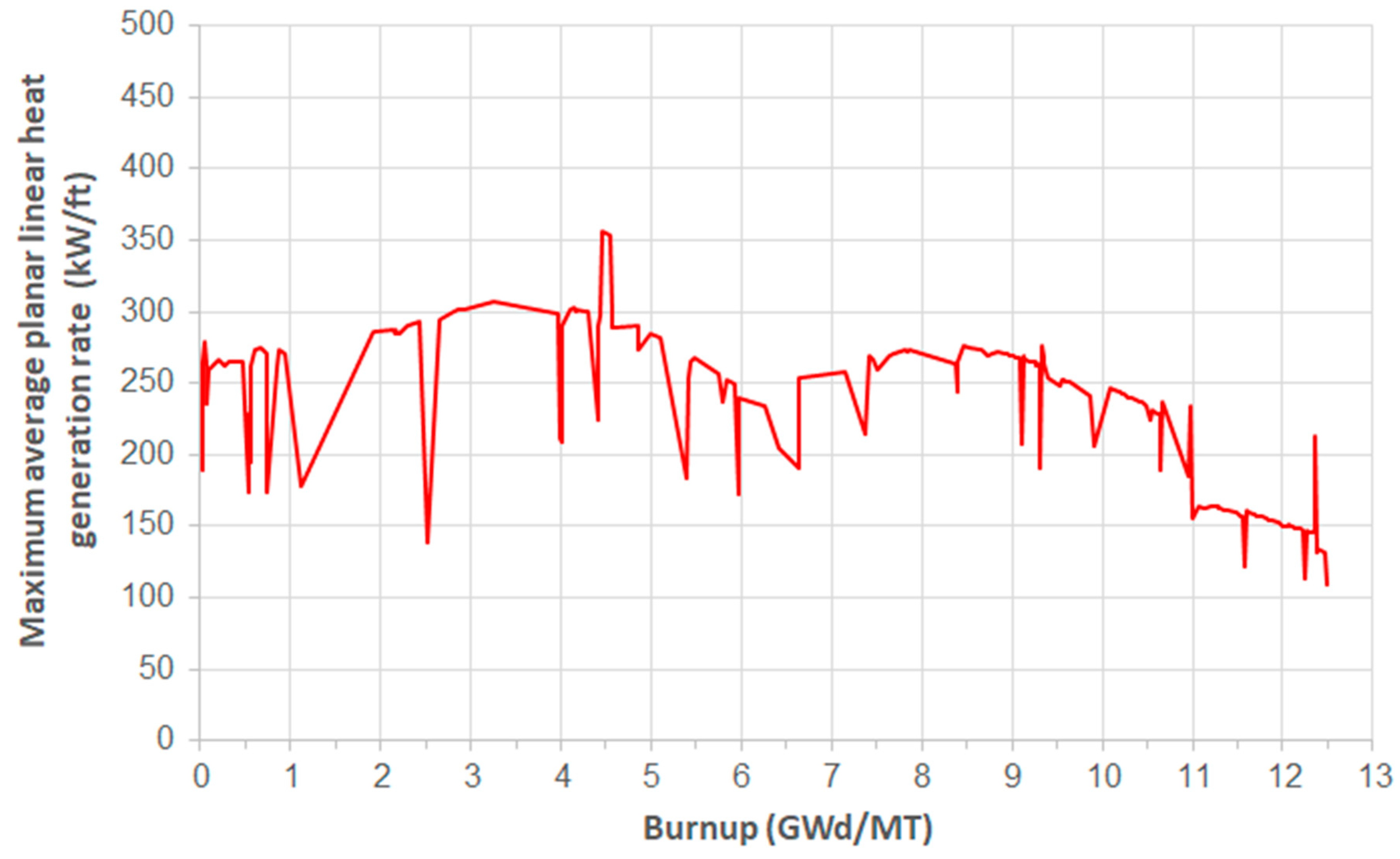
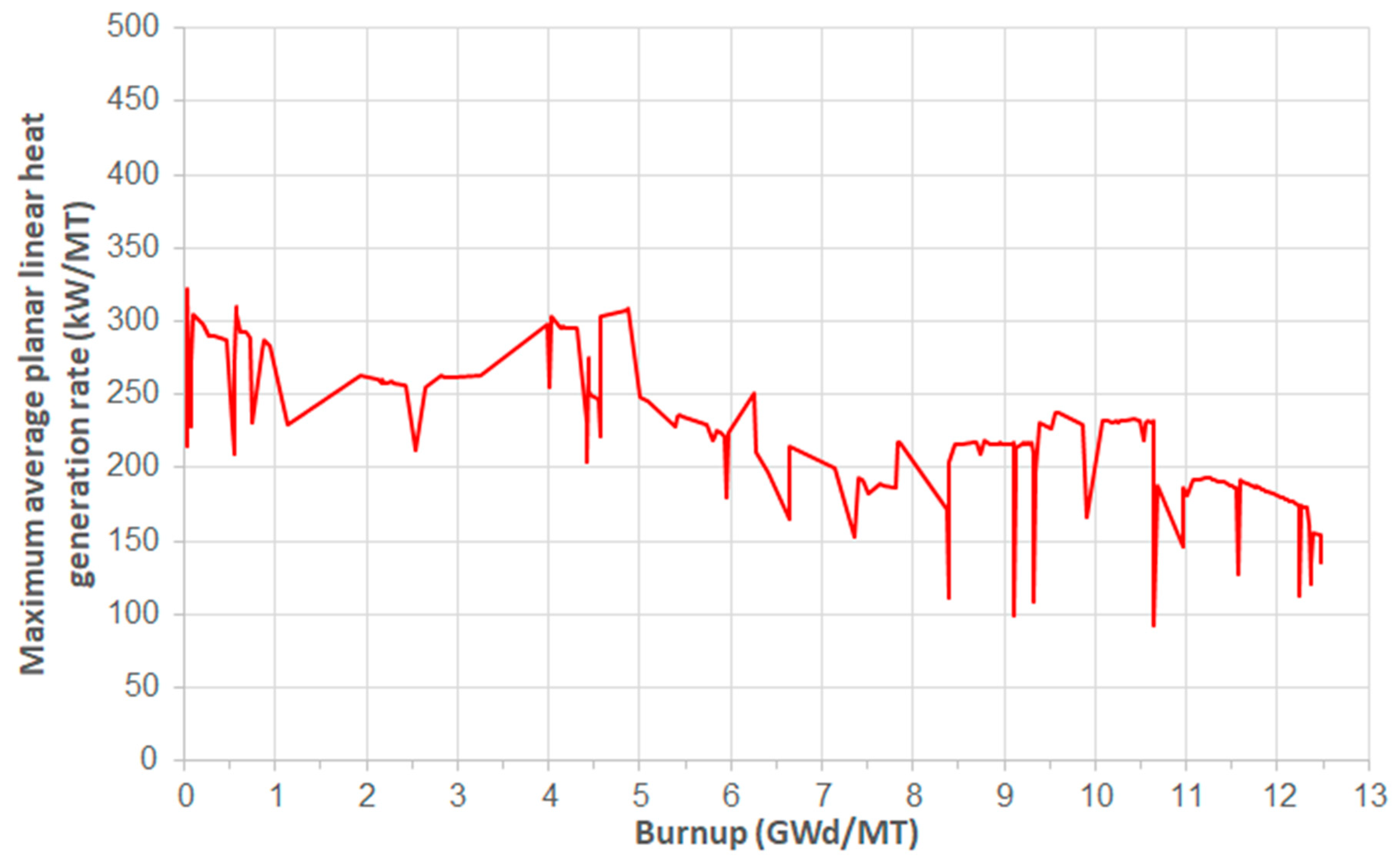
The maximum average linear heat generation rate is another safety limit in reactor core operation, ensuring fuel integrity during a loss-of-coolant accident or a design-basis accident. It depends on specific reactor operating conditions; in this case, it must be below 400 kW/ft.
Figure 16,
Figure 17 and
Figure 18 show this behavior. The ATRIUM reactor core does not meet this safety condition, as mentioned before; it could be fixed with a different fuel assembly arrangement, but this is beyond the scope of this study.
Table 3 shows the cycle length and maximum and minimum burnup at the end of the cycles for the three fuel assemblies considered. It is observed that the ATRIUM core does not reach the whole cycle length. This type of fuel assembly requires higher enrichment to compare its performance with the SVEA-96 and the GE-12. On the other hand, the symmetry indicates a balanced core burnup across the three fuel assembly types, with differences of less than 0.05 GWd/MT.
5. Conclusions
Nuclear energy is not a renewable source of electricity. However, it can benefit from better fuel assembly designs to enlarge its resources. Symmetry in the fuel assembly design plays a very important role in this.
This study assesses three fuel assembly designs; each has a symmetric design with slightly different U-235 enrichment to generate the same energy when loaded into a BWR core. At the fuel assembly level, the one with only one symmetry axis exhibits shorter performance than the one with four symmetry axes. However, the performance of the three fuel assemblies is within safety limits, showing similar behavior without local peaking factors that could affect fuel assembly integrity.
At the reactor core level, the use of these fuel assemblies results in a more uniform reactor power distribution for assemblies with four symmetry axes at the beginning and end of the cycle, implying more uniform burnup and maximizing their use.
The other two fuel assemblies assessed show similar behavior: a more uniform distribution at the beginning of the cycle for the one with two symmetry axes. However, the one with only one symmetry axis gets shorter to achieve the cycle length, requiring a higher enrichment.
The differences observed in this study are not definitive; the performance of these fuel assemblies in a BWR core must be tested under transient conditions to determine whether one design offers an advantage over the others.