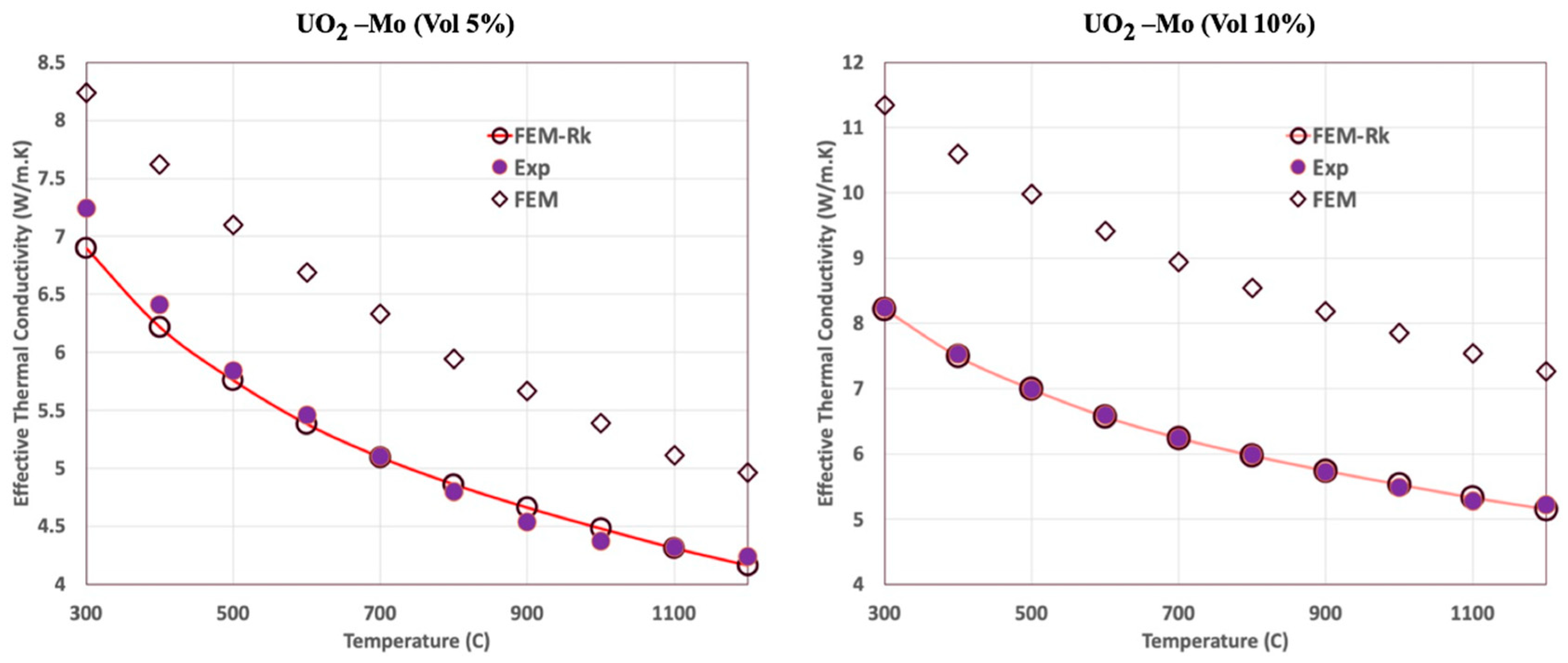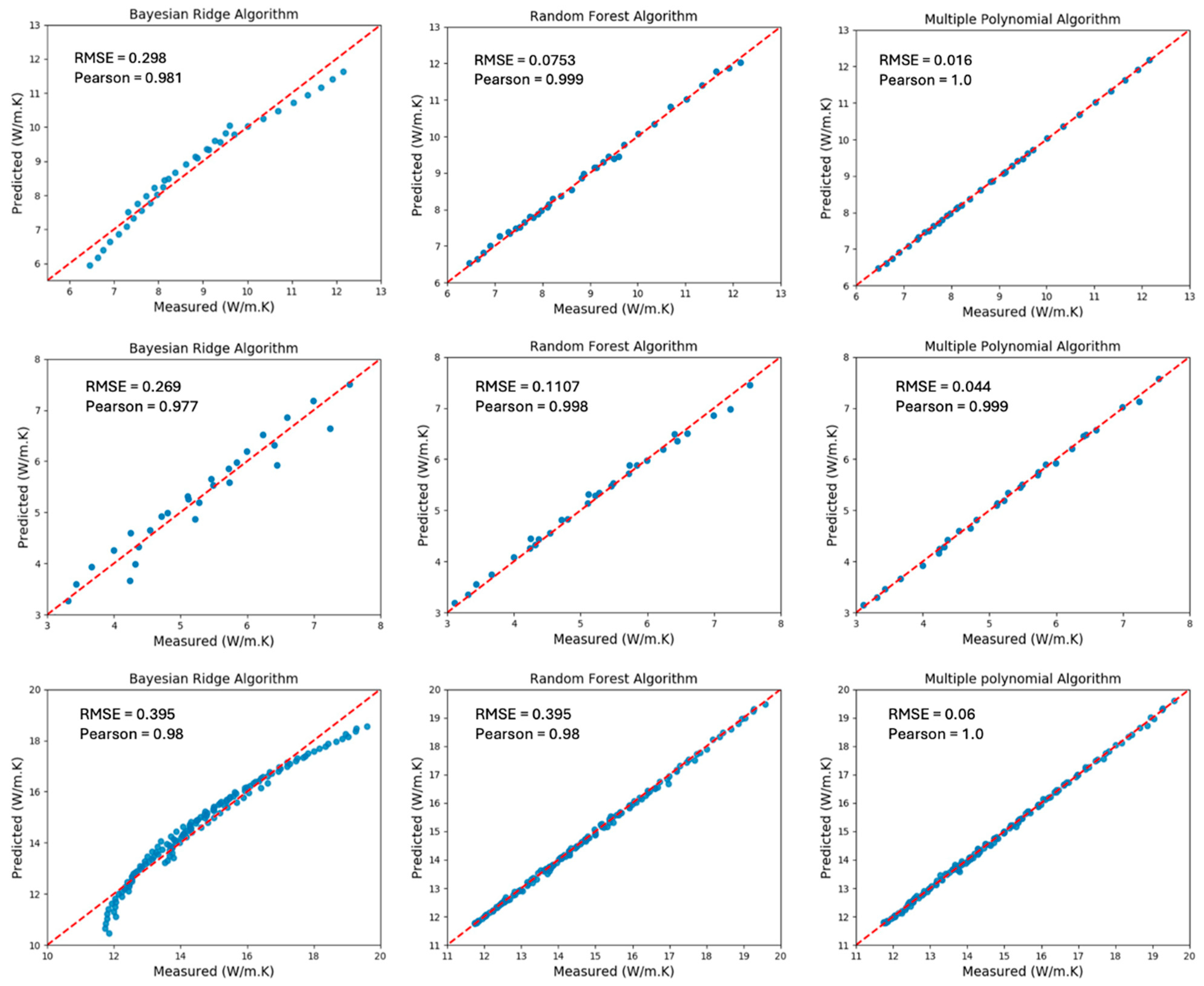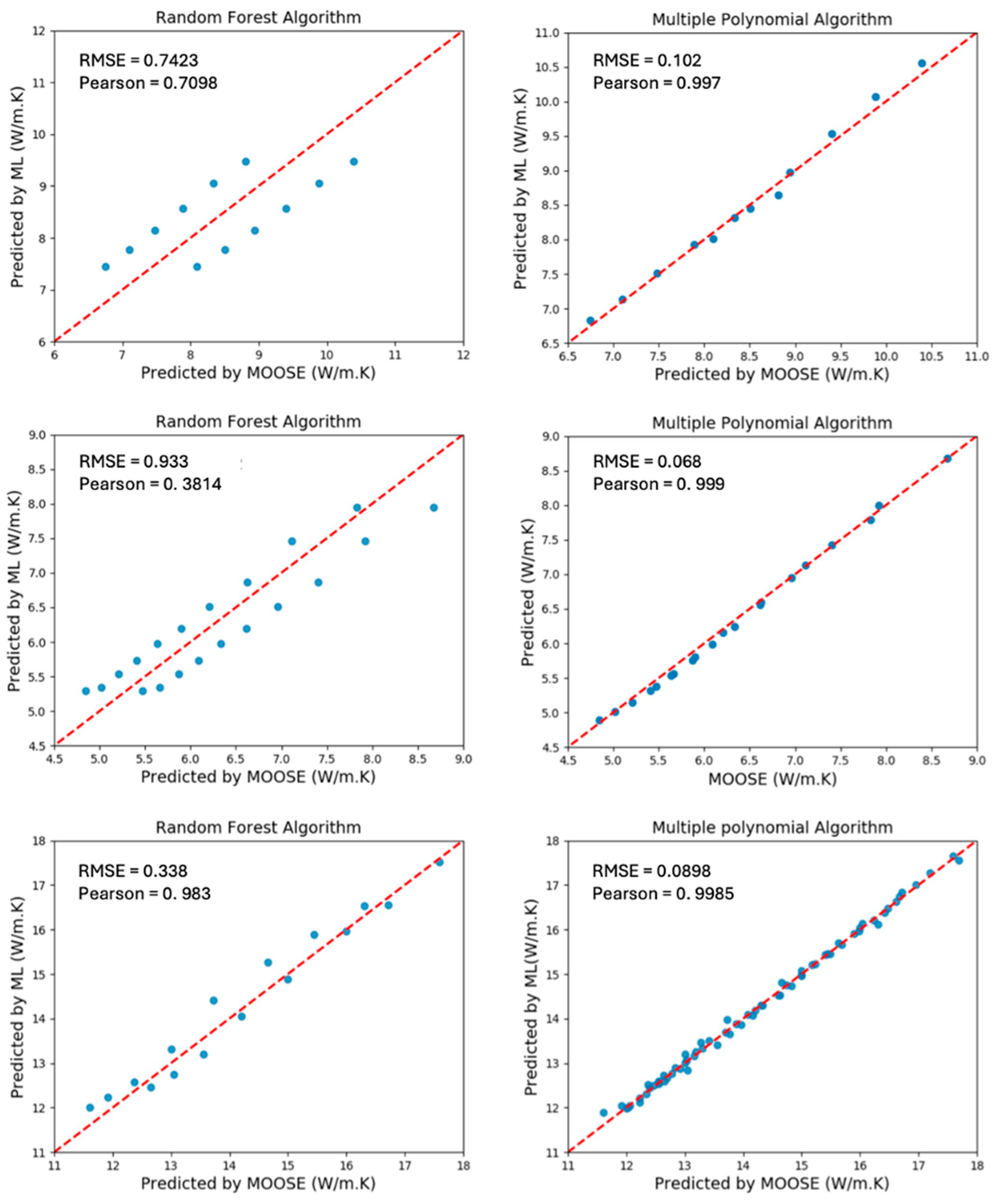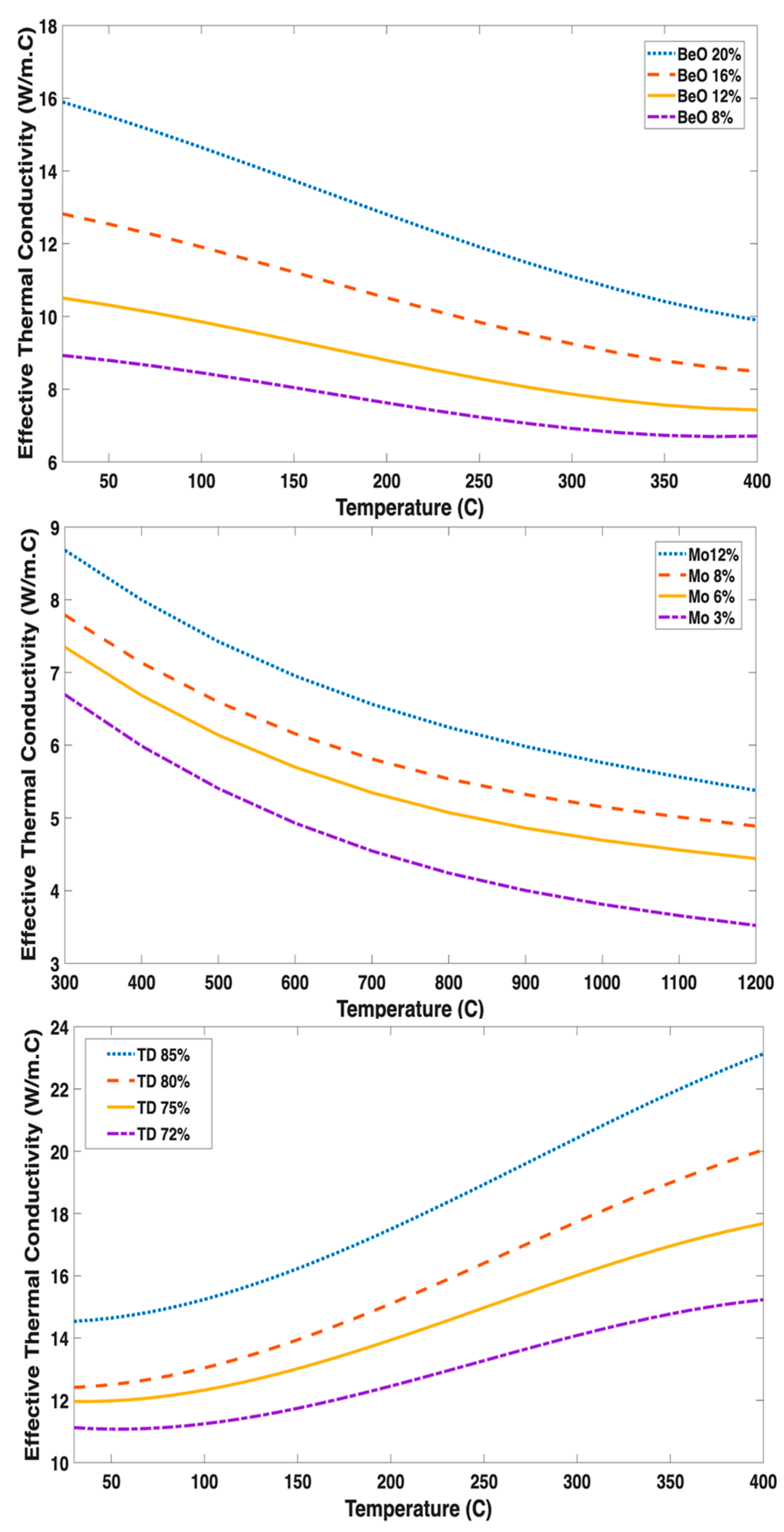

An Integrated Approach for Generating Reduced Order Models of the Effective Thermal Conductivity of Nuclear Fuels


Abstract
1. Introduction
2. Materials and Methods
2.1. Experimental Data
2.2. Physics-Based Model Formulation
2.2.1. Thermal Model
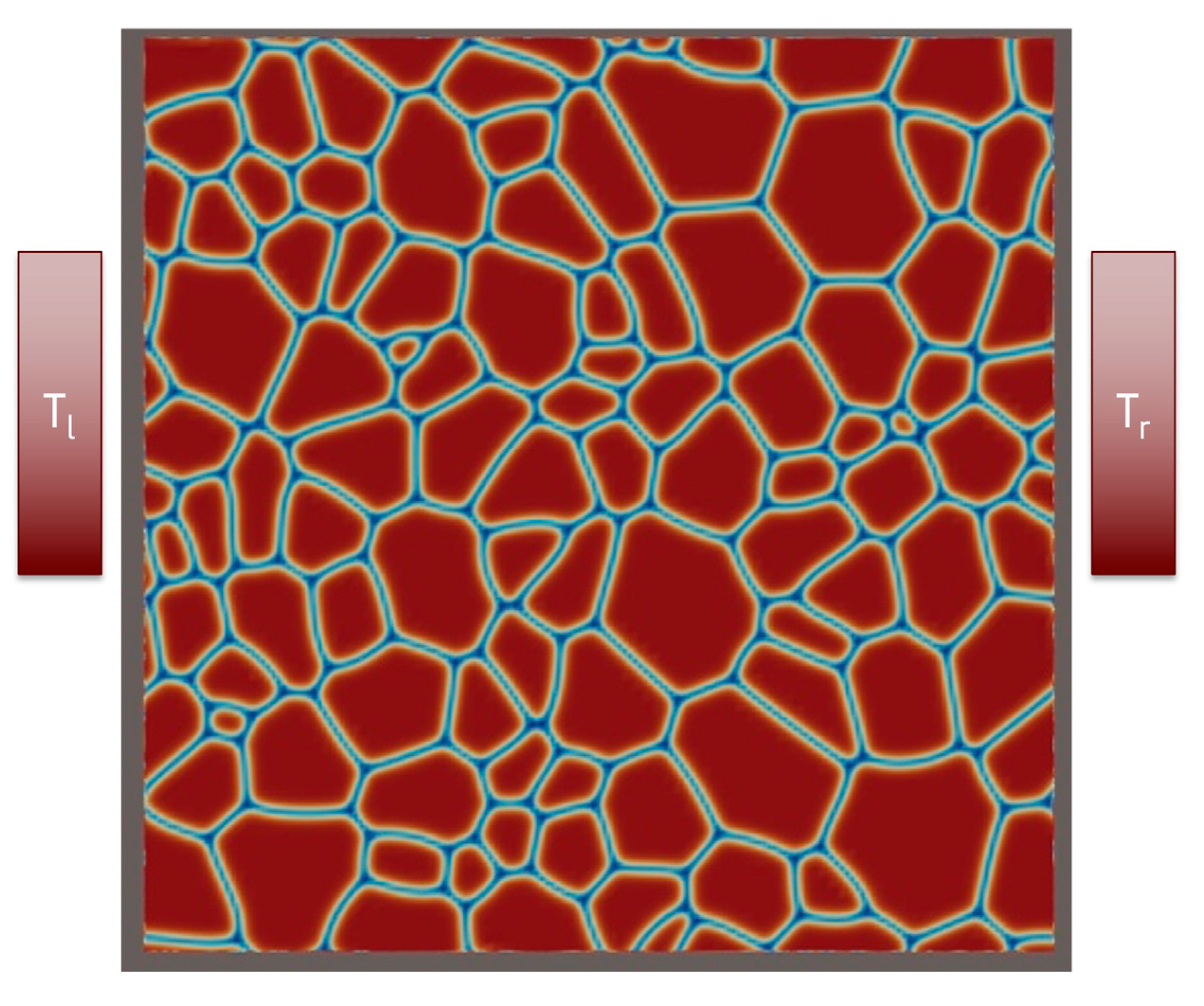
2.2.2. Microstructure Representation
2.3. Constructing ML Models of Thermal Conductivity
2.3.1. Data Collection
2.3.2. Data Preparation
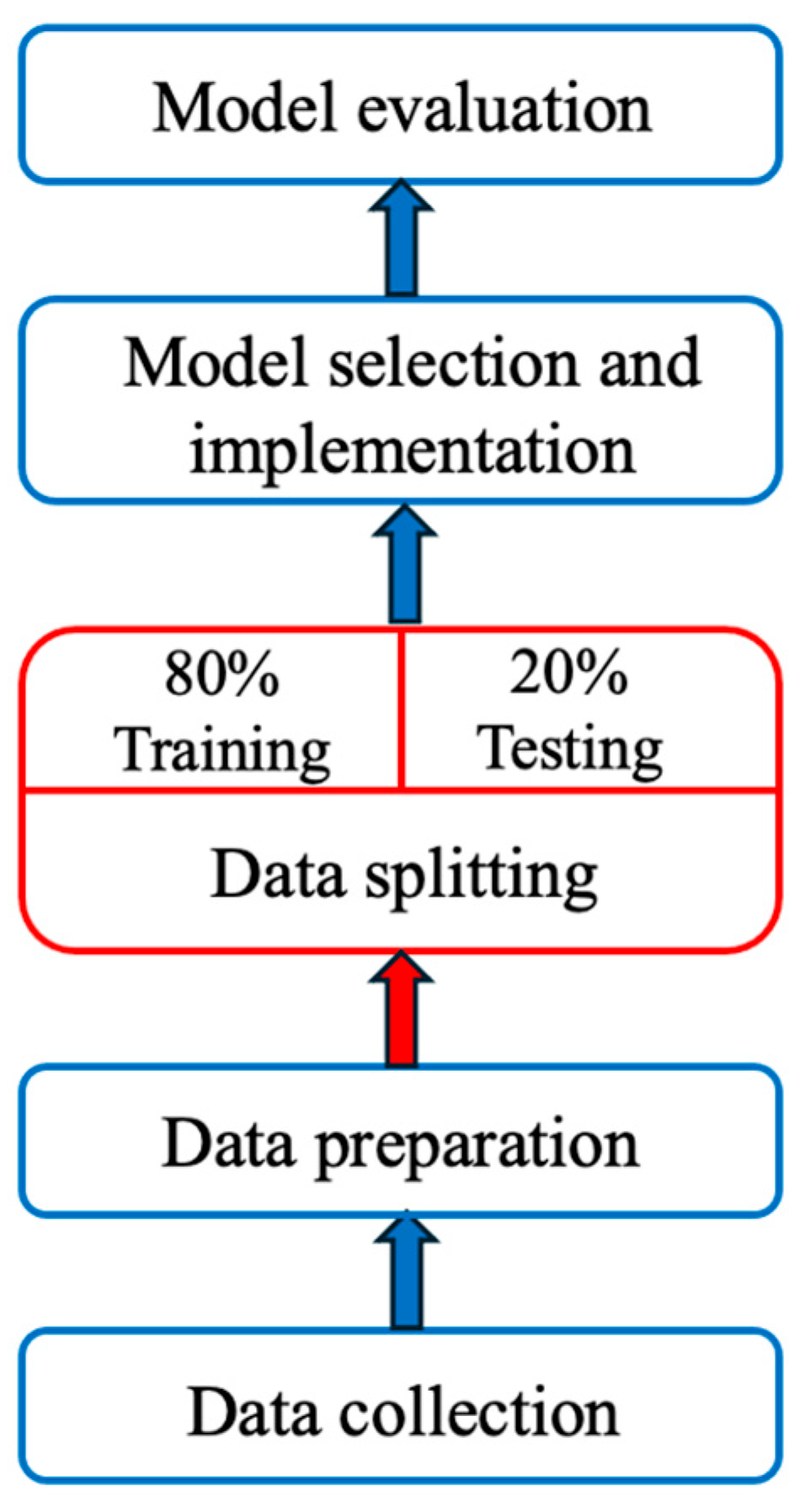
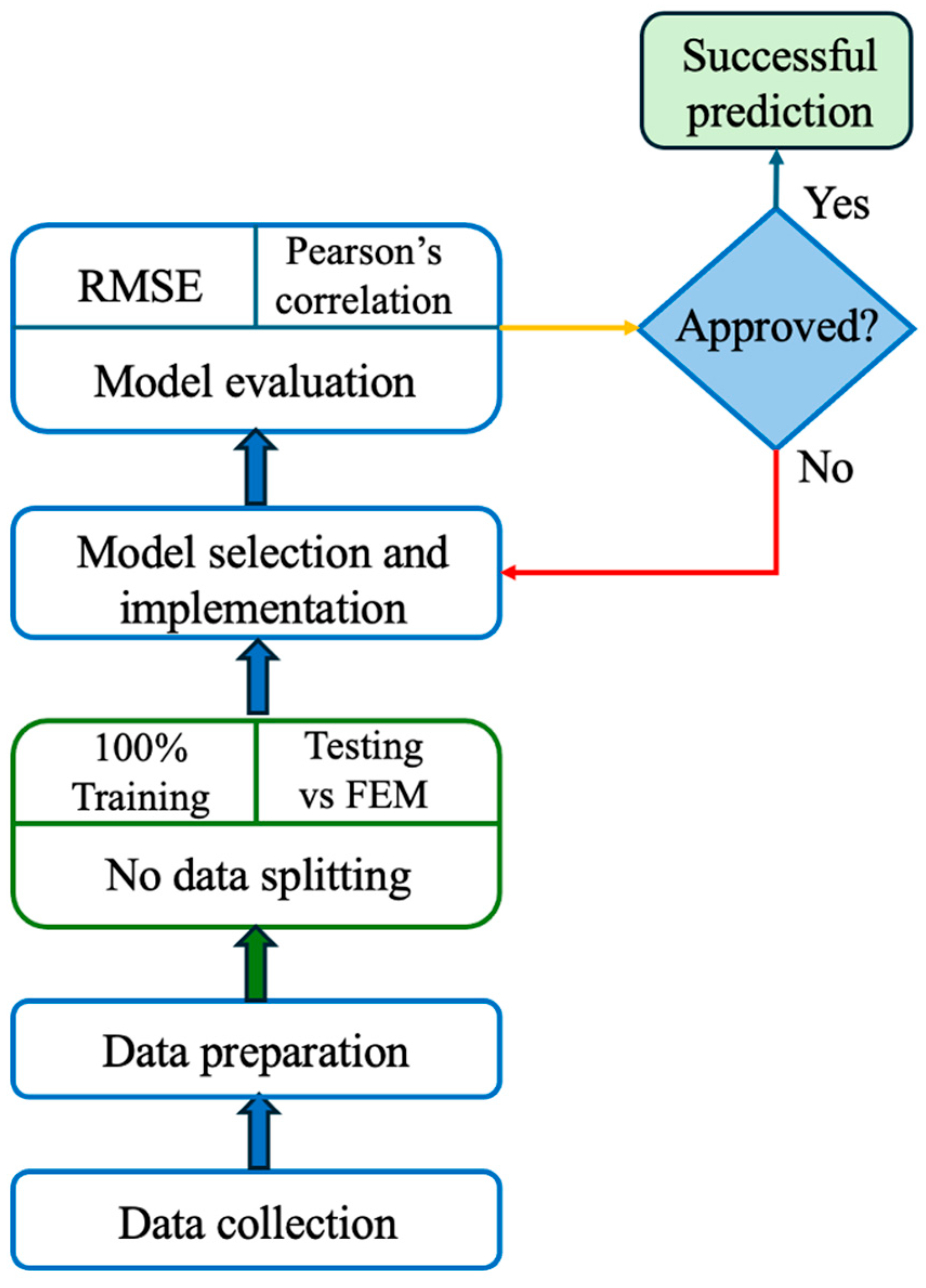
2.3.3. Data Splitting
2.3.4. Choosing the Optimal ML Algorithm
2.3.5. Model Evaluation
3. Results
3.1. Validated Mesoscale Model of the Effective Conductivity of UO2-Mo Fuels
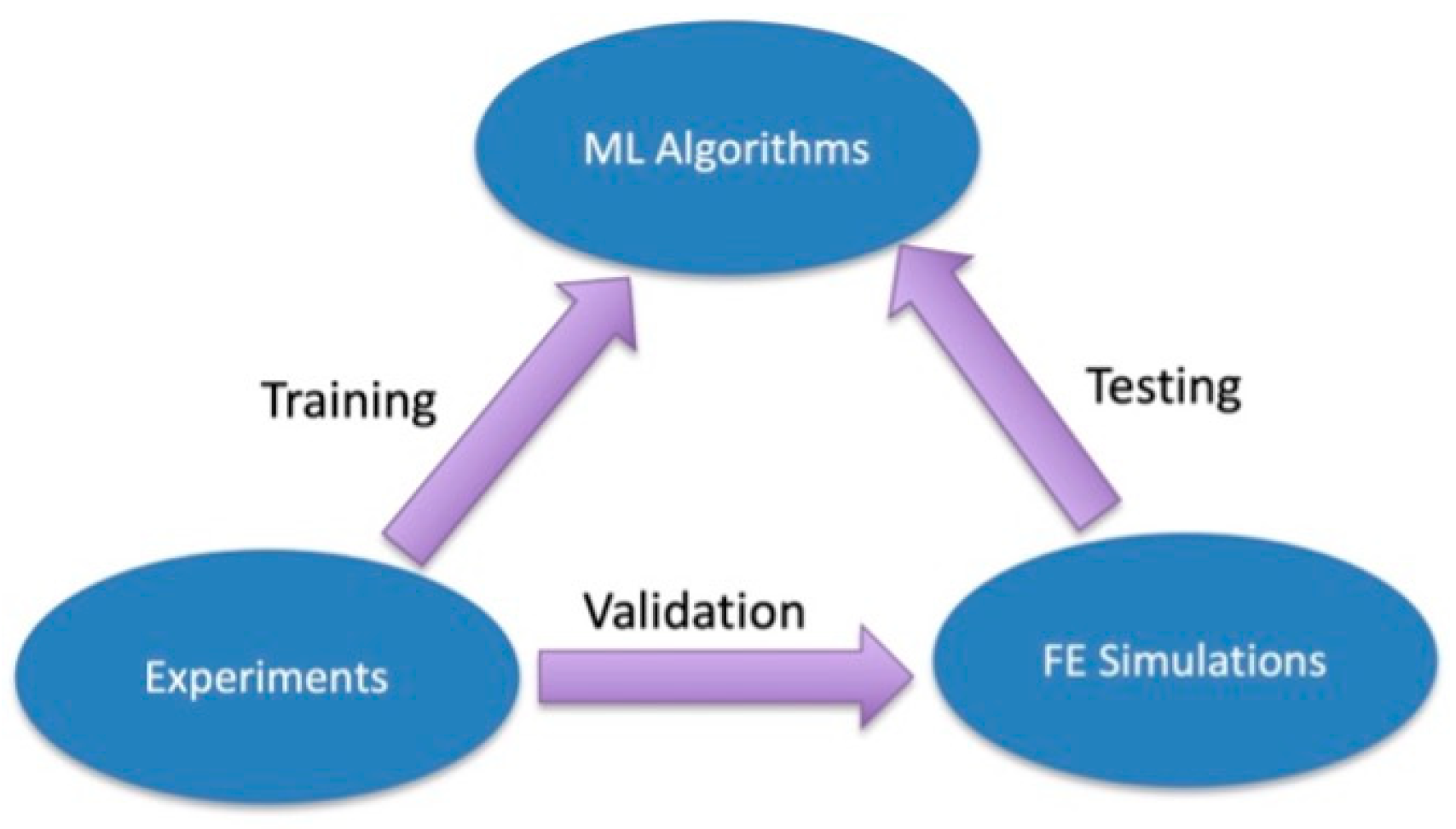
3.2. Training of the ML Algorithms
3.3. Selection of the Best-Performing ML Algorithm
3.4. Utilization of the Best-Performing ML Algorithm for Prediction
4. Discussion
Author Contributions
Funding
Data Availability Statement
Conflicts of Interest
References
- Li, X.; Samin, A.; Zhang, J.; Unal, C.; Mariani, R. Ab-initio molecular dynamics study of lanthanides in liquid sodium. J. Nucl. Mater. 2017, 484, 98–102. [Google Scholar] [CrossRef] [Scilit]
- Wang, Y.; Xiao, Z.; Hu, S.; Li, Y.; Shi, S.-Q. A phase field study of the thermal migration of gas bubbles in UO2 nuclear fuel under temperature gradient. Comput. Mater. Sci. 2020, 183, 109817. [Google Scholar] [CrossRef] [Scilit]
- Rahn, T.; Capriotti, L.; Di Lemma, F.; Trowbridge, T.L.; Harp, J.M.; Aitkaliyeva, A. Investigation of constituent redistribution in U-Pu-Zr fuels and its dependence on varying Zr content. J. Nucl. Mater. 2021, 557, 153301. [Google Scholar] [CrossRef] [Scilit]
- Ishimoto, S.; Hirai, M.; Ito, K.; Korei, Y. Thermal Conductivity of UO2-BeO Pellet. J. Nucl. Sci. Technol. 1996, 33, 134–140. [Google Scholar] [CrossRef]
- Garcia, C.B.; Brito, R.A.; Ortega, L.H.; Malone, J.P.; McDeavitt, S.M. Manufacture of a UO2-Based Nuclear Fuel with Improved Thermal Conductivity with the Addition of BeO. Met. Mater. Trans. E 2017, 4, 70–76. [Google Scholar] [CrossRef] [Scilit]
- Ortega, L.H.; Blamer, B.; Stern, K.M.; Vollmer, J.; McDeavitt, S.M. Thermal conductivity of uranium metal and uranium-zirconium alloys fabricated via powder metallurgy. J. Nucl. Mater. 2020, 531, 151982. [Google Scholar] [CrossRef] [Scilit]
- Teague, M.; Tonks, M.; Novascone, S.; Hayes, S. Microstructural modeling of thermal conductivity of high burn-up mixed oxide fuel. J. Nucl. Mater. 2014, 444, 161–169. [Google Scholar] [CrossRef] [Scilit]
- Lee, H.S.; Kim, D.-J.; Kim, S.W.; Yang, J.H.; Koo, Y.-H.; Kim, D.R. Numerical characterization of micro-cell UO2Mo pellet for enhanced thermal performance. J. Nucl. Mater. 2016, 477, 88–94. [Google Scholar] [CrossRef] [Scilit]
- Badry, F.; Brito, R.; Abdoelatef, M.G.; McDeavitt, S.; Ahmed, K. An Experimentally Validated Mesoscale Model of Thermal Conductivity of a UO2 and BeO Composite Nuclear Fuel. JOM 2019, 71, 4829–4838. [Google Scholar] [CrossRef] [Scilit]
- Wang, Z.; Wang, X.; Zheng, Y.; Du, X.; Dai, W.; Wang, Y. Prediction of thermal conductivity in UO2 with SiC additions and related decisive features discovery. J. Nucl. Mater. 2024, 601, 155347. [Google Scholar] [CrossRef] [Scilit]
- Konashi, K.; Kato, N.; Mori, K.; Kurosaki, K. Neural network potential for molecular dynamics calculation of UO2. J. Nucl. Mater. 2025, 607, 155660. [Google Scholar] [CrossRef] [Scilit]
- Huang, Z.; Dong, Y.; Liu, Q.; Hao, X.; Zuo, H.; Li, Q. Effective thermal conductivity prediction of dispersion nuclear fuel elements based on deep learning and property-oriented inverse design. Nucl. Eng. Des. 2025, 434, 113918. [Google Scholar] [CrossRef] [Scilit]
- Kautz, E.J.; Hagen, A.R.; Johns, J.M.; Burkes, D.E. A machine learning approach to thermal conductivity modeling: A case study on irradiated uranium-molybdenum nuclear fuels. Comput. Mater. Sci. 2019, 161, 107–118. [Google Scholar] [CrossRef] [Scilit]
- Lu, Y.; Huang, X.; Ren, Z.; Sun, D.; Guo, Y.; Liu, X.; Wang, C. A prediction model for thermal conductivity of metallic nuclear fuel based on multiple machine learning models. J. Nucl. Mater. 2023, 583, 154553. [Google Scholar] [CrossRef] [Scilit]
- Badry, F.; Singh, M.; Ortega, L.H.; Mcdeavitt, S.M.; Ahmed, K. An experimentally validated mesoscale model for the effective thermal conductivity of U-Zr fuels. J. Nucl. Mater. 2022, 574, 154203. [Google Scholar] [CrossRef] [Scilit]
- Chockalingam, K.; Millett, P.C.; Tonks, M. Effects of intergranular gas bubbles on thermal conductivity. J. Nucl. Mater. 2012, 430, 166–170. [Google Scholar] [CrossRef] [Scilit]
- Millett, P.C.; Wolf, D.; Desai, T.; Rokkam, S.; El-Azab, A. Phase-field simulation of thermal conductivity in porous polycrystalline microstructures. J. Appl. Phys. 2008, 104, 033512. [Google Scholar] [CrossRef] [Scilit]
- Tonks, M.R.; Millett, P.C.; Nerikar, P.; Du, S.; Andersson, D.; Stanek, C.R.; Gaston, D.; Andrs, D.; Williamson, R. Multiscale development of a fission gas thermal conductivity model: Coupling atomic, meso and continuum level simulations. J. Nucl. Mater. 2013, 440, 193–200. [Google Scholar] [CrossRef] [Scilit]
- Wang, H.; Biswas, S.; Han, Y.; Tomar, V. A phase field modeling based study of microstructure evolution and its influence on thermal conductivity in polycrystalline tungsten under irradiation. Comput. Mater. Sci. 2018, 150, 169–179. [Google Scholar] [CrossRef] [Scilit]
- Badry, F.; Ahmed, K. A new model for the effective thermal conductivity of polycrystalline solids. AIP Adv. 2020, 10, 105021. [Google Scholar] [CrossRef] [Scilit]
- Giudicelli, G.; Lindsay, A.; Harbour, L.; Icenhour, C.; Li, M.; Hansel, J.E.; German, P.; Behne, P.; Marin, O.; Stogner, R.H.; et al. 3.0-MOOSE: Enabling massively parallel multiphysics simulations. SoftwareX 2024, 26, 101690. [Google Scholar] [CrossRef] [Scilit]
- Bishop, C.M. Pattern Recognition and Machine Learning, Information Science and Statistics; Springer: New York, NY, USA, 2006. [Google Scholar]
- Bai, X.-M.; Tonks, M.R.; Zhang, Y.; Hales, J.D. Multiscale modeling of thermal conductivity of high burnup structures in UO2 fuels. J. Nucl. Mater. 2016, 470, 208–215. [Google Scholar] [CrossRef] [Scilit]
- Hales, J.; Tonks, M.; Chockalingam, K.; Perez, D.; Novascone, S.; Spencer, B.; Williamson, R. Asymptotic expansion homogenization for multiscale nuclear fuel analysis. Comput. Mater. Sci. 2015, 99, 290–297. [Google Scholar] [CrossRef] [Scilit]
- Ahmed, K.; El-Azab, A. Phase-Field Modeling of Microstructure Evolution in Nuclear Materials. In Handbook of Materials Modeling; Andreoni, W., Yip, S., Eds.; Springer International Publishing: Cham, Switzerland, 2020; pp. 2313–2334. [Google Scholar] [CrossRef] [Scilit]
- Ozturk, A.; Gencturk, M.; Ahmed, K. Surface and Size Effects on the Behaviors of Point Defects in Irradiated Crystalline Solids. Front. Mater. 2021, 8, 684862. [Google Scholar] [CrossRef] [Scilit]



| Fuel | Temperature Range (°C) | Increment (°C) | Compositions | Reference |
|---|---|---|---|---|
| UO2-BeO | 25–300 | 25 | 5, 10, and 15 (BeO Vol%) | [9] |
| UO2-Mo | 300–1200 | 100 | 2, 5, and 10 (Mo Vol%) | [8] |
| U-Zr | 40–300 | 10 | 74, 78, 82, and 84 (TD *%) | [6,15] |
| Fuel | Temperature Range (°C) | Increment (°C) | Used Compositions | Reference |
|---|---|---|---|---|
| UO2-BeO | 25–300 | 25 | 7.5 and 12.5 (BeO Vol%) | [9] |
| UO2-Mo | 300–1200 | 100 | 8 and 12 (Mo Vol%) | Current work |
| U-Zr | 40–300 | 10 | 75 and 80 (TD *%) | [10,15] |
| Coefficients | UO2-BeO | UO2-Mo | U-Zr |
|---|---|---|---|
| 7.9376 | 9.2994 | −2.0244 × 10³ | |
| −3.9705 | 1.1542 × 101 | 7.891 × 10³ | |
| −1.7994 × 10⁻³ | −1.3382 × 10⁻² | −3.6173 × 10⁻¹ | |
| 2.1487 × 10² | 6.0197 × 101 | −1.0195 × 10⁴ | |
| 7.6194 × 10⁻³ | 3.4578 × 10⁻² | 8.5781 × 10⁻¹ | |
| −3.124 × 10⁻⁵ | 9.2212 × 10⁻⁶ | 3.9649 × 10⁻⁵ | |
| 6.4571 × 101 | 1.0141 × 101 | 4.3932 × 10³ | |
| −3.3483 × 10⁻¹ | −1.9144 × 10⁻¹ | −5.1382 × 10⁻¹ | |
| 4.9151 × 10⁻⁶ | −4.9791 × 10⁻⁶ | 9.7753 × 10⁻⁵ | |
| 6.1718 × 10⁻⁸ | −2.4434 × 10⁻⁹ | −1.4888 × 10⁻⁷ |
Disclaimer/Publisher’s Note: The statements, opinions and data contained in all publications are solely those of the individual author(s) and contributor(s) and not of MDPI and/or the editor(s). MDPI and/or the editor(s) disclaim responsibility for any injury to people or property resulting from any ideas, methods, instructions or products referred to in the content. |
© 2026 by the authors. Licensee MDPI, Basel, Switzerland. This article is an open access article distributed under the terms and conditions of the Creative Commons Attribution (CC BY) license.
Share and Cite
Badry, F.; Gencturk, M.; Ahmed, K. An Integrated Approach for Generating Reduced Order Models of the Effective Thermal Conductivity of Nuclear Fuels. J. Nucl. Eng. 2026, 7, 8. https://doi.org/10.3390/jne7010008
Badry F, Gencturk M, Ahmed K. An Integrated Approach for Generating Reduced Order Models of the Effective Thermal Conductivity of Nuclear Fuels. Journal of Nuclear Engineering. 2026; 7(1):8. https://doi.org/10.3390/jne7010008
Chicago/Turabian StyleBadry, Fergany, Merve Gencturk, and Karim Ahmed. 2026. "An Integrated Approach for Generating Reduced Order Models of the Effective Thermal Conductivity of Nuclear Fuels" Journal of Nuclear Engineering 7, no. 1: 8. https://doi.org/10.3390/jne7010008
APA StyleBadry, F., Gencturk, M., & Ahmed, K. (2026). An Integrated Approach for Generating Reduced Order Models of the Effective Thermal Conductivity of Nuclear Fuels. Journal of Nuclear Engineering, 7(1), 8. https://doi.org/10.3390/jne7010008