


Abstract
Stress urinary incontinence (SUI) is the most common subtype of female urinary incontinence, affecting up to one in four women and markedly reducing quality of life. Its pathophysiology primarily involves impaired suburethral and paraurethral support, resulting in decreased tissue stiffness and urethral hypermobility. Conventional imaging provides anatomical detail but is limited in its ability to assess pelvic floor biomechanics. This narrative review summarizes current evidence on strain elastography (SE) as a functional imaging modality in urogynecology, with emphasis on evaluating suburethral tissue stiffness in women with SUI. A narrative review was performed using PubMed (2000–2025). Primary searches (“strain elastography” AND “female stress urinary incontinence”; “stress incontinence” AND “elastography”) yielded 19 records, of which 12 were included after screening. Owing to the limited number of SE-specific studies, the review was expanded to include shear wave elastography research, key guidelines, and biomechanical literature on pelvic floor ultrasound in adult women with SUI. SE provides a non-invasive, real-time method for assessing tissue stiffness, bridging the longstanding gap between anatomical and biomechanical evaluation. Current evidence supports SE as a feasible and promising diagnostic adjunct for the functional assessment of SUI in women.
1. Introduction
Understanding why some women remain fully continent despite marked urethral descent during straining, while others develop stress incontinence even with only modest anatomic change, has long challenged clinicians [1]. These paradoxes—commonly encountered when conventional imaging shows a “normal” urethral position despite clear symptoms—underscore the need for diagnostic frameworks that move beyond static anatomy and capture the mechanical performance of the pelvic floor under load [1,2].
Although major advances have been made in pelvic floor imaging, clinicians still lack reliable tools to objectively characterize the biomechanical competence of urethral support. Conventional modalities primarily describe organ position and displacement but provide limited insight into how load-bearing tissues deform, stiffen, or transmit pressure during stress [1,3,4,5]. This structural–functional gap is particularly relevant in stress urinary incontinence (SUI), where continence failure reflects altered tissue stiffness, impaired deformation behavior, and reduced pressure-transmission capacity rather than anatomic descent alone [3,4,5,6].
Urinary incontinence (UI) is one of the most common chronic health conditions in women, impairing daily function, emotional wellbeing, and socioeconomic stability [1,2]. SUI—the involuntary loss of urine during exertion, coughing, or sneezing—is the most prevalent subtype, affecting approximately one in four women [1,3,4,6,7]. Lifetime prevalence exceeds 60% and is highest among parous and postmenopausal women, underscoring its substantial public health burden. Although not life-threatening, SUI causes considerable psychosocial distress and functional limitation, with annual management costs exceeding USD 13 billion in the United States alone [1,3,4].
DeLancey’s seminal 1994 “suburethral hammock” hypothesis shifted the pathophysiologic paradigm by proposing that continence during stress depends on the stiffness and timely load-bearing capacity of the suburethral supportive layer, rather than the urethra’s spatial location within the pelvis [2,8]. Factors such as childbirth, aging, and obesity weaken this supportive layer, reduce tissue viscoelasticity, and impair pressure transmission [4,9,10].
In parallel, pelvic floor diagnostics have increasingly shifted from static anatomic assessment toward dynamic, function-based evaluation of tissue behavior [5,11,12]. Transperineal and introital ultrasound now enable real-time visualization of bladder-neck mobility, urethral rotation, pelvic organ prolapse, and mid-urethral sling position [4,11,13]. High-resolution 3D/4D ultrasound further improves spatial mapping, yet conventional imaging still lacks the ability to quantify stiffness or deformation—mechanical parameters central to maintaining continence [5,11,14,15].
Bridging this diagnostic gap requires imaging modalities capable of integrating anatomy with mechanical function. Elastography offers a non-invasive method to evaluate tissue deformation under applied stress and provides surrogate markers of stiffness and elasticity—properties directly linked to continence mechanics [5,16].
Among elastographic techniques, strain elastography (SE) is particularly well suited to urogynecology because it is integrated into routine ultrasound platforms, adds minimal scanning time, and requires no additional hardware. SE provides real-time stiffness maps that complement B-mode imaging with functional biomechanical information [5,12,13,15,16,17,18].
Recognizing these limitations, recent guidelines emphasize the importance of objective, function-based diagnostic tools. The Women’s Preventive Services Initiative recommends routine screening for UI during preventive visits, yet existing diagnostic pathways remain largely symptom-driven [6]. Functional imaging approaches such as SE may bridge the gap between subjective symptoms and underlying biomechanical pathology, supporting more individualized diagnosis and treatment selection [5].
This review synthesizes current evidence on SE in urogynecology, focusing on its role in the functional assessment of SUI. It outlines the biomechanical background, describes SE principles and methodology, and highlights emerging data, limitations, and future directions toward methodological standardization and clinical integration.
2. Materials and Methods
This narrative review aimed to synthesize contemporary evidence on the application of SE for assessing paraurethral tissue stiffness in women with SUI. Given the limited number and heterogeneity of available studies, a qualitative synthesis was performed rather than a meta-analysis.
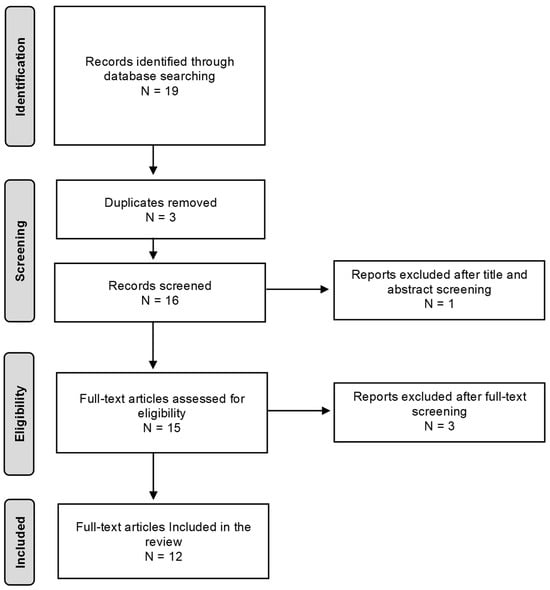
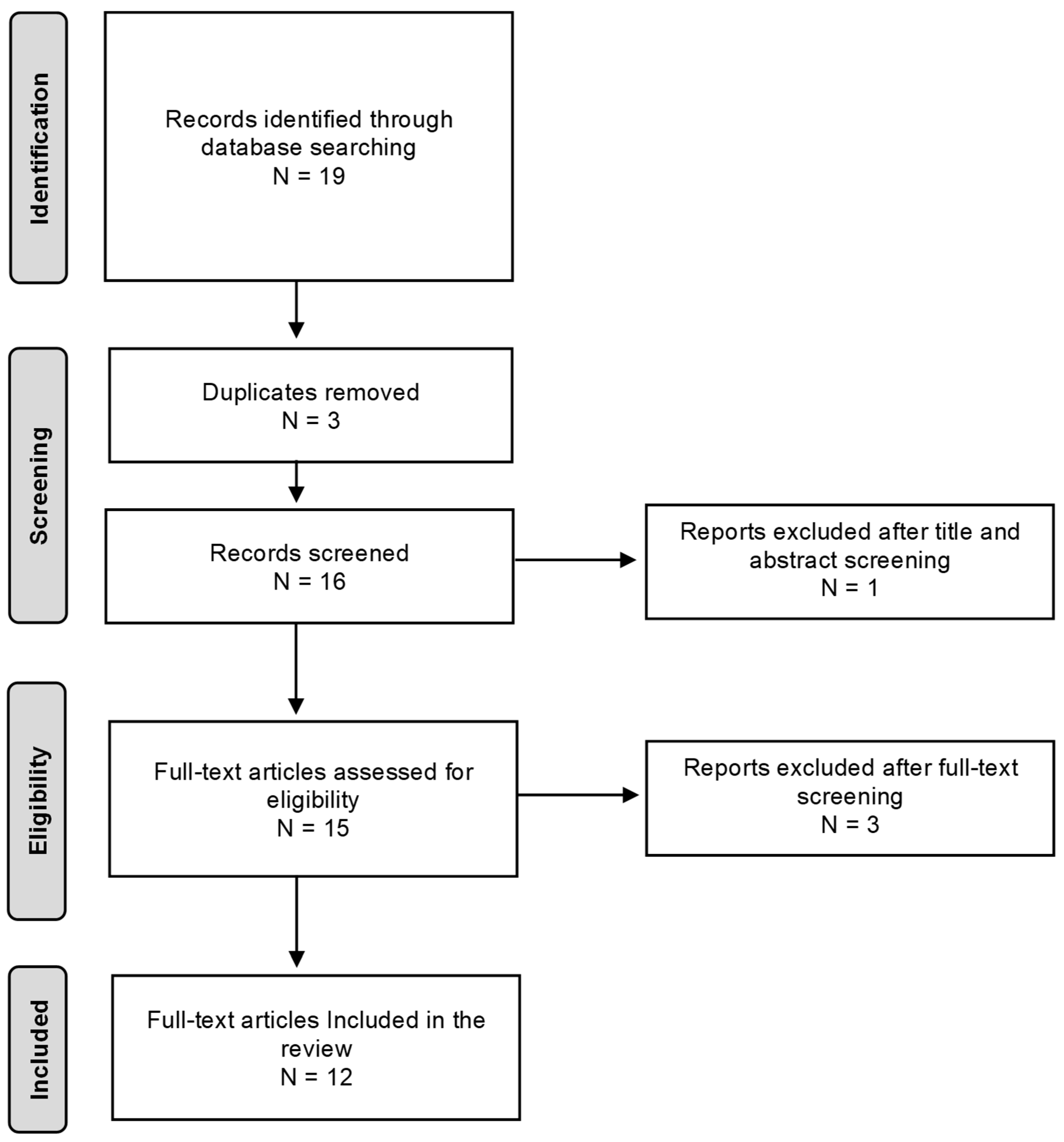
A structured PubMed search covering January 2000 to October 2025 was conducted to identify clinical and methodological publications relevant to SE in SUI. The primary queries—“strain elastography” AND “female stress urinary incontinence” (three records) and “stress incontinence” AND “elastography” (sixteen records)—yielded nineteen publications. After removal of three duplicates, 16 unique records remained for title and abstract screening, of which 12 were ultimately included in the review (Table 1). The study identification and selection process is summarized in Figure 1.
Table 1.
Summary of Included Elastography Studies.
Figure 1.
Flow diagram of the study selection process for the PubMed searches using the keywords “strain elastography” AND “female stress urinary incontinence” and “stress incontinence” AND “elastography”.
Because SE-specific studies were few, the search strategy was expanded to include clinically relevant shear wave elastography (SWE) publications, as well as selected guideline, technical, and biomechanical papers on pelvic floor ultrasound and elastography to provide conceptual and methodological context. Foundational works defining SUI, together with international guidelines and seminal publications on the biomechanical basis of continence, were also incorporated to ensure consistent terminology and alignment with consensus-based diagnostic criteria. This approach allowed integration of fundamental principles, mechanistic concepts, and emerging developments alongside the primary clinical evidence.
Eligible studies were peer-reviewed articles involving adult female participants (≥18 years) that evaluated elastographic assessment of periurethral or pelvic floor structures in the context of SUI. Both SE and SWE studies were included when they contributed mechanistically relevant insights into suburethral biomechanics, diagnostic performance, or functional interpretation, thereby complementing the SE-focused scope of the review.
3. Pathophysiology of Stress Urinary Incontinence
SUI arises when the mechanical forces required to maintain urethral closure are no longer supported by a structurally competent and sufficiently stiff suburethral platform [1,3]. Contemporary evidence shows that continence failure reflects reduced tissue stiffness, impaired deformation behavior, and disrupted pressure transmission, rather than simple urethral descent alone [1,2,3,28].
Among all contributing factors, childbirth-related pelvic floor trauma plays the most pivotal role, as it can simultaneously damage muscular, fascial, and neural components of the continence system [14]. During a prolonged second stage of labor, the levator ani and perineal structures may stretch to more than three times their resting length. When pubovisceral fibers contract under extreme elongation, tensile forces can exceed their ultimate strength, producing partial or complete avulsion from the pubic bone—an eccentric contraction injury regarded as the primary mechanism of levator ani avulsion [10,14]. MRI findings such as hiatal widening, perineal membrane rotation, and lateral muscle separation (“swinging-door phenomenon”) reflect these injuries and the resulting loss of mechanical stability. These alterations permanently reduce suburethral stiffness and disrupt uniform pressure transmission, forming the biomechanical substrate of postpartum SUI [14,29].
However, the obstetric mechanism is not limited to structural disruption; childbirth also induces important neuromuscular injury. Vaginal delivery may impair pudendal nerve function and produce micro- and macrotrauma to the vaginal walls and levator ani, further weakening the supportive apparatus. Pudendal neuropathy decreases urethral sphincter innervation, lowers closure pressure, and increases urethral mobility, thereby amplifying the risk of SUI [14,27,30]. Epidemiological data indicate that vaginal delivery increases long-term SUI risk by approximately 67% compared with cesarean section, with operative vaginal births conferring an even higher risk. Although postpartum SUI often improves during the first year, delivery-related neuromuscular and fascial injuries may persist and predispose affected women to later-life incontinence [27,31].
Beyond childbirth, multiple non-obstetric factors progressively weaken the pelvic floor and act synergistically with obstetric injury. Advancing age, menopause, elevated body mass index (BMI), and prior pelvic surgery—particularly hysterectomy—are well-recognized contributors to compromised pelvic floor integrity [1,2,3,9,27]. Age-related collagen I/III redistribution, elastin fragmentation, reduced fibroblast activity, and microvascular rarefaction diminish the viscoelastic resilience necessary to maintain stiffness under load, whereas estrogen deficiency further accelerates extracellular matrix (ECM) turnover and connective-tissue softening [9,32,33,34].
Obesity imposes an additional, pressure-mediated pathway. Chronically elevated intra-abdominal pressure increases intravesical pressure at rest and during coughing, producing sustained mechanical loading on the pelvic floor. Urodynamic studies confirm higher intravesical pressures in obese women, further linking obesity to increased pelvic strain and SUI development [1,27]. Lifestyle and environmental factors—including chronic coughing, smoking, and repetitive heavy lifting—impose recurrent episodes of elevated intra-abdominal pressure, creating cumulative strain on the pelvic floor muscles [1,28,33]. Emerging evidence also implicates metabolic dysfunction, oxidative stress, and environmental exposure to heavy metals (e.g., cadmium, lead) in impaired ECM remodeling and increased connective-tissue fragility [1,35,36].
Continence mechanics may also be altered by coexisting pelvic organ prolapse (POP). By modifying bladder-outlet geometry, creating functional obstruction, or unmasking latent SUI, POP can reveal underlying sphincteric or supportive dysfunction. Postoperative SUI occurs in approximately 40–50% of women undergoing POP repair, underscoring POP as a secondary biomechanical factor that can both mask and precipitate stress leakage [27].
Finally, in a smaller proportion of cases, failure of the continence mechanism arises primarily at the level of the urethra. Intrinsic sphincter deficiency (ISD)—characterized by inadequate urethral coaptation and low resting closure pressures—typically follows neuromuscular injury, pelvic radiotherapy, or prior anti-incontinence surgery [1].
Taken together, SUI results from an interplay of molecular, structural, neuromuscular, and biomechanical alterations that weaken suburethral support and disrupt normal pressure transmission. This multifactorial disruption underscores the clinical need for functional imaging techniques—such as elastography—that directly evaluate tissue stiffness and deformation in vivo.
4. Anatomical and Biomechanical Context of Paraurethral Tissues
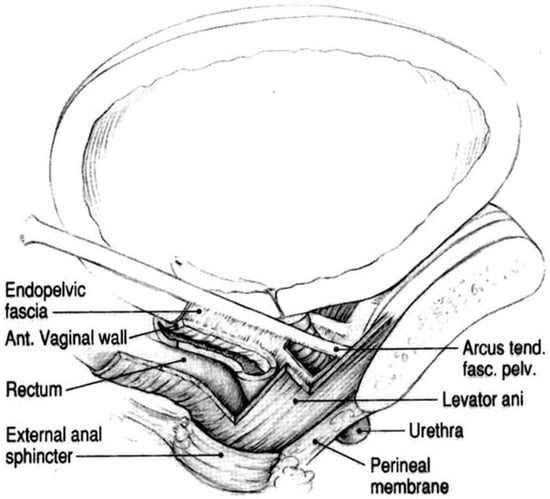
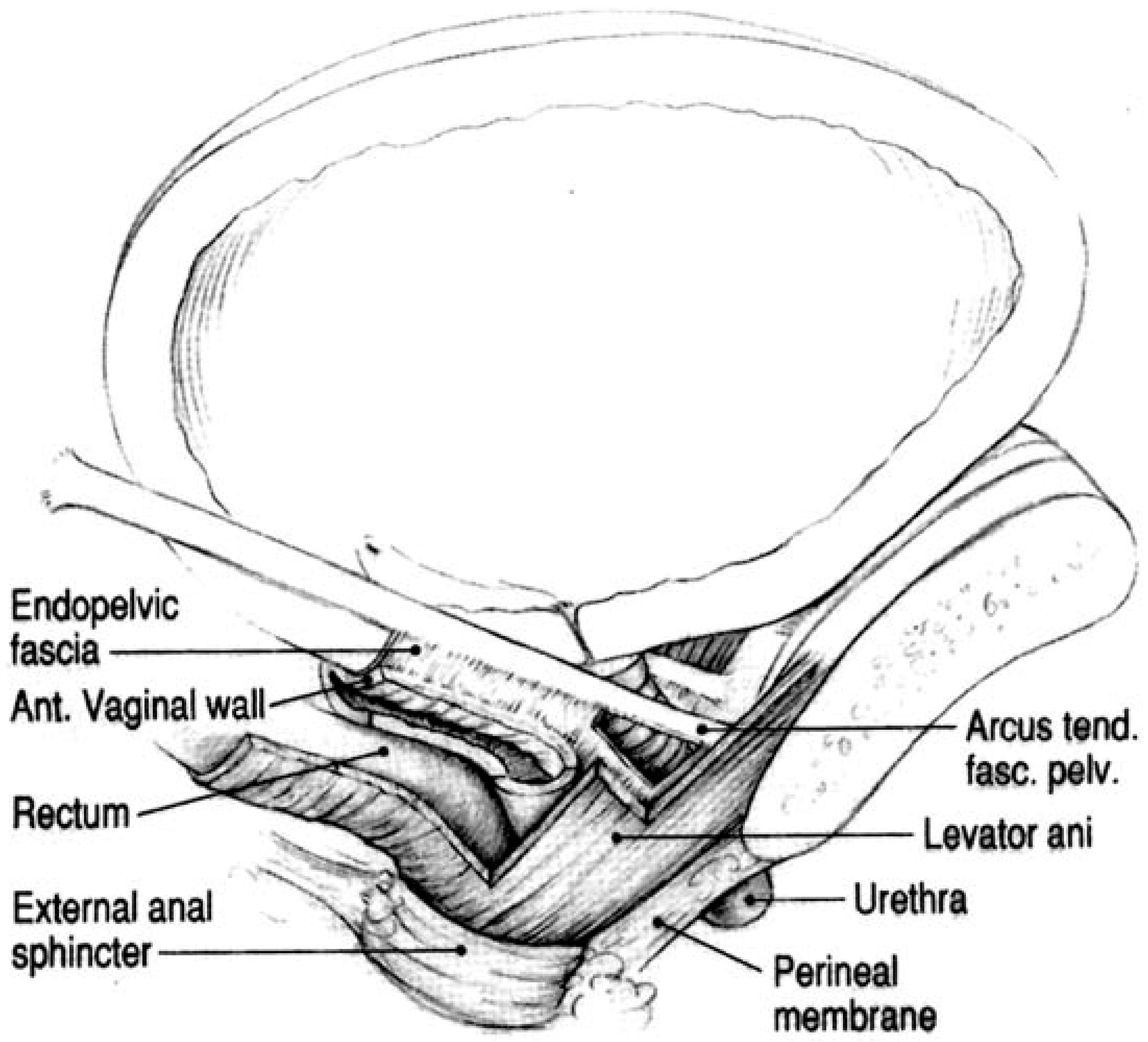
DeLancey’s hammock hypothesis proposes that urethral continence during stress depends not on urethral height but on the stiffness and timely load-bearing capacity of the suburethral supportive layer [2]. This fibromuscular “hammock”—formed by the anterior vaginal wall, endopelvic fascia, arcus tendineus fascia pelvis (ATFP), perineal membrane, and the levator ani complex—functions as an integrated platform against which the urethra is compressed when intra-abdominal pressure rises. Continence is preserved only when this layer provides firm and immediate resistance, effectively transmitting pressure without excessive deformation [2,9,19,28].
Anatomically, the hammock behaves as a continuous fibromuscular scaffold. The ATFP supplies strong lateral anchorage through dense collagen–elastin fibers, while the perineal membrane forms a central fascial bridge between the urogenital diaphragm and perineal body. The levator ani—particularly its pubovisceral component—acts as a dynamic sling that elevates and stabilizes the urethra during increases in intra-abdominal pressure. The perineal body, situated at the intersection of vaginal, urethral, and rectal forces, serves as a crucial mechanical hub. Histologically, the region consists of interwoven collagen and elastin bundles, striated and smooth muscle fibers, adipose tissue, and a dense vascular–neural plexus. The lamina propria and fibromuscular layer provide tensile strength and elasticity, while the subepithelial vascular network supports mucosal coaptation and fine modulation of urethral closure pressure [2,9], as illustrated in Figure 2.
Figure 2.
Anatomical structures involved in urethral support according to the hammock hypothesis. The urethra rests on a suburethral supportive layer formed by the anterior vaginal wall and the endopelvic fascia. In the region of the proximal urethra, a characteristic anatomical relationship exists between the medial portion of the levator ani, the arcus tendineus fascia pelvis, and the suburethral endopelvic fascia. The endopelvic fascia surrounding the vagina attaches medially to the levator ani muscle, enabling coordinated tensioning of the supportive hammock during rises in intra-abdominal pressure. This integrated fibromuscular–fascial complex provides the dynamic load-bearing platform essential for urethral stability and continence [2]. (From: DeLancey, J.O. Structural Support of the Urethra as It Relates to Stress Urinary Incontinence: The Hammock Hypothesis. Am J Obstet Gynecol 1994;170:1713–1720.)
The levator ani contributes both passive support and active neuromuscular control. Imaging studies demonstrate that levator contraction optimizes urethral alignment and enhances pressure transmission, whereas neuromuscular injury or pharmacologic muscle blockade diminishes these stabilizing effects [15,19]. The finding that urethral closure pressure rises approximately 250 ms before the abdominal pressure surge during coughing highlights the importance of an additional rapid-response sphincteric mechanism, particularly involving distal urethral musculature [2].
Beyond this supportive hammock–levator complex, the urethral closure mechanism relies on a multilayered sphincteric system. The pudendal nerve–innervated rhabdosphincter, the vascularized mucosal–submucosal seal, the intrinsic smooth-muscle layer, and the urethro-vaginal supportive fascia work together to maintain resting tone and augment closure during stress. Impairment in any of these components can exacerbate deficiencies within the suburethral support layer and contribute to stress incontinence [1,9,27].
Finally, contemporary elastography provides in vivo biomechanical confirmation of this integrated model. Both strain and shear wave elastography consistently demonstrate reduced suburethral stiffness, diminished load-dependent stiffening, and impaired force transmission in women with SUI—mechanical deficits that align closely with the dysfunctions predicted by the hammock hypothesis [2,5,22,27]. These findings reinforce the concept that continence is fundamentally a tension-dependent musculoelastic function, requiring intact fascial anchoring and coordinated neuromuscular activity [1,2,9].
5. Elastography in Pelvic Floor Imaging: Principles and Techniques
Elastography emerged in the early 1990s as an ultrasound-based technique designed to visualize how tissues deform under mechanical stress, thereby providing a functional perspective on their biomechanical properties [8]. In pelvic floor assessment—where continence depends not only on anatomical relationships but also on how tissues stiffen, yield, and transmit force—this represented a major conceptual advance. By depicting strain patterns or shear-wave propagation, elastography complements morphologic imaging with semi-quantitative or quantitative information on stiffness and elasticity, parameters not accessible with conventional B-mode ultrasound [16,17,18].
Two elastographic modalities are currently used in clinical practice: strain elastography (SE) and shear wave elastography (SWE) [16].
5.1. Strain Elastography (SE)
SE estimates relative deformation within tissues in response to gentle manual compression or intrinsic physiological motion. Subtle displacements between radiofrequency echo frames are converted into strain maps, which appear as color-coded overlays on B-mode images and reveal regional differences in tissue stiffness. Because stiffer tissues deform less under the same applied stress, SE provides relative—rather than absolute—stiffness information; the magnitude of the applied force is unknown, preventing calculation of Young’s modulus. High-quality elastograms require meticulous control of compression. Biological tissues deform non-linearly, so excessive precompression can artificially increase apparent stiffness and degrade image quality. Optimal acquisition involves light transducer contact, ample gel, and steady, low-amplitude uniaxial probe motion ensuring uniform pressure across the acquisition sequence. Motion artifacts, sudden force changes, or probe-angle variations can distort the strain field. Modern ultrasound platforms provide real-time feedback to help maintain consistent compression. As color encoding is not standardized across manufacturers, elastogram interpretation should be guided by the on-screen reference scale rather than assumed universal color patterns [16,18].
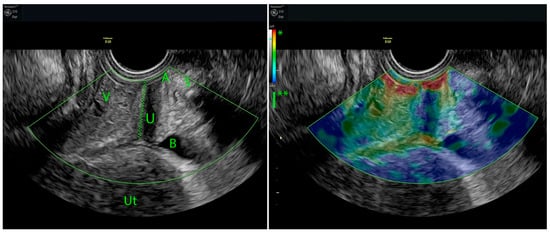
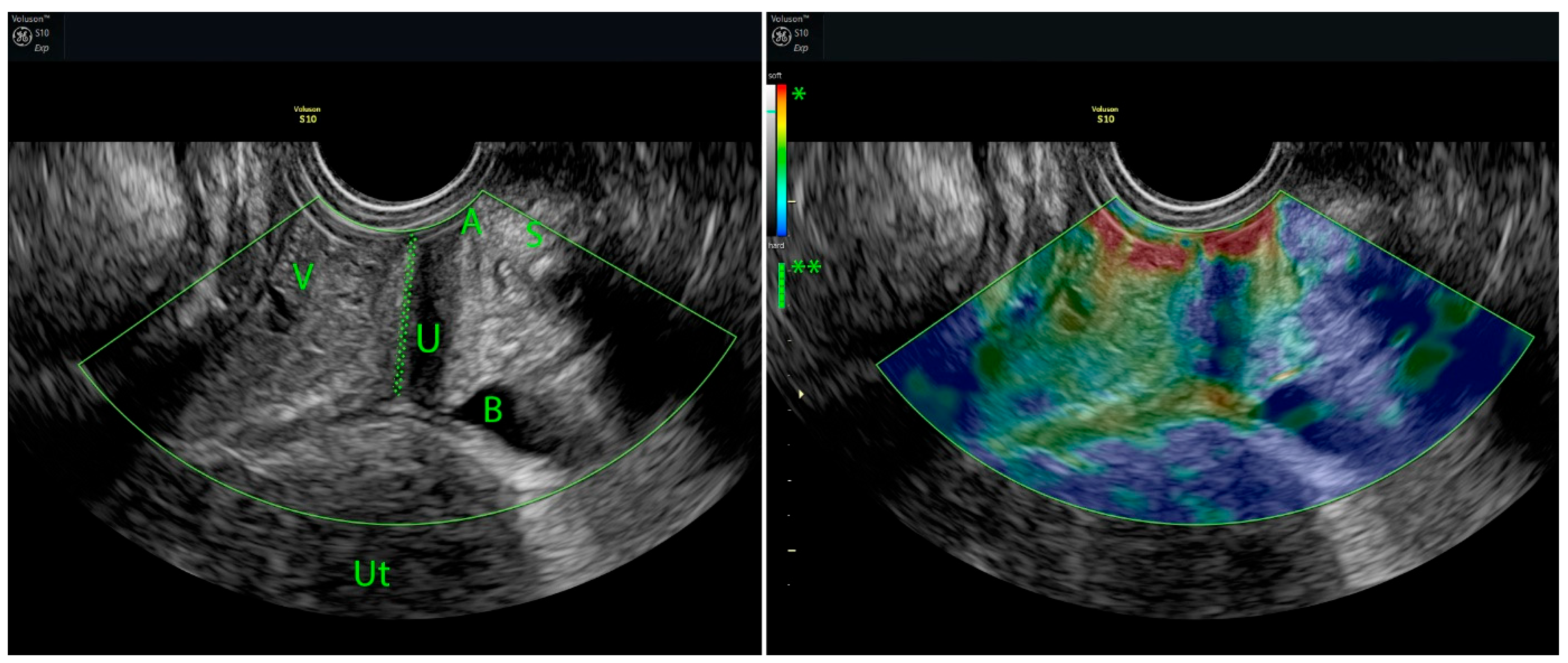
In pelvic floor imaging, SE is typically performed with a high-frequency endocavitary probe aligned along the urethral axis (Figure 3) [5].
Figure 3.
Introital B-mode ultrasound (left) combined with strain elastography (SE) (right), illustrating suburethral tissue elasticity and supportive structures. The elastogram is superimposed on the grayscale image, enabling direct spatial correlation between anatomical landmarks and tissue stiffness. Relative stiffness variations are displayed in real time as a color-coded map: red/yellow tones represent softer regions, blue/green tones indicate stiffer areas, and intermediate hues depict gradations in elasticity. A built-in strain-indicator bar or quality graph guides optimal compression during acquisition. Image quality is typically graded using a standardized six-point scale, with scores ≥ 5 indicating adequate and reproducible elastograms [5]. This figure serves as an illustrative example demonstrating the principle of introital SE and does not depict unpublished research data. Legend: V, vagina; A, paraurethral adipose layer; S, symphysis; U, urethra; dotted line, suburethral supportive layer; B, bladder; Ut, uterus; *, color scale (soft → hard); **, strain-indicator bar (score 6/6, optimal compression). Ultrasound system: GE Voluson S10 (BT18) equipped with a RIC5-9A-RS transvaginal probe (GE HealthCare Austria GmbH & Co OG, Tiefenbach, Austria).
Reproducibility is a central technical requirement for SE. Even minor variations in technique—probe angulation, compression amplitude, or patient positioning—alter strain patterns. Accordingly, operator training, standardized acquisition protocols, and consistent signal normalization are essential. For meaningful strain-ratio calculations, the region of interest (ROI) must encompass both the target tissue and a mechanically stable reference [5,16]. In urogynecology, periurethral adipose tissue is commonly chosen due to its homogeneity and excellent reproducibility. When predefined anatomical ROIs are normalized to this reference, intra- and inter-observer reliability improves markedly, cross-patient comparisons become feasible, and SE transitions from a qualitative adjunct into a semi-quantitative biomarker of pelvic floor biomechanics [5,12,16].
5.2. Shear Wave Elastography (SWE)
SWE relies on focused acoustic radiation force to generate transverse shear-waves within tissues. The propagation velocity of these waves—measured with ultrafast ultrasound imaging—is converted into Young’s modulus (kPa). Because shear-wave speed correlates directly with tissue stiffness, SWE provides absolute quantitative measurements, unlike SE, which reflects relative deformation under an unknown stress field. Importantly, SWE is independent of operator-applied compression, reducing variability and enhancing mechanical accuracy [18,23].
Despite its advantages, SWE remains less accessible in routine urogynecologic practice due to equipment availability and technical constraints. Given this limited accessibility—and the growing evidence supporting SE for standardized paraurethral stiffness assessment—the present review focuses on SE, which currently offers the most feasible and clinically accessible method for functional biomechanical evaluation in SUI [5,16].
6. Discussion
SUI is increasingly understood as a disorder of impaired pelvic floor biomechanics rather than a purely anatomical or pressure-driven dysfunction. Conventional diagnostic tools—including urodynamics and standard pelvic floor ultrasound—describe urethral displacement and global pressure patterns but provide only indirect inferences about the mechanical competence of load-bearing tissues during stress [5,8,15,19]. Elastography directly addresses this gap by quantifying tissue deformation or stiffness under defined loading, thereby linking anatomical observations to their underlying mechanical behavior in vivo [5,12,16].
Across multiple strain and shear wave elastography studies, SUI consistently emerges as a condition marked by reduced tissue stiffness and impaired load-transfer capacity of the suburethral and periurethral structures [5,27,37]. The first feasibility study by Kreutzkamp et al. confirmed that transvaginal SE can reliably measure paraurethral strain and demonstrated that softer periurethral tissues correlate with increased urethral mobility [14]. Although that study did not differentiate between incontinence types and lacked standardized ROI placement or reference-tissue normalization, it provided essential proof-of-concept evidence and highlighted the need for methodological standardization [12]. Building on these limitations, Csákány et al. conducted the first anatomically standardized SE study using predefined ROIs normalized to adjacent periurethral adipose tissue. This methodology substantially reduced interindividual variability, enabled semi-quantitative between-group comparisons, and demonstrated that women with SUI exhibit significantly higher strain ratios at all urethral levels—with the strongest diagnostic performance at the mid-urethra and excellent intra- and inter-observer reproducibility [5]. Together, these studies establish SE as a robust and feasible tool for functional assessment of the suburethral supportive layer [5,12].
Findings from SWE further reinforce this biomechanical framework. Multiple SWE studies show that women with SUI have reduced levator ani and perineal body stiffness, indicating a loss of load-dependent stiffening—a core mechanical deficit underlying continence failure [24,26]. Thus, SE and SWE provide complementary perspectives: SE captures deformation behavior in real time during introital imaging, while SWE offers operator-independent quantitative stiffness metrics. Both modalities converge on the concept of SUI as a disorder of failed force transmission rather than simple anatomic descent [16,26,27].
Further support arises from interventional elastography research. Yu et al. demonstrated that levator ani stiffness is reduced at rest and during Valsalva in SUI, and that pelvic floor muscle training increases stiffness in parallel with clinical improvement—confirming that elastography can detect therapeutic biomechanical restoration [19]. Li et al. likewise reported diminished load-dependent stiffening of the perineal body, with SWE values during Valsalva showing excellent specificity for SUI prediction [26]. Collectively, these findings underscore impaired mechanical responsiveness under stress as a defining feature of SUI.
An interesting divergence is reported by De Vicari et al., who found increased midurethral stiffness in women with SUI using SWE. This likely reflects compensatory fibrosis or maladaptive urethral remodeling due to insufficient supportive tension [27]. Crucially, while Csákány and Li targeted the fibromuscular suburethral platform, De Vicari assessed the urethral wall itself. This distinction supports a dual-level dysfunction: weakened load-transfer capacity of the suburethral hammock combined with urethral wall stiffening or sphincteric softening, depending on pathology [5,26,27]. Complementarily, a prospective supersonic shear imaging study demonstrated reduced rhabdosphincter shear-wave velocity in SUI, correlating with symptom severity and indicating intrinsic sphincteric softening as an additional contributor [21].
Independent biomechanical modeling further strengthens this integrated concept. Virtual-operation experiments by Petros and colleagues demonstrated that restoring tension within the suburethral supportive layer immediately enhances urethral pressure transmission. These studies show that continence depends on a tension-dependent musculoelastic mechanism: when the suburethral hammock is lax, pelvic floor muscle forces dissipate into taking up slack instead of generating urethral closure [20]. This mechanism aligns precisely with elastographic observations of reduced suburethral stiffness and impaired force transmission [2,5,34].
Multimodal ultrasound findings further reinforce the biomechanical model. Wang et al. showed that women with SUI demonstrate greater bladder-neck mobility, increased urethral rotation, and decreased urethral sphincter elasticity—parameters consistent with weakened closure mechanics and highlighting urethral stiffness as a promising biomarker for early diagnosis and individualized treatment planning [25].
Within this framework, SE emerges as a practical, accessible, and highly informative imaging modality. Integrated into routine ultrasound equipment, it adds minimal examination time, enables real-time functional assessment during physiologic maneuvers, and—when standardized—offers excellent reproducibility. Its ability to quantify the biomechanical deficits predicted by the hammock hypothesis makes SE a compelling candidate for clinical integration [5,12,16].
Nonetheless, important limitations persist. SE is semi-quantitative and operator-dependent; its accuracy is influenced by precompression, probe orientation, stress heterogeneity, and ROI placement. Moreover, most available SE and SWE studies enrolled women with clinically defined SUI based on symptoms, stress testing, and imaging, but did not systematically stratify patients into hypermobility- versus ISD-dominant phenotypes using urodynamic criteria. Consequently, the current elastographic evidence likely reflects predominantly hypermobility-associated SUI, whereas the elastographic characteristics of isolated intrinsic sphincter deficiency remain insufficiently defined and require further investigation. Standardized acquisition protocols, consistent reference normalization (preferably to periurethral adipose tissue), and harmonized reporting criteria are essential to ensure comparability across studies. Most available data originate from single-center cohorts with pure SUI populations and vendor-specific strain scales, limiting generalizability. Multicenter validation is required to establish normative values, inter-device calibration, and clinically actionable thresholds, while potential confounders such as BMI, urogenital atrophy, and the choice between resting versus provoked imaging must be evaluated systematically [5,12,16,26].
Looking ahead, technological innovations—including 3D SE, MRI fusion, automated ROI recognition, and artificial intelligence (AI)-driven pattern analysis—may further enhance precision, reproducibility, and clinical interpretability. Integrating AI-supported elastographic analytics could reduce operator dependence, standardize image interpretation, and enable more personalized treatment selection [13,38,39].
In summary, elastography bridges the long-standing gap between pelvic floor morphology and biomechanics. With continued technological refinement, methodological standardization, and large-scale validation, SE has the potential to significantly improve diagnostic accuracy, guide surgical decision-making, and personalize management—offering clinicians a unique, real-time window into the mechanical integrity of the suburethral supportive hammock [5,12,16].
7. Conclusions
SUI is a multilevel biomechanical disorder characterized by reduced periurethral stiffness. SE offers a feasible and objective method for qualitatively assessing suburethral mechanical integrity. By directly visualizing deficits within the suburethral supportive hammock, SE has the potential to improve diagnostic accuracy and support more individualized, mechanism-based treatment selection.
Author Contributions
Conceptualization: L.C., A.S., S.V., G.N., A.K. and N.P.; Methodology: L.C. and N.P.; Formal Analysis: L.C., F.K. and N.P.; Data Curation: L.C.; Writing—Original Draft: L.C.; Writing—Review & Editing: L.C., F.K., A.S., A.K. and N.P.; Supervision: G.N. and N.P. All authors have read and agreed to the published version of the manuscript.
Funding
This research received no external funding.
Institutional Review Board Statement
Not applicable.
Informed Consent Statement
Not applicable.
Conflicts of Interest
The authors declare no conflicts of interest.
Abbreviations
The following abbreviations are used in this manuscript:
| 3D | three-dimensional |
| 4D | four-dimensional |
| AI | artificial intelligence |
| ATFP | arcus tendineus fascia pelvis |
| BMI | body mass index |
| B-mode | brightness-mode ultrasonography |
| ECM | extracellular matrix |
| ICS | International Continence Society |
| ISD | intrinsic sphincter deficiency |
| kPa | kilopascal |
| MRI | magnetic resonance imaging |
| POP | pelvic organ prolapse |
| ROI | region of interest |
| SE | strain elastography |
| SUI | stress urinary incontinence |
| SWE | shear wave elastography |
| UI | urinary incontinence |
| USD | United States dollar |
References
- Lugo, T.; Leslie, S.W.; Mikes, B.A.; Riggs, J. Stress Urinary Incontinence. In StatPearls; StatPearls Publishing: Treasure Island, FL, USA, 2025. [Google Scholar]
- DeLancey, J.O. Structural Support of the Urethra as It Relates to Stress Urinary Incontinence: The Hammock Hypothesis. Am. J. Obstet. Gynecol. 1994, 170, 1713–1720; discussion 1720–1723. [Google Scholar] [CrossRef] [Scilit]
- Haylen, B.T.; De Ridder, D.; Freeman, R.M.; Swift, S.E.; Berghmans, B.; Lee, J.; Monga, A.; Petri, E.; Rizk, D.E.; Sand, P.K.; et al. An International Urogynecological Association (IUGA)/International Continence Society (ICS) Joint Report on the Terminology for Female Pelvic Floor Dysfunction. Int. Urogynecol. J. 2010, 21, 5–26. [Google Scholar] [CrossRef] [Scilit]
- Chen, Y.; Peng, L.; Liu, M.; Shen, H.; Luo, D. Diagnostic Value of Transperineal Ultrasound in Patients with Stress Urinary Incontinence (SUI): A Systematic Review and Meta-Analysis. World J. Urol. 2023, 41, 687–693. [Google Scholar] [CrossRef] [Scilit]
- Csákány, L.; Kozinszky, Z.; Kovács, F.; Krajczár, S.K.; Várbíró, S.; Keresztúri, A.; Németh, G.; Surányi, A.; Pásztor, N. Evaluation of Suburethral Tissue Elasticity Using Strain Elastography in Women with Stress Urinary Incontinence. J. Clin. Med. 2025, 14, 5617. [Google Scholar] [CrossRef] [Scilit]
- Hu, J.S.; Pierre, E.F. Urinary Incontinence in Women: Evaluation and Management. Am. Fam. Physician 2019, 100, 339–348. [Google Scholar]
- Patel, U.J.; Godecker, A.L.; Giles, D.L.; Brown, H.W. Updated Prevalence of Urinary Incontinence in Women: 2015–2018 National Population-Based Survey Data. Female Pelvic Med. Reconstr. Surg. 2022, 28, 181–187. [Google Scholar] [CrossRef] [Scilit] [PubMed]
- Jamard, E.; Blouet, M.; Thubert, T.; Rejano-Campo, M.; Fauvet, R.; Pizzoferrato, A.-C. Utility of 2D-Ultrasound in Pelvic Floor Muscle Contraction and Bladder Neck Mobility Assessment in Women with Urinary Incontinence. J. Gynecol. Obstet. Hum. Reprod. 2020, 49, 101629. [Google Scholar] [CrossRef] [Scilit] [PubMed]
- Falconer, C.; Ekman-Ordeberg, G.; Blomgren, B.; Johansson, O.; Ulmsten, U.; Westergren-Thorsson, G.; Malmström, A. Paraurethral Connective Tissue in Stress-Incontinent Women after Menopause. Acta Obstet. Gynecol. Scand. 1998, 77, 95–100. [Google Scholar] [CrossRef] [PubMed]
- Dietz, H.P.; Lanzarone, V. Levator Trauma After Vaginal Delivery. Obstet. Gynecol. 2005, 106, 707–712. [Google Scholar] [CrossRef] [Scilit] [PubMed]
- Dietz, H.P. Pelvic Floor Ultrasound: A Review. Am. J. Obstet. Gynecol. 2010, 202, 321–334. [Google Scholar] [CrossRef] [Scilit]
- Kreutzkamp, J.M.; Schäfer, S.D.; Amler, S.; Strube, F.; Kiesel, L.; Schmitz, R. Strain Elastography as a New Method for Assessing Pelvic Floor Biomechanics. Ultrasound Med. Biol. 2017, 43, 868–872. [Google Scholar] [CrossRef] [Scilit] [PubMed]
- Szabo, T.; Mitranovici, M.-I.; Moraru, L.; Costachescu, D.; Caravia, L.G.; Bernad, E.; Ivan, V.; Apostol, A.; Munteanu, M.; Puscasiu, L. Innovations in Stress Urinary Incontinence: A Narrative Review. Medicina 2025, 61, 1272. [Google Scholar] [CrossRef] [Scilit]
- DeLancey, J.O.L.; Masteling, M.; Pipitone, F.; LaCross, J.; Mastrovito, S.; Ashton-Miller, J.A. Pelvic Floor Injury during Vaginal Birth Is Life-Altering and Preventable: What Can We Do about It? Am. J. Obstet. Gynecol. 2024, 230, 279–294.e2. [Google Scholar] [CrossRef] [Scilit]
- Zhong, C.; Hu, P.; Ran, S.; Tang, J.; Xiao, C.; Lin, Y.; Zhang, X.; Rong, Y.; Liu, M. Association Between Urinary Stress Incontinence and Levator Avulsion Detected by 3D Transperineal Ultrasound. Ultraschall Med. 2023, 44, e39–e46. [Google Scholar] [CrossRef] [Scilit]
- Dietrich, C.; Barr, R.; Farrokh, A.; Dighe, M.; Hocke, M.; Jenssen, C.; Dong, Y.; Saftoiu, A.; Havre, R. Strain Elastography—How To Do It? Ultrasound Int. Open 2017, 3, E137–E149. [Google Scholar] [CrossRef] [Scilit]
- Bamber, J.; Cosgrove, D.; Dietrich, C.; Fromageau, J.; Bojunga, J.; Calliada, F.; Cantisani, V.; Correas, J.-M.; D’Onofrio, M.; Drakonaki, E.; et al. EFSUMB Guidelines and Recommendations on the Clinical Use of Ultrasound Elastography. Part 1: Basic Principles and Technology. Ultraschall Med. 2013, 34, 169–184. [Google Scholar] [CrossRef] [Scilit] [PubMed]
- Gennisson, J.-L.; Deffieux, T.; Fink, M.; Tanter, M. Ultrasound Elastography: Principles and Techniques. Diagn. Interv. Imaging 2013, 94, 487–495. [Google Scholar] [CrossRef] [Scilit]
- Yu, H.; Zheng, H.; Zhang, X.; Zhou, Y.; Xie, M. Association between Elastography Findings of the Levator Ani and Stress Urinary Incontinence. J. Gynecol. Obstet. Hum. Reprod. 2021, 50, 101906. [Google Scholar] [CrossRef] [Scilit] [PubMed]
- Petros, P. Changes in Bladder Neck Geometry and Closure Pressure after Midurethral Anchoring Suggest a Musculoelastic Mechanism Activates Closure. Neurourol. Urodyn. 2003, 22, 191–197. [Google Scholar] [CrossRef] [Scilit]
- Zhao, B.; Wen, L.; Chen, W.; Qing, Z.; Liu, D.; Liu, M. A Preliminary Study on Quantitative Quality Measurements of the Urethral Rhabdosphincter Muscle by Supersonic Shear Wave Imaging in Women with Stress Urinary Incontinence. J. Ultrasound Med. 2020, 39, 1615–1621. [Google Scholar] [CrossRef] [Scilit]
- Okcu, N.T.; Vuruskan, E.; Gorgulu, F.F. Use of Shear Wave Elastography to Evaluate Stress Urinary Incontinence in Women. J. Coll. Physicians Surg. Pak. 2021, 31, 1196–1201. [Google Scholar] [CrossRef] [Scilit]
- Ptaszkowski, K.; Małkiewicz, B.; Zdrojowy, R.; Paprocka-Borowicz, M.; Ptaszkowska, L. Assessment of the Elastographic and Electromyographic of Pelvic Floor Muscles in Postmenopausal Women with Stress Urinary Incontinence Symptoms. Diagnostics 2021, 11, 2051. [Google Scholar] [CrossRef] [Scilit] [PubMed]
- Li, X.M.; Zhang, L.M.; Li, Y.; Zhu, Q.Y.; Zhao, C.; Fang, S.B.; Yang, Z.L. Usefulness of Transperineal Shear Wave Elastography of Levator Ani Muscle in Women with Stress Urinary Incontinence. Abdom. Radiol. 2022, 47, 1873–1880. [Google Scholar] [CrossRef] [Scilit]
- Wang, L.; Liu, Y.; Wang, X.; Shi, G.; Huang, J.; Xiao, X.; Xie, Y. Association between Urethral Funneling in Stress Urinary Incontinence and the Biological Properties of the Urethral Rhabdosphincter Muscle Based on Shear Wave Elastography. Neurourol. Urodyn. 2023, 42, 282–288. [Google Scholar] [CrossRef] [Scilit]
- Li, X.; Zhang, L.; Li, Y.; Jiang, Y.; Zhao, C.; Fang, S.; Yang, Z.; Sun, L. Assessment of Perineal Body Properties in Women with Stress Urinary Incontinence Using Transperineal Shear Wave Elastography. Sci. Rep. 2024, 14, 21647. [Google Scholar] [CrossRef] [Scilit]
- De Vicari, D.; Barba, M.; Costa, C.; Cola, A.; Frigerio, M. Assessment of Urethral Elasticity by Shear Wave Elastography: A Novel Parameter Bridging a Gap Between Hypermobility and ISD in Female Stress Urinary Incontinence. Bioengineering 2025, 12, 373. [Google Scholar] [CrossRef] [Scilit] [PubMed]
- Ashton-Miller, J.A.; DeLANCEY, J.O.L. Functional Anatomy of the Female Pelvic Floor. Ann. N. Y. Acad. Sci. 2007, 1101, 266–296. [Google Scholar] [CrossRef] [Scilit]
- Pipitone, F.; Swenson, C.W.; DeLancey, J.O.L.; Chen, L. Novel 3D MRI Technique to Measure Perineal Membrane Structural Changes with Pregnancy and Childbirth: Technique Development and Measurement Feasibility. Int. Urogynecol. J. 2021, 32, 2413–2420. [Google Scholar] [CrossRef] [Scilit] [PubMed]
- Shek, K.; Dietz, H. Intrapartum Risk Factors for Levator Trauma. BJOG 2010, 117, 1485–1492. [Google Scholar] [CrossRef] [Scilit]
- Rortveit, G.; Daltveit, A.K.; Hannestad, Y.S.; Hunskaar, S. Norwegian EPINCONT Study Urinary Incontinence after Vaginal Delivery or Cesarean Section. N. Engl. J. Med. 2003, 348, 900–907. [Google Scholar] [CrossRef] [Scilit]
- Chen, Y.; DeSautel, M.; Anderson, A.; Badlani, G.; Kushner, L. Collagen Synthesis Is Not Altered in Women with Stress Urinary Incontinence. Neurourol. Urodyn. 2004, 23, 367–373. [Google Scholar] [CrossRef] [Scilit]
- Kozma, B.; Pákozdy, K.; Lampé, R.; Berényi, E.; Takács, P. Ultrahang-elasztográfia alkalmazásának lehetőségei a szülészet-nőgyógyászatban. Orvosi Hetilap 2021, 162, 690–695. [Google Scholar] [CrossRef] [Scilit]
- Falconer, C.; Ekman-Ordeberg, G.; Ulmsten, U.; Westergren-Thorsson, G.; Barchan, K.; Malmström, A. Changes in Paraurethral Connective Tissue at Menopause Are Counteracted by Estrogen. Maturitas 1996, 24, 197–204. [Google Scholar] [CrossRef] [Scilit]
- Fu, M.; Zhu, Z.; Xiang, Y.; Yang, Q.; Yuan, Q.; Li, X.; Yu, G. Associations of Blood and Urinary Heavy Metals with Stress Urinary Incontinence Risk Among Adults in NHANES, 2003–2018. Biol. Trace Elem. Res. 2025, 203, 1327–1341. [Google Scholar] [CrossRef] [Scilit]
- Xu, W.; Zheng, B.; Su, L.; Xiang, Y. Association of Plasma High-Density Lipoprotein Cholesterol Level with Risk of Stress Urinary Incontinence in Women: A Retrospective Study. Lipids Health Dis. 2024, 23, 171. [Google Scholar] [CrossRef] [Scilit] [PubMed]
- Falah-Hassani, K.; Reeves, J.; Shiri, R.; Hickling, D.; McLean, L. The Pathophysiology of Stress Urinary Incontinence: A Systematic Review and Meta-Analysis. Int. Urogynecol. J. 2021, 32, 501–552. [Google Scholar] [CrossRef] [Scilit] [PubMed]
- Huang, X.; Wang, D.; Li, S.; Yang, L.; Zhao, J.; Guo, D. Advancements in Artificial Intelligence for Pelvic Floor Ultrasound Analysis. Am. J. Transl. Res. 2024, 16, 1037–1043. [Google Scholar] [CrossRef] [Scilit] [PubMed]
- Zhang, M.; Lin, X.; Zheng, Z.; Chen, Y.; Ren, Y.; Zhang, X. Artificial Intelligence Models Derived from 2D Transperineal Ultrasound Images in the Clinical Diagnosis of Stress Urinary Incontinence. Int. Urogynecol. J. 2022, 33, 1179–1185. [Google Scholar] [CrossRef] [Scilit]

Disclaimer/Publisher’s Note: The statements, opinions and data contained in all publications are solely those of the individual author(s) and contributor(s) and not of MDPI and/or the editor(s). MDPI and/or the editor(s) disclaim responsibility for any injury to people or property resulting from any ideas, methods, instructions or products referred to in the content. |
© 2025 by the authors. Licensee MDPI, Basel, Switzerland. This article is an open access article distributed under the terms and conditions of the Creative Commons Attribution (CC BY) license (https://creativecommons.org/licenses/by/4.0/).