

Unlocking Nature’s Building Blocks: Emerging Advances in Chitin and Collagen Research


1. Introduction
2. Highlights from This Special Issue
2.1. Advances in Extraction and Purification Strategies
2.2. Structural Characterization and Functional Properties
2.3. Toward Applications: From Biomedicine to Environmental Remediation
3. Outlook and Future Directions
- Food Packaging Applications: Recent advances in chitosan-based films and composites, as highlighted by Sarier et al. [16], point to an exciting future for sustainable food packaging solutions. Thermoresponsive and biodegradable chitosan films offer the potential for smart packaging that adapts to environmental conditions, reduces plastic waste, and extends shelf life. Ongoing research should focus on optimizing barrier properties, mechanical strength, and food safety compliance, as well as scaling up production methods for industrial use. Integration of bioactive compounds, such as plant extracts or antimicrobial agents, could further enhance packaging functionality by preventing spoilage and improving food security. Collaboration with food scientists, packaging engineers, and regulatory agencies will be crucial to translating these laboratory innovations into commercial products that meet the diverse needs of Canadian and global consumers.
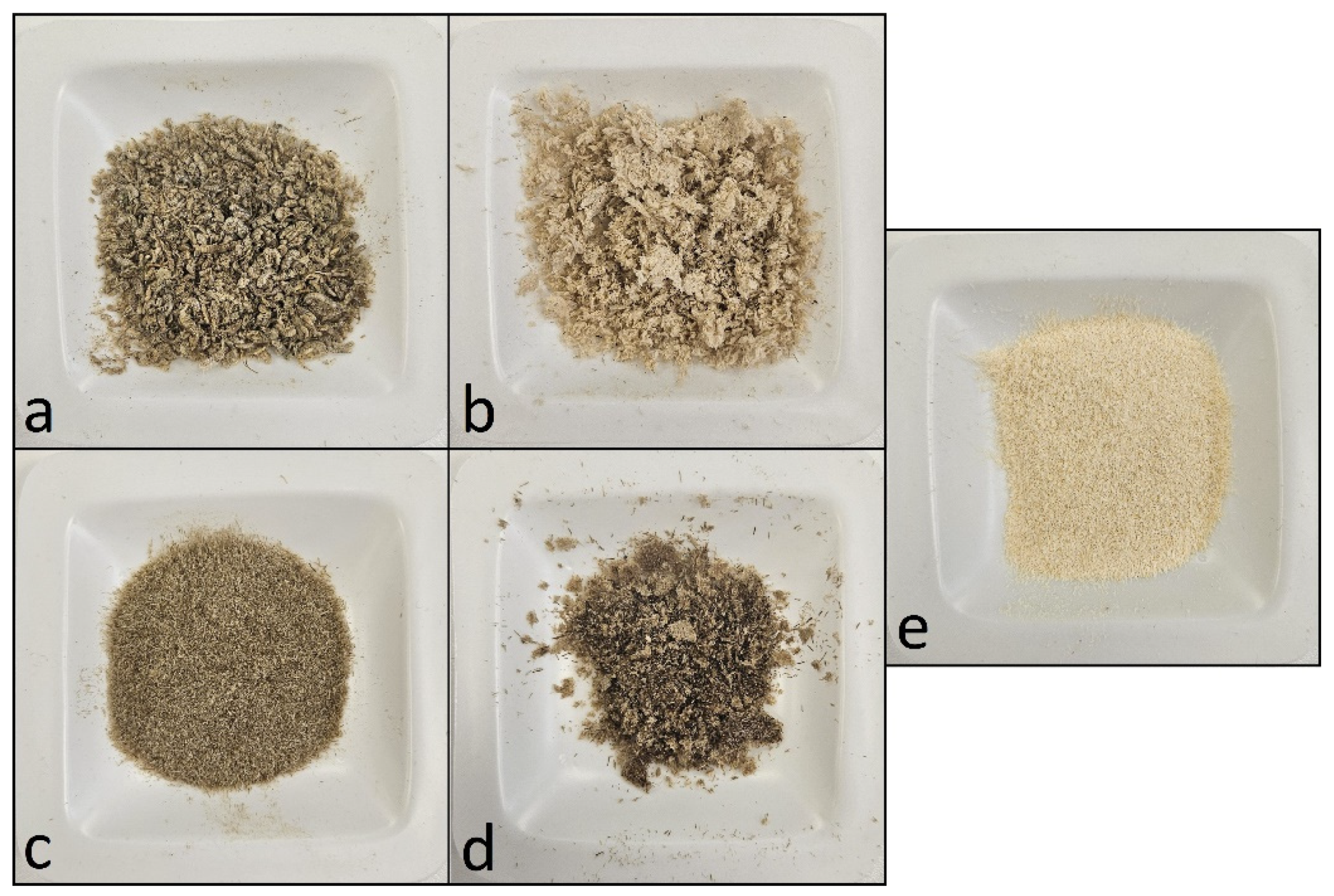
- Expanded Source Diversity and Circular Bioeconomy: The successful use of biofouling organisms suggests a promising path toward waste valorization and sustainable sourcing. Future work could explore other underutilized biomasses (e.g., invasive species, algal–fungal composites, industrial by-products, etc.), potentially coupling chitin extraction with ecological remediation.
- Deeper Structure–Function Mapping: Given the wide variation in degree of acetylation (DA), crystallinity, molecular weight (MW), and morphology, all shown to influence thermal, mechanical, and biological behavior, systematic studies correlating structure to function will be invaluable. This will facilitate the rational design of materials targeted for specific uses (biomedical implants, drug delivery, filtration, environmental remediation, food packaging, etc.).
- Collagen Resurgence—Especially Marine Collagens and Composite Materials: While this issue saw mostly chitin/chitosan-based works, I anticipate renewed interest in collagen, especially marine-derived or otherwise non-traditional collagens, and their integration with polysaccharides (e.g., composites, hybrid scaffolds). Such efforts could leverage the complementary strengths of collagen (protein–ECM mimicry) and chitin/chitosan (biodegradable polysaccharide scaffolding).
- Toward Translation and Standardization: As more labs contribute extraction protocols, physicochemical characterizations, and application demonstrations, there will be increasing demand for standardization: agreed methods for measuring DA, MW, crystallinity, bioactivity, and safety; benchmarks for biomedical and environmental applications; and guidelines for scalable, reproducible processing.
4. Conclusions
Conflicts of Interest
References
- Rahman, A. Two Important Biopolymers: The Transformative Power of Chitin and Collagen in Multidisciplinary Applications. Polysaccharides 2024, 5, 96–99. [Google Scholar] [CrossRef] [Scilit]
- Vieira, H.; Lestre, G.M.; Solstad, R.G.; Cabral, A.E.; Botelho, A.; Helbig, C.; Coppola, D.; de Pascale, D.; Robbens, J.; Raes, K.; et al. Current and Expected Trends for the Marine Chitin/Chitosan and Collagen Value Chains. Mar. Drugs 2023, 21, 605. [Google Scholar] [CrossRef] [Scilit] [PubMed]
- Arbia, W.; Arbia, L.; Adour, L.; Amrane, A. Chitin Extraction from Crustacean Shells Using Biological Methods—A Review. Food Technol. Biotechnol. 2013, 51, 12–25. [Google Scholar]
- Kaur, R.; Pathak, L.; Vyas, P. Biobased Polymers of Plant and Microbial Origin and Their Applications—A Review. Biotechnol. Sustain. Mater. 2024, 1, 13. [Google Scholar] [CrossRef] [Scilit]
- Rahman, M.A.; Halfar, J. First evidence of chitin in calcified coralline algae: New insights into the calcification process of Clathromorphum compactum. Sci. Rep. 2014, 4, 6162. [Google Scholar] [CrossRef] [Scilit]
- Mohan, K.; Ganesan, A.R.; Ezhilarasi, P.N.; Kondamareddy, K.K.; Rajan, D.K.; Sathishkumar, P.; Rajarajeswaran, J.; Conterno, L. Green and Eco-Friendly Approaches for the Extraction of Chitin and Chitosan: A Review. Carbohydr. Polym. 2022, 287, 119349. [Google Scholar] [CrossRef] [Scilit]
- Alimi, B.A.; Pathania, S.; Wilson, J.; Duffy, B.; Frias, J.M.C. Extraction, Quantification, Characterization, and Application in Food Packaging of Chitin and Chitosan from Mushrooms: A Review. Int. J. Biol. Macromol. 2023, 237, 124195. [Google Scholar] [CrossRef] [Scilit]
- Gutierrez-Canul, C.D.; Can-Herrera, L.A.; Ramírez-Rivera, E.J.; Prinyawiwatkul, W.; Sauri-Duch, E.; Moo-Huchin, V.M.; Hernández-Núñez, E. A Review of Classical and Rising Approaches to the Extraction and Utilization of Marine Collagen. BioTech 2025, 14, 26. [Google Scholar] [CrossRef] [Scilit]
- Rinaudo, M. Chitin and Chitosan: Properties and Applications. Prog. Polym. Sci. 2006, 31, 603–632. [Google Scholar] [CrossRef] [Scilit]
- Selvoski, C.; Lobarbio, C.F.; Plowman-Holmes, M.; Bell, P.; Chambers, B.; Cumming, M. Extraction, Quantification, and Characterization of Chitin from Marine Biofouling Organisms Amphipods (Jassa sp.) and Hydroids (Coryne sp.). Polysaccharides 2025, 6, 87. [Google Scholar] [CrossRef] [Scilit]
- Privar, Y.; Skatova, A.; Golikov, A.; Boroda, A.; Bratskaya, S. Gelation and Cryogelation of Chitosan: Origin of Low Efficiency of Diglycidyl Ethers as Cross-Linkers in Acetic Acid Solutions. Polysaccharides 2024, 5, 731–742. [Google Scholar] [CrossRef] [Scilit]
- Boughanmi, R.; Oelmann, M.; Steinbach, C.; Schwarz, S. Comparative Study on Polyelectrolyte Complex Formation of Chitosan and Pectin or PEMA: Effects of Molecular Weight and Mixing Speed. Polysaccharides 2024, 5, 842–856. [Google Scholar] [CrossRef] [Scilit]
- Mourak, A.; Ait-Karra, A.; Ouhammou, M.; Ouamnina, A.; Boutasknit, A.; Bouchari, M.E.H.; Elhadiri, N.; Alagui, A. Optimization of TEMPO-Mediated Oxidation of Chitosan to Enhance Its Antibacterial and Antioxidant Activities. Polysaccharides 2025, 6, 65. [Google Scholar] [CrossRef] [Scilit]
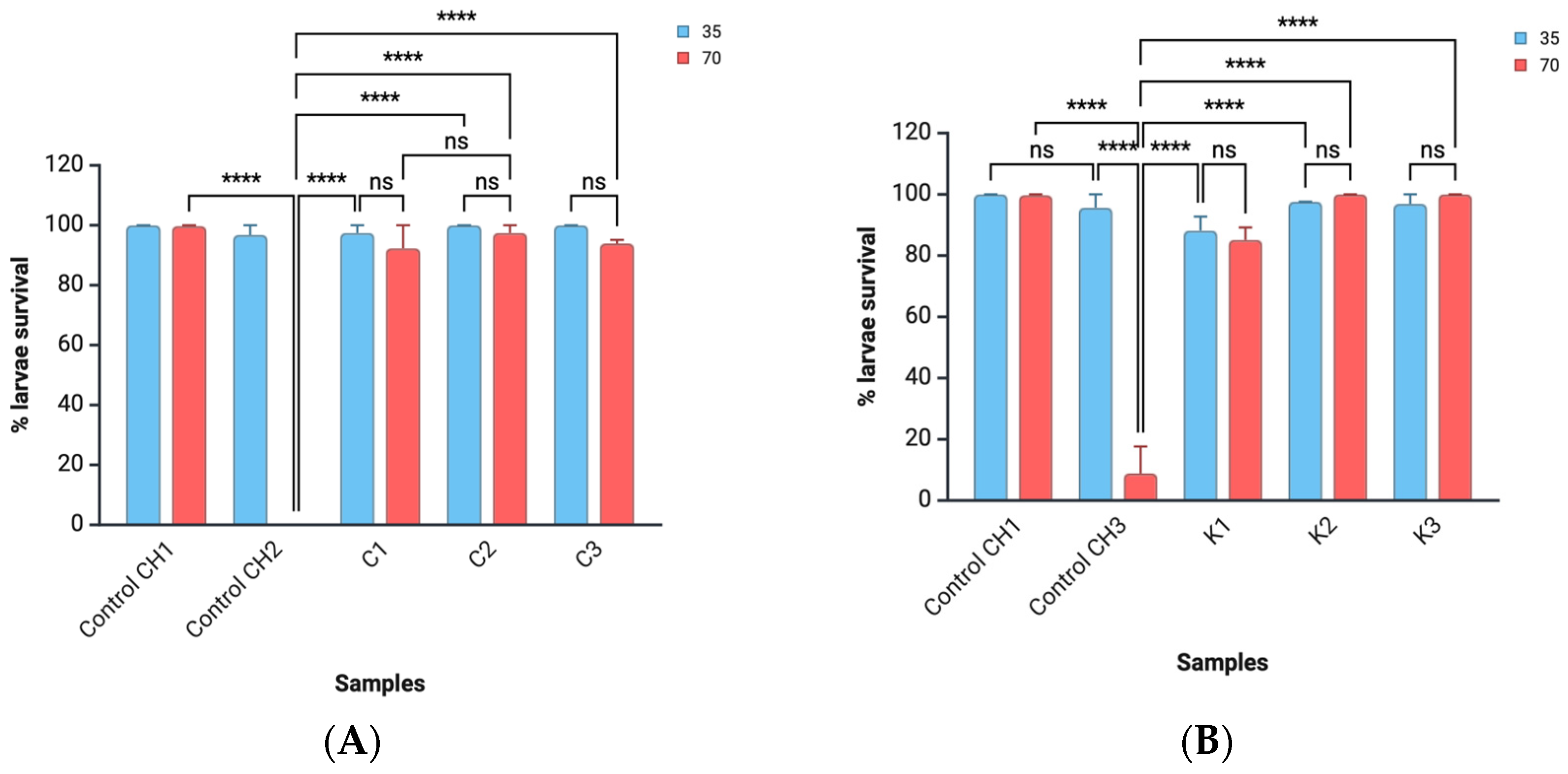
- Schröder, V.; Mitea, G.; Rău, I.; Apetroaei, M.R.; Iancu, I.M.; Apetroaei, M.-M. Chitosan Mixtures from Marine Sources: A Comparative Study of Biological Responses and Practical Applications. Polysaccharides 2025, 6, 80. [Google Scholar] [CrossRef] [Scilit]
- Díaz Bukvic, G.; Ojeda Henriquez, M.; Rodríguez Vannini, A.B.; Fidalgo, M.M.; Salvay, A.G.; Rossi, E.; Errea, M.I. Impact of the Three-Dimensional Arrangements of Polyhydroxylated Crosslinkers on the Resulting Properties of Chitosan-Based Hydrogels. Polysaccharides 2024, 5, 358–379. [Google Scholar] [CrossRef] [Scilit]
- Sarier, N.; Eloglu, A.; Onder, E. The Development of Thermoresponsive Multifunctional Chitosan Films Suitable for Food Packaging. Polysaccharides 2025, 6, 17. [Google Scholar] [CrossRef] [Scilit]
- Hidaka, M.; Sakai, S. Photo- and Schiff Base-Crosslinkable Chitosan/Oxidized Glucomannan Composite Hydrogel for 3D Bioprinting. Polysaccharides 2025, 6, 19. [Google Scholar] [CrossRef] [Scilit]
- Córdoba, E.A.; Agudelo, N.A.; Giraldo, L.F.; Echeverri-Cuartas, C.E. Exploring the Potential of Carboxymethyl Chitosan and Oxidized Agarose to Form Self-Healing Injectable Hydrogels. Polysaccharides 2025, 6, 49. [Google Scholar] [CrossRef] [Scilit]
- Younes, I.; Rinaudo, M. Chitin and Chitosan Preparation from Marine Sources: Structure, Properties and Applications. Mar. Drugs 2015, 13, 1133–1174. [Google Scholar] [CrossRef] [Scilit]
- Silva, T.H.; Moreira-Silva, J.; Marques, A.L.P.; Domingues, A.; Bayon, Y.; Reis, R.L. Marine Origin Collagens and Its Potential Applications. Mar. Drugs 2014, 12, 5881–5901. [Google Scholar] [CrossRef] [Scilit]
- Miles, C.A.; Bailey, A.J. Thermal denaturation of collagen revisited. Proc. Indian Acad. Sci. (Chem. Sci.) 1999, 111, 71–80. [Google Scholar] [CrossRef] [Scilit]
- Ehrlich, H. Chitin and collagen as universal and alternative templates in biomineralization. Int. Geol. Rev. 2010, 52, 661–699. [Google Scholar] [CrossRef] [Scilit]
- Krastev, V.; Stoyanova, N.; Valcheva, I.; Draganova, D.; Naydenov, M.; Spasova, M.; Stoilova, O. Development of Chitosan-Coated Electrospun Poly(3-hydroxybutyrate) Biohybrid Materials for Growth and Long-Term Storage of Bacillus subtilis. Polysaccharides 2024, 5, 698–714. [Google Scholar] [CrossRef] [Scilit]
- Zanotti, A.; Baldino, L.; Cardea, S.; Reverchon, E. Methyl Orange Adsorption Using Chitosan-Based Composite Aerogels Produced by Supercritical Gel Drying. Polysaccharides 2025, 6, 1. [Google Scholar] [CrossRef] [Scilit]
- Chung, C.-C.; Chen, H.-W.; Han, J.-L.; Wu, H.-T. Discussions on the Adsorption Behaviors Affected by the Differences Between Graphene Oxide and Graphene Grafted by Chitosan. Polysaccharides 2025, 6, 3. [Google Scholar] [CrossRef] [Scilit]
- de Gante-de la Maza, S.; Plascencia-Jatomea, M.; Cortez-Rocha, M.O.; Sánchez-Mariñez, R.I.; Meneses-Sagrero, S.E.; Gálvez-Iriqui, A.C.; López-Meneses, A.K. Chitosan Combined with Methanolic Plants Extracts: Antifungal Activity, Phytotoxicity and Acute Toxicity. Polysaccharides 2025, 6, 52. [Google Scholar] [CrossRef] [Scilit]
Disclaimer/Publisher’s Note: The statements, opinions and data contained in all publications are solely those of the individual author(s) and contributor(s) and not of MDPI and/or the editor(s). MDPI and/or the editor(s) disclaim responsibility for any injury to people or property resulting from any ideas, methods, instructions or products referred to in the content. |
© 2025 by the author. Licensee MDPI, Basel, Switzerland. This article is an open access article distributed under the terms and conditions of the Creative Commons Attribution (CC BY) license.
Share and Cite
Rahman, A. Unlocking Nature’s Building Blocks: Emerging Advances in Chitin and Collagen Research. Polysaccharides 2026, 7, 2. https://doi.org/10.3390/polysaccharides7010002
Rahman A. Unlocking Nature’s Building Blocks: Emerging Advances in Chitin and Collagen Research. Polysaccharides. 2026; 7(1):2. https://doi.org/10.3390/polysaccharides7010002
Chicago/Turabian StyleRahman, Azizur. 2026. "Unlocking Nature’s Building Blocks: Emerging Advances in Chitin and Collagen Research" Polysaccharides 7, no. 1: 2. https://doi.org/10.3390/polysaccharides7010002
APA StyleRahman, A. (2026). Unlocking Nature’s Building Blocks: Emerging Advances in Chitin and Collagen Research. Polysaccharides, 7(1), 2. https://doi.org/10.3390/polysaccharides7010002

