Review

Chitosan and Alginate in Aquatic Vaccine Development

by
Anastasia Zubareva
1,*,
Elena Svirshchevskaya
2,
Artem Nedoluzhko
3 and
Yury A. Skorik
1,*
1
Branch of Petersburg Nuclear Physics Institute Named by B.P. Konstantinov of National Research Centre «Kurchatov Institute»-Institute of Macromolecular Compounds, Bolshoi VO 31, 199004 St. Petersburg, Russia
2
Shemyakin-Ovchinnikov Institute of Bioorganic Chemistry, Russian Academy of Sciences, GSP-7, Ulitsa Miklukho-Maklaya, 16/10, 117997 Moscow, Russia
3
Paleogenomics Laboratory, European University at Saint Petersburg, 6/1A Gagarinskaya St., 191187 St. Petersburg, Russia
*
Authors to whom correspondence should be addressed.
Polysaccharides 2025, 6(4), 111; https://doi.org/10.3390/polysaccharides6040111

Submission received: 10 October 2025 / Revised: 19 November 2025 / Accepted: 5 December 2025 / Published: 8 December 2025

Abstract

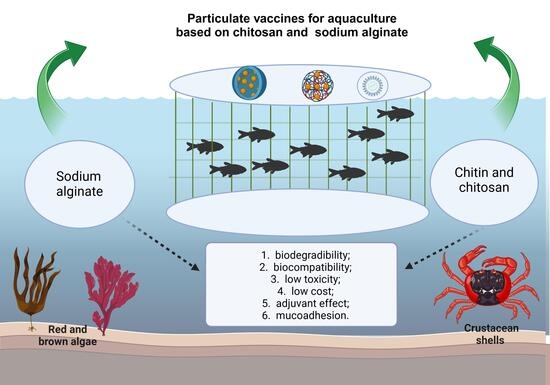
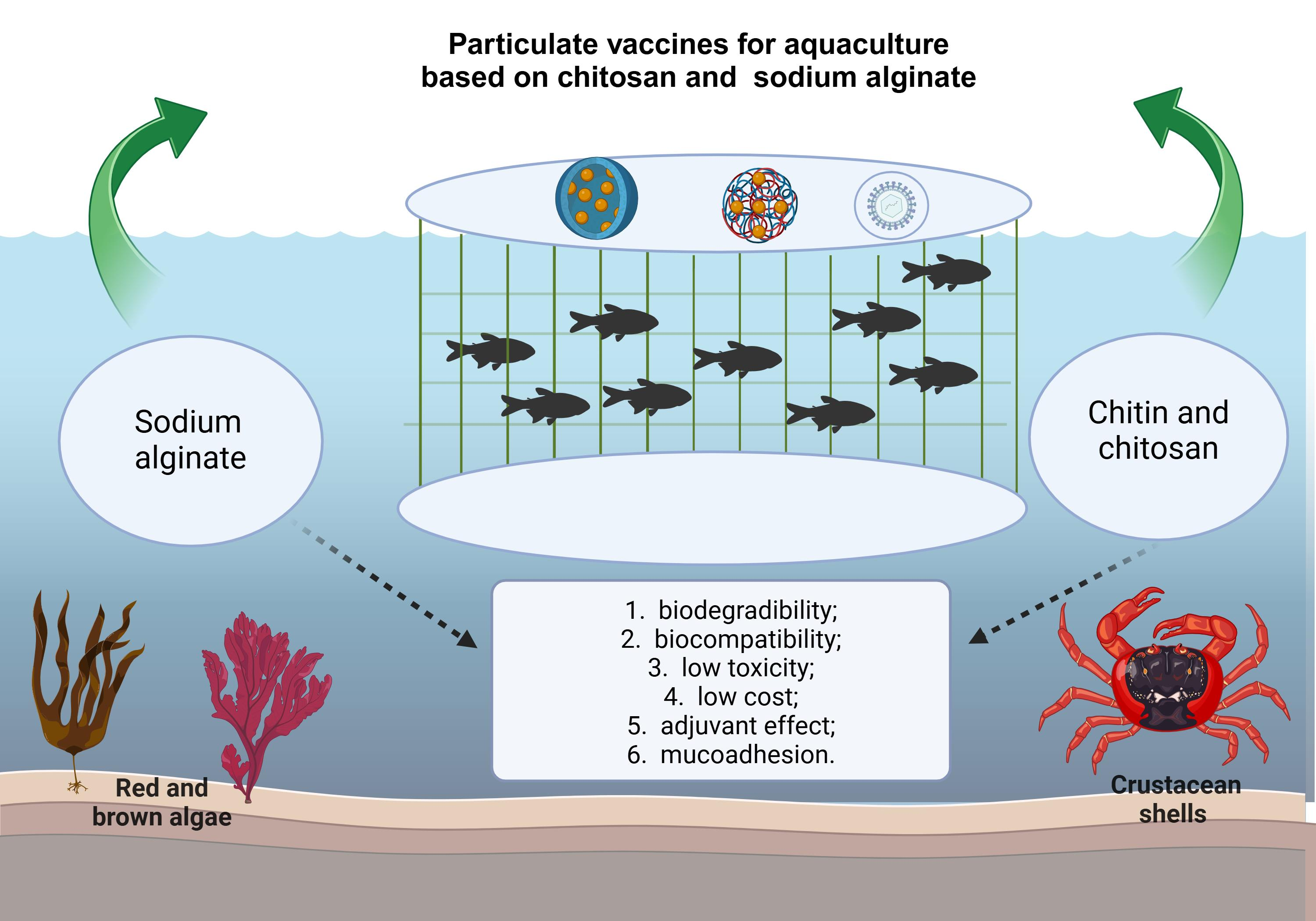
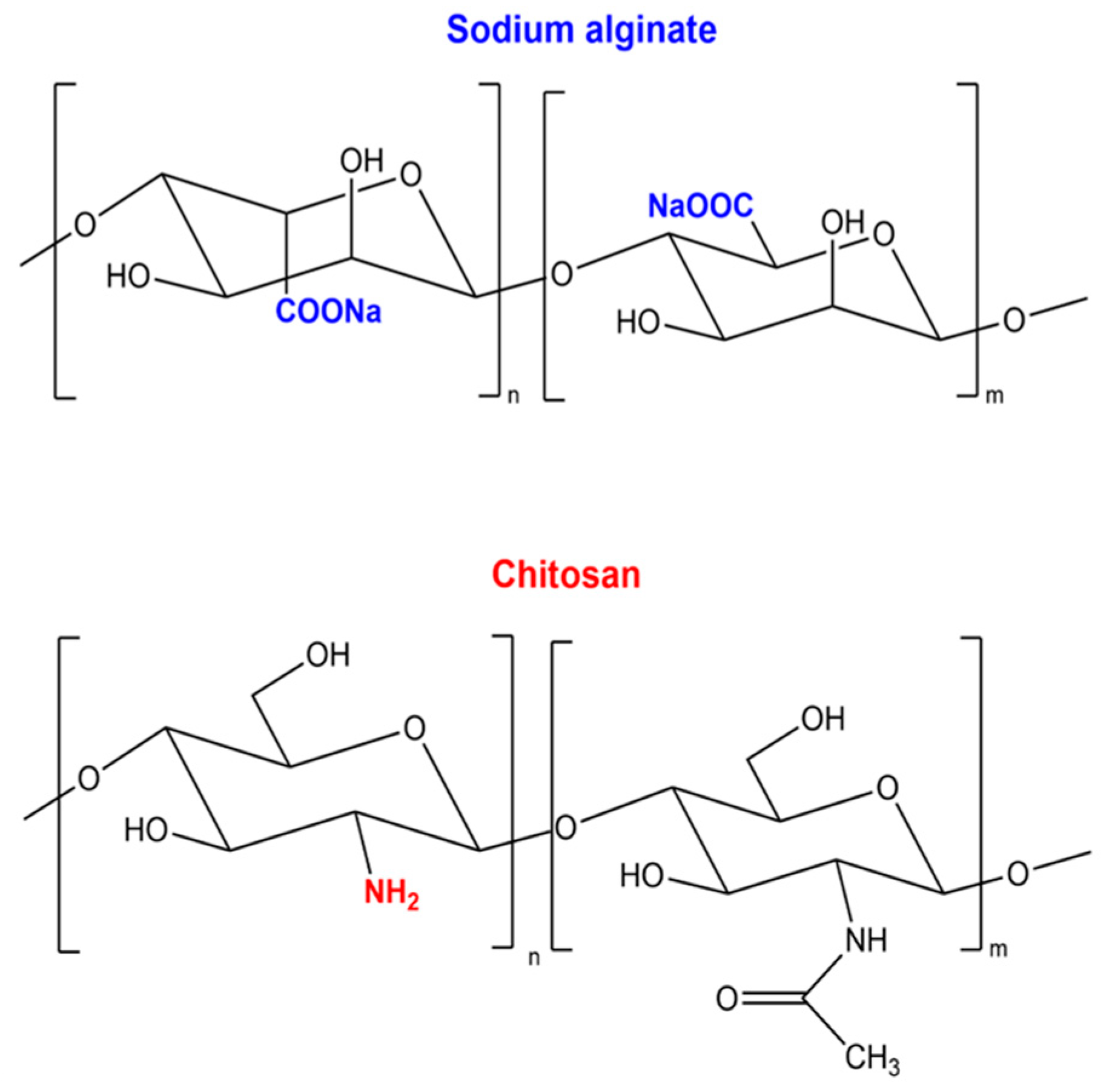
The global aquaculture industry faces a number of challenges, including the risk of infection spreading in closed aquatic ecosystems. Since 1942, vaccination has become a mainstream approach in fish cultivation. However, the immune system of cold-blooded organisms differs significantly from that of mammals, which must be taken into account when developing vaccines for aquaculture. Modern technology employs delivery systems for antigens to protect them from degradation in the water and the digestive tract. Packaging the antigen into a biodegradable structure protects the protein or target gene from degradation and enhances antigen delivery to immune cells. The combination of chitosan and alginate is widely used for the development of various types of nano- and microcarriers. New vaccines based on these polysaccharides are more effective, increasing survival rates in some fish species by up to 100% compared to 20% in the control group. However, the correlation between the observed effects and the physicochemical characteristics of the polysaccharides/carriers, and the mechanisms of their action, remains unclear. This review summarizes and analyzes the data on the use of chitosan and alginate in aquaculture vaccines. Particular focus is given to the physicochemical properties and sources of the polysaccharides, and their potential implementation in aquaculture vaccination practices.
Keywords: chitosan; sodium alginate; fish vaccination; aquaculture chitosan; sodium alginate; fish vaccination; aquaculture
Graphical Abstract