
Applying AI Tools for Monitoring Nutrition and Physical Activity in Populations with Obesity: Are We Ready?




Abstract
1. Introduction
1.1. Obesity Within a Dynamic Energy System: Is This a Challenge for AI?
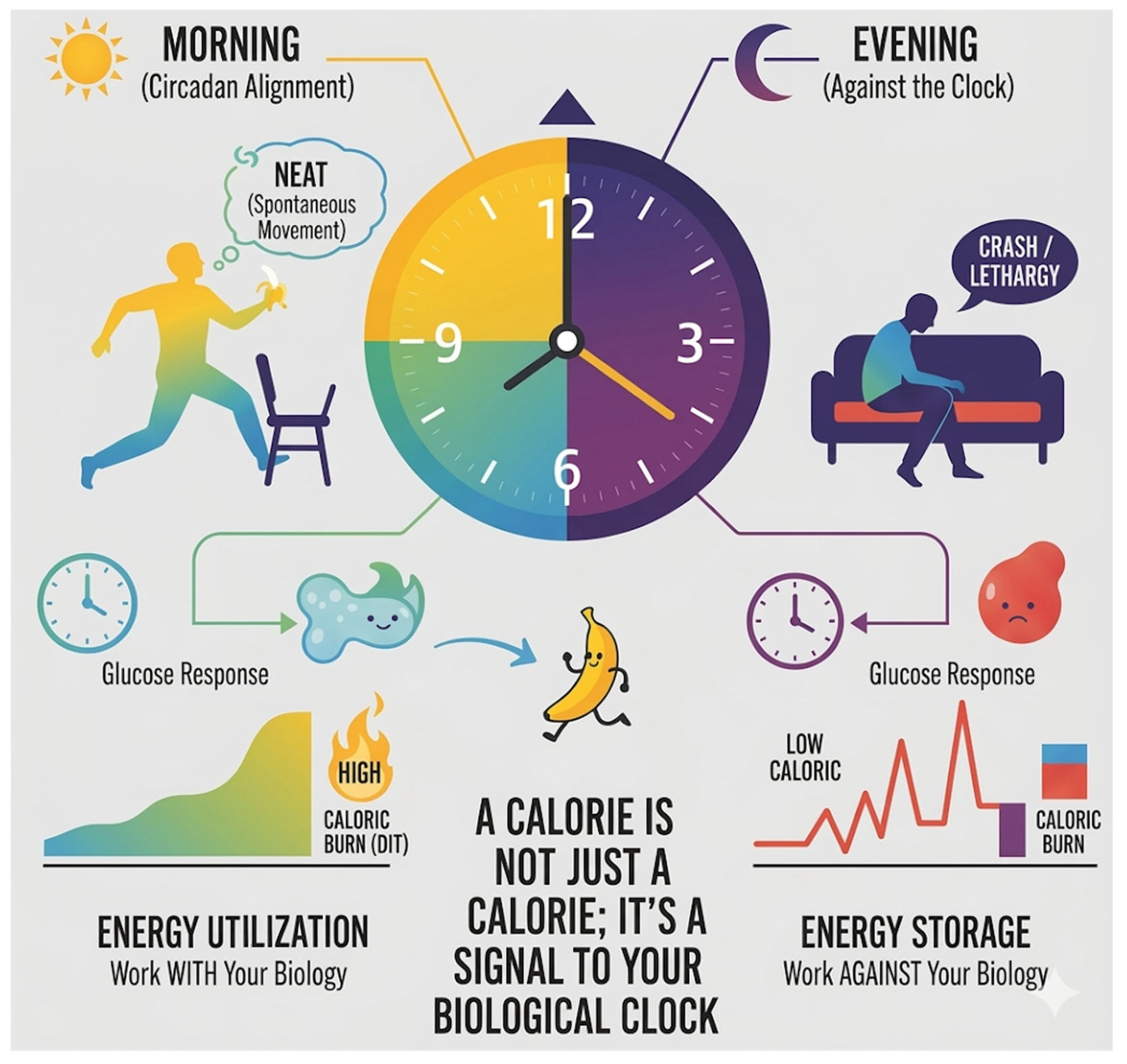
1.2. New Challenge for AI: Do Not Forget the Physiology of Energy Balance and Chrono-Nutrition
1.3. Why AI Tools Could Be Better: The Limitations of Traditional Monitoring
1.4. New Challenge for AI: Do Not Forget Nutrition and Physical Activity Tools for the Obesity Condition
2. Why Are AI Tools Specific to Obesity: The Dietary Intake Monitoring Issue
2.1. Moving Forward, the Critical Gap of Underrepresentation of People with Obesity in Training and Validation Datasets
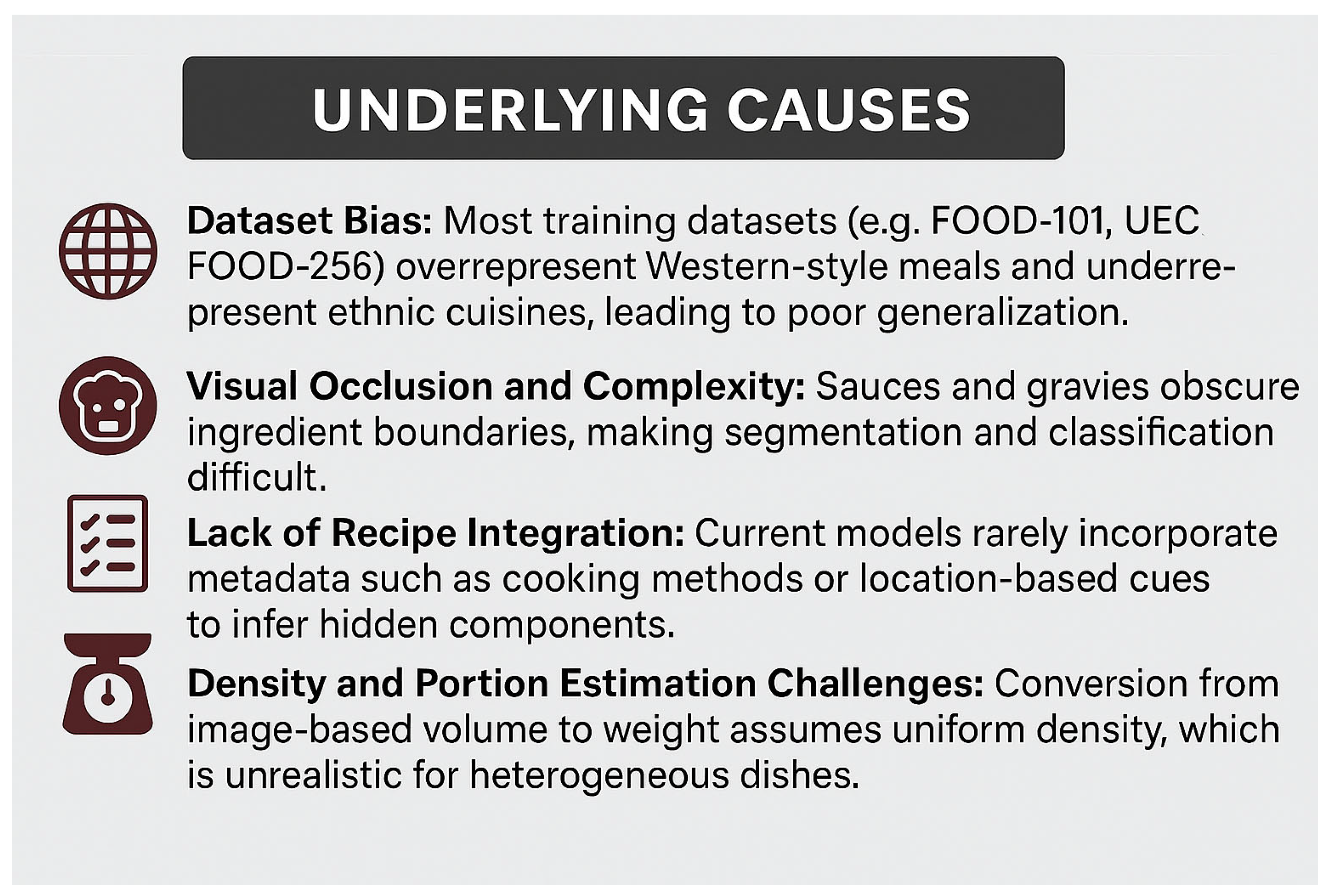
2.2. Moving Forward, the Critical Gap of Poor Performance for Mixed Dishes, Sauces, and Culturally Specific Foods
2.3. Moving Forward, the Critical Gap of Limited Validation Against Gold Standards in Obesity
3. Why Are AI Tools Specific to Obesity: The Physical Activity Monitoring Issue
3.1. Moving Forward, the Critical Gap of Systematic Measurement Bias in Individuals with Obesity
3.2. Integration of Nutrition and Physical Activity Data
3.2.1. What Is Known?
3.2.2. What Is Missing?
- Robust Real-World and Long-Term Evidence: High heterogeneity in study results questions generalizability, and the modest effect sizes raise concerns about sustained, meaningful clinical impact beyond controlled research settings.
- Fragmented and Suboptimal Data Integration: Key limitations include poor user engagement with digital food diaries (often perceived as unhelpful or shame-inducing), technical barriers to seamless data extraction from wearables, and persistent inaccuracies in self-reported data, compromising the quality of the very data AI models rely on.
- Inconclusive and Inequitable Modalities: Web-based interventions consistently fail to demonstrate statistically significant effects, creating a gap in effective, accessible platform options. Furthermore, variability in digital literacy and access barriers pose critical equity challenges, risking the exacerbation of health disparities rather than their reduction.
- Limitations in Personalization and Clinical Utility: Advanced tools like LLMs show substantial shortcomings in managing complex, individualized clinical scenarios. They exhibit inconsistency, provide generic or inaccurate recommendations, and often fail to tailor advice for patients with specific genetic profiles or multiple comorbidities, highlighting a gap in truly sophisticated, reliable personalization.
- Unresolved Ethical and Operational Challenges: Significant hurdles remain regarding data security, privacy, and the opaque “black box” nature of many AI models, which complicates legal accountability. Furthermore, effectiveness is critically dependent on consistent user engagement, a variable and often unreliable factor, and AI models risk perpetuating biases if trained on nonrepresentative data.
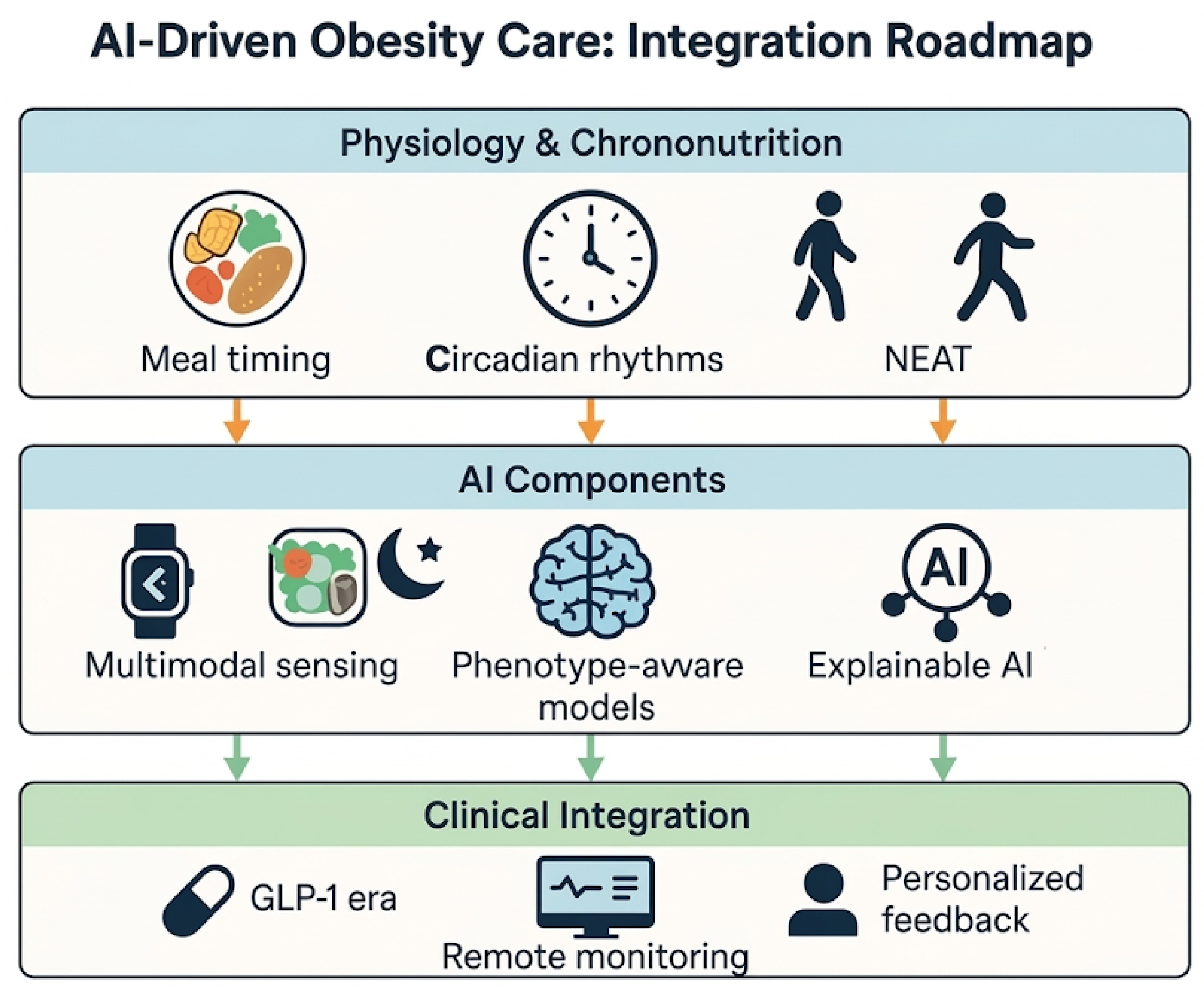
3.3. The Advent of AI as an Enabler of Integration
4. AI Monitoring and the Changing Therapeutic Landscape of Obesity in the Incretins Era
5. Conclusions
6. Take-Home Message
Author Contributions
Funding
Data Availability Statement
Acknowledgments
Conflicts of Interest
Abbreviations
| AI | Artificial Intelligence |
| NEAT | Non-Exercise Activity Thermogenesis |
| DLW | Doubly Labelled Water |
| GLP-1 | Glucagon-Like Peptide-1 |
| GIP | Glucose-Dependent Insulinotropic Polypeptide |
| PA | Physical Activity |
| EI | Energy Intake |
| EE | Energy Expenditure |
| OHA | Obesity Health Alliance |
| BMI | Body Mass Index |
| SCN | Suprachiasmatic Nucleus |
| NPY | Neuropeptide Y |
| AgRP | Agouti-Related Peptide |
| POMC | Proopiomelanocortin |
| CART | Cocaine- and Amphetamine-Regulated Transcript |
| DIT | Diet-Induced Thermogenesis |
| IADA | Image-Assisted Dietary Assessment |
| CNNs | Convolutional Neural Networks |
| COM | Centre of Mass |
| PAEE | Physical Activity Energy Expenditure |
| MET | Metabolic Equivalent of Task |
| RMSE | Root Mean Square Error |
| CDSS | Clinical Decision Support System |
| XAI | Explainable Artificial Intelligence |
| SHAP | Shapley Additive Explanations |
| LLMs | Large Language Models |
| DTx | Digital Therapeutics |
| EHR | Electronic Health Record |
| MD | Mean Difference |
| HPs | Health Professionals |
| VLC | Virtual Learning Collaborative |
References
- World Health Organization. Obesity and Overweight. Available online: https://www.who.int/news-room/fact-sheets/detail/obesity-and-overweight (accessed on 13 January 2026).
- Hassapidou, M.; Vlassopoulos, A.; Kalliostra, M.; Govers, E.; Mulrooney, H.; Ells, L.; Salas, X.R.; Muscogiuri, G.; Darleska, T.H.; Busetto, L.; et al. European Association for the Study of Obesity Position Statement on Medical Nutrition Therapy for the Management of Overweight and Obesity in Adults Developed in Collaboration with the European Federation of the Associations of Dietitians. Obes. Facts 2023, 16, 11–28. [Google Scholar] [CrossRef] [Scilit]
- Alliance, O.H. Treatment of Overweight and Obesity: Position Statement & Evidence Review; Obesity Health Alliance (OHA): London, UK, 2024. [Google Scholar]
- Selvendran, S.S.; Penney, N.C.; Aggarwal, N.; Darzi, A.W.; Purkayastha, S. Treatment of Obesity in Young People—A Systematic Review and Meta-analysis. Obes. Surg. 2018, 28, 2537–2549. [Google Scholar] [CrossRef] [Scilit] [PubMed]
- Batsis, J.A.; Gill, L.E.; Masutani, R.K.; Adachi-Mejia, A.M.; Blunt, H.B.; Bagley, P.J.; Lopez-Jimenez, F.; Bartels, S.J. Weight loss interventions in older adults with obesity: A systematic review of randomized controlled trials since 2005. J. Am. Geriatr. Soc. 2017, 65, 257–268. [Google Scholar] [CrossRef] [Scilit] [PubMed]
- Colquitt, J.L.; Loveman, E.; O'Malley, C.; Azevedo, L.B.; Mead, E.; Al-Khudairy, L.; Ells, L.J.; Metzendorf, M.I.; Rees, K. Diet, physical activity, and behavioural interventions for the treatment of overweight or obesity in preschool children up to the age of 6 years. Cochrane Database Syst. Rev. 2016, 3, CD012105. [Google Scholar] [CrossRef] [Scilit] [PubMed]
- Okely, A.D.; Collins, C.E.; Morgan, P.J.; Jones, R.A.; Warren, J.M.; Cliff, D.P.; Burrows, T.L.; Colyvas, K.; Steele, J.R.; Baur, L.A. Multi-site randomized controlled trial of a child-centered physical activity program, a parent-centered dietary-modification program, or both in overweight children: The HIKCUPS study. J. Pediatr. 2010, 157, 388–394, 394.e381. [Google Scholar] [CrossRef] [Scilit]
- Frimel, T.N.; Sinacore, D.R.; Villareal, D.T. Exercise attenuates the weight-loss-induced reduction in muscle mass in frail obese older adults. Med. Sci. Sports Exerc. 2008, 40, 1213–1219. [Google Scholar] [CrossRef] [Scilit]
- Villareal, D.T.; Chode, S.; Parimi, N.; Sinacore, D.R.; Hilton, T.; Armamento-Villareal, R.; Napoli, N.; Qualls, C.; Shah, K. Weight loss, exercise, or both and physical function in obese older adults. N. Engl. J. Med. 2011, 364, 1218–1229. [Google Scholar] [CrossRef] [Scilit]
- Cooke, M.B.; Deasy, W.; Ritenis, E.J.; Wilson, R.A.; Stathis, C.G. Effects of Intermittent Energy Restriction Alone and in Combination with Sprint Interval Training on Body Composition and Cardiometabolic Biomarkers in Individuals with Overweight and Obesity. Int. J. Environ. Res. Public. Health 2022, 19, 7969. [Google Scholar] [CrossRef] [Scilit]
- Haganes, K.L.; Silva, C.P.; Eyjolfsdottir, S.K.; Steen, S.; Grindberg, M.; Lydersen, S.; Hawley, J.A.; Moholdt, T. Time-restricted eating and exercise training improve HbA1c and body composition in women with overweight/obesity: A randomized controlled trial. Cell Metab. 2022, 34, 1457–1471. e1454. [Google Scholar] [CrossRef] [Scilit]
- Kotarsky, C.J.; Johnson, N.R.; Mahoney, S.J.; Mitchell, S.L.; Schimek, R.L.; Stastny, S.N.; Hackney, K.J. Time-restricted eating and concurrent exercise training reduces fat mass and increases lean mass in overweight and obese adults. Physiol. Rep. 2021, 9, e14868. [Google Scholar] [CrossRef] [Scilit]
- Weiss, E.P.; Jordan, R.C.; Frese, E.M.; Albert, S.G.; Villareal, D.T. Effects of Weight Loss on Lean Mass, Strength, Bone, and Aerobic Capacity. Med. Sci. Sports Exerc. 2017, 49, 206–217. [Google Scholar] [CrossRef] [Scilit]
- Ficarra, S.; Di Raimondo, D.; Navarra, G.A.; Izadi, M.; Amato, A.; Macaluso, F.P.; Proia, P.; Musiari, G.; Buscemi, C.; Barile, A.M.; et al. Effects of Mediterranean Diet Combined with CrossFit Training on Trained Adults' Performance and Body Composition. J. Pers. Med. 2022, 12, 1238. [Google Scholar] [CrossRef] [Scilit] [PubMed]
- Hadizadeh, M.; Gan, W.Y.; Mohafez, H.; Sugajima, Y. Impact of ketogenic diet on body composition during resistance training among untrained individuals. Open Sports Sci. J. 2020, 13, 114–119. [Google Scholar] [CrossRef] [Scilit]
- Martínez-Rodríguez, A.; Rubio-Arias, J.A.; García-De Frutos, J.M.; Vicente-Martínez, M.; Gunnarsson, T.P. Effect of high-intensity interval training and intermittent fasting on body composition and physical performance in active women. Int. J. Environ. Res. Public. Health 2021, 18, 6431. [Google Scholar] [CrossRef] [Scilit] [PubMed]
- Vargas-Molina, S.; Petro, J.L.; Romance, R.; Kreider, R.B.; Schoenfeld, B.J.; Bonilla, D.A.; Benítez-Porres, J. Effects of a ketogenic diet on body composition and strength in trained women. J. Int. Soc. Sports Nutr. 2020, 17, 19. [Google Scholar] [CrossRef] [Scilit]
- Fagiani, F.; Di Marino, D.; Romagnoli, A.; Travelli, C.; Voltan, D.; Di Cesare Mannelli, L.; Racchi, M.; Govoni, S.; Lanni, C. Molecular Regulations of Circadian Rhythm and Implications for Physiology and Diseases. Signal Transduct. Target. Ther. 2022, 7, 41. [Google Scholar] [CrossRef] [Scilit]
- Andreadi, A.; Andreadi, S.; Todaro, F.; Ippoliti, L.; Bellia, A.; Magrini, A.; Chrousos, G.P.; Lauro, D. Modified Cortisol Circadian Rhythm: The Hidden Toll of Night-Shift Work. Int. J. Mol. Sci. 2025, 26, 2090. [Google Scholar] [CrossRef] [Scilit]
- Farhadipour, M.; Depoortere, I. The function of gastrointestinal hormones in obesity—Implications for the regulation of energy intake. Nutrients 2021, 13, 1839. [Google Scholar] [CrossRef] [Scilit]
- Jung, I.; Park, S.Y.; Yu, J.H.; Seo, J.A.; Kim, K.J.; Kim, N.H.; Yoo, H.J.; Kim, S.G.; Choi, K.M.; Baik, S.H. Attention to innate circadian rhythm and the impact of its disruption on diabetes. Diabetes Metab. J. 2024, 48, 37–52. [Google Scholar] [CrossRef] [Scilit]
- Miller, G.D. Appetite regulation: Hormones, peptides, and neurotransmitters and their role in obesity. Am. J. Lifestyle Med. 2019, 13, 586–601. [Google Scholar] [CrossRef] [Scilit]
- Qian, J.; Scheer, F.A. Circadian system and glucose metabolism: Implications for physiology and disease. Trends Endocrinol. Metab. 2016, 27, 282–293. [Google Scholar] [CrossRef] [Scilit] [PubMed]
- Ribeiro, F.M.; Arnaldo, L.; Milhomem, L.P.; Aguiar, S.S.; Franco, O.L. The intricate relationship between circadian rhythms and gastrointestinal peptides in obesity. Peptides 2025, 185, 171356. [Google Scholar] [CrossRef] [Scilit]
- Ruddick-Collins, L.C.; Morgan, P.J.; Johnstone, A.M. Mealtime: A circadian disruptor and determinant of energy balance? J. Neuroendocrinol. 2020, 32, e12886. [Google Scholar] [CrossRef] [Scilit] [PubMed]
- Seshadri, N.; Doucette, C.A. Circadian regulation of the pancreatic beta cell. Endocrinology 2021, 162, bqab089. [Google Scholar] [CrossRef] [Scilit] [PubMed]
- Van Drunen, R.; Eckel-Mahan, K. Circadian rhythms of the hypothalamus: From function to physiology. Clocks Sleep. 2021, 3, 189–226. [Google Scholar] [CrossRef] [Scilit]
- Shen, B.; Ma, C.; Wu, G.; Liu, H.; Chen, L.; Yang, G. Effects of exercise on circadian rhythms in humans. Front. Pharmacol. 2023, 14, 1282357. [Google Scholar] [CrossRef] [Scilit]
- Gabriel, B.M.; Zierath, J.R. Circadian rhythms and exercise–re-setting the clock in metabolic disease. Nat. Rev. Endocrinol. 2019, 15, 197–206. [Google Scholar] [CrossRef] [Scilit]
- Levine, J.A.; Eberhardt, N.L.; Jensen, M.D. Role of nonexercise activity thermogenesis in resistance to fat gain in humans. Science 1999, 283, 212–214. [Google Scholar] [CrossRef] [Scilit]
- Mentzelou, M.; Papadopoulou, S.K.; Psara, E.; Voulgaridou, G.; Pavlidou, E.; Androutsos, O.; Giaginis, C. Chrononutrition in the Prevention and Management of Metabolic Disorders: A Literature Review. Nutrients 2024, 16, 722. [Google Scholar] [CrossRef] [Scilit]
- Reytor-González, C.; Simancas-Racines, D.; Román-Galeano, N.M.; Annunziata, G.; Galasso, M.; Zambrano-Villacres, R.; Verde, L.; Muscogiuri, G.; Frias-Toral, E.; Barrea, L. Chrononutrition and Energy Balance: How Meal Timing and Circadian Rhythms Shape Weight Regulation and Metabolic Health. Nutrients 2025, 17, 2135. [Google Scholar] [CrossRef] [Scilit]
- Theodorakis, N.; Kreouzi, M.; Pappas, A.; Nikolaou, M. Beyond Calories: Individual Metabolic and Hormonal Adaptations Driving Variability in Weight Management—A State-of-the-Art Narrative Review. Int. J. Mol. Sci. 2024, 25, 13438. [Google Scholar] [CrossRef] [Scilit] [PubMed]
- Guo, C.; Ashrafian, H.; Ghafur, S.; Fontana, G.; Gardner, C.; Prime, M. Challenges for the Evaluation of Digital Health Solutions—A Call for Innovative Evidence Generation Approaches. npj Digit. Med. 2020, 3, 110. [Google Scholar] [CrossRef] [Scilit] [PubMed]
- Alam, N.B.; Surani, M.; Das, C.K.; Giacco, D.; Singh, S.P.; Jilka, S. Challenges and Standardisation Strategies for Sensor-Based Data Collection for Digital Phenotyping. Commun. Med. 2025, 5, 360. [Google Scholar] [CrossRef] [Scilit] [PubMed]
- Demirel, B.U.; Chen, L.; Al Faruque, M.A. Data-Driven Energy-Efficient Adaptive Sampling Using Deep Reinforcement Learning. ACM Trans. Comput. Healthc. 2023, 4, 1–19. [Google Scholar] [CrossRef] [Scilit]
- Haghighathoseini, A.; Lin, S.; Song, G.; An, R.; Xue, H. A Systematic Review on Applications of Artificial Intelligence for Obesity Prevention. Obes. Rev. 2025, 23, e70062. [Google Scholar] [CrossRef] [Scilit]
- Thomas, D.M.; Knight, R.; Gilbert, J.A.; Cornelis, M.C.; Gantz, M.G.; Burdekin, K.; Cummiskey, K.; Sumner, S.C.J.; Pathmasiri, W.; Sazonov, E. Transforming Big Data into AI-Ready Data for Nutrition and Obesity Research. Obesity 2024, 32, 857–870. [Google Scholar] [CrossRef] [Scilit]
- Ahmed, B.; Sultana, R.; Greene, M.W. Adipose tissue and insulin resistance in obese. Biomed. Pharmacother. 2021, 137, 111315. [Google Scholar] [CrossRef] [Scilit]
- Porter, A.; Jago, R.; Robles, L.A.; Cawley, E.; Rogers, P.J.; Ferriday, D.; Brunstrom, J.M. Investigating the psychology of eating after exercise–a scoping review. J. Nutr. Sci. 2025, 14, e12. [Google Scholar] [CrossRef] [Scilit]
- Wu, Y.K.; Berry, D.C. Impact of weight stigma on physiological and psychological health outcomes for overweight and obese adults: A systematic review. J. Adv. Nurs. 2018, 74, 1030–1042. [Google Scholar] [CrossRef] [Scilit]
- Hallock, R.; Mehta, N.; Patel, N.; Ganesan, N.; Kang, C.; Pulis, M.; Rose, J. Harnessing Artificial Intelligence for Obesity Care: A Systematic Review of AI-Enabled Behavioral Coaching Platforms, Outcomes, and Ethical Implications. Curr. Cardiovasc. Risk Rep. 2025, 19, 24. [Google Scholar] [CrossRef] [Scilit]
- Kaur, R.; Kumar, R.; Gupta, M. Predicting Risk of Obesity and Meal Planning to Reduce the Obese in Adulthood Using Artificial Intelligence. Endocrine 2022, 78, 458–469. [Google Scholar] [CrossRef] [Scilit] [PubMed]
- Armand, T.P.T.; Nfor, K.A.; Kim, J.I.; Kim, H.C. Applications of Artificial Intelligence, Machine Learning, and Deep Learning in Nutrition: A Systematic Review. Nutrients 2024, 16, 1073. [Google Scholar] [CrossRef] [Scilit] [PubMed]
- Chotwanvirat, P.; Prachansuwan, A.; Sridonpai, P.; Kriengsinyos, W. Advancements in Using AI for Dietary Assessment Based on Food Images: Scoping Review. J. Med. Internet Res. 2024, 26, e51432. [Google Scholar] [CrossRef] [Scilit] [PubMed]
- He, J.; Mao, R.; Shao, Z.; Wright, J.L.; Kerr, D.A.; Boushey, C.J.; Zhu, F. An End-to-End Food Image Analysis System. Electron. Imaging 2021, 33, 281–285. [Google Scholar] [CrossRef] [Scilit]
- Santos-Báez, L.S.; Ravelli, M.N.; Díaz-Rizzolo, D.A.; Popp, C.J.; Gallagher, D.; Cheng, B.; Schoeller, D.; Laferrère, B. Dietary Misreporting: A Comparative Study of Recalls vs Energy Expenditure and Energy Intake by Doubly-Labeled Water in Older Adults with Overweight or Obesity. BMC Med. Res. Methodol. 2025, 25, 115. [Google Scholar] [CrossRef] [Scilit]
- Hise, M.E.; Sullivan, D.K.; Jacobsen, D.J.; Johnson, S.L.; Donnelly, J.E. Validation of Energy Intake Measurements Determined from Observer-Recorded Food Records and Recall Methods Compared with the Doubly Labeled Water Method in Overweight and Obese Individuals. Am. J. Clin. Nutr. 2002, 75, 263–267. [Google Scholar] [CrossRef] [Scilit]
- Bedogni, G.; Bertoli, S.; Leone, A.; De Amicis, R.; Lucchetti, E.; Agosti, F.; Marazzi, N.; Battezzati, A.; Sartorio, A. External validation of equations to estimate resting energy expenditure in 14952 adults with overweight and obesity and 1948 adults with normal weight from Italy. Clin Nutr 2019, 38, 457–464. [Google Scholar] [CrossRef] [Scilit]
- Fernández Menéndez, A.; Saubade, M.; Hans, D.; Millet, G.P.; Malatesta, D. The Determinants of the Preferred Walking Speed in Individuals with Obesity. Obes. Facts 2019, 12, 543–553. [Google Scholar] [CrossRef] [Scilit]
- Huang, S.-W.; Lee, Y.-H.; Liao, C.-D.; Escorpizo, R.; Liou, T.-H.; Lin, H.-W. Association of physical functional activity impairment with severity of sarcopenic obesity: Findings from National Health and Nutrition Examination Survey. Sci. Rep. 2024, 14, 3787. [Google Scholar] [CrossRef] [Scilit]
- Meng, H.; O'Connor, D.P.; Lee, B.C.; Layne, C.S.; Gorniak, S.L. Alterations in over-ground walking patterns in obese and overweight adults. Gait Posture 2017, 53, 145–150. [Google Scholar] [CrossRef] [Scilit]
- Pisanu, S.; Deledda, A.; Loviselli, A.; Huybrechts, I.; Velluzzi, F. Validity of Accelerometers for the Evaluation of Energy Expenditure in Obese and Overweight Individuals: A Systematic Review. J. Nutr. Metab. 2020, 2020, 2327017. [Google Scholar] [CrossRef] [Scilit] [PubMed]
- Que, S.; Poelarends, R.; Veltink, P.; Vollenbroek-Hutten, M.; Wang, Y. Accelerometry-based Energy Expenditure Estimation During Activities of Daily Living: A Comparison Among Different Accelerometer Compositions. In Proceedings of the 2025 47th Annual International Conference of the IEEE Engineering in Medicine and Biology Society (EMBC), Copenhagen, Denmark, 14–17 July 2025; IEEE: New York, NY, USA, 2025; pp. 1–5. [Google Scholar] [CrossRef] [Scilit]
- Waldburger, R.; Zazai, R.; Wilms, B.; Ernst, B.; Thurnheer, M.; Schultes, B. Resting energy expenditure values assessed by a multi-sensor armband show a low accuracy in obese subjects. e-SPEN J. 2013, 8, e246–e250. [Google Scholar] [CrossRef] [Scilit]
- Wei, B.; Romano, C.; Pedram, M.; Nolan, B.; Morelli, W.A.; Alshurafa, N. Developing and comparing a new BMI inclusive energy expenditure algorithm on wrist-worn wearables. Sci. Rep. 2025, 15, 20060. [Google Scholar] [CrossRef] [Scilit] [PubMed]
- OpenAI. Introducing Chatgpt Health. Available online: https://openai.com/index/introducing-chatgpt-health/?utm_source=chatgpt.com (accessed on 12 January 2026).
- Balamurugan, J.; Adeyeye, S.A.O. Artificial Intelligence in Nutrigenomics: A Critical Review on Functional Food Insights and Personalized Nutrition Pathways. J. Hum. Nutr. Diet. 2026, 39, e70200. [Google Scholar] [CrossRef] [Scilit]
- Koo, T.H.; Leong, X.B.; Ng, J.K.; Tan, N.K.B.; Mohamed, M. Emerging Trends in Telehealth and AI-Driven Approaches for Obesity Management: A New Perspective. Malays. J. Med. Sci. 2025, 32, 26–34. [Google Scholar] [CrossRef] [Scilit]
- Couto, F.; de Almeida, C.P.B. Mobile and Web Apps for Weight Management in Overweight and Obese Adults: An Updated Umbrella Review and Meta-Analysis. Int. J. Env. Res. Public. Health 2025, 22, 1152. [Google Scholar] [CrossRef] [Scilit]
- Kearns, A.; Moorhead, A.; Mulvenna, M.; Bond, R. Assessing the Uses, Benefits, and Limitations of Digital Technologies Used by Health Professionals in Supporting Obesity and Mental Health Communication: Scoping Review. J. Med. Internet Res. 2025, 27, e58434. [Google Scholar] [CrossRef] [Scilit]
- Lee, H.; Hwang, J.; Yon, D.K.; Rhee, S.Y. Multimodal and Multidimensional Artificial Intelligence Technology in Obesity. J. Obes. Metab. Syndr. 2025, 34, 394–404. [Google Scholar] [CrossRef] [Scilit]
- Suenghataiphorn, T.; Tribuddharat, N.; Danpanichkul, P.; Kulthamrongsri, N. Large language models in obesity: A systematic review. Int J Obes. 2025, 50, 479–491. [Google Scholar] [CrossRef] [Scilit]
- Silva, F.M.; Duarte-Mendes, P.; Carvalho, E.; Soares, C.M.; Farinha, C.; Serrano, J.; Paulo, R.; Massart, A.; Rodrigues, R.N.; Teixeira, A.M.; et al. Effects of combined training during the COVID-19 pandemic on metabolic health and quality of life in sedentary workers: A randomized controlled study. Front. Public. Health 2022, 10, 1040714. [Google Scholar] [CrossRef] [Scilit]
- Mueller, J.; Richards, R.; Jones, R.A.; Whittle, F.; Woolston, J.; Stubbings, M.; Sharp, S.J.; Griffin, S.J.; Bostock, J.; Hughes, C.A.; et al. Supporting Weight Management during COVID-19: A Randomized Controlled Trial of a Web-Based, ACT-Based, Guided Self-Help Intervention. Obes. Facts 2022, 15, 550–559. [Google Scholar] [CrossRef] [Scilit] [PubMed]
- Hwang, D.J.; Choi, D.H.; Hyun, A.H. Web-based high-intensity bodyweight interval training improves metabolic health and physical fitness outcomes in middle-aged men with obesity during the COVID-19 pandemic. Front. Physiol. 2025, 16, 1711436. [Google Scholar] [CrossRef] [Scilit] [PubMed]
- Lisón, J.F.; Real-Montes, J.M.; Torró, I.; Arguisuelas, M.D.; Alvarez-Pitti, J.; Martínez-Gramage, J.; Aguilar, F.; Lurbe, E. Exercise intervention in childhood obesity: A randomized controlled trial comparing hospital-versus home-based groups. Acad. Pediatr. 2012, 12, 319–325. [Google Scholar] [CrossRef] [Scilit] [PubMed]
- Cortis, C.; Giancotti, G.; Rodio, A.; Bianco, A.; Fusco, A. Home is the new gym: Exergame as a potential tool to maintain adequate fitness levels also during quarantine. Hum. Mov. 2020, 21, 79–87. [Google Scholar] [CrossRef] [Scilit]
- Amato, A.; Messina, G.; Feka, K.; Genua, D.; Ragonese, P.; Kostrzewa-Nowak, D.; Fischetti, F.; Iovane, A.; Proia, P. Taopatch(R) combined with home-based training protocol to prevent sedentary lifestyle and biochemical changes in MS patients during COVID-19 pandemic. Eur. J. Transl. Myol. 2021, 31, 9877. [Google Scholar] [CrossRef] [Scilit]
- Vidmar, A.P.; Pretlow, R.; Borzutzky, C.; Wee, C.P.; Fox, D.S.; Fink, C.; Mittelman, S.D. An addiction model-based mobile health weight loss intervention in adolescents with obesity. Pediatr. Obes. 2019, 14, e12464. [Google Scholar] [CrossRef] [Scilit]
- Blackman, K.C.; Zoellner, J.; Kadir, A.; Dockery, B.; Johnson, S.B.; Almeida, F.A.; McCrickard, D.S.; Hill, J.L.; You, W.; Estabrooks, P.A. Examining the Feasibility of Smartphone Game Applications for Physical Activity Promotion in Middle School Students. Games Health J. 2015, 4, 409–419. [Google Scholar] [CrossRef] [Scilit]
- Patten, J.W.; Iarocci, G.; Bojin, N. A pilot study of children's physical activity levels during imagination-based mobile games. J. Child. Health Care 2017, 21, 292–300. [Google Scholar] [CrossRef] [Scilit]
- Smith, J.J.; Morgan, P.J.; Plotnikoff, R.C.; Dally, K.A.; Salmon, J.; Okely, A.D.; Finn, T.L.; Lubans, D.R. Smart-phone obesity prevention trial for adolescent boys in low-income communities: The ATLAS RCT. Pediatrics 2014, 134, e723–e731. [Google Scholar] [CrossRef] [Scilit]
- van Woudenberg, T.J.; Bevelander, K.E.; Burk, W.J.; Smit, C.R.; Buijs, L.; Buijzen, M. A randomized controlled trial testing a social network intervention to promote physical activity among adolescents. BMC Public. Health 2018, 18, 542. [Google Scholar] [CrossRef] [Scilit]
- Papale, O.; Festino, E.; Papargyri, L.; Cortis, C.; Fusco, A.; Walk around the Earth Project, T. Designing, Developing, and Evaluating a Stakeholder-Informed Mobile App to Promote Physical Activity in Children. Int. J. Env. Res. Public. Health 2025, 22, 1460. [Google Scholar] [CrossRef] [Scilit] [PubMed]
- Agarwal, K. Artificial Intelligence in the Management of Obesity. Indian. J. Endocrinol. Metab. 2025, 29, 283–284. [Google Scholar] [CrossRef] [Scilit] [PubMed]
- Kim, D.W.; Park, C.Y.; Shin, J.H.; Lee, H.J. The Role of Artificial Intelligence in Obesity Medicine. Endocrinol. Metab. Clin. North. Am. 2025, 54, 207–215. [Google Scholar] [CrossRef] [Scilit] [PubMed]
- Alghalyini, B. Applications of artificial intelligence in the management of childhood obesity. J. Fam. Med. Prim. Care 2023, 12, 2558–2564. [Google Scholar] [CrossRef] [Scilit]
- Bays, H.E.; Fitch, A.; Cuda, S.; Gonsahn-Bollie, S.; Rickey, E.; Hablutzel, J.; Coy, R.; Censani, M. Artificial intelligence and obesity management: An Obesity Medicine Association (OMA) Clinical Practice Statement (CPS) 2023. Obes. Pillars 2023, 6, 100065. [Google Scholar] [CrossRef] [Scilit]
- Lee, P.; Bubeck, S.; Petro, J. Benefits, Limits, and Risks of GPT-4 as an AI Chatbot for Medicine. N. Engl. J. Med. 2023, 388, 1233–1239. [Google Scholar] [CrossRef] [Scilit]
- Gangwal, A.; Lavecchia, A. Artificial Intelligence in Anti-Obesity Drug Discovery: Unlocking next-Generation Therapeutics. Drug Discov. Today 2025, 30, 104333. [Google Scholar] [CrossRef] [Scilit]
- Kusminski, C.M.; Perez-Tilve, D.; Müller, T.D.; DiMarchi, R.D.; Tschöp, M.H.; Scherer, P.E. Transforming Obesity: The Advancement of Multi-Receptor Drugs. Cell 2024, 187, 3829–3853. [Google Scholar] [CrossRef] [Scilit]


Disclaimer/Publisher’s Note: The statements, opinions and data contained in all publications are solely those of the individual author(s) and contributor(s) and not of MDPI and/or the editor(s). MDPI and/or the editor(s) disclaim responsibility for any injury to people or property resulting from any ideas, methods, instructions or products referred to in the content. |
© 2026 by the authors. Licensee MDPI, Basel, Switzerland. This article is an open access article distributed under the terms and conditions of the Creative Commons Attribution (CC BY) license.
Share and Cite
Amato, A.; Baldassano, S.; Musumeci, G. Applying AI Tools for Monitoring Nutrition and Physical Activity in Populations with Obesity: Are We Ready? Obesities 2026, 6, 19. https://doi.org/10.3390/obesities6020019
Amato A, Baldassano S, Musumeci G. Applying AI Tools for Monitoring Nutrition and Physical Activity in Populations with Obesity: Are We Ready? Obesities. 2026; 6(2):19. https://doi.org/10.3390/obesities6020019
Chicago/Turabian StyleAmato, Alessandra, Sara Baldassano, and Giuseppe Musumeci. 2026. "Applying AI Tools for Monitoring Nutrition and Physical Activity in Populations with Obesity: Are We Ready?" Obesities 6, no. 2: 19. https://doi.org/10.3390/obesities6020019
APA StyleAmato, A., Baldassano, S., & Musumeci, G. (2026). Applying AI Tools for Monitoring Nutrition and Physical Activity in Populations with Obesity: Are We Ready? Obesities, 6(2), 19. https://doi.org/10.3390/obesities6020019