
Vitamin D in Obesity: Mechanisms and Clinical Impact


Abstract
1. Introduction
2. Adipose Tissue as a Dynamic Reservoir of Vitamin D
3. Mechanisms Linking Obesity and Low 25(OH)D
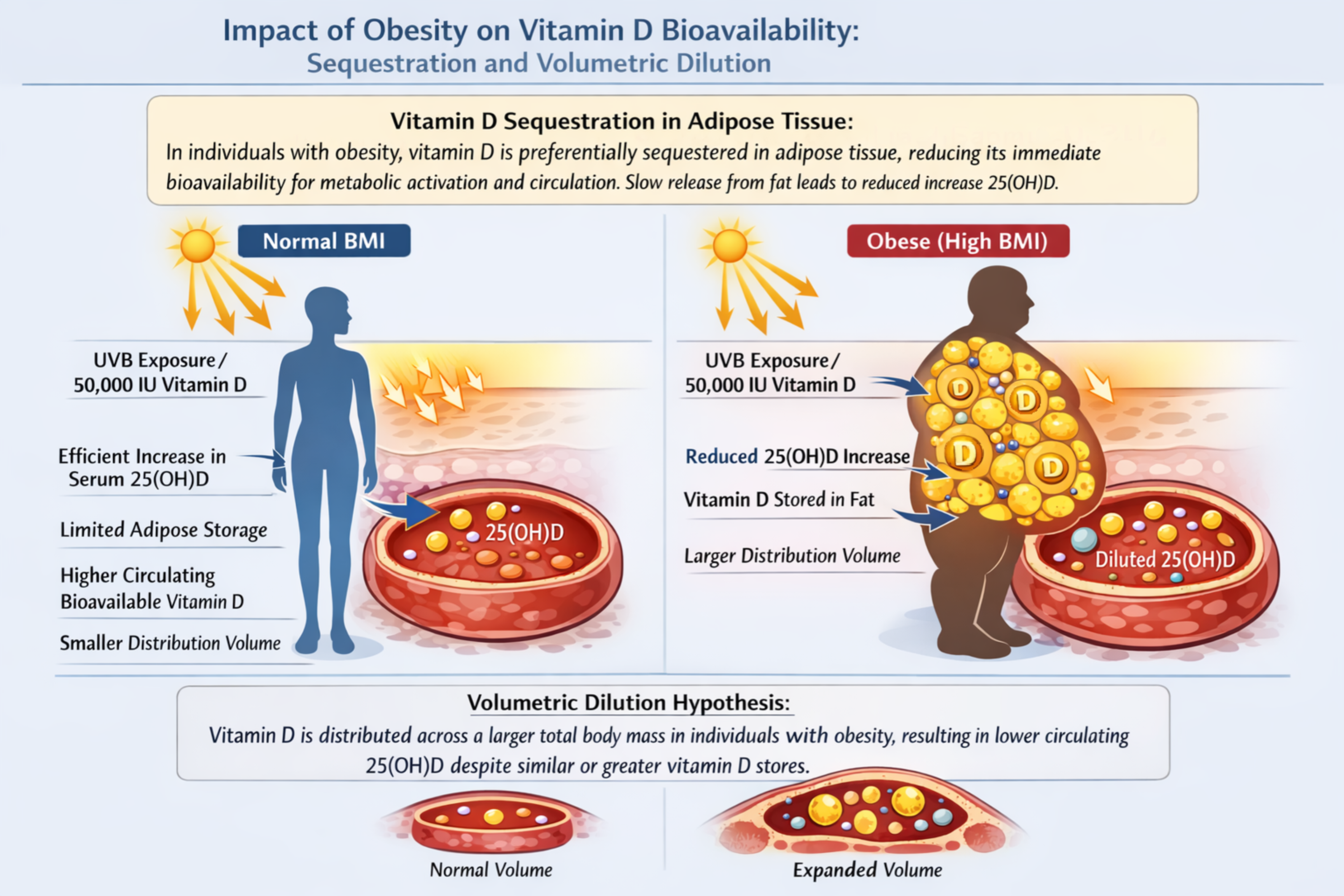
3.1. Sequestration Hypothesis
3.2. Volumetric Dilution Hypothesis
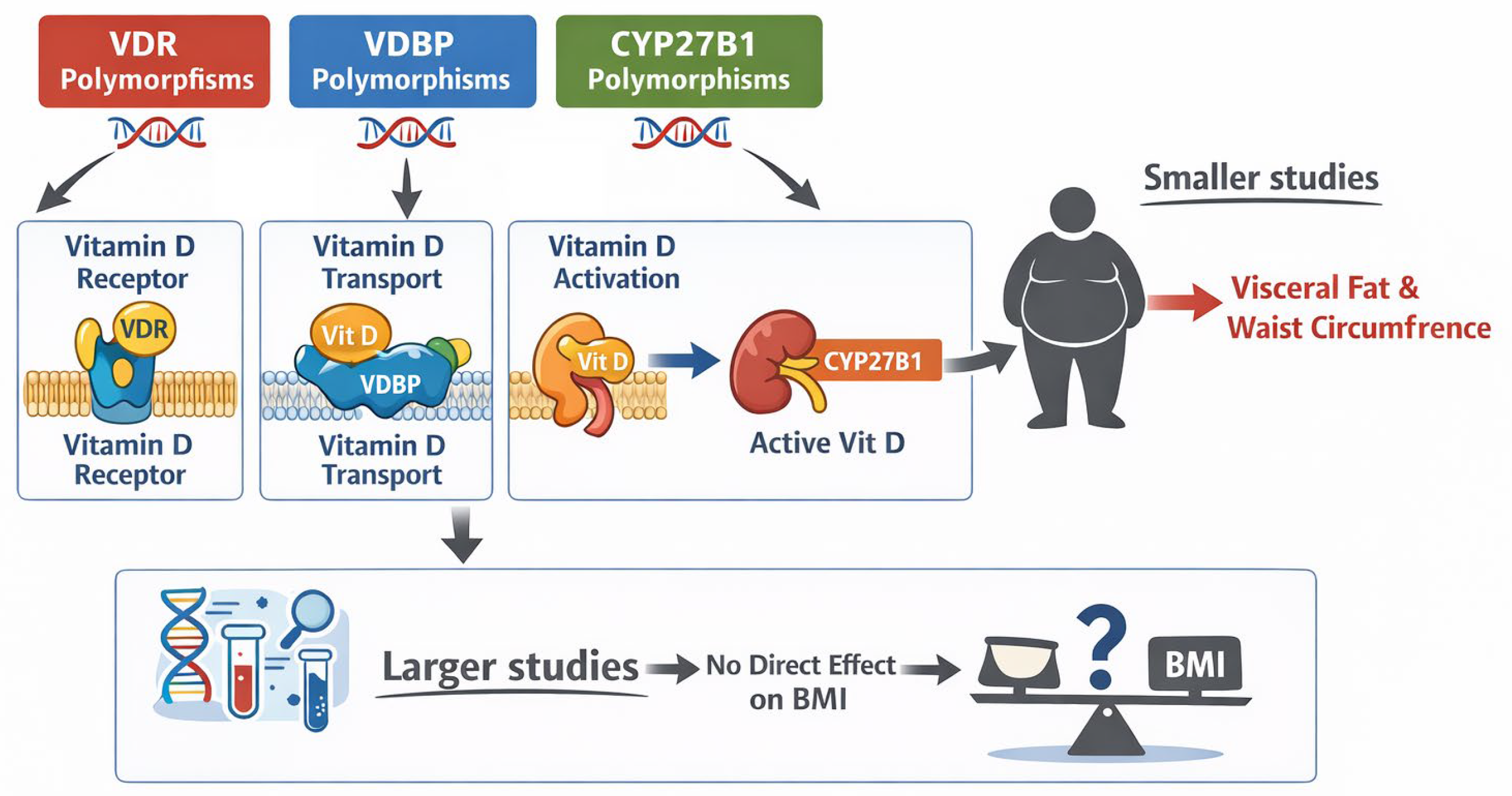
3.3. Polymorphisms of Vitamin D-Related Genes
4. Efficacy of Vitamin D Supplementation in Individuals with Obesity
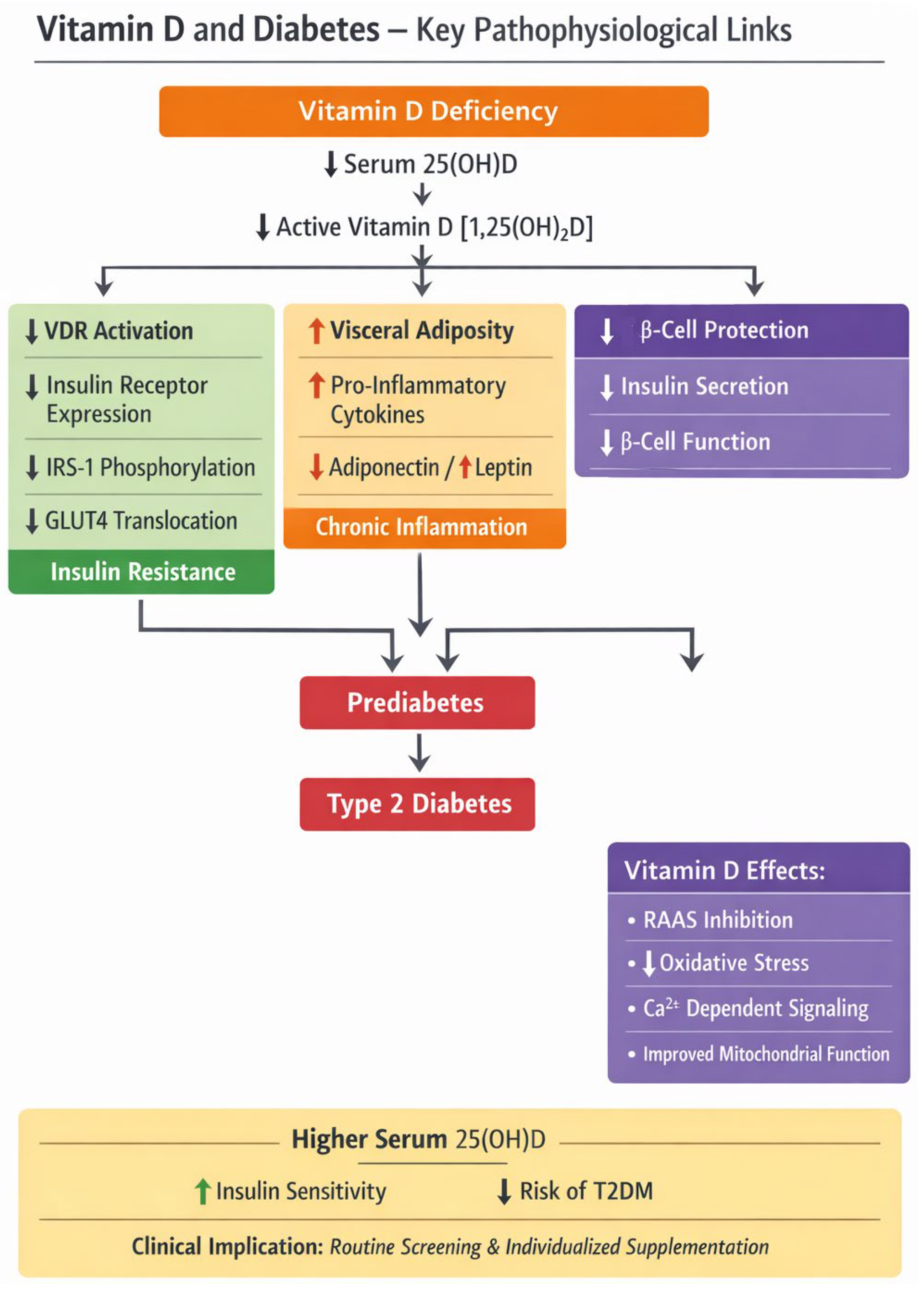
5. Vitamin D, Obesity, and Metabolic Dysregulation
6. Effect of Weight Reduction on Serum 25(OH)D Concentrations
7. Can Vitamin D Influence the Development or Course of Obesity?
8. Safety of Supplementation and Indications for Monitoring Vitamin D Levels
9. Vitamin D Supplementation in Obese Patients: Current Recommendations
10. Efficacy of Vitamin D Supplementation in Obesity
11. Research Gaps and Future Directions
12. Conclusions
Author Contributions
Funding
Institutional Review Board Statement
Informed Consent Statement
Data Availability Statement
Conflicts of Interest
Abbreviations
| 25(OH)D | 25-hydroxyvitamin D (calcidiol) |
| ATP | Adenosine triphosphate |
| BAT | Brown adipose tissue |
| BMI | Body mass index |
| Ca | Calcium |
| CKD | Chronic kidney disease |
| CYP24A1 | Cytochrome P450 family 24 subfamily A member 1 |
| CYP27B1 | Cytochrome P450 family 27 subfamily B member 1 |
| CYP2R1 | Cytochrome P450 family 2 subfamily R member 1 |
| VDBP | Vitamin D-binding protein |
| D-HEALTH | D-Health Trial (Australia) |
| DHCR7 | 7-Dehydrocholesterol reductase |
| FIND | Finnish Vitamin D Trial |
| GLUT4 | Glucose transporter type 4 |
| IU | International unit |
| MetS | Metabolic syndrome |
| PPARγ | Peroxisome proliferator-activated receptor gamma |
| PTH | Parathyroid hormone |
| RAAS | Renin–angiotensin–aldosterone system |
| RCTs | Randomized controlled trials |
| RXR | Retinoid X receptor |
| T2DM | Type 2 diabetes mellitus |
| UCP1 | Uncoupling protein 1 |
| UVB | Ultraviolet B radiation |
| VDR | Vitamin D receptor |
| VDREs | Vitamin D response elements |
| VITAL | Vitamin D and Omega-3 Trial |
| WAT | White adipose tissue |
| WHI | Women’s Health Initiative |
References
- Hyppönen, E.; Boucher, B.J. Vitamin D, obesity, and the metabolic syndrome. Prog. Lipid Res. 2018, 70, 28–40. [Google Scholar] [PubMed]
- Narvaez, C.J.; Matthews, D.G.; Welsh, J. Vitamin D, vitamin D receptor, and adipose tissue: Focus on cellular mechanisms. Arch. Biochem. Biophys. 2013, 523, 123–133. [Google Scholar] [PubMed]
- Lee, H.; Kim, S.H. The role of vitamin D in adipose tissue biology. J. Lipid Atheroscler. 2021, 10, 130–144. [Google Scholar] [CrossRef] [PubMed]
- Rosenstreich, S.J.; Rich, C.; Volwiler, W. Deposition in and release of vitamin D3 from body fat: Evidence for a storage site in the rat. J. Clin. Investig. 1971, 50, 679–687. [Google Scholar] [CrossRef] [PubMed]
- Heaney, R.P.; Horst, R.L.; Cullen, D.M.; Armas, L.A. Vitamin D3 distribution and status in the body. J. Am. Coll. Nutr. 2009, 28, 252–256. [Google Scholar] [CrossRef] [PubMed]
- Lawson, D.E.; Douglas, J.; Lean, M.; Sedrani, S. Estimation of vitamin D3 and 25-hydroxyvitamin D3 in muscle and adipose tissue of rats and man. Clin. Chim. Acta 1986, 157, 175–181. [Google Scholar] [CrossRef] [PubMed]
- Didriksen, A.; Burild, A.; Jakobsen, J.; Fuskevåg, O.M.; Jorde, R. Vitamin D3 increases in abdominal subcutaneous fat tissue after supplementation with vitamin D3. Eur. J. Endocrinol. 2015, 172, 235–241. [Google Scholar] [CrossRef] [PubMed]
- Svensson, P.; Lindberg, K.; Hoffmann, J.M.; Taube, M.; Pereira, M.J.; Mohsen-Kanson, T.; Hafner, A.; Rizell, M.; Palming, J.; Dani, C.; et al. Characterization of brown adipose tissue in the human perirenal depot. Obesity 2014, 22, 1830–1837. [Google Scholar] [CrossRef] [PubMed]
- Landrier, J.F.; Karkeni, E.; Marcotorchino, J.; Bonnet, L.; Tourniaire, F. Vitamin D modulates adipose tissue biology: Possible consequences for obesity? Proc. Nutr. Soc. 2016, 75, 38–46. [Google Scholar] [CrossRef] [PubMed]
- Pramyothin, P.; Biancuzzo, R.M.; Lu, Z.; Hess, D.T.; Apovian, C.M.; Holick, M.F. Vitamin D in adipose tissue and serum 25-hydroxyvitamin D after Roux-en-Y gastric bypass. Obesity 2011, 19, 2228–2234. [Google Scholar] [CrossRef] [PubMed]
- Piccolo, B.D.; Dolnikowski, G.; Seyoum, E.; Thomas, A.P.; Gertz, E.R.; Souza, E.C.; Woodhouse, L.R.; Newman, J.W.; Keim, N.L.; Adams, S.H.; et al. Association between subcutaneous white adipose tissue and serum 25-hydroxyvitamin D in overweight and obese adults. Nutrients 2013, 5, 3352–3366. [Google Scholar] [CrossRef] [PubMed]
- Pereira-Santos, M.; Costa, P.R.; Assis, A.M.; Santos, C.A.; Santos, D.B. Obesity and vitamin D deficiency: A systematic review and meta-analysis. Obes. Rev. 2015, 16, 341–349. [Google Scholar] [CrossRef] [PubMed]
- Yao, Y.; Zhu, L.; He, L.; Duan, Y.; Liang, W.; Nie, Z.; Jin, Y.; Wu, X.; Fang, Y. A meta-analysis of the relationship between vitamin D deficiency and obesity. Int. J. Clin. Exp. Med. 2015, 8, 14977–14984. [Google Scholar] [PubMed]
- Wortsman, J.; Matsuoka, L.Y.; Chen, T.C.; Lu, Z.; Holick, M.F. Decreased bioavailability of vitamin D in obesity. Am. J. Clin. Nutr. 2000, 72, 690–693. [Google Scholar] [CrossRef] [PubMed]
- Didriksen, A.; Grimnes, G.; Hutchinson, M.S.; Kjærgaard, M.; Svartberg, J.; Joakimsen, R.M.; Jorde, R. The serum 25-hydroxyvitamin D response to vitamin D supplementation is related to genetic factors, BMI, and baseline levels. Eur. J. Endocrinol. 2013, 169, 559–567. [Google Scholar] [CrossRef] [PubMed]
- Gallagher, J.C.; Yalamanchili, V.; Smith, L.M. The effect of vitamin D supplementation on serum 25-hydroxyvitamin D in thin and obese women. J. Steroid Biochem. Mol. Biol. 2013, 136, 195–200. [Google Scholar] [CrossRef] [PubMed]
- Heaney, R.P.; Davies, K.M.; Chen, T.C.; Holick, M.F.; Barger-Lux, M.J. Human serum 25-hydroxycholecalciferol response to extended oral dosing with cholecalciferol. Am. J. Clin. Nutr. 2003, 77, 204–210. [Google Scholar] [CrossRef] [PubMed]
- Drincic, A.T.; Armas, L.A.G.; Van Diest, E.E.; Heaney, R.P. Volumetric dilution, rather than sequestration, best explains the low vitamin D status of obesity. Obesity 2012, 20, 1444–1448. [Google Scholar] [CrossRef] [PubMed]
- Carrelli, A.; Bucovsky, M.; Horst, R.; Cremers, S.; Zhang, C.; Bessler, M.; Schrope, B.; Evanko, J.; Blanco, J.; Silverberg, S.J.; et al. Vitamin D storage in adipose tissue of obese and normal weight women. J. Bone Miner. Res. 2017, 32, 237–242. [Google Scholar] [CrossRef] [PubMed]
- Vimaleswaran, K.S.; Berry, D.J.; Lu, C.; Tikkanen, E.; Pilz, S.; Hiraki, L.T.; Cooper, J.D.; Dastani, Z.; Li, R.; Houston, D.K.; et al. Causal relationship between obesity and vitamin D status: Bi-directional Mendelian randomization analysis of multiple cohorts. PLoS Med. 2013, 10, e1001383. [Google Scholar] [CrossRef] [PubMed]
- Ye, W.; Reis, A.; Dubois-Laforgue, D.; Bellanne-Chantelot, C.; Timsit, J.; Velho, G. Vitamin D receptor gene polymorphisms are associated with obesity in type 2 diabetic subjects with early age of onset. Eur. J. Endocrinol. 2001, 145, 181–186. [Google Scholar] [CrossRef] [PubMed]
- Xu, H.; Xiong, D.H.; Xu, F.H.; Zhang, Y.Y.; Lei, S.F.; Deng, H.W. Association between VDR ApaI polymorphism and hip bone mineral density can be modified by body mass index: A study on postmenopausal Chinese women. Acta Biochim. Biophys. Sin. 2005, 37, 61–67. [Google Scholar] [CrossRef] [PubMed]
- Wamberg, L.; Christiansen, T.; Paulsen, S.K.; Fisker, S.; Rask, P.; Rejnmark, L.; Richelsen, B.; Pedersen, S.B. Expression of vitamin D–metabolizing enzymes in human adipose tissue—The effect of obesity and diet-induced weight loss. Int. J. Obes. 2013, 37, 651–657. [Google Scholar] [CrossRef] [PubMed]
- Vimaleswaran, K.S.; Cavadino, A.; Berry, D.J.; Whittaker, J.C.; Power, C.; Järvelin, M.R.; Hyppönen, E. Genetic Investigation of Anthropometric Traits (GIANT) Consortium. Genetic association analysis of vitamin D pathway with obesity traits. Int. J. Obes. 2013, 37, 1399–1406. [Google Scholar] [CrossRef] [PubMed]
- Dorjgochoo, T.; Shi, J.; Gao, Y.T.; Long, J.; Delahanty, R.; Xiang, Y.-B.; Cai, Q.; Shu, X.O. Genetic variants in vitamin D metabolism-related genes and body mass index: Analysis of genome-wide scan data of approximately 7000 Chinese women. Int. J. Obes. 2012, 36, 1252–1255. [Google Scholar] [CrossRef] [PubMed]
- Kazemian, E.; Amouzegar, A.; Akbari, M.E.; Moradi, N.; Gharibzadeh, S.; Jamshidi-Naeini, Y.; Khademolmele, M.; As’hAbi, A.; Davoodi, S.H. Vitamin D receptor gene polymorphisms affecting changes in visceral fat, waist circumference and lipid profile in breast cancer survivors supplemented with vitamin D3. Lipids Health Dis. 2019, 18, 161. [Google Scholar] [CrossRef] [PubMed]
- Powe, C.E.; Ricciardi, C.; Berg, A.H.; Erdenesanaa, D.; Collerone, G.; Ankers, E.; Wenger, J.; Karumanchi, S.A.; Thadhani, R.; Bhan, I. Vitamin D-binding protein modifies the vitamin D–bone mineral density relationship. J Bone Miner Res. 2011, 26, 1609–1616. [Google Scholar] [CrossRef] [PubMed]
- Mendel, C.M. The free hormone hypothesis: Distinction from the free hormone transport hypothesis. J Androl. 1992, 13, 107–116. [Google Scholar] [CrossRef] [PubMed]
- de Oliveira, L.F.; de Azevedo, L.G.; da Mota Santana, J.; de Sales, L.P.C.; Pereira-Santos, M. Obesity and overweight decreases the effect of vitamin D supplementation in adults: Systematic review and meta-analysis of randomized controlled trials. Rev. Endocr. Metab. Disord. 2020, 21, 67–76. [Google Scholar] [CrossRef] [PubMed]
- Zittermann, A.; Ernst, J.B.; Gummert, J.F.; Börgermann, J. Vitamin D supplementation, body weight and human serum 25-hydroxyvitamin D response: A systematic review. Eur. J. Nutr. 2014, 53, 367–374. [Google Scholar] [CrossRef] [PubMed]
- Drincic, A.; Fuller, E.; Heaney, R.P.; Armas, L.A.G. 25-Hydroxyvitamin D response to graded vitamin D3 supplementation among obese adults. J. Clin. Endocrinol. Metab. 2013, 98, 4845–4851. [Google Scholar] [CrossRef] [PubMed]
- Van Groningen, L.; Opdenoordt, S.; van Sorge, A.; Telting, D.; Giesen, A.; de Boer, H. Cholecalciferol loading dose guideline for vitamin D-deficient adults. Eur. J. Endocrinol. 2010, 162, 805–811. [Google Scholar] [CrossRef] [PubMed]
- Ekwaru, J.P.; Zwicker, J.D.; Holick, M.F.; Giovannucci, E.; Veugelers, P.J. The importance of body weight for the dose–response relationship of oral vitamin D supplementation and serum 25-hydroxyvitamin D in healthy volunteers. PLoS ONE 2014, 9, e111265. [Google Scholar] [CrossRef] [PubMed]
- Matthews, D.G.; D’Angelo, J.; Drelich, J.; Welsh, J. Adipose-specific Vdr deletion alters body fat and enhances mammary epithelial density. J. Steroid Biochem. Mol. Biol. 2016, 164, 299–308. [Google Scholar] [CrossRef] [PubMed]
- Ju, S.Y.; Jeong, H.S.; Kim, D.H. Blood vitamin D status and metabolic syndrome in the general adult population: A dose–response meta-analysis. J. Clin. Endocrinol. Metab. 2014, 99, 1053–1063. [Google Scholar] [CrossRef] [PubMed]
- Maestro, B.; Molero, S.; Bajo, S.; Dávila, N.; Calle, C. Transcriptional activation of the human insulin receptor gene by 1,25-dihydroxyvitamin D3. Cell Biochem. Funct. 2002, 20, 227–232. [Google Scholar] [CrossRef] [PubMed]
- Liu, Y.; He, Y.; Wang, Q.; Guo, F.; Huang, F.; Ji, L.; An, T.; Qin, G. Vitamin D supplementation improves testicular function in diabetic rats through peroxisome proliferator-activated receptor-γ/transforming growth factor-beta 1/nuclear factor-kappa B. J. Diabetes Investig. 2019, 10, 261–271. [Google Scholar] [CrossRef] [PubMed]
- Hoseini, R.; Damirchi, A.; Babaei, P. Vitamin D increases PPARγ expression and promotes beneficial effects of physical activity in metabolic syndrome. Nutrition 2017, 36, 54–59. [Google Scholar] [CrossRef] [PubMed]
- Zhou, Q.G.; Hou, F.F.; Guo, Z.J.; Liang, M.; Wang, G.B.; Zhang, X. 1,25-Dihydroxyvitamin D improved the free fatty-acid-induced insulin resistance in cultured C2C12 cells. Diabetes Metab. Res. Rev. 2008, 24, 459–464. [Google Scholar] [CrossRef] [PubMed]
- Wright, D.C.; Hucker, K.A.; Holloszy, J.O.; Han, D.H. Ca2+ and AMPK both mediate stimulation of glucose transport by muscle contractions. Diabetes 2004, 53, 330–335. [Google Scholar] [CrossRef] [PubMed]
- Lira, F.S.; Rosa, J.C.; Cunha, C.A.; Ribeiro, E.B.; do Nascimento, C.O.; Oyama, L.M.; Mota, J.F. Supplementing alpha-tocopherol (vitamin E) and vitamin D3 in high fat diet decrease IL-6 production in murine epididymal adipose tissue and 3T3-L1 adipocytes following LPS stimulation. Lipids Health Dis. 2011, 10, 37. [Google Scholar] [CrossRef] [PubMed]
- Marziou, A.; Philouze, C.; Couturier, C.; Astier, J.; Obert, P.; Landrier, J.F.; Riva, C. Vitamin D supplementation improves adipose tissue inflammation and reduces hepatic steatosis in obese C57BL/6J mice. Nutrients 2020, 12, 342. [Google Scholar] [CrossRef] [PubMed]
- Xu, H.; Barnes, G.T.; Yang, Q.; Tan, G.; Yang, D.; Chou, C.J.; Chen, H. Chronic inflammation in fat plays a crucial role in the development of obesity-related insulin resistance. J. Clin. Investig. 2003, 112, 1821–1830. [Google Scholar] [CrossRef] [PubMed]
- Dong, B.; Zhou, Y.; Wang, W.; Scott, J.; Kim, K.H.; Sun, Z.; Guo, Q.; Lu, Y.; Gonzales, N.M.; Wu, H.; et al. Vitamin D receptor activation in liver macrophages ameliorates hepatic inflammation, steatosis, and insulin resistance in mice. Hepatology 2020, 71, 1559–1574. [Google Scholar] [CrossRef] [PubMed]
- Oh, J.; Riek, A.E.; Darwech, I.; Funai, K.; Shao, J.; Chin, K.; Sierra, O.L.; Carmeliet, G.; Ostlund, R.E., Jr.; Bernal-Mizrachi, C. Deletion of macrophage vitamin D receptor promotes insulin resistance and monocyte cholesterol transport to accelerate atherosclerosis in mice. Cell Rep. 2015, 10, 1872–1886. [Google Scholar] [CrossRef] [PubMed]
- Ni, Z.; Smogorzewski, M.; Massry, S.G. Effects of parathyroid hormone on cytosolic calcium of rat adipocytes. Endocrinology 1994, 135, 1837–1844. [Google Scholar] [CrossRef] [PubMed]
- Thomas, D.M.; Rogers, S.D.; Sleeman, M.W.; Pasquini, G.M.; Bringhurst, F.R.; Ng, K.W.; Zajac, J.D.; Best, J.D. Modulation of glucose transport by parathyroid hormone and insulin in UMR 106-01, a clonal rat osteogenic sarcoma cell line. J. Mol. Endocrinol. 1995, 14, 263–275. [Google Scholar] [CrossRef] [PubMed]
- Muscogiuri, G.; Chavez, A.O.; Gastaldelli, A.; Perego, L.; Tripathy, D.; Saad, M.J.; Velloso, L.; Folli, F. The crosstalk between insulin and renin–angiotensin–aldosterone signaling systems and its effect on glucose metabolism and diabetes prevention. Curr. Vasc. Pharmacol. 2008, 6, 301–312. [Google Scholar] [CrossRef] [PubMed]
- Wei, Y.; Sowers, J.R.; Clark, S.E.; Li, W.; Ferrario, C.M.; Stump, C.S. Angiotensin II-induced skeletal muscle insulin resistance mediated by NF-kappaB activation via NADPH oxidase. Am. J. Physiol. Endocrinol. Metab. 2008, 294, E345–E351. [Google Scholar] [CrossRef] [PubMed]
- Leung, P.S. The potential protective action of vitamin D in hepatic insulin resistance and pancreatic islet dysfunction in type 2 diabetes mellitus. Nutrients 2016, 8, 147. [Google Scholar] [CrossRef] [PubMed]
- Rains, J.L.; Jain, S.K. Oxidative stress, insulin signaling, and diabetes. Free Radic. Biol. Med. 2011, 50, 567–575. [Google Scholar] [CrossRef] [PubMed]
- Hajimohammadi, M.; Shab-Bidar, S.; Neyestani, T.R. Vitamin D and serum leptin: A systematic review and meta-analysis of observational studies and randomized controlled trials. Eur. J. Clin. Nutr. 2017, 71, 1144–1153. [Google Scholar] [CrossRef] [PubMed]
- Yu, Y.; Tian, L.; Xiao, Y.; Huang, G.; Zhang, M. Effect of vitamin D supplementation on some inflammatory biomarkers in type 2 diabetes mellitus subjects: A systematic review and meta-analysis of randomized controlled trials. Ann. Nutr. Metab. 2018, 73, 62–73. [Google Scholar] [CrossRef] [PubMed]
- Milewicz, A.; Kos-Kudła, B.; Ruchała, M.; Hubalewska-Dydejczyk, A.; Kajdaniuk, D.; Marek, B. Is vitamin D deficiency a risk factor for obesity-related morbidity, prediabetes, and type 2 diabetes—A literature review and proposals from the experts of the Polish Society of Endocrinology. Endokrynol. Pol. 2025, 76, 580–590. [Google Scholar] [CrossRef] [PubMed]
- Mallard, S.R.; Howe, A.S.; Houghton, L.A. Vitamin D status and weight loss: A systematic review and meta-analysis of randomized and nonrandomized controlled weight-loss trials. Am. J. Clin. Nutr. 2016, 104, 1151–1159. [Google Scholar] [CrossRef] [PubMed]
- Pannu, P.K.; Zhao, Y.; Soares, M.J. Reductions in body weight and percent fat mass increase the vitamin D status of obese subjects: A systematic review and meta-analysis. Nutrients 2016, 8, 747. [Google Scholar] [CrossRef] [PubMed]
- Jorde, R.; Sneve, M.; Emaus, N.; Figenschau, Y.; Grimnes, G. Cross-sectional and longitudinal relation between serum 25-hydroxyvitamin D and body mass index: The Tromsø study. Eur. J. Nutr. 2010, 49, 401–407. [Google Scholar] [CrossRef] [PubMed]
- Gangloff, A.; Bergeron, J.; Pelletier-Beaumont, E.; Nazare, J.-A.; Smith, J.; Borel, A.-L.; Lemieux, I.; Tremblay, A.; Poirier, P.; Alméras, N.; et al. Effect of adipose tissue volume loss on circulating 25-hydroxyvitamin D levels: Results from a 1-year lifestyle intervention in viscerally obese men. Int. J. Obes. 2015, 39, 1638–1643. [Google Scholar] [CrossRef] [PubMed]
- Sato, M.; Hiragun, A. Demonstration of 1α,25-dihydroxyvitamin D3 receptor-like molecule in ST13 and 3T3-L1 preadipocytes and its inhibitory effects on preadipocyte differentiation. J. Cell. Physiol. 1988, 135, 545–550. [Google Scholar] [CrossRef] [PubMed]
- Winters, S.J.; Chennubhatla, R.; Wang, C.; Miller, J.J. Influence of obesity on vitamin D-binding protein and 25-hydroxyvitamin D levels in African American and white women. Metabolism 2009, 58, 438–442. [Google Scholar] [CrossRef] [PubMed]
- Chang, E.; Kim, Y. Vitamin D decreases adipocyte lipid storage and increases NAD–SIRT1 pathway in 3T3-L1 adipocytes. Nutrition 2016, 32, 702–708. [Google Scholar] [CrossRef] [PubMed]
- He, Y.; Perry, B.; Bi, M.; Sun, H.; Zhao, T.; Li, Y.; Sun, C. Allosteric regulation of the calcium-sensing receptor in obese individuals. Int. J. Mol. Med. 2013, 32, 511–518. [Google Scholar] [CrossRef] [PubMed]
- Caan, B.; Neuhouser, M.; Aragaki, A.; Lewis, C.B.; Jackson, R.; LeBoff, M.S.; Margolis, K.L.; Powell, L.; Uwaifo, G.; Whitlock, E.; et al. Calcium plus vitamin D supplementation and the risk of postmenopausal weight gain. Arch. Intern. Med. 2007, 167, 893–902. [Google Scholar] [CrossRef] [PubMed]
- Pathak, K.; Soares, M.J.; Calton, E.K.; Zhao, Y.; Hallett, J. Vitamin D supplementation and body weight status: A systematic review and meta-analysis of randomized controlled trials. Obes. Rev. 2014, 15, 528–537. [Google Scholar] [CrossRef] [PubMed]
- Sergeev, I.N. Vitamin D–cellular Ca2+ link to obesity and diabetes. J. Steroid Biochem. Mol. Biol. 2015, 164, 326–330. [Google Scholar] [CrossRef] [PubMed]
- Chandler, P.D.; Wang, L.; Zhang, X.; Sesso, H.D.; Moorthy, M.V.; Obi, O.; Lewis, J.; Prince, R.L.; Danik, J.S.; Manson, J.E.; et al. Effect of vitamin D supplementation alone or with calcium on adiposity measures: A systematic review and meta-analysis of randomized controlled trials. Nutr. Rev. 2015, 73, 577–593. [Google Scholar] [CrossRef] [PubMed]
- Rosenblum, J.L.; Castro, V.M.; Moore, C.E.; Kaplan, L.M. Calcium and vitamin D supplementation is associated with decreased abdominal visceral adipose tissue in overweight and obese adults. Am. J. Clin. Nutr. 2012, 95, 101–108. [Google Scholar] [CrossRef] [PubMed]
- Holick, M.F.; Binkley, N.C.; Bischoff-Ferrari, H.A.; Gordon, C.M.; Hanley, D.A.; Heaney, R.P.; Murad, M.H.; Weaver, C.M. Evaluation, treatment, and prevention of vitamin D deficiency: An Endocrine Society clinical practice guideline. J. Clin. Endocrinol. Metab. 2011, 96, 1911–1930. [Google Scholar] [CrossRef] [PubMed]
- Bouillon, R.; Bilezikian, J.P.; Bikle, D.; Diab, D.L.; Kiely, M.E.; Lazaretti-Castro, M.; McCartney, C.R. Vitamin D for the prevention of disease: An Endocrine Society clinical practice guideline. J. Clin. Endocrinol. Metab. 2024, 109, 1094–1150. [Google Scholar] [CrossRef]
- Płudowski, P.; Kos-Kudła, B.; Walczak, M.; Fal, A.; Zozulińska-Ziółkiewicz, D.; Sieroszewski, P.; Misiorowski, W. Guidelines for preventing and treating vitamin D deficiency: A 2023 update in Poland. Nutrients 2023, 15, 695. [Google Scholar] [CrossRef] [PubMed]
- Pludowski, P. Supplementing vitamin D in different patient groups to reduce deficiency. Nutrients 2023, 15, 3725. [Google Scholar] [CrossRef] [PubMed]
- Manson, J.E.; Bassuk, S.S.; Lee, I.-M.; Cook, N.R.; Albert, M.A.; Gordon, D.; Zaharris, E.; MacFadyen, J.G.; Danielson, E.; Lin, J.; et al. The VITamin D and OmegA-3 TriaL (VITAL): Rationale and design of a large randomized controlled trial. Contemp. Clin. Trials 2012, 33, 159–171. [Google Scholar] [CrossRef] [PubMed]
- Cauley, J.A.; Chlebowski, R.T.; Wactawski-Wende, J.; Robbins, J.A.; Rodabough, R.J.; Chen, Z.; Johnson, K.C.; O’SUllivan, M.J.; Jackson, R.D.; Manson, J.E. Calcium plus vitamin D supplementation and health outcomes five years after active intervention ended: The Women’s Health Initiative. J. Womens Health 2013, 22, 915–929. [Google Scholar] [CrossRef] [PubMed]
- Virtanen, J.K.; Nurmi, T.; Aro, A.; Bertone-Johnson, E.R.; Hyppönen, E.; Kröger, H.; Lamberg-Allardt, C.; Manson, J.E.; Mursu, J.; Mäntyselkä, P.; et al. Vitamin D supplementation and prevention of cardiovascular disease and cancer in the Finnish Vitamin D Trial: A randomized controlled trial. Am. J. Clin. Nutr. 2022, 115, 1300–1310. [Google Scholar] [CrossRef] [PubMed] [PubMed Central]
- Neale, R.E.; Baxter, C.; Romero, B.D.; McLeod, D.S.A.; English, D.R.; Armstrong, B.K.; Ebeling, P.R.; Hartel, G.; Kimlin, M.G.; O’Connell, R.; et al. The D-Health Trial: A randomized controlled trial of the effect of vitamin D supplementation on mortality. Lancet Diabetes Endocrinol. 2022, 10, 120–128. [Google Scholar] [CrossRef] [PubMed]
- Scragg, R.; Stewart, A.W.; Waayer, D.; Lawes, C.M.; Toop, L.; Sluyter, J.; Camargo, C.A. Effect of monthly high-dose vitamin D supplementation on cardiovascular disease in the Vitamin D Assessment Study: A randomized clinical trial. JAMA Cardiol. 2017, 2, 608–616. [Google Scholar] [CrossRef] [PubMed]
- Pittas, A.G.; Dawson-Hughes, B.; Sheehan, P.; Ware, J.H.; Knowler, W.C.; Aroda, V.R.; Brodsky, I.; Ceglia, L.; Chadha, C.; Chatterjee, R.; et al. Vitamin D supplementation and prevention of type 2 diabetes. N. Engl. J. Med. 2019, 381, 520–530. [Google Scholar] [CrossRef] [PubMed]
- Barbarawi, M.; Kheiri, B.; Zayed, Y.; Barbarawi, O.; Dhillon, H.; Swaid, B.; Yelangi, A.; Sundus, S.; Bachuwa, G.; Alkotob, M.L.; et al. Vitamin D supplementation and cardiovascular disease risks in more than 83,000 individuals in 21 randomized clinical trials: A meta-analysis. JAMA Cardiol. 2019, 4, 765–776. [Google Scholar] [CrossRef] [PubMed]



| Author | Predictive Equation | Example of Calculation |
|---|---|---|
| Zittermann et al. [30] | Incremental change in 25(OH)D (nmol/L) = 49.4 + 16.5 × log10[dose (IU/day)] − 0.42 × BMI | To increase 25(OH)D by 25 nmol/L (~10 ng/mL) in an individual with BMI 30, a daily dose of approximately 2000 IU is required. |
| Drincic et al. [31] | Vitamin D3 dose (IU/day) = [body weight (kg) × Δ25(OH)D (ng/mL)] × 40 | To increase 25(OH)D by 25 nmol/L (~10 ng/mL) in a person weighing 80 kg: 80 × 10 × 40 = 32,000 IU/week (≈4500 IU/day). |
| van Groningen et al. [32] | Loading dose of cholecalciferol (IU) = 40 × (75 − baseline 25(OH)D [nmol/L]) × body weight (kg) | For an individual with baseline 25(OH)D = 40 nmol/L and body weight 80 kg: 40 × (75–40) × 80 = 112,000 IU (can be divided into weekly doses). |
| Serum 25(OH)D Level | Interpretation | Clinical Significance |
|---|---|---|
| ≤20 ng/mL (≤50 nmol/L) | Vitamin D deficiency—immediate therapeutic intervention required | Vitamin D deficiency—risk of osteomalacia, secondary hyperparathyroidism, and reduced bone mineral density |
| 20–30 ng/mL (50–75 nmol/L) | Suboptimal status—consider increasing the dose | Insufficiency—levels at the lower end of the optimal range, possible effects on skeletal and extraskeletal functions |
| 30–50 ng/mL (75–125 nmol/L) | Optimal status—recommended for prevention and treatment | Optimal range—target levels recommended by most expert societies |
| 50–100 ng/mL (125–250 nmol/L) | High vitamin D intake—consider dose reduction | Potentially excessive levels—generally without clinical benefit; caution advised with long-term supplementation |
| >100 ng/mL (>250 nmol/L) | Risk of toxicity—discontinue supplementation immediately and monitor levels | Risk of toxicity—possible hypercalcemia, hypercalciuria, and other complications |
| Domain | Endocrine Society (2024) [69] | Polish Guidelines (2023; 2025 *) [54,70,71] |
|---|---|---|
| Screening (measurement of 25(OH)D) | Routine screening is not recommended in obese individuals without other indications (e.g., hypocalcemia, malabsorption, liver or kidney disease). | Routine population screening is not recommended, but obesity is listed among high-risk conditions—testing is advised, particularly in symptomatic patients or those with comorbidities. |
| Risk of deficiency | Obesity increases the risk of low 25(OH)D levels (often <50 nmol/L). Bariatric surgery further exacerbates the risk. | Obesity (especially BMI > 30, and particularly >40) is identified as a clear risk factor for vitamin D deficiency; bariatric surgery represents a specific high-risk condition requiring monitoring. |
| Supplementation—general | Routine supplementation solely on the basis of obesity is not recommended. Empirical supplementation may be considered in at-risk individuals. | Supplementation is explicitly recommended in obese individuals, with doses approximately twice those of the general population of the same age. |
| Dosage—daily intake | Standard doses (e.g., 800–2000 IU/day in adults); no specific dose escalation for obesity, though the response to supplementation is attenuated. | Adults with obesity: 2000–4000 IU/day (i.e., approximately double the standard age-specific dose). If 25(OH)D levels (30–37.5 nmol/L) initiate vitamin D therapy with 20,000 IU twice weekly or 50,000 IU once weekly; reassess serum 25(OH)D and calcium after 1 month to guide further dose adjustment. * |
| Upper safe limit (UL) | UL for adults: 4000 IU/day. | In obese individuals: UL increased to 10,000 IU/day (250 µg). |
| Monitoring | Measurement should be performed only when clinically indicated. | In obese individuals, reassessment is recommended after 1–3 months of deficiency treatment to verify achievement of optimal levels. |
| Form of supplement | Cholecalciferol (vitamin D3) preferred; parenteral administration only exceptionally. | Cholecalciferol (D3) preferred; calcifediol may be used when faster correction is required. |
| Clinical outcomes of supplementation | Large RCTs in obese populations have not demonstrated a clear benefit regarding fracture, CVD, or mortality reduction. | The goal is to maintain optimal serum levels (75–125 nmol/L), as deficiency is associated with higher skeletal and metabolic risk. |
| Study | Dosage/Population | Baseline 25(OH)D Level | Main Findings | Strengths | Limitations |
|---|---|---|---|---|---|
| VITAL (USA) [72] | 2000 IU/day; 25,000 participants; median BMI ≈ 28 | 78 nmol/L | No effect on fractures (HR 1.17), CVD (HR 0.98), or malignancies (HR 1.13) | Large sample size, long-term follow-up, good adherence | High baseline 25(OH)D levels, low proportion of deficient participants, non-significant effect in obese subgroup |
| WHI (USA) [73] | 400 IU/day + calcium; 36,000 postmenopausal women | ~70 nmol/L (estimated) | No effect on mortality (HR 0.93) or fractures (HR 0.73) | Very large cohort, long-term observation | Low vitamin D dose, combined with calcium, lower adherence |
| FIND (Finland) [74] | 1600 vs. 3200 IU/day; 2500 participants; higher BMI than in VITAL | 75 nmol/L | No effect on overall mortality or malignancies (HR 0.91–1.61). In obese subgroup: reduced CVD risk (HR 0.19) and lower T2DM incidence when 25(OH)D > 100 nmol/L | Higher doses, robust design, subgroup analyses possible | Normal baseline 25(OH)D, limited generalizability to deficient populations |
| D-HEALTH (Australia) [75] | 60,000 IU/month (≈2000 IU/day); 21,000 participants | 77 nmol/L | No effect on mortality, CVD, or malignancies | Large sample size, long-term follow-up | Bolus dosing, high baseline levels, limited effect in obese individuals |
| Smaller RCTs/Meta-analyses [76,77,78] | Various doses, often in deficient populations | 25–50 nmol/L | Positive effects on immunity, musculoskeletal health, and glucose metabolism in deficient individuals | Supports biological plausibility, benefits in low vitamin D status | Small sample sizes, methodological heterogeneity, shorter follow-up periods. |
Disclaimer/Publisher’s Note: The statements, opinions and data contained in all publications are solely those of the individual author(s) and contributor(s) and not of MDPI and/or the editor(s). MDPI and/or the editor(s) disclaim responsibility for any injury to people or property resulting from any ideas, methods, instructions or products referred to in the content. |
© 2026 by the authors. Licensee MDPI, Basel, Switzerland. This article is an open access article distributed under the terms and conditions of the Creative Commons Attribution (CC BY) license.
Share and Cite
Jirků, J.; Kršáková, Z.; Křížová, J. Vitamin D in Obesity: Mechanisms and Clinical Impact. Obesities 2026, 6, 12. https://doi.org/10.3390/obesities6010012
Jirků J, Kršáková Z, Křížová J. Vitamin D in Obesity: Mechanisms and Clinical Impact. Obesities. 2026; 6(1):12. https://doi.org/10.3390/obesities6010012
Chicago/Turabian StyleJirků, Jitka, Zuzana Kršáková, and Jarmila Křížová. 2026. "Vitamin D in Obesity: Mechanisms and Clinical Impact" Obesities 6, no. 1: 12. https://doi.org/10.3390/obesities6010012
APA StyleJirků, J., Kršáková, Z., & Křížová, J. (2026). Vitamin D in Obesity: Mechanisms and Clinical Impact. Obesities, 6(1), 12. https://doi.org/10.3390/obesities6010012