Article

Filial Effects of Ephemeral Cycad Seedlings Contribute Nitrogen to the Parents’ Rhizosphere

by
Thomas E. Marler
1,2
1
Philippine Native Plants Conservation Society, Inc., Ninoy Aquino Parks and Wildlife Center, Quezon City 1101, Philippines
2
Cycad Specialist Group, International Union for Conservation of Nature Species Survival Commission, 1196 Gland, Switzerland
Ecologies 2026, 7(2), 33; https://doi.org/10.3390/ecologies7020033
Submission received: 22 February 2026 / Revised: 22 March 2026 / Accepted: 1 April 2026 / Published: 3 April 2026

Abstract

Most cycad seeds germinate under the parent plant, and seedlings die before recruitment to the juvenile stage. Decomposition of the senesced organs releases the nutrients to influence nutrient cycling. The aim of this study was to quantify the soil nitrogen that accumulates from seedling turnover. Soil cores were collected beneath male and female trees of four Cycas species in five Philippine habitats from 2019 through 2025, with matching cores collected 5 m from the trees. Five to nine replications were employed depending on the habitat. One seedling was excavated beneath each tree in one location. Total nitrogen concentration was determined by dry combustion in soil and plant tissues, and total nitrogen content was calculated for seedlings. The soils beneath female trees contained more nitrogen than beneath male trees or away from cycad trees in every habitat. The highest nitrogen concentration within seedlings occurred in coralloid roots, but leaflets contained the most nitrogen pool, indicating rapid release of nitrogen during decomposition of the senesced seedling. No differences in rhizosphere nitrogen occurred in a 2017–2025 ex situ experiment using Cycas edentata, where seeds were sown beneath female and male trees. A second 2018–2025 experiment revealed that female trees provisioned with self-seeds did not differ in rhizosphere nitrogen compared with non-kin seeds. Nitrogen fixed by cyanobacteria endosymbionts of cycad seedlings and programmed seedling mortality combine to influence nitrogen cycling in soils beneath female trees over time.

1. Introduction

The group of plants known as cycads is represented by two families and 10 genera [1]. Among the traits that define cycads is a dioecious reproductive system and a symbiotic relationship with nitrogen-fixing cyanobacteria within specialized root structures [2,3]. These and other traits indicate that cycads exert consequential ecological roles in their native habitats, especially in the context of nutrient cycling. Moreover, in situ populations of cycad species are often characterized by reverse J demographic patterns, whereby abundant seedlings are found, but relatively few juvenile and adult plants are found, indicating considerable regeneration but chronic seedling mortality e.g., [4,5,6,7,8,9,10]. Among these disparate geographic locations and numerous species, more than 80% of the plants were seedlings. These patterns are explained by the Janzen–Connell hypothesis [11,12], where seedling proximity to the parent and competition with high-density siblings negatively influence longevity [13]. Seeds that are dispersed such that they germinate away from conspecific individuals are released from the competitive forces that are found beneath the source tree. For cycads, the contemporary lack of abiotic and biotic seed vectors indicates that most in situ seeds are dispersed by gravity alone.
Stable juvenile and adult populations of Cycas micronesica K.D. Hill contrasted sharply with heterogeneous numbers of seedlings throughout an eight-year study in the island of Yap [14]. The undulating temporal seedling population was created by periods of mortality alternating with periods of new regeneration from the seed bank.
More detailed methods, which marked and monitored 991 seedlings, revealed the longevity of a cycad seedling that germinates beneath the female parent tree [13]. Newly emerged C. micronesica seedlings in Guam habitats died in less than four years, and seedlings of the same species in Yap habitats died in less than eight years. Newly emerged Cycas nitida K.D. Hill and A. Lindstr. seedlings in a Luzon Island habitat and in a northern Samar Island habitat died in less than five years.
The longevity, slow growth, and access to nitrogen-fixing endosymbionts combine to increase soil nitrogen concentrations beneath mature cycad plants. The majority of cycad leaf nitrogen under ecological conditions may be derived from the root symbionts [15], and this nitrogen is released to the rhizosphere soils after leaf senescence [16]. An increase in nitrogen within cycad rhizosphere soils has been reported for C. micronesica in six habitats [17,18], Encephalartos lanatus Stapf and Burtt Davy [19], Encephalartos natalensis R.A. Dyer and I. Verd. [20], Encephalartos villosus Lem. in four habitats [21], and Zamia integrifolia L.f. in four habitats [18]. The methods employed in these studies did not distinguish between male and female plants. Therefore, a knowledge gap concerning the influences of plant sex currently limits our understanding of how mature male and female trees differentially influence ecosystem-level nutrient cycling.
These unique traits coalesce to predict that short-lived in situ cycad seedlings may contribute cyanobiont-derived nitrogen to their rhizosphere. After atmospheric nitrogen is fixed within the coralloid roots, this nitrogen contributes to seedling nutritional needs and is then available to contribute to soil nutrition after organ senescence. Indeed, coralloid roots are formed on cycad roots within weeks of germination [22], indicating that considerable addition of newly fixed nitrogen is possible over a 4 to 8 year lifespan [13]. In turn, co-occurring permanent plants may benefit from this fixed nitrogen that is contributed to the soils during the seedlings’ lifespan, then following the death of the seedlings. Female trees are positioned to be the disproportionate beneficiaries of this added nitrogen because the lack of seed dispersal indicates few in situ male trees experience seedlings beneath the umbrella of their canopy.
In this study, the contributions of nitrogen by the chronic turnover of short-lived in situ cycad seedlings were assessed for four Cycas species among five Philippine habitats. Experimentally assessed seedling turnover in ex situ conditions was also employed to corroborate the findings and tease apart the mechanisms. I hypothesized that nitrogen concentrations in the soils beneath mature Cycas trees would be directly influenced by sex as a result of accumulating seedling turnover beneath female plants compared with a lack of seedling turnover beneath male trees. I predicted that the soil nitrogen concentrations beneath mature female trees would exceed those beneath male trees of the same height due to the nitrogen additions that result from the long history of seed inputs, nitrogen fixation by seedling endosymbionts, and seedling turnover and decomposition.

2. Materials and Methods

2.1. In Situ Field Sites

A Cycas wadei Merr. habitat in Culion Island was visited on 9 January 2019. This endemic cycad species grows in open grasslands and beneath adjacent closed canopy forest [23]. The sampling was restricted to the forest community where natural regeneration and recruitment dynamics were not influenced by fire history. The substrate is an impoverished mineral soil with limited availability of macronutrients [23]. A C. nitida habitat in Catarman, Samar was visited on 1 February 2024. This full sun habitat occupies a coastal, highly leached substrate formed in water-deposited sand derived from coral reef materials. A Cycas zambalensis Madulid and Agoo habitat in Nagsasa, Zambales, was visited on 18 February 2024. The disjunct areas of occupancy of this endemic species are characterized by ultramafic mineral soils with excessive nickel content. The A Cycas edentata de Laub. habitat in Caticlan, Panay Island, was visited on 8 December 2024. The plants were growing primarily in nutrient-rich organic matter deposits in pockets formed in the rock formation. A C. nitida habitat in Calbayog, Samar was visited on 5 June 2025. The soils were a halomorphic medium formed by salination of parent materials. Precise taxonomic descriptions of these soils are not known at this time.

2.2. Field Collection and Laboratory Methods

The field work began in each site by locating female trees in excess of 2.5 m. For each female tree replication, a matching male tree with a similar height was identified. The number of replications and the mean height differed among the sites due to the heterogeneous habitat population range and maximum height for each species (Table 1). These differences were under the control of the total population size and the number of reproductive female trees more than 2.5 m in height. Moreover, some of the paired female and male trees were located too close together such that the non-rhizosphere soils could not be sampled.
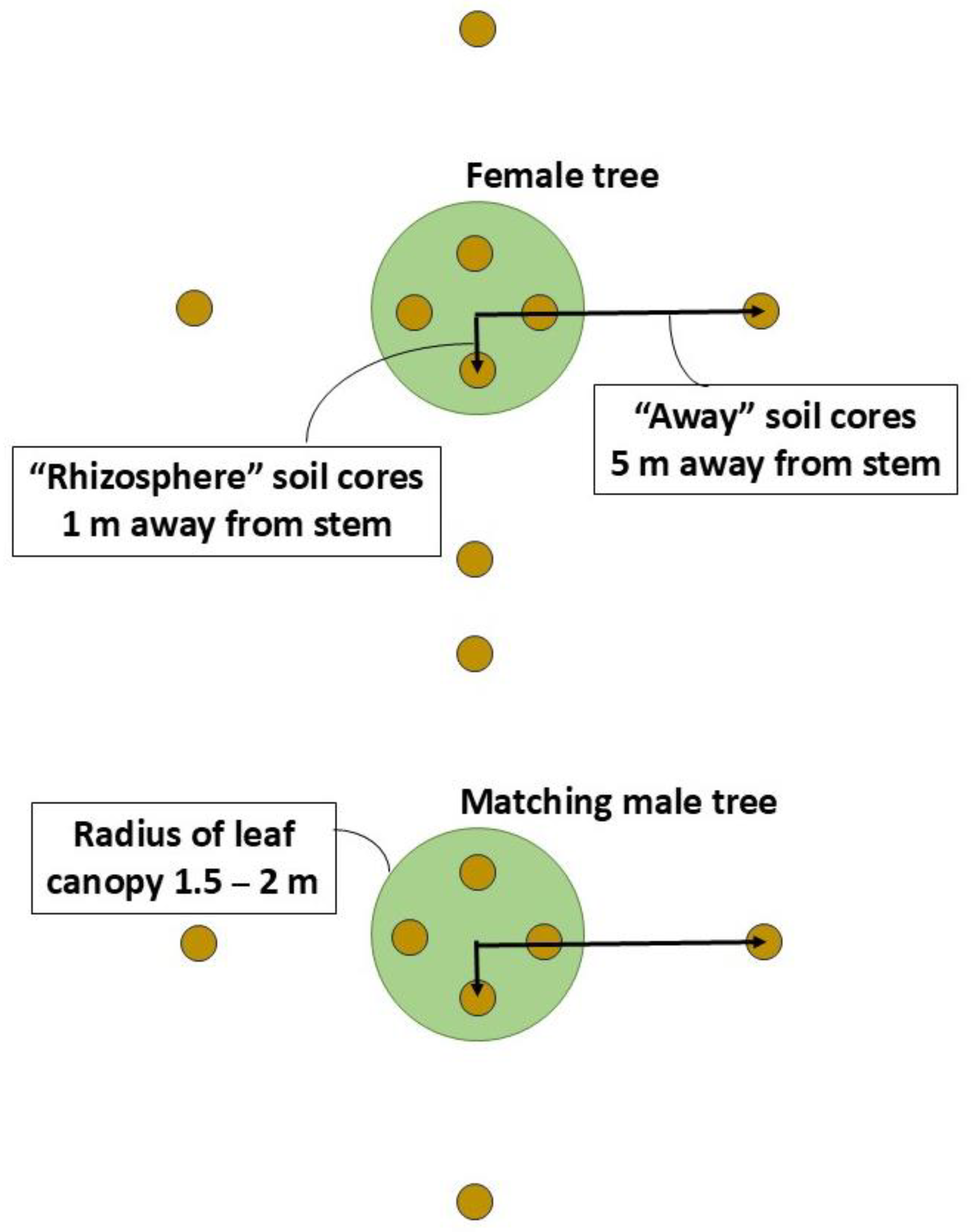
Soil cores 15 cm in depth were collected beneath each male and female tree in each site as previously described [17]. The four “rhizosphere” cores for each replication were obtained 1 m from each stem and in each of the four cardinal directions (Figure A1). This 1 m distance was selected because the pinnately compound leaves of these species were generally 1.5 to 2 m in length. This ensured the rhizosphere soils were within the root zone but also underneath the leaf cover for each tree. The matching “away” cores were obtained 5 m from each tree in each of the four cardinal directions. This distance was selected to comply with previously published methods [17,19,20,21]. The four cores for rhizosphere or away locations were combined and mixed as one replication sample. The soils were air-dried for storage until analysis. The soils were dried at 105 °C for 24 h in a forced draft oven then total nitrogen was determined by dry combustion (FLASH EA1112 CHN Analyzer, Thermo Fisher, Waltham, MA, USA). The Certified Reference Material for quality control was aspartic acid.
A single two- to three-leaf seedling was excavated beneath each of 10 female trees in the Calbayog site after collection of the soil cores. The seedlings were purchased from the manager of the copra farm in which the cycads were growing. All soil was gently rinsed from the lower stem and root surfaces, and the roots were separated into lateral roots, coralloid roots, and primary roots. The above-ground tissues were separated into stem, petiole + rachis, and leaflets. The six tissue categories were subjected to blanching at 90 °C for 30 min, followed by drying at 75 °C for 48 h until a constant weight was achieved. The dry weight of each tissue category was determined, and then the tissue was milled to pass through a 20-mesh screen. Total nitrogen was determined by dry combustion. The dry weight and nitrogen concentrations were used to calculate the total nitrogen pool in each of the six tissue categories, and then total plant nitrogen was determined by summing the six categories.

2.3. Ex Situ Studies

An ex situ cycad germplasm garden located in Barangay Sapang Bato, Angeles City, Philippines, was used to experimentally control the density of the seed bank and resulting seedlings under male trees and in open spaces in a manner to match the seedling dynamics beneath female trees. The soil was an unstructured, well-drained entisol (Coarse loamy, isohyperthermic, Typic Untipsamment), and the plants were growing in full sun conditions. The population for this study comprised C. edentata plants derived from numerous Philippine localities. Two native Cycas pollinators reside in the garden (Tychiodes sp. and Cycadophila sp.), so the entomophilous seed set was substantial.
The first experiment was initiated in August 2017 by monitoring all female trees to document phenology, seed development, and the seedling population (Table 2). For each of five replications with newly maturing seeds, each time a mature seed abscised and was added to the seed bank from the oldest megastrobilus, every seed in the strobilus was harvested to ensure the date of sowing was homogeneous for the entire strobilus. On the same date, mature seeds were harvested from other female trees with megastrobili of the same age and combined into a composite seed batch. Five male trees with heights similar to the five female trees were selected to receive seeds. Additionally, five locations in open sun and at least 4 m away from any cycad plant were identified to accept seeds in a manner similar to the male trees. These away locations served as a control within which no mature trees influenced the nitrogen turnover caused by seedling behaviors.
This protocol produced three locations replicated five times: beneath female trees, beneath male trees, and in open sun away from cycad plants. The number of mature seeds in each megastrobilus ranged from 110 to 164. In order to standardize the new regeneration potential throughout the experiment, 100 seeds were sown on each date. The seeds were spread evenly in a circle that was 2.6 m in diameter, and the leaf umbrella was 3.65 ± 0.16 m in diameter. The seedling germination, growth, and senescence patterns were monitored but not manipulated under the female and male trees. All seedlings beneath the trees died through attrition by the three-leaf stage. The seedlings in the open sun location exhibited greater longevity due to the lack of competition from the mature tree and the non-shaded conditions. In order to synchronize seedling dynamics, the number of one-leaf, two-leaf, and three-leaf seedlings was counted beneath each of the female trees every three months. Glyphosate was wiped on the leaflets of the open sun seedlings and killed selected seedlings to match the seedling populations beneath the female trees. This maintained the same number of living seedlings and the same number of decomposing dead seedlings in the three treatment locations.
Final measurements were obtained in September 2025. Soil cores were obtained from each of the 15 locations, and then soil preparation, storage, and measurement of nitrogen were carried out with the protocol described for the in situ studies. Four cores were obtained at 1 m from the center of the seedling plot in cardinal directions, then combined. Additionally, one three-leaf seedling was excavated from each location. The selected seedling was positioned near the center of the seedling plot. The soil was gently washed from the roots, and the seedling was cut into 2 cm pieces and homogenized into a single sample of tissue. The tissue was dried at 75 °C for 48 h, the total plant dry weight was determined, then the tissue was milled, and total nitrogen was determined by dry combustion. The concentration and weight data were used to calculate total seedling nitrogen content.
A second experiment was initiated in 2018 and was designed to determine the influence of kin recognition on the seedling dynamics beneath female C. edentata trees. Five trees were selected to receive self-seeds beneath the leaf umbrella. Seeds were harvested from other female trees with strobili that were synchronized with the five self-seed replications. The seeds were mixed, and five female trees without a current strobilus were selected to receive these seeds. None of the source trees was selected to ensure no self-seeds were included for any of the non-kin treatment trees. For these non-kin replications, all seeds that were produced by the recipient tree were harvested to ensure no self-seeds were inadvertently added to the soil surface throughout the course of the experiment. Each tree received 100 newly planted seeds at each harvest date. Additionally, five female trees were selected to receive no seeds and remain free of a decomposing seed bank and rotating seedling population. These trees served as a control within which no seedlings were allowed to influence the nitrogen turnover caused by mature tree behaviors. These soils beneath these control trees were directly influenced by the presence of a mature female tree, but were not influenced by seedlings. This approach produced three treatments of female trees that (1) received their own seeds, (2) received seeds from non-kin sources, and (3) did not receive seeds throughout the experiment. The final measurements in Sept. 2025 were restricted to the extraction of soil cores using the methods previously described and the total nitrogen analysis as previously described.

2.4. Statistics

For the in situ soil study, each of the field sites was analyzed by ANOVA as a two sex × two collection site factorial. The response variable was total soil nitrogen concentration. For the in situ experiment seedlings, a one-way ANOVA was employed to determine differences among the six tissue categories. The response variables for each tissue category were dry weight, total nitrogen concentration, and total nitrogen pool. For the first ex situ experiment, a one-way ANOVA was employed to determine differences among the three treatment levels. The response variables were total soil nitrogen, seedling dry weight, nitrogen concentration in seedlings, and total nitrogen pool in seedlings. For the second ex situ experiment, a one-way ANOVA was employed to determine differences among the three treatments. The response variable was total soil nitrogen concentration. Levene’s Test and Shapiro–Wilk Test were used to confirm equality of variances and normality prior to each ANOVA. Excel Version 2506 for Microsoft 365 was employed to conduct statistical tests. The means of response variables that were significant were separated by Tukey’s HSD test.

3. Results

3.1. In Situ Soils

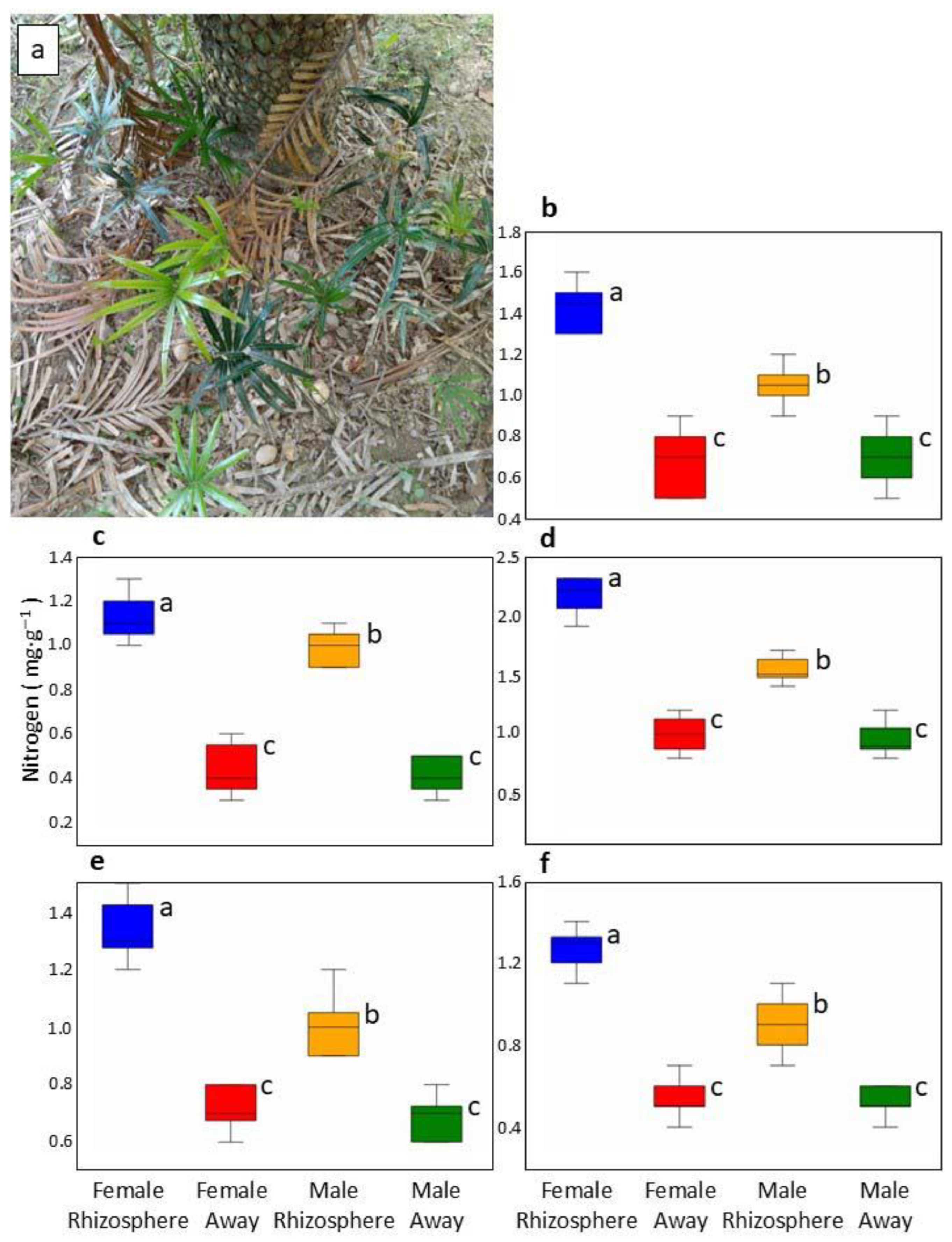
The seedling patterns were similar among the five habitats that were included in this study. Each female tree was subtended by numerous one- to three-leaf seedlings but no juvenile plants (Figure 1a). The raw observed counts of seedlings ranged from seven to 32 per tree. In contrast, the male trees and the away soil collection sites were barren of cycad seedlings.
The C. wadei mineral soils in Culion differed between location (f1,20 = 141.429, p < 0.001), sex (f1,20 = 15.714, p < 0.001), and the interaction of the two sources of variation (f1,20 = 18.701, p < 0.001). Nitrogen concentration of rhizosphere soils beneath male trees was less than that beneath female trees (Figure 1b). In contrast, the soils 5 m away from the trees did not differ between male and female trees. These dynamics generated greater disparity between the two soil locations for the female trees.
The C. nitida sandy soils in Catarman differed between location (f1,28 = 392.926, p < 0.001), sex (f1,28 = 8.333, p = 0.007), and the interaction of the two sources of variation (f1,28 = 4.482, p = 0.004). The nitrogen concentration beneath the female trees was greater than beneath the male trees (Figure 1c). The nitrogen concentration of soils 5 m away was similar for male and female trees, and was less than that of the rhizosphere soils.
The C. nitida halomorphic soils in Calbayog differed between location (f1,16 = 158.562, p < 0.001), sex (f1,16 = 25.978, p < 0.001), and the interaction of the two sources of variation (f1,16 = 20.225, p < 0.001). The nitrogen concentration in the female rhizosphere soils was greater than in the male rhizosphere (Figure 1d). The nitrogen concentration in the away soils was less than that in the rhizosphere soils and was similar for the two sexes.
The C. edentata organic soils in Caticlan differed between location (f1,16 = 138.063, p < 0.001), sex (f1,16 = 22.563, p < 0.001), and the interaction of the two sources of variation (f1,16 = 14.063, p = 0.002). Although the nitrogen concentration of these humus-based soils was much greater than that of the soils in the other sites, the difference between female and male rhizosphere was remarkably similar. The male rhizosphere nitrogen concentration was less than the female rhizosphere nitrogen concentration (Figure 1e). The nitrogen concentration of the away soils was not influenced by plant sex and was less than that of the rhizosphere soils.
The C. zambalensis ultramafic soils in Nagsasa differed between location (f1,32 = 276.374, p < 0.001), sex (f1,32 = 33.266, p < 0.001), and the interaction of the two sources of variation (f1,32 = 33.266, p < 0.001). The nitrogen concentration of the female rhizosphere soils was greater than that of the male rhizosphere soils (Figure 1f). The nitrogen concentration in the away soils was similar for the two sexes and was less than that of the rhizosphere soil.
In summary, the patterns in nitrogen concentration among soils beneath male, female, and away from cycad trees were similar among the five cycad habitats. The interaction source of variation in the ANOVAs was significant as a result of away locations not differing for the two sexes, but the female rhizosphere soils always contained more nitrogen than the male rhizosphere soils. Nitrogen in soils beneath male trees ranged from 70% to 85% of that in soils beneath female trees. Soils away from cycad trees contained 38% to 68% of the nitrogen contained in soils beneath the trees.

3.2. In Situ Seedlings

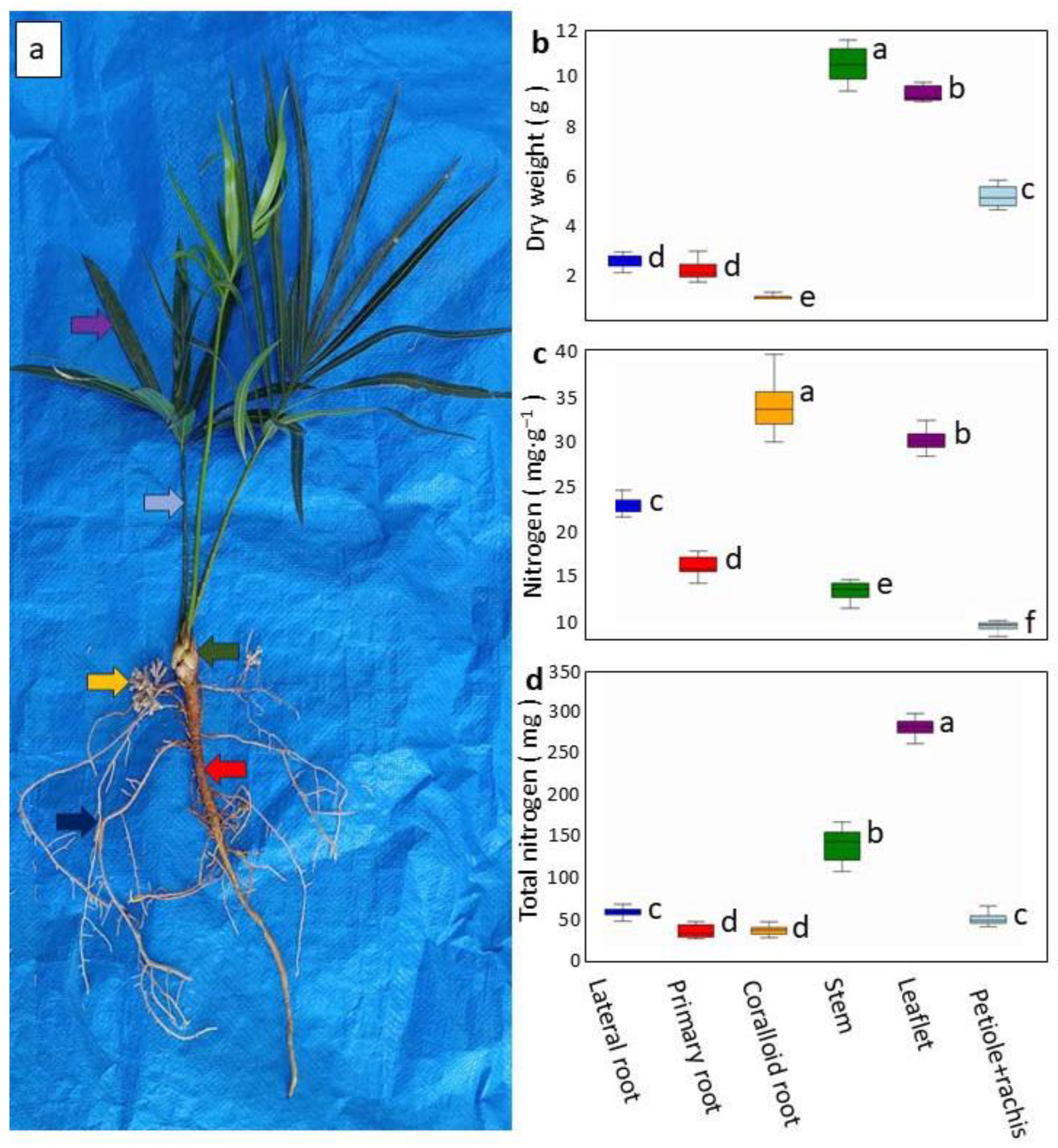
Tissue dry weight differed among the six C. nitida seedling tissue categories (f5,54 = 629.309, p < 0.001, n = 10). A 9.6-fold difference in dry weight occurred, and the categories ranked in the order stem > leaflet > petiole + rachis > lateral root = primary root > coralloid root (Figure 2a). The biomass allocated to above-ground tissues greatly exceeded that allocated to below-ground tissues, with a shoot/root quotient of 4.2 ± 0.1.
Nitrogen concentration of the seedling tissues differed among the six seedling tissue categories (f5,54 = 332.792, p < 0.001). Nitrogen concentration ranked among the categories in the order coralloid root > leaflet > lateral root > primary root > stem > petiole + rachis (Figure 2b).
The total amount of nitrogen in the seedlings differed among the six seedling tissue categories (f5,54 = 660.007, p < 0.001). Nitrogen content of the categories ranked in the order leaflet > stem > lateral root = petiole + rachis > coralloid root = primary root (Figure 2c). The leaflets contained 46% of the nitrogen that was residing within the seedling tissues and 30% of the biomass.

3.3. Ex Situ Plant Sex

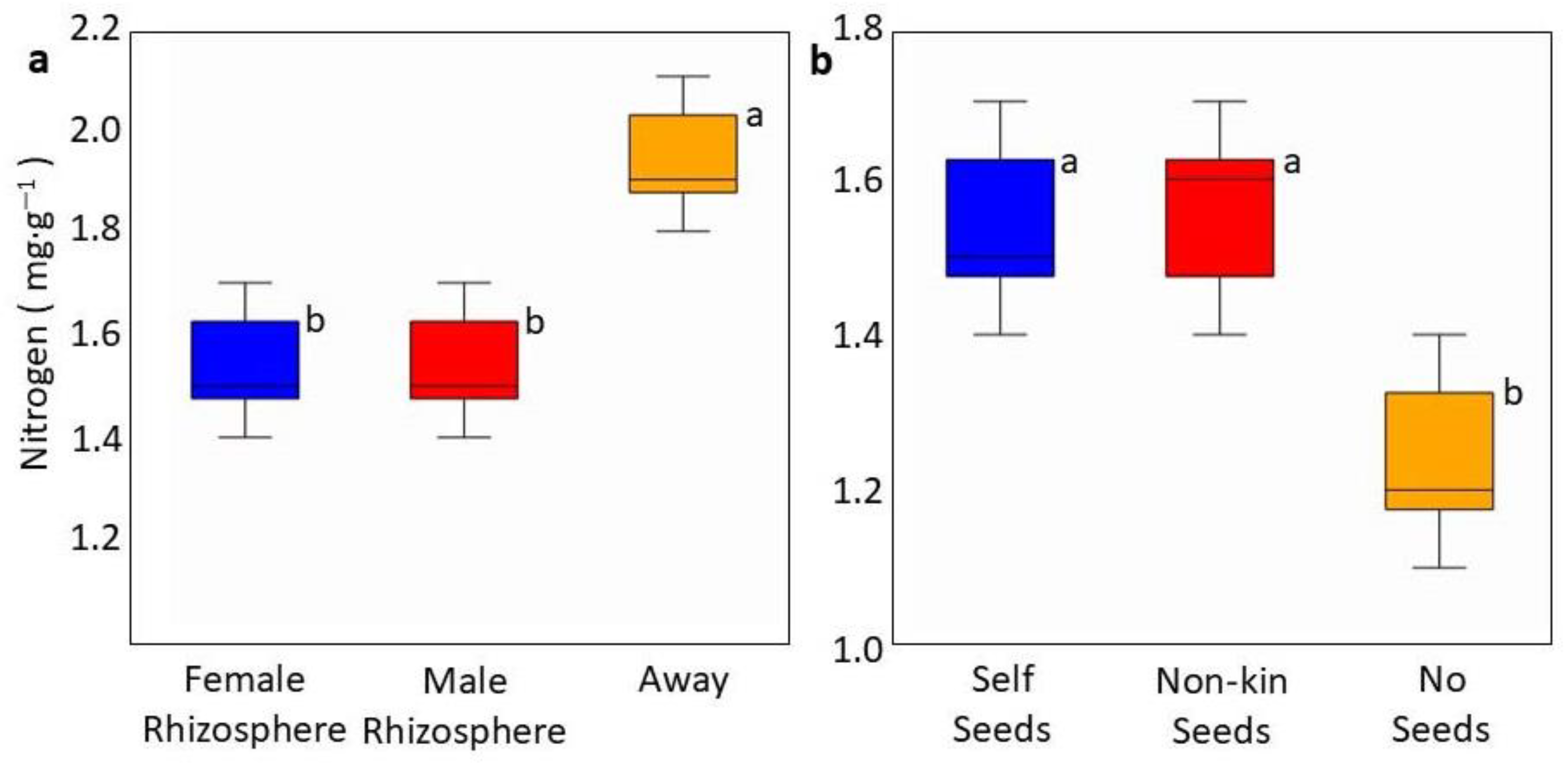
The soils that were supported by C. edentata seed and seedling turnover differed in nitrogen concentration among the three treatments (f2,12 = 25.515, p < 0.001). The nitrogen concentration of rhizosphere soils beneath male and female trees did not differ, but control soils away from any mature cycad plants that experienced eight years of seedling turnover contained more nitrogen than the rhizosphere soils (Figure 3a), indicating the presence of mature trees reduced the nitrogen concentration of the soils.
The nitrogen concentration of the excavated seedlings was not influenced by treatment (f2,12 = 0.108, p = 0.899), and the tissues contained 19.24 ± 0.25 mg·g−1 (mean ± SE) of nitrogen. The total dry weight of seedlings was also not influenced by treatment (f2,12 = 1.281, p = 0.313), and these seedlings contained 29.84 ± 0.27 g each. Total nitrogen content per seedling was not different among the three treatments (f2,12 = 0.219, p = 0.806), and the seedlings contained 574.62 ± 10.24 mg of nitrogen per seedling.

3.4. Ex Situ Kin Recognition

The soils beneath female C. edentata trees that received self-seeds, non-kin seeds, or no seeds differed in nitrogen concentration (f2,12 = 12.359, p = 0.001). The trees that received seeds and experienced seedling turnover from 2018 until 2025 contained more nitrogen in the rhizosphere soils than the control trees that did not receive any seeds (Figure 3b). However, female trees receiving self-seeds exhibited nitrogen concentrations that were not different from female trees receiving non-kin seeds.

4. Discussion

The influence of mature cycad plants on rhizosphere soil nutrition has been reported for several cycad species, indicating that an increase in soil nitrogen occurs beneath the leaf canopy [17,18,19,20,21]. These studies did not evaluate the influence of plant sex on these changes in soil nutrition. The current study has addressed this distinction for the first time and underscores the interactions of adult plant sex, seed germination location, programmed seedling mortality, and localized soil nitrogen content for four Cycas species. The temporary inputs of newly fixed nitrogen by way of seedling cyanobacteria endosymbionts and the ultimate release of that nitrogen to the soil have been shown to benefit female trees such that soil nitrogen beneath female trees exceeded that under male trees. The findings highlight that seed production is not limited to regeneration. The long-term deposits of seeds, germination beneath the leaf umbrella of the female parent, and the programmed death of the seedlings appear to offer ecological advantages to female cycad trees. Clearly, the ecological and evolutionary roles of cycad seeds need to be more fully explored for this threatened group of plants.
Some of the underlying mechanisms have been revealed by the various manipulated experimental approaches in the first ex situ experiment. The rotation of high-density seedlings that experimentally germinated, grew, and died in the absence of proximity to a mature tree added more net nitrogen to the soil over time. These findings indicated that some of the nitrogen provisioned to the rhizosphere by ephemeral seedlings that germinated beneath an adult tree was absorbed by the mature tree roots. The seedling turnover beneath male and female trees led to similar soil nitrogen levels. These results indicated that recognition of the parent by the seedlings was not a factor in provisioning soil nitrogen by the seedlings.
The findings in the second ex situ experiment further clarified the relevant phenomena. The soils beneath the female trees that were not allowed to receive any seed inputs contained less nitrogen after only seven years than the soils that received the turnover of seeds and seedlings. These findings indicated that the nitrogen that accumulates in soils beneath female trees is a direct result of the seed and seedling contributions, not because of nitrogen inputs from the cyanobacteria of the mature trees. Collectively, the findings indicated that cycad seed germination beneath the leaf umbrella of the source tree provides a nutritional benefit to the female parent through inadvertent filial effects whereby the offspring provide the female parent with access to a soil nitrogen pool that would not be available in the absence of seedling turnover.

4.1. Releasing Seed and Seedling Nitrogen

Quantifying the release of the total pool of nitrogen within the seedlings due to decomposition after seedling mortality may underestimate the total nitrogen that is added by the cyanobacteria endosymbionts throughout the life of the seedlings. First, some of this nitrogen may be released to the soil by the seedlings throughout their lifetime by way of chronic fine root senescence and decomposition [24]. Second, root mucilage and exudates produce a substantial flux of plant materials to the rhizosphere in a manner that affects physical and chemical properties of the soil and nutrient cycling [25,26,27,28]. These fine root decomposition and exudate contributions of fine root nutrients to the rhizosphere would occur throughout the seedling’s lifespan. Third, there may be a direct transfer of nitrogen between seedlings and the female tree [29]. These three potential mechanisms for seedlings to support the parent tree with nitrogen inputs during the active lifespan of the seedling have not been experimentally explored to date. While the contributions of a cycad seedling to the nitrogen budget of the soil begin with the first coralloid root formation shortly after germination, these contributions potentially occur through the life of the seedling by way of mechanisms such as fine root decomposition and root exudates, then continue long after ultimate seedling death by way of whole plant litter decomposition. Continued research is required to confirm which of these processes contribute to the soil nutritional status of mature female cycad plants.
The full spectrum of mechanisms by which nitrogen content increases beneath female cycad trees when compared with male trees may also involve microorganism population behavior after seedling death. Nitrogen-fixing cyanobacteria within the coralloid roots of recently senesced seedlings may continue to fix nitrogen after seedling death, adding even more newly fixed nitrogen to the local soils. These nitrogen-fixing organisms are free-living and photosynthetic before entering the coralloid root to become heterotrophic by exploiting the plant as a carbon source [2]. Their capacity to rely on the senescent cycad root tissue as a carbon source may not cease when the seedling dies. Moreover, the ability of these heterotrophic cyanobacteria to transition back to a free-living, autotrophic lifestyle is probable [2]. The permanent nature of sessile long-lived cycad trees increases the resident population of nutrient cycling microbes in the rhizosphere soils [19,21]. A disparity in rhizosphere microorganism community assembly between male and female plants has been reported for dioecious Salix gordejevii Y.L. Chang and A.K. Skvortsov [30] and Populus euphratica Oliver [31]. The influence of sex on the cycad rhizosphere microorganism community has not been studied to date. Considering the additional nitrogen that seedling turnover enables beneath female cycad trees but not male trees, a sex-specific difference in abundance and diversity of rhizosphere soil microbiome is likely.
Non-leaf litter may be considerable and profoundly influence the soil nutrient budget [32], and the cycad seeds that never germinate constitute an unstudied example of non-leaf litter. Non-leaf litter inputs like flowers and fruits often add resources to the litter pool in pulses, with the synchronized nature of the inputs exerting a direct influence on the nutrient cycle [33]. Moreover, tissues from reproductive organs that are added to the litter layer may influence the decomposition speed of other litters, such as leaf litter, by way of non-additive litter mixture effects [34,35]. The direct role of non-viable cycad seeds as a non-leaf litter source has not been studied to date, and these decomposing seeds that never germinate may be a substantial source of nutrition for the female parent tree’s rhizosphere.

4.2. Future Directions

With tree species that have nitrogen-fixing root endosymbionts, when a seedling germinates beneath the parent tree and then dies as a result of Janzen-Connell effects [11,12], these seedlings may act in a manner analogous to intercropping or crop rotation. Cover crops are highly effective in rotation systems for improving nitrogen nutrition of subsequent cash crops [36,37]. Similarly, companion plants or intercropping methods using plant species with symbiotic nitrogen fixation may benefit the nitrogen nutrition of co-occurring crops grown concurrently [38,39]. The immense literature on these disciplines may provide ideas for continued research in this line of research.
The phenomenon is similar to transgenerational plasticity, whereby the environment of the maternal parent influences progeny [40]. For parent-to-offspring effects to occur, several steps must be confirmed. First, the parent must detect an environmental cue that is highly reliable, then possess the mechanisms to interpret the cue [41]. Following this, the parent must use the cue to alter the environment that is experienced by the offspring [42]. Finally, the offspring must be able to detect and process these changes that are provided by the parent [43,44]. In contrast to the parent-to-offspring direction, this case study reveals a situation where the offspring serve as the senders and the maternal parents serve as the receivers. The offspring clearly received and detected the cues from the parent tree’s rhizosphere and died as a result. This, in turn, altered the parent tree’s environment by increasing nitrogen. In this case study, the offspring’s behavior imparted a nutritional advantage to female parents but not male parents. Three lines of research may lead to improvements in our understanding of how cycad seedlings benefit their maternal parents. First, cyanobacteria are sensitive to many antibiotics [45]. Experimental applications of antibiotics may be exploited to enable seedling germination and growth without the benefit of the cyanobiont nitrogen fixation. Second, the cycad seed is a relatively large structure with considerable nutritional resources. The many ungerminated seeds that are dispersed to the soils beneath the maternal parent may decompose to contribute considerable resources over time. The proportion of increases in rhizosphere nutrients supplied directly by decomposing seeds may be experimentally studied. Third, a social science aspect of this case study involves the ethics of harvesting seeds of endangered cycad species. The results herein indicate that harvesting seeds from in situ habitats to enable propagation within ex situ conservation programs carries the potential to deny female trees of the ecological benefits that result from the seedling turnover. Conservationists have not historically had the knowledge to understand that indiscriminate harvesting of habitat seeds exerts a direct change in the spatiotemporal dynamics of biogeochemical cycling within the cycad habitats. These changes may be consequential, especially in small populations of endemic species.
Glyphosate leaflet wipes were employed to kill seedlings in the ex situ experiment because the alternative of excavating seedlings to kill them would have disturbed the soils and influenced adjacent retained seedlings. The direct influence of glyphosate on soil nutrition has not been studied, but agronomic and forestry studies have revealed only benign influences of glyphosate on soil microbial community [46,47,48]. These studies employed soil applications of glyphosate, which would have influenced soil microbes to a greater degree than the leaflet wipes employed herein. More research is required to understand the influences of glyphosate on soil nutrition.
Finally, the rhizosphere soils associated with mature cycad plants are also influenced by inputs from the mature trees. These include root exudates and decomposition of senesced leaves, reproductive organ tissues that are not dispersed with seeds, and roots. A full understanding of the dynamics of nitrogen turnover beneath cycad plants would require decomposition protocols see [16] for each of these senesced tissue categories.

5. Conclusions

The previously reported increase in soil nitrogen beneath mature cycad trees has been extended to include the influence of plant sex. The seeds that germinate beneath ovulate parent trees serve as a source of newly fixed nitrogen during their lifespan, and this nitrogen contributes to the rhizosphere soil nutrition because their death, which releases nutrients from the senesced tissues, is pre-programmed by the fact that they germinated beneath the parent tree’s leaf umbrella. These findings indicate adult plant sex influences the spatiotemporal aspects of biogeochemical cycling within cycad habitats. Future research may focus on understanding the mechanisms by which persistent adult cycad plants and ephemeral cycad seedlings impart the changes in the rhizosphere.

Funding

This research received no external funding.

Institutional Review Board Statement

Not applicable.

Informed Consent Statement

Not applicable.

Data Availability Statement

Data are available upon request.

Acknowledgments

I thank Gerard Sigua for logistical and resource support for the ex situ studies.

Conflicts of Interest

The author declares no conflicts of interest.

Abbreviations

The following abbreviations are used in this manuscript:
ANOVAAnalysis of Variance

Appendix A

Figure A1. Graphical depiction of soil core locations for male and female Cycas plants.
Ecologies 07 00033 g0a1

References

  1. Calonje, M.; Stevenson, D.W.; Osborne, R. The World List of Cycads; Version 2025.09.04-r1; Montgomery Botanical Center: Coral Gables, FL, USA, 2025. [Google Scholar] [CrossRef]
  2. Norstog, K.J.; Nicholls, T.J. The Biology of the Cycads; Cornell University Press: Ithaca, NY, USA, 1997. [Google Scholar]
  3. Salzman, S.; Bustos-Díaz, E.D.; Whitaker, M.R.L.; Sierra, A.M.; Cibrián-Jaramillo, A.; Barona-Gómez, F.; Villarreal Aguilar, J.C. Chemical ecology of symbioses in cycads, an ancient plant lineage. New Phytol. 2025, 246, 1494–1504. [Google Scholar] [CrossRef] [PubMed]
  4. Vovides, A.P. Spatial distribution, survival, and fecundity of Dioon edule (Zamiaceae) in a tropical deciduous forest in Veracruz, Mexico, with notes on its habitat. Am. J. Bot. 1990, 77, 1532–1543. [Google Scholar] [CrossRef]
  5. Krishnamurthy, V.; Mandle, L.; Ticktin, T.; Ganesan, R.; Saneesh, C.S.; Varghese, A. Conservation status and effects of harvest on an endemic multi-purpose cycad, Cycas circinalis L., Western Ghats, India. Trop. Ecol. 2013, 54, 309–320. [Google Scholar]
  6. Borsboom, A.C.; Wang, J.; Forster, P.I. Determining maturity and population structure in Macrozamia parcifolia (Zamiaceae), a threatened Australian cycad. Aust. J. Bot. 2015, 63, 392–402. [Google Scholar] [CrossRef]
  7. James, H.E.; Forster, P.I.; Lamont, R.W.; Shapcott, A. Conservation genetics and demographic analysis of the endangered cycad species Cycas megacarpa and the impacts of past habitat fragmentation. Aust. J. Bot. 2018, 66, 173–189. [Google Scholar] [CrossRef]
  8. McDougall, K.L.; Gullan, P.J.; Craven, P.; Wright, G.T.; Cook, L.G. Cycad killer, qu’est-ce que c’est? Dieback of Macrozamia communis on the south coast of New South Wales. Aust. J. Bot. 2021, 69, 102–109. [Google Scholar] [CrossRef]
  9. Liang, D.; Wei, Y.; Wang, P.A.; Liu, X.; Wang, P.; Liu, Y.; Zeng, S.; Wang, R. Comparative ecological traits and environmental responses of two distinct populations of the critically endangered Cycas fairylakea in Guangdong, China. Front. Ecol. Evol. 2024, 12, 1490107. [Google Scholar] [CrossRef]
  10. Marler, T.E.; Cruz, G.N. Insular Cycas micronesica habitats respond similarly to Aulacaspis yasumatsui invasion, regardless of co-occurring consumers. Forests 2024, 15, 22. [Google Scholar] [CrossRef]
  11. Janzen, D.H. Herbivores and the number of tree species in tropical forests. Am. Nat. 1970, 104, 501–528. [Google Scholar] [CrossRef]
  12. Connell, J.H. On the role of natural enemies in preventing competitive exclusion in some marine animals and in rain forest trees. In Dynamics of Populations; Den Boer, P.J., Gradwell, G.R., Eds.; Centre for Agricultural Publications and Documentation: Wageningen, The Netherlands, 1971; pp. 298–310. [Google Scholar]
  13. Marler, T.E. Soil conditioning and neighbor identity influence on Cycas seedling performance. Ecologies 2023, 4, 731–748. [Google Scholar] [CrossRef]
  14. Marler, T.E.; Krishnapillai, M.V. Longitude, forest fragmentation, and plant size influence Cycas micronesica mortality following island insect invasions. Diversity 2020, 12, 194. [Google Scholar] [CrossRef]
  15. Motsomane, N.; Suinyuy, T.N.; Pérez-Fernández, M.A.; Magadlela, A. Exploring the influence of ecological niches and hologenome dynamics on the growth of Encephalartos villosus in scarp forests. Soil Syst. 2024, 8, 21. [Google Scholar] [CrossRef]
  16. Ledwaba, T.M.; Suinyuy, T.N.; Dalu, T. The role of microbial and macroinvertebrate communities on early leaf decomposition rates of the African cycad. Afr. J. Ecol. 2026, 64, e70165. [Google Scholar] [CrossRef]
  17. Marler, T.E.; Krishnapillai, M.V. Cycas micronesica trees alter local soil traits. Forests 2018, 9, 565. [Google Scholar] [CrossRef]
  18. Marler, T.E.; Calonje, M. Two cycad species affect the carbon, nitrogen, and phosphorus content of soils. Horticulturae 2020, 6, 24. [Google Scholar] [CrossRef]
  19. Sigasa, M.; Magadlela, A.; Pérez-Fernández, M.A.; Otang-Mbeng, W.; Suinyuy, T.N. Encephalartos lanatus-associated bacteria and extracellular enzyme activities improve soil nutrition in nutrient-deficient grassland ecosystems. Sci. Afr. 2025, 29, e02879. [Google Scholar] [CrossRef]
  20. Ndlovu, S.; Suinyuy, T.N.; Pérez-Fernández, M.A.; Magadlela, A. Encephalartos natalensis, their nutrient-cycling microbes and enzymes: A story of successful trade-offs. Plants 2023, 12, 1034. [Google Scholar] [CrossRef]
  21. Ndabankulu, K.P.; Zama, N.; Suinyuy, T.N.; Magadlela, A. Soil microbe interaction and extracellular enzyme activity mediated by Encephalartos villosus in KwaZulu-Natal scarp forest ecosystems. Microb. Ecol. 2025, 88, 132. [Google Scholar] [CrossRef]
  22. Marler, T.E. Root growth and branching of two Cycas species are influenced by form of nitrogen fertilizer. Agronomy 2025, 15, 2280. [Google Scholar] [CrossRef]
  23. Marler, T.E.; Ferreras, U.F. Current status, threats and conservation needs of the endemic Cycas wadei Merrill. J. Biodivers. Endanger. Species 2017, 5, 193. [Google Scholar] [CrossRef]
  24. Saha, S.; Huang, L.; Khoso, M.A.; Wu, H.; Han, D.; Ma, X.; Poudel, T.R.; Li, B.; Zhu, M.; Lan, Q.; et al. Fine root decomposition in forest ecosystems: An ecological perspective. Front. Plant Sci. 2023, 14, 1277510. [Google Scholar] [CrossRef]
  25. Ma, W.; Tang, S.; Dengzeng, Z.; Zhang, D.; Zhang, T.; Ma, X. Root exudates contribute to belowground ecosystem hotspots: A review. Front. Microbiol. 2022, 13, 937940. [Google Scholar] [CrossRef]
  26. Zambelli, A.; Nocito, F.F.; Araniti, F. Unveiling the multifaceted roles of root exudates: Chemical interactions, allelopathy, and agricultural applications. Agronomy 2025, 15, 845. [Google Scholar] [CrossRef]
  27. Martins, S.; Brito, C.; Baltazar, M.; Dinis, L.-T.; Pereira, S. Exploring the role of root exudates in shaping plant–soil–microbe interactions to support agroecosystem resilience. Horticulturae 2026, 12, 90. [Google Scholar] [CrossRef]
  28. Nazari, M.; Fathinejad, A.; Mohammadi, M.H.; Bickel, S.; Berg, G.; Carminati, A. The origin and evolution of root mucilage. New Phytol. 2026, 249, 1687–1698. [Google Scholar] [CrossRef] [PubMed]
  29. González-Díaz, P.; Montesinos-Navarro, A. Plant–plant nitrogen transfer is prevalent in a semi-arid shrubland and affects the foliar N content of recipient plants. Funct. Ecol. 2026, 40, 374–389. [Google Scholar] [CrossRef]
  30. Lan, Q.; Liu, G.; Song, H.; Liu, G.; Xu, X. Plant sex alters rhizosphere microorganisms assembly of Salix gordejevii across diverse sandy habitats. Plant Soil 2025, 508, 749–766. [Google Scholar] [CrossRef]
  31. Guo, Q.X.; Liu, J.T.; Yu, L.; Korpelainen, H.; Li, C.Y. Different sexual impacts of dioecious Populus euphratica on microbial communities and nitrogen cycle processes in natural forests. For. Ecol. Manag. 2021, 496, 119403. [Google Scholar] [CrossRef]
  32. Huang, Y.; Wu, F.; Wu, Q.; Yuan, J.; Heděnec, P.; Yang, Q.; Yi, Q.; Yue, K.; An, N.; Peng, Y. Global patterns and driving factors of non-leaf litter carbon quality across plant functional types and environments. J. Plant Ecol. 2025, 18, rtaf082. [Google Scholar] [CrossRef]
  33. Schmitt, L.; Perfecto, I. Who gives a flux? Synchronous flowering of Coffea arabica accelerates leaf litter decomposition. Ecosphere 2020, 11, e03186. [Google Scholar] [CrossRef]
  34. de Paz, M.; Gobbi, M.E.; Raffaele, E. Fallen fruits stimulate decomposition of leaf litter of dominant species in NW Patagonia shrublands. Plant Soil 2018, 425, 433–440. [Google Scholar] [CrossRef]
  35. Hoefle, D.; Ramakrishnan, D.K.; Holländer, M.-A.; Kiplimo, D.; Konzag, W.; Schena, L.; Malacrinò, A.; Tack, A.J.M.; Abdelfattah, A. Fruit function beyond dispersal: Effect of fruit decomposition on the plant microbiome assembly. New Phytol. 2026, 249, 1442–1455. [Google Scholar] [CrossRef] [PubMed]
  36. Lu, Y.C.; Watkins, K.B.; Teasdale, J.R.; Abdul-Baki, A.A. Cover crops in sustainable food production. Food Rev. Int. 2000, 16, 121–157. [Google Scholar] [CrossRef]
  37. Gazoulis, I.; Kanatas, P.; Petraki, D.; Antonopoulos, N.; Kokkini, M.; Danaskos, M.; Travlos, I. Enhancing agroecosystem sustainability by means of cover crops in the era of climate change. Agronomy 2025, 15, 1051. [Google Scholar] [CrossRef]
  38. Akchaya, K.; Parasuraman, P.; Pandian, K.; Vijayakumar, S.; Thirukumaran, K.; Mustaffa, M.R.A.F.; Rajpoot, S.K.; Choudhary, A.K. Boosting resource use efficiency, soil fertility, food security, ecosystem services, and climate resilience with legume intercropping: A review. Front. Sustain. Food Syst. 2025, 9, 1527256. [Google Scholar] [CrossRef]
  39. Tonfack, L.B.; Rajpoot, S.K.; Njira, K. Integration of legume intercropping into sustainable farming systems for nitrogen fixation, soil health, and climate resilience. Front. Sustain. Food Syst. 2025, 9, 1651949. [Google Scholar] [CrossRef]
  40. Bell, A.M.; Hellmann, J.K. An integrative framework for understanding the mechanisms and multigenerational consequences of transgenerational plasticity. Annu. Rev. Ecol. Evol. Syst. 2019, 50, 97–118. [Google Scholar] [CrossRef]
  41. Stamps, J.A.; Krishnan, V.V. Combining information from ancestors and personal experiences to predict individual differences in developmental trajectories. Am. Nat. 2014, 184, 647–657. [Google Scholar] [CrossRef]
  42. Laland, K.; Matthews, B.; Feldman, M.W. An introduction to niche construction theory. Evol. Ecol. 2016, 30, 191–202. [Google Scholar] [CrossRef]
  43. Jablonka, E.; Raz, G. Transgenerational epigenetic inheritance: Prevalence, mechanisms, and implications for the study of heredity and evolution. Q. Rev. Biol. 2009, 84, 131–176. [Google Scholar] [CrossRef]
  44. Dall, S.; McNamara, J.; Leimar, O. Genes as cues: Phenotypic integration of genetic and epigenetic information from a Darwinian perspective. Trends Ecol. Evol. 2015, 30, 327–333. [Google Scholar] [CrossRef]
  45. Le Page, G.; Gunnarsson, L.; Trznadel, M.; Wedgwood, K.C.A.; Baudrot, V.; Snape, J.; Tyler, C.R. Variability in cyanobacteria sensitivity to antibiotics and implications for environmental risk assessment. Sci. Total Environ. 2019, 695, 133804. [Google Scholar] [CrossRef]
  46. Busse, M.D.; Ratcliff, A.W.; Shestak, C.J.; Powers, R.F. Glyphosate toxicity and the effects of long-term vegetation control on soil microbial communities. Soil Biol. Biochem. 2001, 33, 1777–1789. [Google Scholar] [CrossRef]
  47. Araújo, A.S.F.; Monteiro, R.T.R.; Abarkeli, R.B. Effect of glyphosate on the microbial activity of two Brazilian soils. Chemosphere 2003, 52, 799–804. [Google Scholar] [CrossRef]
  48. Ratcliff, A.W.; Busse, M.D.; Shestak, C.J. Changes in microbial community structure following herbicide (glyphosate) additions to forest soils. Appl. Soil Ecol. 2006, 34, 114–124. [Google Scholar] [CrossRef]
Figure 1. The soil nitrogen content associated with adult Cycas trees is influenced by plant sex and proximity. (a) Numerous short-lived Cycas edentata seedlings characterize the area beneath most female trees; (b) Cycas wadei in Culion Island; (c) Cycas nitida in Catarman; (d) Cycas nitida in Calbayog; (e) Cycas edentata in Caticlan; (f) Cycas zambalensis in Nagsasa. Boxes contain the interquartile range of the data, upper and lower whiskers indicate the largest and smallest values, and horizontal lines within boxes represent median values. Boxes within the plot that do not share a letter are significantly different according to Tukey’s HSD.
Ecologies 07 00033 g001
Figure 2. The concentrations and locations of nitrogen among tissues of in situ Cycas nitida seedlings. (a) a characteristic seedling revealing the six tissue categories used to determine dry weight and nitrogen allocation; color of each arrow matches box color in the plots; (b) dry weight; (c) nitrogen concentration; (d) total nitrogen pool. Boxes contain the interquartile range of the data, upper and lower whiskers indicate the largest and smallest values, and horizontal lines within boxes represent median values. Boxes within the plot that do not share a letter are significantly different according to Tukey’s HSD.
Ecologies 07 00033 g002
Figure 3. The soil nitrogen associated with years of ex situ Cycas edentata seedling turnover within a 2.6 m circle as influenced by proximity to adult trees. (a) soil nitrogen concentration as influenced by seedlings growing beneath male trees, female trees, or away from cycad plants; (b) soil nitrogen concentration as influenced by self-seedlings, non-kin seedlings, or no seedlings beneath female trees. Boxes contain the interquartile range of the data, upper and lower whiskers indicate the largest and smallest values, and horizontal lines within boxes represent median values. Boxes within the plot that do not share a letter are significantly different according to Tukey’s HSD. n = 5.
Ecologies 07 00033 g003
Table 1. Characteristics of five Cycas habitats in the Philippines used to determine soil nitrogen content beneath male and female trees.
SiteSpeciesNumber of ReplicationsStem Height Range
Culion IslandCycas wadei62.6–3.3 m
Catarman, SamarCycas nitida82.8–3.1 m
Calbayog, SamarCycas nitida53.6–4.3 m
Caticlan, PanayCycas edentata52.6–4.1 m
Nagsasa, ZambalesCycas zambalensis92.6–2.9 m
Table 2. Characteristics of two ex situ experiments with Cycas edentata plants growing in Angeles City, Philippines, were used to determine the influence of seedlings on soil nitrogen. n = 5 for all treatments.
ExperimentTreatmentStudy DatesStem Height Range
OneFemale tree cover2017–20251.1–1.2 m
OneMale tree cover2017–20251.0–1.3 m
OneNo tree cover2017–2025not applicable
TwoSelf seeds2018–20250.9–1.1 m
TwoNon-kin seeds2018–20250.9–1.2 m
TwoNo seeds2018–20250.9–1.1 m
Disclaimer/Publisher’s Note: The statements, opinions and data contained in all publications are solely those of the individual author(s) and contributor(s) and not of MDPI and/or the editor(s). MDPI and/or the editor(s) disclaim responsibility for any injury to people or property resulting from any ideas, methods, instructions or products referred to in the content.