Article

Phytoengineered Remediation of BTEX and MTBE Through Hybrid Constructed Wetlands Planted with Heliconia latispatha and Phragmites australis


by
Sandra Guadalupe García-Aburto
1,†,
Graciela Nani
1,
Vicente Vergara-Flórez
2,
David Reyes-González
3,
Erick Arturo Betanzo-Torres
1,†,
Alexi Peralta-Vega
2 and
Luis Carlos Sandoval Herazo
1,2,*,†
1
Wetlands and Environmental Sustainability Laboratory, Division of Graduate Studies and Research, Tecnológico Nacional de México/Instituto Tecnológico Superior de Misantla, Km 1.8 Carretera a Loma Del Cojolite, Misantla, Veracruz 93821, Mexico
2
Facultad de Ingeniería, Universidad de Sucre, Sincelejo 700001, Colombia
3
Division of Postgraduate Studies and Research, Tecnológico Nacional de México/Instituto Tecnológico Superior de Misantla, Misantla, Veracruz 93821, Mexico
*
Author to whom correspondence should be addressed.
These authors contributed equally to this work.
Ecologies 2025, 6(4), 84; https://doi.org/10.3390/ecologies6040084 (registering DOI)
Submission received: 23 September 2025 / Revised: 16 November 2025 / Accepted: 19 November 2025 / Published: 5 December 2025

Abstract

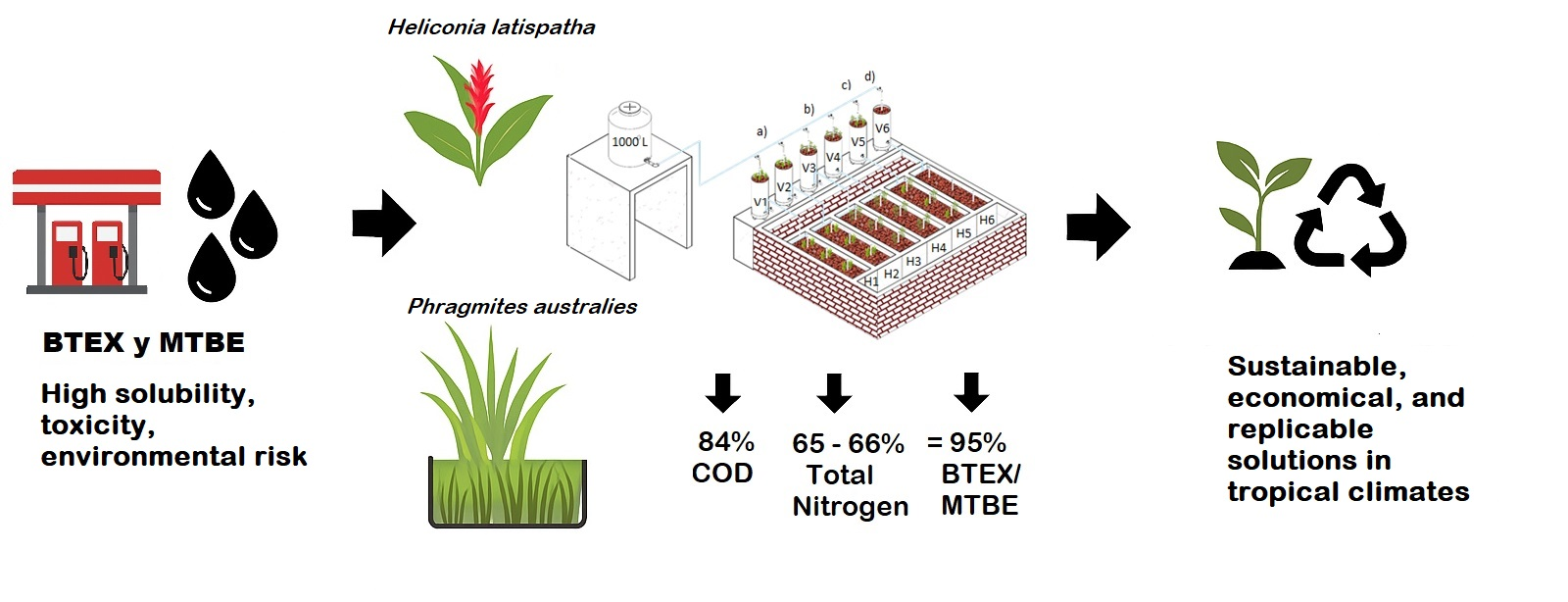
Water pollution caused by petroleum-derived volatile organic compounds such as benzene, toluene, ethylbenzene, and xylenes (BTEX), as well as methyl tert-butyl ether (MTBE), poses a growing threat to aquatic ecosystems and human health. These contaminants, together with the organic matter and nutrients present in municipal wastewater, highlight the need for sustainable treatment technologies adapted to tropical conditions. This study evaluated the removal efficiency of BTEX, MTBE, and conventional pollutants using hybrid constructed wetlands (HCWs) that combine vertical subsurface flow (VSSF-CW) and horizontal subsurface flow (HSSF-CW) systems. Two plant species—Heliconia latispatha and Phragmites australis—were tested, along with a polyculture and an unvegetated control. The hybrid systems treated synthetic influents formulated to simulate contaminated municipal wastewater. Parameters including COD, TSS, N–NH4+, N–NO3, P–PO43−, BTEX, and MTBE were monitored and analyzed using ANOVA and Tukey’s test (p < 0.05). Vegetated systems achieved COD removal efficiencies exceeding 85%, compared with 72% in the control. Phragmites australis obtained the highest removal of suspended solids (92 ± 3%) and ammonium nitrogen (88 ± 2%), whereas Heliconia latispatha exhibited superior phosphorus removal (84 ± 4%). The polyculture displayed a synergistic effect, achieving removal rates of 93% for benzene, 91% for toluene, and 88% for MTBE, with statistically significant differences relative to the control (p < 0.05). In conclusion, hybrid constructed wetlands planted with Heliconia latispatha and Phragmites australis demonstrated high efficiency and stability in removing BTEX, MTBE, and conventional pollutants under tropical conditions, positioning themselves as a sustainable, low-cost, and esthetically valuable treatment alternative.

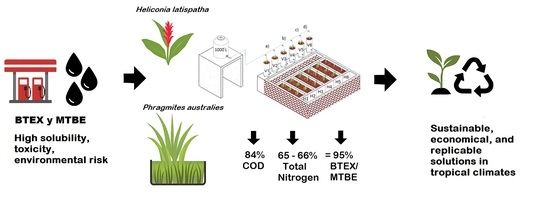
Graphical Abstract

1. Introduction

The increasing pressure on water resources has made wastewater treatment a global priority challenge [1]. Water pollution caused by toxic and persistent compounds, primarily derived from urban and industrial activities, poses a serious threat to both human health and the environment [2]. In particular, the intensive use of petrochemical compounds and their improper disposal have led to their accumulation in various aquatic ecosystems, including rivers, lakes, wetlands, oceans, and groundwater [3,4].
Among the most problematic pollutants are the aromatic compounds BTEX (benzene, toluene, ethylbenzene, and xylenes) and methyl tert-butyl ether (MTBE), both widely used as fuel additives. These compounds are highly soluble, mobile, and toxic, allowing them to infiltrate surface and groundwater, particularly in areas with heavy vehicular traffic, airport facilities, industrial zones, and urban drainage systems [5]. They are frequently detected in industrial effluents and wastewater treatment plant discharges, and their removal poses a major challenge for environmental authorities [6,7].
BTEX and MTBE are particularly difficult to treat due to their resistance to biodegradation and their toxicological risks [8]. Benzene, for example, is classified as a carcinogen by the U.S. Environmental Protection Agency (EPA), and MTBE has been associated with adverse hepatic and renal effects [9]. In response to these concerns, several conventional technologies have been developed for their removal, including advanced oxidation, volatilization, adsorption, and electrochemical treatments [10]. However, these methods involve high implementation and operational costs, significant energy consumption, and, in many cases, the generation of secondary waste [11,12], which limits their applicability in developing countries.
To overcome these limitations, constructed wetlands (CWs) have emerged as a sustainable alternative for municipal and industrial wastewater treatment [13]. These systems replicate natural processes through the interaction between water, plants, substrates, and microorganisms, enabling efficient contaminant removal with low operational costs and minimal maintenance. Several CW configurations have been developed, including free water surface flow (FWS-CW), horizontal subsurface flow (HSSF-CW), vertical subsurface flow (VSSF-CW), French vertical flow, floating treatment wetlands (FTW-CW), and hybrid constructed wetlands (HCW), which combine different designs to maximize treatment efficiency [14].
CWs have demonstrated their ability to remove hydrocarbons, including BTEX and MTBE, although their specific application to these compounds remains limited. For instance, Mustafa et al. [1] evaluated FWS wetlands planted with Phragmites australis and Typha latifolia, achieving removal rates above 90% for several BTEX compounds. Similarly, Ranieri et al. [15] reported that in horizontal subsurface flow wetlands under subtropical conditions, vegetation significantly influenced removal efficiency. Ballesteros et al. [16] also confirmed the effectiveness of Phragmites karka in benzene removal under tropical conditions. Nevertheless, single-stage systems such as FWS or VSSF often face limitations when treating complex mixtures of contaminants.
In this context, hybrid constructed wetlands (HCWs) have emerged as a more robust solution, integrating aerobic and anaerobic conditions that promote multiple removal pathways [14,17]. Their adaptability to different climates and wastewater types makes them particularly suitable for tropical and subtropical regions, where elevated temperatures enhance biological activity and, consequently, system performance.
Despite their potential, few studies have examined the use of ornamental plants in hybrid wetlands for the removal of BTEX, MTBE, and conventional pollutants in municipal wastewater, particularly at mesocosm scale and under tropical conditions. Therefore, the present study aimed to evaluate the efficiency of hybrid constructed wetlands planted with Heliconia latispatha (an ornamental species) and Phragmites australis (a macrophyte species) for the removal of BTEX, MTBE, and conventional pollutants in municipal wastewater under tropical conditions. This research seeks to provide scientific evidence supporting the use of nature-based solutions (NBS) for the treatment of hydrocarbon-contaminated water in environmentally vulnerable regions.

2. Materials and Methods

2.1. Study Site

This study was conducted at the Constructed Wetlands Laboratory of the Instituto Tecnológico Nacional de México (TecNM), Misantla Campus (Misantla, Veracruz, Mexico), from April 2024 to May 2025 (Figure 1). The region’s climate is classified as warm-humid, with an average annual temperature of 23 °C, an elevation of 400 m a.s.l., and an average annual precipitation of 2036.4 mm. These climatic conditions promote higher biological activity, which in turn enhances the performance of biological treatment systems [17].

2.2. Plant Collection

Two plant species were used in the experiment: Heliconia latispatha (average height 28.5 ± 5.7 cm) and Phragmites australis (average height 40.7 ± 5.7 cm). Heliconia latispatha was collected from its natural habitat in areas surrounding the experimental site, while Phragmites australis was collected from the banks of the Misantla River, where it naturally grows near the Pailte River (Table 1). The use of pre-developed plants at the beginning of the experiment was intended to facilitate their adaptation to wastewater containing BTEX and MTBE.

2.3. Description of the Constructed Wetland System and Wastewater Characterization

The wastewater used in this study consisted of a mixture of effluents from a local fuel service station and municipal wastewater. The mixture was stored in a 1100 L tank prior to being fed into the treatment system. The main physicochemical characteristics of the wastewater are presented in Table 2.
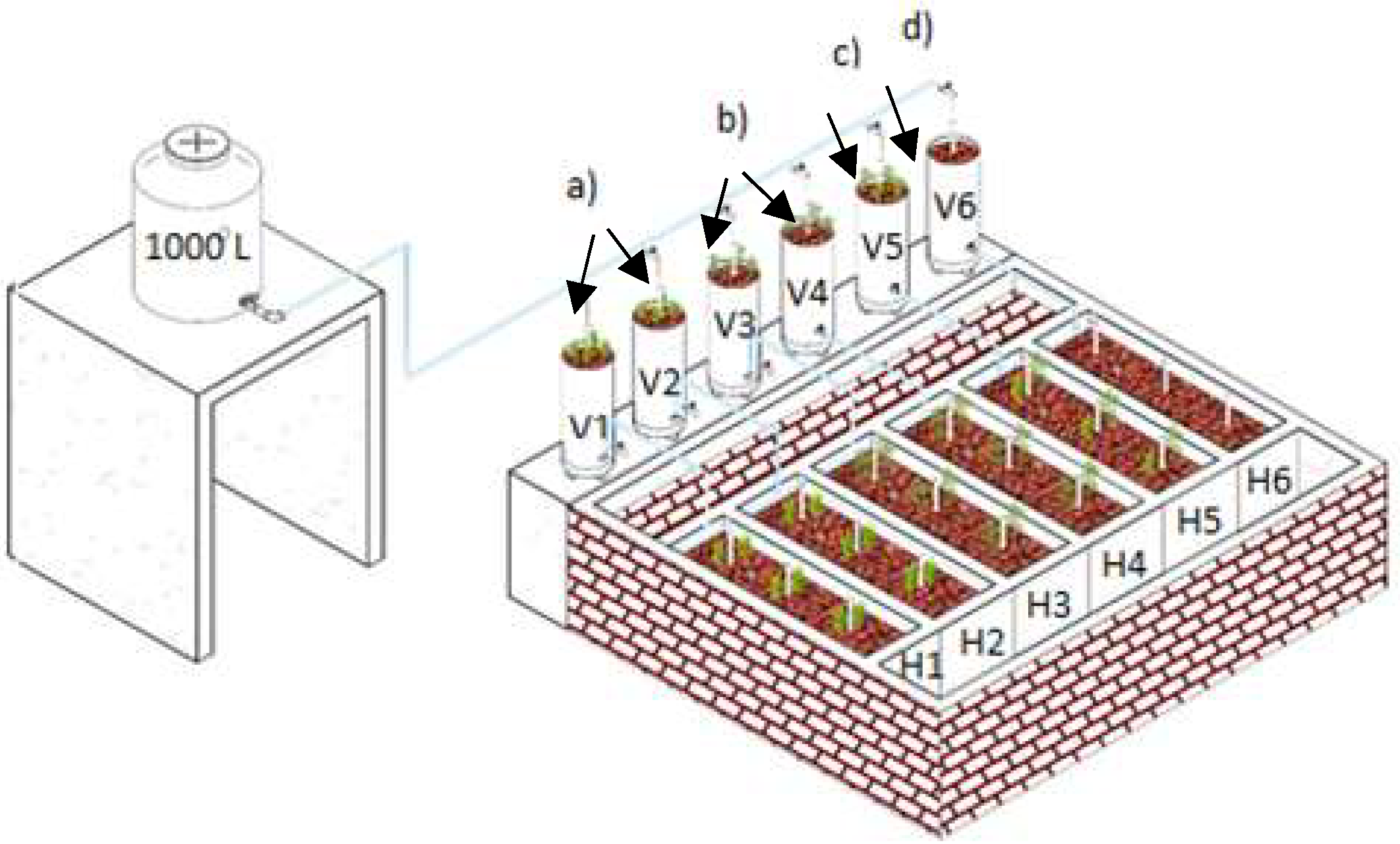
The mesocosm-scale constructed wetlands consisted of six vertical subsurface flow wetlands (VSSF-CW) and six horizontal subsurface flow wetlands (HSSF-CW), forming four hybrid systems: (a), (b), (c) and (d) (Figure 2). Water flow direction was controlled through an interconnected network of ½″ PVC pipes that conveyed the influent from the storage tank to the VSSF-CWs and subsequently to the HSSF-CWs, finally discharging the treated effluent into the institutional sewer system, which leads to a natural stream within the campus.
Each VSSF-CW experimental cell received a daily hydraulic loading of 17.5 L d−1 of wastewater. The HSSF-CW cells were then fed with the pretreated effluent from the VSSF-CW units. The hydraulic retention time (HRT) was 4 days for the VSSF-CWs and 8 days for the HSSF-CWs.
Figure 2 shows the experimental units and the vegetation in each cell type, which are described in Table 3. Overall, the system treated a total flow of 105 L d−1 of wastewater, distributed equally across the two hybrid systems. The total volume of wastewater treated during the experimental period was 23,520 L.

2.4. Dimensions of the Constructed Wetland System

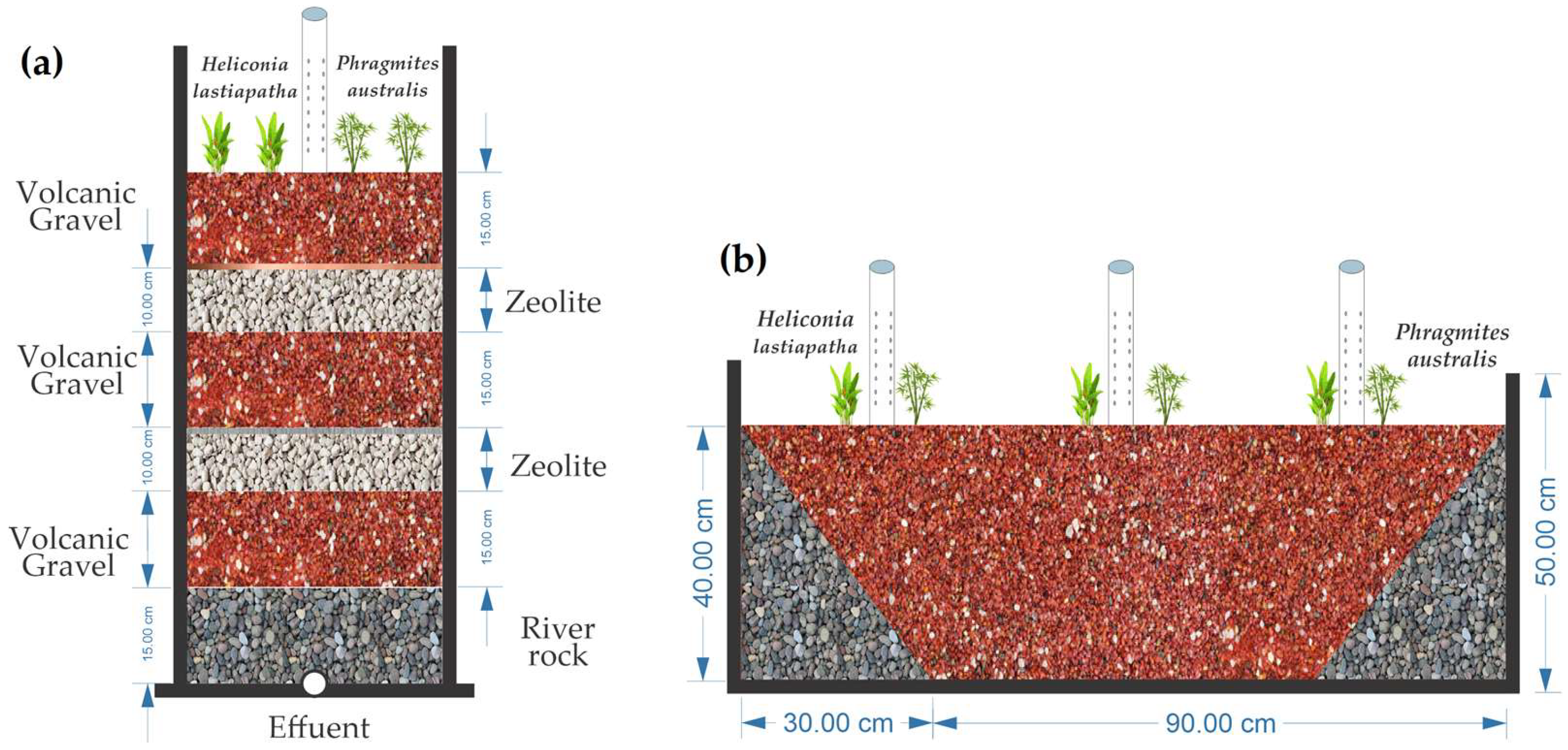
The VSSF-CW units consisted of six masonry cylinders, each with a radius of 0.20 m and a height of 1.00 m. The HSSF-CW units were also built of masonry and measured 0.60 m in width, 0.50 m in height, and 1.20 m in length per cell (Figure 3).
The VSSF-CW cells were filled with selected materials designed to optimize filtration and hydraulic performance. The filling process was carried out in ascending order: a 0.15 m layer of porous river stone (6.5–8.0 cm diameter; porosity = 0.30) to prevent clogging, followed by a 0.15 m layer of red tezontle (1.0–2.0 cm diameter; porosity = 0.50), which promotes anaerobic conditions, a 0.10 m layer of zeolite (0.5–1.5 cm diameter; porosity = 0.40) for its lightweight structure and ion-exchange capacity, and alternating layers of tezontle and zeolite until the system reached full capacity, ensuring optimal hydraulic flow and contaminant removal.
The HSSF-CW cells were filled laterally with specific materials to enhance treatment performance. A triangular layer (0.30 m × 0.50 m) of porous river stone (6.5–8.0 cm diameter; porosity = 0.30) was first placed to prevent solid obstruction. This was followed by a trapezoidal layer (1.20 m × 0.60 m) of red tezontle (1.0–2.0 cm diameter; porosity = 0.50), sourced from a nearby quarry in Misantla, to maintain anaerobic conditions. The water level in the VSSF-CW cells was maintained at 0.65 m. Both systems were operated under partially saturated flow conditions, with a theoretical hydraulic retention time (HRT) of four days [4].

2.5. Environmental Variables, Water Quality, BTEX, and MTBE

Ambient temperature and relative humidity were recorded twice daily (between 9:00–10:00 a.m. and 6:00–7:00 p.m.) using a digital thermometer–hygrometer (Jsman™, model HTC–1). Light intensity was measured once per day between 13:00 and 14:00 h using a lux meter (Steren™, Zhengzhou, China, model HER–410).
Evapotranspiration (ET) was determined from the difference between the inflow and outflow rates of each cell, normalized by the exposed surface area of the wetland units. Air temperature and relative humidity data were also used to estimate daily ET variations and to validate the water mass balance lost through evapotranspiration.
Water temperature, pH, and dissolved oxygen (DO) were measured three times per week at both the inlet and outlet of each cell using a portable multiparameter meter (Hanna™, Woonsocket, RI, USA, model HI98121) and a dissolved oxygen meter (Milwaukee™, Rocky Mount, NC, USA, model MW600), respectively. Measurements were taken between 9:00 and 11:00 a.m. to ensure comparability among sampling events. Table 4 summarizes the analytical frequency of all monitored variables.
Before the monitoring phase, a three-month adaptation period was established to allow Heliconia latispatha and Phragmites australis to acclimate to the experimental conditions. This ensured the stabilization of vegetation, substrate, and hydraulic regime within each constructed wetland cell. After this period, biweekly measurements of contaminant concentrations were conducted at both influent and effluent points for eight consecutive months, from June 2024 to February 2025.
Water quality characterization included the determination of chemical oxygen demand (COD), total nitrogen (TN), nitrate (N–NO3), ammonium (N–NH3), total phosphorus (PT), and phosphate (PO43−), following the Standard Methods for the Examination of Water and Wastewater [18].
BTEX (benzene, toluene, ethylbenzene, and xylenes) and MTBE analyses followed EPA Method 8260C and EPA Method 5030C [19], which employ gas chromatography coupled with mass spectrometry (GC–MS) for volatile organic compound quantification. This method allows the direct injection of water samples using Chromosorb P NAW sorbent material placed in the GC injection port.

2.6. Contaminant Removal Calculation

Removal efficiencies were calculated for the following critical parameters: N–NH3+, NO2, NO3, PO43−, COD, BTEX, and MTBE. These parameters were selected based on the criteria established in NOM-001-SEMARNAT-2021, which regulates contaminant limits in wastewater discharges, and in accordance with standard irrigation limits in Mexico [20].
E % = C i n C o u t C i n × 100 = 1 C o u t C i n × 100

2.7. Statistical Analysis

Statistical analysis was conducted to identify significant differences among treatments and to assess variability in water quality parameters. Data for each variable were tested for normality and homogeneity of variances prior to comparison.
A one-way ANOVA was applied to determine significant differences among systems (p ≤ 0.05), followed by Tukey’s post hoc test for pairwise comparisons. All data were processed and analyzed using the Python programming language 3.12.3.

3. Results and Discussion

3.1. Vegetative Development

Both plant species demonstrated the ability to adapt to wastewater contaminated with BTEX and MTBE, exhibiting vigorous growth under such conditions. Table 5 presents the evaluated parameters at the end of the experiment.
It was evident that Phragmites australis exhibited faster and more substantial growth compared to Heliconia latispatha, as well as a greater number of leaves. While both species showed abundant flowering and sprouting, this was particularly notable in Phragmites australis.
Plants are the predominant visual and functional component of constructed wetlands and play a crucial role in wastewater treatment through both direct and indirect mechanisms. Plant roots provide extensive surface area for microbial colonization, while their foliage helps regulate water temperature by providing shade [21].
Among the most commonly used species, Heliconia latispatha stands out as a tropical ornamental plant adapted to warm, humid regions [22]. It exhibits rapid growth, often exceeding one meter in height within the first months under natural conditions. Phragmites australis, on the other hand, is a well-established macrophyte widely used in constructed wetlands due to its adaptability and resilience in polluted environments [1], particularly in the phytoremediation of wastewater impacted by hydrocarbons, including BTEX compounds [8].
In this study, Heliconia latispatha reached heights above 0.78 m by the sixth experimental month and exceeded 1 m by the end of the 12-month period, confirming its adaptability and growth potential under controlled conditions.
In contrast, Phragmites australis did not surpass 1 m in height, although previous studies have reported greater growth. For instance, Mustafa et al. [1] observed average heights of 180 cm after six months in horizontal subsurface flow constructed wetlands treating BTEX-contaminated wastewater.
Flowering in H. latispatha was more abundant during spring but can occur year-round under favorable tropical conditions [23]. P. australis produced abundant foliage, exceeding 18 leaves per plant after 12 months, with long, vigorous, and dark-green leaves. In ornamental applications, increased biomass is not a limitation, as regular pruning can maintain desired plant size [24].
According to Stefanakis [8], the positive effects of plants in wetlands are mainly due to direct contaminant uptake and oxygen release through root systems, which promotes biodegradation in the rhizosphere. A clear correlation has also been reported between plant height and benzene reduction [15]. In these systems, even when Phragmites spp. are utilized, no significant differences have been observed in benzene removal compared to unplanted configurations [25]. This outcome may be explained by the gravitational vertical drainage and the short contact time between the water, roots, and substrate, which limit the efficiency of various removal processes [1]. A similar trend has been reported in vertical flow constructed wetlands (VF-CWs) used for municipal wastewater treatment [26]. In general, the contribution of plants to benzene removal is indirect, as their primary role lies in providing carbon sources for microbial metabolism and offering attachment surfaces for microorganisms on their extended root systems, where oxygen release also occurs.
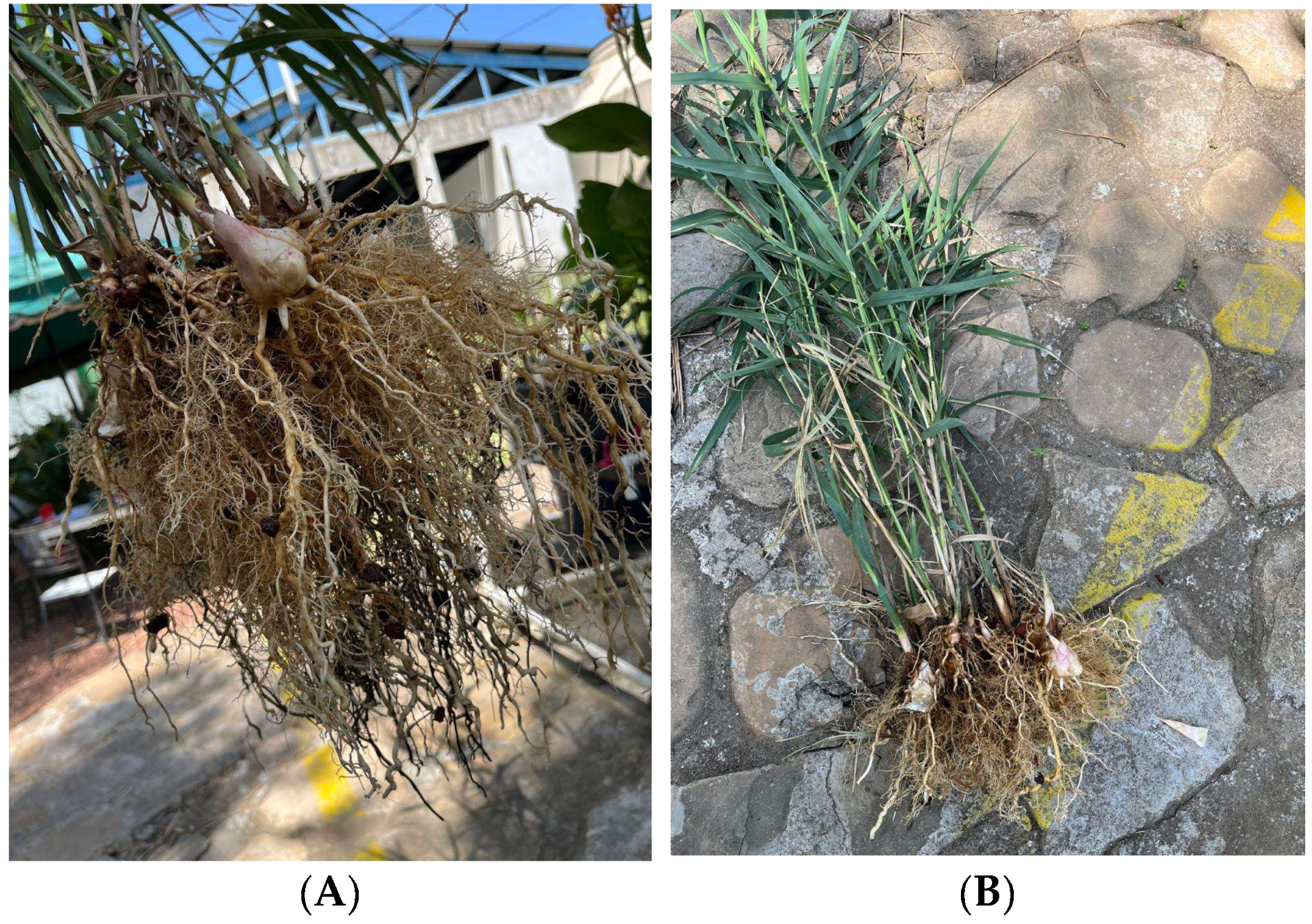
In this study, the lower growth of P. australis compared to previous research may be explained by continuous exposure to hydrocarbon-rich wastewater from service stations, which can affect root physiology, especially during early adaptation (Figure 4). Additionally, tropical climatic conditions—high temperatures and solar radiation—likely increased evapotranspiration and physiological stress, limiting vertical growth. The relatively low nutrient concentration in the influent, compared to domestic or agroindustrial wastewater, may also have reduced biomass accumulation.
Despite these adverse conditions, P. australis maintained vigorous shoot production and stable growth throughout the study, demonstrating high tolerance to hydrocarbon-contaminated environments. These results suggest that even at lower height, P. australis contributed significantly to system stability and contaminant removal within the constructed wetland units.

3.2. In Situ Monitored Variables (pH, DO, WT, EC)

The monitored variables during the experimental period showed that the average pH value in the system influent was 7.30 ± 0.26. After treatment, variations were observed among the four hybrid systems, with pH values ranging from 6.87 to 7.39.
For dissolved oxygen (DO), the influent presented an average concentration of 1.85 ± 0.17 mg/L. Effluent DO concentrations increased across the systems, ranging between 1.57 and 2.55 mg/L.
Regarding water temperature (WT), the influent ranged between 26.24 and 32.15 °C, with a slight increase observed in the effluents of all systems.
Electrical conductivity (EC) in the influent averaged 1.18 ± 0.16 µS/cm. Effluent EC values ranged from 0.75 to 1.50 µS/cm, indicating a slight—though not statistically significant—decrease. As reported by Gabr et al. [27], reductions in EC may be associated with the uptake of micro- and macronutrients by plants, adsorption processes in the rhizosphere, detritus accumulation, and particulate sedimentation. In constructed wetlands, EC is an indicator of the concentration of dissolved salts and ions, and elevated values may suggest the presence of pollutants such as nitrates, phosphates, chlorides, or heavy metals. Maintaining lower EC values also helps prevent phytotoxicity in vegetation [28].
Maintaining an adequate pH is crucial in constructed wetlands to ensure treatment efficiency, plant and microbial health, and overall system stability. In this study, pH remained within the typical range for subsurface flow wetlands (6–8), likely due to the buffering effect associated with plant photosynthesis, which prevents system acidification and supports microbial activity [29]. Slightly lower pH values were recorded in vertical subsurface flow wetlands compared with horizontal systems, possibly due to the predominance of nitrification in the more aerated vertical beds. The release of H+ ions during nitrification can contribute to a reduction in pH [27,30].
With respect to dissolved oxygen, values remained low in all systems, likely due to limited oxygen transfer from plant roots and the characteristics of the influent. Nonetheless, the high porosity of the filter media should promote the transport of dissolved substances and enhance adsorption and desorption processes [26].
According to Borin et al. [31], water temperature plays a key role in wetland biological processes, as temperatures below 15 °C or above 30 °C can inhibit the growth of nitrifying bacteria and reduce denitrification efficiency. In this study, effluent temperatures remained between 27.22 and 28.72 °C, indicating favorable conditions for biological activity.

3.3. Removal of Conventional Pollutants

The average concentrations of contaminants in the influent and effluent of each system are presented in Table 6, which summarizes the mean values obtained for the four monitored hybrid constructed wetland (HCW) systems: (a) HCW—Heliconia latispatha, (b) HCW—Phragmites australis, (c) HCW—Heliconia latispatha + Phragmites australis, and (d) HCW—Control.
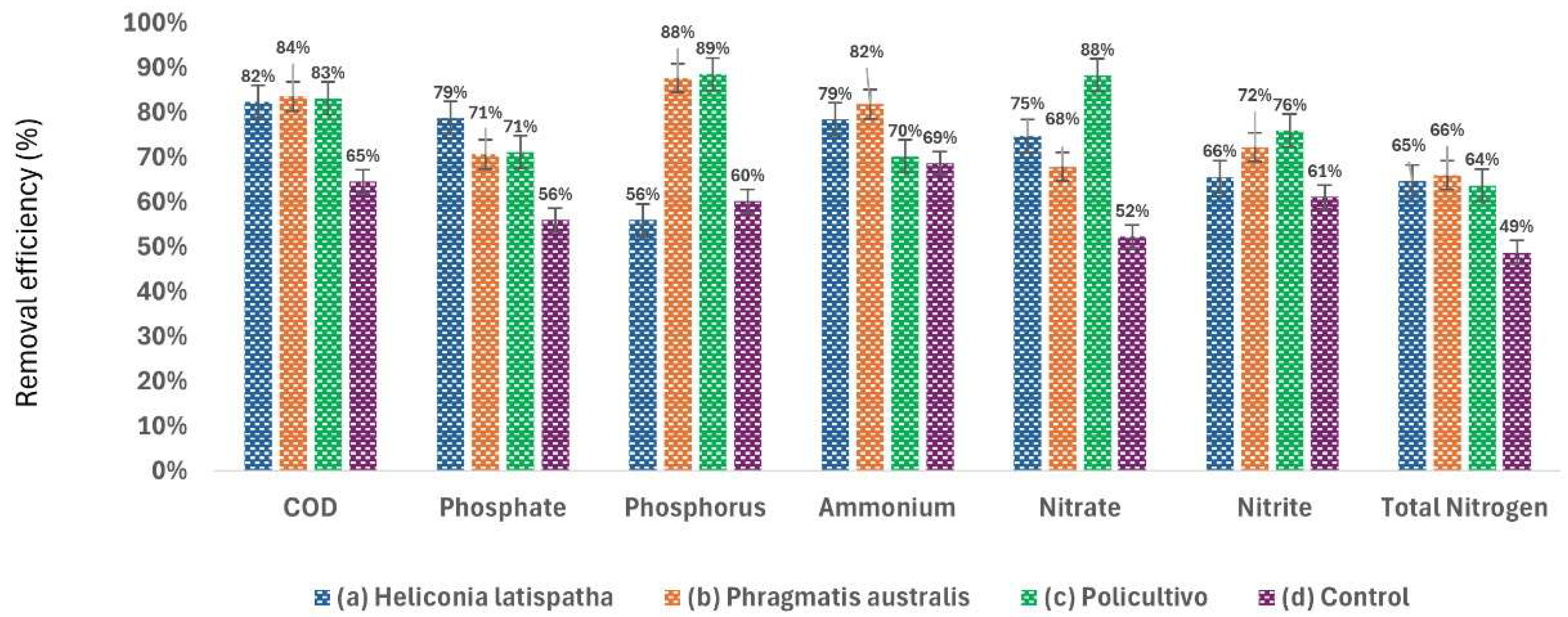
These systems were evaluated for the removal of conventional pollutants, including chemical oxygen demand (COD), phosphate (PO43−), total phosphorus (TP), ammonium (N–NH4+), nitrate (N–NO3), nitrite (N–NO2), and total nitrogen (TN). Table 6 details the performance of each constructed wetland system, showing both influent and effluent concentrations, while Figure 5 illustrates the removal trends for each pollutant across the four systems.
In this study, the average COD concentration in the influent was 298.57 ± 50.07 mg L−1. In the effluents, the systems exhibited the following average COD concentrations; (a) HCW—Heliconia latispatha: 46.64 ± 6.96 mg L−1, (b) HCW—Phragmites australis: 40.57 mg L−1, (c) HCW—H. latispatha + P. australis: 39.00 ± 3.86 mg L−1, (d) HCW—Control: 97.71 ± 12.55 mg L−1.
ANOVA results revealed no statistically significant differences among systems (a), (b), and (c) (p > 0.05). However, system (c) HCW—Heliconia latispatha + Phragmites australis achieved the highest COD removal efficiency, reaching 83.17%. This superior performance is attributed to combined mechanisms including filtration, sedimentation, and microbial degradation under both aerobic and anaerobic conditions.
Overall, system (c) exhibited the best COD removal performance, with total reductions exceeding 88%, highlighting the synergistic effect of combining both plant species within hybrid constructed wetland configurations.
Regarding total nitrogen (TN), the mean effluent concentration was 7.54 ± 0.81 mg L−1 for system (a) HCW—Heliconia latispatha, 7.14 ± 0.83 mg L−1 for system (b) HCW—Phragmites australis, and 7.79 ± 0.89 mg L−1 for system (c) HCW—H. latispatha + P. australis, with no significant differences among them (p > 0.05). Removal efficiencies were 65%, 66%, and 64%, respectively. Similarly, no statistically significant differences (p > 0.05) were observed in ammonium or nitrate removal across the planted systems.
Total nitrogen removal efficiencies (64.75%, 66.02%, and 63.77% for systems a, b, and c, respectively) were higher than those reported by Seeger et al. [32], who documented maximum TN removals of 47% in horizontal flow wetlands planted with Phragmites australis treating mixed industrial wastewater. The results of this study are consistent with the nitrogen removal ranges reported in hybrid subsurface flow wetlands integrating aerobic and anaerobic zones for similar wastewater types.
For ammonium (NH4+), the average influent concentration was 32.8 ± 8.08 mg L−1. Effluent concentrations were 8.61 ± 3.66 mg L−1 for system (a) HCW—H. latispatha, 5.09 ± 0.98 mg L−1 for system (b) HCW—P. australis, and 8.30 ± 1.68 mg L−1 for system (c) HCW—H. latispatha + P. australis. The highest removal efficiency (81.88%) was achieved in system (b) HCW—Phragmites australis. Ammonia volatilization was not significant in this study, as volatilization rates are minimal when pH < 7.5 and negligible below 8.0. This observation aligns with [33], who reported ammoniacal nitrogen concentrations rarely exceeding 3 mg L−1 in subsurface wetlands treating refinery wastewater.
Nitrate removal efficiencies exceeded 70% in all systems, with the highest removal (88%) occurring in system (c) HCW—H. latispatha + P. australis, followed by 75% in system (b) and ~74% in system (a). These differences can be attributed to the hybrid configuration: the vertical-flow stage enhances oxygen transfer and promotes nitrification (conversion of NH4+ to NO3), while the subsequent horizontal-flow stage provides anoxic conditions favorable for denitrification, where NO3 is reduced to N2 gas.
For nitrate (NO3), the influent concentration averaged 3.36 ± 1.0 mg L−1. Effluent concentrations were 0.87 ± 0.29 mg L−1 in system (a), 1.09 ± 0.36 mg L−1 in system (b), and 0.22 ± 0.10 mg L−1 in system (c). Although the differences among systems were not statistically significant (p > 0.05), system (c) again showed the best performance, likely due to the complementary effect of combining vertical and horizontal flow stages.
Vegetation plays a key role in nitrogen removal efficiency, as plant roots absorb NH4+ and NO3, enhancing nutrient removal while supporting biomass production [8].
Phosphorus concentrations in the influent (7.36 ± 0.96 mg L−1) fell within the range commonly reported for low-strength municipal wastewater [7]. However, this concentration may affect plant development, as phosphorus is a macronutrient required in relatively high amounts—second only to nitrogen. In this study, phosphorus availability likely contributed to the high nitrogen removal observed in system (c) (up to 89%), as vigorous plant growth can enhance treatment performance. Phosphate removal efficiencies were 79% in system (a) HCW—H. latispatha, 71% in system (b) HCW—P. australis, and 71% in system (c) HCW—H. latispatha + P. australis.
Phosphorus bioavailability for plant and microbial uptake is strongly influenced by pH. Optimal availability occurs between pH 6 and 7. Under acidic conditions, phosphorus tends to form poorly soluble complexes with iron and aluminum, reducing its availability [34].

3.4. BTEX and MTBE Contaminants

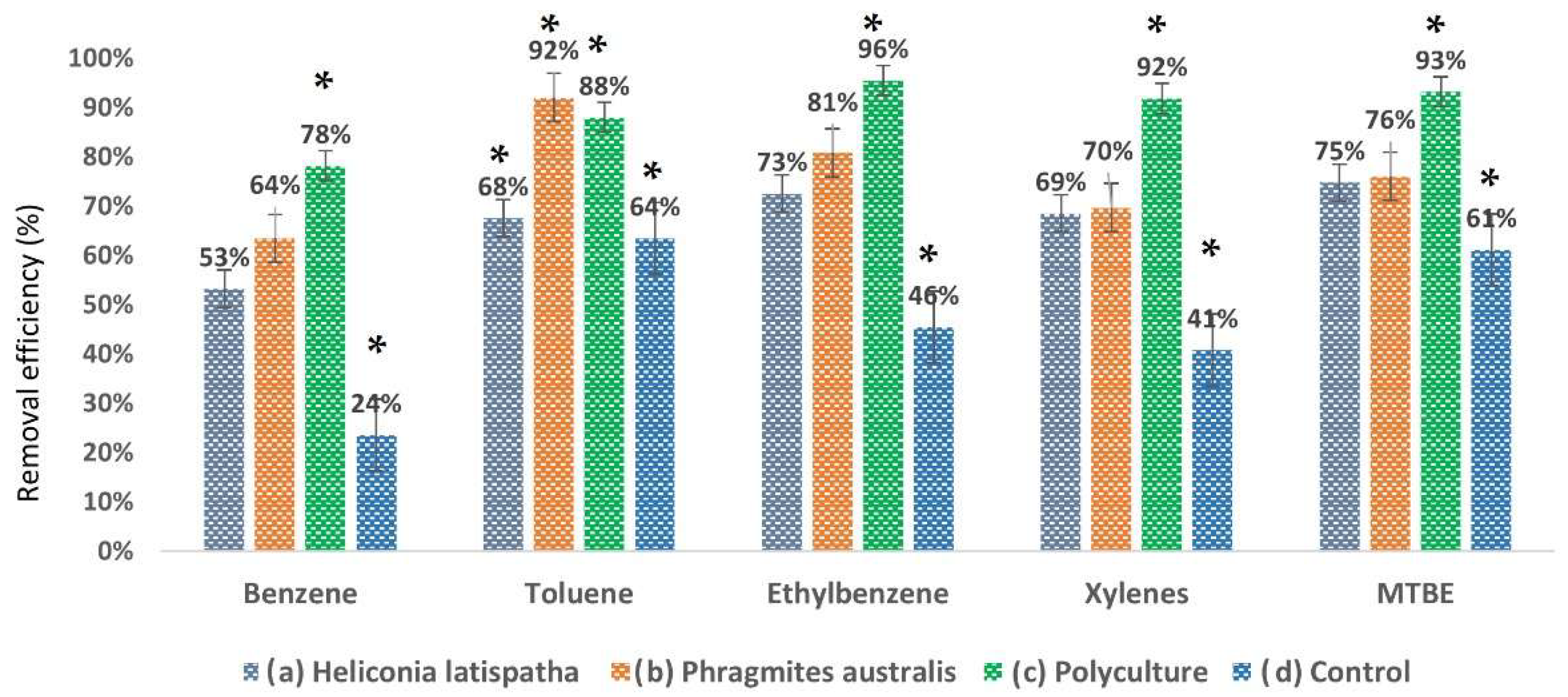
Table 7 and Figure 6 present the concentrations of benzene, toluene, ethylbenzene, and xylenes (BTEX), along with methyl tert-butyl ether (MTBE), as well as the corresponding removal efficiencies achieved by each hybrid constructed wetland (HCW) system. The influent concentrations of BTEX and MTBE were comparable to those reported in previous studies using synthetic wastewater of similar composition [8].
Overall, the reduction in benzene concentrations was significantly higher in the first two treatment stages of each system—(a) HCW—Heliconia latispatha, (b) HCW—Phragmites australis, (c) HCW—Heliconia latispatha + Phragmites australis, and (d) HCW—Control—as illustrated in Figure 6, which shows the removal efficiencies for BTEX and MTBE compounds.
Benzene exhibited the lowest removal efficiency among the target compounds. The highest benzene removal (78.2%) was observed in system (c) HCW—Heliconia latispatha + Phragmites australis. Significant differences were detected between systems (a) and (b), and between (a) and (c) (p < 0.05), while no significant difference was found between systems (b) and (c).
For toluene, removal efficiencies were 67.8%, 92.1%, 88%, and 63.5% for systems (a) HCW—Heliconia latispatha, (b) HCW—Phragmites australis, (c) HCW—Heliconia latispatha + Phragmites australis, and (d) HCW—Control, respectively. System (b) showed the best performance, consistent with findings reported by Stefanakis [10] who highlighted the strong removal capacity of Phragmites australis in various constructed wetland configurations.
For ethylbenzene, the removal rates were 95.5%, 80.9%, and 72.6% for systems (c), (b), and (a), respectively. Statistically significant differences were observed between system (a) and system (b), and system (c) performed significantly better than both single-species systems.
Xylene removal efficiencies followed a similar trend, with values of 91.87%, 69.73%, and 68.58% for systems (c), (b), and (a), respectively. Likewise, MTBE removal rates were 93.34%, 76.07%, and 74.84% for systems (c), (b), and (a), again demonstrating superior performance in system (c). No significant differences were observed between systems (a) and (b) (p > 0.05), whereas system (c) achieved significantly higher removal efficiencies compared with the single-species systems.
Constructed wetlands remove hydrocarbons through various mechanisms, including biodegradation, oxidation, plant uptake, sedimentation, sorption, and volatilization. Biofilms attached to plant roots and stems, along with decomposing leaf litter, play a crucial role in the biological degradation of these compounds. Stefanakis [8] evaluated pilot-scale horizontal subsurface flow constructed wetlands treating wastewater contaminated with phenols and petroleum derivatives, demonstrating that systems containing vegetation achieved greater contaminant removal efficiency due to enhanced plant-mediated biodegradation. Similarly, Tang et al. [25] analyzed benzene removal through biodegradation and volatilization in vertical flow wetlands and found that volatilization was the predominant elimination pathway. Thus, both biodegradation and volatilization are key processes governing BTEX compound removal in constructed wetlands.
However, the combination of Heliconia latispatha and Phragmites australis, when evaluated individually in both VSSF-CW and HSSF-CW configurations, did not exhibit higher removal efficiencies for the emerging contaminants analyzed, consistent with findings reported in previous studies [5,35]. Research on constructed wetlands has also indicated that the presence of BTEX compounds can inhibit, to varying degrees, the biodegradation of MTBE, although the results of this study suggest that the simultaneous degradation of BTEX and MTBE remains feasible.
Finally, in comparative terms, treatment efficiency among plant species did not show statistically significant differences (p > 0.05). Nevertheless, clear performance trends were observed. Phragmites australis exhibited the highest removal rates for COD (84%) and ammonium (81.9%), whereas Heliconia latispatha achieved intermediate efficiencies (78.5% and 66.9%, respectively). The mixed system (H. latispatha + P. australis) displayed the highest overall efficiency, with removals exceeding 88% for nitrate and 93% for MTBE, suggesting a functional synergy between both species. Although not statistically significant, the physiological response and distinct root structures of the two species influenced treatment dynamics: P. australis enhanced substrate oxygenation, while H. latispatha contributed to the retention of volatile organic compounds within the rhizosphere [15,22,24,25].
In contrast, the functional differences between the vertical (VSSF-CW) and horizontal (HSSF-CW) systems were more evident when analyzing the associated biochemical processes. The VSSF-CW units, characterized by predominantly aerobic conditions, promoted the oxidation of organic matter and nitrification, achieving higher COD and NH4+ removal. Conversely, the HSSF-CW units provided an anoxic environment favorable for denitrification and NO3 reduction, reaching removal rates close to 90% in the hybrid system [10,36,37,38,39]. The integration of both configurations combined their respective advantages, producing an aerobic–anoxic sequence that improved the overall performance of the system. This interaction between treatment stages highlights the relevance of the hybrid design, where the vertical flow functions as an oxygenated pretreatment and the horizontal flow as a polishing stage, optimizing BTEX and MTBE removal under tropical conditions [10,24,30,40].
The morpho-functional differences between the root systems of Phragmites australis and Heliconia latispatha are key determinants of contaminant removal efficiency in hybrid constructed wetlands. Phragmites australis develops a highly branched and deep rhizomatous system, capable of penetrating 0.6 to 1 m into the substrate [39,41]. Its root architecture, characterized by high-density fine roots and extensive rhizomes, promotes substantial radial oxygen loss (ROL) into the surrounding medium—a phenomenon widely documented in emergent macrophytes inhabiting anoxic environments [39]. This oxygen release facilitates the formation of aerobic microzones within the rhizosphere, intensifying aerobic microbial activity responsible for degrading aromatic hydrocarbons such as BTEX and MTBE [30]. In addition, P. australis exhibits a greater internal oxygen transport capacity (aerenchyma) than other macrophytes, which enhances its efficiency in oxidative bioprocesses [41].
In contrast, Heliconia latispatha has a shallower and more compact root system dominated by thickened rhizomes that grow horizontally at depths of 2.5 to 5 cm below the soil surface. These rhizomes function as storage organs and as the primary means of vegetative propagation, while the emergent roots are fasciculated and distributed mainly within the superficial substrate layer [40]. Due to its lower proportion of fine roots and its limited oxygen transport capacity, H. latispatha contributes minimally to substrate oxygenation compared with P. australis. However, its high transpiration rate and large aboveground biomass promote greater evapotranspiration, which has been identified as a relevant mechanism for the reduction of volatile hydrocarbons in wetlands [42]. Moreover, its shallow root system enhances substrate stability and nutrient uptake, functionally complementing the aerobic processes induced by P. australis.
The combination of both species in vertical–horizontal hybrid wetlands generates a synergistic effect, where the deep rhizospheric oxygenation provided by P. australis is integrated with the higher evapotranspiration and surface stabilization capacity of H. latispatha. Together, these traits optimize contaminant removal and strengthen system resilience [43].

4. Conclusions

This study demonstrates that hybrid constructed wetlands (VSSF-CW + HSSF-CW) planted with Heliconia latispatha and Phragmites australis represent an efficient and ecologically sustainable alternative for the treatment of municipal wastewater contaminated with volatile organic compounds (BTEX and MTBE), as well as conventional pollutants. Tropical conditions—characterized by high temperatures, intense microbial activity, and vigorous plant growth—enhanced biodegradation, nutrient assimilation, and the overall performance of all vegetated systems.
Among the evaluated treatments, the mixed-culture system showed the highest overall removal, achieving 91–93% elimination of BTEX compounds and up to 88% removal of MTBE. These results indicate a functional synergy between both species: Phragmites australis promotes oxygen transfer through its deep, highly branched root system, enhancing aerobic microbial degradation, while Heliconia latispatha contributes substantial aboveground biomass and evapotranspiration, favoring the retention and reduction of volatile organic compounds. Together, they create a complementary rhizosphere environment with aerobic and micro-anaerobic zones that optimize organic matter oxidation and hydrocarbon degradation.
In the single-species systems, Phragmites australis exhibited superior removal of nitrogen and ammonium due to its greater capacity for oxygen release and nitrification, whereas Heliconia latispatha showed higher phosphorus removal, likely related to its shallow, dense rhizome system and enhanced nutrient uptake. Conversely, the unvegetated control presented the lowest efficiencies across all parameters, underscoring the key role of macrophytes in promoting microbial activity, stabilizing the substrate, and enhancing pollutant removal in hybrid CWs.
Functionally, the vertical flow stage (VSSF-CW) provided predominantly aerobic conditions that improved COD oxidation and ammonium nitrification, while the horizontal flow stage (HSSF-CW) facilitated denitrification and the reduction of nitrate under anoxic conditions. The integration of both configurations generated an effective aerobic–anoxic sequence, improving the treatment of conventional pollutants and recalcitrant hydrocarbons under tropical conditions.
From an environmental management perspective, these findings support the use of hybrid wetlands with mixed vegetation as a low-cost, low-energy, and aesthetically valuable option for decentralized wastewater treatment in tropical regions. Their operational simplicity and resilience make them suitable for rural and peri-urban communities facing increasing wastewater loads.
Finally, although the results highlight the key role of the rhizosphere in pollutant removal, the present study did not include microbial community characterization. Future research should incorporate molecular and metabolic analyses to identify the microorganisms involved in BTEX and MTBE degradation, quantify their functional contribution, and integrate mass balance approaches. Such efforts will advance the optimization and scalability of hybrid constructed wetlands for the treatment of recalcitrant contaminants under scenarios of climate change and accelerated urbanization.

Limitations of the Study

Although rhizosphere-mediated biodegradation is considered one of the principal mechanisms for hydrocarbon removal in constructed wetlands, this study did not analyze the microbial communities associated with the plant root systems. As a result, the specific microbial pathways responsible for BTEX and MTBE degradation could not be directly confirmed. Future research should integrate microbial community profiling and functional assays to clarify the interactions between plant roots, microbial consortia, and degradation processes in hybrid CWs, thereby improving system design and performance.

Author Contributions

Conceptualization, S.G.G.-A. and L.C.S.H.; methodology, S.G.G.-A., G.N. and L.C.S.H.; validation, D.R.-G., L.C.S.H. and V.V.-F.; formal analysis, S.G.G.-A., E.A.B.-T., L.C.S.H., D.R.-G., G.N., V.V.-F. and A.P.-V.; investigation, S.G.G.-A. and L.C.S.H.; resources, S.G.G.-A., G.N., D.R.-G., V.V.-F., A.P.-V. and L.C.S.H.; data curation, A.P.-V. and G.N.; writing—original draft preparation, S.G.G.-A., V.V.-F. and L.C.S.H.; writing—review and editing, S.G.G.-A. and E.A.B.-T.; visualization, S.G.G.-A. and E.A.B.-T.; supervision, L.C.S.H.; project administration, L.C.S.H.; funding acquisition, S.G.G.-A., E.A.B.-T., V.V.-F., D.R.-G., G.N., A.P.-V. and L.C.S.H. All authors have read and agreed to the published version of the manuscript.

Funding

This study received external funding from the Secretariat of Science, Humanities, Technology and Innovation (SECHTI) through the doctoral fellowship of S.G.G.-A. (CVU 341486), as well as from the Tecnológico Nacional de México (TecNM) through project No. 19690.24-P.D., which also provided financial support for the development of this research.

Institutional Review Board Statement

Not applicable, as the study did not involve humans or animals.

Informed Consent Statement

Not applicable, as the study did not involve humans or animals.

Data Availability Statement

The raw data supporting the conclusions of this article are available from the authors upon reasonable request.

Acknowledgments

The authors wish to thank the Secretariat of Science, Humanities, Technology and Innovation (SECHTI) of the Mexican government for its support in the development of this research.

Conflicts of Interest

The authors declare no conflicts of interest.

References

  1. Mustafa, A.; Azim, M.K.; Raza, Z.; Kori, J.A. BTEX removal in a modified free water surface wetland. Chem. Eng. J. 2018, 333, 451–455. [Google Scholar] [CrossRef]
  2. Akhiladas, E.K.; Chakraborty, S. Bioremediation of petroleum refinery wastewater using constructed wetlands: A focus on microbial diversity and pollutant degradation. Int. Biodeterior. Biodegrad. 2025, 204, 106152. [Google Scholar] [CrossRef]
  3. Davidson, C.J.; Hannigan, J.H.; Bowen, S.E. Effects of inhaled combined benzene, toluene, ethylbenzene, and xylenes (BTEX): Toward an environmental exposure model. Environ. Toxicol. Pharmacol. 2021, 81, 103518. [Google Scholar] [CrossRef]
  4. Stefanakis, A.I. Constructed wetlands case studies for the treatment of water polluted with fuel and oil hydrocarbons. In Phytoremediation; Springer International Publishing: Cham, Switzerland, 2018; pp. 151–167. [Google Scholar] [CrossRef]
  5. Thullner, M.; Stefanakis, A.I.; Dehestani, S. Constructed wetlands treating water contaminated with organic hydrocarbons. In Constructed Wetlands for Industrial Wastewater Treatment; Wiley: Hoboken, NJ, USA, 2018; pp. 43–63. [Google Scholar] [CrossRef]
  6. Rayaroth, M.P.; Marchel, M.; Boczkaj, G.; Aravindakumar, C. Advanced oxidation processes for the removal of mono and polycyclic aromatic hydrocarbons—A review. Sci. Total Environ. 2023, 857, 159043. [Google Scholar] [CrossRef] [PubMed]
  7. Zhao, M.; Wang, X. Perception value of product-service systems: Neural effects of service experience and customer knowledge. J. Retail. Consum. Serv. 2021, 62, 102617. [Google Scholar] [CrossRef]
  8. Stefanakis, A. The role of constructed wetlands as green infrastructure for sustainable urban water management. Sustainability 2019, 11, 6981. [Google Scholar] [CrossRef]
  9. Anjum, H.; Johari, K.; Gnanasundaram, N.; Ganesapillai, M.; Arunagiri, A.; Regupathi, I.; Thanabalan, M. A review on adsorptive removal of oil pollutants (BTEX) from wastewater using carbon nanotubes. J. Mol. Liq. 2019, 277, 1005–1025. [Google Scholar] [CrossRef]
  10. Stefanakis, A.I. The fate of MTBE and BTEX in constructed wetlands. Appl. Sci. 2019, 10, 127. [Google Scholar] [CrossRef]
  11. Al-Sabahi, J.; Bora, T.; Al-Abri, M.; Dutta, J. Efficient visible light photocatalysis of benzene, toluene, ethylbenzene and xylene (BTEX) in aqueous solutions using supported zinc oxide nanorods. PLoS ONE 2017, 12, e0189276. [Google Scholar] [CrossRef]
  12. Mokif, L.A.; Jasim, H.K.; Abdulhusain, N.A. Petroleum and oily wastewater treatment methods: A mini review. Mater. Today Proc. 2022, 49, 2671–2674. [Google Scholar] [CrossRef]
  13. Marín-Muñiz, J.L.; Sandoval Herazo, L.C.; López-Méndez, M.C.; Sandoval-Herazo, M.; Meléndez-Armenta, R.Á.; González-Moreno, H.R.; Zamora, S. Treatment wetlands in Mexico for control of wastewater contaminants: A review of experiences during the last twenty-two years. Processes 2023, 11, 359. [Google Scholar] [CrossRef]
  14. Werkneh, A.A. Decentralized constructed wetlands for domestic wastewater treatment in developing countries: Field-scale case studies, overall performance and removal mechanisms. J. Water Process Eng. 2024, 57, 104710. [Google Scholar] [CrossRef]
  15. Ranieri, E.; Gikas, P.; Tchobanoglous, G. BTEX removal in pilot-scale horizontal subsurface flow constructed wetlands. Desalination Water Treat. 2013, 51, 3032–3039. [Google Scholar] [CrossRef]
  16. Ballesteros, F.; Vuong, T.H.; Secondes, M.F.; Tuan, P.D. Removal efficiencies of constructed wetland and efficacy of plant on treating benzene. Sustain. Environ. Res. 2016, 26, 93–96. [Google Scholar] [CrossRef]
  17. Vega De Lille, M.I.; Hernández Cardona, M.A.; Tzakum Xicum, Y.A.; Giácoman-Vallejos, G.; Quintal-Franco, C.A. Hybrid constructed wetlands system for domestic wastewater treatment under tropical climate: Effect of recirculation strategies on nitrogen removal. Ecol. Eng. 2021, 166, 106243. [Google Scholar] [CrossRef]
  18. American Public Health Association (APHA). Standard Methods for the Examination of Water and Wastewater, 21st ed.; Eaton, A.D., Clesceri, L.S., Rice, E.W., Greenberg, A.E., Eds.; APHA: Washington, DC, USA, 2005. [Google Scholar]
  19. United States Environmental Protection Agency (US EPA). Método 8260D (SW-846) de la EPA: Compuestos Orgánicos Volátiles mediante Cromatografía de Gases y Espectrometría de Masas (GC/MS); US EPA: Washington, DC, USA, 2006. [Google Scholar]
  20. Secretaría de Medio Ambiente y Recursos Naturales (SEMARNAT). Se publica NOM-001-SEMARNAT-2021, Que Establece los Límites Permisibles de Contaminantes en las Descargas de Aguas Residuales en Cuerpos Receptores Propiedad de la Nación; Diario Oficial de la Federación: Mexico City, Mexico, 2022. [Google Scholar]
  21. Tran, H.D.; Vi, H.M.; Dang, H.T.; Narbaitz, R.M. Pollutant removal by Canna generalis in tropical constructed wetlands for domestic wastewater treatment. Glob. J. Environ. Sci. Manag. 2019, 5, 331–344. [Google Scholar] [CrossRef]
  22. Viveros, J.A.F.; Martínez-Reséndiz, G.; Zurita, F.; Marín-Muñiz, J.L.; Méndez, M.C.L.; Zamora, S.; Sandoval Herazo, L.C. Partially saturated vertical constructed wetlands and free-flow vertical constructed wetlands for pilot-scale municipal/swine wastewater treatment using Heliconia latispatha. Water 2022, 14, 3860. [Google Scholar] [CrossRef]
  23. Sandoval, L.; Zamora-Castro, S.; Vidal-Álvarez, M.; Marín-Muñiz, J. Role of wetland plants and use of ornamental flowering plants in constructed wetlands for wastewater treatment: A review. Appl. Sci. 2019, 9, 685. [Google Scholar] [CrossRef]
  24. Fernández-Echeverria, E.; Sandoval Herazo, L.C.; Zurita, F.; Betanzo-Torres, E.; Sandoval-Herazo, M. Development of Heliconia latispatha in constructed wetlands, for the treatment of swine/domestic wastewater in tropical climates, with PET as a substitute for the filter medium. Rev. Mex. Ing. Quím. 2022, 21, 1–20. [Google Scholar] [CrossRef]
  25. Tang, X.; Eke, P.E.; Scholz, M.; Huang, S. Processes impacting on benzene removal in vertical-flow constructed wetlands. Bioresour. Technol. 2009, 100, 227–234. [Google Scholar] [CrossRef] [PubMed]
  26. Stefanakis, A.I.; Tsihrintzis, V.A. Effects of loading, resting period, temperature, porous media, vegetation and aeration on performance of pilot-scale vertical flow constructed wetlands. Chem. Eng. J. 2012, 181–182, 416–430. [Google Scholar] [CrossRef]
  27. Gabr, M.E.; Salem, M.; Mahanna, H.; Mossad, M. Floating wetlands for sustainable drainage wastewater treatment. Sustainability 2022, 14, 6101. [Google Scholar] [CrossRef]
  28. Barbaro, L.A.; Karlanian, M.; Mata, D.A. Importancia del pH y la Conductividad Eléctrica (CE) en los Sustratos para Plantas; INTA Instituto de Floricultura, Ed.; Ediciones INTA: Buenos Aires, Argentina, 2018; Available online: https://www.sidalc.net/search/Record/oai:localhost:20.500.12123-16823/Description (accessed on 17 September 2025).
  29. Peralta Vega, A.J.; Vergara Flórez, V.; Marín-Peña, O.; García-Aburto, S.G.; Sandoval Herazo, L.C. Treatment of domestic wastewater in Colombia using constructed wetlands with Canna hybrids and oil palm fruit endocarp. Water 2024, 16, 2290. [Google Scholar] [CrossRef]
  30. Vymazal, J. Constructed Wetlands for Wastewater Treatment. Water 2010, 2, 530–549. [Google Scholar] [CrossRef]
  31. Borin, M.; Politeo, M.; De Stefani, G. Performance of a hybrid constructed wetland treating piggery wastewater. Ecol. Eng. 2013, 51, 229–236. [Google Scholar] [CrossRef]
  32. Seeger, E.M. Treatment of Groundwater Contaminated with Benzene, MTBE, and Ammonium by Constructed Wetlands. Ph.D. Thesis, Universität Tübingen, Tübingen, Germany, 2012. Available online: https://tobias-lib.ub.uni-tuebingen.de/xmlui/handle/10900/49942 (accessed on 17 September 2025).
  33. Romeroa, M.R.R. Remoción de Hidrocarburos en Aguas Residuales Mediante Humedales Construidos de Flujo Subsuperficial Plantados con Canna sp. y Juncus effusus. Master’s Thesis, Universidad de Los Andes, Mérida, Venezuela, 2013. [Google Scholar]
  34. Padilla, W. Fertilización de Suelos y Nutrición Vegetal, 4th ed.; Agrobiolab: Quito, Ecuador, 2007. [Google Scholar]
  35. Soltanpour, Z.; Mohammadian, Y.; Fakhri, Y. The concentration of benzene, toluene, ethylbenzene, and xylene in ambient air of the gas stations in Iran: A systematic review and probabilistic health risk assessment. Toxicol. Ind. Health 2021, 37, 134–141. [Google Scholar] [CrossRef] [PubMed]
  36. García-Ávila, F.; Avilés-Añazco, A.; Cabello-Torres, R.; Guanuchi-Quito, A.; Cadme-Galabay, M.; Gutiérrez-Ortega, H.; Alvarez-Ochoa, R.; Zhindón-Arévalo, C. Application of ornamental plants in constructed wetlands for wastewater treatment: A scientometric analysis. Case Stud. Chem. Environ. Eng. 2023, 7, 100307. [Google Scholar] [CrossRef]
  37. Nocetti, E.; Maine, M.A.; Hadad, H.R.; Mufarrege, M.d.L.M.; Di Luca, G.A.; Sánchez, G.C. Selection of macrophytes and substrates to be used in horizontal subsurface flow wetlands for the treatment of a cheese factory wastewater. Sci. Total. Environ. 2020, 745, 141100. [Google Scholar] [CrossRef]
  38. Mena, J.; Rodriguez, L.; Nuñez, J.; Fernández, F.J.; Villaseñor, J. Design of Horizontal and Vertical Subsurface Flow Systems for Wastewater Treatment: Comparative Analysis. WIT Trans. Ecol. Environ. 2008, 111, 555–564. [Google Scholar] [CrossRef]
  39. Brix, H.; Arias, C.A. The Use of Vertical Flow Constructed Wetlands for Onsite Treatment of Domestic Wastewater: New Danish Guidelines. Ecol. Eng. 2005, 25, 491–500. [Google Scholar] [CrossRef]
  40. Jerez, E. Cultivo de las Heliconias. Cultiv. Trop. 2025, 28, 29–35. Available online: https://www.redalyc.org/articulo.oa?id=193215858005 (accessed on 12 November 2025).
  41. Armstrong, J.; Armstrong, W. Plant Internal Oxygen Transport (Diffusion and Convection) and Measuring and Modelling Oxygen Gradients. In Low-Oxygen Stress in Plants; van Dongen, J., Licausi, F., Eds.; Springer: Vienna, Austria, 2014; Plant Cell Monographs; Volume 21, pp. 267–297. [Google Scholar] [CrossRef]
  42. Kadlec, R.H.; Wallace, S.D. Treatment Wetlands, 2nd ed.; CRC Press: Boca Raton, FL, USA, 2009; ISBN 978-1-56670-526-4. [Google Scholar]
  43. Stefanakis, A. Constructed Wetlands for Sustainable Wastewater Treatment in Hot and Arid Climates: Opportunities, Challenges and Case Studies in the Middle East. Water 2020, 12, 1665. [Google Scholar] [CrossRef]
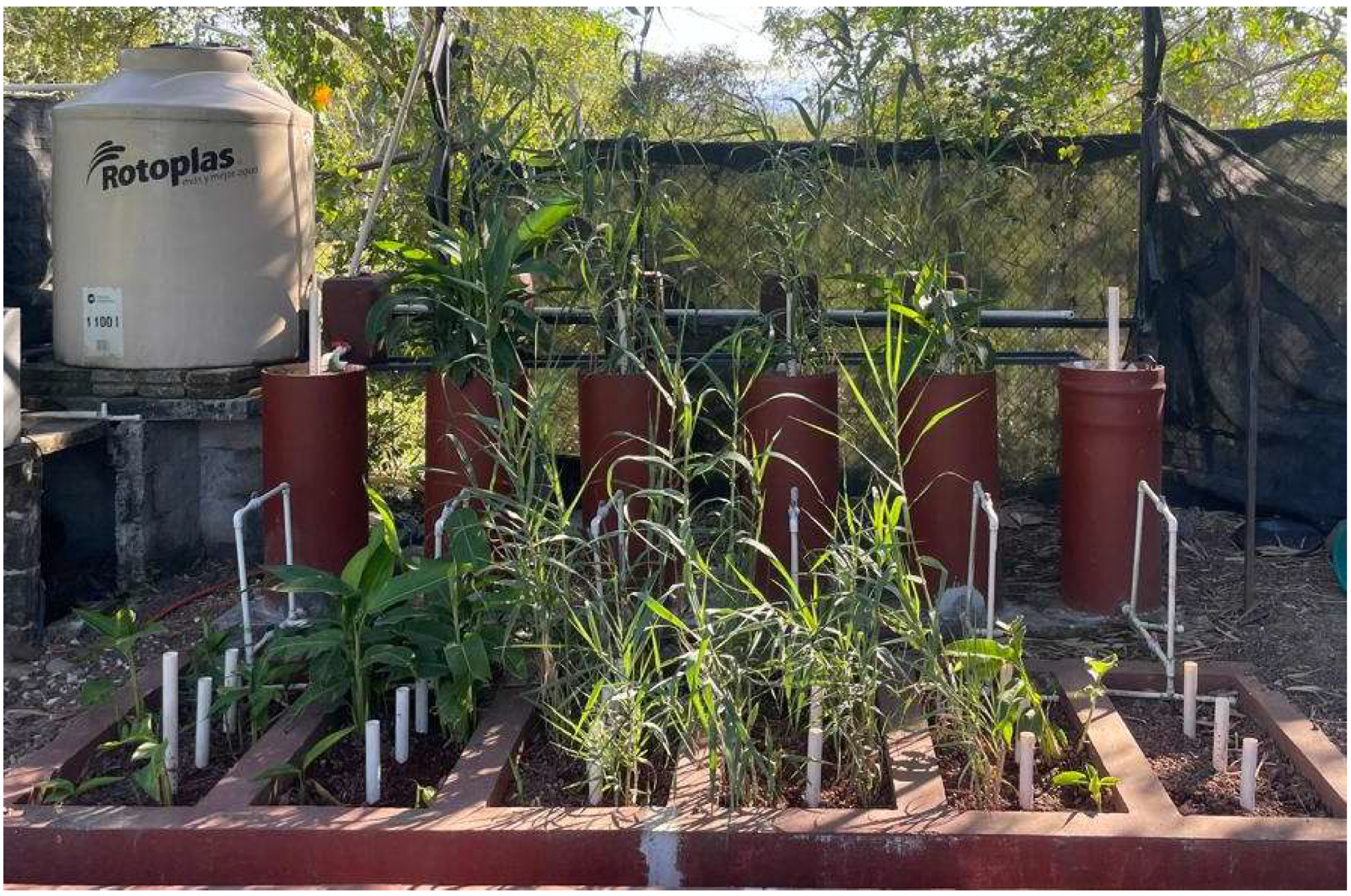
Figure 1. Hybrid constructed wetland (HCW) system at the Constructed Wetlands Laboratory, TecNM Misantla Campus.
Ecologies 06 00084 g001
Figure 2. Description of the hybrid constructed wetland system (six systems 2 (a), 2 (b), 2 (c) and 2 (d). VSSF-CW + HSSF-CW).
Ecologies 06 00084 g002
Figure 3. Dimensions of the hybrid constructed wetland cells ((a) VSSF-CW and (b) HSSF-CW).
Ecologies 06 00084 g003
Figure 4. (A) Root development of Phragmites australis. (B) Height of Phragmites australis.
Ecologies 06 00084 g004
Figure 5. Percentage removal of conventional pollutants by treatment system.
Ecologies 06 00084 g005
Figure 6. Removal efficiencies of BTEX and MTBE across the different treatment systems. Asterisks (*) indicate significant differences between treatments (p < 0.05). The polyculture exhibited the highest removal efficiencies, followed by Phragmites australis, while the control showed the lowest values.
Ecologies 06 00084 g006
Table 1. Location of collected plant species.
#SpeciesQuantityCityCollection Site
1Heliconia latispatha25Misantla, Veracruz, MexicoTributary of the Pailte River
2Phragmites australis25Misantla, Veracruz, MexicoCommunity of Diaz Mirón, Misantla, Veracruz, México
Table 2. Characteristics of wastewater from fuel service stations.
ContaminantConcentration
Chemical Oxygen Demand (COD) (mg/L−1)250–1000
Phosphates (P-PO43−) (mg/L−1)250–1000
Phosphorus (P) (mg/L−1)25–30
Ammonium (N-NH+) (mg/L−1)30–50
Nitrate (N-NO3) (mg/L−1)0–5
Nitrite (N-NO2) (mg/L−1)10–30
Total Nitrogen (TN) (mg/L−1)10–30
Benzene (μg/L−1)3851 ± 345
Toluene (μg/L−1)38,745 ± 3542
Ethylbenzene (μg/L−1)7402 ± 787
Xylenes (μg/L−1)37,856 ± 6393
1,2,3 Trimethylbenzene (μg/L−1)31,206 ± 1831
MTBE (Methyl tert-butyl ether) (μg/L−1)1238 ± 390
Table 3. Configuration of the experimental units.
Hybrid Wetland SystemWetland TypeCell(s)VegetationNo. of Individuals
(a)VSSF-CWV1, V2Heliconia latispatha4
HSSF-CWH1, H2Heliconia latispatha8
(b)VSSF-CWV3, H3Phragmites australis4
HSSF-CWV4, H4Phragmites australis8
(c)VSSF-CWV5Heliconia latispatha and Phragmites australis (polyculture)2
2
HSSF-CWH5Heliconia latispatha and Phragmites australis (polyculture)4
4
(d)VSSF-CWV6Control-
HSSF-CWH6Control-
Table 4. Frequency of variable analysis.
VariableUnitFrequencyMethod
Environmental
DOmg/L−1DailyPortable meter, Hanna Instruments HI98193
Temperature°CDailyJsman™, model HTC–1
pH DailyPortable meter, Hanna Instruments HI98193
ECµS/cmDailyPortable meter, Jeswo™, model C-600 (China)
Physico-chemical
N-NH3+mg/L−1BiweeklyAPHA (2005)
NO2mg/L−1BiweeklyAPHA (2005)
NO3mg/L−1BiweeklyAPHA (2005)
PO43−mg/L−1BiweeklyAPHA (2005)
PTmg/L−1BiweeklyAPHA (2005)
CODmg/L−1BiweeklyAPHA (2005)
BTEXmg/L−1MonthlyEPA Methods 8260C and 5030C (2016)
MTBEmg/L−1MonthlyEPA Methods 8260C and 5030C, (2016)
Table 5. Vegetation parameters at the end of the experiment.
VegetationTreatment TypeHeight (cm)Stem Width (cm)N° of LeavesNew ShootsFlowering
Heliconia latispathaHSSV-CW30.79 ± 2.271.585 ± 0.122 ± 0.231 ± 0.711.0 ± 0.5
HSSH-CW78.10 ± 7.142.505 ± 0.165 ± 0.301 ± 1.412.25 ± 0.5
Phragmites australisHSSV-CW72.255 ± 28.140.785 ± 0.3219 ± 1.652 ± 0.11-
HSSH-CW80.25 ± 20.900.56 ± 0.9019 ± 0.763 ± 0.27-
Table 6. Conventional pollutants by treatment system and vegetation type.
(a) Heliconia latispatha(b) Phragmites australis(c) Heliconia latispatha +
Phragmites australis
(d) Control
VSSF-CWHSSF-CWHCWVSSF-CWHSSF-CWHCWVSSF-CWHSSF-CWHCWVSSF-CWHSSF-CWHCW
Stage I *Stage II **Integrated System ***Stage I *Stage II **Integrated System ***Stage I *Stage II **Integrated System ***Stage I *Stage II **Integrated System ***
COD
Affluent (mg L−1)298.57 ± 50.0771.36 ± 6.34298.57 ± 50.07298.57 ± 50.0757.14 ± 6.34298.57 ± 50.07298.57 ± 50.0779.43 ± 1.26298.57 ± 50.07298.57 ± 50.07180 ± 29.32298.57 ± 50.07
Effluent (mg L−1)71.36 ± 6.3446.64 ± 6.9646.64 ± 6.9657.14 ± 6.3440.57 ± 5.1440.57 ± 5.1479.43 ± 1.2639 ± 3.8639 ± 3.86180 ± 29.3297.71 ± 12.5597.71 ± 12.55
Removal (%)71.43 ± 5.935.46 ± 8.8482.45 ± 3.1476.97 ± 3.926.89 ± 5.8683.6 ± 3.567.25 ± 8.1749.92 ± 7.0383.17 ± 4.1437.99 ± 4.2746.81 ± 3.3564.57 ± 4.16
Phosphate
Affluent (mg L−1)18.2 ± 3.057.46 ± 3.4418.2 ± 3.0518.2 ± 3.055.55 ± 1.8118.2 ± 3.0518.2 ± 3.058.06 ± 2.0218.2 ± 3.0518.2 ± 3.0510.17 ± 2.5918.2 ± 3.05
Effluent (mg L−1)7.46 ± 3.442.52 ± 0.612.52 ± 0.615.55 ± 1.813.78 ± 0.93.78 ± 0.98.06 ± 2.023.72 ± 0.673.72 ± 0.6710.17 ± 2.597.26 ± 1.217.26 ± 1.21
Removal (%)62.38 ± 11.356.08 ± 10.778.88 ± 5.5670.71 ± 8.8237.1 ± 7.4170.67 ± 9.4756.71 ± 9.5646.22 ± 9.7471.16 ± 8.7748.29 ± 5.4333.74 ± 4.8556 ± 0.06
Total Phosphorus
Affluent (mg L−1)7.36 ± 0.961.73 ± 0.427.36 ± 0.967.36 ± 0.961.17 ± 0.577.36 ± 0.967.36 ± 0.961.51 ± 0.347.36 ± 0.967.36 ± 0.964.29 ± 0.587.36 ± 0.96
Effluent (mg L−1)1.73 ± 0.420.82 ± 0.230.82 ± 0.231.17 ± 0.570.79 ± 0.360.79 ± 0.361.51 ± 0.340.88 ± 0.320.88 ± 0.324.29 ± 0.582.79 ± 0.322.79 ± 0.32
Removal (%)72.27 ± 9.0456.03 ± 8.4756 ± 6.1881.42 ± 5.8543.48 ± 14.3987.76 ± 4.9275.29 ± 7.246.33 ± 9.1488.6 ± 4.1639.86 ± 4.5230.44 ± 6.3860.23 ± 4.23
Ammonium
Affluent (mg L−1)32.8 ± 8.0812.63 ± 4.5832.8 ± 8.0832.8 ± 8.089.74 ± 1.9832.8 ± 8.0832.8 ± 8.0815.59 ± 2.4632.8 ± 8.0832.8 ± 8.0814.71 ± 3.6932.8 ± 8.08
Effluent (mg L−1)12.63 ± 4.588.61 ± 3.668.61 ± 3.669.74 ± 1.985.09 ± 0.985.09 ± 0.9815.59 ± 2.468.39 ± 1.688.39 ± 1.6814.71 ± 3.699.9 ± 2.0314.71 ± 3.69
Removal (%)66.92 ± 7.2242.9 ± 7.2278.56 ± 6.6265.66 ± 7.0944.35 ± 3.7281.88 ± 3.2442.26 ± 10.9145.18 ± 4.3570.28 ± 4.1955.05 ± 4.5928.08 ± 6.2168.69 ± 1.8
Nitrate
Affluent (mg L−1)3.36 ± 11.96 ± 0.563.36 ± 13.36 ± 11.88 ± 0.543.36 ± 13.36 ± 11.14 ± 0.323.36 ± 13.36 ± 11.86 ± 0.533.36 ± 1
Effluent (mg L−1)1.96 ± 0.560.87 ± 0.290.87 ± 0.291.88 ± 0.541.09 ± 0.361.09 ± 0.361.14 ± 0.320.22 ± 0.10.22 ± 0.11.86 ± 0.531.58 ± 0.461.58 ± 0.46
Removal (%)43.9 ± 10.1658.58 ± 9.6674.77 ± 7.5346.65 ± 8.6446.56 ± 8.867.95 ± 7.9852.39 ± 11.5271.7 ± 12.6688.33 ± 6.2241.71 ± 10.4117.79 ± 0.0352.36 ± 7.31
Nitrite
Affluent (mg L−1)16.64 ± 3.279.61 ± 2.4616.64 ± 3.2716.64 ± 3.279.13 ± 2.6916.64 ± 3.2716.64 ± 3.2711.75 ± 2.9216.64 ± 3.2716.64 ± 3.2711.34 ± 4.1116.64 ± 3.27
Effluent (mg L−1)9.61 ± 2.466.59 ± 2.086.59 ± 2.089.13 ± 2.695.82 ± 2.45.82 ± 2.411.75 ± 2.925.64 ± 2.785.64 ± 2.7811.34 ± 4.118.43 ± 3.568.43 ± 3.56
Removal (%)43.31 ± 6.7440.87 ± 8.8265.65 ± 8.0848.45 ± 7.7447.58 ± 9.1972.32 ± 8.2445.73 ± 6.6663.04 ± 13.1676 ± 10.2941 ± 12.238.43 ± 6.4661.15 ± 11.91
Total Nitrogen
Affluent (mg L−1)23.57 ± 3.6911.21 ± 1.3923.57023.57 ± 3.699.07 ± 0.6423.57 ± 3.6923.57 ± 3.699.71 ± 1.1823.57 ± 3.6923.57 ± 3.6914.71 ± 2.9123.57 ± 3.69
Effluent (mg L−1)11.21 ± 1.397.54 ± 0.817.54 ± 0.819.07 ± 0.647.14 ± 0.837.14 ± 0.839.71 ± 1.187.79 ± 0.897.79 ± 0.8914.71 ± 2.9111 ± 1.211 ± 1.2
Removal (%)48.16 ± 7.1428.8 ± 6.7464.75 ± 4.6755.61 ± 8.0121.73 ± 6.8966.02 ± 5.4854.42 ± 6.4716.94 ± 7.1163.77 ± 4.533.73 ± 6.1521.24 ± 3.9448.81 ± 6.71
* The 1st treatment stage corresponds to a Vertical Subsurface Flow Constructed Wetland (VSSF-CW). ** The 2nd treatment stage corresponds to a Horizontal Subsurface Flow Constructed Wetland (HSSF-CW). *** The integrated system represents a Hybrid Constructed Wetland (VSSF–HSSF CW), combining both stages.
Table 7. BTEX and MTBE contaminants by treatment system and vegetation type.
(a) Heliconia latispatha(b) Phragmites australies(c) Heliconia latispatha + Phragmites australis(d) Control
VSSF-CWHSSF-CWHCWVSSF-CWHSSF-CWHCWVSSF-CWHSSF-CWHCWVSSF-CWHSSF-CWHCW
Stage I *Stage II **Integrated System ***Stage I *Stage II **Integrated System ***Stage I *Stage II **Integrated System ***Stage I *Stage II **Integrated System ***
Benzene
Affluent (mg L−1)4.96 ± 0.272.64 ± 0.194.96 ± 0.274.96 ± 0.271.99 ± 0.654.96 ± 0.274.96 ± 0.271.37 ± 0.094.96 ± 0.274.96 ± 0.273.82 ± 0.054.96 ± 0.27
Effluent (mg L−1)2.64 ± 0.192.31 ±0.122.31 ± 0.121.99 ± 0.651.79 ± 0.381.79 ± 0.381.37 ± 0.091.07 ± 0.111.07 ± 0.113.82 ± 0.053.75 ± 0.043.75 ± 0.04
Removal (%)46.21 ± 4.7912.47 ± 5.3953.26 ± 3.5559.42 ± 13.268.64 ± 4.0563.5 ± 10.9871.86 ± 3.6721.09 ± 9.5878.21 ± 2.0422.19 ± 4.771.83 ± 0.4823.61 ± 4.86
Toluene
Affluent (mg L−1)46.24 ± 3.9123.28 ± 0.9846.24 ± 3.9146.24 ± 3.9121.32 ± 0.3446.24 ± 3.9146.24 ± 3.9111.14 ± 0.1546.24 ± 3.9146.24 ± 3.9126.46 ± 1.9746.24 ± 3.91
Effluent (mg L−1)23.28 ± 0.9815.01 ± 1.0315.01 ± 1.0321.32 ± 0.343.67 ± 0.593.67 ± 0.5911.14 ± 0.155.55 ± 0.25.55 ± 0.226.46 ± 1.9716.87 ± 1.0616.87 ± 1.06
Removal (%)49.56 ± 2.434.91 ± 7.6867.6 ± 2.8553.78 ± 1.6482.69 ± 4.192.06 ± 1.8175.84 ± 0.9550.13 ± 2.588.00 ± 0.3142.49 ± 4.9935.51 ± 3.5863.52 ± 1.83
Ethylbenzene
Affluent (mg L−1)9.38 ± 0.293.19 ± 1.099.38 ± 0.299.38 ± 0.293.27 ± 1.059.38 ± 0.299.38 ± 0.291.57 ± 0.029.38 ± 0.299.38 ± 0.295.49 ± 0.169.38 ± 0.29
Effluent (mg L−1)3.19 ± 1.092.57 ±1.002.57 ± 1.003.27 ± 1.051.79 ± 0.581.79 ± 0.581.57 ± 0.020.42 ± 0.040.42 ± 0.045.49 ± 0.1605.08 ± 0.185.08 ± 0.160
Removal (%)65.95 ± 11.6437.3 ± 22.9972.61 ± 15.1165.01 ± 11.2169.73 ± 10.0580.89 ± 0.4283.25 ± 0.6873.15 ± 2.6395.53 ± 0.3841.17 ± 3.427.13 ± 4.8845.52 ± 3.56
Xylenes
Affluent(mg L−1)40.06 ± 1.2416.19 ± 5.2340.06 ± 1.2440.06 ± 1.2416.45 ± 5.2440.06 ± 1.2440.06 ± 1.249.54 ± 0.3340.06 ± 1.2440.06 ± 1.2425.44 ± 0.2240.06 ± 1.24
Effluent (mg L−1)16.19 ± 5.2312.42 ± 3.1412.42 ± 3.1416.45 ± 5.2412.01 ± 3.8912.01 ± 3.899.54 ± 0.333.24 ± 0.163.24 ± 0.1625.44 ± 0.2223.54 ± 0.5623.54 ± 0.56
Removal (%)59.12 ± 13.325.52 ± 5.7068.58 ± 11.3460.21 ± 12.0935.97 ± 13.5869.73 ± 13.8876.10 ± 1.1465.89 ± 2.8891.87 ± 0.5535.96 ± 3.607.44 ± 3.0140.81 ± 2.96
MTBE
Affluent(mg L−1)1.83 ± 0.060.54 ± 0.261.83 ± 0.061.83 ± 0.060.52 ± 0.231.83 ± 0.061.83 ± 0.060.19 ± 001.83 ± 0.061.83 ± 0.060.93 ± 0.031.83 ± 0.06
Effluent (mg L−1)0.54 ± 0.260.46 ± 0.160.46 ± 0.1600.52 ± 0.230.44 ± 0.150.44 ± 0.150.19 ± 000.12 ± 0.010.12 ± 0.010.93 ± 0.030.71 ± 0.020.71 ± 0.02
Removal (%)70.22 ± 14.5514.29 ± 4.0474.84 ± 12.271.66 ± 12.6722.89 ± 7.5676.07 ± 11.8689.42 ± 0.3835.84 ± 3.2593.24 ± 0.2448.76 ± 3.2123.63 ± 4.761.22 ± 0.83
* The 1st treatment stage corresponds to a Vertical Subsurface Flow Constructed Wetland (VSSF-CW). ** The 2nd treatment stage corresponds to a Horizontal Subsurface Flow Constructed Wetland (HSSF-CW). *** The integrated system represents a Hybrid Constructed Wetland (VSSF–HSSF CW), combining both stages.
Disclaimer/Publisher’s Note: The statements, opinions and data contained in all publications are solely those of the individual author(s) and contributor(s) and not of MDPI and/or the editor(s). MDPI and/or the editor(s) disclaim responsibility for any injury to people or property resulting from any ideas, methods, instructions or products referred to in the content.