1. Introduction
Maintenance of cellular redox homeostasis is essential for preserving protein function and preventing oxidative damage under both physiological and stress conditions. Reactive oxygen species (ROS) are continuously generated as by-products of cellular metabolism and play important roles in redox signaling; however, excessive ROS accumulation can lead to oxidative damage to proteins, lipids, and nucleic acids. Cells therefore rely on a tightly regulated antioxidant defense system to maintain redox balance. To mitigate oxidative damage, cells harness an array of antioxidant enzymes, including superoxide dismutase (SOD), catalase, glutathione peroxidases, and the peroxiredoxin family (Prdx1-6) [
1]. Of these, Peroxiredoxin 6 (Prdx6), the sole mammalian 1-Cys peroxiredoxin, uniquely utilizes glutathione rather than thioredoxin to restore its active form [
2,
3]. Prdx6 stands out due to its bifunctional capabilities: it not only reduces hydrogen peroxide and lipid hydroperoxides via glutathione peroxidase activity, but also repairs oxidized membrane phospholipids through phospholipase A
2 activity, making it a multifunctional protector against oxidative injury [
3,
4,
5,
6]. The peroxidase function resides at a catalytic triad including Cys47, His39, and Arg132, enabling it to reduce oxidized phospholipid fatty acyl chains and protect membranes from oxidative damage. The PLA
2 activity, governed by Ser32, His26, and Asp140, facilitates phospholipid hydrolysis, lipid remodeling, and surfactant metabolism, especially prominent under acidic conditions or upon phosphorylation [
7,
8]. These dual roles position Prdx6 at the crossroads of antioxidant defense and phospholipid homeostasis, making it essential for maintaining cellular integrity. Given its broad antioxidant function, Prdx6 has been studied in multiple physiological and pathological contexts, including inflammation, cancer biology, neurodegeneration, metabolic disorders, and aging-related oxidative stress. Experimental evidence from genetic, biochemical, and cellular models indicates that perturbations in Prdx6 expression or activity can lead to elevated oxidative stress, altered redox signaling pathways, and compromised cellular homeostasis. Despite these observations, most existing studies focus on phenotypic or tissue-level outcomes and do not elucidate the molecular mechanisms that regulate Prdx6 activity at the protein level. In particular, the role of endogenous small metabolites in modulating Prdx6 structure, stability, and enzymatic function remains poorly defined. Addressing this gap is essential for understanding how Prdx6 activity is regulated under physiological conditions. In particular, how conformational dynamics and small-molecule interactions influence Prdx6 function remains poorly understood. Identifying regulatory sites within Prdx6 and defining how endogenous metabolites interact with these sites is therefore essential for understanding fine-tuned control of its antioxidant activity.
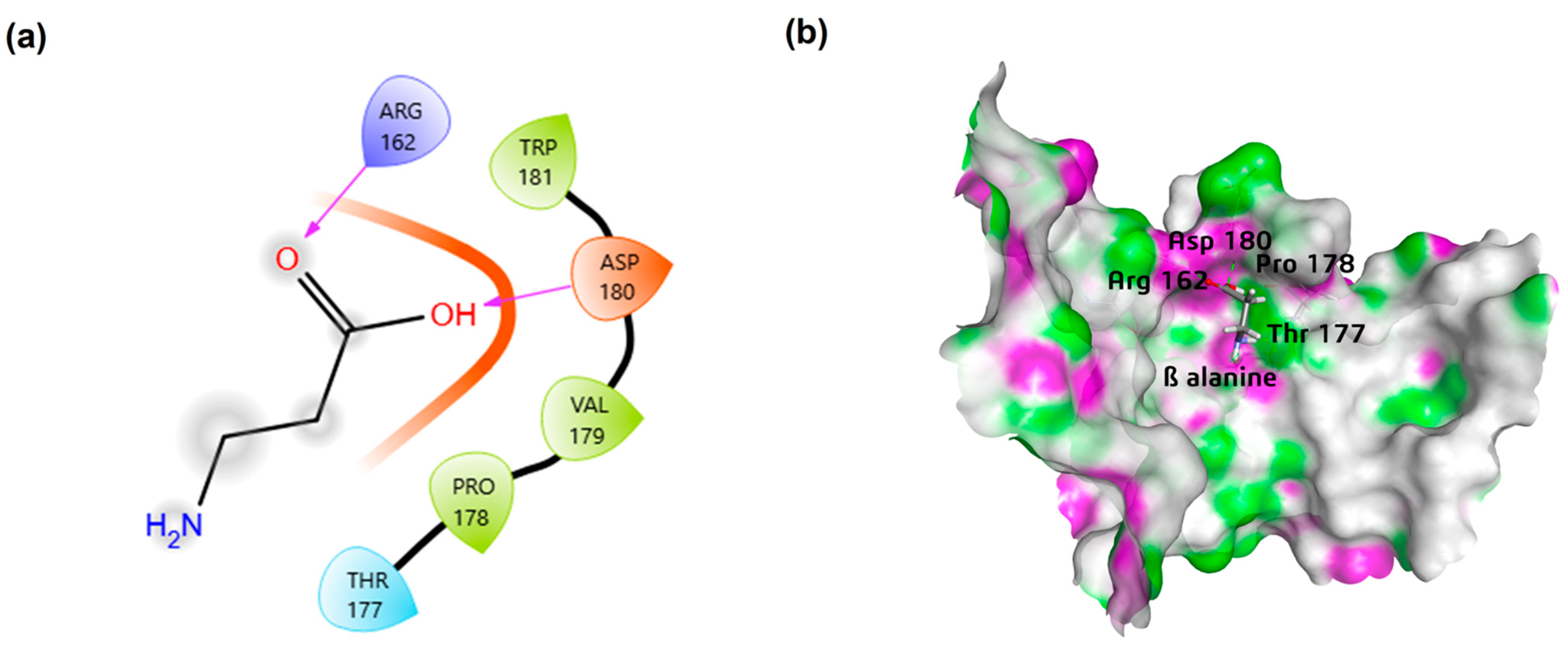
Recently, our group reported that Prdx6 contains a cis-acting regulatory site within its sequence, as specific mutations were shown to modulate its peroxidase activity. This raises the possibility that small molecules binding to appropriate sites may function as trans-acting regulators of Prdx6. Cells contain a diverse pool of endogenous small metabolites that contribute to maintaining redox balance and protein stability. These molecules encompass sarcosine, taurine, glutamine, β alanine and others. In the present study, we aimed to investigate if these metabolites interact with Prdx6 and modulate its antioxidant capacity. Using various assays including biophysical, in silico and cellular approaches we evaluated the effect of 16 different metabolites on the structure and functional integrity of Prdx6. We observed that β alanine is an appropriate ligand of Prdx6 by virtue of its binding to an allosteric site consisting of residues Arg162, Trp181, Asp180, Val179, Pro178 and Thr 177. Additionally, the binding of β alanine helps to regulate peroxidase function of Prdx6 in vitro and cellular models by virtue of its ability to increase its thermodynamic stability, Tm.
It is important to note that the present study is primarily focused on the biochemical and structural regulation of Prdx6. The experiments performed in HeLa cells serve solely as a proof-of-concept system to validate intracellular activation of Prdx6 by β alanine.
2. Materials and Methods
2.1. Materials
Trizma base, EDTA, sodium hydroxide, Imidazole, sodium chloride, potassium chloride, glycerol, acrylamide, bis-acrylamide, ammonium persulfate, TEMED, glycine, β mercaptoethanol, 8-Anilinonaphthalene-1-sulfonic acid (ANS), hydrogen peroxide (H2O2), horseradish peroxidase (HRP), 5,5′-dithiobis(2-nitrobenzoic acid) (DTNB), Isopropyl β-d-1-thiogalactopyranoside (IPTG), were all obtained from Sigma Aldrich Pvt. Ltd. (Bangalore, India).
Luria Bertani (LB) broth and agar were sourced from Difco (Detroit, MI, USA). PBS tablets were supplied by Biobasic (Amherst, NY, USA), and Ni–NTA resin was purchased from Qiagen GmbH, Germany (Hilden, Germany). DNA molecular weight markers were acquired from GeneDireX Inc. (Taoyuan, Taiwan), while the dual-color precision protein marker was obtained from Bio-Rad (Hercules, CA, USA). Antibiotics including ampicillin and kanamycin were purchased from MP Biomedicals (Solon, OH, USA).
2.2. Expression and Purification of Human Prdx6
The plasmid encoding wild-type human Prdx6 in the pQE30-Xa vector was obtained from ThermoFisher Scientific (Waltham, MA, USA). The construct was transformed into E. coli M15 [pREP4] cells, which were cultured in LB medium containing ampicillin (100 μg/mL) and kanamycin (50 μg/mL) at 37 °C with shaking. Protein expression was induced at OD600 0.4–0.6 by adding 0.5 mM IPTG, followed by incubation for 4 h at 37 °C. Cells were harvested by centrifugation and lysed using a buffer containing Tris (20 mM, pH 7.0), NaCl (50 mM), Imidazole (10 mM), lysozyme, RNaseA, and DNase, with sonication on ice. The lysate was clarified by centrifugation and filtered before loading onto a Ni–NTA agarose column pre-equilibrated with binding buffer (20 mM Tris pH 7.0, 50 mM NaCl, 10 mM Imidazole). After overnight incubation at 4 °C, the column was washed with buffer containing 60 mM Imidazole, and Prdx6 was eluted with 500 mM Imidazole. Eluted fractions were pooled, treated with 5 μM EDTA to remove metal ions, dialyzed against 20 mM Tris (pH 7.0), 50 mM NaCl, and stored at −20 °C. Protein purity was confirmed by SDS-PAGE and immunoblotting, and concentration determined by Bradford assay.
2.3. Hydrogen Peroxide Decay Assay
The enzymatic activity of Prdx6 was assessed by monitoring the rate of hydrogen peroxide breakdown using glutathione (GSH) as the reducing substrate. The standard assay mixture consisted of 10 mM Tris–HCl buffer (pH 7.0), 0.1 mM EDTA, 2 mM sodium azide, and 0.2 mM GSH. The enzyme solution (6 µg protein/mL) was pre-incubated with gentle stirring until the absorbance at 240 nm stabilized. The reaction was initiated by introducing 250 µM H
2O
2, and the change in absorbance at 240 nm was tracked for 5–10 min. The observed decrease in absorbance was adjusted for minor nonenzymatic decomposition of H
2O
2. All measurements were conducted at ambient temperature (20 °C) [
9].
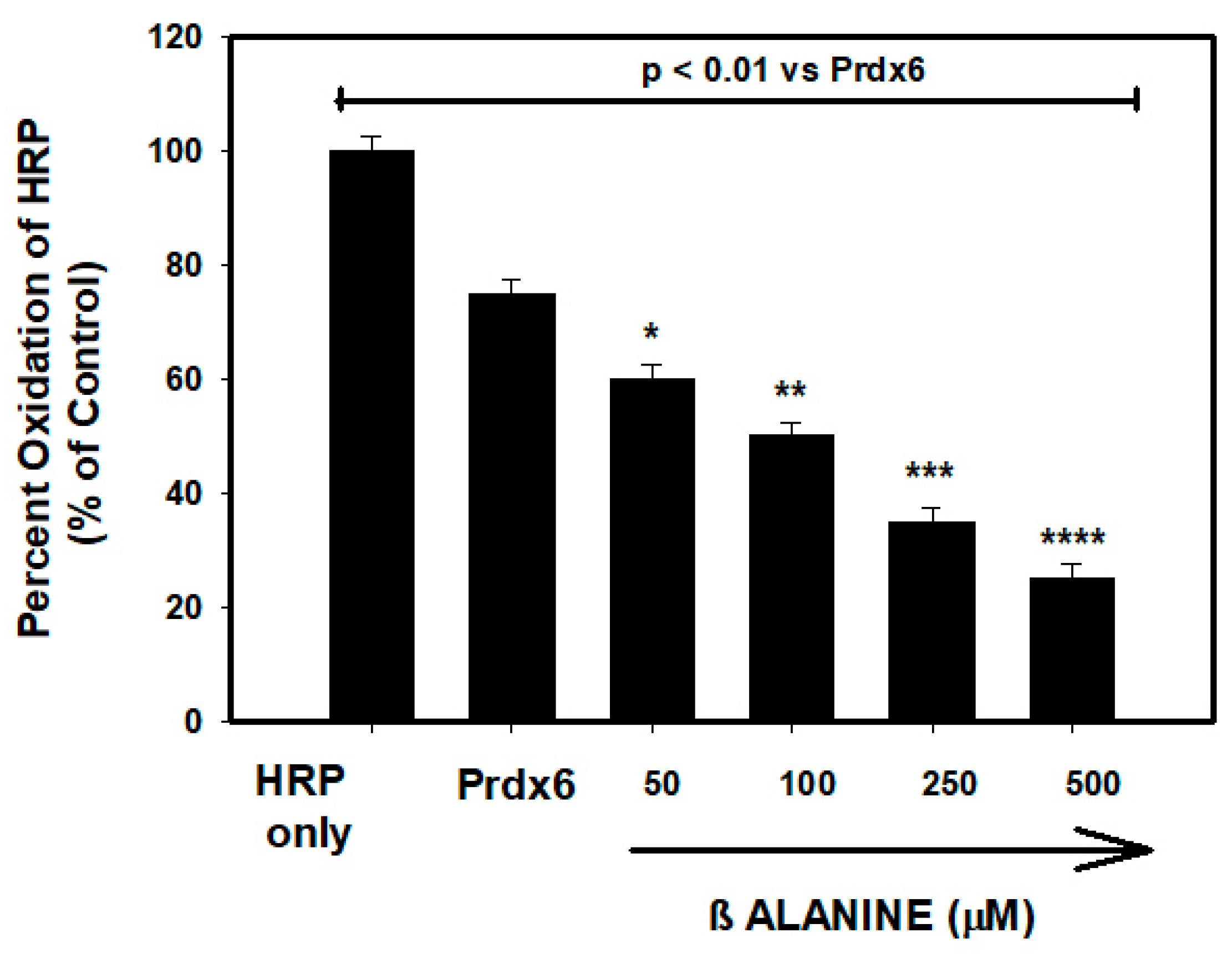
2.4. HRP Competitive Assay
To determine the rate constant for the reaction between Prdx6 (7.5 μM) and hydrogen peroxide (10 μM), a competitive assay was performed using horseradish peroxidase (HRP) as the competing peroxidase. In this assay, HRP reacts with H
2O
2 to form compound I, a stable intermediate under the given conditions when no reducing agents are present [
10,
11,
12]. Spectral measurements were obtained using a Jasco V-660 UV-Visible spectrophotometer. The concentration of HRP was quantified by measuring the absorbance at 403 nm using an extinction coefficient of ε403 = 1.02 × 10
5 M
−1 cm
−1. The formation of compound I was tracked by monitoring the decline in absorbance at 398 nm, which represents the isosbestic point between the oxidation states of HRP (HRP-I and HRP-II). The degree to which Prdx6 inhibited HRP activity was calculated using the following equation, where ΔAmax represents the average change in absorbance without Prdx6 and ΔAobs represents the change in its presence:
This calculation reflects the competitive interaction between Prdx6 and HRP for hydrogen peroxide.
2.5. Circular Dichroism (CD) Measurements
CD spectra were recorded for Prdx6 using a Jasco J-810 spectropolarimeter equipped with a Peltier temperature control system. Measurements were carried out in 20 mM Tris–HCl buffer at pH 7.0. Protein concentration was maintained at 20 μM. Far-UV and near-UV spectra were collected using quartz cuvettes with path lengths of 0.1 cm and 1.0 cm, respectively. Each spectrum was averaged over four accumulations to ensure accuracy, and appropriate buffer blanks were subtracted from the final data [
13]. Instrument calibration was performed using D-10-camphorsulfonic acid [
14]. All measurements were repeated at least three times and average spectra were plotted using SigmaPlot 10.0 Software.
2.6. Tryptophan Fluorescence Spectroscopy
Intrinsic tryptophan fluorescence emission of Prdx6 (0.1 mg/mL) in 20 mM Tris–HCl buffer (pH 7.0) was analyzed using a Cary Eclipse Fluorescence Spectrophotometer (Agilent Technologies). Excitation was carried out at 295 nm and emission spectra were recorded over the range of 300 to 600 nm. Both excitation and emission slit widths were set to 10 nm. Measurements were performed in a 3 mm path length quartz cuvette. Each fluorescence spectrum was obtained in triplicate to ensure reproducibility, and the average fluorescence emission curves were plotted using SigmaPlot 10.0 software.
2.7. ANS Binding Assay
To study ANS–protein interactions, fluorescence emission spectra were recorded between 400 nm and 600 nm with excitation at 350 nm. The ANS concentration used in the assay was maintained at a level 16-fold higher than that of the protein. The molar concentration of ANS was determined using its molar extinction coefficient (ε = 5000 M
−1 cm
−1 at 350 nm). Following addition of ANS, samples were incubated for 30 min at room temperature, and spectra were collected in triplicate. The average emission profiles were analyzed and plotted using SigmaPlot 10.0 software [
15].
2.8. Heat-Induced Denaturation Studies
Thermal unfolding of Prdx6 in the presence of β alanine was investigated using a Jasco spectropolarimeter equipped with a temperature unit. Temperature was increased gradually from 20 °C to 85 °C at a rate of 1 °C min
−1, allowing sufficient time for equilibration at each step. Absorbance changes at 295 nm were monitored for 20 µM protein samples to evaluate thermal stability. Each experiment was repeated three times, and the averaged data were plotted using SigmaPlot 10.0 software [
15].
2.9. Molecular Docking Studies
The crystal structure of Prdx6 (PDB ID: 5B6M) was retrieved from the Protein Data Bank and processed using Maestro v11 (Schrödinger LLC, New York, NY, USA). Preparation steps involved removing water molecules and heteroatoms, followed by structural refinement and energy minimization using the OPLS-3 force field at physiological pH (7.4) [
16]. Potential ligand-binding sites were identified through SiteMap analysis [
17,
18]. Induced Fit Docking (IFD) of β alanine with Prdx6 was conducted with the Glide module, targeting the top 5 predicted binding pockets [
19,
20]. The β alanine ligand structure was obtained from ChEBI in SDF format, energy-minimized, and processed via LigPrep, considering stereochemistry, tautomerism, and ionization states [
21,
22]. Docking grids were centered on the critical residues of each binding site, and resulting complexes were ranked based on Glide docking scores and energies. Visualization of docked complexes was performed using PyMOL 3.1 [
23].
2.10. Molecular Dynamics Simulations
Molecular dynamics (MD) simulations were carried out using GROMACS version 2022.04, applying the CHARMM27 force field [
24,
25]. The protein-ligand complexes were first stripped of docked ligands and water molecules, then solvated within a triclinic TIP3P water box. System neutrality was achieved by adding 25 sodium (Na
+) and 23 chloride (Cl
−) ions [
26]. Energy minimization was performed using the steepest descent algorithm, followed by equilibration phases under NVT and NPT ensembles for 5 ns each. Production MD simulations were run for 100 ns, and trajectories were analyzed for root mean square deviation (RMSD), root mean square fluctuation (RMSF), principal component analysis (PCA), radius of gyration (Rg), hydrogen bond dynamics, and solvent-accessible surface area (SASA) [
27]. Electrostatic interactions were calculated using the Particle Mesh Ewald (PME) method, with bond constraints maintained via the LINCS algorithm [
28].
2.11. Measurement of Intracellular Reactive Oxygen Species
HeLa cells (1 × 10⁶ cells/mL) were seeded in 12-well plates containing DMEM media and allowed to attach for 24 h under standard conditions. After attachment, the cells were treated with different concentrations of osmolytes for 24 h, following which the media was removed. Cells were then incubated with DCFH-DA dye (25 µM) for 30 min at room temperature in the dark. DCFH-DA permeates the cell membrane and is deacetylated by intracellular esterases to DCFH, a non-fluorescent compound. In the presence of intracellular reactive oxygen species (ROS), DCFH is oxidized to DCF, which is highly fluorescent. After incubation, unbound dye was removed by washing, and the cells were kept in PBS. Fluorescence microscopy was used to analyze intracellular ROS generation by measuring DCF fluorescence.
HeLa cells were used solely as a reproducible cellular system for mechanistic validation of Prdx6-mediated redox modulation.
2.12. Statistical Analysis
Statistical analyses were performed using GraphPad Prism 5.0. Data are presented as mean ± SEM. For experiments involving > 2 groups, one-way ANOVA followed by Tukey’s multiple comparison test was applied. For comparisons involving two groups, an unpaired t-test was used. A p-value < 0.05 was considered statistically significant. Sample size (n = 3) is indicated in the figure legends.
4. Discussion
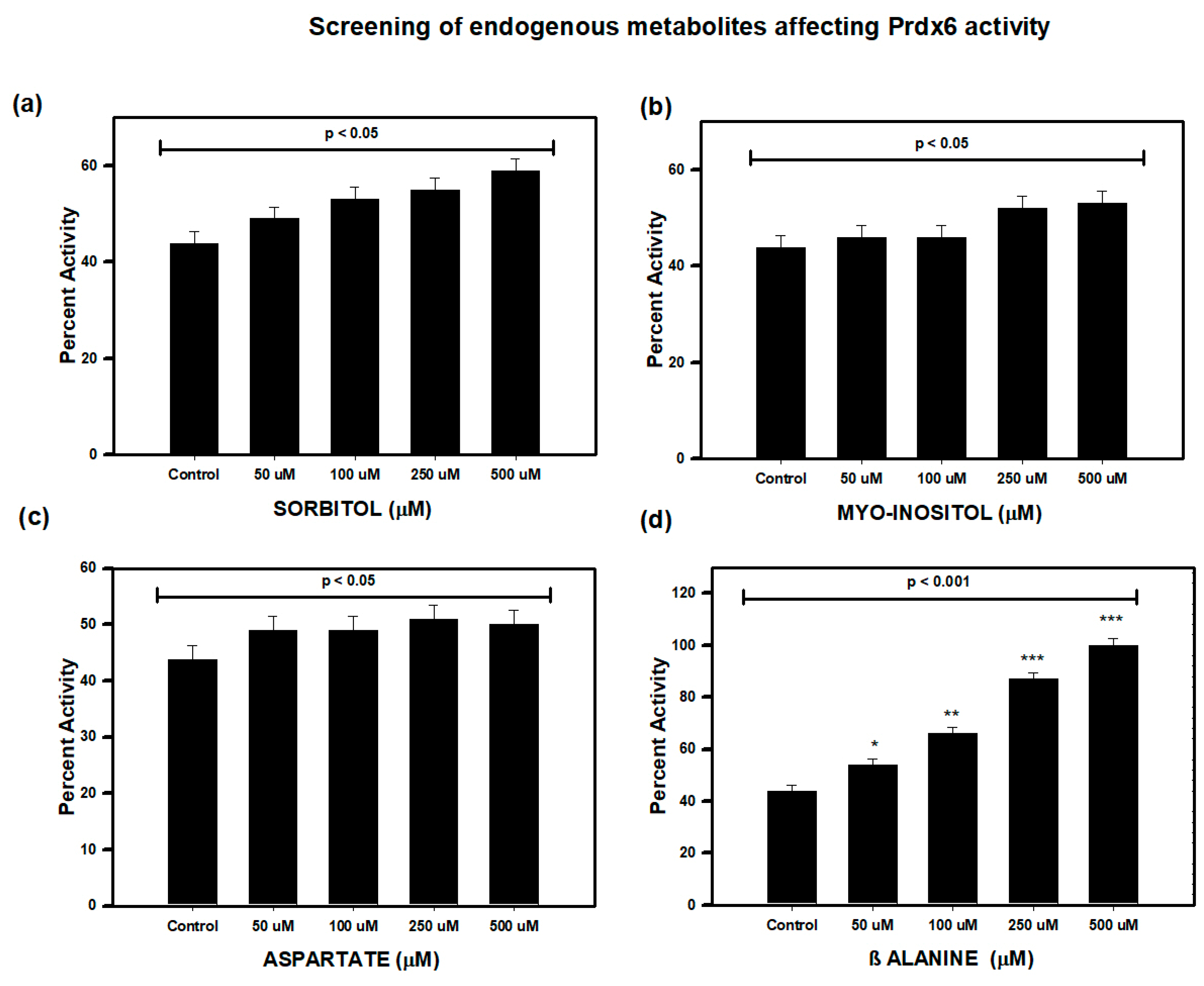
In the present study, we have screened at least 16 different endogenous cellular metabolites for their impact on the peroxidase function of Prdx6 (
Figure 1). We observed certain metabolites including glutamate, glycine, taurine, L-histidine, betaine, glutamine, NAA, mannitol, creatine, sarcosine, DMG and proline do not have any significant effect on the peroxidase function of Prdx6. On the other hand, there are metabolites that exhibit partial increase in the peroxidase activity. These metabolites encompass sorbitol, myo-inositol and aspartate. Interestingly, β alanine is found to have modest effect increasing the peroxidase activity in a dose dependent manner. The results indicate that β alanine is a biochemical activator of Prdx6. To date there are reports of the existence of inhibitors of Prdx6 including Mercaptosuccinate, Withangulatin A and Thiacremonone. This is the first kind of report that identifies an effective activator of Prdx6. These findings provide biochemical insight into Prdx6 regulation and establish a mechanistic foundation for future investigations in more complex biological systems.
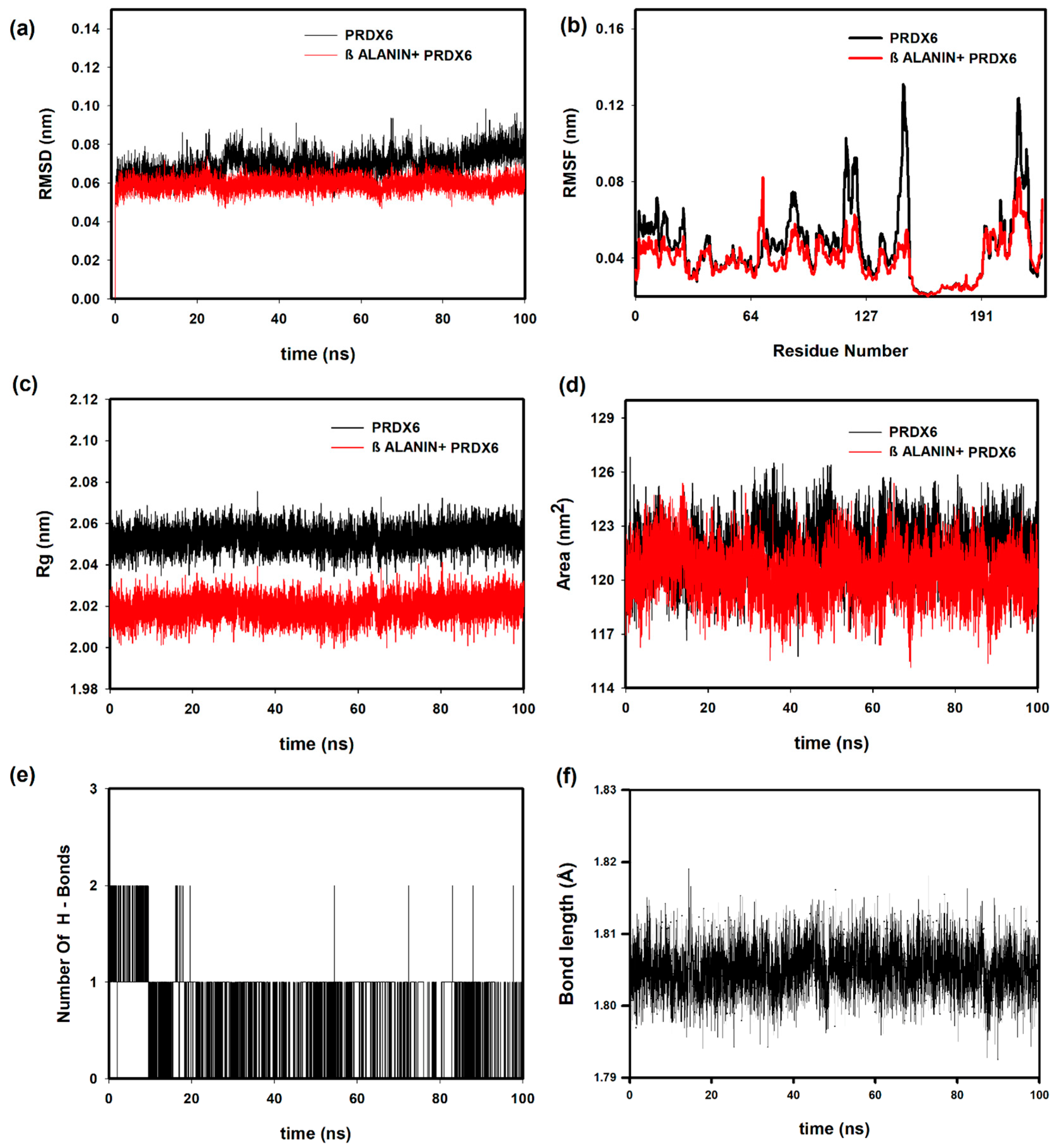
Next, we were further interested in investigating the mechanism by which β alanine enhances the peroxidase function of Prdx6. An increase in the activity could be due to the fact that β alanine is a ligand of Prdx6 that binds to an allosteric site and influences its function. For this, it is important to identify putative binding site of β alanine. Our results using site map indicate the existence of five different strong binding site of β alanine. Out of which, the first site having the residues Arg162, Trp181, Asp180, Val179, Pro178 and Thr 177 exhibit the strongest binding potential with glide energy and docking scores of −26 and −5.1, respectively. We observed that the interaction comprises H-bonds with Arg162 and Asp180 residues. Second, we performed in silico MD simulation studies of the docked complex for 100 ns. The resultant RMSD analysis revealed stability of the complex with reduced flexibility at around 79–89, 115–127, 140–153, and 204–217 residues, indicating the involvement of this region in the overall interaction with the β alanine. There is slight decrease in Rg and SASA in the presence of β alanine. This confirms that β alanine binds to Prdx6 and could modulate its function. The present study identifies a putative allosteric pocket comprising Arg162, Asp180 and neighboring residues; however, definitive validation requires mutagenesis of these key residues. These experiments are planned for future work and are now acknowledged as an important experimental limitation. Interestingly, the stabilization observed in the C-terminal region overlaps with dynamic structural elements that communicate with the peroxidase catalytic site (Cys47-His39-Arg132). Previous structural analyses have shown that distal conformational changes can modulate peroxidase efficiency by altering accessibility and packing around the catalytic triad. Therefore, the β alanine-induced reduction in local flexibility likely contributes to an allosteric mechanism in which stabilization of the C-terminal site enhances catalytic activity, consistent with the increased peroxidase function observed experimentally. Since the binding sites of β alanine closely lie inside the C-terminal region (that ranges from 175 to 224 amino acid residues), we proposed that the cis-acting site of Prdx6 comes under the C-terminal portion not in the thioredoxin fold. We note that these simulations were designed to probe structural stabilization and residue flexibility rather than to compute binding thermodynamics; dedicated MM/PBSA or MM/GBSA calculations were therefore not carried out. Moreover, we did not perform an explicit trajectory-level analysis of conformational coupling at the catalytic triad (Cys47–His39–Arg132). The predicted β alanine site lies spatially distant from the catalytic center, consistent with an allosteric mechanism, but proof of causal allosteric communication (for example via enhanced sampling or energetic decomposition) remains a priority for future computational work.
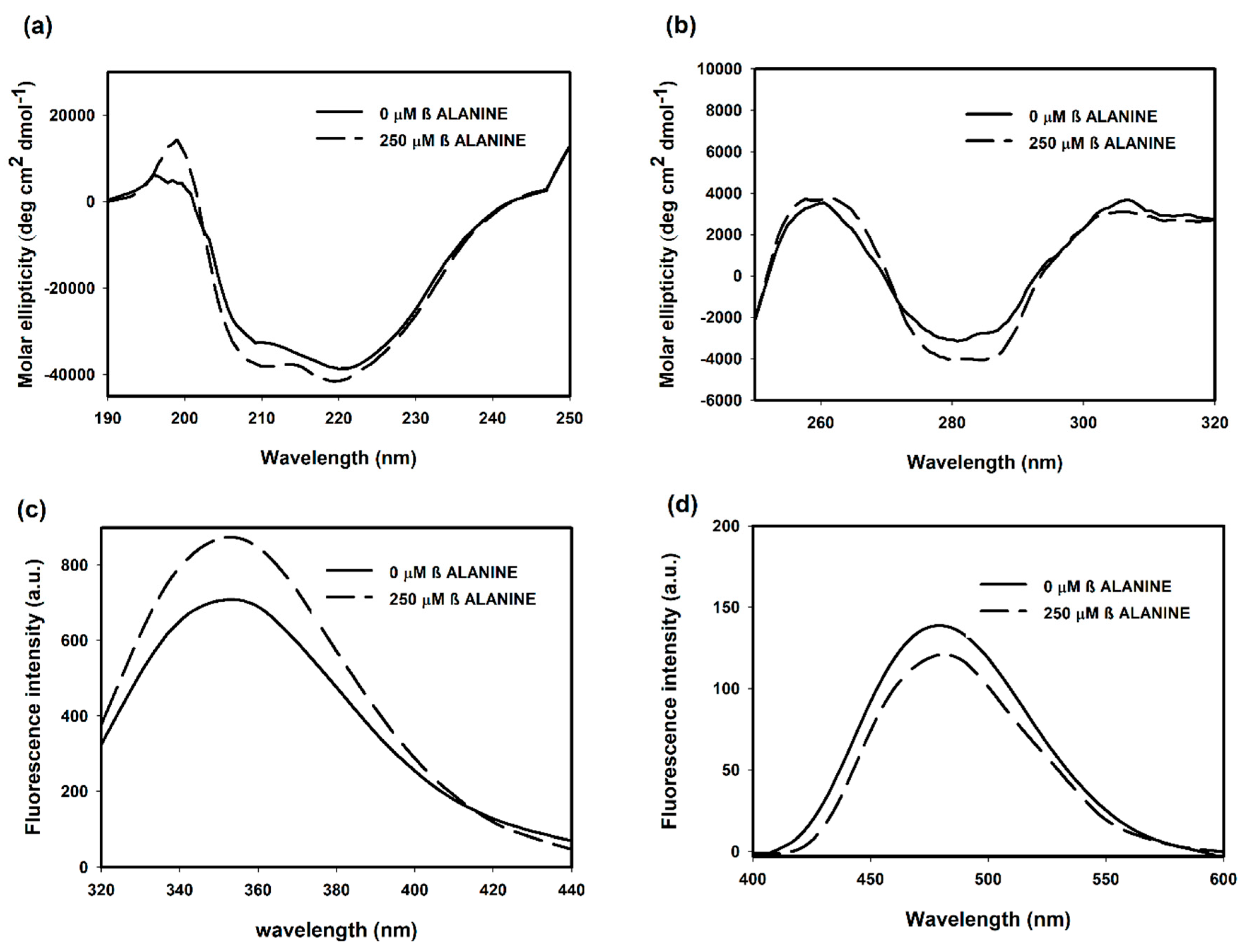
If β alanine binds and acts as a ligand of Prdx6, there should be altered structural consequences due to the binding. For this, using various spectroscopic techniques, we have assessed the conformational changes in Prdx6 upon binding of β alanine. We observed that there is an increase in the secondary structure content as revealed by Far-CD spectroscopy and an eventual increase in the tertiary structure as evident from the Near-CD spectra and an increase in the tryptophan fluorescence, indicating structural stabilization and this stabilization could have impacted the overall packing of the hydrophobic group. Therefore, we used ANS dye to probe for any exposed hydrophobic group to the solvent and since there is no shifting in bands as well as increase in hydrophobicity, no ANS binding was found.
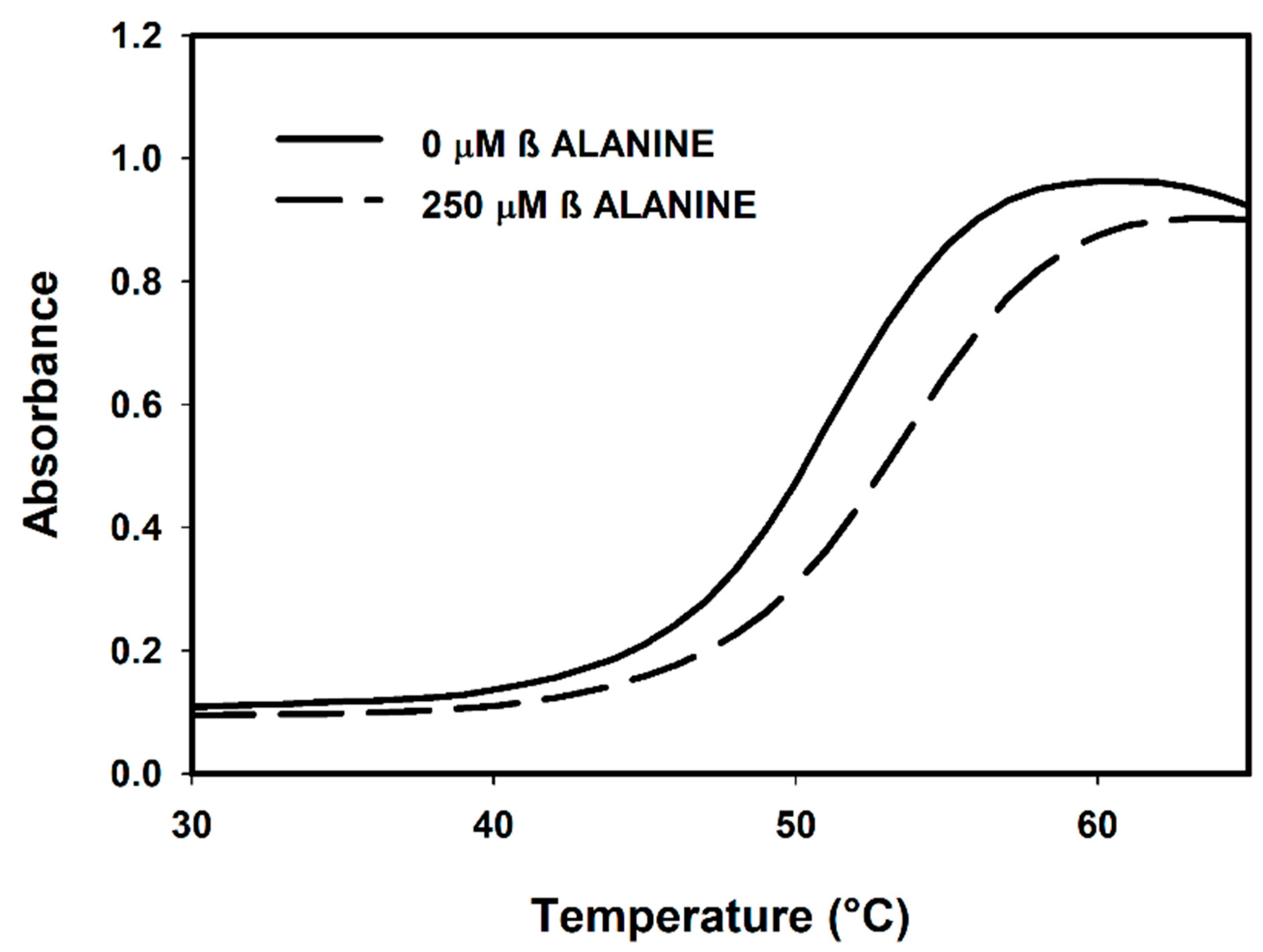
The structural stabilization due to binding of β alanine might have brought about an increase in the thermodynamic stability of Prdx6 leading to the shift in the thermodynamic equilibrium N ⇌ D state towards the left. To investigate this possibility, we have intentionally measured Tm of Prdx6 in the absence and presence of β alanine (
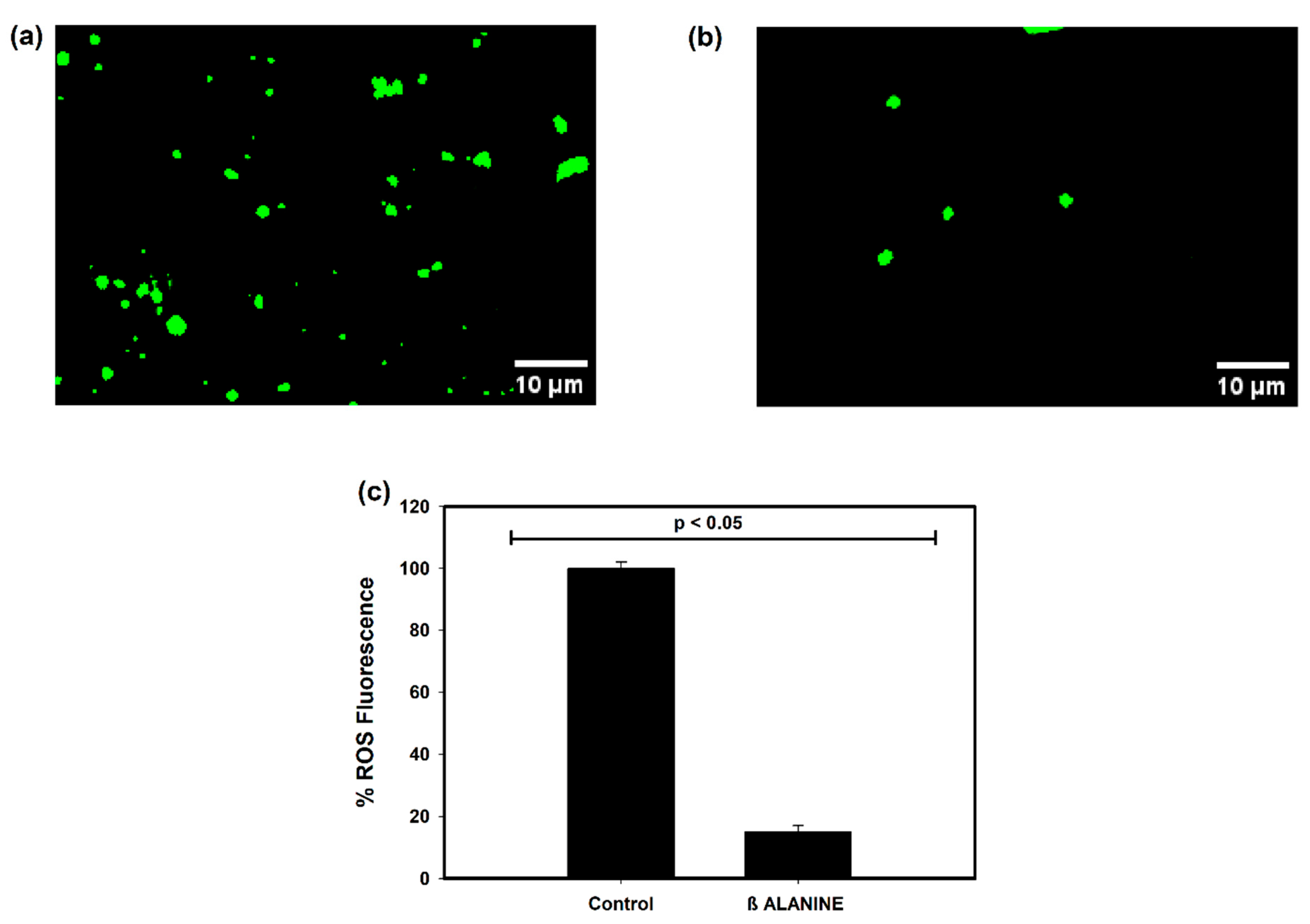
Figure 6). We observed that as expected, there is an increase in the Tm of the protein due to the presence of β alanine relative to the control. The increase in thermodynamic stability results in the population of more functionally active fractions in the native state leading to enhancement in peroxidase function. At the cellular level, increased peroxidase activity would be expected to contribute to reduced ROS, consistent with our proof-of-concept observations. For this we took HeLa cells and treated them with β alanine and measured the ROS levels. We found a large reduction in the ROS levels relative to the β alanine untreated control, consistent with β alanine–mediated modulation of Prdx6 activity. As these experiments were performed in HeLa cells, which are non-muscle in origin, the reduction in intracellular ROS should be interpreted strictly as evidence of β alanine–mediated activation of Prdx6 rather than as evidence of tissue-specific physiological relevance. These results demonstrate intracellular mechanistic activation only, not muscle-specific physiology. The reduction in ROS following β alanine treatment is in agreement with the enhanced peroxidase activity of Prdx6 observed in our biochemical assays. However, because HeLa cells contain multiple antioxidant systems, this result on its own cannot isolate the specific contribution of Prdx6. A definitive demonstration of Prdx6-dependence would require targeted knockdown or inhibition, which was beyond the scope of the present biochemical and structural study. We therefore acknowledge this as a limitation and identify Prdx6-silencing experiments as an important next step for establishing cellular causality with higher precision.
Although Prdx6 possesses both peroxidase and phospholipase A2 (PLA2) activities, the current study specifically focused on peroxidase function because PLA2 requires acidic pH or phosphorylation-dependent activation, conditions not optimized in the present biochemical setup. Importantly, the molecular docking results indicate that the β alanine binding site lies within the C-terminal region, away from the catalytic PLA2 triad (Ser32–His26–Asp140), suggesting minimal direct interference with PLA2 activity. These observations indicate that β alanine-induced stabilization is mainly relevant to peroxidase function, while modulation of PLA2 remains an important future direction. Taken together, we conclude that β alanine is a ligand of Prdx6. Recently, our group reported that Prdx6 contains a cis-acting regulatory sequence that helps in regulating the peroxidase function of Prdx6. Our present data further add on to the mechanistic insight that small molecules like β alanine could be trans-acting regulatory molecule of Prdx6. The results, therefore, introduce a new paradigm of Prdx6 allosteric regulation in vitro.
The findings extend the conventional understanding of β alanine beyond its well-documented role in carnosine synthesis and pH buffering, positioning it as a metabolic regulator with direct enzymatic implications. The present findings establish β alanine as an allosteric regulator of Prdx6 that enhances its peroxidase activity and thermodynamic stability. The primary contribution of this study lies in defining a novel biochemical mechanism by which an endogenous metabolite modulates Prdx6 activity.
It is important to emphasize that HeLa cells were used solely as a proof-of-concept cellular system due to their reproducibility and endogenous Prdx6 expression. These experiments were designed to validate intracellular activation of Prdx6 and reduction in reactive oxygen species.





 ,
,