


Abstract
Refractory geopolymers derived from aluminosilicate sources and alkaline activation are a promising alternative to traditional fired bricks, particularly when low-cost, waste-derived raw materials are used. This study improves the workability of a refractory brick formulated with clays (Kaolin and Tepozan–Bauwer), seashell waste, sodium silicate, potassium hydroxide, and water by incorporating sodium lignosulfonate (LS) and polycarboxylate (PC) plasticizers. Clays from Comonfort, Guanajuato, Mexico, and seashells were ground and sieved to pass a 100 Tyler mesh. A base mixture was prepared and evaluated using the Mini Slump Test, varying plasticizer content from 0 to 2% relative to the solid fraction. Based on workability, 0.5% LS and 1% PC (by solids) increased the slump, and a blended plasticizer formulation (1.5% by solids, 80%PC+20%LS) produced the highest workability. These additives act through different mechanisms, with LS primarily promoting electrostatic repulsion and PC steric repulsion. Bricks with and without plasticizers exhibited thermal resistance up to 1200 °C. After four calcination cycles, compressive strength values were 354.74 kgf/cm2 for the brick without plasticizer, 597.25 kgf/cm2 for 1% PC, 433.63 kgf/cm2 for 0.5% LS, and 519.05 kgf/cm2 for 1.5% of the 80%PC+20%LS blend. Strength was consistent with changes in porosity and apparent density, and 1% PC provided a favorable combination of high workability and high compressive strength after cycling. Because the cost of clays and seashells is negligible, formulation selection was based on plasticizer cost per brick. Although 1% PC and the 1.5% of 80%PC+20%LS blend showed statistically comparable strength after cycling, 1% PC was selected as the preferred option due to its lower additive cost ($0.0449 per brick) compared with the blend ($0.0633 per brick). Stereoscopic microscopy indicated pore closure after calcination with no visible cracking, and SEM–EDS identified O, Si, and Al as the significant elements, with traces of S and K. Overall, the study provides an integrated assessment of workability, multi-cycle calcination, microstructure, and performance for refractory bricks produced from readily available clays and seashell waste.
1. Introduction
Environmental protection is one of the most critical issues today. Consequently, research efforts increasingly focus on developing environmentally friendly materials to replace conventional materials that contribute to pollution. Geopolymers (also referred to as alkali-activated binders in the literature) may offer attractive mechanical and durability performance, including thermal stability and corrosion resistance; however, their sustainability benefits are not universal and depend strongly on the precursors and, particularly, on the type and dosage of alkaline activators. Life-cycle assessments have shown that some activators (e.g., sodium silicate in two-part systems) can dominate environmental impacts and introduce trade-offs across impact categories; in contrast, lower footprints are more consistently reported for one-part systems that avoid sodium silicate [1,2,3]. Accordingly, this study does not present an LCA and does not claim an intrinsically lower carbon footprint for the studied formulations; instead, it focuses on improving workability via sodium lignosulfonate (LS) and polycarboxylate (PC) plasticizers and on evaluating compressive strength and refractory behavior after thermal cycling.
The term “geopolymer” was introduced by Prof. J. Davidovits in 1978 to describe inorganic binders formed by the alkaline activation of aluminosilicate precursors, yielding an aluminosilicate gel/network. In current scientific usage, “geopolymer” is often used as a practical umbrella term within the broader family of alkali-activated binders (AABs), which encompasses systems with diverse precursors and reaction products and is discussed in the context of performance, sustainability, and industrial deployment [3,4,5]. These materials can harden at relatively low temperatures and exhibit high thermal stability, withstanding temperatures up to 1250 °C [6,7,8]. The empirical formula for geopolymer structure is:
where “M” is the monovalent alkali-metal cation (e.g., K+ or Na+), “n” is the degree of polycondensation, and “z” is the number of SiO4 tetrahedra [9]. The alkali-activation (geopolymerization) process is commonly described in three main stages: dissolution, gelation/polycondensation, and hardening. During dissolution, aluminosilicate precursors react with the alkaline solution, releasing silicon and aluminum species. In the gelation stage, these species undergo hydrolysis and condensation to form an alkali aluminosilicate gel network (often denoted N-A-S-H in low-calcium systems). Although Davidovits’ sialate terminology has historically been used to classify compositions by Si/Al ratio, it has limitations and may be misleading regarding the actual gel structure; therefore, in this work, we refer primarily to the alkali aluminosilicate gel/network rather than relying on sialate-based descriptors [5]. Finally, during hardening, the material develops its consolidated gel framework, which is responsible for mechanical strength [9,10,11].
Compared to Ordinary Portland Cement (OPC), geopolymer concrete generally exhibits lower workability. This is due to the higher viscosity of the liquids used in geopolymer synthesis [12]. Workability and mechanical strength are two essential properties of mortar, concrete, and geopolymers. Water can effectively increase the workability of geopolymer mortar; however, this results in reduced strength. It has been demonstrated that a plasticizer or superplasticizer can improve the workability of geopolymer concrete [13].
The traditional Slump Test is a simple method for evaluating concrete workability and is widely used on construction sites due to its ease of use, applicability, and low cost. In the field of construction materials, the “Abrams Cone” apparatus, as specified in ASTM C143 [14], is used. This mold has a conical shape with a base diameter of 8 inches, a top diameter of 4 inches, and a height of 12 inches [15]. However, for laboratory-level research, a scaled-down version of this technique, known as the “Mini Slump Test,” has been proposed, with reduced dimensions: 19 mm top diameter, 38 mm bottom diameter, and 57 mm height [16].
A plasticizing additive is an agent that reduces the amount of mixing water needed to achieve a specified consistency in a system. These admixtures, classified as anionic surfactants, consist essentially of long-chain organic molecules with hydrophilic and hydrophobic parts. The hydrophilic end contains groups with negative charges, such as hydroxyl (OH−), sulfonate (SO3−), and carboxyl (COO−), while the hydrophobic part corresponds to the hydrocarbon chain [17]. There are three types of plasticizers: first-generation plasticizers contain modified lignosulfonates, while second-generation plasticizers contain melamine–formaldehyde sulfonate or naphthalene–formaldehyde sulfonate condensates. Finally, third-generation plasticizers consist of polyacrylate, polycarboxylate, or polyethylene-based copolymers with a comb-like structure. Plasticizers block active sites and generate electrostatic and steric repulsion, resulting in particle dispersion [18,19].
In a previous study conducted by our research group, Sánchez-Chicas et al. [8] performed the mineralogical characterization of the clays (Tepozan–Bauwer and kaolin) and the seashell used in the present work; therefore, these results served as the basis for the formulation of the geopolymers. According to the diffractograms of kaolin and Tepozan–Bauwer obtained using X-ray diffraction (XRD), two minerals were reported in the highest proportions: kaolinite (Al2Si2O5(OH)4), with 57.91% in kaolin and 53.24% in Tepozan–Bauwer, and quartz (SiO2), with 32.73% in kaolin and 29.26% in Tepozan–Bauwer. Other minerals were also reported in smaller proportions, including alunite (KAl3(SO4)2(OH)6), with 8.88% in kaolin and 13.94% in Tepozan–Bauwer, and diopside identified as hedenbergite (FeCaSi2O6), with 0.48% in kaolin and 3.53% in Tepozan–Bauwer. The seashells contained three main minerals: calcite (60.19%), aragonite (34.63%), and vaterite (5.18%), which correspond to the crystalline structures of CaCO3 [8].
Several studies have been conducted on refractory bricks produced from alternative materials, and likewise, different plasticizers have been investigated to improve the workability of the mixtures used in their fabrication. Laskar and Bhattacharjee [20,21] studied the effects of a first-generation plasticizer (lignin) and a third-generation plasticizer (polycarboxylate ether) on workability, finding that as dosage increased, rheological parameters decreased. Overall, it has been shown that the first-generation lignin-based water reducer is more effective than the third-generation PC-based superplasticizer at dosages of 1-1.5% [20]. These authors also varied the molarity of the sodium hydroxide used and observed that higher NaOH molarity decreases slump, thereby reducing mixture workability [21]. Meanwhile, Aliabdo et al. [4] studied the effect of a second-generation plasticizer (a naphthalene-based admixture), which increased workability by up to 115% but also reduced compressive, tensile, and elastic moduli. They also reported that increasing the molarity of sodium hydroxide decreases slump [4].
Chindaprasirt et al. [22] demonstrated that the use of additional water to improve the workability of a fly-ash-based geopolymer provided higher strength than the addition of a superplasticizer. They also reported that increasing the concentration of potassium hydroxide and sodium silicate reduces the flowability of geopolymer mortar [22]. Sathonsaowaphak et al. [13] used a naphthalene-based superplasticizer in addition to water. They found that incorporating water improved geopolymer workability more effectively than superplasticizer, with a similar slight reduction in strength. These authors concluded that the improvement in workability was due to the increased water content in the superplasticizer solution [13]. The effects of adding a polycarboxylate-based plasticizer, a lignin-based polymer, and water have also been studied; higher workability was observed with the polycarboxylate-based plasticizer. Regarding compressive strength, water produced better results, likely because it does not participate in geopolymerization reactions and only acts as a medium for ion transfer [23].
This study arises from a problem identified in a previous project conducted by the research group, in which the use of a 9 M KOH solution resulted in a significant reduction in the workability of mixtures used to fabricate refractory materials [24]. This issue is commonly reported in systems activated with highly concentrated alkaline solutions, where the rapid reaction kinetics negatively affect fresh-state properties [4,20,21].
Plasticizers such as sodium lignosulfonate (LS) and polycarboxylate (PC) have been studied in geopolymers to improve their workability; however, no information has been found regarding the combined use of both plasticizers. Therefore, the novelty of this study lies in the incorporation of combined LS and PC, as well as in the evaluation of compressive strength before and after four calcination cycles up to 1200 °C. An additional contribution to the fabrication of refractory geopolymer bricks is the incorporation of waste material as a calcium source, specifically seashells.
2. Materials and Methods
2.1. Selection and Preparation of Clays and Seashells
In the Delgado de Abajo community, municipality of Comonfort, Guanajuato state, Mexico (20°43′12″ N 100°47′40″ O), there are open-pit mines from which clays suitable for geopolymer synthesis can be extracted. Two clay deposits located in the community of Delgado de Abajo in Comonfort were selected and named Kaolin and Tepozan–Bauwer, according to the extraction sites from which they originated. The mixture of Kaolin and Tepozán–Bauwer as aluminosilicate precursors was selected based on previous studies performed by our research group, in which the clays used have proven suitable for the synthesis of refractory bricks with good thermal and compressive properties [8,24]. The waste seashells (Andara tuberculosa), commonly known as “pata de mula,” were collected from the coastal areas of the state of Sinaloa, Mexico.
2.2. Grinding and Sieving of Clays and Seashells
The clays and seashells were crushed using three milling stages: first in a jaw crusher, then in a disc mill, and finally in a ball mill until a fine powder was obtained. The ground materials were then sieved in batches using a stack of 40, 60, 80, and 100 Tyler mesh screens in a vibratory sieve shaker, retaining the fraction that passed through the 100 mesh (149 µm), as it provided the highest yield after milling.
2.3. Variation of Plasticizer Percentage
Two plasticizers were used in this project: QUIMICRET CARBO A20 (polycarboxylate-based, referred to as PC) and QUIMICRET DIS N 0.25 (sodium lignosulfonate-based, referred to as LS), both manufactured by Imperquimia® (Imperquimia, S.A. de C.V., Tecámac, Mexico State, Mexico). In addition to these two additives, tests were also conducted using extra water as a plasticizer.
Several trials were conducted using the Mini Slump Test to determine the plasticizer percentage that improved workability. For this purpose, the plasticizer dosage was varied from 0 to 2% (0, 0.5, 1.0, 1.5, and 2.0%) based on the solids content (clays and seashells), with three replicates for each mixture and test condition.
2.4. Combination of Polycarboxylate (PC) and Sodium Lignosulfonate (LS) Plasticizers
In these tests, the dosages of both plasticizers that yielded improved workability in previous experiments were combined, with the proportions of each varying: PC/LS (100/0, 80/20, 60/40, 40/60, 20/80, and 0/100). Workability was assessed using the Mini Slump Test, with three replicates per test condition.
2.5. Workability Measurement Using the Mini Slump Test
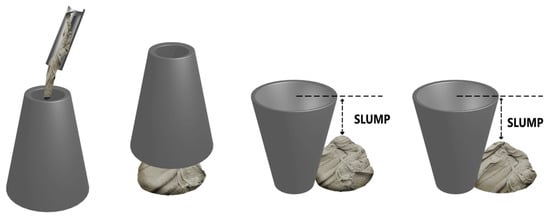
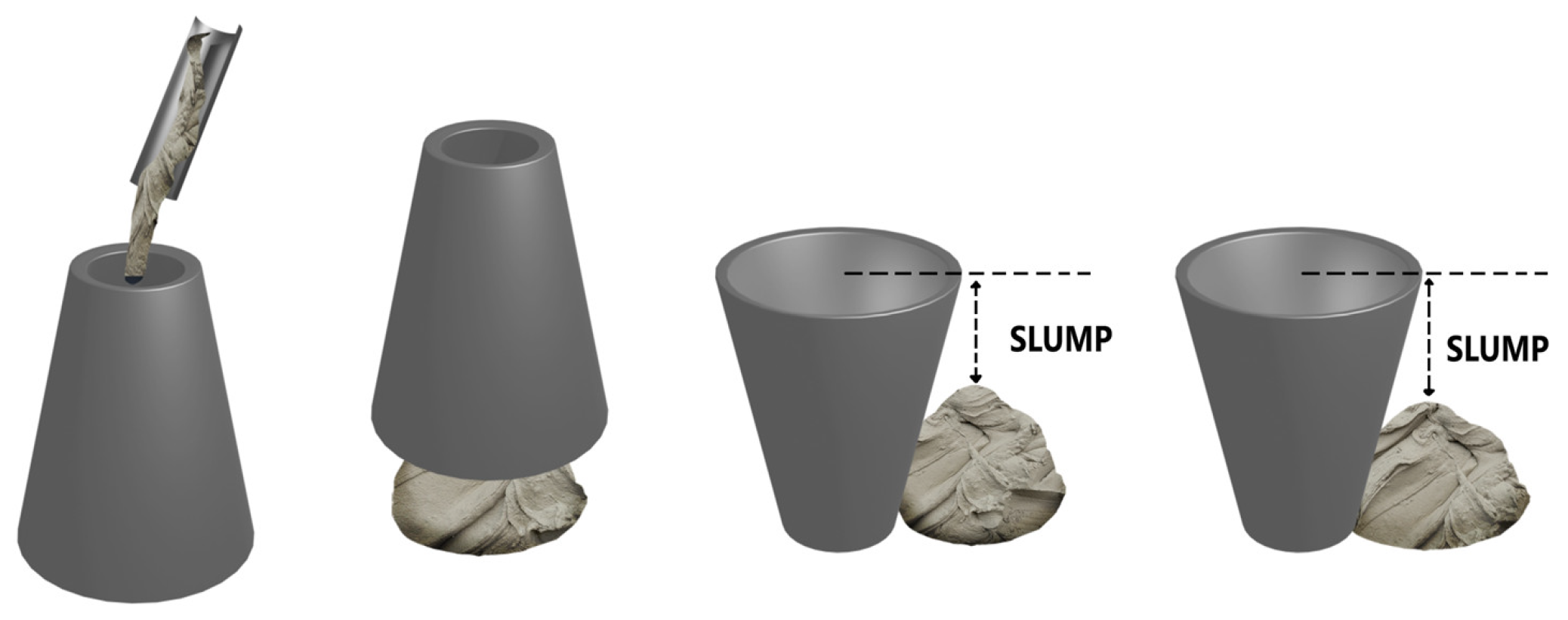
Workability was measured following the procedure described by Tan et al. [16]. Once the geopolymer paste was prepared (the solids, including Tepozan–Bauwer, kaolin, and seashell powder, were mixed in a beaker for 2 min. A similar process was used for the liquids: sodium silicate (50% concentration, acquired in a retail store, Celaya, Mexico), water, and 9 M potassium hydroxide (prepared by dissolving 126.225 g of KOH pellets (KARAL, León, Guanajuato, Mexico) in 250 mL of distilled water), placing them in a separate beaker for 2 min. A percentage of plasticizers, based on the weight of the solids, was then added. The alkaline solution was then added dropwise to the beaker containing the solids, while the mixture was vigorously stirred with an electric mixer (GONI, model 2708, CDMX, Mexico), operating at 50 rpm) for 5 min, until a paste formed. It was immediately poured into the Mini Abrams cone until it was filled. The cone was then lifted as slowly as possible, and after 1 min, the slump (the decrease in the mixture’s height) was measured. The test was performed in triplicate using three batches of paste mixed separately, following the formulation shown in Table 1, with different plasticizer percentages. The Mini Slump test was performed under typical laboratory ambient conditions, with an approximate temperature of 22 °C, a relative humidity of 37%, and an atmospheric pressure of 600 mmHg. The procedure is illustrated in Figure 1. The plasticizer percentage corresponding to a workable mixture was then selected.
Table 1.
Mix proportions utilized to determine workability.
Figure 1.
Mini Slump Test procedure for measuring workability (SLUMP).
2.6. Production of Refractory Bricks (Geopolymer)
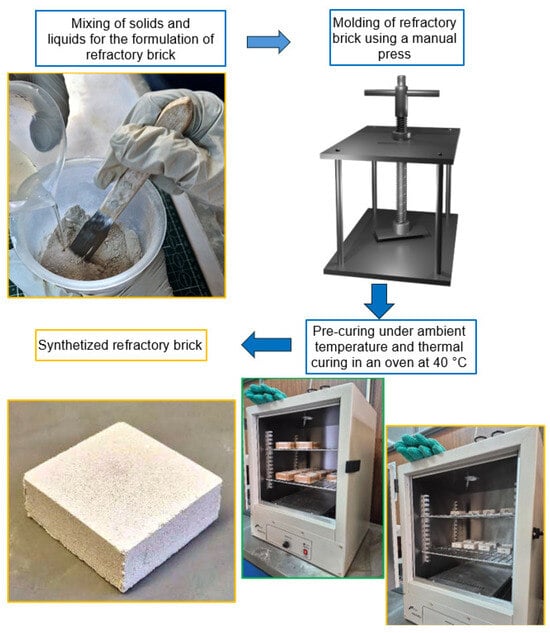
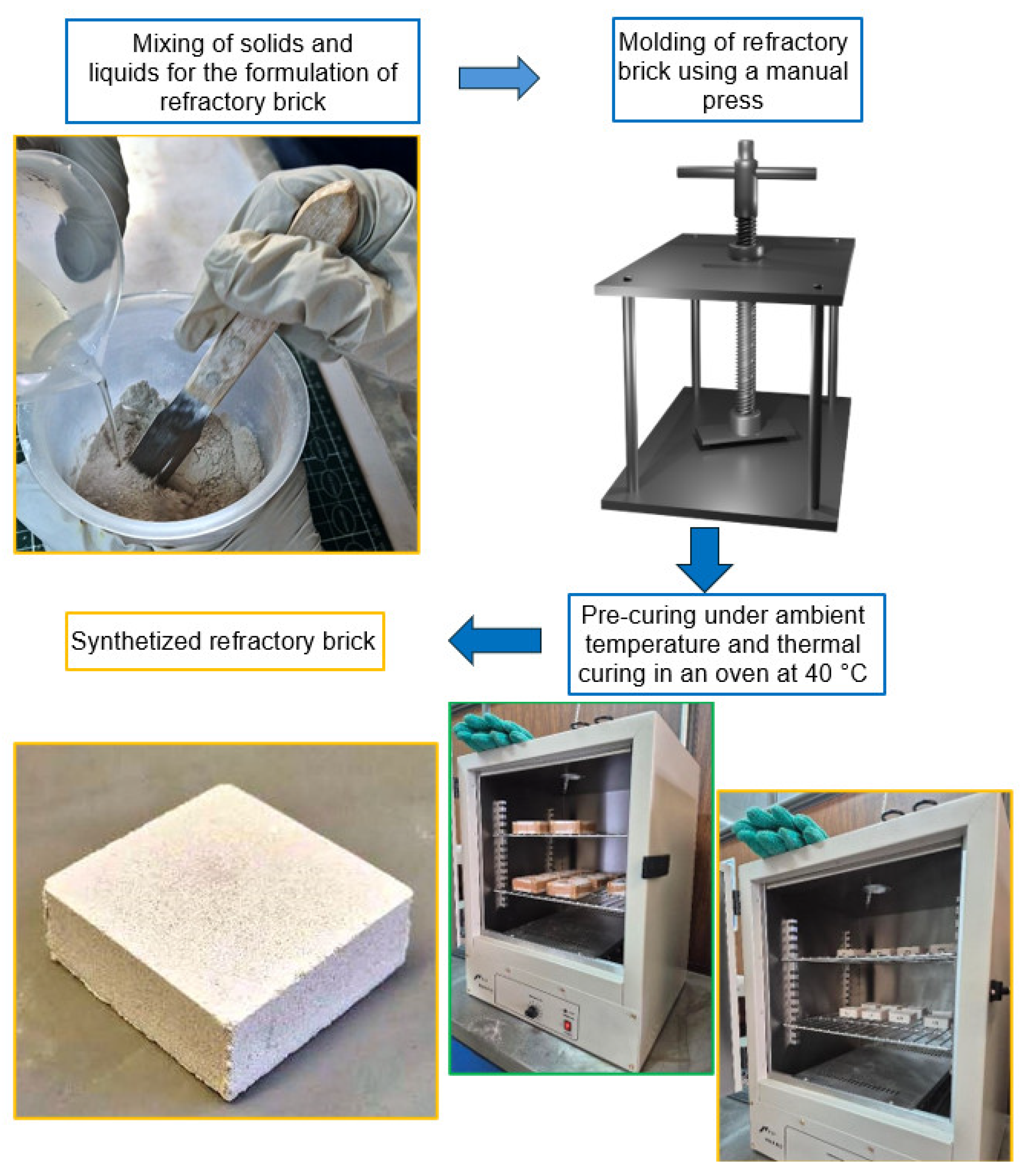
To produce the refractory brick (geopolymer) for the temperature resistance and compressive strength tests, the procedure established by Mass-Domínguez [24] was followed, as shown in Figure 2. Sodium lignosulfonate, polycarboxylate, or a combination of both plasticizers was added to improve workability.
Figure 2.
Procedure for the fabrication of the refractory brick.
The predetermined amount of solids, including Tepozan–Bauwer, Kaolin, and seashell powder with a particle size smaller than 100 Tyler mesh (149 µm), as shown in Table 2, was mixed in a beaker for 2 min. A similar process was used for the liquids, sodium silicate (50% concentration, acquired in a retail store, Celaya, Mexico), water, and potassium hydroxide 9 M (It was prepared by dissolving 126.225 g of KOH pellets (KARAL brand) in 250 mL of distilled water), which were placed in a separate beaker for 2 min. A plasticizer percentage based on the weight of the solids was then added. Next, the alkaline solution was added dropwise to the beaker containing the solids while stirring vigorously using an electric mixer (GONI brand, model 2708, operating at 50 rpm) for 5 min, until a homogeneous, moist paste, called a geopolymer, was formed. Once the paste was ready, it was placed layer by layer into molds measuring 5 cm × 5 cm × 2.5 cm, with manual compaction applied between each layer. The molds were then transferred to a manual press and compressed by turning the worm screw five times (With a pressure of 5 MPa (51 kgf/cm2)). The green bricks contain approximately 14.87% moisture and were left for a pre-curing period of 24 h at room temperature (Approximately 22 °C, a relative humidity of 37%, and an atmospheric pressure of 600 mmHg) to facilitate geopolymerization under alkaline conditions. After 24 h, the pre-cured specimens were placed in an oven (Arsa, model AR-290A, Zapopan, Jalisco, Mexico) at 40 °C for another 24 h, then demolded and kept in the oven for an additional 72 h at the same temperature.
Table 2.
Base composition of the refractory brick (geopolymer), calculated for 200 g [24].
2.7. Temperature Resistance Test
Once the refractory brick was obtained, the specimens were subjected to calcination cycles following the temperature ramps shown in Table 3, using a laboratory muffle furnace (Thermolyne 4800 Furnace, model F48050, Dubuque, IA, USA). The first cycle was performed up to 900 °C, after which the specimens were cooled for 24 h at room temperature. The specimens (4 replicates) that withstood the first firing cycle were then subjected to additional cycles, increasing the temperature by 100 °C each time, up to a maximum of 1200 °C. These temperature ramps were previously used by the research group in their work on refractory bricks [8].
Table 3.
Calcination temperature ramp for refractory bricks.
2.8. Compressive Strength Test
To determine the compressive strength, the ASTM C133-97 standard [25] was followed, using specimens measuring 5 cm × 5 cm × 2 cm. The compressive strength tests were conducted using a universal testing machine (Galdabini, Cardano Al Campo, Italy). The compressive strength tests were carried out after 28 days. The compressive strength (CS) was calculated using Equation (2), where F is the force in kgf required for the specimen to reach the fracture point, and A is the contact area between the specimen and the piston of the universal testing machine, expressed in cm2.
2.9. Variation of Calcination Cycles
Tests were performed by varying the number of calcination cycles, with the refractory brick showing the highest compressive strength after four cycles. The number of cycles ranged from 0 to 4, and the compressive strength of the bricks was subsequently determined.
2.10. Morphology of Refractory Bricks Using a 64× Stereoscopic Microscope
The morphology of the refractory bricks was analyzed using a ZEISS Stemi DV4 stereomicroscope (Wetzlar, Germany) with a 2× objective and 32× zoom, yielding a total magnification of 64×. This equipment allowed us to observe the surface characteristics of the refractory bricks.
2.11. Characterization by Scanning Electron Microscopy–Energy-Dispersive X-Ray Spectroscopy (SEM-EDS)
To determine the elemental composition of the samples (clays, shell, and refractory bricks), an analysis was performed using Scanning Electron Microscopy (SEM) coupled with Energy-Dispersive X-ray Spectroscopy (EDS) on a ZEISS Sigma 360 VP microscope (Wetzlar, Germany) operating at 10 kV.
2.12. Physical Characterization Tests According to ASTM C20-00
The physical properties, such as apparent porosity, water absorption, and bulk density, of the refractory bricks before and after calcination were determined according to the ASTM C20-00 standard [26]. This method consists of obtaining three characteristic masses of the material: dry mass (D), saturated mass (W), and suspended mass in water (S). To obtain the dry mass (D), the samples were first dried in a laboratory oven at 105 °C for 24 h, then weighed.
The bricks were heated to boiling for 2 h, ensuring the specimens remained fully submerged in water and did not touch the bottom of the hot container. After boiling, the samples were kept immersed in water for at least 12 h before weighing. Following the 12-h immersion, the suspended mass (S) was measured by weighing the refractory brick while suspended on a balance with a hook (using a 22 AWG copper wire loop). After measuring the suspended mass, each sample was gently dried with a cloth to remove surface water droplets, then weighed to determine the saturated mass (W).
Once the three weights were obtained, the necessary calculations were performed using Equations (3)–(5).
assuming water density of .
3. Results and Discussion
3.1. Workability (Slump) Results by Varying the Plasticizer Percentage
3.1.1. Workability of PC, LS, and Water Plasticizers
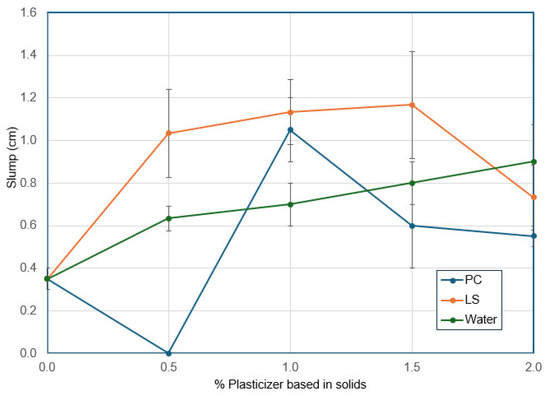
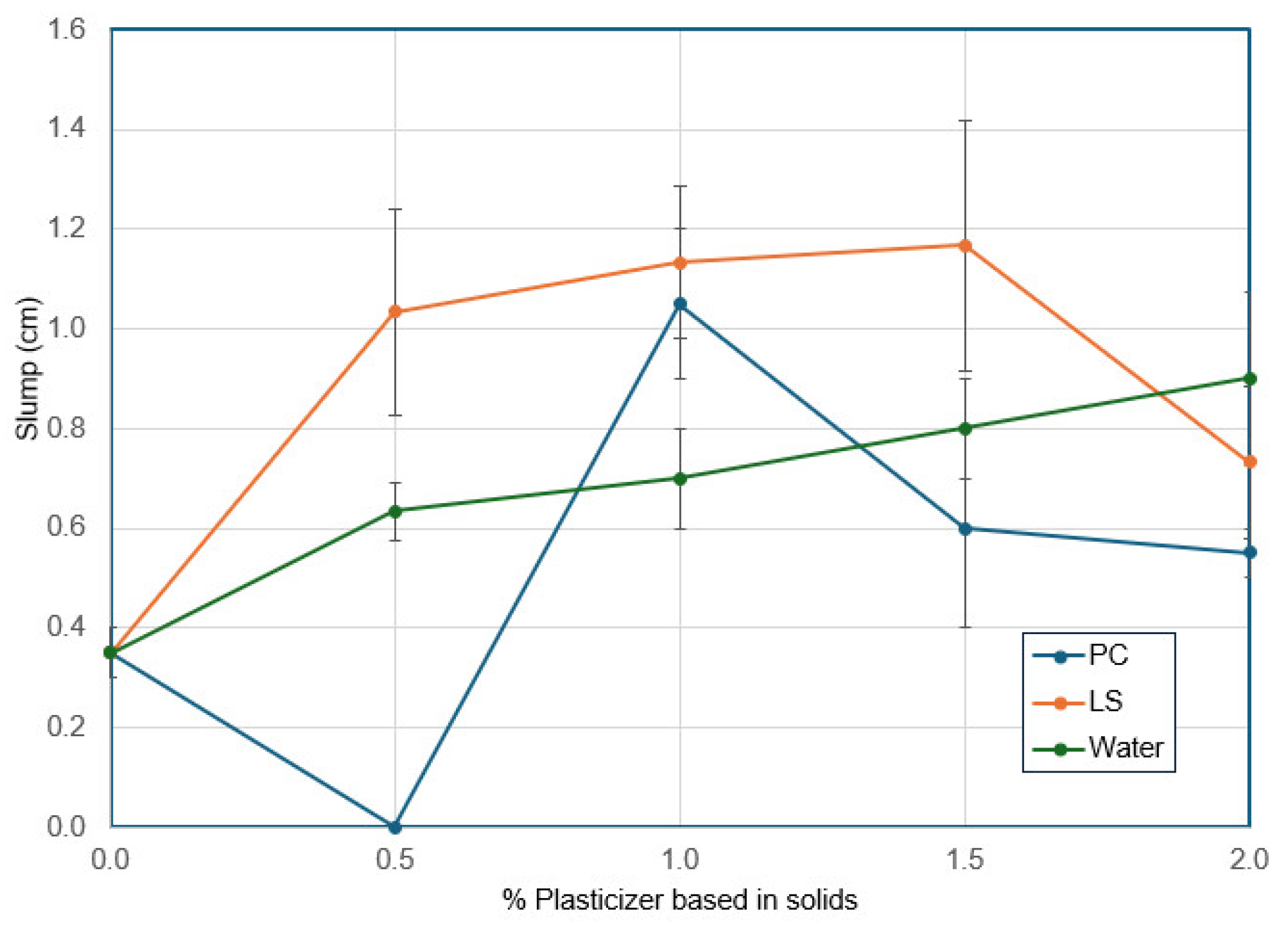
Using the Mini Slump Test to evaluate the workability of the mixture, the slump variation was measured at different plasticizer percentages for each mixture (Kaolin, Tepozan–Bauwer clay, and Seashell powder) based on the solids content. The results are presented in Figure 3.
Figure 3.
Slump variation with different plasticizer percentages.
Table 4 presents the statistical results. It supports Figure 3 without overloading the scatter plot with multiple-letter annotations. For each series, a one-way ANOVA tests whether dosage affects slump, and Tukey’s HSD identifies which dosages differ within the same series.
Table 4.
Slump results as a function of dosage.
In the case of Sodium Lignosulfonate as a plasticizer, the slump increases gradually as the plasticizer percentage rises, reaching a peak around 1.5%, and then decreases at 2%. This type of first-generation plasticizer works through electrostatic repulsion; that is, it disperses particles by generating negative charges on their surfaces, which leads to interparticle repulsion. However, this effect is observed only up to a 1.5% plasticizer. Increasing the quantity to 2% reduces slump, likely due to surface saturation, meaning that no additional sites are available for interaction with the plasticizer. This behavior is consistent with findings reported by Laskar and Bhattacharjee [20,21] and Luukkonen et al. [27] for alkali-activated materials, in which lignosulfonate-based plasticizers increase workability up to an optimal dosage, followed by a loss of efficiency. Malkawi et al. [23] reported that first-generation plasticizers produce a greater increase in workability in these materials than third-generation plasticizers, which is consistent with the results obtained in this study, indicating that LS is more efficient than PC in terms of slump.
For the polycarboxylate plasticizer, nonlinear behavior is observed: a sharp drop in slump at 0.5%, followed by an increase of 1%, and then a subsequent decrease. This behavior may be attributed to the mechanism of third-generation plasticizers, which act mainly through steric repulsion, with electrostatic repulsion playing a secondary role. The slump reduction at 0.5% may indicate insufficient particle coverage, leading to partial adsorption and particle agglomeration. The increase observed at 1% suggests an optimal dispersion point at which the particles are effectively separated by steric repulsion. This behavior is consistent with that reported by Nematollahi and Sanjayan [28] and Paul [29], who observed that different polycarboxylate-based plasticizers increase the workability of geopolymer systems when used within an optimal dosage range. However, this result differs slightly from that reported by Laskar and Bhattacharjee [20,21], who identified an optimal dosage of 1.5% relative to the solids, which may be attributed to differences in the aluminosilicate precursors used. Finally, a decrease beyond 1% may be associated with an excess of polycarboxylate plasticizer, which could promote interactions with sodium or potassium ions or restrict the free movement of water, thereby reducing the Slump (i.e., decreasing workability).
When water is used, less pronounced variations in slump are observed compared to plasticizers. The gradual increase in slump with increasing additional water content can be attributed to the fact that, in the geopolymerization process, water acts solely as a medium that facilitates ion transport [30]. This behavior is consistent with that reported by Malkawi et al. [23], who demonstrated that water increases workability, although to a lesser extent than first- and third-generation plasticizers.
3.1.2. Workability of the Combined PC and LS Plasticizers
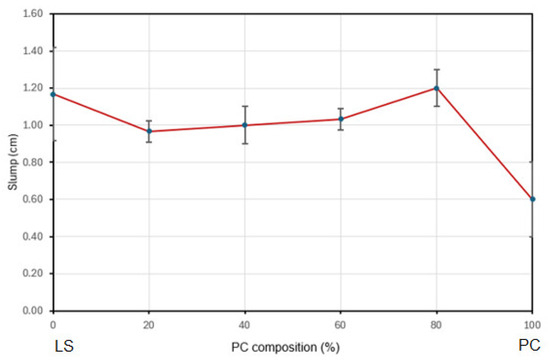
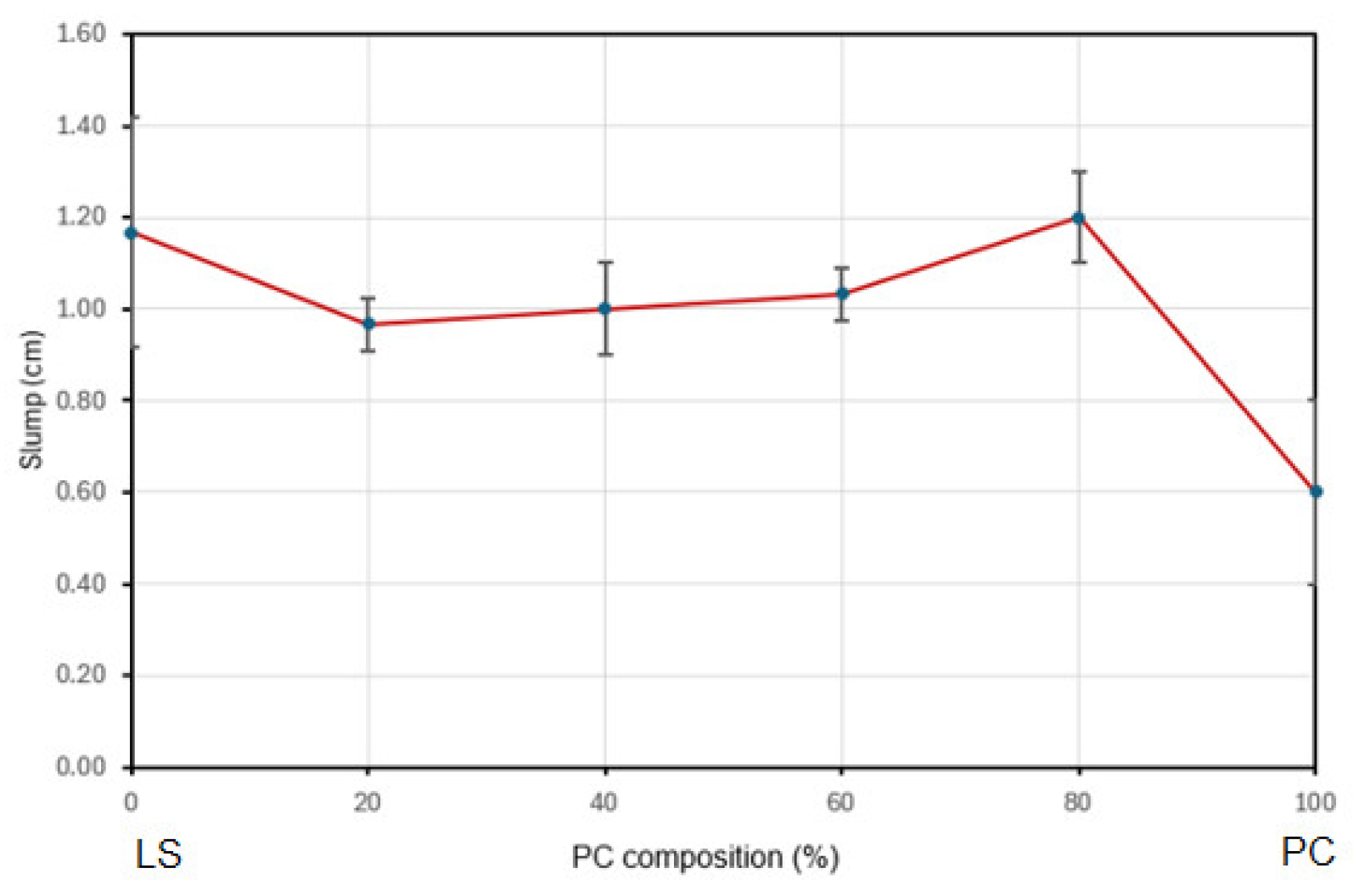
Based on the results obtained from the workability tests using individual plasticizers, an increase in workability was observed at 0.5% for LS and at 1% for PC. Therefore, for the combination of both plasticizers, a total of 1.5% was used, with varying PC/LS ratios (100/0, 80/20, 60/40, 40/60, 20/80, and 0/100). Figure 4 shows the variation in slump when 1.5% of the combined plasticizers is added at different proportions.
Figure 4.
Variation of slump for mixtures with 1.5% total plasticizers (by solids) as a function of PC/LS ratio.
Table 5 shows the statistical results. For the 1.5% total plasticizer mixtures, the effect of PC/LS ratio on mini-slump was significant (one-way ANOVA: F(5,12) = 6.364, p = 0.00414).
Table 5.
Slump results as a function of mixtures with 1.5% total plasticizers.
The ANOVA confirms that the PC/LS ratio influences slump. With a 100% LS composition, the slump is approximately 1.2 cm, indicating good fluidity. When 20% PC is incorporated into the mixture, the slump decreases slightly, suggesting that at this low concentration, PC does not provide sufficient particle coverage to activate its steric-repulsion mechanism effectively. Between 40% and 60% PC, the slump remains nearly constant, which can be attributed to a balance between the two mechanisms of action of the plasticizers: the electrostatic repulsion provided by LS and the steric repulsion provided by PC, resulting in a stable particle dispersion. At 80% PC concentration, a significant increase in slump is observed, indicating improved particle dispersion. With a higher PC percentage, this increase in workability can be attributed to its steric-repulsion mechanism, which is associated with the molecular structure of polycarboxylate, whose long side-chain groups promote particle separation. Meanwhile, LS complements this effect through its electrostatic-repulsion mechanism, further enhancing particle separation.
When the mixture is entirely PC, the slump drops notably to approximately 0.6 cm. This decrease may result from saturation or excess plasticizer, leading to particle flocculation. Overall, combining both plasticizers significantly enhances workability at an 80% PC and 20% LS ratio, with 1.5% of the combined plasticizers based on the solids.
3.2. Synthesized Refractory Bricks
Based on the results of the Mini Slump Test, the plasticizer percentages that increased workability were selected. For Sodium Lignosulfonate (LS), a rate of 0.5% was chosen, and for Polycarboxylate (PC), a rate of 1% was chosen, both based on the solids content (clays and seashell powder). For the combined plasticizers, 1.5% was added, with an 80% PC/20% LS ratio. The final compositions of the bricks with 0.5% LS, 1% PC, and 1.5% (80%PC+20%LS) are shown in Table 6, Table 7 and Table 8, respectively.
Table 6.
Composition percentage of refractory brick with LS.
Table 7.
Composition percentage of refractory brick with PC.
Table 8.
Composition percentage of refractory brick with PC and LS combination.
3.3. Thermal Resistance Results up to 1200 °C
Four bricks without plasticizers, four bricks with 0.5% LS, four bricks with 1% PC, and four bricks with 1.5% (80%PC+/20%LS) based on solids were exposed to four calcination cycles. All four types of bricks withstood the four calcination cycles listed in Table 3, with a maximum temperature of 1200 °C. All four brick types withstood the four calcination cycles indicated in Table 3, with a maximum temperature of 1200 °C, indicating no observable structural damage (e.g., cracks, fissures, or melting of the material). Table 9 shows the mass loss in the four calcination cycles, noting that after the second cycle, the mass remained constant.
Table 9.
Loss of mass during calcination cycles.
3.4. Compressive Strength Results
3.4.1. Compressive Strength Before and After Four Calcination Cycles up to 1200 °C
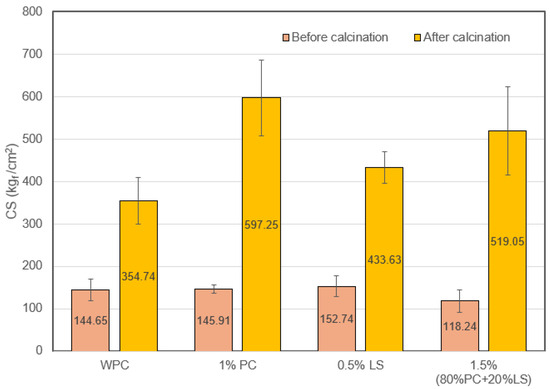
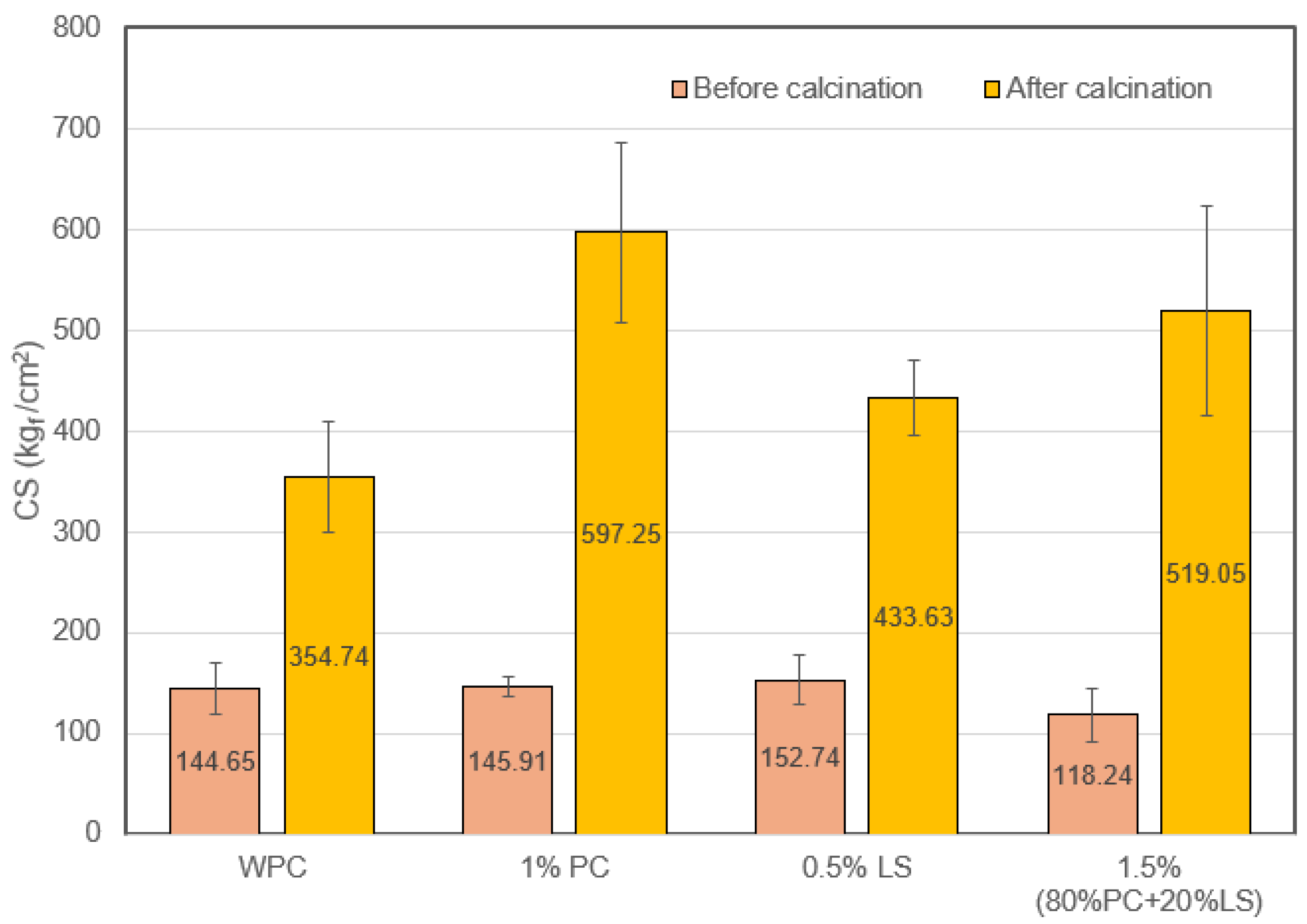
Figure 5 shows the average results of the compressive strength tests of the refractory bricks before and after the calcination stage at 1200 °C.
Figure 5.
Compressive strength results of refractory bricks before and after four calcination cycles up to 1200 °C.
For the non-calcined condition, compressive strength (kgf/cm2) did not differ significantly among the four formulations (one-way ANOVA, F(3,12) = 1.793, p = 0.202, n = 4. Tukey’s HSD (α = 0.05) detected no significant pairwise differences; therefore, all bars share the same letter for all groups. Bars represent the mean, and error bars indicate the standard deviation. Before calcination, the compressive strength values were very similar, ranging from 118.24 to 152.74 kgf/cm2, indicating that the use of plasticizers had no significant effect on compressive strength.
After four cycles, compressive strength increased significantly, and the formulation effect became statistically significant (one-way ANOVA, F(3,12) = 7.644, p = 0.00405). The highest mean strength was observed for 1% PC. Because 1% PC and 1.5% (80%PC+20%LS) are not statistically different in compressive strength after four calcination cycles to 1200 °C (Tukey HSD, α = 0.05), the selection of the “best” formulation should be based on economic efficiency rather than strength alone. Under this criterion, 1% PC is a rational choice because it achieves the highest mean strength while remaining lower in plasticizer cost than 1.5% (80%PC+20%LS) ($0.0449 versus $0.0633 per brick, respectively). Overall, given that the cost of clays and seashells is negligible, 1% PC provides the best cost–performance balance, delivering a compressive strength statistically comparable to 1.5% (80%PC+20%LS) at a reduced additive cost. Consequently, it is recommended as the preferred formulation for refractory brick production under the tested thermal cycling conditions. The statistical results are shown in Table 10.
Table 10.
Compressive strength after four calcination cycles (to 1200 °C).
Refractory bricks with 1% PC reached a compressive strength of 597.25 kgf/cm2 after calcination, making them the strongest bricks. Bricks with 0.5% LS also showed improvements compared to non-plasticized bricks, achieving a compressive strength of 433.63 kgf/cm2 after calcination. Conversely, the combination of 80% PC and 20% LS at 1.5% of the solids reached a compressive strength of 519.05 kgf/cm2, surpassing LS-only bricks but not exceeding PC-only bricks. Lastly, the refractory brick without plasticizer had the lowest compressive strength at 354.74 kgf/cm2, indicating that plasticizers enhance workability, which aids in compaction, dispersion, and homogeneity of the geopolymer mixture, thereby positively affecting mechanical properties. The increase in compressive strength after calcination is attributed to the sintering of the material during the burning cycles.
The compressive strength results align with those reported by Paul [29], who noted that plasticizers promote particle dispersion and increase compressive strength, with polycarboxylate-based plasticizers yielding the highest values. Similarly, Carabba et al. [31] and Tutal et al. [32] reported that geopolymers modified with polycarboxylate plasticizers tend to develop higher compressive strength. However, other authors report contrasting results; for example, Nematollahi and Sanjayan [28] observed that adding a polycarboxylate plasticizer may decrease compressive strength, while Malkawi et al. [23] also reported a reduction in compressive strength when lignosulfonate- and polycarboxylate-based plasticizers were added to alkali-activated systems, likely due to differences in the raw materials used for geopolymer synthesis.
3.4.2. Compressive Strength Varying the Number of Calcination Cycles
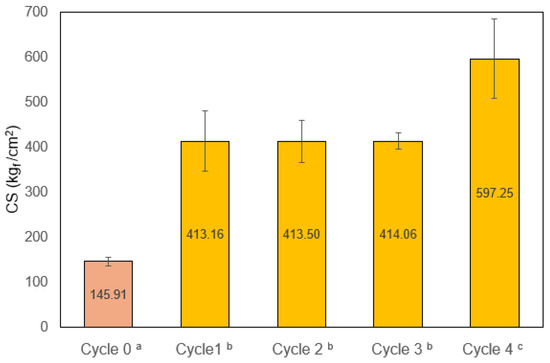
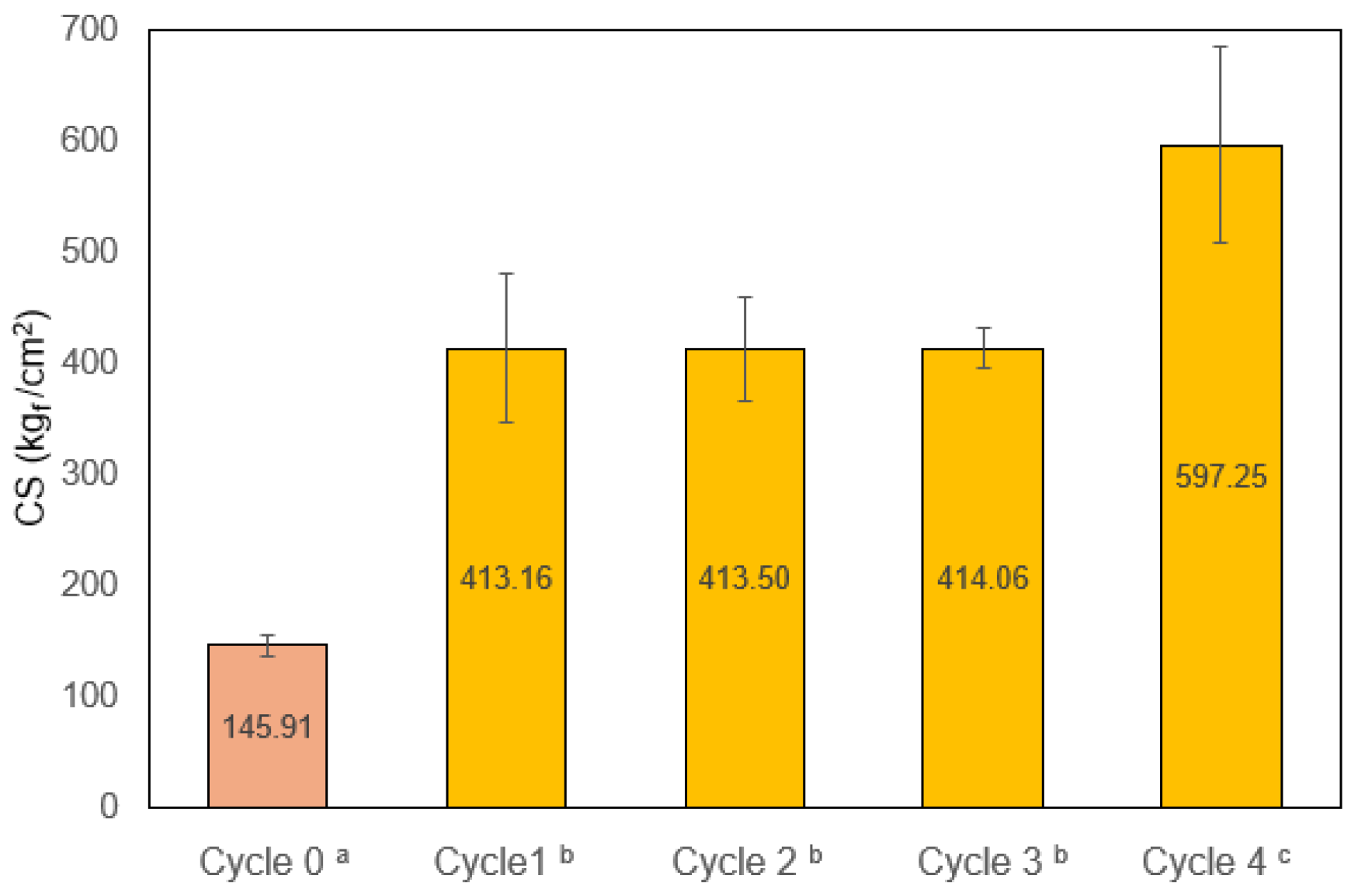
According to previous results, the brick with the highest compressive strength contained 1% PC relative to the solids. Based on this composition, four bricks were produced to assess compressive strength as the number of calcination cycles varied. The results are shown in Figure 6.
Figure 6.
Compressive strength results of refractory brick with 1% of PC (with respect to solids), varying the number of calcination cycles. (n = 4 per treatment; one-way ANOVA, p < 0.001). Bars with different letters are significantly different according to Tukey’s HSD (α = 0.05).
Compressive strength increases from Cycle 0 (145.91 kgf/cm2) to Cycle 1 (413.16 kgf/cm2), an increase of almost threefold. This indicates that the first cycle promotes controlled dehydration and initiates densification, reducing porosity and improving particle cohesion. For Cycles 1, 2, and 3, the compressive strength remains nearly constant, ranging from 413.16 to 414.06 kgf/cm2. During these cycles, increases in temperature and the number of cycles do not produce significant changes in the structure.
Finally, in Cycle 4, a significant increase in compressive strength is observed, reaching 597.25 kgf/cm2. At this temperature (1200 °C) and calcination time, better sintering occurs, resulting in a less porous material. These results indicate that multiple calcination cycles can enhance the mechanical properties of the material, ensuring that refractory bricks (geopolymers) remain stable over extended periods in furnaces.
3.5. Morphology of Refractory Bricks Observed Using a 64× Stereoscopic Microscope
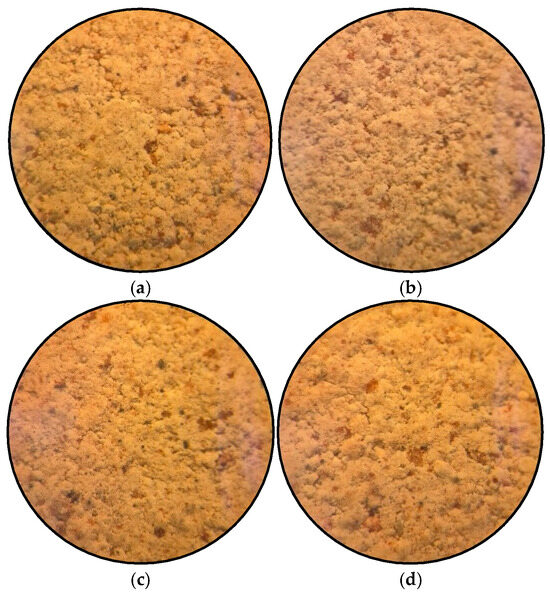
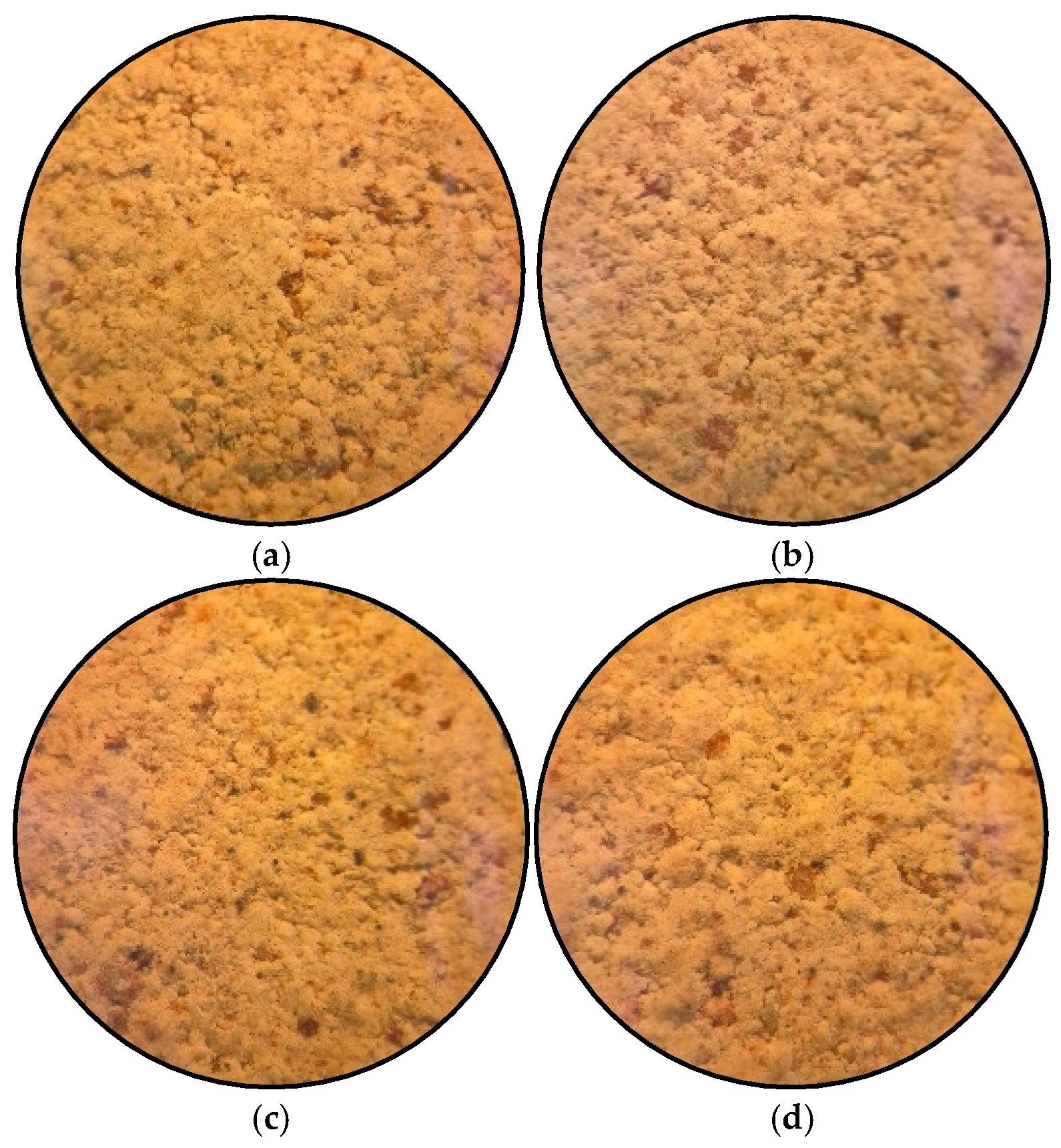
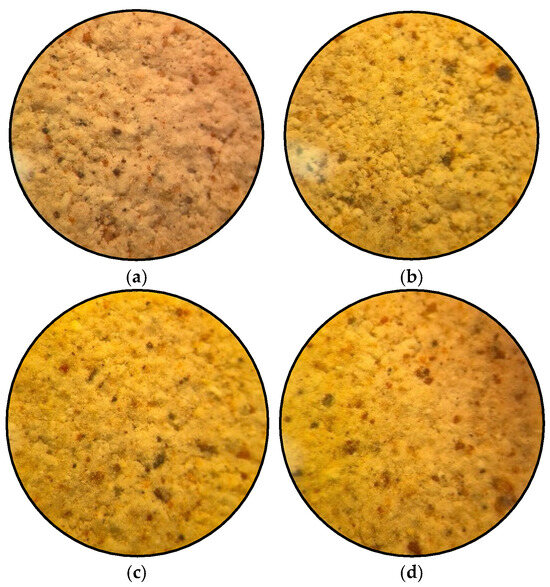
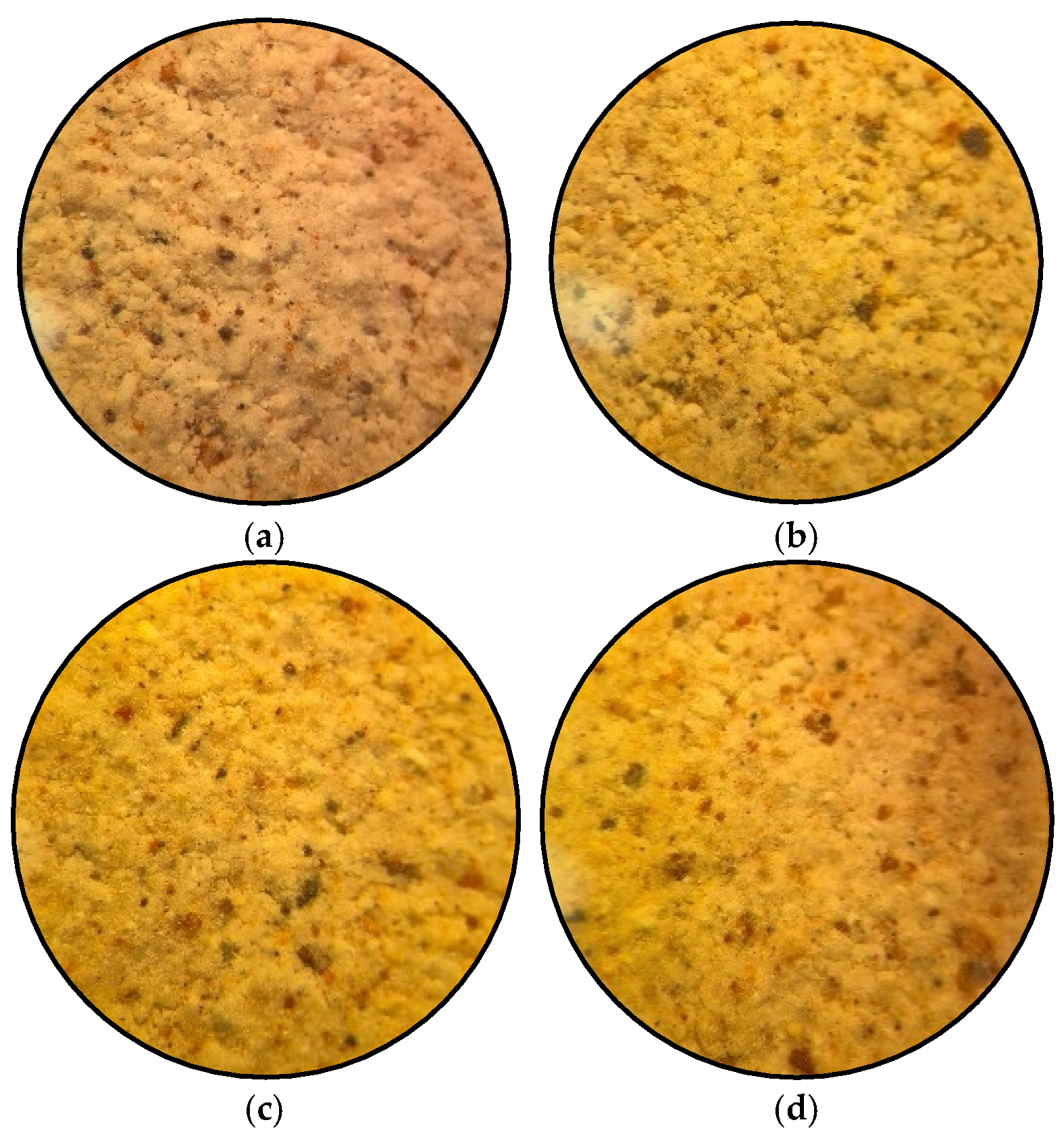
Figure 7 and Figure 8 show the refractory bricks before and after calcination, respectively. All bricks (without plasticizer, with 1% PC, with 0.5% LS, and with 1.5% of 80%PC+20%LS) display similar characteristics. After calcination, no cracks are observed in this 64× view due to sintering.
Figure 7.
Refractory brick before calcination. (a) without plasticizer, (b) with 0.5% LS, (c) with 1% PC, (d) with 1.5% of (80%PC+20%LS).
Figure 8.
Refractory brick after calcination. (a) without plasticizer, (b) with 0.5% LS, (c) with 1% PC, (d) with 1.5% of (80%PC+20%LS).
3.6. Characterization by SEM-EDS
3.6.1. Elemental Composition of Clays (Kaolin and Tepozan–Bauwer)
Table 11 shows the elemental composition percentages of the two clays used to synthesize the refractory bricks.
Table 11.
Elemental composition of clays (Kaolin and Tepozan–Bauwer).
The presence of oxygen, silicon, and aluminum in both clays is consistent with the mineral phases reported by Sánchez-Chicas et al. [8] and Torres-Ochoa et al. [33], such as kaolinite, quartz, and alunite, which are composed of these elements. The clays, rich in silicon and aluminum, favor geopolymerization, as an aluminosilicate precursor is required to produce a geopolymer.
3.6.2. Elemental Composition of Seashell
Table 12 shows the elemental composition percentages of the seashell.
Table 12.
Elemental composition of seashell.
These results can be linked to calcium carbonate (CaCO3), which exists in its mineral forms, including calcite, aragonite, and vaterite [8].
3.6.3. Elemental Composition of Refractory Bricks
Table 13 shows the elemental composition percentages of the refractory bricks without a plasticizer, with 1% PC, 0.5% LS, and 1.5% of the 80%PC+20%LS combination.
Table 13.
Elemental percentage of refractory bricks with and without plasticizers.
The elemental analysis shows the main elements in the refractory bricks: oxygen, silicon, aluminum, potassium, and sodium. These are typical of the aluminosilicate networks formed during geopolymerization. The brick without plasticizer has relatively high silicon (29.80%) and aluminum (17.09%) contents, indicating a structure rich in Si-O-Al units, which is common in geopolymers. When 1% of PC is added, oxygen increases from 49.25% to 53.55% and sodium from 1.52% to 2.64%, while silicon decreases from 29.80% to 22.75%. This likely results from the interaction of PC with alkali sodium cations, promoting a higher oxygen content in the brick, as observed in the carboxylate groups.
Adding 0.5% LS makes the composition like that of the material without a plasticizer, although sodium increases from 1.52% to 2.24% and potassium from 2.34% to 2.69%. The rise in sodium may be due to the plasticizer, which contains sodium in its structure (sodium lignosulfonate). For the 1.5% mix of 80%PC+20%LS, there is a notable increase in silicon from 29.80% to 31.45% and in aluminum from 17.09% to 18.23%, along with a decrease in oxygen from 49.25% to 45.77%.
These changes in elemental composition indicate that plasticizers not only improve workability but also influence the distribution of elements in the geopolymers.
3.7. Apparent Porosity, Water Absorption, and Bulk Density
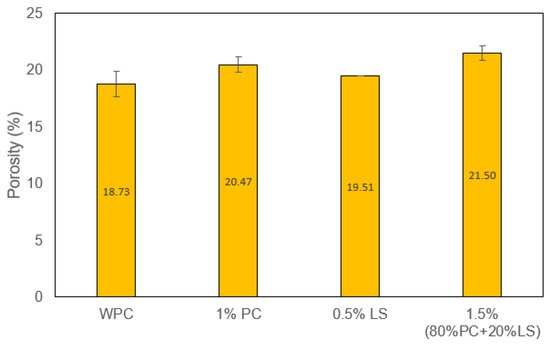
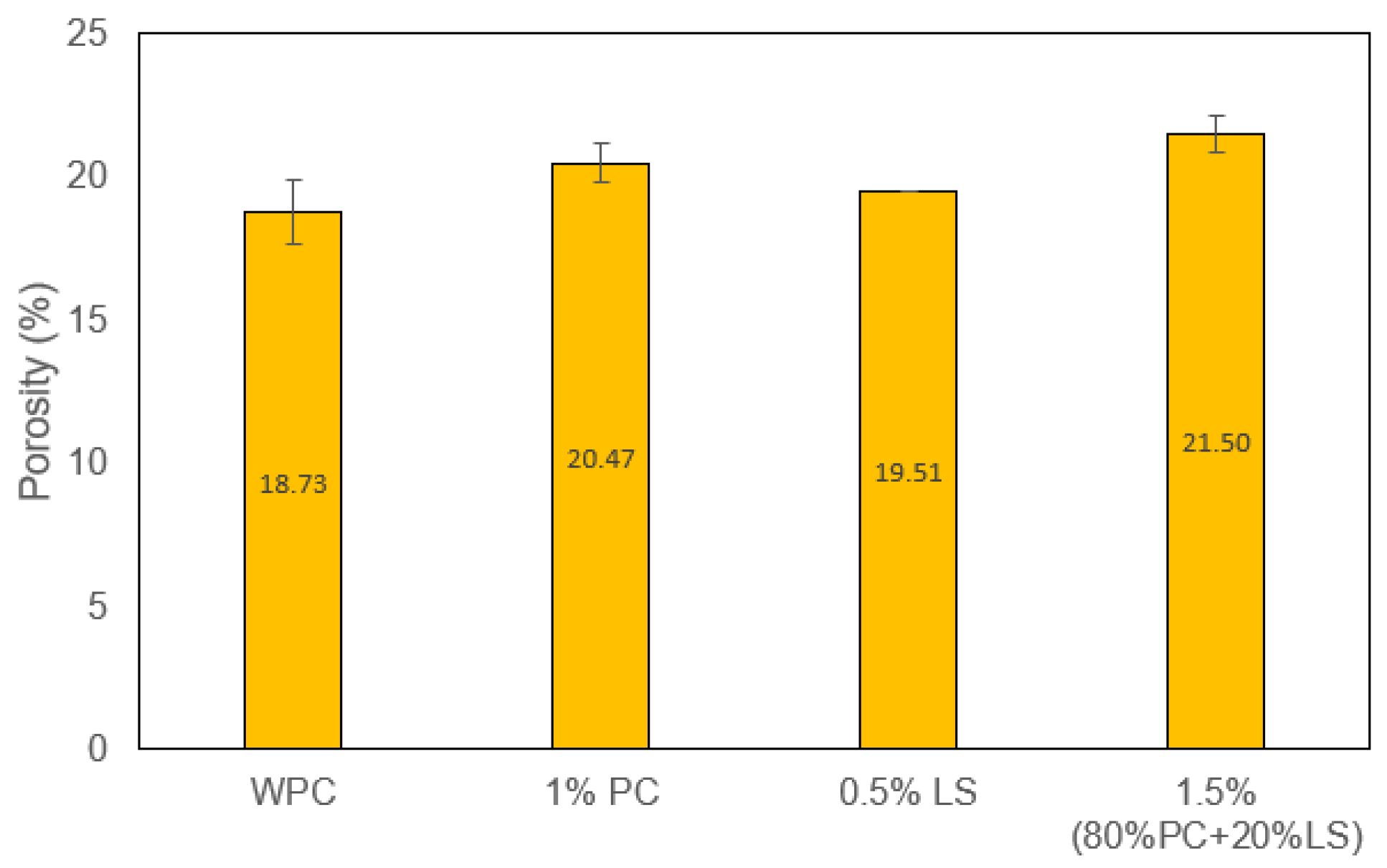
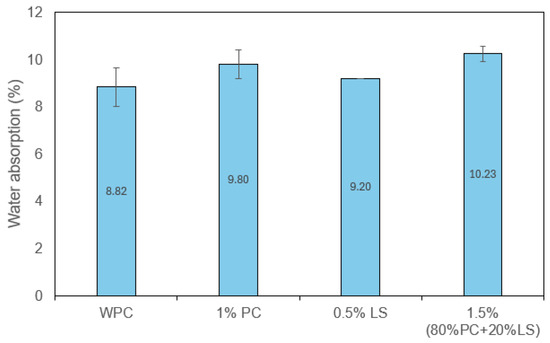
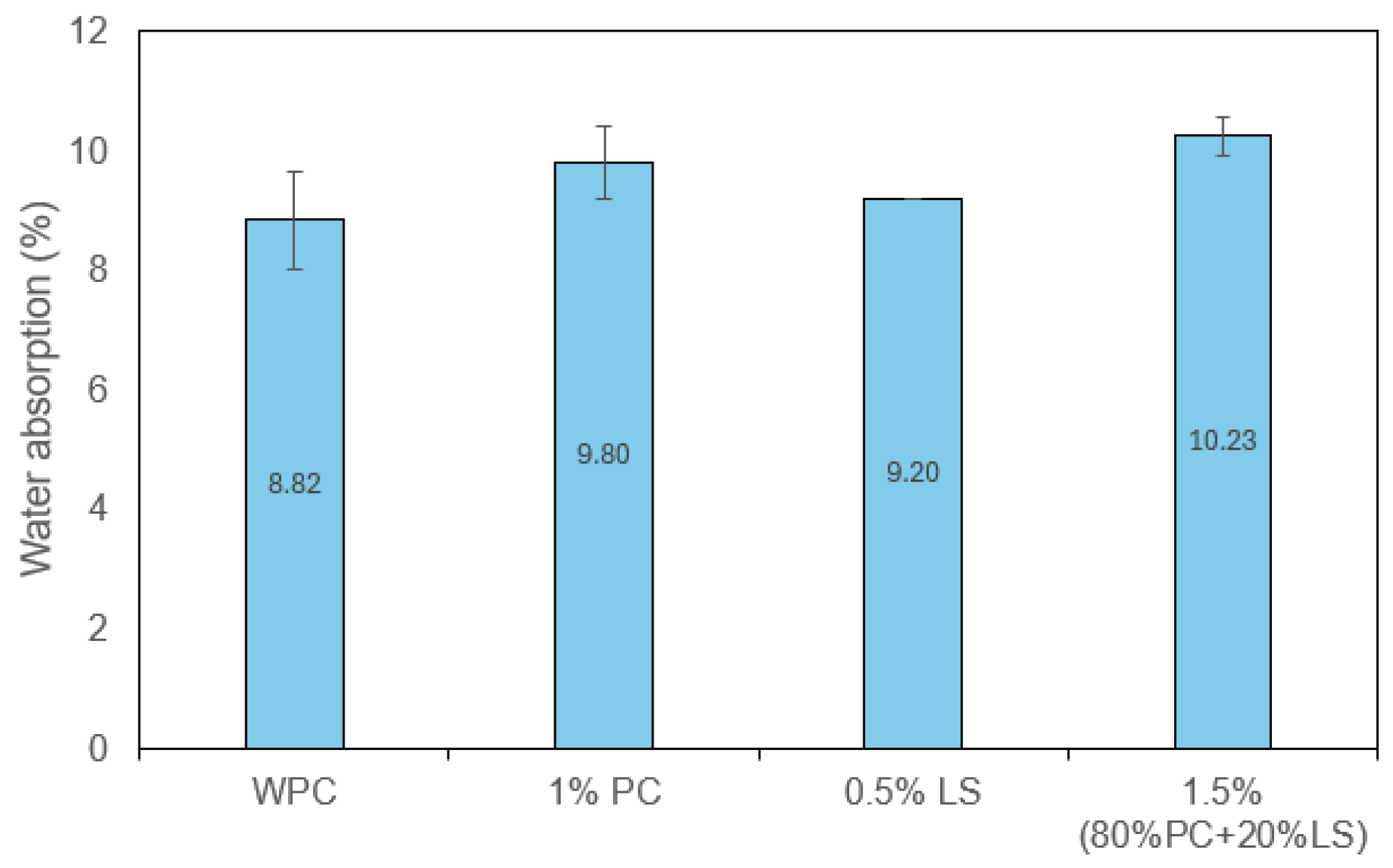
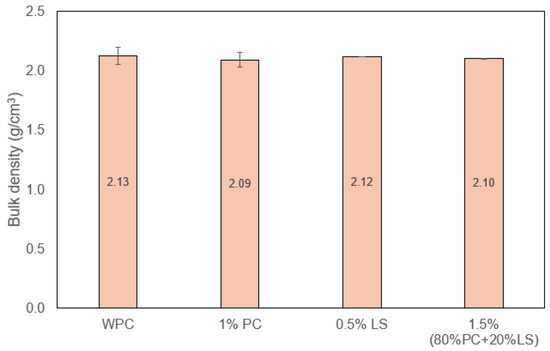
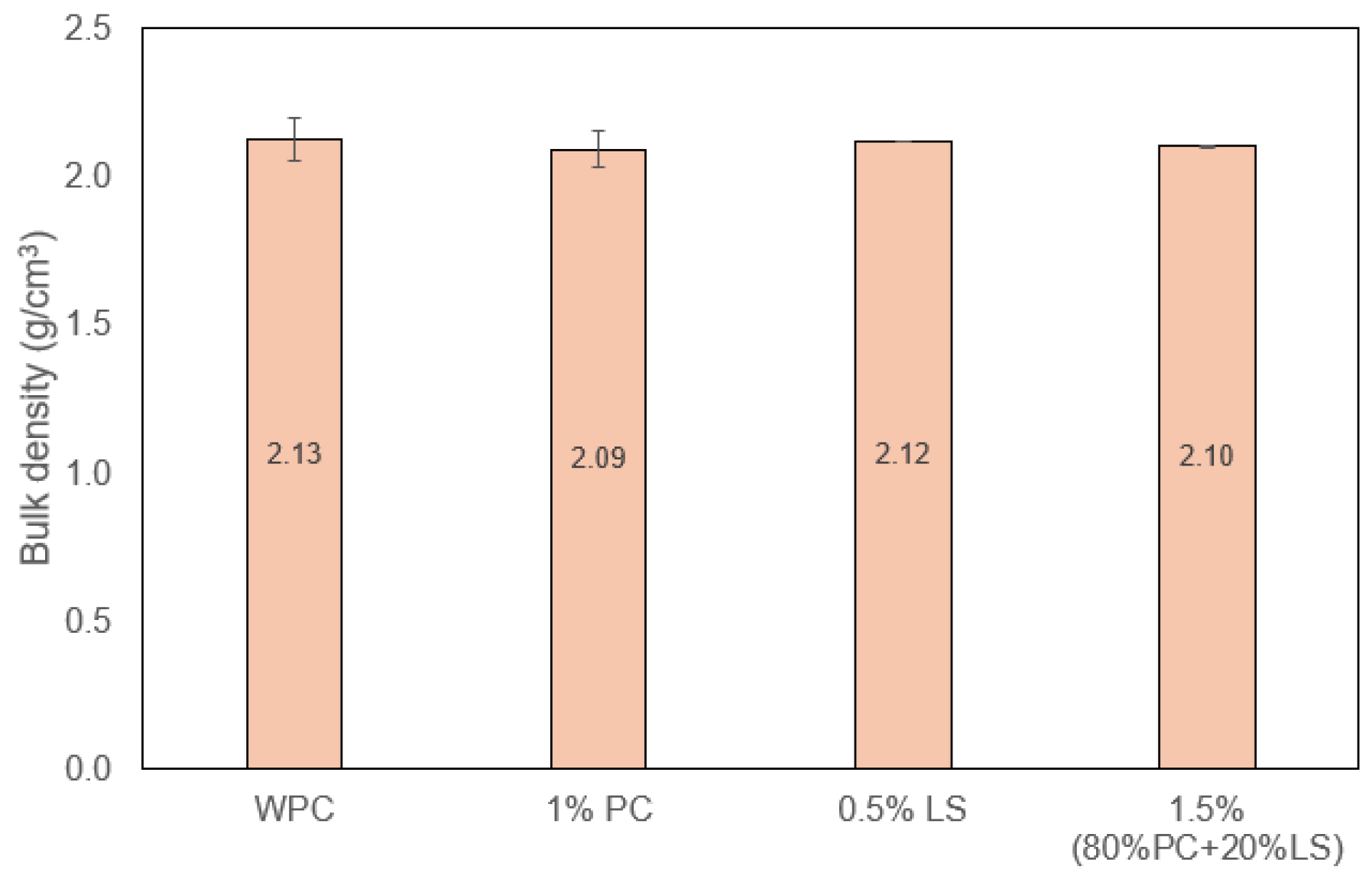
Apparent porosity, water absorption, and bulk density were calculated for the bricks before and after calcination. These properties could not be determined for the uncalcined bricks because, when exposed to hot water, they expanded and developed cracks. Therefore, this ASTM C20-00 method applies only to calcined refractory bricks. The results are shown in Figure 9, Figure 10 and Figure 11.
Figure 9.
Apparent porosity results of calcined refractory bricks. One-way ANOVA: not significant at 0.05 (p = 0.0650). Tukey HSD (0.05): no significant pairwise differences.
Figure 10.
Water absorption results of calcined refractory bricks. One-way ANOVA: not significant (p = 0.1809). Tukey HSD (0.05): no significant pairwise differences.
Figure 11.
Bulk density results of calcined refractory bricks. One-way ANOVA: not significant (p = 0.8579). Tukey HSD (0.05): no significant pairwise differences.
The statistical results reveal that the bulk porosity, water absorption, and bulk density of all refractory bricks are very similar, indicating that the dominant factor affecting compressive strength is the calcination process. As the number of calcination cycles increases, the compressive strength also increases. When 1% PC was incorporated into the refractory brick, both porosity and water absorption increased slightly, whereas density decreased. Nevertheless, compressive strength increased significantly, making this composition the most resistant. This behavior indicates that PC affects not only the total porosity but also the pore distribution, improving particle dispersion and mixture homogeneity and, consequently, enhancing compressive strength.
For bricks with 0.5% LS, porosity and water absorption increased, while strength increased to a lesser extent, suggesting that this additive produces a less compact structure than PC. The incorporation of 1.5% of the 80%PC+20%LS combination resulted in higher porosity and water absorption, with lower density and intermediate compressive strength.
Previous studies by the research group reported lower density values (≈1.5–1.6 g/cm3) for bricks with very similar formulations [34]. In the present study, a significant increase in density (≈2.09–2.13 g/cm3) was observed, indicating improved compaction and densification of the geopolymeric matrix. This increase can be directly attributed to enhanced compressive strength. Furthermore, the density values reported in this study are consistent with those reported by Tutal et al. [32] (≈2.07–2.15 g/cm3), who also found apparent porosity values (≈19.3–23.4%) comparable to those obtained in the present study (≈18.73–21.5%).
4. Conclusions
A clay–seashell refractory geopolymer brick was developed using kaolin, Tepozan–Bauwer clay, ground seashells, sodium silicate, and potassium hydroxide, incorporating sodium lignosulfonate (LS) and a polycarboxylate-based superplasticizer (PC). The slump tests revealed that the use of plasticizers significantly enhances workability. A 0.5% dose of Sodium Lignosulfonate and a 1% dose of Polycarboxylate provide good workability for the mixture used to produce refractory bricks, as both dosages increase the measured slump. Additionally, combining the plasticizers revealed an optimal dose of 1.5% of (80%PC+20%LS) to improve workability. Each plasticizer operates through different mechanisms: Sodium Lignosulfonate acts via electrostatic repulsion, while Polycarboxylate mainly functions through steric repulsion.
Refractory bricks with enhanced workability were successfully produced by adding Sodium Lignosulfonate and Polycarboxylate-based plasticizers. The bricks demonstrated thermal resistance up to 1200 °C, and their compressive strength increased after calcination. After four calcination cycles, the compressive strength values were as follows: 354.74 kgf/cm2 for bricks without plasticizer, 597.25 kgf/cm2 for 1% PC, 433.63 kgf/cm2 for 0.5% LS, and 519.05 kgf/cm2 for 1.5% of (80%PC+20%LS). As the number of calcination cycles increased from 0 to 4, the compressive strength of the refractory bricks improved, likely due to sintering, which contributed to a more compact microstructure.
Observations of the bricks using a stereoscopic microscope showed that the material pores closed after calcination, which is linked to increased compressive strength and the absence of cracks. SEM-EDS analysis revealed that the clays have high concentrations of oxygen, silicon, and aluminum. These elements form aluminosilicates, which are excellent precursors for geopolymer formation. The seashells contain elements such as calcium, oxygen, and carbon, which form calcium carbonate, a component of refractory bricks. In the bricks, components such as oxygen, silicon, and aluminum were identified, which are found in the geopolymer oligomers and originate from the clays and sodium silicate. Additionally, elements such as potassium and sodium were detected, originating from potassium hydroxide and sodium silicate, and participated in forming networks with the oligomers to produce a geopolymer.
From a practical deployment perspective, the proposed bricks valorize seashell waste from seafood restaurants and use low-cost clays from Comonfort, Guanajuato, Mexico. Because the cost of clays and seashells is negligible, formulation selection can be guided by plasticizer cost per brick. Although 1% PC and the blended plasticizer formulation 1.5% (80%PC+20%LS) exhibited statistically comparable compressive strength after four calcination cycles, 1% PC was selected as the preferred formulation due to its lower additive cost ($0.0449 per brick) compared with the blend ($0.0633 per brick), while still achieving 597.25 kgf/cm2 (58.57 MPa) and adequate workability. These findings support the development of scalable and waste-valorizing refractory products with improved fresh-state handling and competitive performance.
Author Contributions
Methodology/Investigation/Writing—original draft/Resources, A.Y.R.-Y.; Methodology/Validation/Formal analysis/Investigation/Visualization, N.R.O.-R.; Methodology/Formal analysis/Supervision/Writing—review & editing, H.J.-I.; Validation/Resources/Visualization/Writing—original drafts, F.I.M.-H.; Methodology/Validation/Formal analysis/Visualization, J.A.T.-O.; Conceptualization/Methodology/Validation/Supervision/Project administration/Funding acquisition/Writing—original draft/Writing—review & editing, G.M.M.-G. All authors have read and agreed to the published version of the manuscript.
Funding
This research was funded by the Tecnológico Nacional de México (TecNM) through the project “Production of high-strength refractory bricks made with clay and shells, and study of the addition of a plasticizer to improve process workability”, grant 22144.25-P.
Data Availability Statement
The data presented in this study is available on request from the corresponding author.
Acknowledgments
The authors acknowledge the Tecnológico Nacional de México (TecNM) for financial support for the research project. We also thank the Secretaría de Ciencia, Humanidades, Tecnología e Innovación (SECIHTI) for the master’s scholarship, which was essential for completing this work.
Conflicts of Interest
The authors declare no conflicts of interest.
Abbreviations
The following abbreviations are used in this manuscript:
| AWG | American Wire Gauge |
| CS | Compressive Strength |
| EDS | Energy Dispersive X-ray Spectroscopy |
| LS | Sodium Lignosulfonate |
| LS-PC | (80%PC+20%LS) |
| N-A-S-H | Sodium aluminosilicate hydrate |
| OPC | Ordinary Portland Cement |
| PC | Polycarboxylate |
| SEM | Scanning Electron Microscopy |
| WPC | Without Plasticizer |
| XRD | X-ray Diffraction |
References
- Cong, P.; Cheng, Y. Advances in Geopolymer Materials: A Comprehensive Review. J. Traffic Transp. Eng. Engl. Ed. 2021, 8, 283–314. [Google Scholar] [CrossRef] [Scilit]
- Ouellet-Plamondon, C.; Habert, G. Life cycle analysis (LCA) of alkali-activated cements and concretes. In Handbook of Alkali-Activated Cements, Mortars and Concretes; Woodhead Publishing-Elsevier: Cambridge, UK, 2014; pp. 663–686. [Google Scholar]
- Palomo, A.; Maltseva, O.; Garcia-Lodeiro, I.; Fernández-Jiménez, A. Portland Versus Alkaline Cement: Continuity or Clean Break: “A Key Decision for Global Sustainability”. Front. Chem. 2021, 9, 705475. [Google Scholar] [CrossRef] [Scilit]
- Aliabdo, A.; Elmoaty, A.; Salem, H. Effect of Water Addition, Plasticizer and Alkaline Solution Constitution on Fly Ash Based Geopolymer Concrete Performance. Constr. Build. Mater. 2016, 121, 694–703. [Google Scholar] [CrossRef] [Scilit]
- Provis, J.L.; Van Deventer, J.S.J. (Eds.) Geopolymers: Structure, Processing, Properties and Industrial Applications; Woodhead Publishing: Cambridge, UK, 2009. [Google Scholar]
- Nkuna, C.N.; Oboirien, B.O.; Sadiku, E.R.; Lekitima, J. A Comparative Study of Geopolymers Synthesized from OXY-Combustion and Chemical Looping Combustion Bottom Ashes. Constr. Build. Mater. 2017, 136, 246–255. [Google Scholar] [CrossRef] [Scilit]
- Al-Qutaifi, S.; Hanna, A.K.; Hamza, A.J. The Influence of Molarity Activity on the Green and Mechanical Properties of Geopolymer Concrete. Constr. Mater. 2025, 5, 16. [Google Scholar] [CrossRef] [Scilit]
- Sánchez-Chicas, J.L.; Jiménez-Islas, H.; Quintana-Hernández, P.A.; Caudillo-Ramírez, M.; Martínez-González, G.M. Obtaining a Refractory Geopolymer Based on Clays and Seashells. ChemistrySelect 2022, 7, e202202849. [Google Scholar] [CrossRef] [Scilit]
- Zhang, X.; Shiyu, Z.; Hui, L.; Zhao, Y. Disposal of Mine Tailings via Geopolymerization. J. Clean. Prod. 2021, 284, 124756. [Google Scholar] [CrossRef] [Scilit]
- Chuewangkam, N.; Kidkhunthod, P.; Pinitsoontorn, S. Direct Evidence for the Mechanism of Early-Stage Geopolymerization Process. Case Stud. Constr. Mater. 2024, 21, e03539. [Google Scholar] [CrossRef] [Scilit]
- Komnitsas, K.; Zaharaki, D. Geopolymerisation: A Review and Prospects for the Minerals Industry. Miner. Eng. 2007, 20, 1261–1277. [Google Scholar] [CrossRef] [Scilit]
- Nath, P.; Saker, P.K. Effect of GGBFS on Setting, Workability and Early Strength Properties of Fly Ash Geopolymer Concrete Cured in Ambient Condition. Constr. Build. Mater. 2014, 66, 163–171. [Google Scholar] [CrossRef] [Scilit]
- Sathonsaowaphak, A.; Chindaprasirt, P.; Pimrasksa, K. Workability and Strength of Lignite Bottom Ash Geopolymer Mortar. J. Hazard. Mater. 2009, 168, 44–50. [Google Scholar] [CrossRef] [Scilit] [PubMed]
- ASTM C143; Standard Test Method for Slump of Hydraulic-Cement Concrete. ASTM International: West Conshohocken, PA, USA, 2015.
- Koehler, E.; Fowler, D. Summary of Concrete Workability Test Methods; International Center for Aggregates Research: Austin, TX, USA, 2023. [Google Scholar]
- Tan, Z.; Bernal, S.; Provis, J. Reproducible Mini-Slump Test Procedure for Measuring the Yield Stress of Cementitious Pastes. Mater. Struct. 2017, 50, 235. [Google Scholar] [CrossRef] [Scilit] [PubMed]
- Mehta, P.K.; Monteiro, P.J. Concrete Microstructure, Properties and Materials, 3rd ed.; McGraw-Hill: New York, NY, USA, 2006. [Google Scholar]
- Wang, X.-H.; Fang, Z.C.; Zheng, L. Effect of Dose and Types of the Water Reducing Admixtures and Superplasticizers on Concrete Strength and Durability Behavior: A Review. J. Civ. Eng. Manag. 2024, 30, 33–48. [Google Scholar] [CrossRef] [Scilit]
- Dvorkin, L.; Zhitkovsky, V.; Makarenko, R.; Ribakov, Y. The Influence of Polymer Superplasticizers on Properties of High-Strength Concrete Based on Low-Clinker Slag Portland Cement. Materials 2023, 16, 2075. [Google Scholar] [CrossRef] [Scilit] [PubMed]
- Laskar, A.; Bhattacharjee, R. Effect of Plasticizer and Superplasticizer on Workability of Fly Ash Based Geopolymer Concrete. In Proceedings of the International Conference on Advances in Architecture and Civil Engineering, Bangalore, India, 21–23 June 2012; Volume 2, pp. 974–977. [Google Scholar]
- Laskar, A.; Bhattacharjee, R. Effect of Plasticizer and Superplasticizer on Rheology of Fly-Ash-Based Geopolymer Concrete. ACI Mater. J. 2013, 110, 513–518. [Google Scholar]
- Chindaprasirt, P.; Chareerat, T.; Sirivivatnanon, V. Workability and Strength of Coarse High Calcium Fly Ash Geopolymer. Cem. Concr. Compos. 2007, 29, 224–229. [Google Scholar] [CrossRef] [Scilit]
- Malkawi, A.B.; Nuruddin, M.F.; Fauzi, A.; Al-Mattarneh, H.; Mohammed, B.S. Effect of Plasticizers and Water on Properties of HCFA Geopolymers. Key Eng. Mater. 2017, 733, 76–79. [Google Scholar] [CrossRef] [Scilit]
- Mass-Domínguez, S. Efectos del Hidróxido de Sodio e Hidróxido de Potasio en la Síntesis de Geopolímeros a Base de Arcillas y Conchas Marinas. Master’s Thesis, Tecnológico Nacional de México en Celaya, Celaya, Guanajuato, México, 2022. (In Spanish) [Google Scholar]
- ASTM C133−97 (Reapproved 2015); Standard Test Methods for Cold Crushing Strength and Modulus of Rupture of Refractories. ASTM International: West Conshohocken, PA, USA, 2015.
- ASTM C20-00; Standard Test Methods for Apparent Porosity, Water Absorption, Apparent Specific Gravity, and Bulk Density of Burned Refractory Brick and Shapes by Boiling Water. ASTM International: West Conshohocken, PA, USA, 2022.
- Luukkonen, T.; Abdollahnejad, Z.; Ohenoja, K.; Kinnunen, P.; Illikainen, M. Suitability of Commercial Superplasticizers for One-Part Alkali-Activated Blast-Furnance Slag Mortar. J. Sustain. Cem. Based Mater. 2019, 8, 244–257. [Google Scholar] [CrossRef] [Scilit]
- Nematollahi, B.; Sanjayan, J. Effect of Different Superplasticizers and Activator Combinations on Workability and Strength of Fly Ash Based Geopolymer. Mater. Des. 2014, 27, 667–672. [Google Scholar] [CrossRef] [Scilit]
- Paul, E. Influence of Superplasticizer on Workability and Strength of Ambient Cured Alkali Activated Mortar. Clean. Mater. 2022, 6, 100152. [Google Scholar] [CrossRef] [Scilit]
- Nuruddin, M.F.; Malkawi, A.B.; Fauzi, A.; Mohammed, B.S.; Almattarneh, H.M. Evolution of Geopolymer Binders: A Review. In Proceedings of the International Conference on Innovative Research—ICIR Euroinvent 2016, Iasi, Romania, 19–20 May 2016; Volume 133, pp. 1–8. [Google Scholar] [CrossRef] [Scilit]
- Carabba, L.; Manzi, S.; Bignozzi, M.C. Superplasticizer Addition to Carbon Fly Ash Geopolymers Activated at Room Temperature. Materials 2016, 9, 586. [Google Scholar] [CrossRef] [Scilit] [PubMed]
- Tutal, A.; Partschefeld, S.; Schneider, J.; Osburg, A. Effects of Bio-Based Plasticizers, Made From Starch, on the Properties of Fresh and Hardened Metakaolin-Geopolymer Mortar: Basic Investigations. Clays Clay Miner. 2020, 68, 413–427. [Google Scholar] [CrossRef] [Scilit]
- Torres-Ochoa, J.A.; Osornio-Rubio, N.R.; Jiménez-Islas, H.; Navarrete-Bolaños, J.L.; Martínez-González, G.M. Synthesis of a Geopolymer and Use of Response Surface Methodology to Optimize the Bond Strength to Red Brick for Improving the Internal Coating in Burner Kilns. Rev. Mex. Ing. Química 2019, 18, 361–373. [Google Scholar] [CrossRef] [Scilit]
- Sánchez-Chicas, J.L. Obtención de un Geopolímero Refractario a Base de Arcillas y Conchas Marinas. Master’s Thesis, Tecnológico Nacional de México en Celaya, Celaya, Guanajuato, México, 2020. (In Spanish) [Google Scholar]

Disclaimer/Publisher’s Note: The statements, opinions and data contained in all publications are solely those of the individual author(s) and contributor(s) and not of MDPI and/or the editor(s). MDPI and/or the editor(s) disclaim responsibility for any injury to people or property resulting from any ideas, methods, instructions or products referred to in the content. |
© 2026 by the authors. Licensee MDPI, Basel, Switzerland. This article is an open access article distributed under the terms and conditions of the Creative Commons Attribution (CC BY) license.